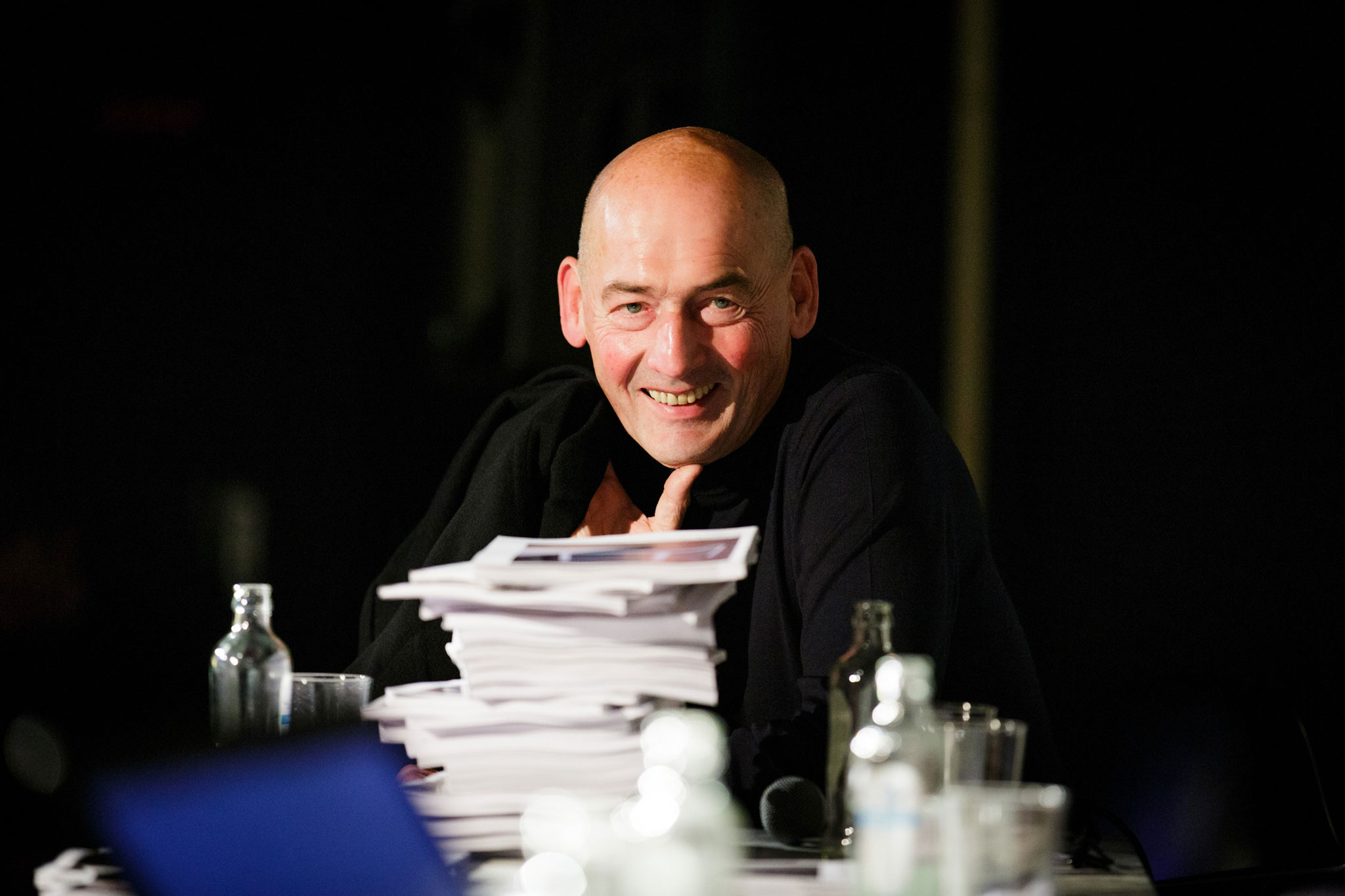
According the ducth architect, the fact that 50 percent of the global population now lives in cities has become an excuse to ignore the other 98 percent of the world’s surface: the countryside. The Solomon R. Guggenheim Museum has invited Koolhaas and AMO, the think tank of the Office for Metropolitan Architecture (OMA), to collaborate on a project that explores the radical changes occurring in the countryside, extending work underway by AMO / Koolhaas and students at the Harvard Graduate School of Design.
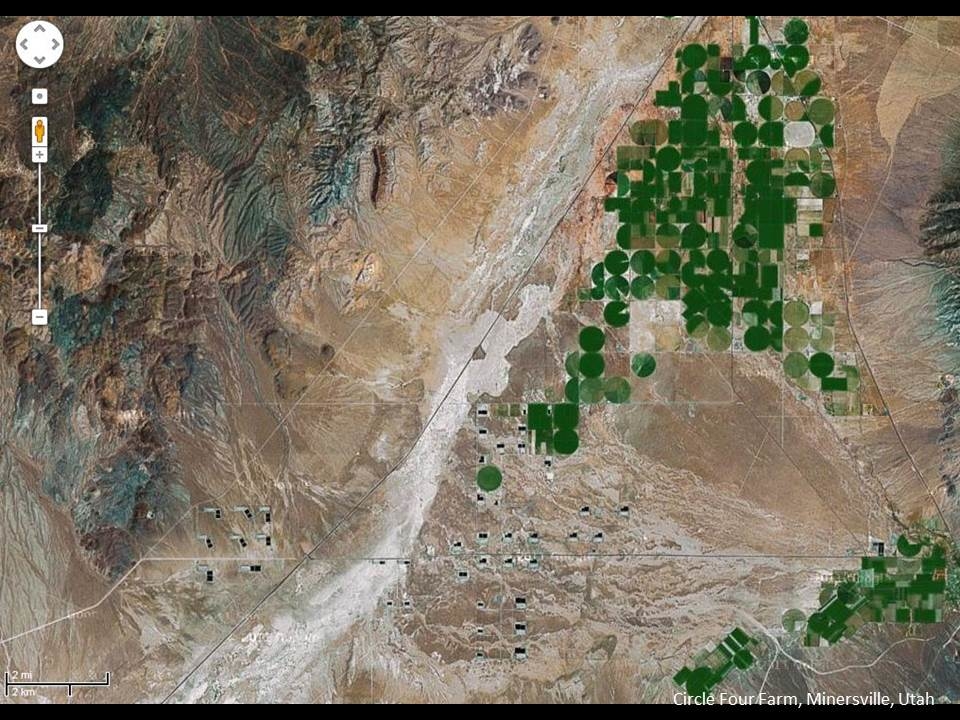
The technology is radically transforming our enviroments. He shows some of the current most radical changes, exemplifying them through the brutal transformation tha technologized agriculture is producing. To show this, he takes the center of United States as a reference, where farmers work on tractors whose cabins are actually heated offices with computers, drones, (autocopters), controlling satellites and technologies, very different from those agricultural production profiles of workers that suffered early in the twentieth century.
He talks about a technology, that given its transformed capacity, its magnitude, scale, growth and concentration of mechanization in the center of the country with giant machines, actually generates a new transformation of the territory.
This technology transforms the territory into detritus, something that is repeated in some architectural examples as the Tower monument of London Olympics. This transformation process demands the creation of the fully automated distribution GigaFactories and where human presence hardly exists. Buildings of a giant scale and size with measurements in kilometers also made for other industries such as Tesla or Amazon.
He talks about a technology, that given its transformed capacity, its magnitude, scale, growth and concentration of mechanization in the center of the country with giant machines, actually generates a new transformation of the territory.
This technology transforms the territory into detritus, something that is repeated in some architectural examples as the Tower monument of London Olympics. This transformation process demands the creation of the fully automated distribution GigaFactories and where human presence hardly exists. Buildings of a giant scale and size with measurements in kilometers also made for other industries such as Tesla or Amazon.
José Juan Barba analyzing the lecture by Rem Koolhaas in Pamplona in 2016
Opening in fall 2019, the rotunda exhibition Countryside: Future of the World (working title) will present speculations about tomorrow through insights into the countryside today. More than any city, the vast nonurban territories of the countryside have become the frontier of transformation. The exhibition will explore artificial intelligence and automation, the effects of genetic experimentation, political radicalization, mass and micro migration, large-scale territorial management, human-animal ecosystems, subsidies and tax incentives, the impact of the digital on the physical world, and other developments that are altering landscapes across the globe.
Countryside: Future of the World is organized by Troy Conrad Therrien, Curator, Architecture and Digital Initiatives, with Ashley Mendelsohn, Curatorial Assistant, Architecture and Digital Initiatives.
Countryside: Future of the World is organized by Troy Conrad Therrien, Curator, Architecture and Digital Initiatives, with Ashley Mendelsohn, Curatorial Assistant, Architecture and Digital Initiatives.