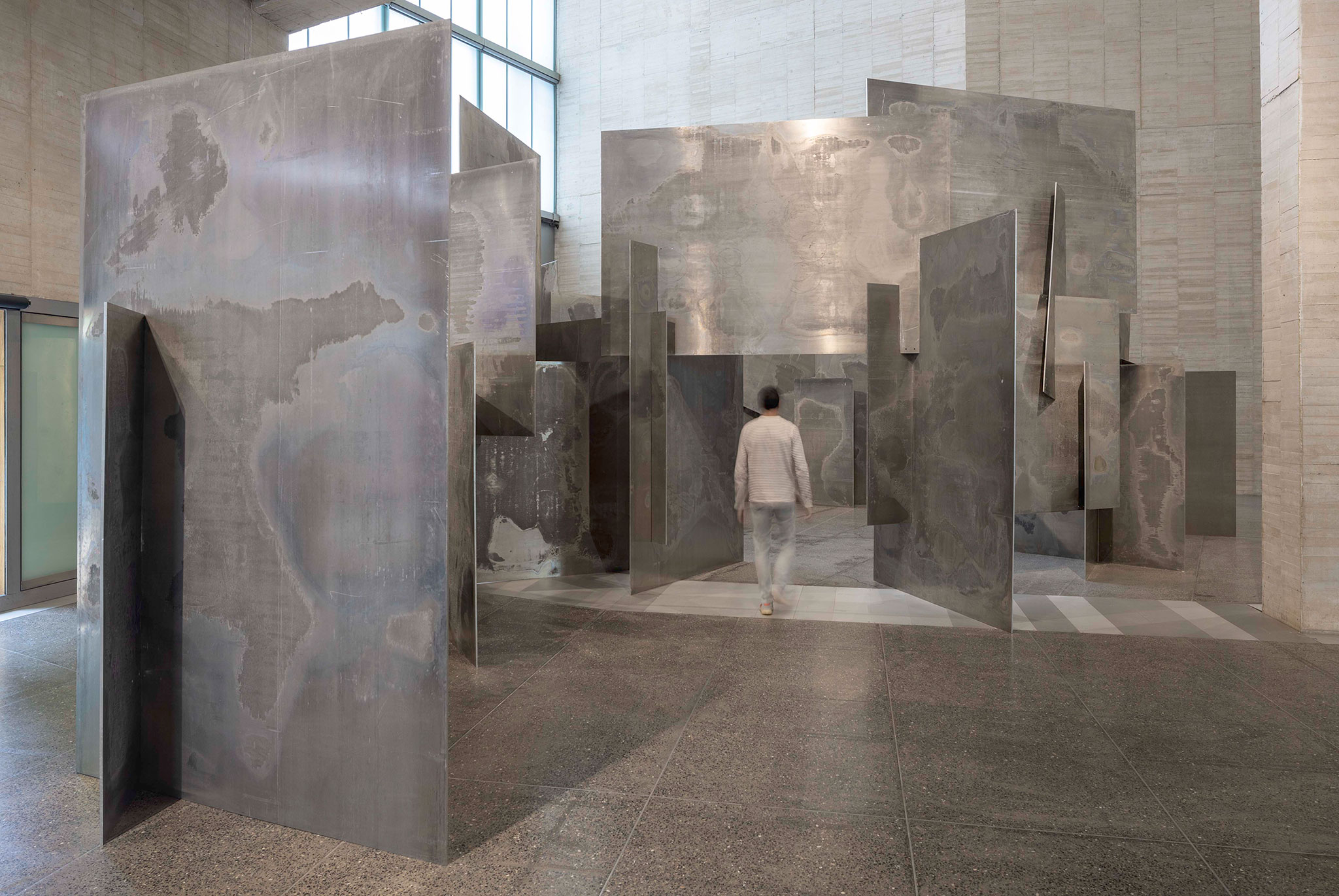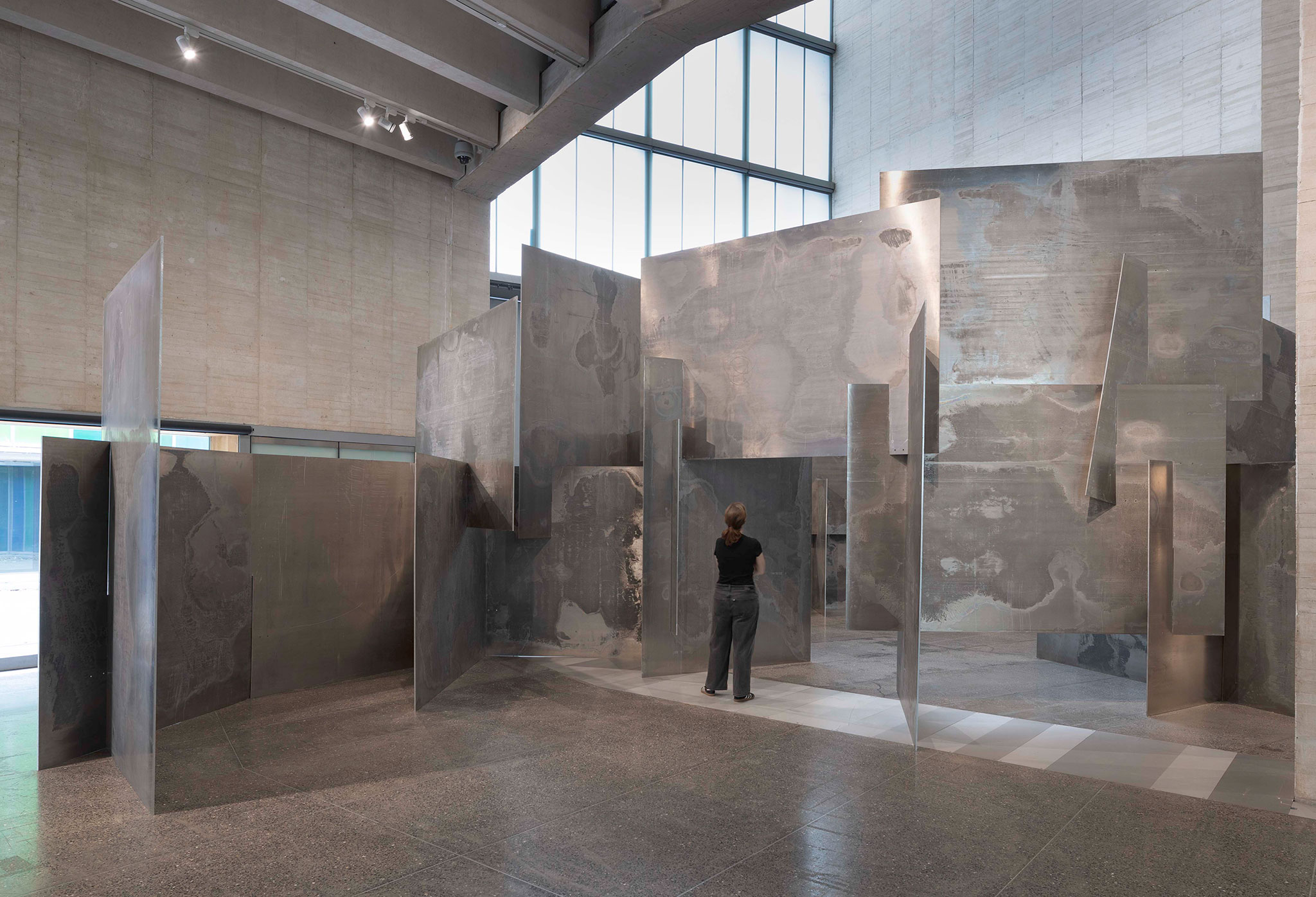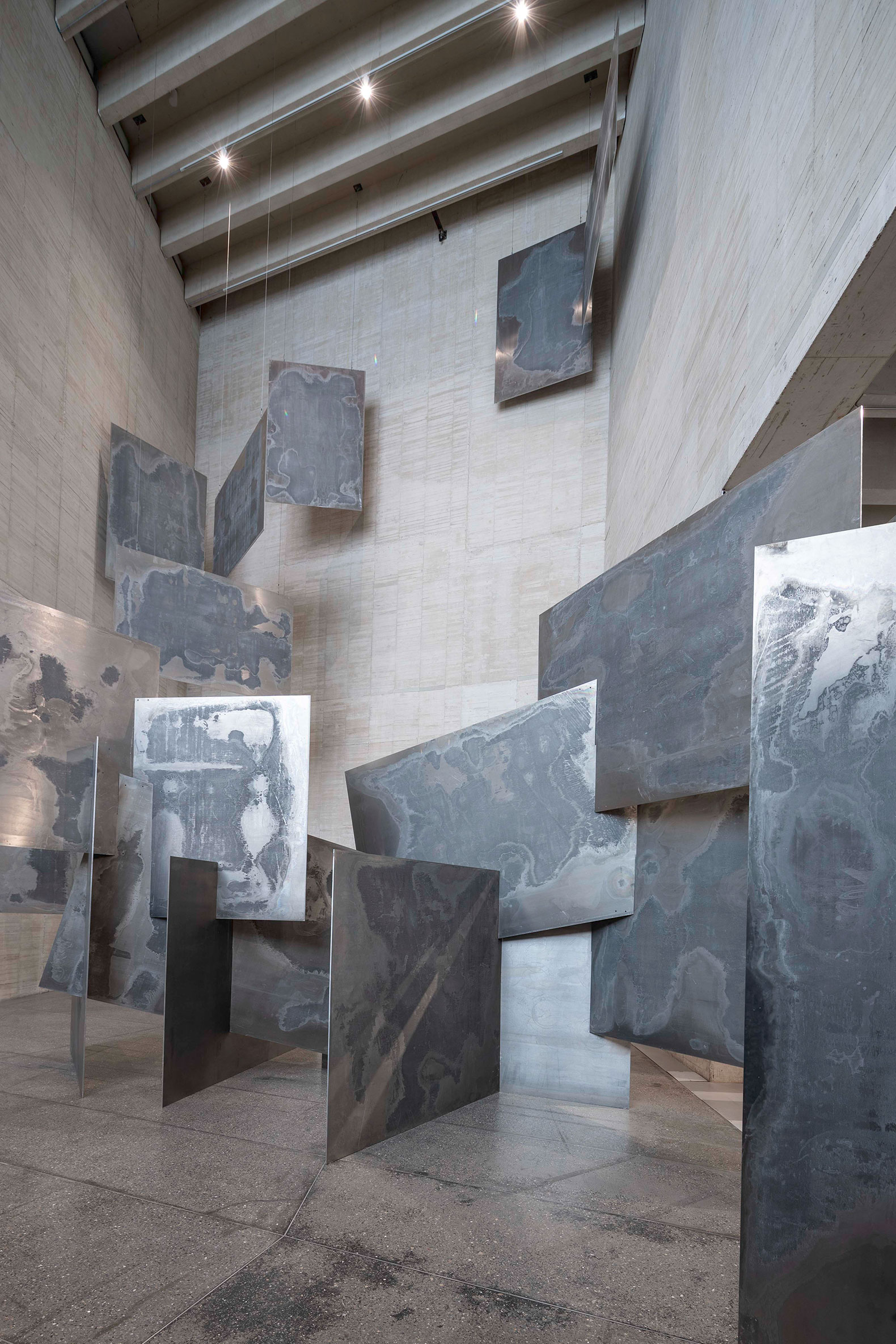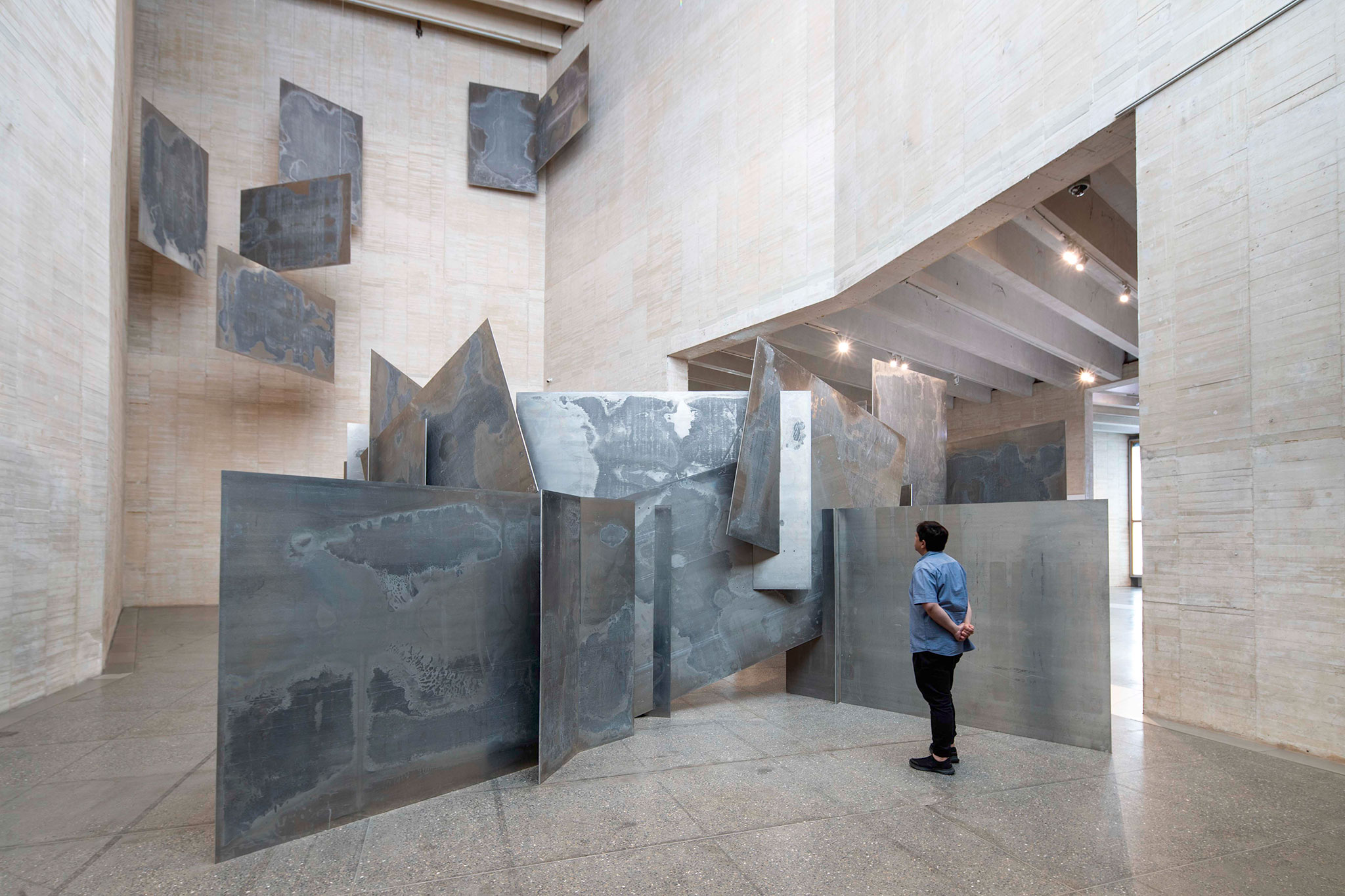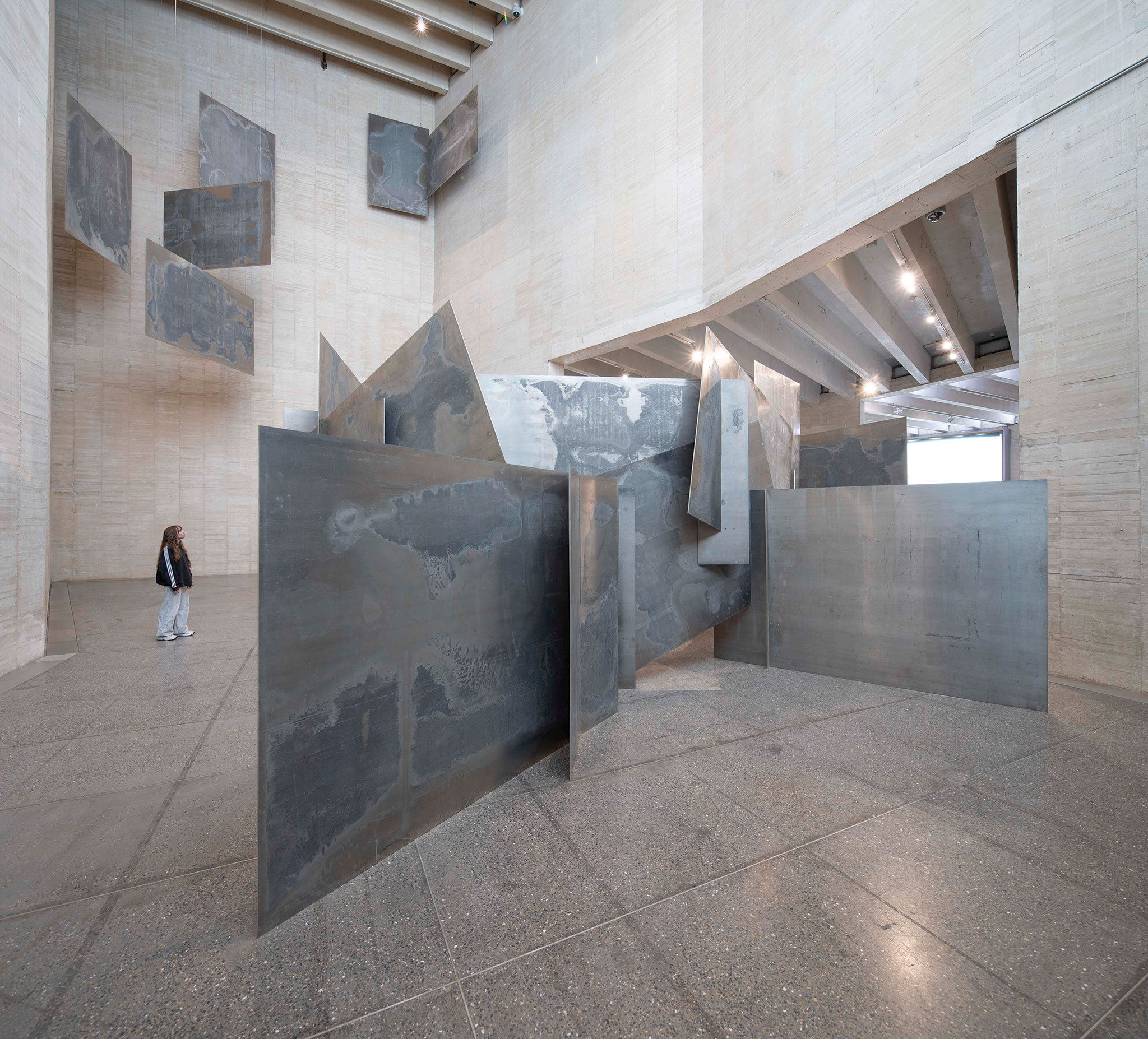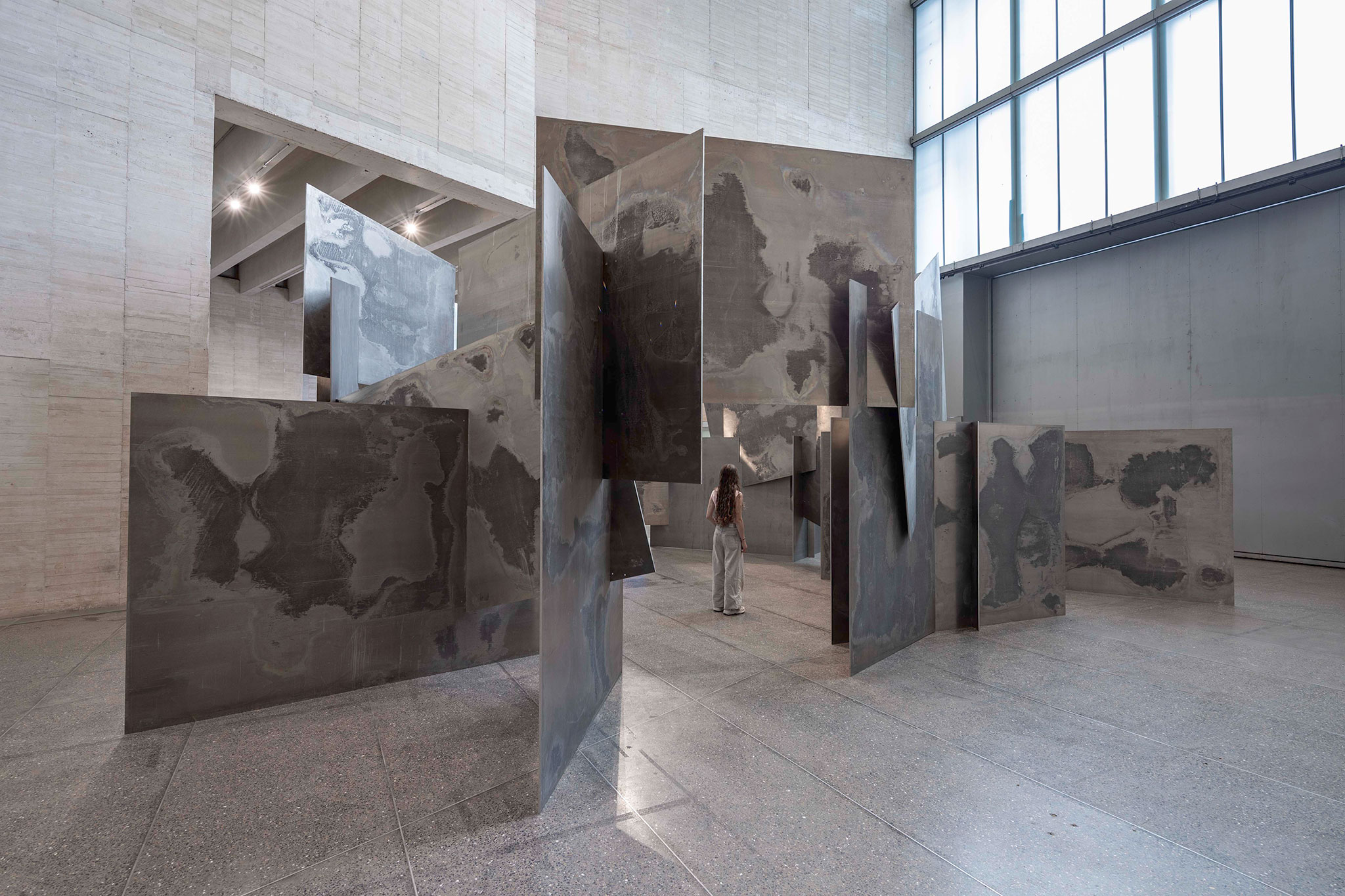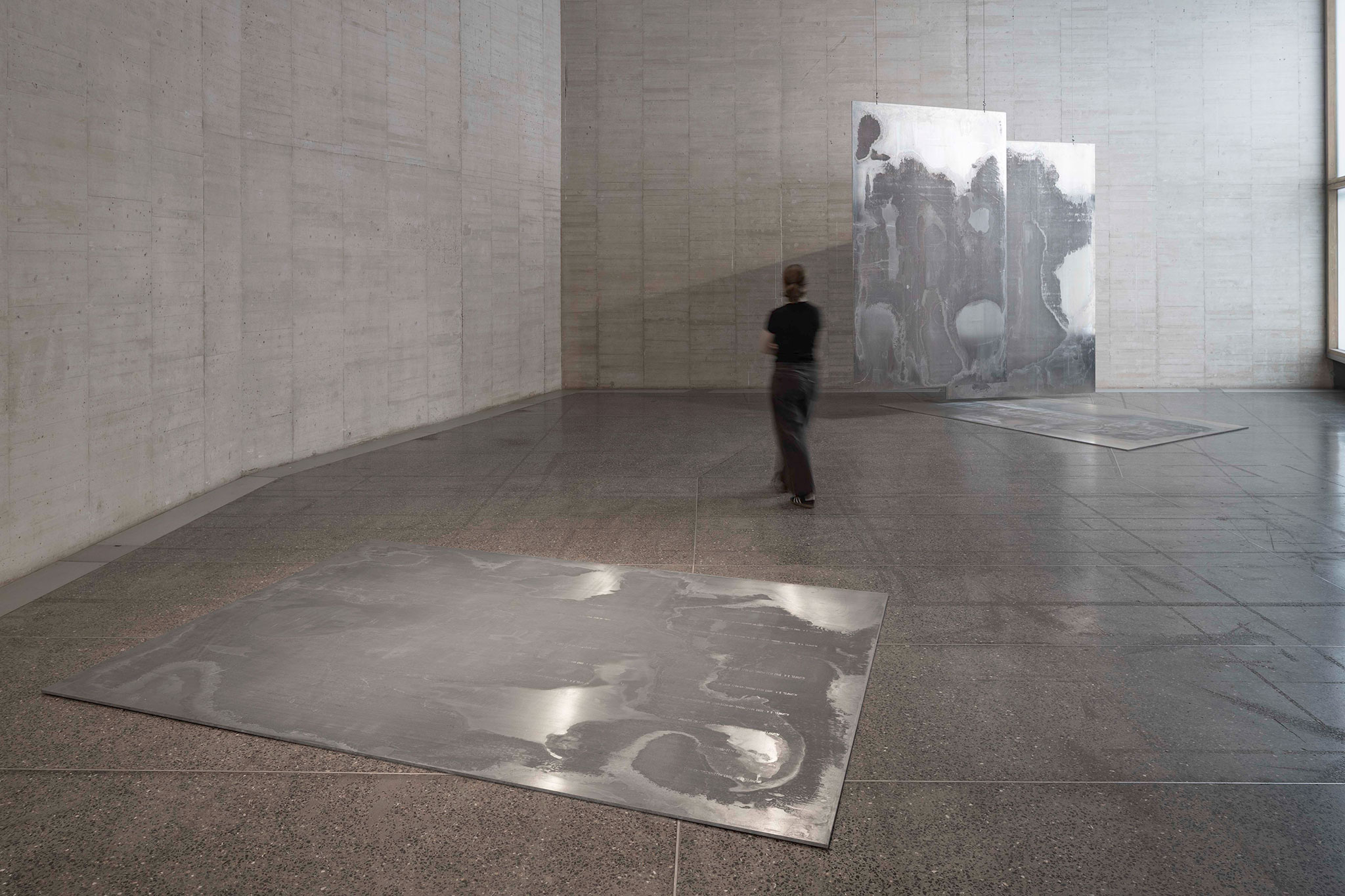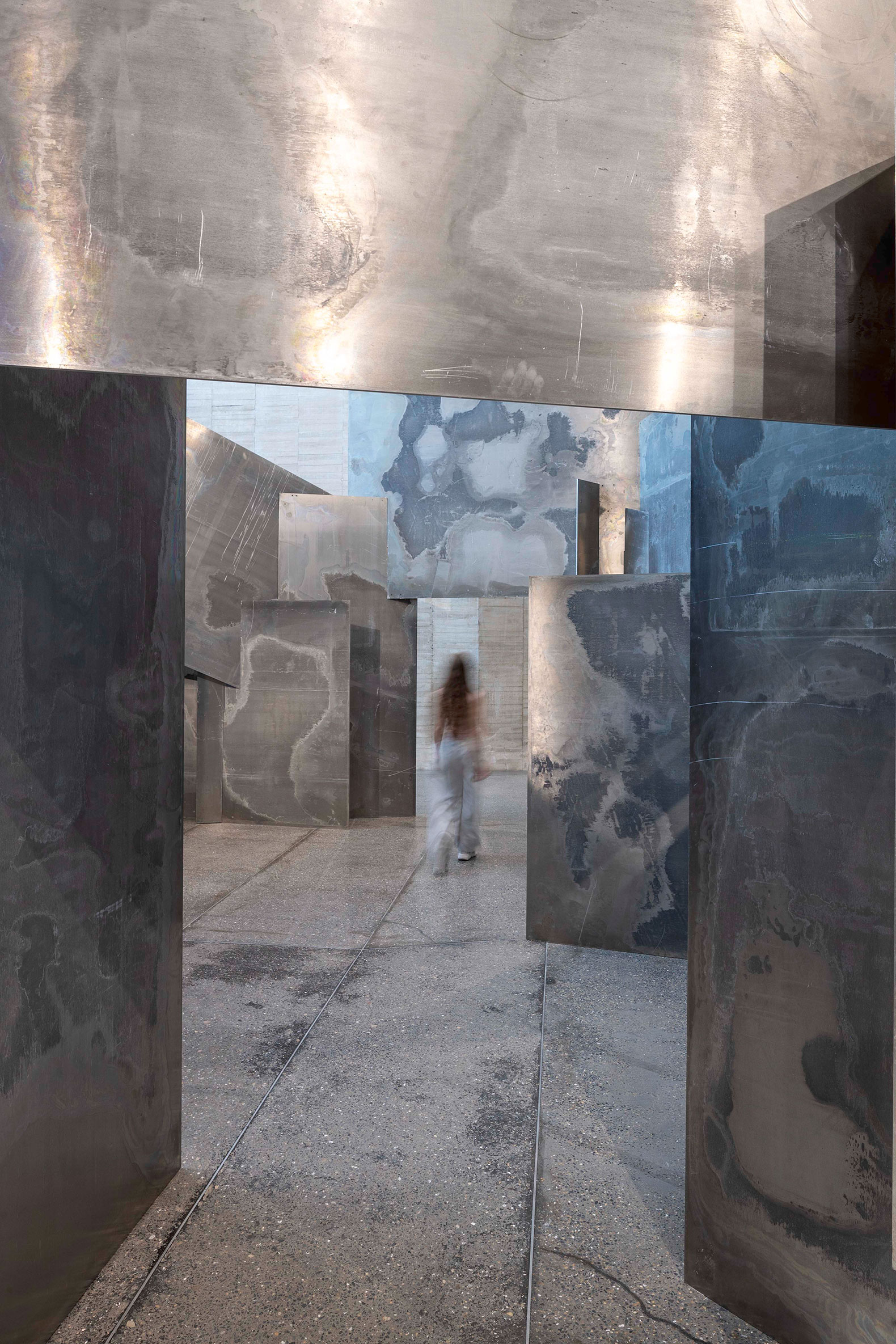
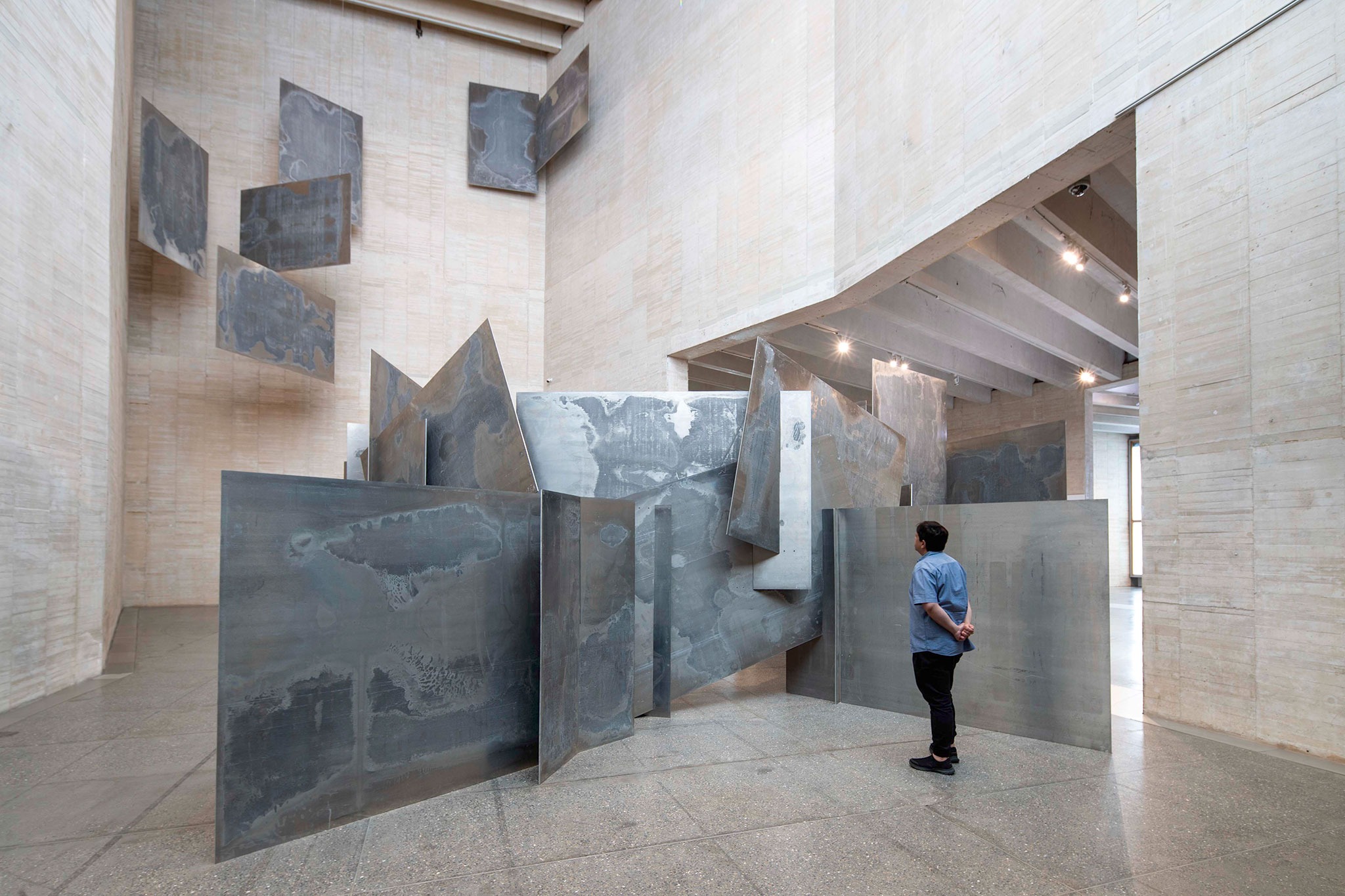
Ana Laura Aláez's "Pabellón de escultura" (2008), one of the most monumental works in the MUSAC Collection, has been reinterpreted by the artist for this exhibition entitled "Sculpture Pavilion: Refuge and Exposure" (Sculpture pavilion: shelter and the elements.) It will be on display in rooms 5 and 6 of the Museum of Contemporary Art of Castilla y León starting June 6.

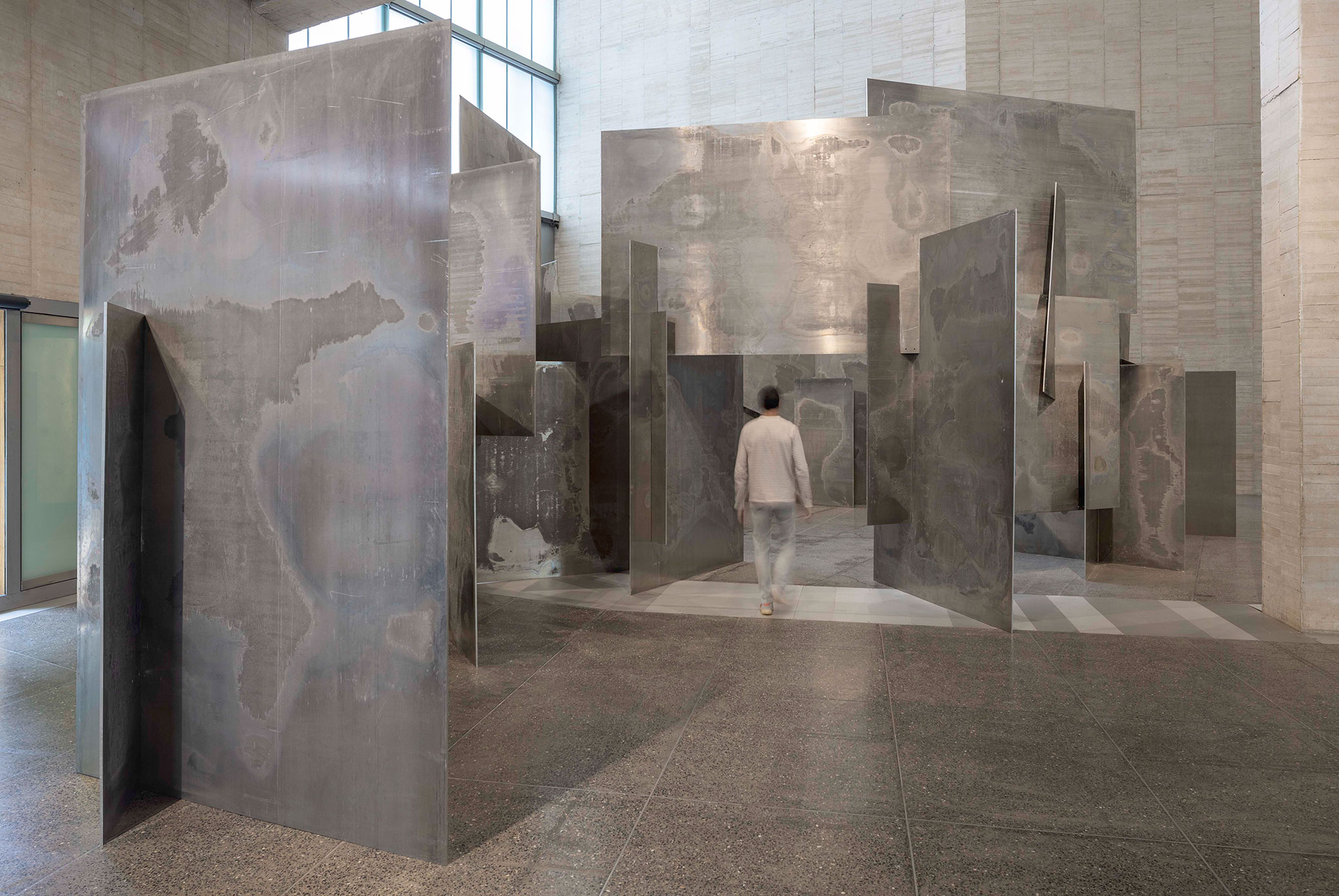
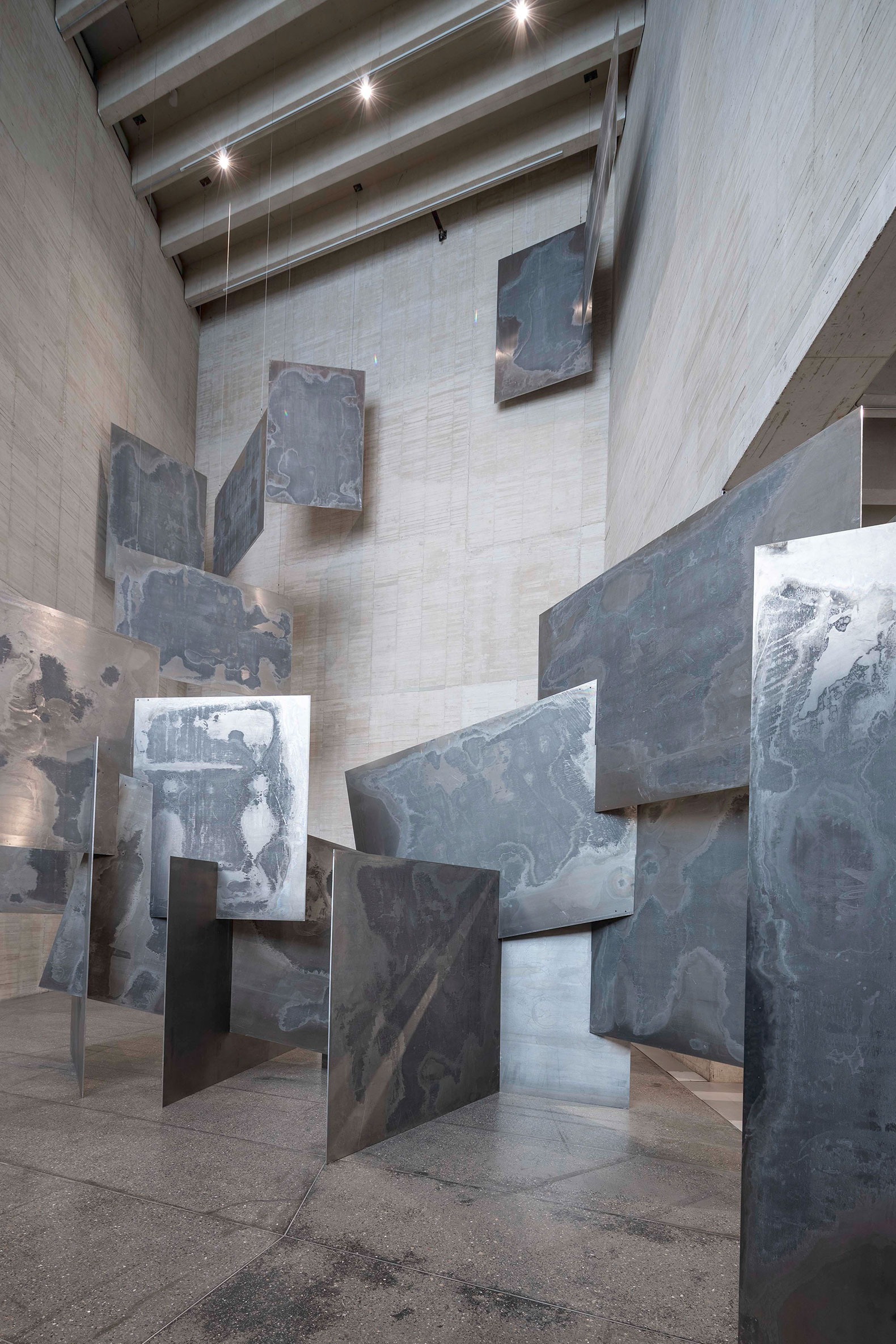
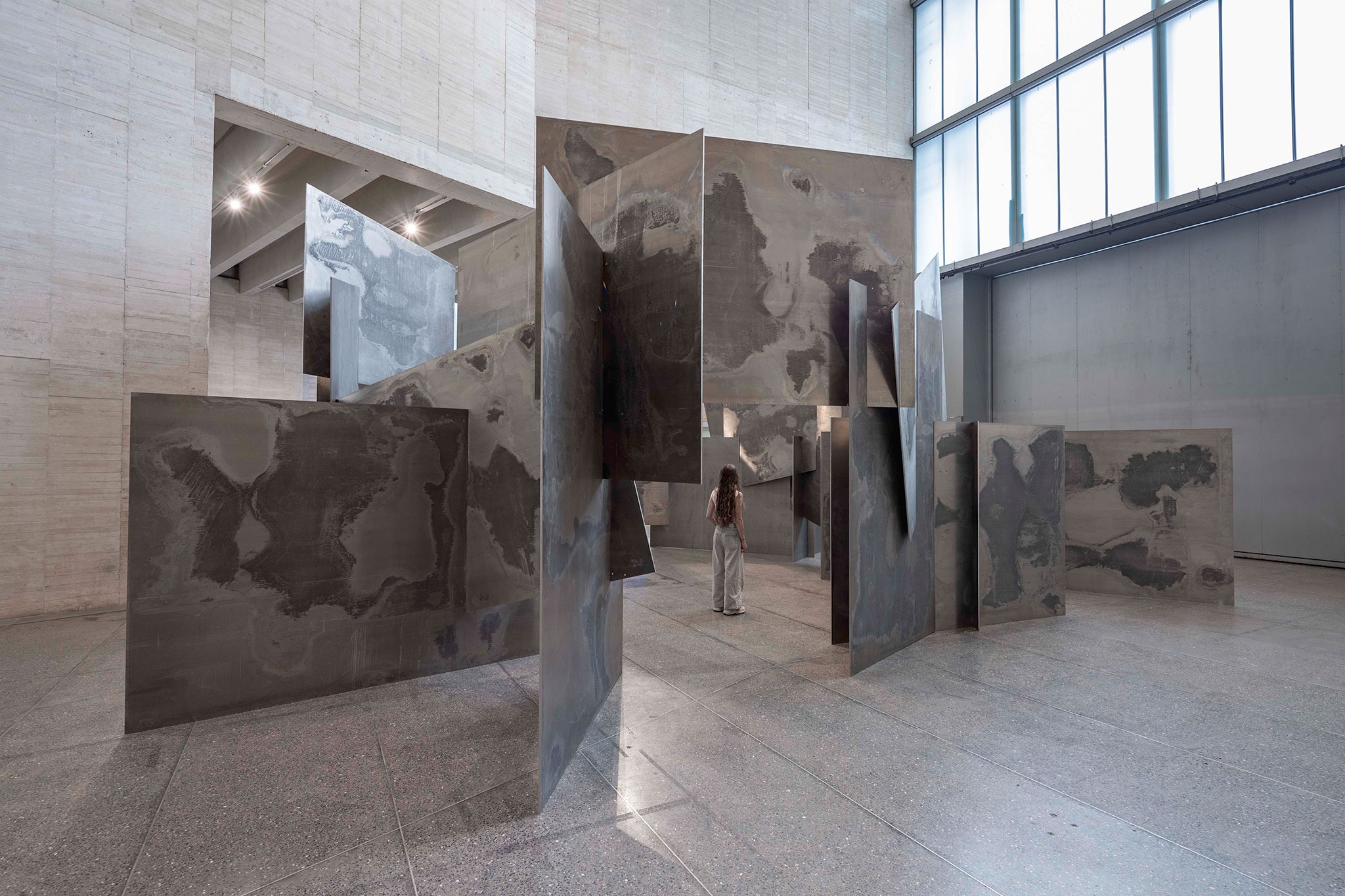
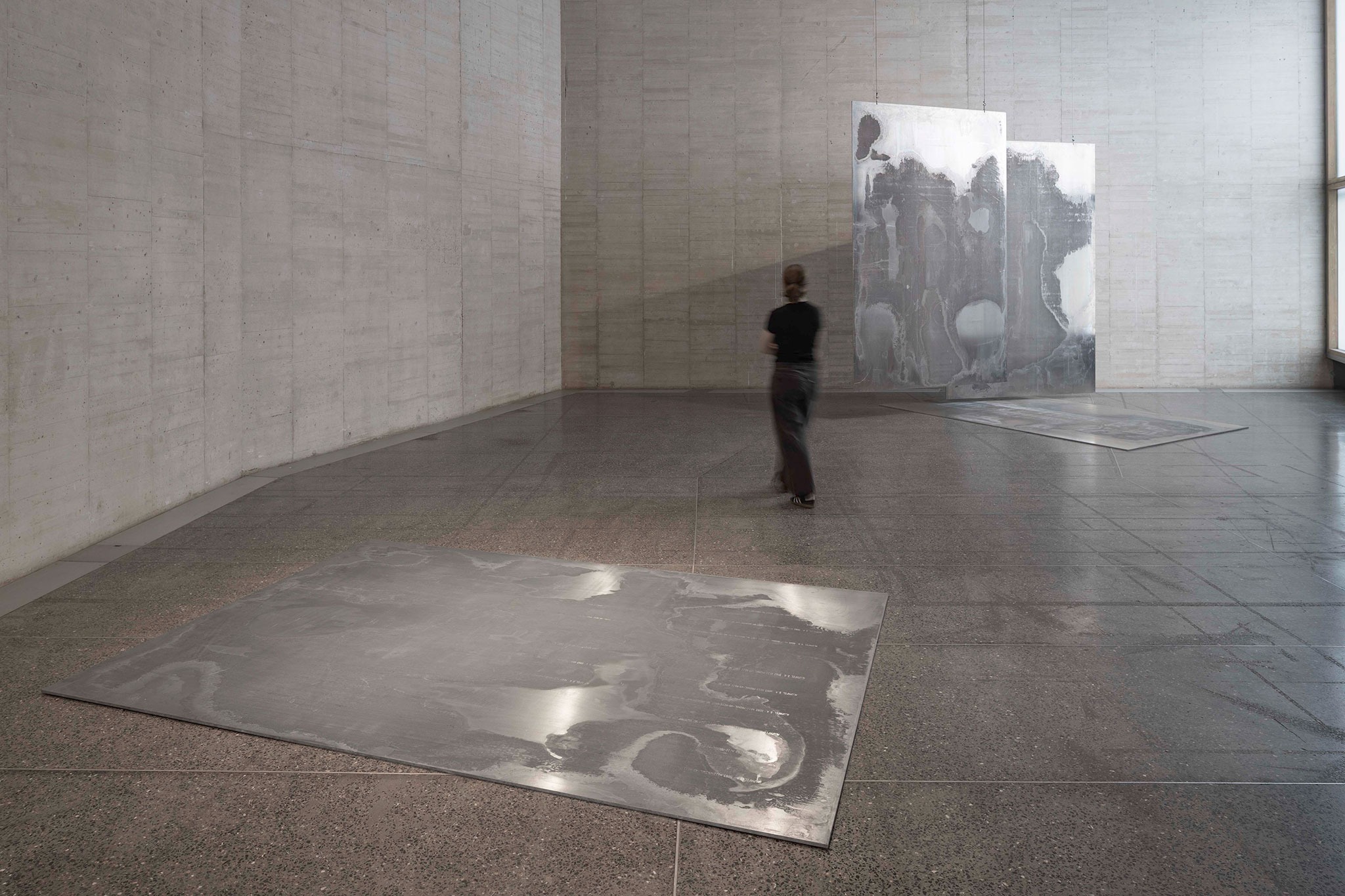
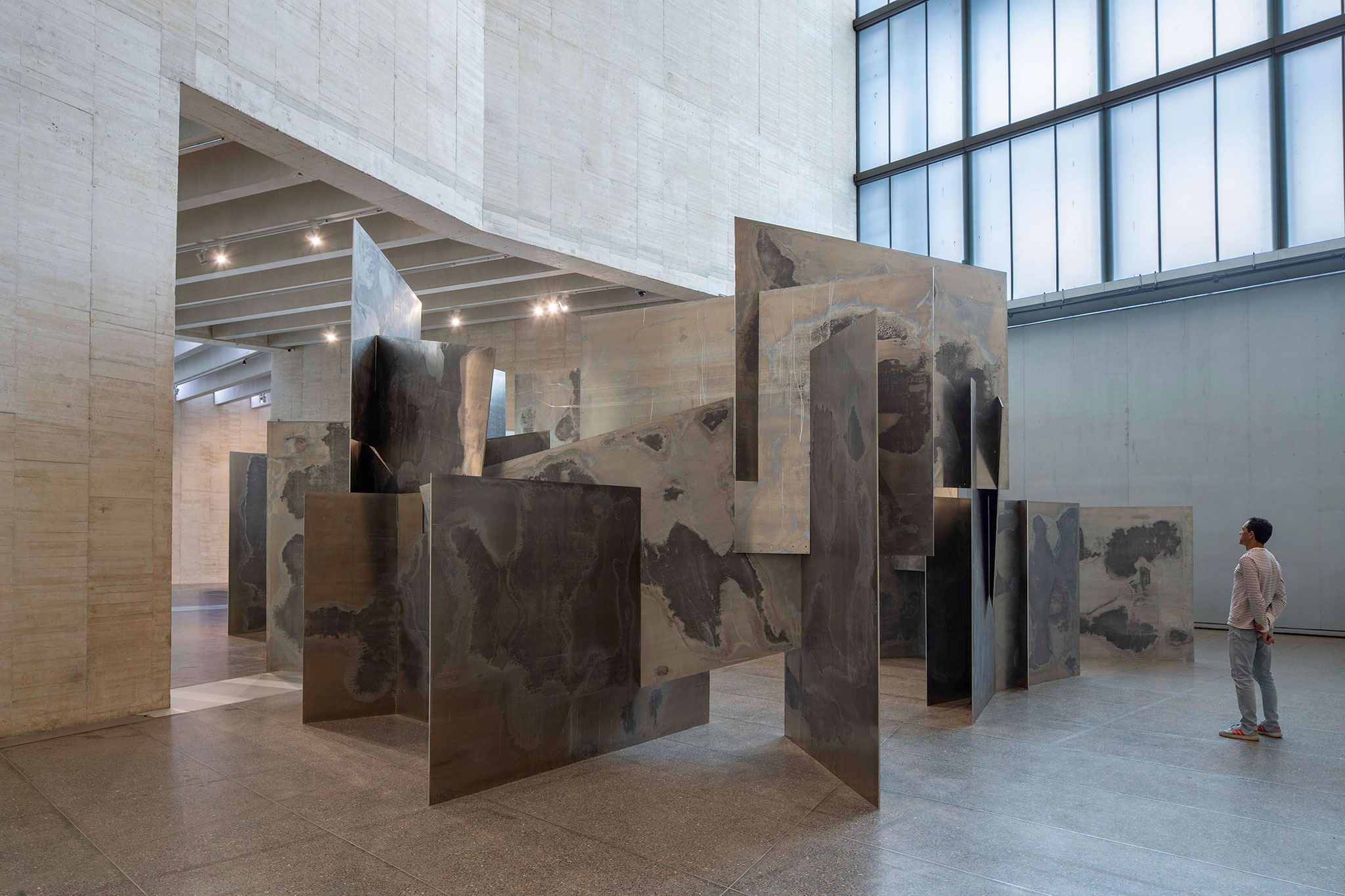
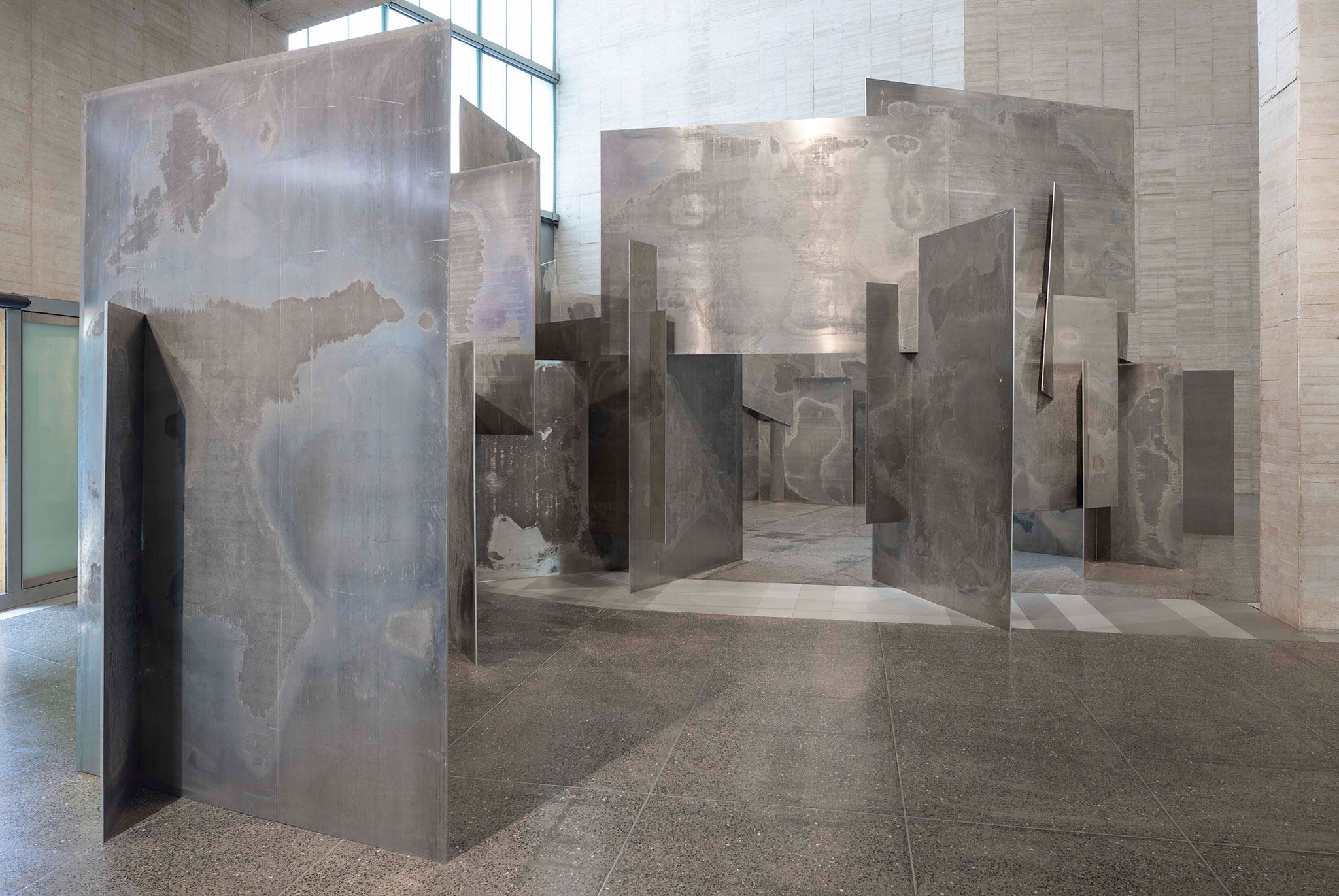
The Basque artist presented the "Pabellón de escultura" exhibition at MUSAC in 2008. The exhibition featured the pavilion of the same name, composed of 32 aluminum sheets forming a single unit. Her essential intention was to present a museum on a smaller scale within a larger one—an exhibition space that, instead of sheltering art, violently expels it.

In "Pabellón de escultura: refugio y exposición" (Sculpture pavilion: shelter and the elements) Ana Laura Aláez dedicates this structure to her ancestors, considering that the origin of her entire artistic trajectory stems from childhood vacations in a region of the province of León. In her own words, "the search for a safe place begins with the struggle for survival that we have inherited from our predecessors."

The foundation of the artist's approach to art is rooted in the idea of ​​finding a safe haven, a place where we can be ourselves. Above all, it is about achieving a place free from danger so that we can open ourselves to our nature with all its contradictions.
Ana Laura Aláez. "Pabellón de escultura," 2008. MUSAC Collection.

Ana Laura Aláez. "Pabellón de escultura," 2008. MUSAC Collection.

"Pabellón de escultura: refugio e intemperie" by Ana Laura Aláez

My ancestors hail from a region of León nestled among gentle mountains. From my family, I say with pride, I have inherited a kind of emptiness, an immaterial being that, curiously, has much to do with art, and for that I feel fortunate. All that intangible essence, passed down day after day through so many generations, was what, without my knowing it, would draw me closer to something whose full magnitude I still cannot grasp.

Ana Laura Aláez. «Pabellón de escultura», 2008. Colección MUSAC.
Ana Laura Aláez. "Pabellón de escultura," 2008. MUSAC Collection.

Humble in their appearance and customs, yet rich in their profound way of perceiving the world, they relied on the repetitive mantra of the land as their sole sustenance. They were an absent presence, as they made each tiny plot their own, patiently reaping the harvest. Despite enduring all manner of hardships that shook them daily, they were determined not to succumb and to remain calm. An uninterrupted rhythm of comings and goings dominated a landscape that seemed to embrace them, their shadows bouncing off each other, threadlike figures that, for an instant, formed an indivisible whole. Something mysterious happened precisely when they were lost in their gestures. They dissolved into the atmosphere and, at the same time, manifested an impetus, a tension that managed to pierce the surface of the countryside. Each one carried a fleeting liturgical act, a transfusion from deep within that, little by little, permeated the land. Their silhouettes vibrated, seemed to glow with a different light when they worked unseen, activated in the manner of their predecessors. Referring to the genesis of Pedro Páramo and the fact that its characters could not be fully situated, Juan Rulfo stated: "Time is broken, space is broken."
Ana Laura Aláez. «Pabellón de escultura», 2008. Colección MUSAC.
Ana Laura Aláez. "Pabellón de escultura," 2008. MUSAC Collection.

The body was a tool of labor, and the women always bore the brunt of it; they had to give birth and till the fields. However, those kinder glances managed to conceal some secrets from their dominant companions. The movements of the scythes sliced ​​through the air and seemed to melt into the horizon, interpreting existence without anyone else noticing. Few references corresponded to the image of the promised paradise in the afterlife. Nature, with the changes inherent to each season, possessed the scene like an embodied metaphor, causing tiny flecks of color to sprout on the plum, pear, and apple trees, as well as on the hazelnut, walnut, and cherry trees—robust trees that appeared to require no care from those inhabitants.
Ana Laura Aláez. «Pabellón de escultura», 2008. Colección MUSAC.
Ana Laura Aláez. "Pabellón de escultura," 2008. MUSAC Collection.

They weren't entirely themselves; they symbolized, rather, short-term projections for survival. Pain didn't seem relevant. Or perhaps it had to be hidden by force to avoid suffering a repercussion, as happened with the tragic events that ended with the disappearance of the grandfather, a miner with basic literacy skills, but with the magical power of words. I can still feel on my skin the touch of the silent faces that, clumsily, concealed the wound that would never heal. The more they hid the memory, the wider the wound opened, incandescent. No one understands how such a drastic change could have occurred in small villages that, overnight, became home to tyrannical, heartless men who erased the most basic ritual of their fellow villagers: rising and going to bed with the sun to tend the animals and plow the pastures, using the wood fire to ease the labor.
Ana Laura Aláez. «Pabellón de escultura», 2008. Colección MUSAC.
Ana Laura Aláez. "Pabellón de escultura," 2008. MUSAC Collection.

The cycle of their way of life was forever threatened. One day they would abandon those stone and adobe walls, which were no longer protective bastions, with hardly any belongings. The houses ceased to hold the enigmatic stories that no one intended to remember. An echo of knives, reminiscent of so much unpunished violence, will forever reverberate on their facades. My ancestors are inscribed with care on these metallic surfaces that intertwine like razor blades. To them, and to all their good companions from that significant historical context, I dedicate this building. The pulse of their time resonates powerfully in this equally turbulent era. Here and now, the chorus of their voices echoes in the zigzag pattern of the museum's sturdy walls.
More information

+ + copy Created with Sketch.
- + copy Created with Sketch.
Label
Artista
+ + copy Created with Sketch.
- + copy Created with Sketch.
Label
Fechas
Text

Fechas.- 6 de junio - 18 de octubre de 2026.
Inauguración.- sábado 6 de junio 19:00 a 21:00 h.
Horario.- martes a domingo de 11:00 a 14:00 y 17:00 a 20:00 h, lunes cerrado.

+ + copy Created with Sketch.
- + copy Created with Sketch.
Label
Localización
Text

MUSAC. Salas 5-6.
Avda. Reyes Leoneses, 24. 24008 León, España. 

+ + copy Created with Sketch.
- + copy Created with Sketch.

Ana Laura Aláez (Bilbao, 1964) studied at the Faculty of Fine Arts of the University of the Basque Country. She completed her training by attending two workshops led by the sculptor Ángel Bados at Arteleku (San Sebastián) in the early 1990s. Her early works indicate a process of assimilating the issues raised by the previous generation, the so-called New Basque Sculpture, while also introducing corrective elements linked to a gender perspective through the use of themes, materials, and procedural strategies outside those traditionally considered sculptural.

In 1991, she traveled to New York for a group exhibition at ABC No Rio, a self-managed space for art and activism. The trip had a profound impact, leading her to decide to move to New York City for extended periods during the 1990s. Following the group exhibition One Hundred Years of Contemporary Art (a title that combined the ages of the four participating emerging artists), she began working with the Juan de Aizpuru Gallery in Madrid, a professional relationship that would last for fourteen years. Juana de Aizpuru had discovered her work through the Eskultura catalog of the Bados Workshop's group exhibition at Arteleku in 1991, and through her participation in the Young Art Exhibition in Madrid.

In 1992, she received the Banesto Grant for Visual Arts and gained national recognition with Surface, an exhibition shared with the Basque sculptor Alberto Peral (curated by Frederic Montornés) at Espacio 13 of the Joan Miró Foundation in Barcelona. There, she exhibited for the first time the installation Women on Platform Shoes (La Caixa Foundation Collection), created in New York. In this piece, she aims to materialize emptiness (one of the main driving forces behind Oteicia's Basque sculpture tradition), not as an abstraction, but by linking it to a gender issue—in her case, the idea of ​​female invisibility.

The AIDS epidemic during the 1990s influenced her work with referential and allusive forms. This impact is evident in certain sculptures modeled by Aláez in clay and then cast in metal, such as Rings (1993), Crown (1995), Little Butt (1996), Tongue (1995), etc., or textile pieces like Mary Sex (1991), Catwoman (1992), Superwoman (1993), Wonderwoman (1993), or latex pieces like Condom Pants (1992), Curtain (1994), etc. These pieces emerged as a response to viral proliferation, sexual taboos, stigmatized bodily orifices, and self-preservation, all codified in the media and in our collective consciousness.

During this period, photographic self-portraits were an important part of her work. Among them are: Pink Self-Portrait (1994); Two-Headed (1995); Author's Signature (1995); Sade (1999); Bold Women (1996); the Creative Powders series (2001); and the Shiva series (2001). In all of them, with poses reminiscent of classical sculpture, lies the intention to reverse the Pygmalion myth: faced with the impossibility of recognizing herself in her own representation, the woman will be the one to take on the task of sculpting her own body.

In 1997, she created the installation *She Astronauts* at the Montcada Room of the La Caixa Foundation in Barcelona, ​​curated by Rosa Martínez. This project questioned the blurred boundaries between representations of "real," social space and the space of art, as well as the notion of authorship by allowing other artists to intervene. This project marked the beginning of her international career. Nicolas Bourriaud saw *She Astronauts* in situ and considered it part of the "relational art" movement. He commissioned her to create a project for the Palais de Tokyo in Paris: *Beauty Cabinet Prototype* in 2003.

In 2000, she created *Dance & Disco* in Space 1 of the Reina Sofía Museum in Madrid. A club within the museum that functioned simultaneously as an art installation and a dance hall with very different users who came and went, it sparked both strong reactions and strong opposition within the Spanish art scene. It is only now, as subsequent generations of artists reconsider this project from more than two decades ago. Electronic music is very present in Dance & Disco. Aláez began collaborating with the musical duo Silvania, later releasing an album under the name Girls on Film, a compilation of music created specifically for several of the videos produced up to that point. From 2004 to the present, he has collaborated with the German musician Ascii.disko.

In 2001, Aláez and Basque artist Javier Pérez represented the Spanish Pavilion at the 49th Venice Biennale, curated by Estrella de Diego. In the building's perimeter galleries, Aláez presented three installations which, despite being primarily spatial and audiovisual exercises, pointed to the need to reclaim his A more sculptural work with a different degree of subversion.

This desire would be definitively and more forcefully realized a few years later, in 2008, with Sculpture Pavilion, presented at the MUSAC in León and curated by Agustín Pérez Rubio. The project was a manifesto on sculpture and the need to recover what resonated strongly within him when he began working in art. Thanks to this project, which originated after a period of existential crisis, Aláez regained his enthusiasm and passion for art. He regained that inner drive, that desire to work independently of external demands.

From 2008 onwards, Aláez began his collaboration with the Soledad Lorenzo Gallery. A year later, he exhibited Form and Performance at that gallery, which included the installation Head-Spiral-Hole-Fist-Sperm-Knot, currently part of the collection of the Bilbao Fine Arts Museum.

Among his museum exhibitions are: The Real Royal Trip (2003), PS1, MoMA, New York; Hell Disco (2004), Helsinki City Art Museum, Helsinki; Hell Disco (2004), Centro Cultural de España, Mexico City; Signale Der Kleidung (2004), Podewil Center of Contemporary Art, Berlin; Goodbye Horses-Kiss the Frog. The Art of Transformation (2005), The National Museum of Art, Architecture and Design, Oslo; Arquitectura de Sonido (2006), Museo Banco de la República, Bogotá; and Incógnitas. Cartografías del Arte Contemporáneo en Euskadi (2007), Guggenheim Museum, Bilbao.

In 2008, he permanently installed his piece Bridge of Light at the Towada Art Center, Towada City, Japan. This piece was selected after an invitation from Nanjo and Associates to participate in a restricted competition for international artists. The architect of the new museum, Ryūe Nishizawa, modified the space, adapting the building's initial design to the artist's work. The direct precedent for this piece was Geometrical Life (MUSAC Collection), first exhibited in the exhibition Gaur, hemen, orain at the Bilbao Fine Arts Museum (curated by Guadalupe Echevarría and Bartomeu Marí) in 2001.

In 2013, the Basque Government awarded her the Gure Artea prize in recognition of her artistic career and contributions.

The spirit of negotiation and reconciliation with the non-linear and chaotic processes that an artist experiences throughout their life gave rise to Impostura, in 2014, at the Moisés Pérez de Albéniz Gallery in Madrid. In 2018, she held the solo exhibition Resistencia at the Carreras Múgica Gallery in Bilbao.

Between 2019 and 2020, the retrospective exhibition *All the Concerts, All the Nights, All Empty*, curated by Bea Espejo at CA2M in Madrid, brought together a selection of key works from her career. This exhibition had a second venue at Azkuna Zentroa in Bilbao in 2021, where new works were added, along with an area that included objects, drawings, prototypes, photographic essays, architectural models, and all kinds of documentation. Coinciding with this exhibition, her video *Queer Carriers: The Double and Repetition*, 2020 (produced thanks to the Multiverso Grant for Creation in Video Art, 2018) was shown at the Bilbao Fine Arts Museum.

In June 2022, she presented *Nature Is Not on Our Side* at Galería Pelaires in Mallorca, her current place of residence. Between 2022 and 2023, she held a fellowship at the Royal Academy of Rome, where she worked on the Ancestral Echoes project for the Oku-Noto Triennial in Suzu, Japan, in 2023. Other international biennials in which she has participated include: the 5th Istanbul Biennial, Turkey, 1997; the 48th Venice Biennale, Italy, 1999; the 2nd and 3rd Busan Biennials, Korea, in 2000 and 2004 respectively; and the Buenos Aires Biennial, Argentina, 2001.

In 2024, she created *I Am Palace, I Am Stable* (curated by Frederic Montornés) at the Es Baluard Museum in Mallorca. This exhibition featured modular sculptures made of esparto grass, emphasizing the emptiness of the exhibition space as an integral part of the works. This work also clearly reflects the impact of her residency in the Balearic Islands since 2010.

In 2026, her exhibition "In Contact with the Beast" at The Ryder Projects gallery stands out. This title alludes to an interview in which Aláez stated that to survive creatively, she needs to be in contact with our animal nature, with that inner monster—which, as Alejandra Pizarnik said, haunts us, pleading for help.

In addition to her visual and plastic arts work, Ana Laura Aláez has extensive experience in space design, teaching, and writing. This last facet has led her to launch a project that blends writing and video, titled "When the Stigma Falls on Contemporary Women Creators," thanks to a grant from the Ministry of Culture's 2025-2026 Public Grants for the Creation, Research, and Production of Artistic Projects in Residency.

Read more
Published on: June 7, 2026
Cite:
metalocus, ELVIRA PARÍS FERNÁNDEZ
"Intangible inheritances. "Pabellón de escultura: refugio e intemperie" exhibition by Ana Laura Aláez" METALOCUS. Accessed
<https://www.metalocus.es/en/news/intangible-inheritances-pabellon-de-escultura-refugio-e-intemperie-exhibition-ana-laura-alaez> ISSN 1139-6415
Loading content ...
Loading content ...
Loading content ...
Loading content ...
Loading content ...
Loading content ...
Loading content ...
Loading content ...
Loading content ...
Loading content ...
Loading content ...
Loading content ...
Loading content ...
Loading content ...
Loading content ...
Loading content ...
Loading content ...
Loading content ...
Loading content ...
Loading content ...
Loading content ...
Loading content ...
Loading content ...
Loading content ...
Loading content ...
Loading content ...
Loading content ...
Loading content ...
Loading content ...
Loading content ...
Loading content ...
Loading content ...
Loading content ...
Loading content ...
Loading content ...
Loading content ...
Loading content ...
Loading content ...
Loading content ...
Loading content ...
Loading content ...
Loading content ...
Loading content ...
Loading content ...
Loading content ...
Loading content ...
Loading content ...
Loading content ...
Loading content ...
Loading content ...
Loading content ...
Loading content ...
Loading content ...
Loading content ...