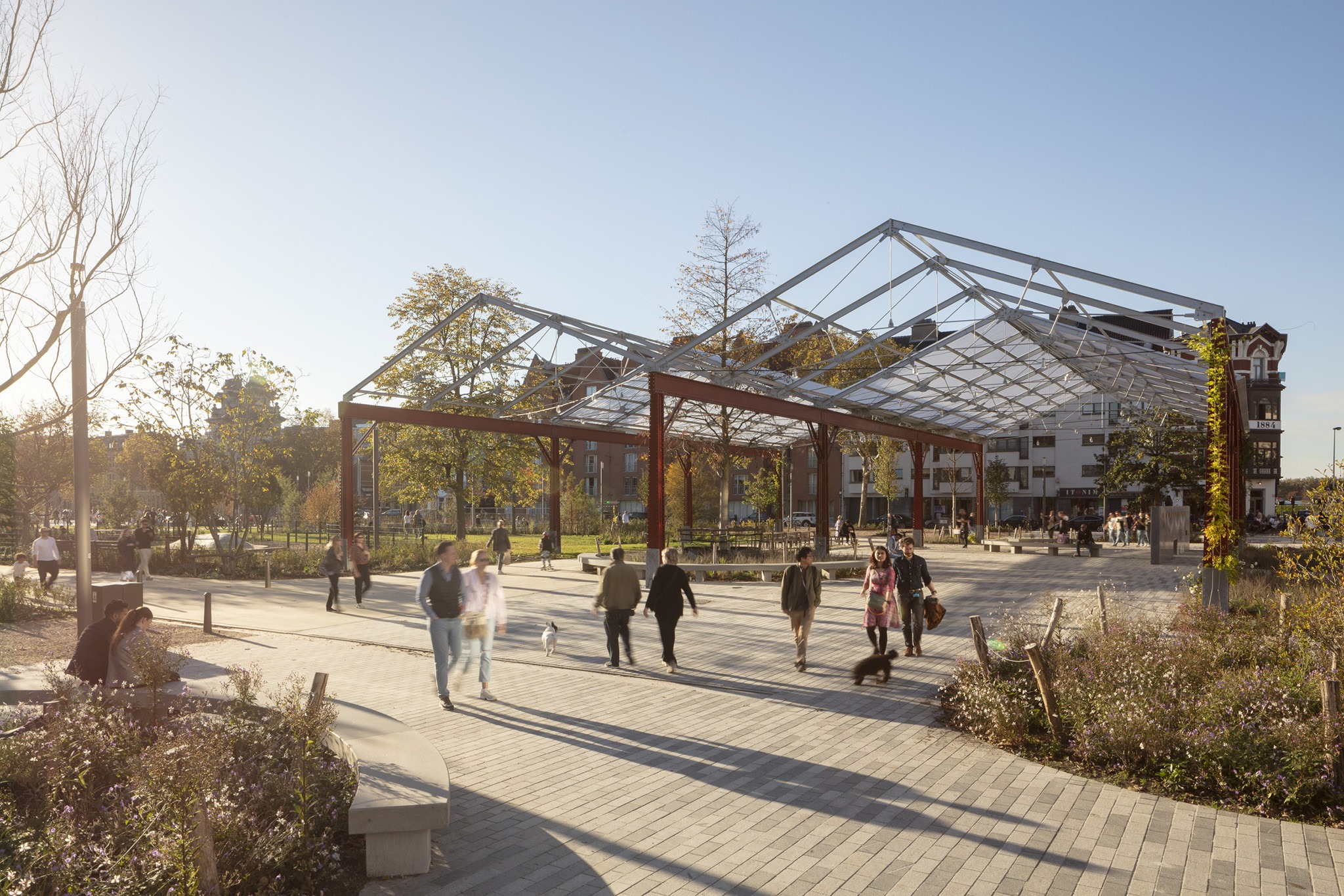
The project developed by Tractebel, ADR - Atelier Descombes Rampini, and Georges Descombes has transformed the former commercial docks of Gedempte Zuiderdokken in Antwerp into a large urban park adapted to contemporary climate challenges.

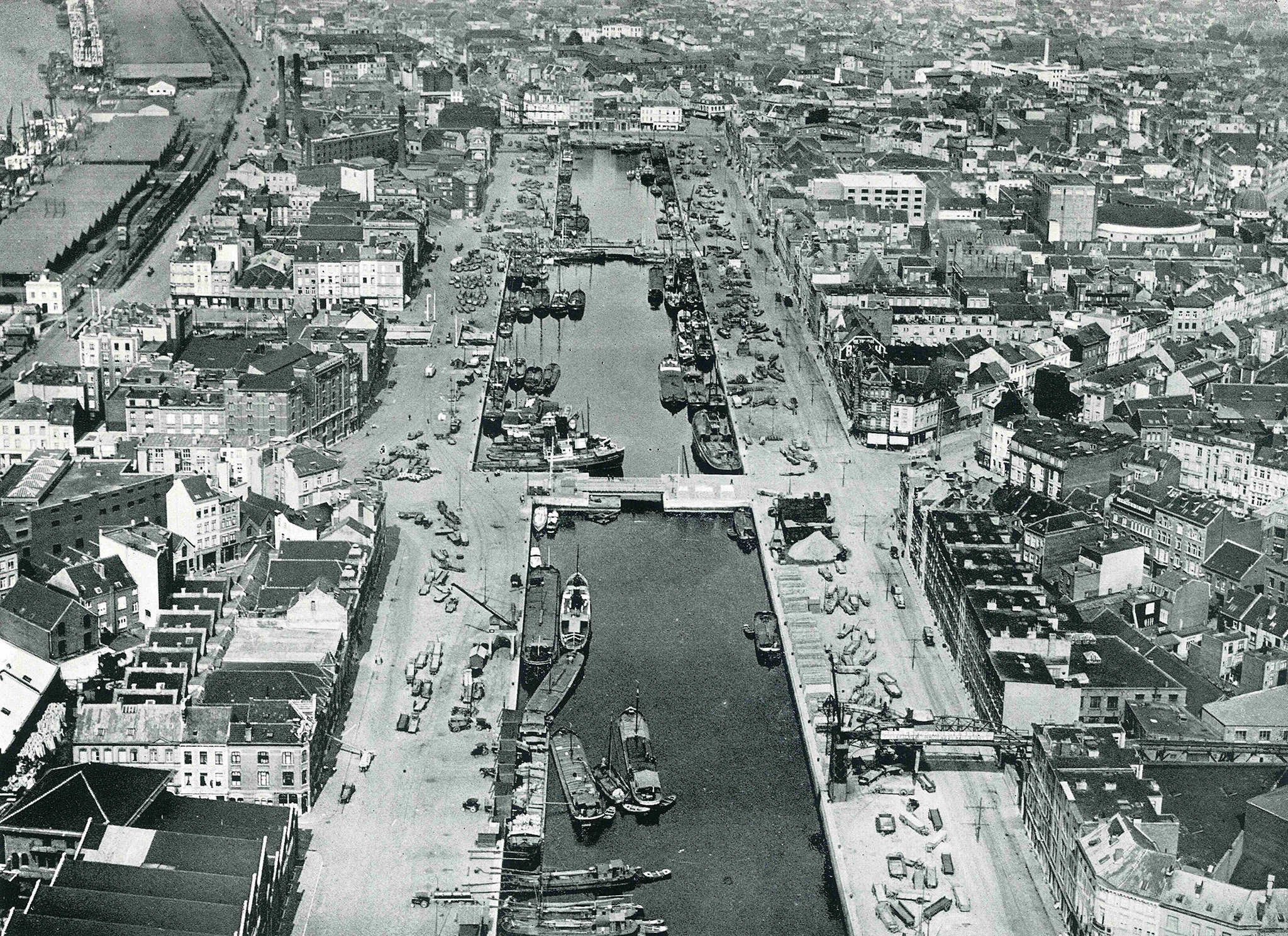
Selected as one of the five finalists for the 2026 European Prize for Urban Public Space—organized by the Centre de Cultura Contemporània de Barcelona (CCCB)—this 19th-century site had been converted in the 1960s into a vast expanse of asphalt serving as a parking lot: a lifeless space that trapped heat and overwhelmed the sewer system.

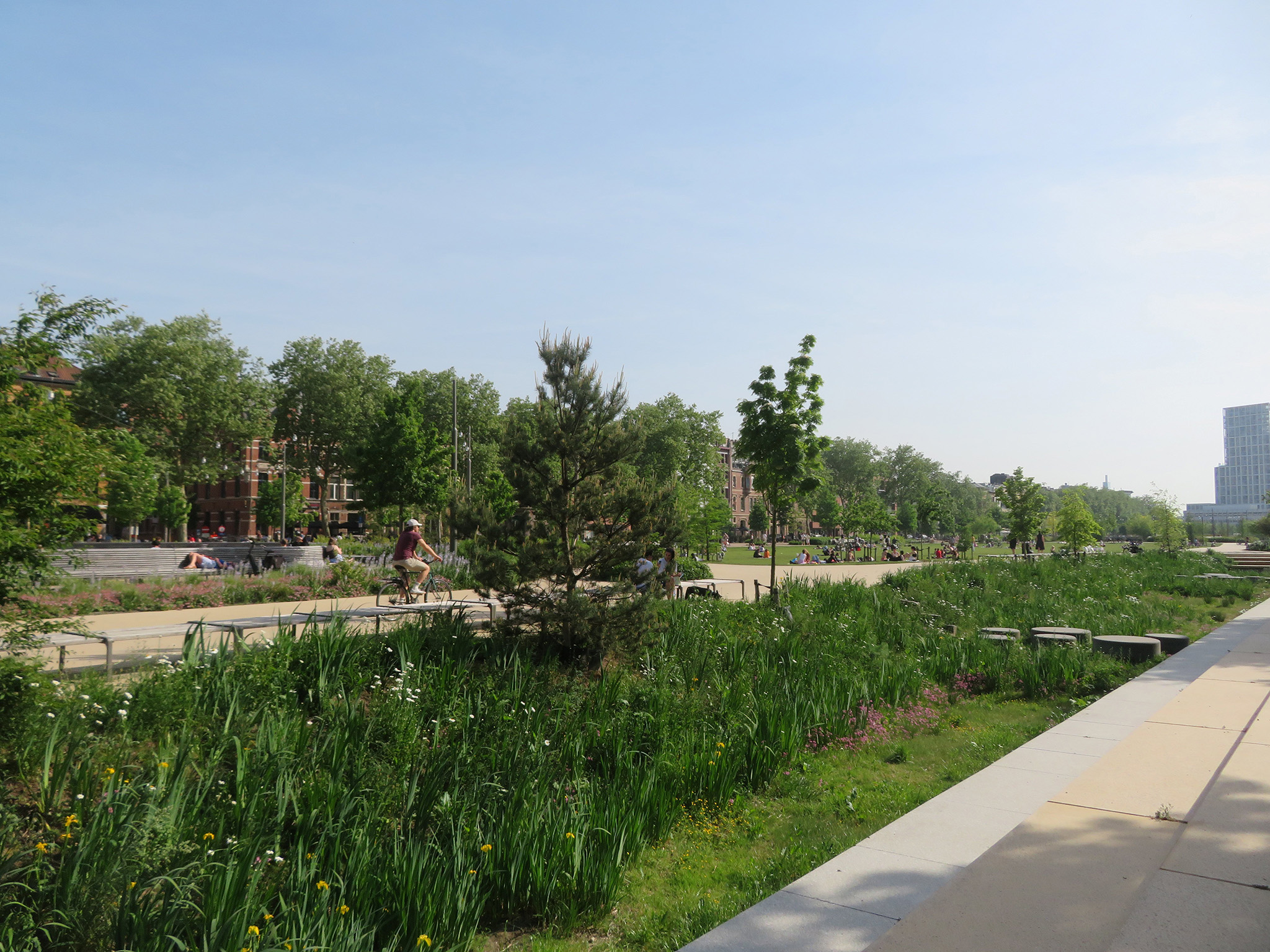
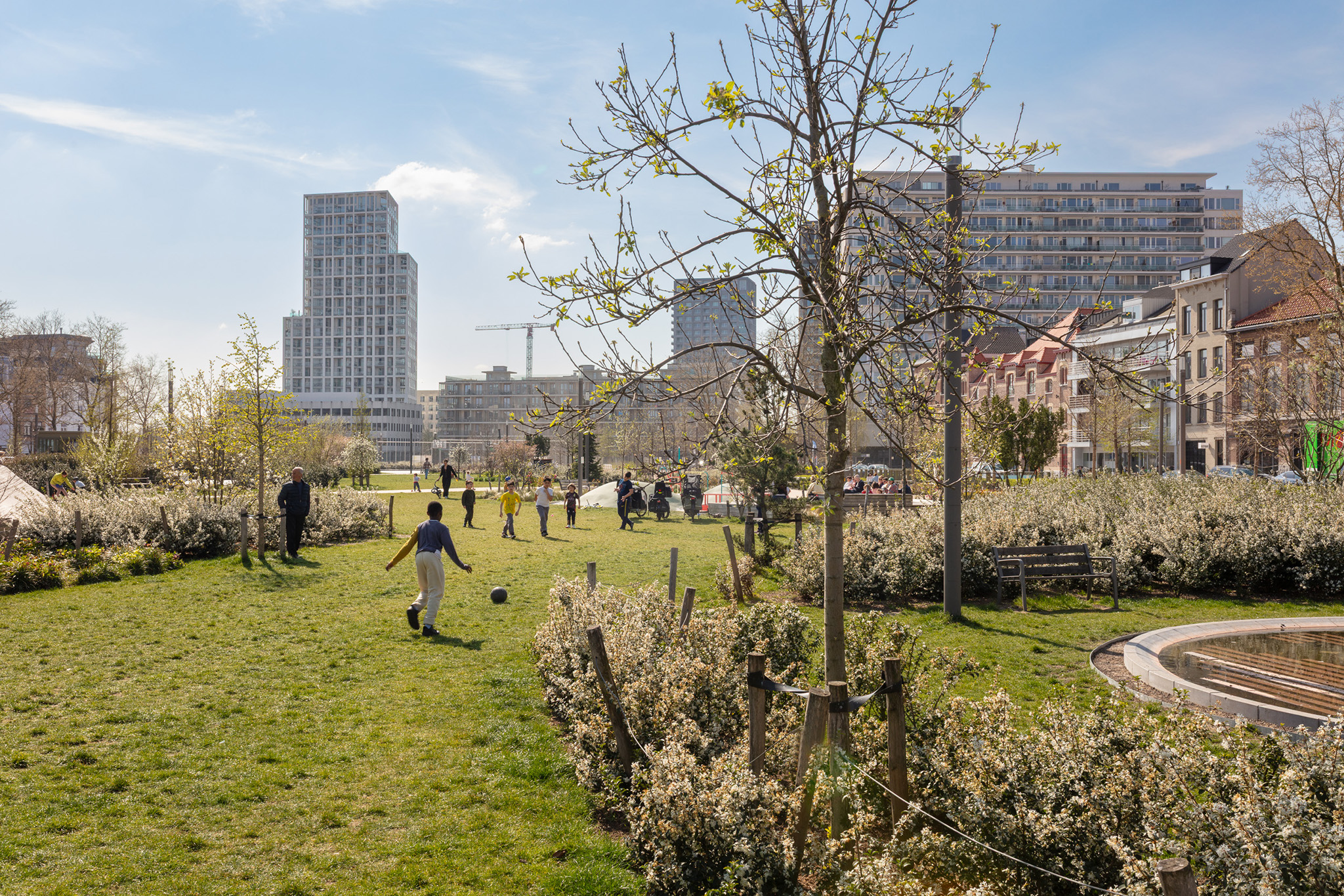
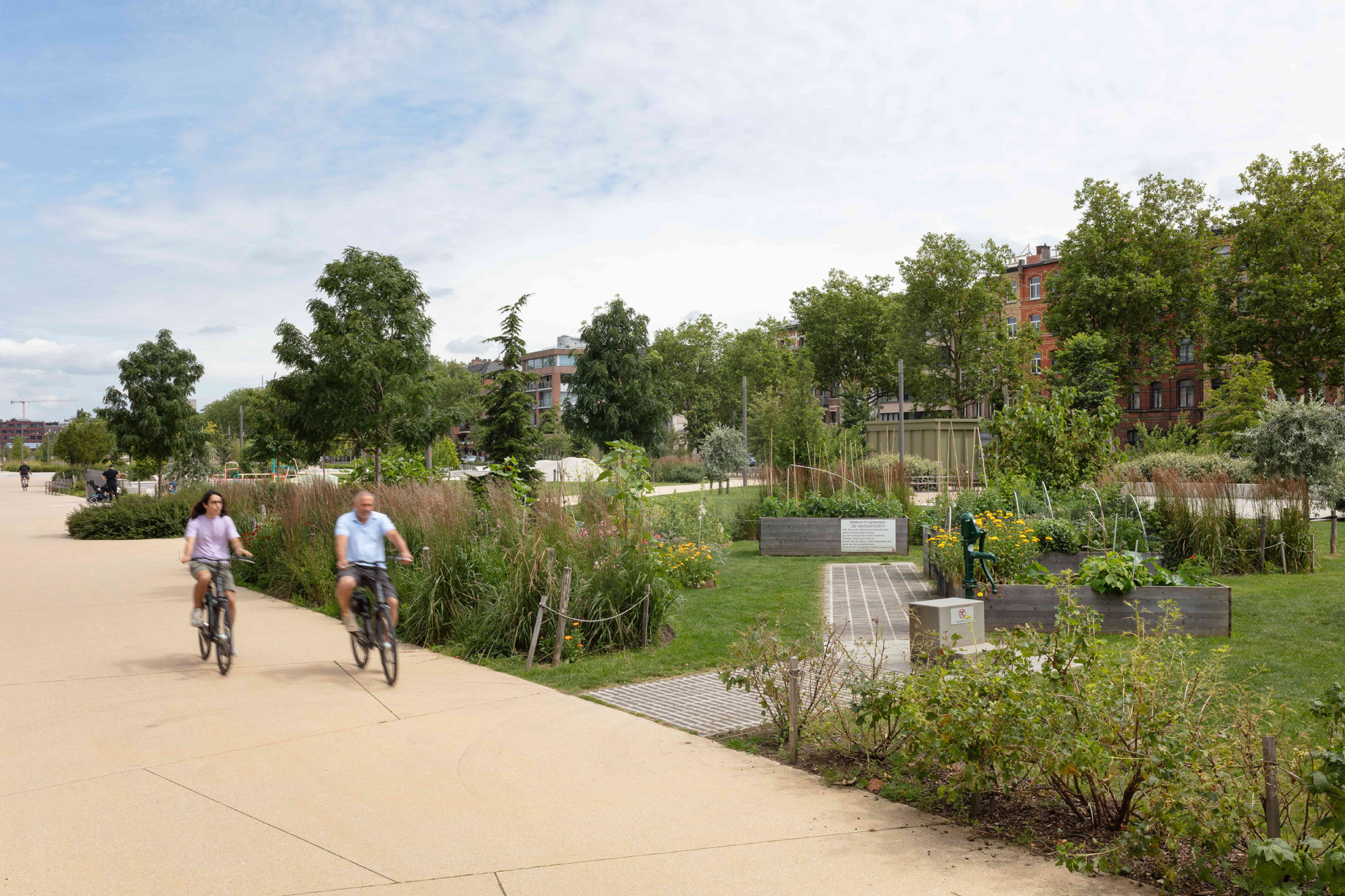
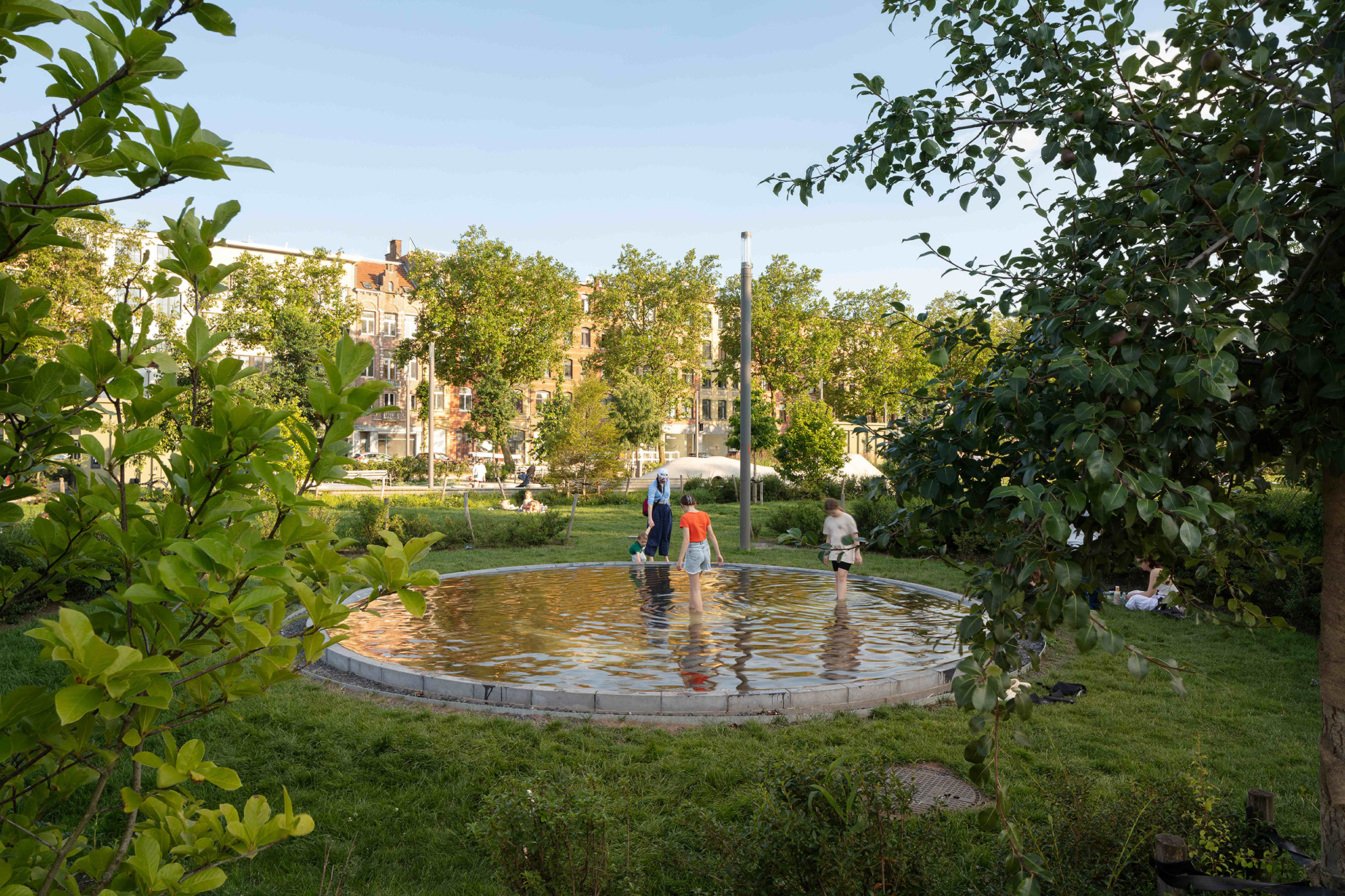
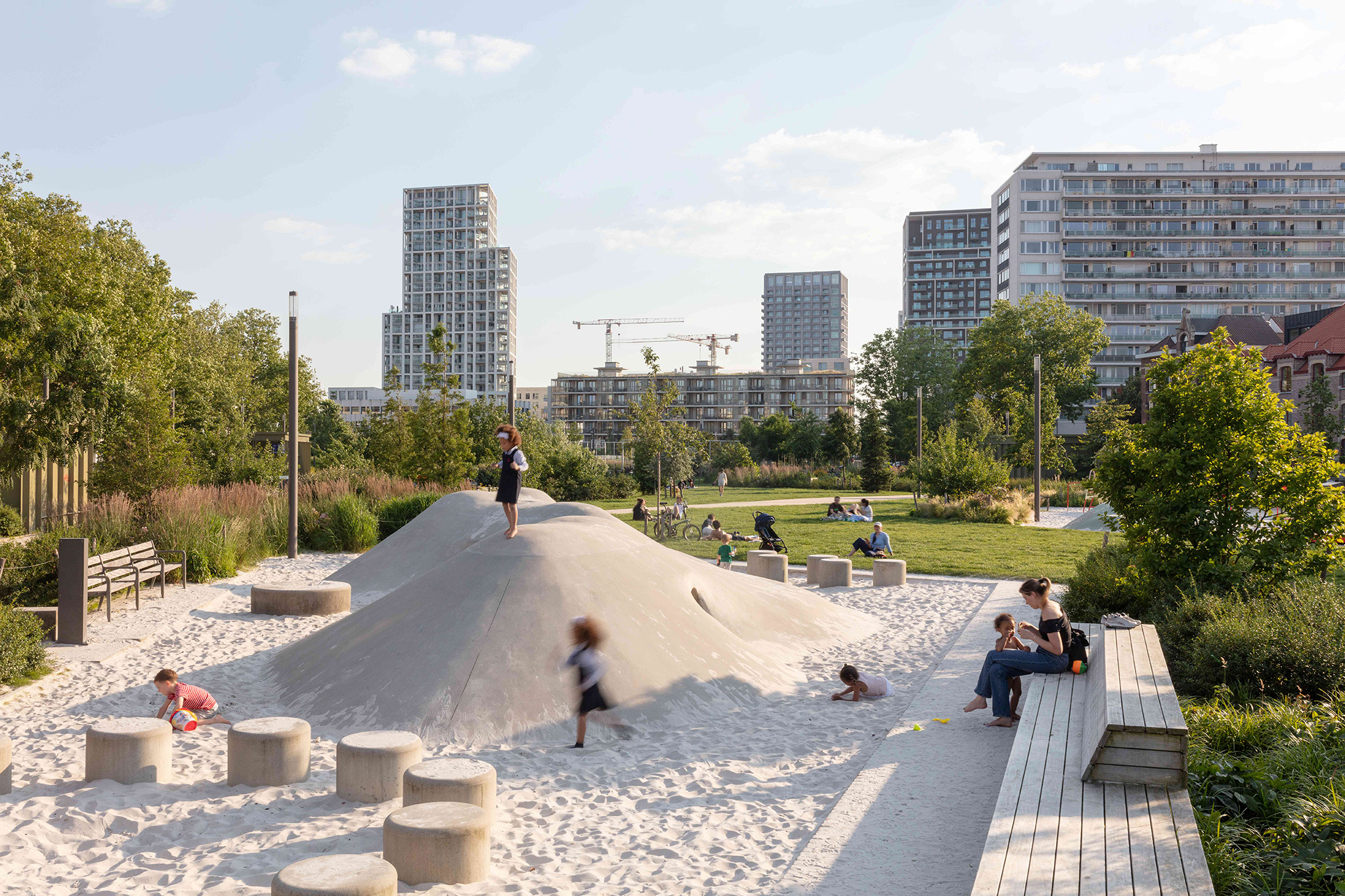
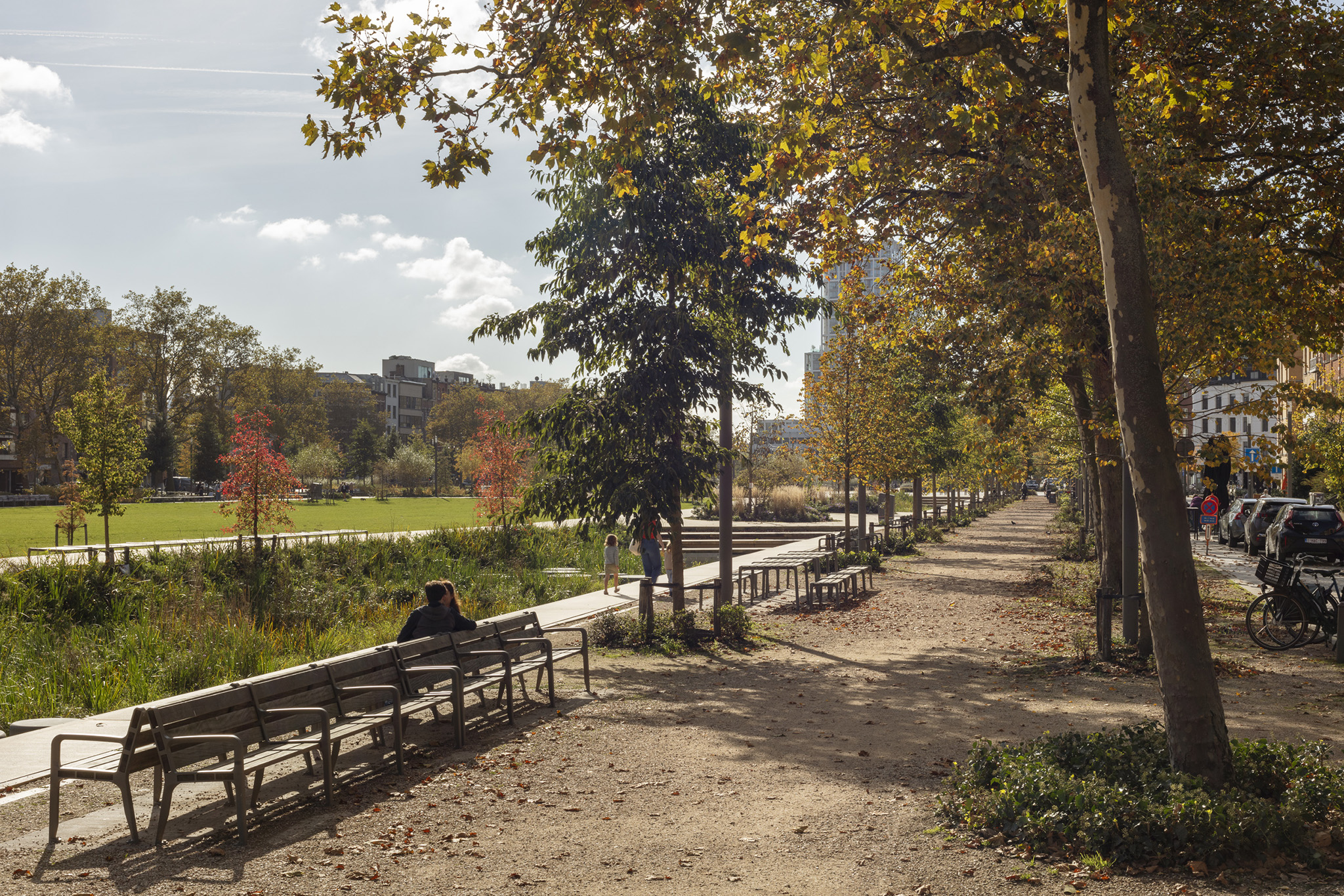
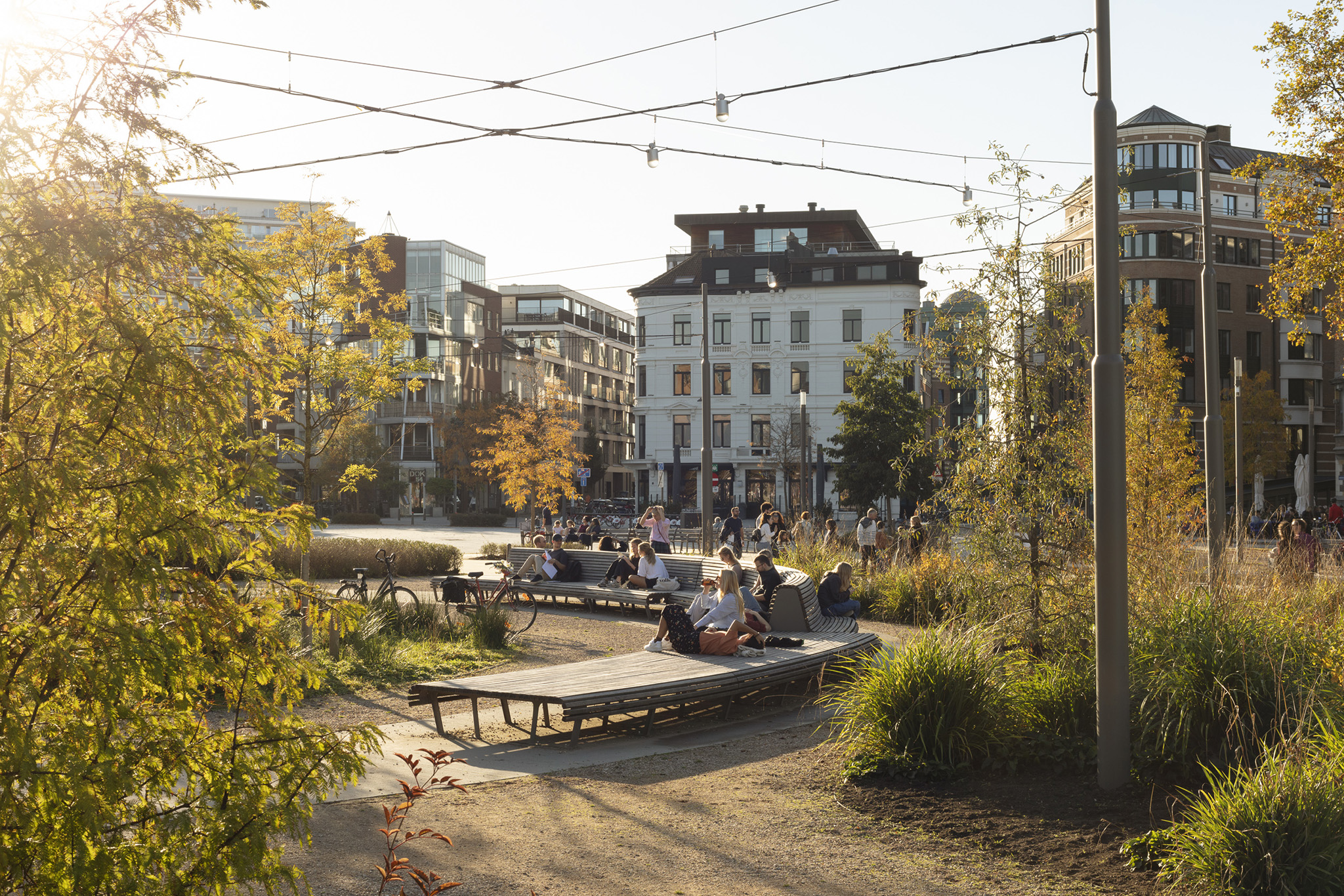
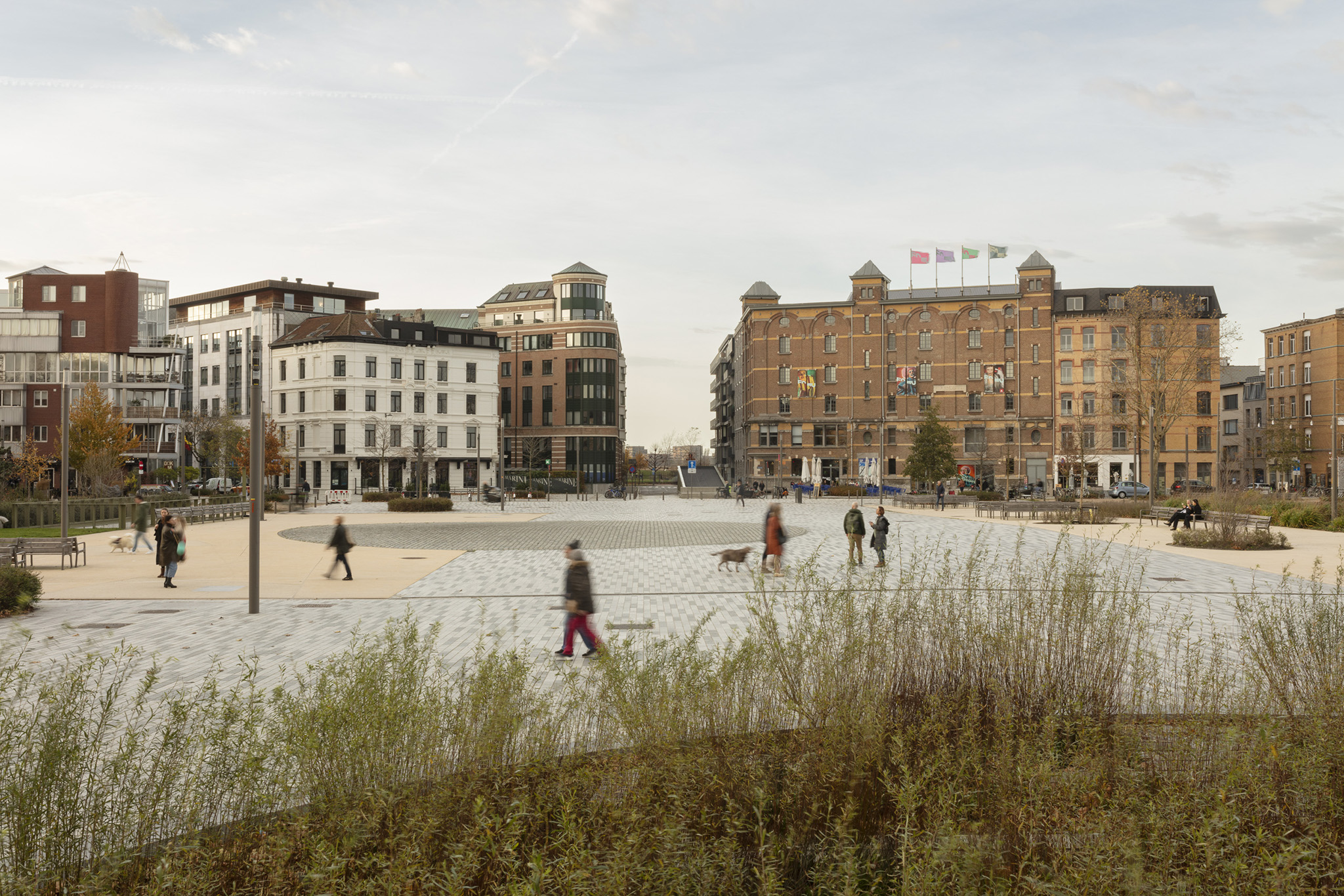
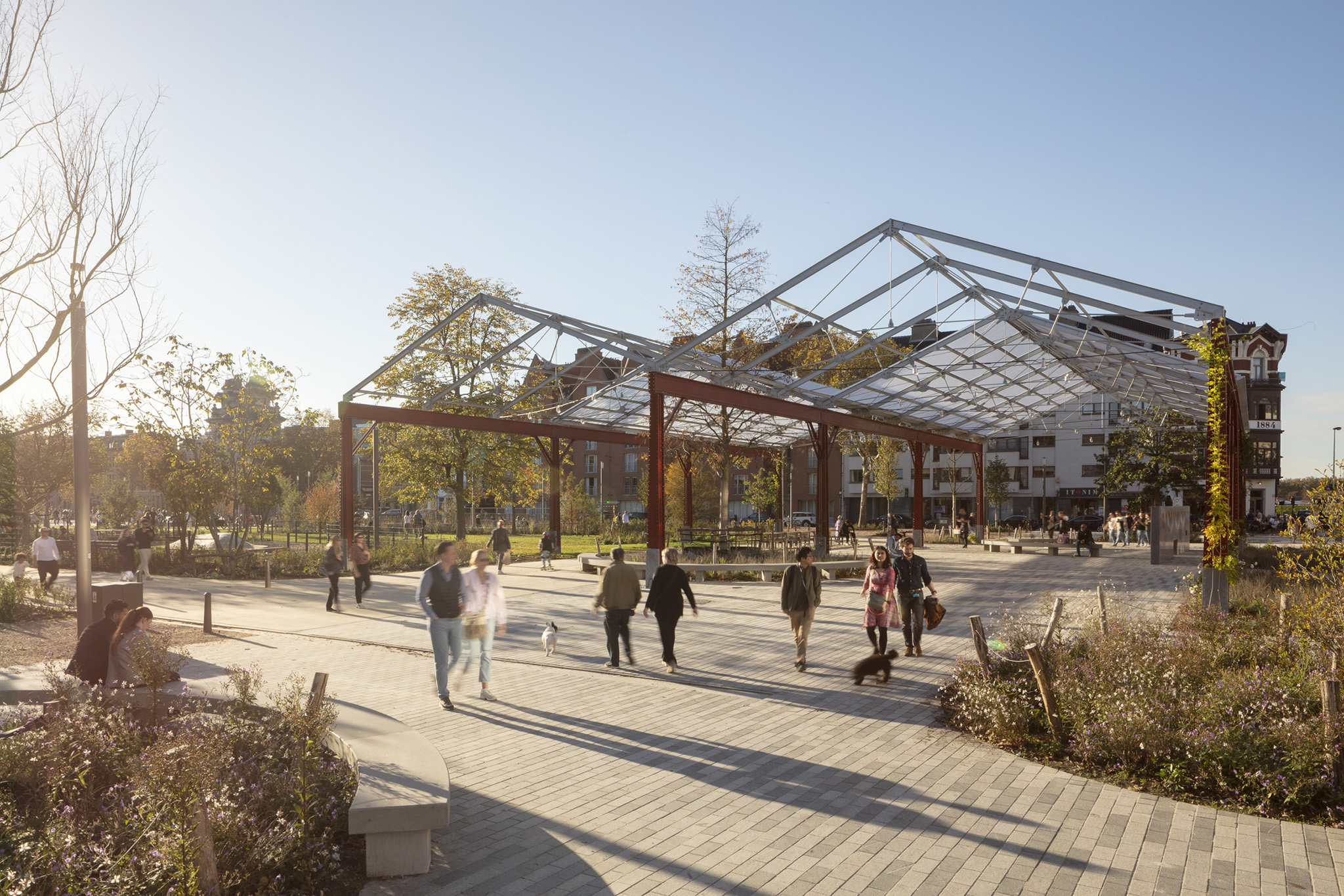
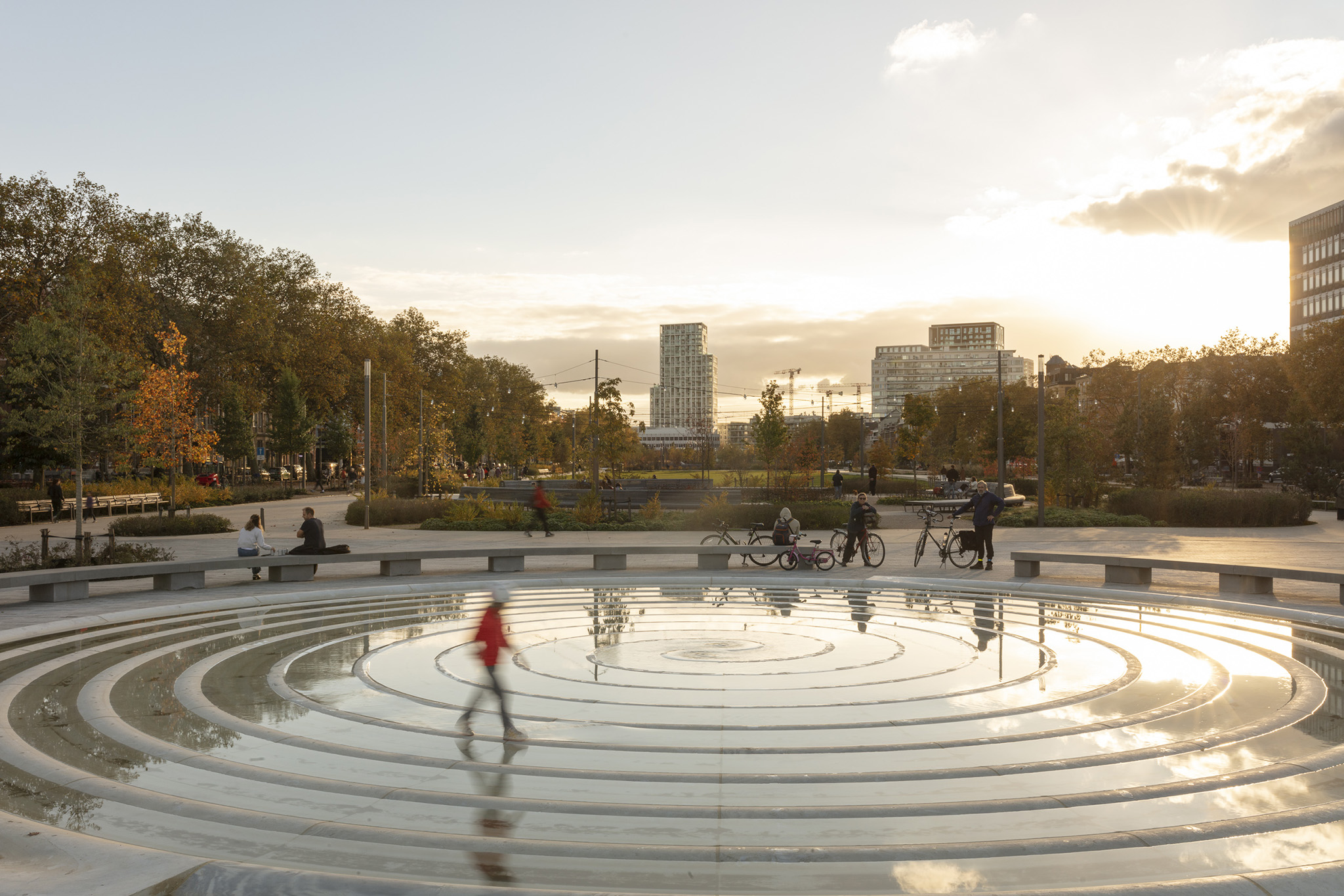
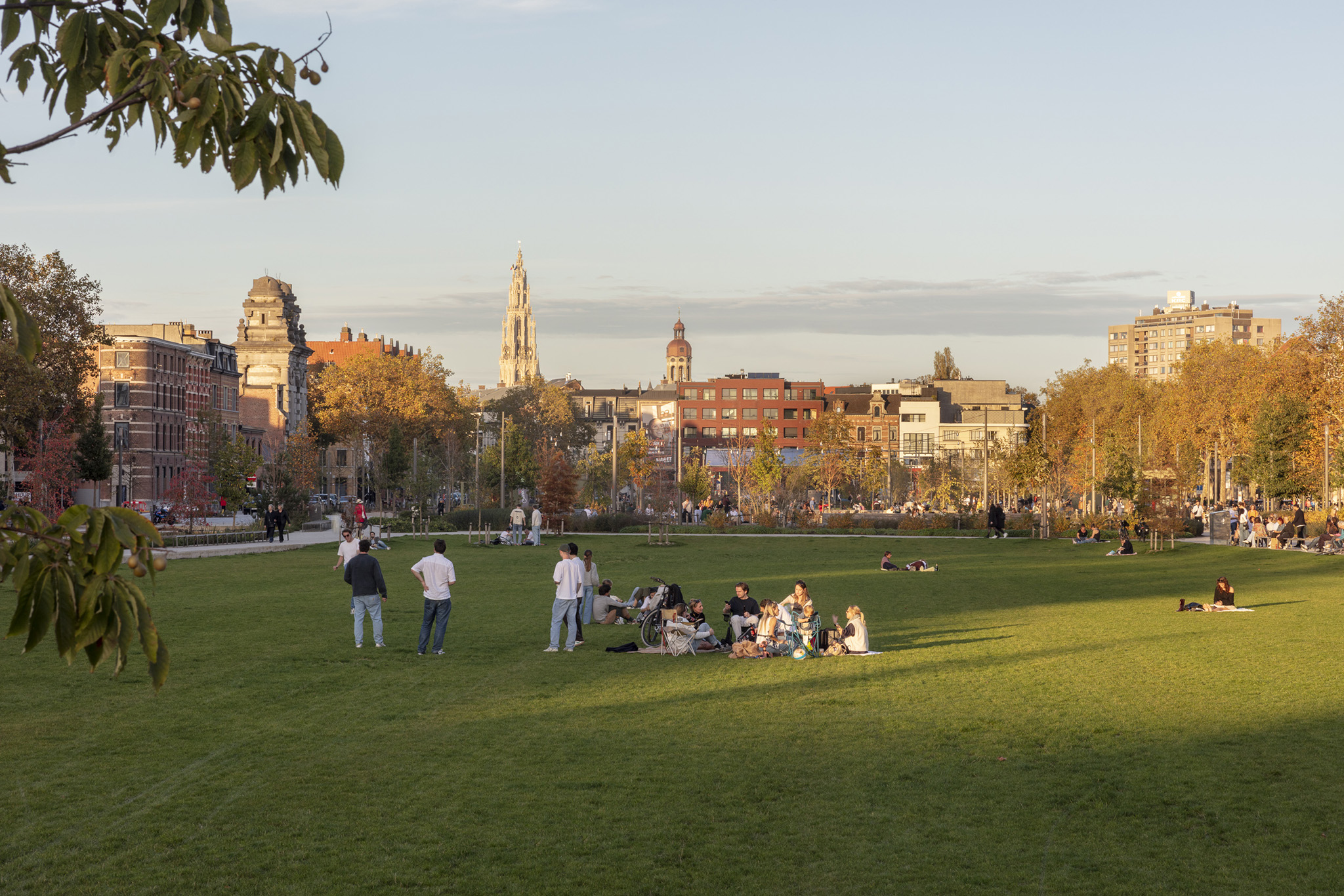
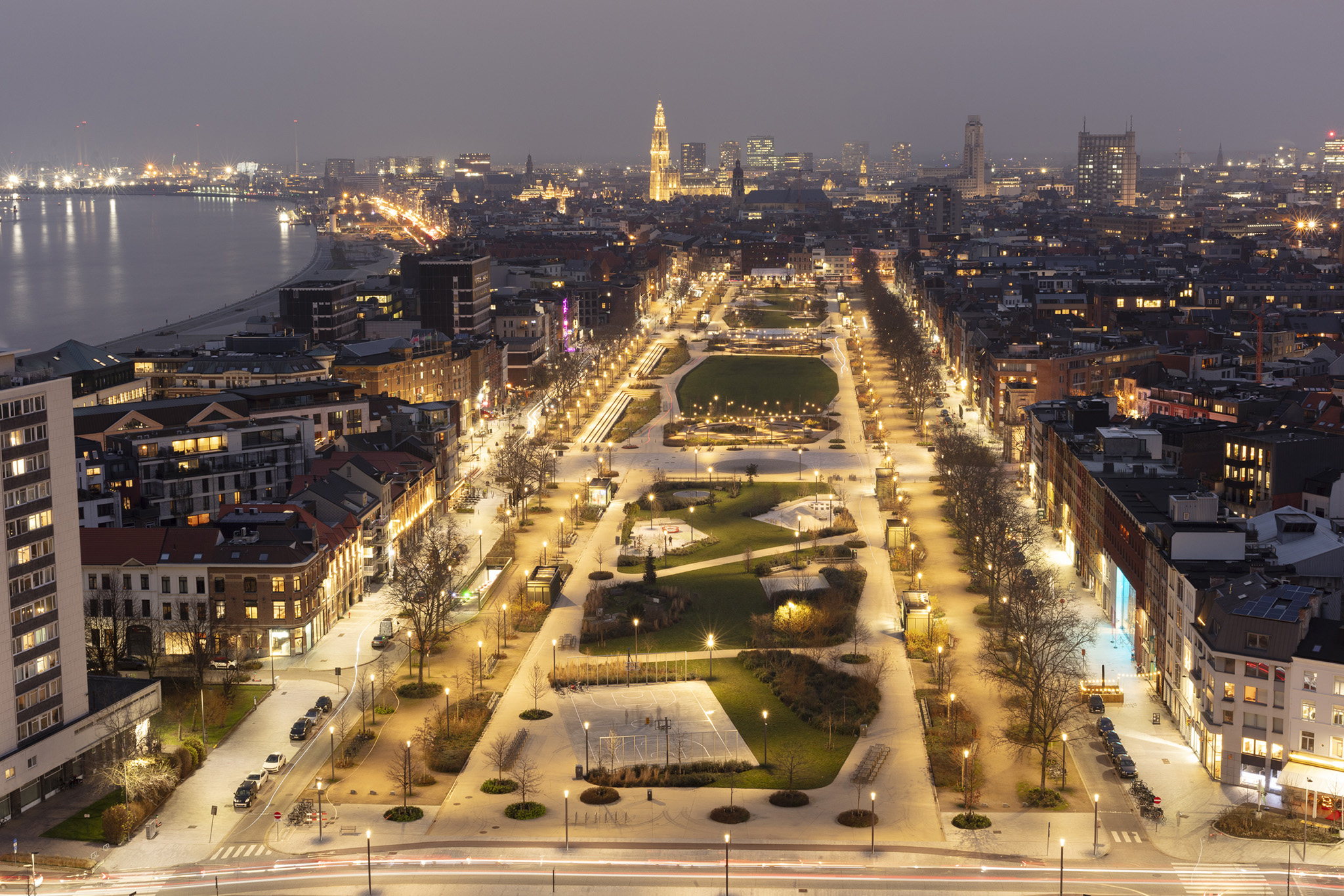
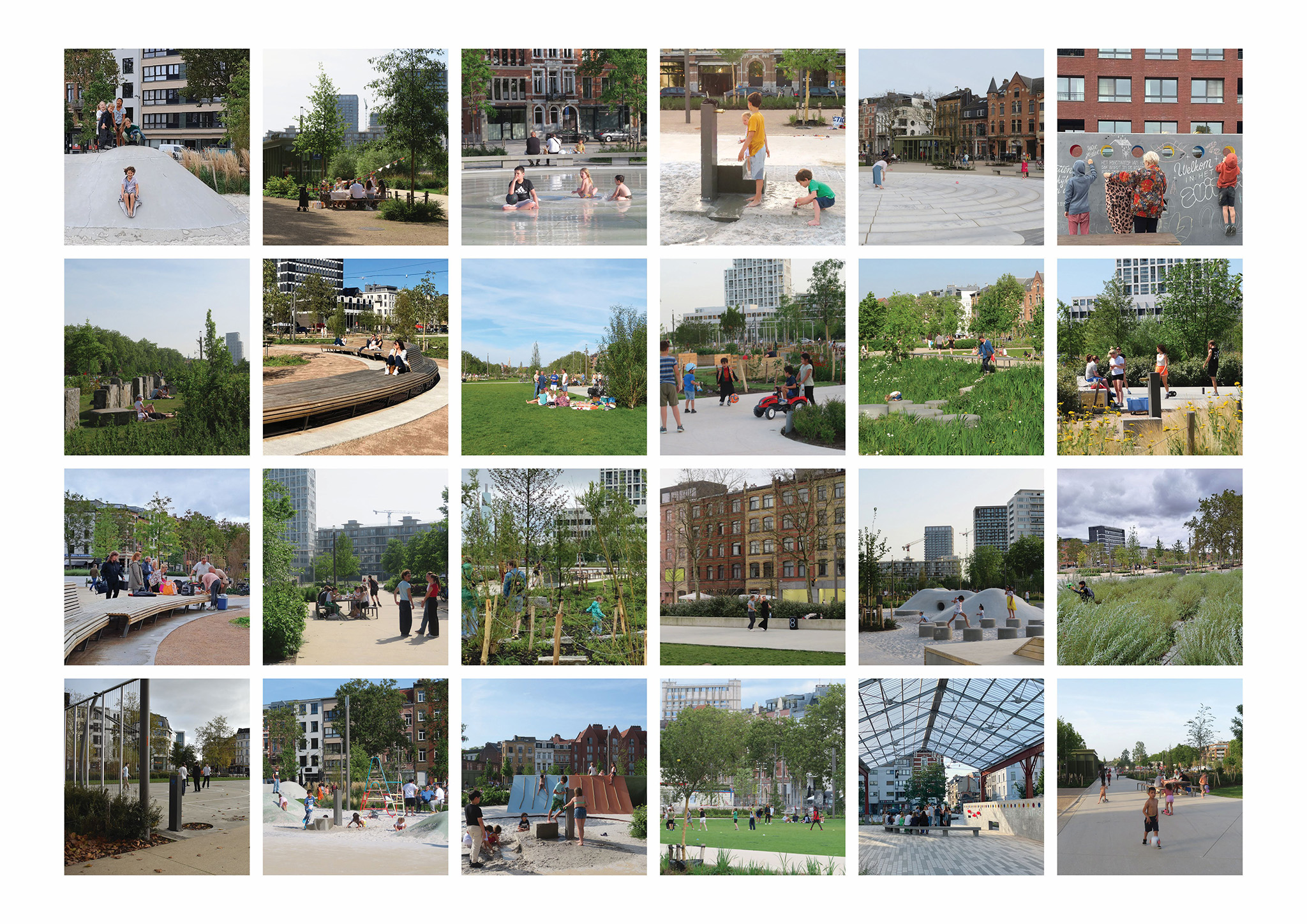
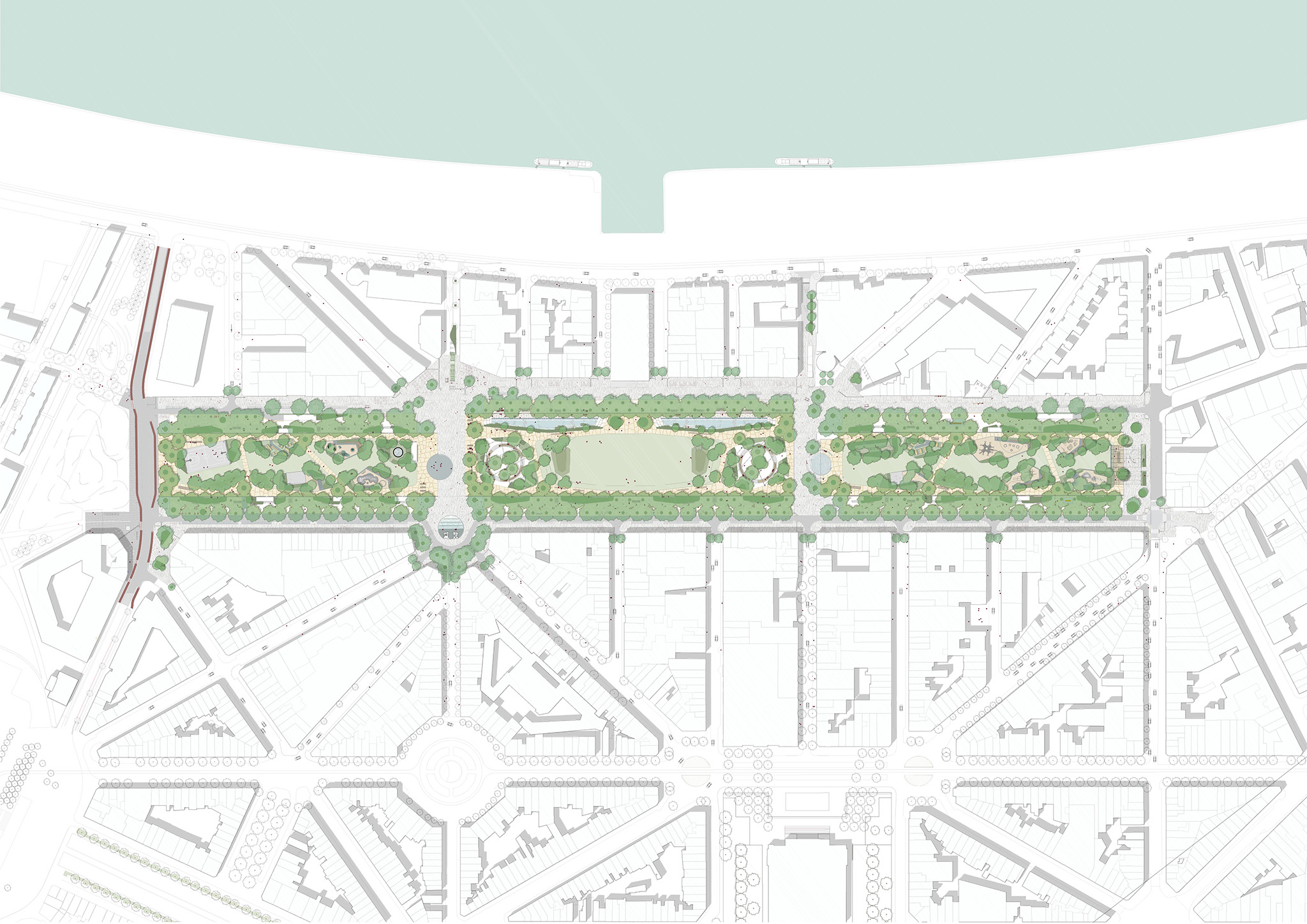
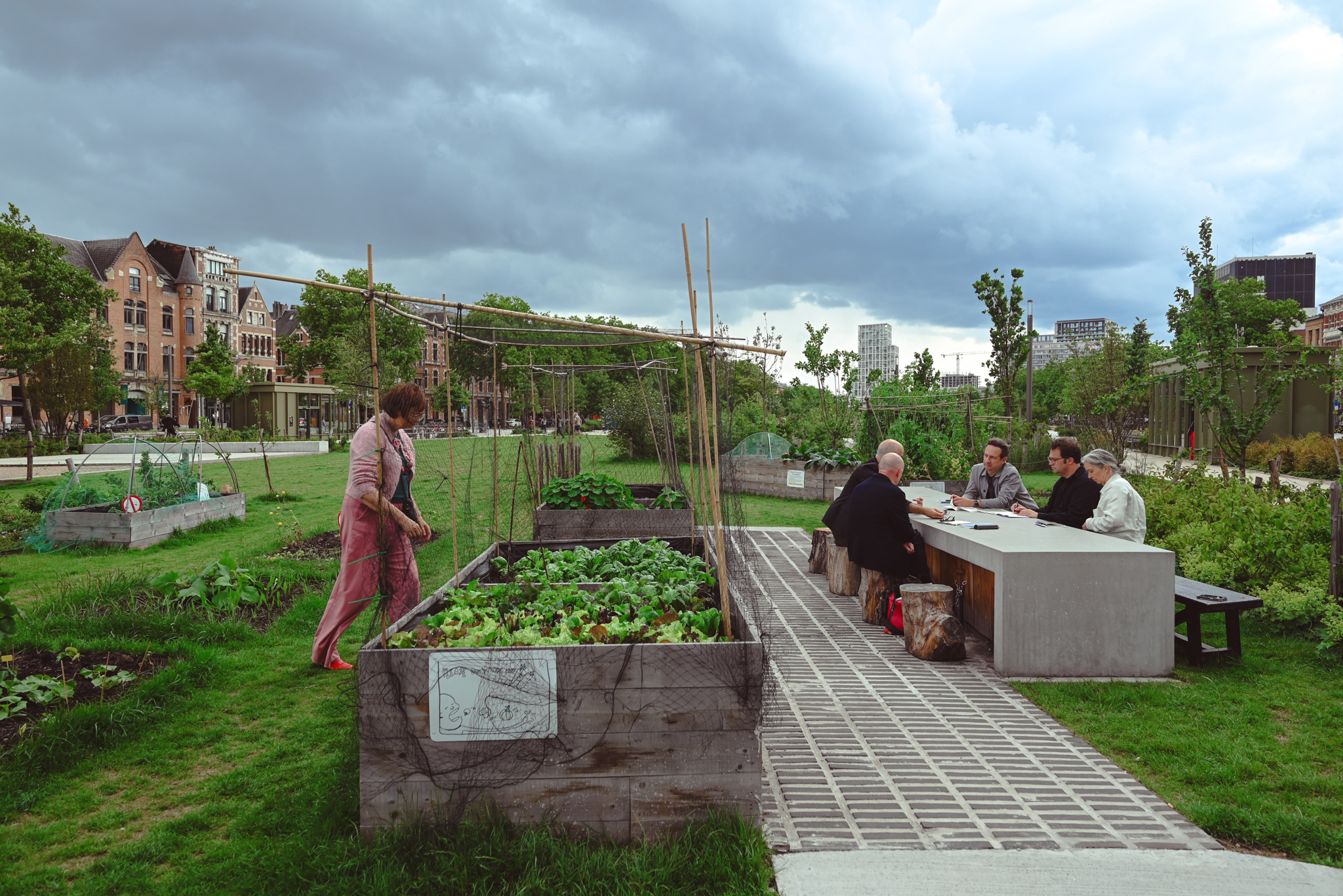
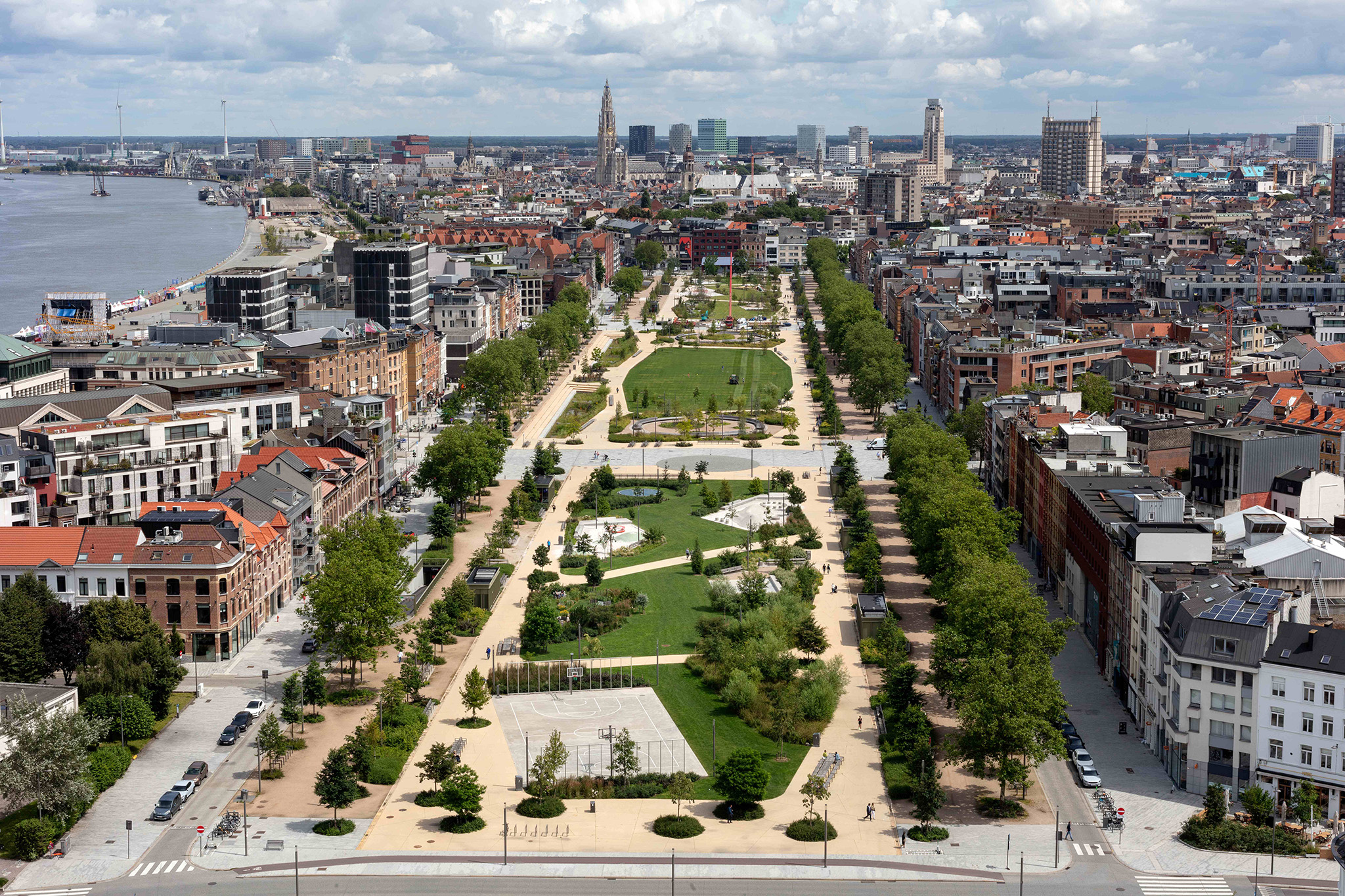
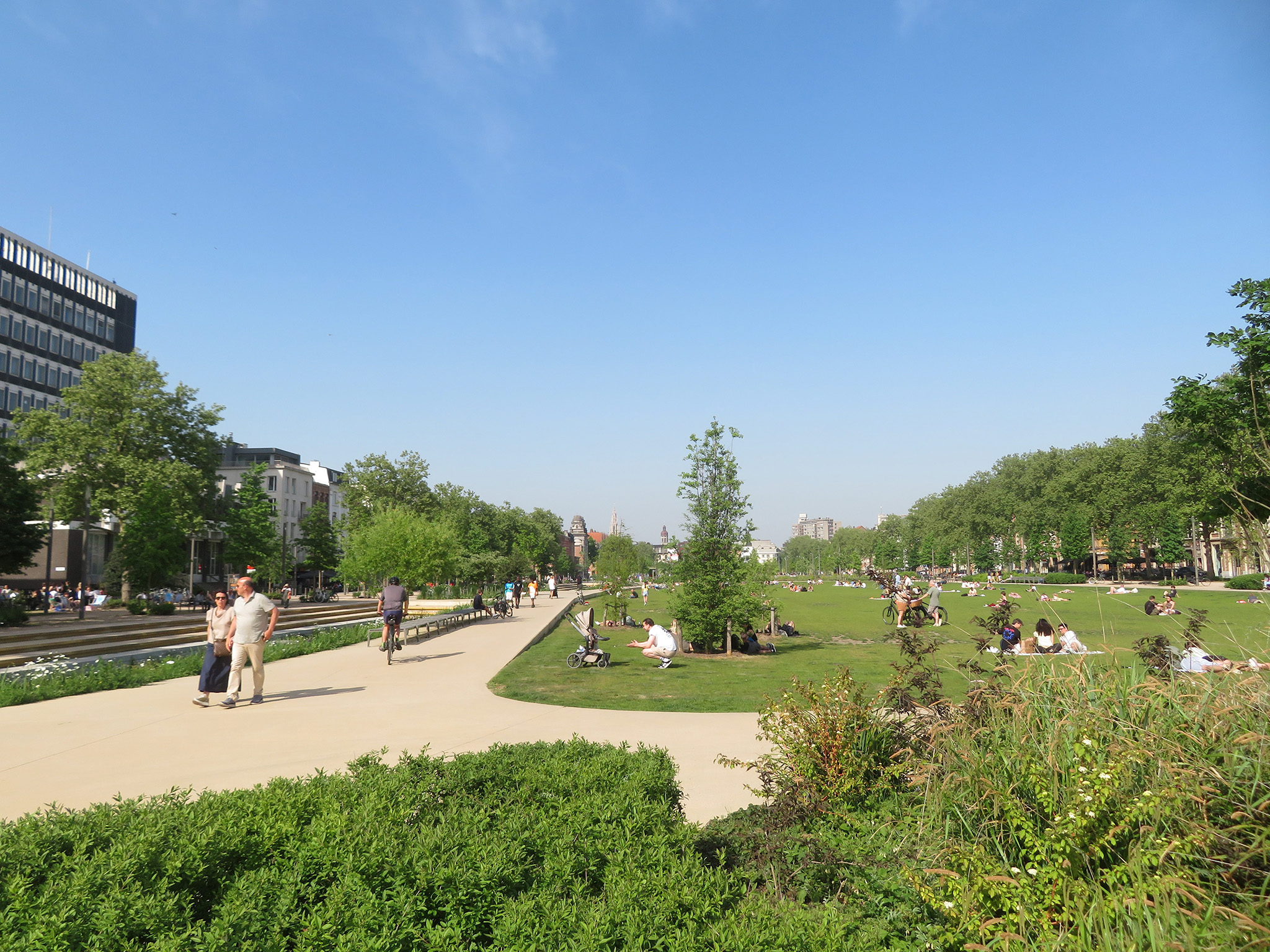
Against this backdrop, the project led by Tractebel, ADR - Atelier Descombes Rampini, and Georges Descombes leverages the layout of the old embankments to structure the park into distinct zones that accommodate a wide range of uses. Features include a central lawn for gatherings, an aquatic garden, quiet corners, sports courts, and three plazas that connect the area to the neighborhood's museums and cafés.

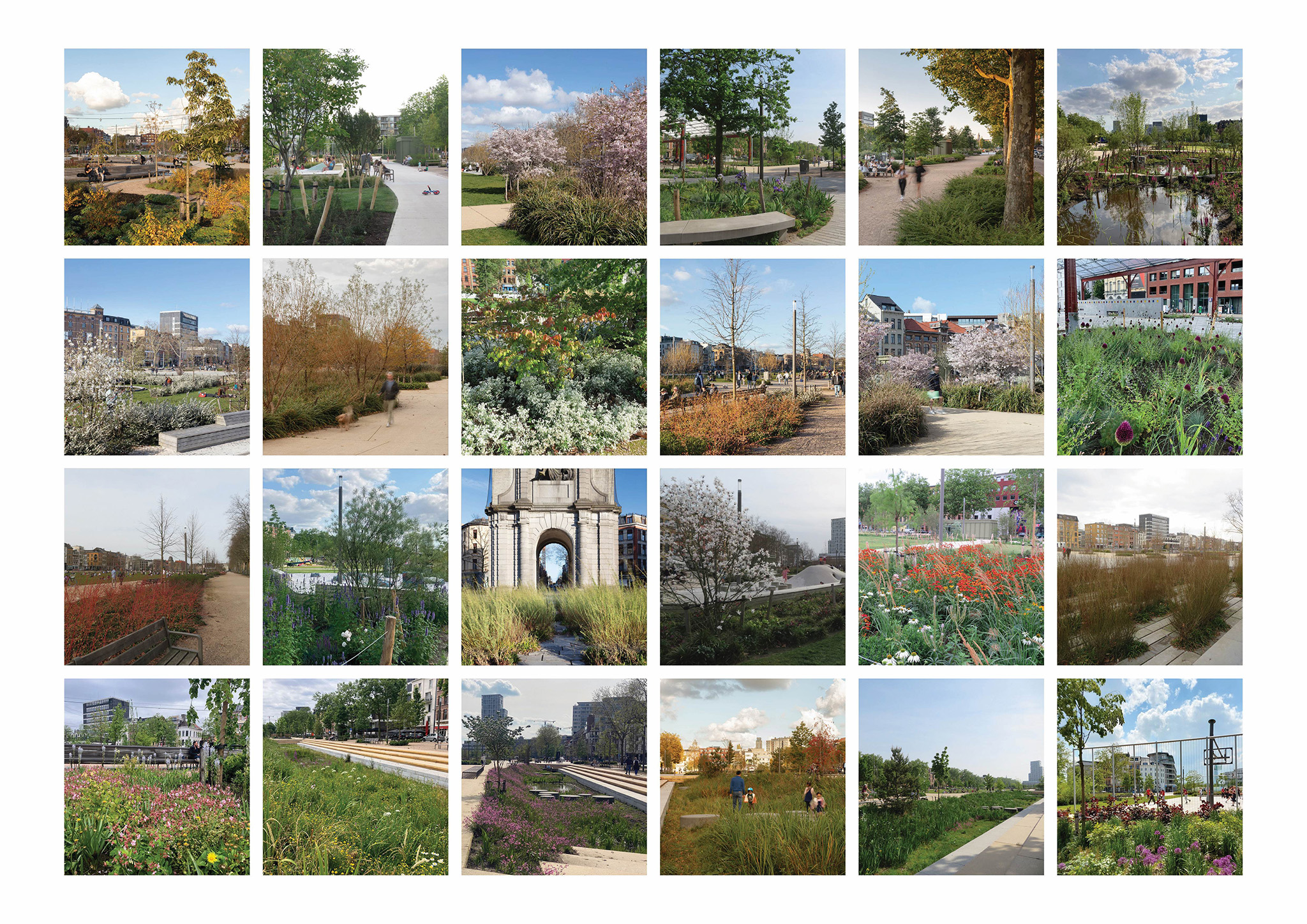
Removing impermeable paving resolved drainage issues, while the planting of numerous trees and plant species created a system capable of collecting and managing rainwater from the entire district.

In addition, stones from the old quays were reused to preserve a link to the site's history. All of this has transformed what was once a concrete wasteland into a metropolitan "green lung," open to the public for social interaction and community engagement.
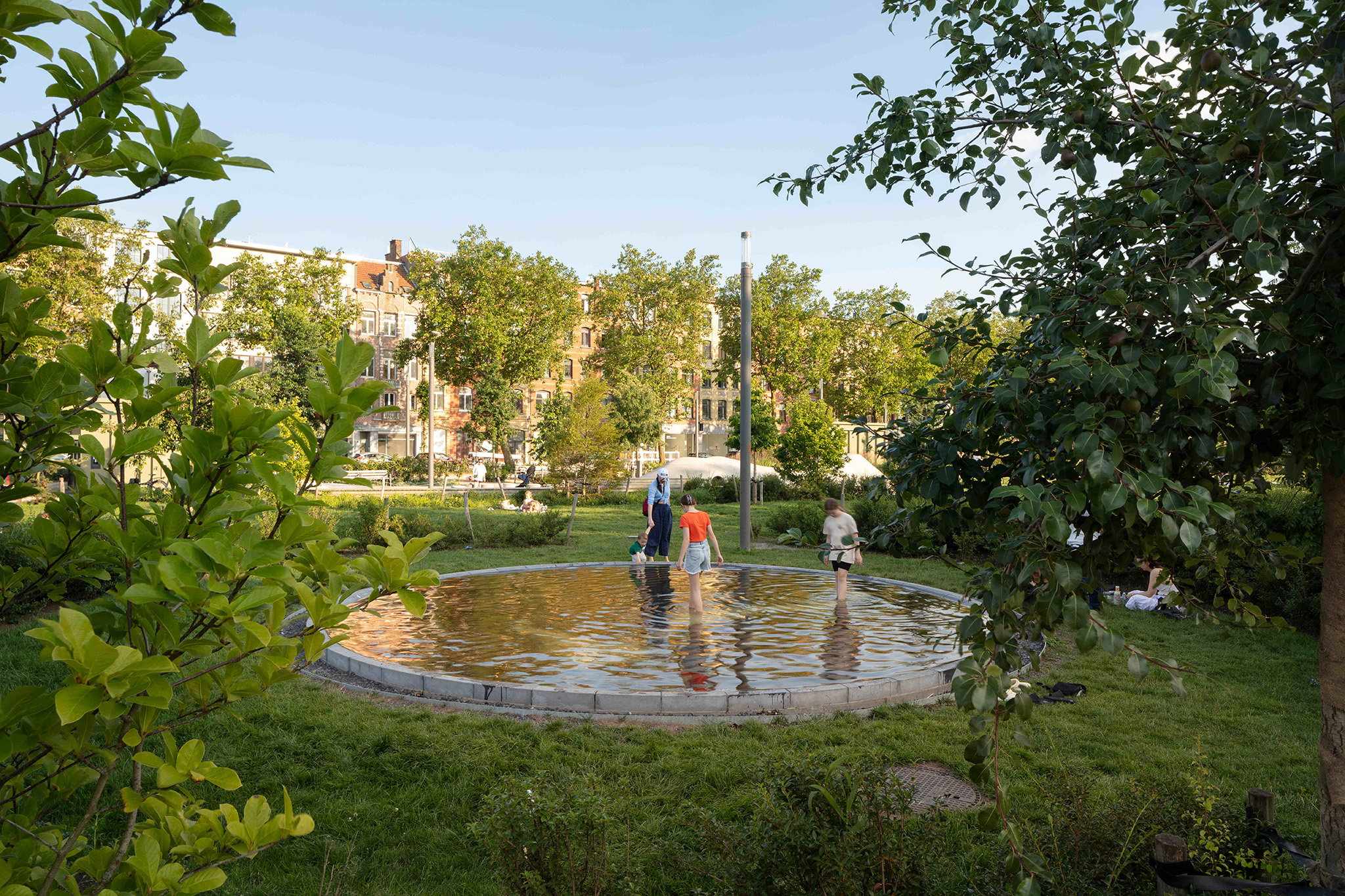
Zuidpark by Tractebel + ADR + Georges Descombes. Photograph by Isabelle Pateer.

Zuidpark by Tractebel + ADR + Georges Descombes. Photograph by Isabelle Pateer.

Project description by Tractebel + ADR + Georges Descombes

The Zuidpark project has transformed the former commercial docks of Antwerp’s Gedempte Zuiderdokken into a large urban park adapted to today’s climate challenges. After the 1960s, this nineteenth-century space was turned into an asphalted esplanade and used as a carpark. It was a lifeless zone that accumulated heat and prevented natural water absorption, which increased stress on the sewer system.

The current design builds on the layout of the former docks to organise the park into different zones. The new meeting place provided by the central park area is a large meadow with a linear water garden, quiet corners, sports facilities, and three squares connecting the park areas and the neighbourhood’s museums and cafés.

Zuidpark por Tractebel + ADR + Georges Descombes. Fotografía por Isabelle Pateer.
Zuidpark by Tractebel + ADR + Georges Descombes. Photograph by Isabelle Pateer.

Impermeable paving has been removed to remedy the drainage problem and many trees and other forms of vegetation have been planted, thus creating a system that collects and manages all the district’s rainwater.

Moreover, stones from the old docks have been reused to preserve connection with the history of this site that, once a concrete wasteland, is now a vibrant meeting place for local residents.
More information

Label
Architects
+ + copy Created with Sketch.
- + copy Created with Sketch.
Label
Collaborators
Text

Engineerign.- Tractebel and IMDC. IMDC has collaborated with our hydraulic team to calculate (Sirio) the rainwater recovery well (disconnection of the roofs around the square) and the collection for reuse (trees, sweepers, etc.).
Planting.- Erik De Waele.
Lighting.- Les Éclairagistes Associés.
Artwork Watercycle.- Carmen Perrin.

+ + copy Created with Sketch.
- + copy Created with Sketch.
Label
Client
Text

Commissioned by AGVespa and Waterlink and executed by Stadsbader (for infrastructure) and ELM (for landscaping).

+ + copy Created with Sketch.
- + copy Created with Sketch.
Label
Dates
Text

2024.

+ + copy Created with Sketch.
- + copy Created with Sketch.
Label
Location
Text

Antwerp, Belgium.

+ + copy Created with Sketch.
- + copy Created with Sketch.
Label
Photography
+ + copy Created with Sketch.
- + copy Created with Sketch.

Tractebel is an international engineering and consulting company based in Brussels, Belgium, with origins dating back to 1862. Currently led by Anne Harvengt, the company in its present form is the result of the gradual development and integration of several Belgian firms active in the fields of energy and infrastructure, including Tractionel and Electrobel, which merged in 1986. Since 2016, it has operated under the name Tractebel and is part of the ENGIE Group.

The company develops projects in energy, infrastructure and territorial development through multidisciplinary teams that bring together engineering, design, planning, environmental and social studies, project management and digital tools. Its work ranges from large-scale energy and hydraulic systems to complex buildings, transport infrastructure, port and maritime facilities, electricity and gas networks, data centres and projects related to climate resilience.

With an international presence and a team of more than 6,000 professionals, Tractebel works across a wide range of scales and contexts, combining technical expertise, coordination capacity and experience in highly complex projects. Nuclear energy, renewables, energy storage, hydropower, desalination and environmental adaptation are among the fields most closely connected to its work on the transformation of contemporary infrastructure.

Throughout its history, Tractebel has contributed to major energy and territorial projects. Today, a significant part of its activity is focused on the energy transition, decarbonisation and the development of infrastructure capable of responding to changing environmental, technological and social conditions.

Read more

ADR - Atelier Descombes Rampini is a landscape architecture and urban design practice founded in 2000 by Julien Descombes and Marco Rampini, based in Geneva, Switzerland. Specializing in large-scale urban and environmental planning, ADR develops projects ranging from regional development strategies to the design of public spaces and infrastructure.

With a strong track record in mobility planning and public space design—both in Switzerland and abroad—ADR’s portfolio includes master plans for areas such as Eaux-Vives (Geneva) and Cherpines, as well as iconic public spaces like the Plaine de Plainpalais in Geneva and Turbinenplatz in Zurich. The firm is distinguished by its sensitive approach to both urban and natural contexts, exemplified by projects such as the revitalization of the Aire River and the Eaux-Vives beach.

ADR emphasizes the creation of inclusive, multifunctional public spaces that reflect a deep understanding of social use, environmental impact, and material design. Its projects aim to foster a dynamic, collective urban culture, reimagining the landscape and public space as settings for everyday life and shared identity.

Read more

Georges Descombes (Geneva, Switzerland, 1939) is an architect and landscape architect. He graduated from the École d’Architecture de Genève in 1969 and continued his studies at the Architectural Association in London, where he received his diploma in 1973. After an early professional period connected to figures such as Pier Luigi Nervi and Marc-Joseph Saugey, he returned to Geneva, where he began an extensive professional, academic and research career.

His work operates between architecture, landscape and territorial transformation, with particular attention to existing traces, memory and the processes of change that shape each place. Rather than treating landscape as a finished image, Descombes works with existing conditions, understanding territory as a superimposition of layers and design as a tool capable of revealing latent relationships, traces and processes.

Among his most significant works are Parc de Lancy in Geneva, the Geneva section of the Voie Suisse on Lake Uri, the Bijlmer Memorial in Amsterdam, Parc de la Cour du Maroc in Paris, and a number of urban interventions in cities including Lyon, Brussels and Antwerp. One of his best-known projects is the renaturalisation of the Aire River in the canton of Geneva, developed with the Superpositions team. The project works with the former canalised riverbed by introducing a new geometric structure within which the river progressively reshapes its own course, becoming a reference in contemporary landscape architecture.

Alongside his professional practice, Descombes has developed an extensive teaching career in Europe and the United States, with appointments and courses at institutions including the Harvard Graduate School of Design, the University of Virginia and the University of California, Berkeley. In 2021, he received the Grand Prix suisse d’art / Prix Meret Oppenheim, one of the principal cultural distinctions awarded by the Swiss Confederation.

Read more
Published on: October 15, 2026
Cite:
metalocus, AGUSTINA BERTA
"A metropolitan green lung. Zuidpark by Tractebel + ADR + Georges Descombes" METALOCUS. Accessed
<https://www.metalocus.es/en/news/metropolitan-green-lung-zuidpark-tractebel-adr-georges-descombes> ISSN 1139-6415
Loading content ...
Loading content ...
Loading content ...
Loading content ...
Loading content ...
Loading content ...
Loading content ...
Loading content ...
Loading content ...
Loading content ...
Loading content ...
Loading content ...
Loading content ...
Loading content ...
Loading content ...
Loading content ...
Loading content ...
Loading content ...
Loading content ...
Loading content ...
Loading content ...
Loading content ...
Loading content ...
Loading content ...
Loading content ...
Loading content ...
Loading content ...
Loading content ...
Loading content ...
Loading content ...
Loading content ...
Loading content ...
Loading content ...
Loading content ...
Loading content ...
Loading content ...
Loading content ...
Loading content ...
Loading content ...
Loading content ...
Loading content ...
Loading content ...
Loading content ...
Loading content ...
Loading content ...
Loading content ...
Loading content ...
Loading content ...
Loading content ...
Loading content ...
Loading content ...
Loading content ...
Loading content ...
Loading content ...