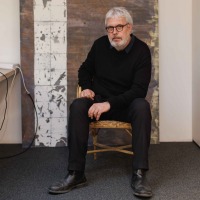
BAAS wins a competition in Poland with Grupa5.

BAAS Jordi Badia & GRUPA5 win the International competition announced by the Silesia University to built the Radio and TV department in Katowice, Poland.

Picture © BAAS


The new Silesia University’s Radio and TV department will be located on a vacant plot, inserted in a consolidated area of Katowice. The plot, mainly empty, contains an abandoned building which the client initially planned to demolish.

Our winning proposal plans to preserve this existing building, and add an extention to it while protecting the character of the old. The project also includes a lower height building occupying the interior block area which confers to the central courtyard the intervention’s prominence.

Our design aims to be sensitive with the existing building aesthetics and takes advantage of its materiality and visual values by building on top of it and abstract volume made out of a brick latticework, which follows the neighbour’s section.

The new building fills up the whole plot and at the same time hollows a central courtyard, becoming this, the key element for all the social activities taking place around the studios and lecture rooms at the new university department.


Read more
Read less

More information

BAAS Arquitectura is an architecture practice founded in 1994 in Barcelona by architect Jordi Badia (Barcelona, 1961). He graduated from the Barcelona School of Architecture (ETSAB) in 1989. Between 1989 and 1993, he worked alongside architect Tonet Sunyer before establishing his own practice.

Since its foundation, BAAS Arquitectura has worked on projects of different scales and programmes, including residential buildings, offices, educational facilities, healthcare buildings, cultural spaces and interventions in architectural heritage. Its work is characterised by a careful consideration of the urban context, the use of materials and the relationship between architecture and public space. The restoration and adaptation of existing buildings to new uses also play an important role in the studio's practice.

Among its best-known works are the Can Framis Museum in Barcelona, which received the 2009 City of Barcelona Award and the FAD Opinion Award; the conversion of the former Oliva Artés factory into a branch of the Barcelona History Museum (MUHBA); the renovation of the Alta Diagonal office building; and the FAD headquarters in Barcelona.

Internationally, one of its most notable projects is the Faculty of Radio and Television at the University of Silesia in Katowice, Poland (2017), designed in collaboration with GRUPA 5 Architekci and Małeccy Biuro Projektowe. The building received the Brick Award 2020 and was shortlisted for the 2019 European Union Prize for Contemporary Architecture – Mies van der Rohe Award. More recent projects include the Llull 122 building and the Vall d'Hebron Research Centre (VHIR), the latter developed in collaboration with ESPINET/UBACH.

Alongside his architectural practice, Jordi Badia teaches in the Department of Architectural Design at ETSAB, where he has been a professor since 2001. He has also collaborated with universities in Hong Kong, Ljubljana, Toulouse and Zurich. He has written for the newspaper ARA and served as editor of the architecture blog HIC Arquitectura.

In 2012, together with Félix Arranz, he curated VOGADORS, the exhibition representing Catalonia and the Balearic Islands at the 13th Venice Architecture Biennale. His career brings together architectural practice, teaching and the dissemination of architecture, with a particular interest in the relationship between buildings, the city and its inhabitants.

Read more
Grupa 5 Architekci is an architecture practice founded in June 1998 in Warsaw, Poland, by architects Roman Dziedziejko, Mikołaj Kadłubowski, Michał Leszczyński, Krzysztof Mycielski and Mariusz Jasiński. Today, the studio has a team of around 40 architects and is led by Roman Dziedziejko, Michał Leszczyński, Krzysztof Mycielski, Rafał Zelent and Rafał Grzelewski.

Since its foundation, the practice has worked on projects of different scales and programmes, ranging from residential buildings and offices to educational, cultural and healthcare facilities, transport infrastructure and public spaces. Its work pays particular attention to the relationship between buildings and their surroundings, as well as the possibilities of adapting and reusing existing structures. Collaboration between architects, engineers and other specialists is central to its approach, from the initial stages of a project through to construction.

Among its best-known works is the renovation of Wrocław Główny railway station (2012), an intervention in one of Poland's most significant historic transport buildings. Another notable project is the Faculty of Radio and Television at the University of Silesia in Katowice (2017), developed in collaboration with BAAS Arquitectura and Małeccy Biuro Projektowe, which was nominated for the European Union Prize for Contemporary Architecture – Mies van der Rohe Award in 2019.

Other important projects include the restoration of the former Gurewicz Sanatorium in Otwock, converted into the Mirai Clinic medical centre (2020), which was nominated for the same European award in 2022, and the transformation of former industrial complexes such as Monopolis in Łódź and Bohema in Warsaw's Praga district.

Throughout its career, GRUPA 5 has combined new construction with the adaptation of architectural and industrial heritage, exploring the relationships between architecture, urban memory and everyday life.

Read more
Published on: May 16, 2011
Cite:
metalocus, JOSÉ JUAN BARBA
"RADIO AND TV DEPARTMENT OF THE SILESIAN UNIVERSITY, KATOWICE" METALOCUS. Accessed
<https://www.metalocus.es/en/news/radio-and-tv-department-silesian-university-katowice> ISSN 1139-6415
Loading content ...
Loading content ...
Loading content ...
Loading content ...
Loading content ...
Loading content ...
Loading content ...
Loading content ...
Loading content ...
Loading content ...
Loading content ...
Loading content ...
Loading content ...
Loading content ...
Loading content ...
Loading content ...
Loading content ...
Loading content ...
Loading content ...
Loading content ...
Loading content ...
Loading content ...
Loading content ...
Loading content ...
Loading content ...
Loading content ...
Loading content ...
Loading content ...
Loading content ...
Loading content ...
Loading content ...
Loading content ...
Loading content ...
Loading content ...
Loading content ...
Loading content ...
Loading content ...
Loading content ...
Loading content ...
Loading content ...
Loading content ...
Loading content ...
Loading content ...
Loading content ...
Loading content ...
Loading content ...
Loading content ...
Loading content ...
Loading content ...
Loading content ...
Loading content ...
Loading content ...
Loading content ...
Loading content ...