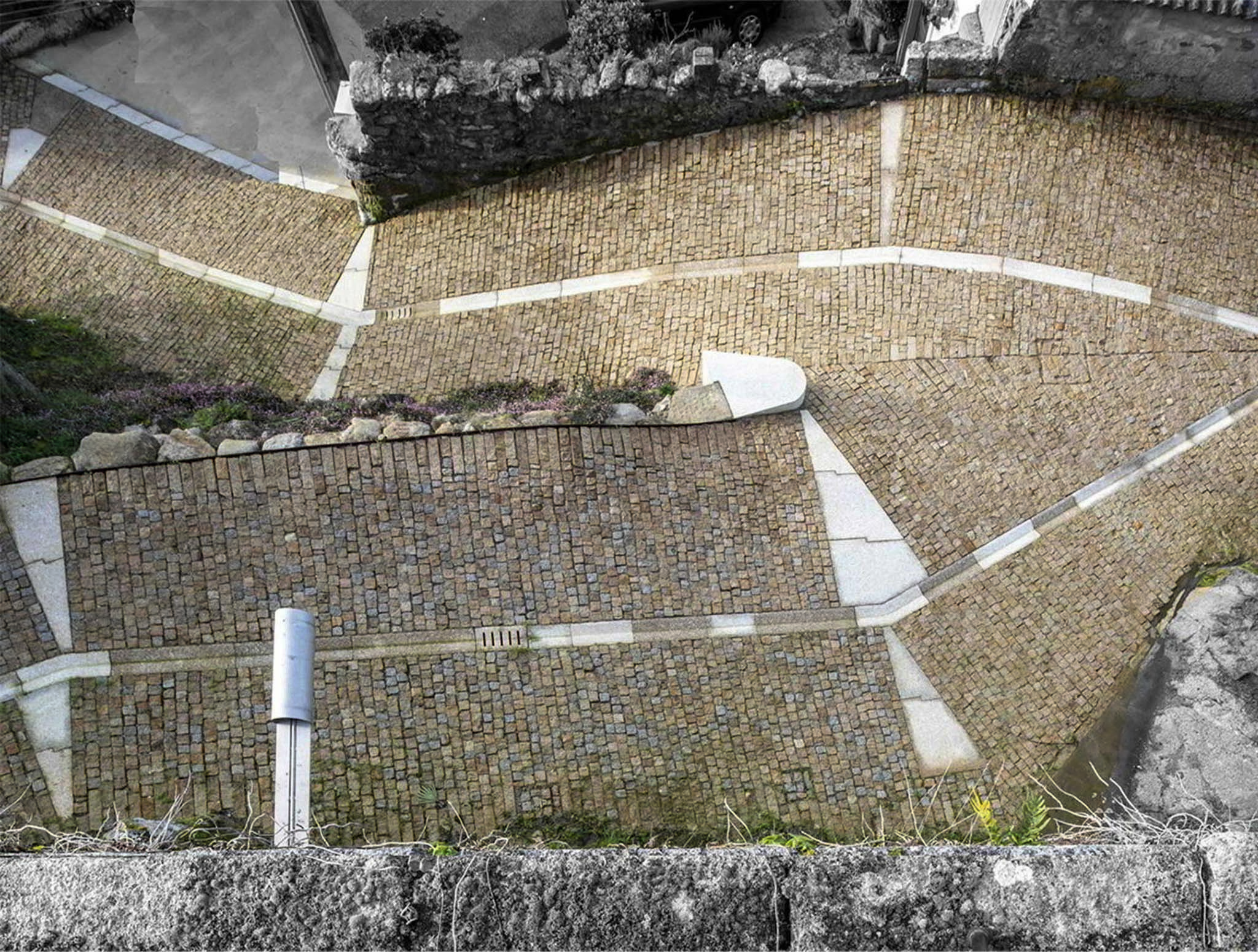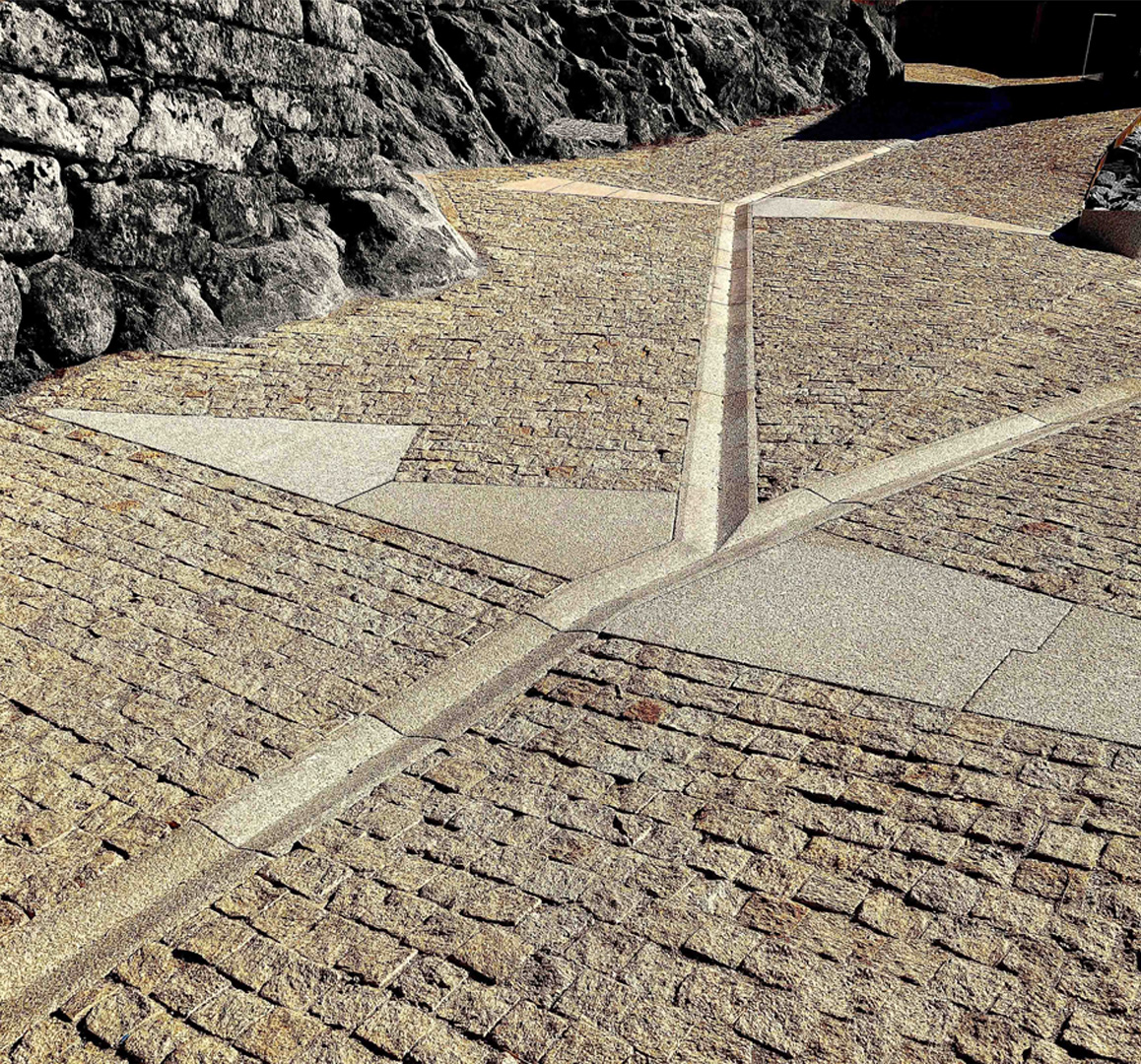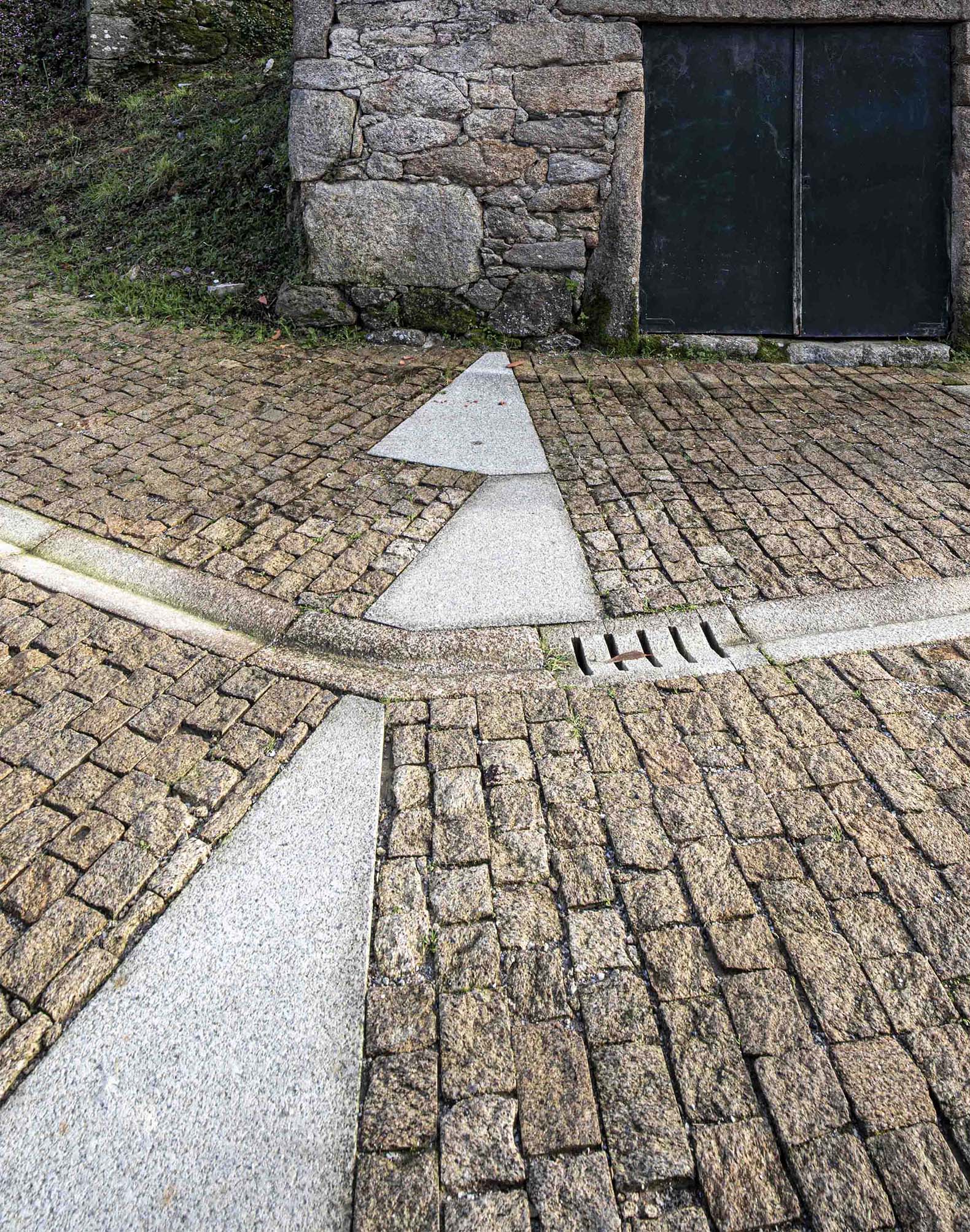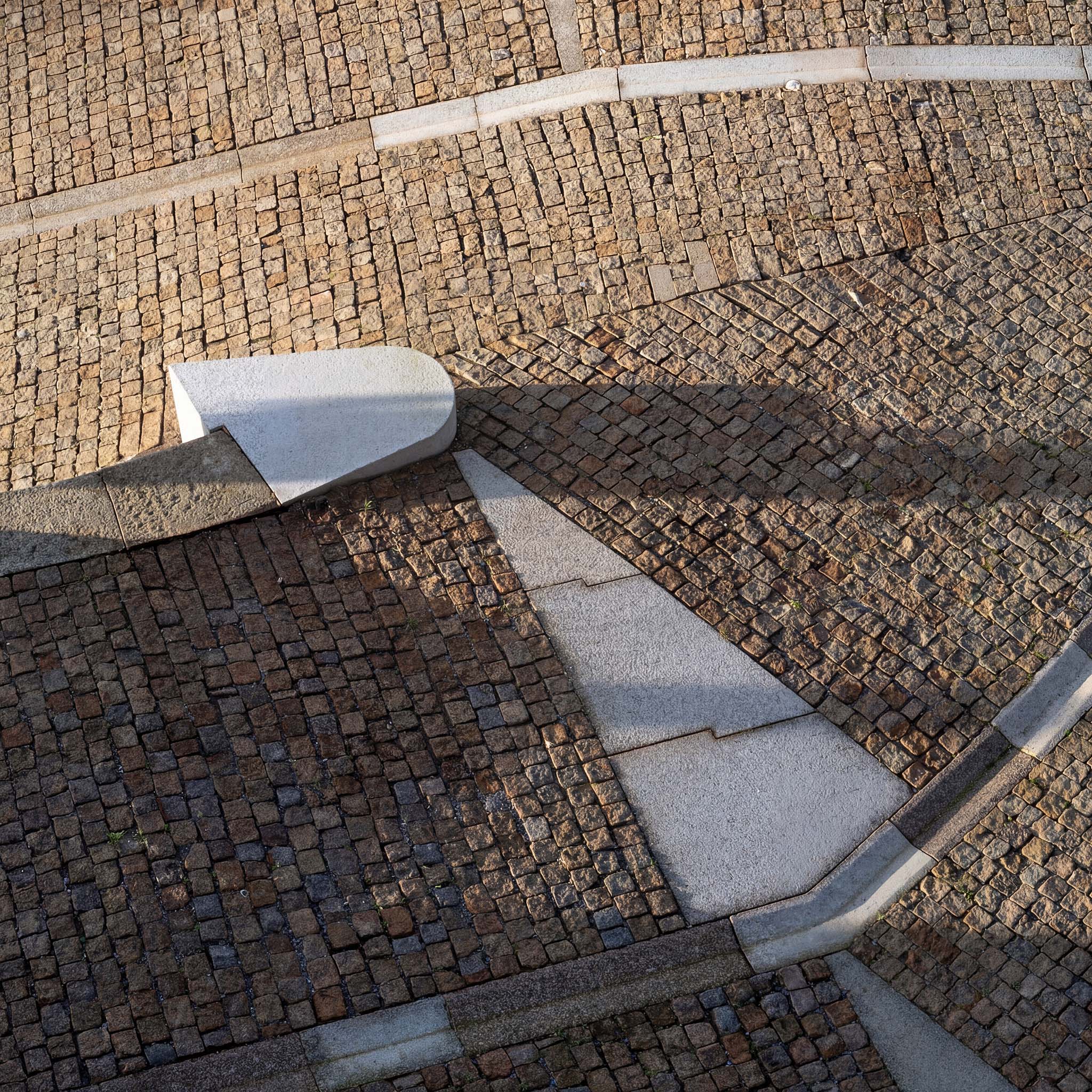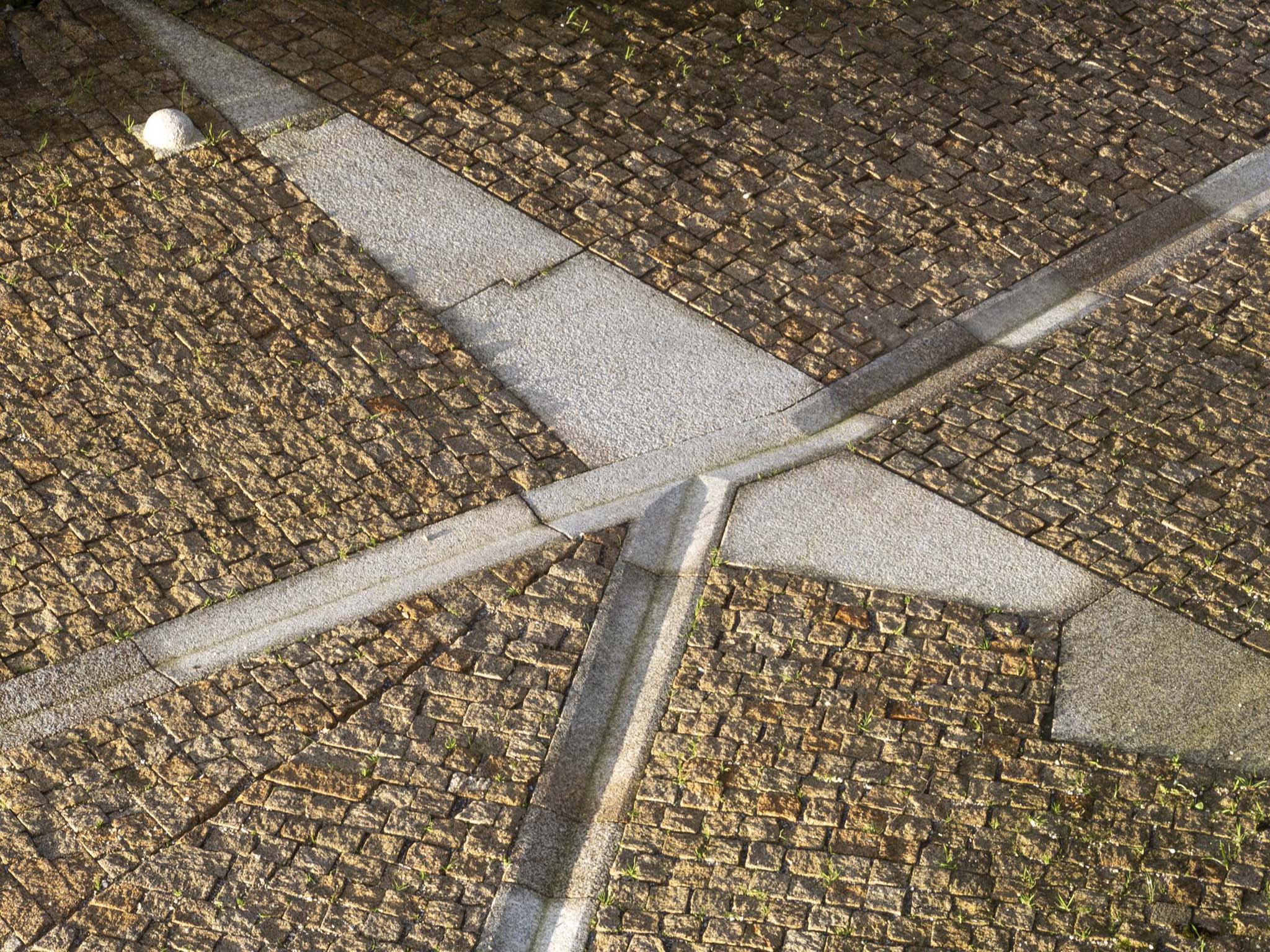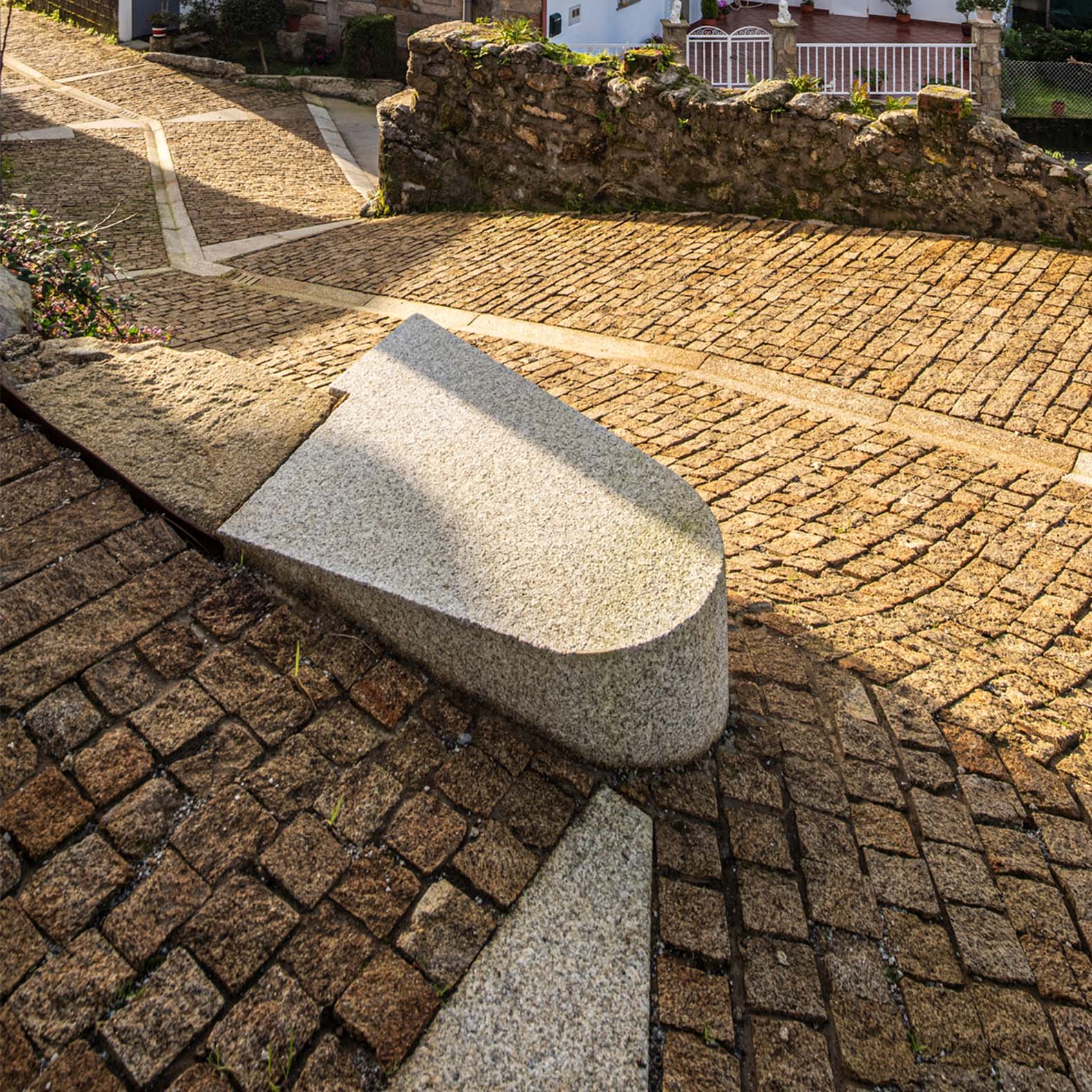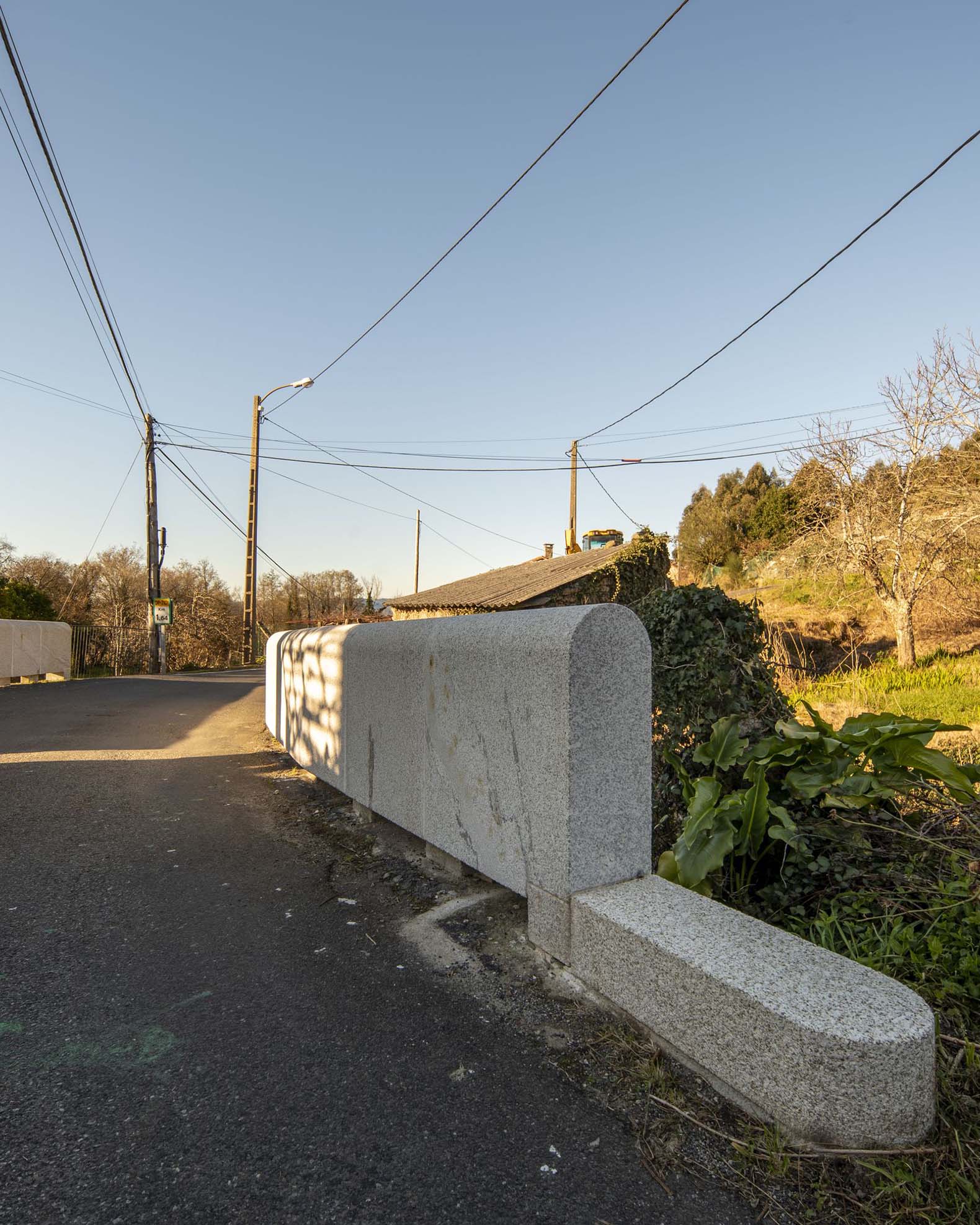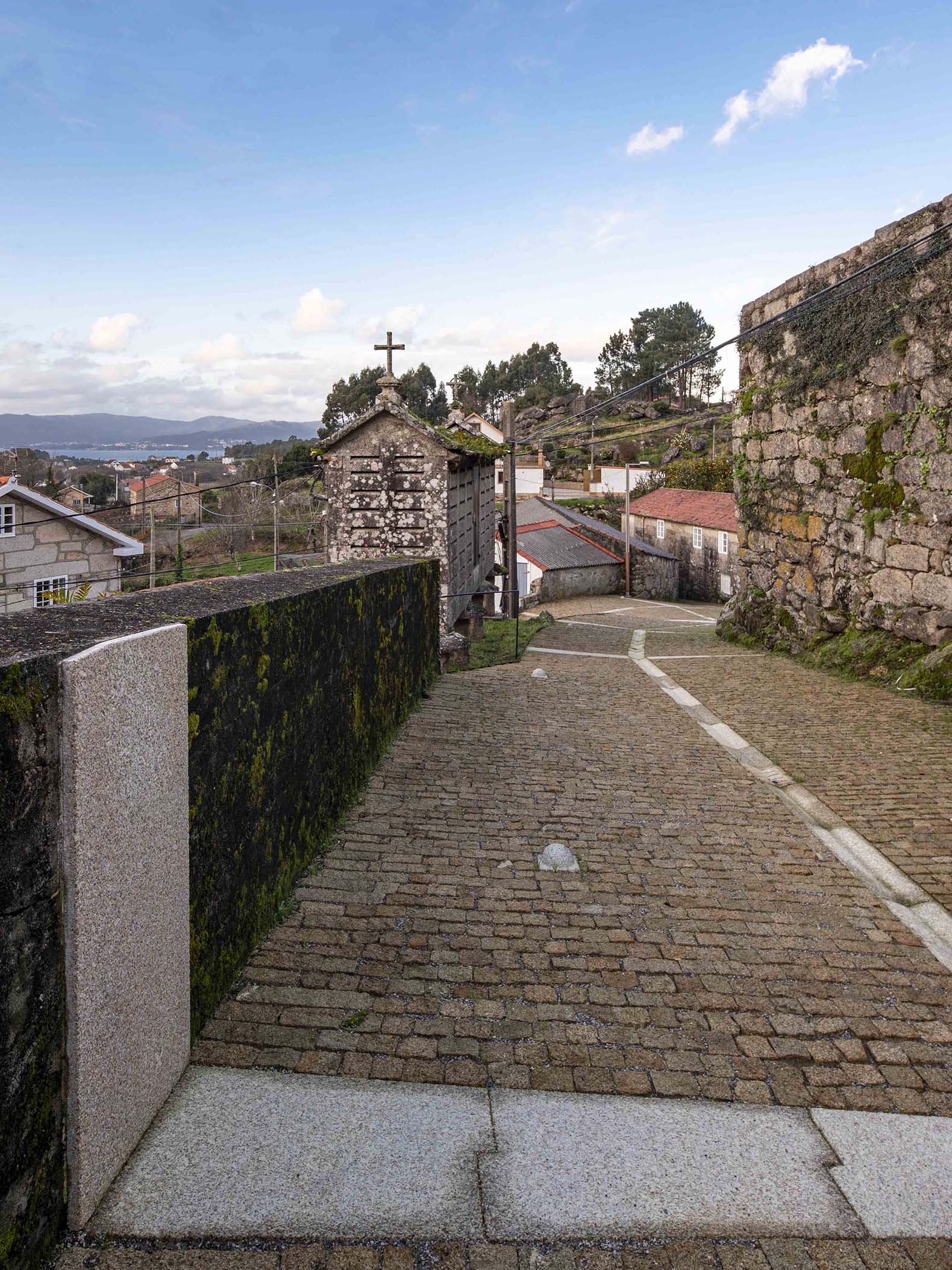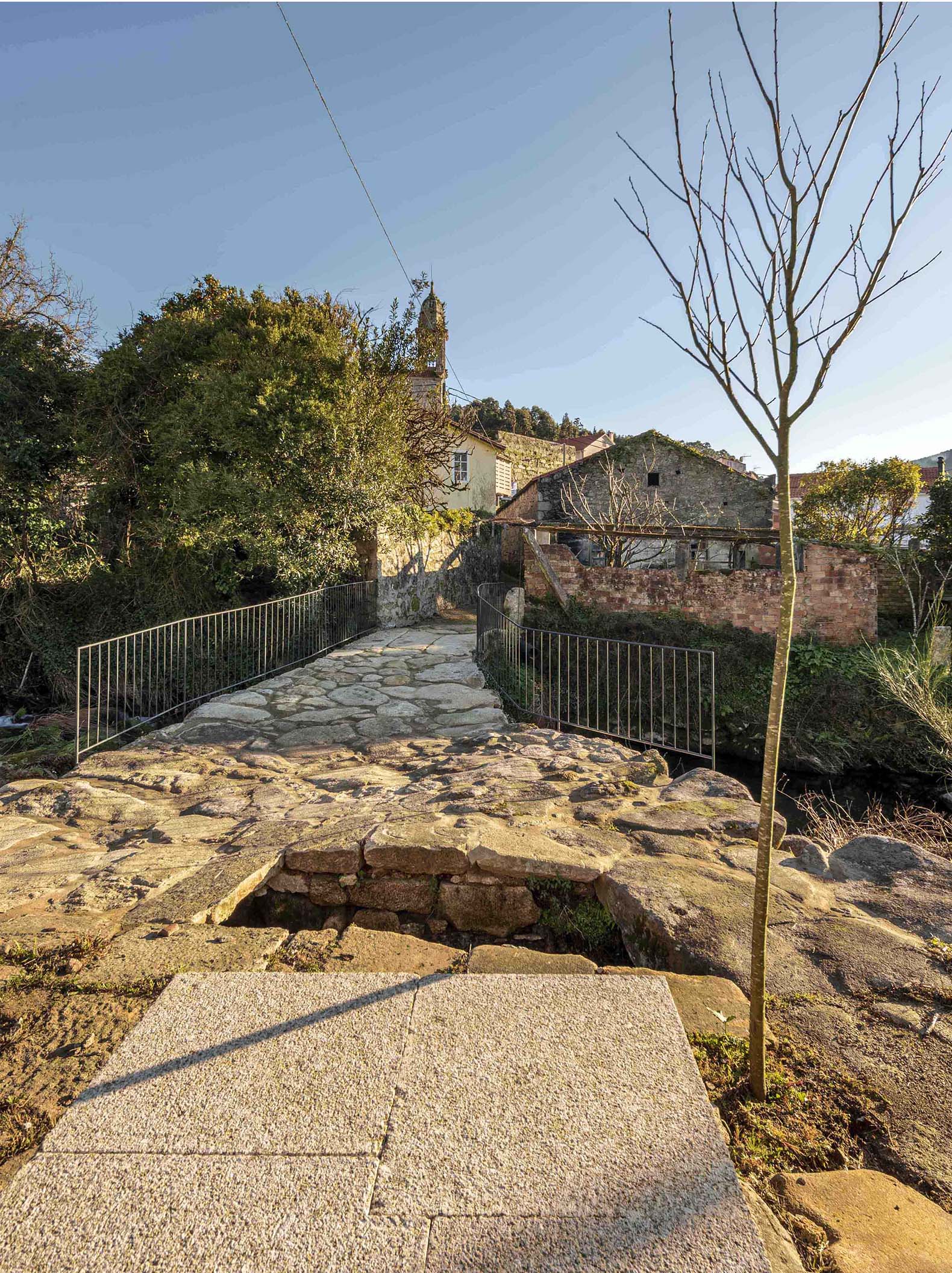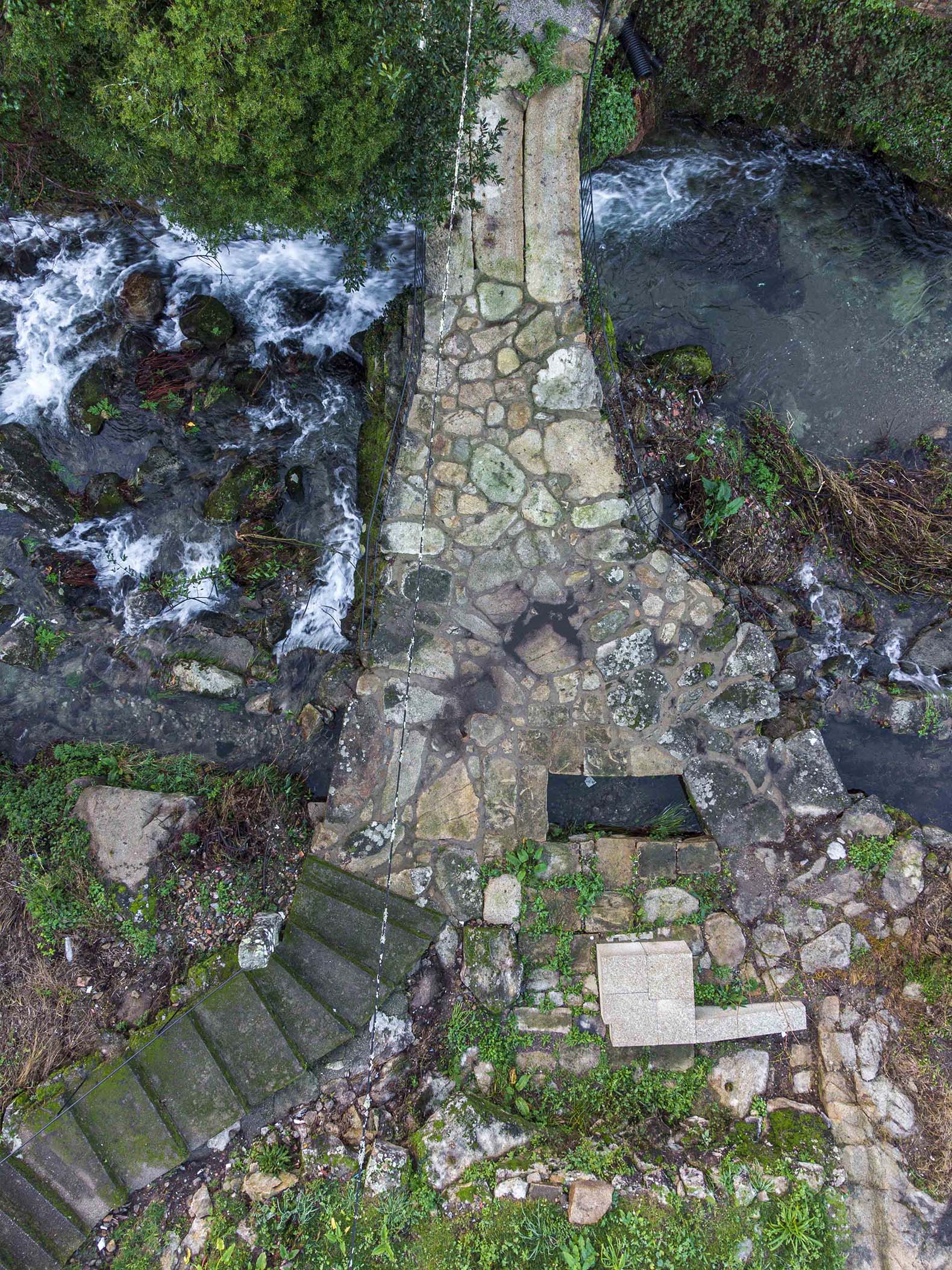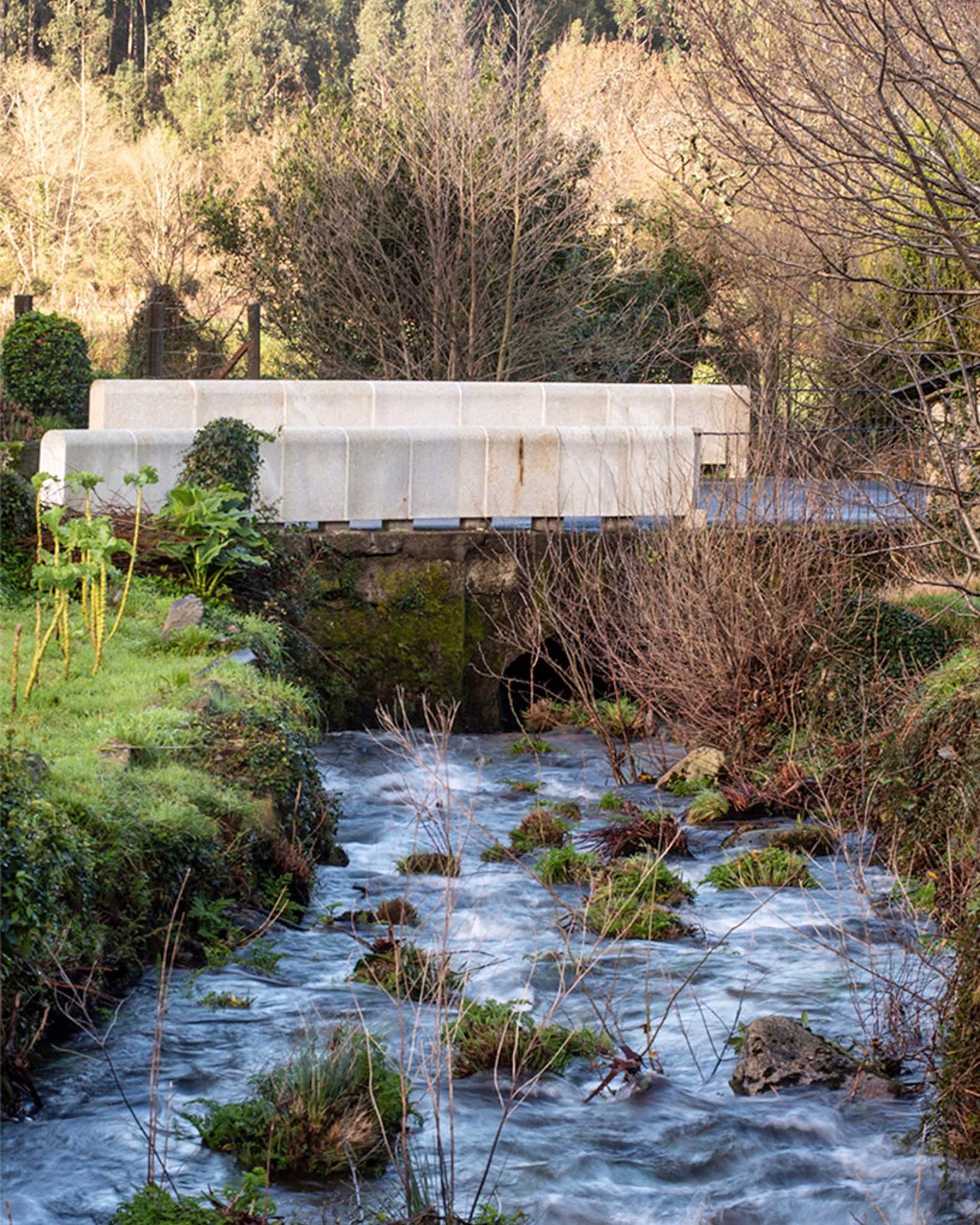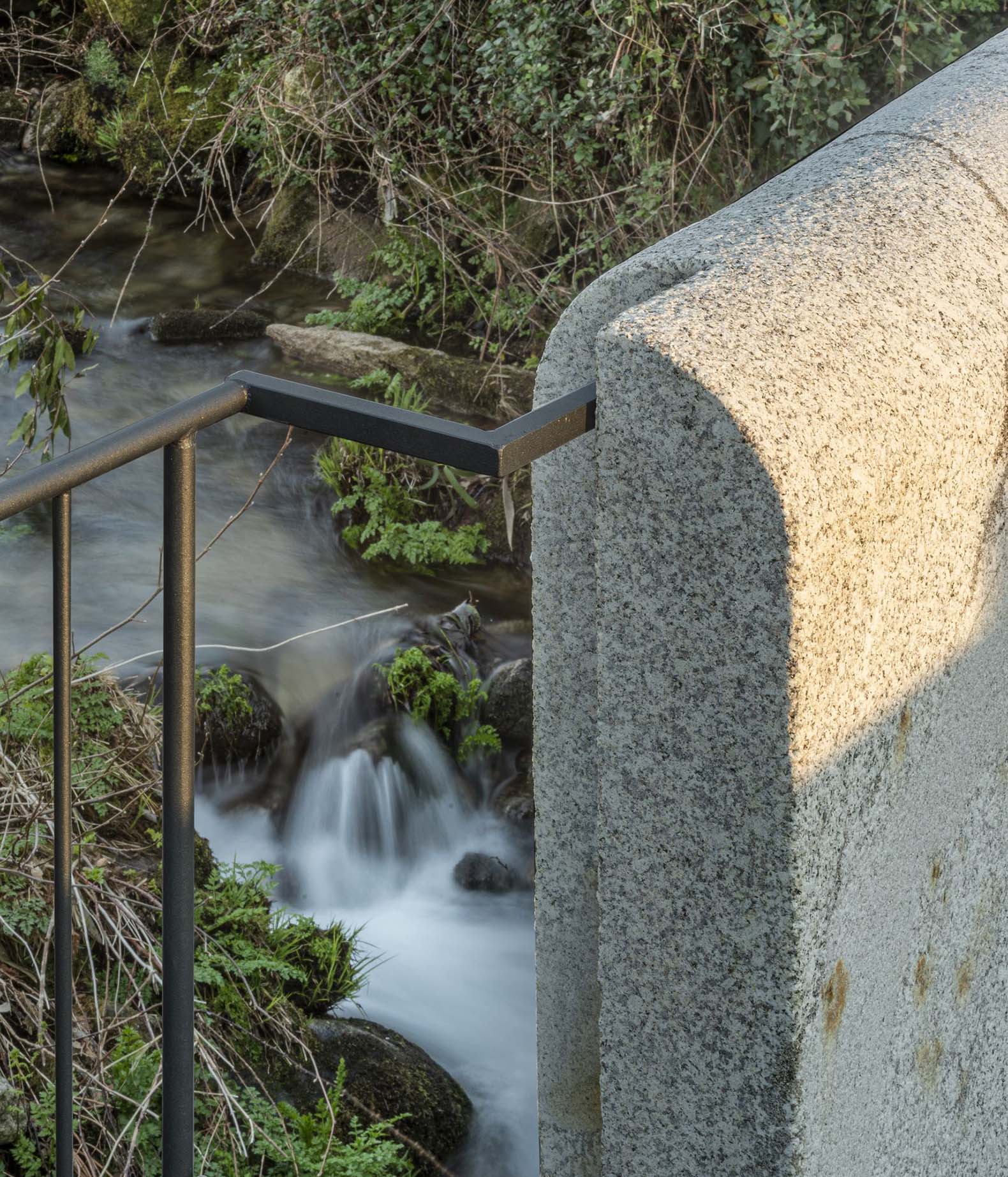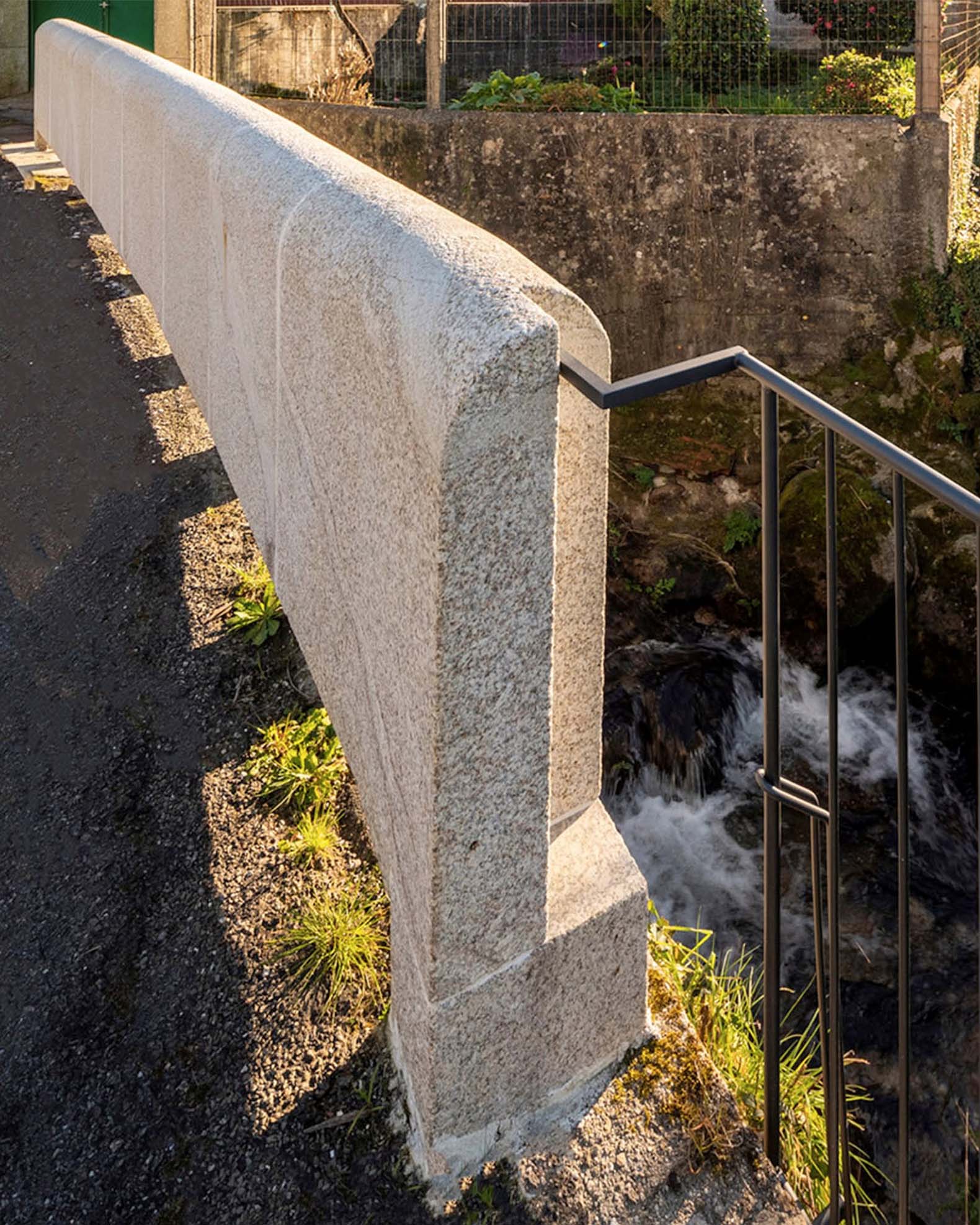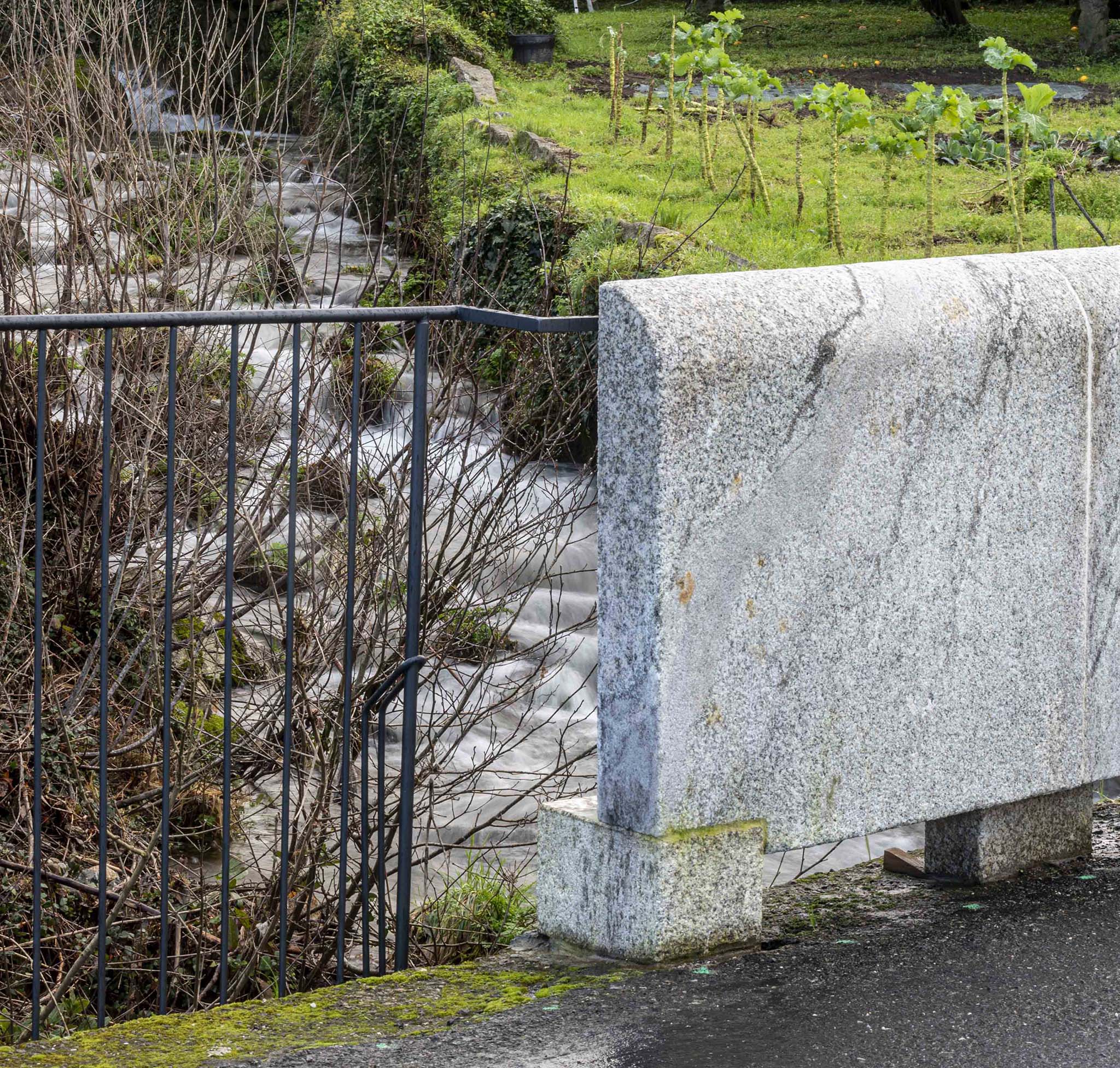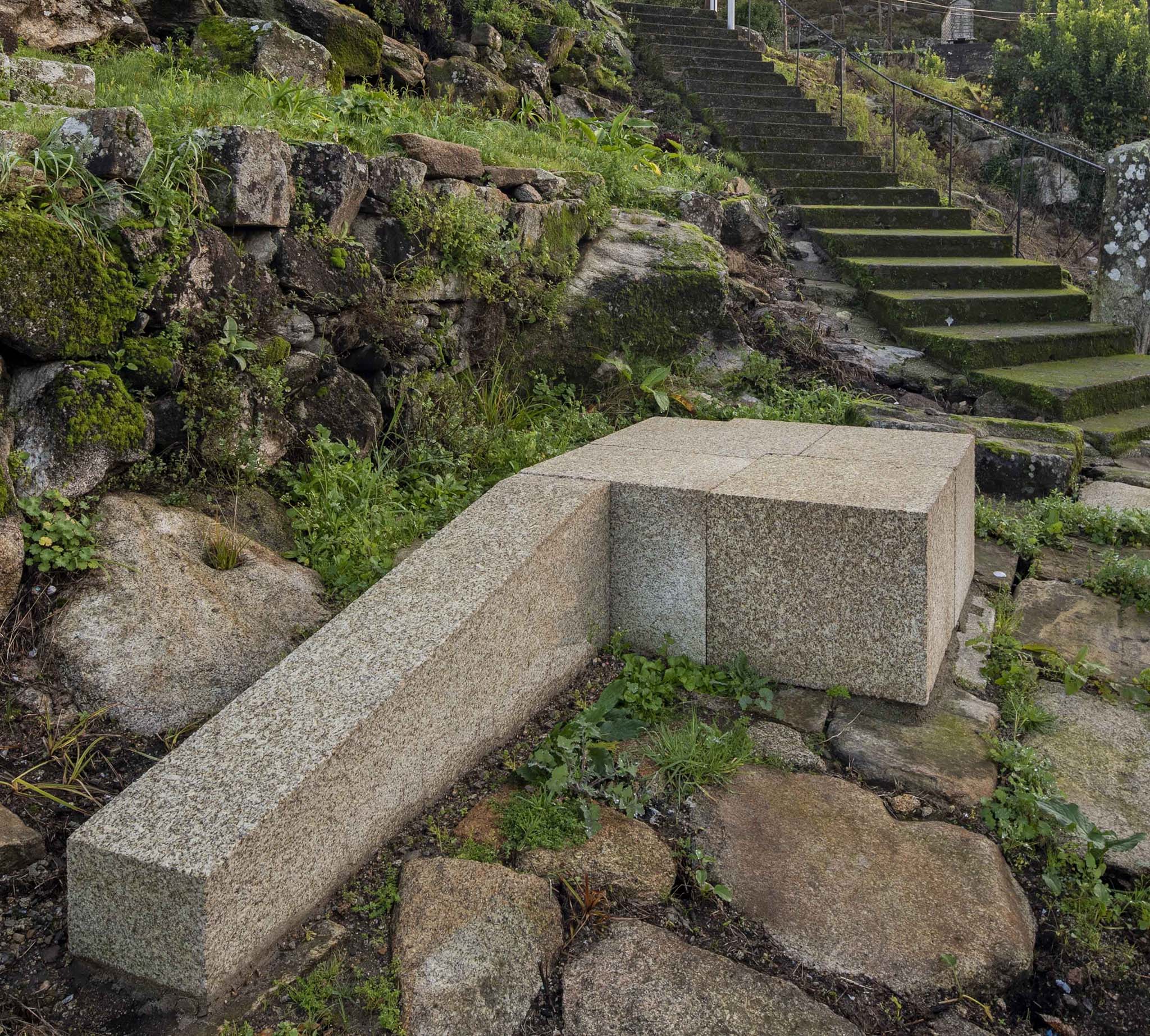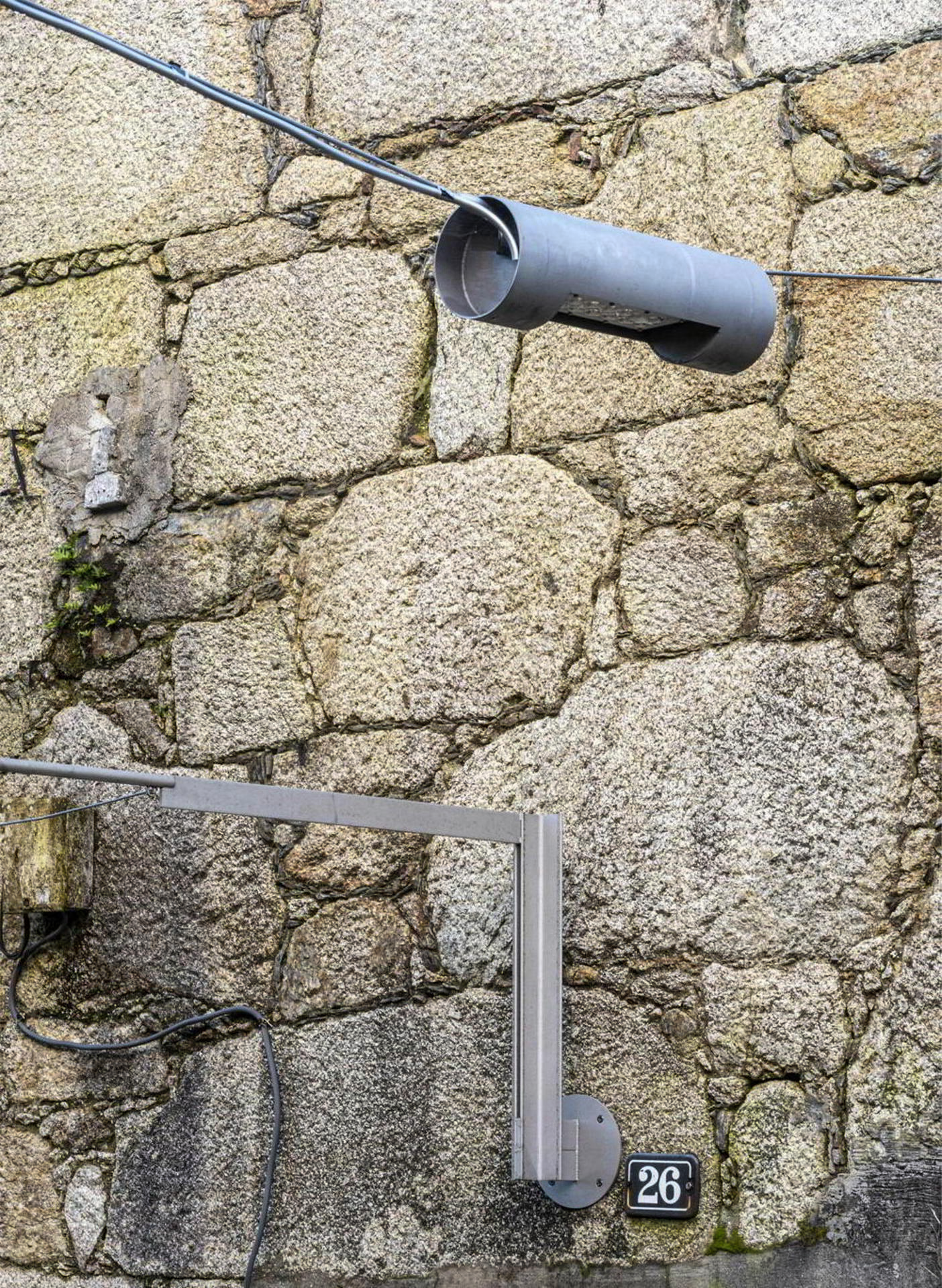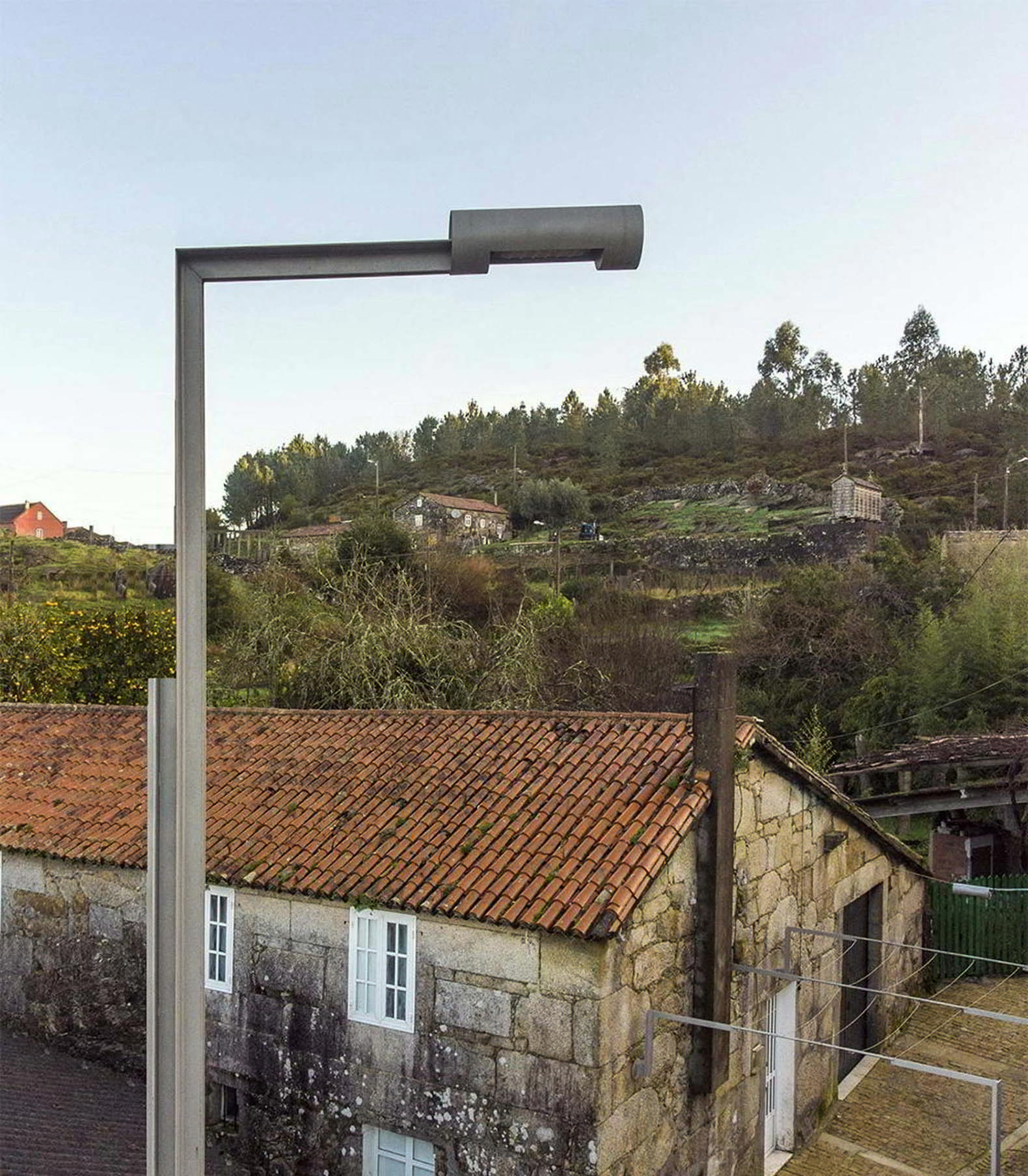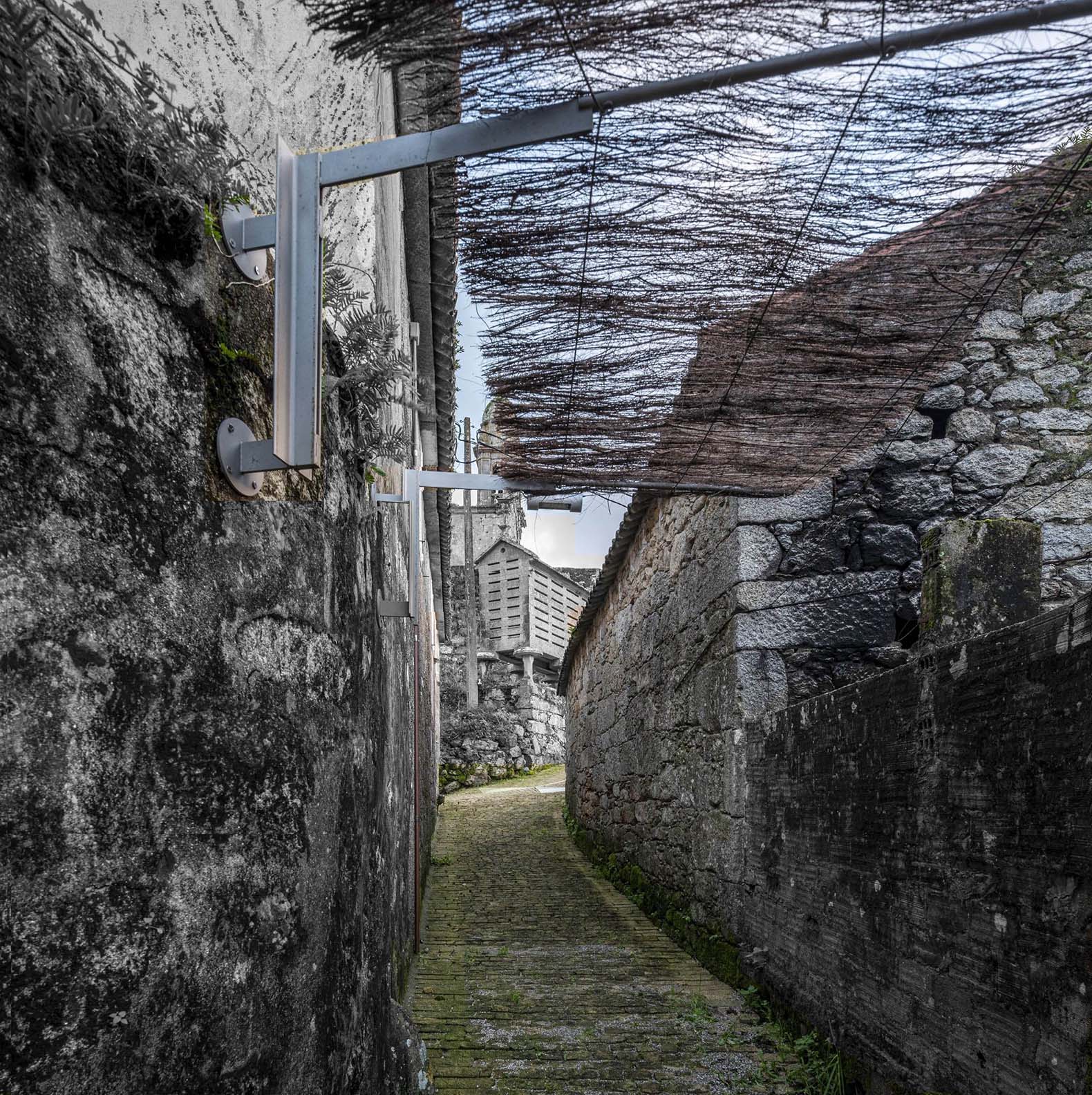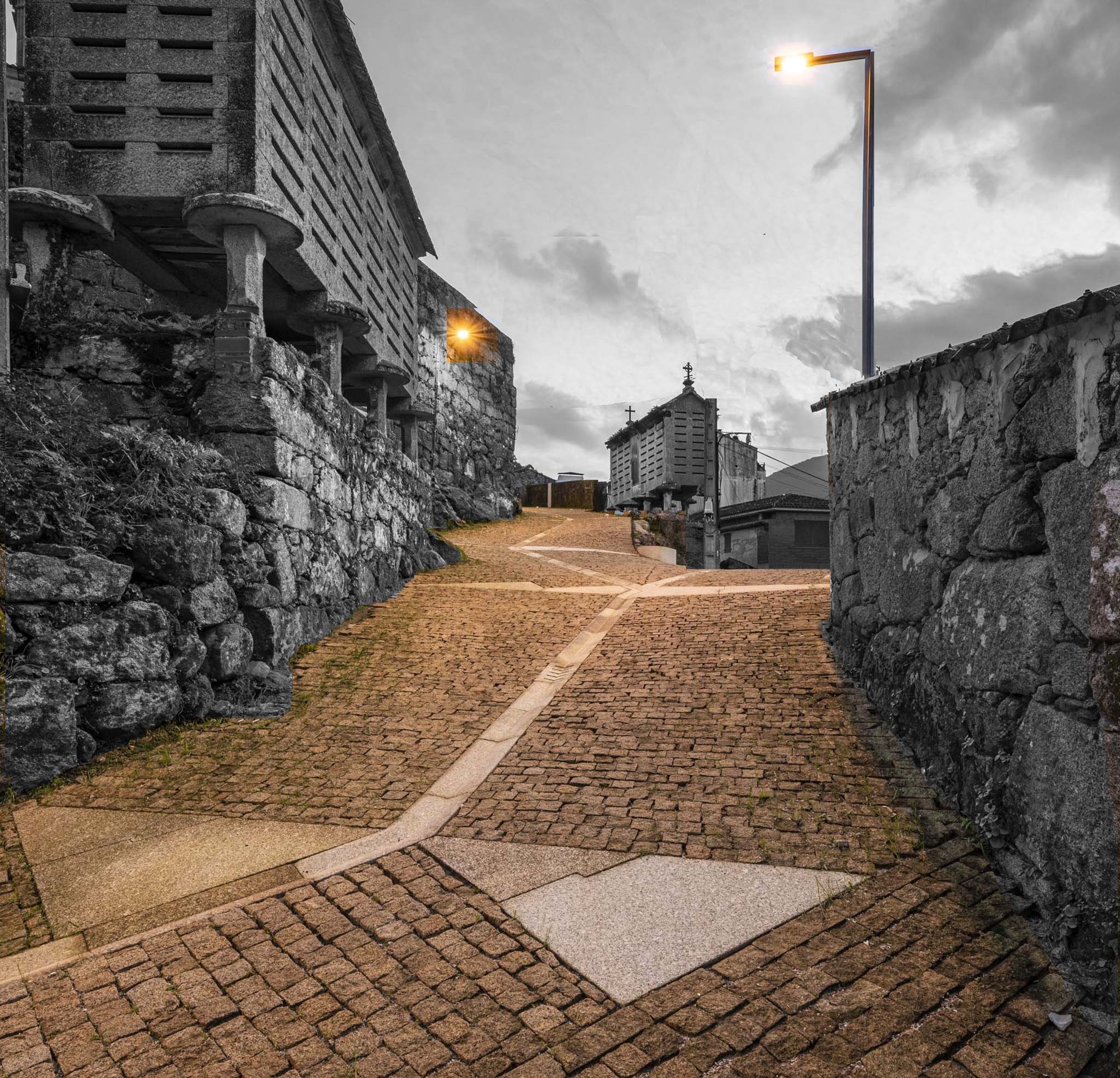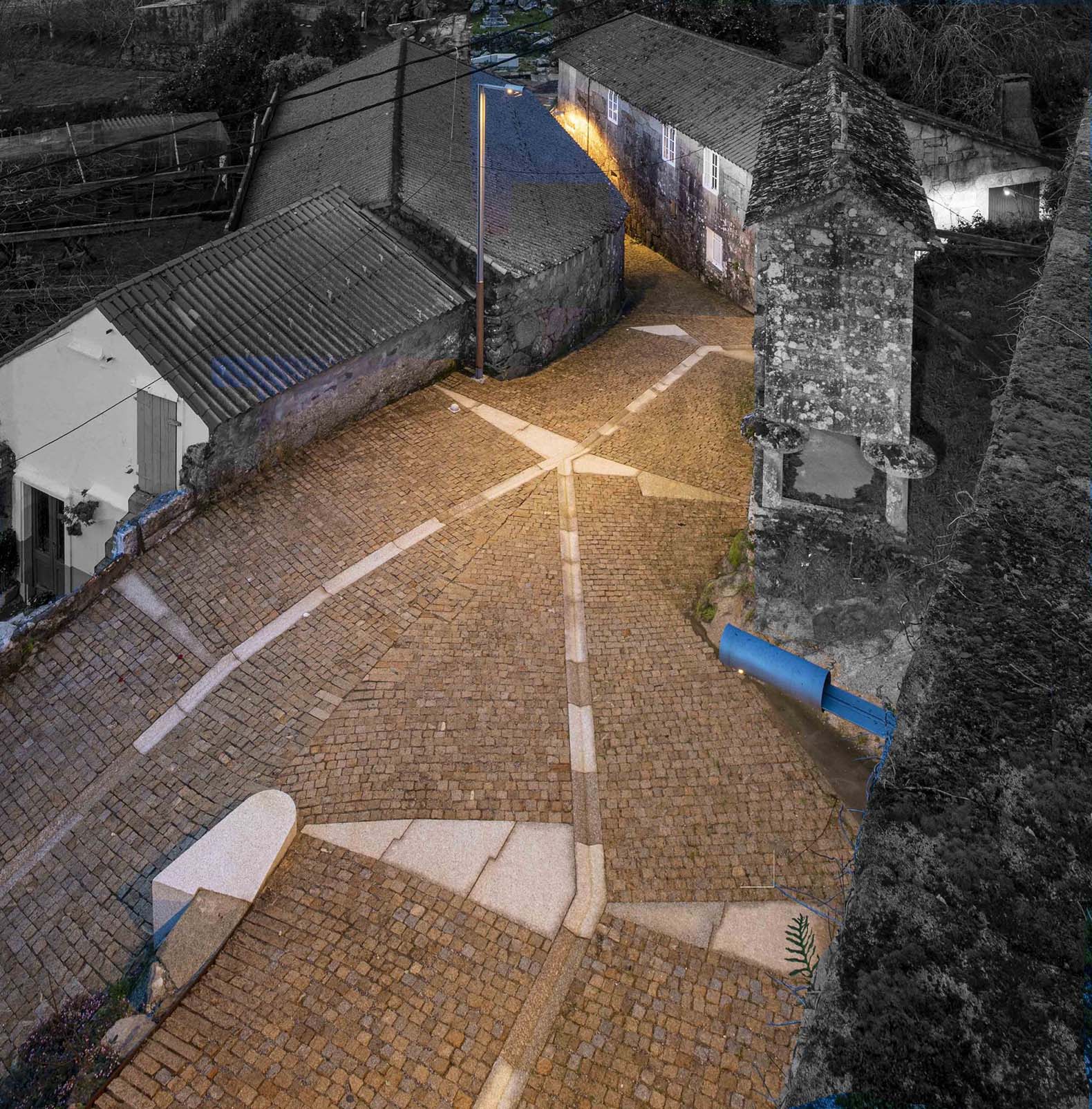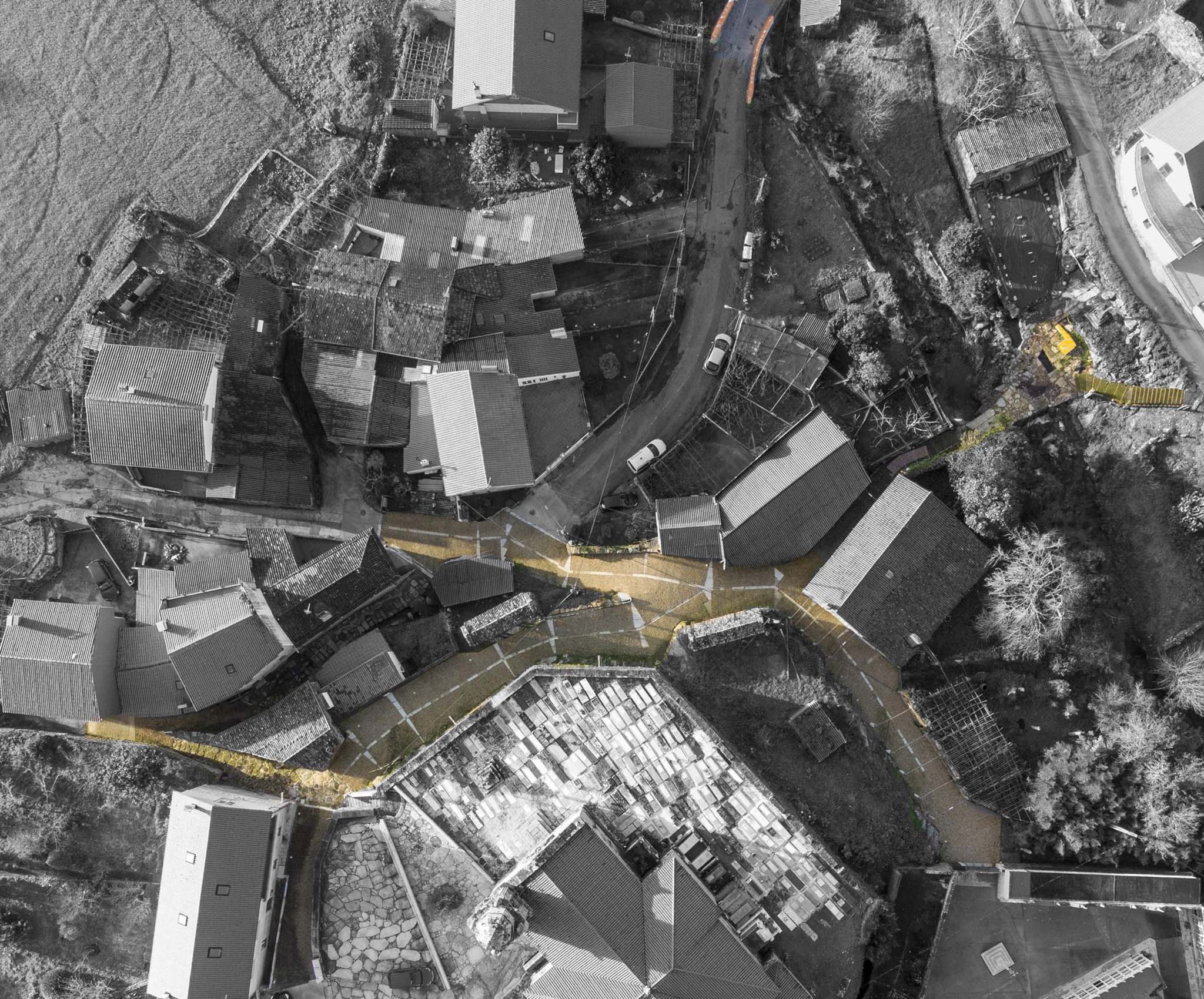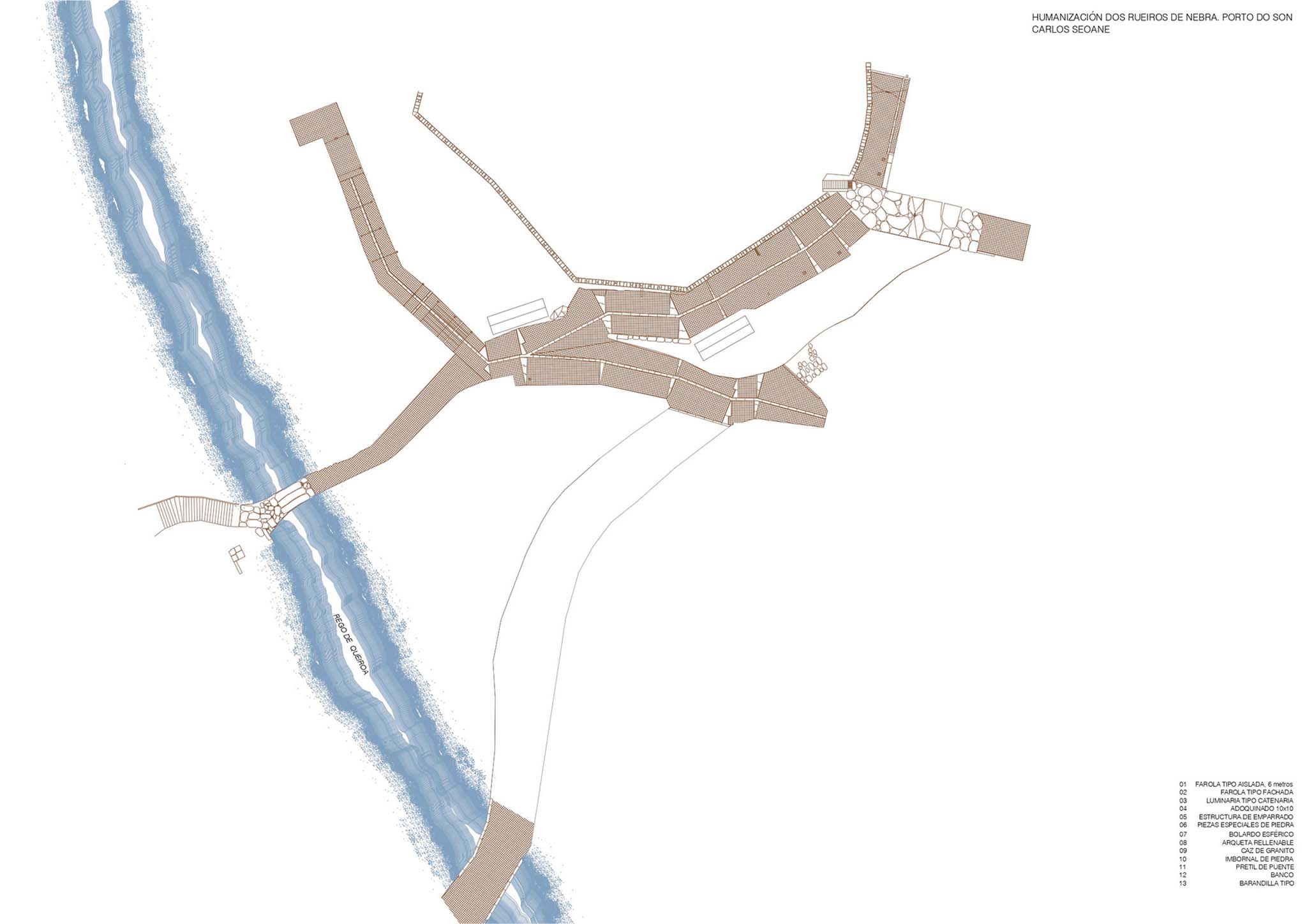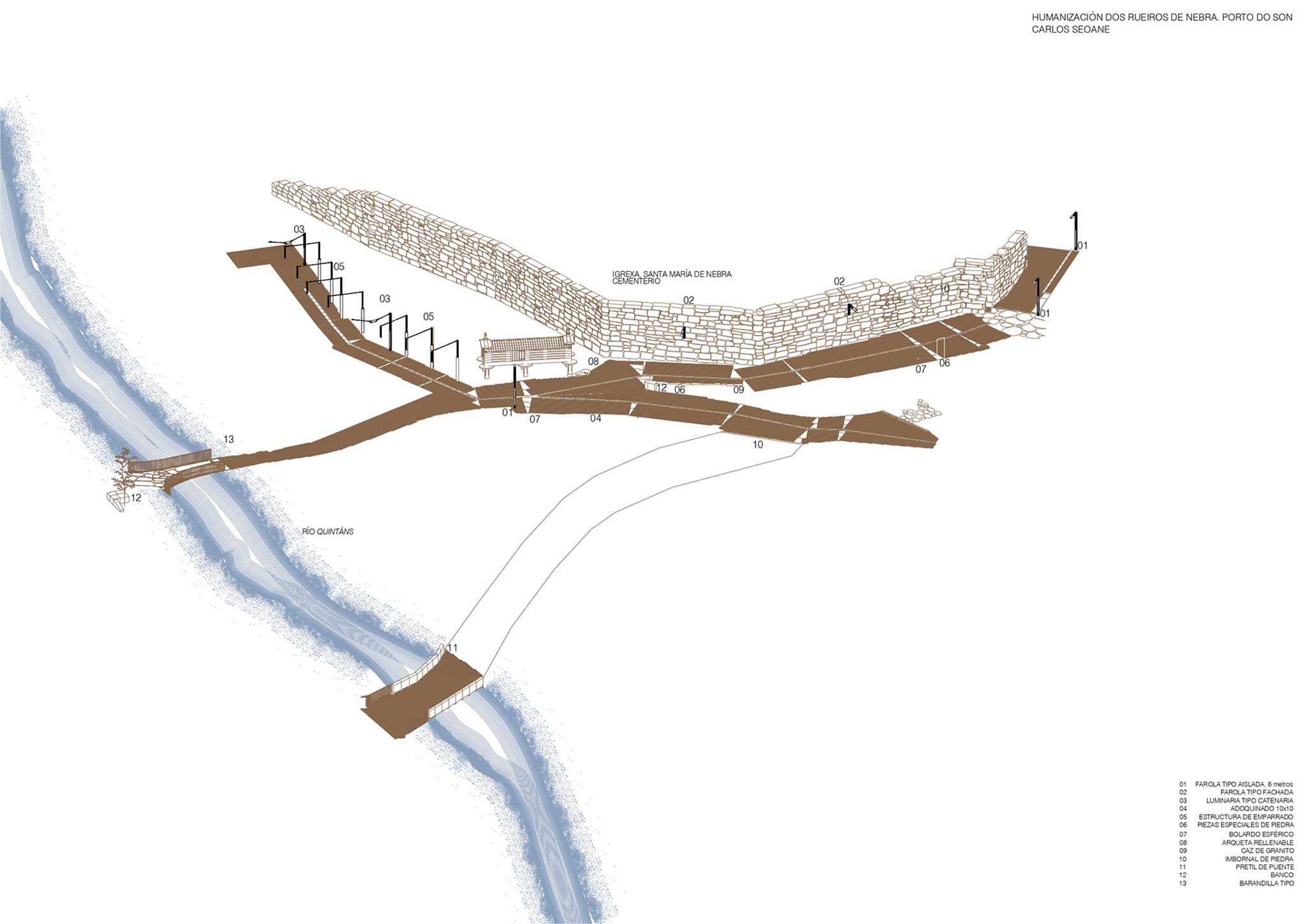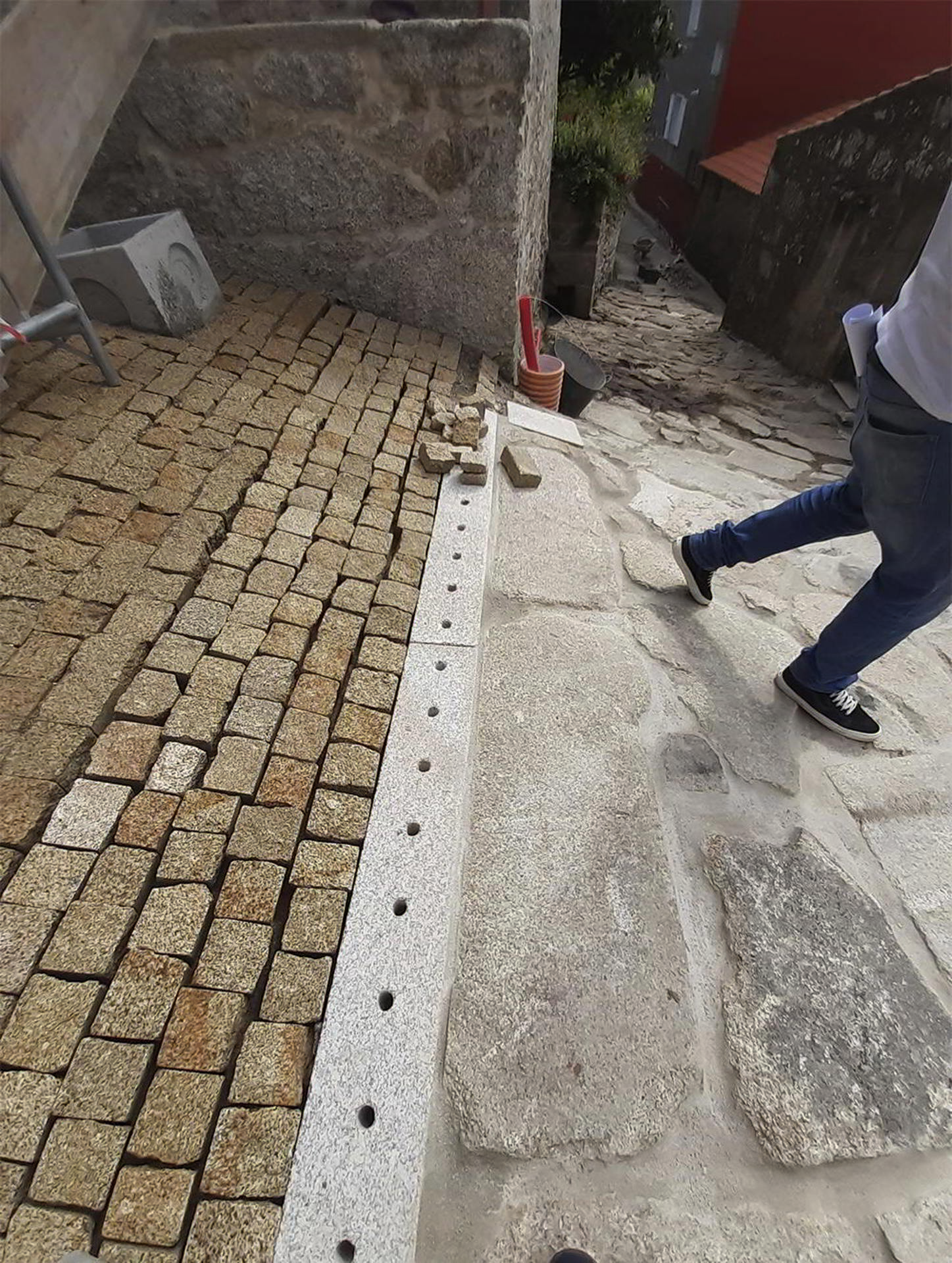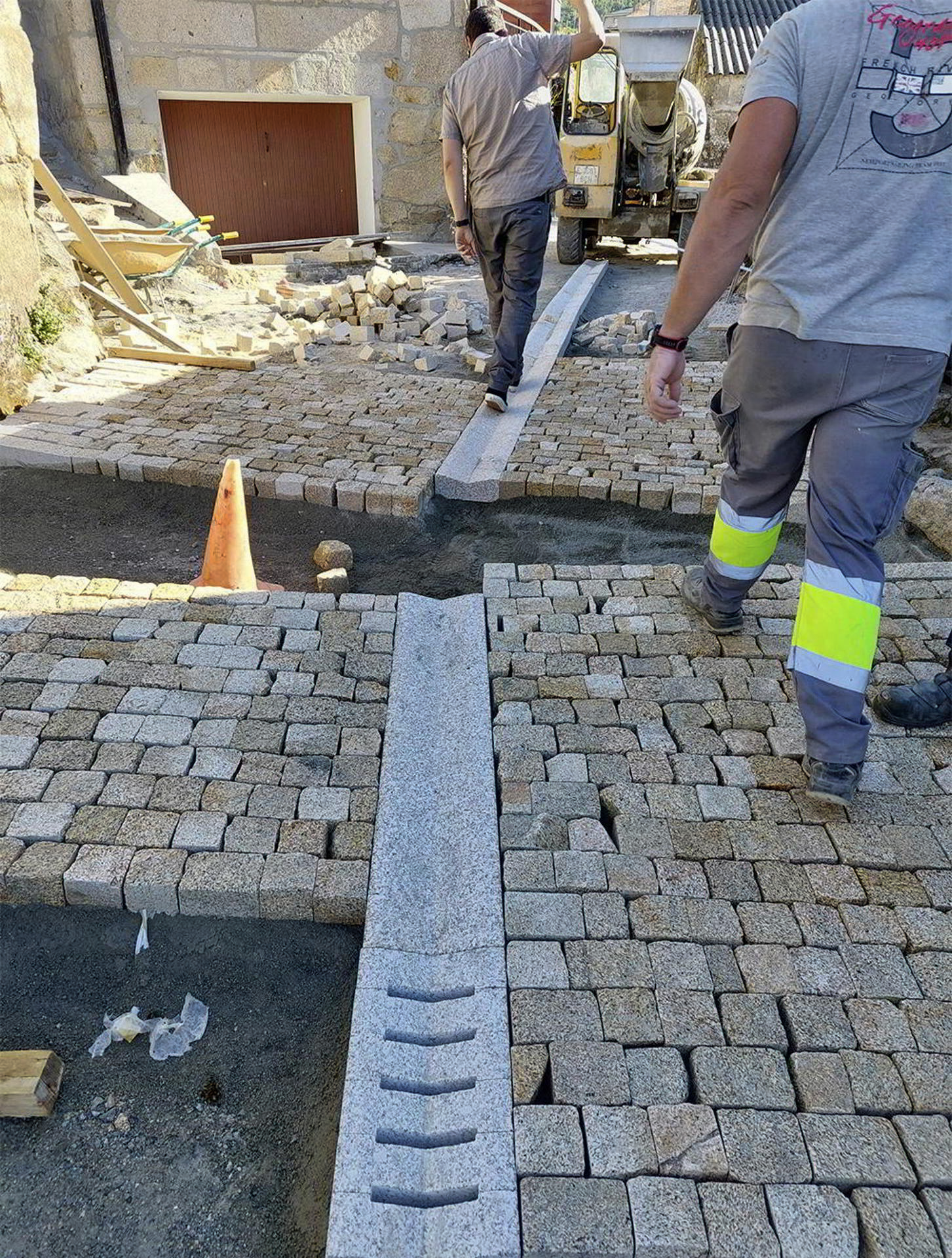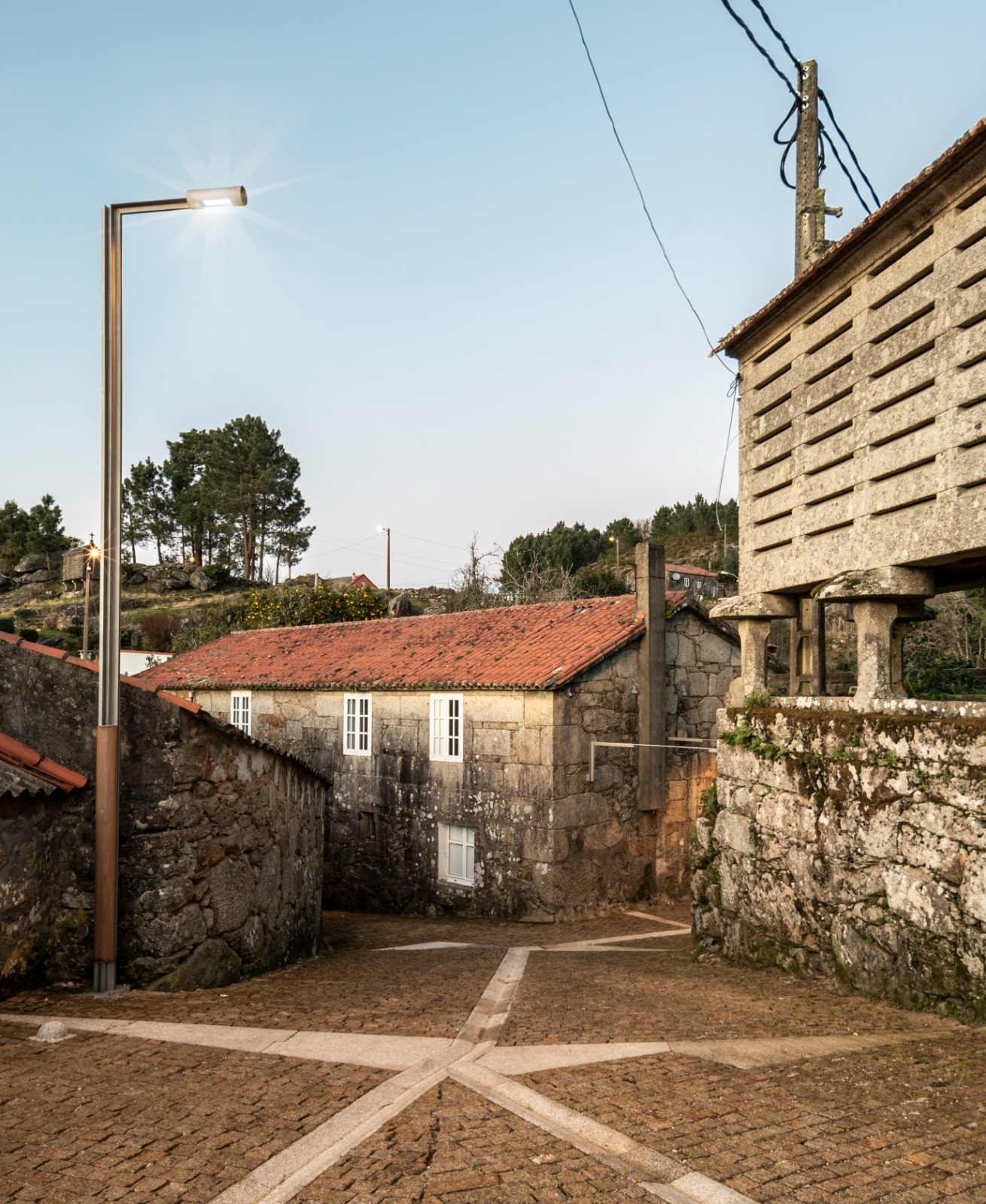
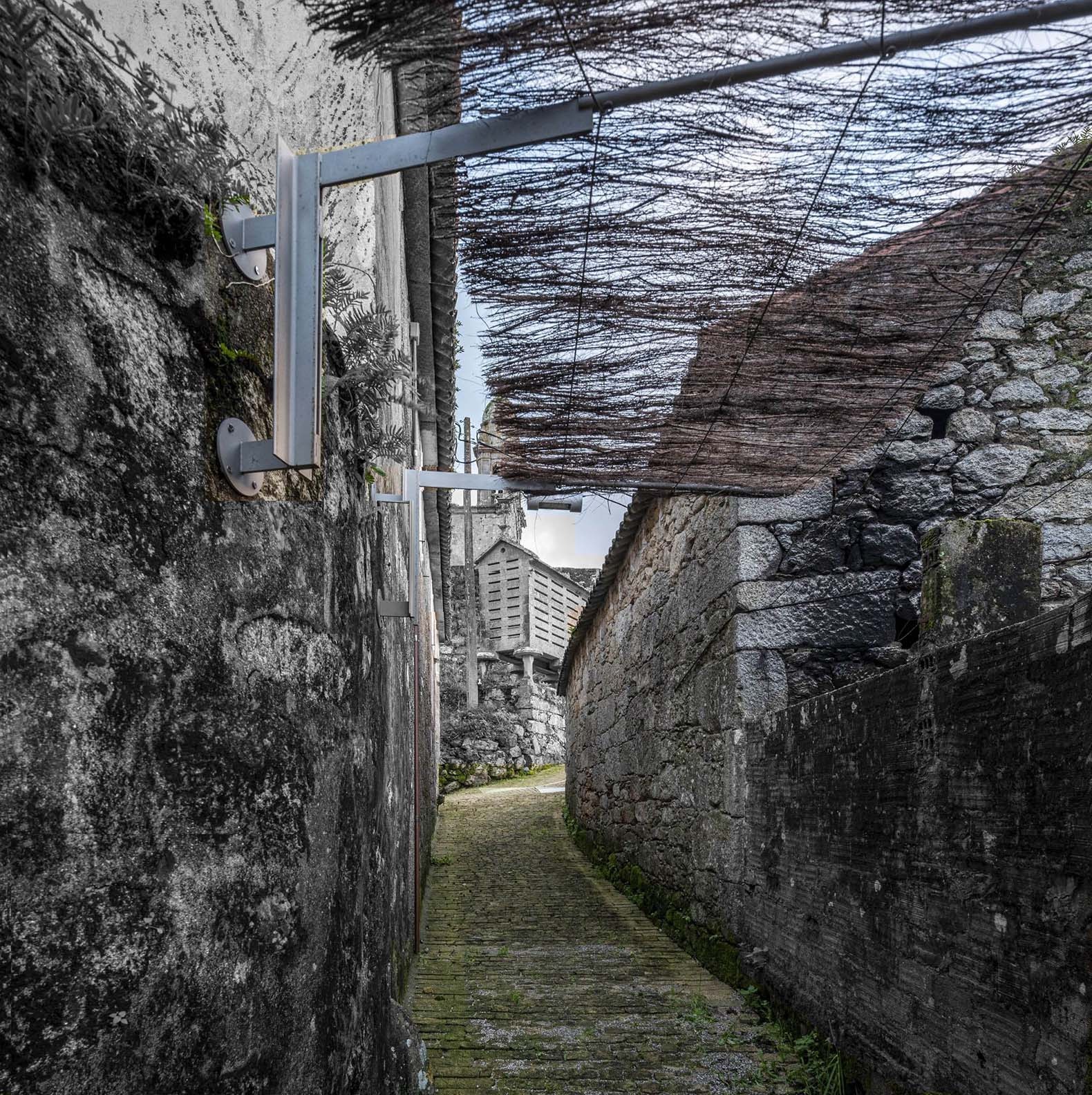
The intervention, designed by Carlos Seoane González, is based on the reorganization of the pavements and the management of rainwater, whose natural flow determines the geometry of the stone layouts and the joints between the pieces. This approach is complemented by a new public lighting system and a series of additional elements, including pergola structures, street furniture, and specific features for parking areas, bridges, and water collection.
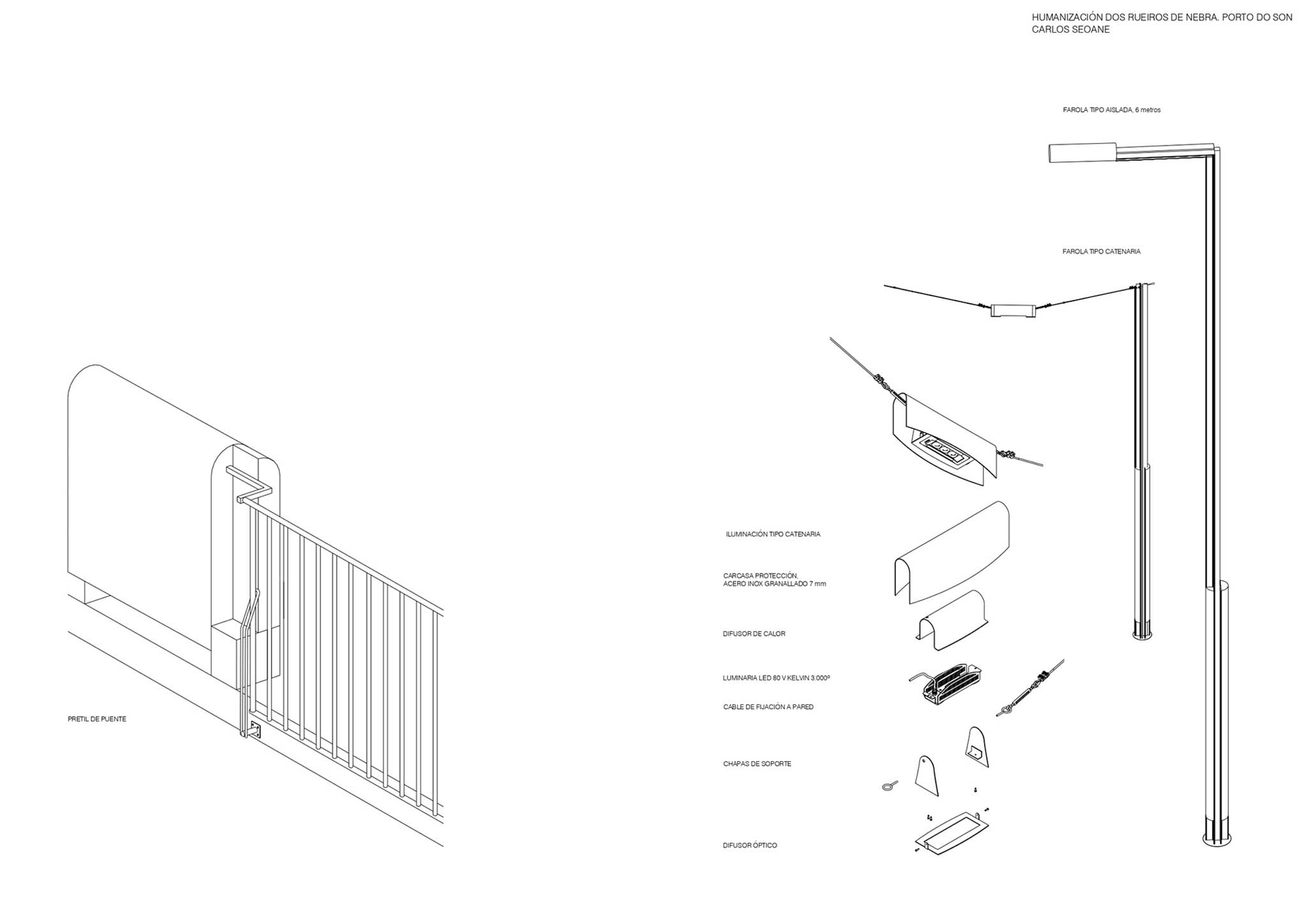
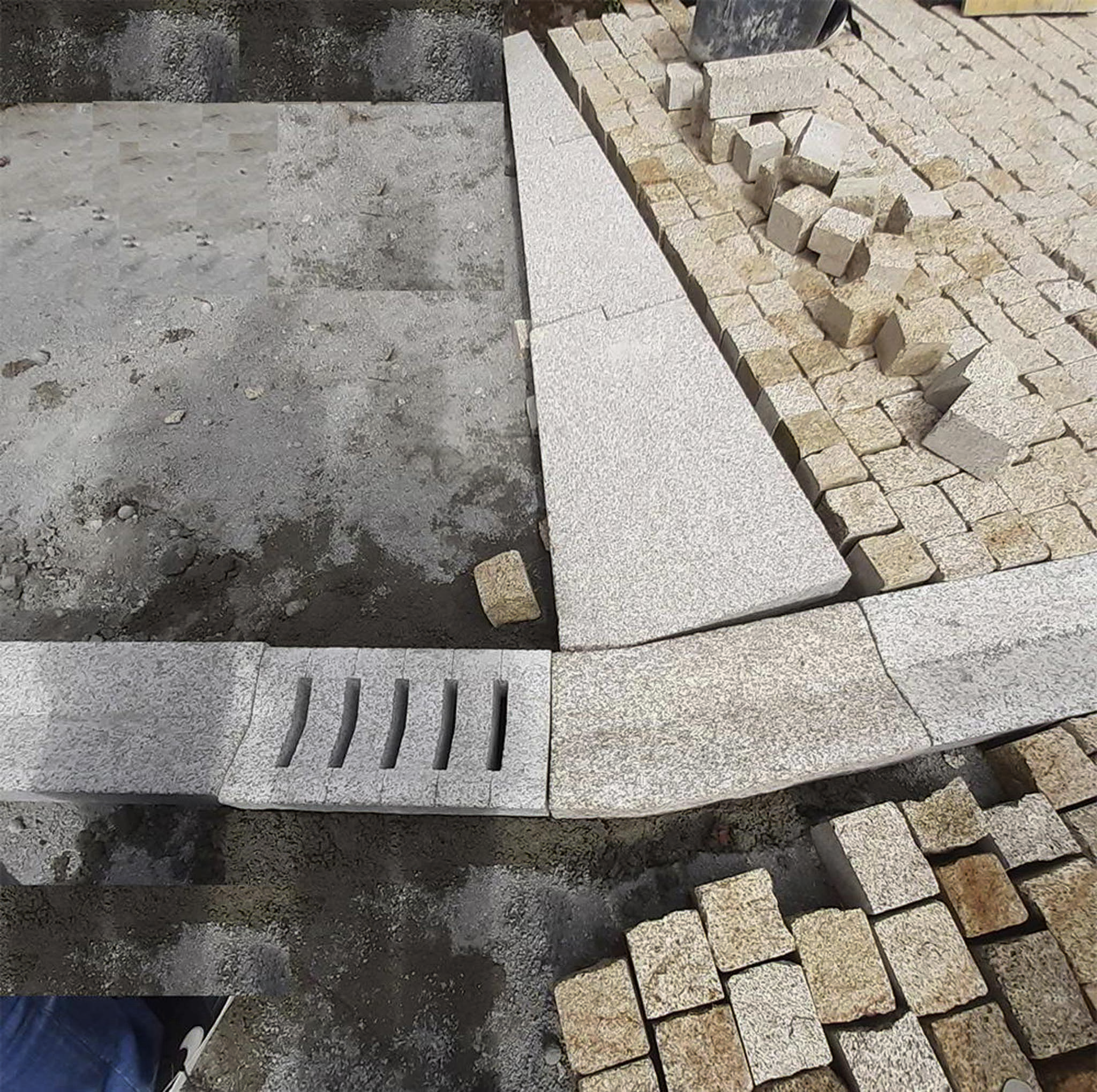
The material palette incorporates locally sourced granite from the Barbanza area, laid in the form of cobblestones and stone slabs. The project also includes specially designed LED lighting fixtures, façade-mounted and six-metre-high streetlights, catenary lighting, railings, parapets, refillable utility chambers, granite drainage channels, and stone gully grates.
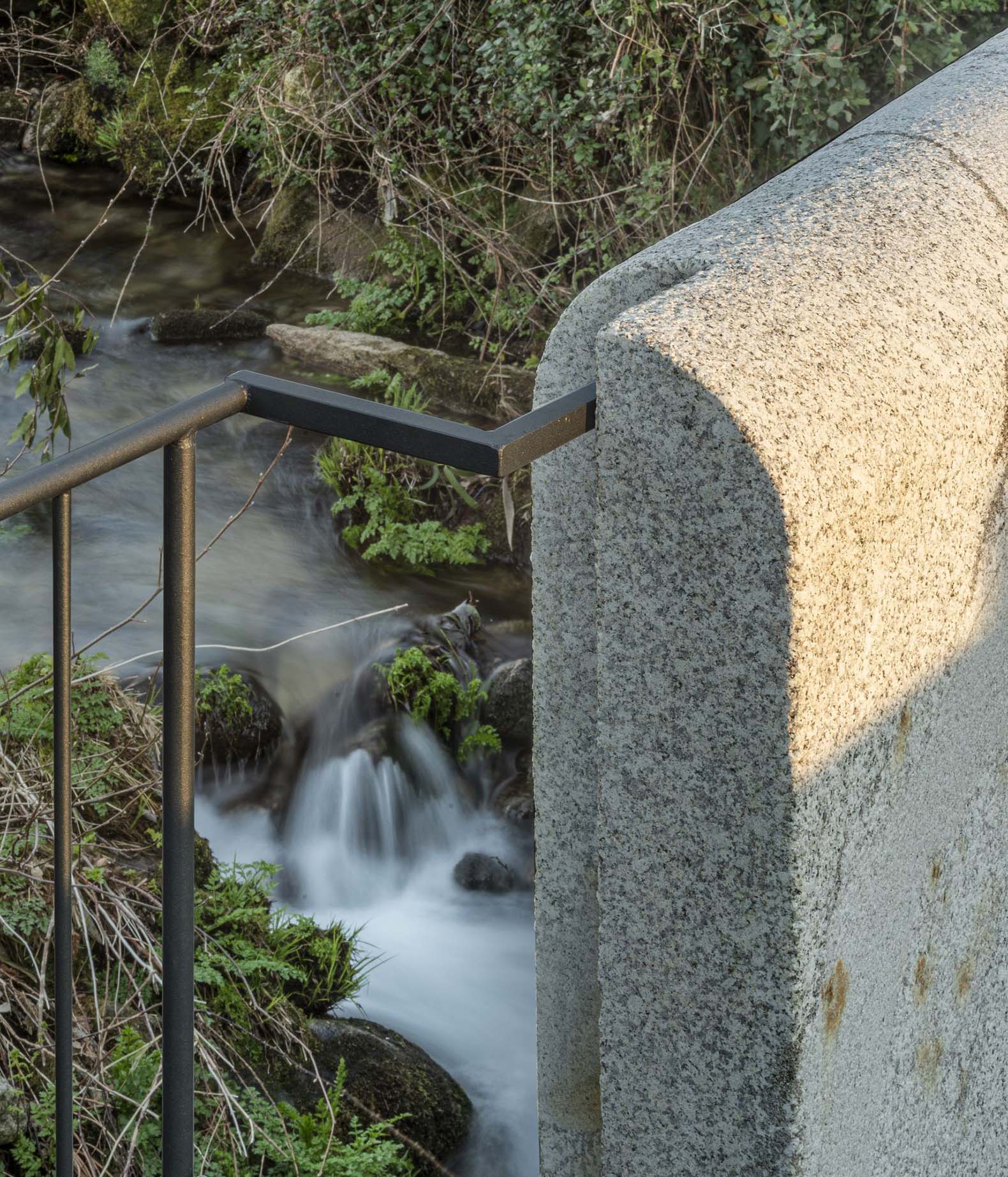
Rehabilitation of public spaces in Nebra by Carlos Seoane González. Photograph by Héctor Santos Diez.
Project description by Carlos Seoane González
Nebra is an inland village within the coastal municipality of Porto do Son. This project seeks to restore the original character of the local paths, which were paved with asphalt in the 1980s—a surface that has since deteriorated to the point of becoming a nuisance and hindering accessibility in certain areas. The proposal aims to improve accessibility while reclaiming the site’s inherent character: an agricultural landscape defined by the presence of local granite, known as *silvestre Barbanza*. The design focuses on managing water runoff along its natural course, utilizing local stone pavers and slabs; the geometry of the water’s flow dictates the layout and junctions of the stonework. Simultaneously, the public lighting system has been upgraded with LED fixtures mounted on custom-designed supports tailored to each specific location.
Beyond the lighting and paving, various other elements have been introduced to help restore the area’s original identity. These include a trellis structure—reminiscent of the traditional vine-covered paths—as well as several industrial-design components crafted to be produced by local artisans, ensuring they do not disrupt the rural setting. These elements include 6-meter lampposts, wall-mounted lights, catenary lighting, trellis frameworks, parking bollards, bridge parapets and railings, recessed utility covers, granite drainage channels, and various stone-carved storm drains. The result is an improvement in accessibility, coupled with an effort to recover the original character that had been lost to a misguided, superficial "modernization" in the 1980s.