Stefano Boeri Aarchitetti repurposes a group of dead trees, coming from Prealpi Carniche, designding the stage project of The Trojan Women of Euripides, directed by Muriel Mayette-Holtz, on stage from the 10th of May to the 23rd of June 2019 at the Teatro Greco of Siracusa and promoted by Fondazione INDA.

The scenography for this famous ancient greek theater in Italy, which given the name ‘dead forest’, uses over 100 trunks coming from Prealpi Carniche, the italian alps following a terrible storm in october 2018.

The spruces from Friuli become real protagonists of the stage project for Siracusa thanks to the precious collaboration of Innova FVG.
The scenic project for the Euripide’s tragedy The Trojan women is an idea of a landscape rather than an architectural presence in the suggestive environment of Greek Theater of Syracuse. According to the idea of the Director Muriel Mayette-Holtz, the Trojan women are among us as the refugees escaping the destruction and disaster in their homelands in search of a better luck overseas. They are the victims of the terroristic attacks, confused and disoriented. But they are also millions of fir trees and spruces smashed down by the Vaia storm in the North-Eastern Italy, in the Carnic forests of Friuli Venezia Giulia.

The economical and environmental impact of the storm that on October 29th 2018 has destroyed the area of 41.000 ha of forest is yet to be analyzed, but even the rough estimations demonstrate that the amount of wood nailed to the ground by the strongest wind this area has ever experienced, is 7 times superior to the material that all italian sawmills could potentially elaborate in 1 year.

So the idea of the scenic project is born out of necessity of creating, by the means of culture and design, of a bridge between the two tragedies that are 2000 years apart, between the two regions separated by 1500 km, between humans and nature.
 

Description of project by Stefano Boeri

A Dead Forest". A forest of trees killed by a storm, of broken trunks that cover the ground. When I have been asked by Antonio Calbi to imagine a stage project for The Trojan Women of Euripides at the Theater of Siracusa directed by Muriel Mayette – Holz, I thought from the very beginning to portray a Landscape more than a stage scenography. So, walking the stone bleachers of the Theater and looking at the cypresses and maritime pines wood that acts like a natural scenography for the stage, my thought went immediately to the spectalur and terrible image of the thousands of trees shot down by the Carnia wind fury of last october.

Thousands of spruces eradicated and laid down on the ground designing a blurred wake of desolation through the powerful order of the most ancient forests. With Muriel Mayette – Holtz and her team, with the precious assistance of Anastasia Kucherova, we decided to give to those dead plants the last possibility to be present, erect, and still noble within the classical geometry of the Teatro Greco's stage. They are in front of a double public: the one made of human beings on the bleachers and the one made by the trees that make the wood beyond the stage. So, the swarm of the crashed trees, once transported to Siracusa and taken on stage, blended with bodies and the desperate and furious voices of the Trojan Women, has become a dead forest of wooden columns: erect even though sadly decimated. Proud and well ordered, though destined to a new life in sicilian sawmills.

The truth is that today a tragedy that comes from the depths of time is there to remind us the follies of men; and that this tragedy is performed on stage probably in a moment of history when the extremely long times of the evolution of the planet seem to conicide with our daily choices and force us to face our responsibilities towards the natural environment.

The last journey of Carnia crashed forests to the sicilian woods is a symbolic new born bridge between the forest rangers from Friuli and the ones from Sicily. Together with the involvement of the public to create a new forest dedicated to the protagonists of Euripides' tragedy, are a message of hope; or of awareness of our constant ignorance toward a tragedy stegaed for the first time 2500 years ago” Stefano Boeri.

Read more
Read less

More information

Label
Architects
Text
Founding Partner.- Stefano Boeri. Project leader.- Anastasia Kucherova
+ + copy Created with Sketch.
- + copy Created with Sketch.
Label
Light Design
Text
Angelo Linzalata
+ + copy Created with Sketch.
- + copy Created with Sketch.
Label
Partners
Text
Technical Partners.- Regione Autonoma Friuli Venezia Giulia Innova FVG Presidente Michele Morgante Referente progettuale Nicoletta Ermacora Rete Filiera Legno FVG Consorzio Boschi Carnici Presidente Luigi Cacitti Comune di Sappada Manuel Piller Hoffer AIBO FVG Presidente Agostino Michielin Le aziende boschive.- Cigliani Albino e Mirco Arta Terme Agostinis Luigi s.r.l. Reana del Roiale Danta Legnami e Biomasse Verzegnis Del Fabbro Maurizio Forni Avoltri F.lli De Infanti
+ + copy Created with Sketch.
- + copy Created with Sketch.

Stefano Boeri Architetti (previously, Boeri Studio) is an architecture practice based in Milan, Shanghai and Tirana, led by Stefano Boeri, and dedicated to research and design in architecture and urban planning since 1993. Together with Stefano Boeri, the studio’s Partners are Francesca Cesa Bianchi (from 2019), Marco Giorgio (from 2019) and Pietro Chiodi (from 2023). The firm’s Directors are Hana Hosi Narvaez Bautista, Livia Sharmir (Research Department) and Corrado Longa (Urban Planning Department).

Together with master plans and urban planning in various cities, the studio is currently working on numerous architectural projects, including the Tower of Cedars (Lausanne), Balcon sur Paris (Paris), Wonderwoods (Utrecht, under construction) and the redevelopment of the San Cristoforo district in Milan with the Bosconavigli project. The studio’s recent professional developments include projects such as the set design of Euripides’ ‘The Trojan Women’ at the Greek Theatre in Syracuse (2018); the new entrance to the Domus Aurea in Rome (2021); the staging of the exhibition ‘Chi è di Scena! Cento anni di spettacoli a Ostia Antica (1922-2022)’ at the Ostia Antica Archaeological Park (2022); the Masterplan for the South Coast of Salerno – with the territorial redevelopment of the area of the archaeological site of Paestum – and the requalification and valorisation of the Amphitheatre and the Roman baths in Durazzo – testify to Stefano Boeri Architetti’s growing care and attention towards the international archaeological heritage and its cultural, tourist and environmental enhacement.

The studio has received numerous international awards: the Bosco Verticale, the new symbol of Milan and of biodiversity in architecture, was named best building in the world by the CTBUH (Chicago) and received the award for best skyscraper by the DAM in Frankfurt. In addition, the firm received the official award of Professional Leadership in Biodiversity in Architecture from the US Green Building Council (2020).

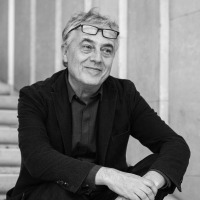
Stefano Boeri, born in Milan in 1956, is a Milan-based architect and, since June 2011, the Councillor for Culture, Design, and Fashion for the Municipality of Milan. From 2004 to 2007, he was editor-in-chief of the international magazine Domus, and from 2007 to 2011, of Abitare. He is a professor of Urban Design at the Politecnico di Milano and has been a visiting professor at Harvard Graduate School of Design, MIT, the Berlage Institute, and the Architectural Association, among others. Since 2007, he has directed the international architecture festival Festarch. He recently curated “Calling São Paulo,” a project on informal settlements promoted by the São Paulo Housing Secretariat.

He is a professor of Urban Planning at the Politecnico di Milano and directs the Future City Lab at Tongji University in Shanghai, a postdoctoral research program focused on the transformation of global metropolises from the perspective of biodiversity and urban forestry. He has been a visiting professor at institutions such as Harvard GSD, EPFL, the Berlage Institute in Rotterdam, and the Academy of Architecture in Mendrisio. He is president of the Scientific Committee of Forestami, the urban forestry project for the Milan metropolitan area, and has presided over the Triennale Milano since 2018.

Read more
Published on: May 4, 2019
Cite:
metalocus, INÉS LALUETA
"Stefano Boeri designs scenography for Greek theatre Syracuse. A dead forest for the trojan women " METALOCUS. Accessed
<https://www.metalocus.es/en/news/stefano-boeri-designs-scenography-greek-theatre-syracuse-a-dead-forest-trojan-women> ISSN 1139-6415
Loading content ...
Loading content ...
Loading content ...
Loading content ...
Loading content ...
Loading content ...
Loading content ...
Loading content ...
Loading content ...
Loading content ...
Loading content ...
Loading content ...
Loading content ...
Loading content ...
Loading content ...
Loading content ...
Loading content ...
Loading content ...
Loading content ...
Loading content ...
Loading content ...
Loading content ...
Loading content ...
Loading content ...
Loading content ...
Loading content ...
Loading content ...
Loading content ...
Loading content ...
Loading content ...
Loading content ...
Loading content ...
Loading content ...
Loading content ...
Loading content ...
Loading content ...
Loading content ...
Loading content ...
Loading content ...
Loading content ...
Loading content ...
Loading content ...
Loading content ...
Loading content ...
Loading content ...
Loading content ...
Loading content ...
Loading content ...
Loading content ...
Loading content ...
Loading content ...
Loading content ...
Loading content ...
Loading content ...