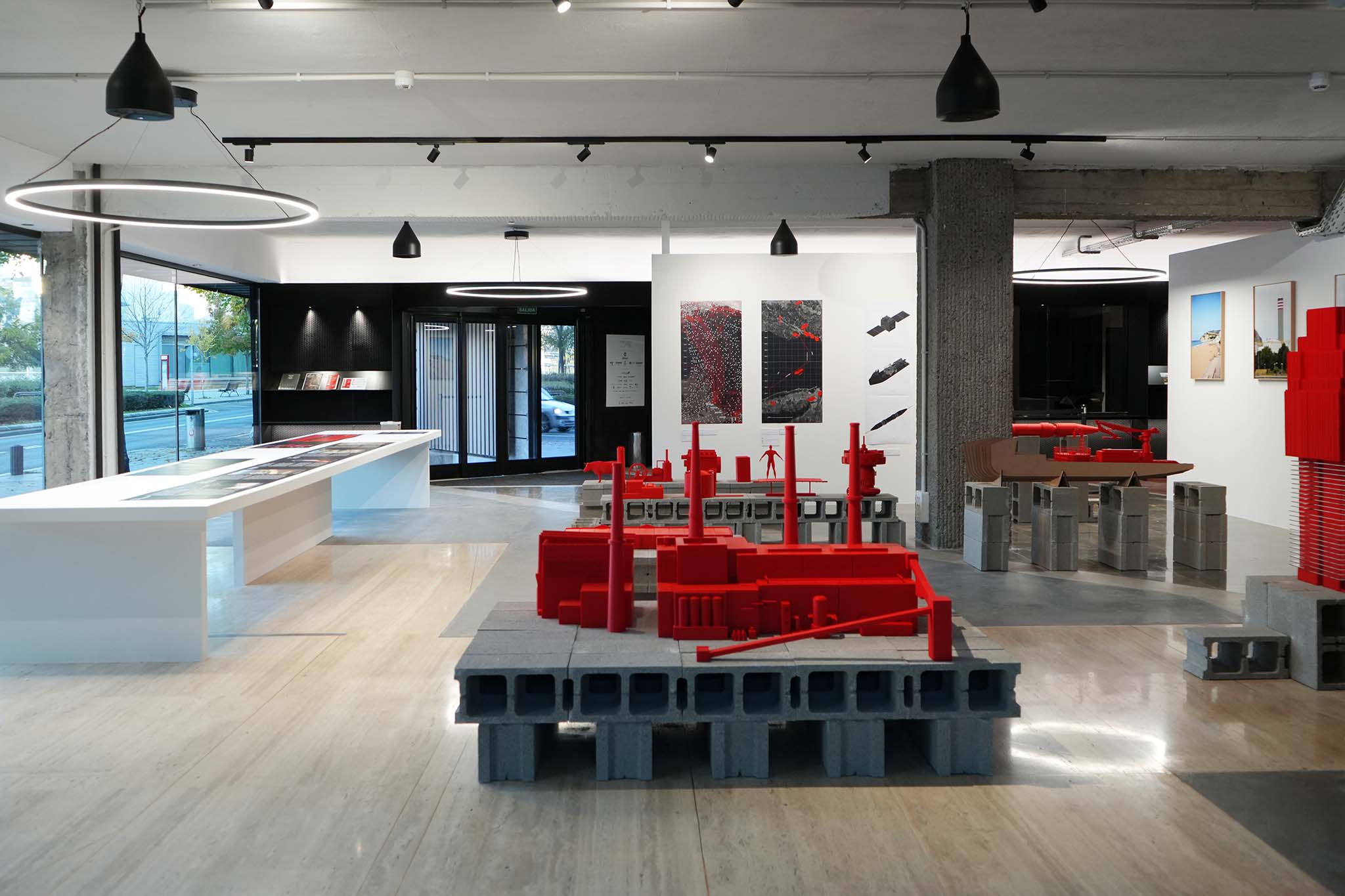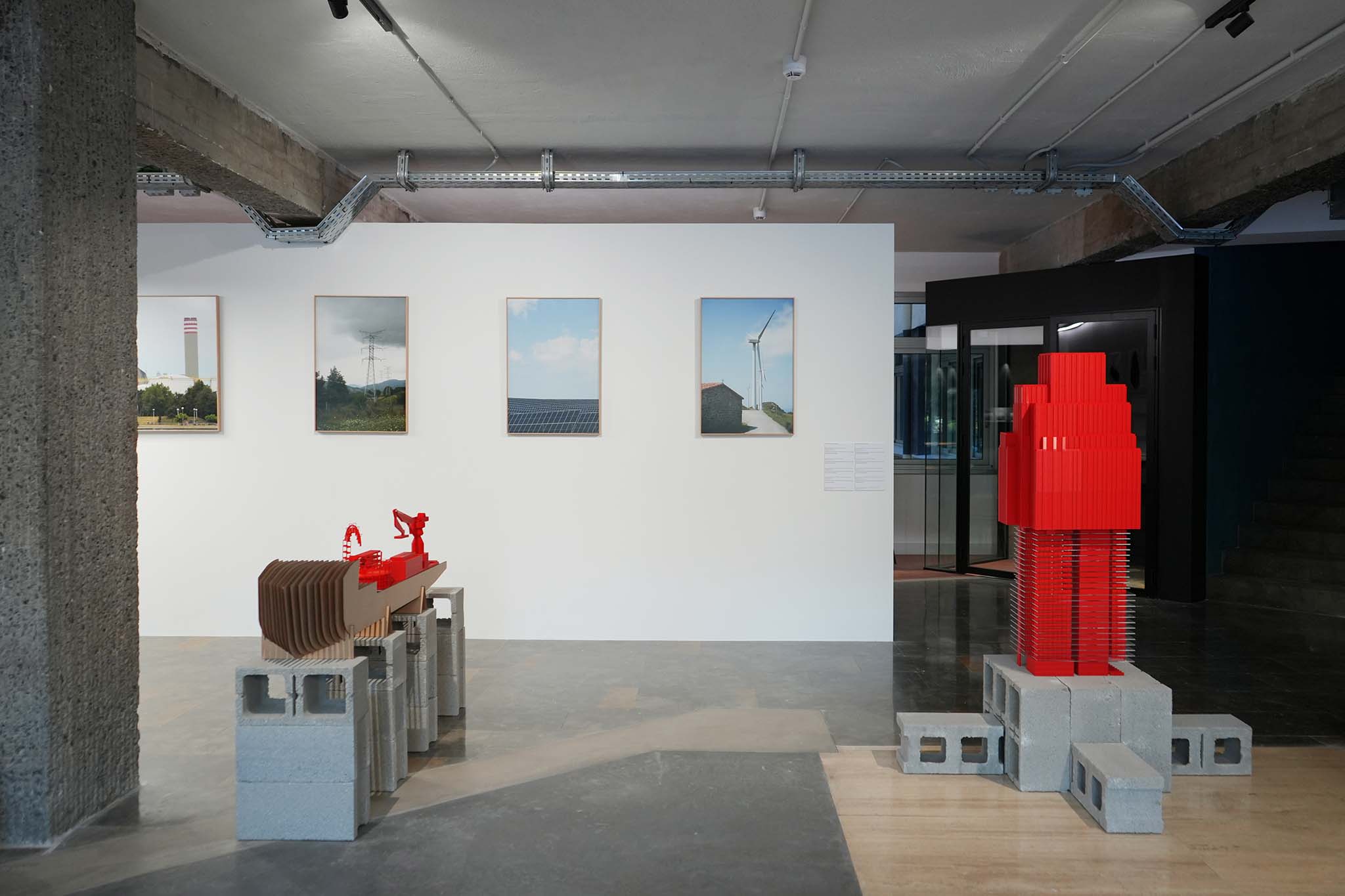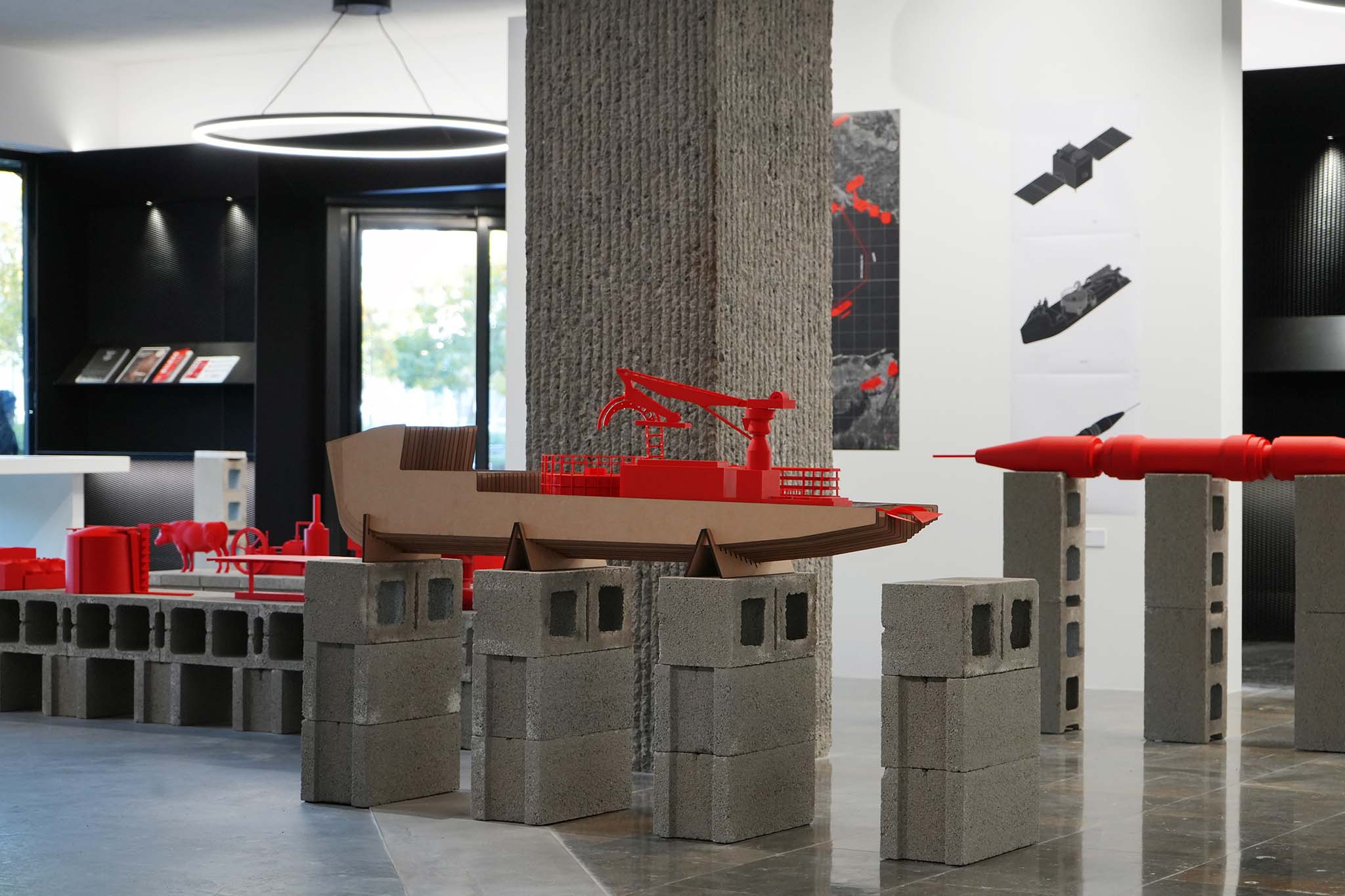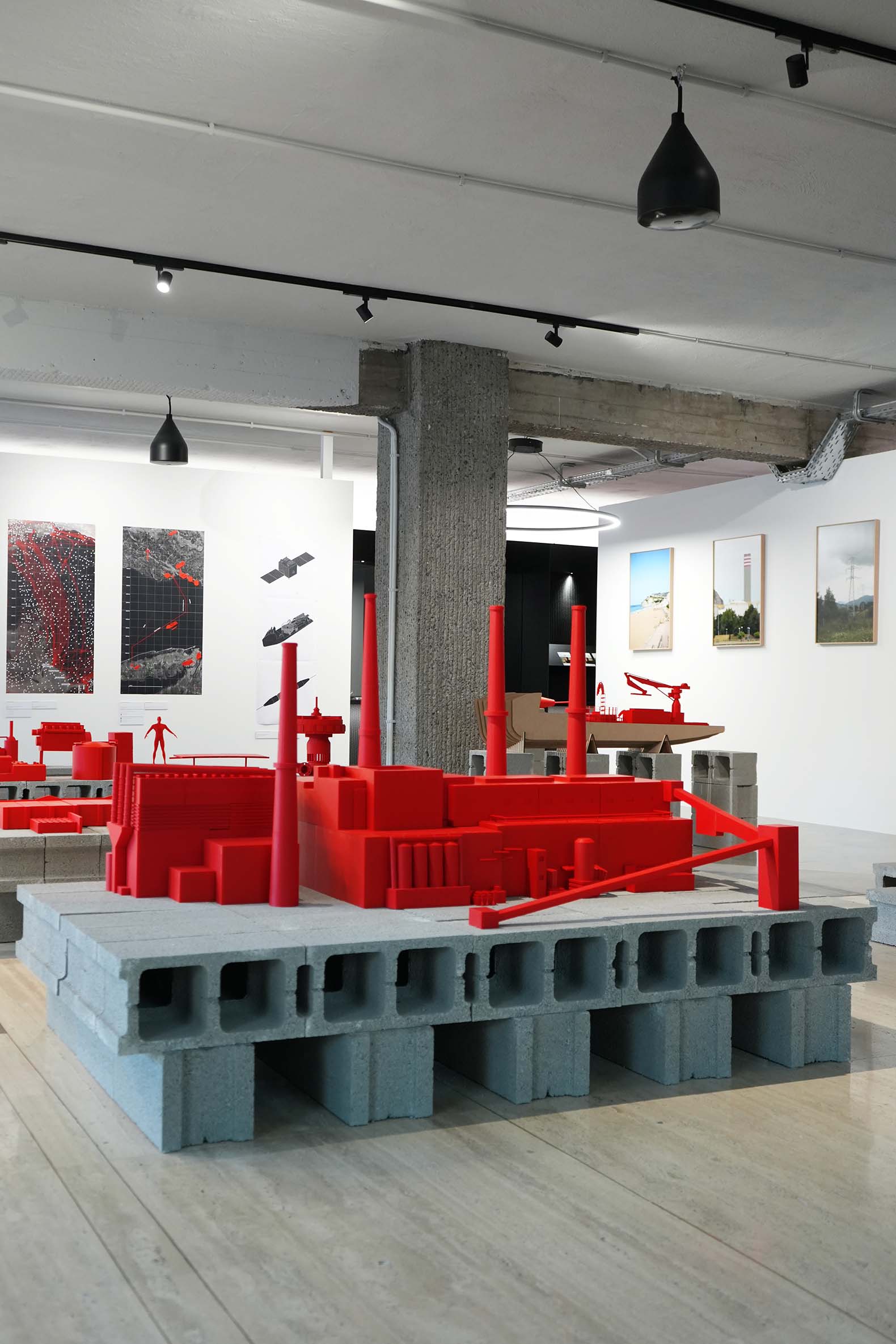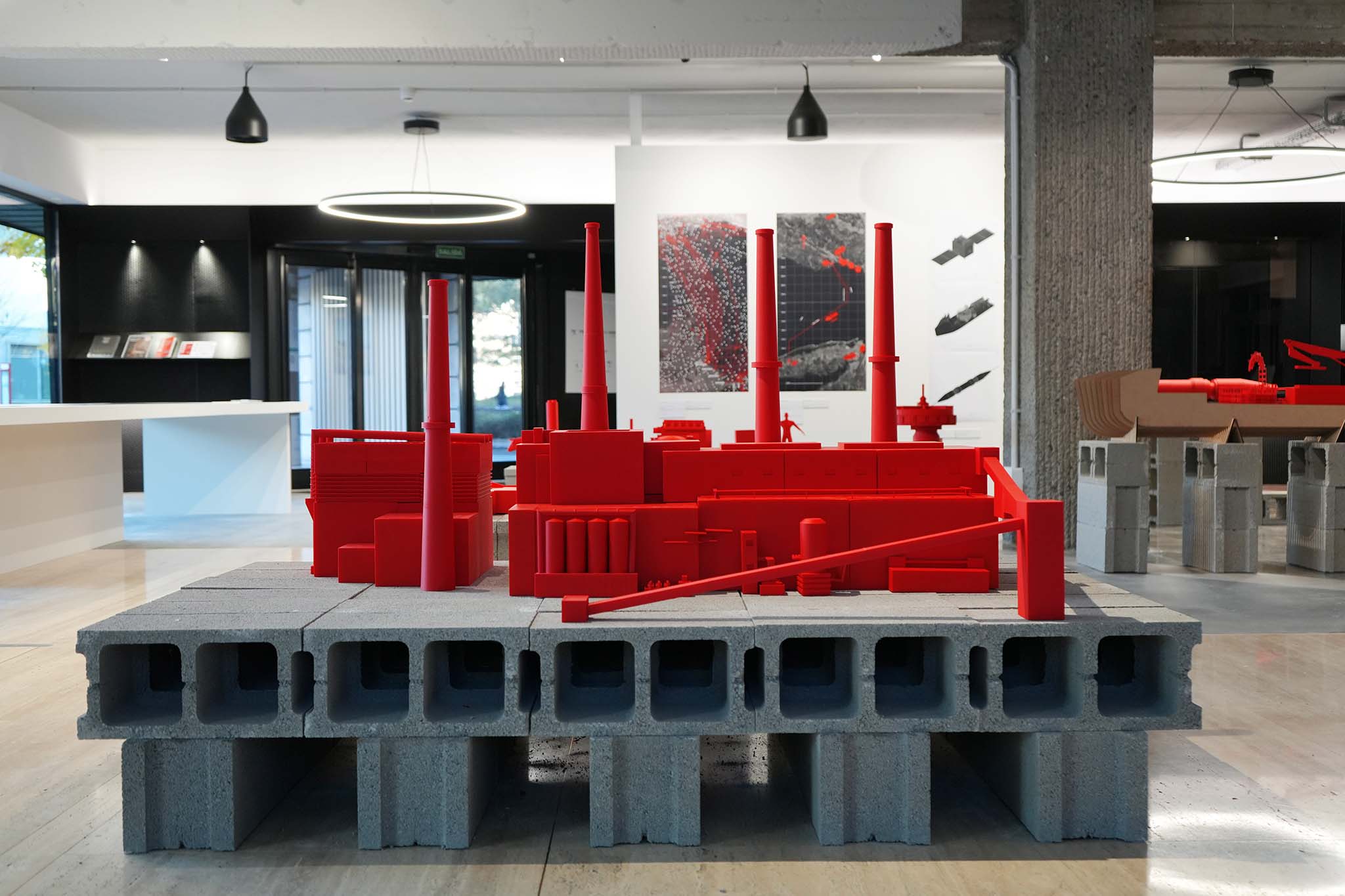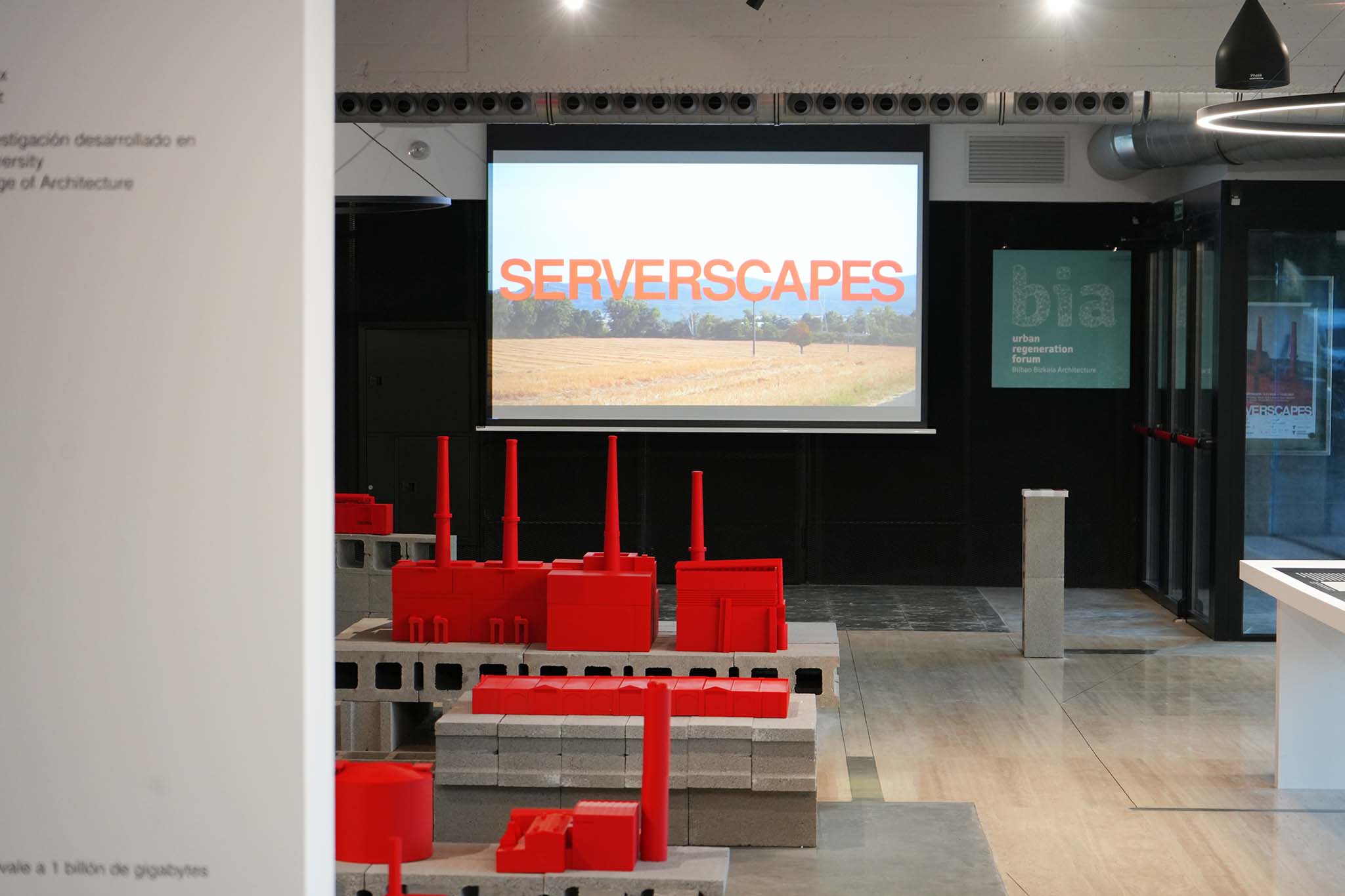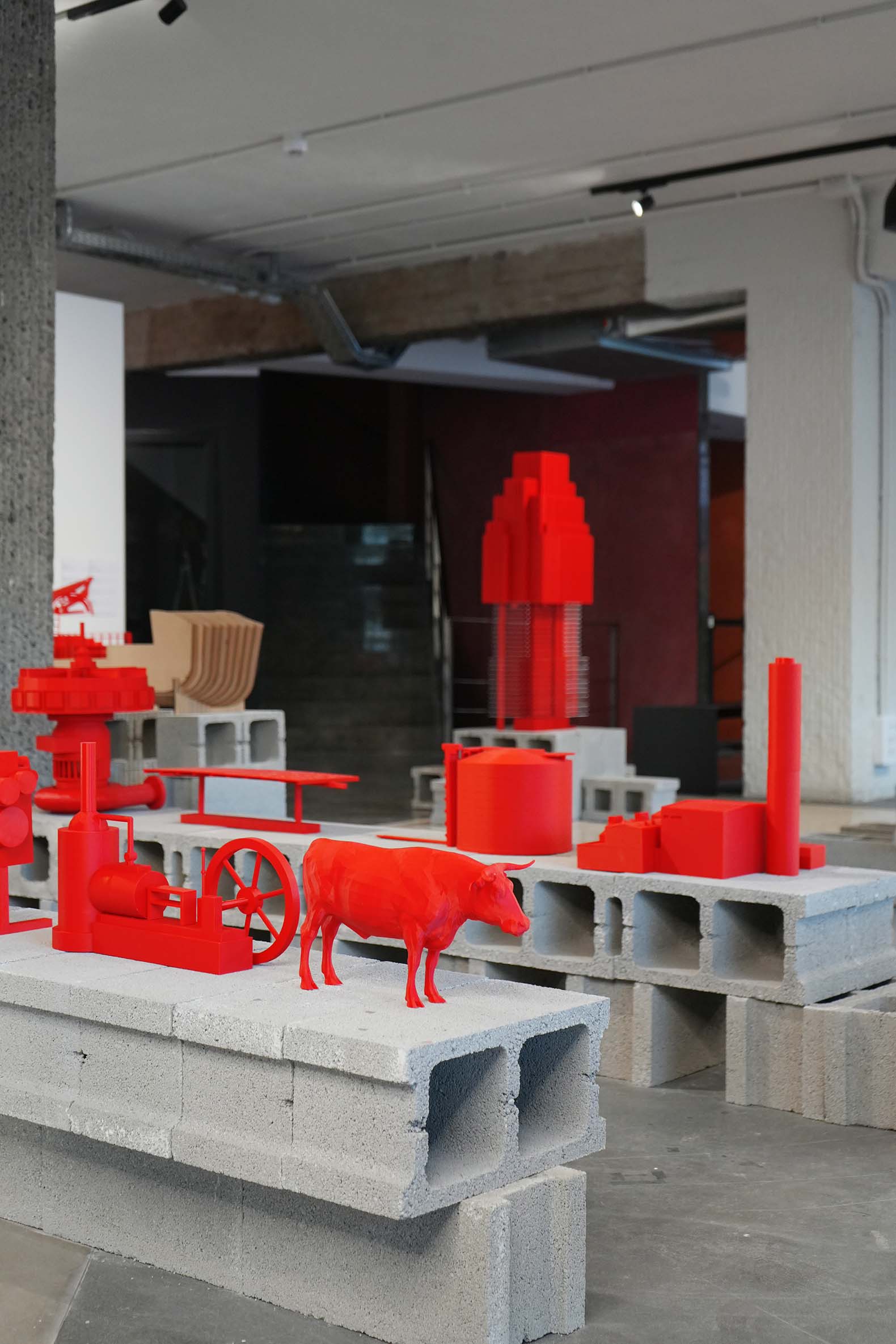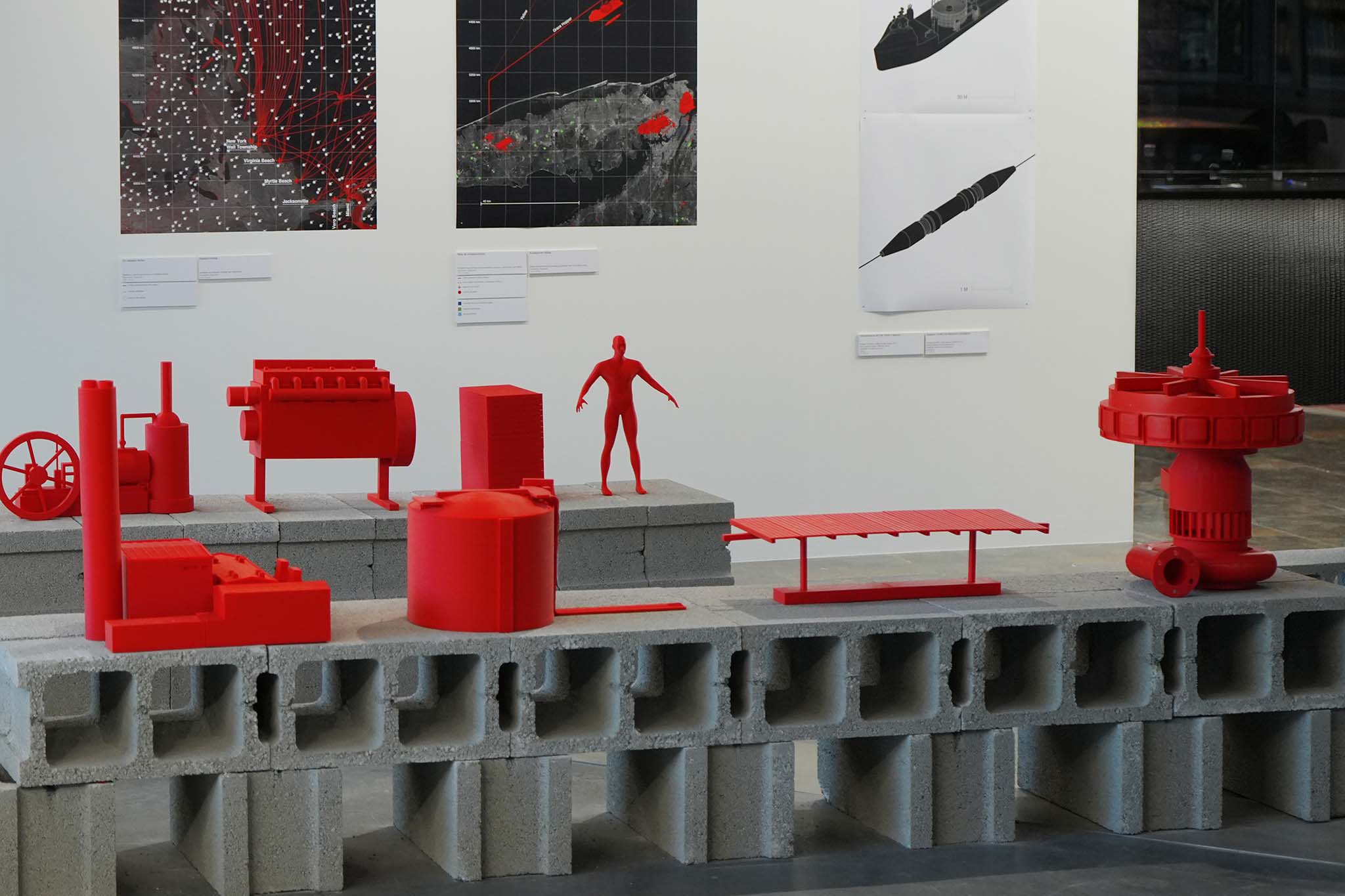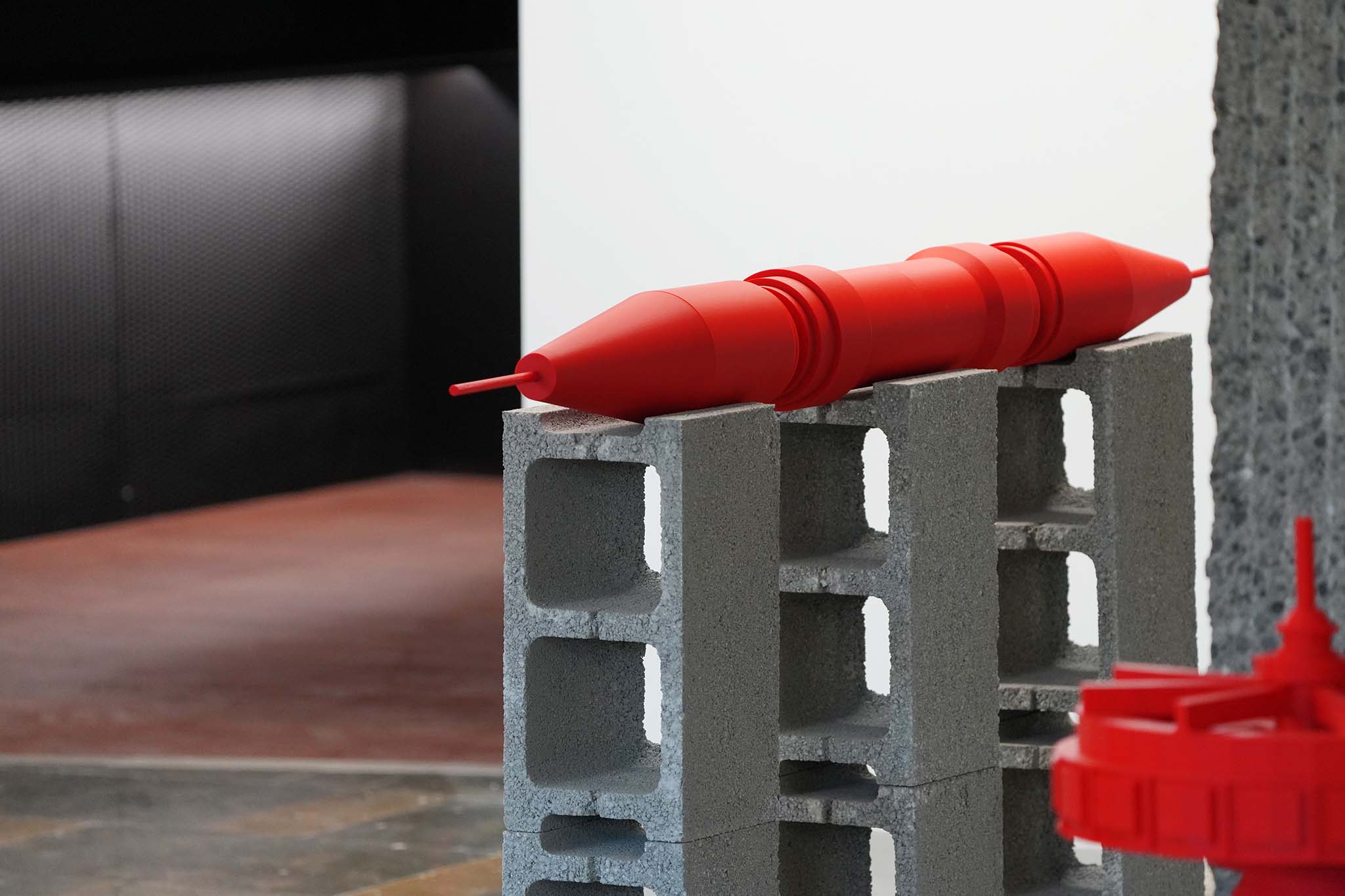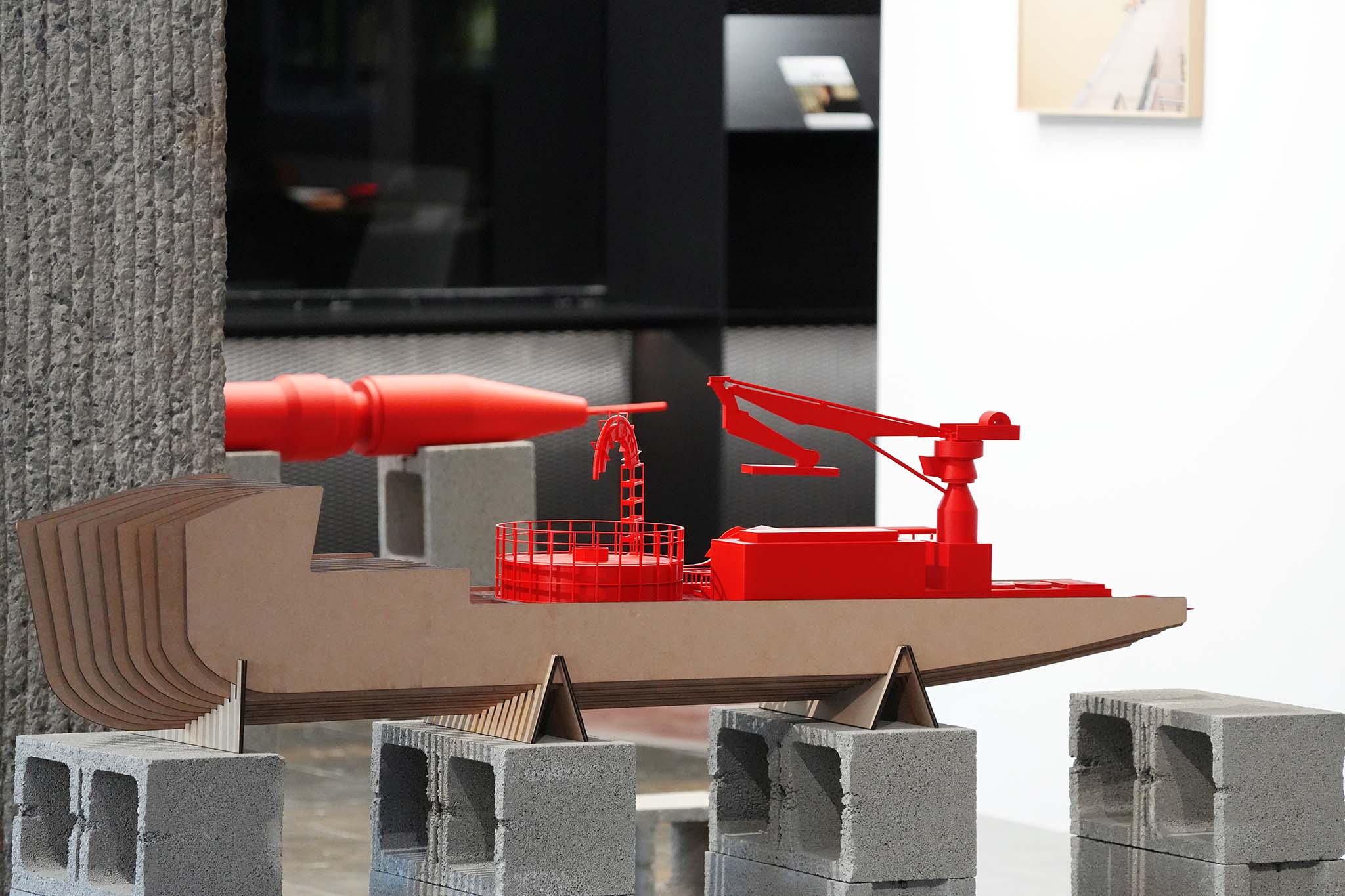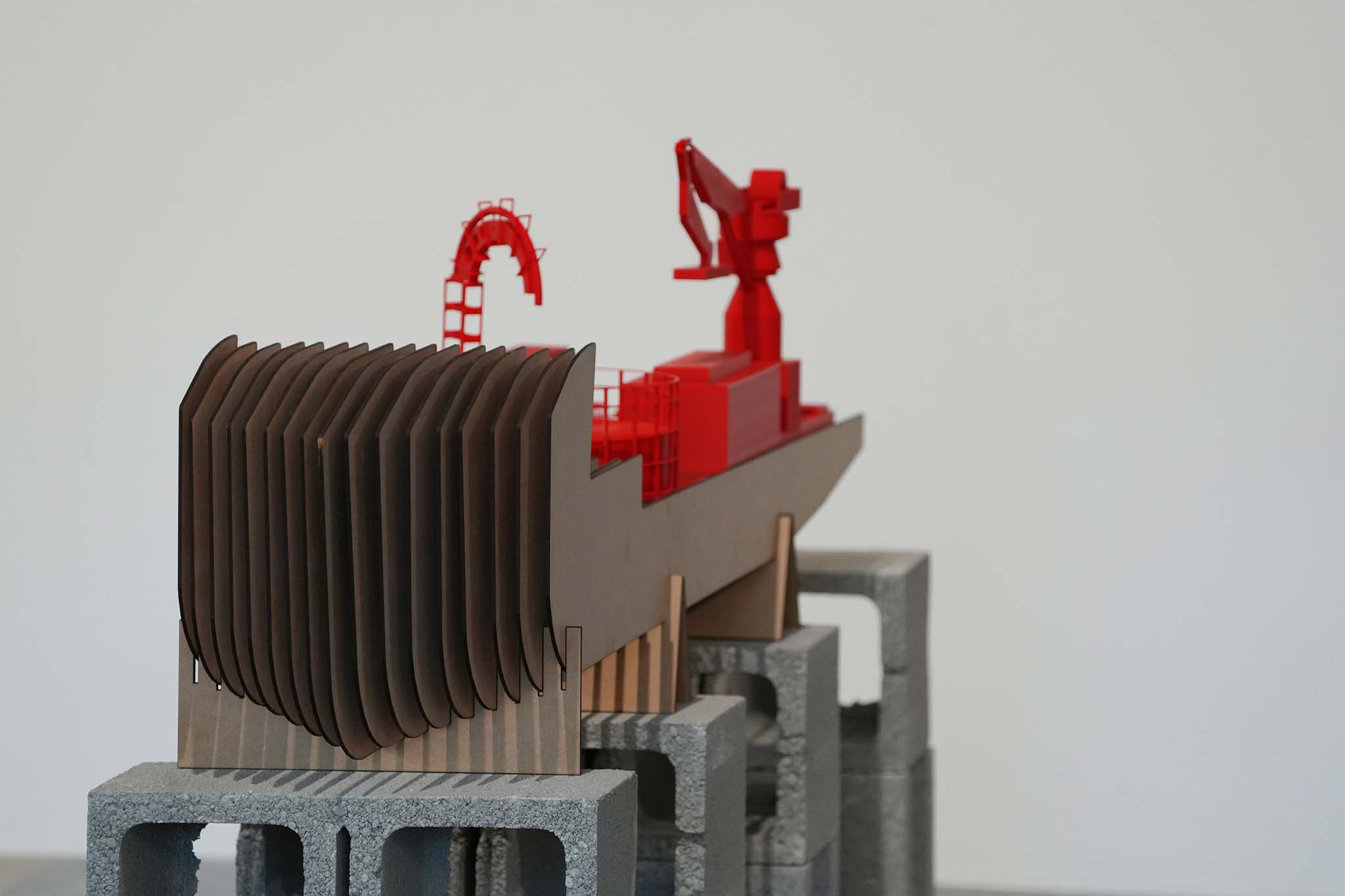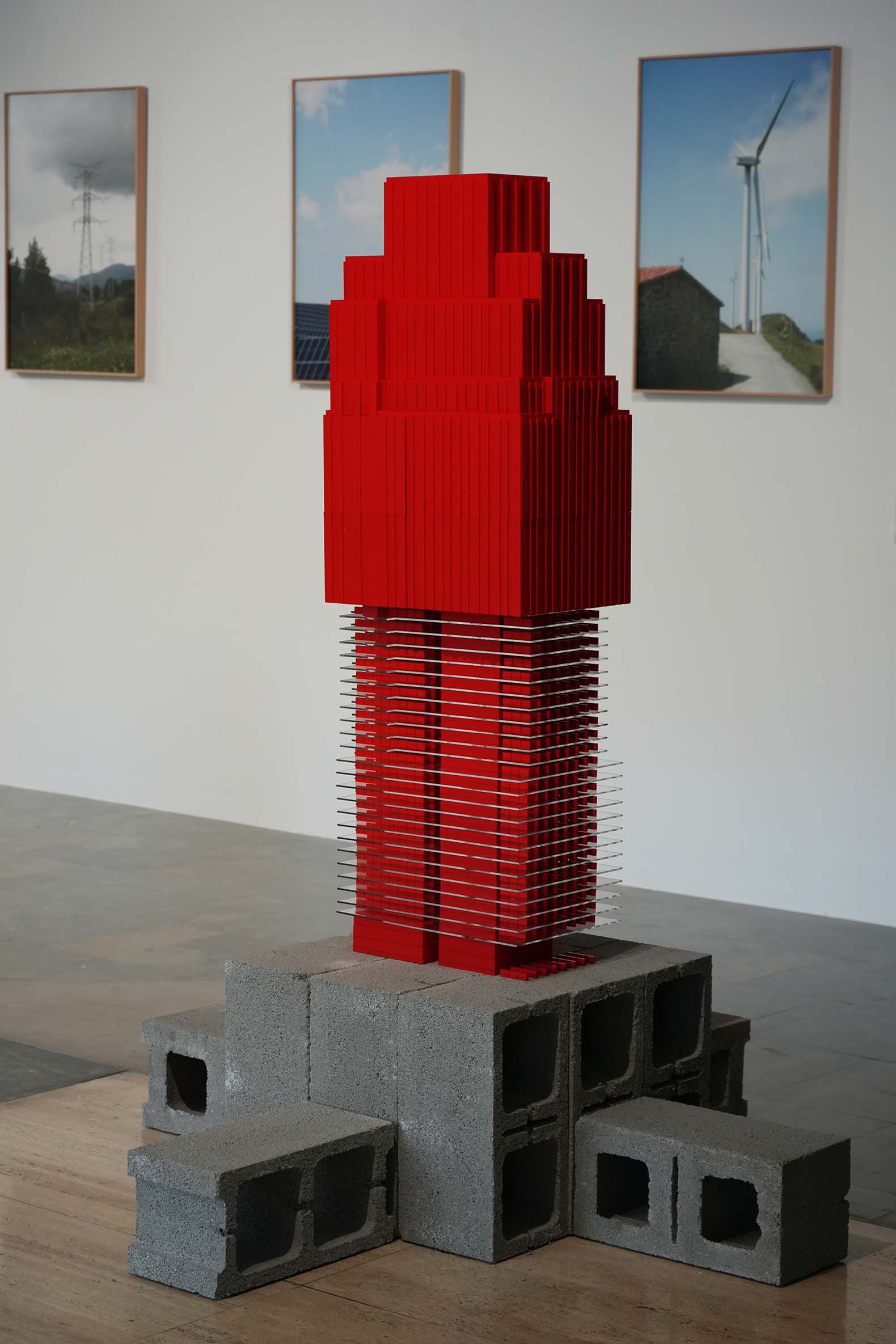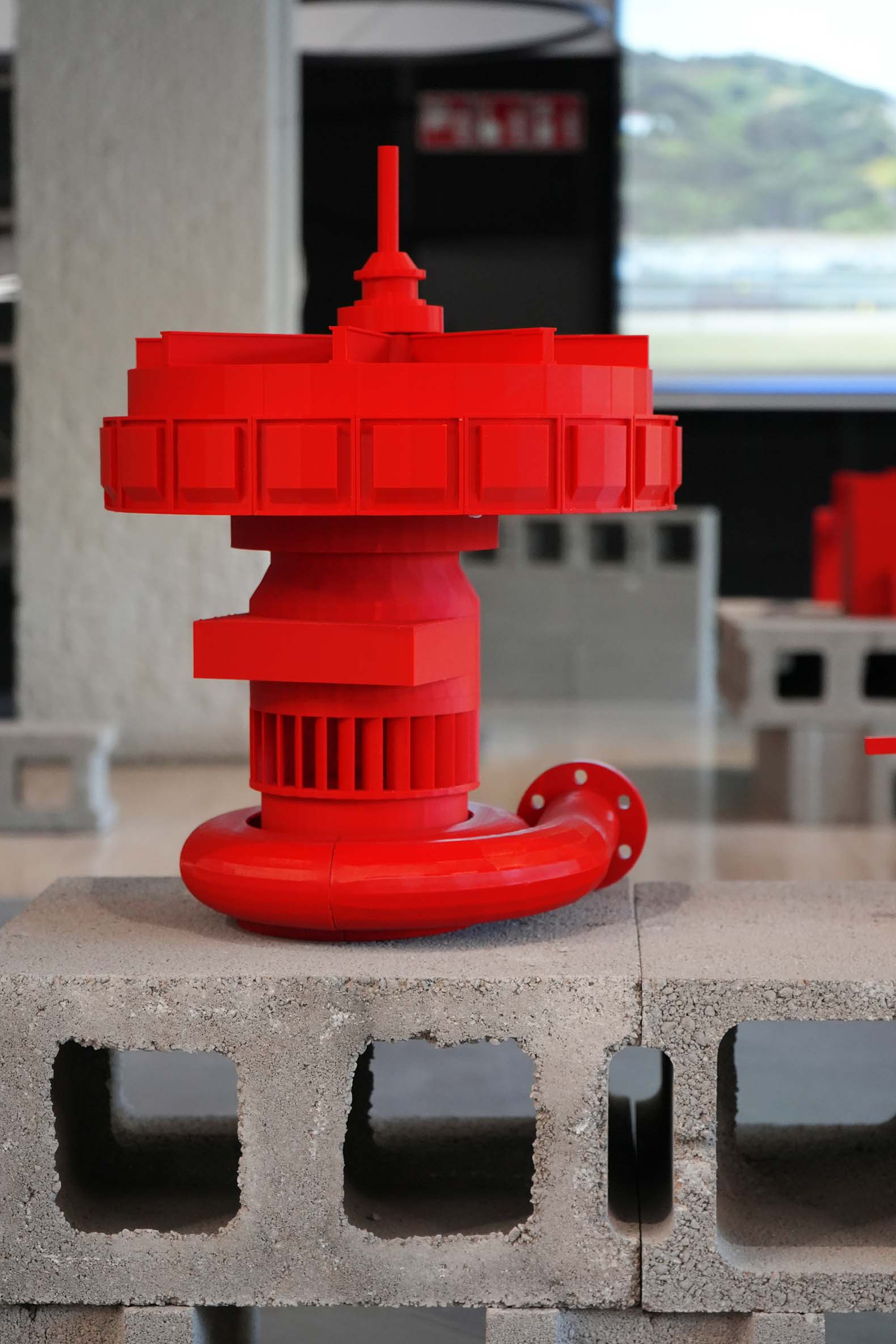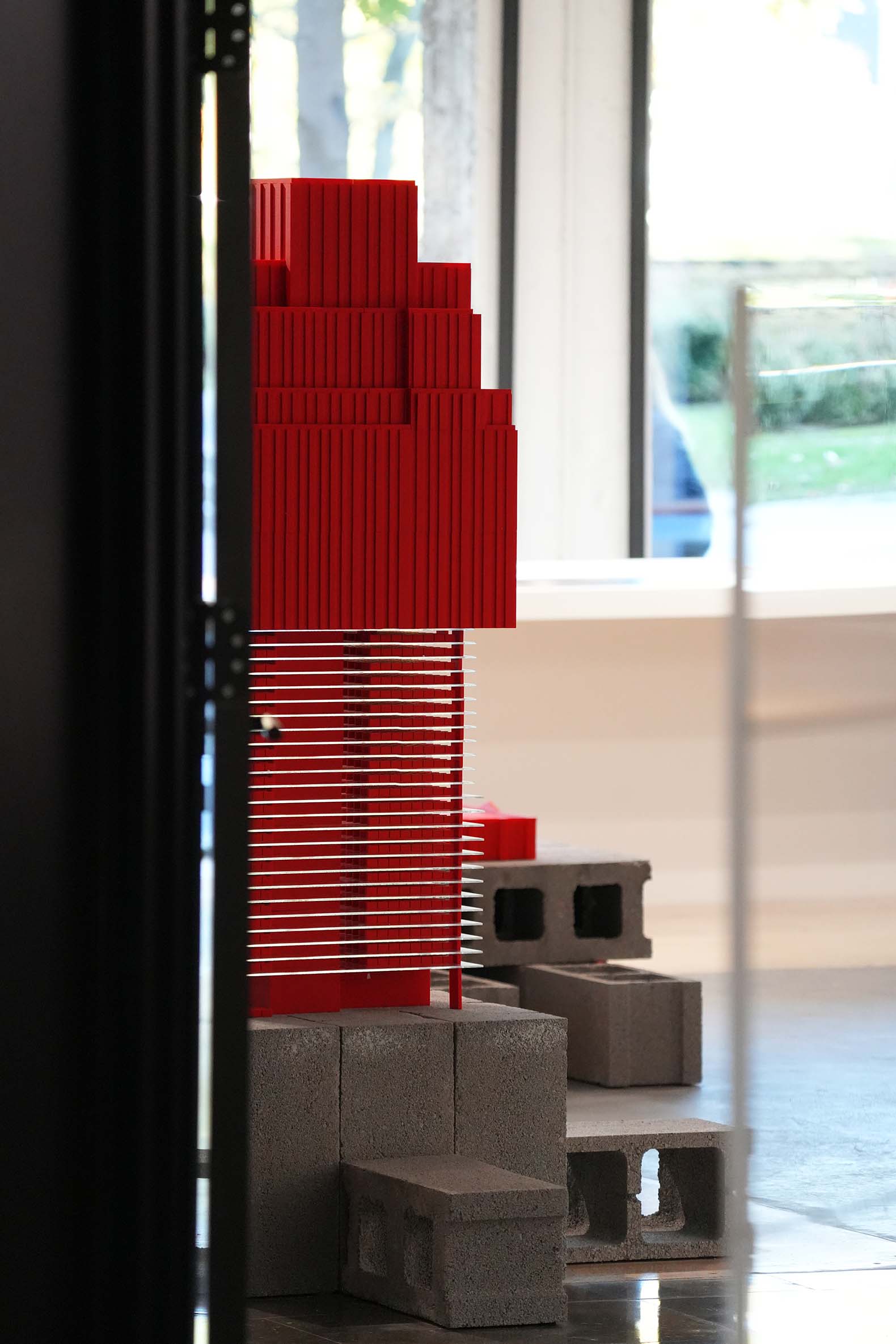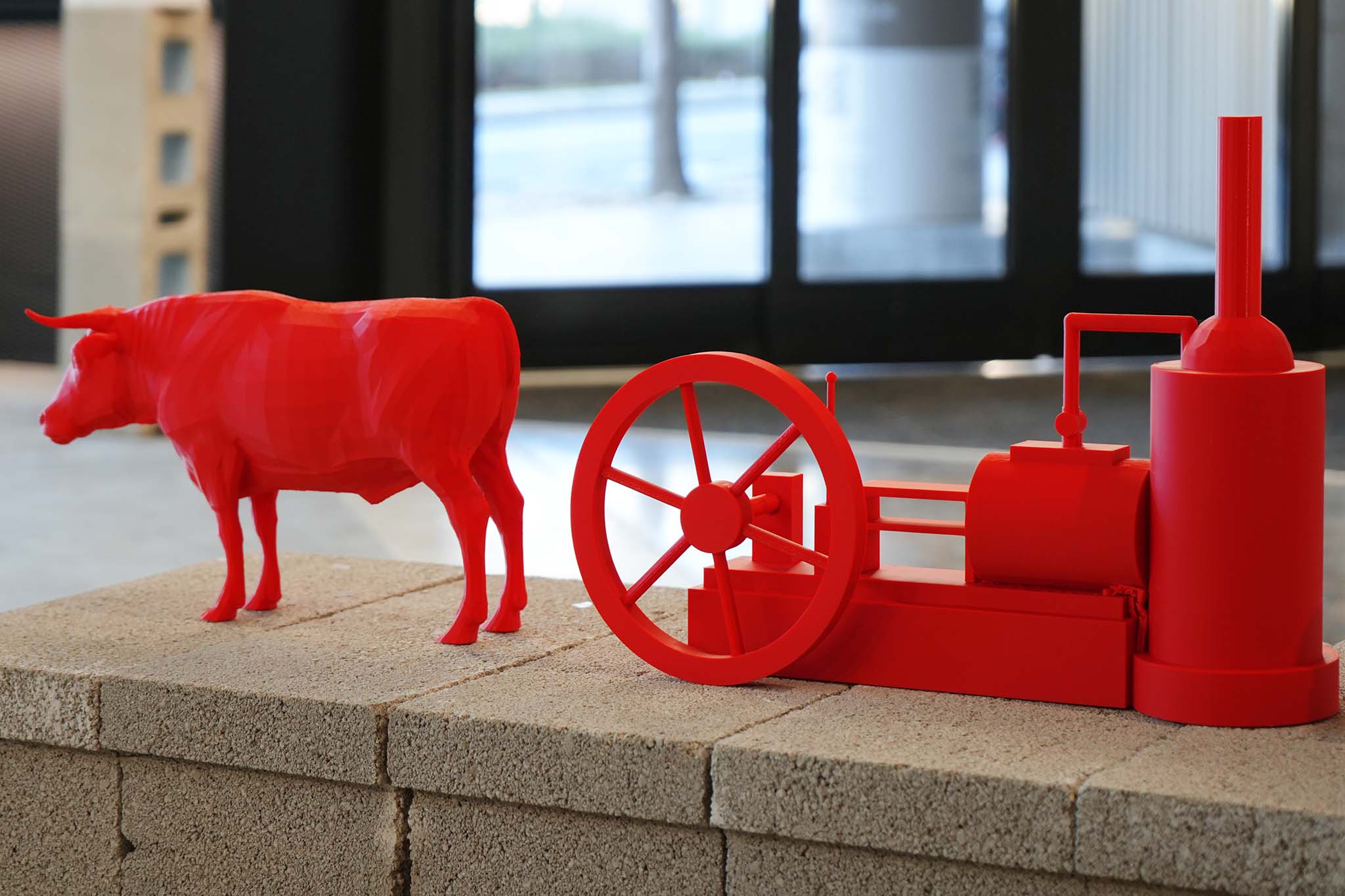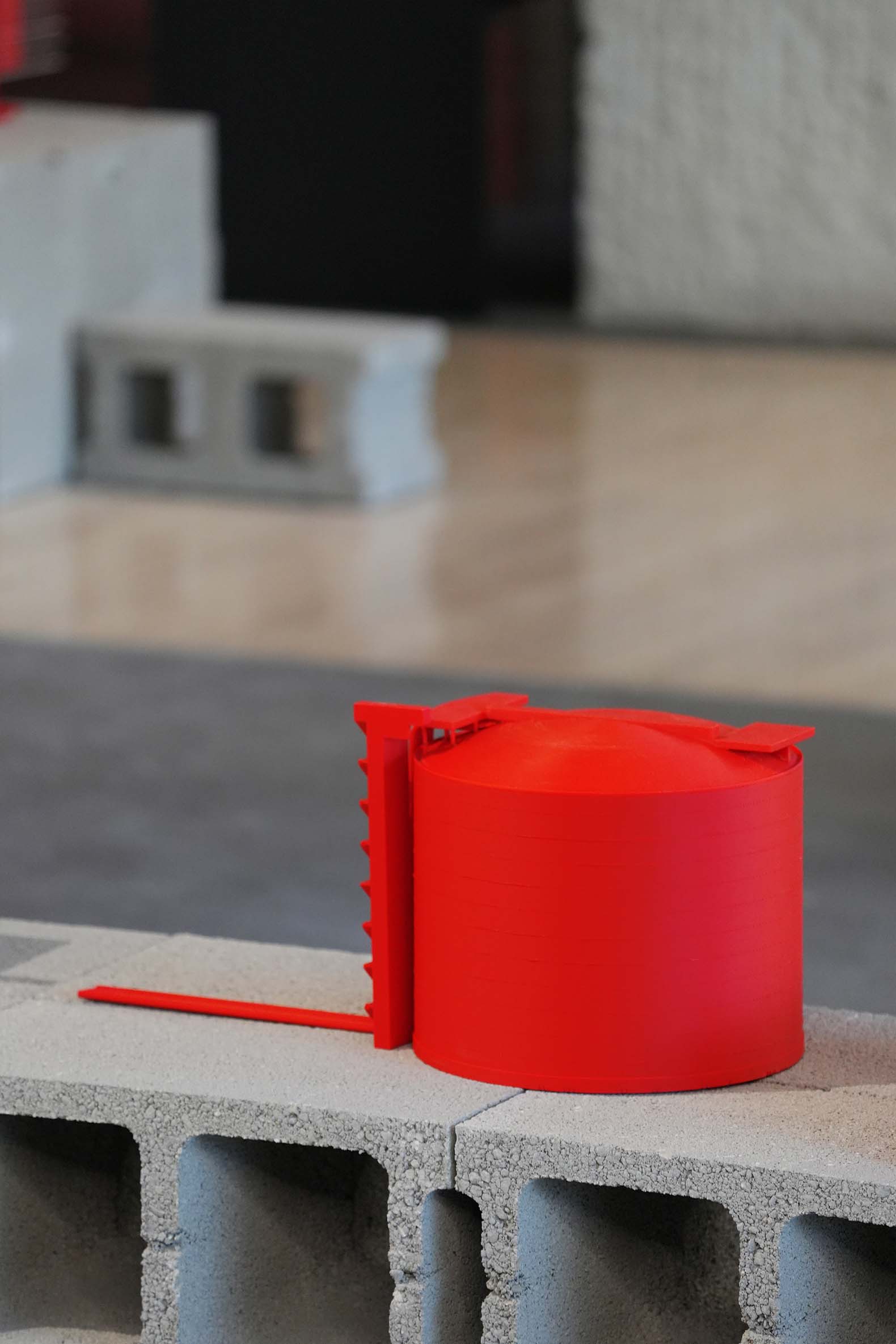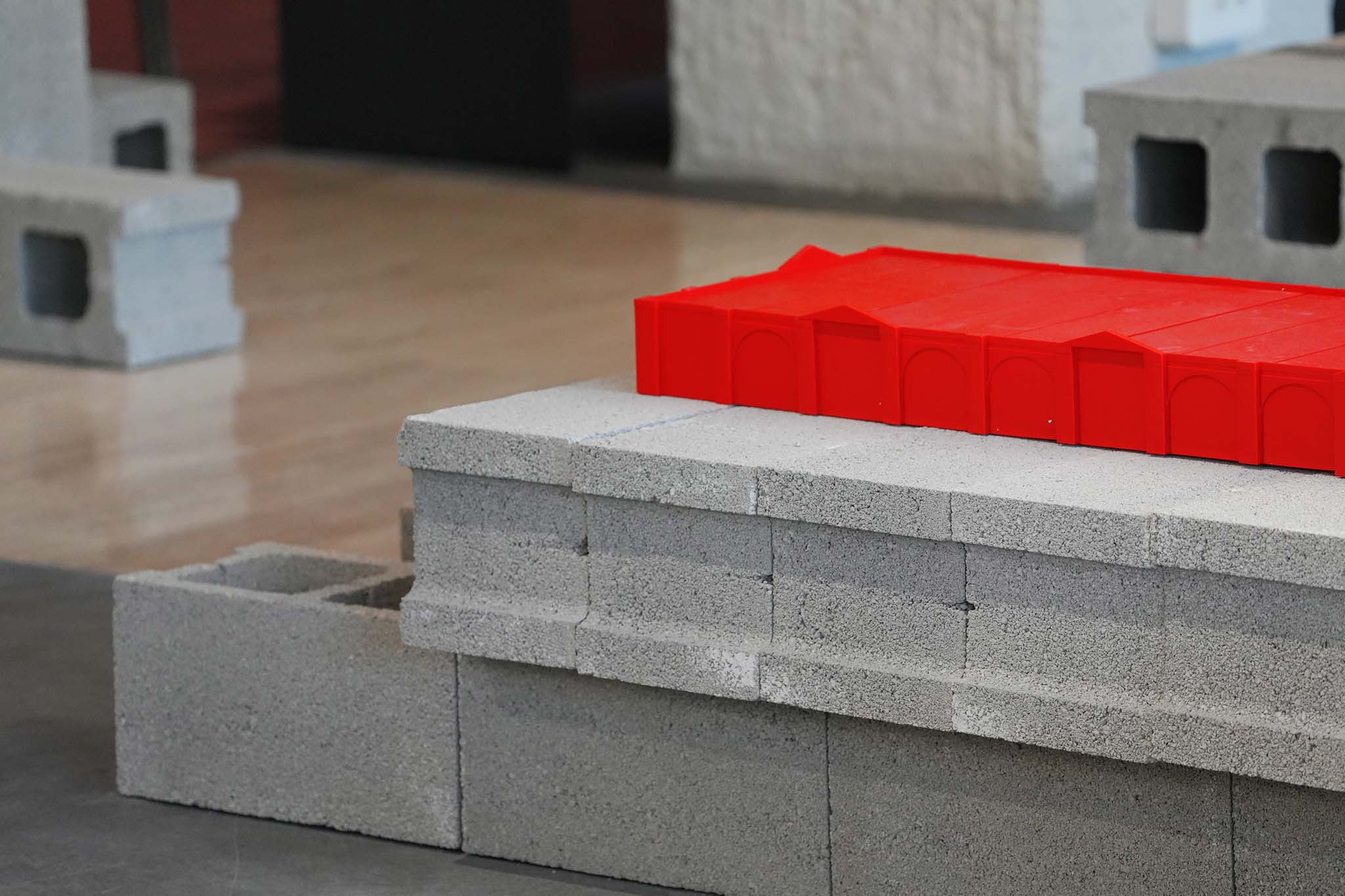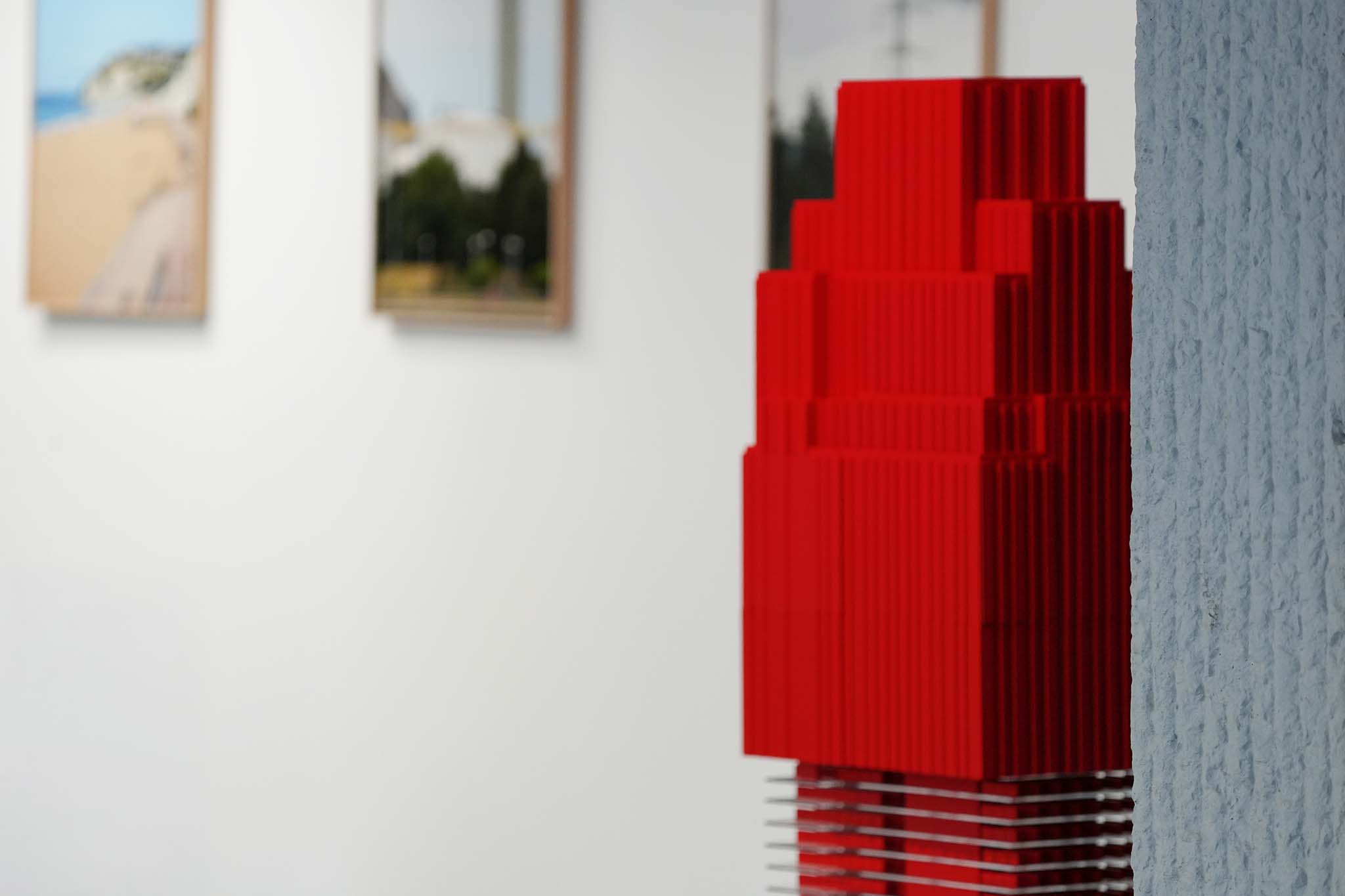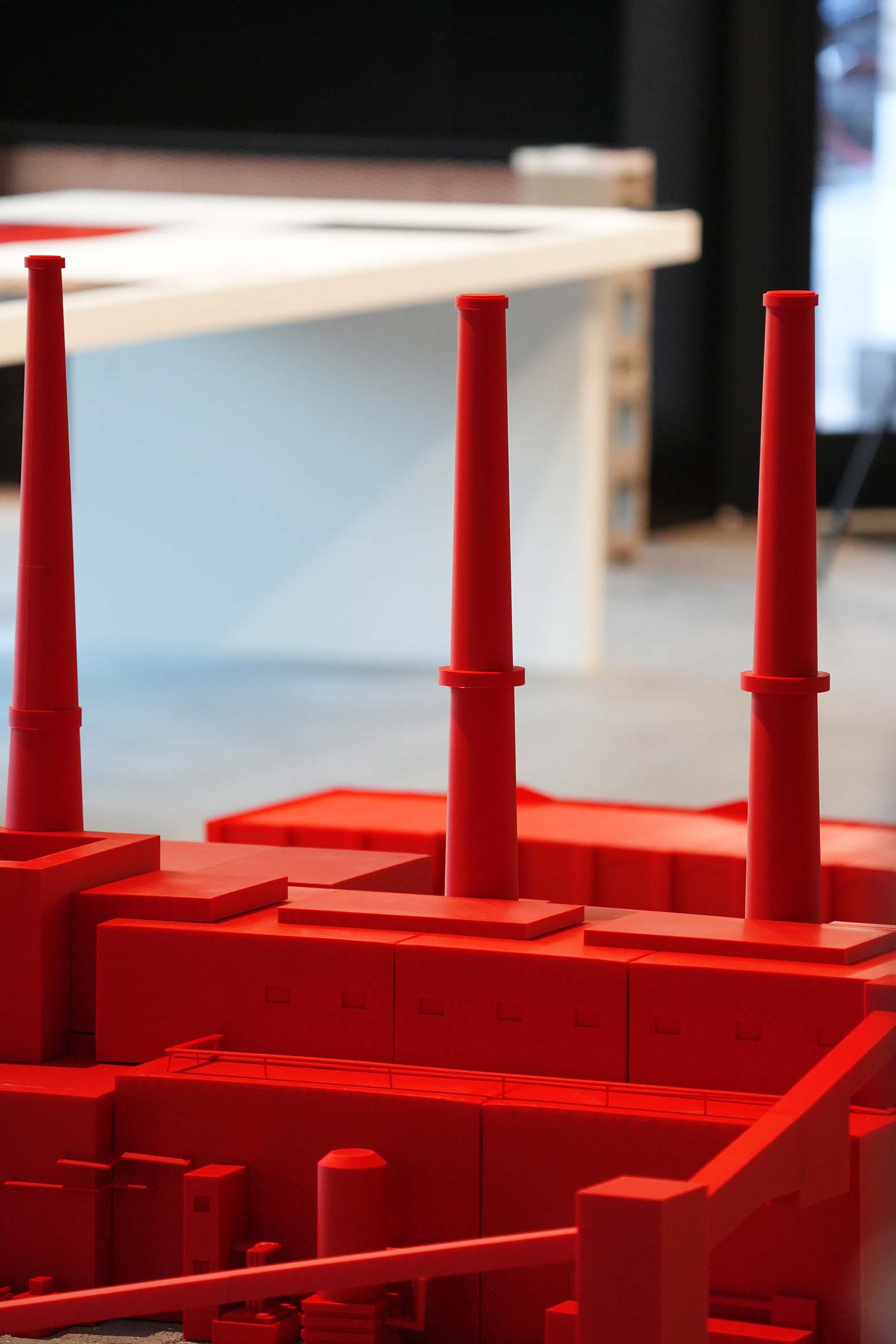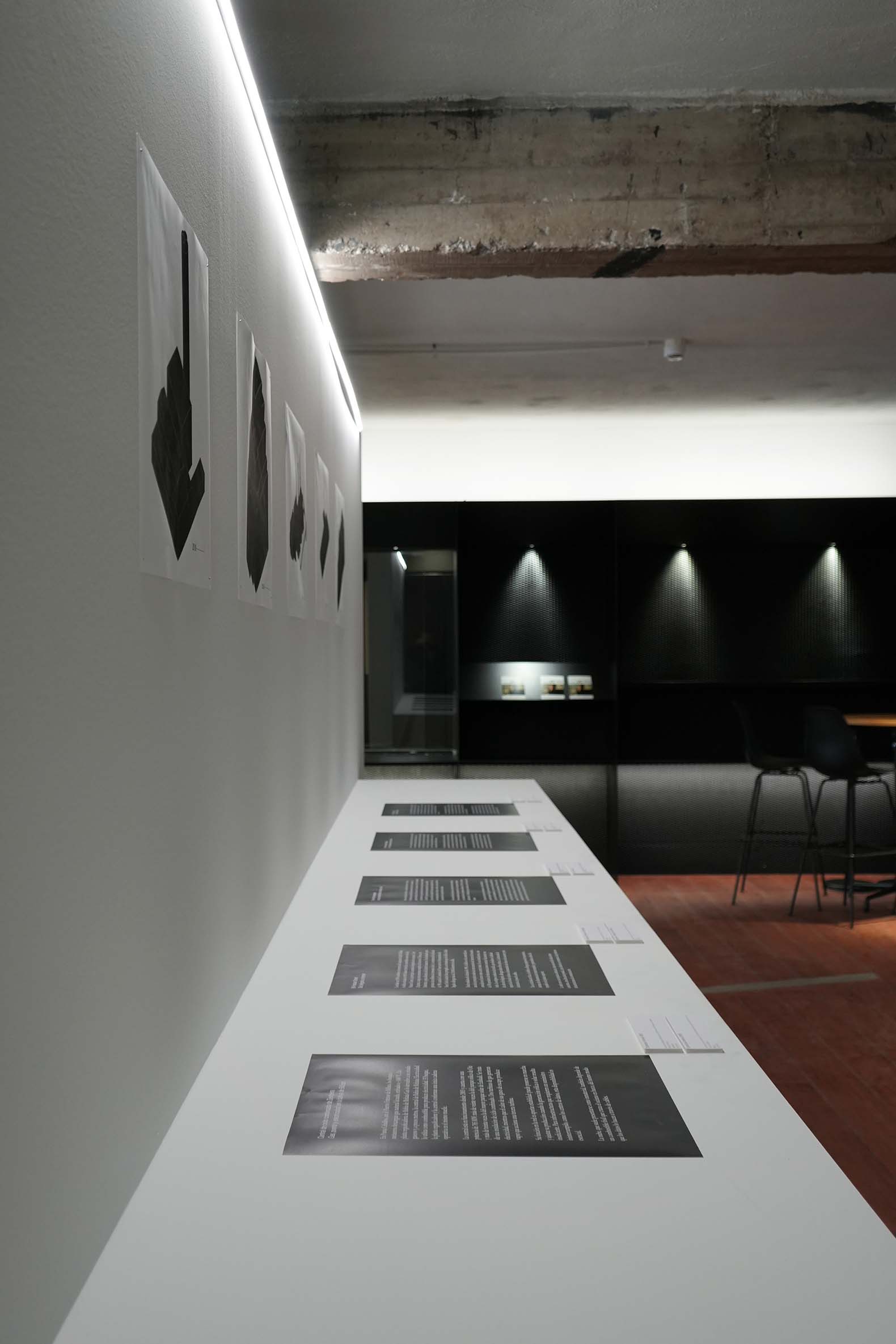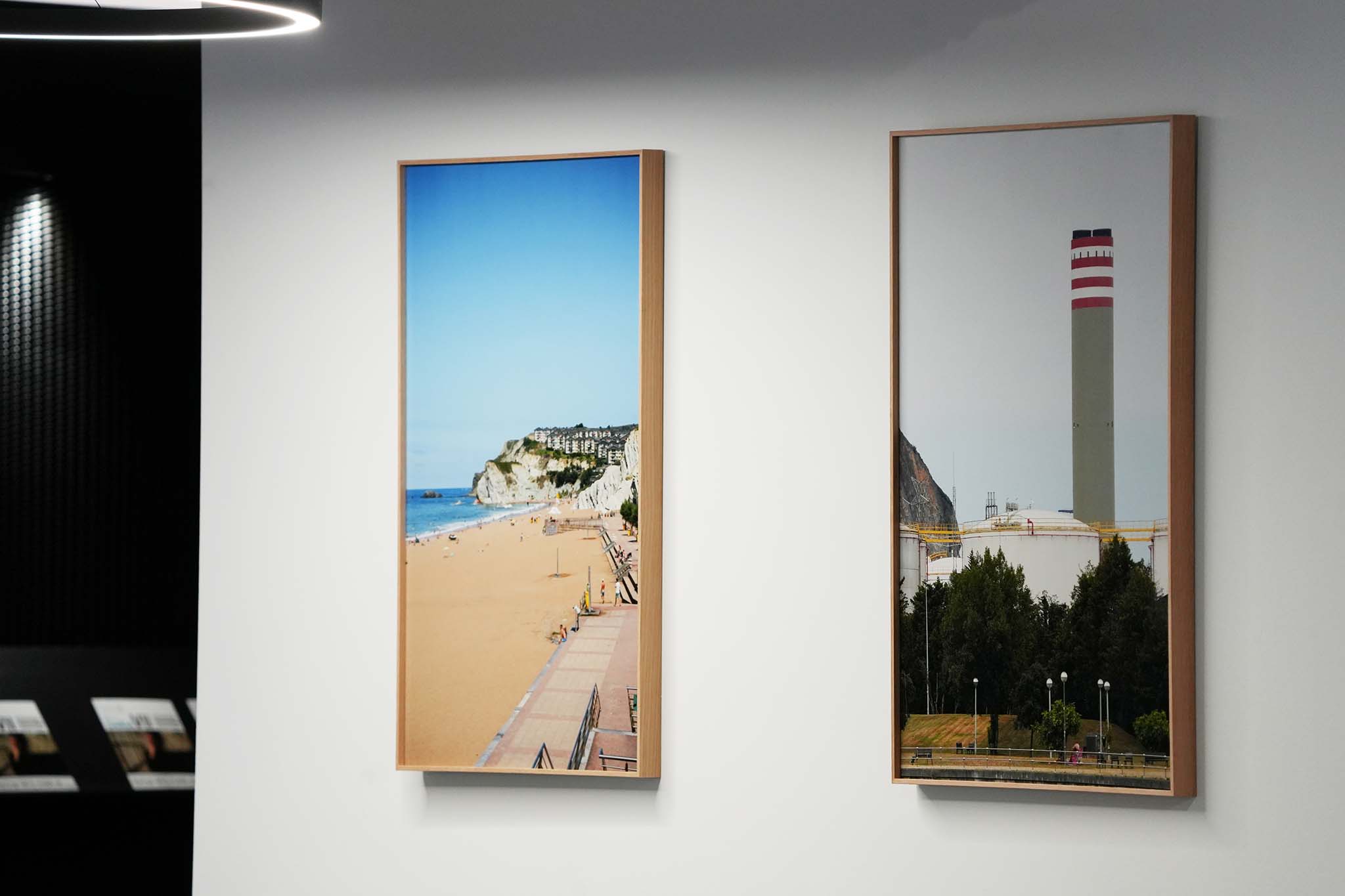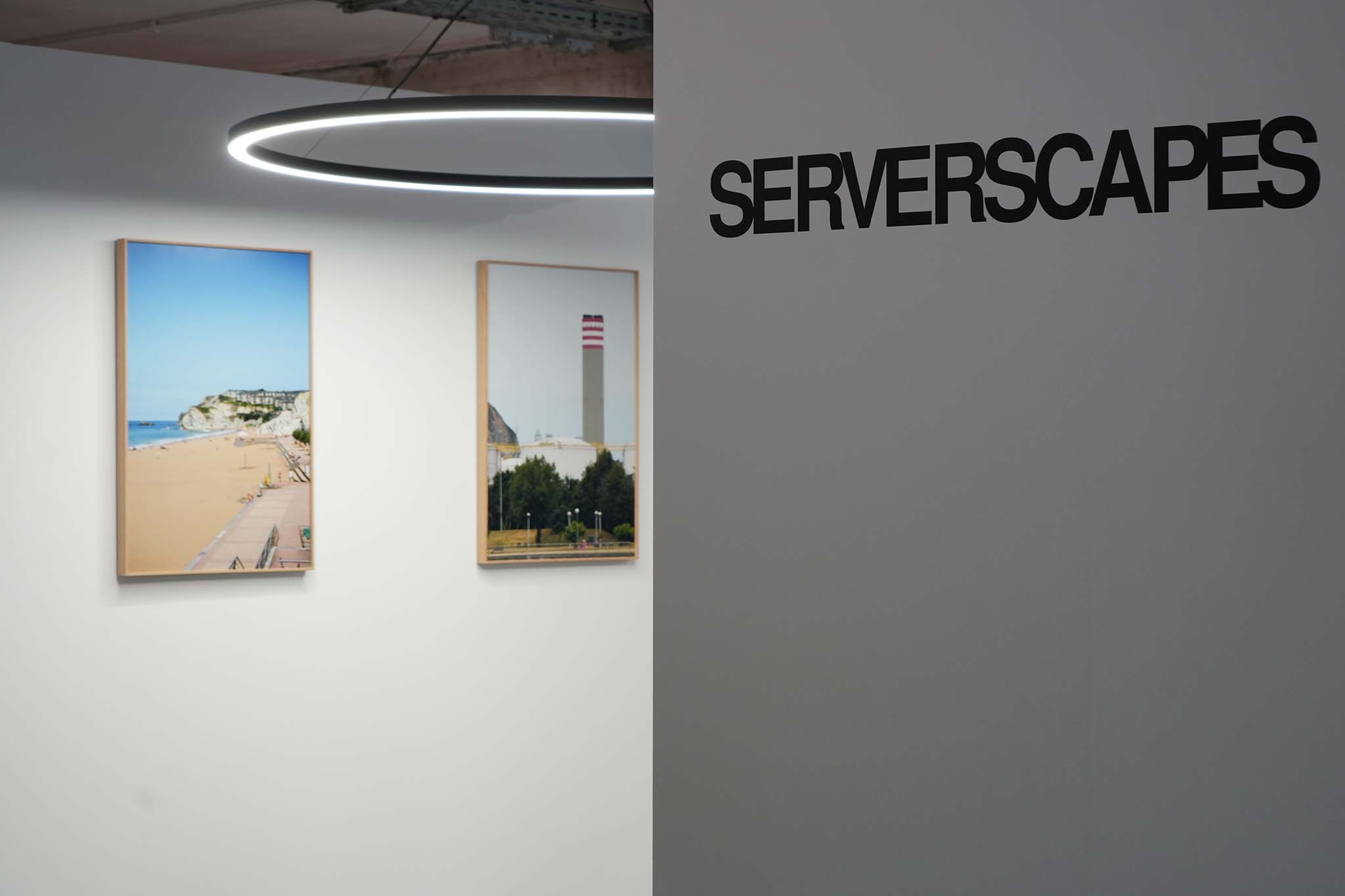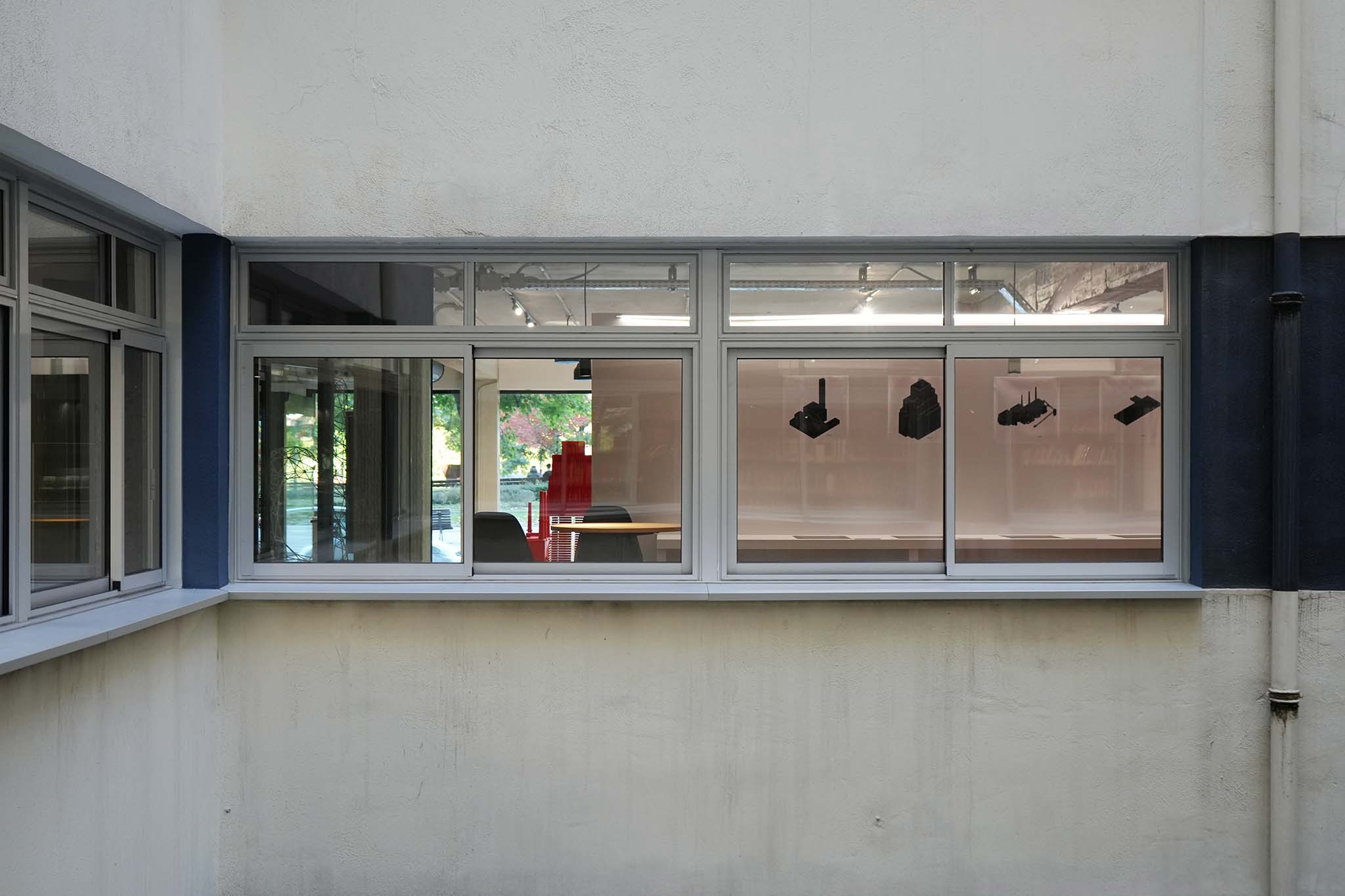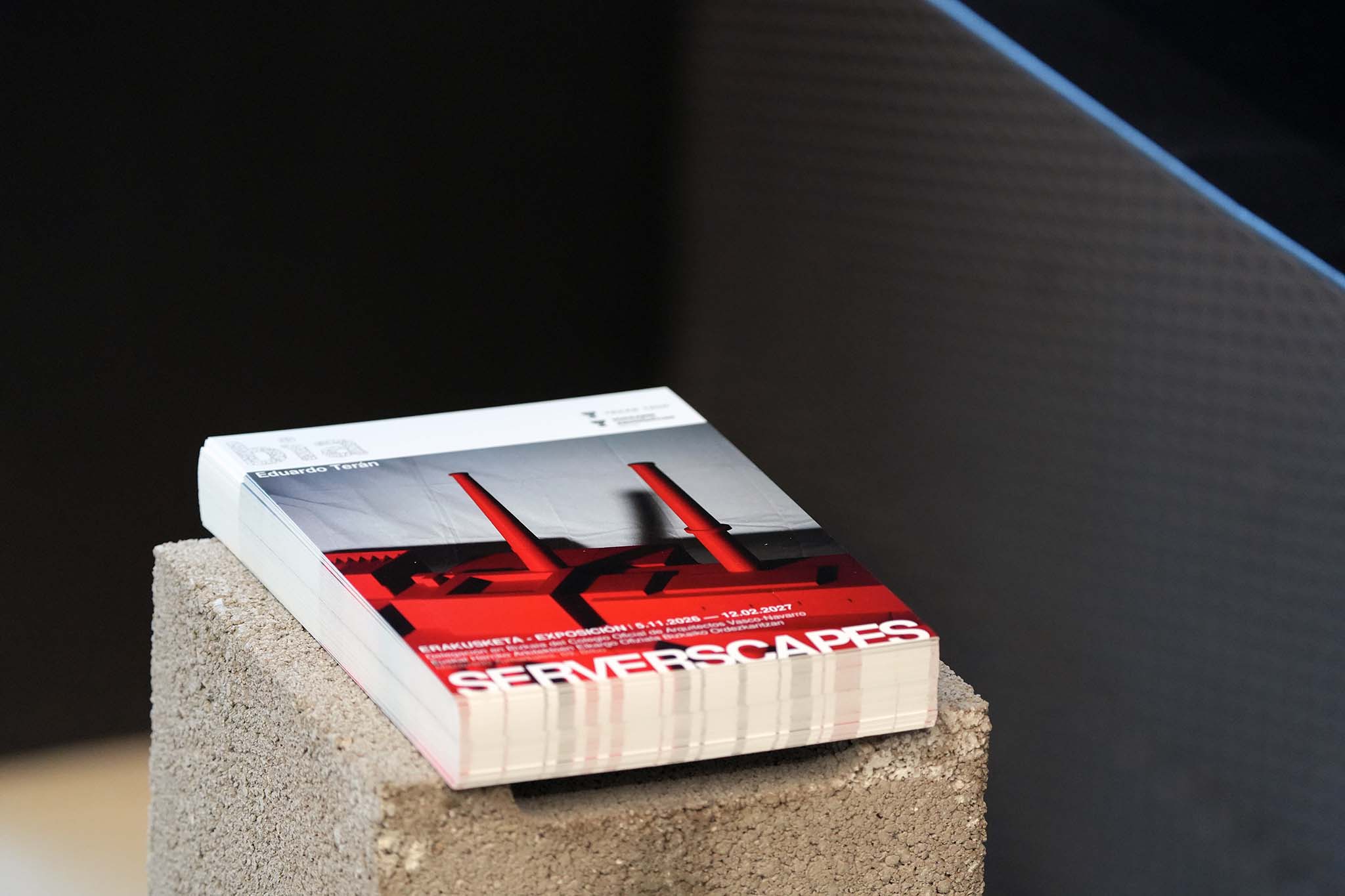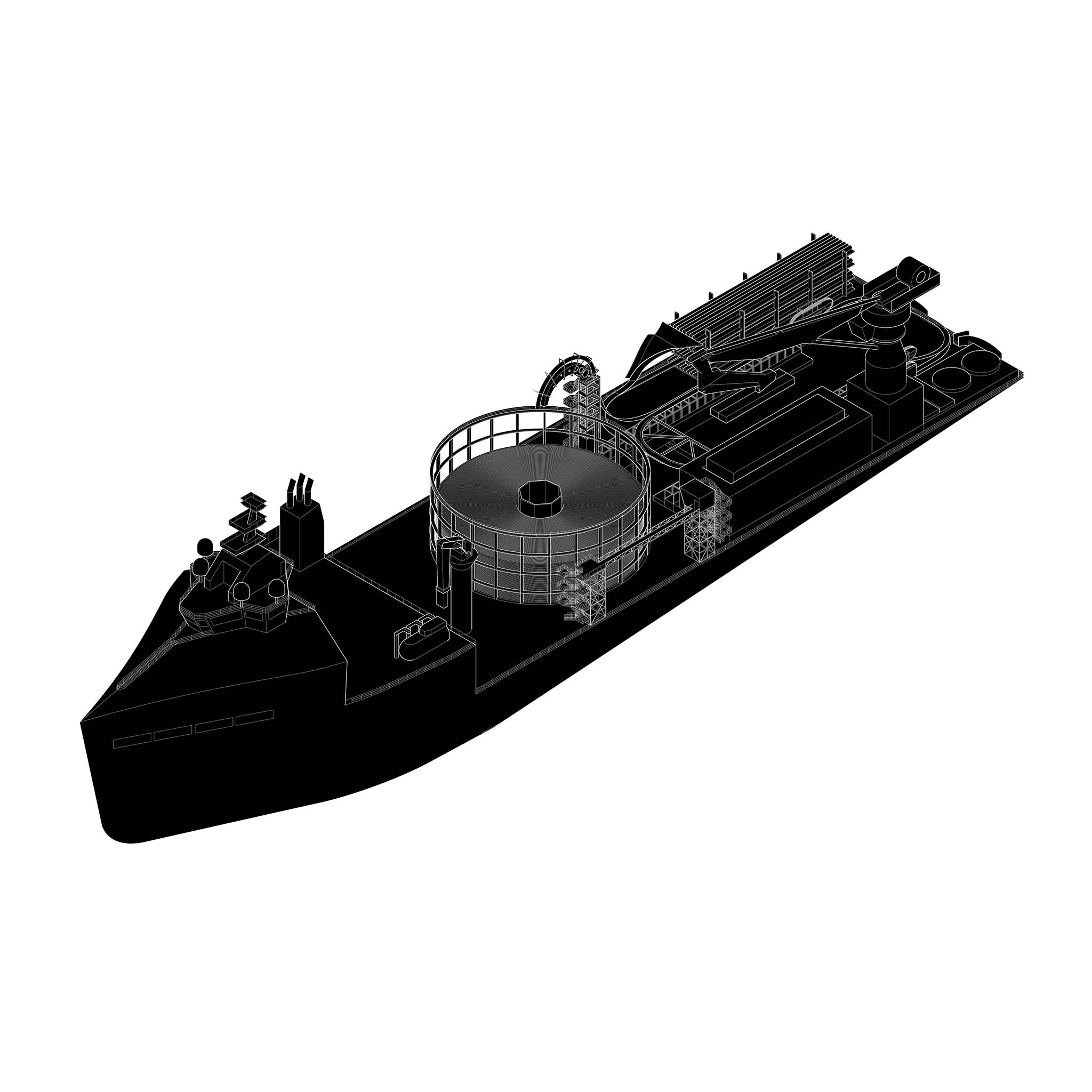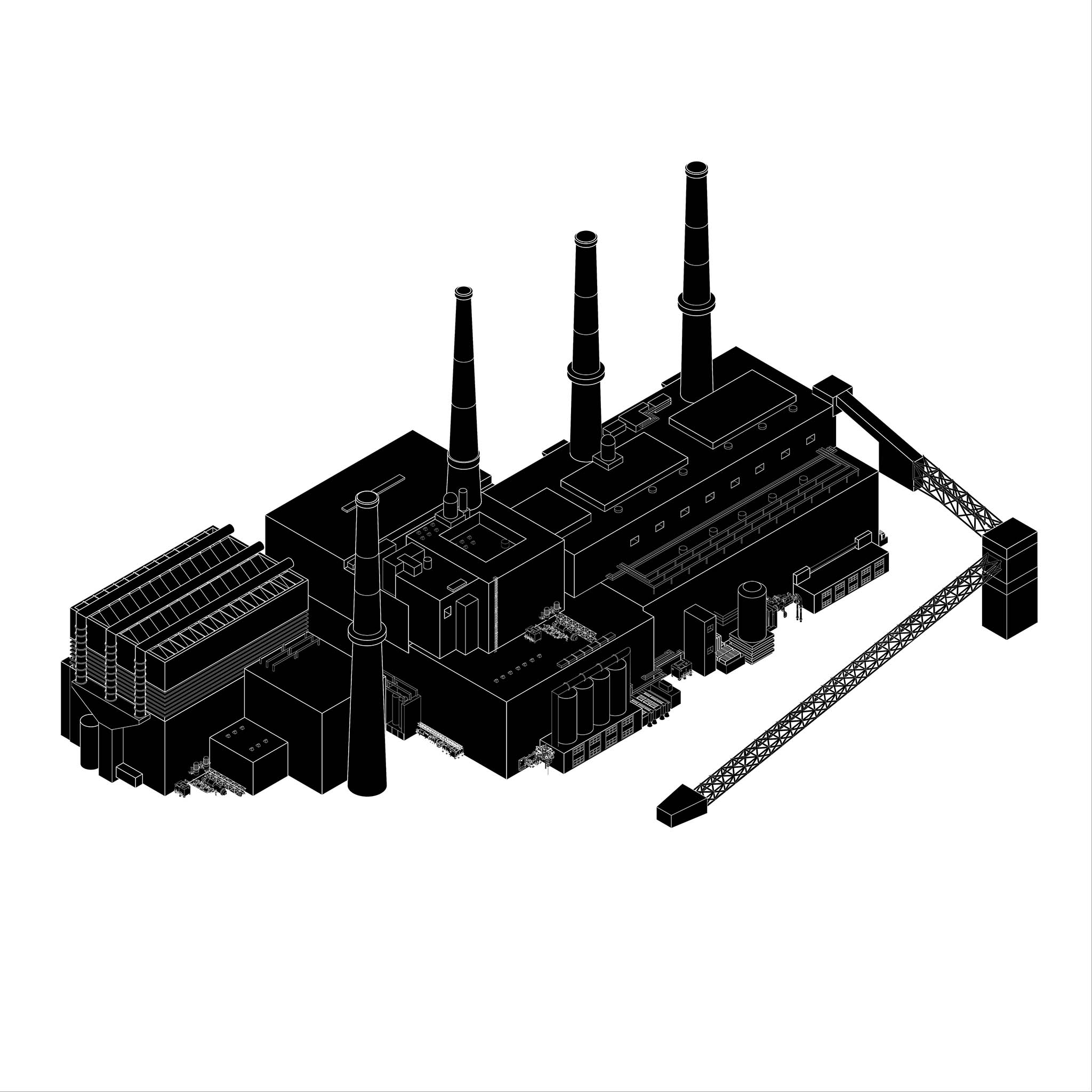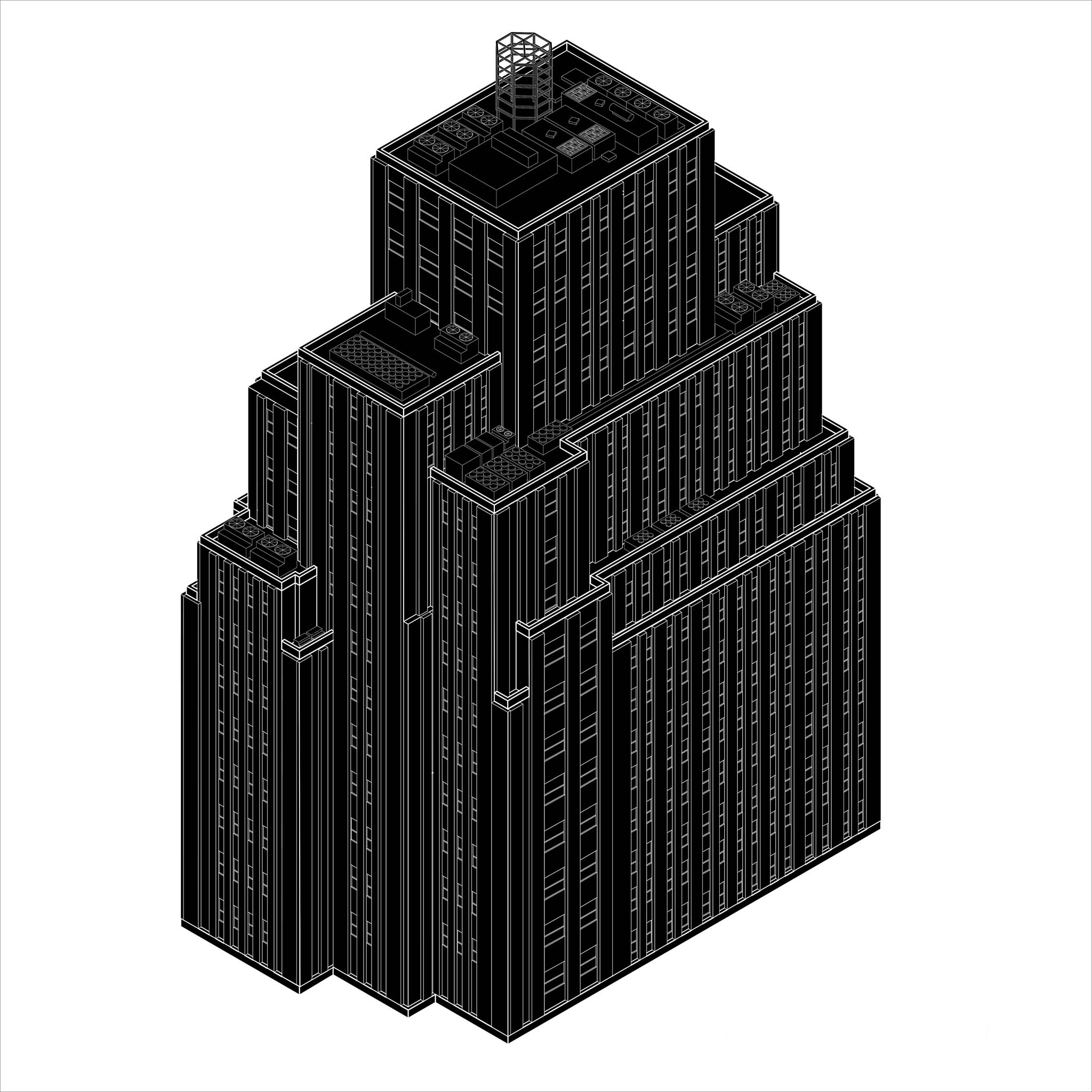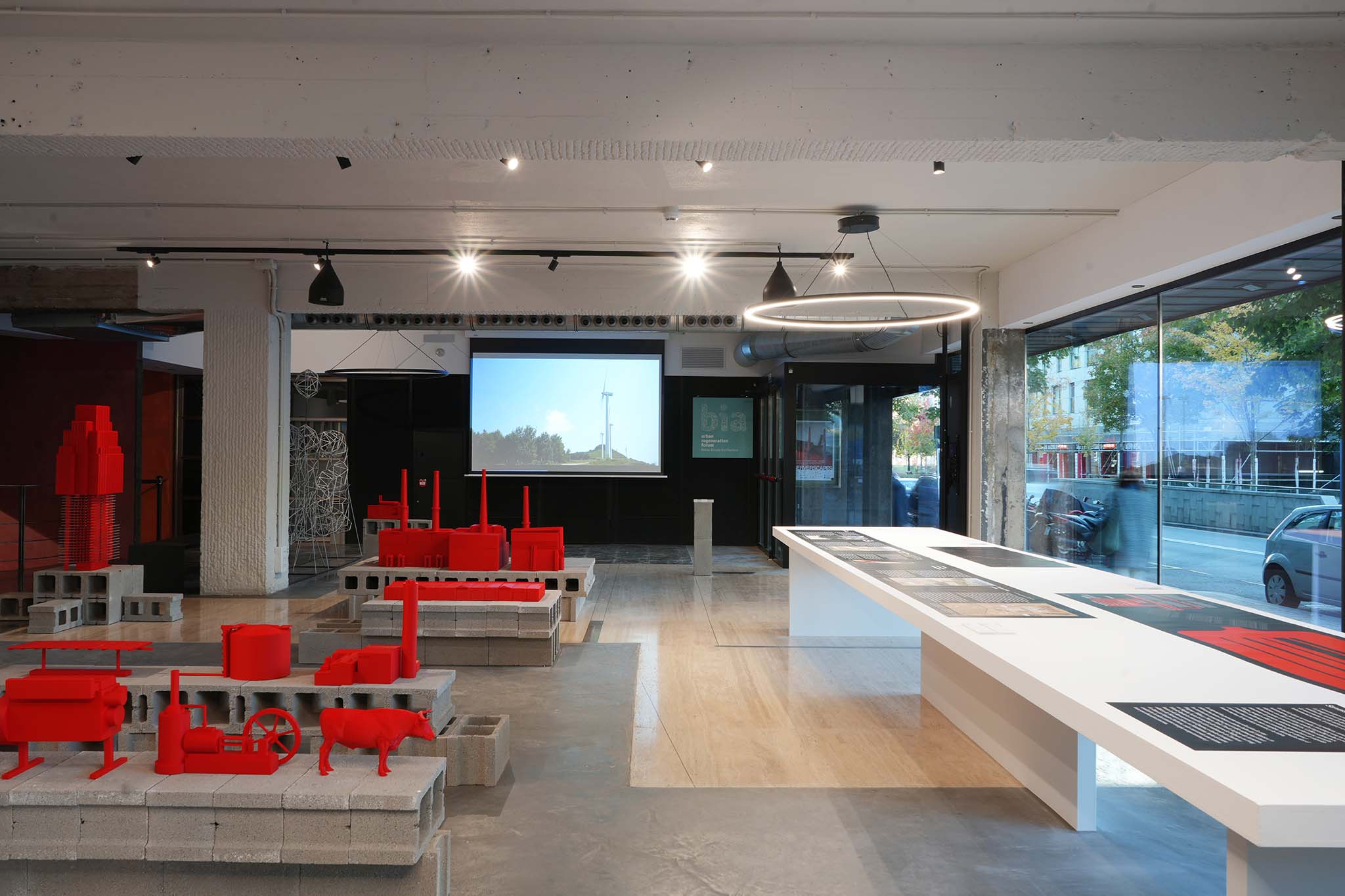
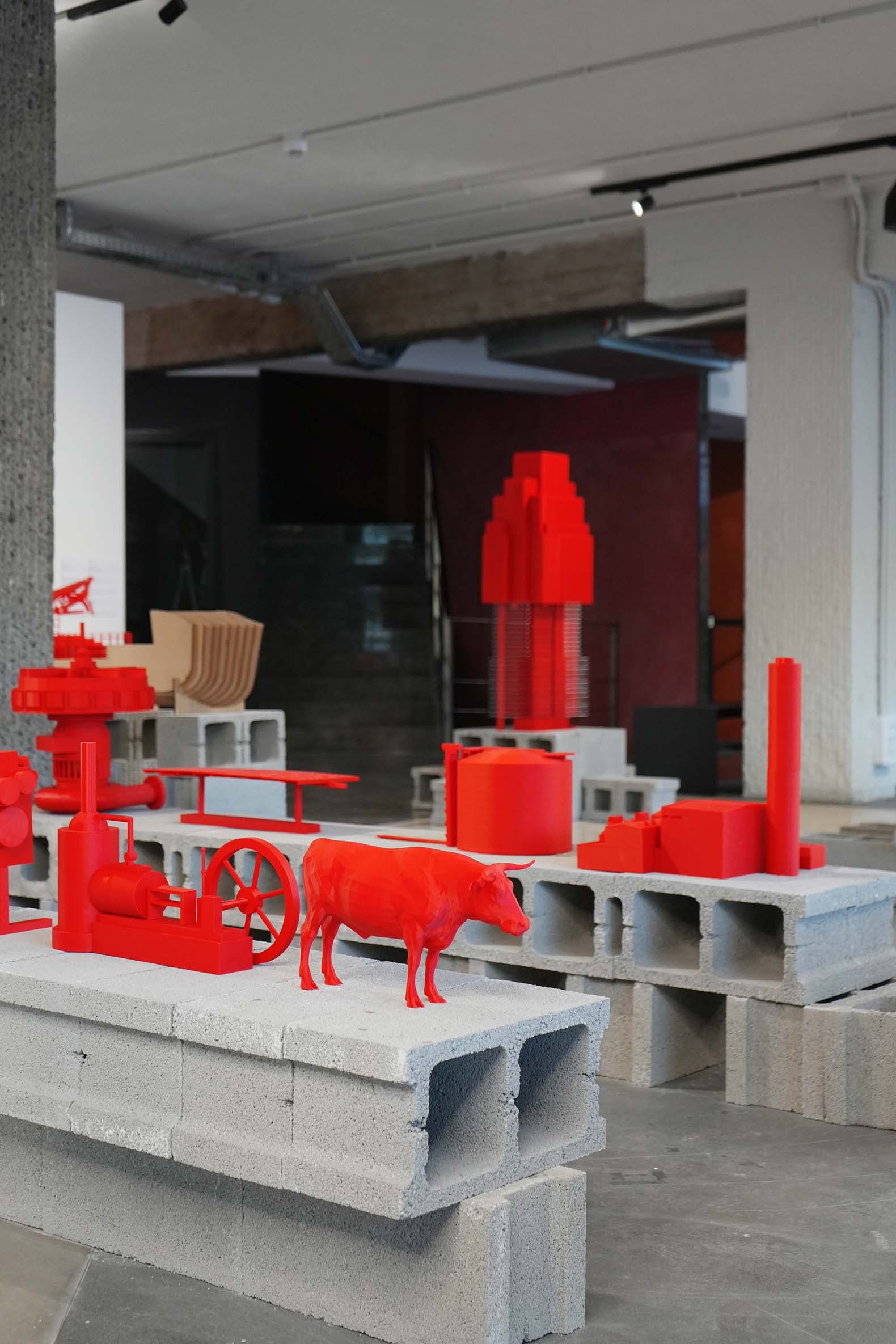
The exhibition developed by Eduardo Cilleruelo Terán is articulated through a collection of drawings and models representing different critical infrastructures located on both sides of the Atlantic. In this way, the exhibition builds a cartography of the architectures that shape the digital territory, from underwater installations to technical buildings and data processing centers.
The research uses drawings and models to examine structures that typically remain outside public view, revealing their physical dimensions and land occupation. The proposal also highlights their dependence on material and energy resources, showing that the functioning of the cloud relies on an extensive network of facilities, connections, and construction systems.
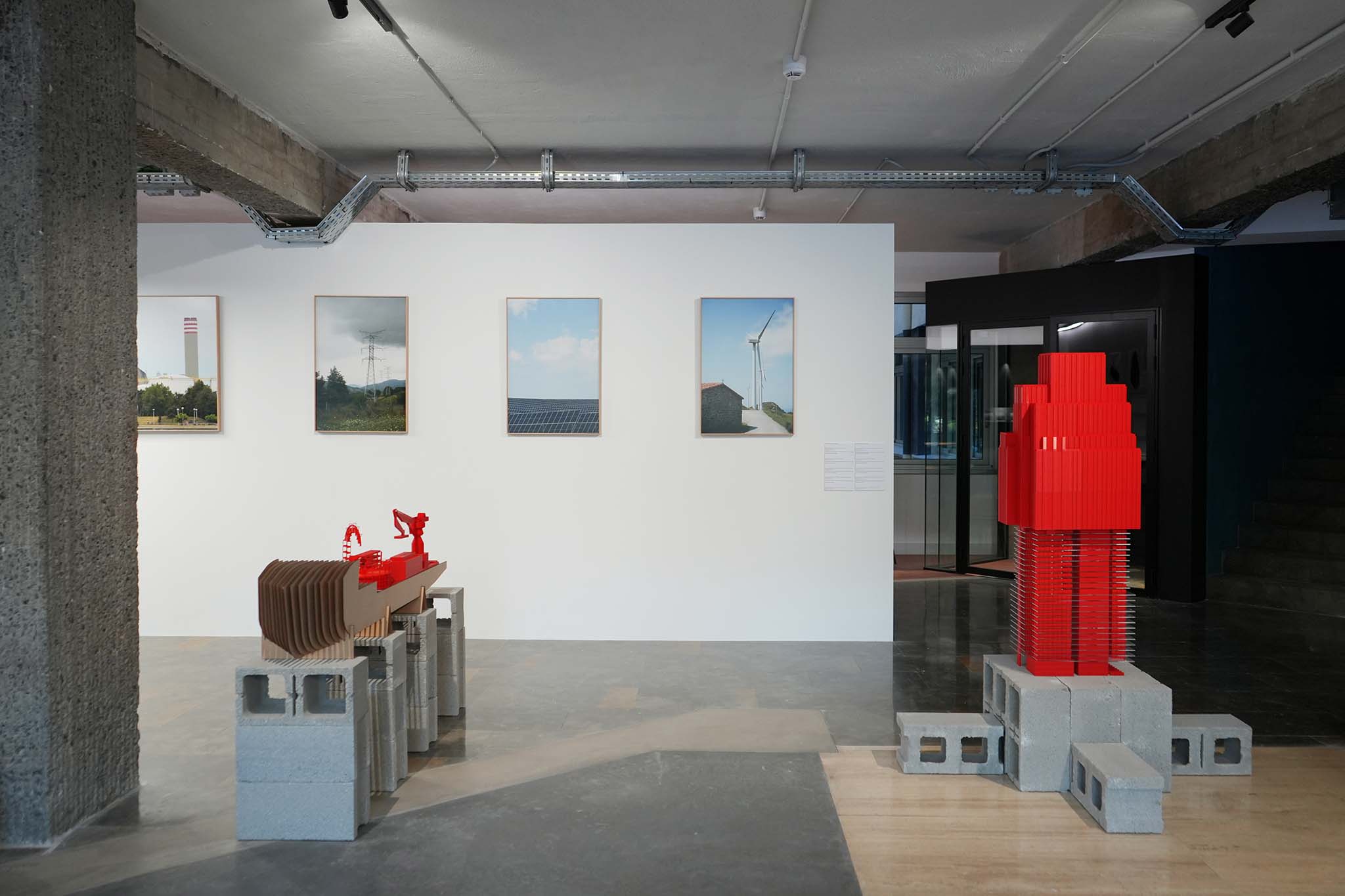
Serverscapes by Eduardo Cilleruelo Terán. Photograph by Eduardo Cilleruelo Terán.
Description of project by Eduardo Cilleruelo Terán
What is the cloud?
It is more than the sum of our digital information. It is a physical reality. The cloud does not float. It has weight, takes up space, and transforms cities and landscapes. By 2028, the world will generate nearly 400 zettabytes of data a year, and every byte needs a physical place to pass through. The cloud grows, but above all, it is built.
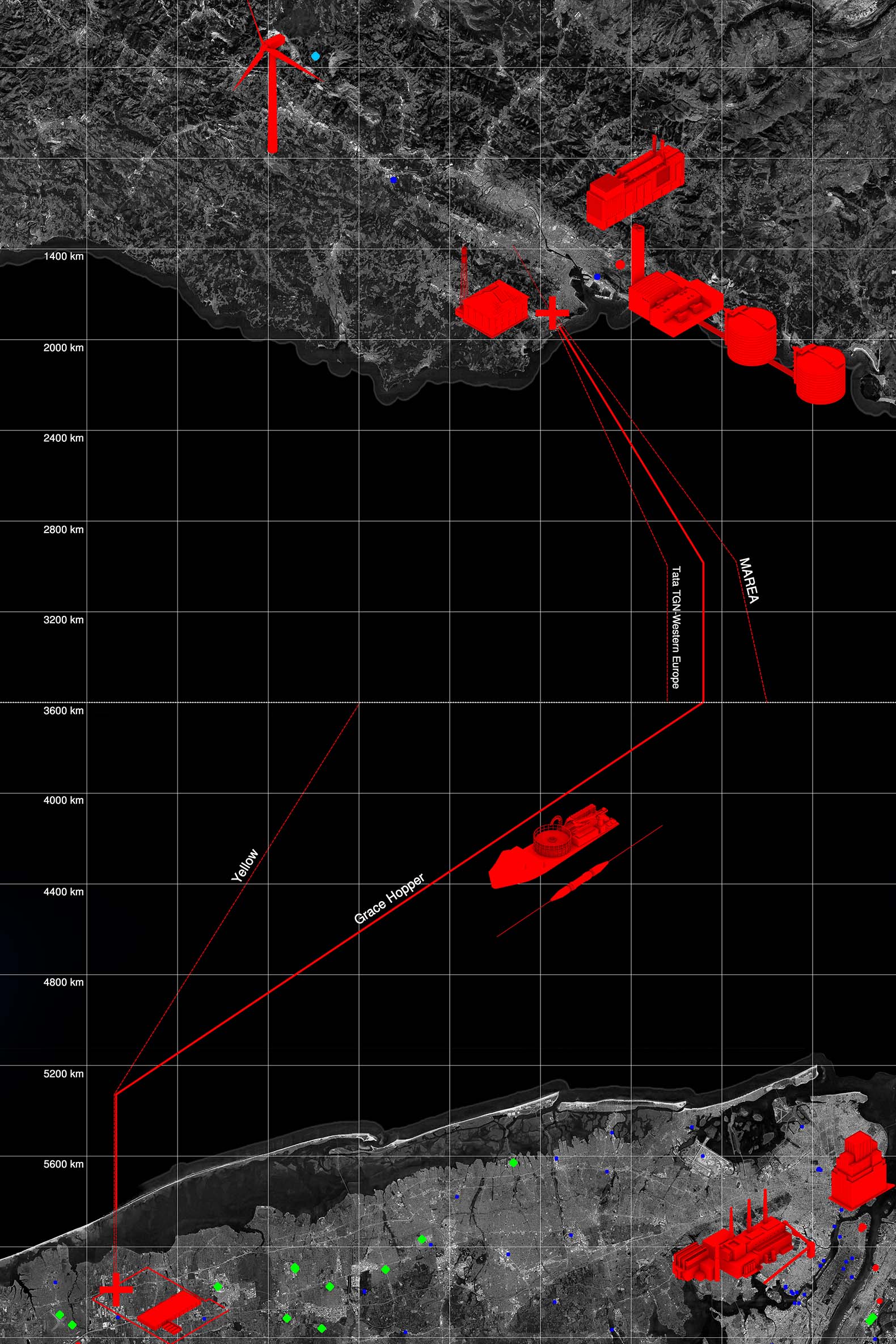
Serverscapes investigates the material side of the digital: the cables, satellites, power plants, and data centers that sustain it. Beneath the Atlantic, the Grace Hopper cable connects New York with the Biscay coast and carries data traffic that seems to have neither place nor border. Yet this seemingly immaterial flow depends on a network of infrastructures that vary widely in scale, form, and purpose.
Through drawings and models, the exhibition traces critical facilities between the Basque Country and New York and presents them as parts of a single system. It makes visible what we perceive as invisible: the concrete objects, buildings, and systems that make our digital society possible.
The exhibition is part of a broader research project that seeks to build an atlas of these infrastructures: a record of forms, geometries, and scales that are rarely visible from public space. Many are hidden under the sea, behind fences, or in industrial parks on the outskirts of cities; others are disguised as nondescript buildings that no one would associate with the internet. The case studies gathered on both sides of the Atlantic share this condition: they have a very concrete physical and material presence, they occupy land and consume energy, yet they remain outside our everyday view.
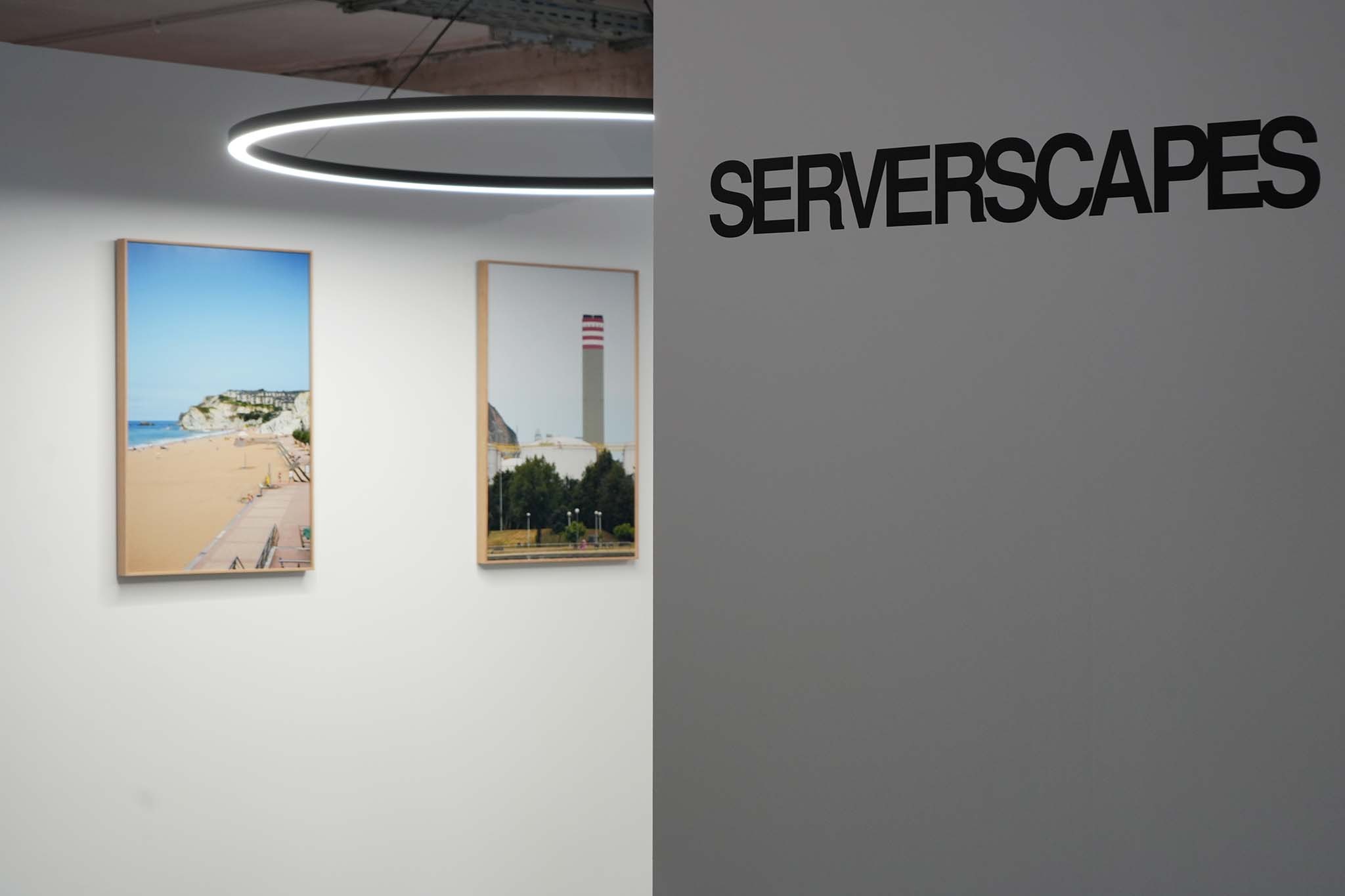
Serverscapes asks how we build the territory of the digital world. It understands the cloud not as a single place, but as a diverse network of spaces and structures that leaves its mark on our cities and on the countryside alike.