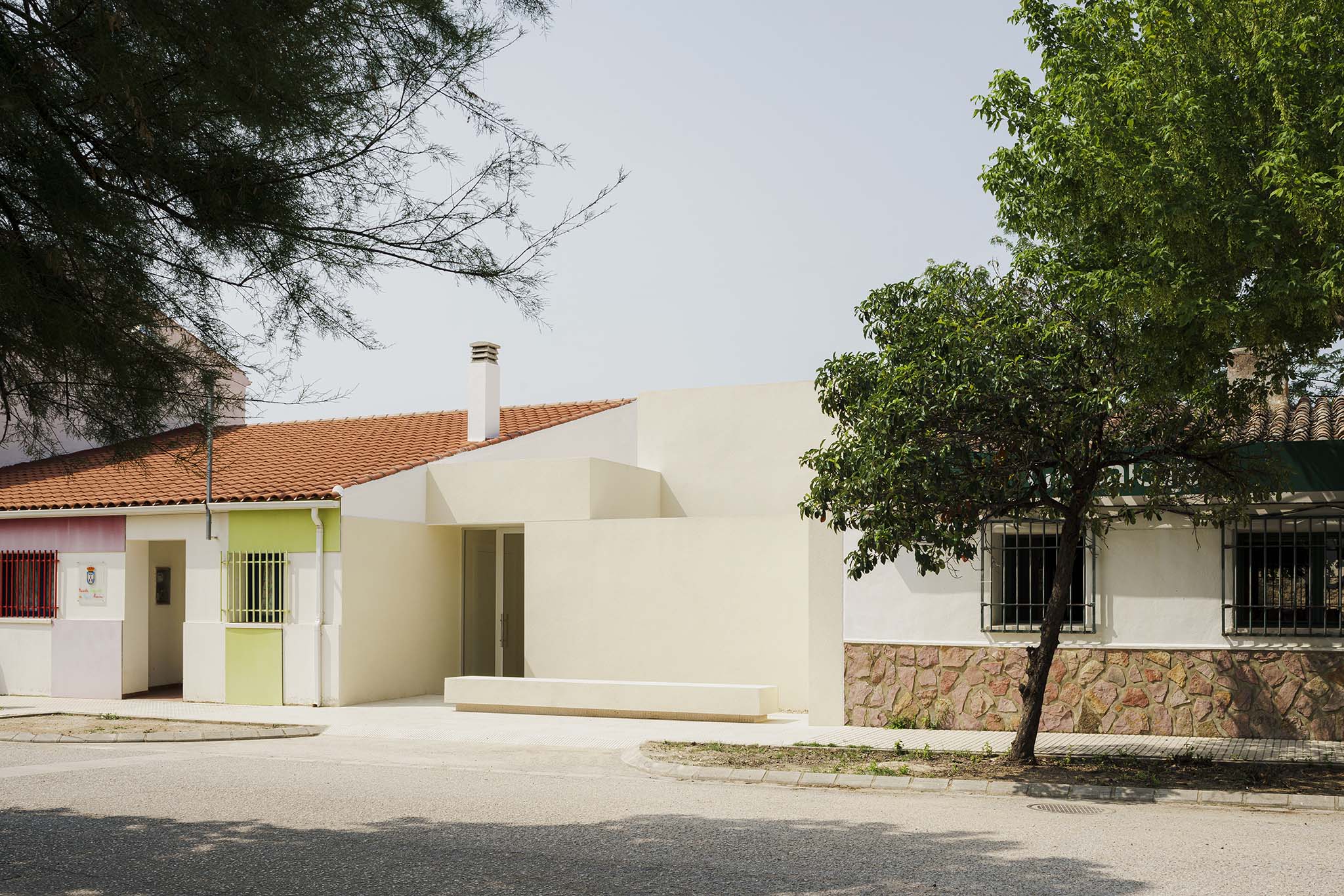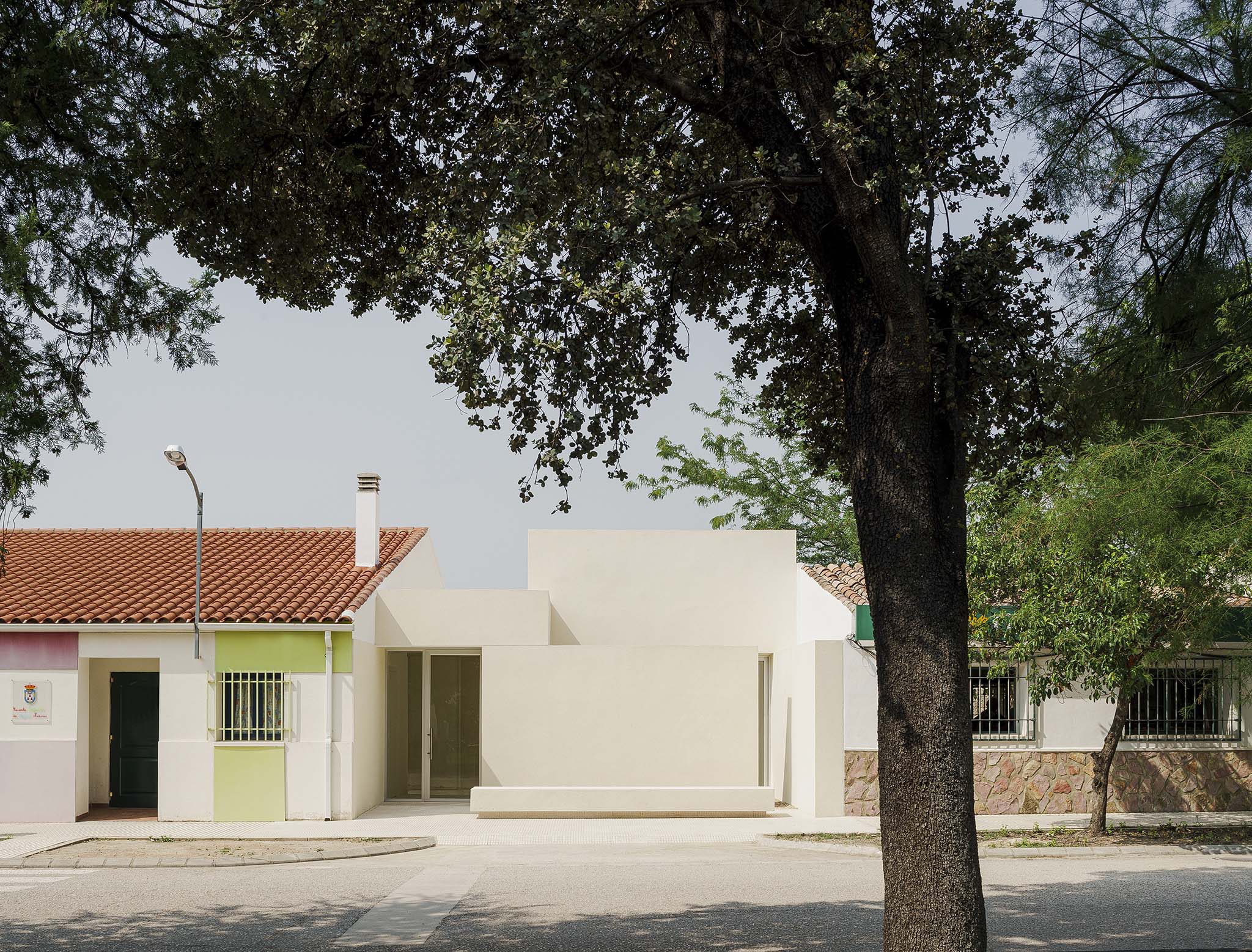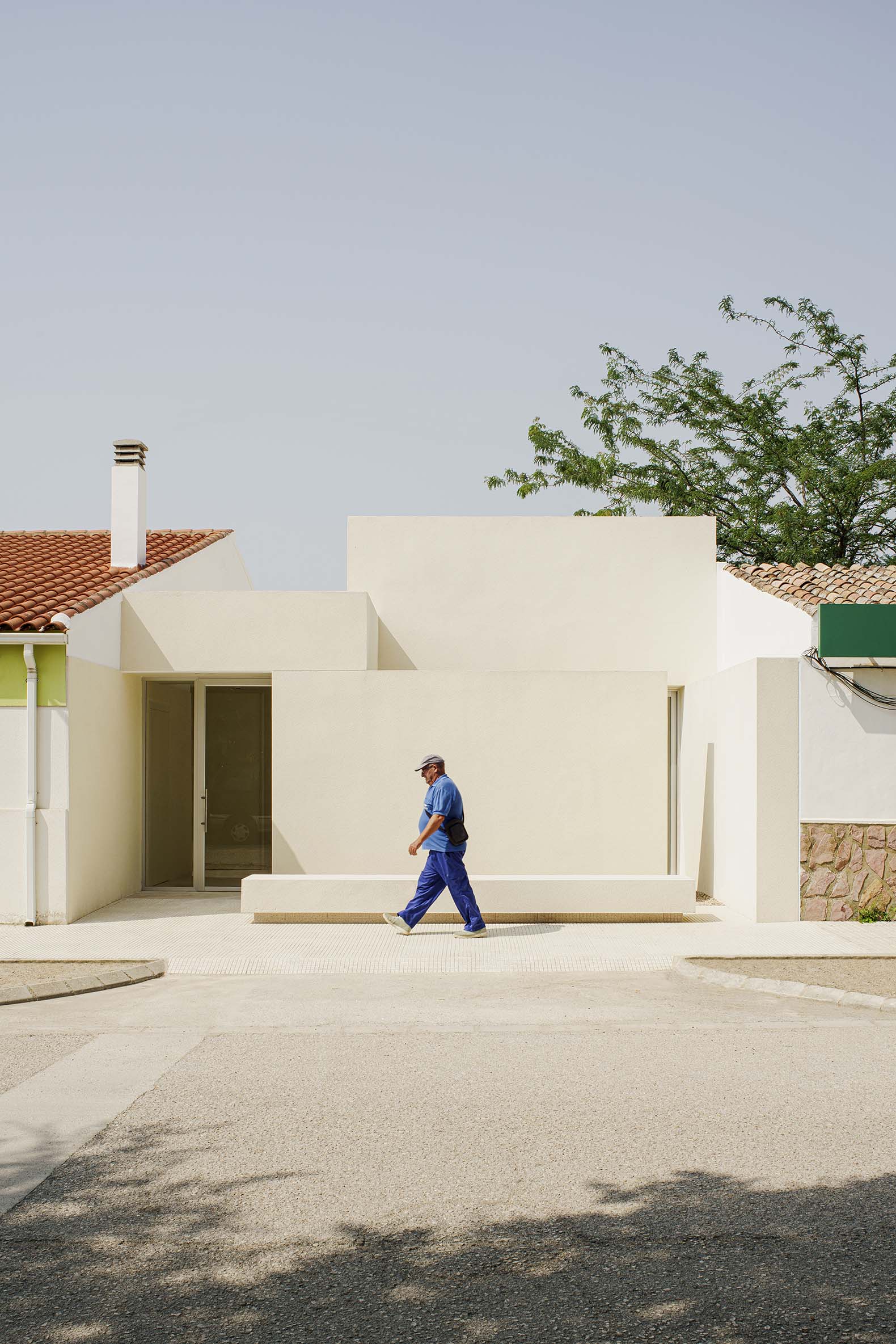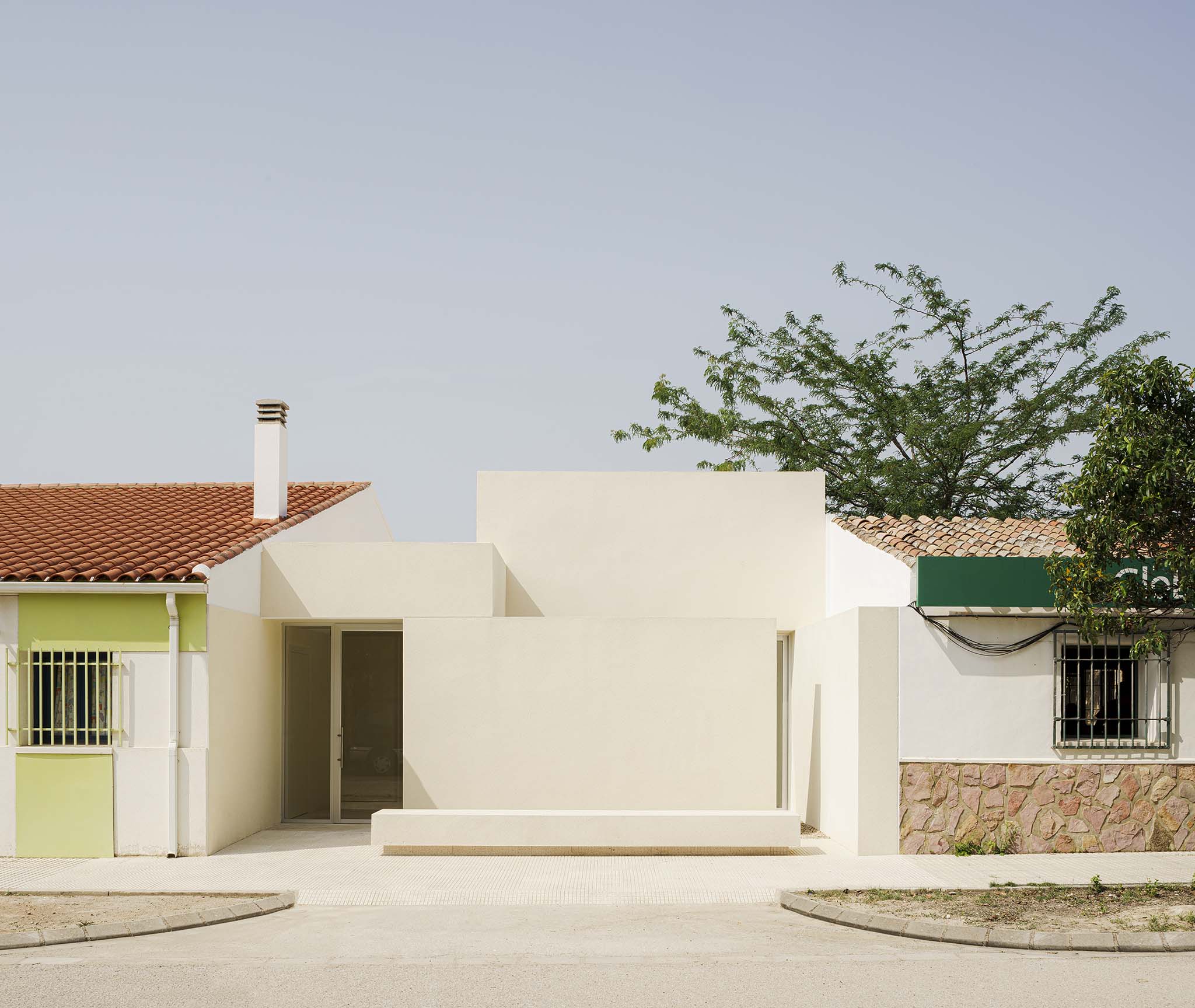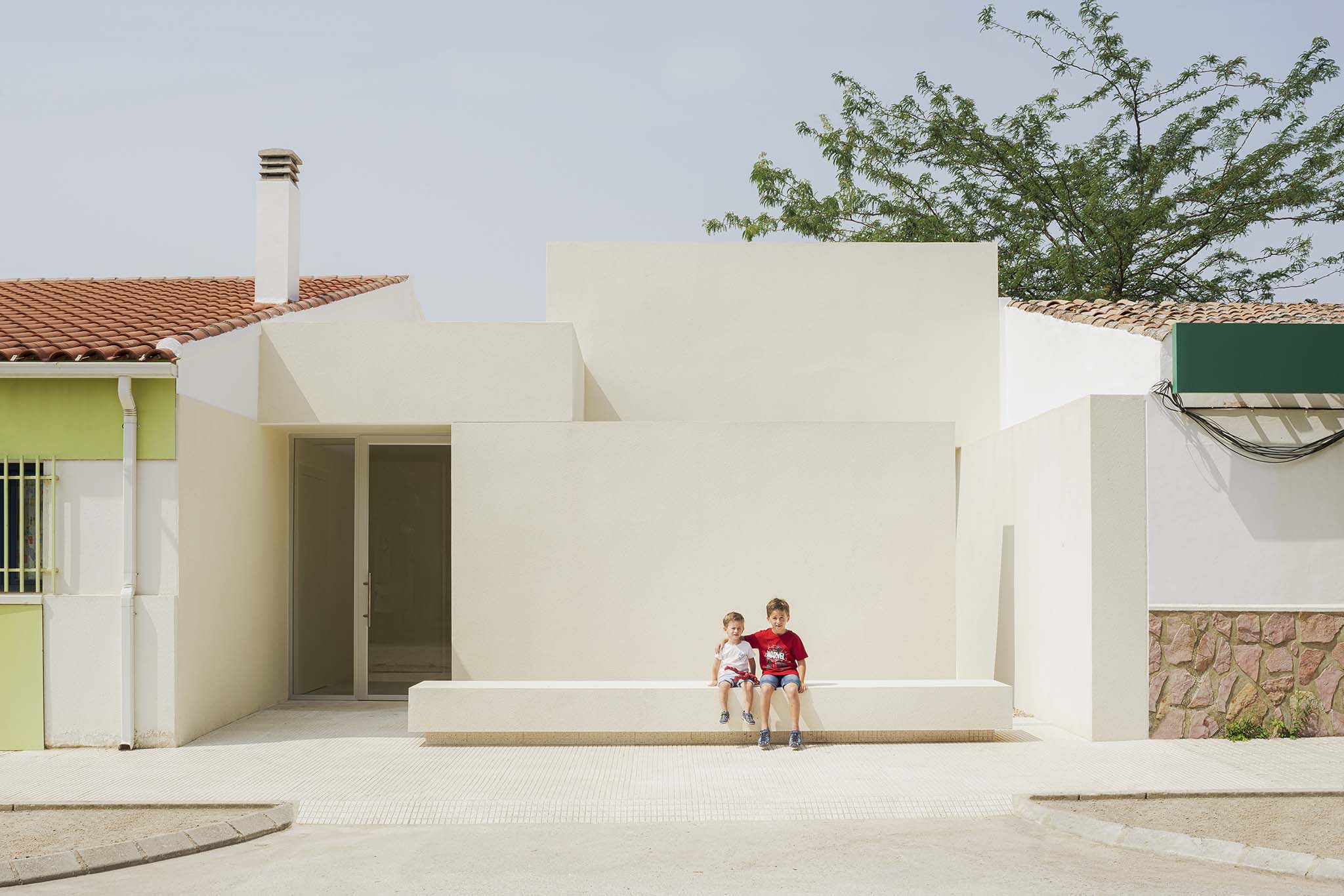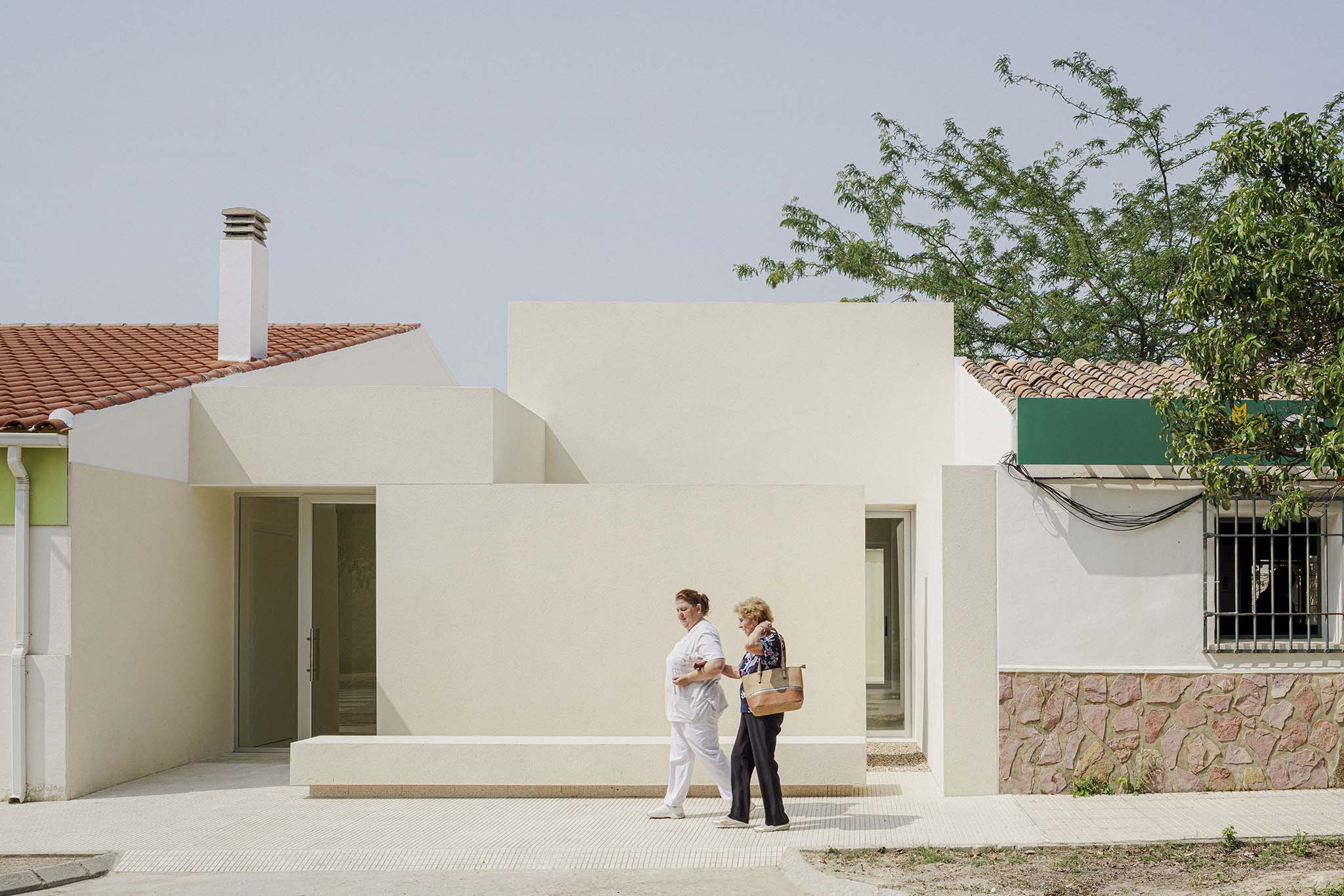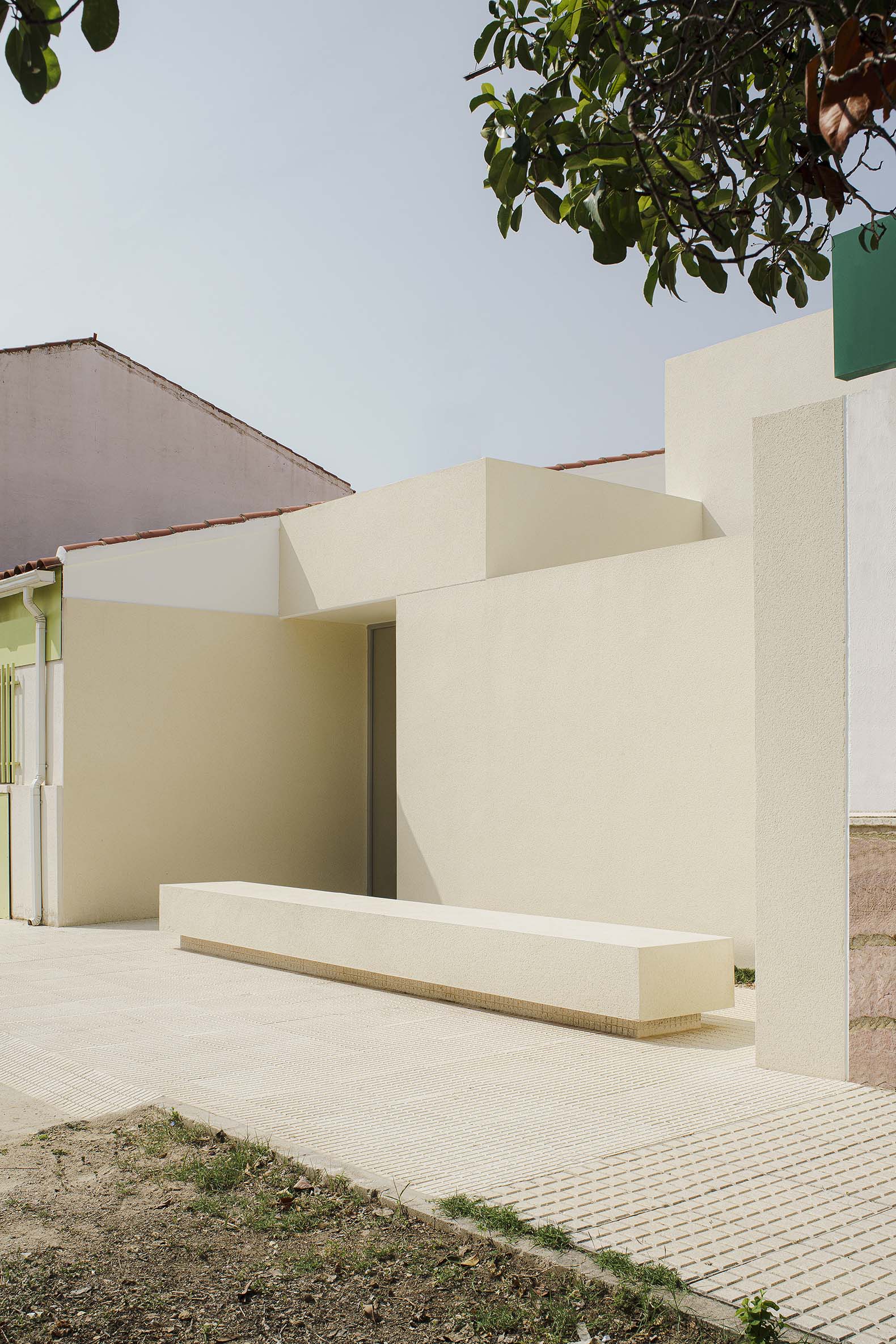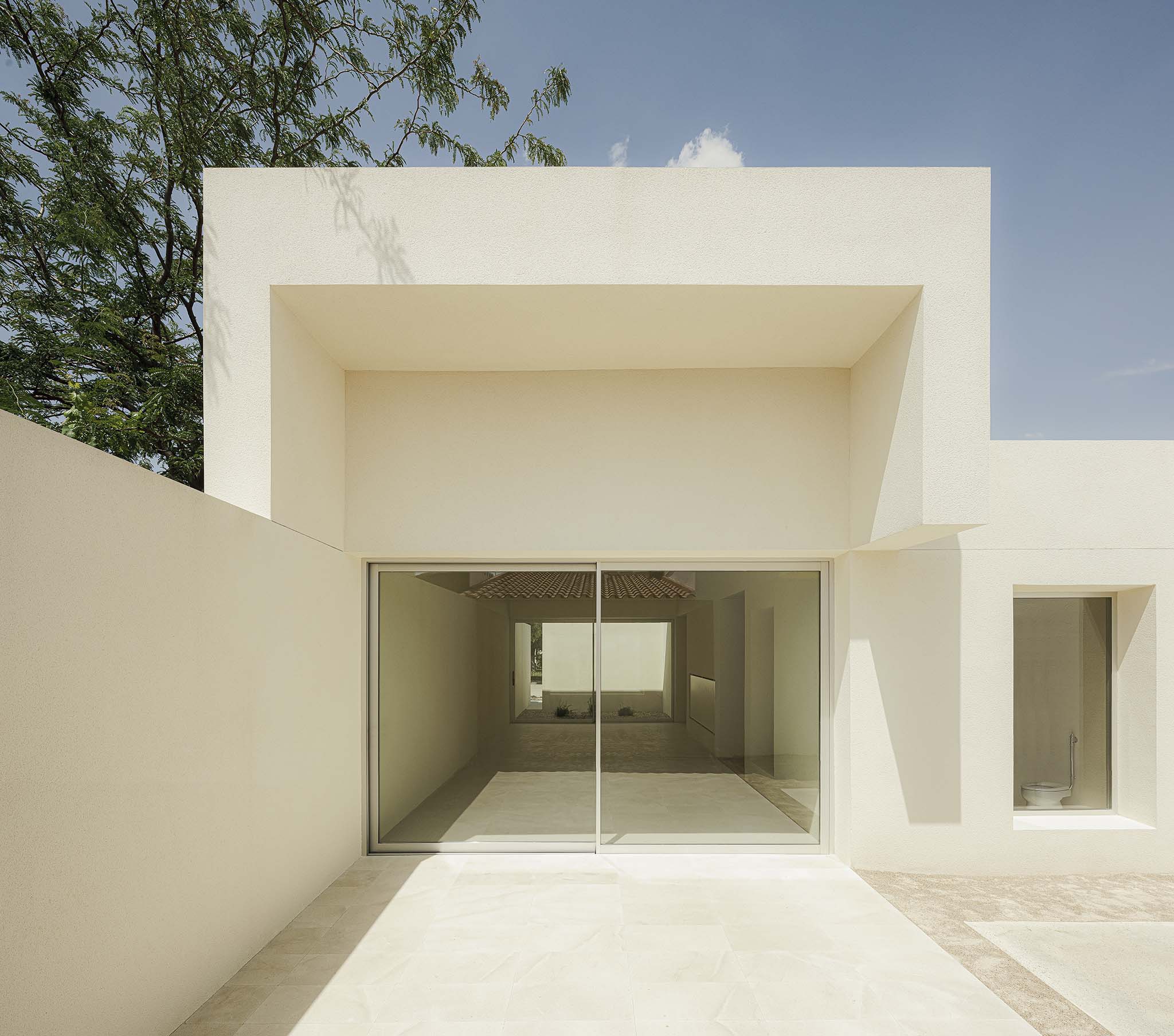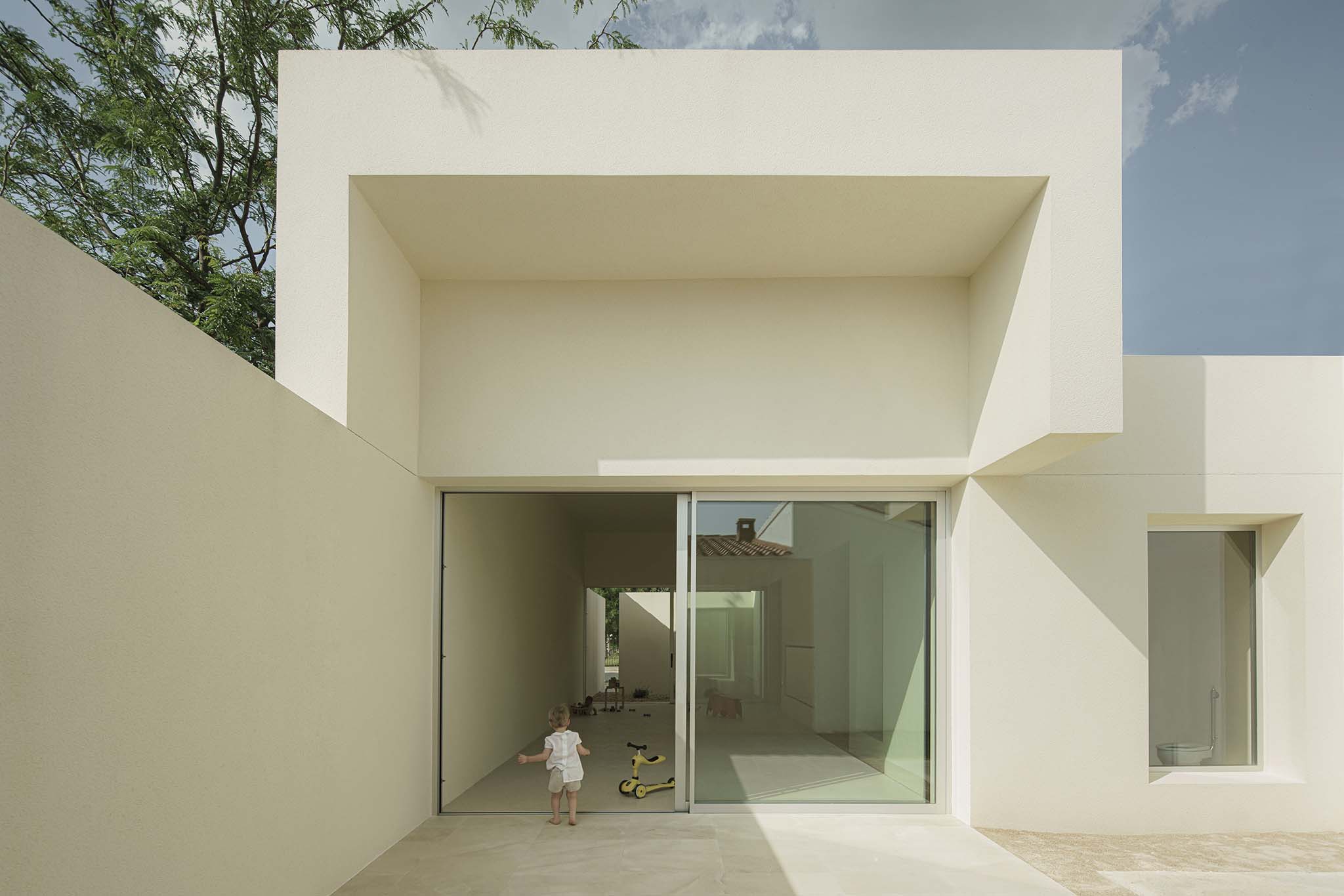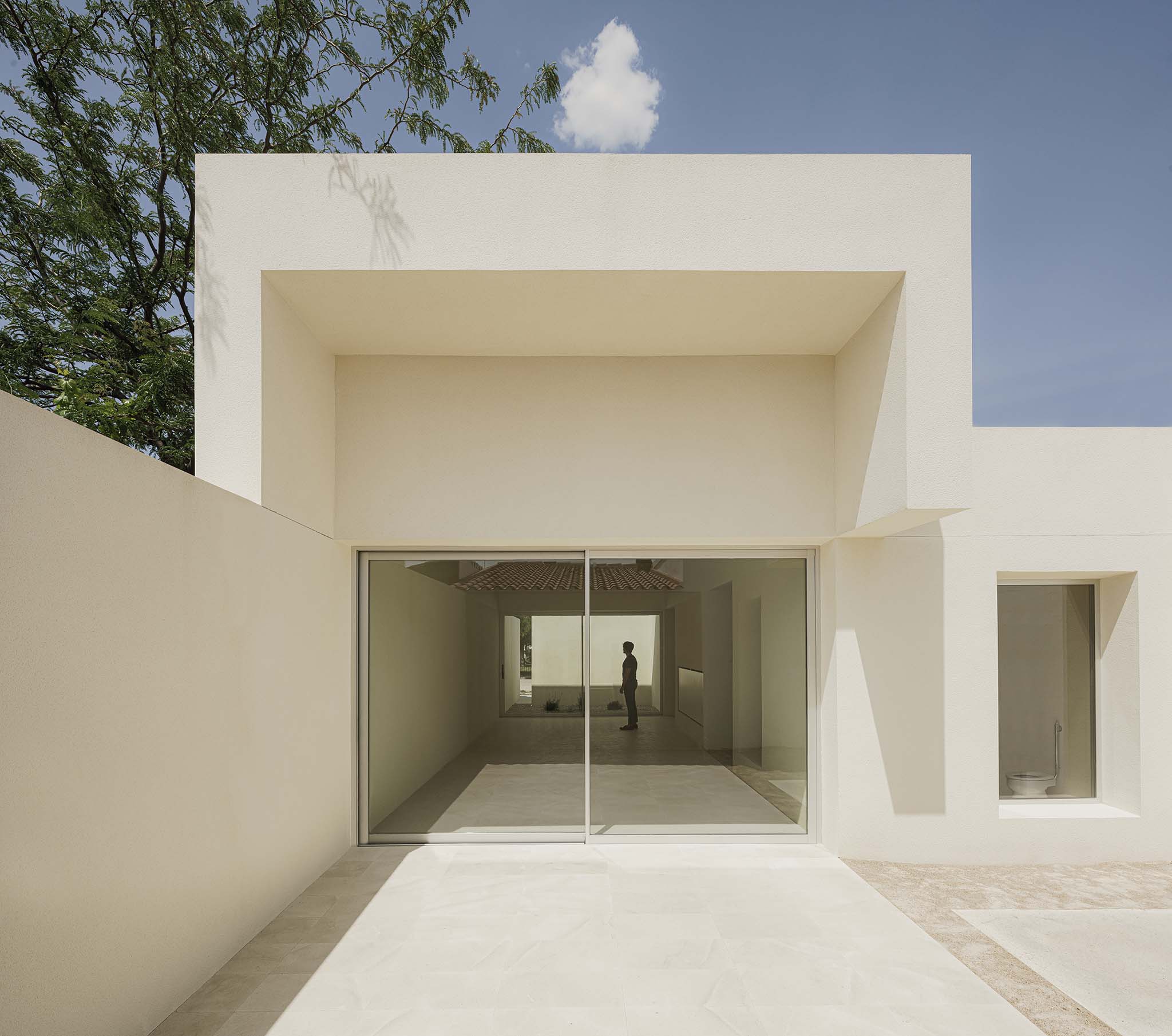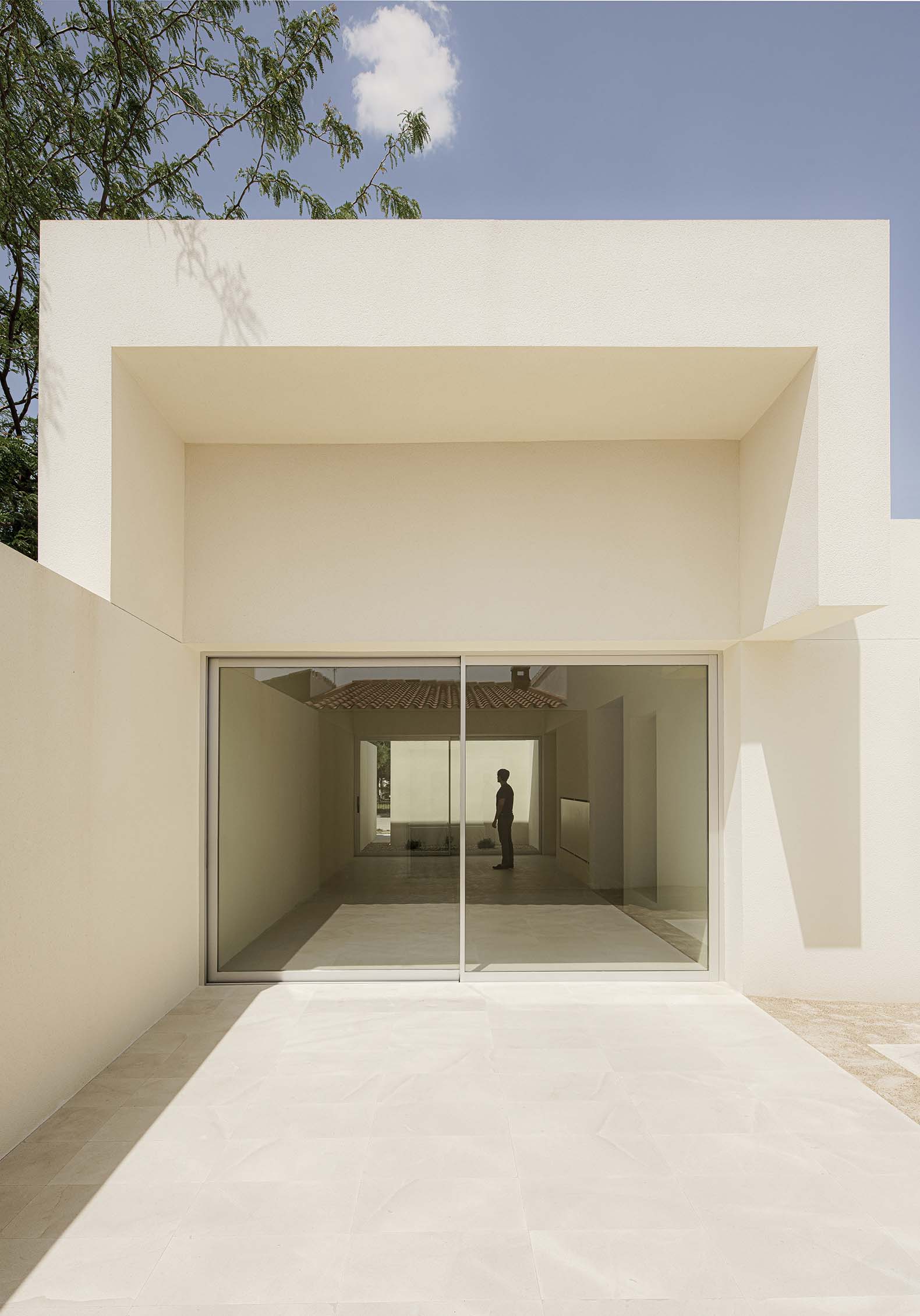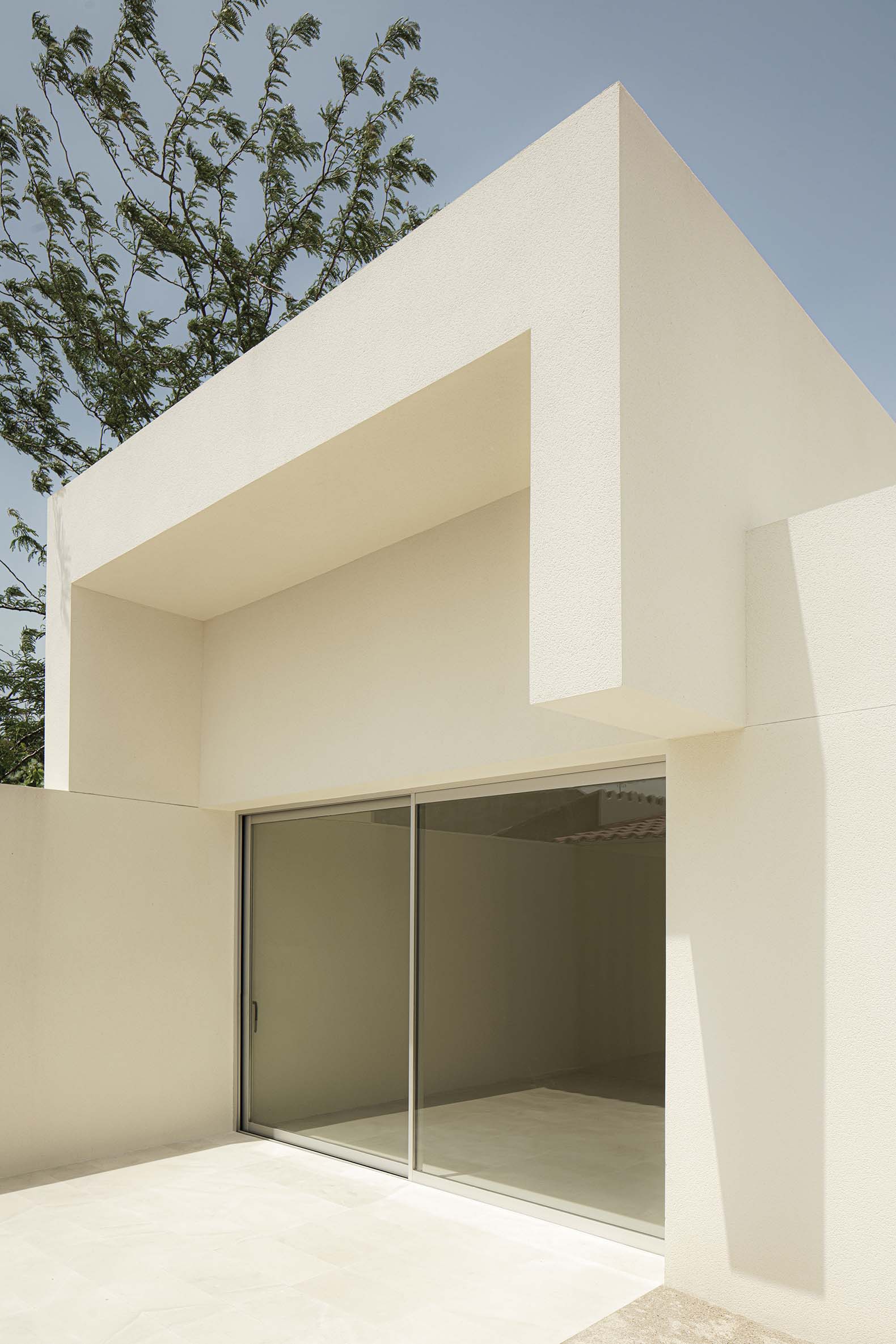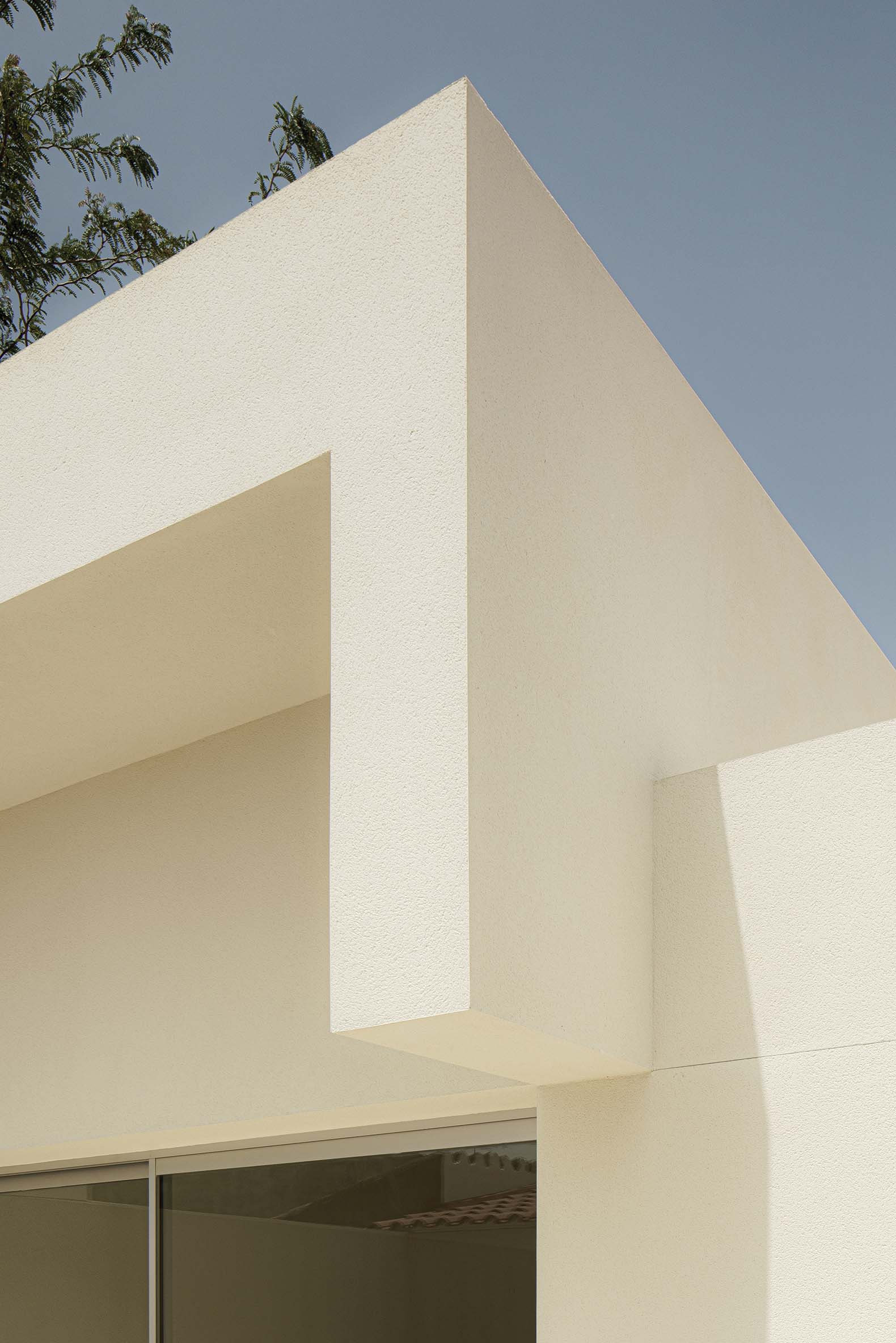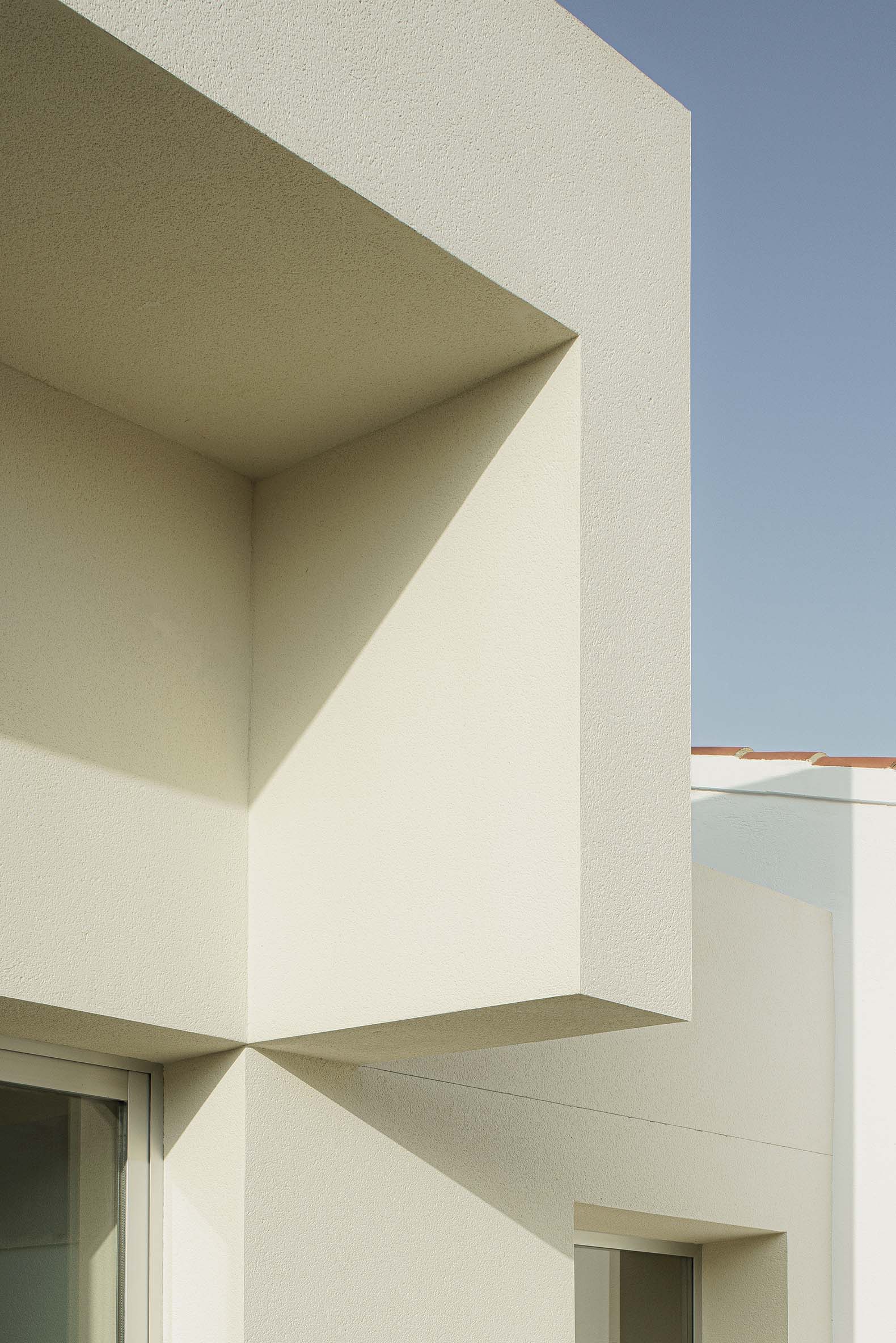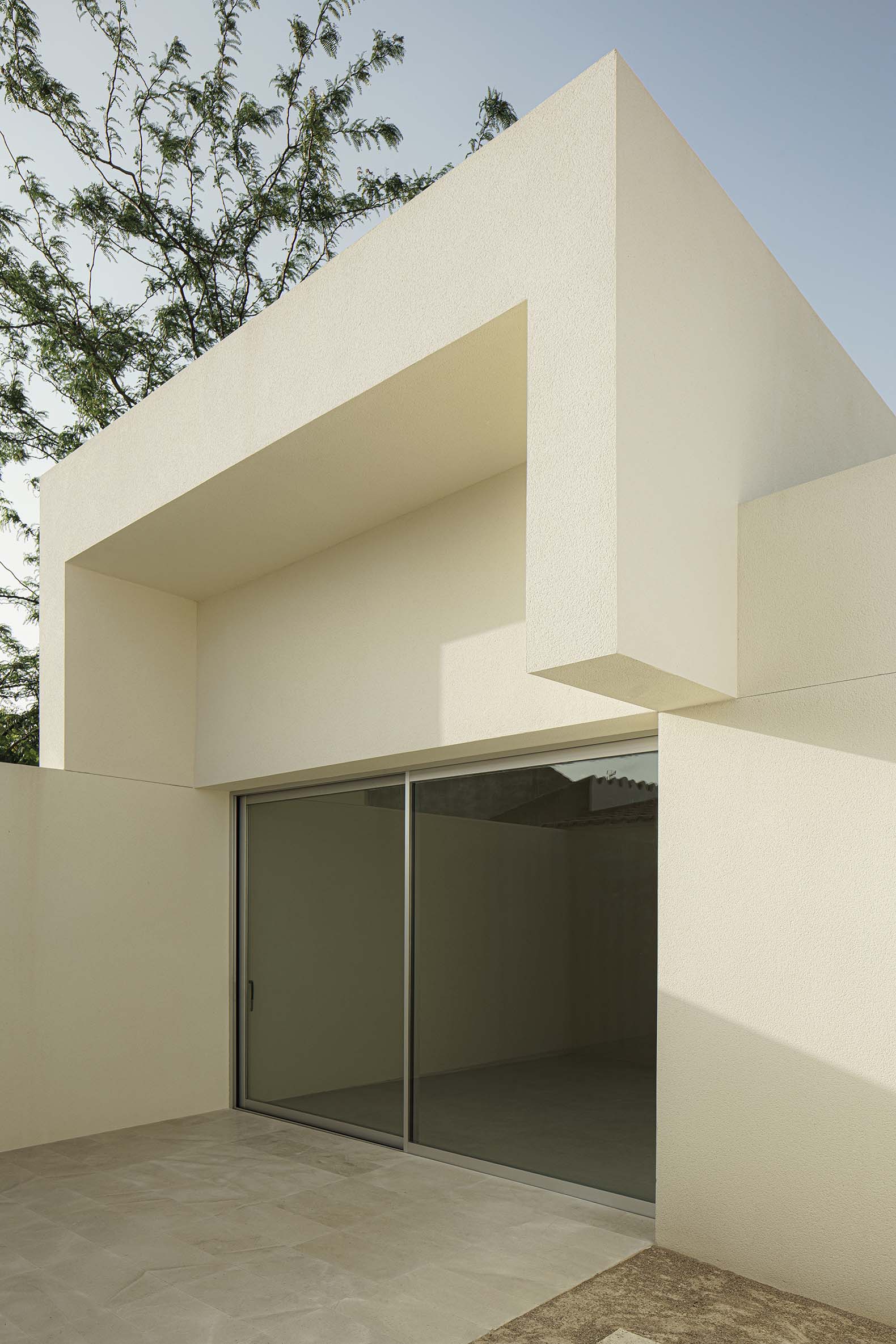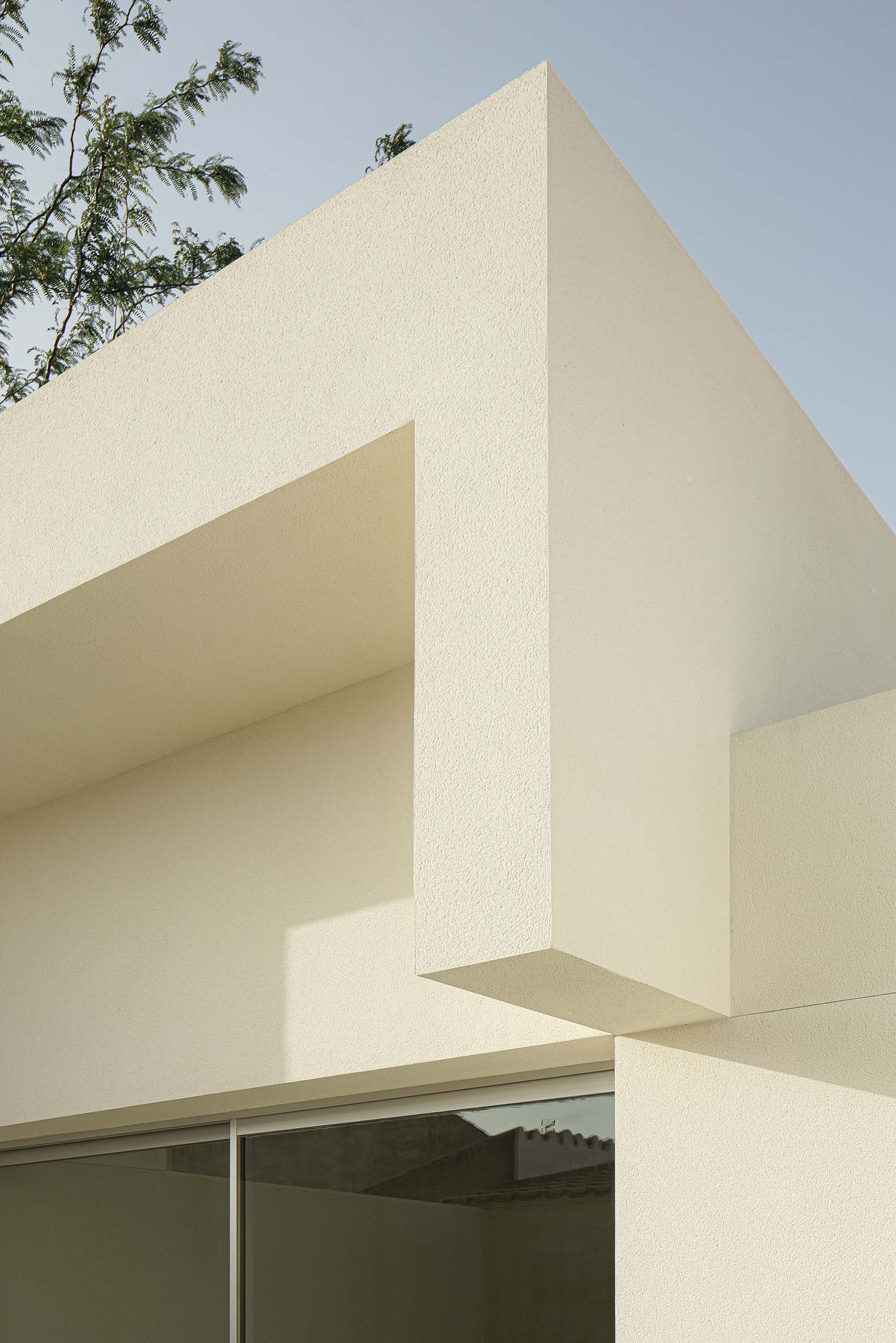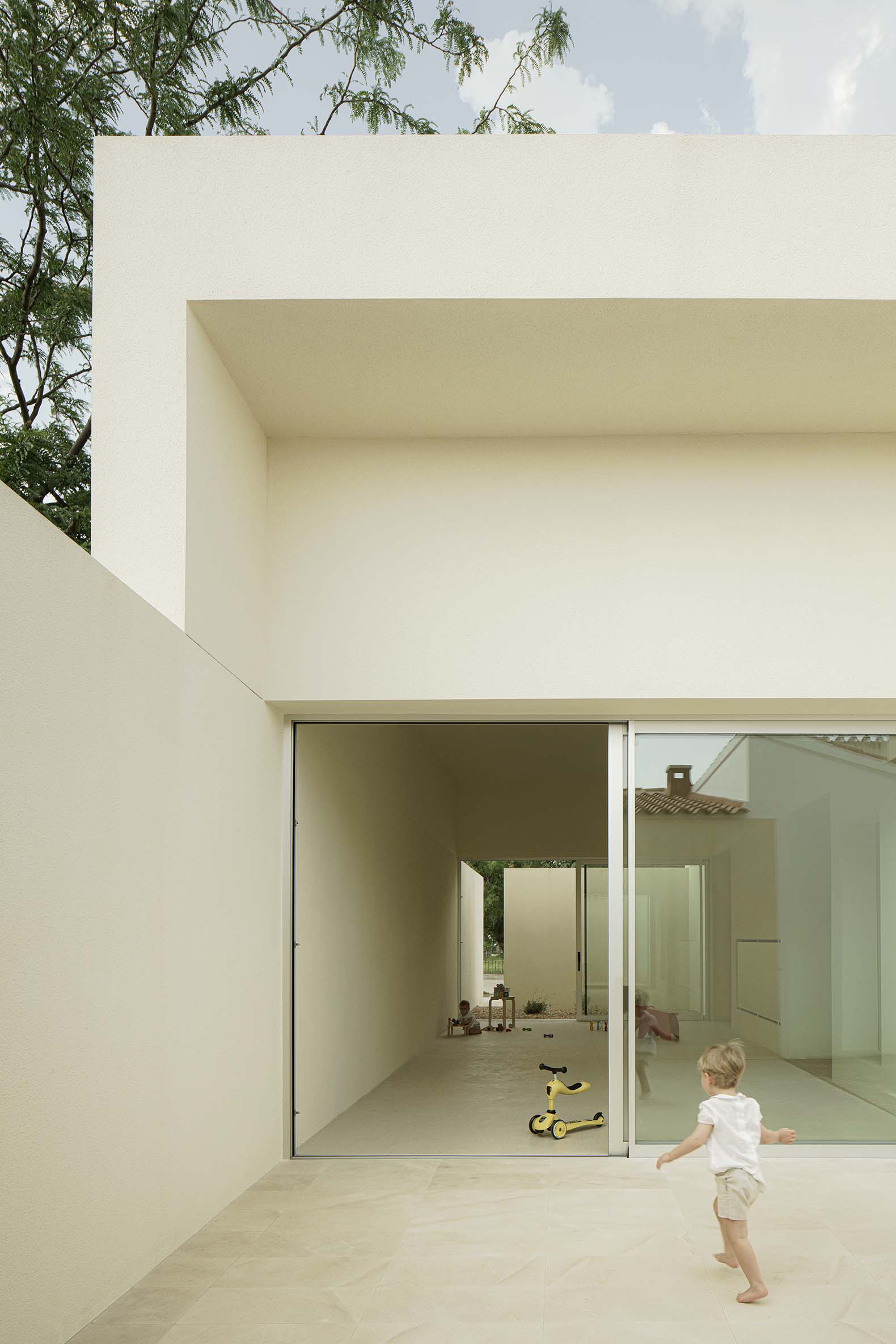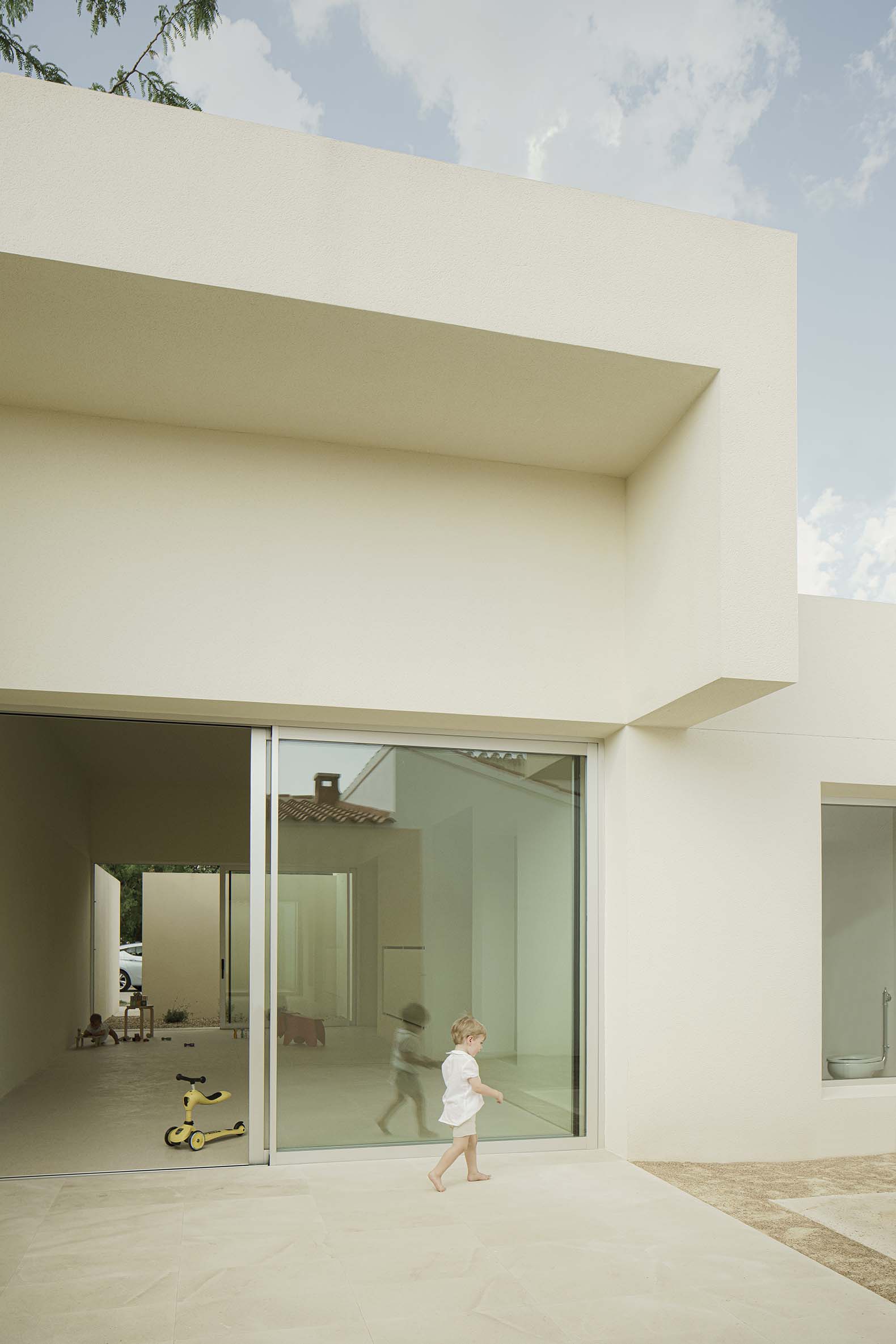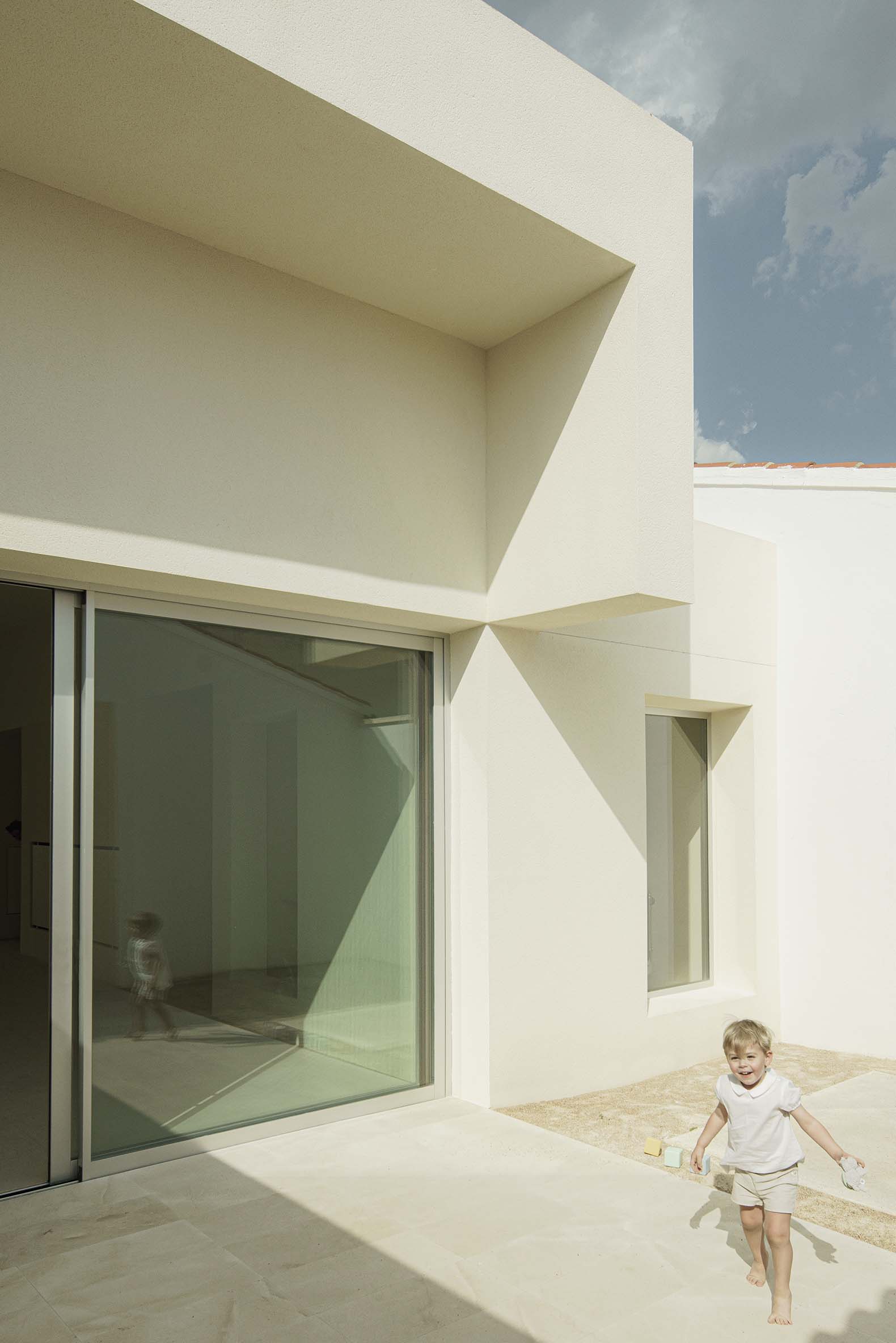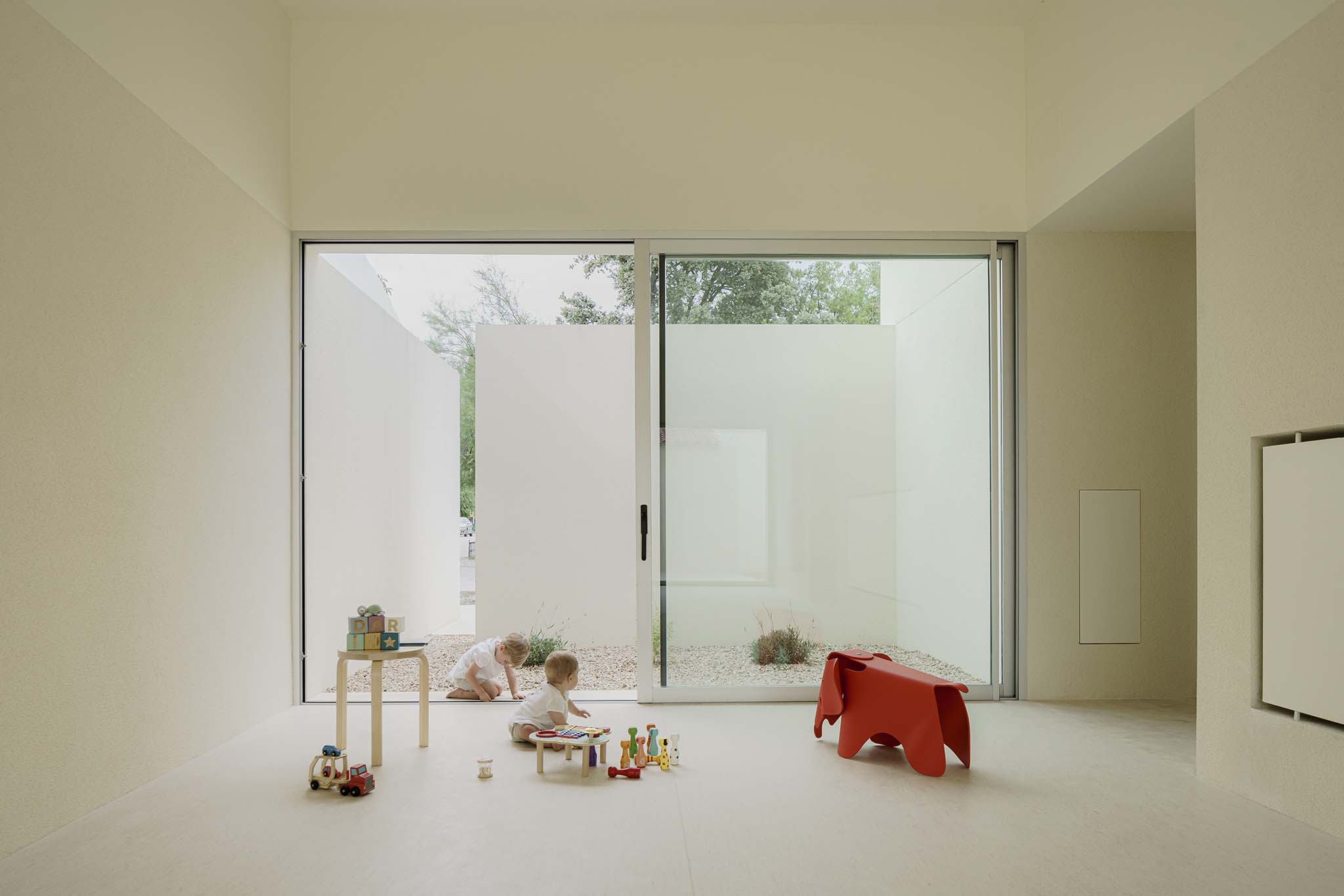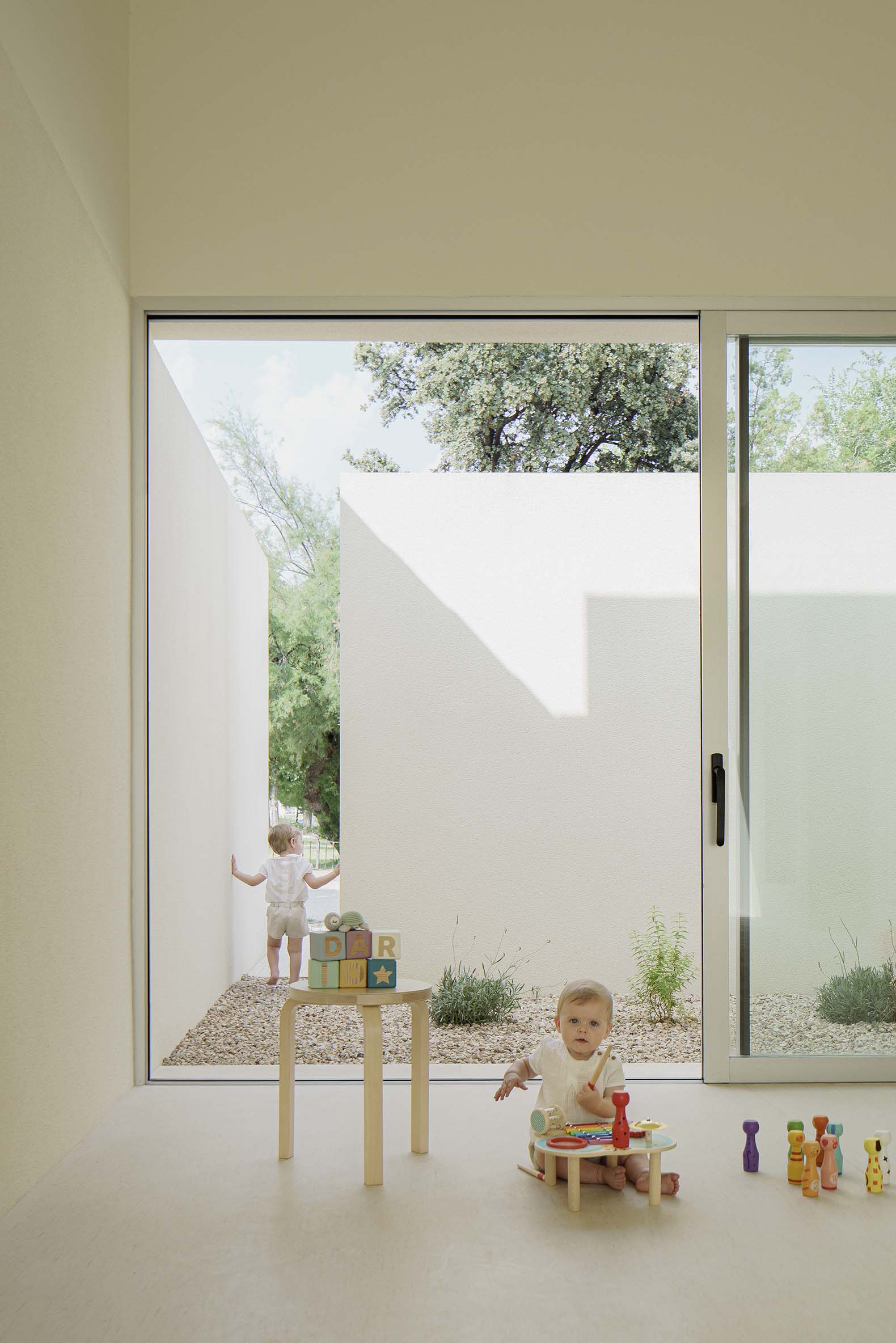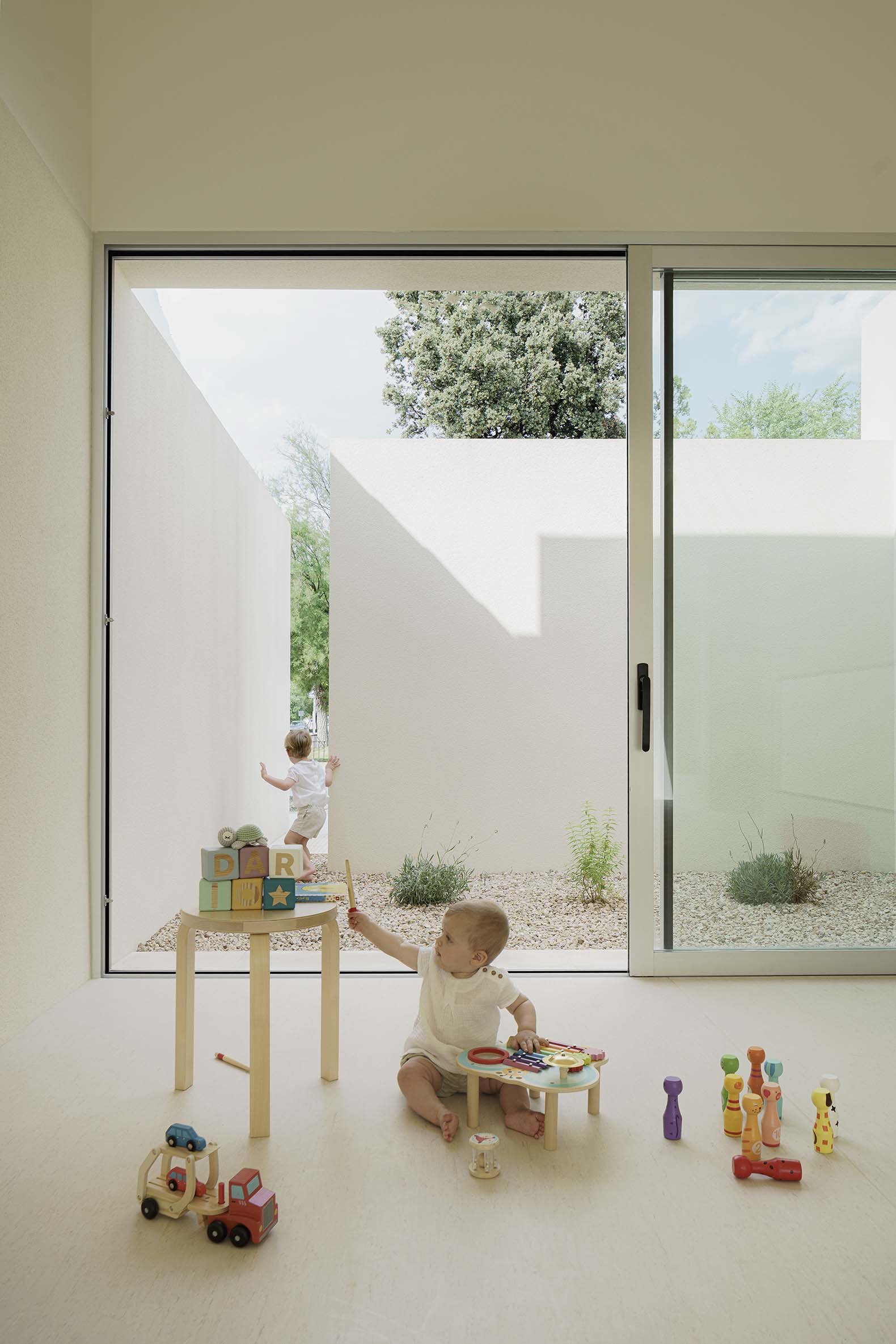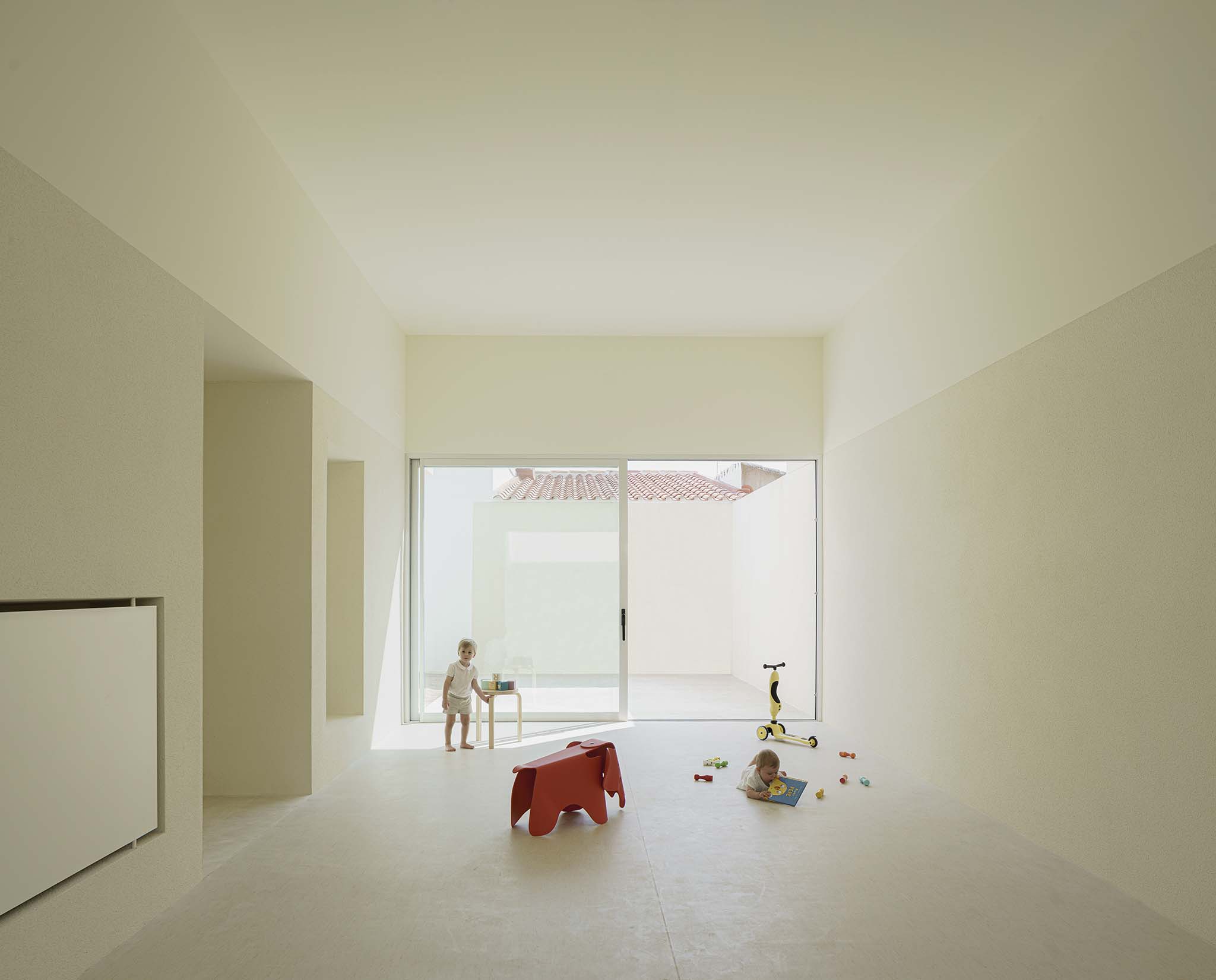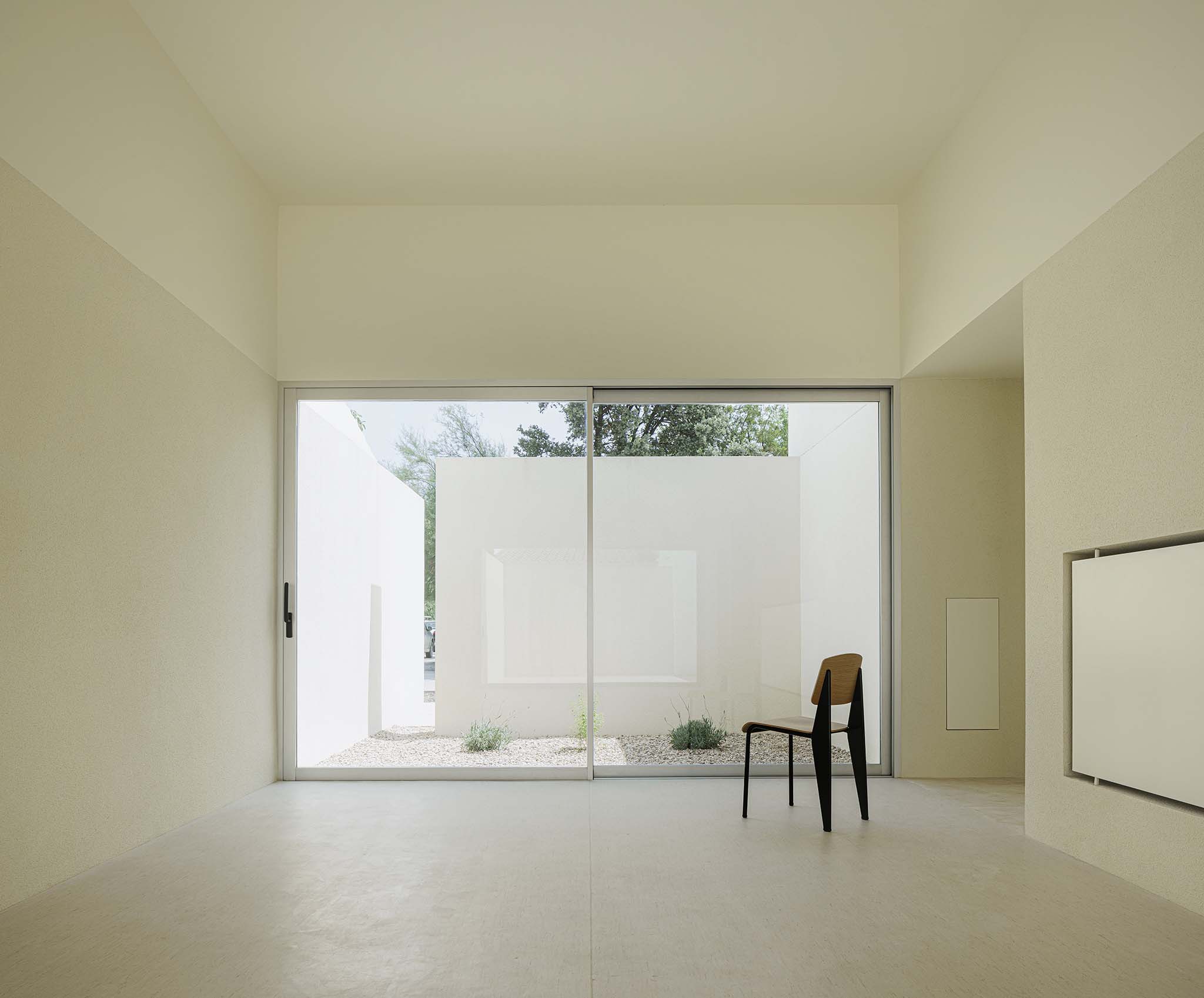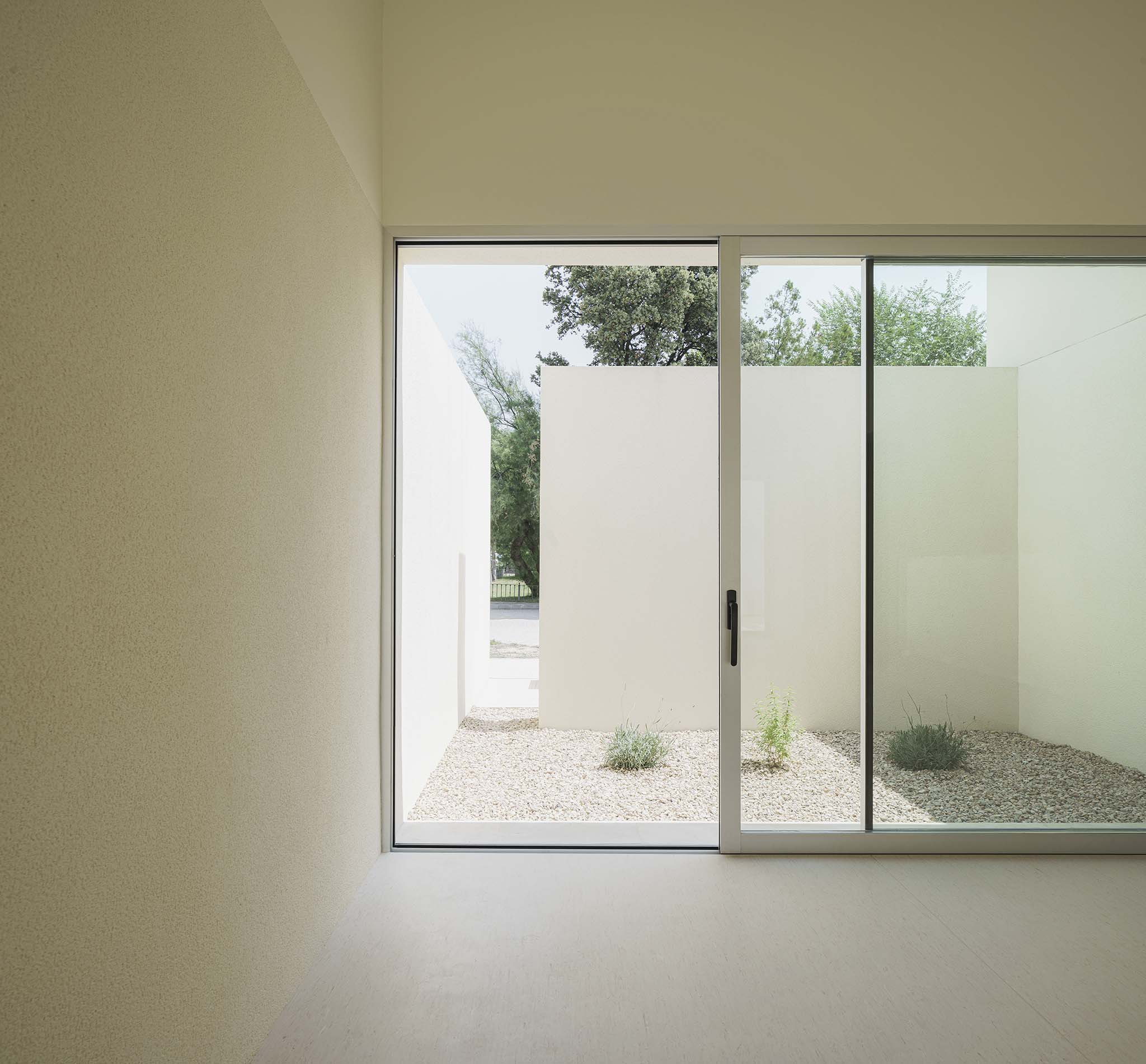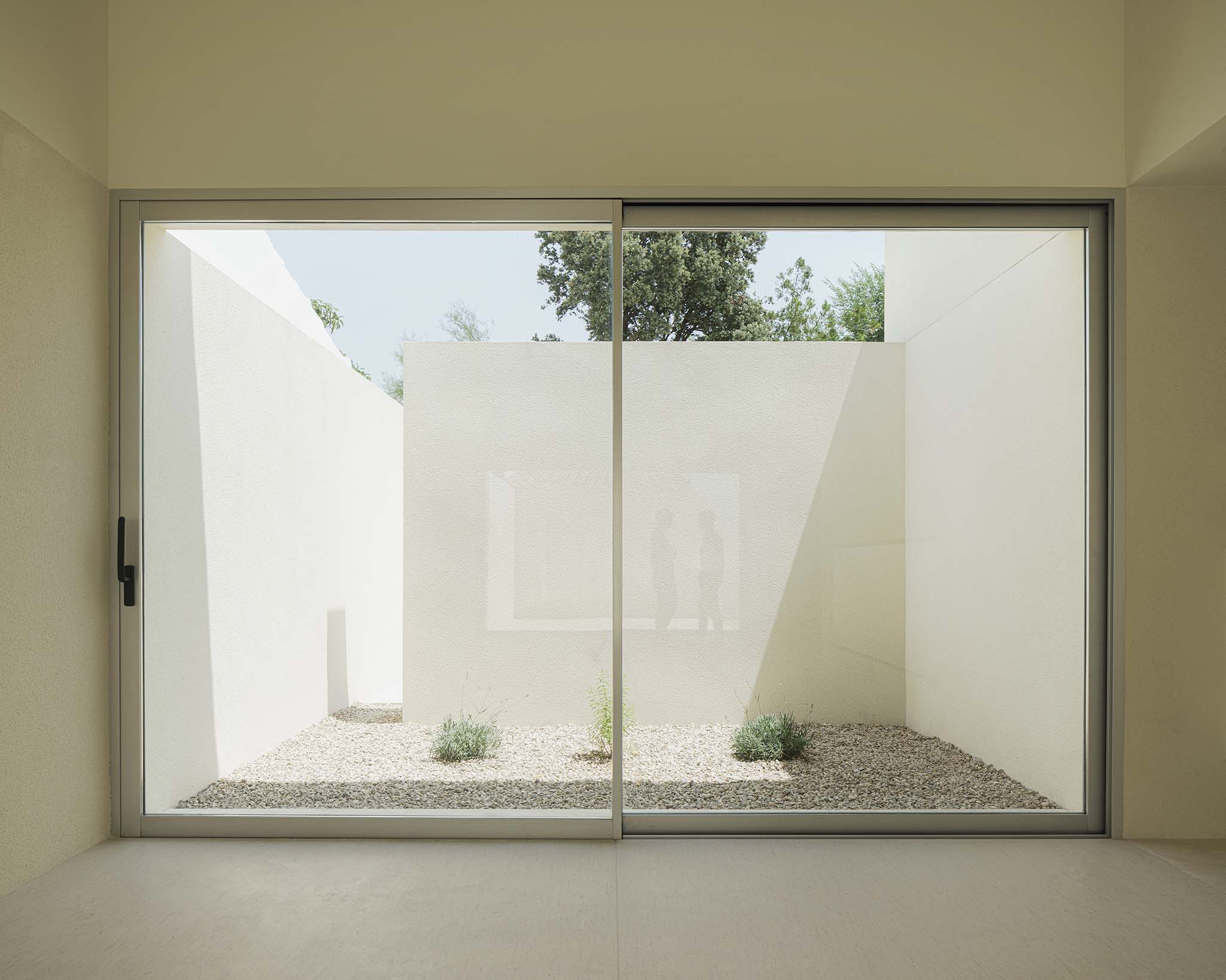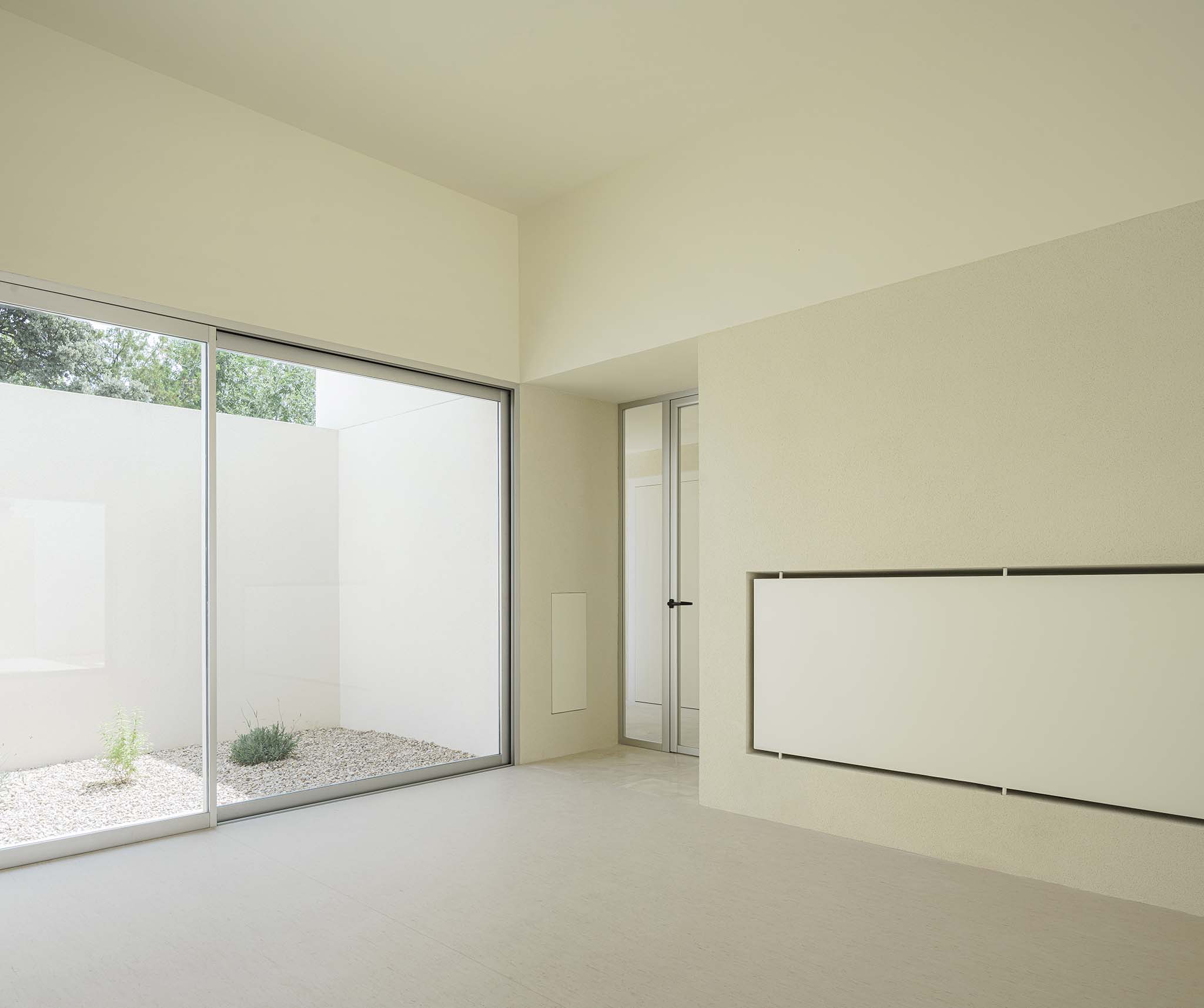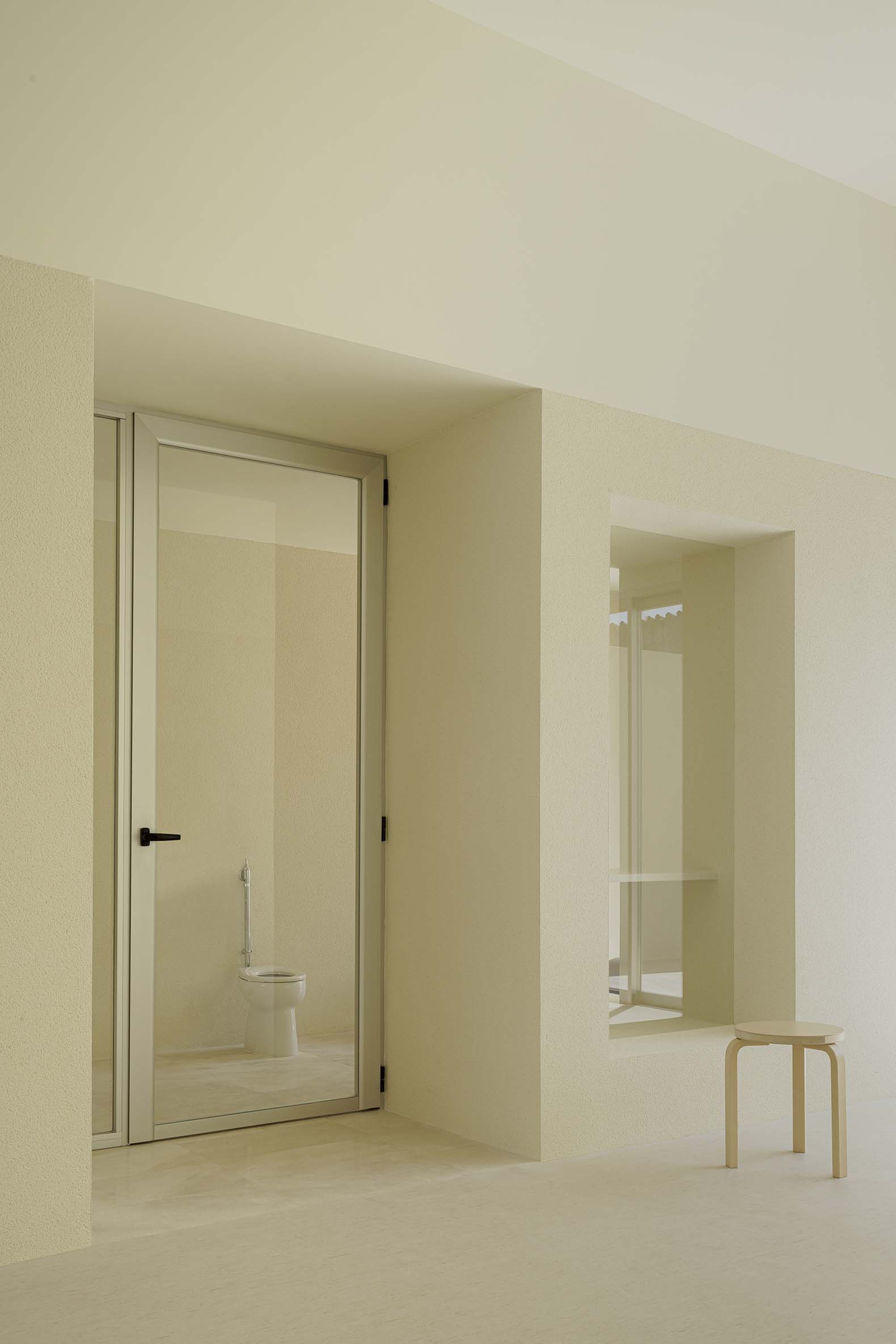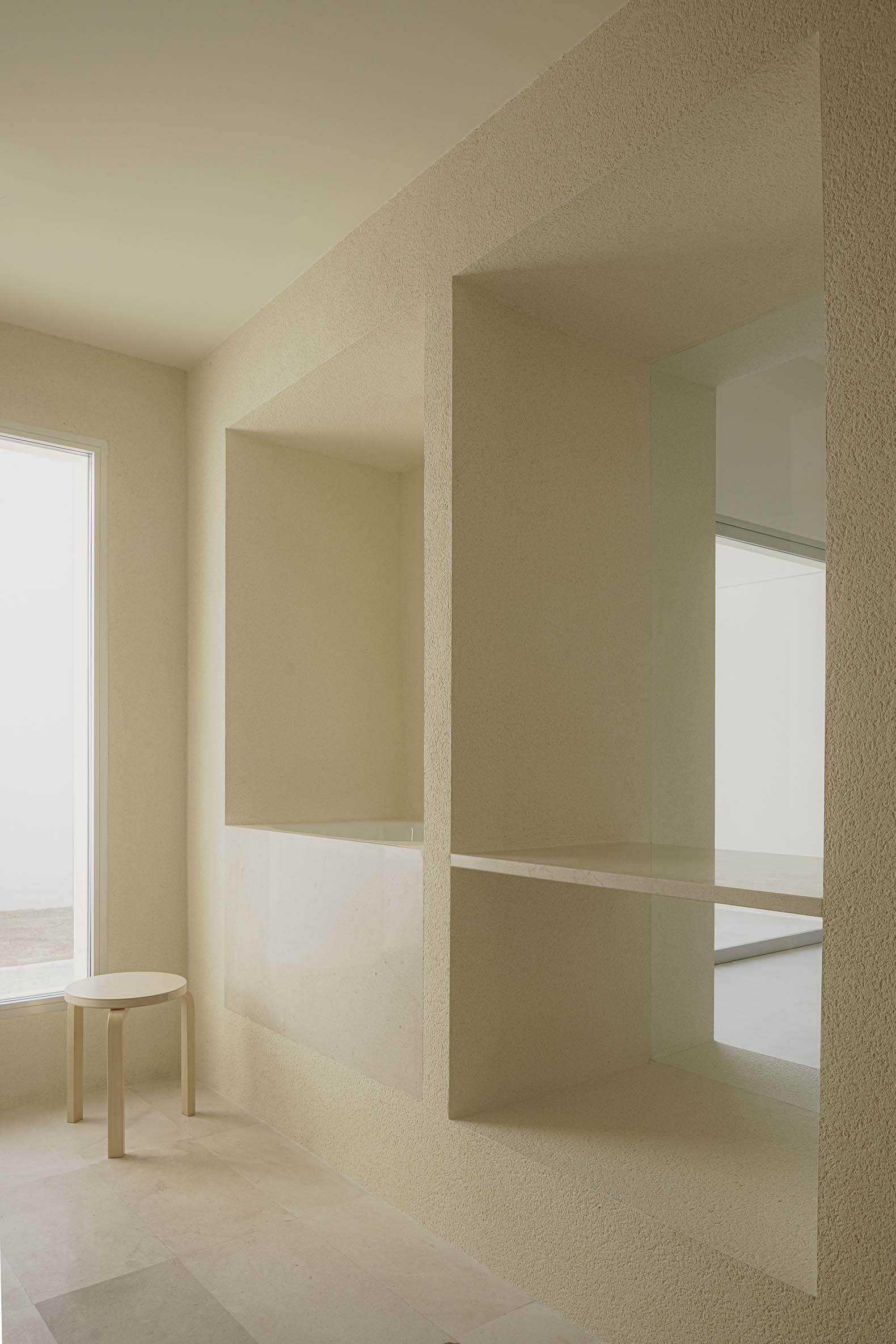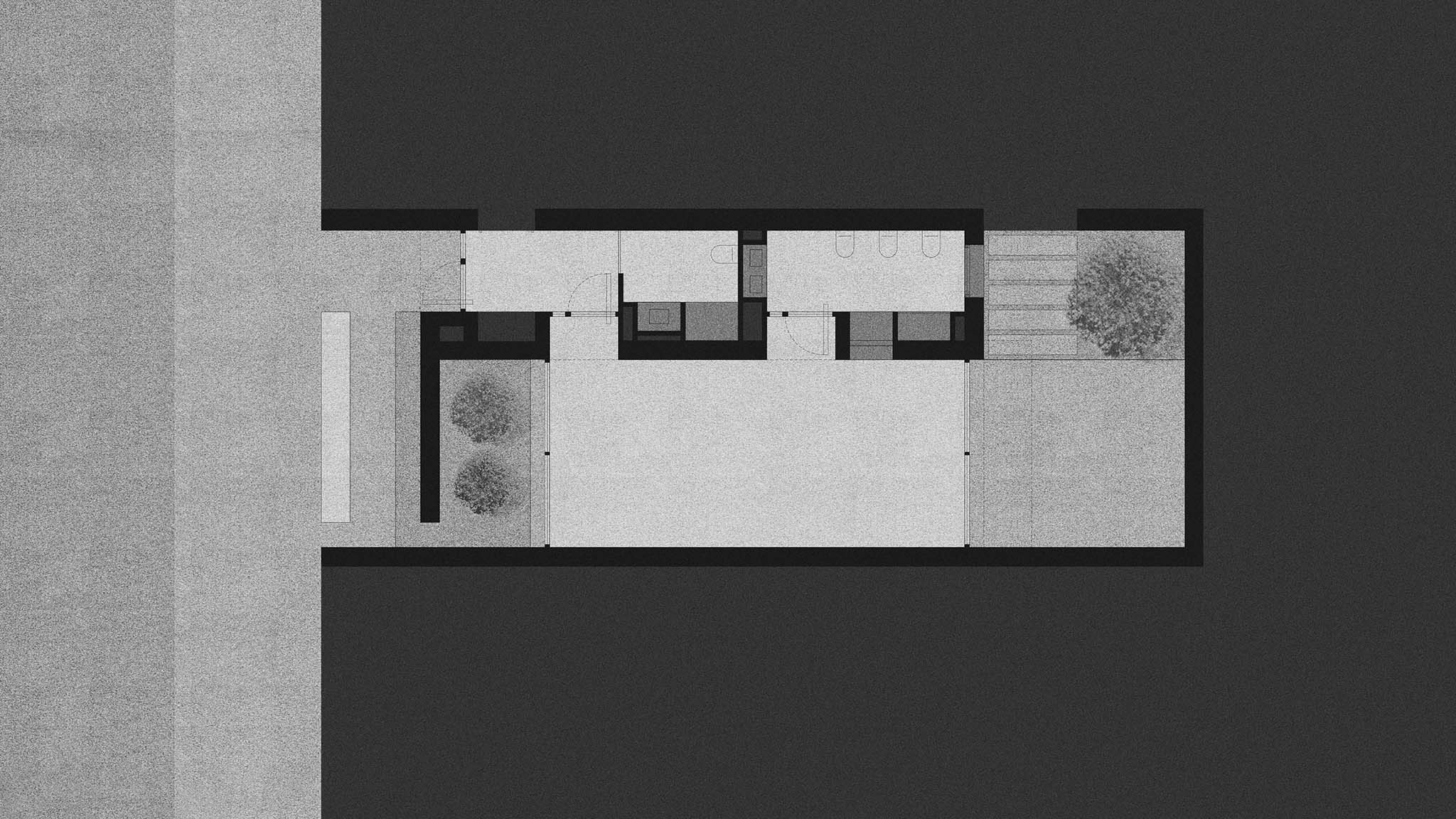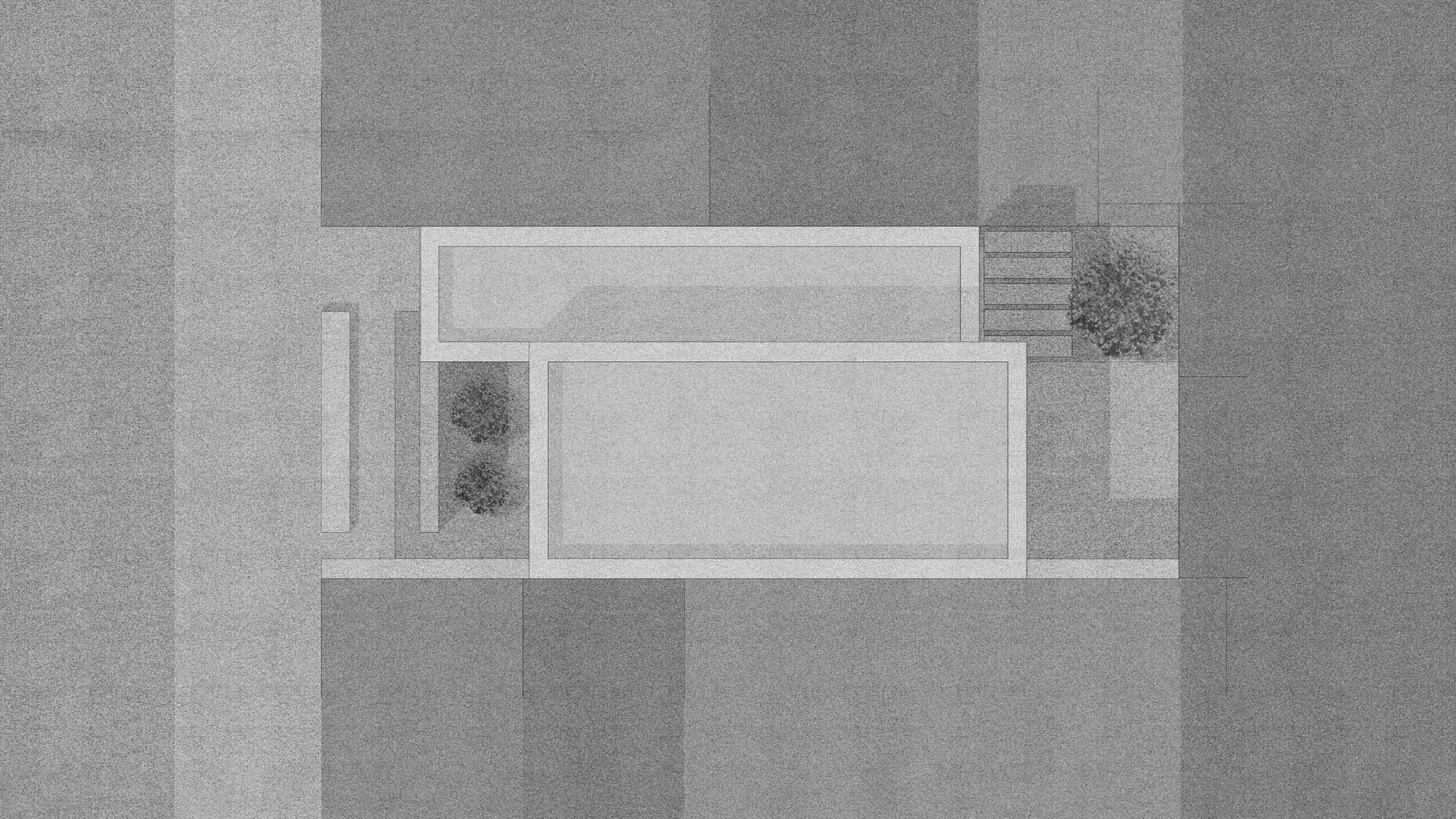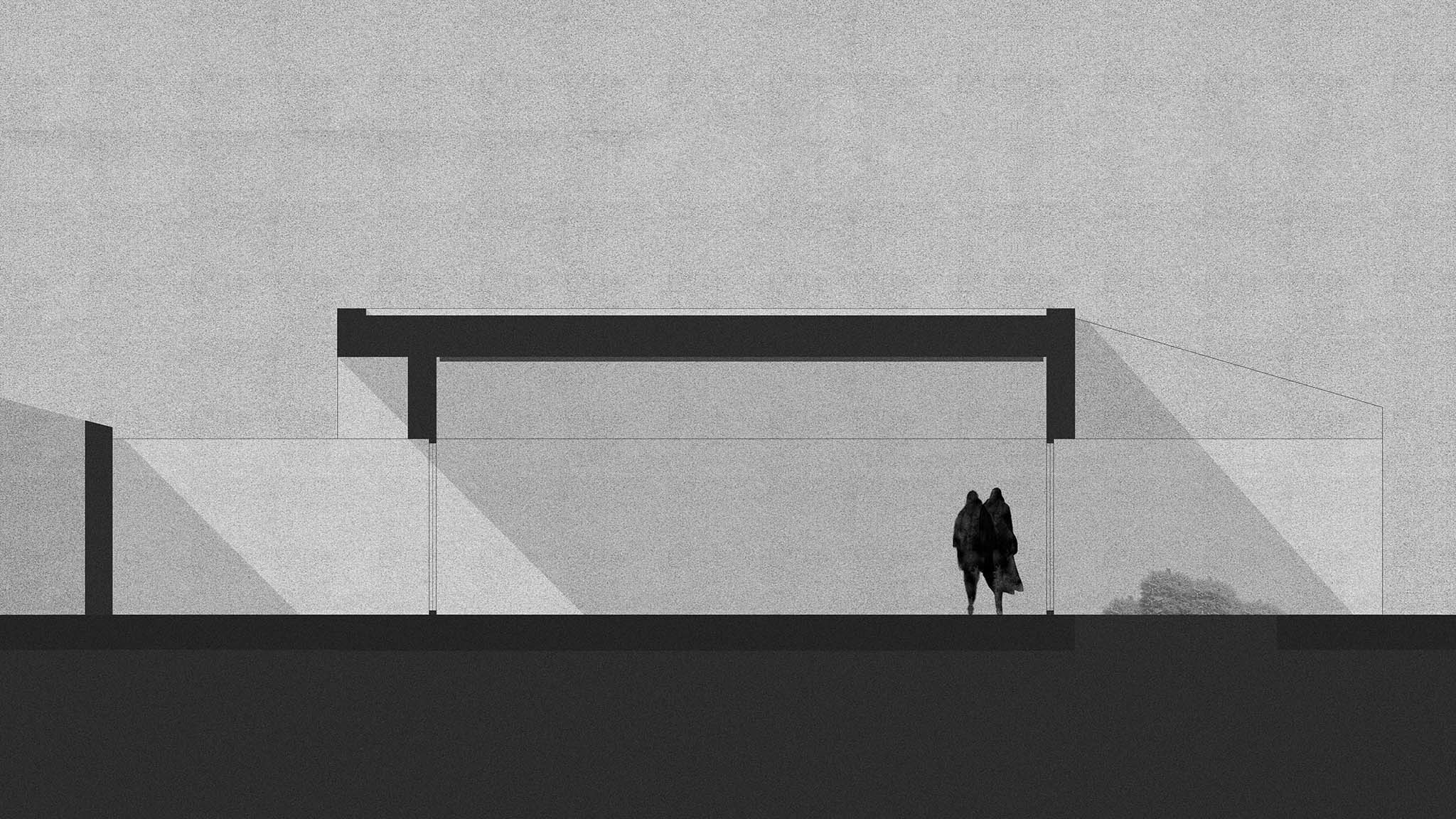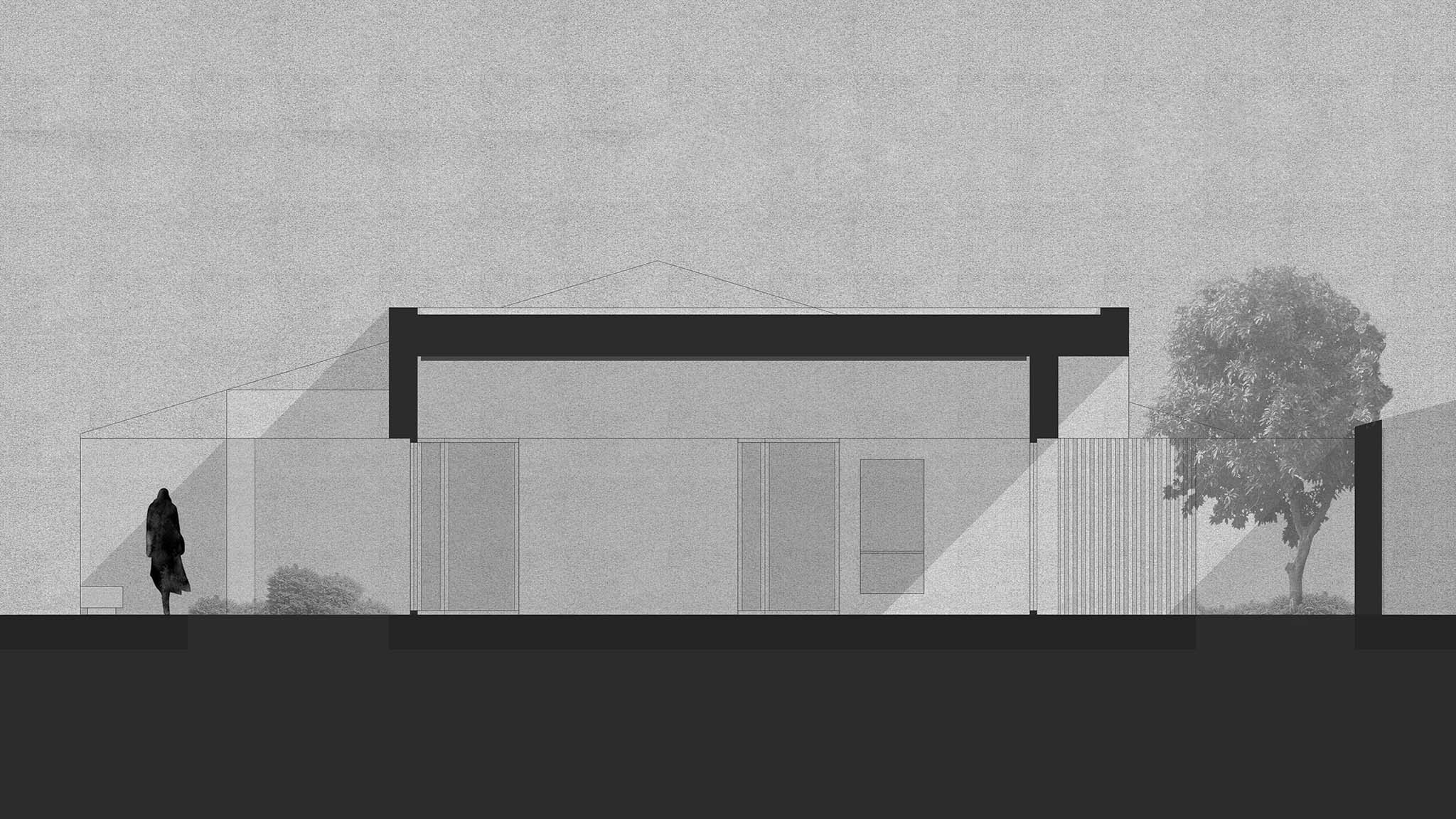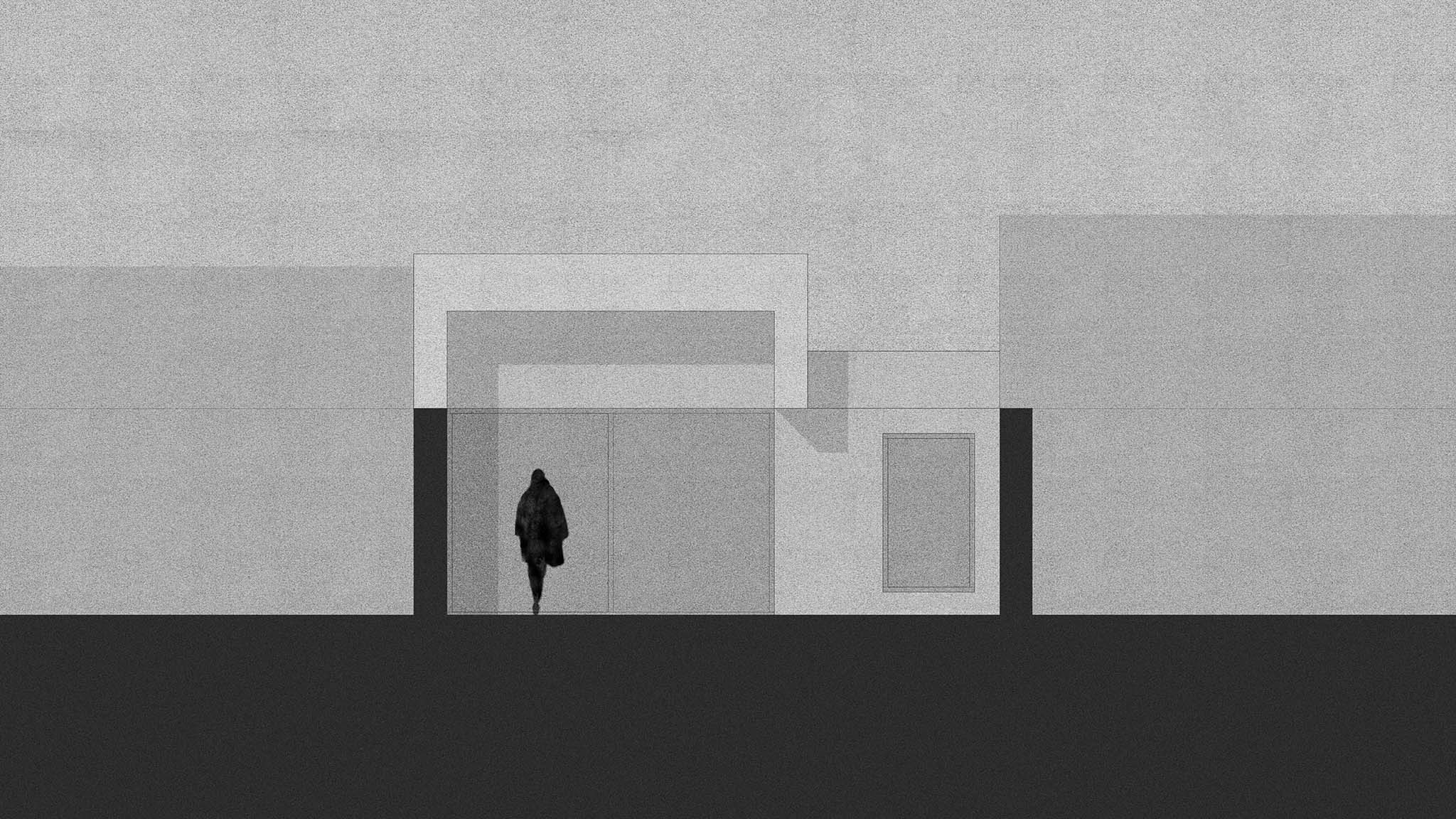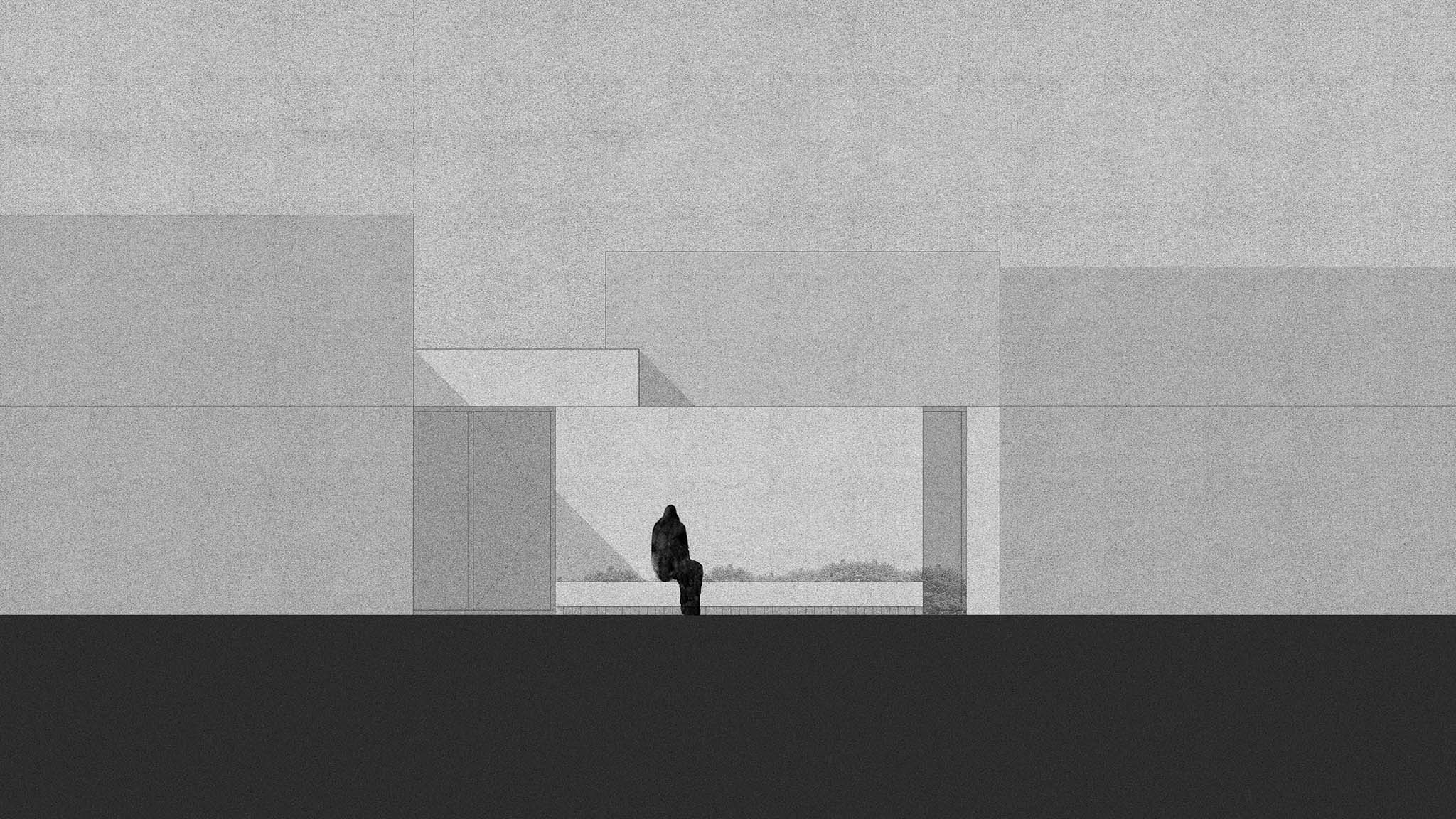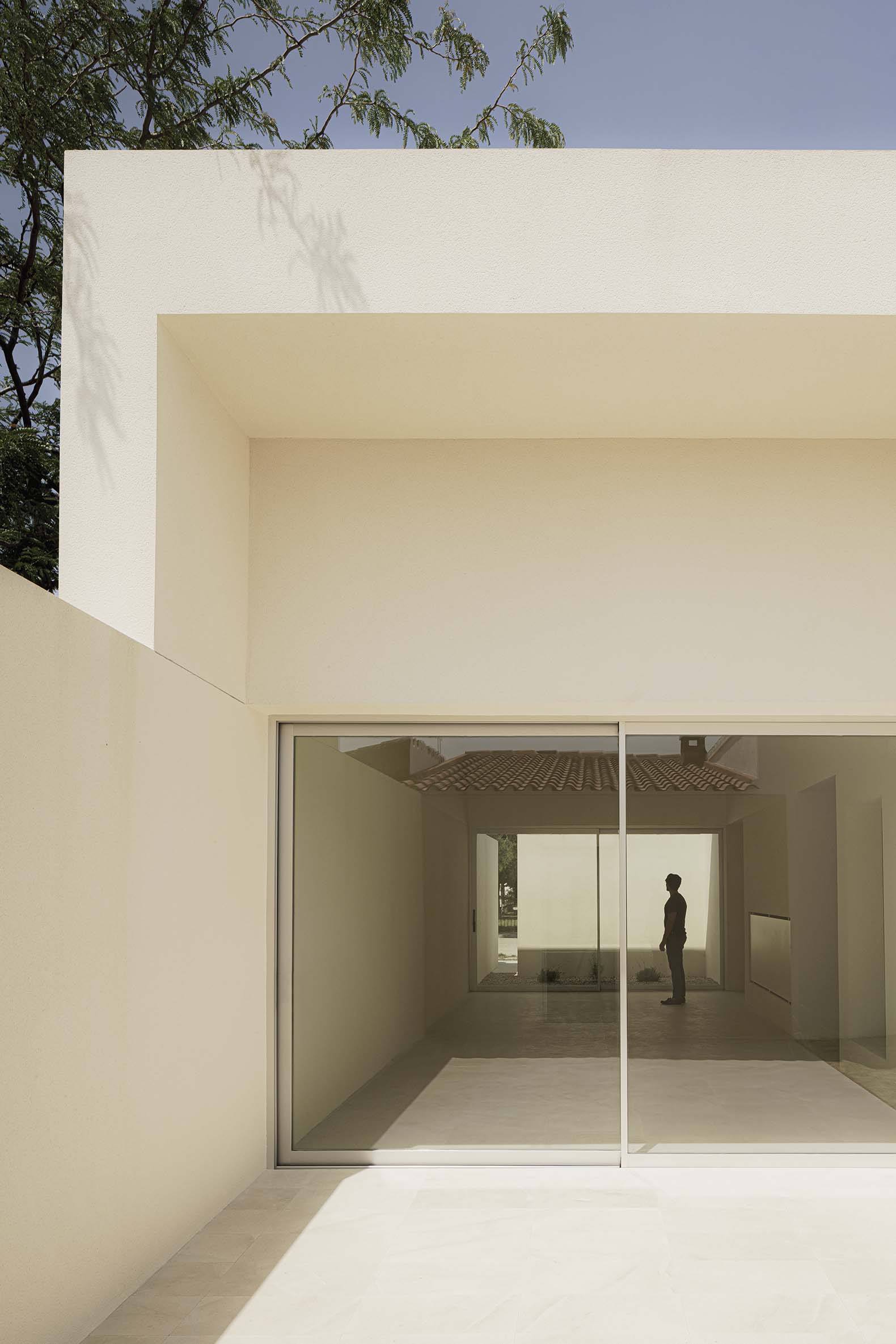
The building, designed by Iterare Architects, is organized into two clearly differentiated volumes. The first, narrow and elongated, acts as a connecting element to the existing school and houses the entrances and service areas. The second, slightly elevated and prominent volume contains the main classroom, conceived as a continuous and luminous space.
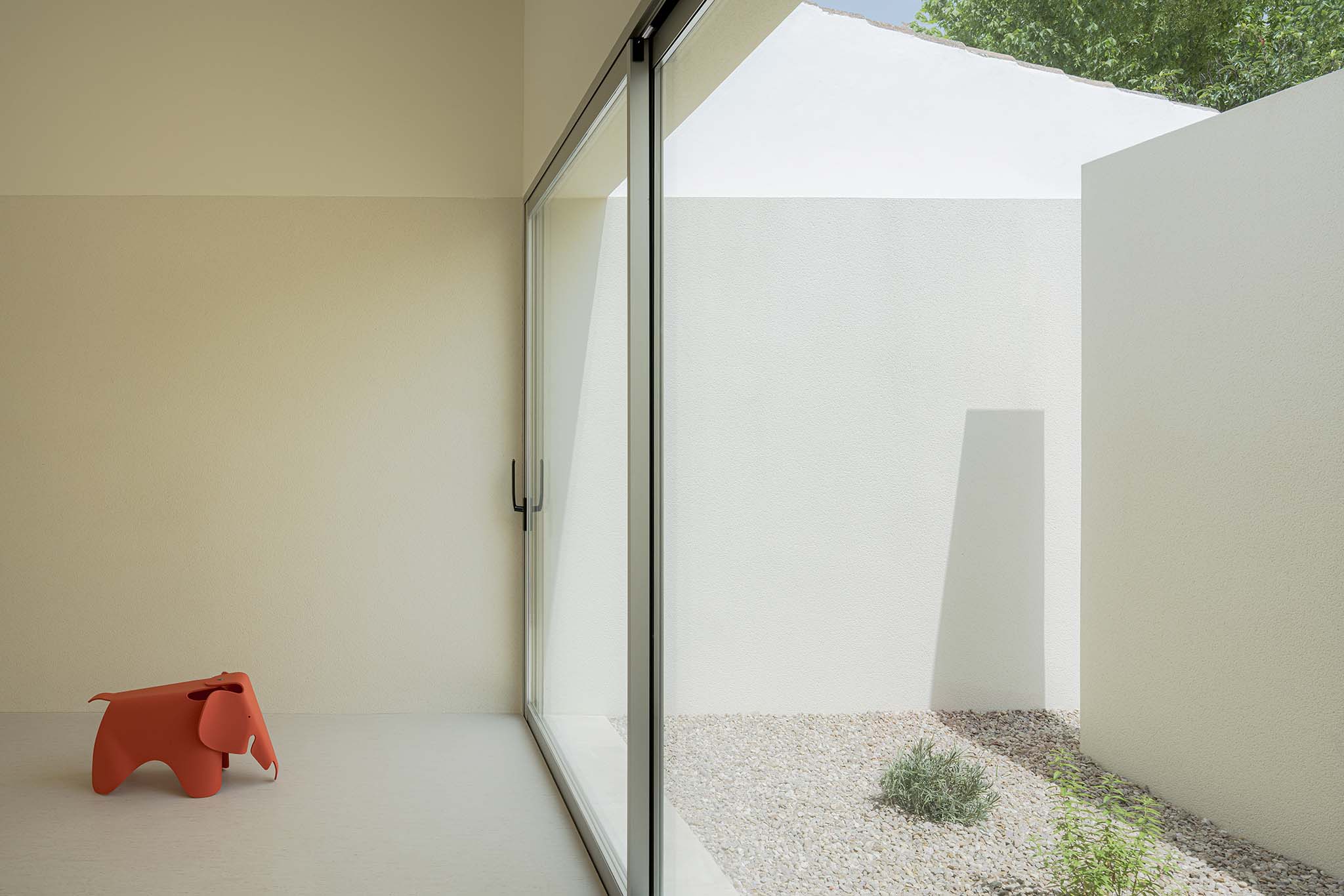
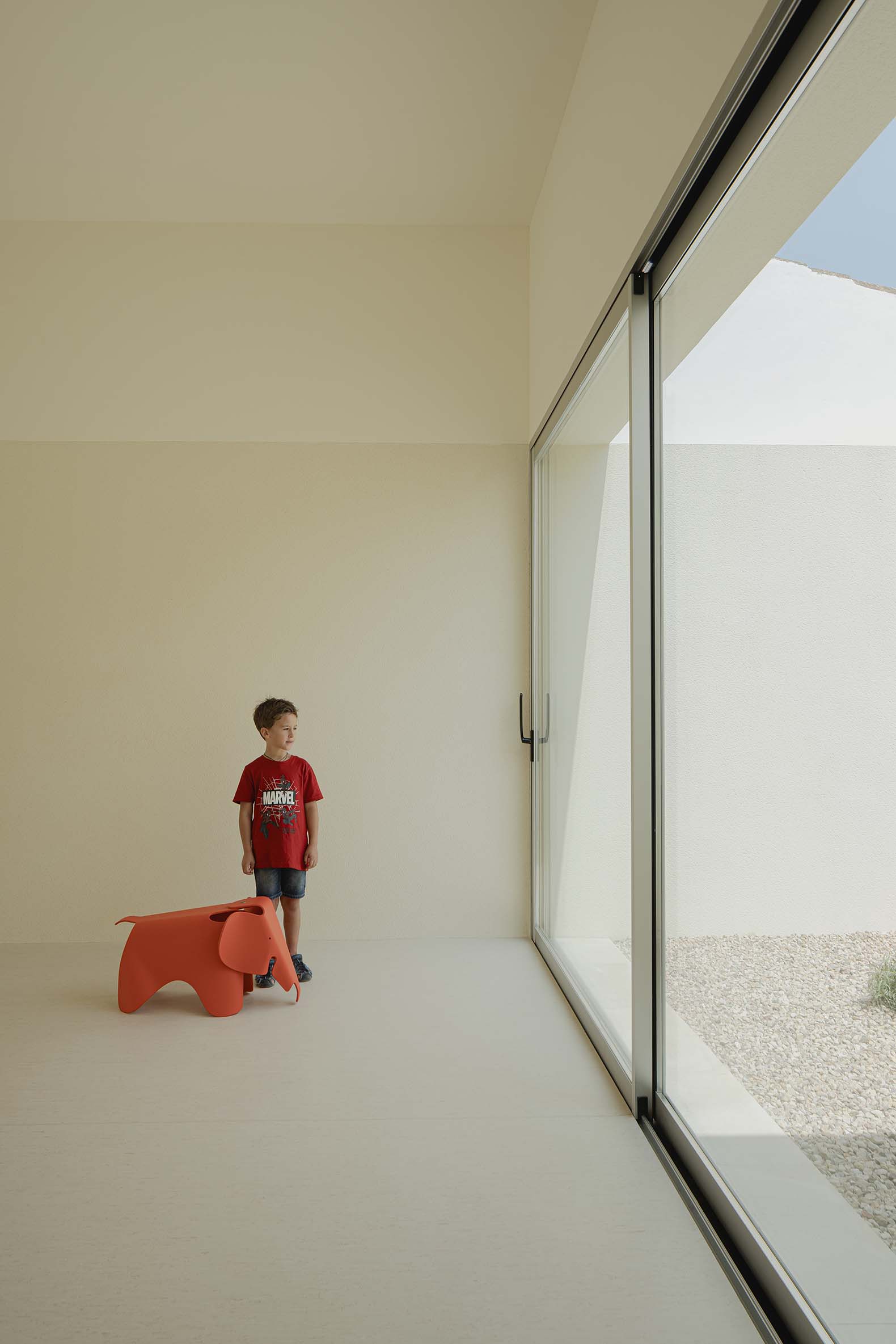
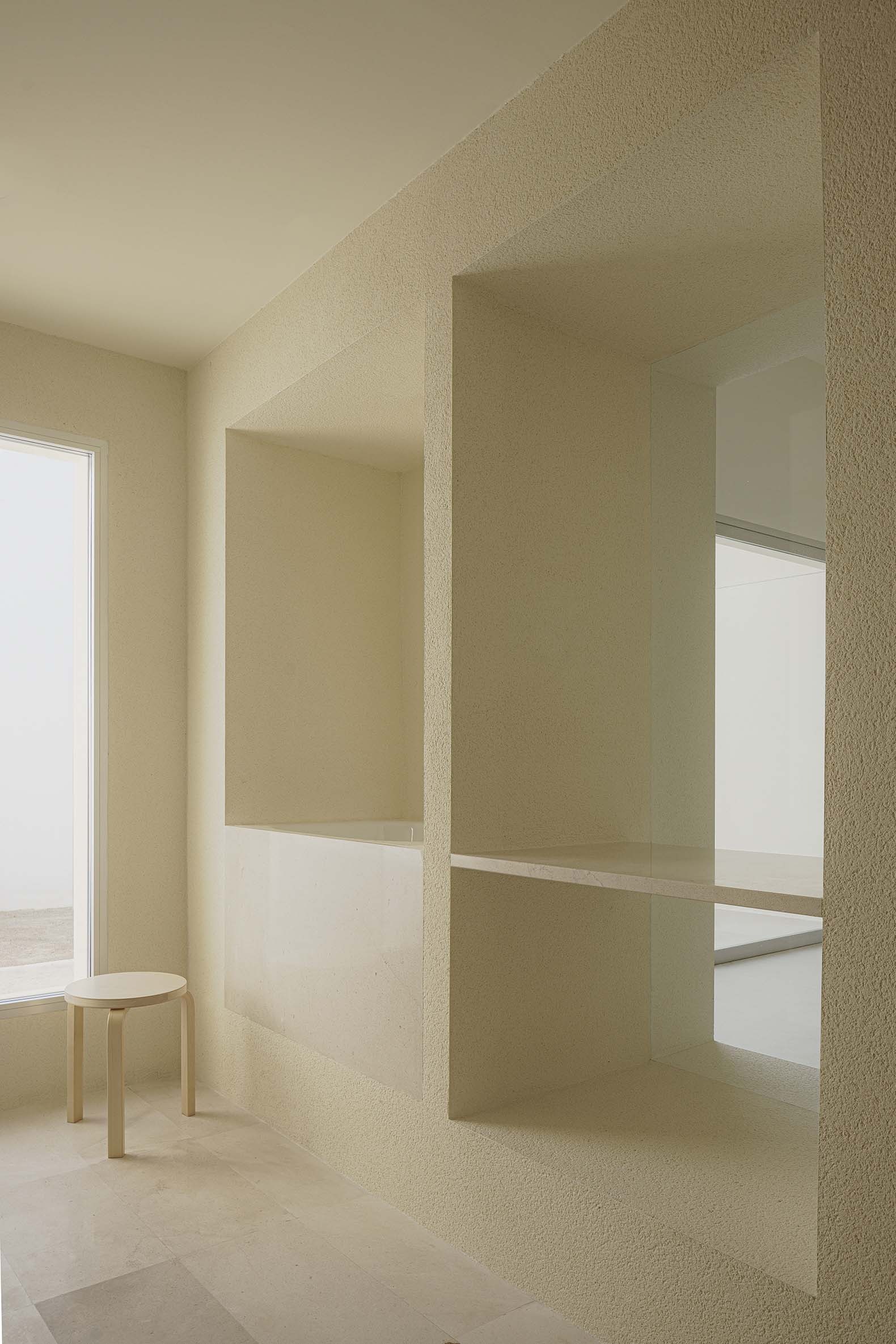
In terms of construction, the project favors simple and precise systems that reinforce the overall clarity. Large expanses of glass maximize the entry of natural light and establish a direct connection between interior and exterior, while the structure and cladding respond to a logic of efficiency and durability.
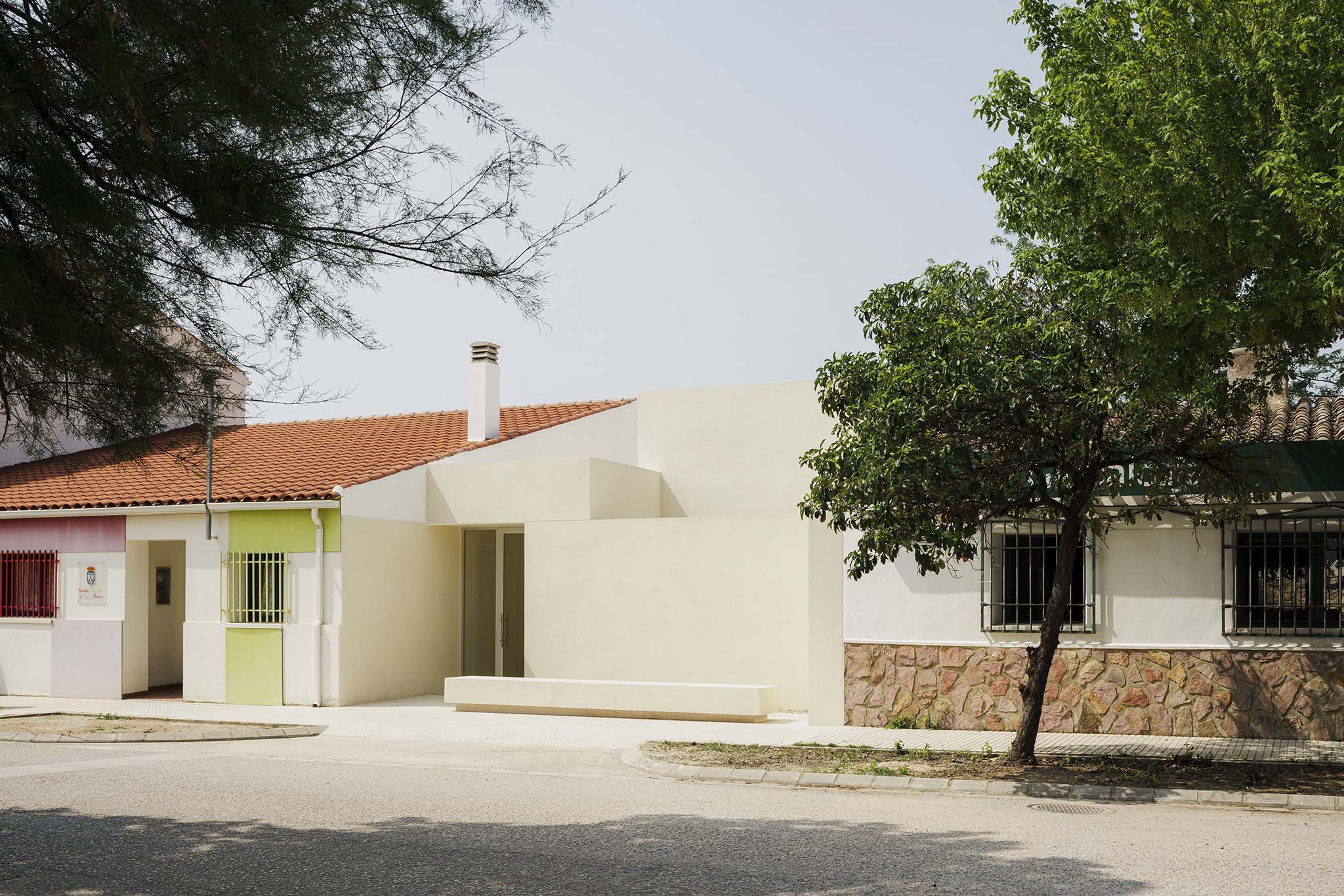
School in Aguas Nuevas by Iterare architects. Photograph by David Zarzoso.
Project description by Iterare Architects
Just a few kilometers from the city of Albacete, in one of the villages built in the 1960s by the National Institute of Colonization, this unique building serves as an annex to the existing Aguas Nuevas nursery school.
It is a simple building whose form is dictated almost entirely by the few rooms it contains. Consequently, only two volumes comprise the composition: the first, narrower and longer, connects to the existing building and houses the entrance and service areas; and the second, the main volume, rises above the rest with the sole purpose of offering the children a new kind of space—an original, unprecedented, and unfamiliar place in which to develop their activities.
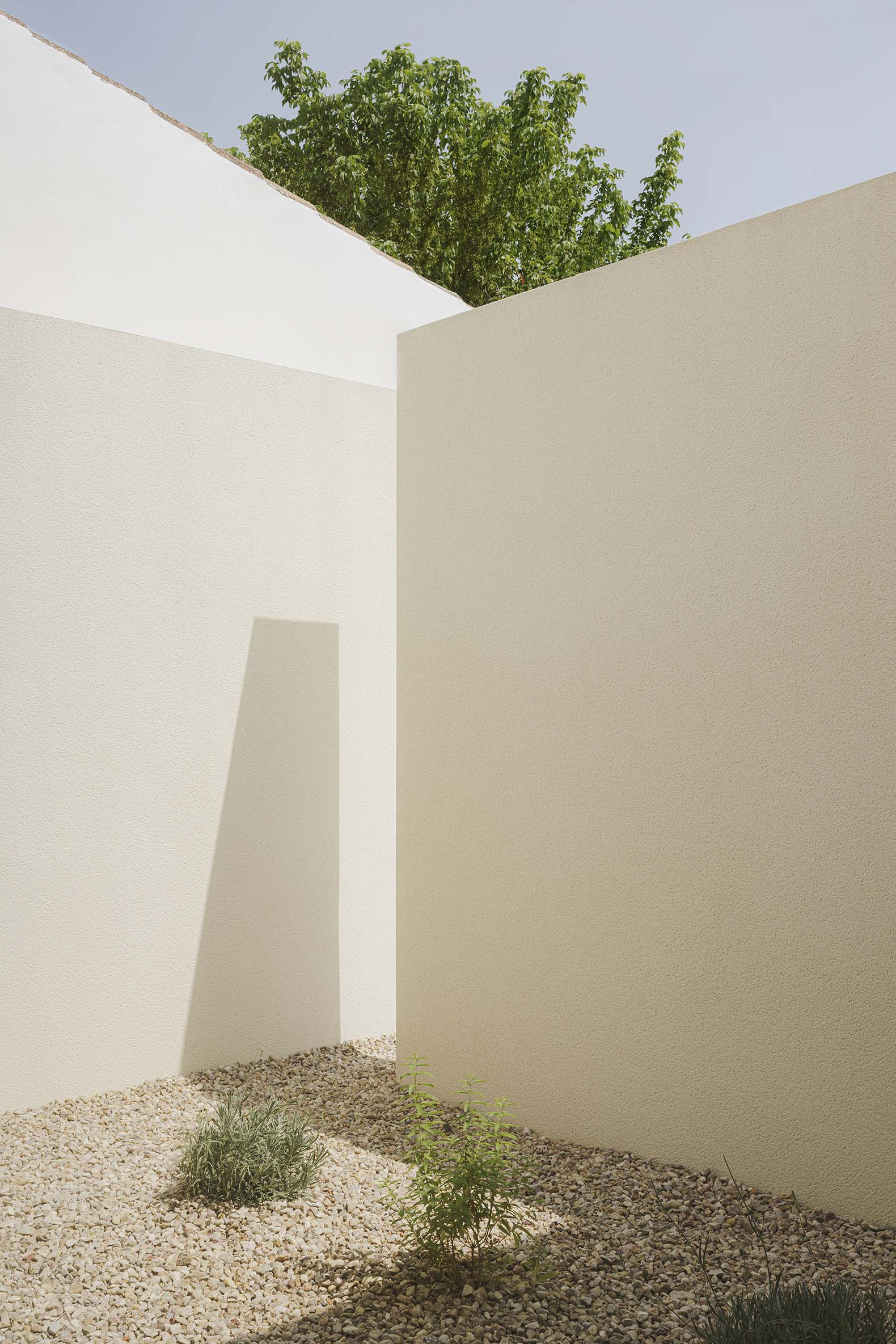
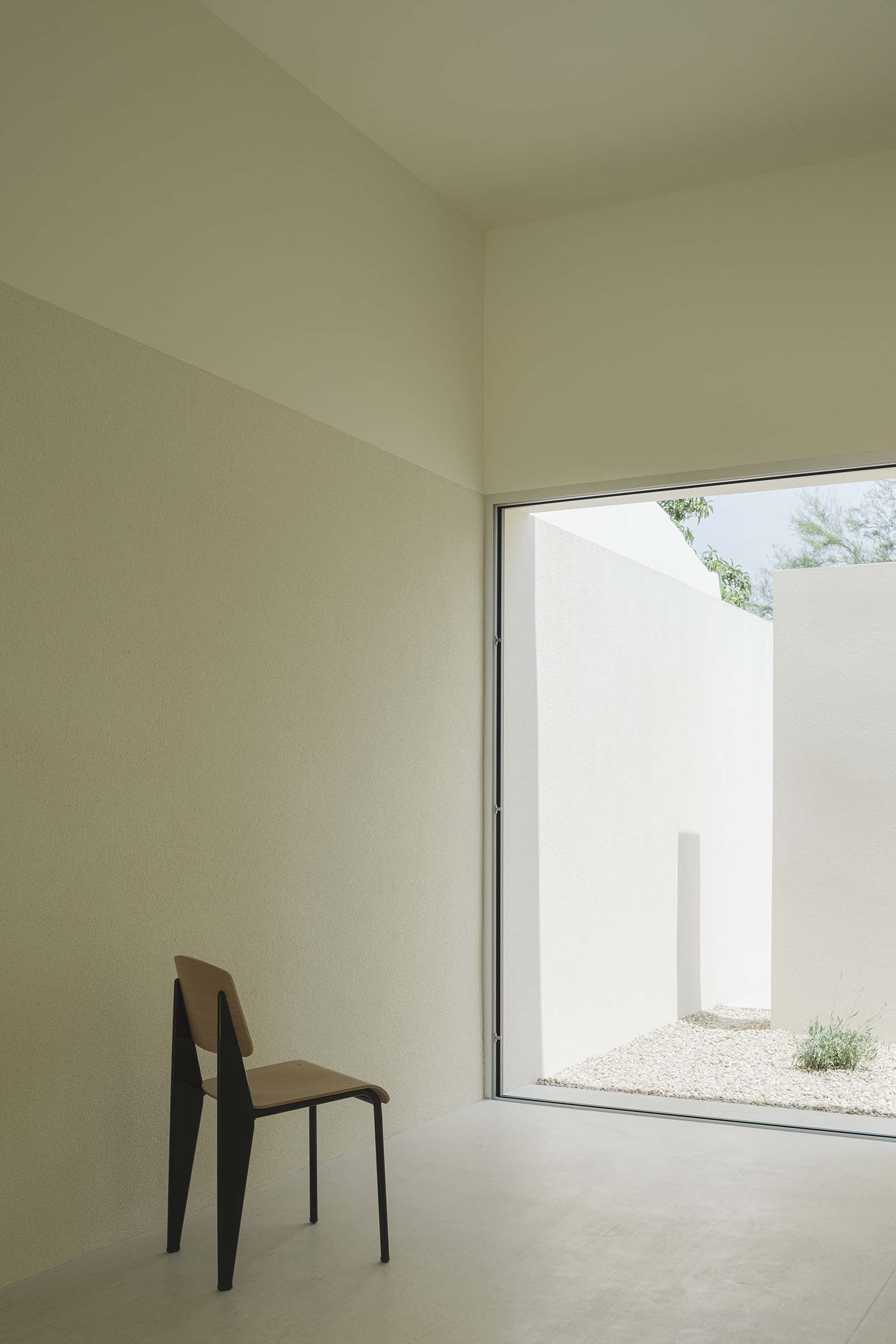
It seems natural, therefore, that from a spatial perspective, this classroom is the most representative space of the project. Hence, its position is set back from the facade to place it between two courtyards: a rear courtyard, facing south, intended for the children's play; And another front yard, reclaimed from the street, where vegetation can grow.
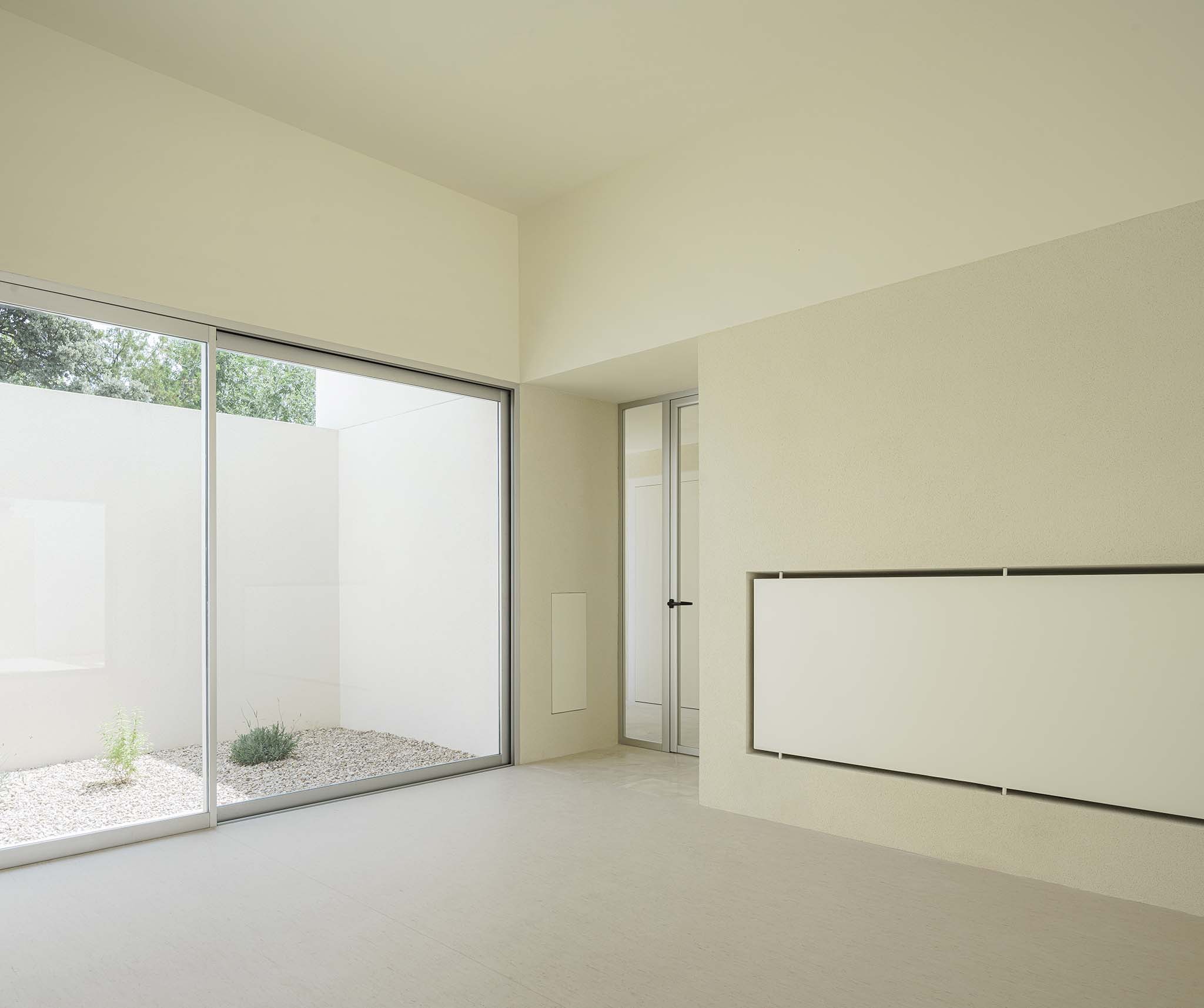
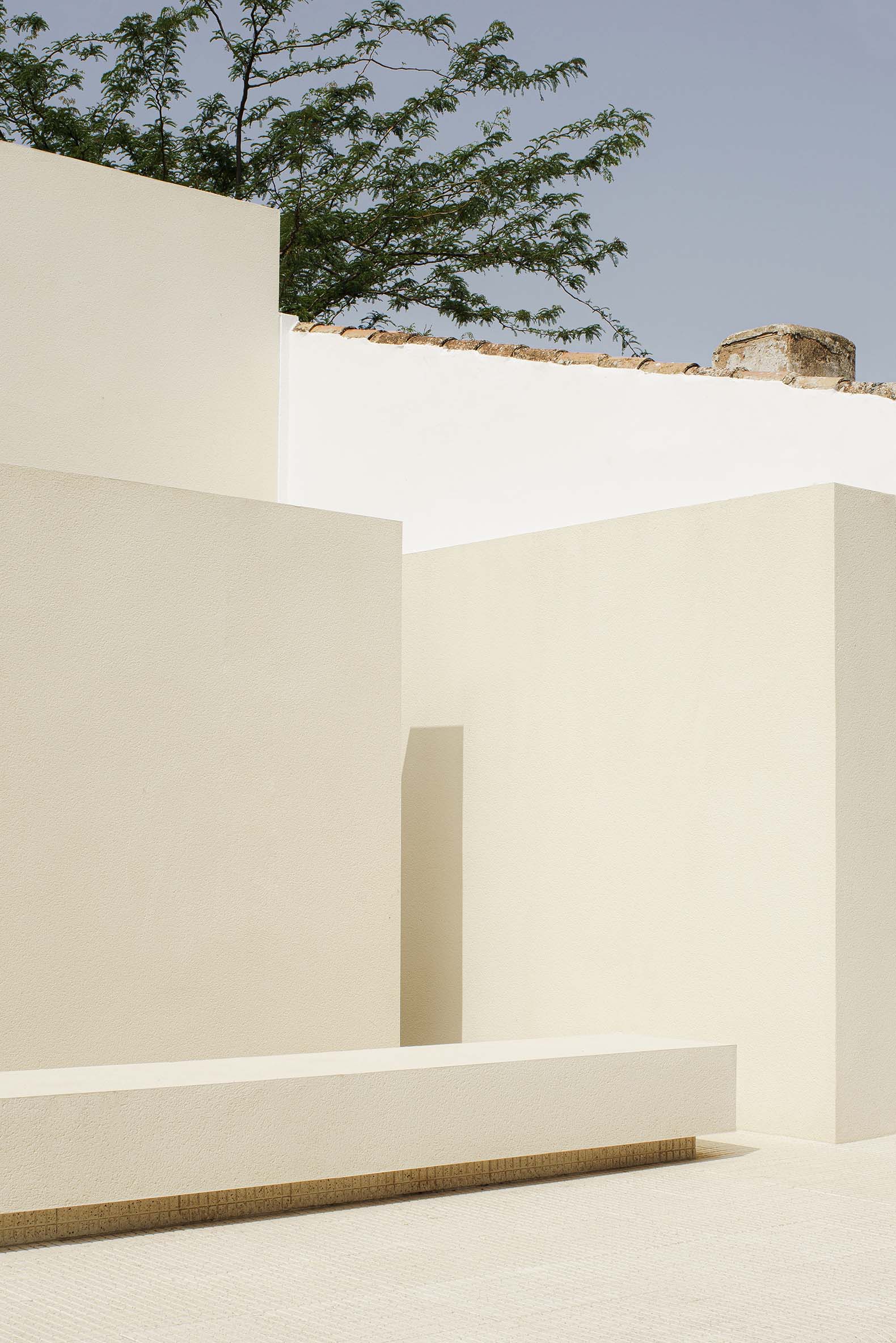
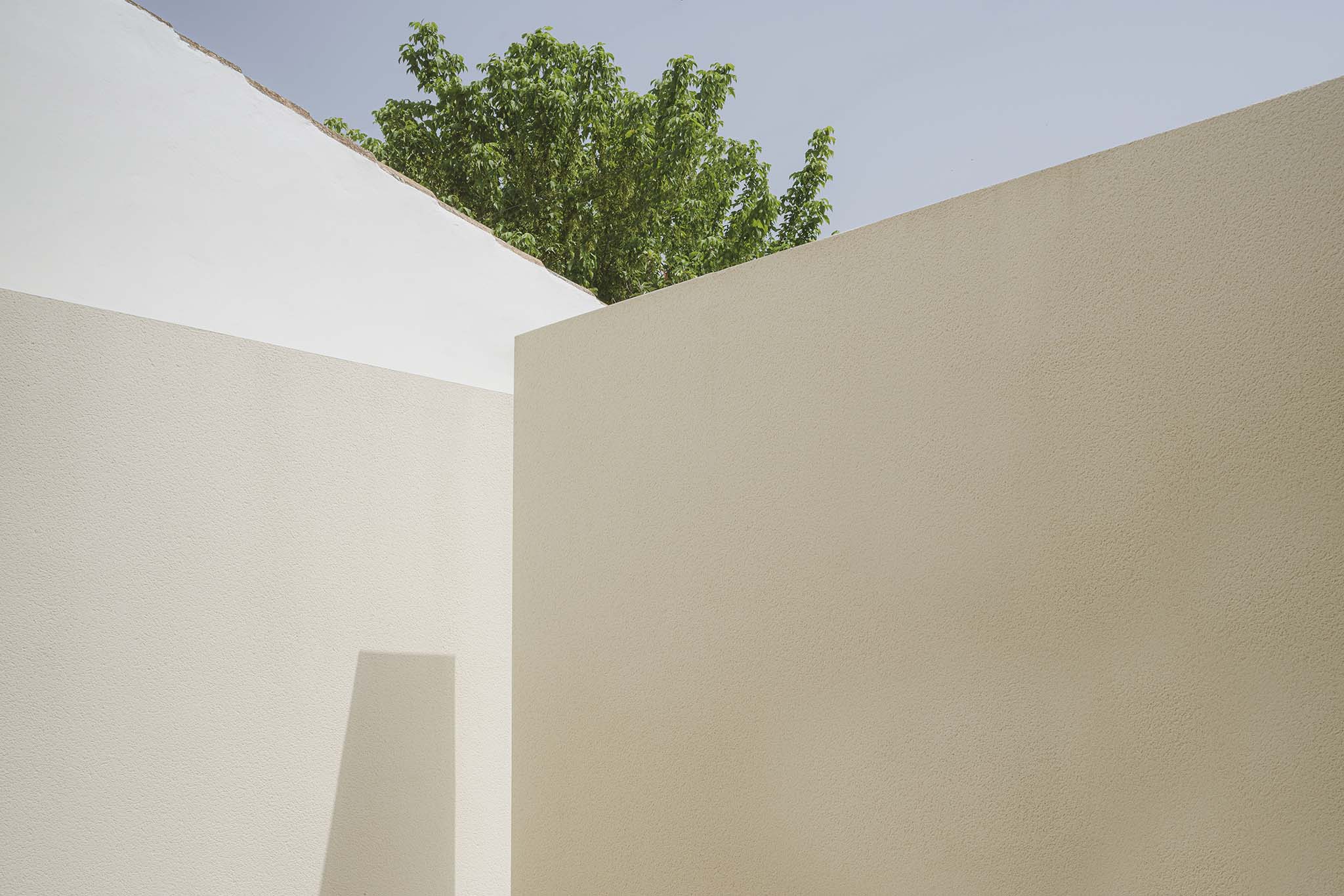
A large, light-filled space from which children can unconsciously observe the movement of the shadows the building casts across its surfaces. All of this is visible through the two large windows that precisely capture the day's constant changes.
On the facade, and in compliance with the setback required by regulations, the building also incorporates a new seating area for the town's residents. A kind of public bench where passersby can rest and parents can wait for their children to come out.