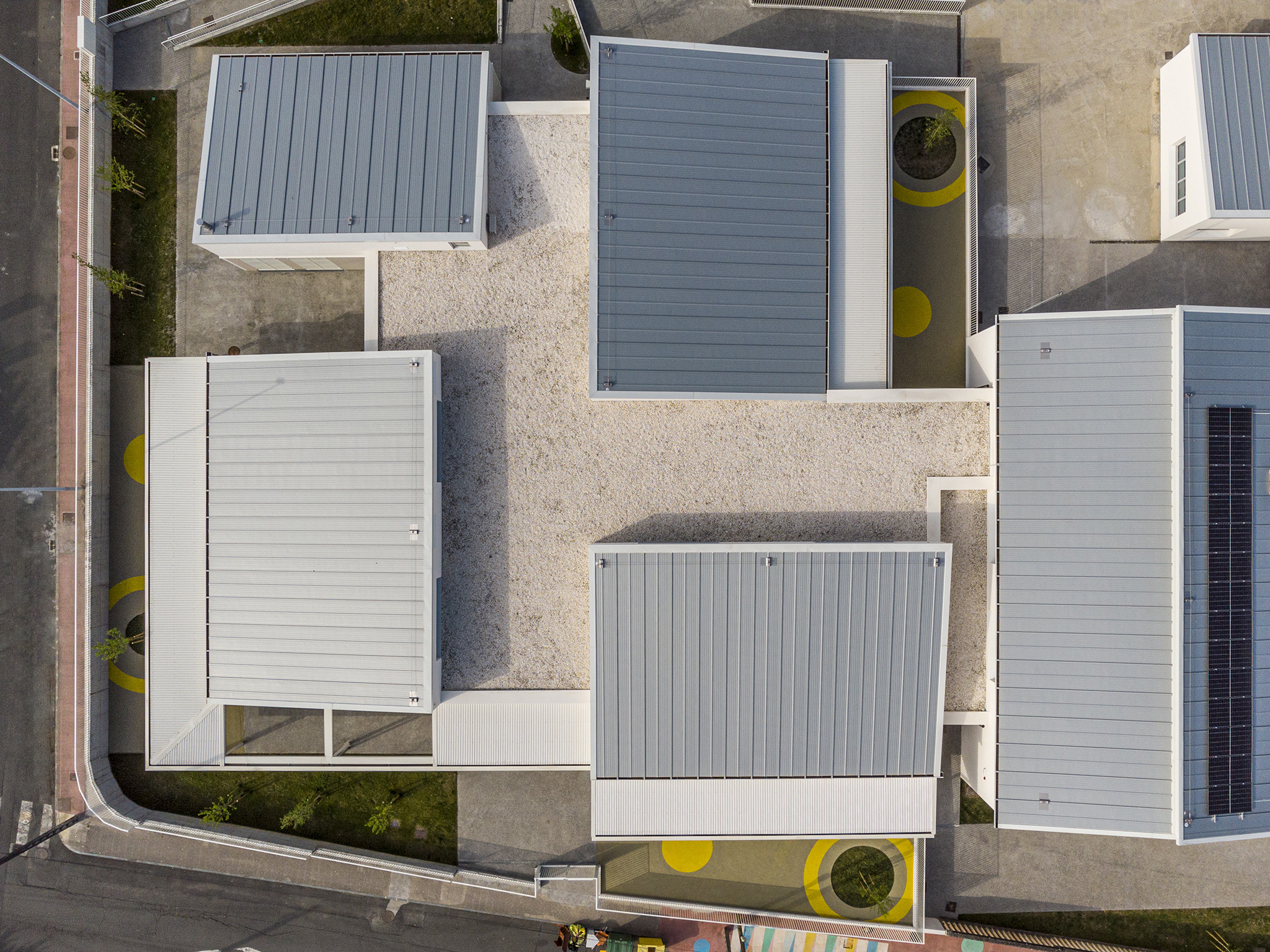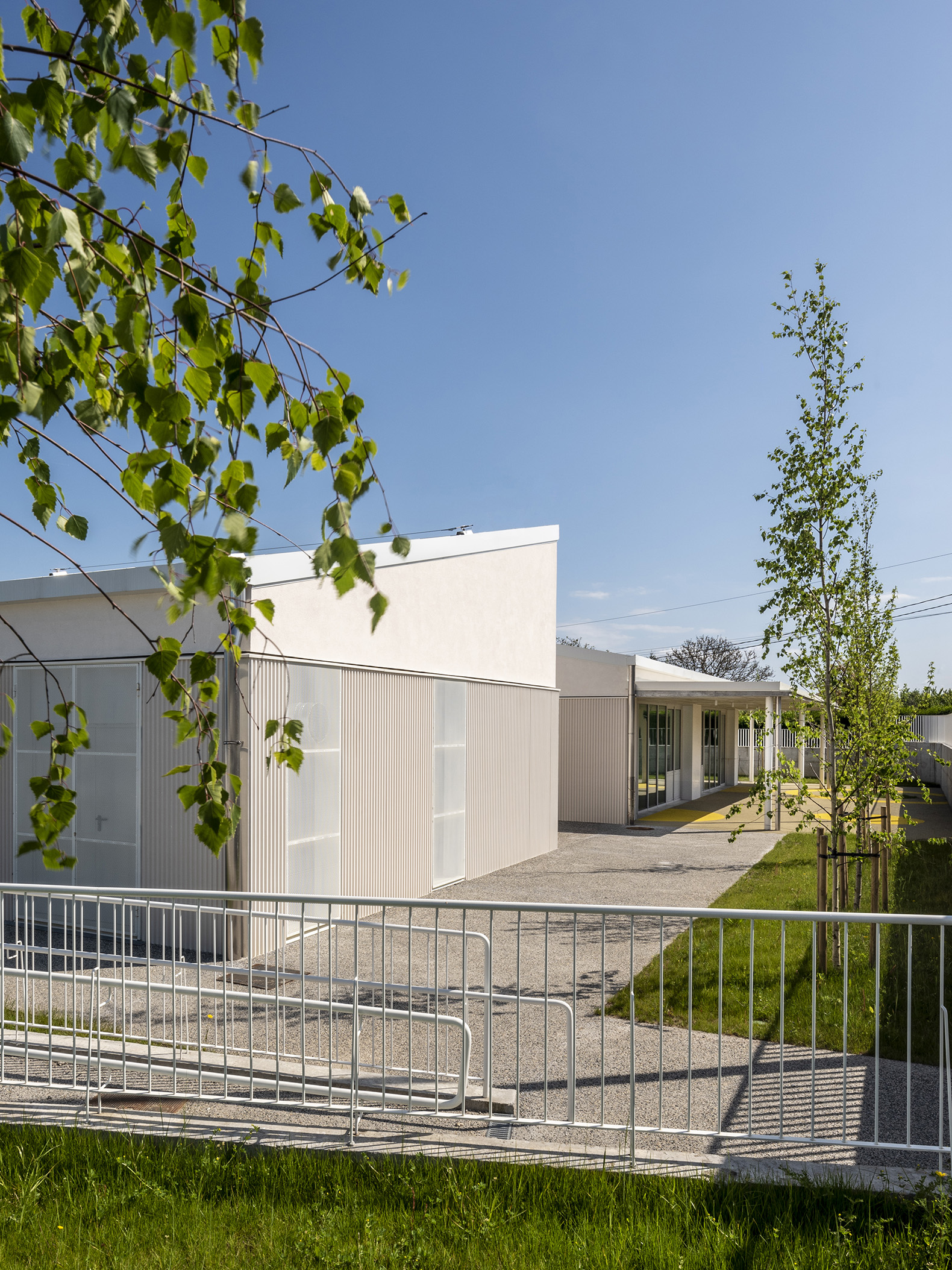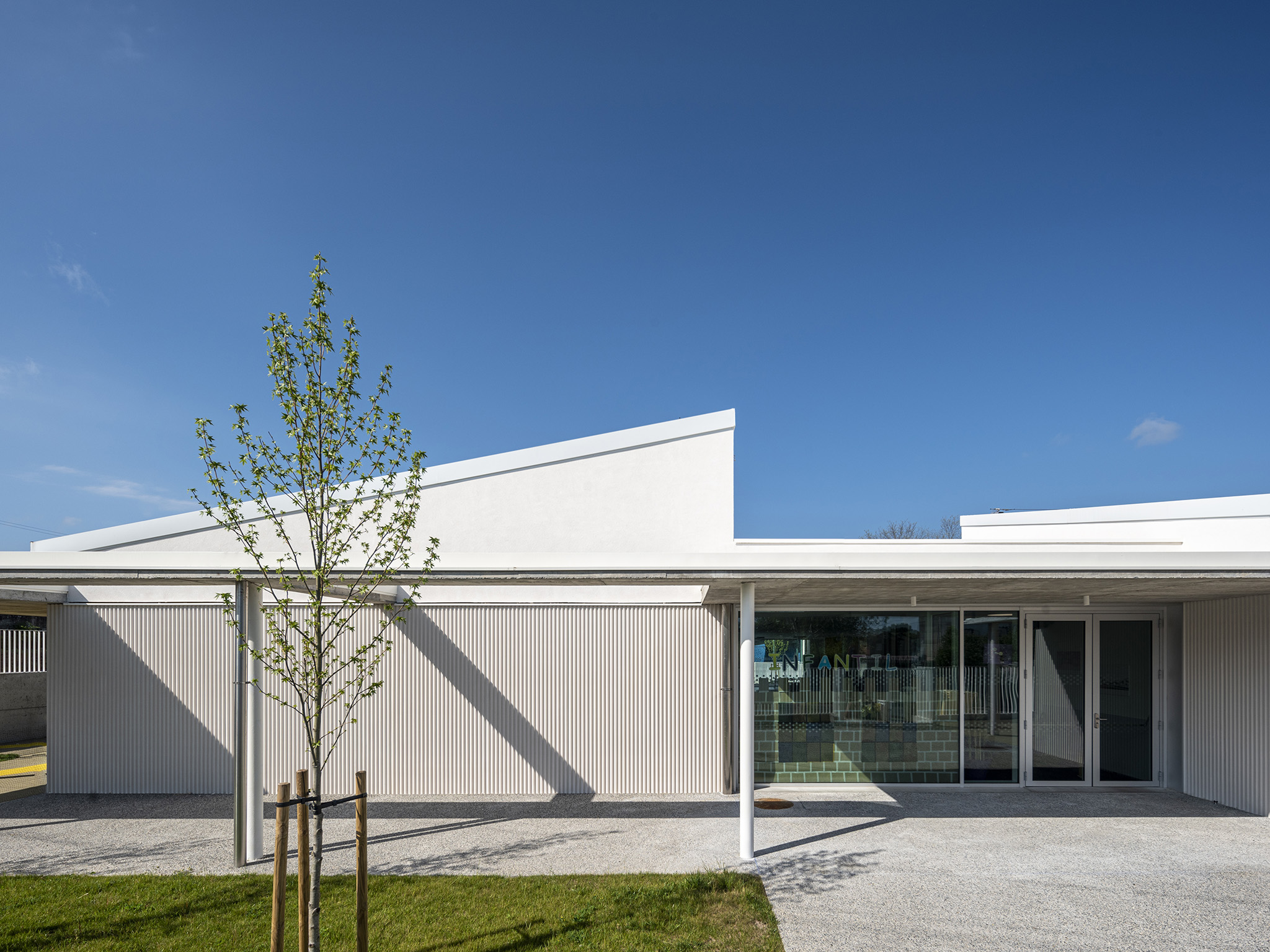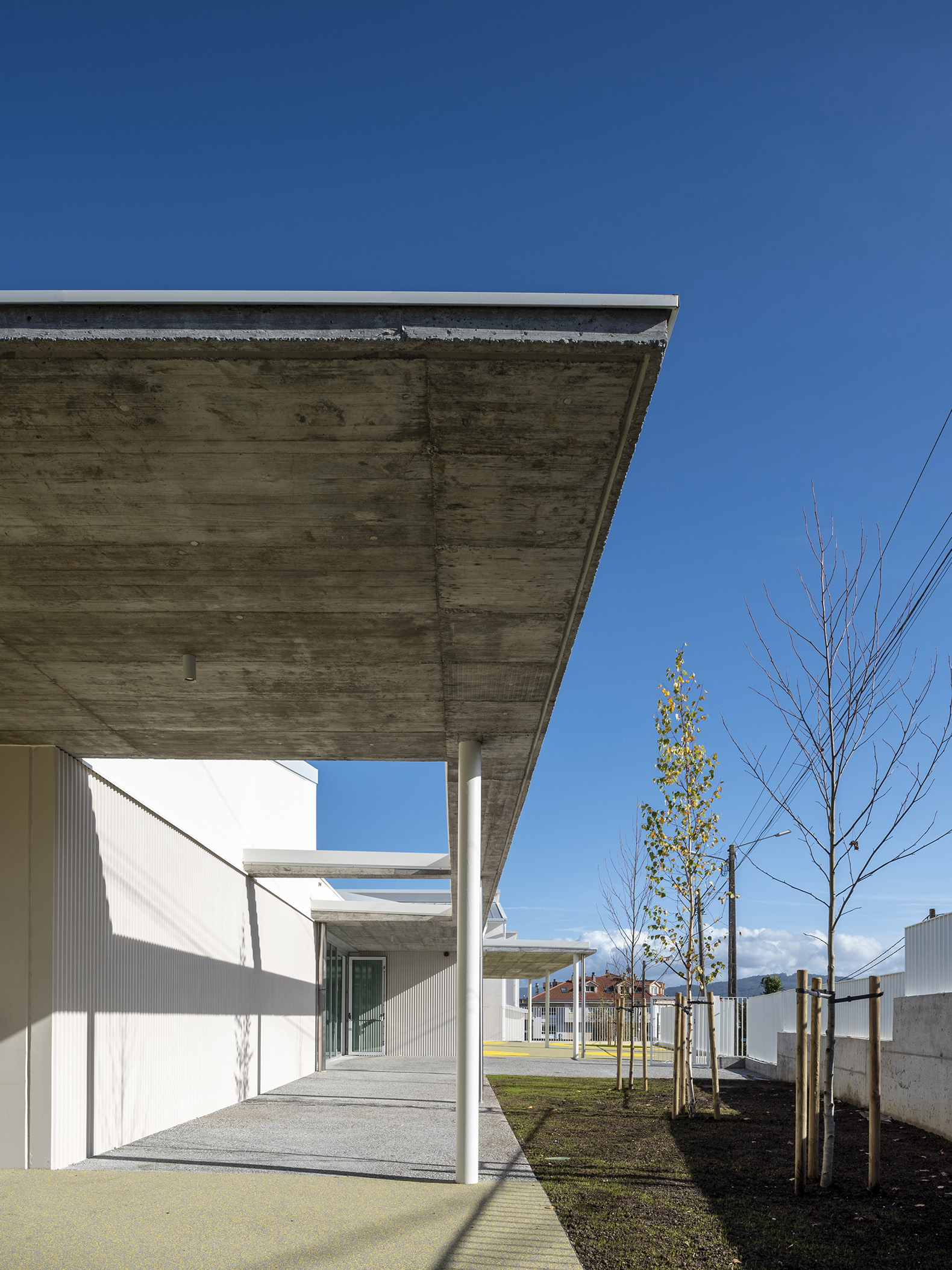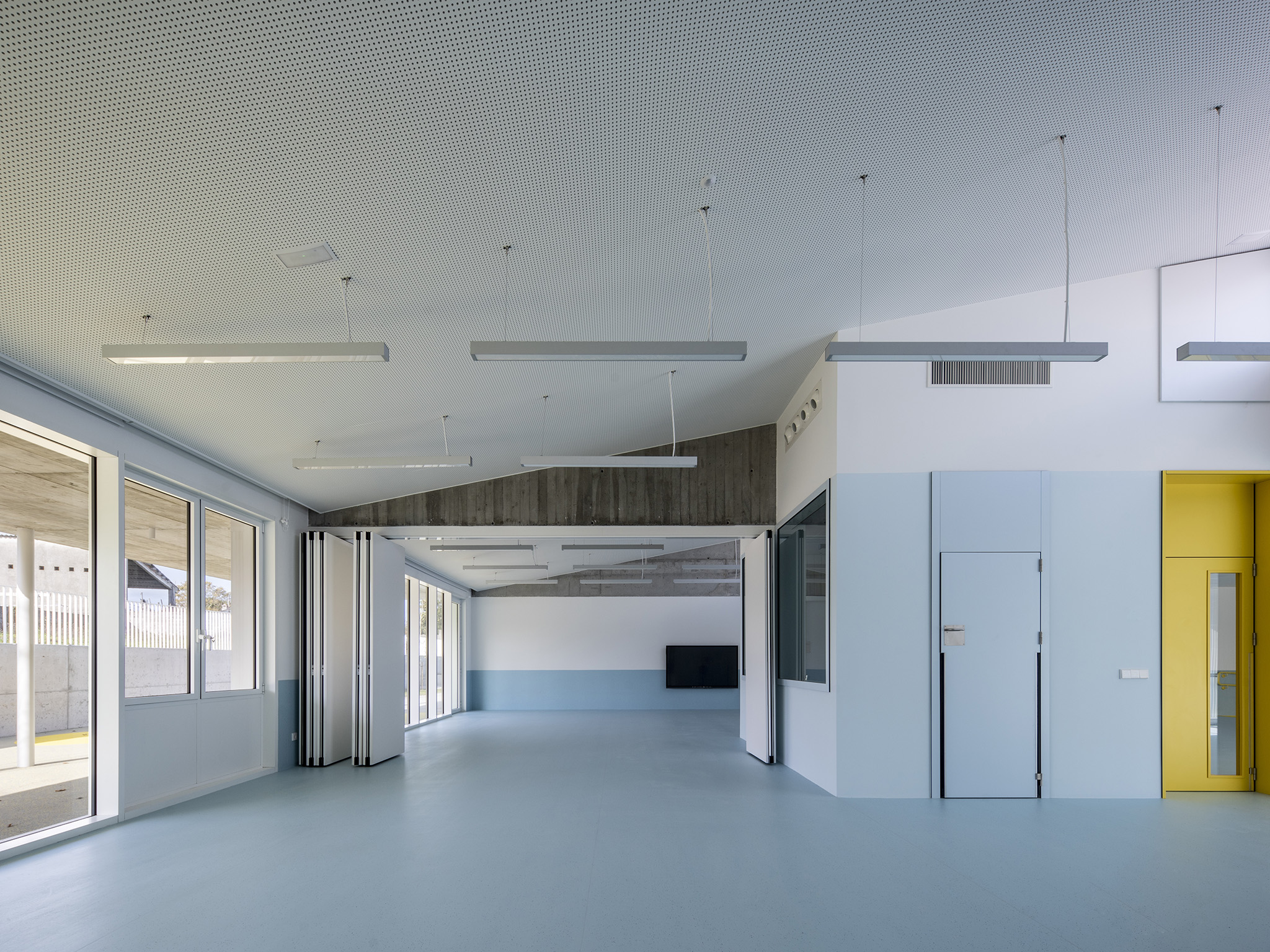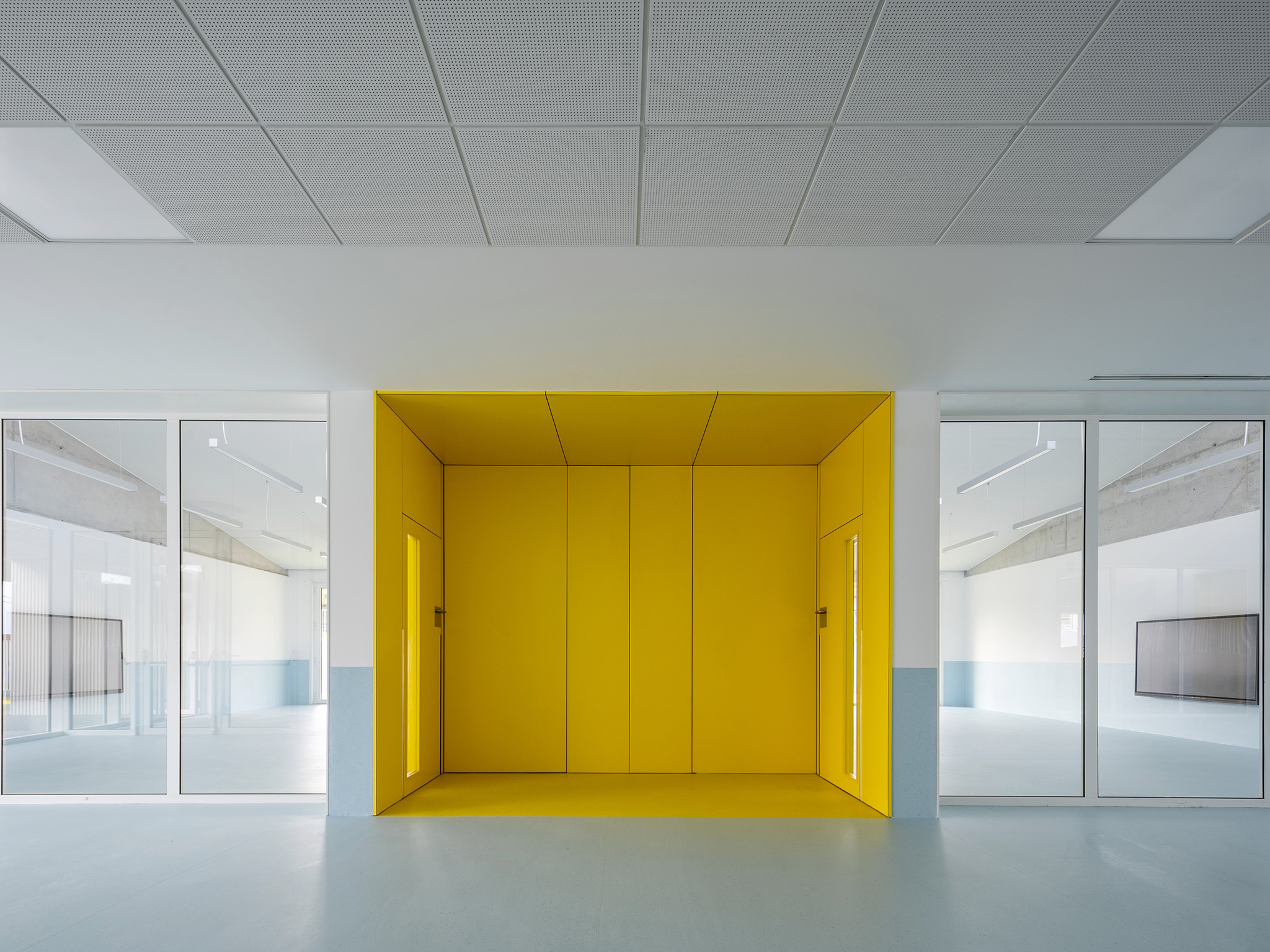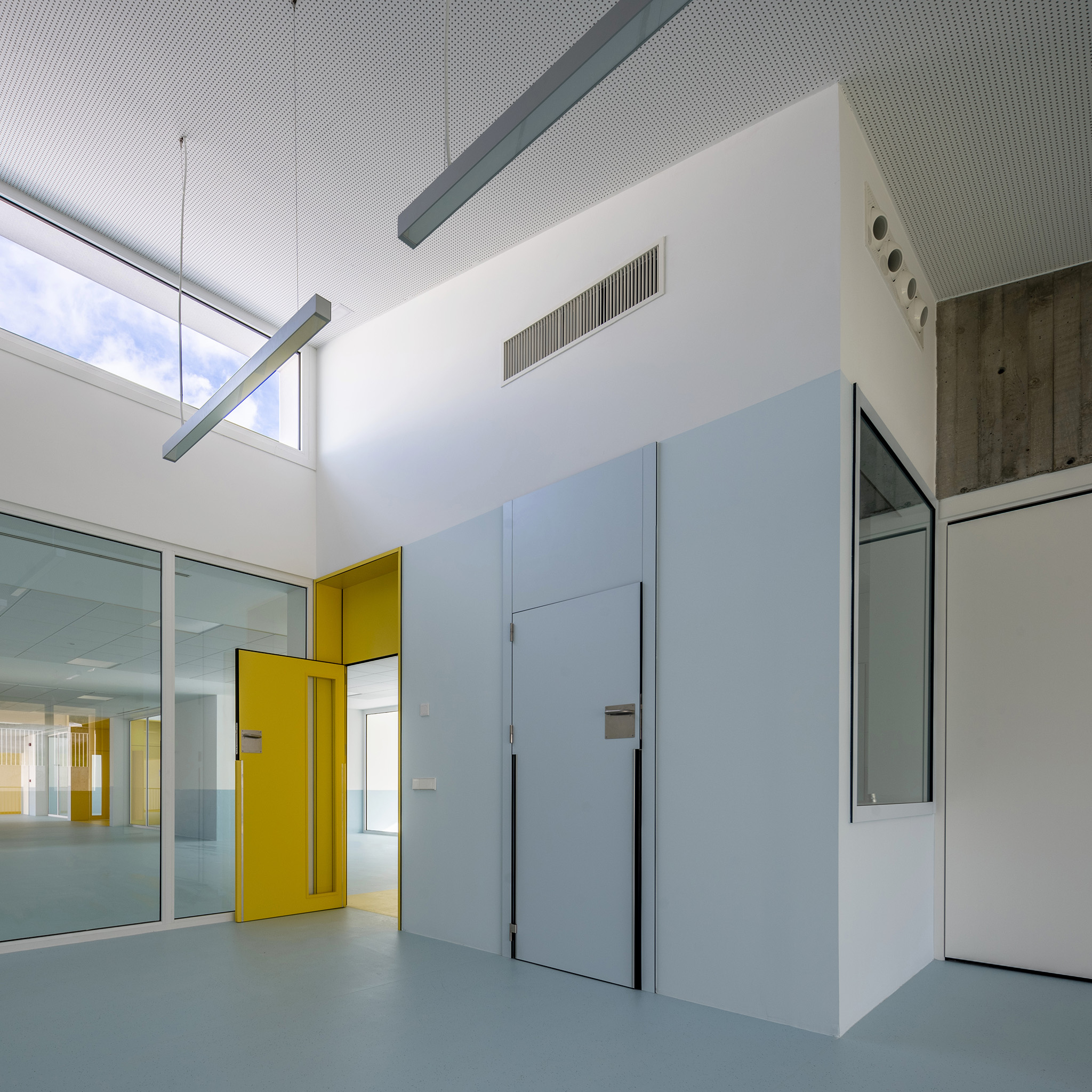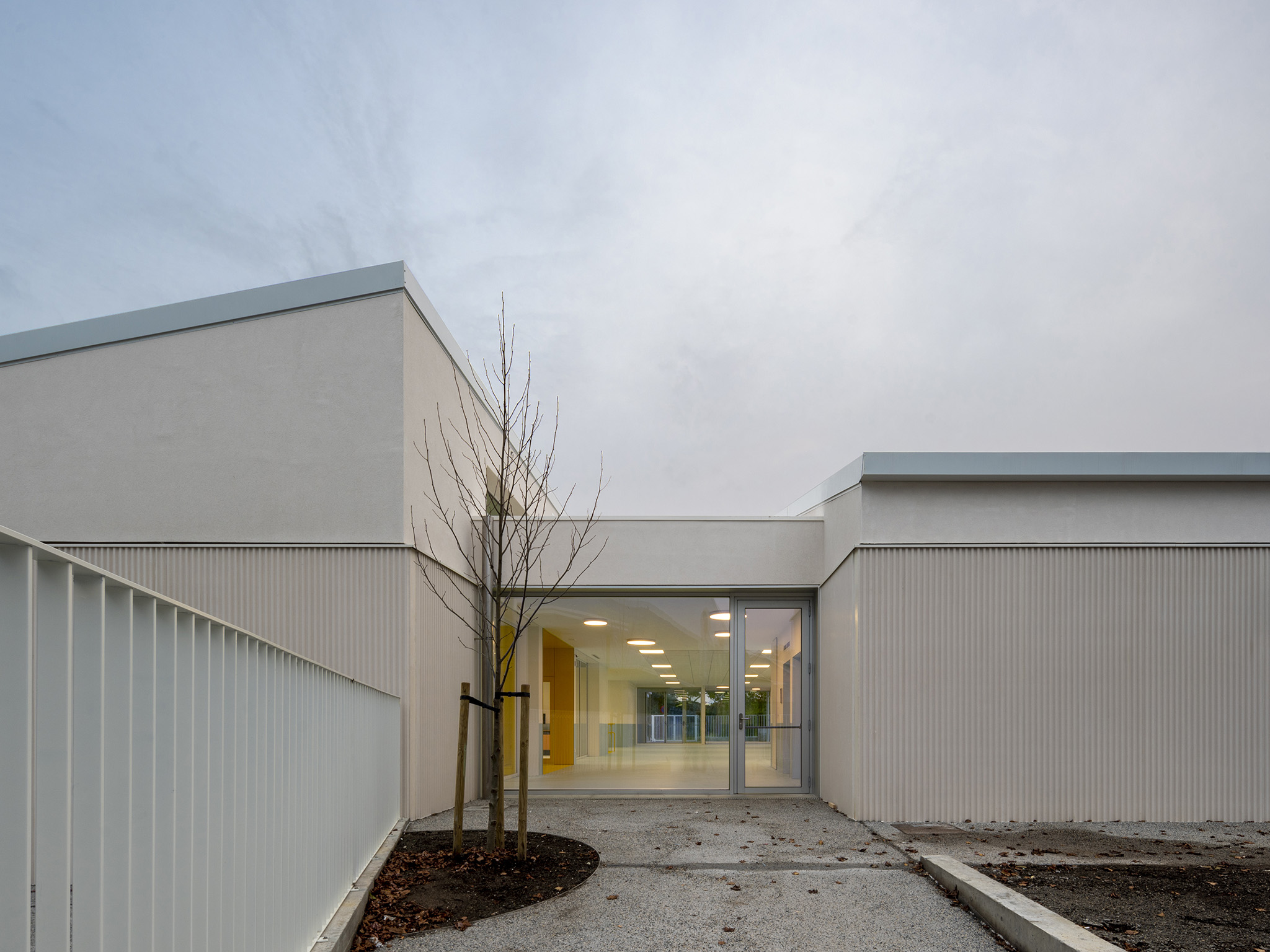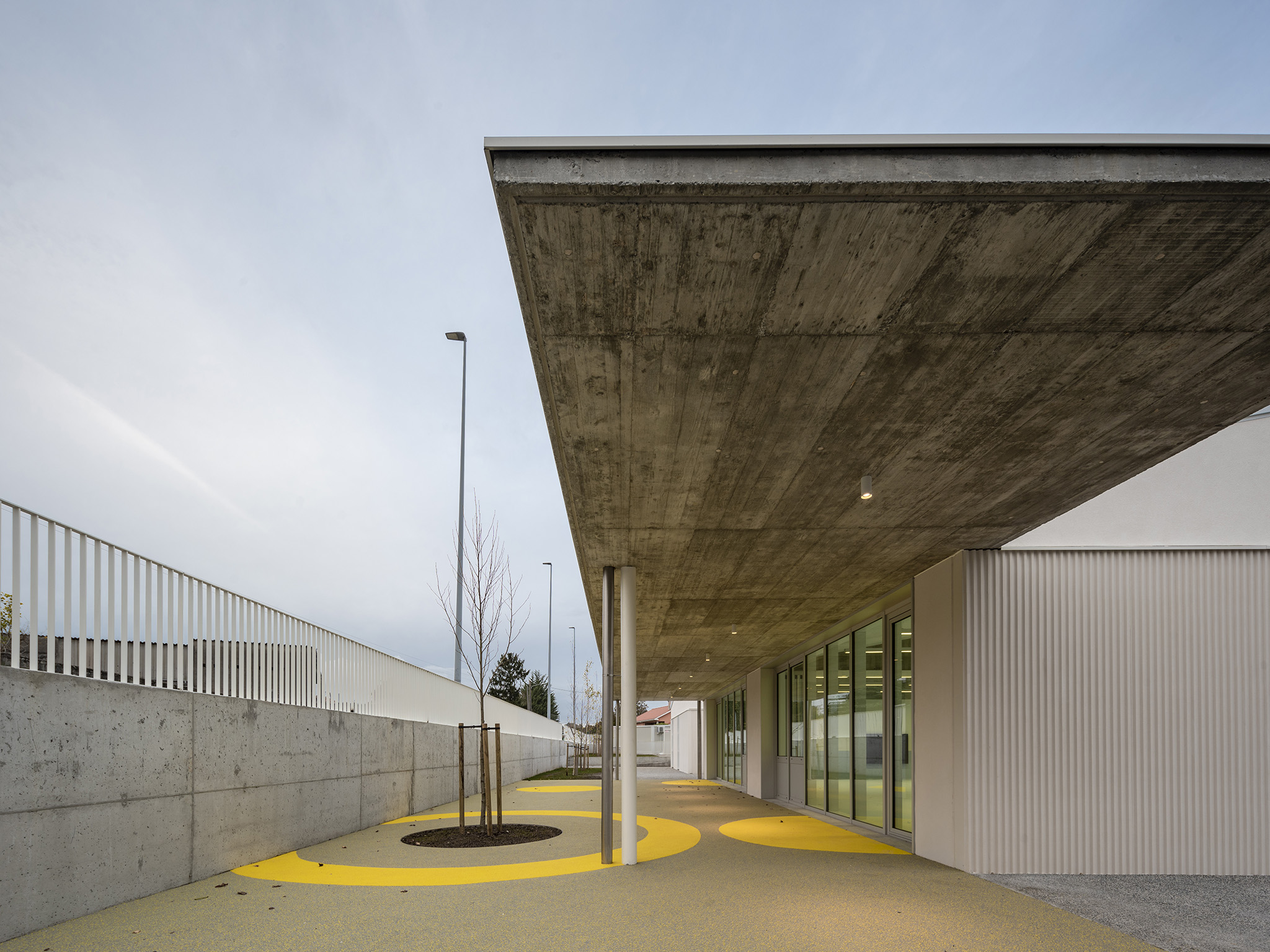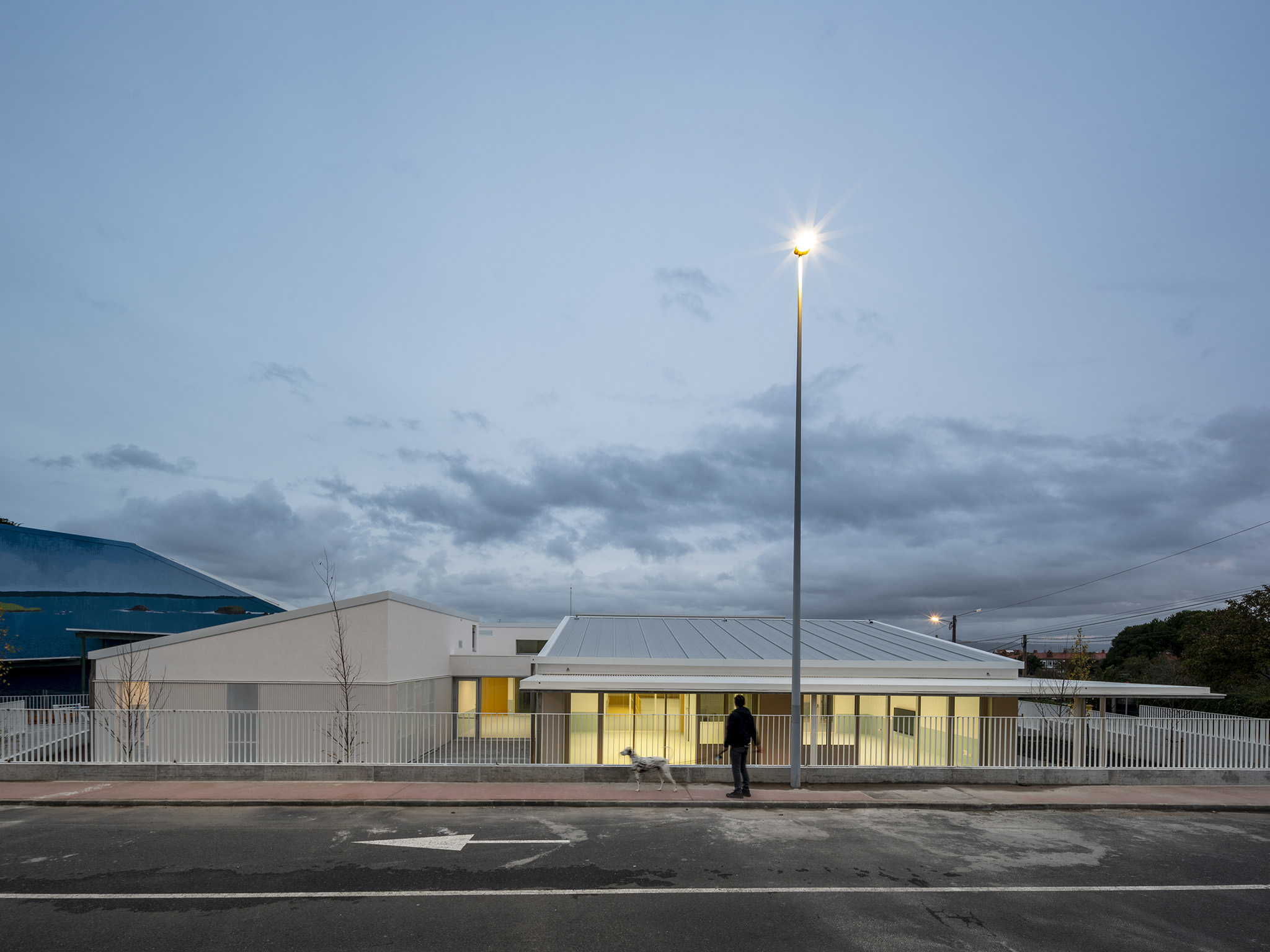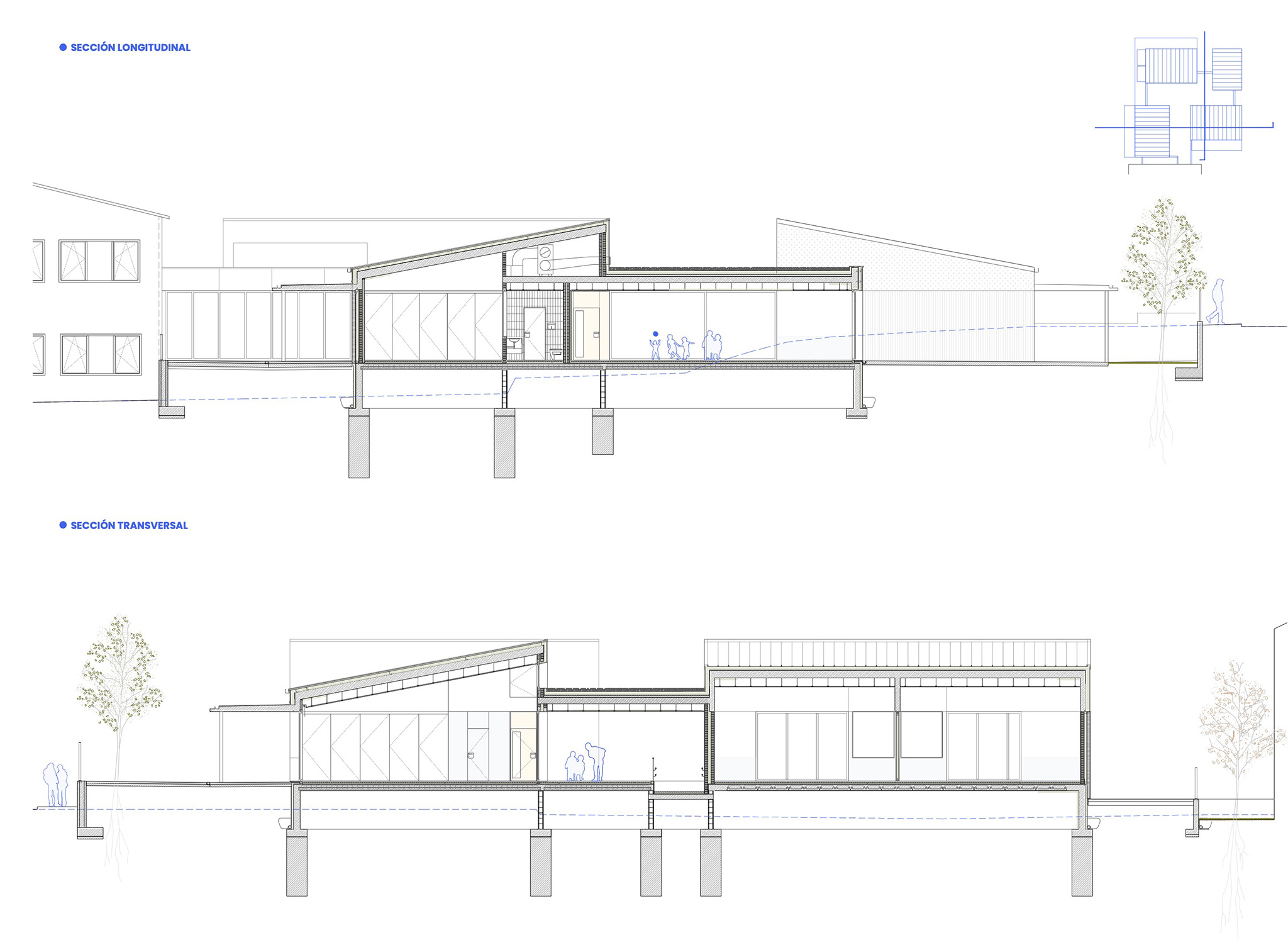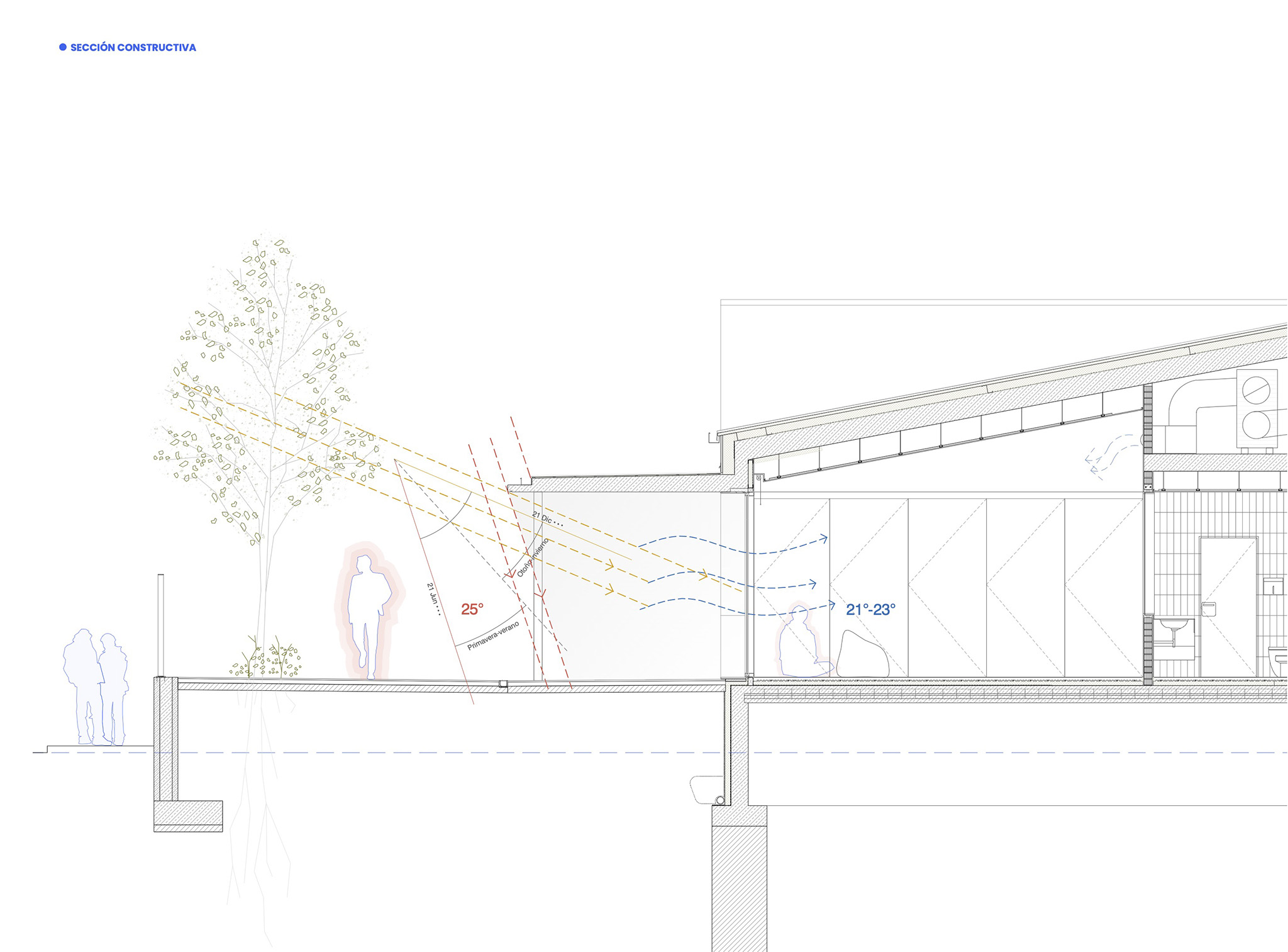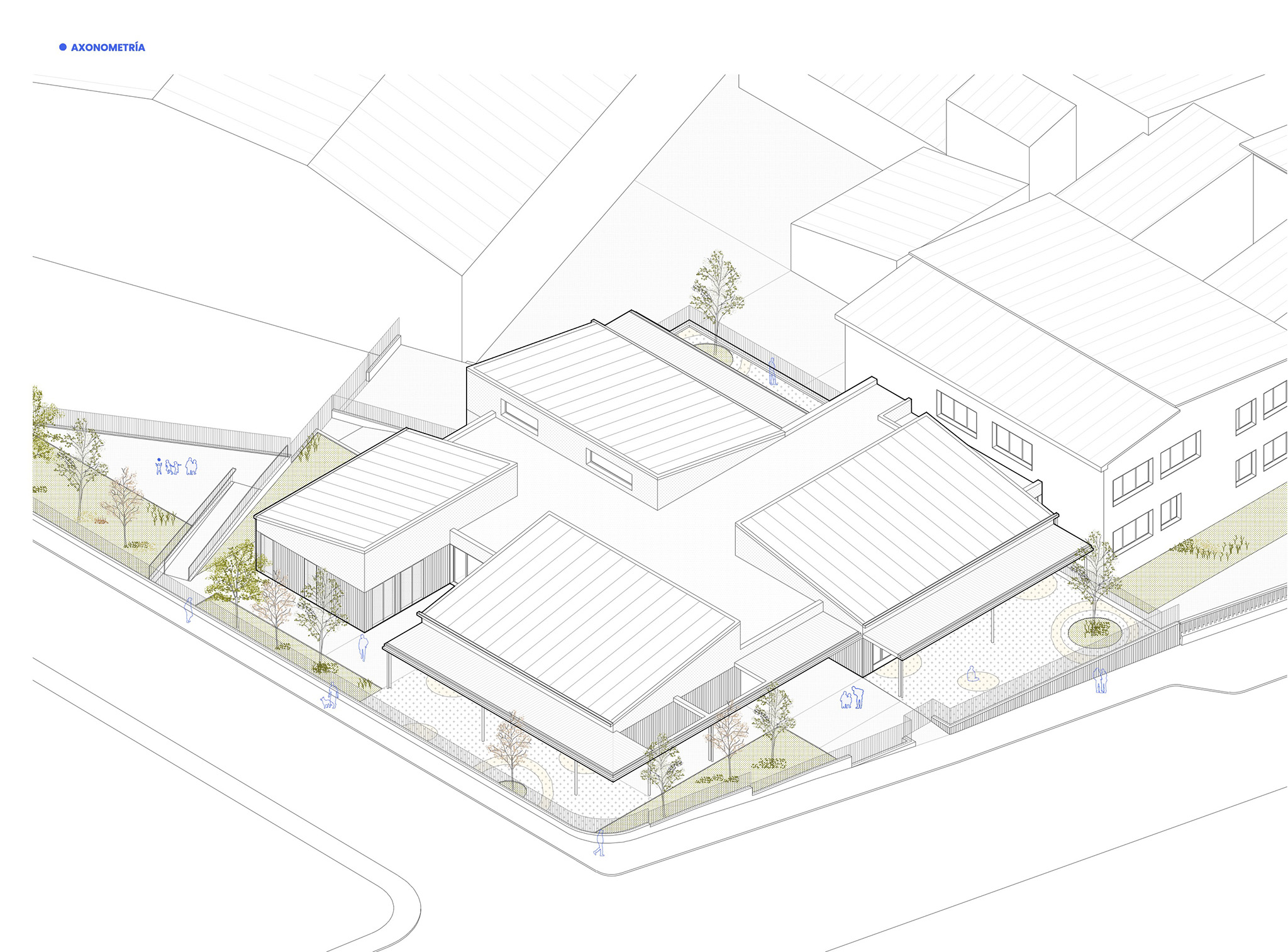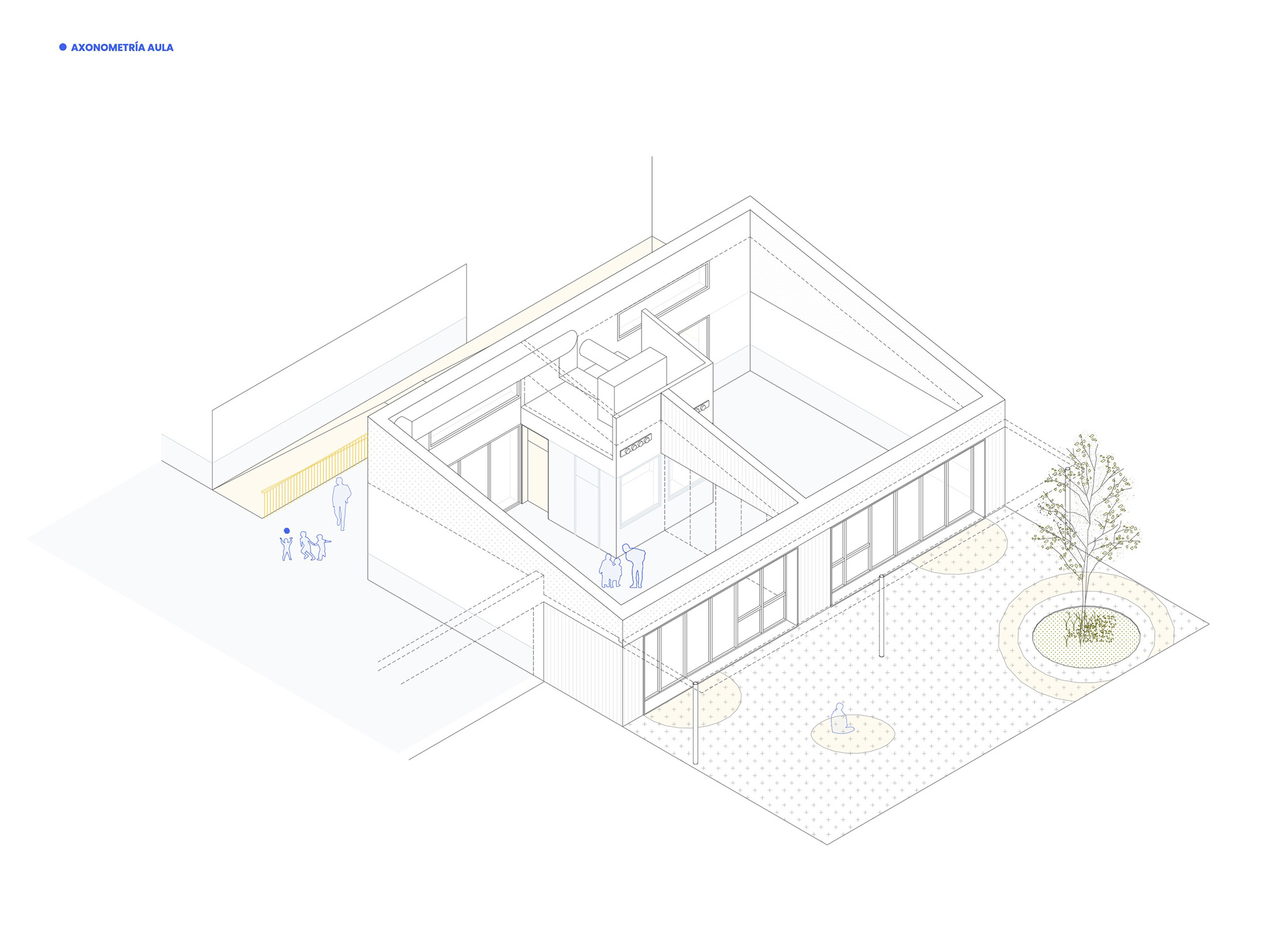
Each set of classrooms, designed by 16uno arquitectos, functions independently. Linked by a service volume that integrates the entrance, restrooms, and building services, each pair presents itself as an adaptable space that accommodates different educational models, providing greater freedom and flexibility for the teaching staff. The exterior roof, which connects the different sections of the building, regulates the amount of sunlight entering the classrooms, allowing or limiting its entry depending on the time of year.
As an additional interactive element that fosters learning, the materials chosen for the design embrace chromatic variety and a multiplicity of textures, offering themselves as a complementary educational tool. The incorporated vegetation completes the project, employing species that seasonally alternate their foliage throughout the year, changing the overall appearance of the space. Overall, the CPI As Mirandas educational complex presents itself as an articulation of interwoven volumes that, endowed with a rich material and spatial complexity, promote the active participation of the students.
CPI As Mirandas nursery school by 16uno arquitectos. Photograph by Héctor Santos-Díez.
Project description by 16uno arquitectos
The project responds to the need to expand CPI As Mirandas with new nursery school facilities, as classes had previously been accommodated in temporary modular classrooms located within the playground area.
Alongside the extension, the existing primary school building underwent an energy retrofit, including improvements to its thermal envelope and the replacement of its heating system, as well as the expansion of both the library and the dining hall.
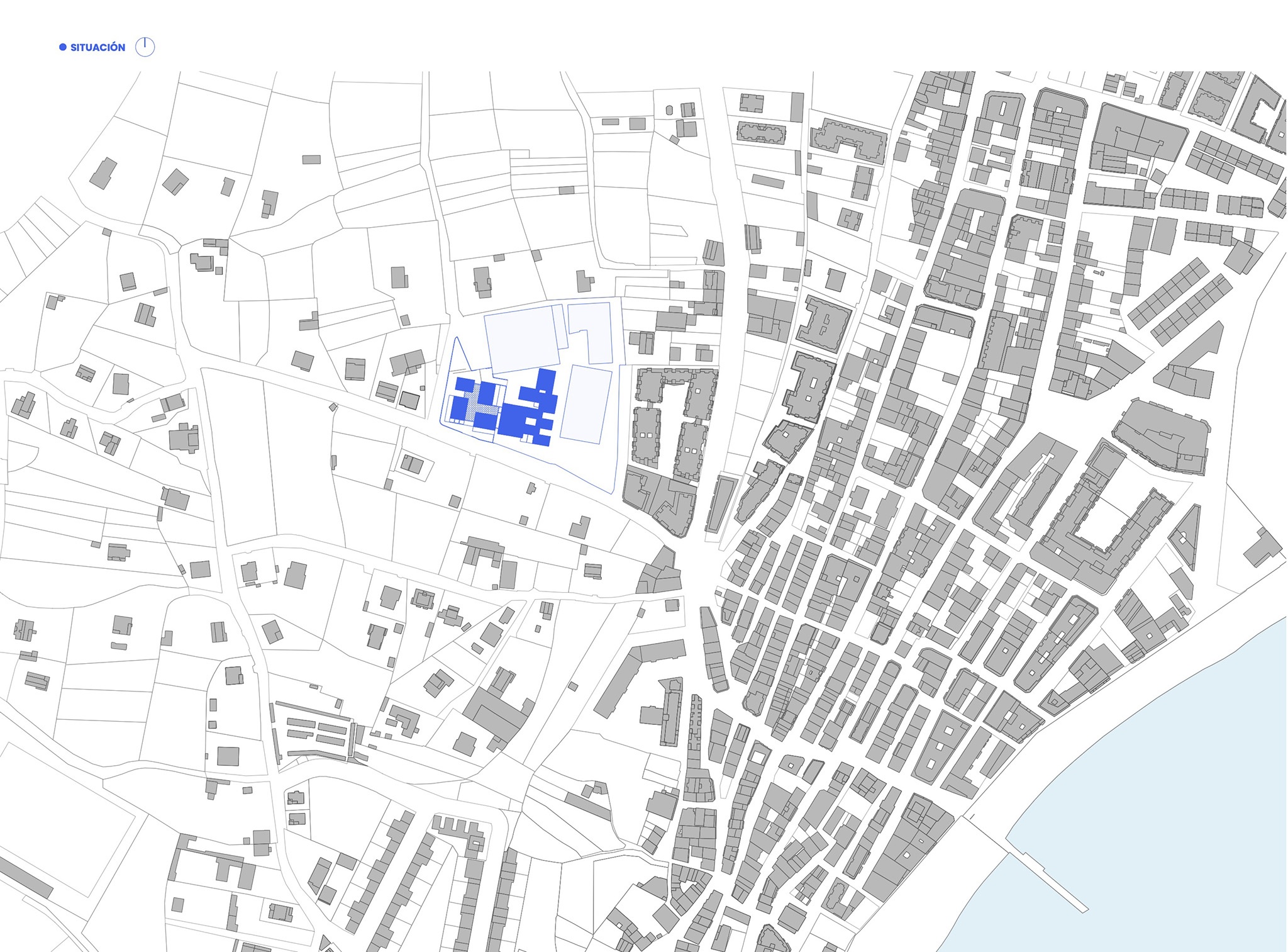
The resulting massing remains closely tied to its context. The complex acts as a transitional element between the urban fabric and the surrounding rural landscape, marking a shift in scale where large residential blocks gradually give way to detached houses dispersed throughout the landscape.
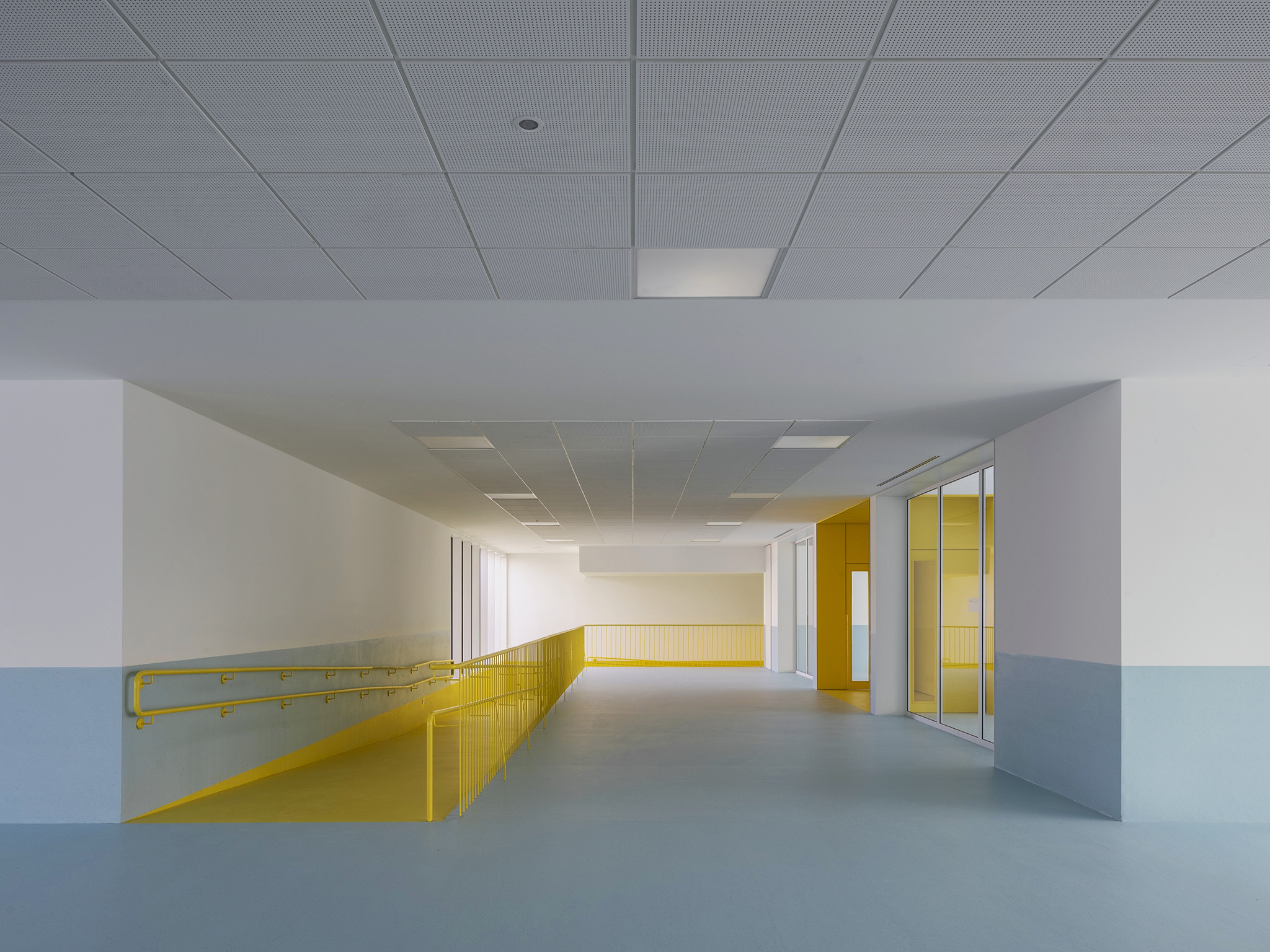
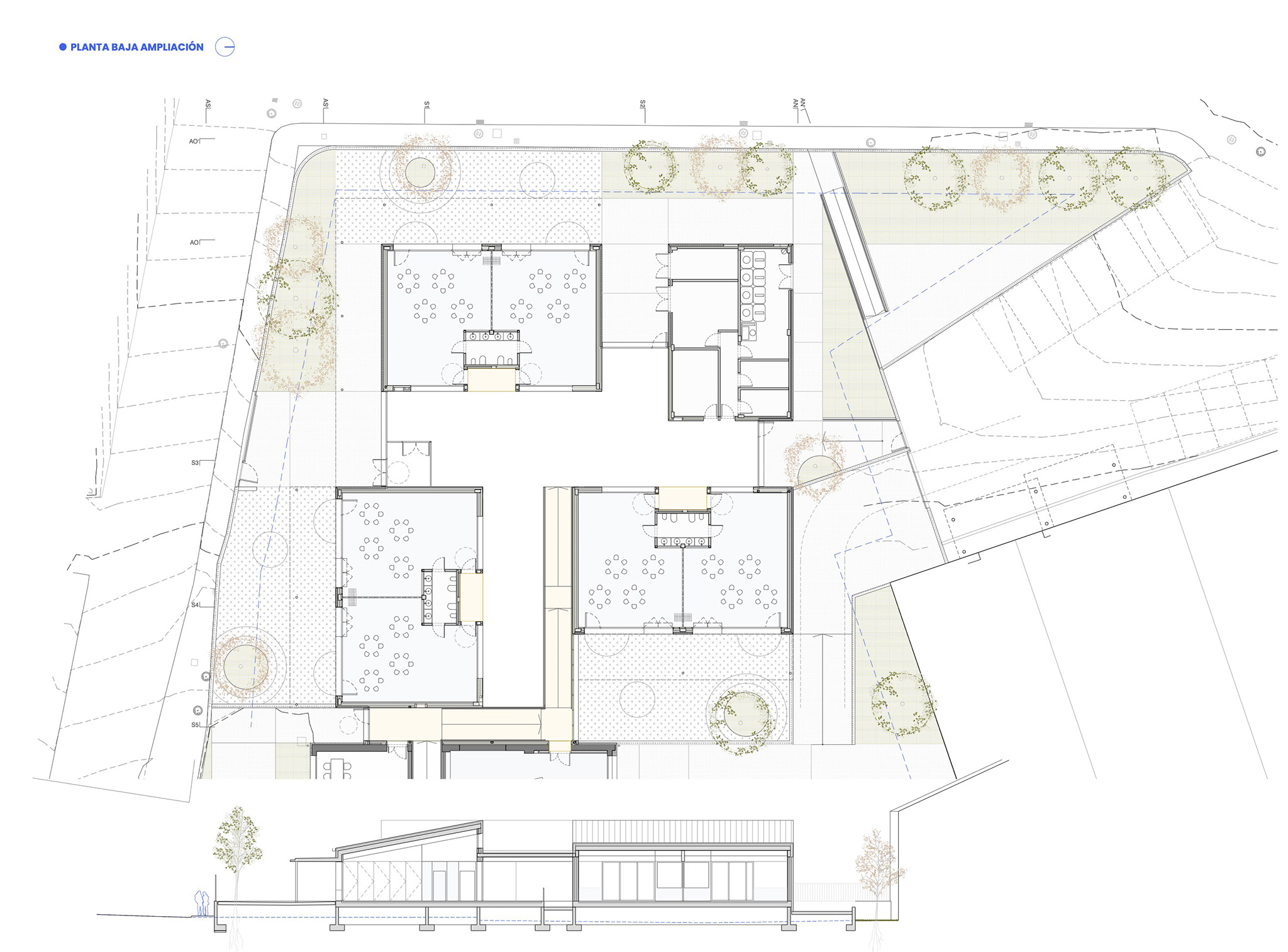
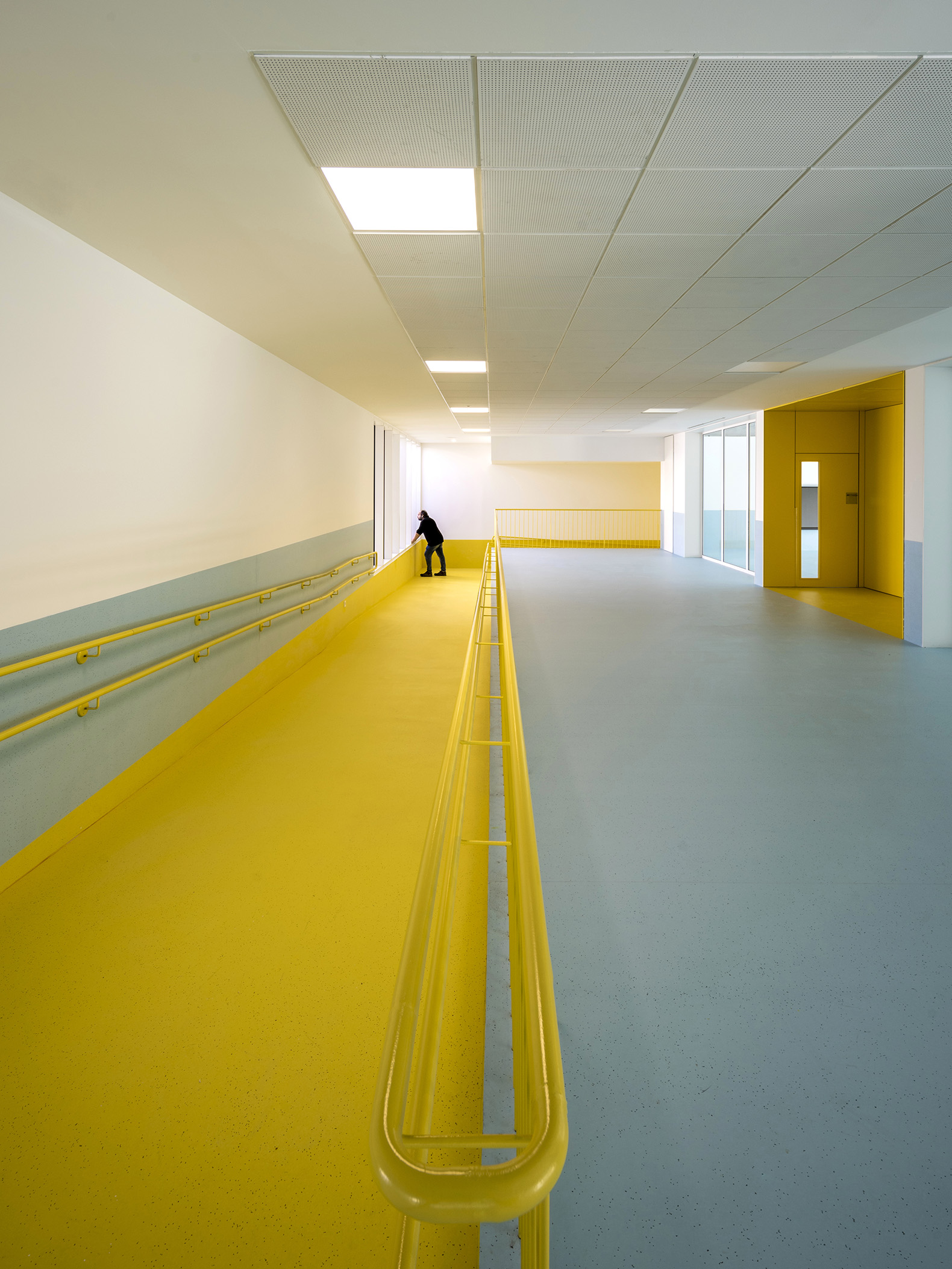
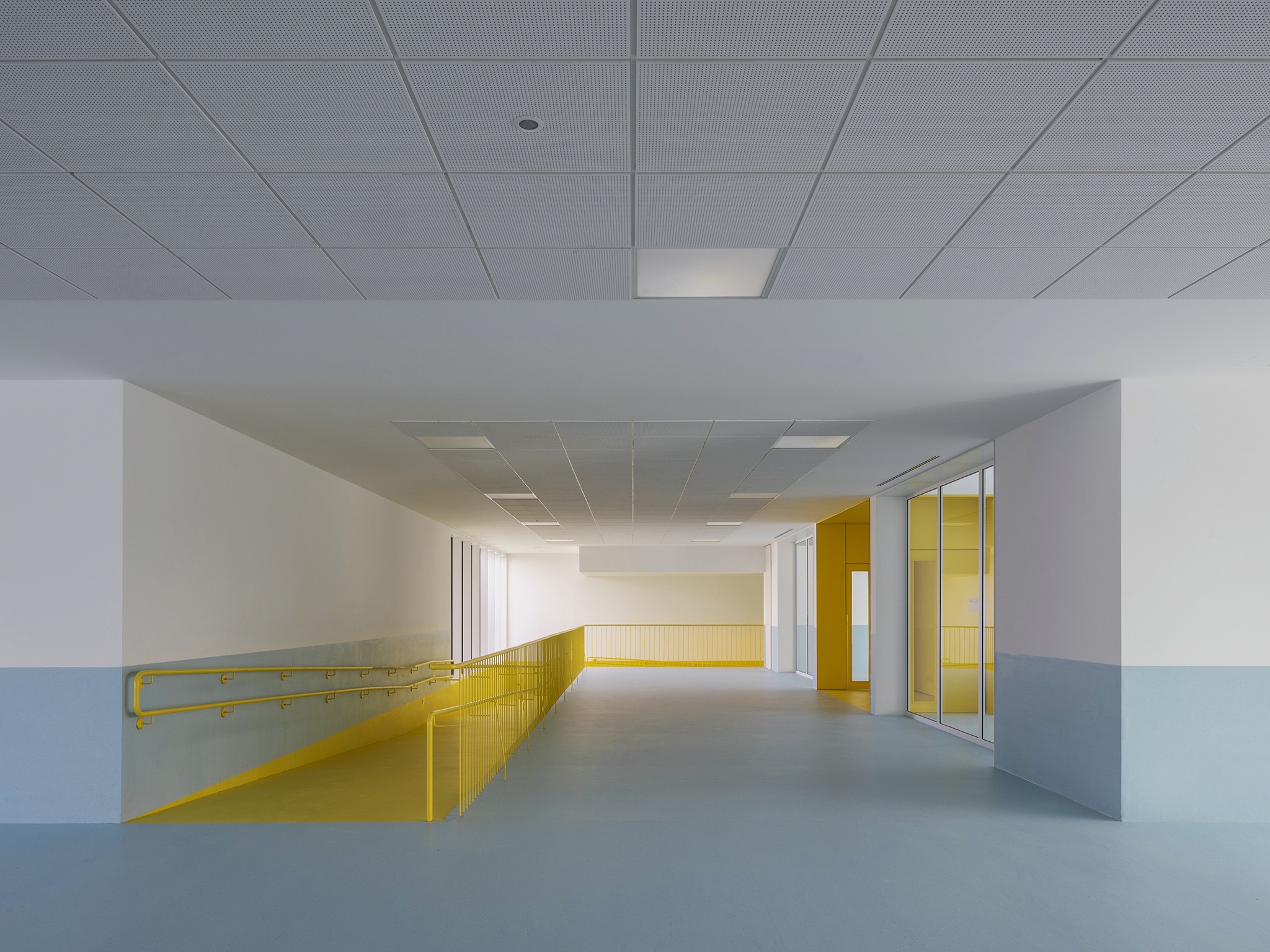
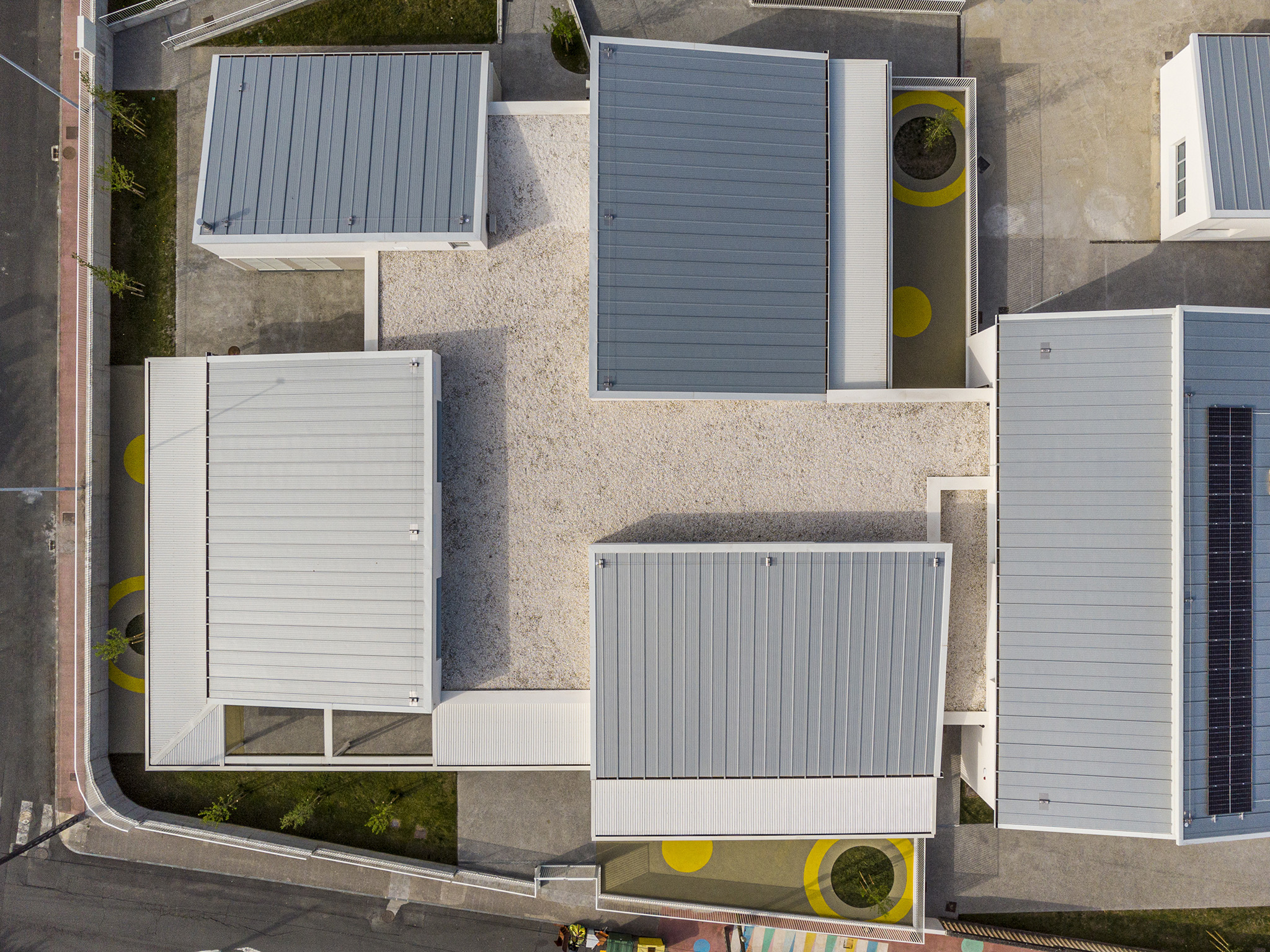
The new nursery school building is organised around a central multi-purpose space known as the forum. This area functions as a learning environment, a recreational space, a connection to the primary school building, and a shared space linking the classrooms. The forum serves as the organisational core of the project, articulating the four volumes that make up the building: three pairs of classrooms and a technical block housing the majority of the building services.
Conceived as a space for learning through play, the forum provides an ideal setting for spontaneous group lessons and a wide range of activities, including storytelling sessions, group games, small theatrical performances and movement-based exercises. It also offers an alternative recreational space on days when outdoor activities are not possible.
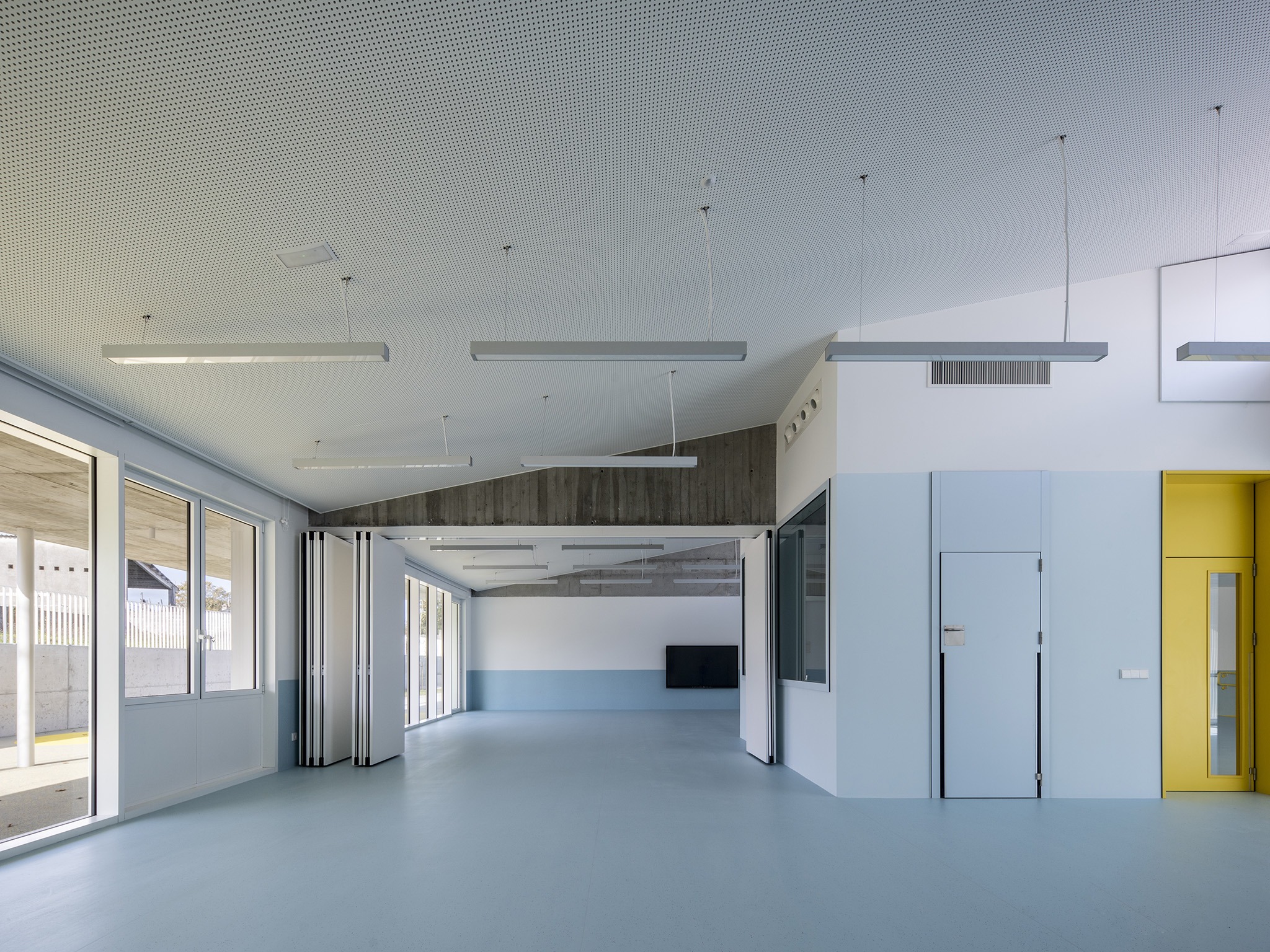
By acting as a natural extension of the classrooms, the forum encourages interaction among users and promotes a fluid spatial experience. The ramp integrated within this space establishes a continuous connection between three levels: the forum, the outdoor areas and the primary school building.
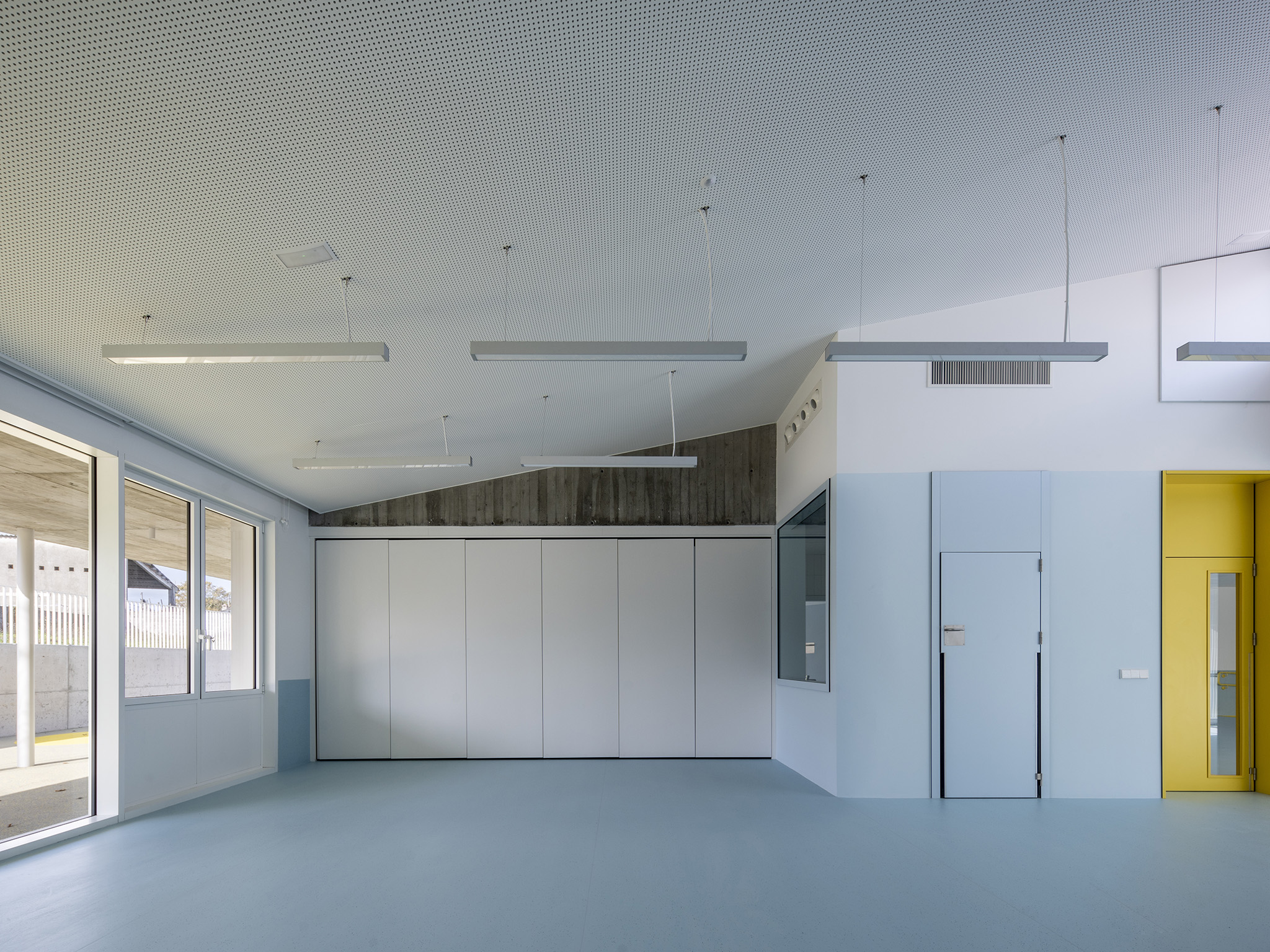
The classrooms are designed as flexible learning environments connected to one another, to the forum and to the exterior. Conceived as highly adaptable spaces, they provide teachers with complete freedom to implement a variety of pedagogical approaches. Their varying volumes create a rich spatial complexity, enhancing spatial legibility for children. This strategy also optimises natural daylight and promotes effective cross-ventilation.
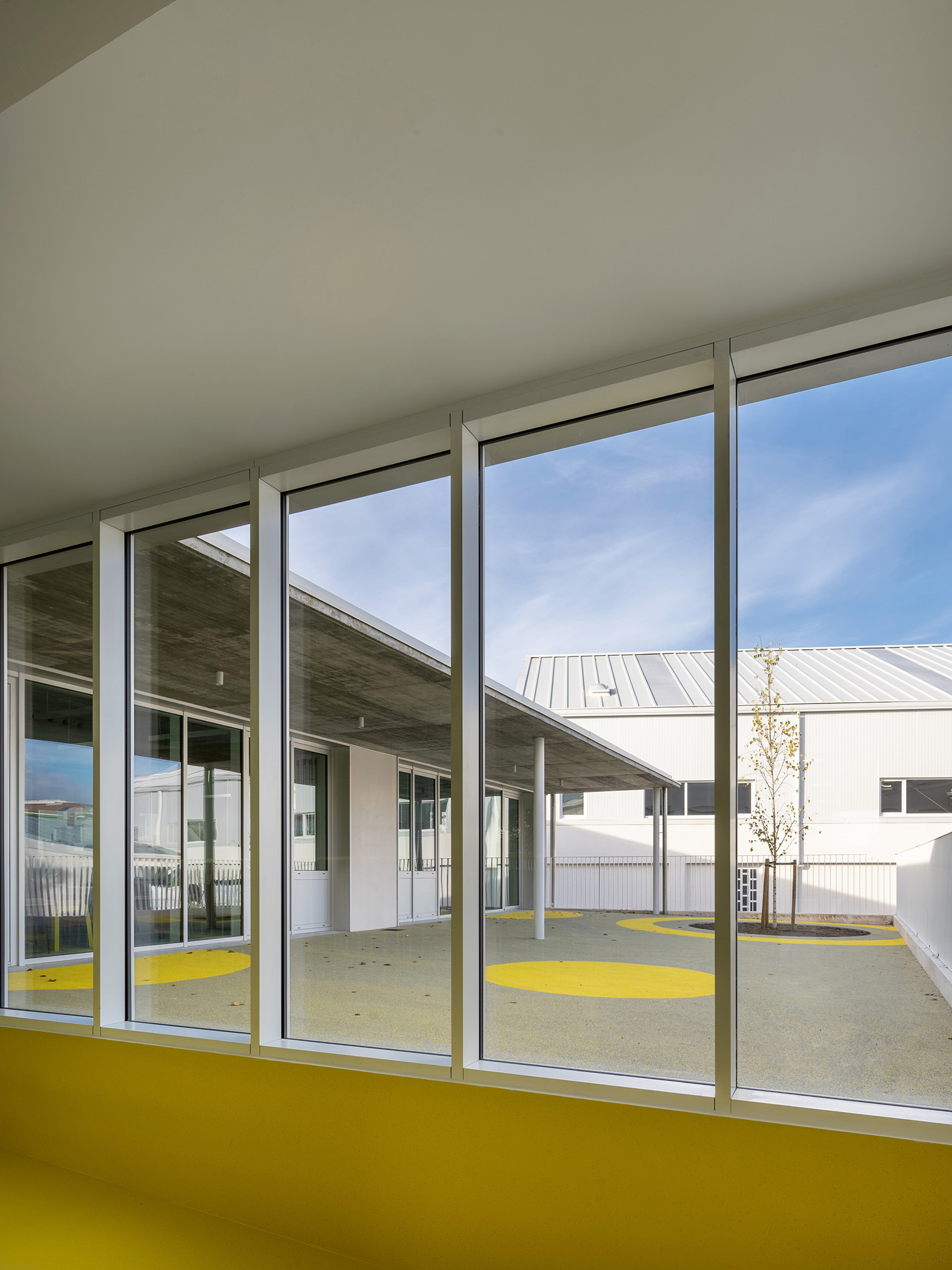
Each pair of classrooms operates independently and is linked by an intermediate volume containing the entrance area, bathrooms and the building services located above. In addition, each classroom cluster has its own dedicated outdoor space, including both covered and open-air areas for play and recreation.
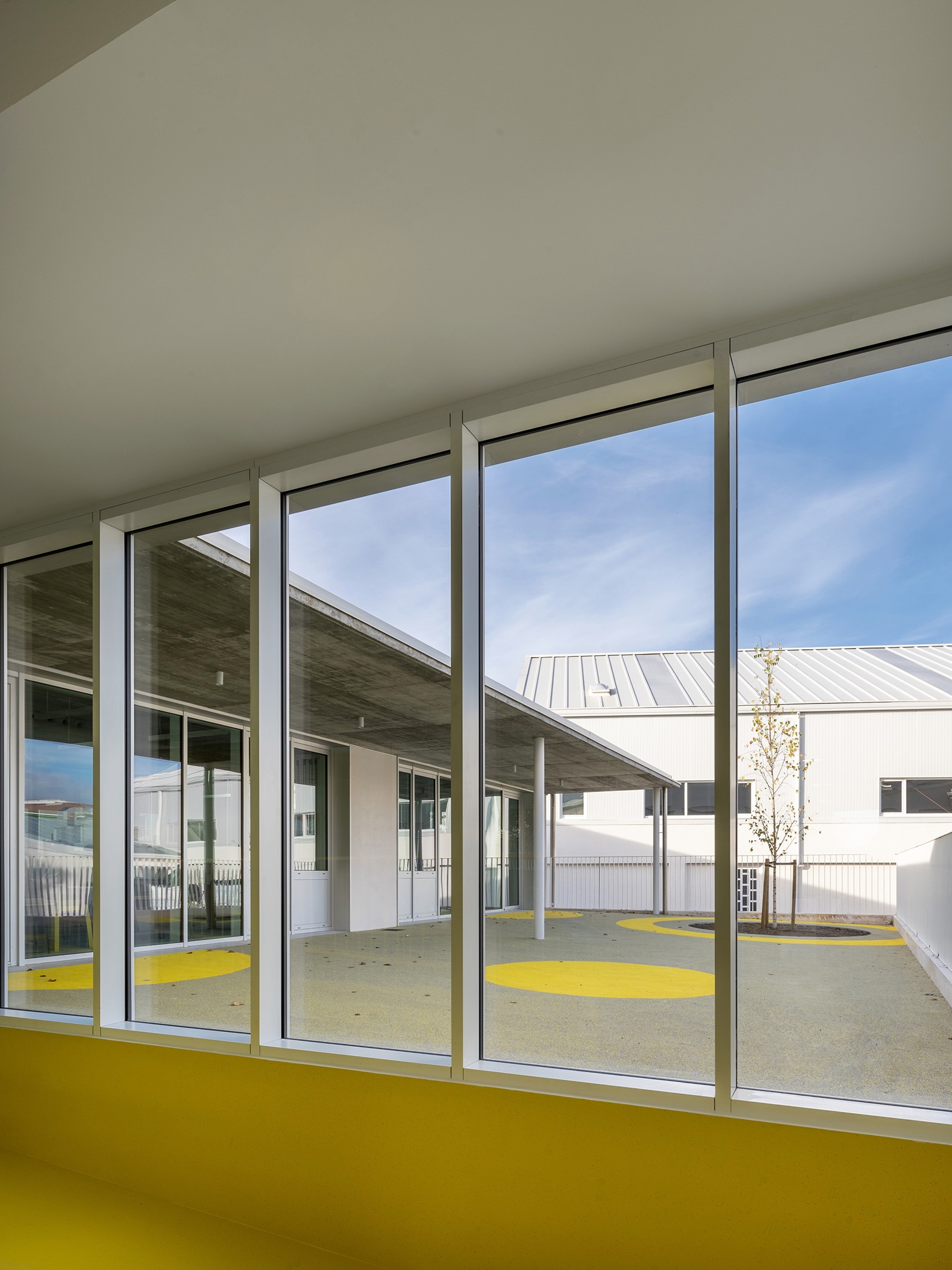
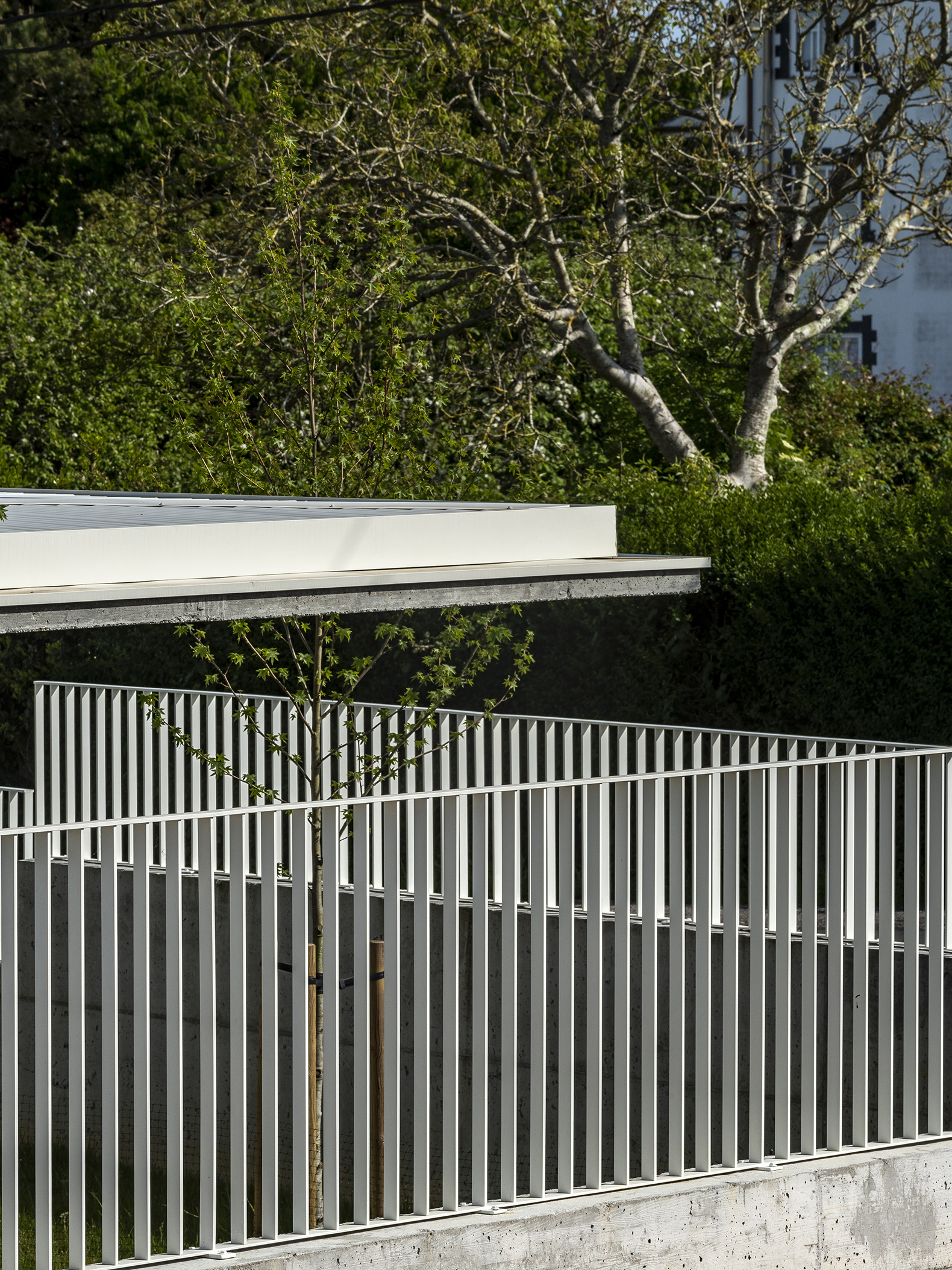
The canopy stitches the entire front of the building, providing sheltered circulation throughout. It also enables passive control of solar gain within the classrooms, allowing or limiting sunlight penetration according to the season. In this way, stable thermal and lighting conditions are maintained throughout the year.
Finally, the building's materiality is conceived as an additional educational tool, functioning as an interactive element that encourages learning, play and social interaction. Variations in material, colour and texture are introduced across walls, ceilings and floors, both indoors and outdoors. Vegetation is likewise incorporated as an active component of the learning environment, combining evergreen and deciduous species that transform the visual character of the school throughout the seasons. The aim is for children to perceive the school as a living organism of which they themselves form part.