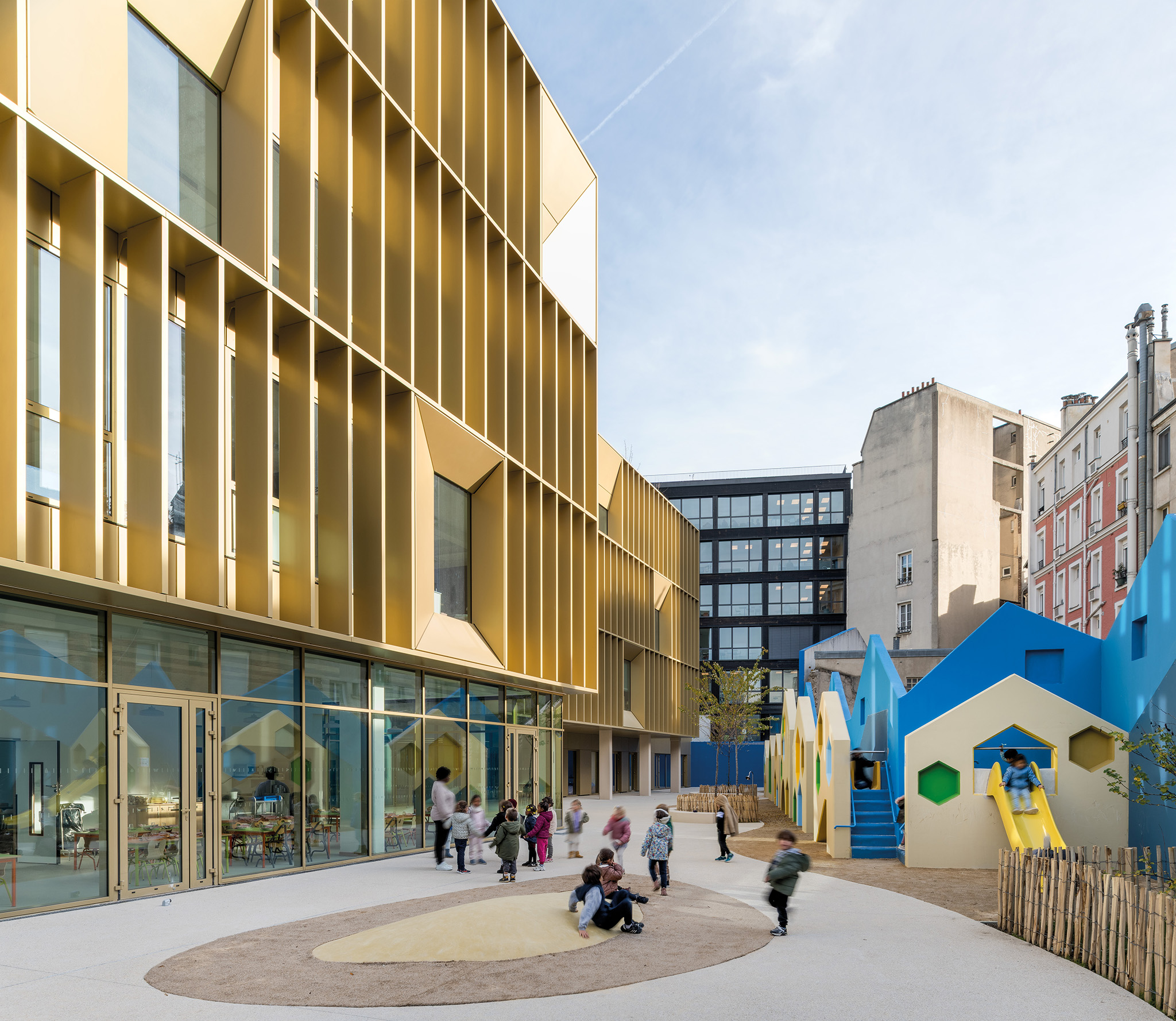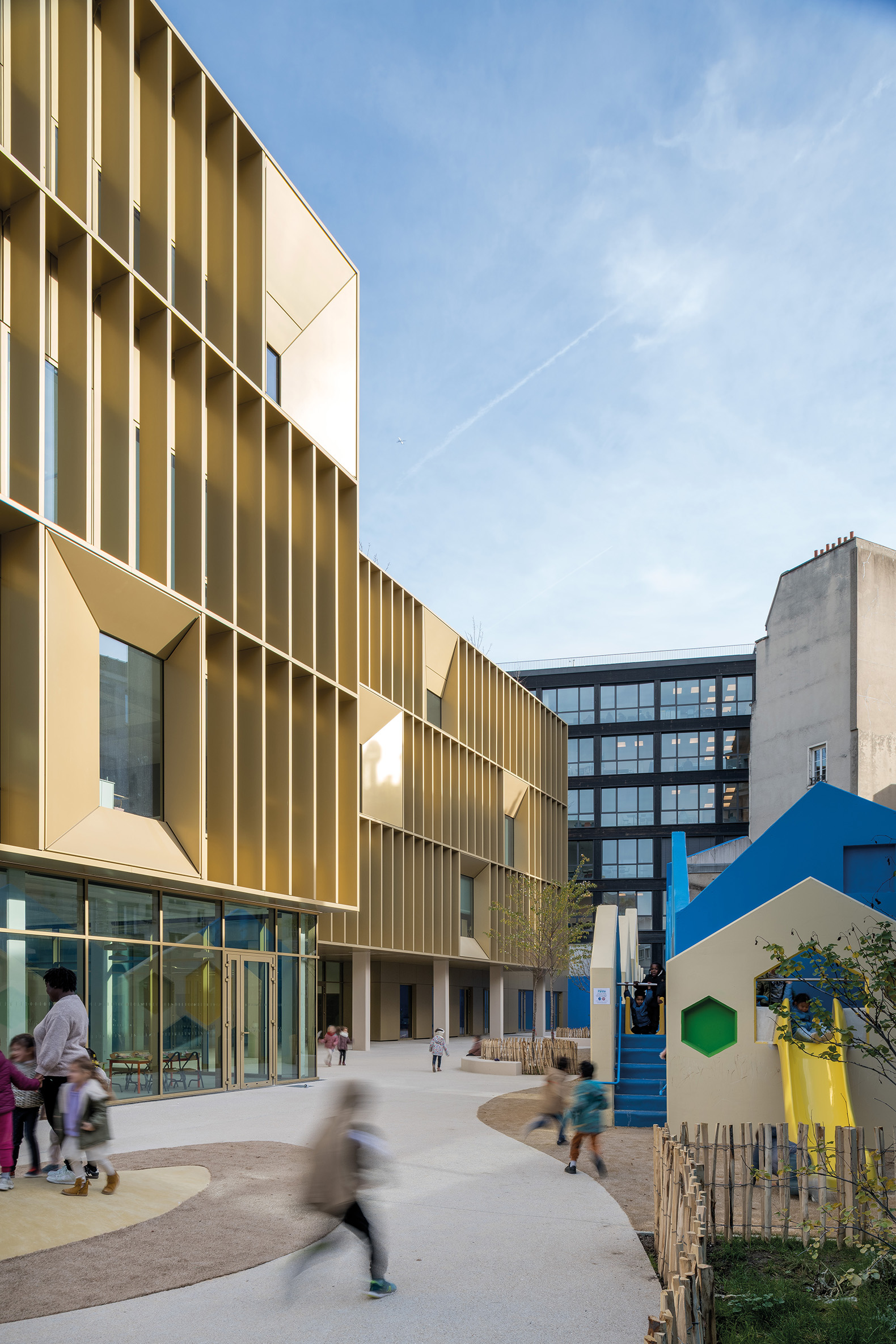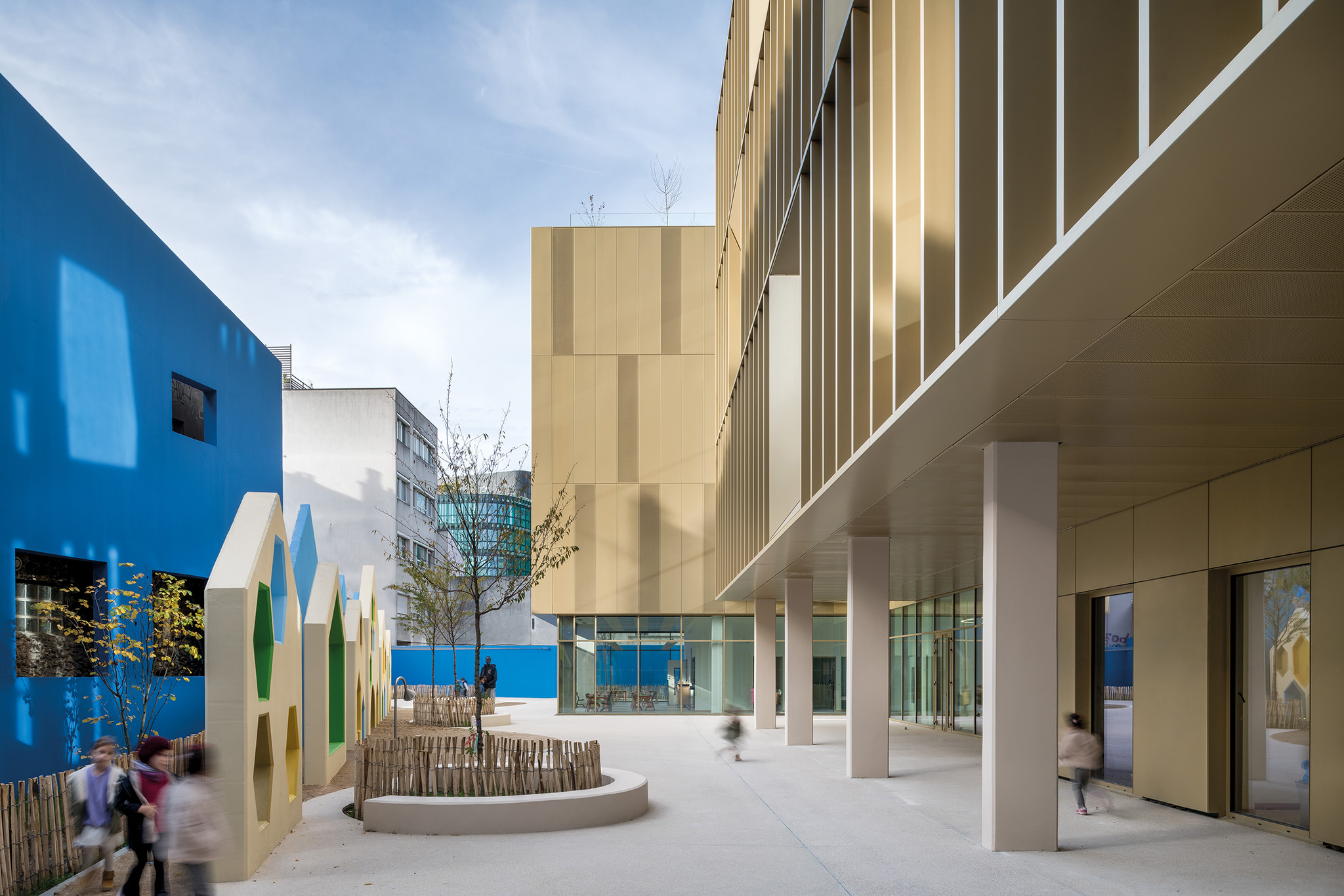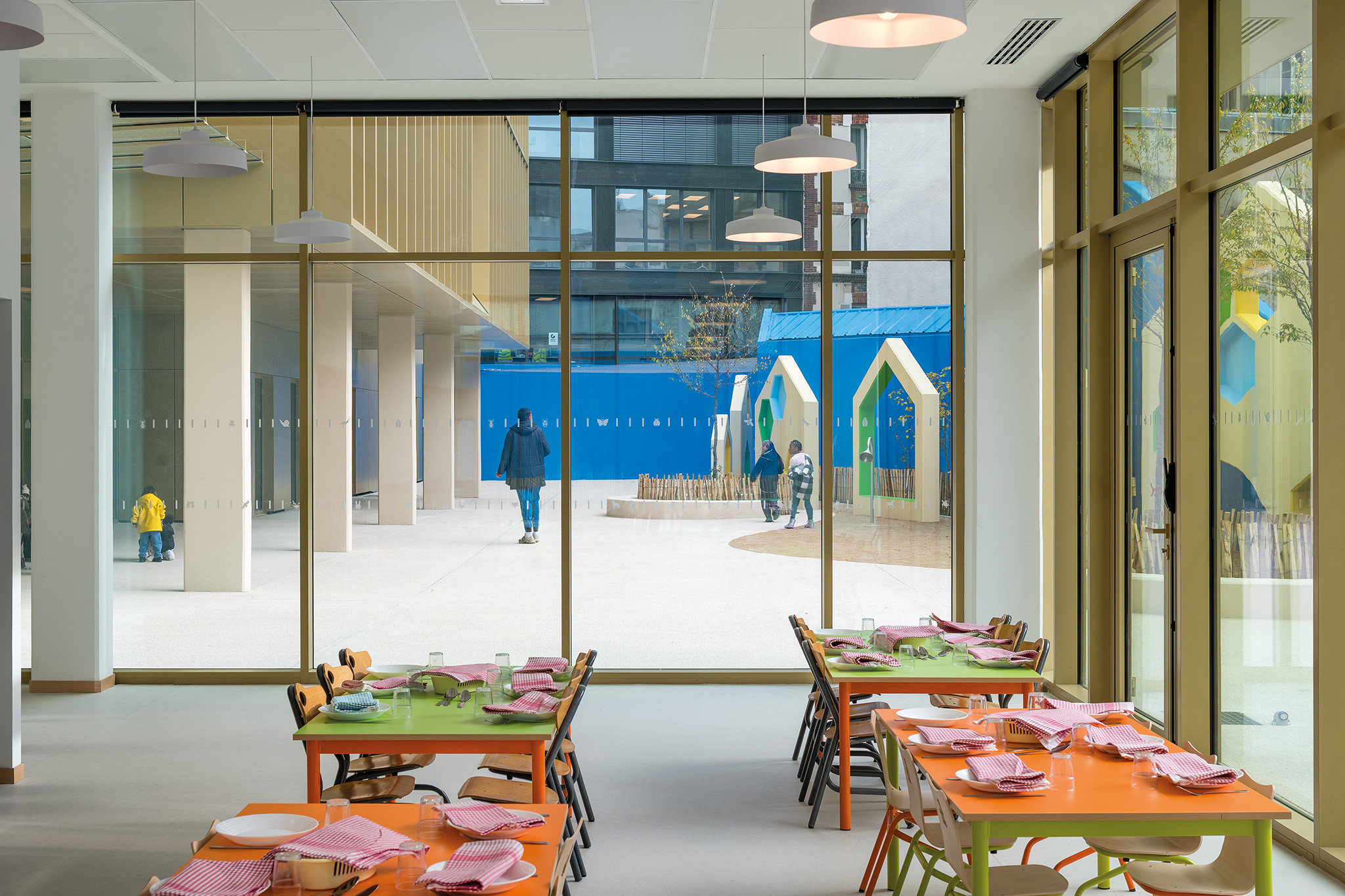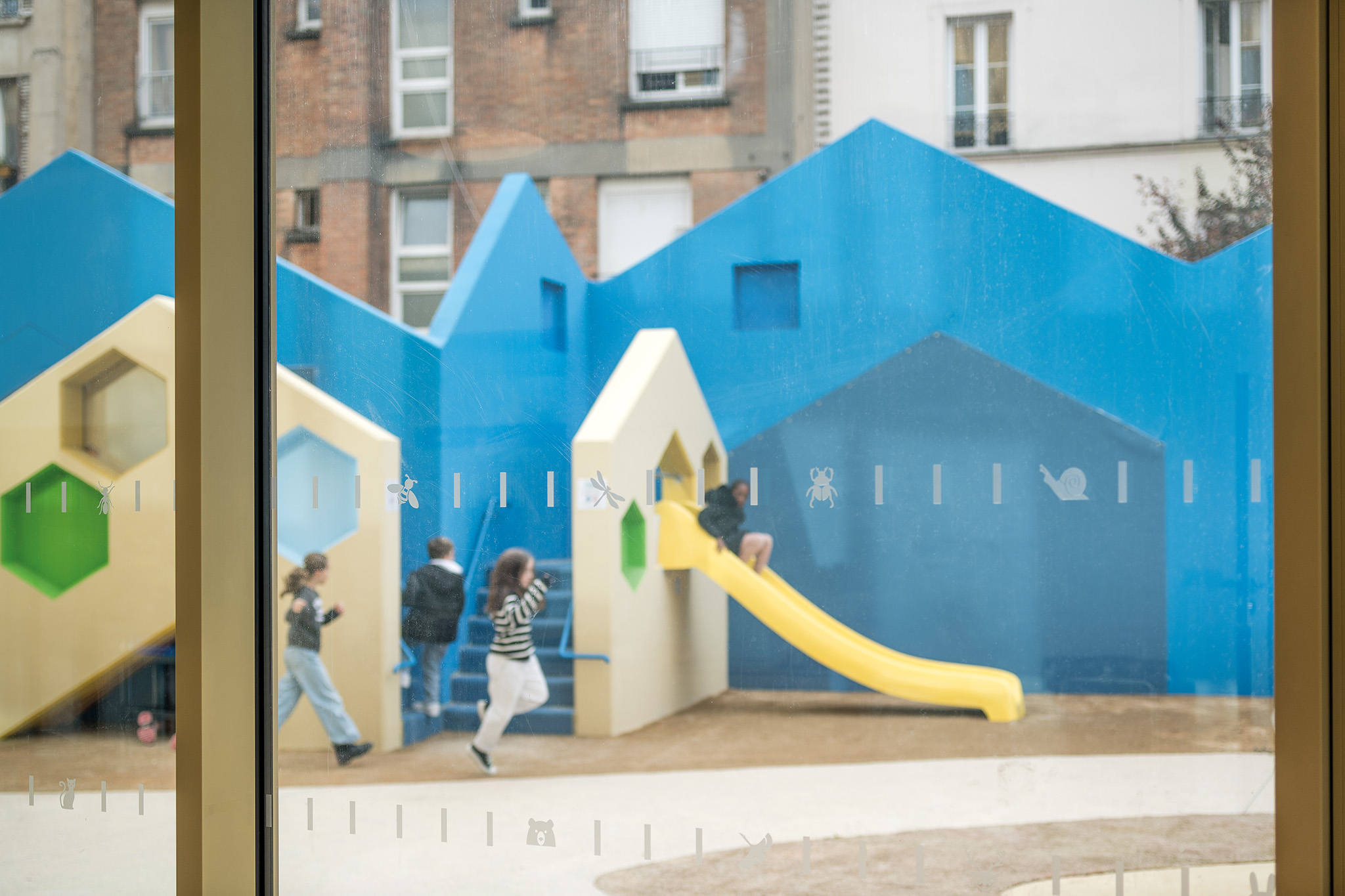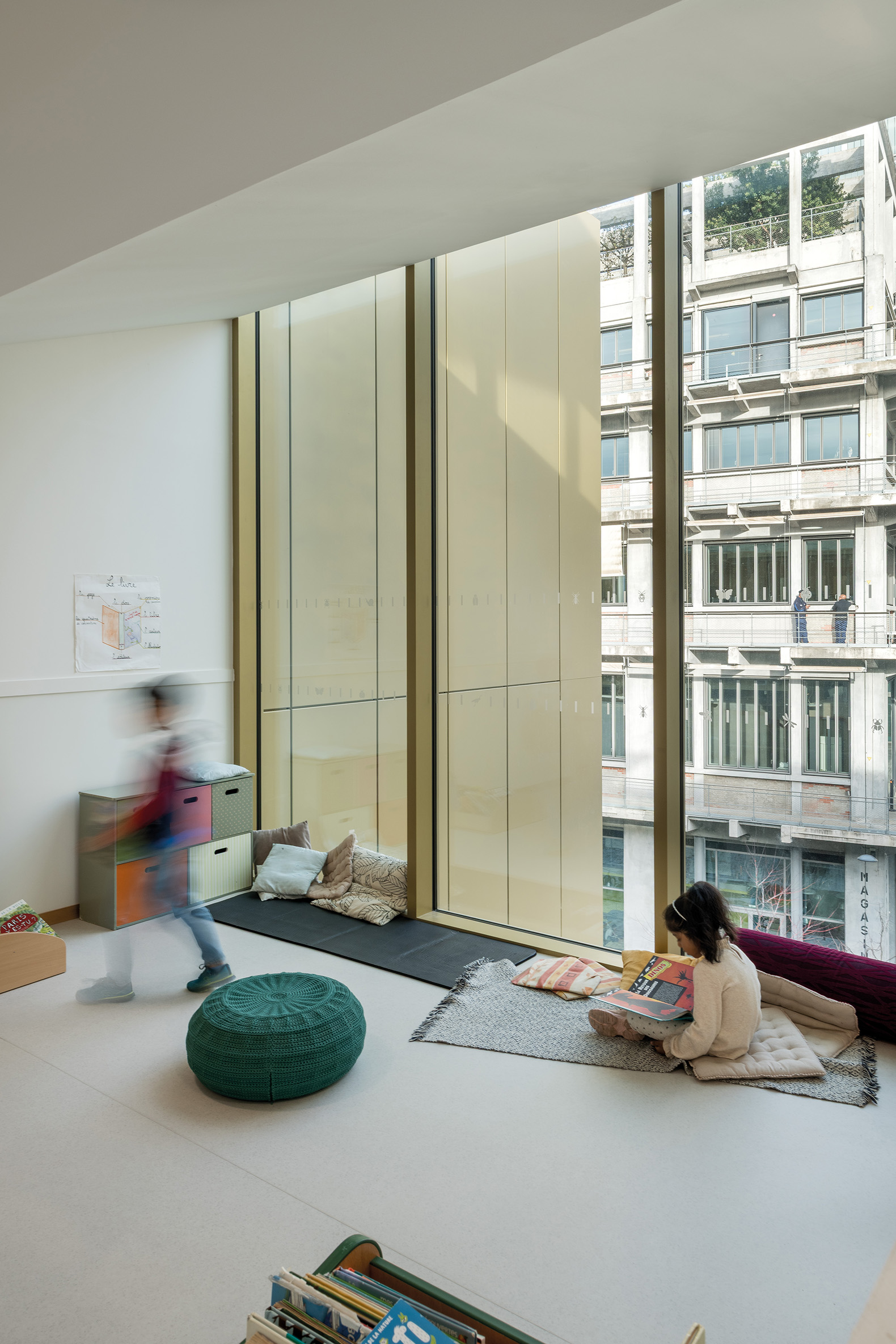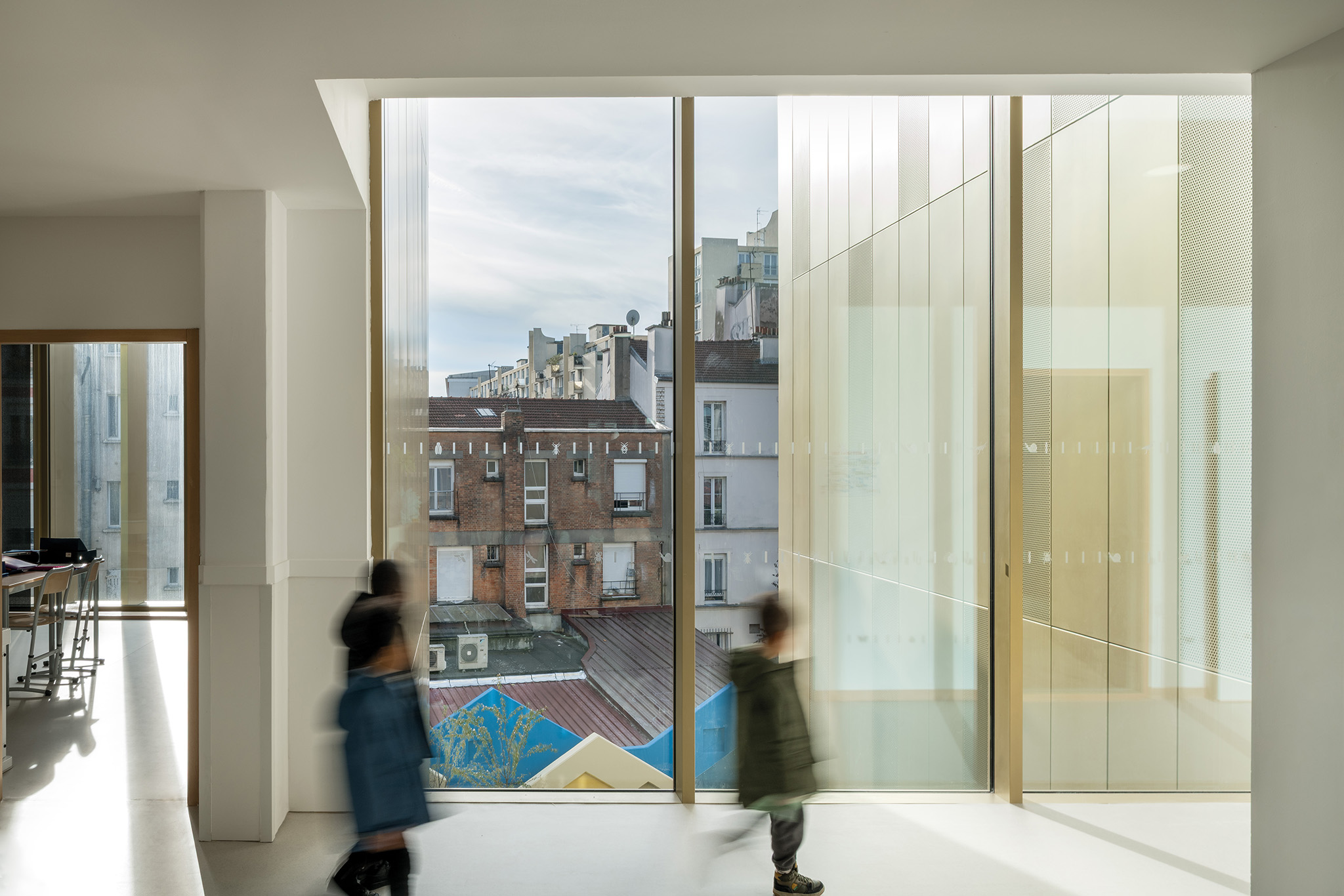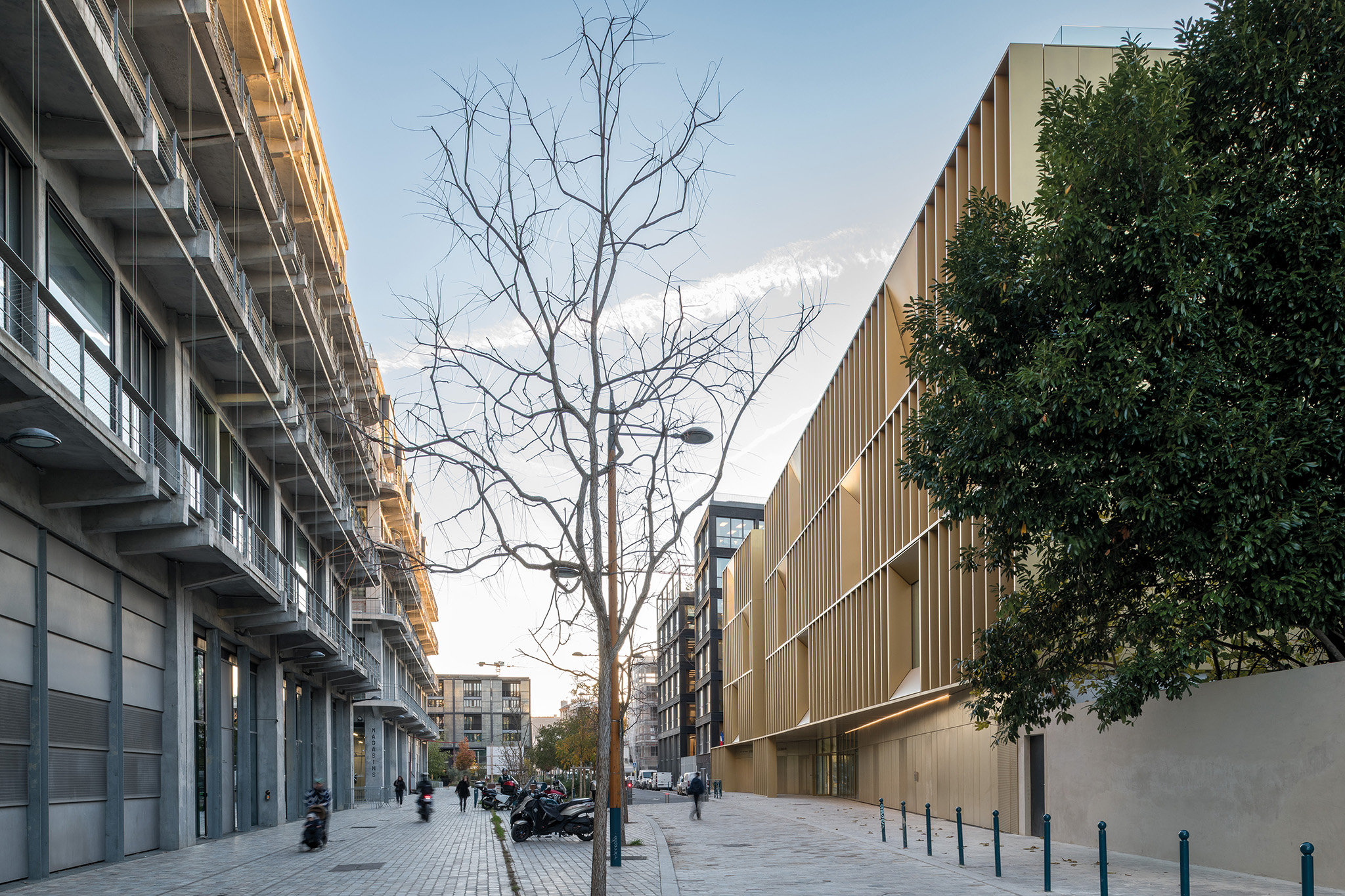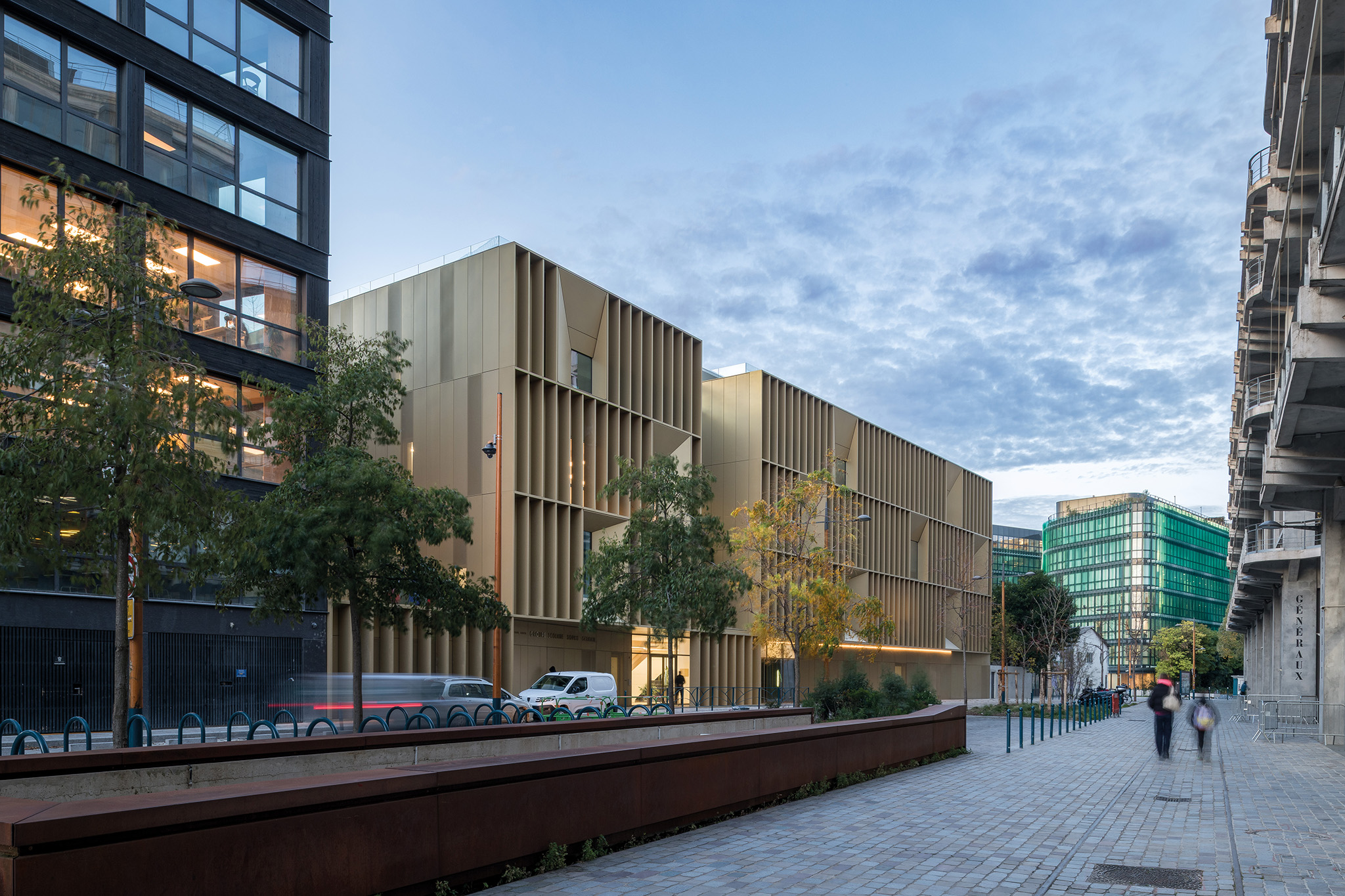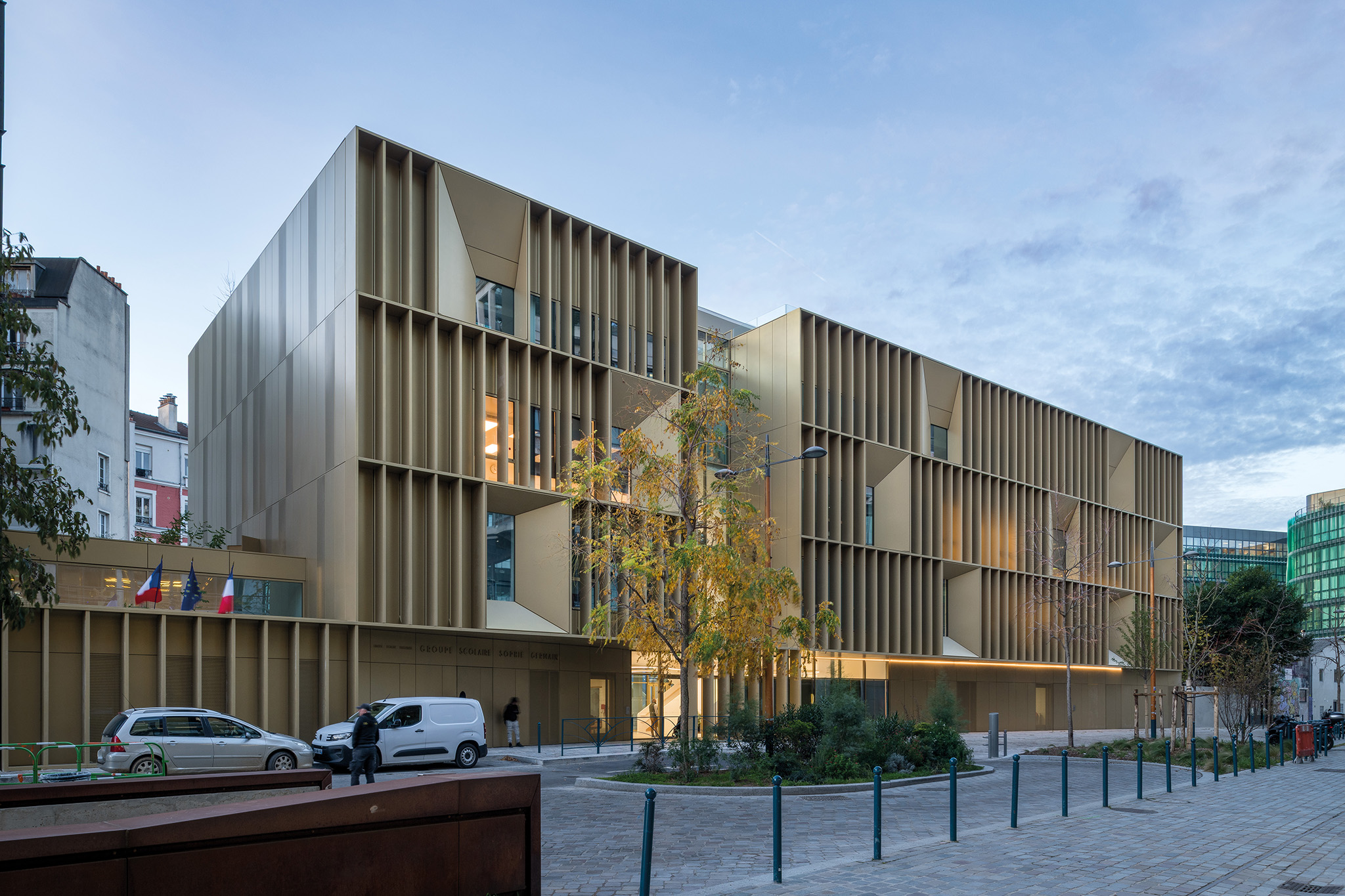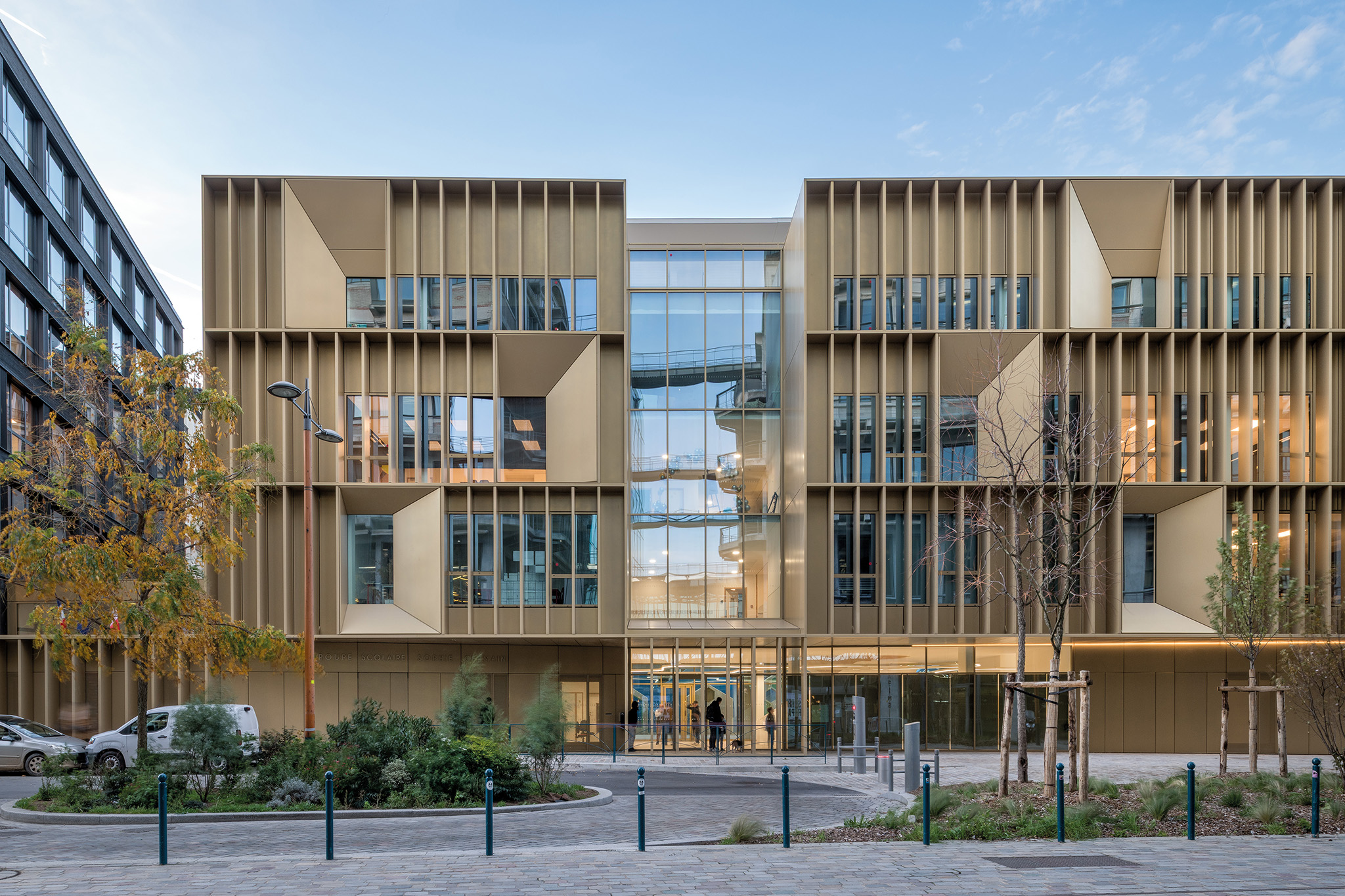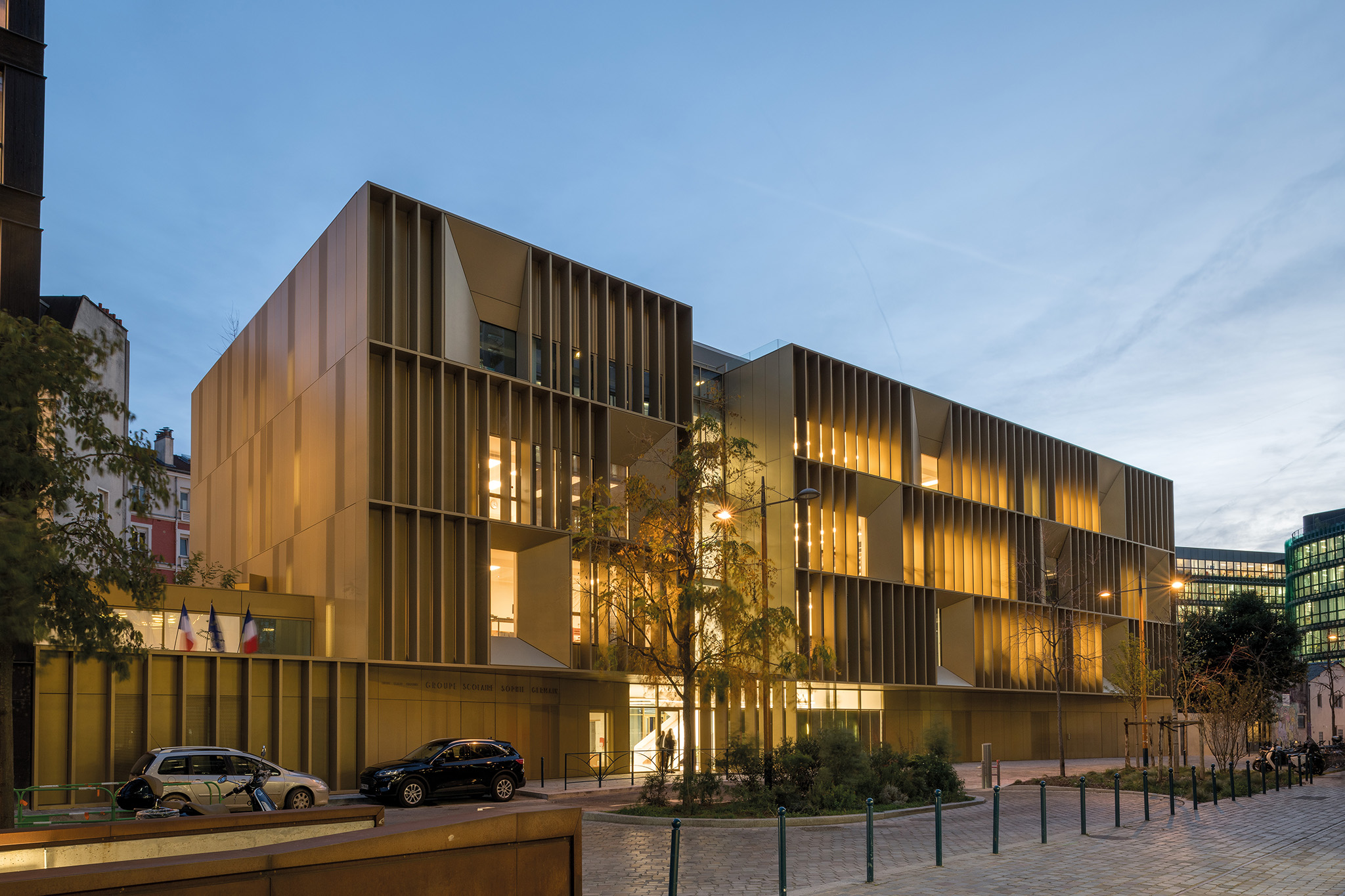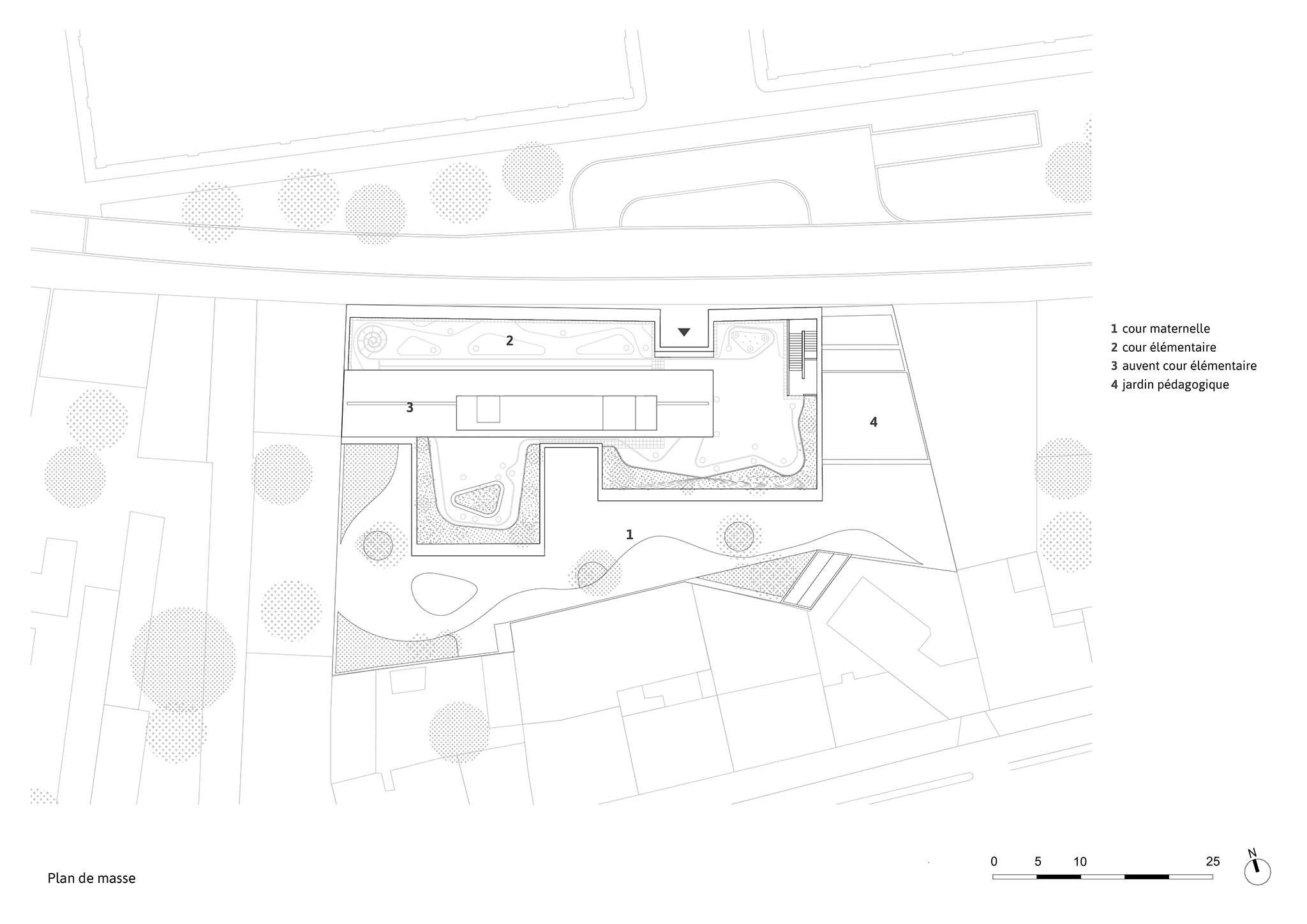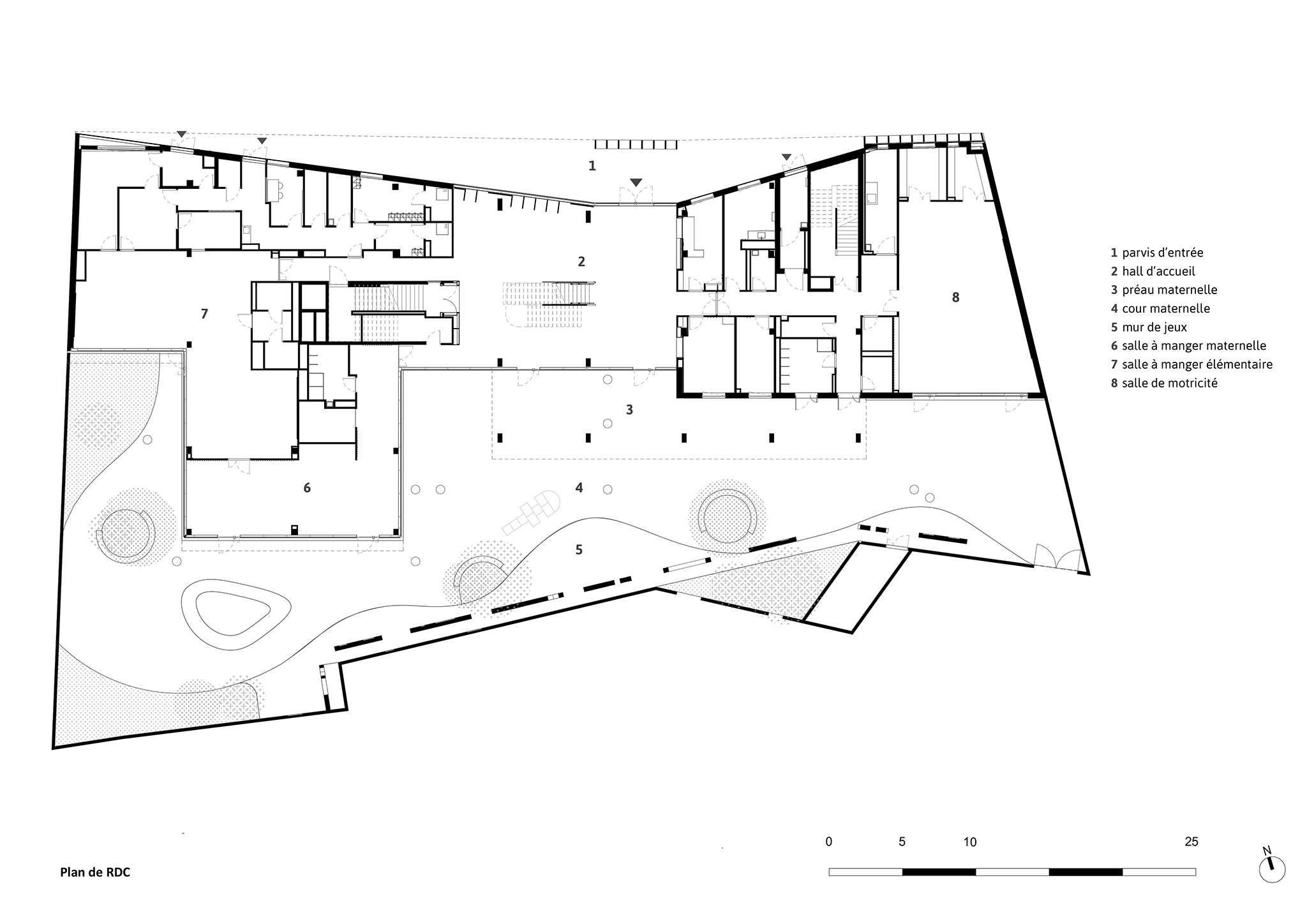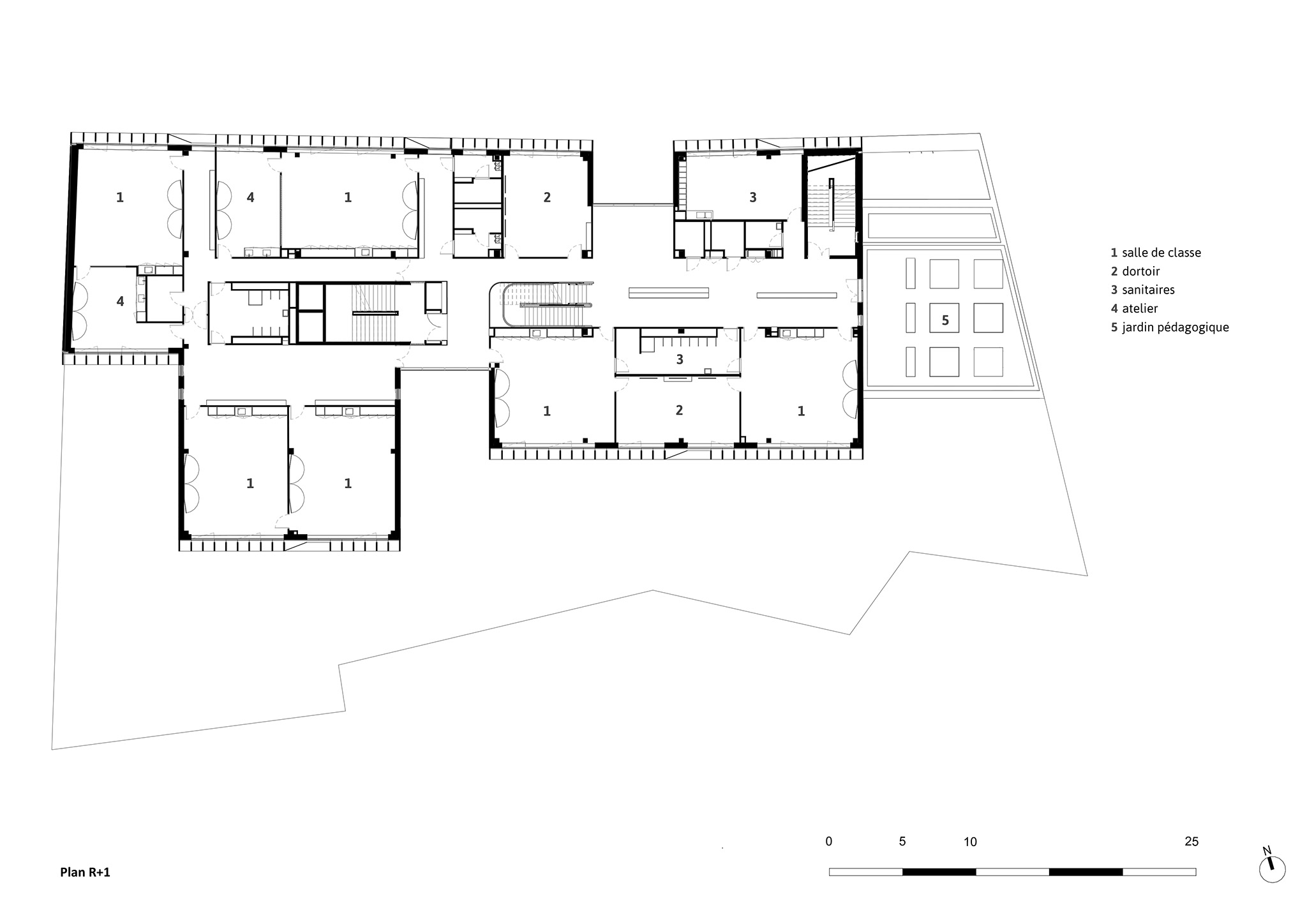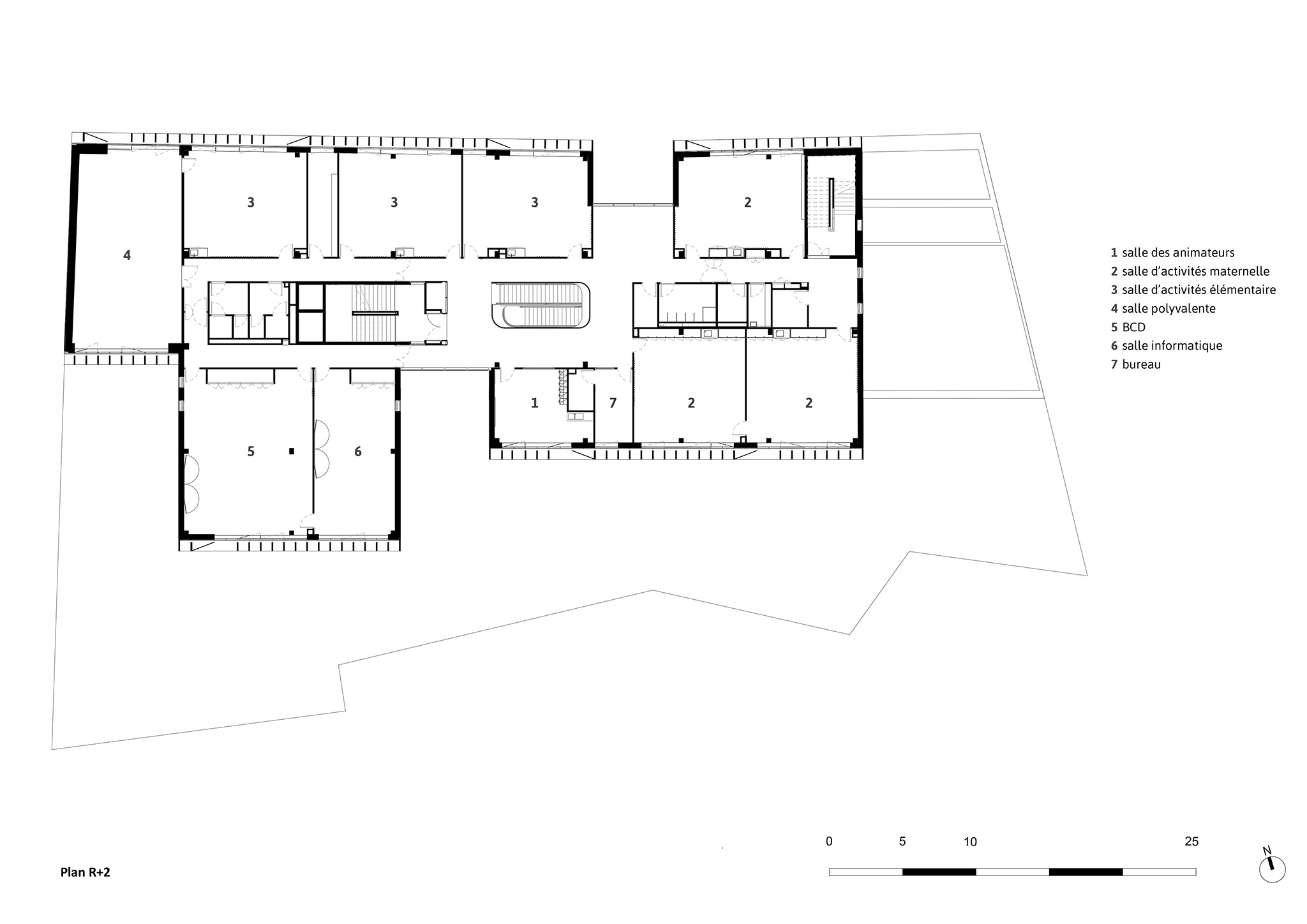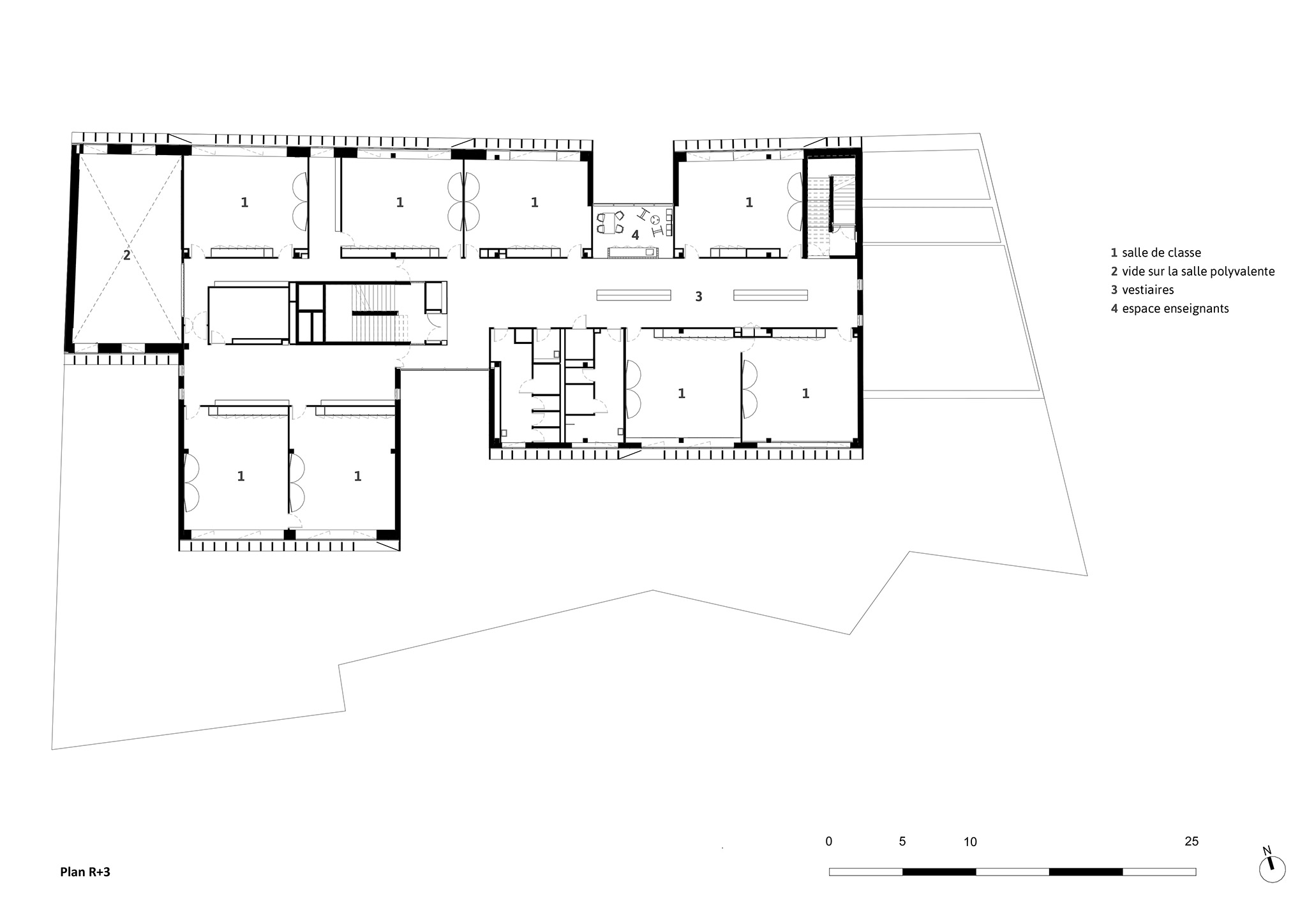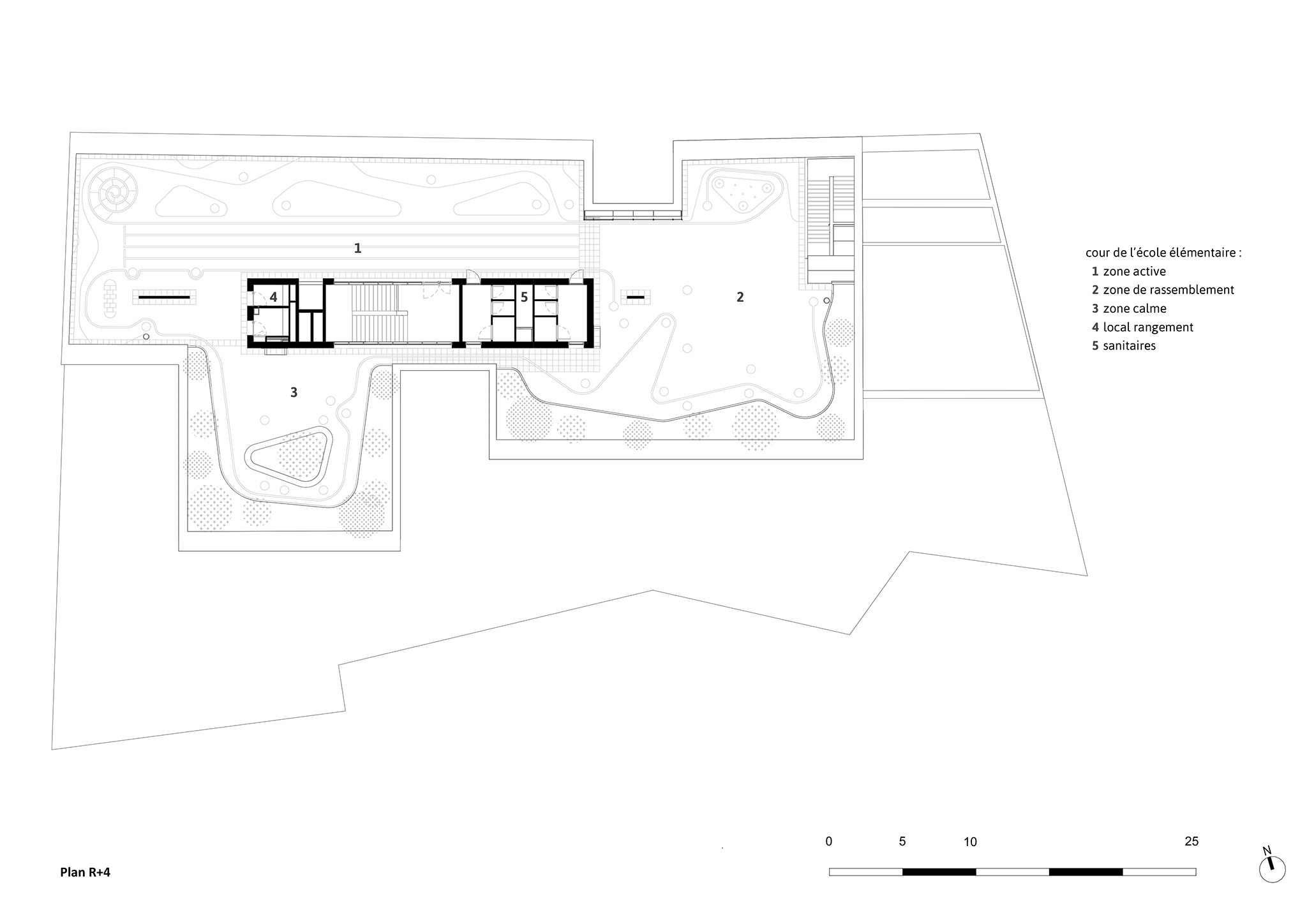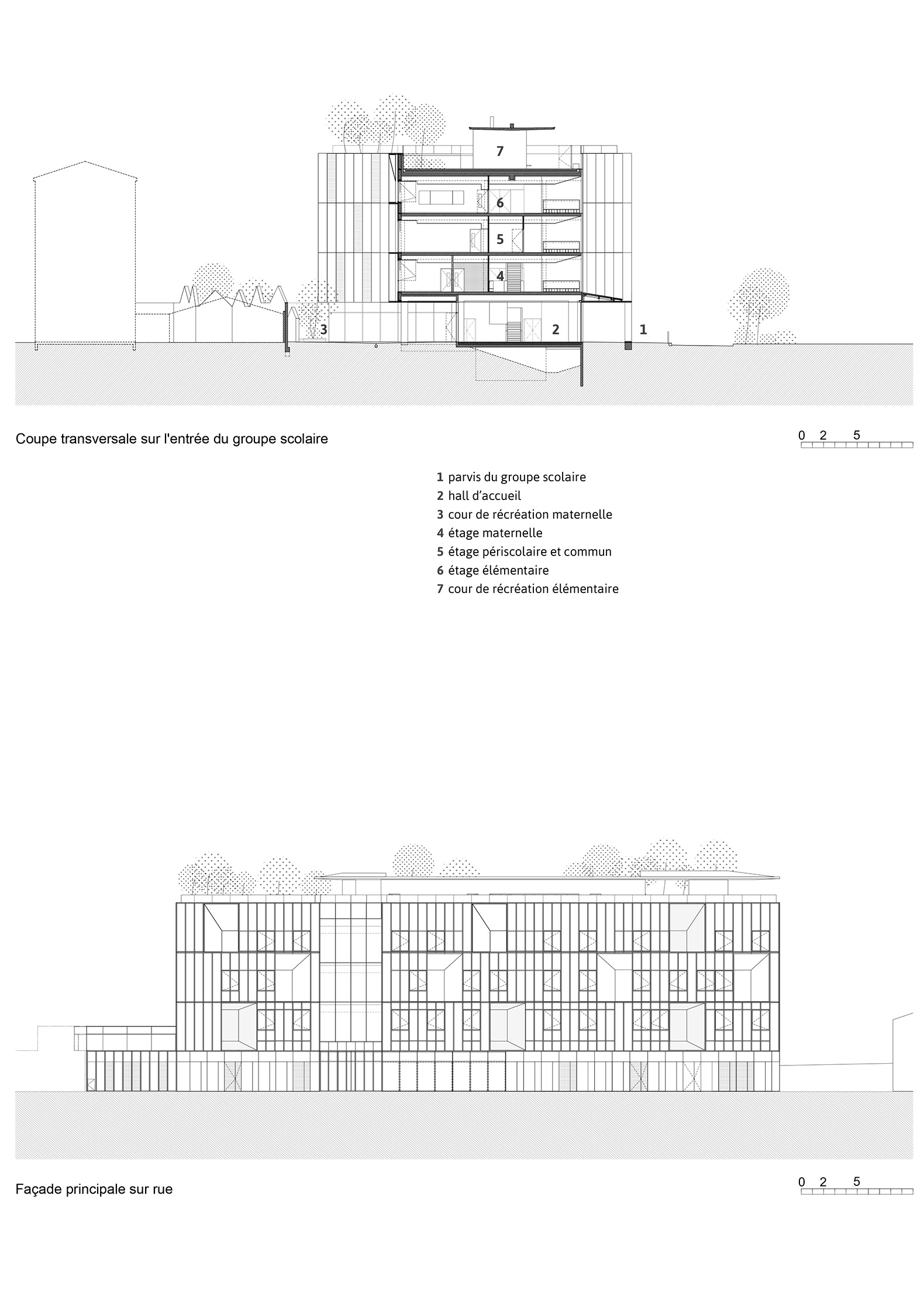
Marjan Hessamfar and Joe Vérons architectes urbanistes proposed a compact, layered volume across five levels for the Sophie Germain School Complex, ensuring functional autonomy. The courtyard is located on the rooftop, transforming it into a habitable space. The clear and gradual interior organization dedicates each floor to a specific function and includes habitable outdoor spaces.
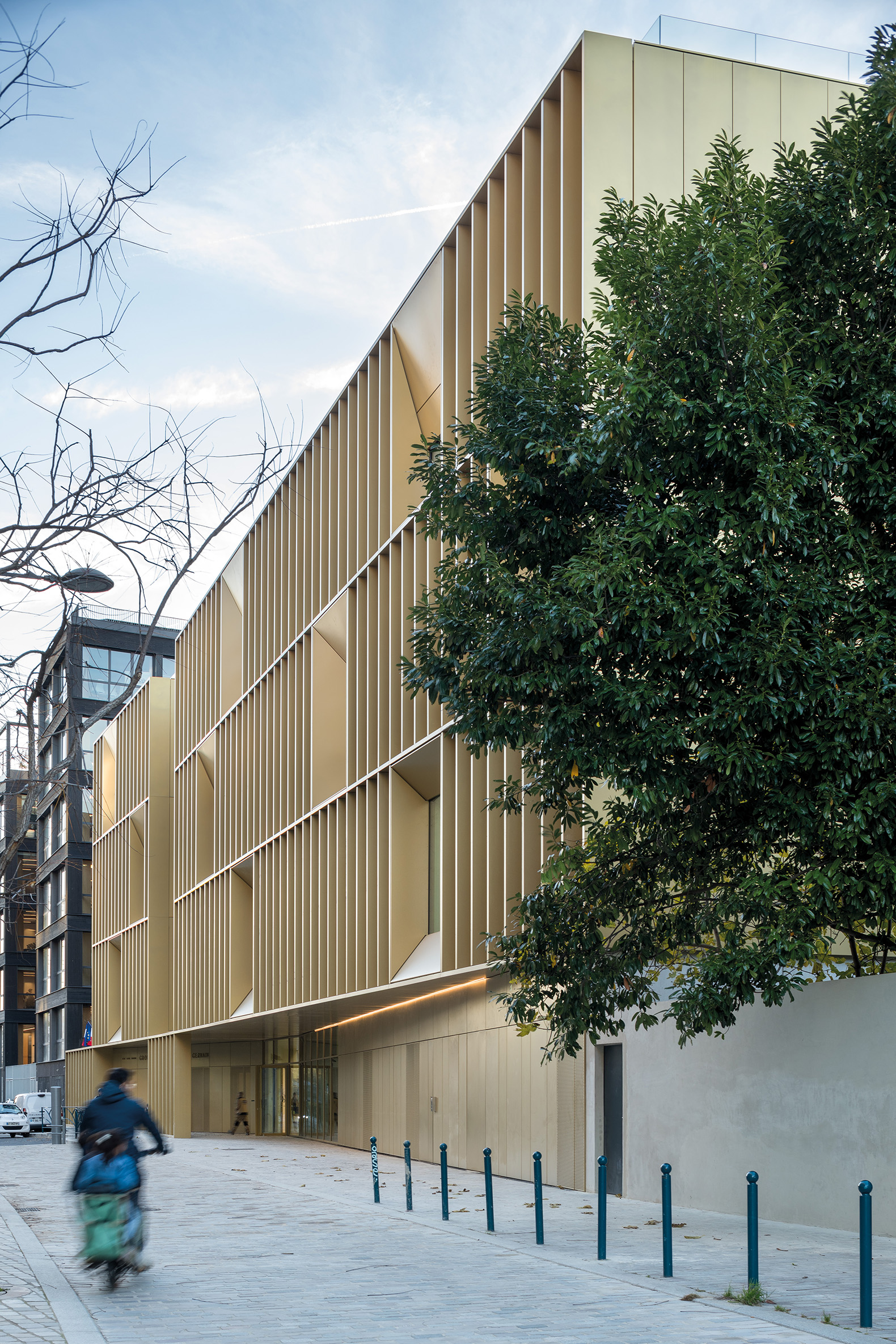
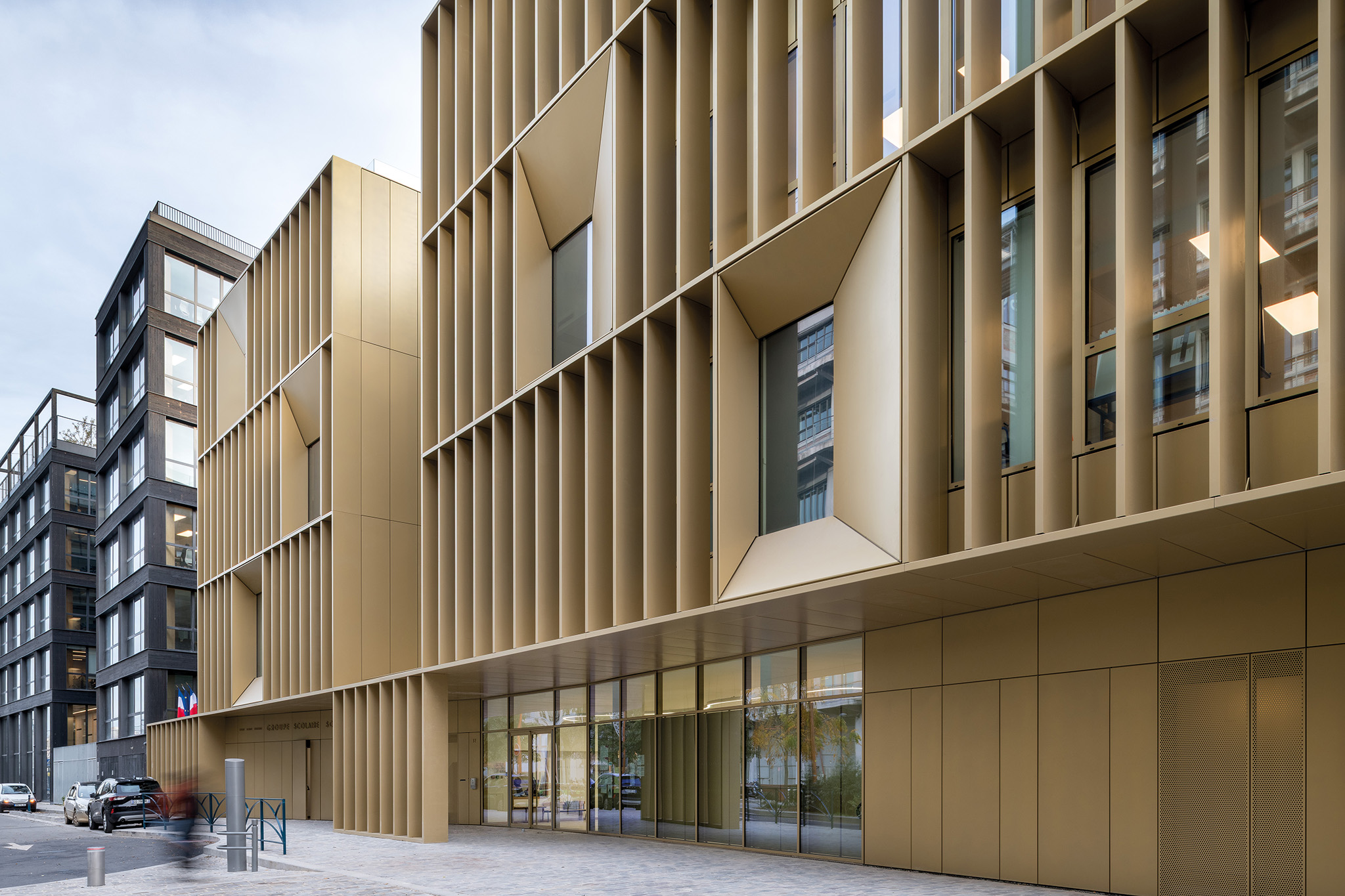
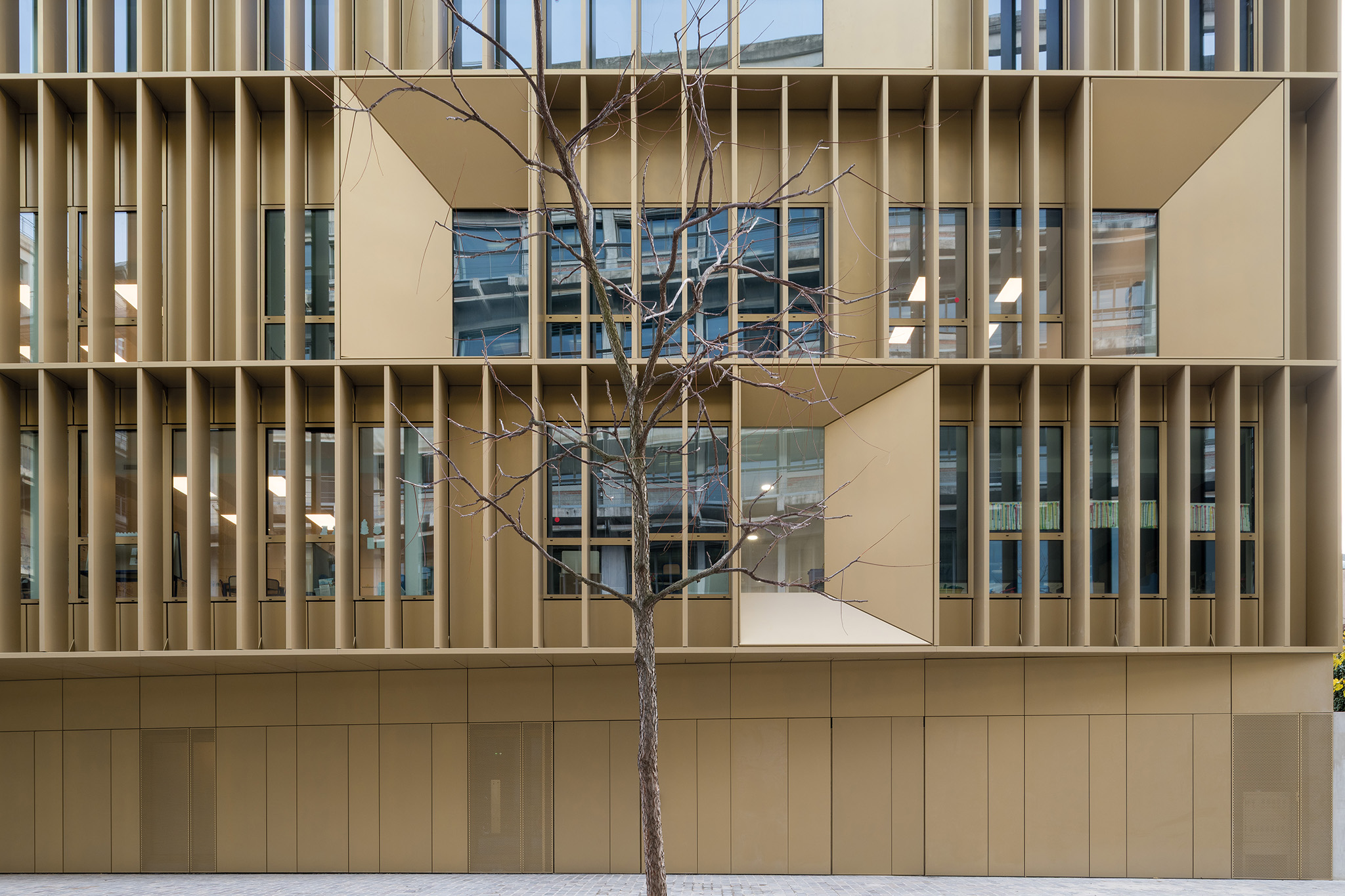
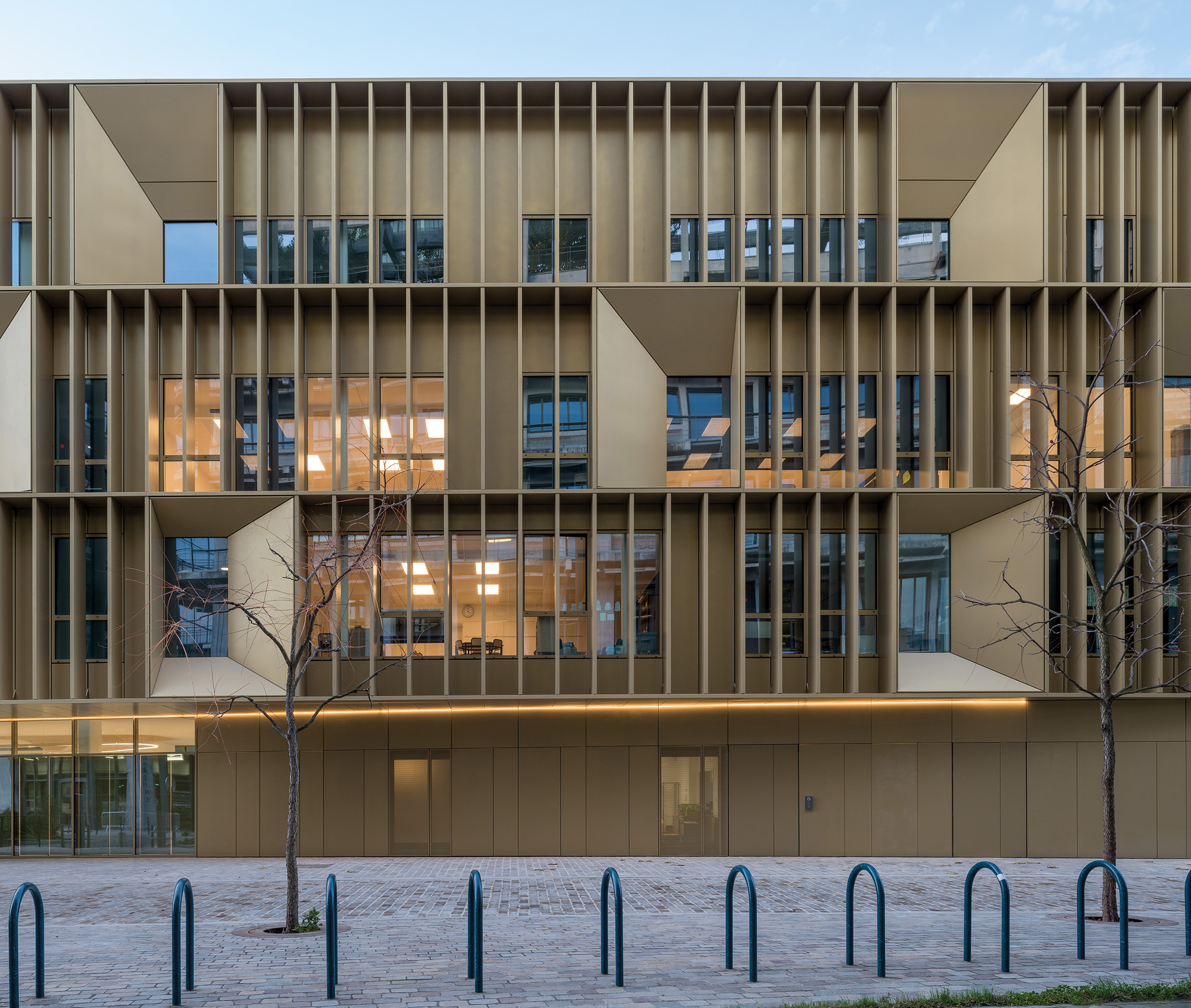
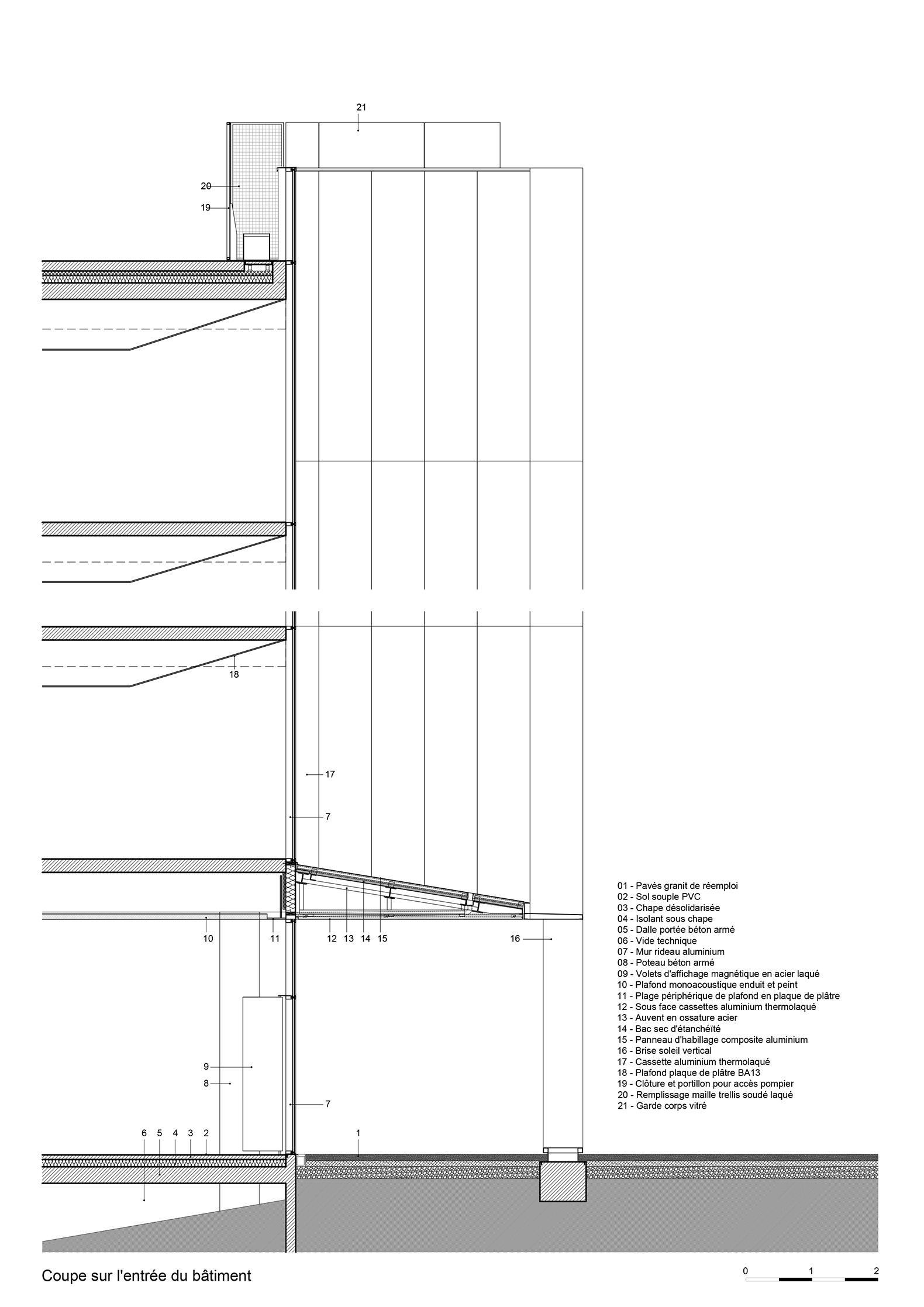
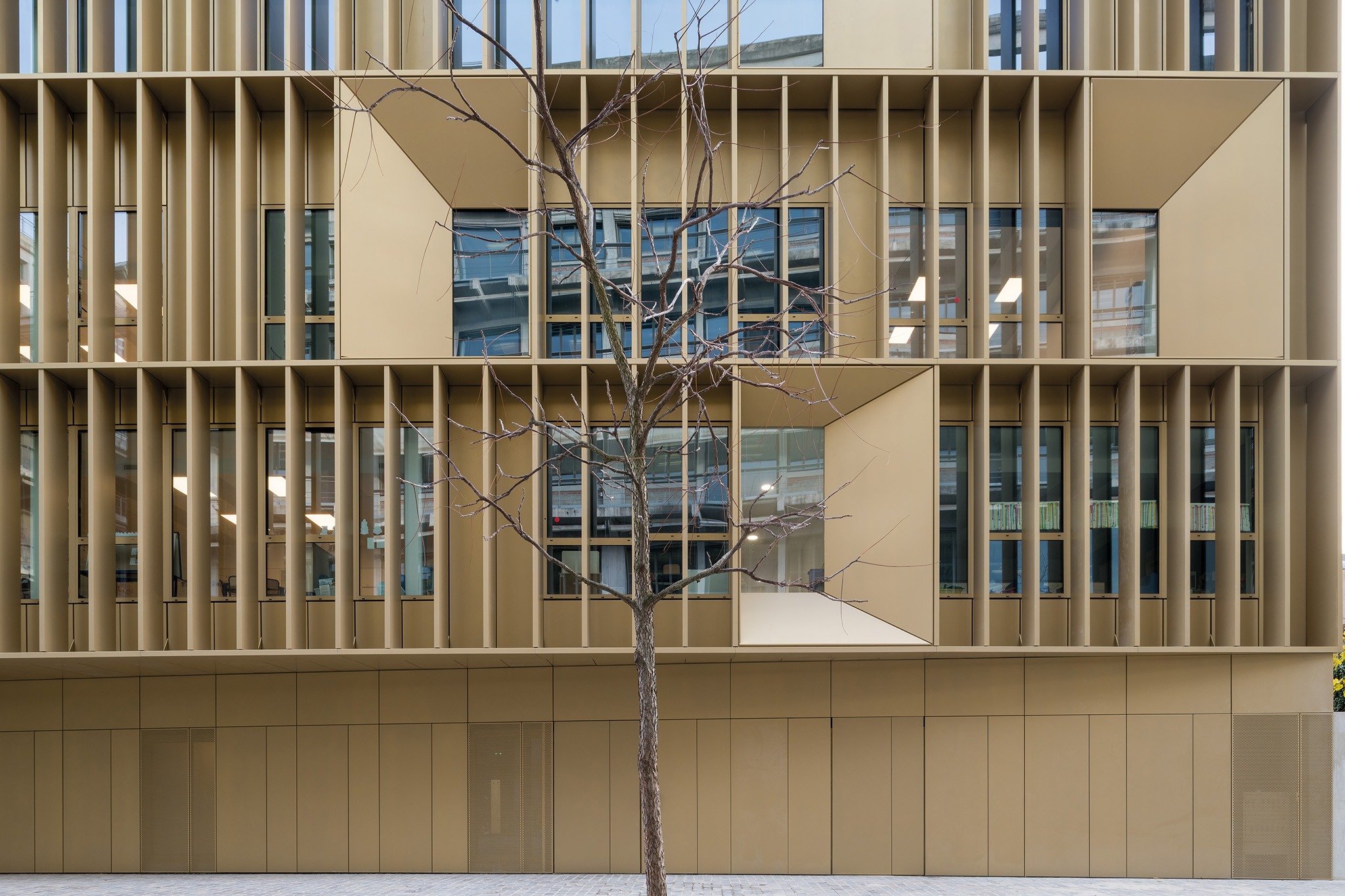
The compact volume is punctuated by two openings that bring natural light into the heart of the building. The facades, made of glass, aluminum, and a series of latticework panels that act as sunshades, alternate solid and transparent surfaces with setbacks that frame the landscape. The structure is made of concrete, wood on the facades.
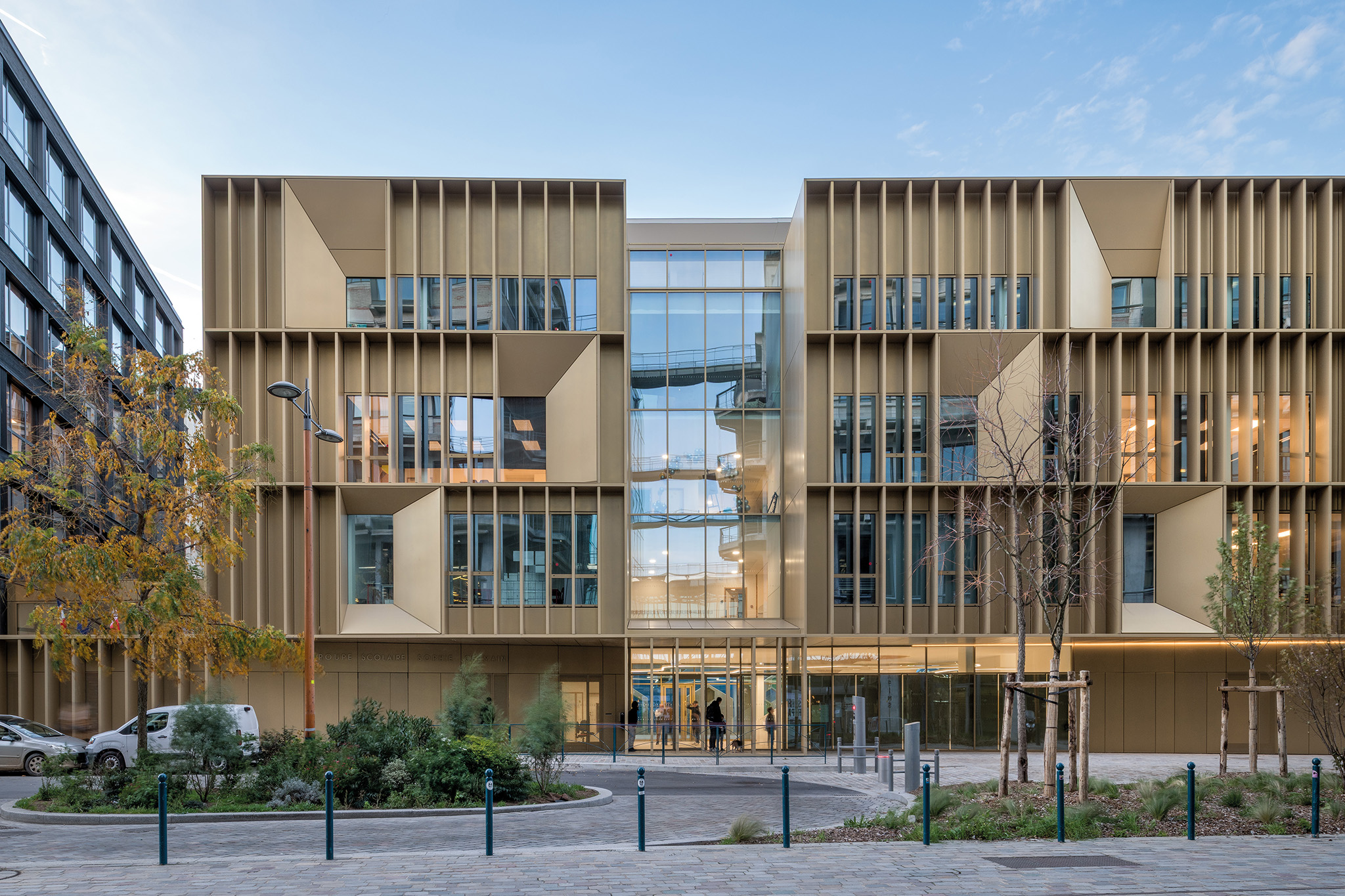
School complex Sophie Germain by Marjan Hessamfar and Joe Vérons. Photograph by Jean-François Tremege.
Project description by Marjan Hessamfar and Joe Vérons architectes urbanistes
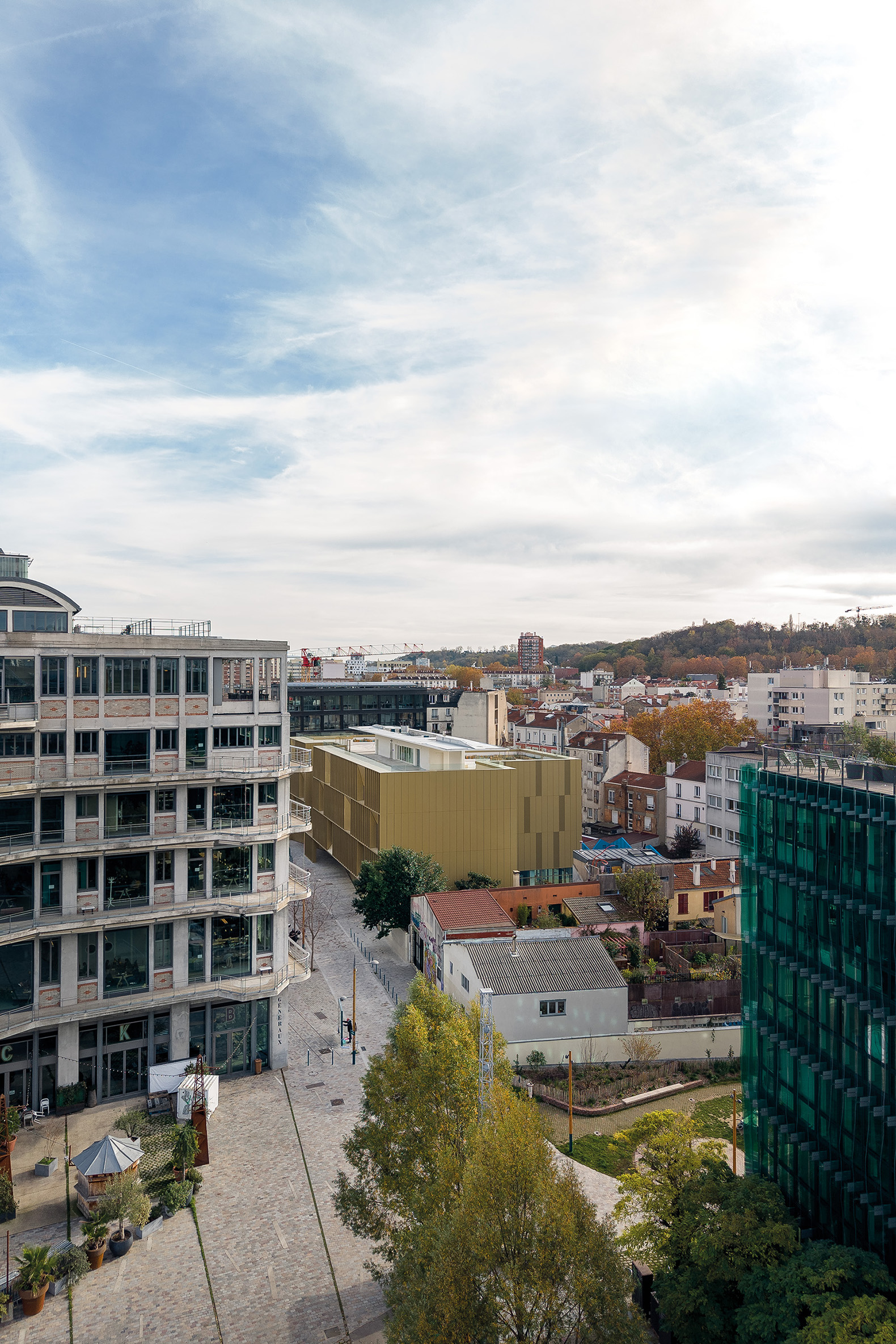
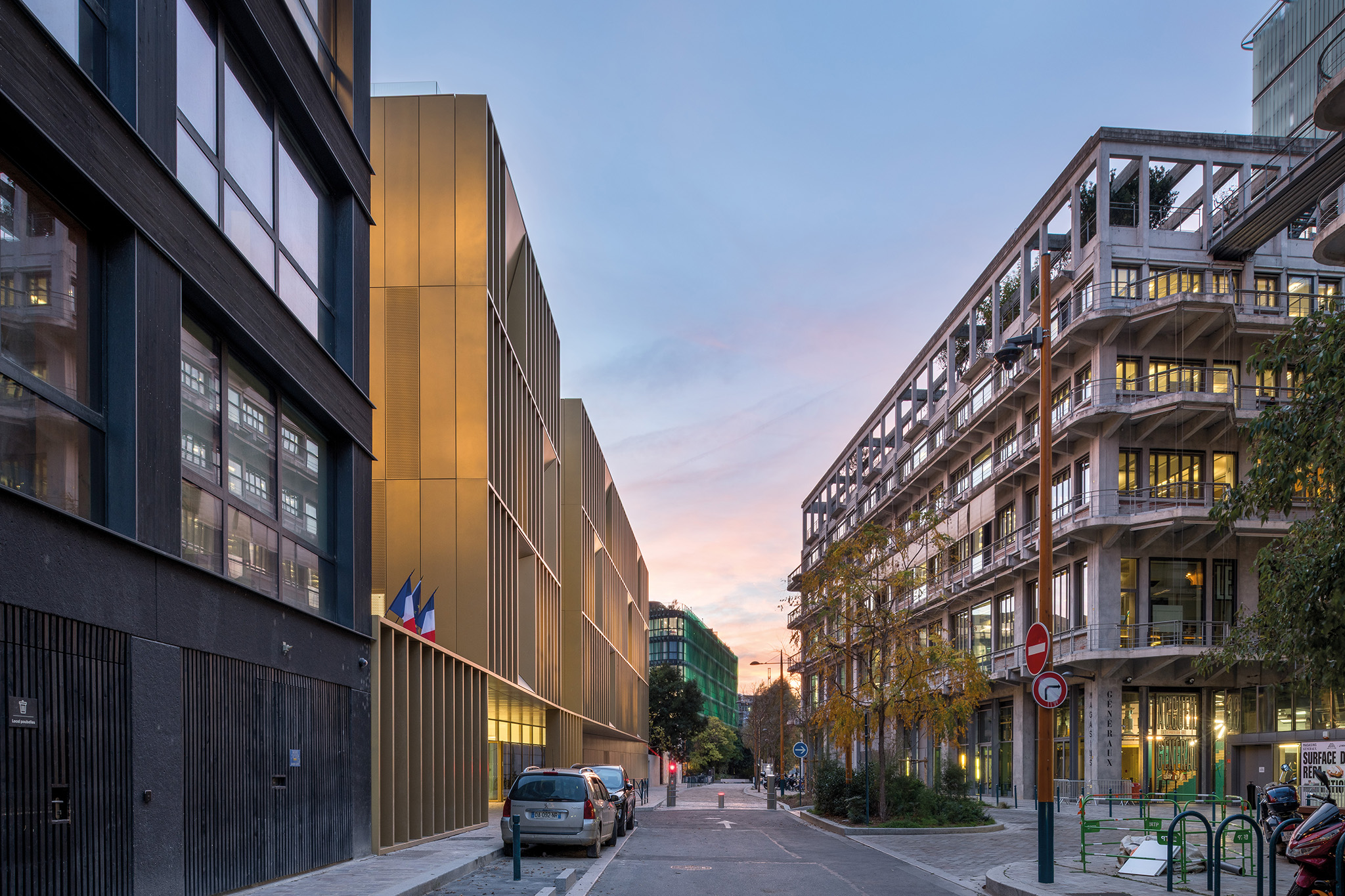
In Pantin, the Sophie Germain school complex is part of the development momentum of the ZAC du Port, a large-scale urban planning operation that repositions the Canal de l'Ourcq at the heart of the lives of Pantin's residents, and establishes itself as a major public facility in the transformation of this part of the city.
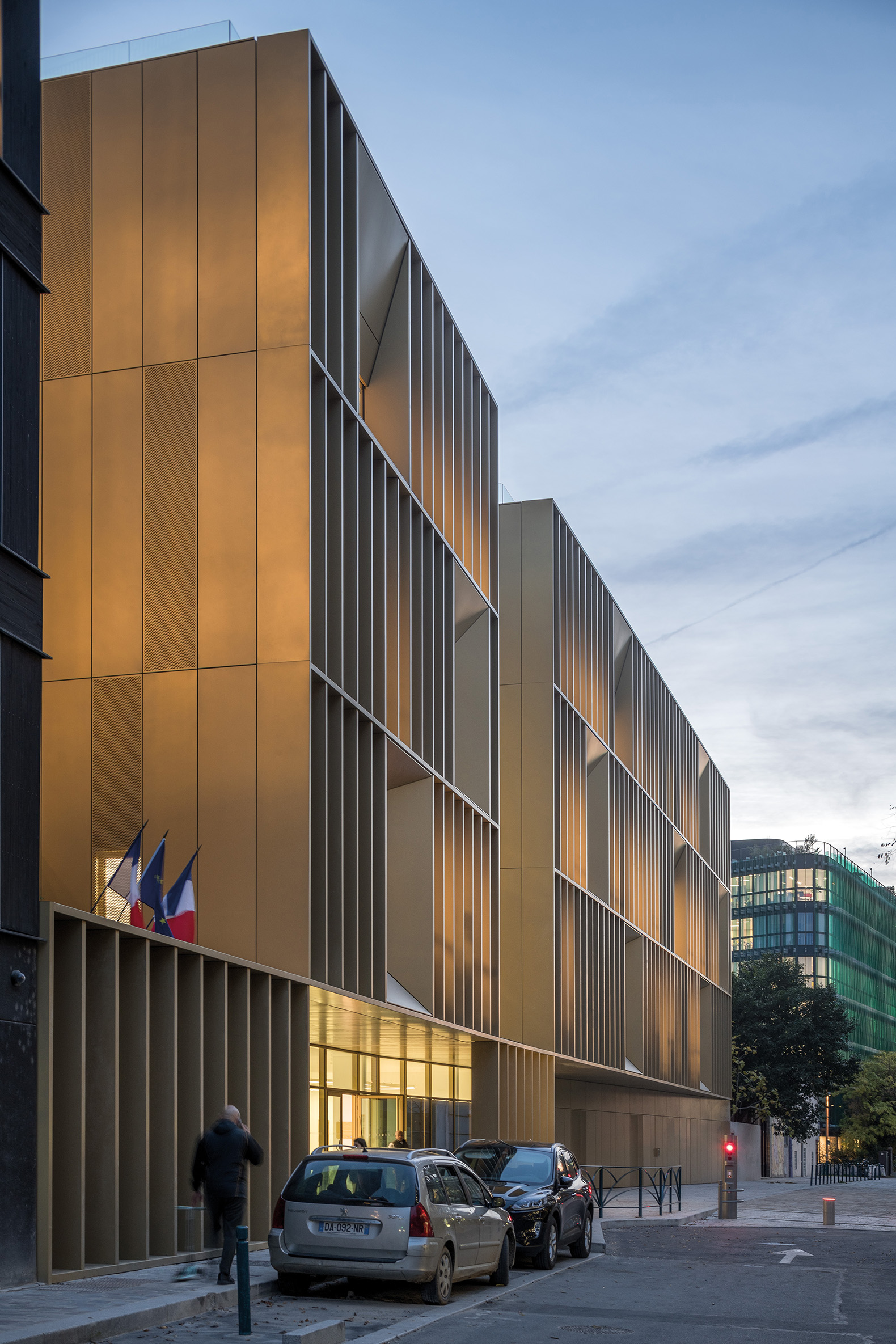
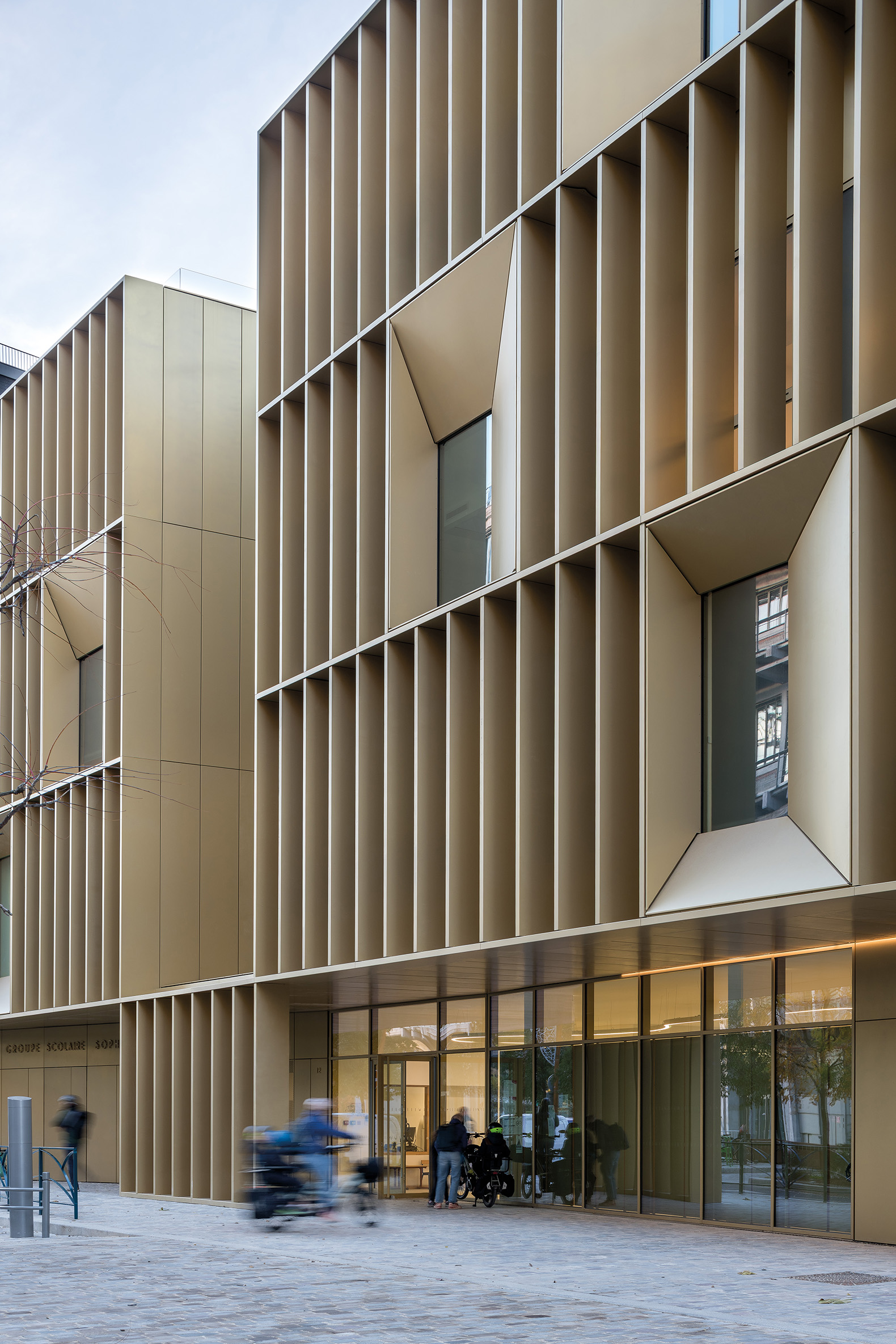
In a composite urban context, between the monumental presence of the Magasins Généraux, the fabric of the neighbourhood and the recent constructions of the joint-development zone, the school complex creates an urban continuity and establishes an appropriate dialogue between these different scales, whilst also affirming a style that is both readable and integrated. This readability is expressed, namely, through the choice of a warm, luminous, golden hue, and of an asserted materiality, made to visually singularise the facility and establish its role as a structuring public edifice.
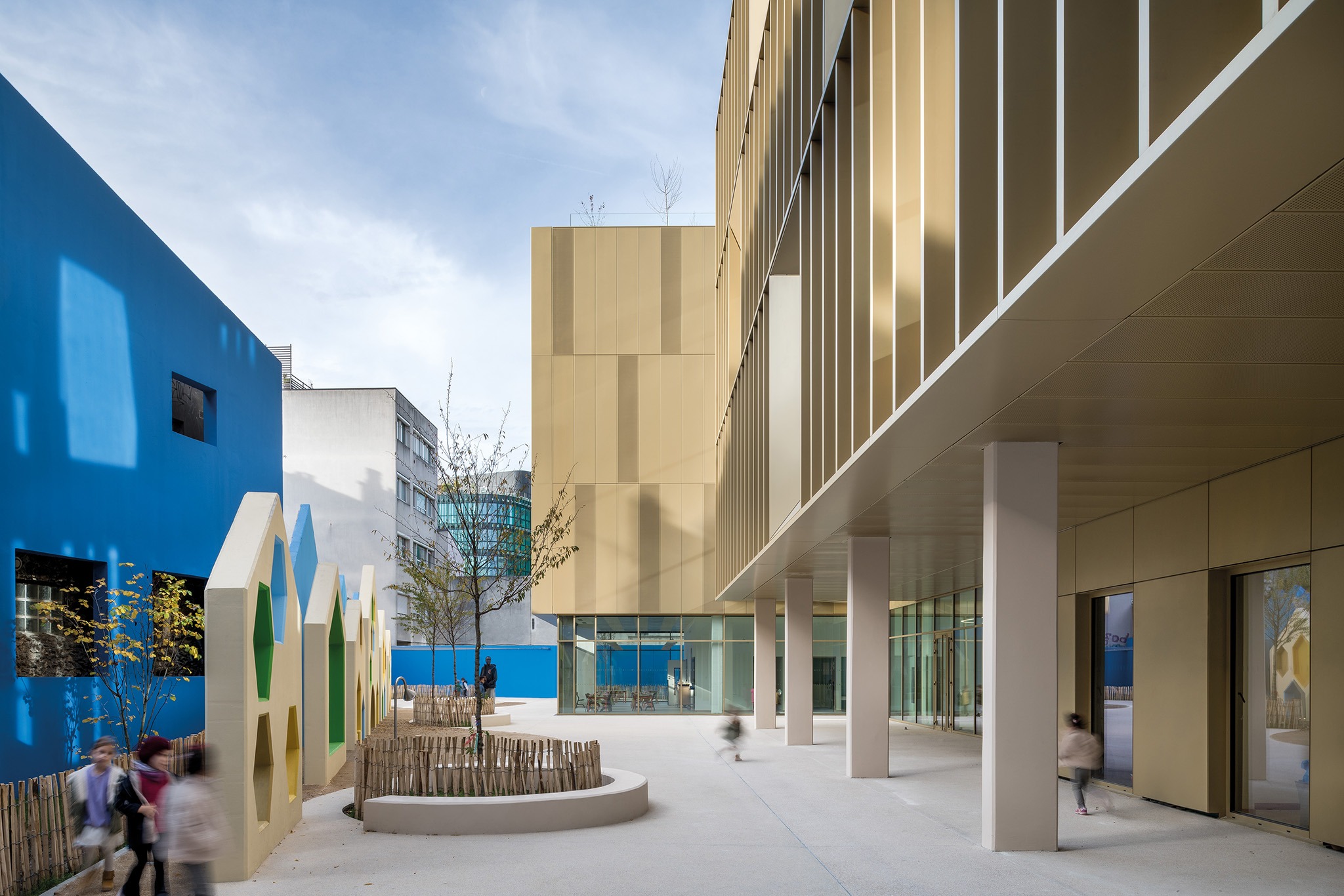
Constrained by both the small buildable area of the parcel and by restrictions regarding unobstructed views, the school complex has been designed as a compact and stratified volume on five levels. This vertical organisation made it possible to clearly link the different entities of the brief whilst also guaranteeing their functional autonomy. The courtyard of the primary school, installed on the roof, is thus both a functional and symbolic response, transforming the roof into a genuine living space.
Structured and readable architecture
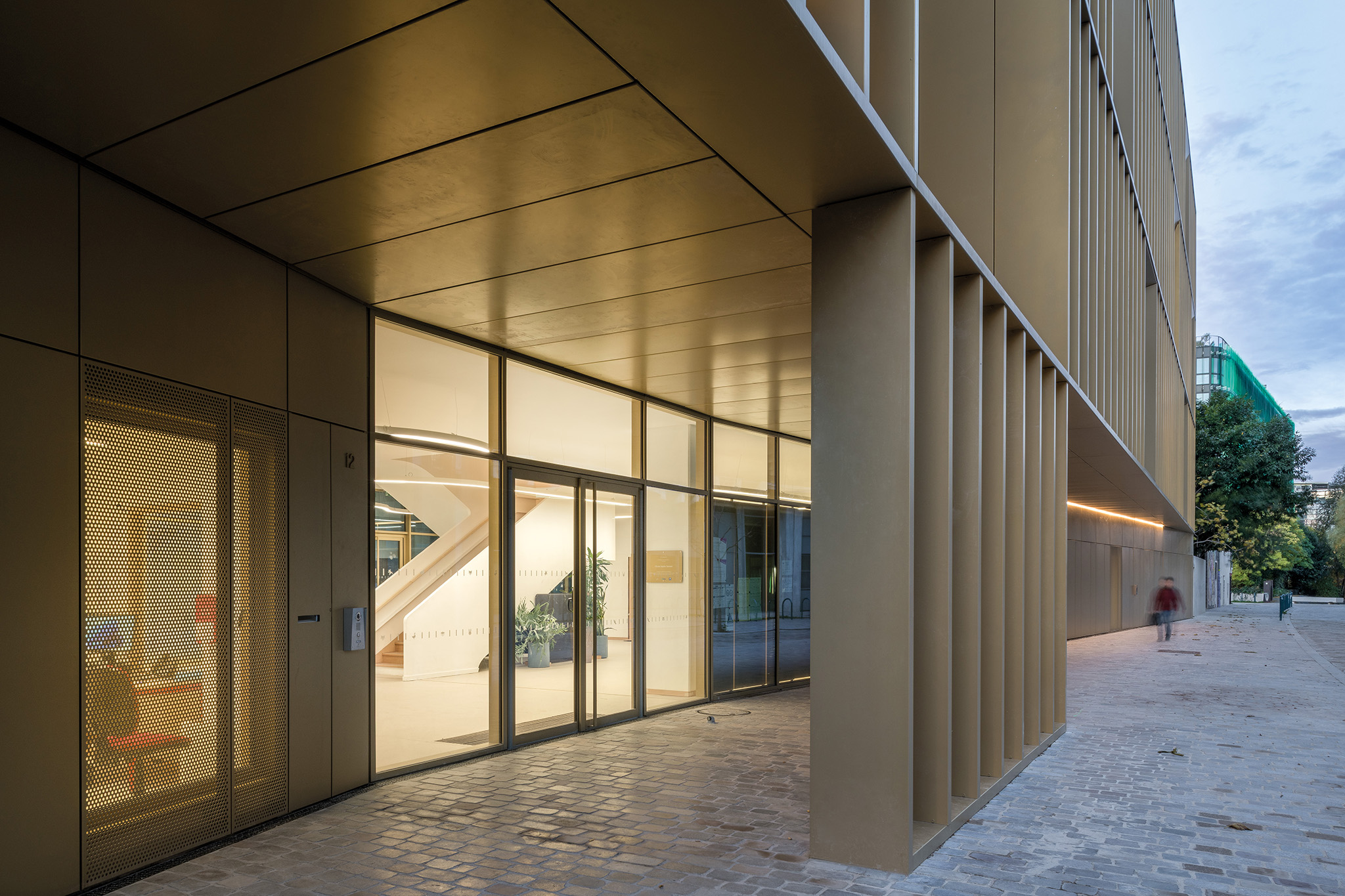
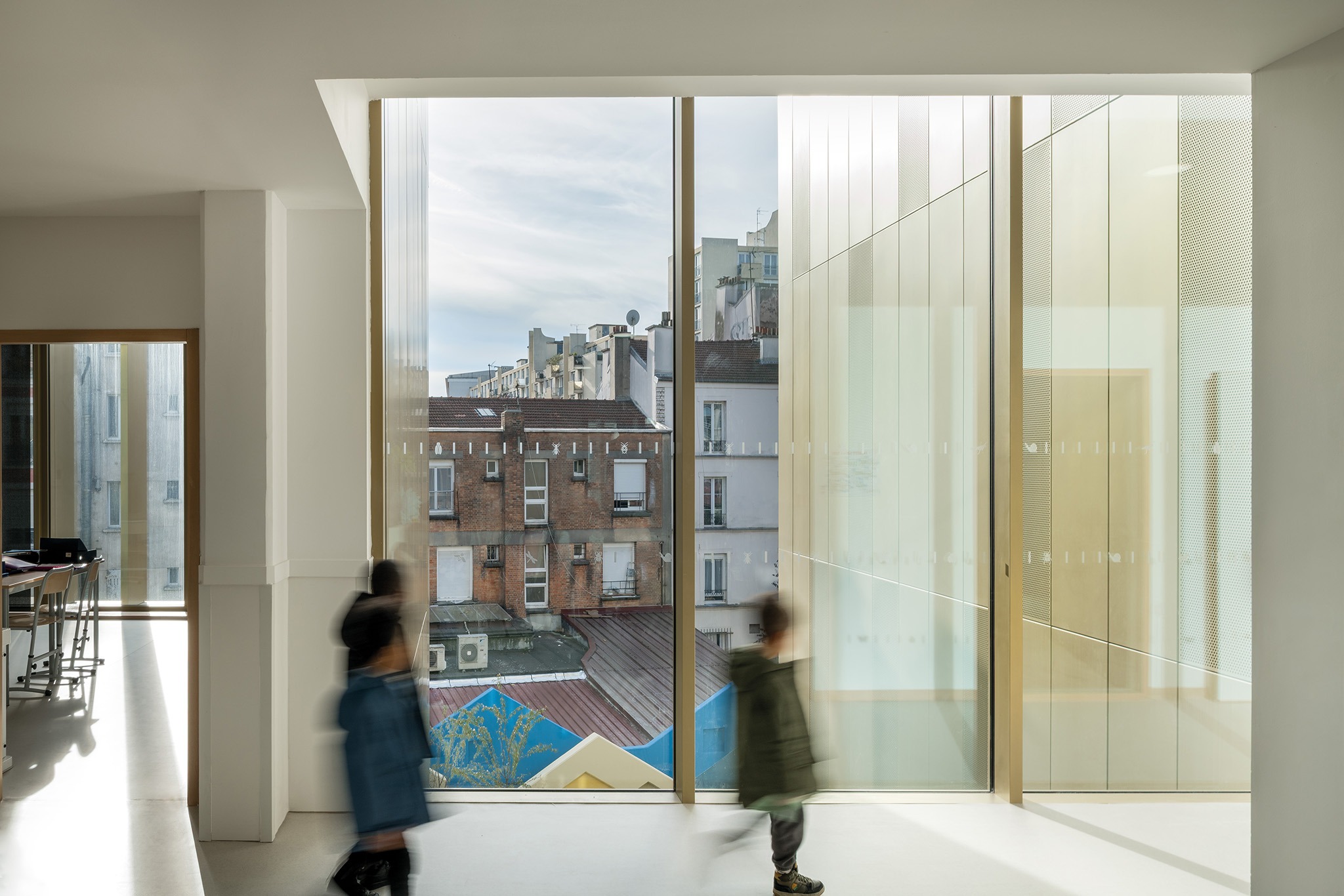
The school complex asserts a contemporary architectural language, coherent with the neighbourhood, while developing its own identity. Its compact massing is punctuated by two glazed slots bringing natural light into the heart of the building. The anodised glass and aluminium facades, animated by a play of fins forming brise-soleils, alternate between solid and transparent surfaces, while large recessed openings frame the landscape and offer glimpses of school life. On the ground floor, the transparency of the entrance hall extends the public space and accompanies the gesture of entry.
The interior organisation relies on a clear and gradual distribution of the different central points, each level being dedicated to a specific entity – nursery school, leisure centre or primary school. From the broadly open base of the ground floor, which groups the shared functions, all the way to the classrooms located on the upper levels, this vertical stratification guarantees readability and quality of use.
Exterior areas designed as living spaces
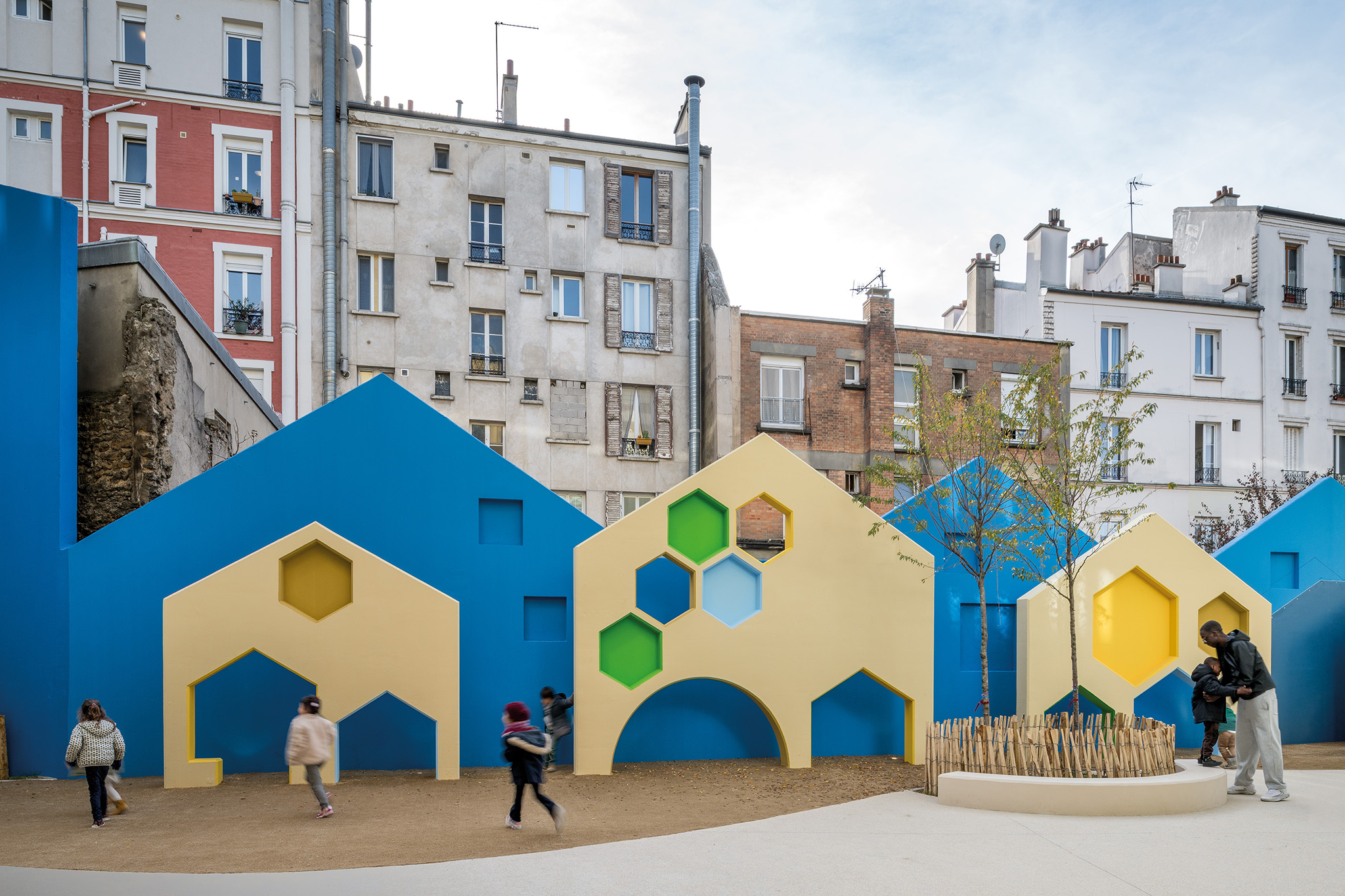
Inspired by the Oasis courtyards, the outdoor spaces are designed as genuine places for living and learning. They offer a diversity of atmospheres and uses — pedagogical garden, play areas, relaxation and discovery zones — while maintaining a high degree of spatial legibility, essential for supervision and safety.
Integrated environmental approach
The architects developed a comprehensive environmental approach to this project, relying both on choices about durable construction methods and on the optimisation of technical systems. The concrete structure ensures the building’s favourable thermal inertia and comfort in summer, whereas the Wood framework of the façades insulates via the exterior, which originated on an off-site manufacturing facility. Thus, it participates in the overall energy performance and contributes to limiting the environmental impact of construction. The choice of sustainable materials, such as anodised aluminium and glass, guarantees the longevity of the building whilst also affirming its identity.