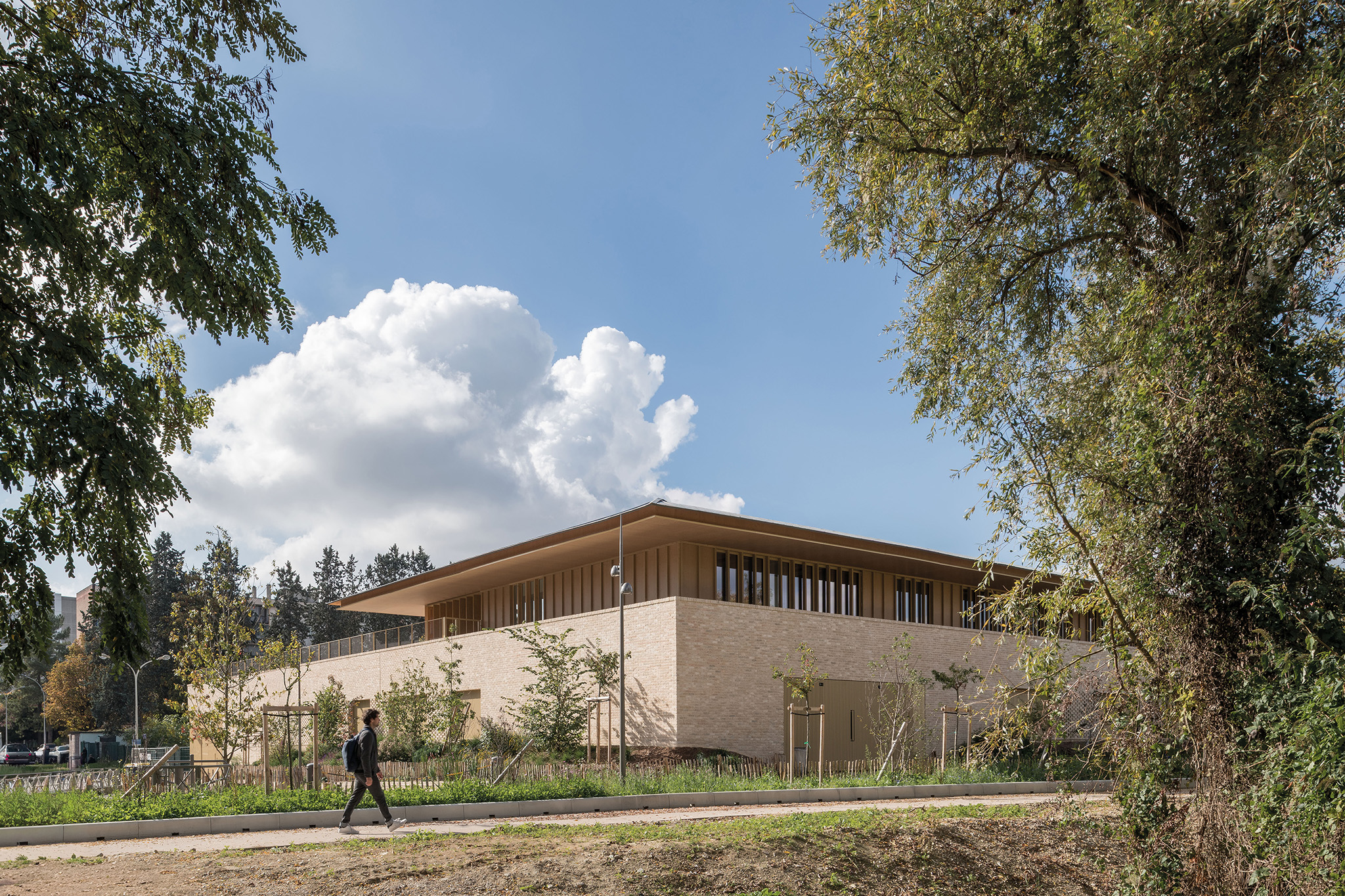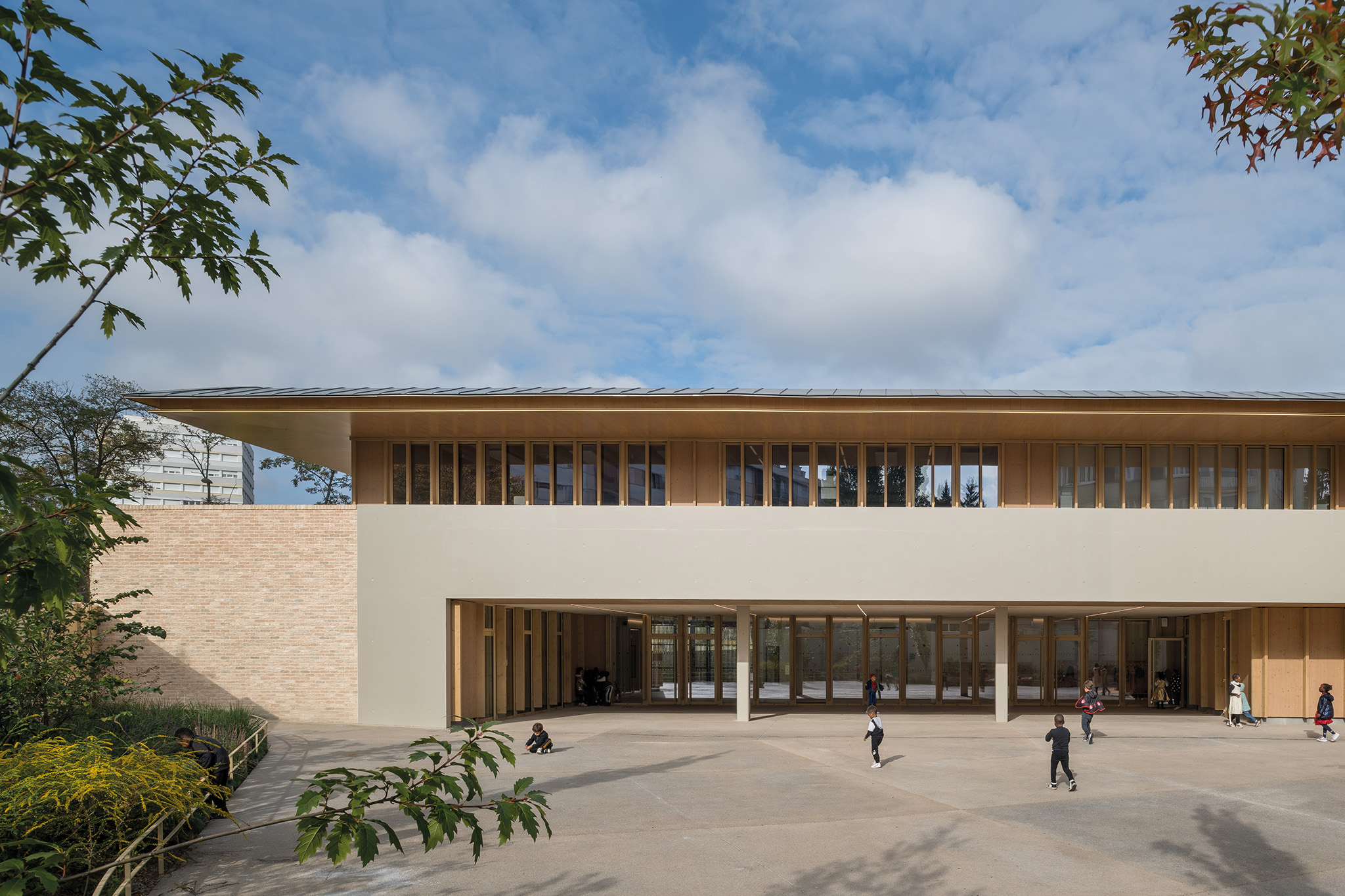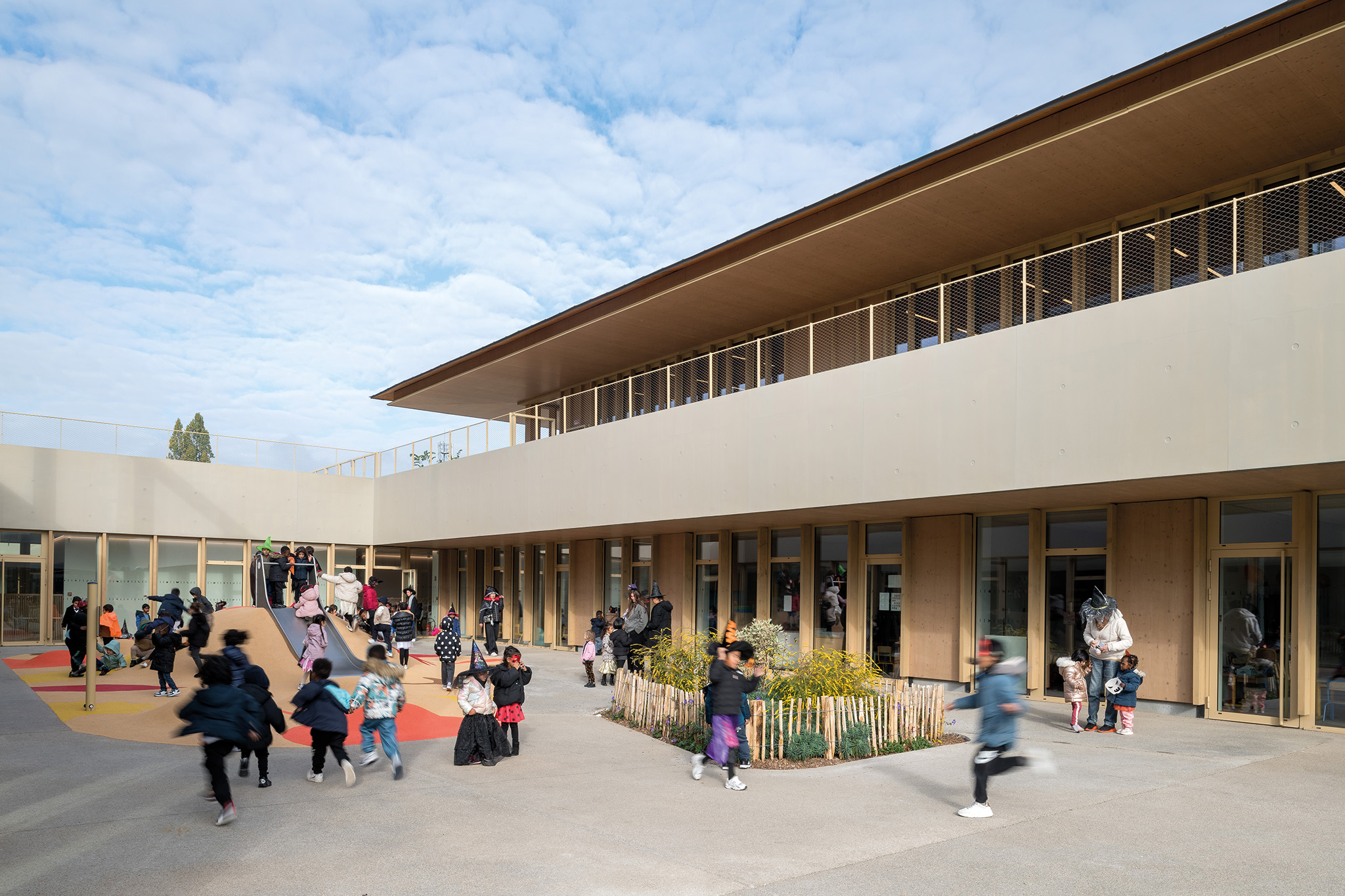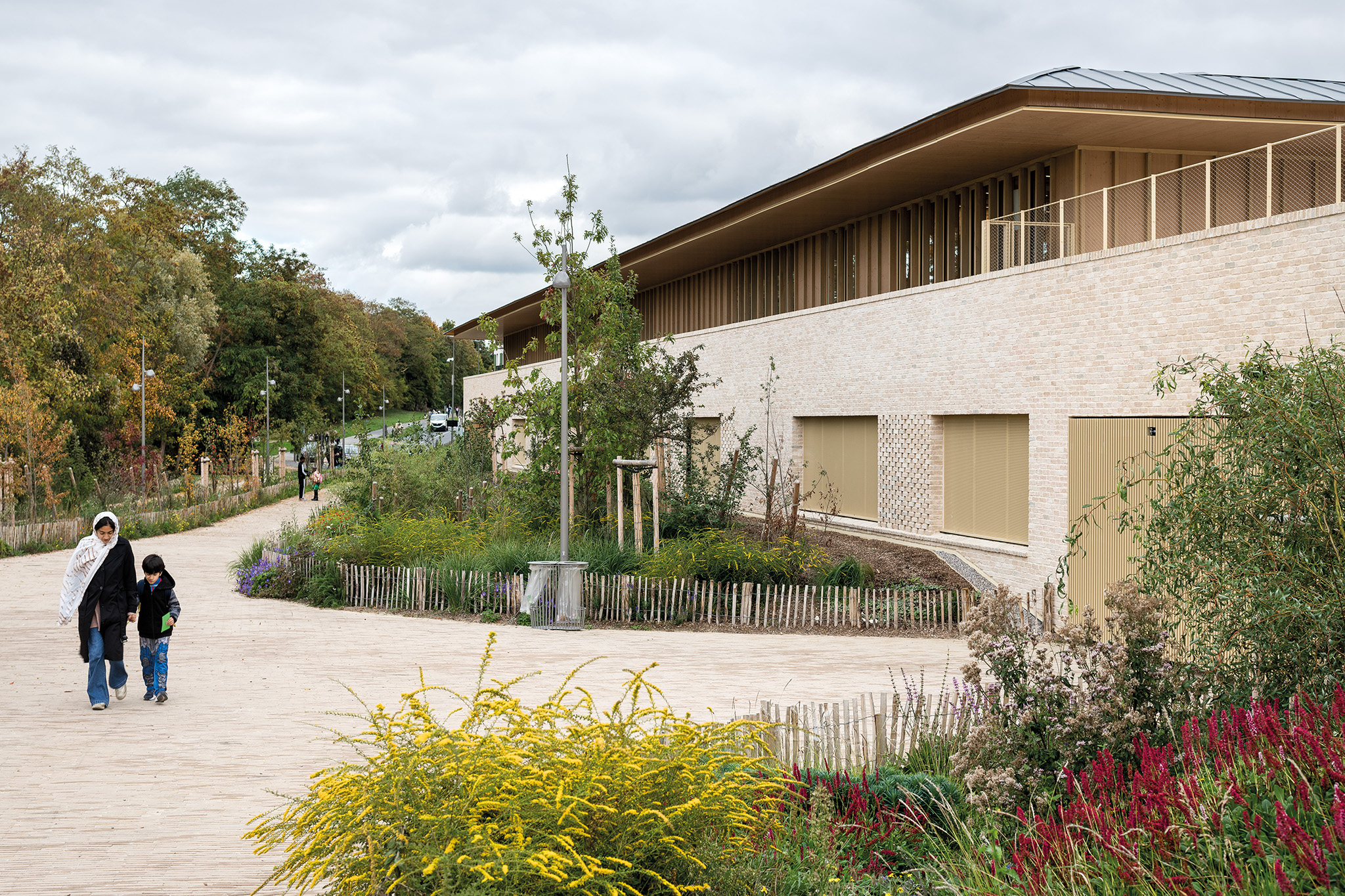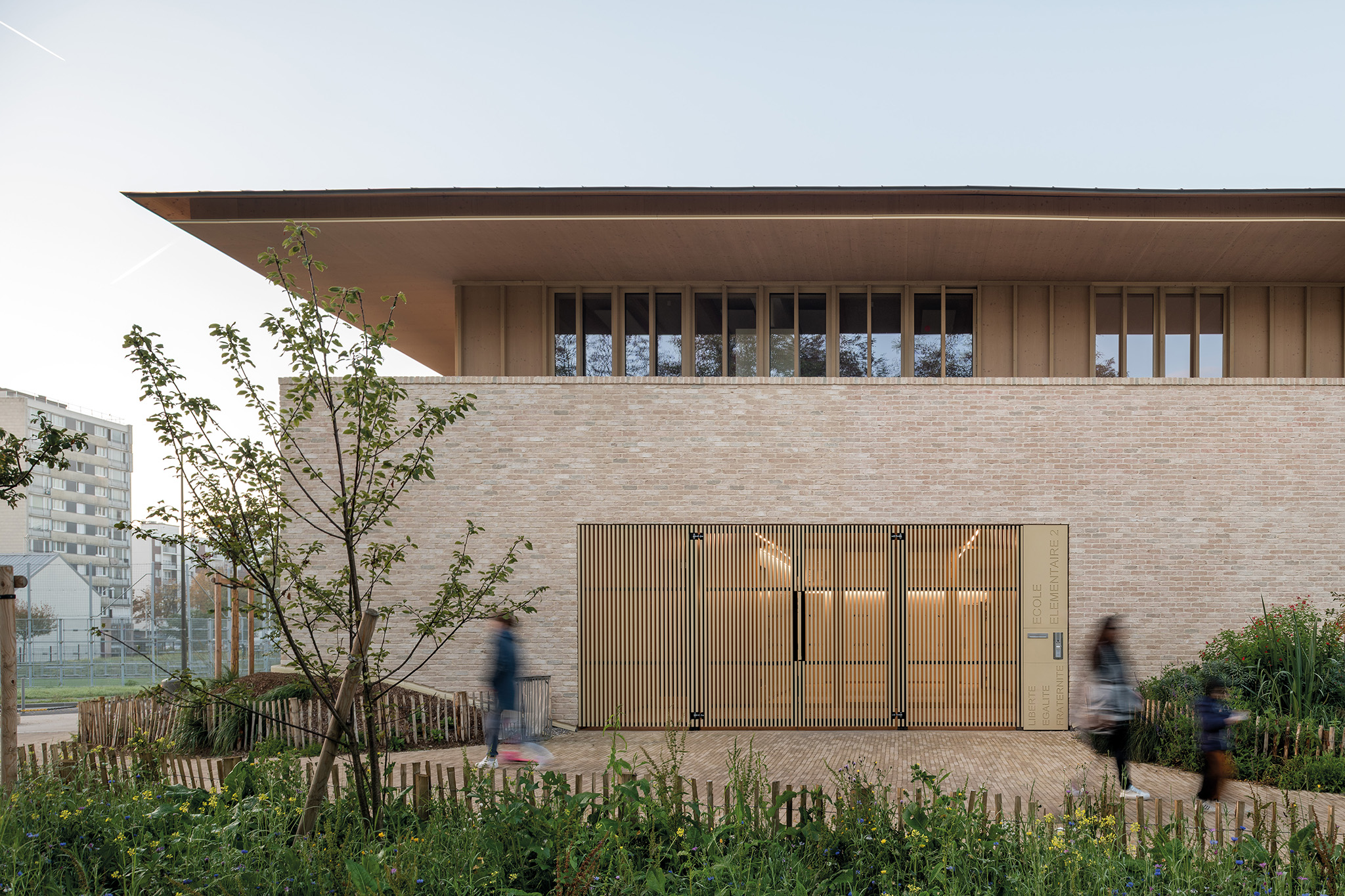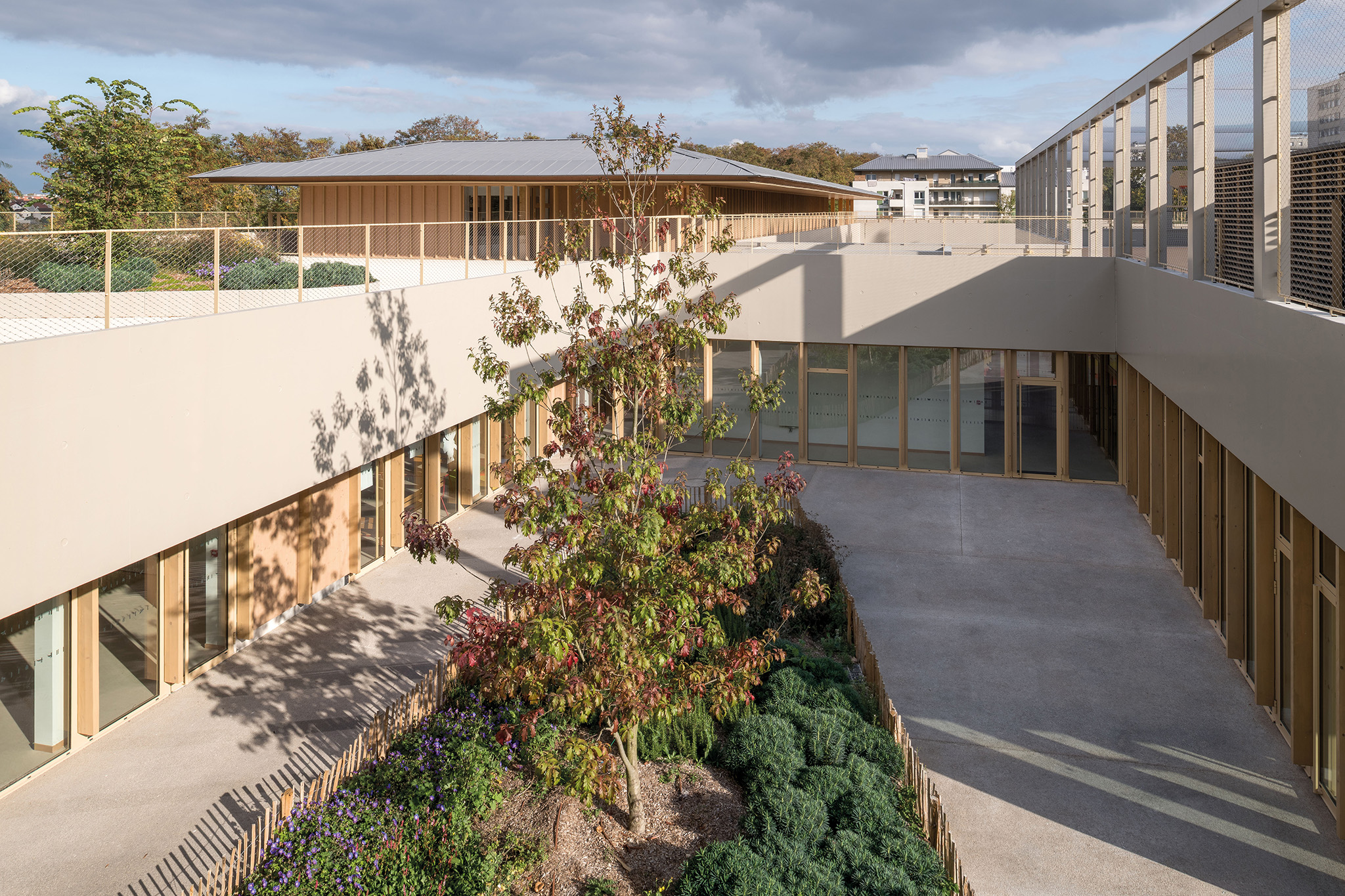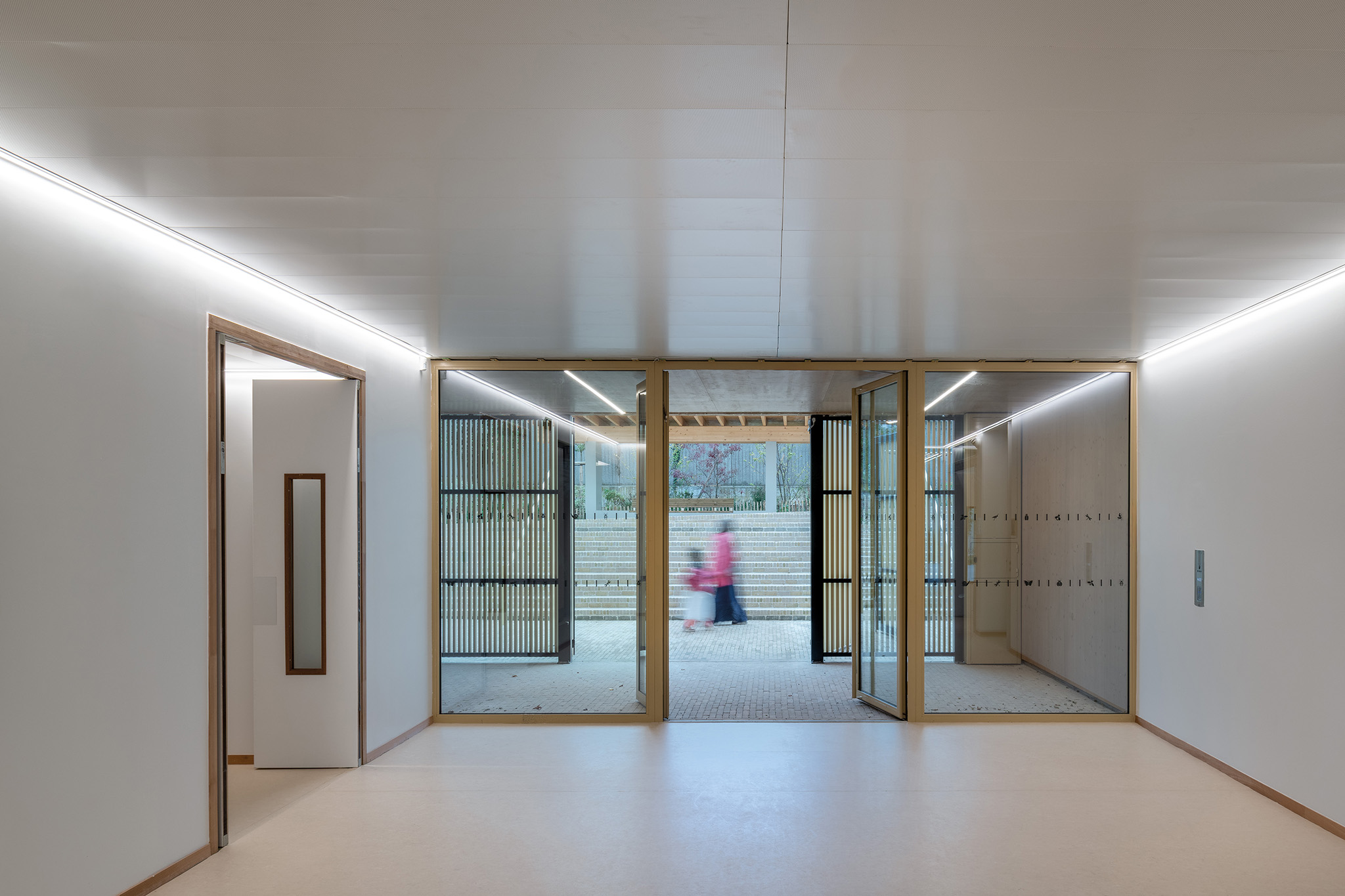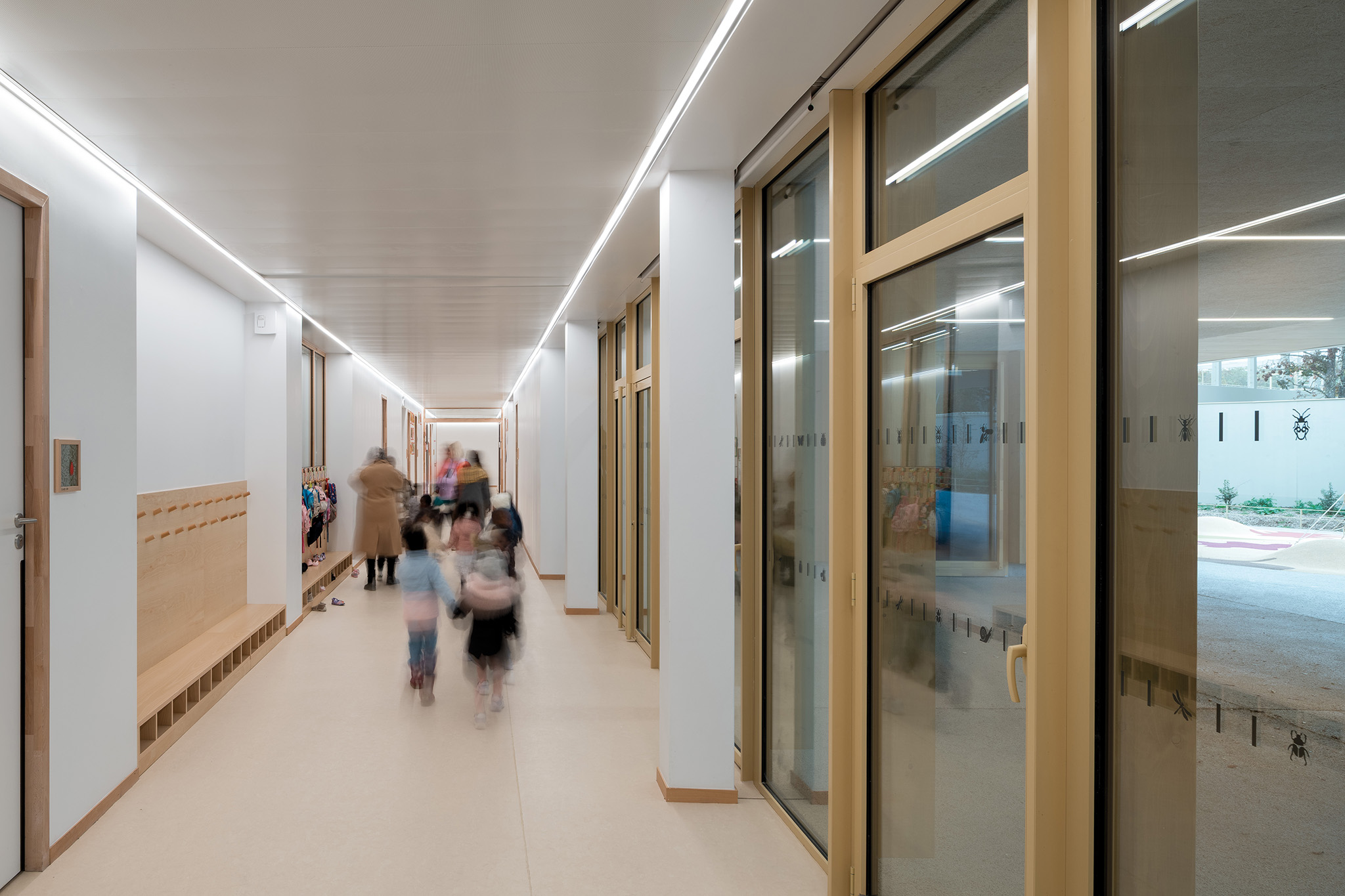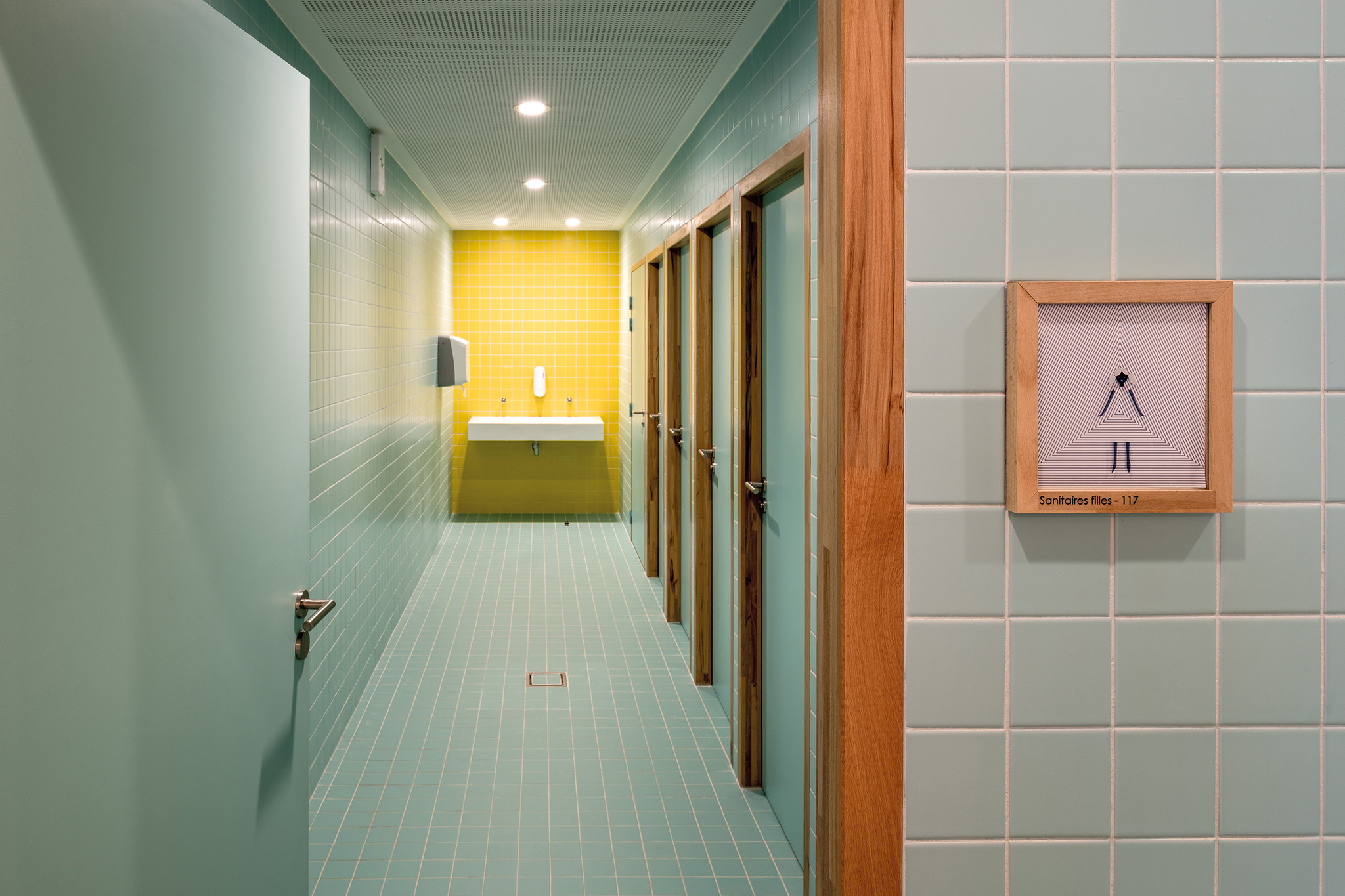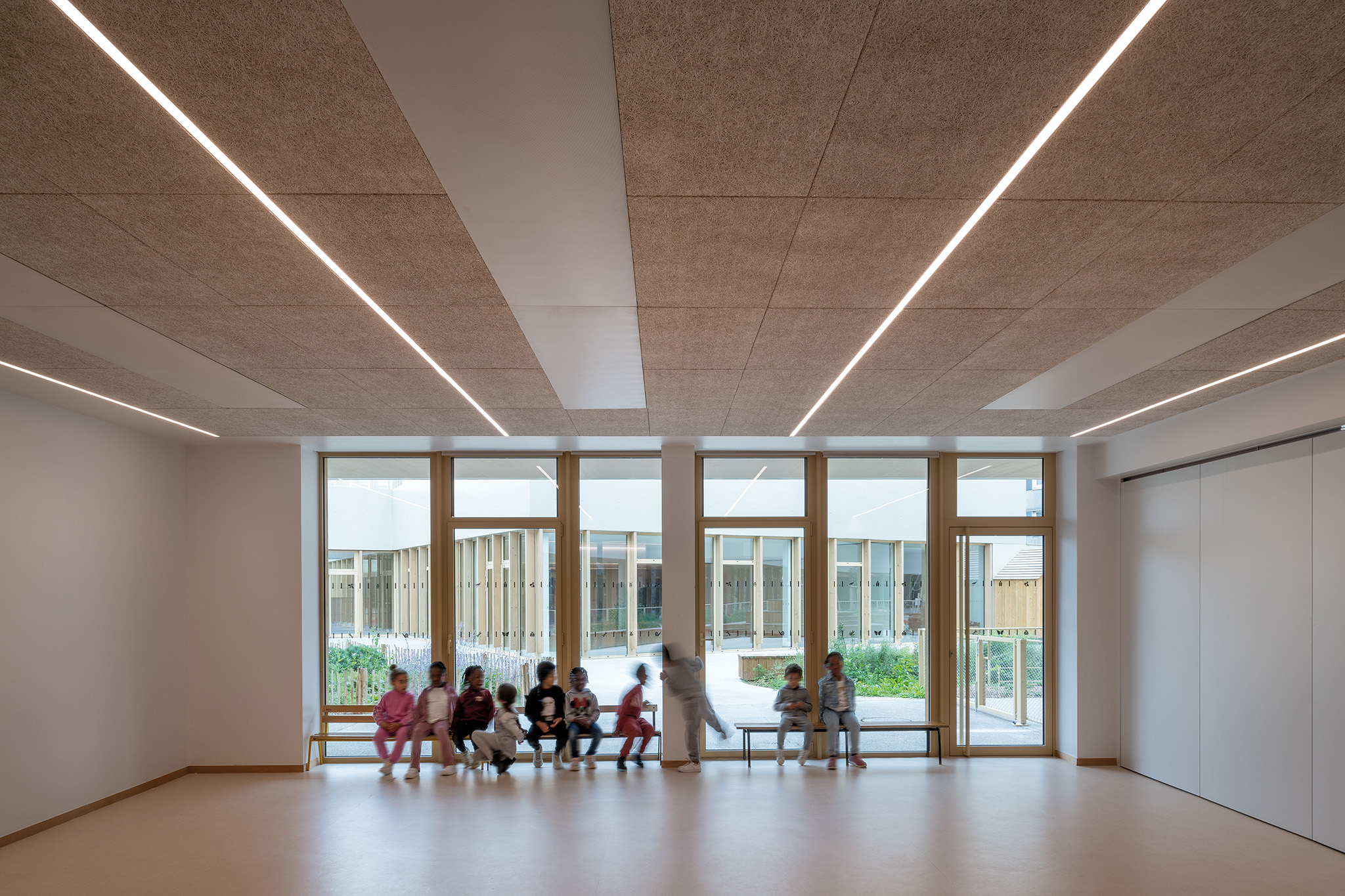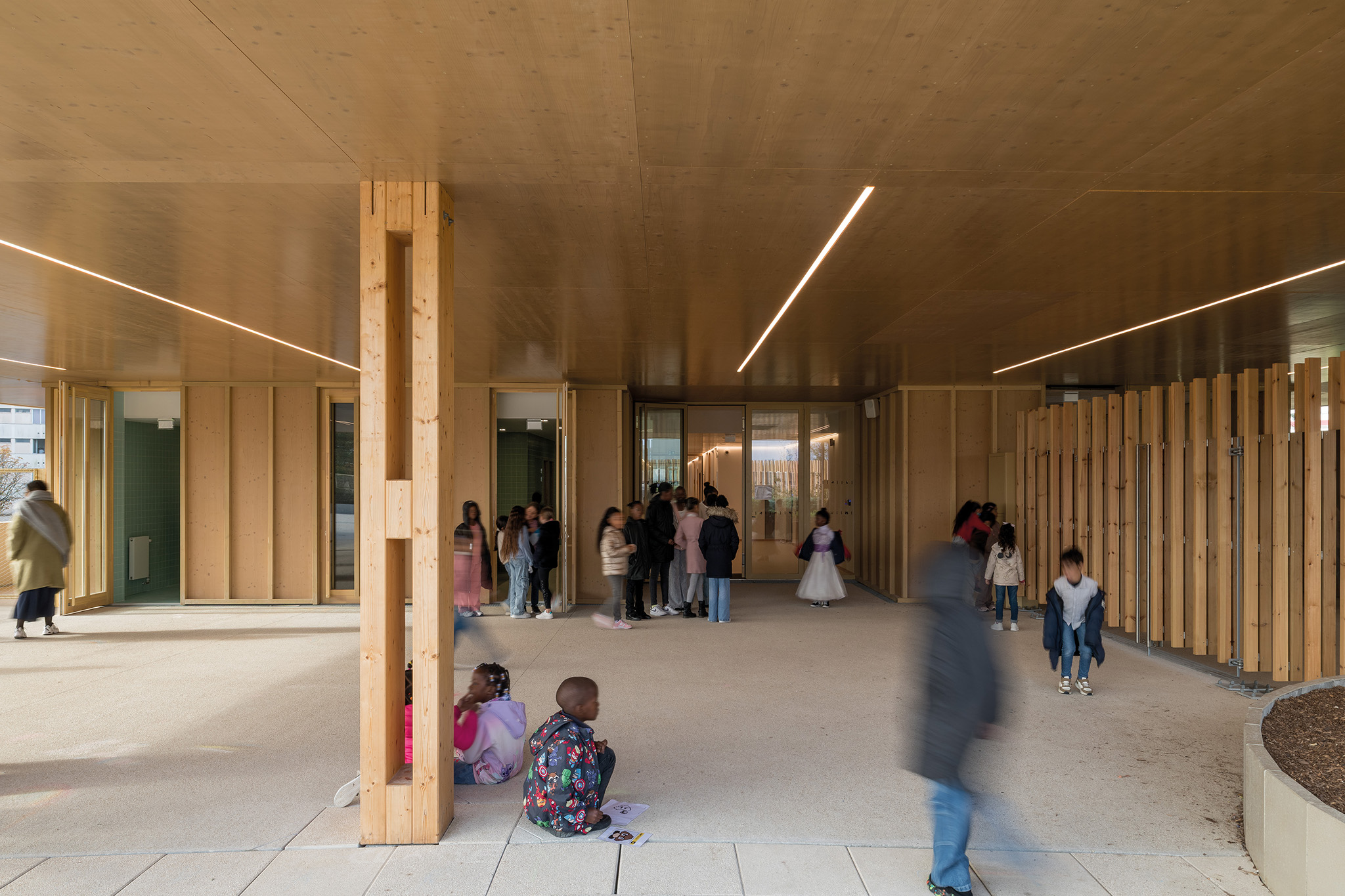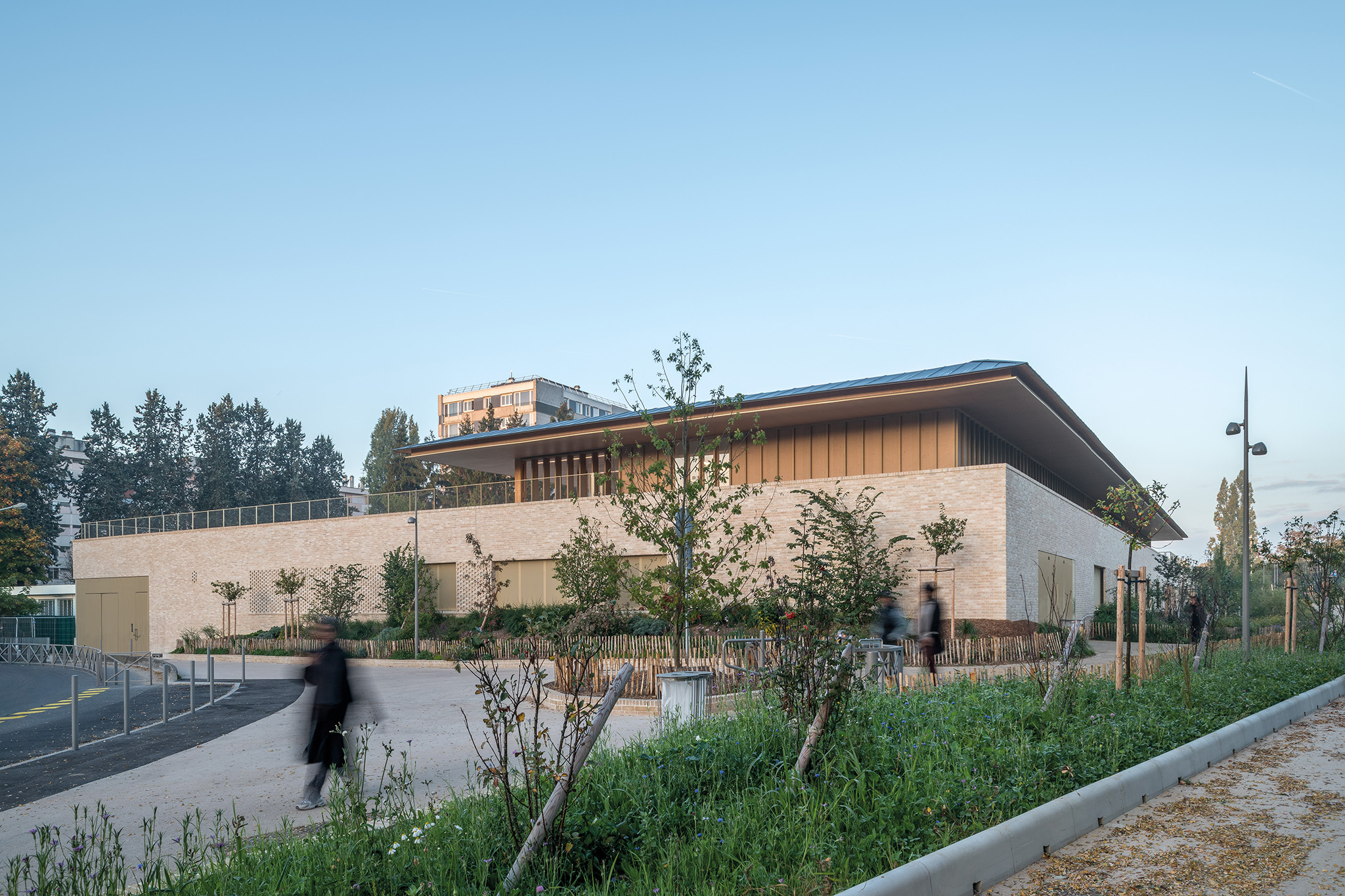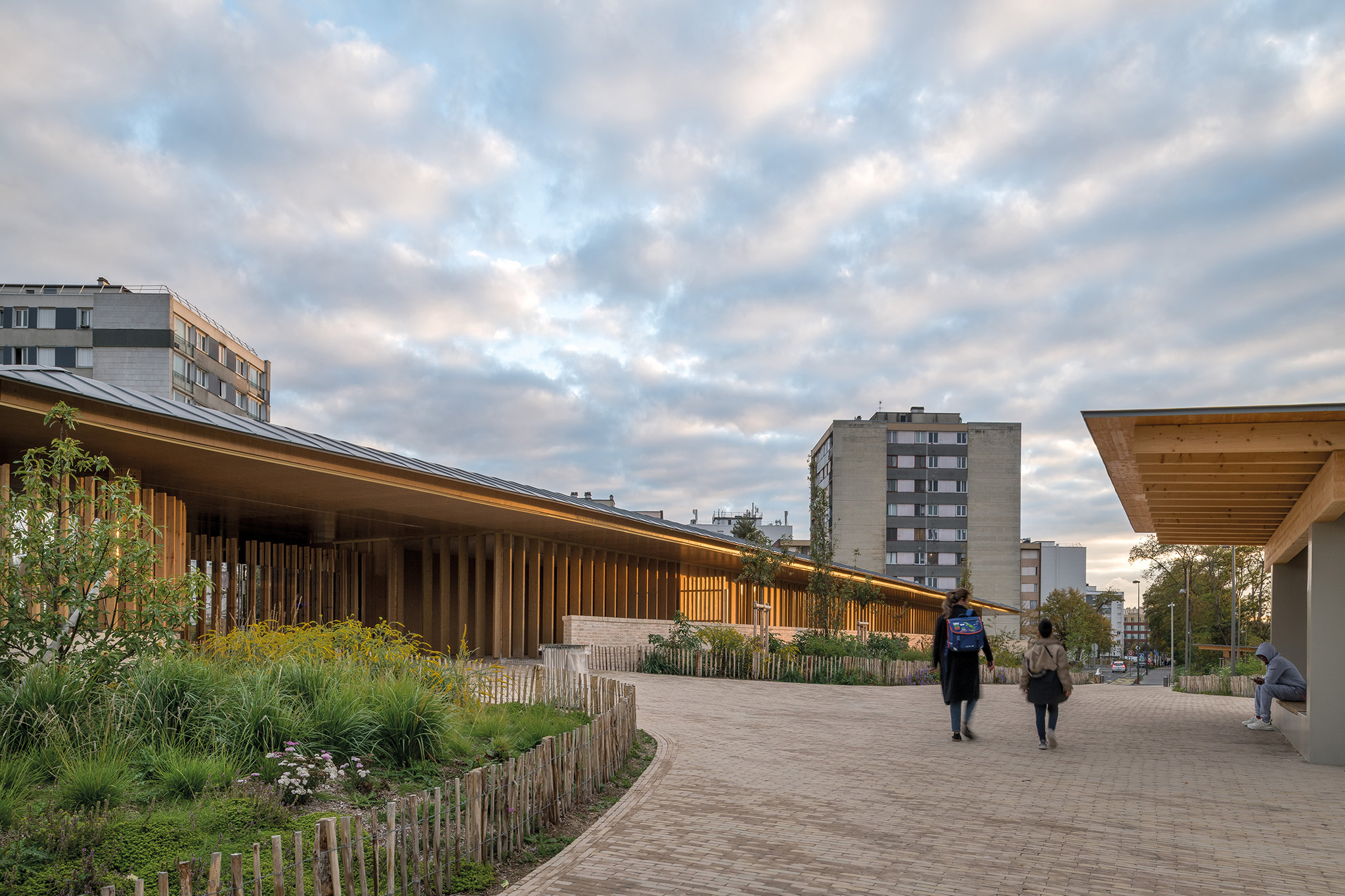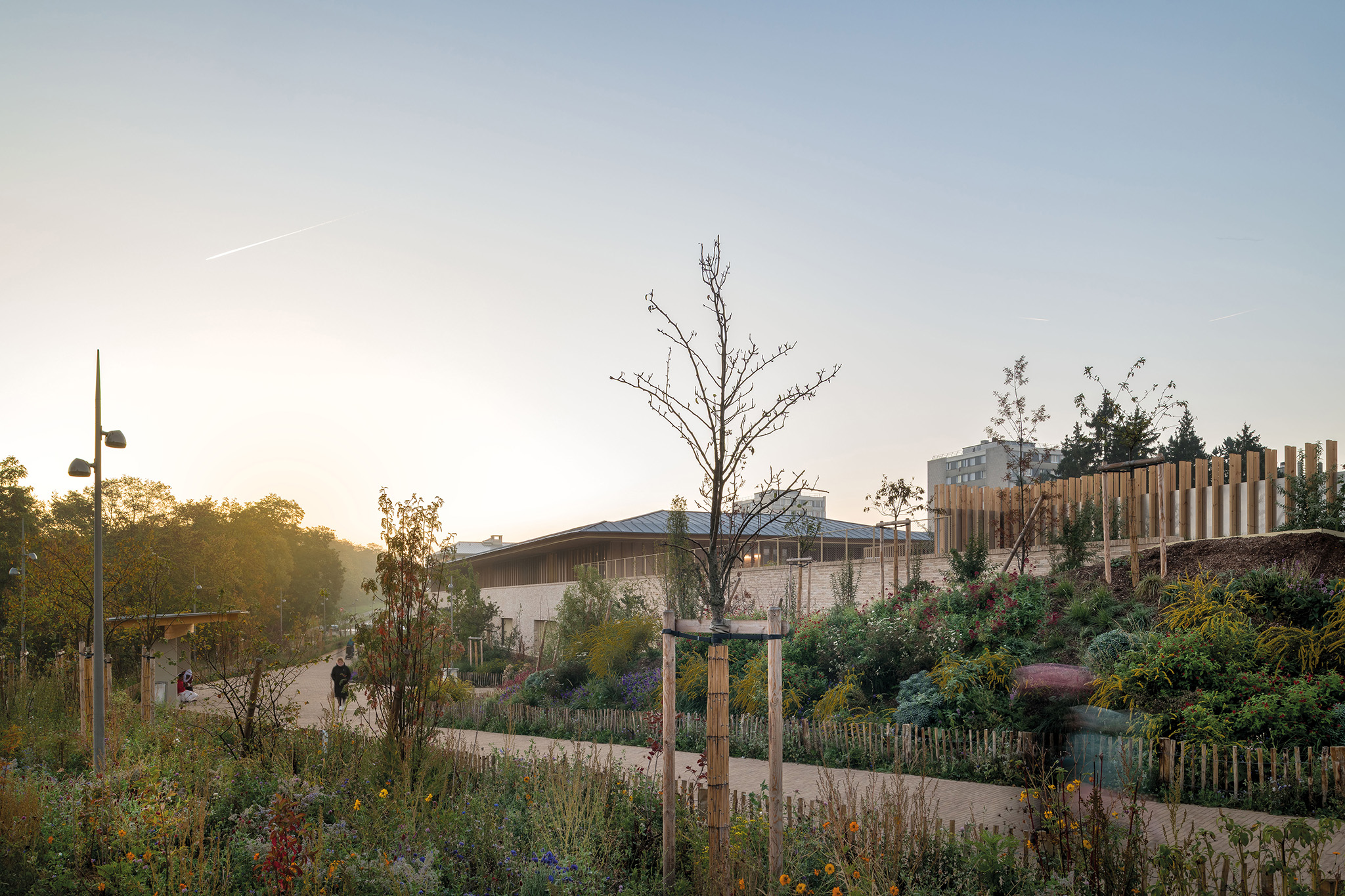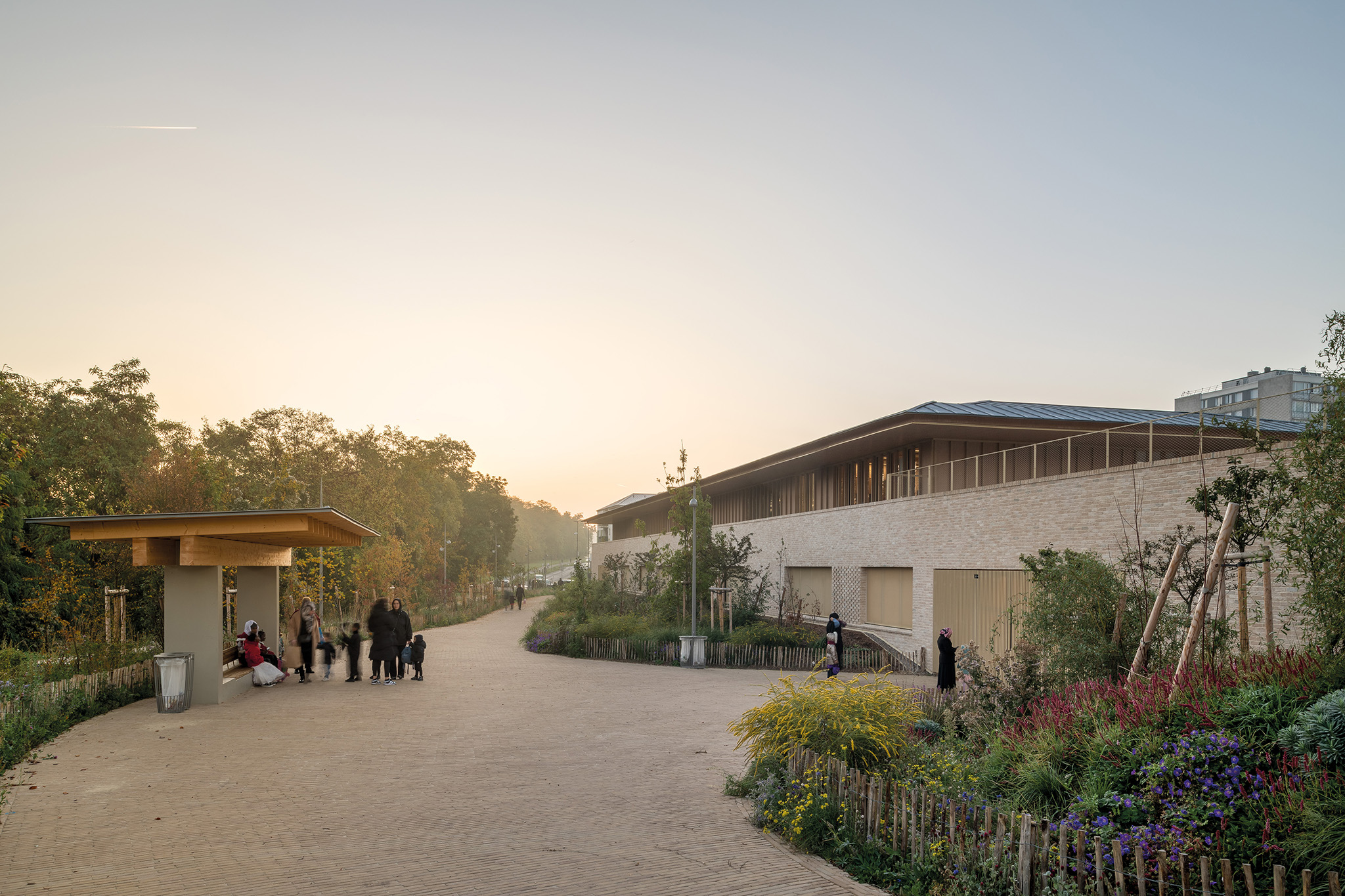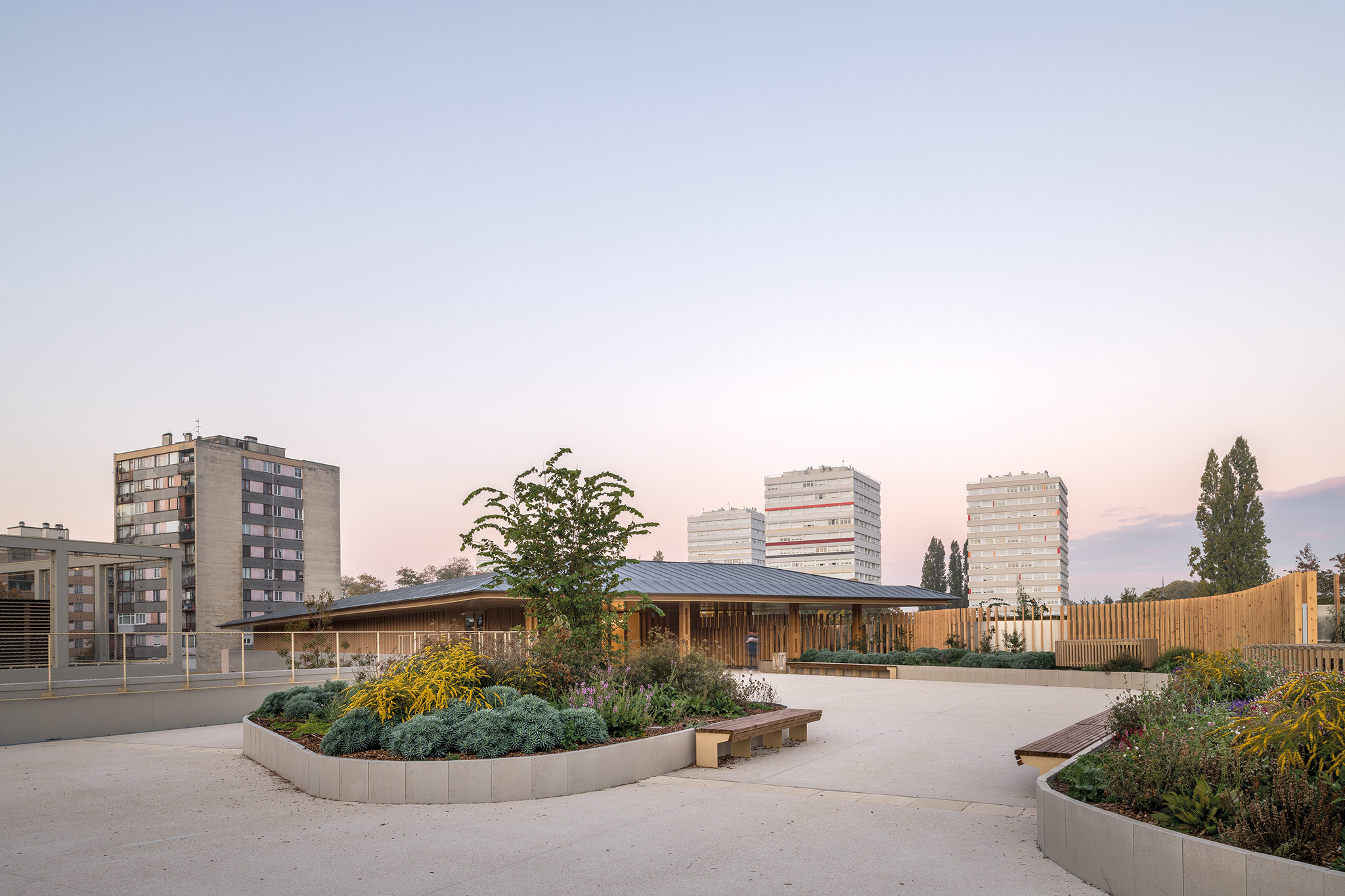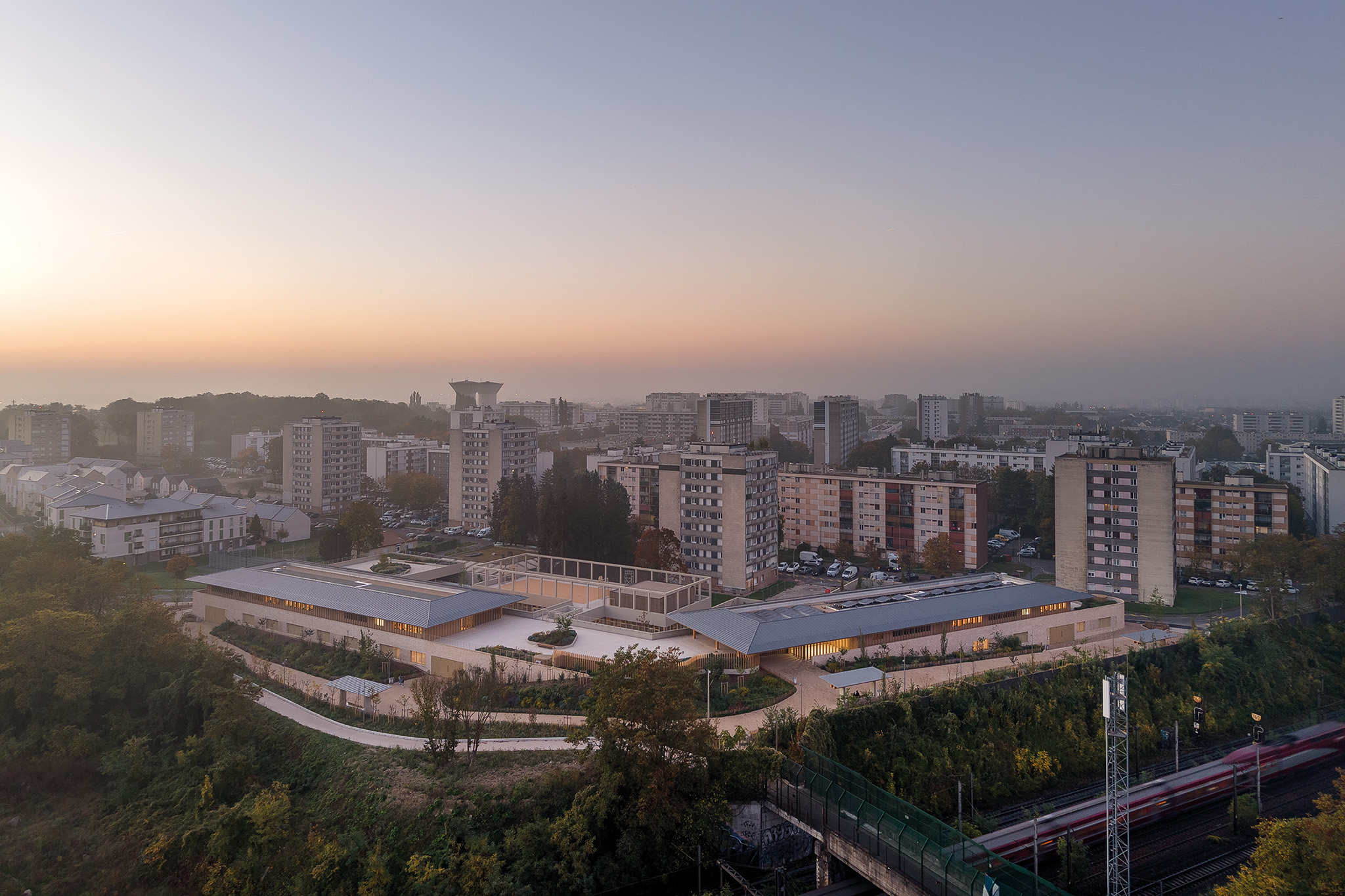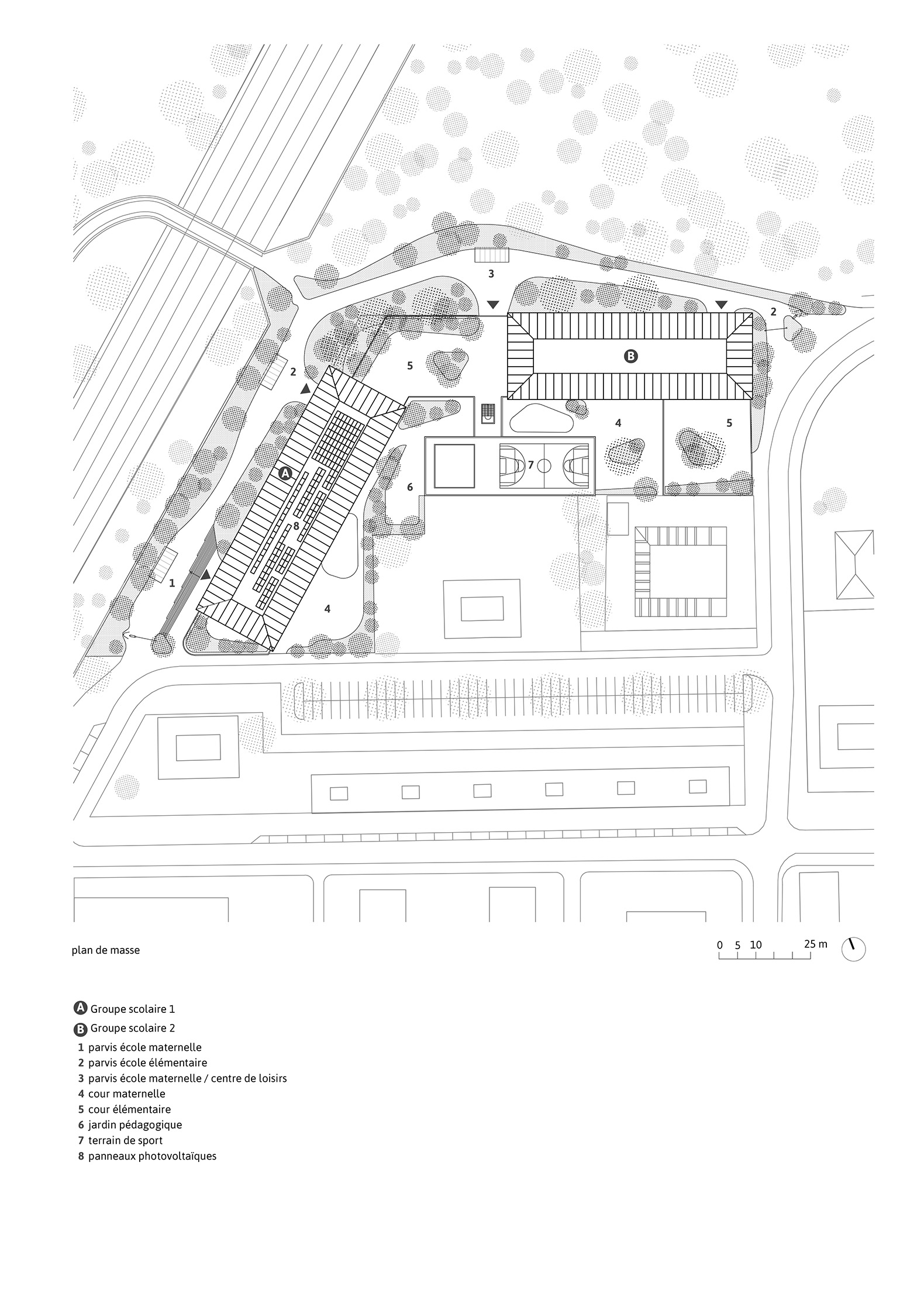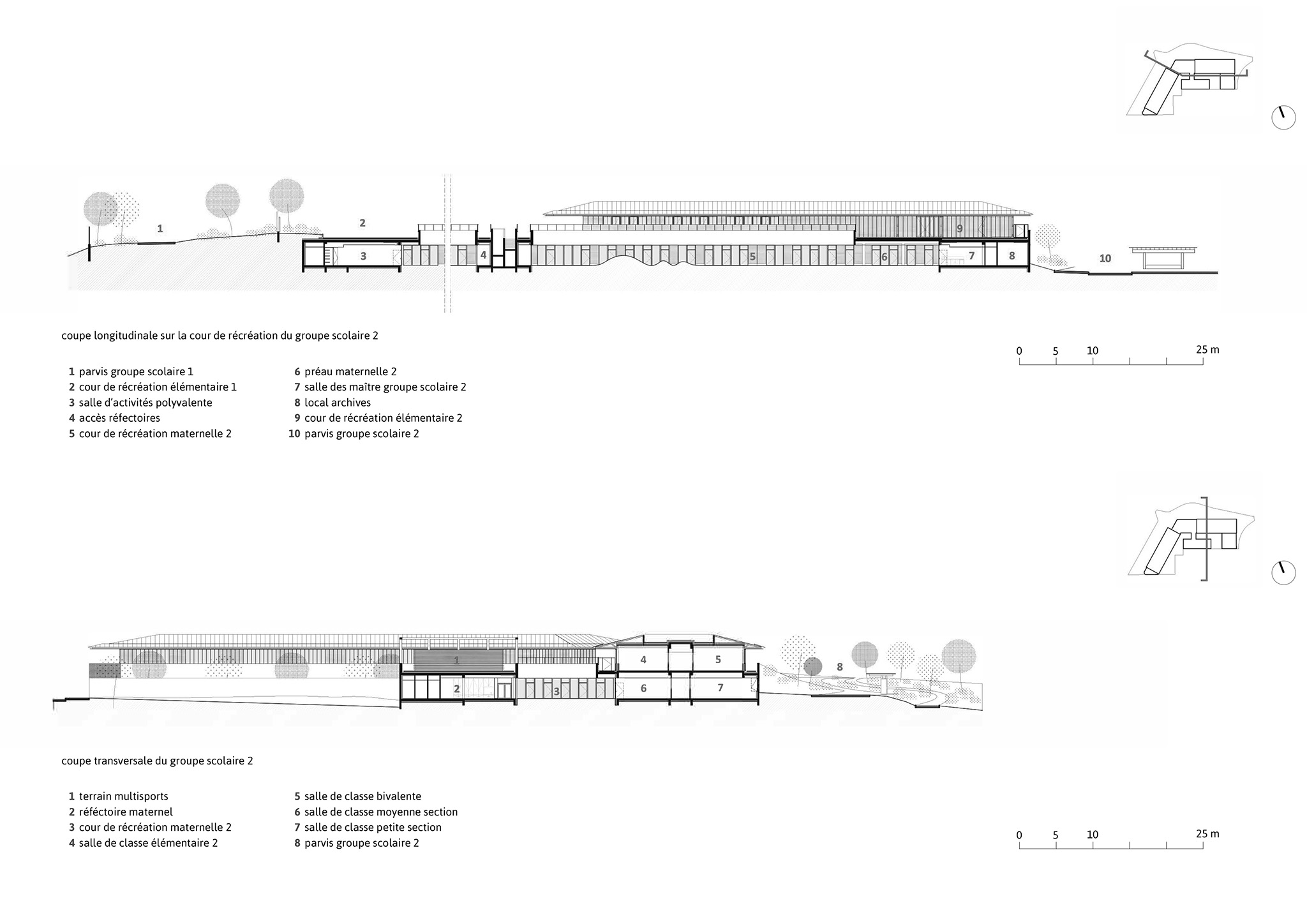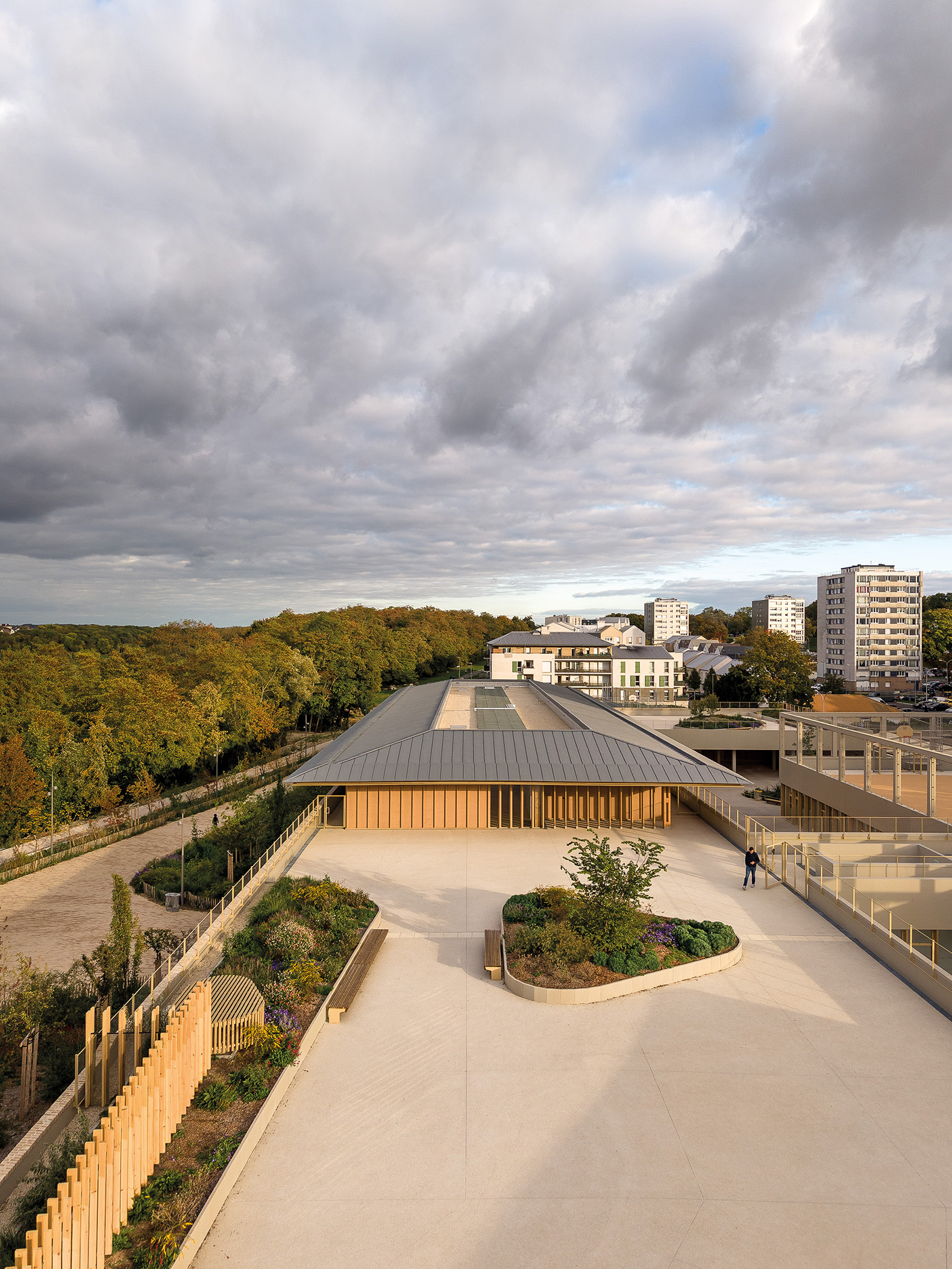
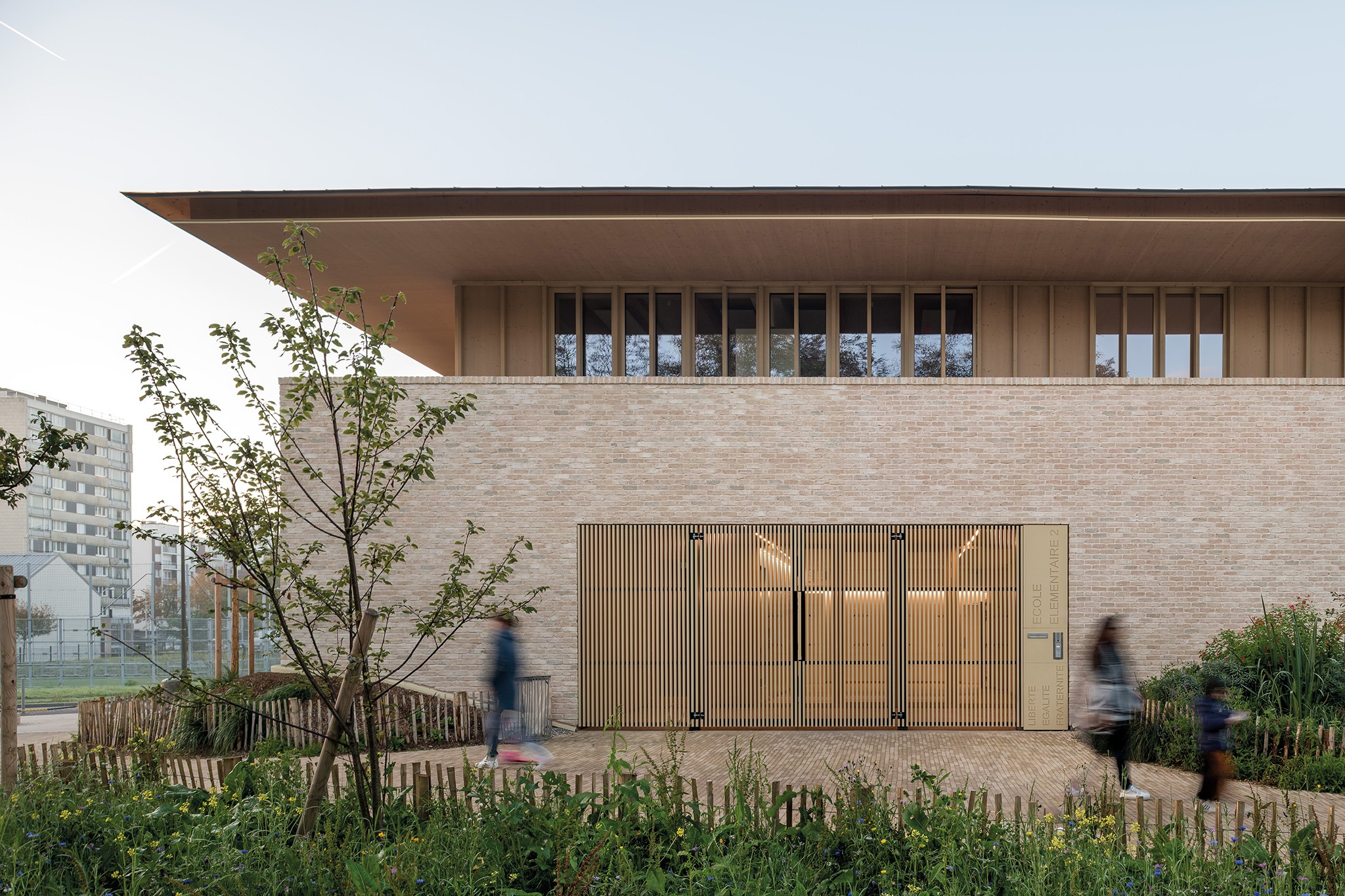
For the Victor Hugo School Complex, Marjan Hessamfar & Joe Vérons architects & urbanists integrated a leisure center with shared spaces in a fluid and safe organization that separates entities and flows while enhancing the multifunctional adaptability of the facilities and interaction.
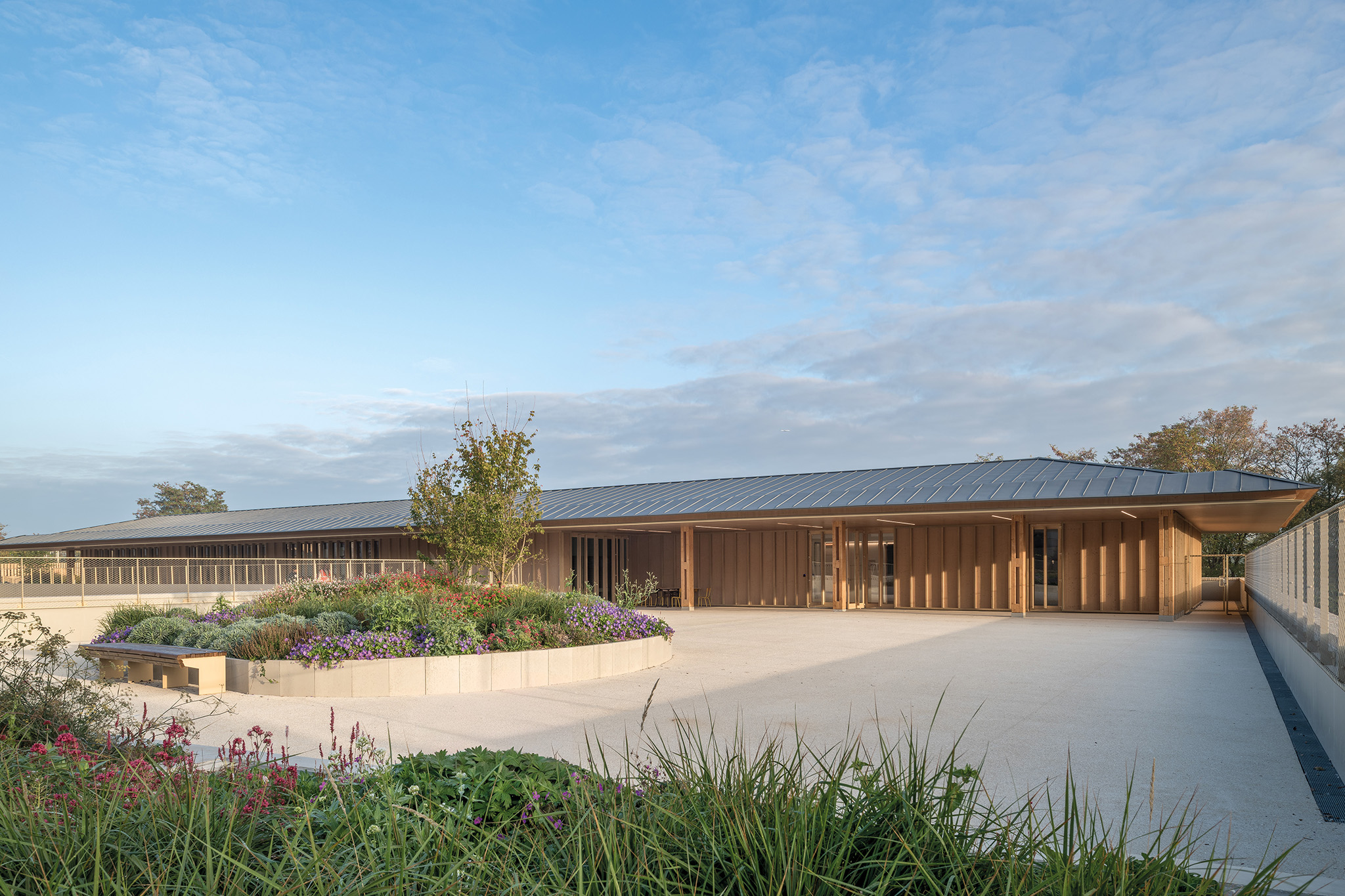
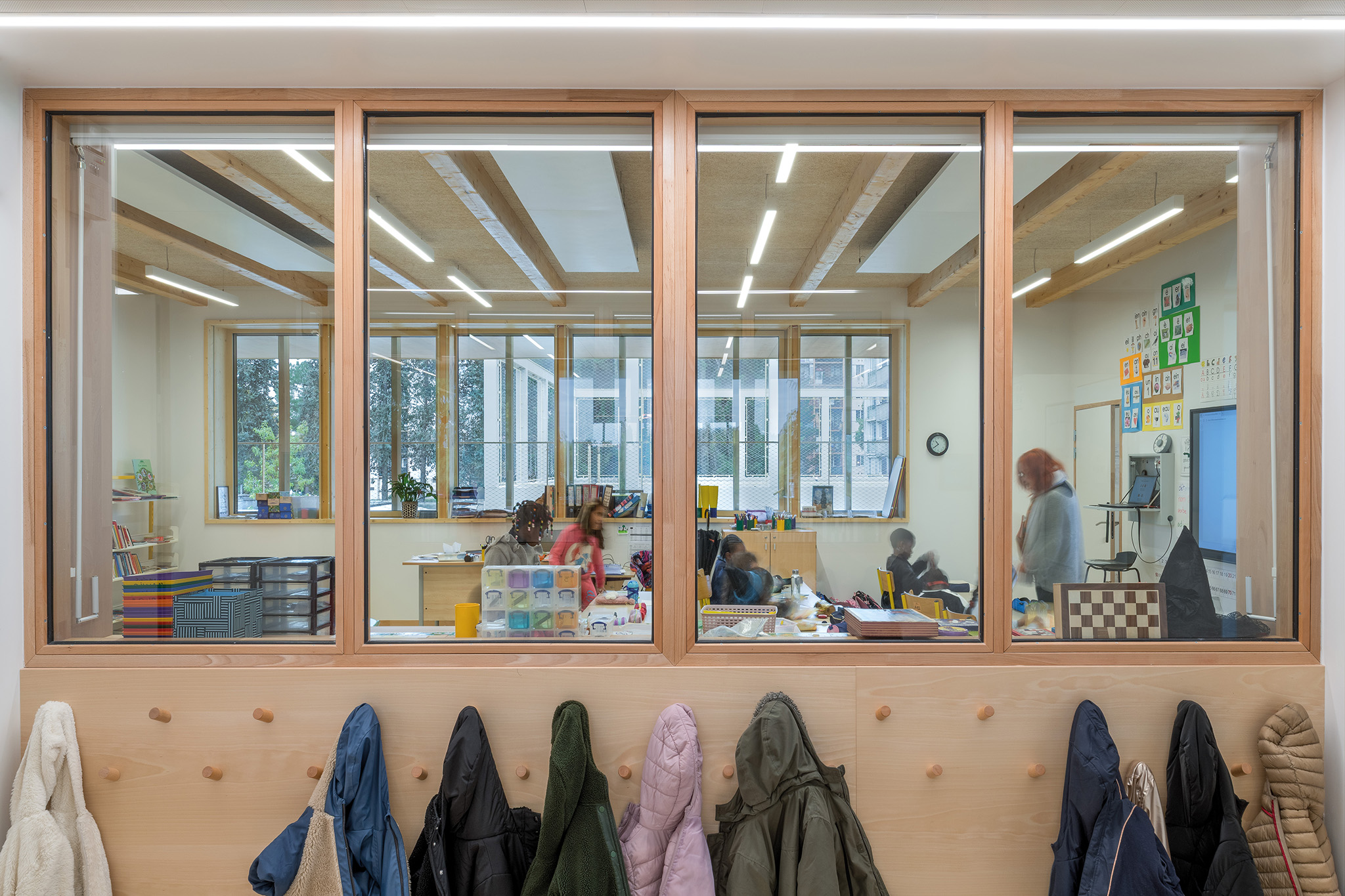
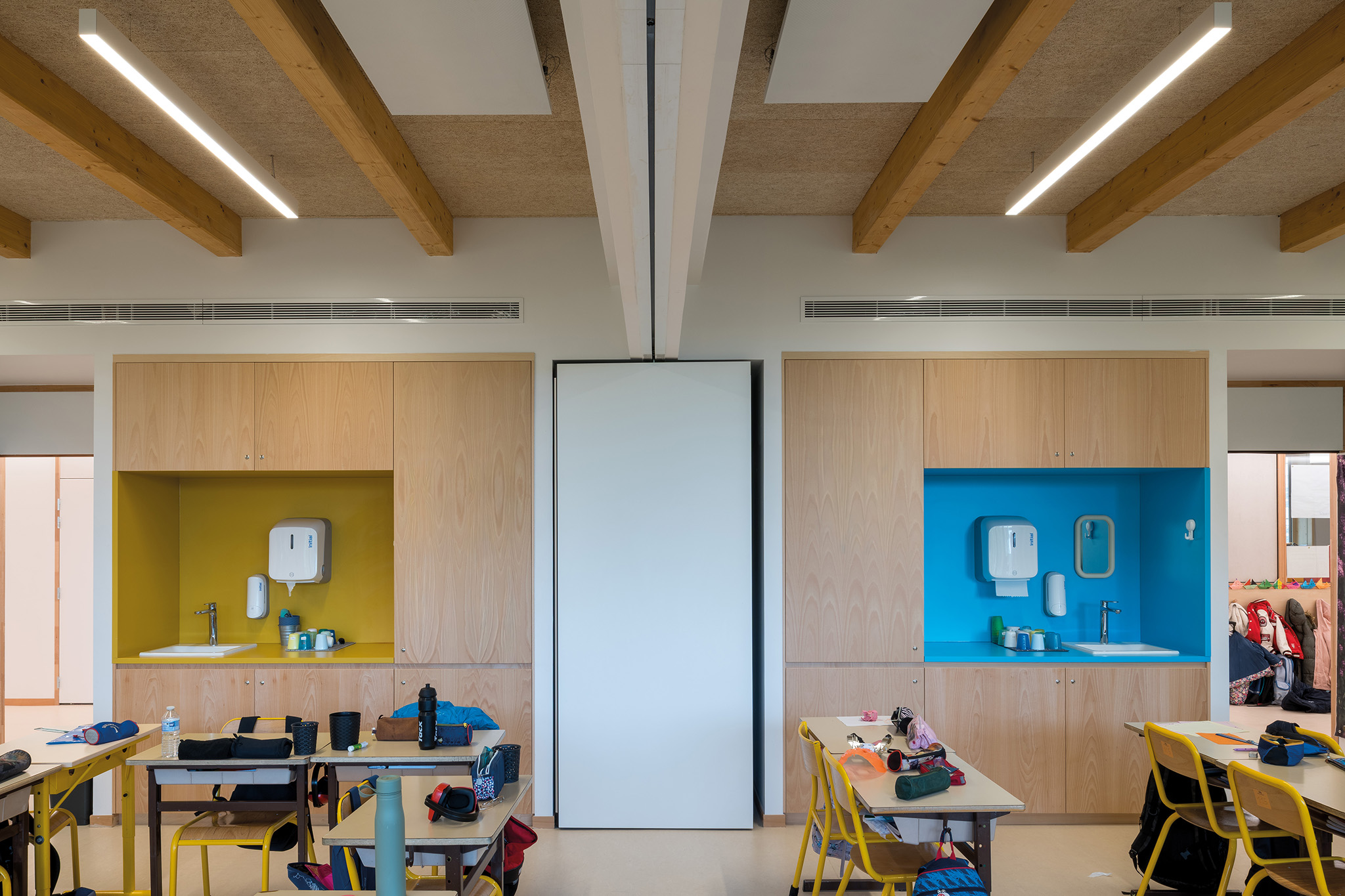
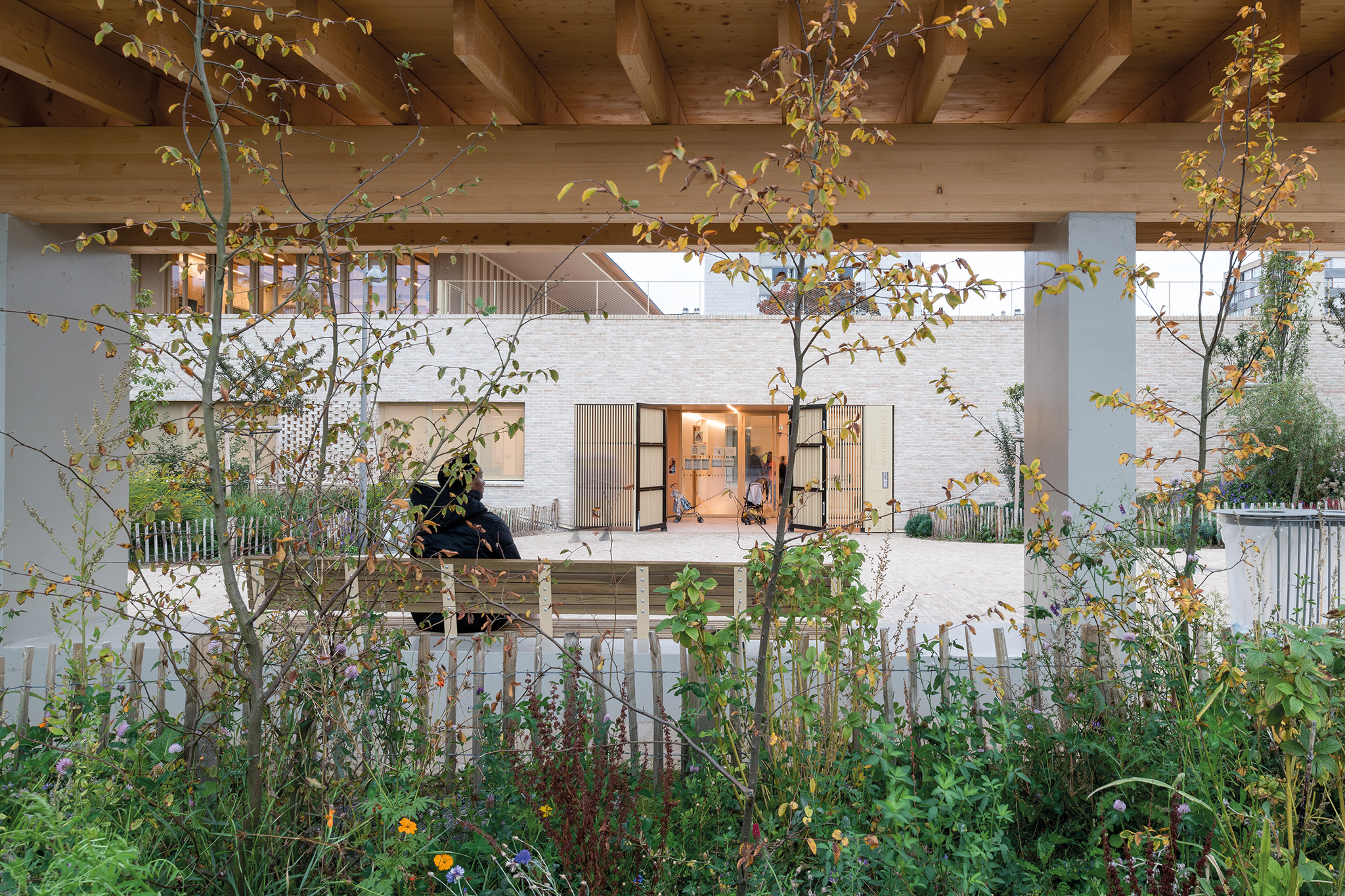
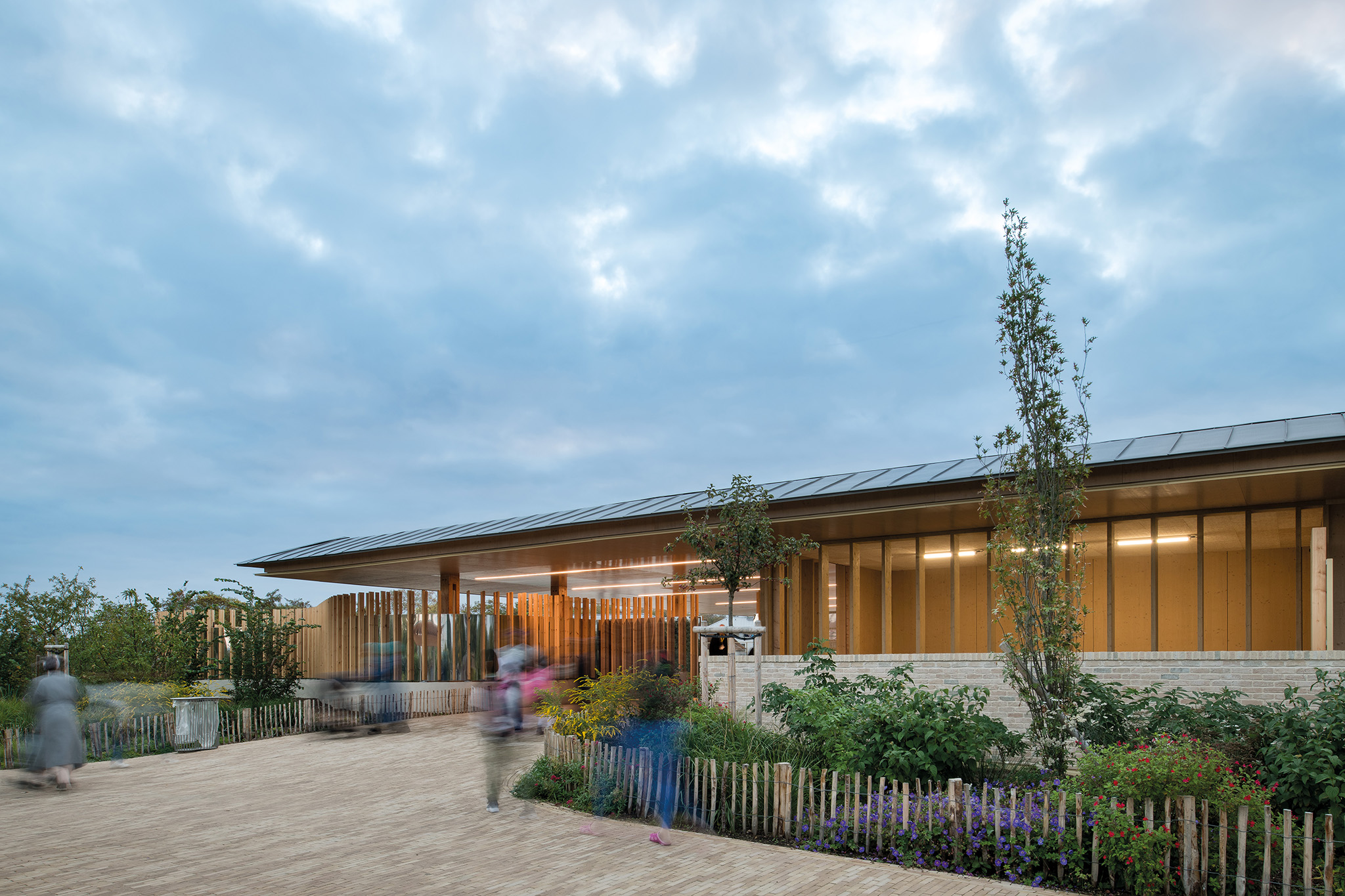
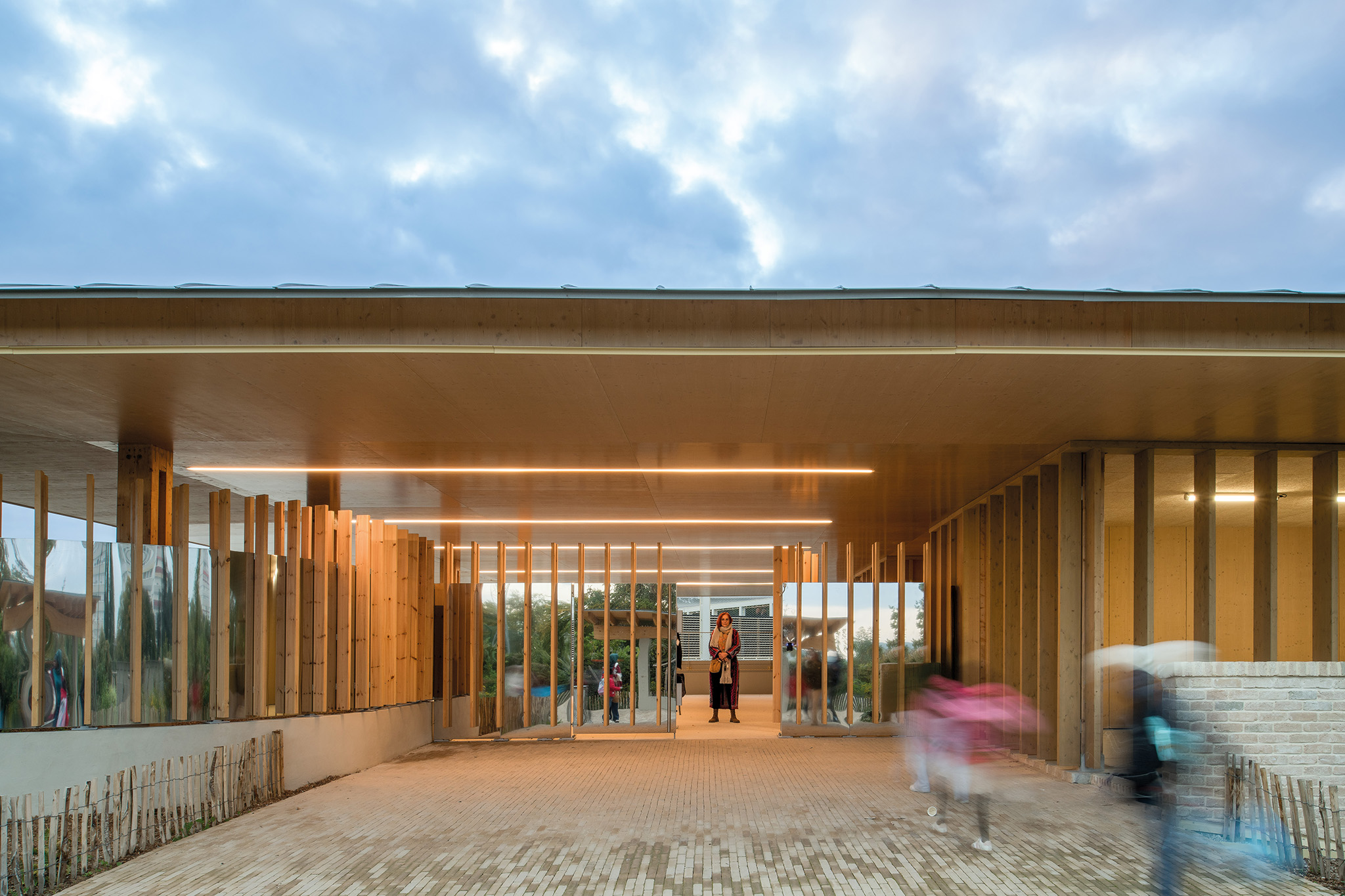
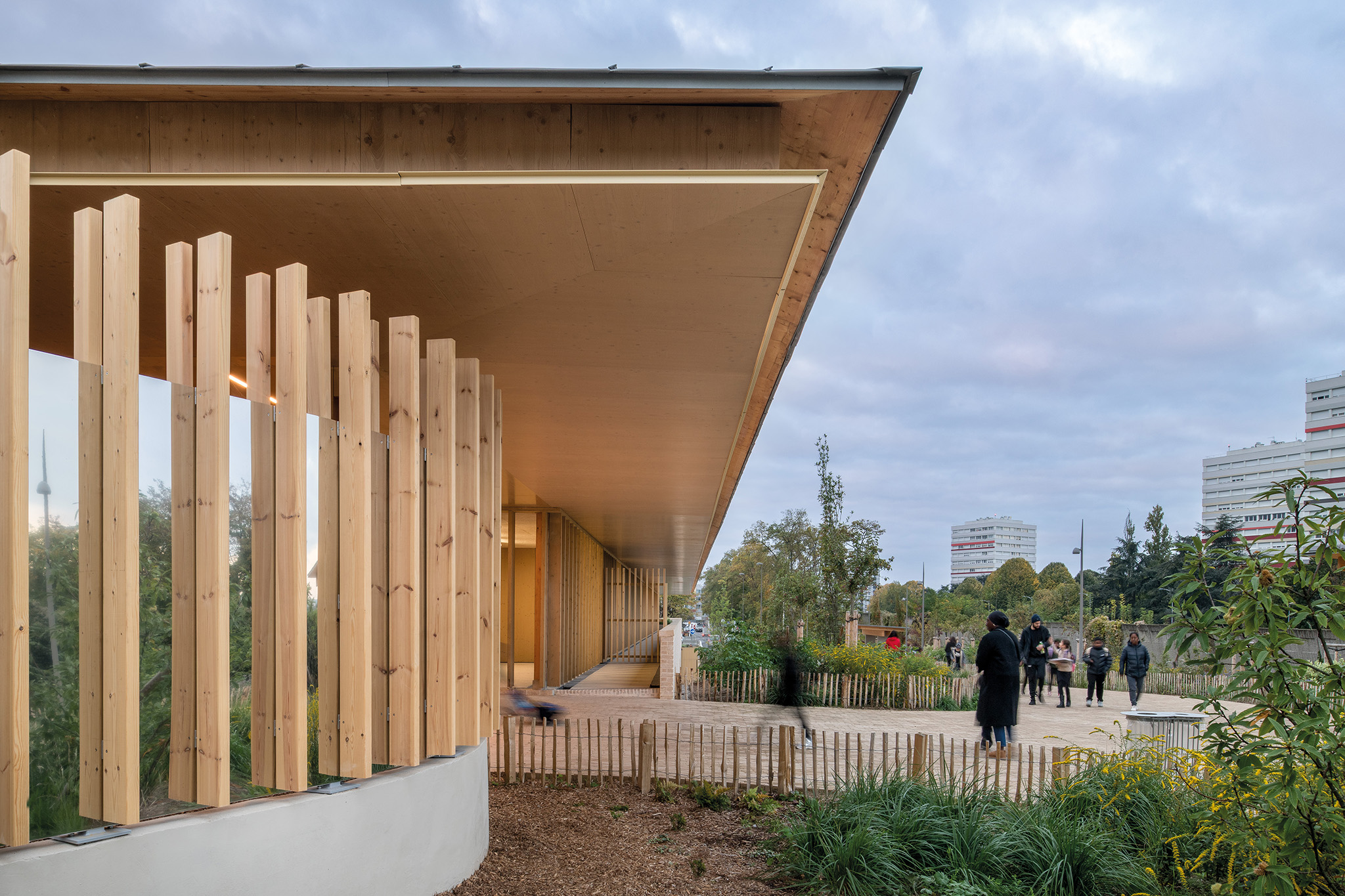
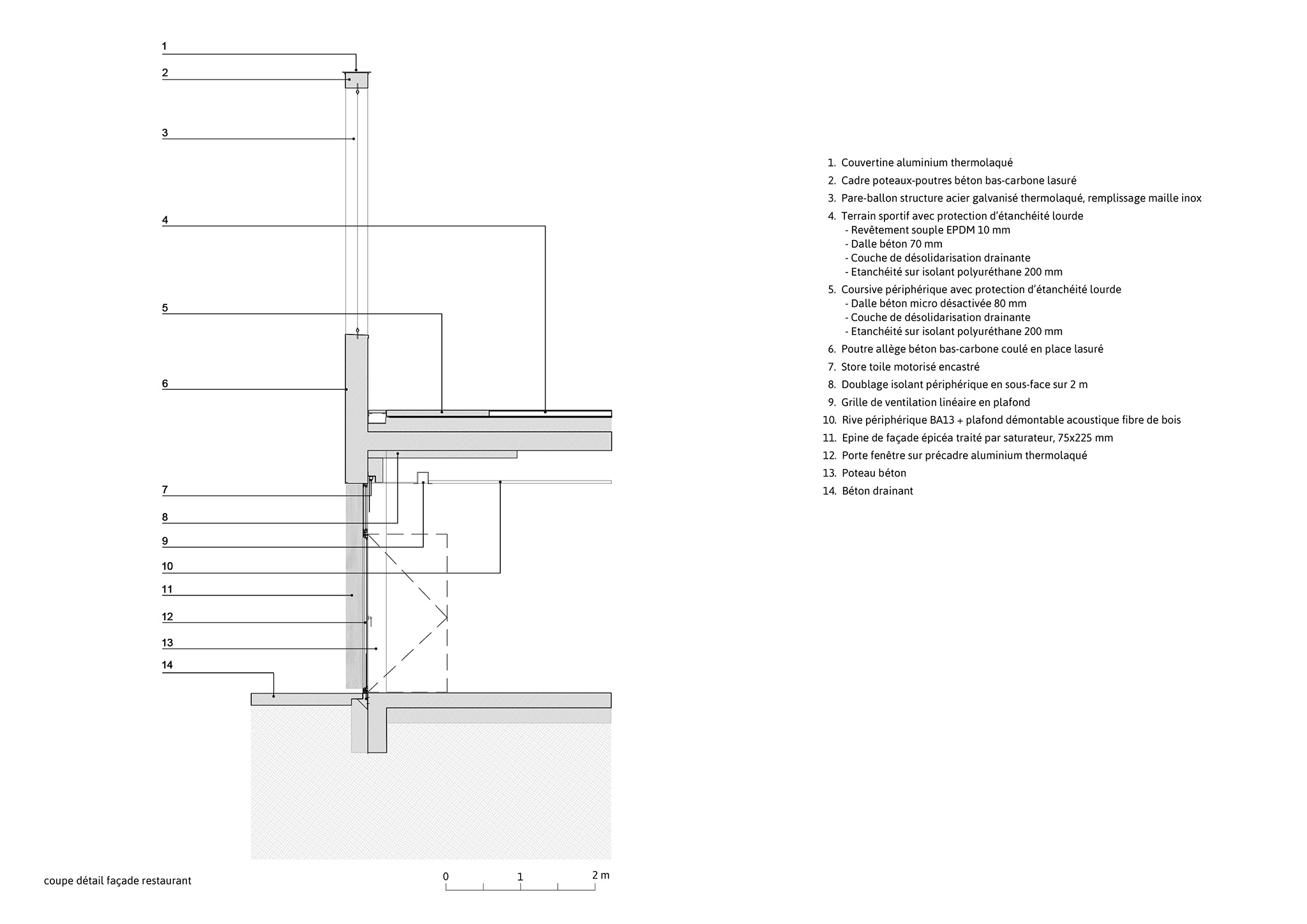
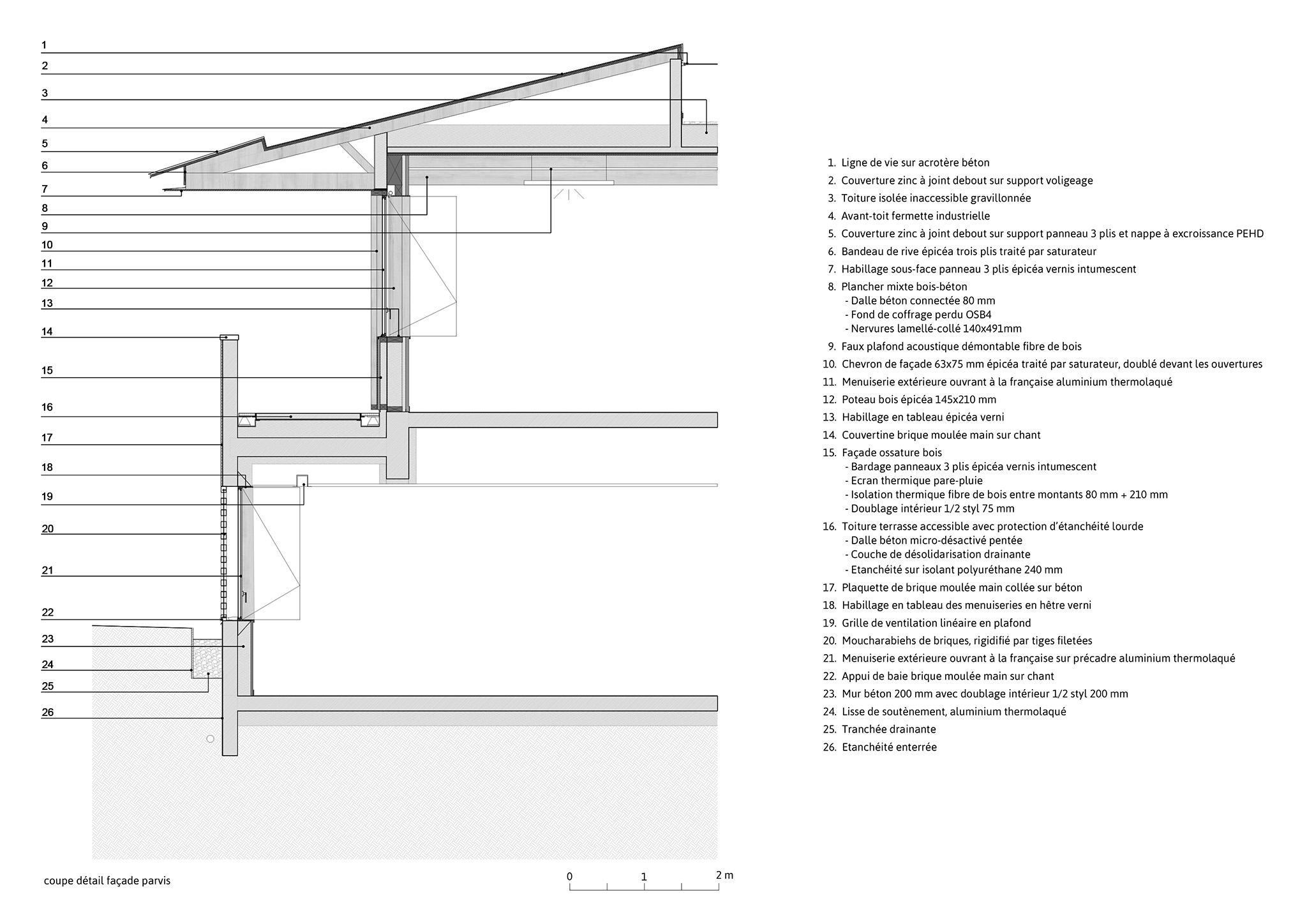
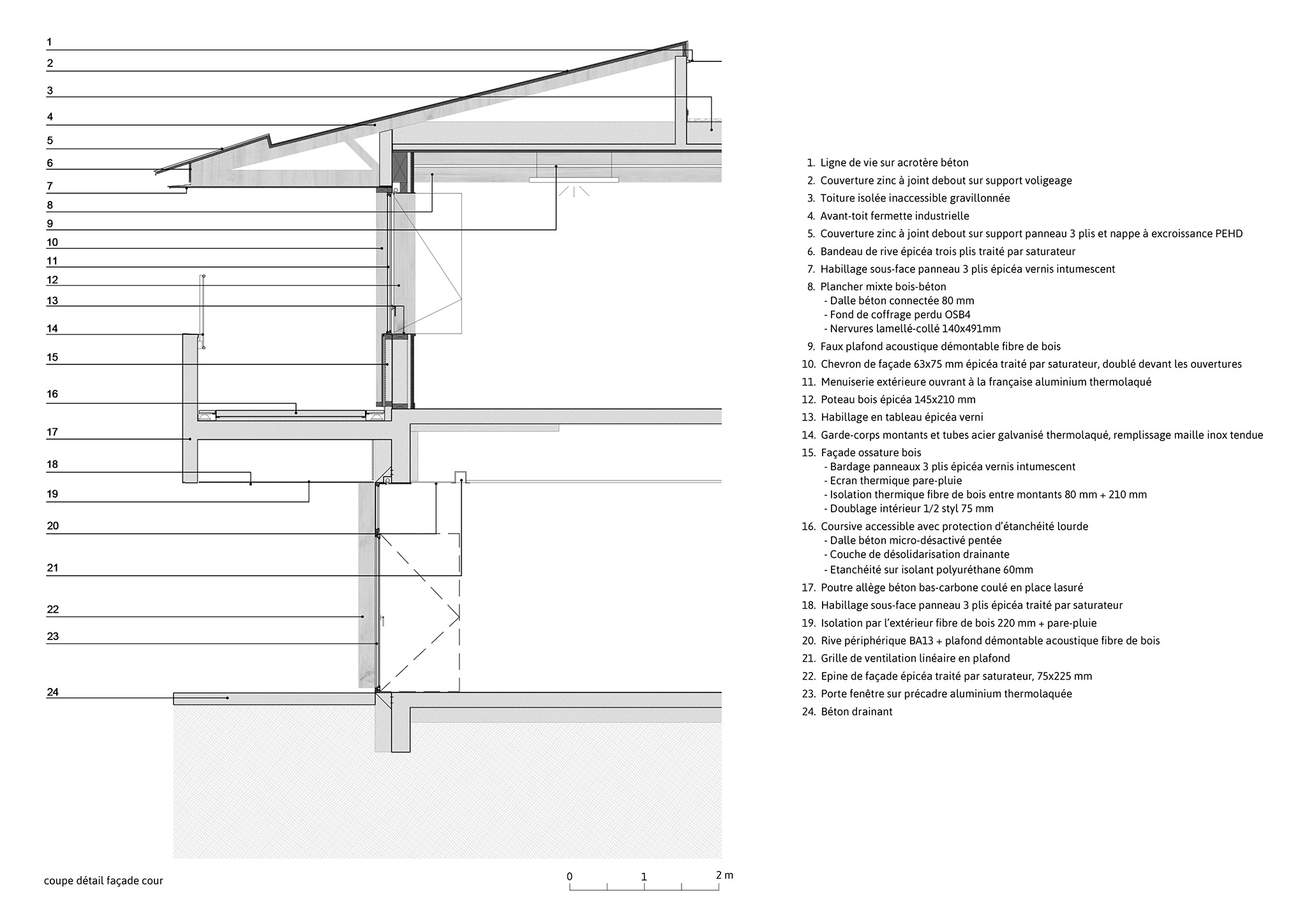
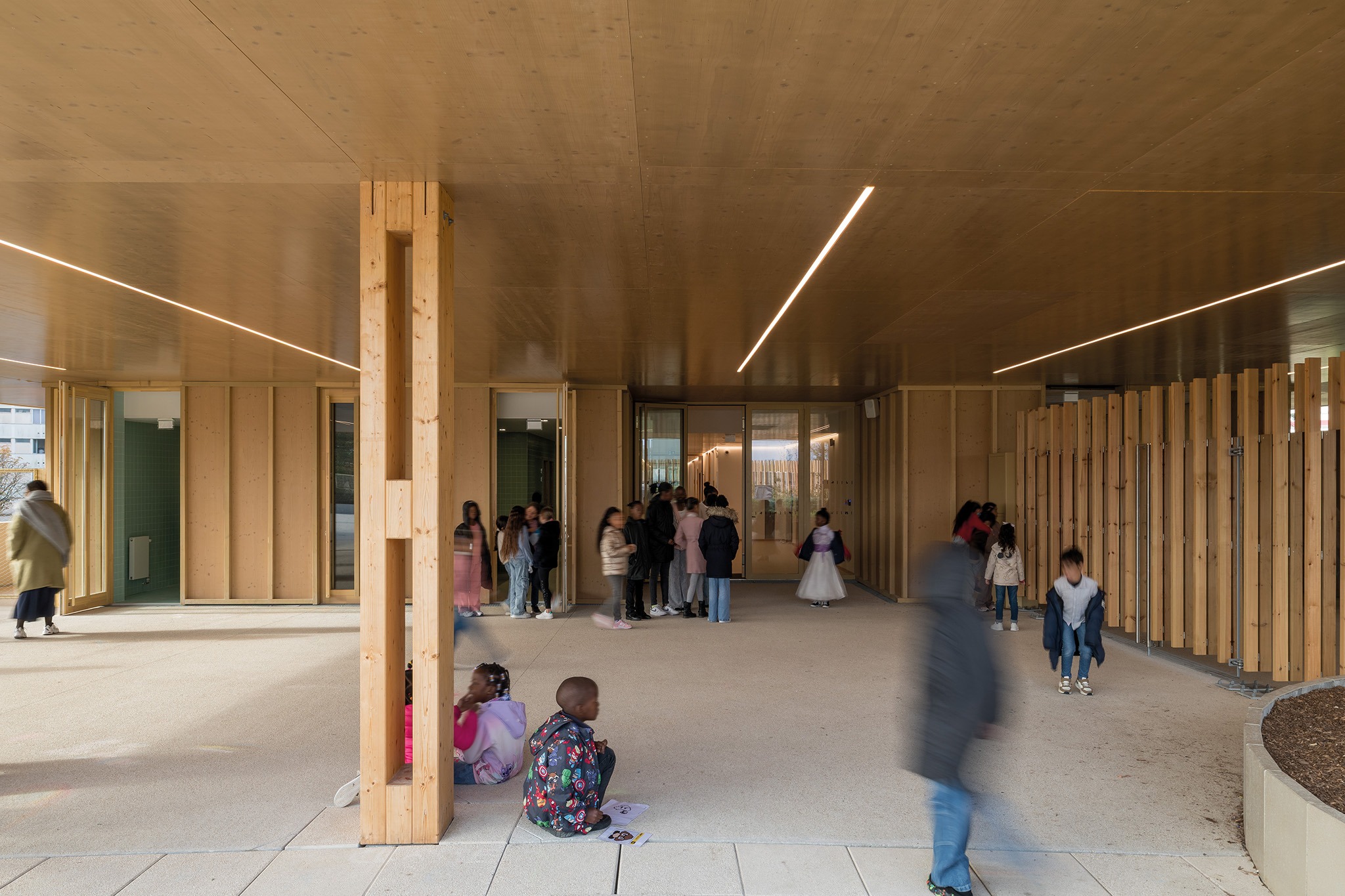
The complex's structure is mixed, with concrete on the ground floor and wood on the first floor. Wood is used in different formats: wood panels on the brick facades, wood framing in the walls, wood fiber for insulation, wood fiber suspended ceilings, cladding, etc.
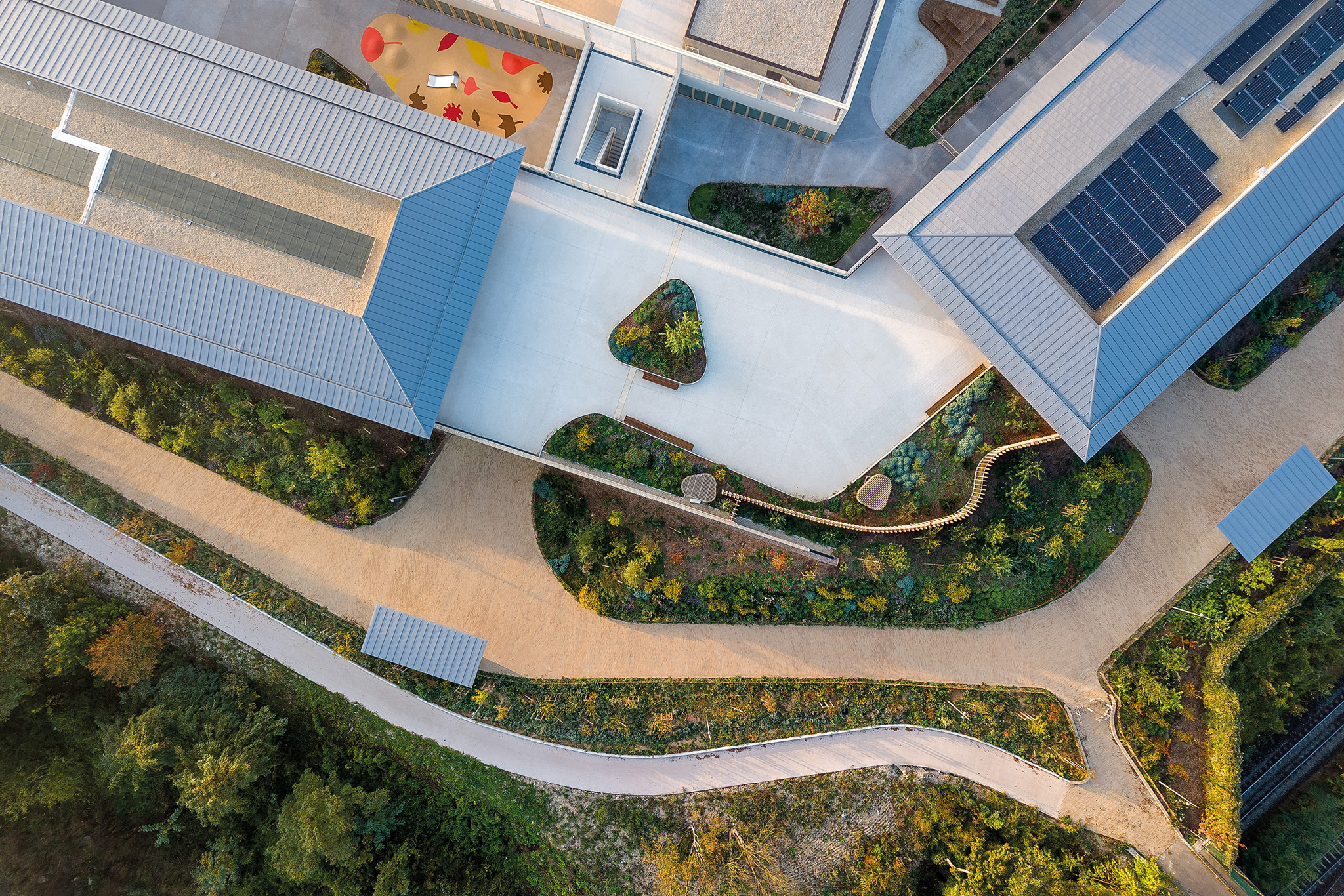
School complex Victor Hugo by Marjan Hessamfar & Joe Vérons. Photograph by Jean-François Tremege.
Project description by Marjan Hessamfar & Joe Vérons architects
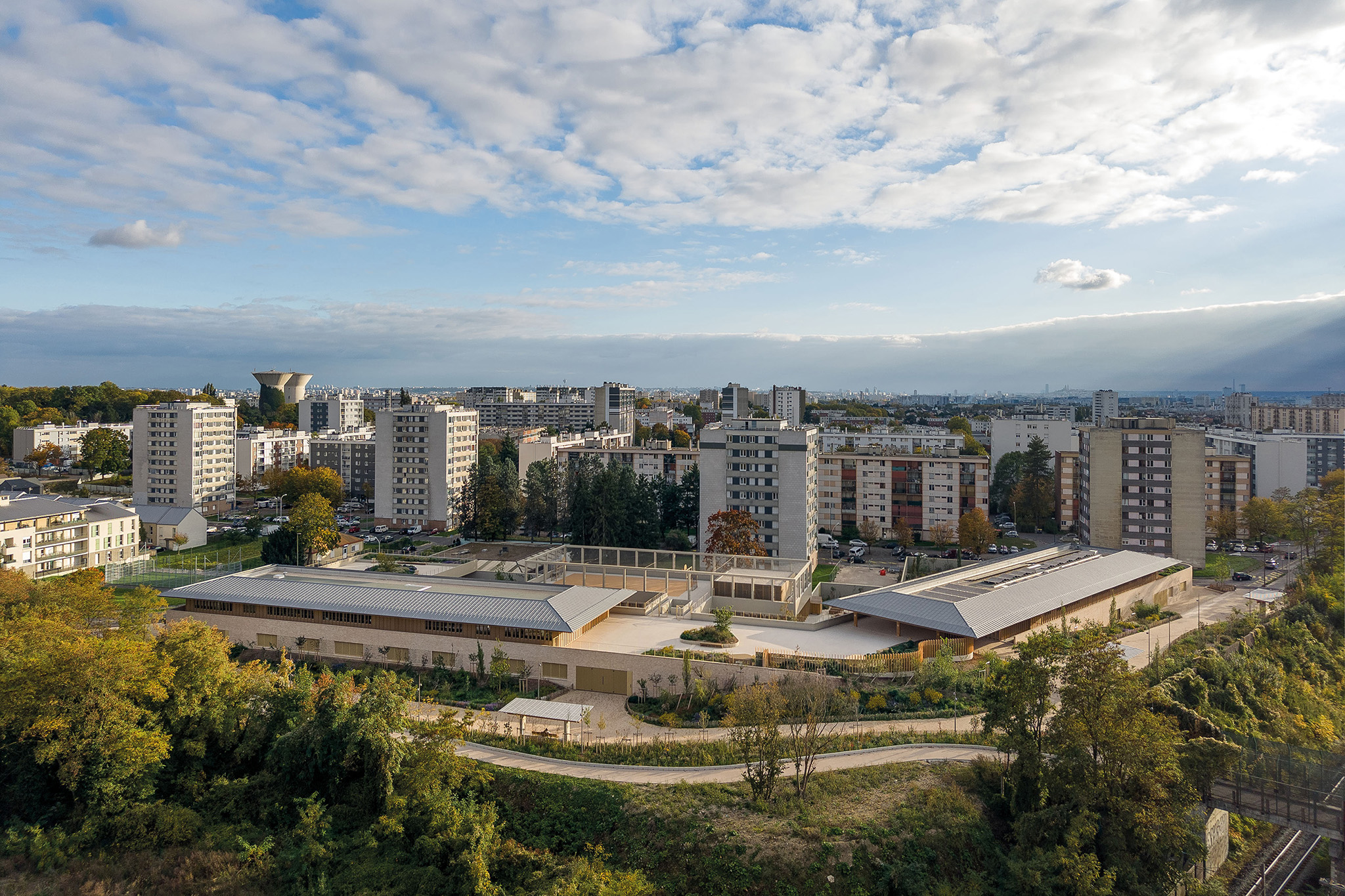
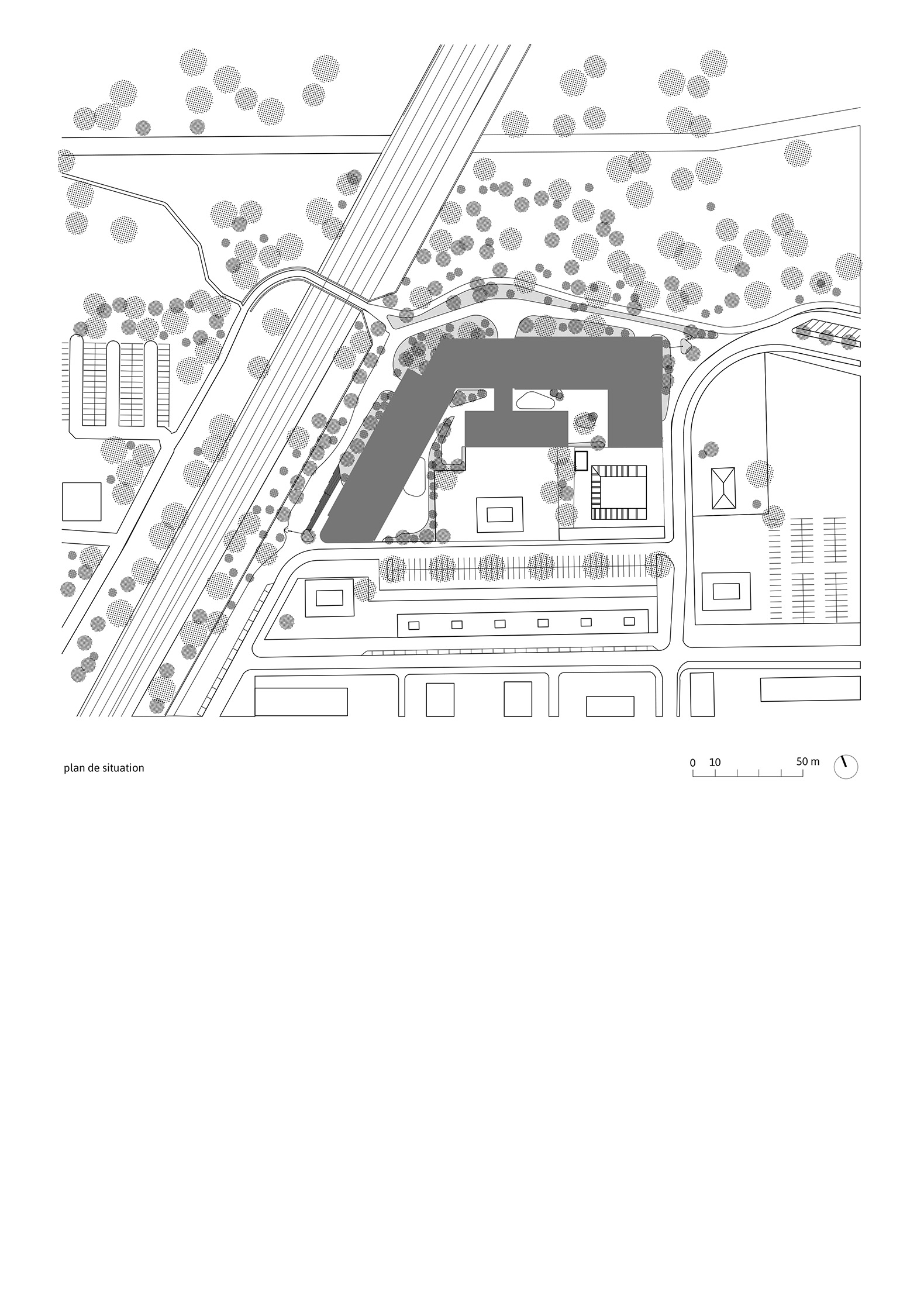
With a capacity of over 600 pupils, the facility is organised into two school complexes, each including a nursery and a primary school, for a total of 26 classes (13 per school group). It integrates a leisure centre with shared spaces, favouring shared uses as well. Designed as a lever for urban transformation, it drives and makes legible the changes underway, notably through the prominent role it grants to landscape, thereby contributing to the requalification of the neighbourhood's image.
Between town and nature: architecture in dialogue with its site
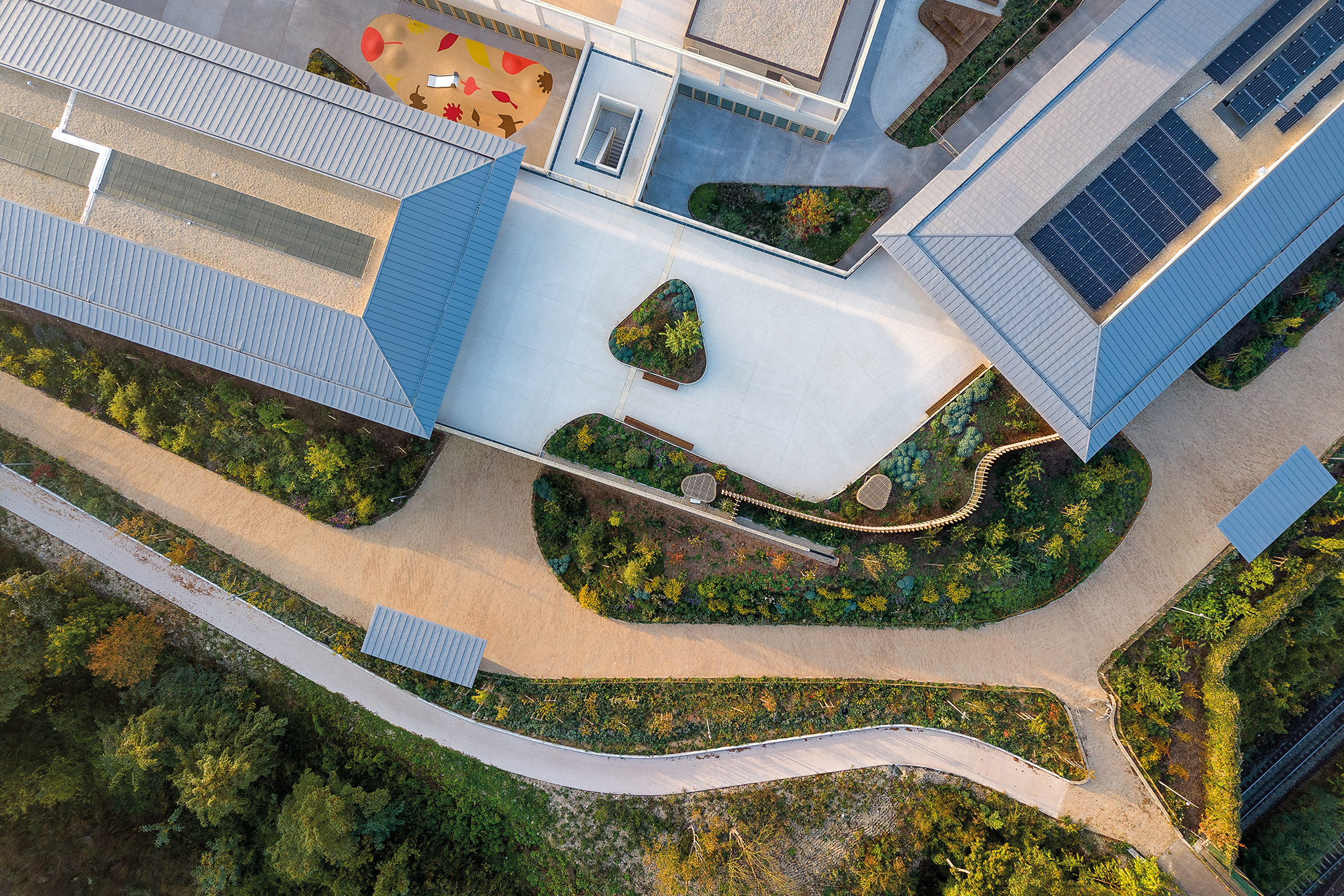
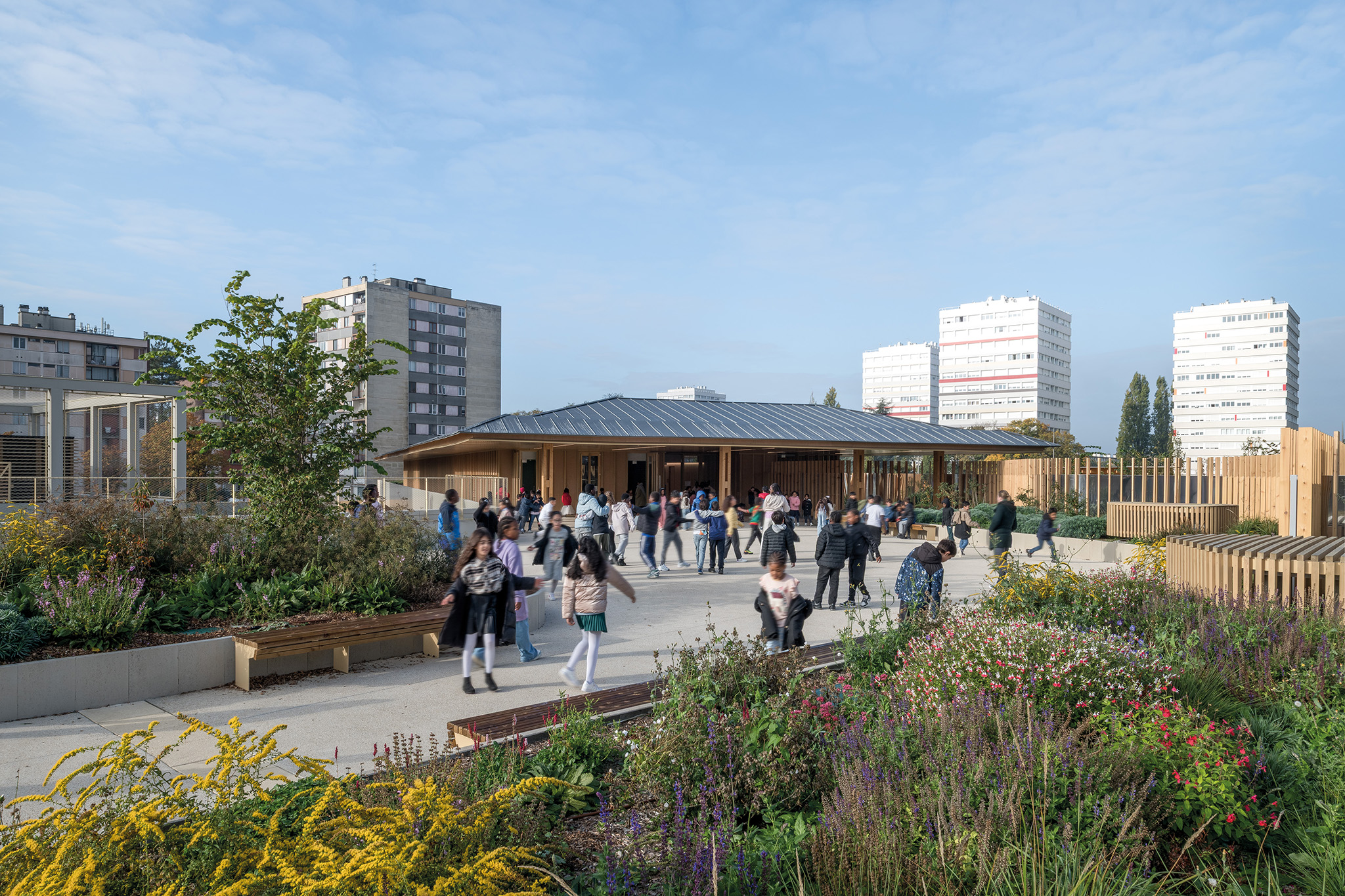
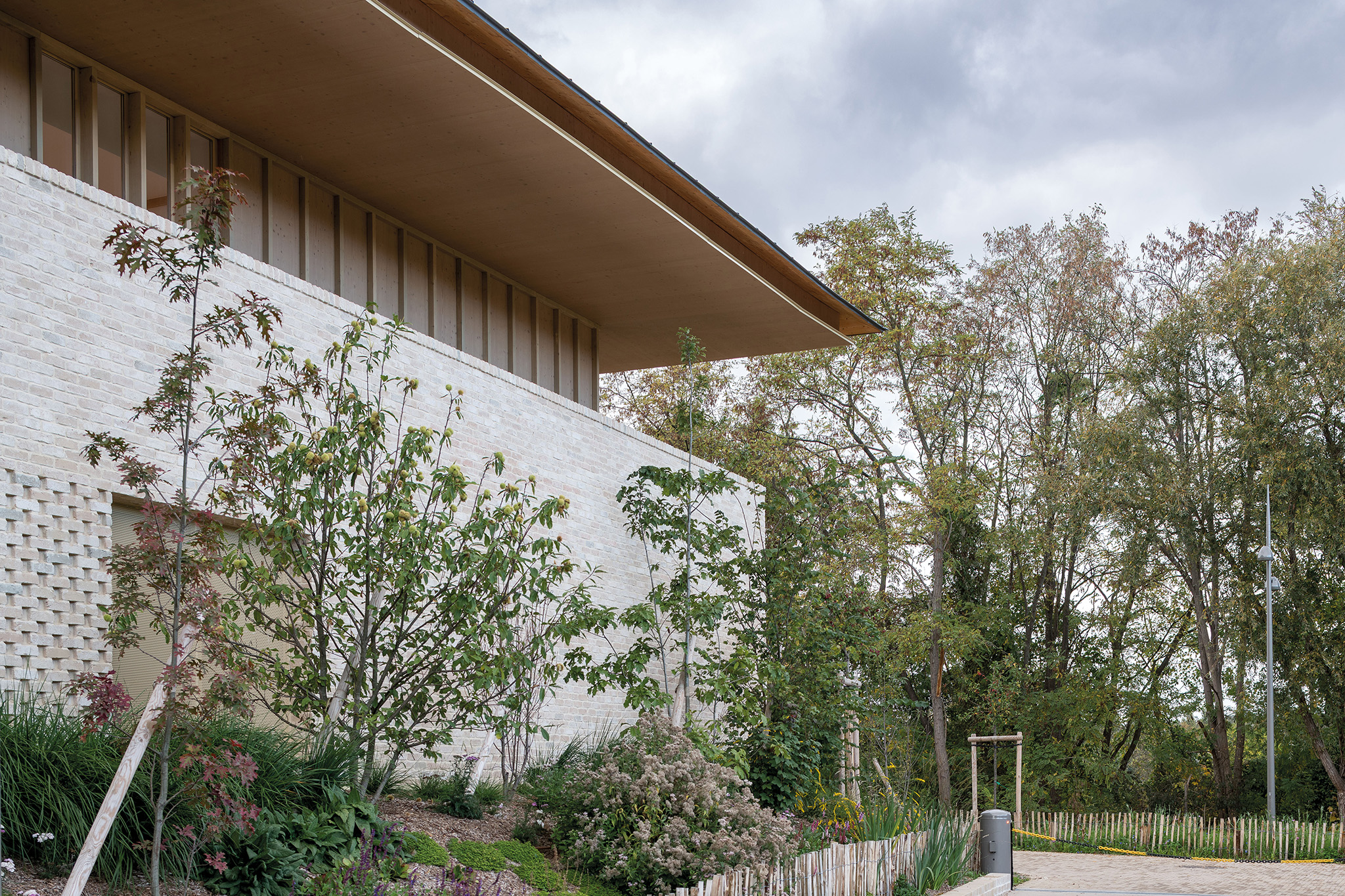
The project's architecture establishes a close dialogue between city and nature, built environment and landscape. The geography of the site has influenced the school’s design. The ground, the vegetation and the building interpenetrate and blend together to create continuity between the pubic space and the facility. The layout of the forecourt is also part of this approach: widely planted, it enhances the topography and the existing trees, allowing for a gentle and harmonious landscape.
Sustainability and comfort: performing and adaptable architecture
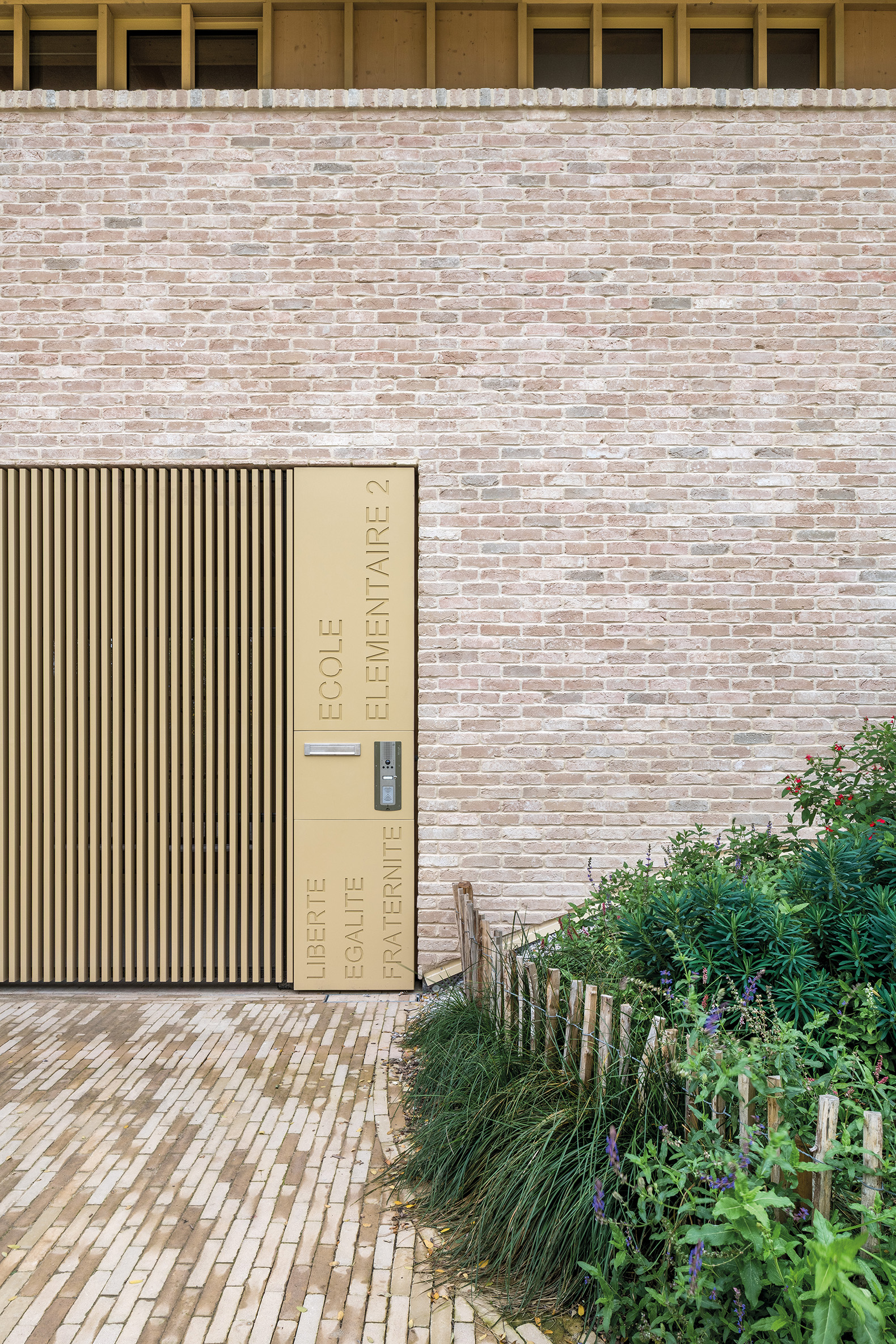
The project is based on a bioclimatic approach associated with a palette of sustainable materials — mainly bio-sourced and geo-sourced — as well as reliance on off-site prefabrication. The mixed structure, combining low-carbon concrete on the ground floor and wood framework on the first floor, has clay brick façades and wood panels, walls with wood framework and wood fibre insulation. Interior layouts extend this approach with lasting solutions and with a weak carbon footprint: wood fibre false ceilings, linoleum flooring, and wood carpentry, doors, furniture and cladding.
Fluid and secure organisation at the service of users
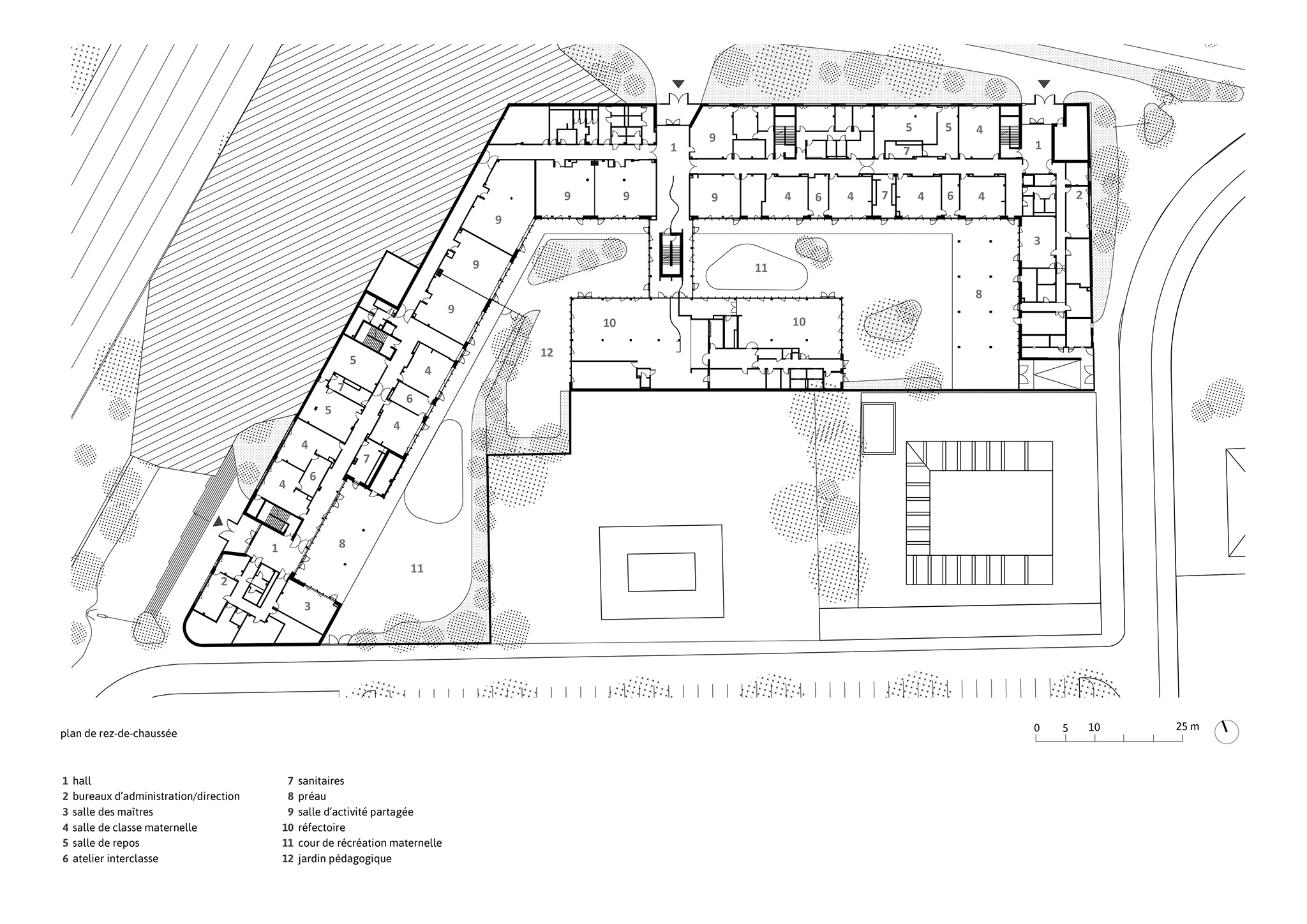
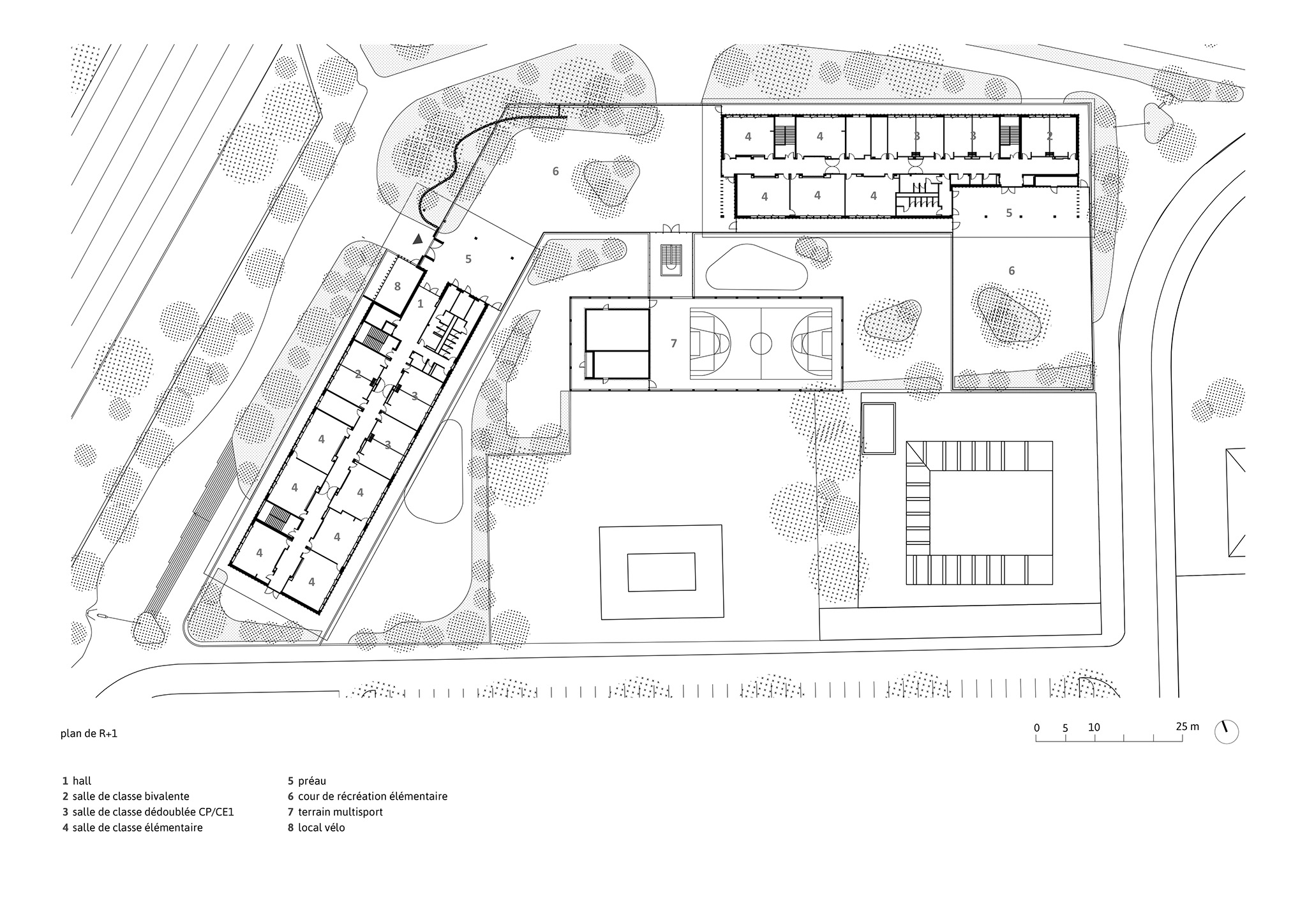
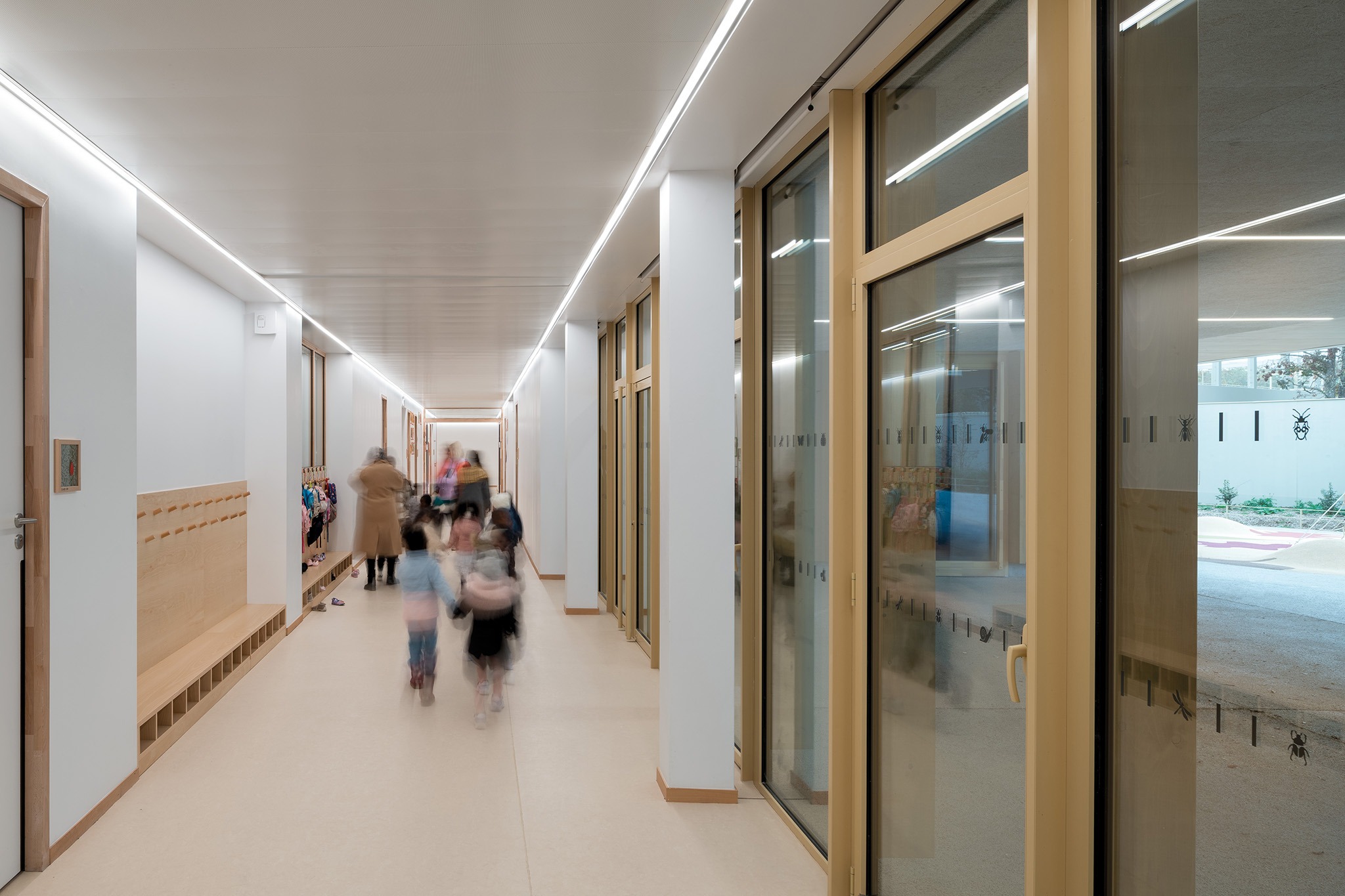
The organisation of the school group clearly separates the entities and flows to guarantee security and readability. Each school has its own access point, whilst also benefiting from easily accessible shared spaces. The shared spaces enhance the multi-purpose adaptability of the facility and encourage interaction. The leisure centre, situated at the heart of the layout, ensures continuity of uses between school time and time for extra-curricular activities. Intuitive pathways, fluid and adapted to all ages, limit intermingling and facilitate surveillance. Corridors, generous and well-lit, become genuine living spacesthat contribute to the overall quality of the users’ experience.