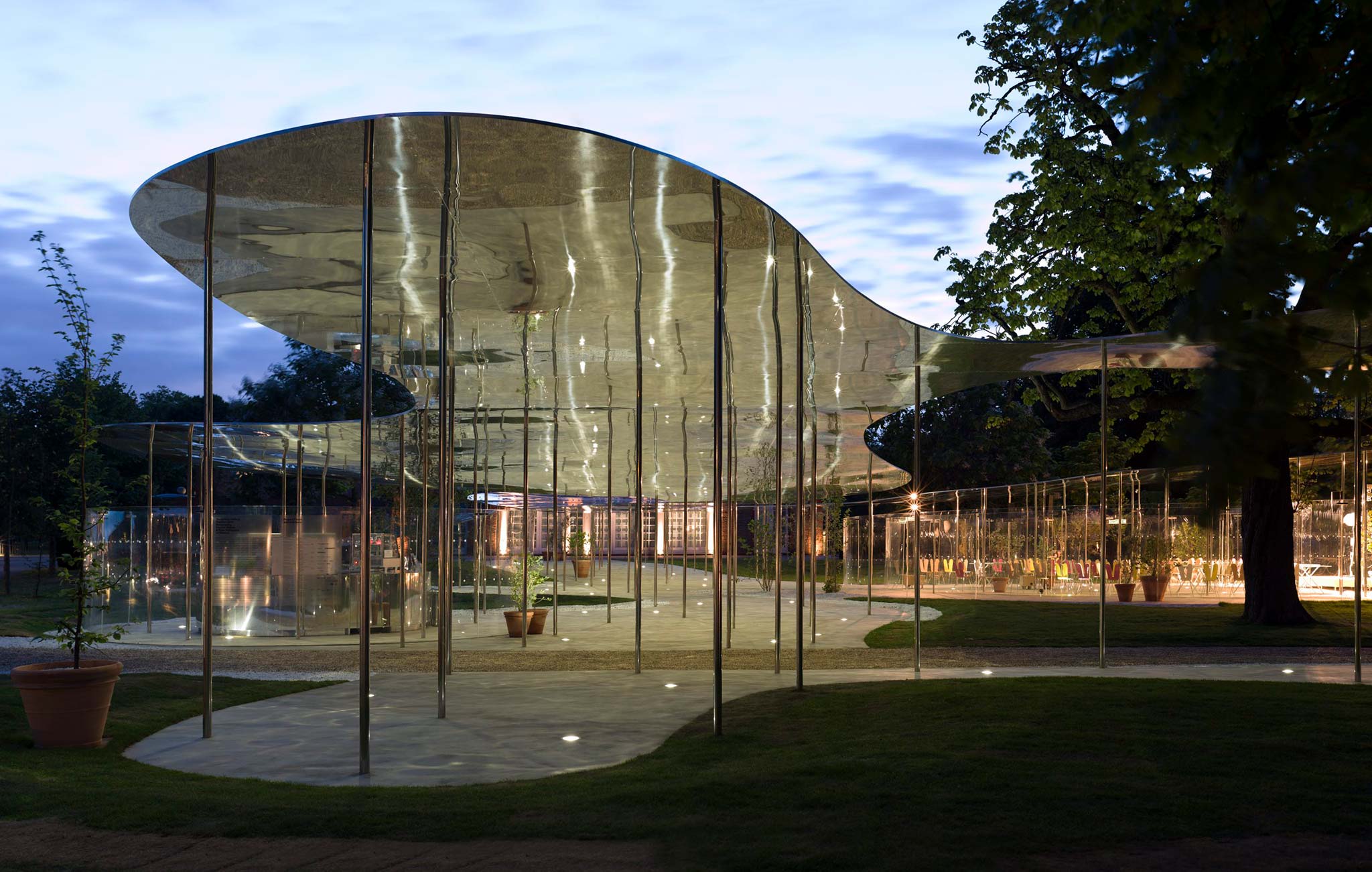
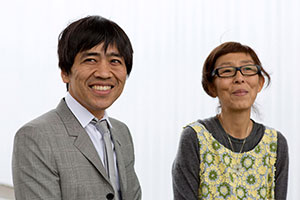
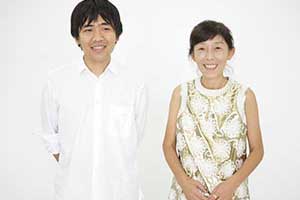
The Japanese studio SANAA (Kazuyo Sejima and Ryue Nishizawa) made a proposal that was based on a light horizontal plane, supported by columns of reduced thickness. Thanks to the polished aluminum this worked like a mirror in such a way that it reflected the sky and the park in which it was located, this concept towards which the pavilion and the park were one.
As for the accesses of this pavilion were arranged in such a way that the experience of reaching it was the same for everyone. In addition all the areas under the deck were level to be able to sit, thus there would be a capacity for 150 people, and those seats would be moved to be able to move them to the open spaces as needed. The capacity of the pavilion without seats was 300 people.
As for the accesses of this pavilion were arranged in such a way that the experience of reaching it was the same for everyone. In addition all the areas under the deck were level to be able to sit, thus there would be a capacity for 150 people, and those seats would be moved to be able to move them to the open spaces as needed. The capacity of the pavilion without seats was 300 people.
“The Pavilion is floating aluminium, drifting freely between the trees like smoke. Its appearance changes according to the weather, allowing it to melt into the surroundings. It works as a field of activity with no walls, allowing uninterrupted views across the park and encouraging access from all sides."
Sejima and Nishizawa.
The proposal was very innovative because it was of great aesthetic simplicity but at the same time had a great technical complexity that had nothing to do with the pavilions of the previous years.