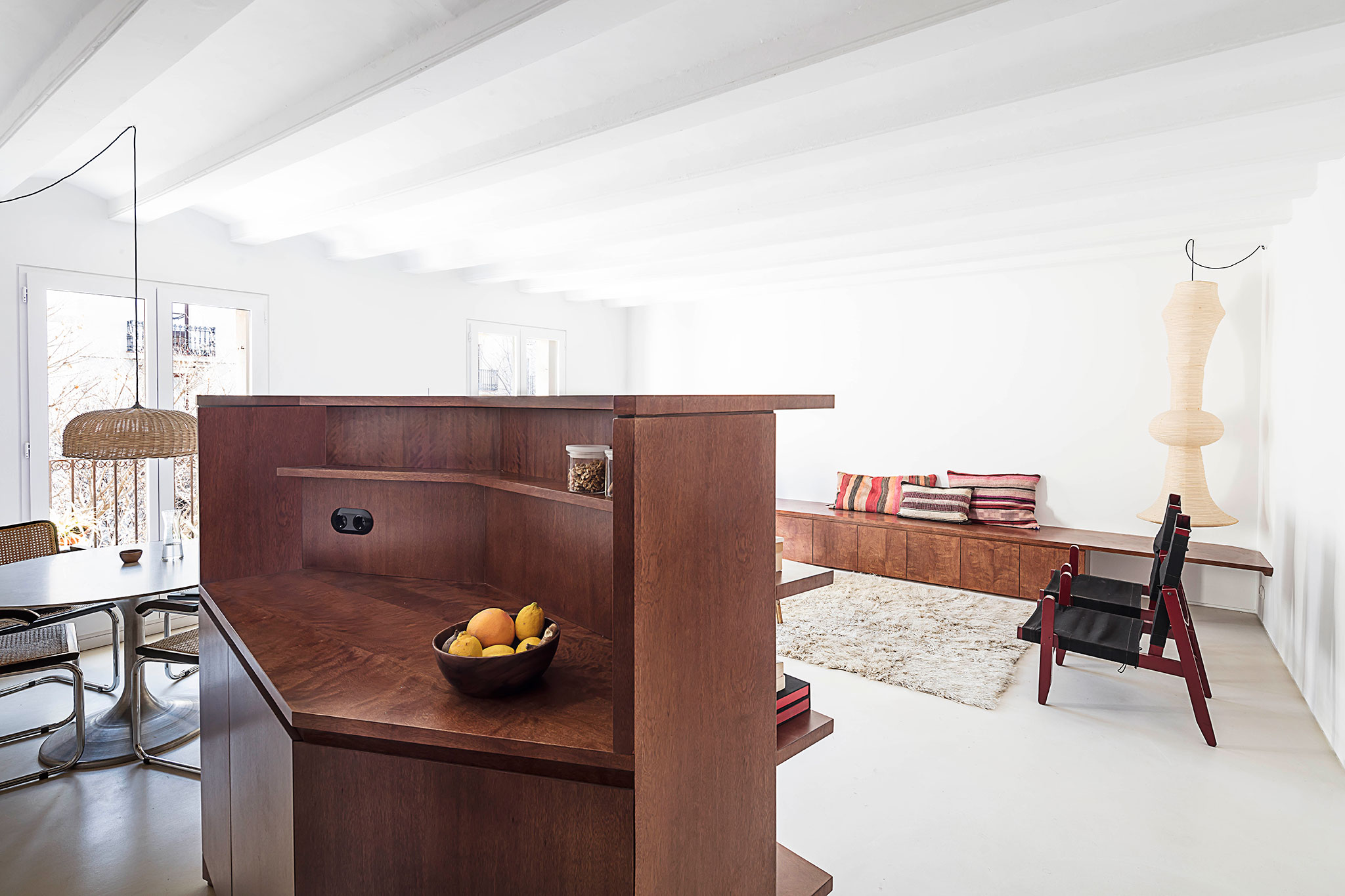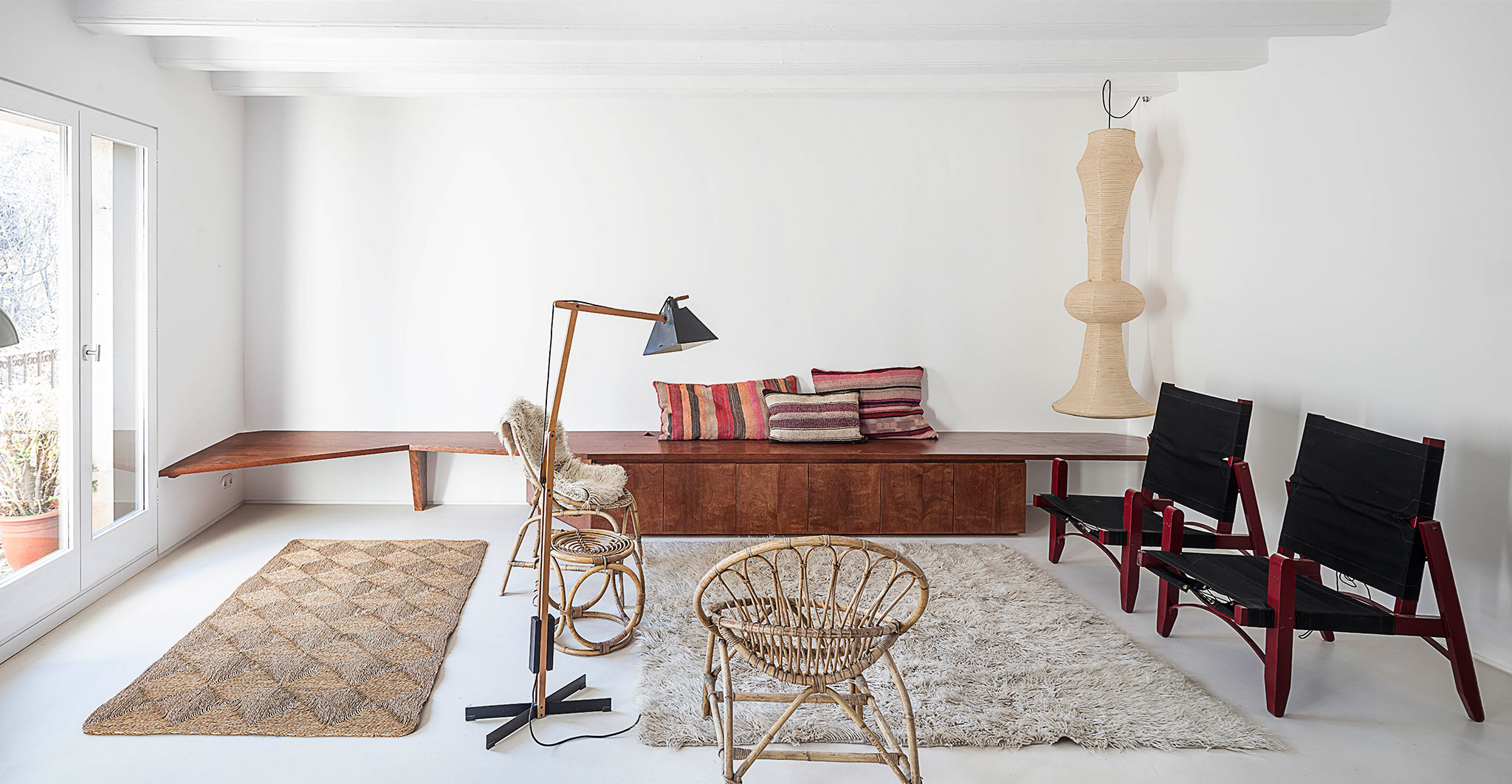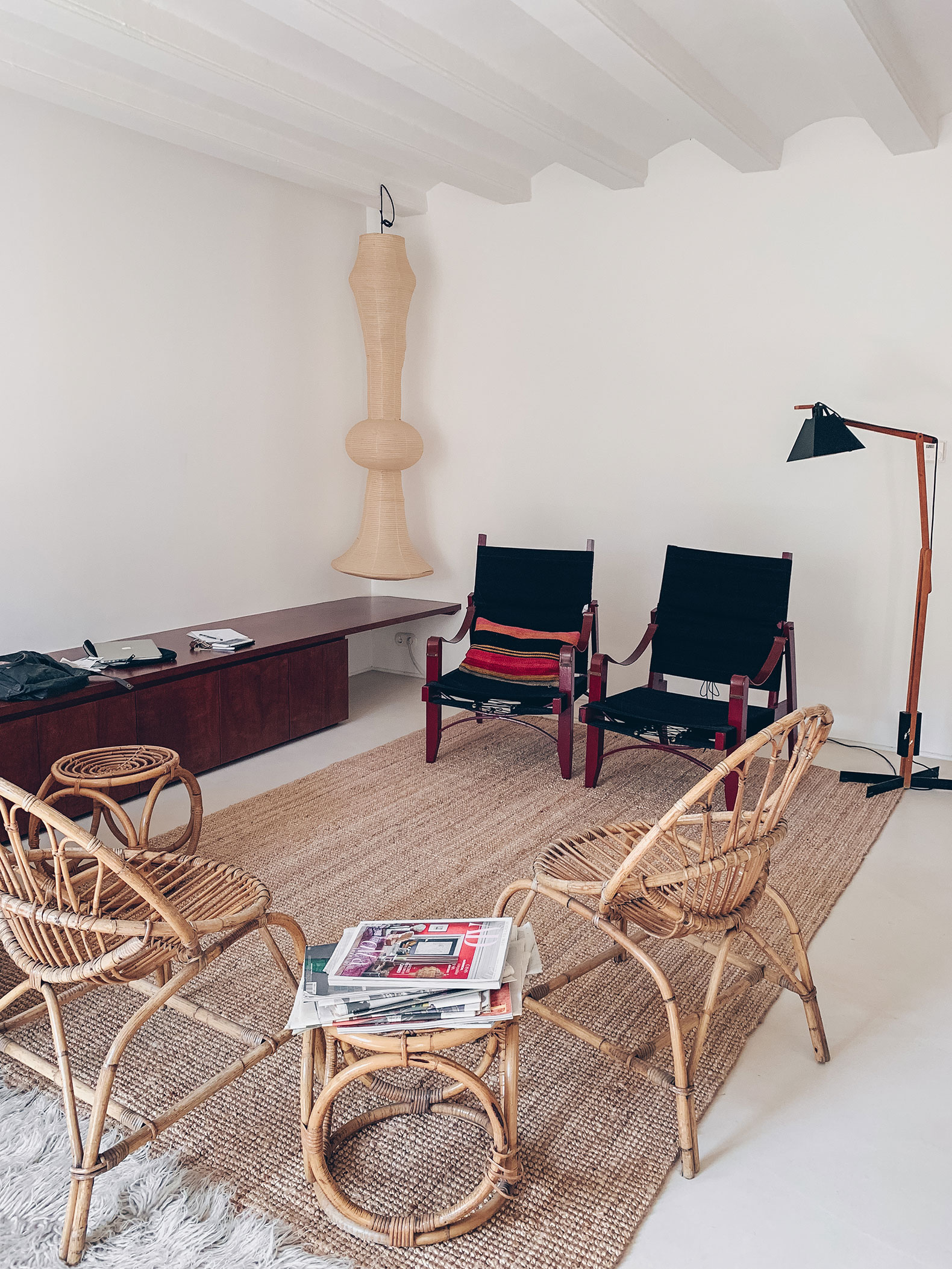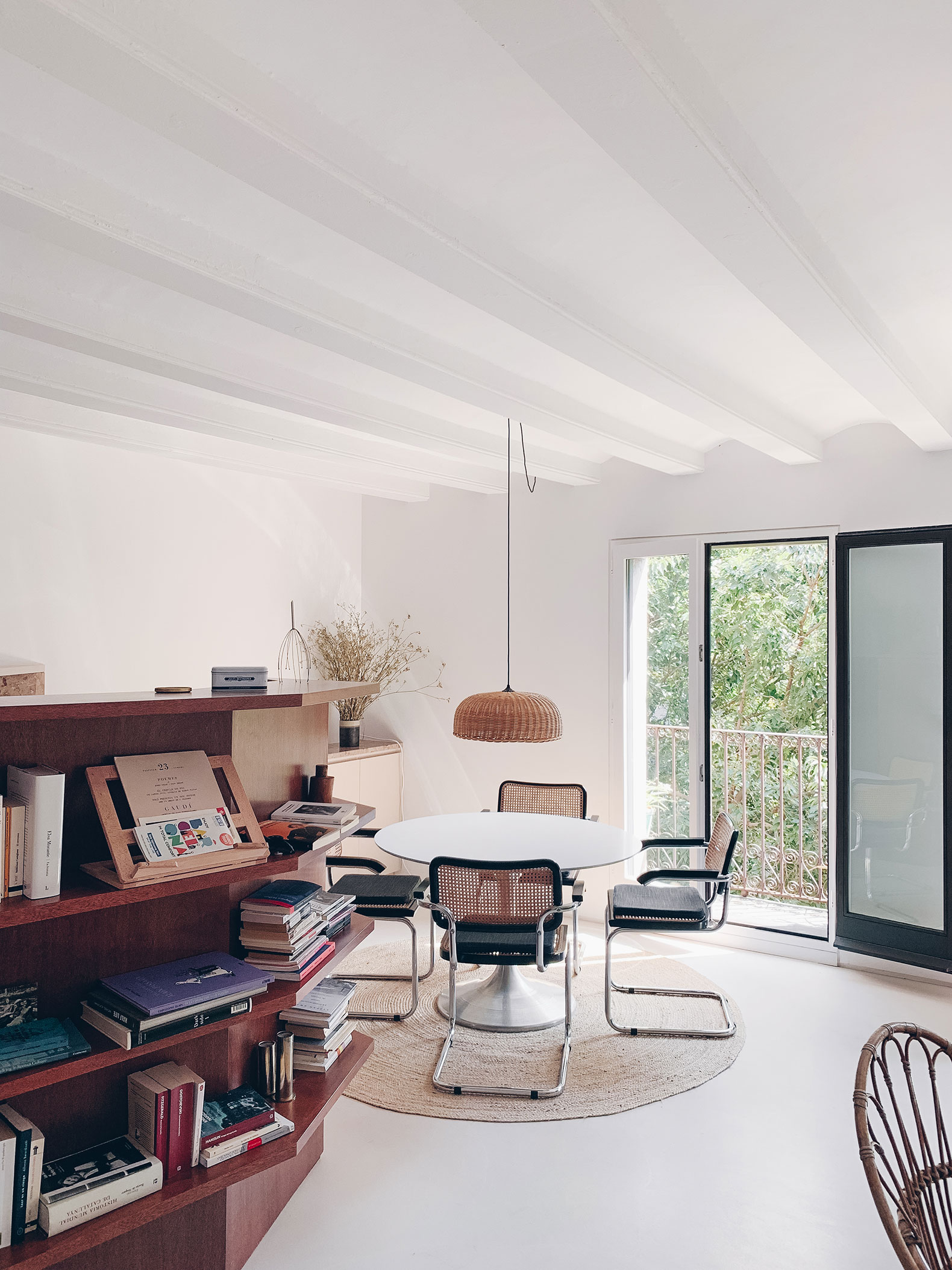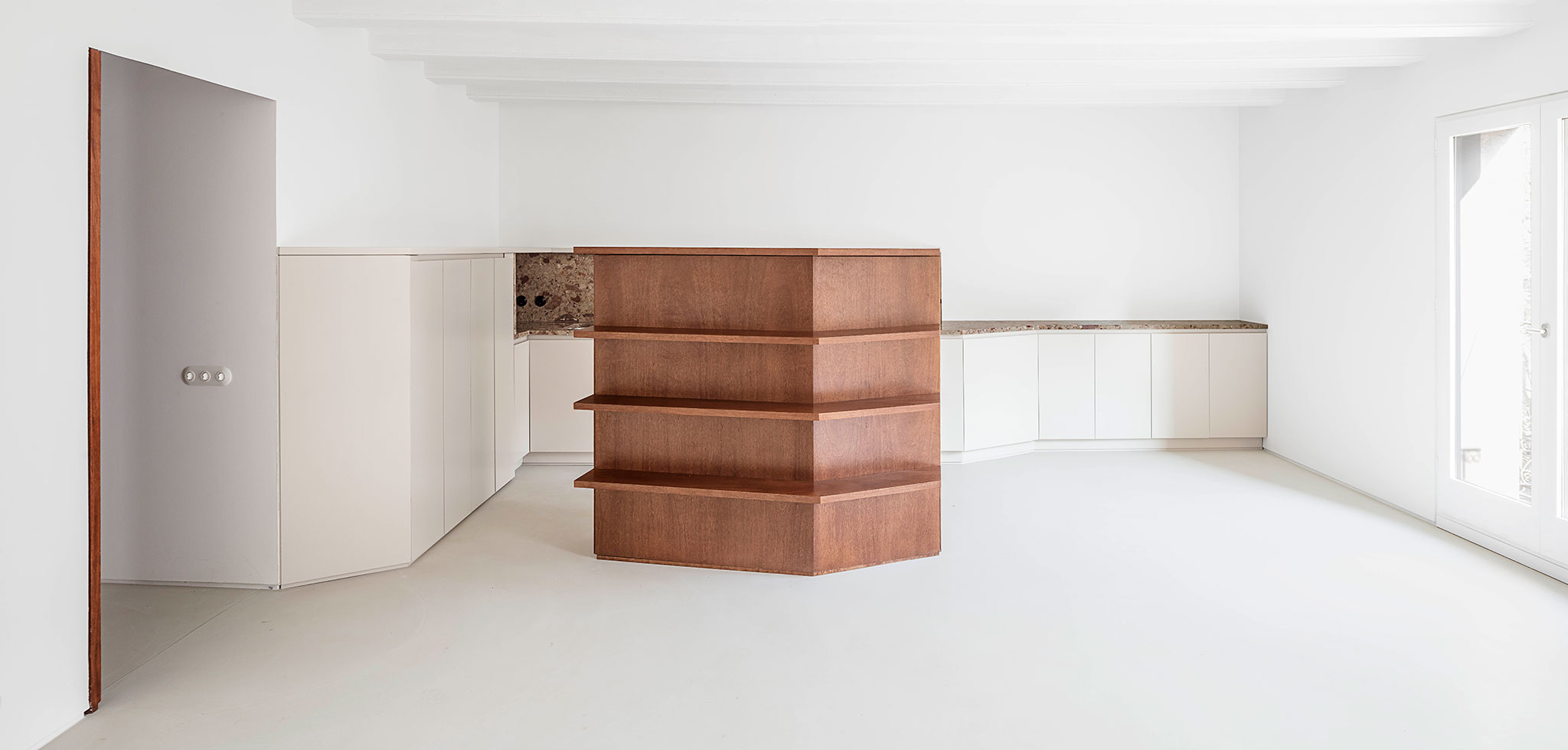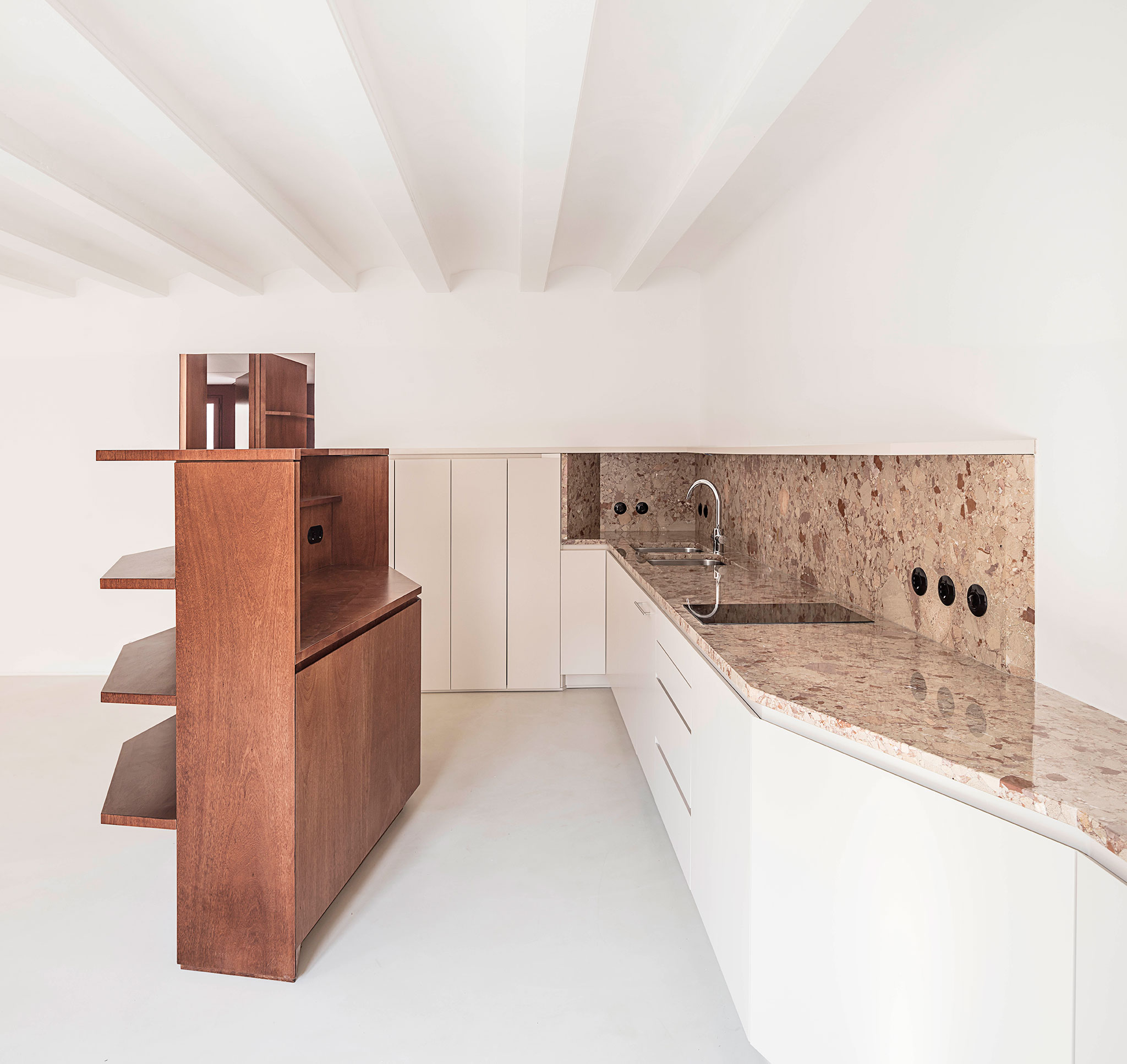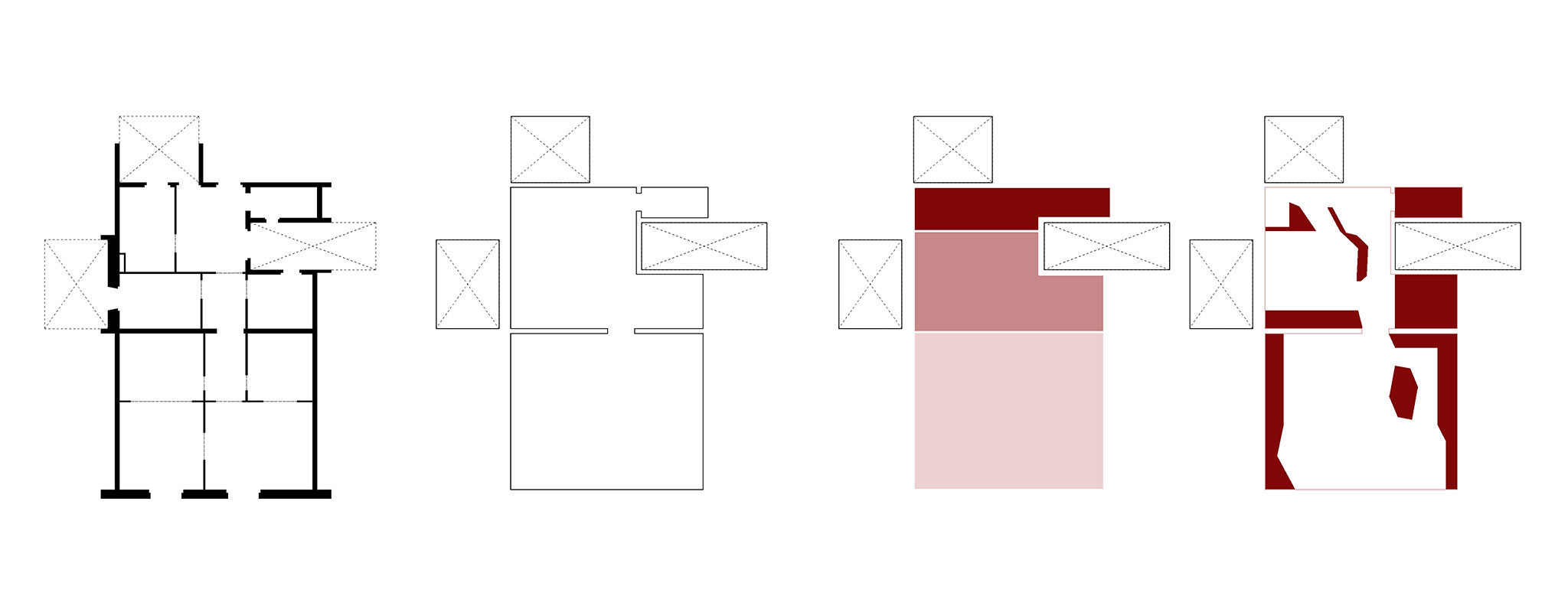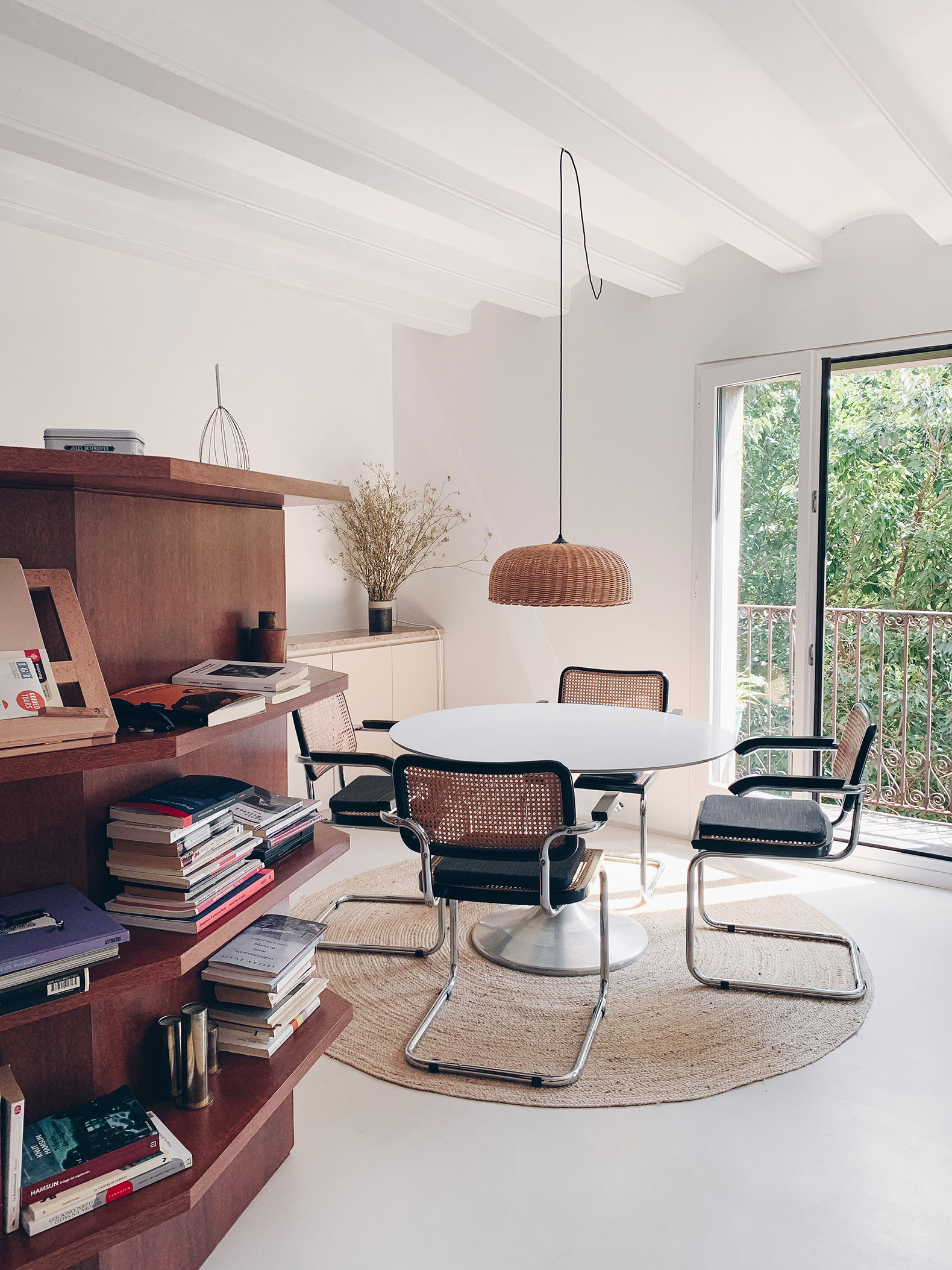
In the renovation of Casa Xurigué, h3o architects designed a crystalline space that, on one hand, was defined by two very deep bays (6 m) bisected by a load-bearing wall, and on the other, featured three luminous courtyards that generously flood the residence with light. Furthermore, this openness is complemented by (non-)furniture that stabilizes the void, creating distinct areas.
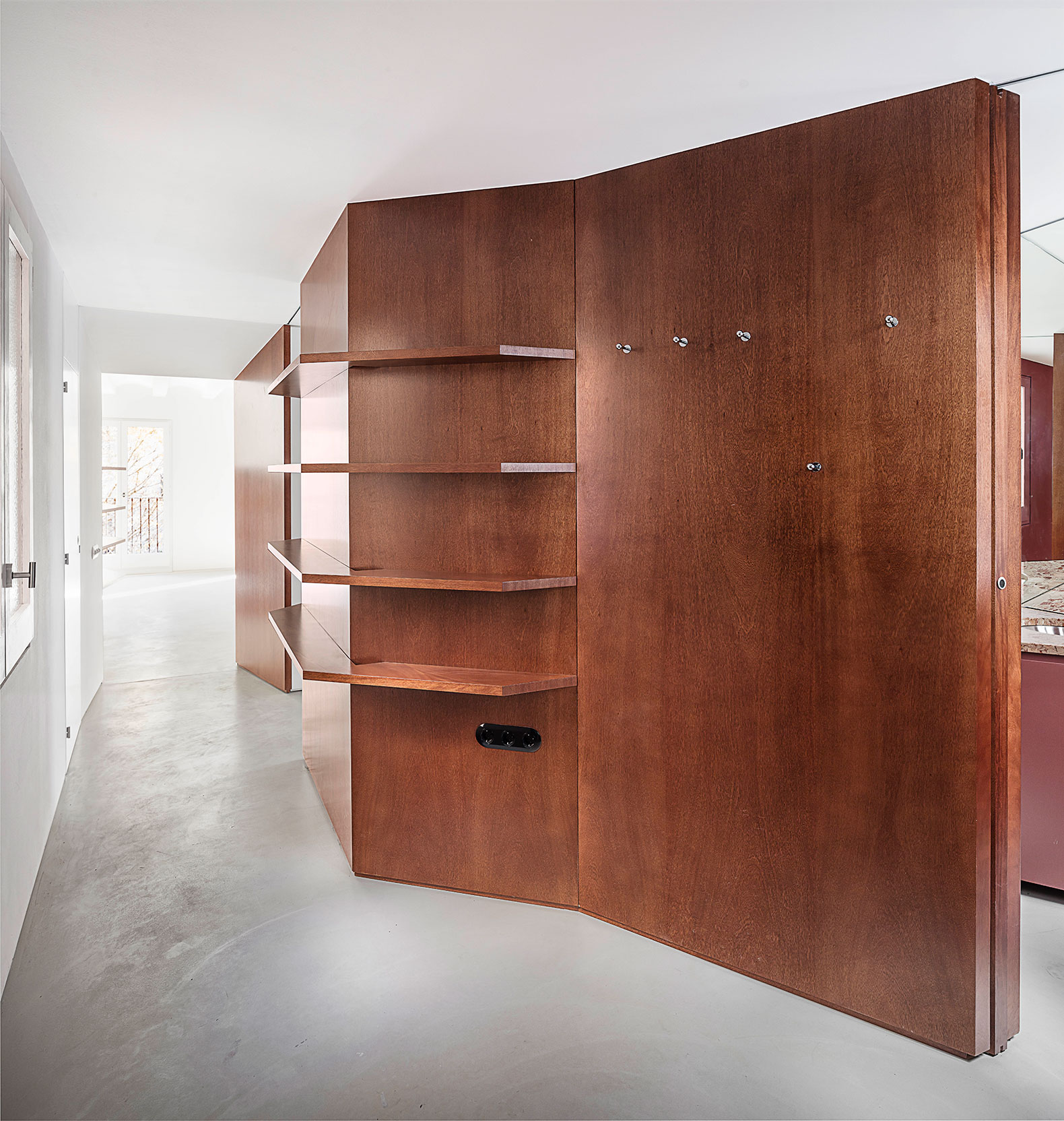
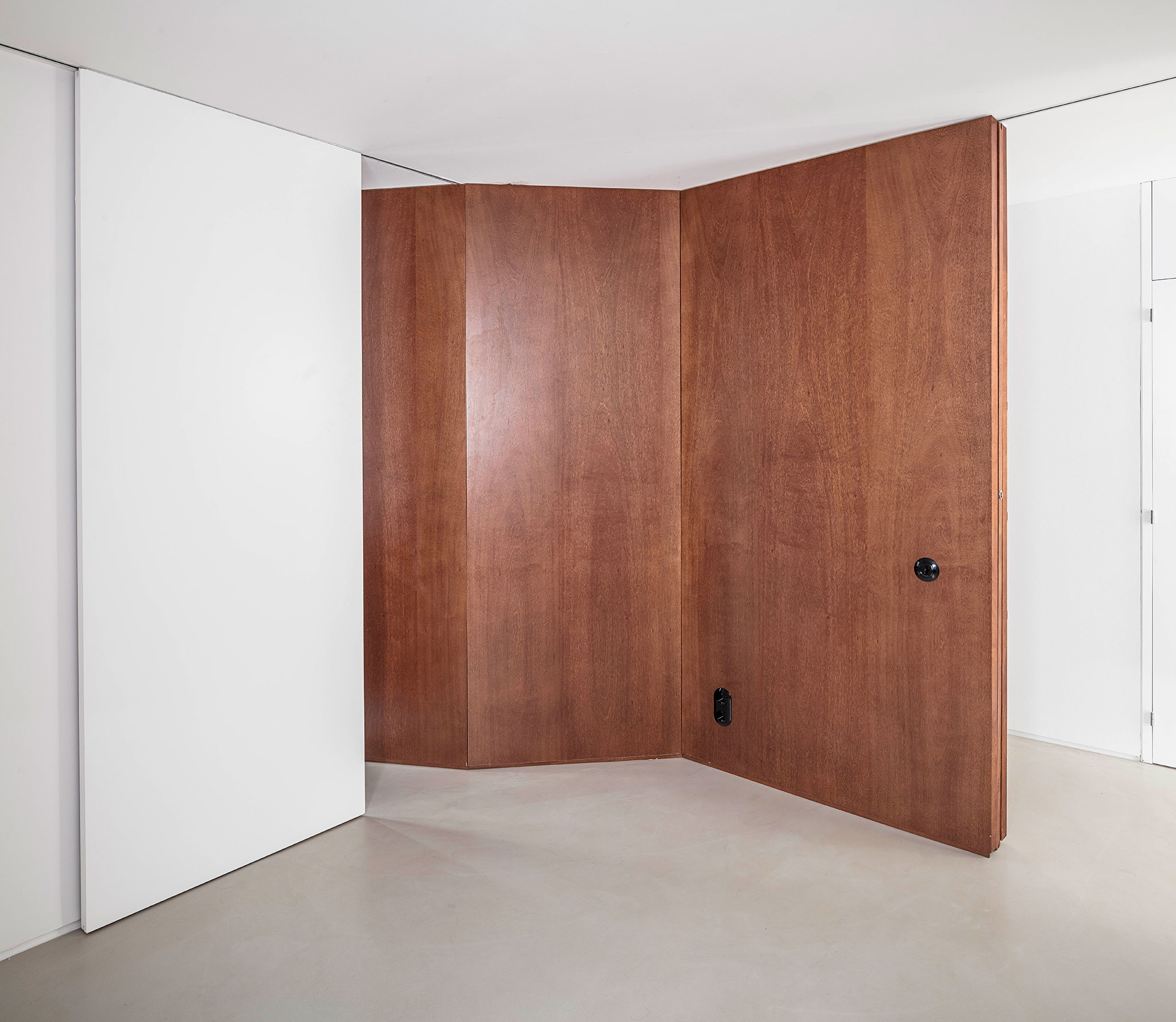
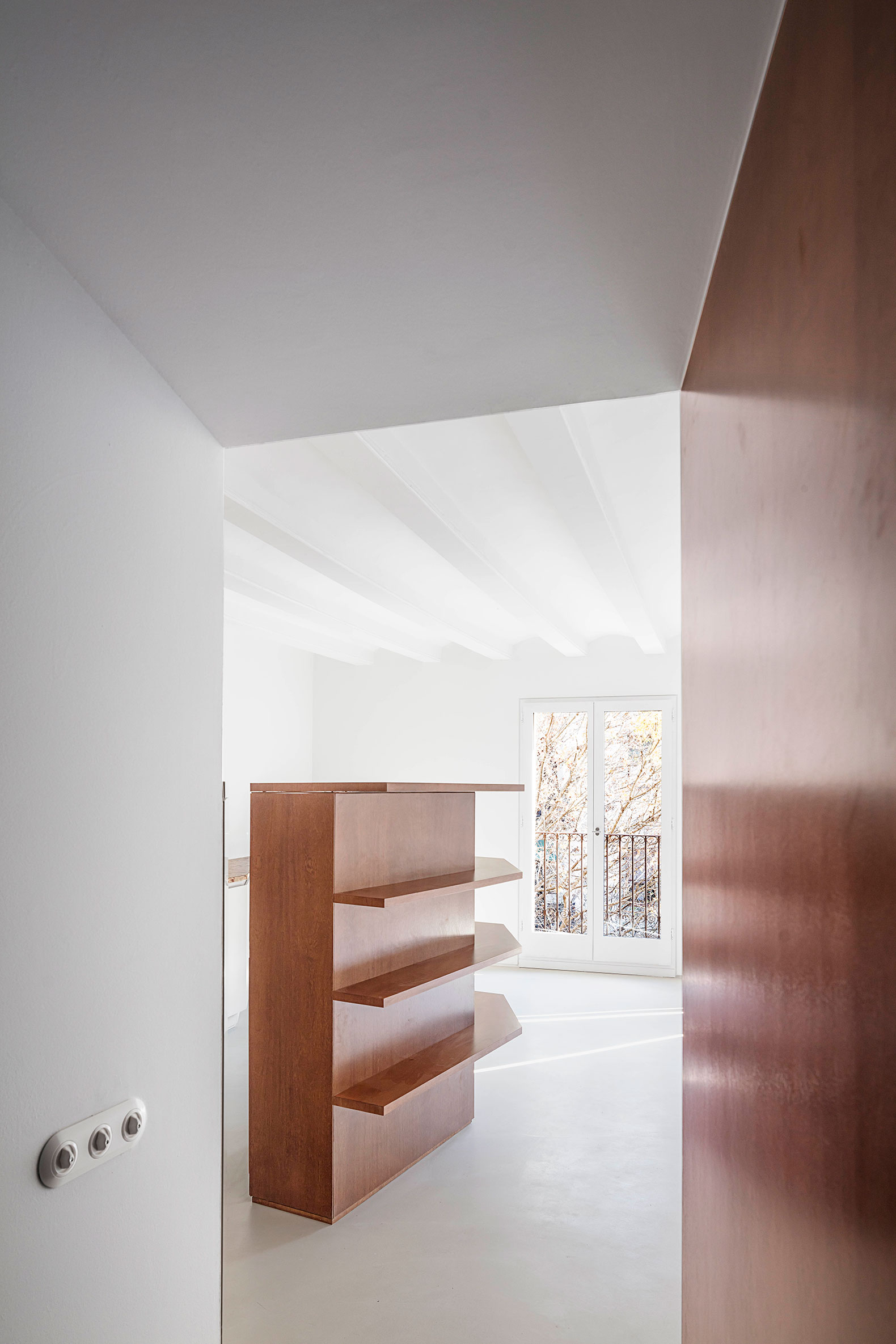
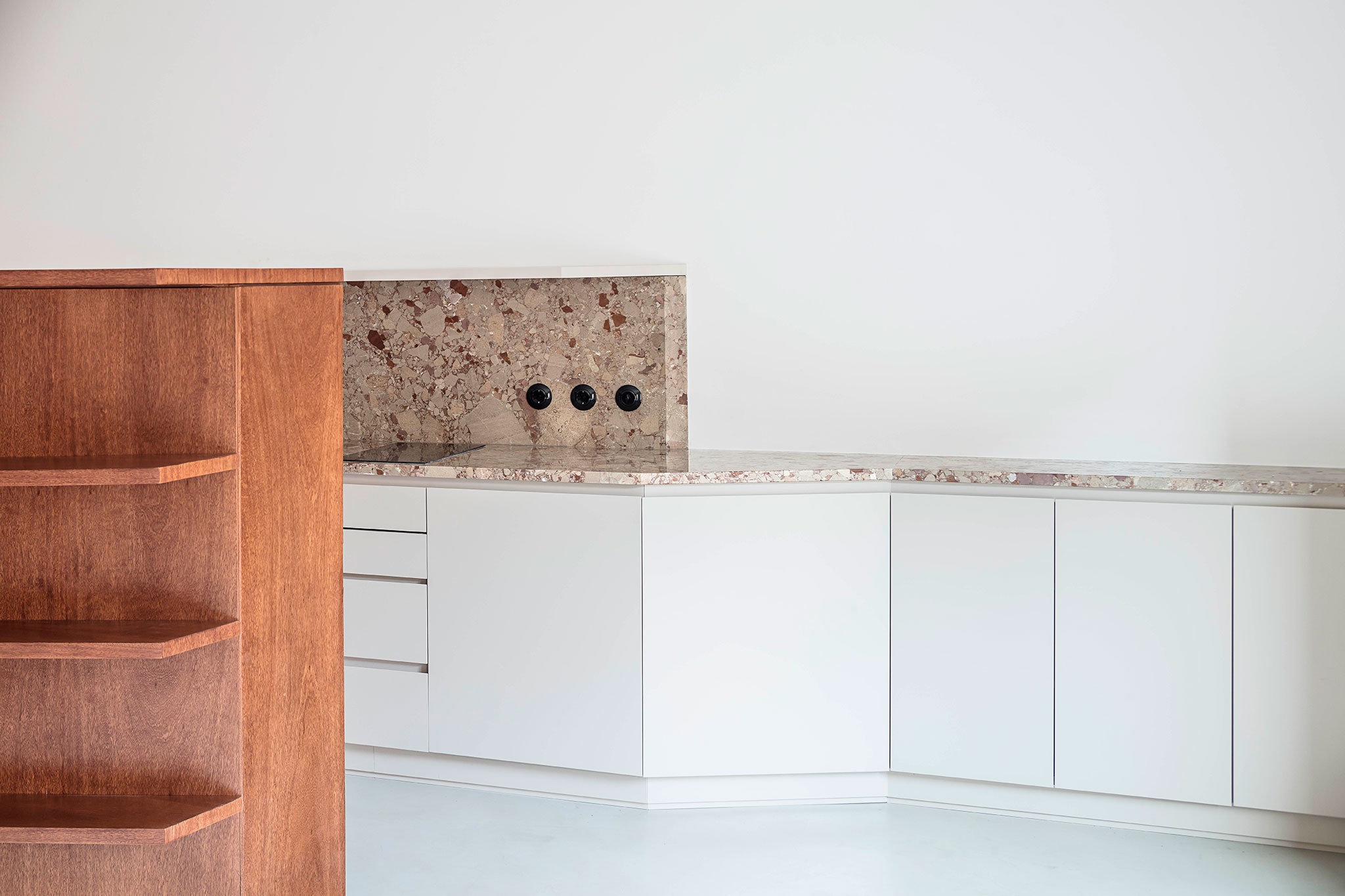
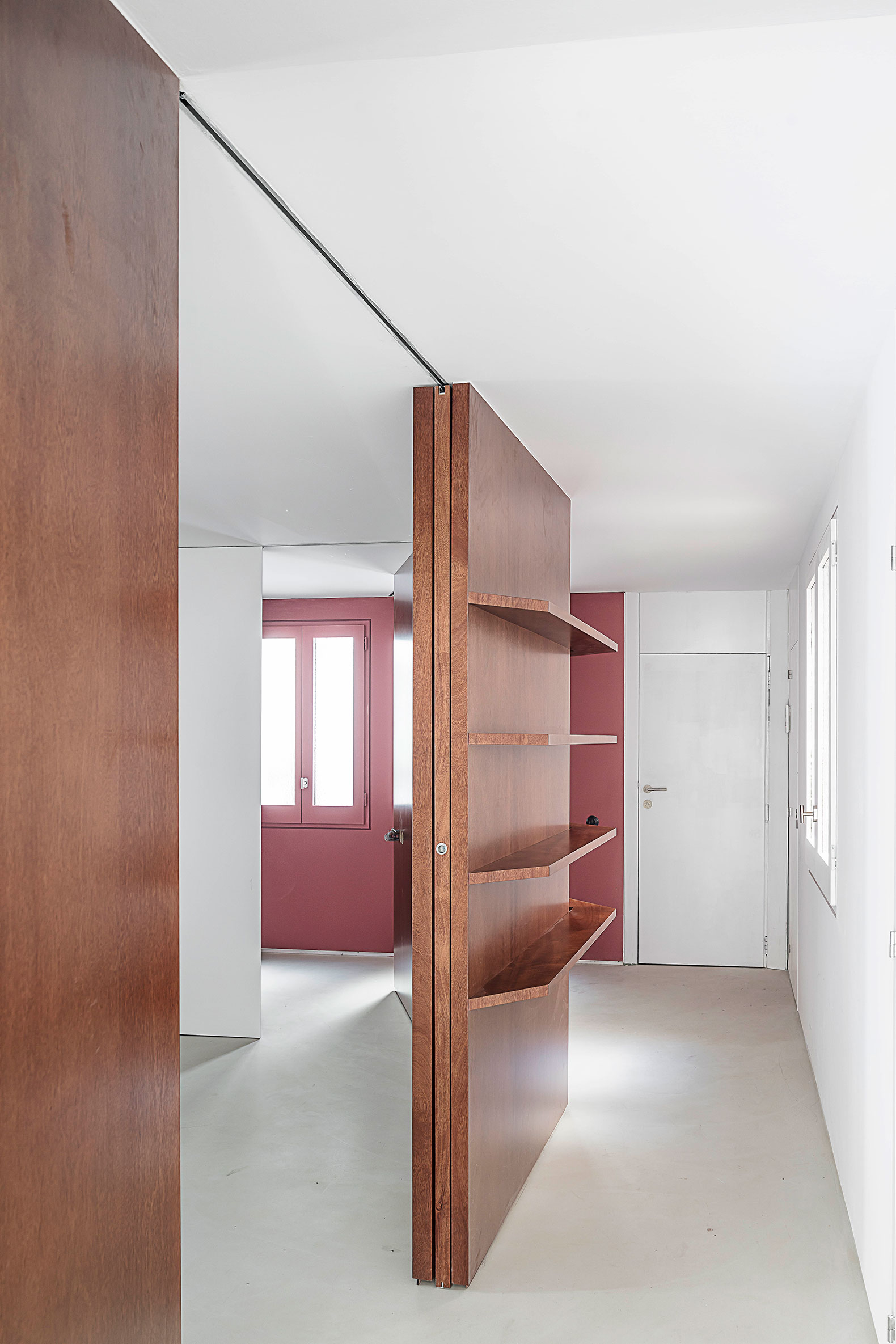
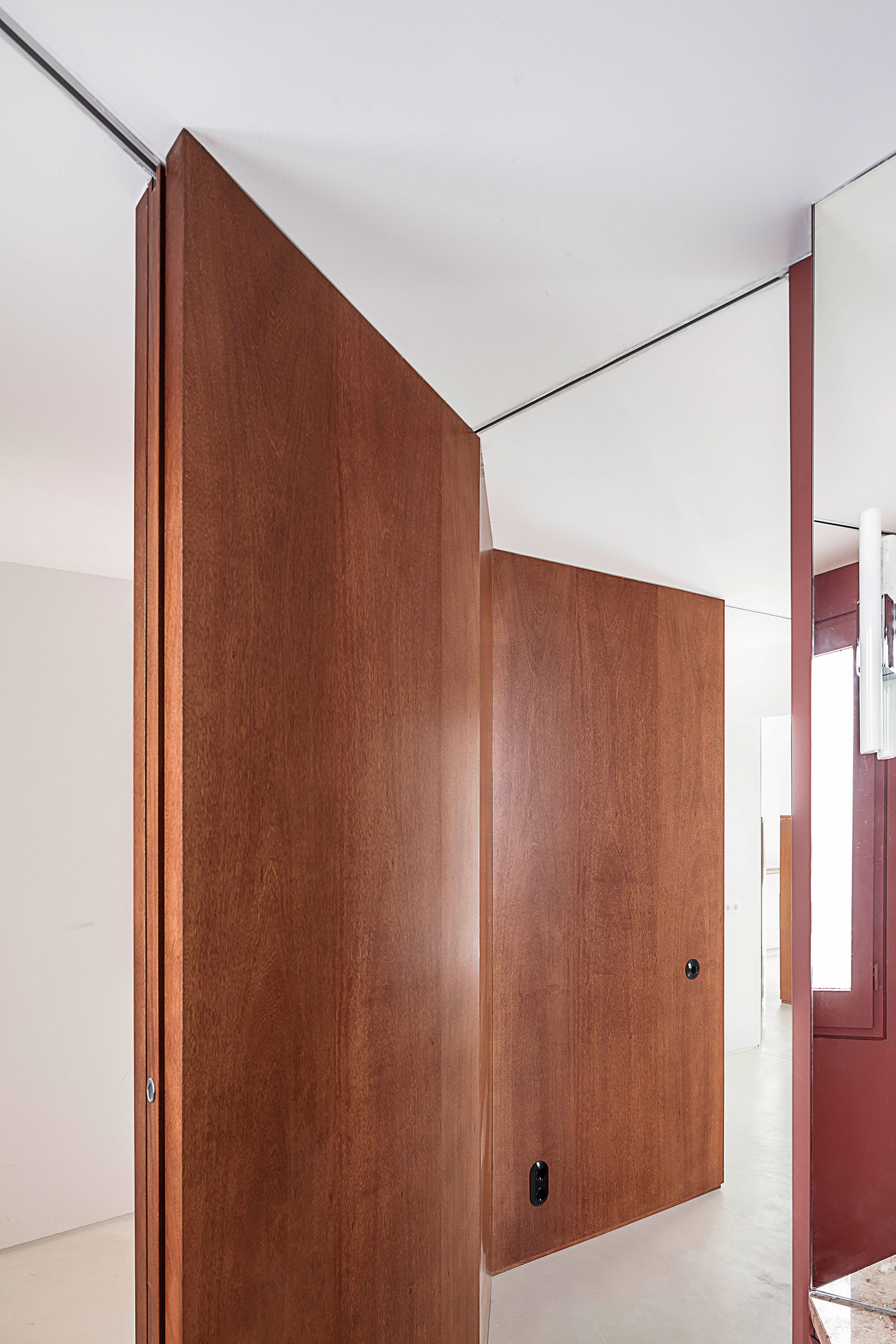
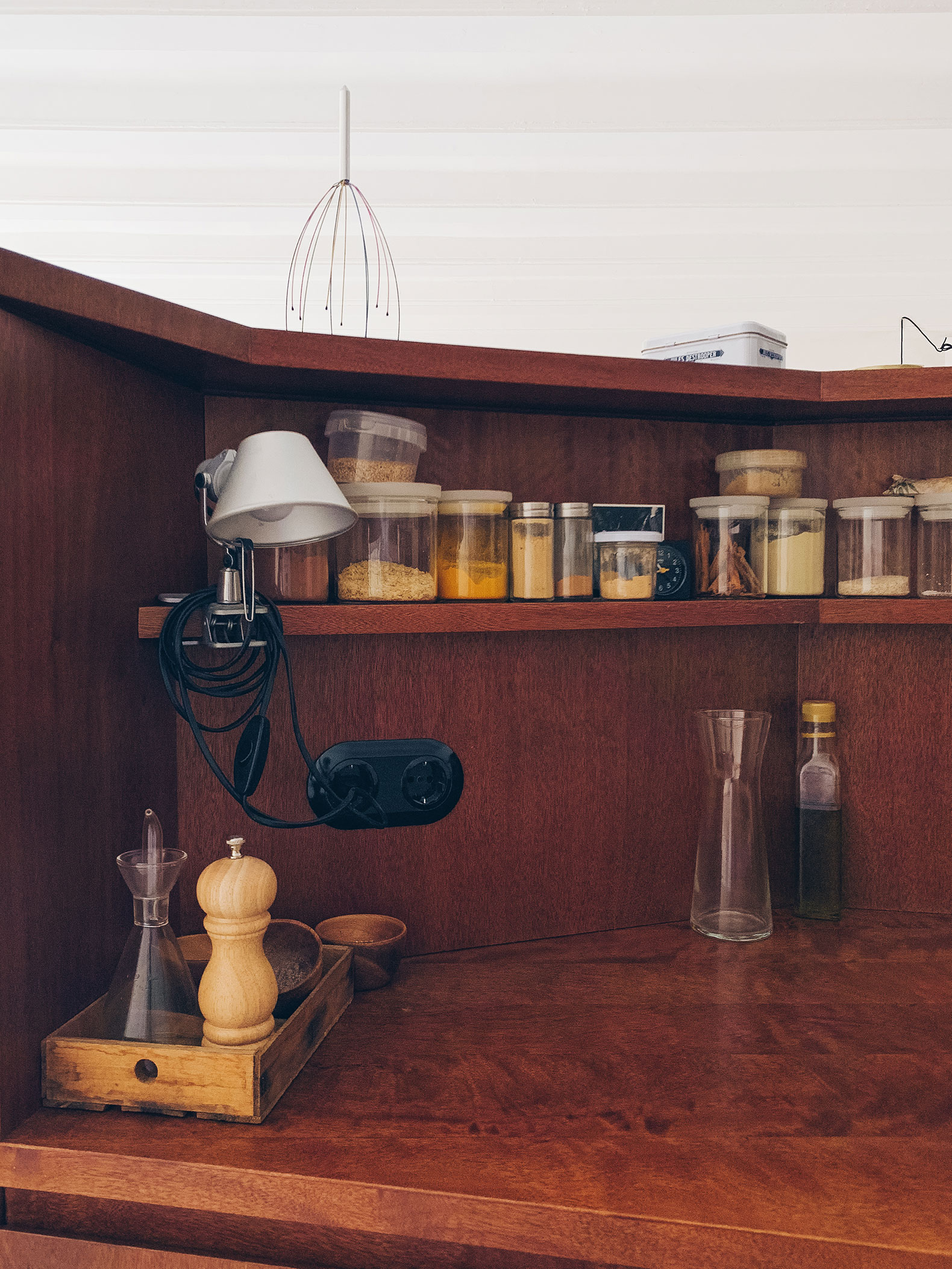
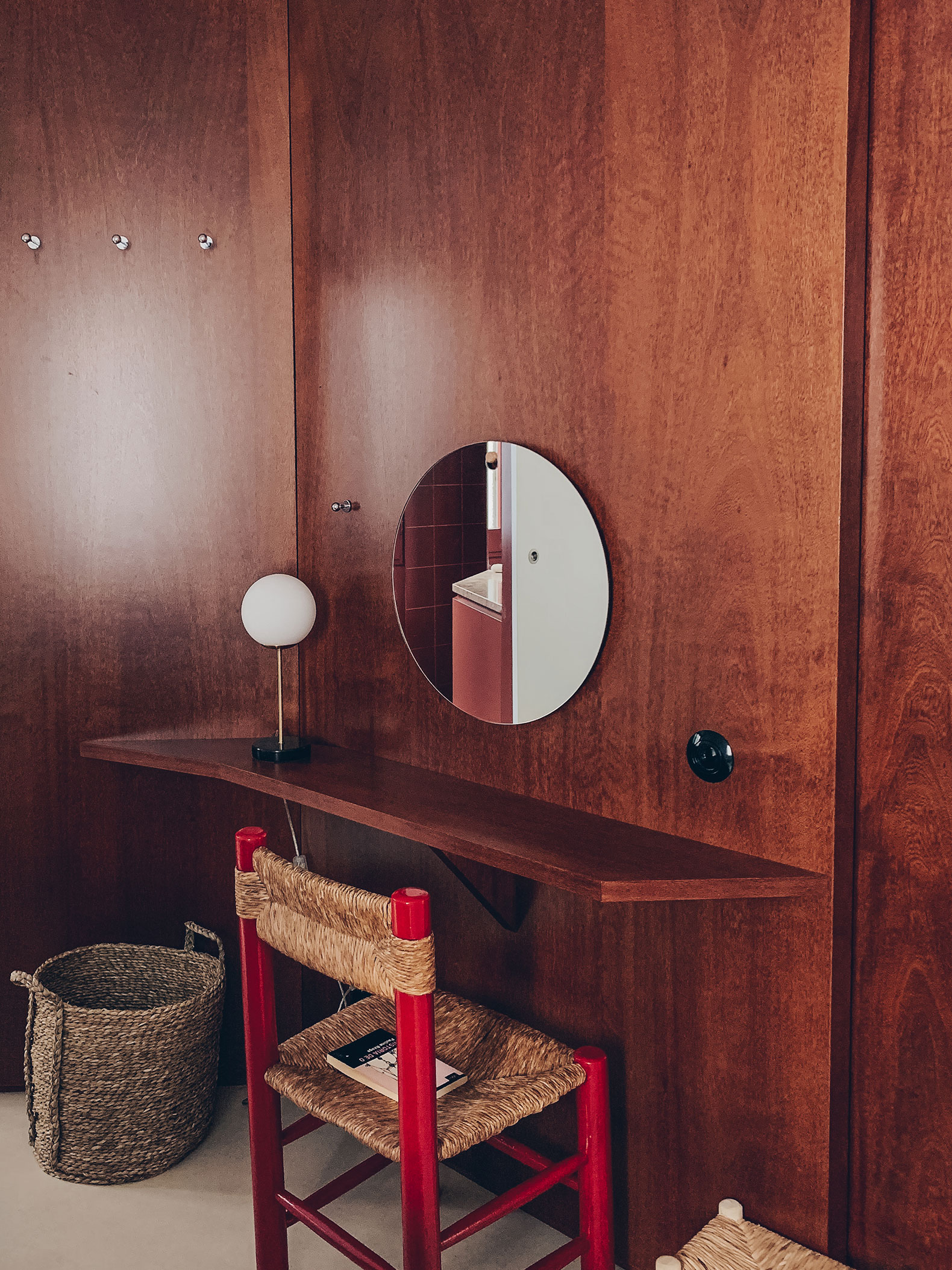
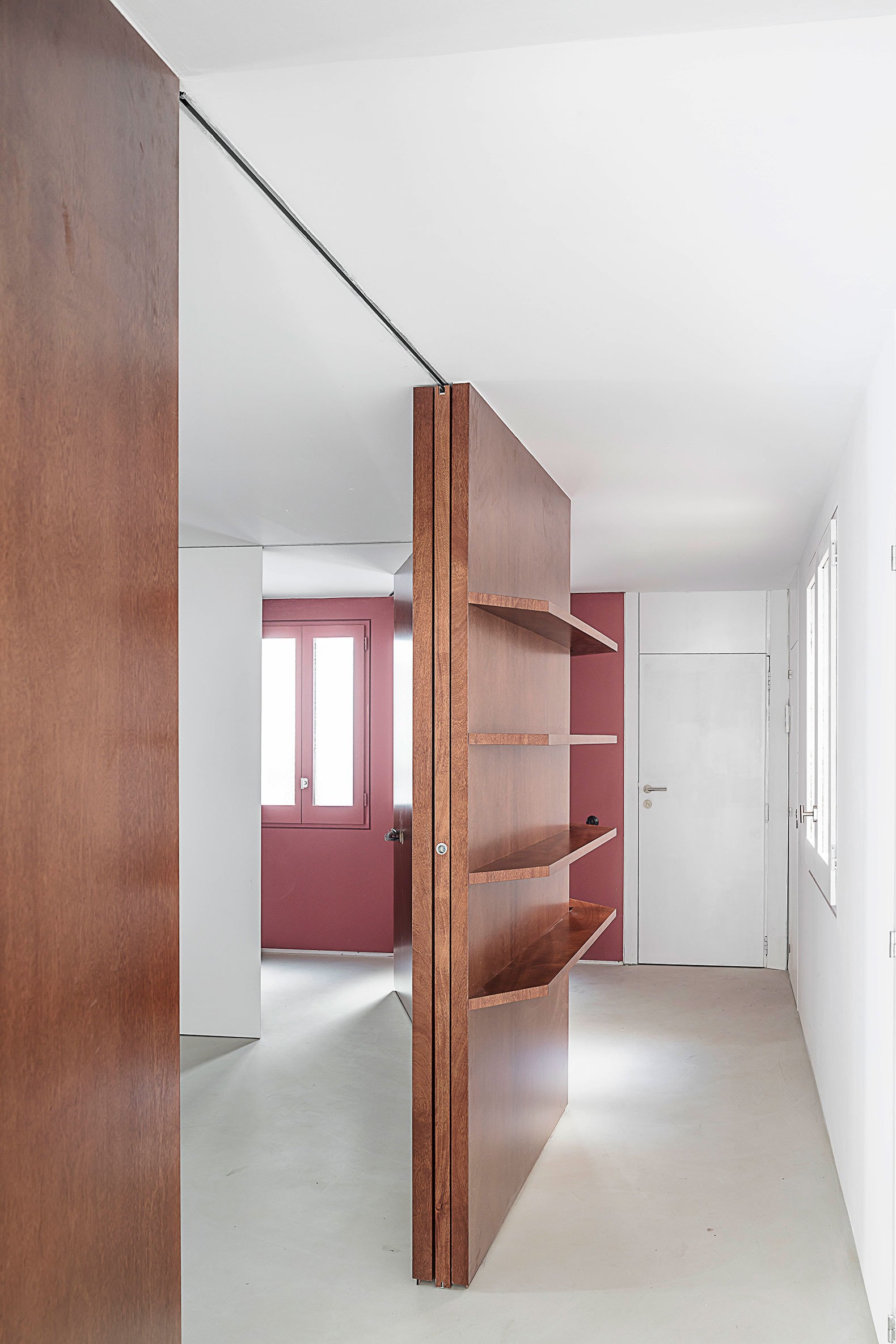
These immobile (in)movables elements, contrasted with the white and emptiness of the house, introduce reddish and cream colours, as well as materials like cedar and stainless steel. They create pathways that complicate the spatial perception and allow for natural light to permeate the project.
Home renovation por h3o architects. Photograph by Adrià Goula.
Project description by h3o architects
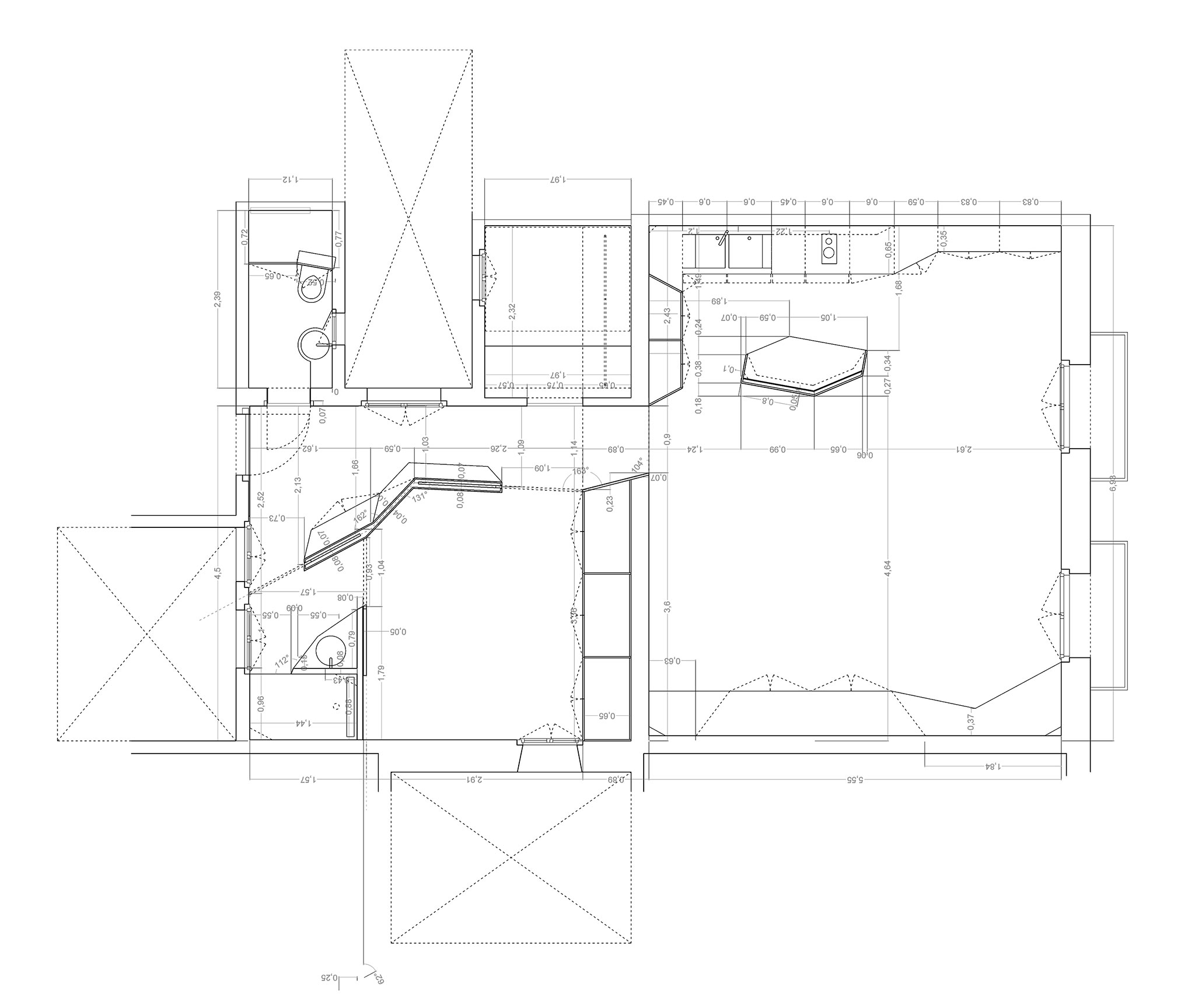
The renovation of this apartment in Barcelona’s Sant Antoni neighborhood reorganizes a dwelling that was originally highly compartmentalized. The project begins by clearing the existing layout to transform the space into a continuous floor plan articulated by a series of furniture elements that structure the domestic program. These elements, referred to as (in)movables—positioned between furniture and architecture—integrate specific functions and define areas of use without interrupting the spatial continuity, while also introducing character and materiality through a combination of materials and tones.
(in)movables on canvas
The refurbishment of a “Loft not Loft” in Parlament Street in Barcelona, or how to fill a white canvas with “movables” (furniture) of sinuous shapes that define living spaces.
Difficulty and Virtue
The Xurigué building was drawn and built in 1868 by the master builder Pau Martorell in the heart of Sant Antoni neighborhood. It was one of the first illegal constructions in Cerdà’s Eixample and it was located just outside the walls of what had been the Gate of Sant Antoni and where 10 years later the current market would appear. This is one of those Barcelona buildings born between eras. In an Eixample that still had not defined its specific “Eixample Typology”, the Xurigué building is part of the tradition exported from Ciutat Vella neighborhood, where masters used to build in narrow bays.
The fact of being a pioneer building of the Eixample is reflected in the particular structural and lighting solutions. Originally, the spatial organization was conditioned by 2 very deep bays (6m long) crossed by a bearing wall with a small opening that communicated -but also stifled the continuity- among rooms. On the other hand, three bright courtyards generously oxygenated the house.
Loft yes but not on a white canvas
One of the project challenges was to seek, against the original distribution, a diaphanous dwelling to fully enjoy the 80sqm as a spatial continuum. At the same time, it had to be compartmentalized.
The first decision was to empty and unify the space turning it into a white canvas defined by its 3 patios and the bearing wall. Thus, the feeling of a generous and overflowing space was accentuated.
Then we defined the different supports.
The (im)movables
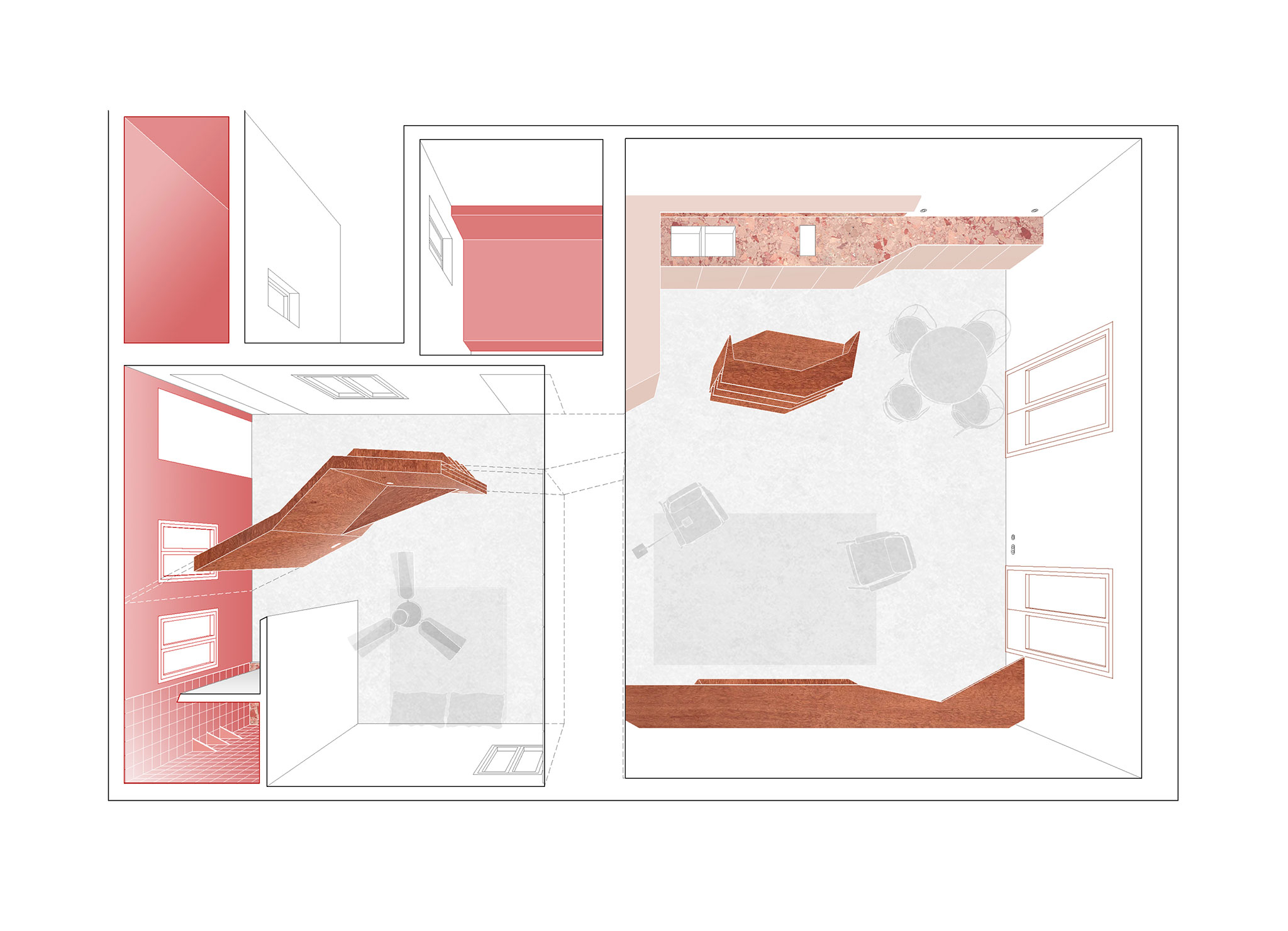
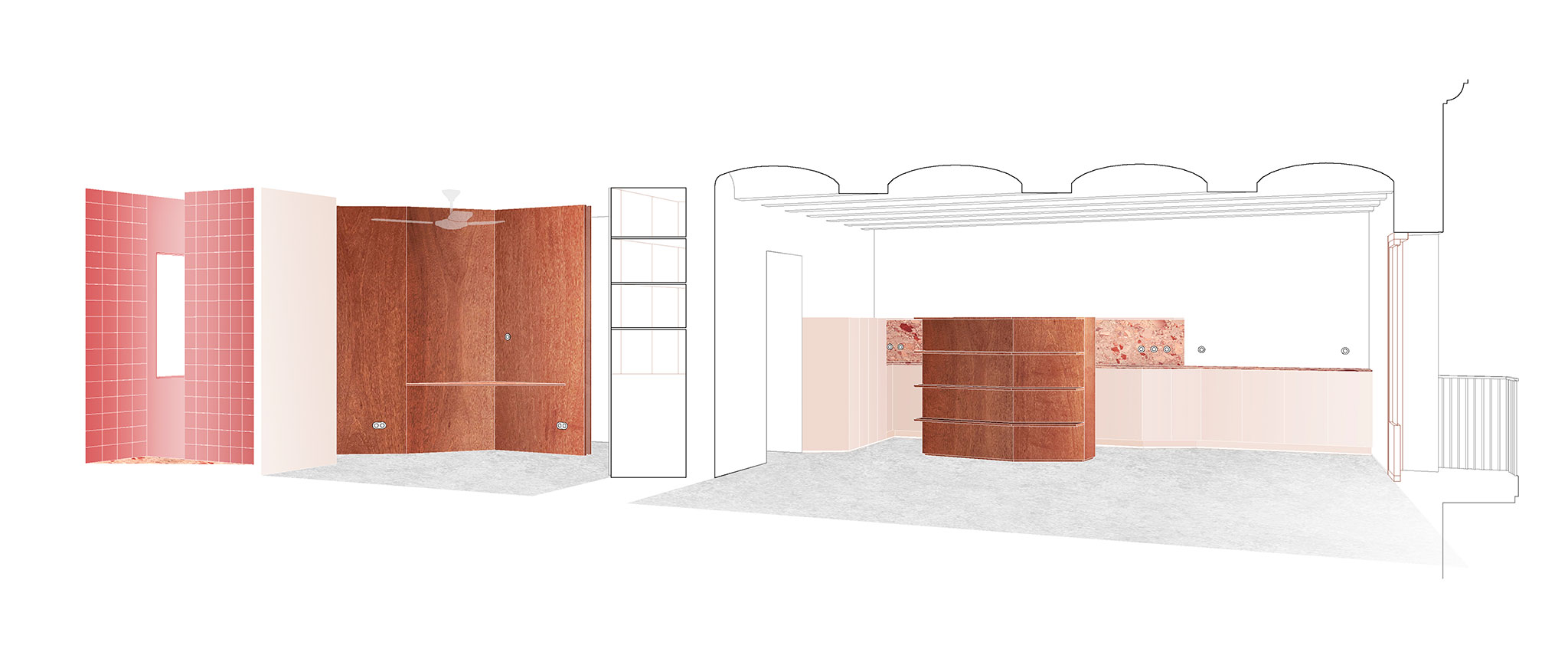
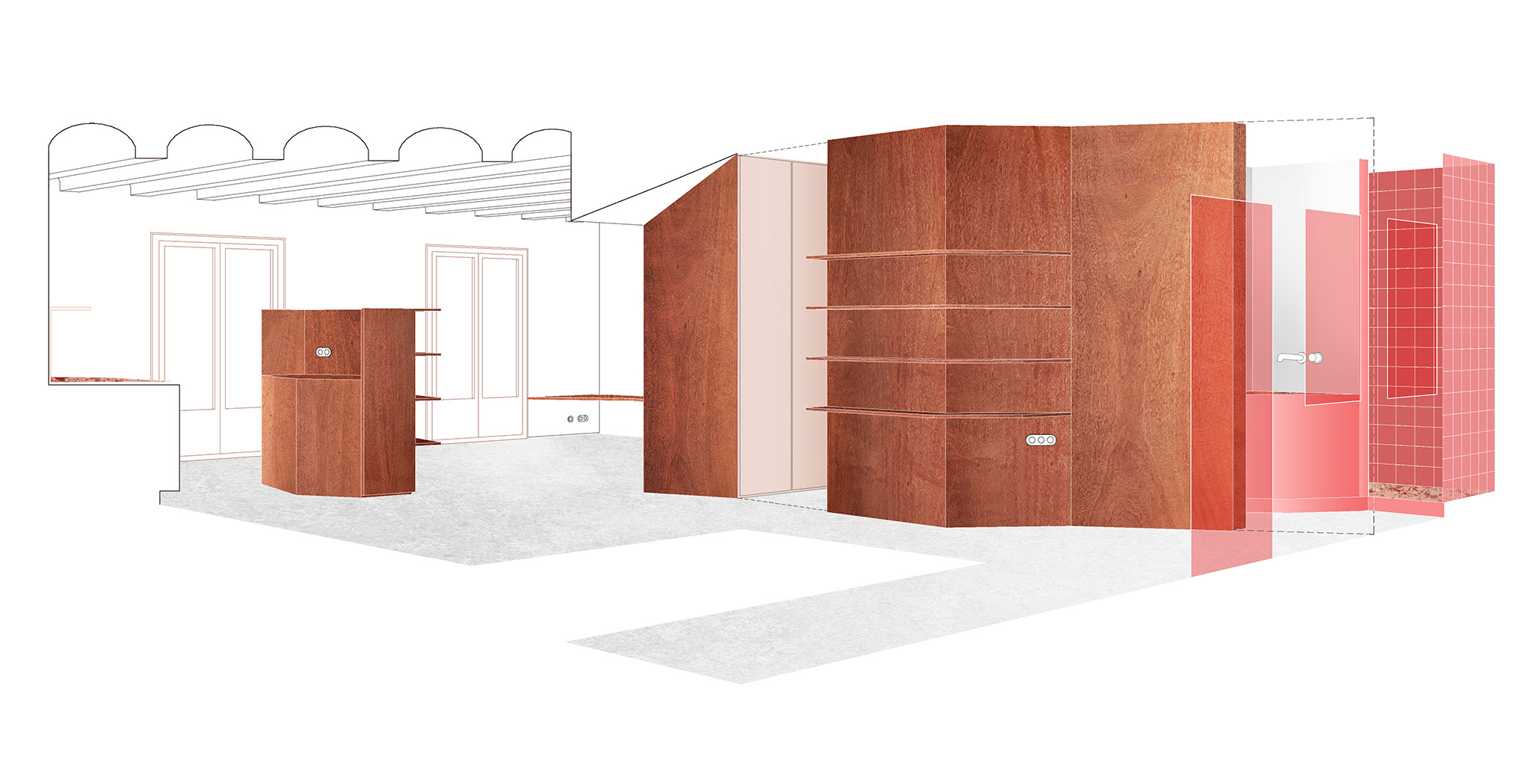
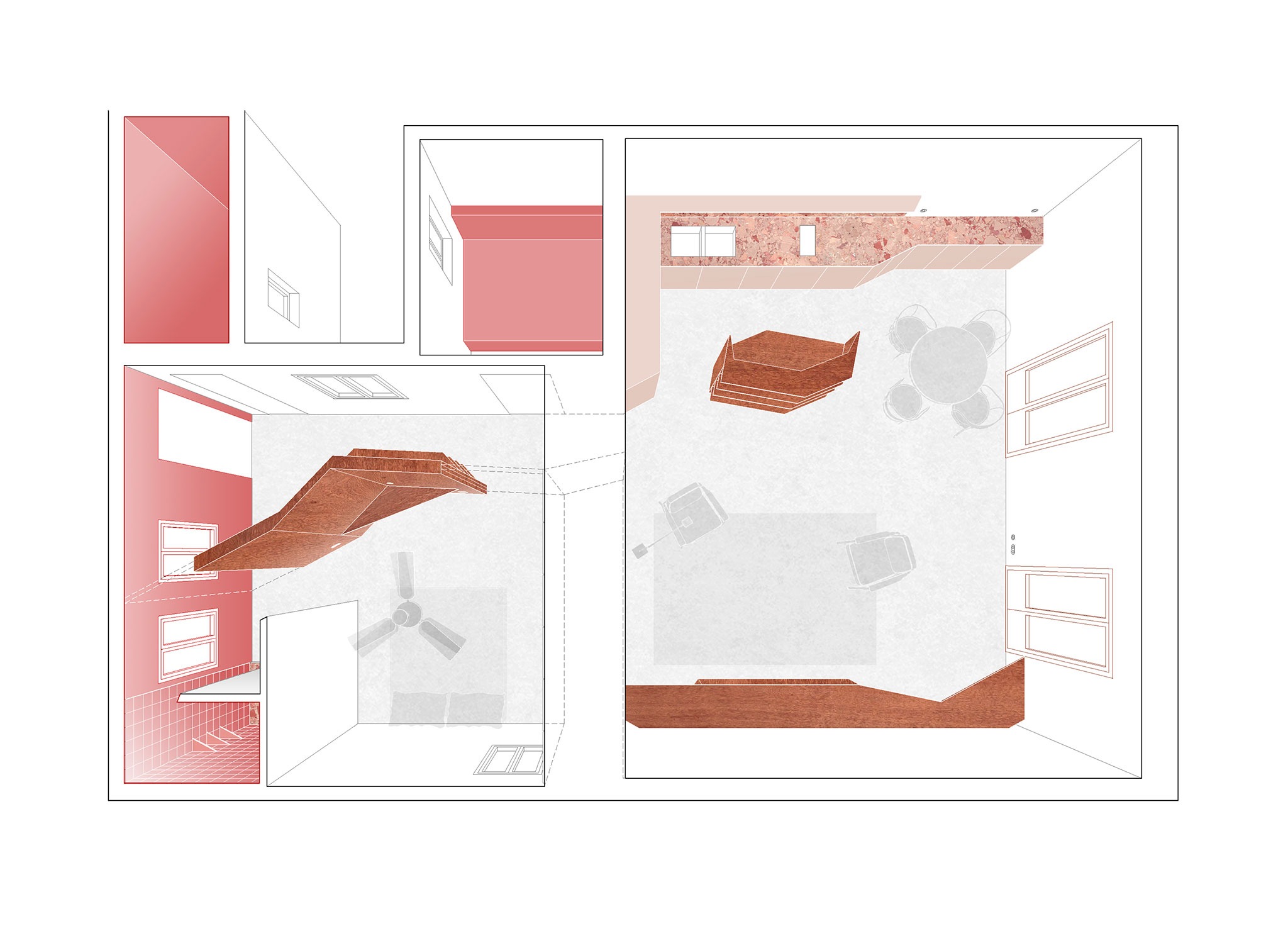
Once having the whiteness of the empty space, some new elements are placed: the (im)movables. Due to their materiality and shape, they vibrate and fill the apartment with objectual life. They are immovable movables.
(Im)movables arranged within the neutral space to differentiate rooms in a spatial continuum.
(Im)movables creating circular flows to increase spatial complexity.
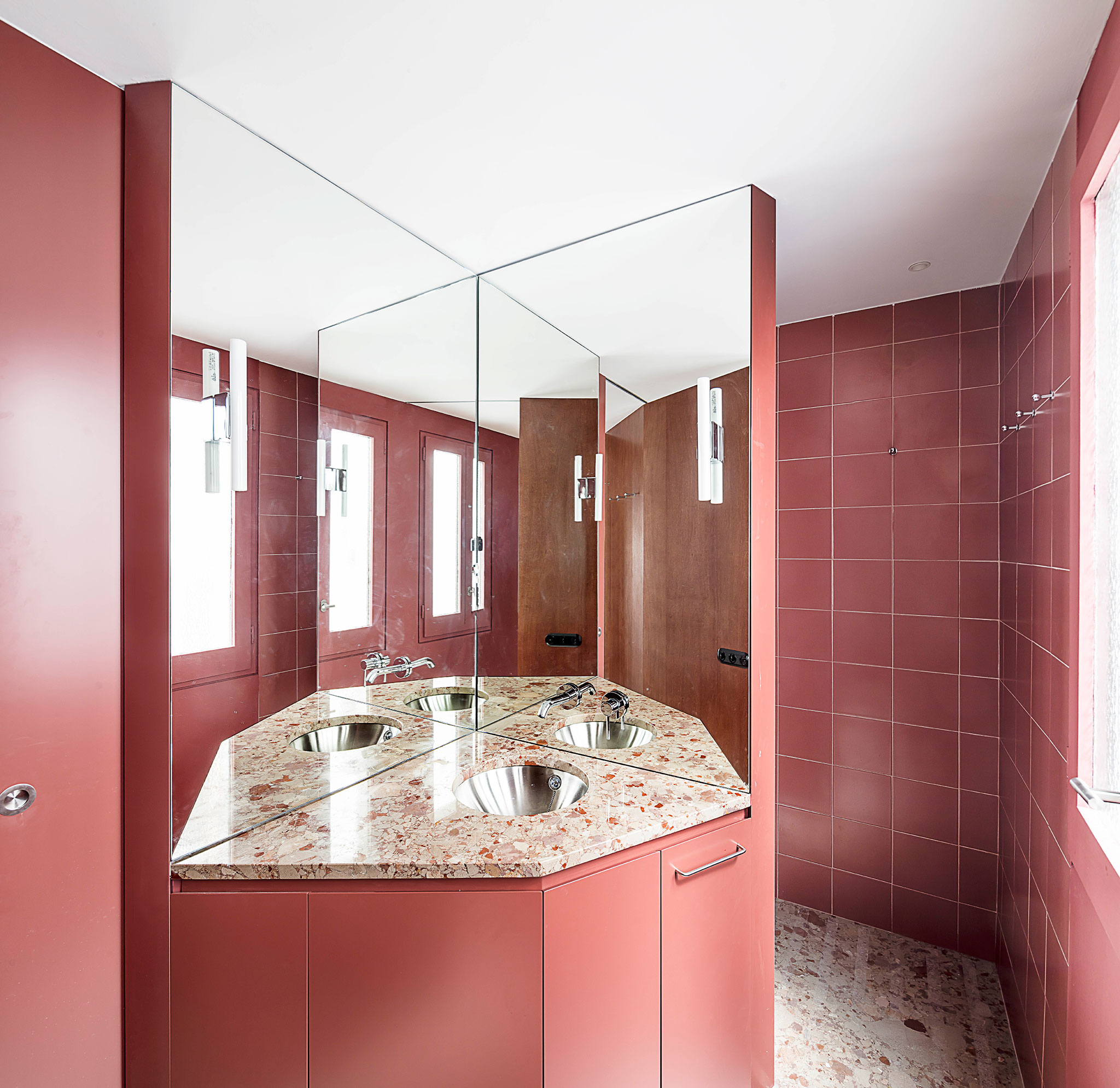
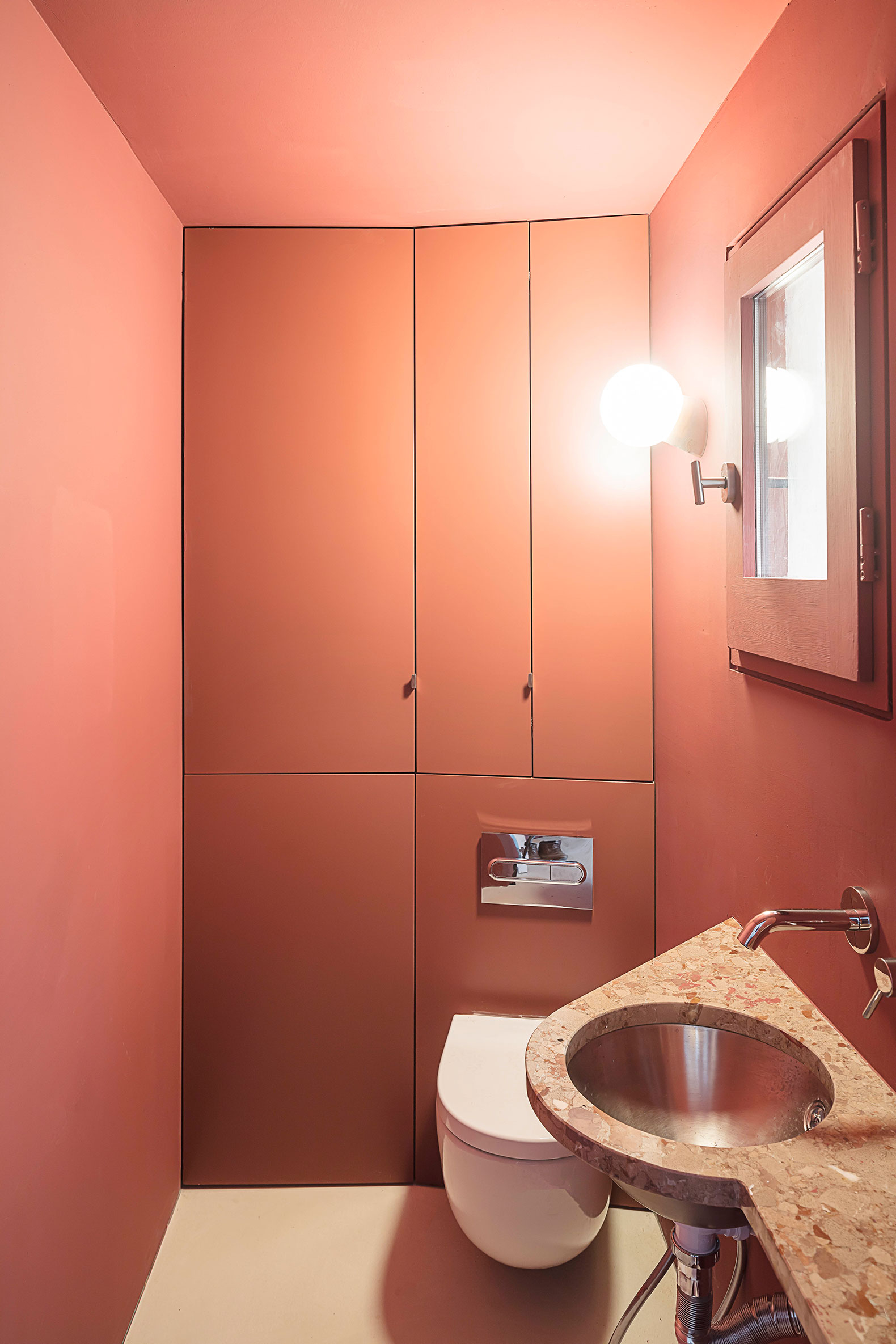
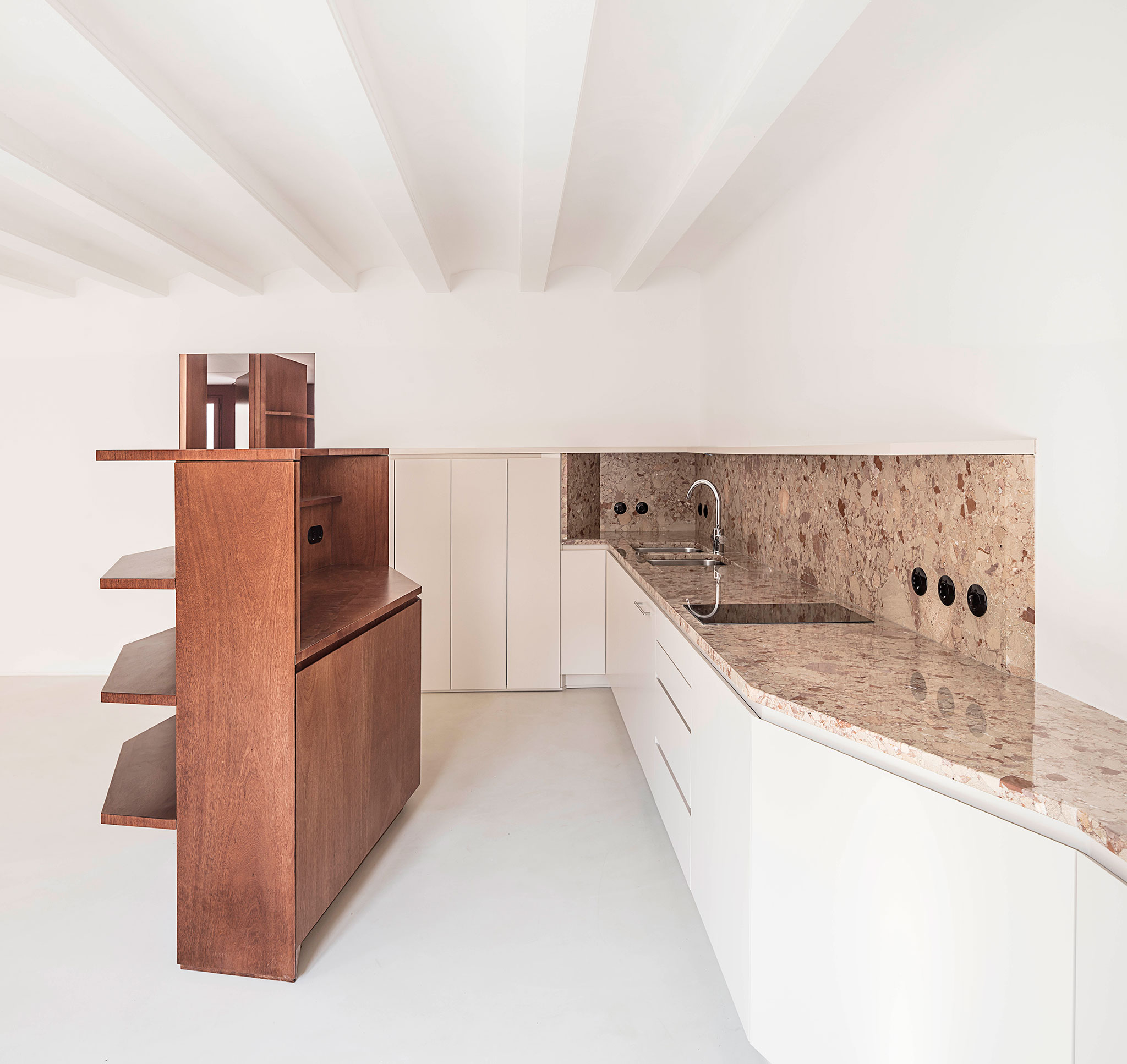
(Im)movables that -like “movables”- integrate home-living elements: bookstore, bench, kitchen, sofa, sink and shower.
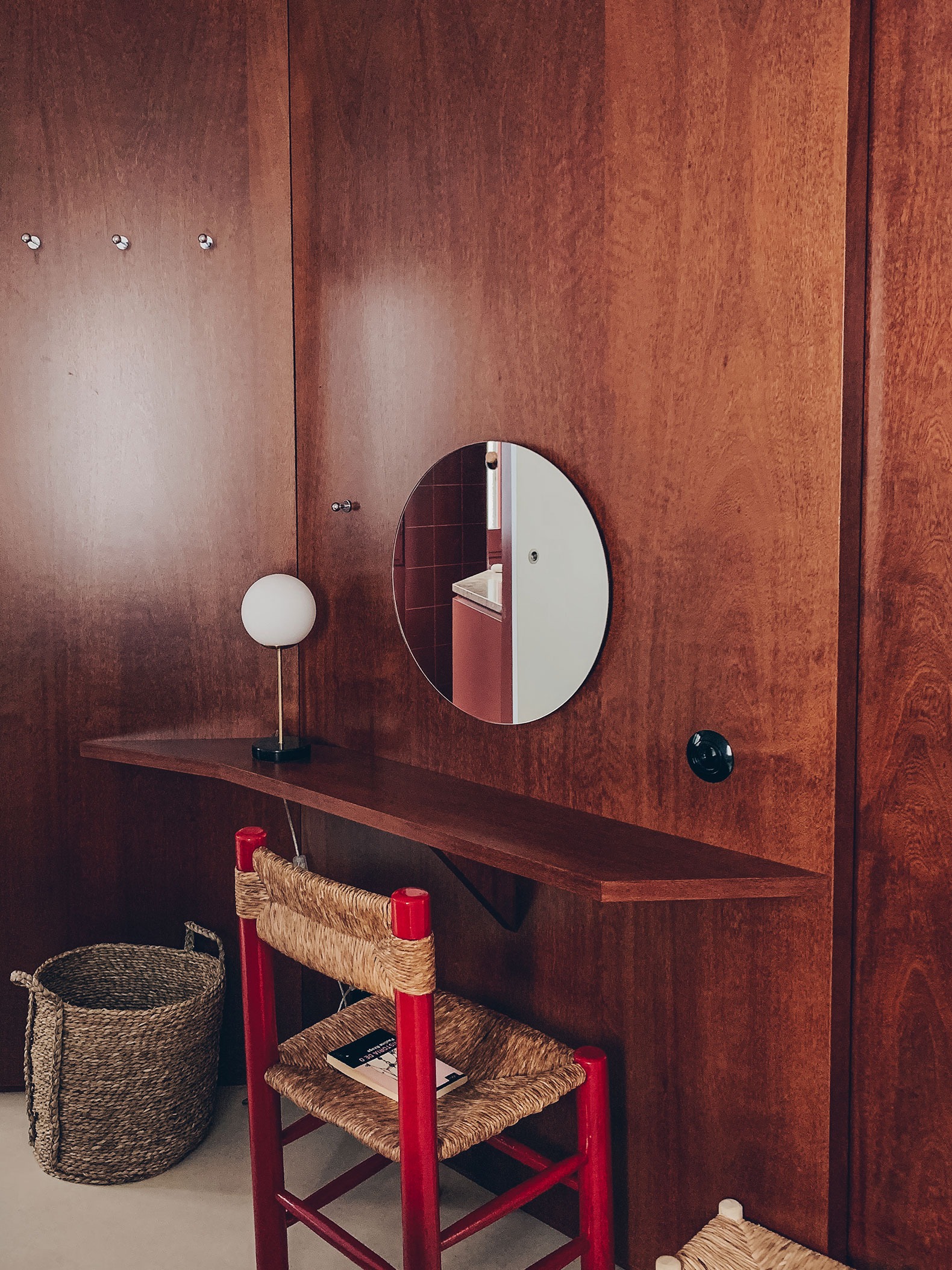
(Im)movables mixing cream color, pink marble, wood, some stainless steel and a punch of black plugs.