Powerhouse Company, in collaboration with Studio RAP, has designed the new 150 kV electrical substation in Beverwijk—located next to the Bazaar in Beverwijk, the Netherlands—in response to the area’s growing energy demand.

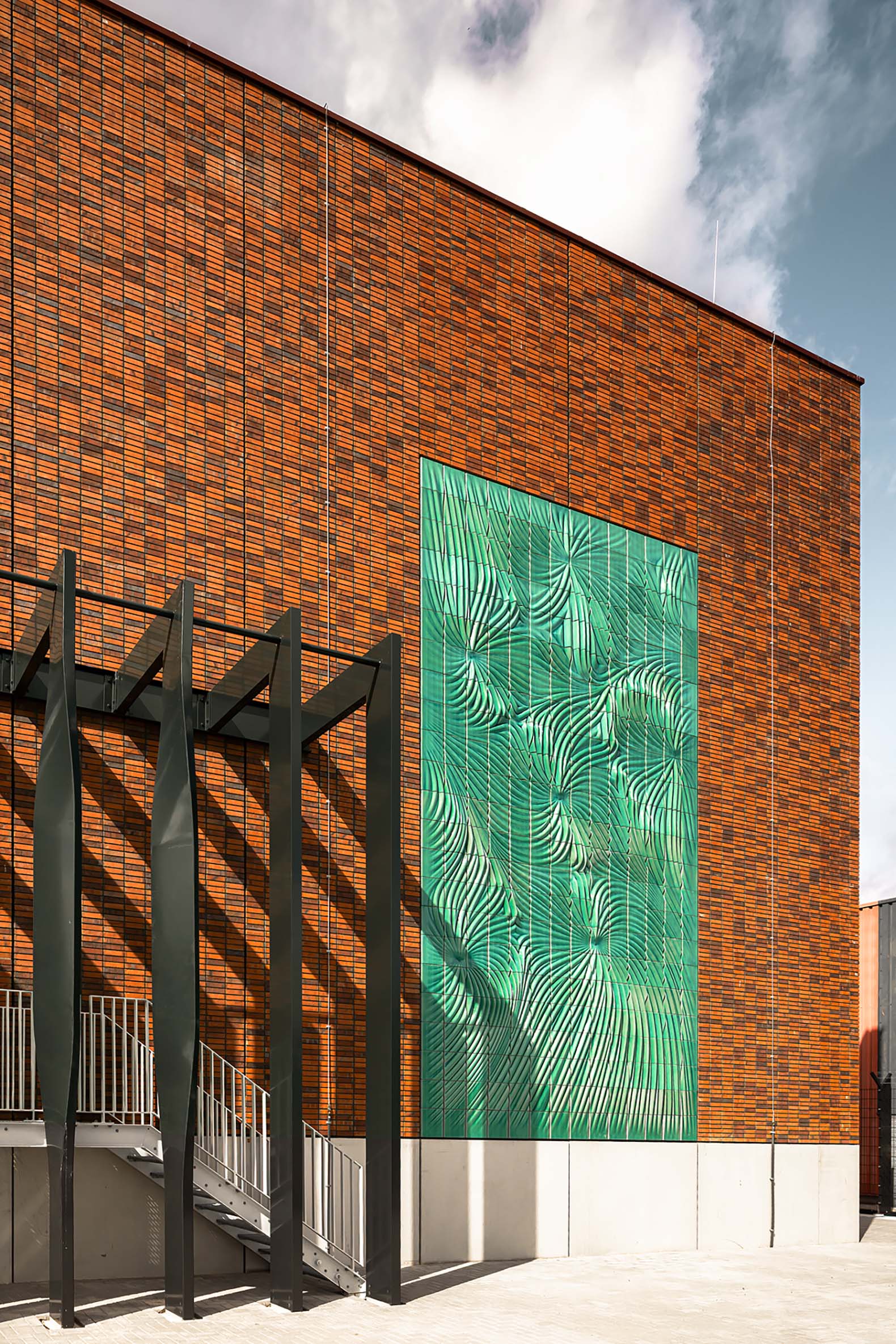
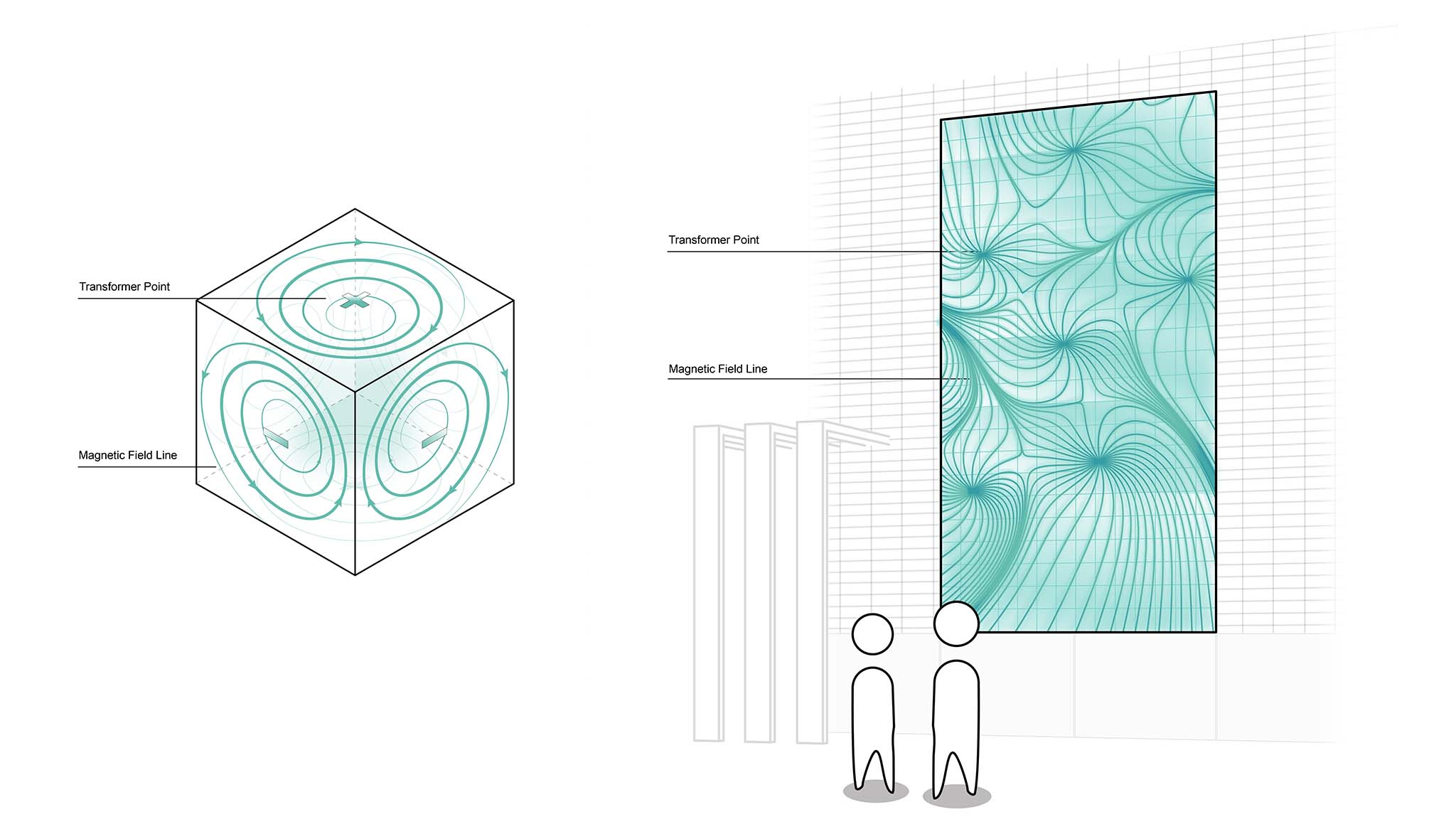
The collaboration with Studio RAP introduces an artistic dimension through "Powerwall," a ceramic intervention inspired by the electromagnetic fields at work inside the building, transforming an invisible phenomenon into a material and visual expression.

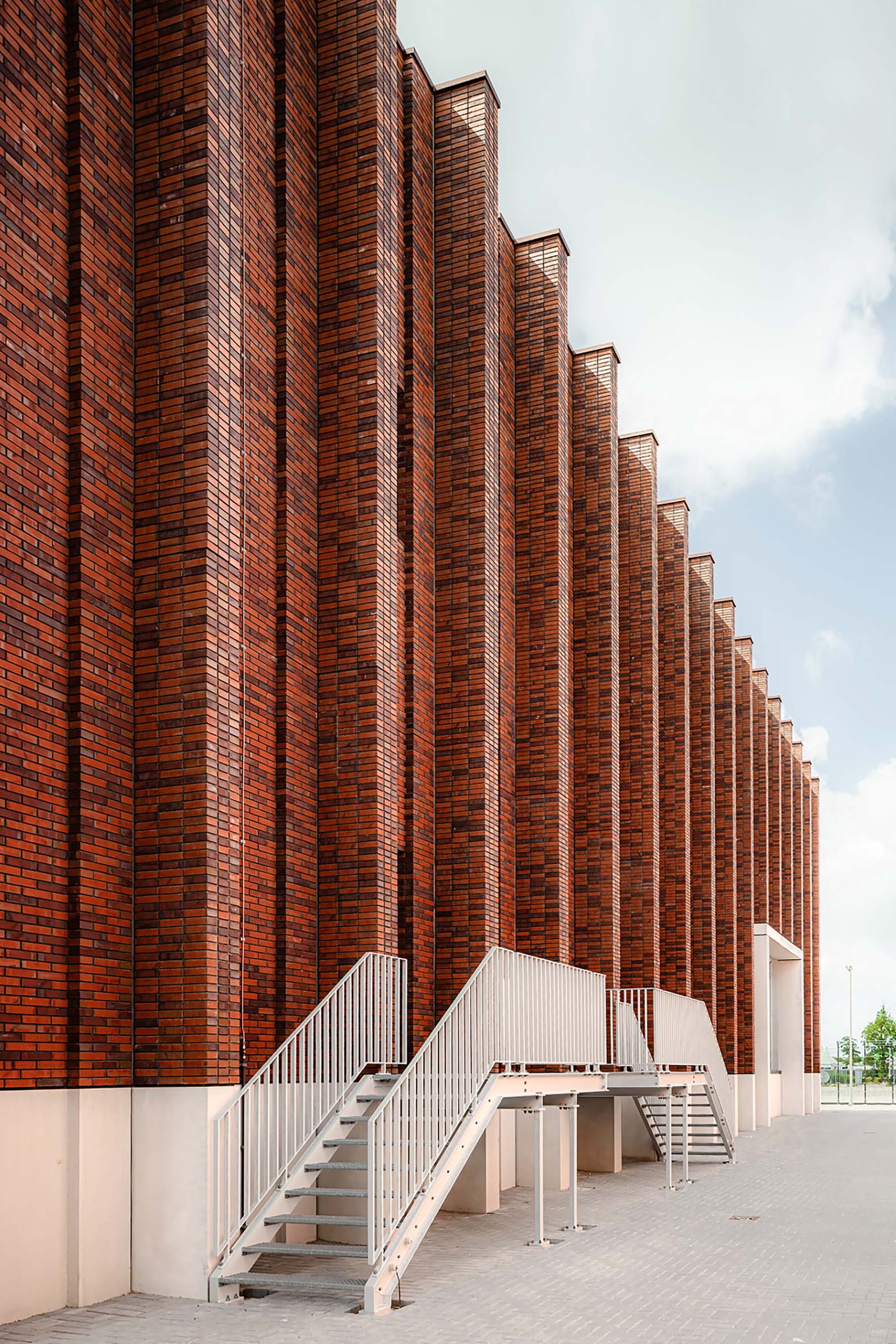
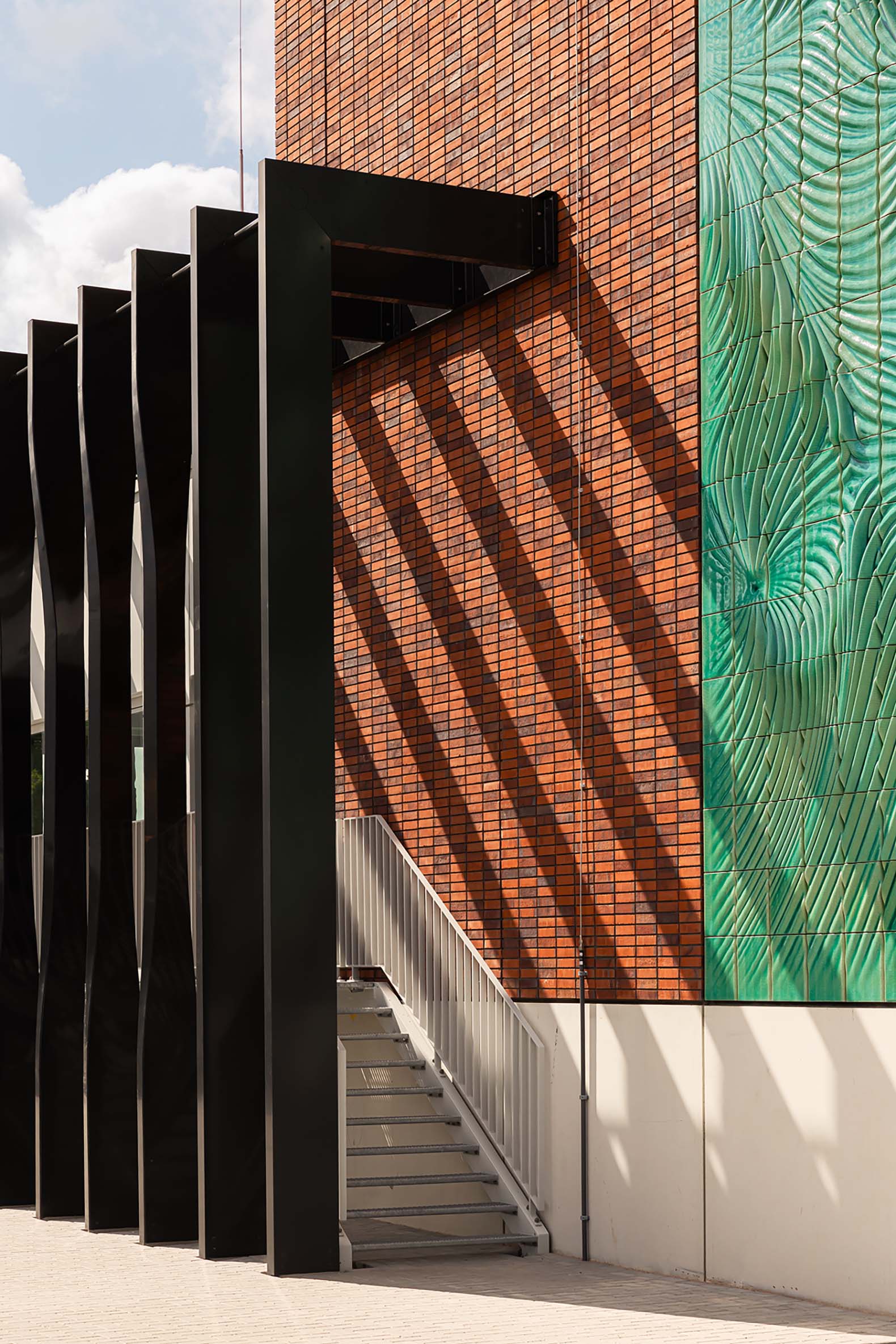
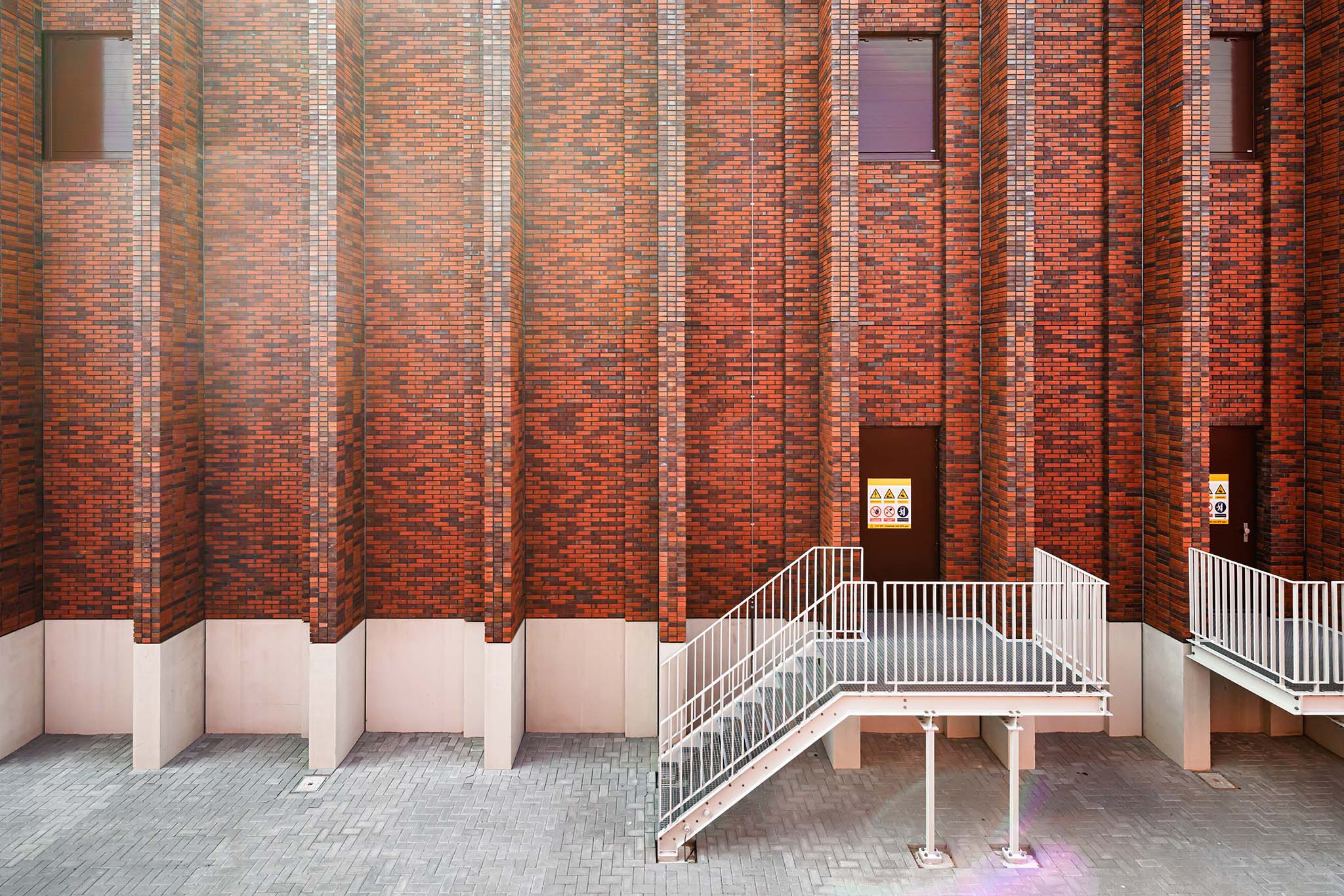
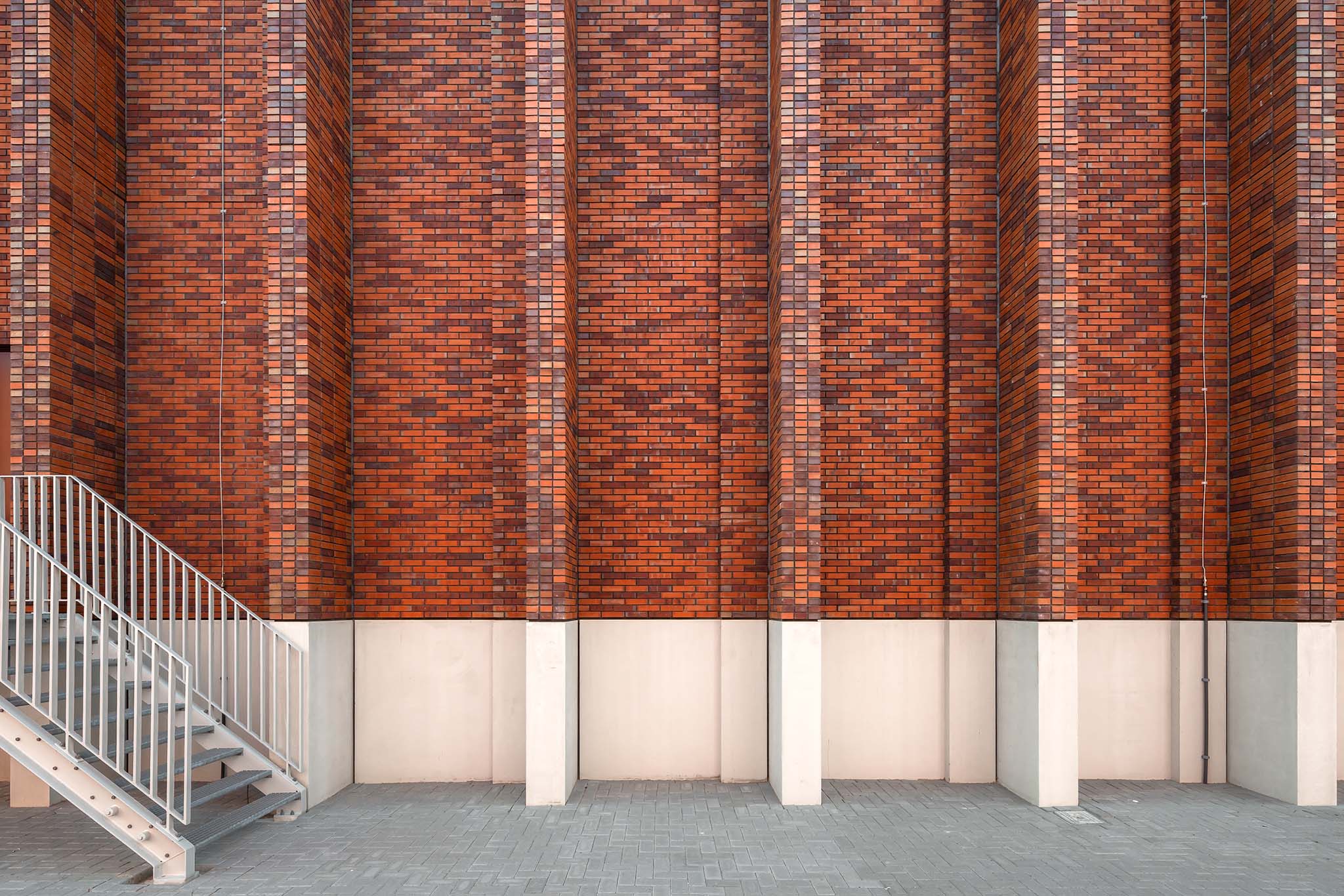
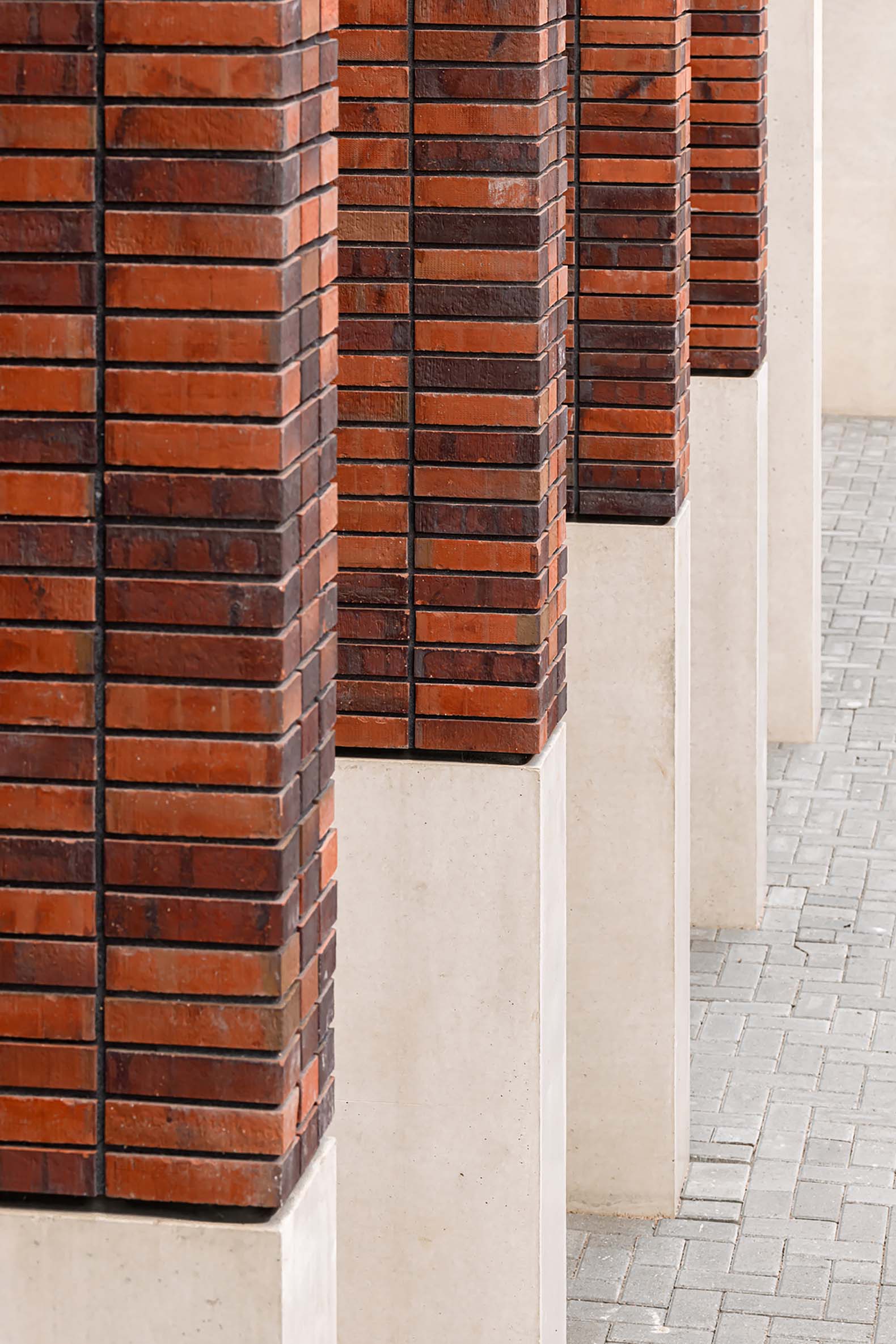
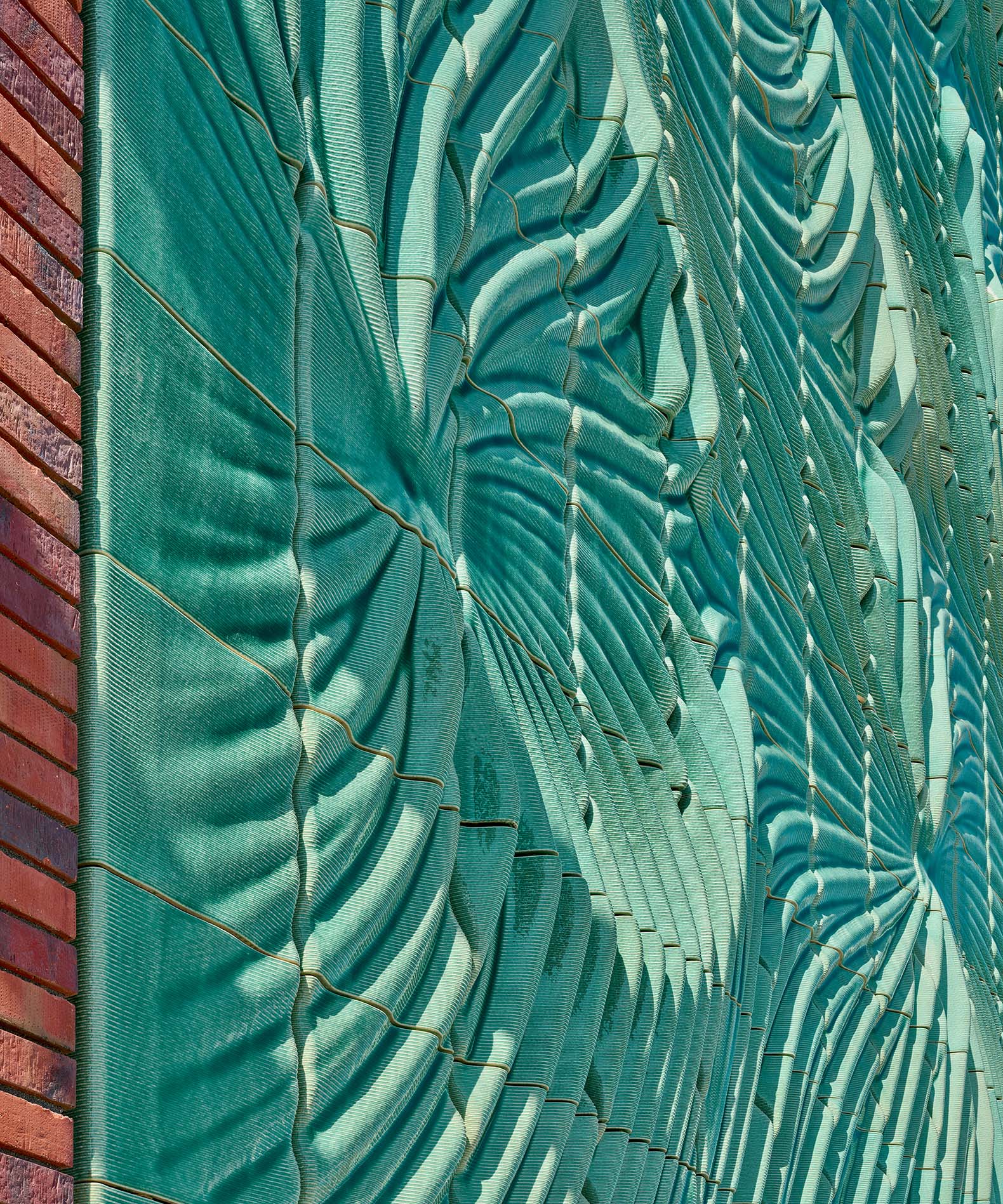
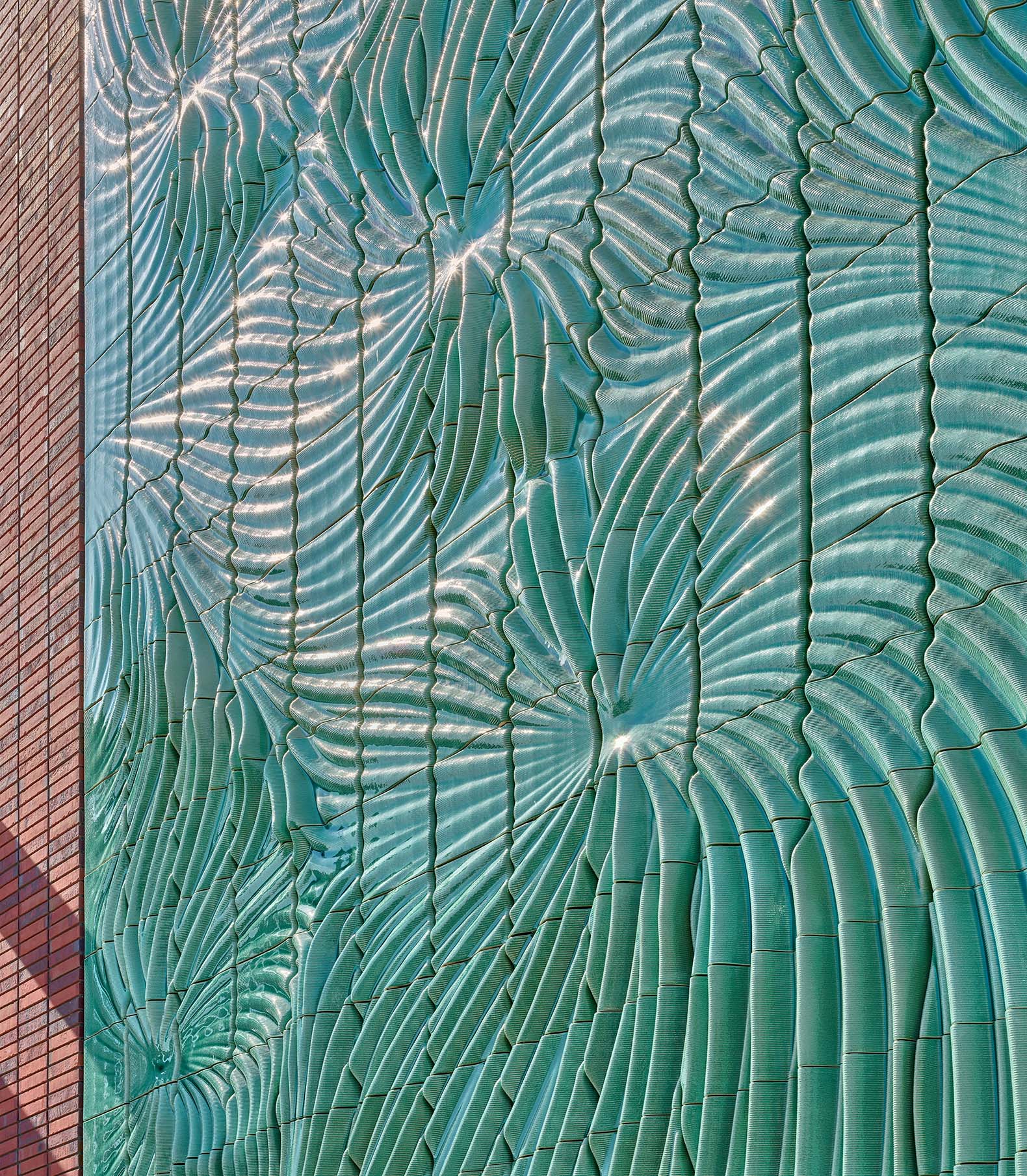
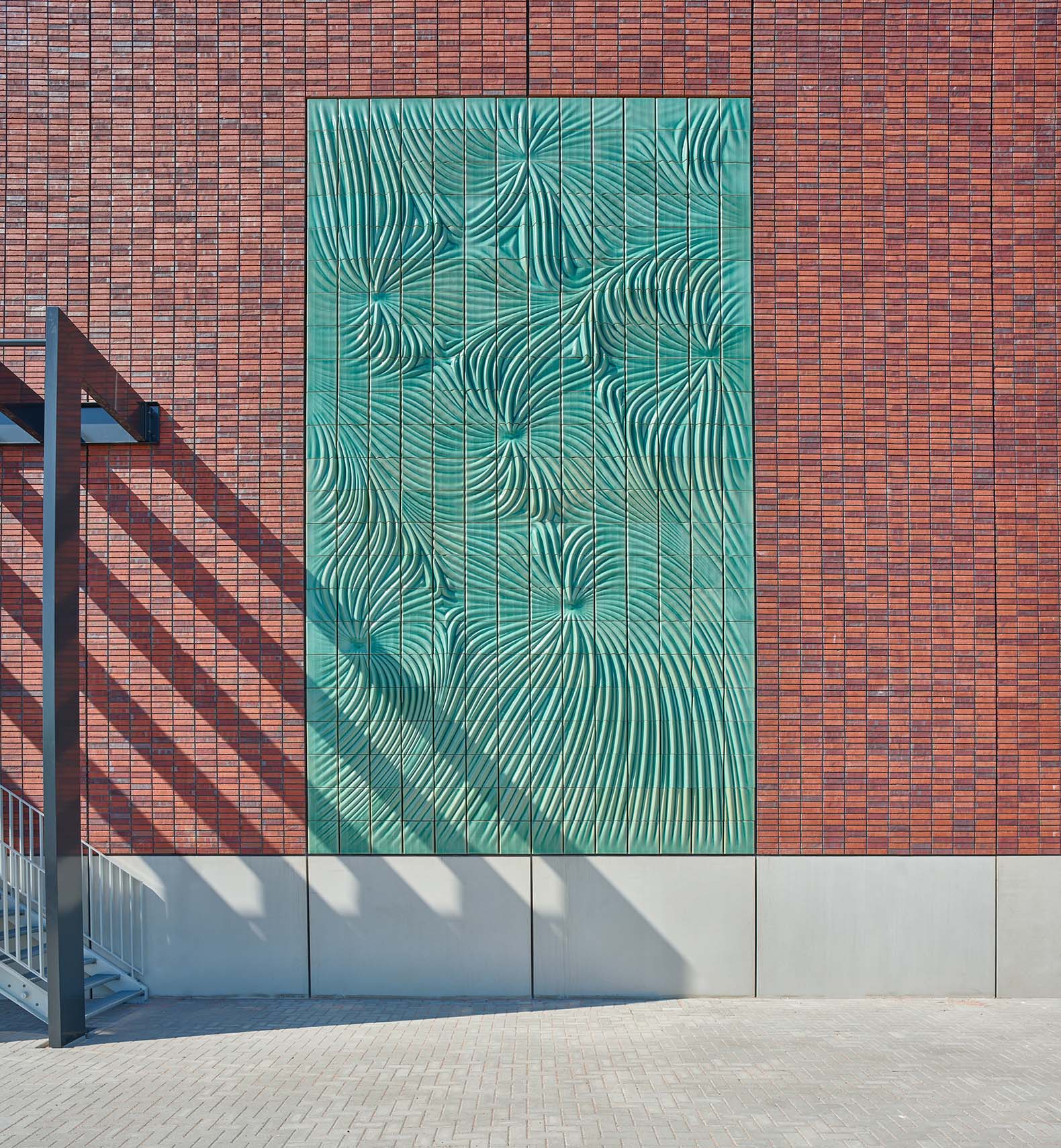
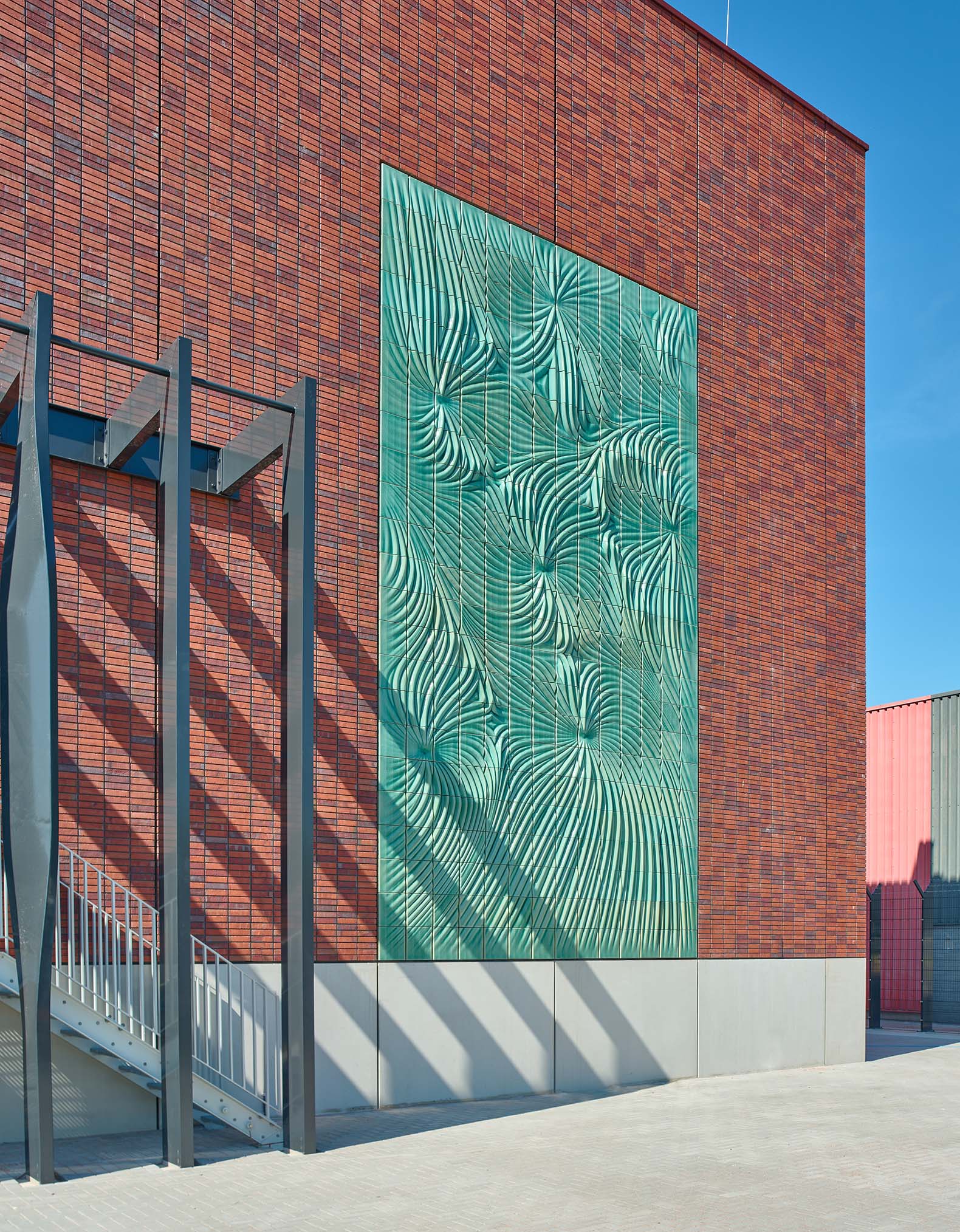
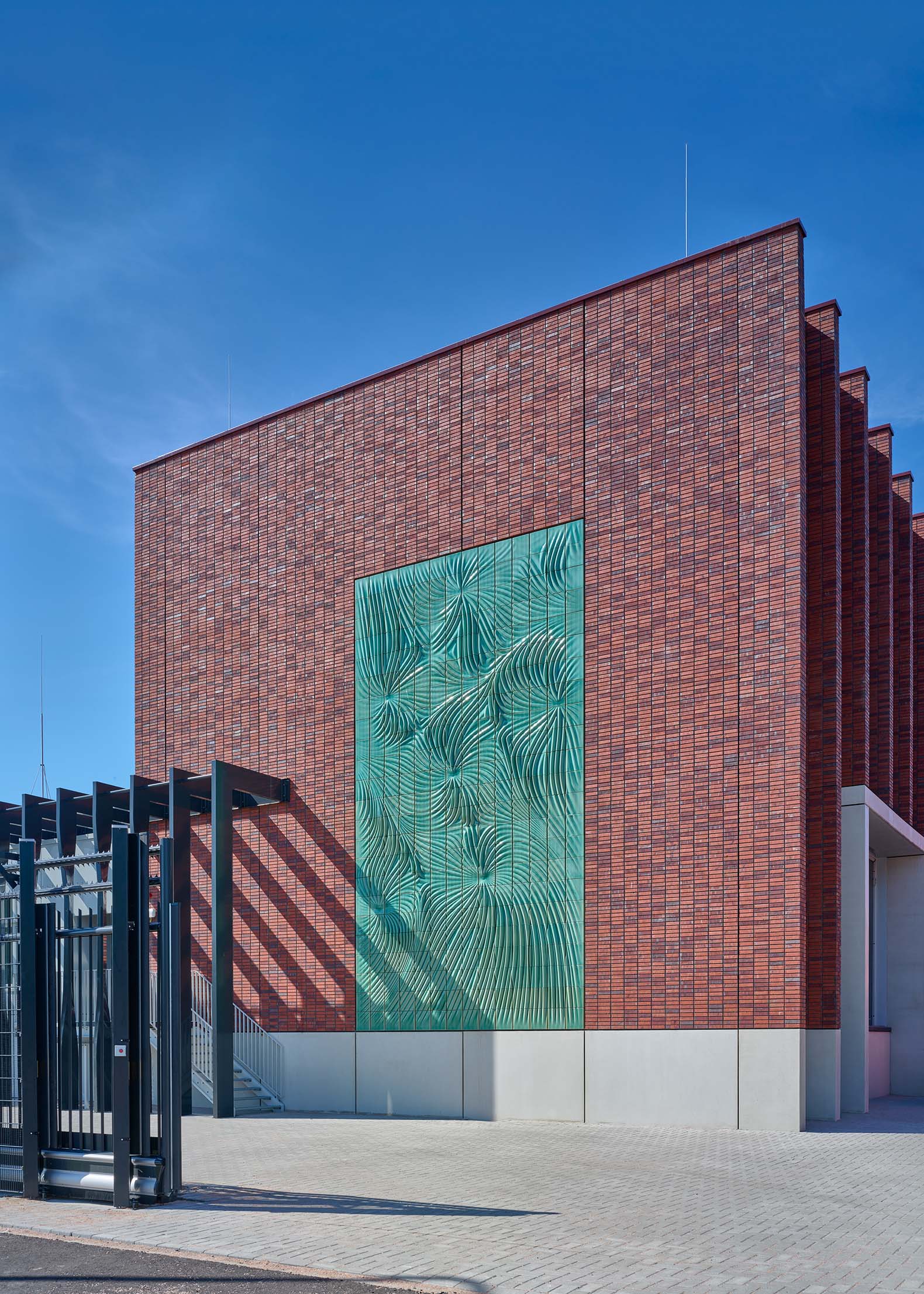
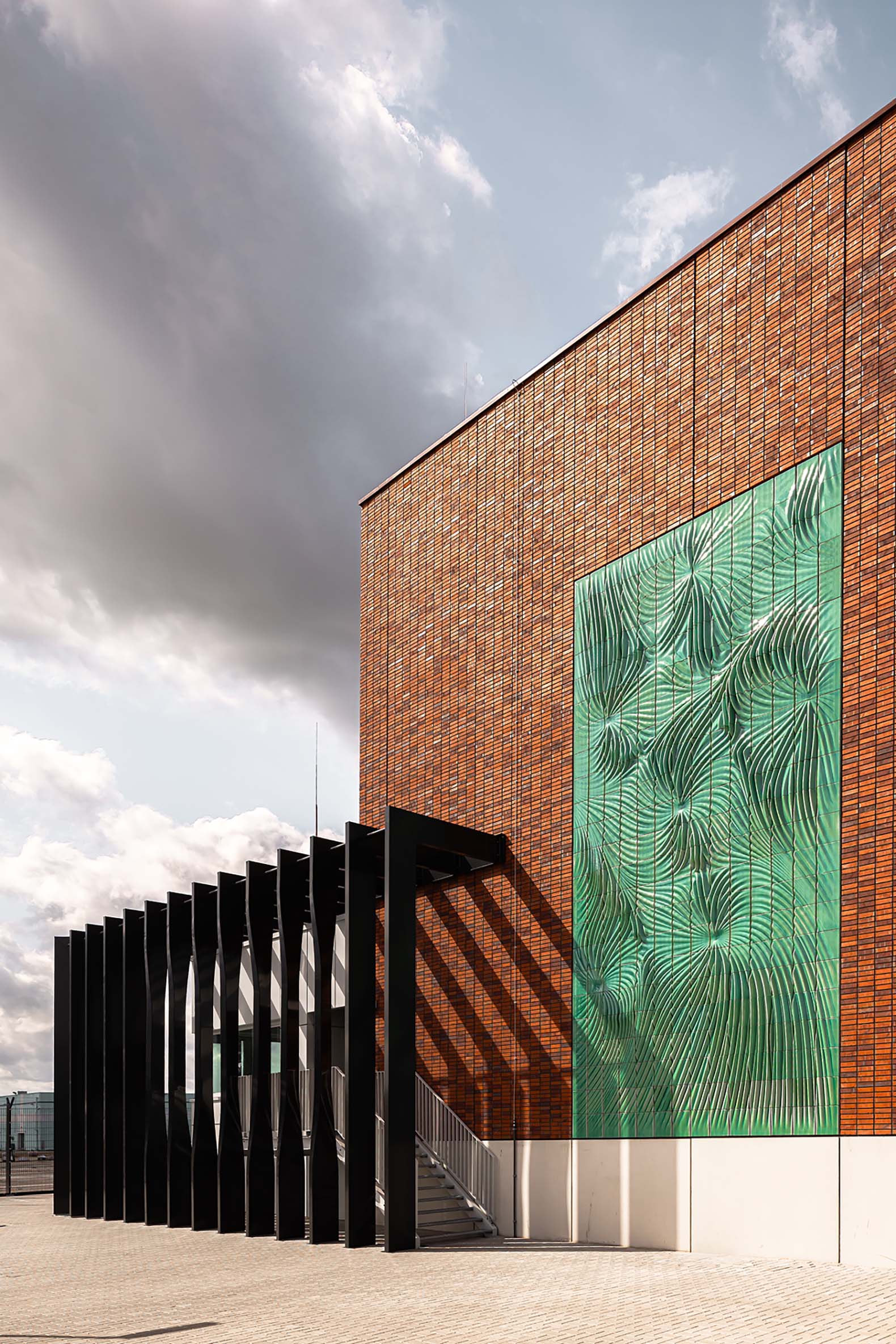
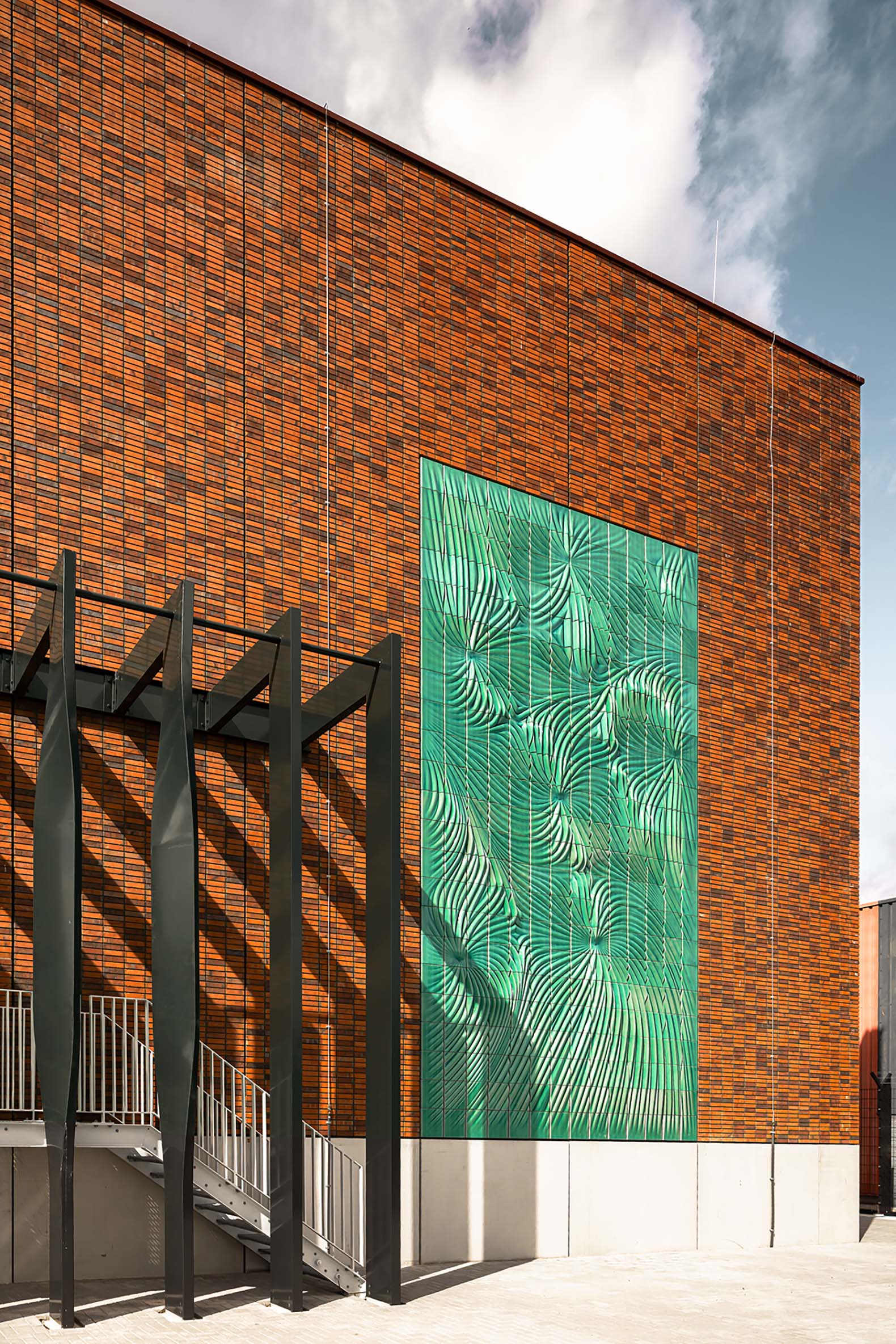
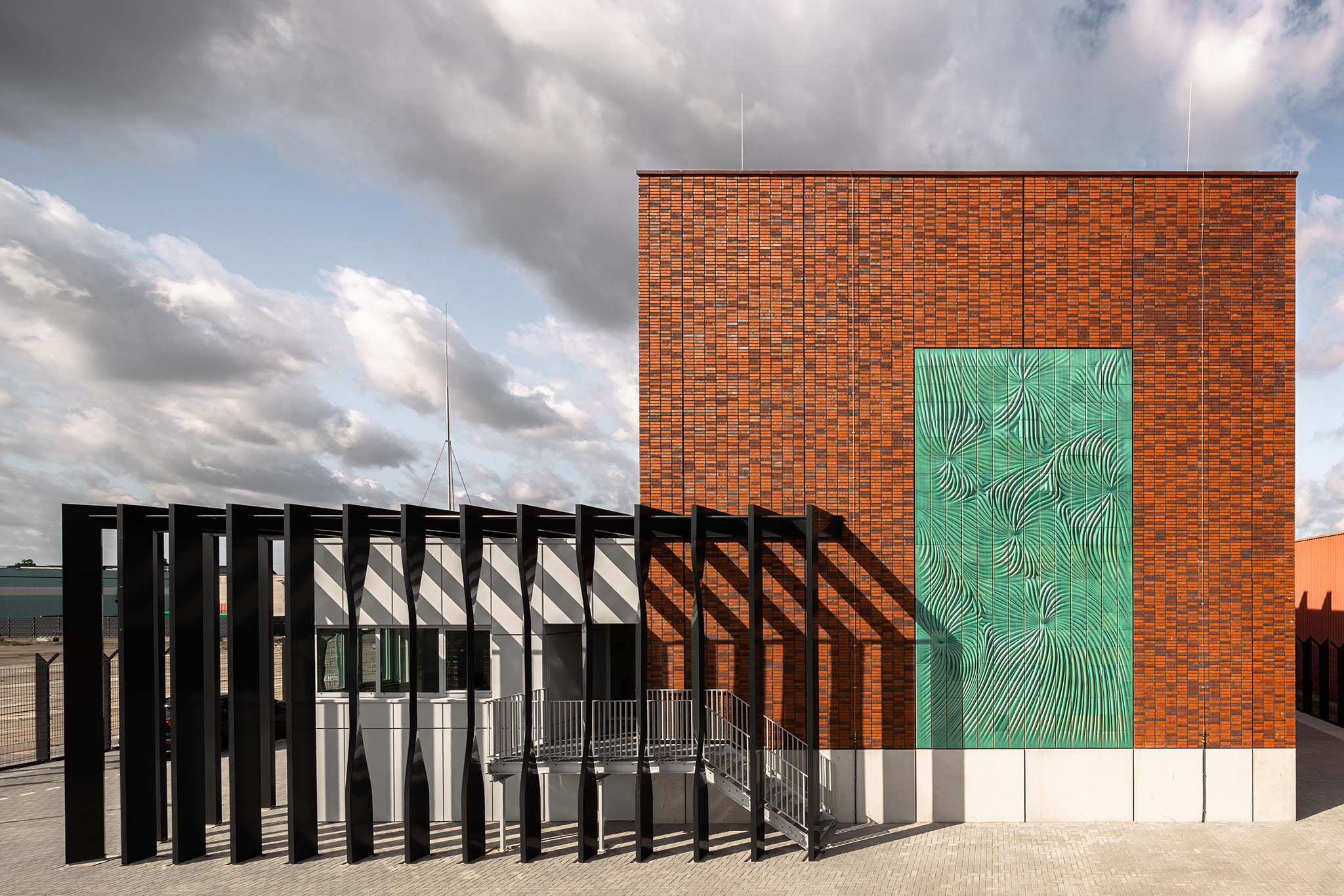
The building, conceived by Powerhouse Company and Studio RAP, is structured around two volumes: a taller main section housing electrical installations, and a lower volume containing secondary technical spaces. Integrated into the brick structure is the "Powerwall"—a ceramic relief that serves as a distinctive visual element and a landmark within the complex.

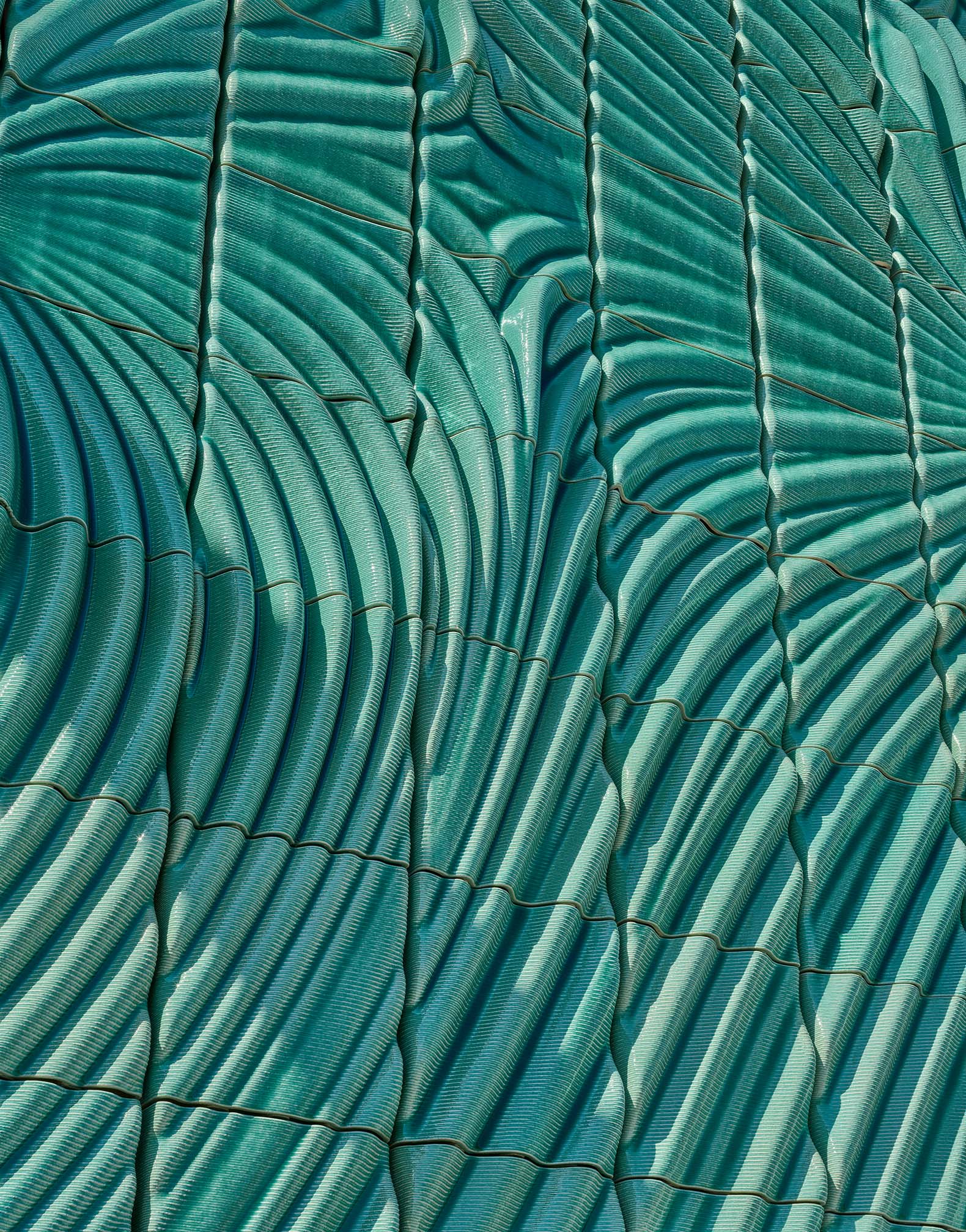
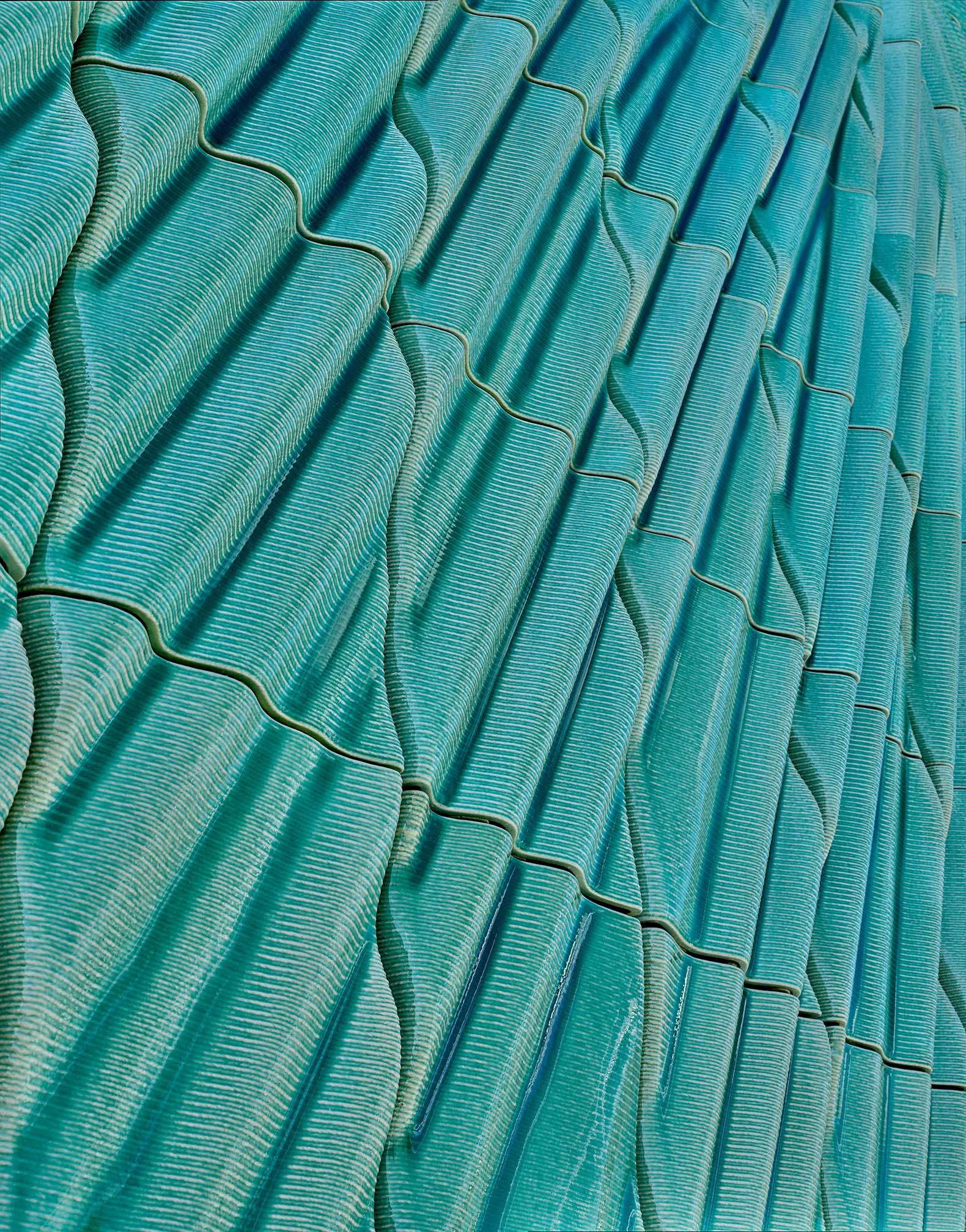
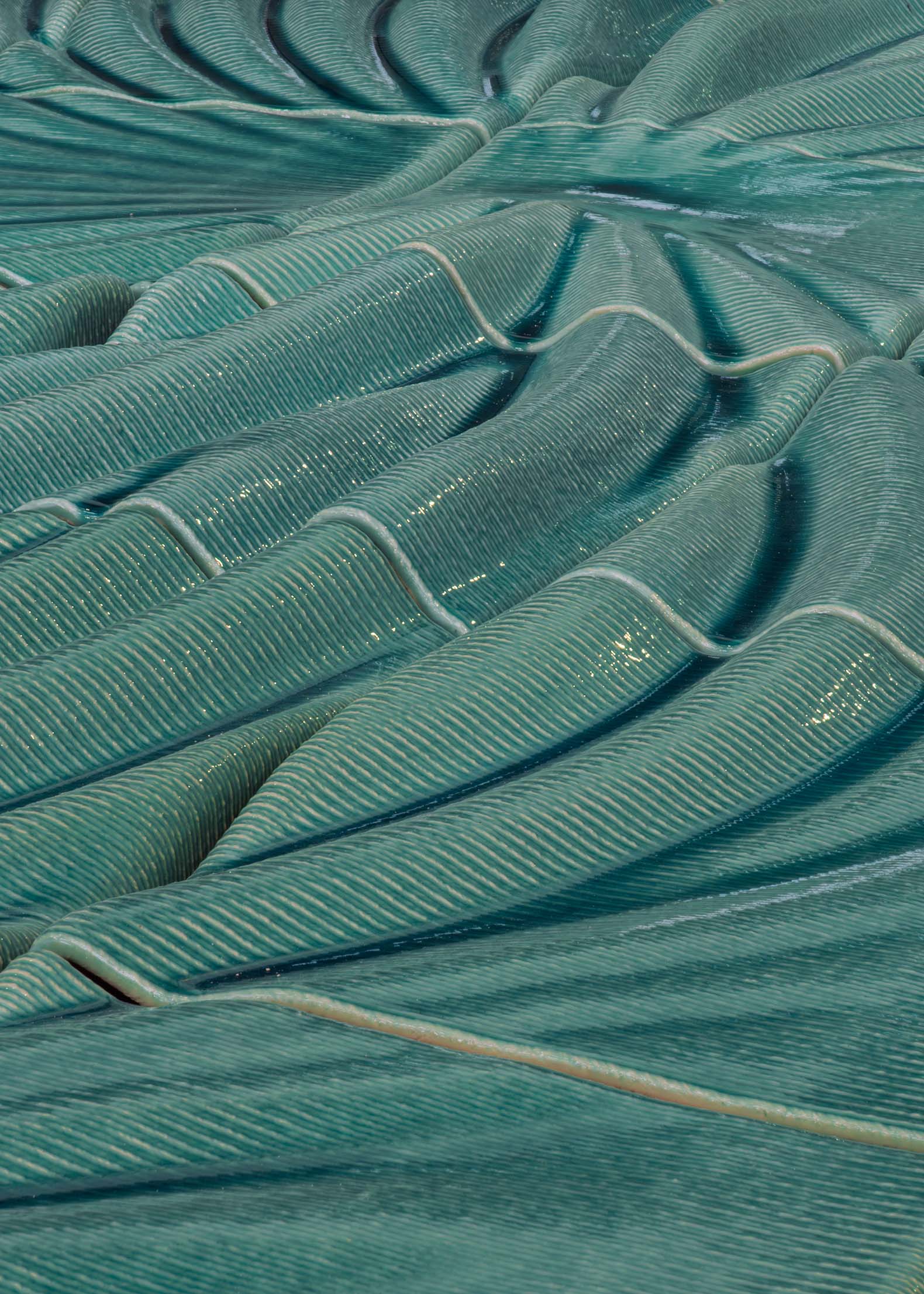
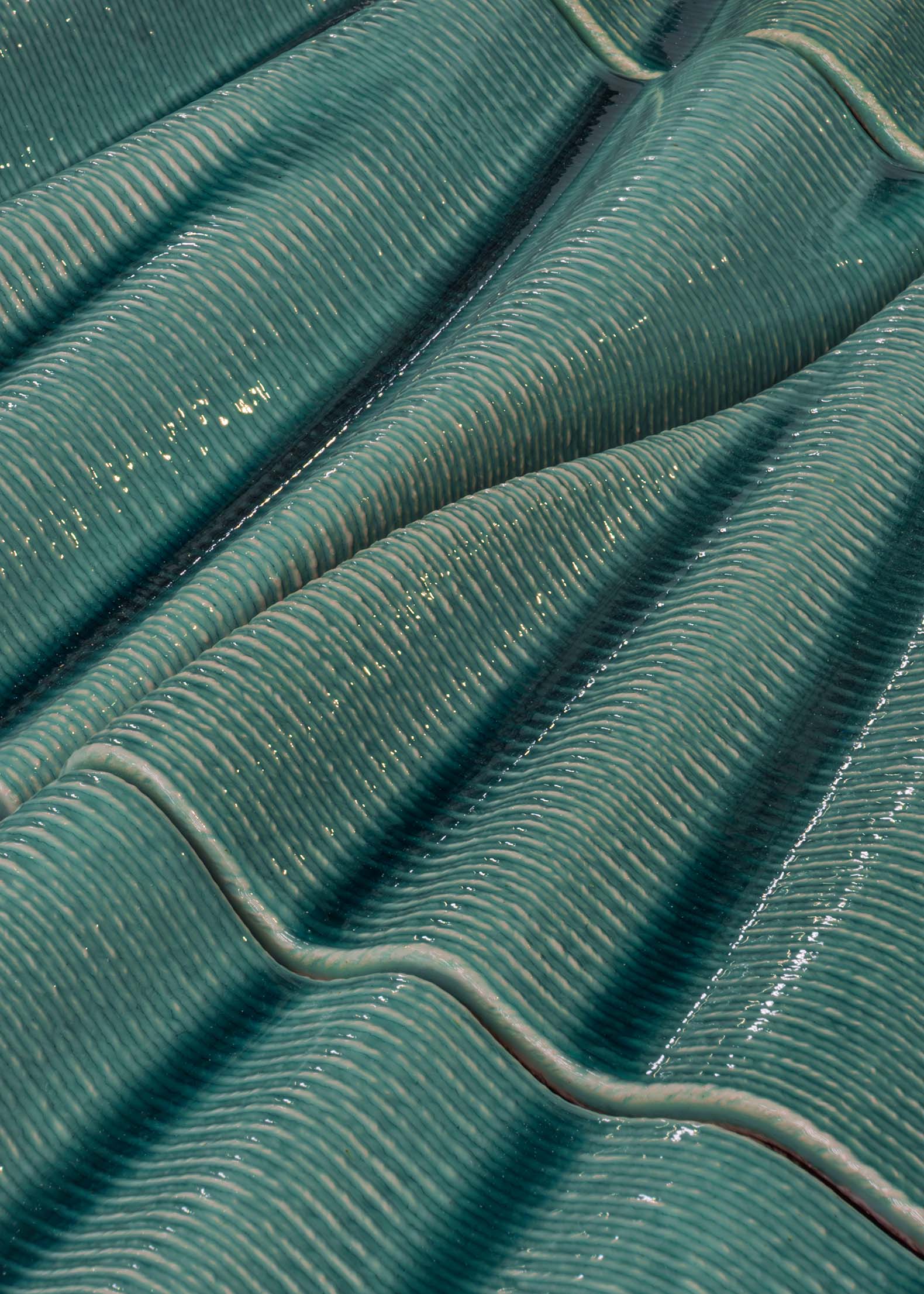
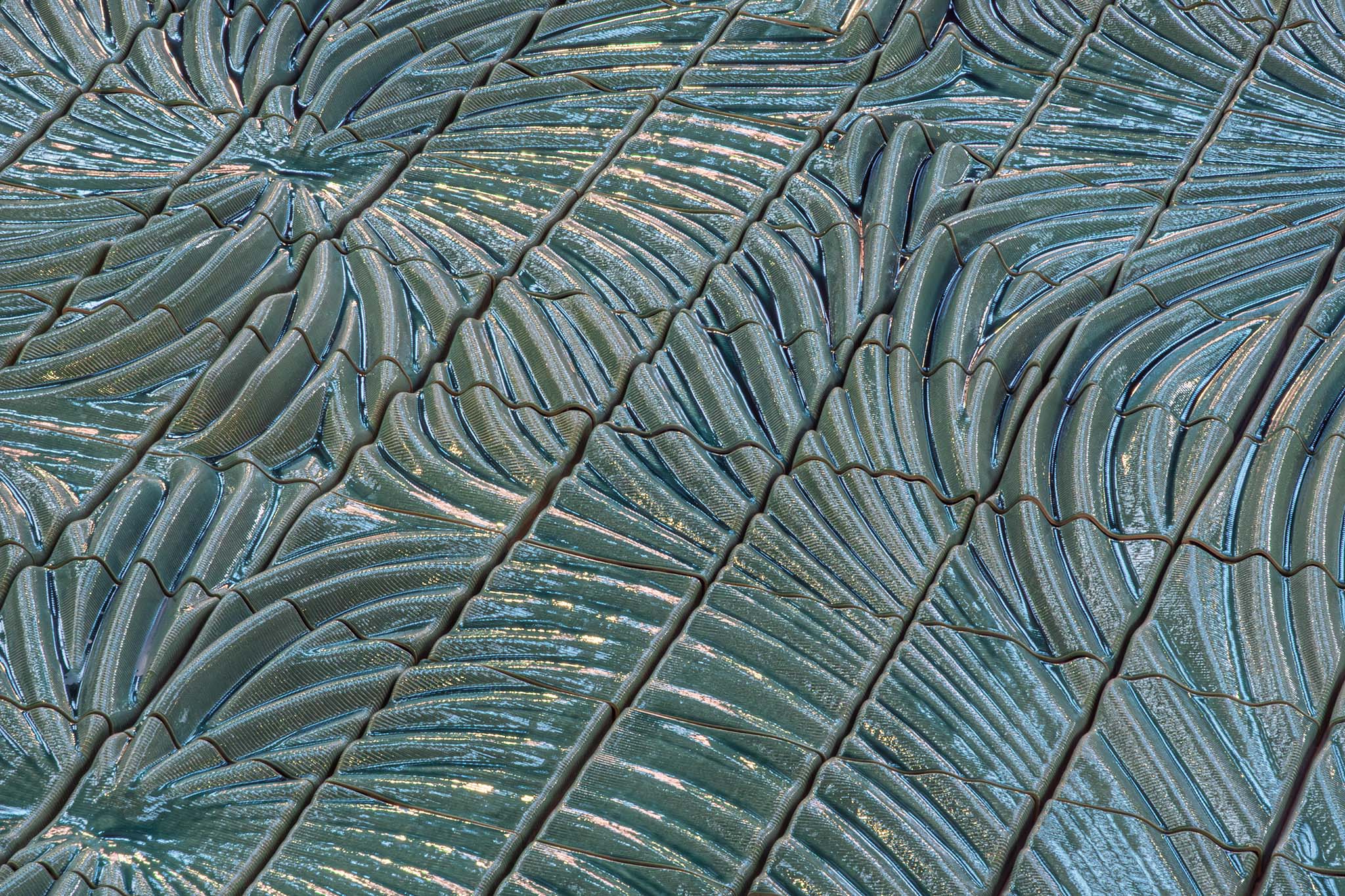
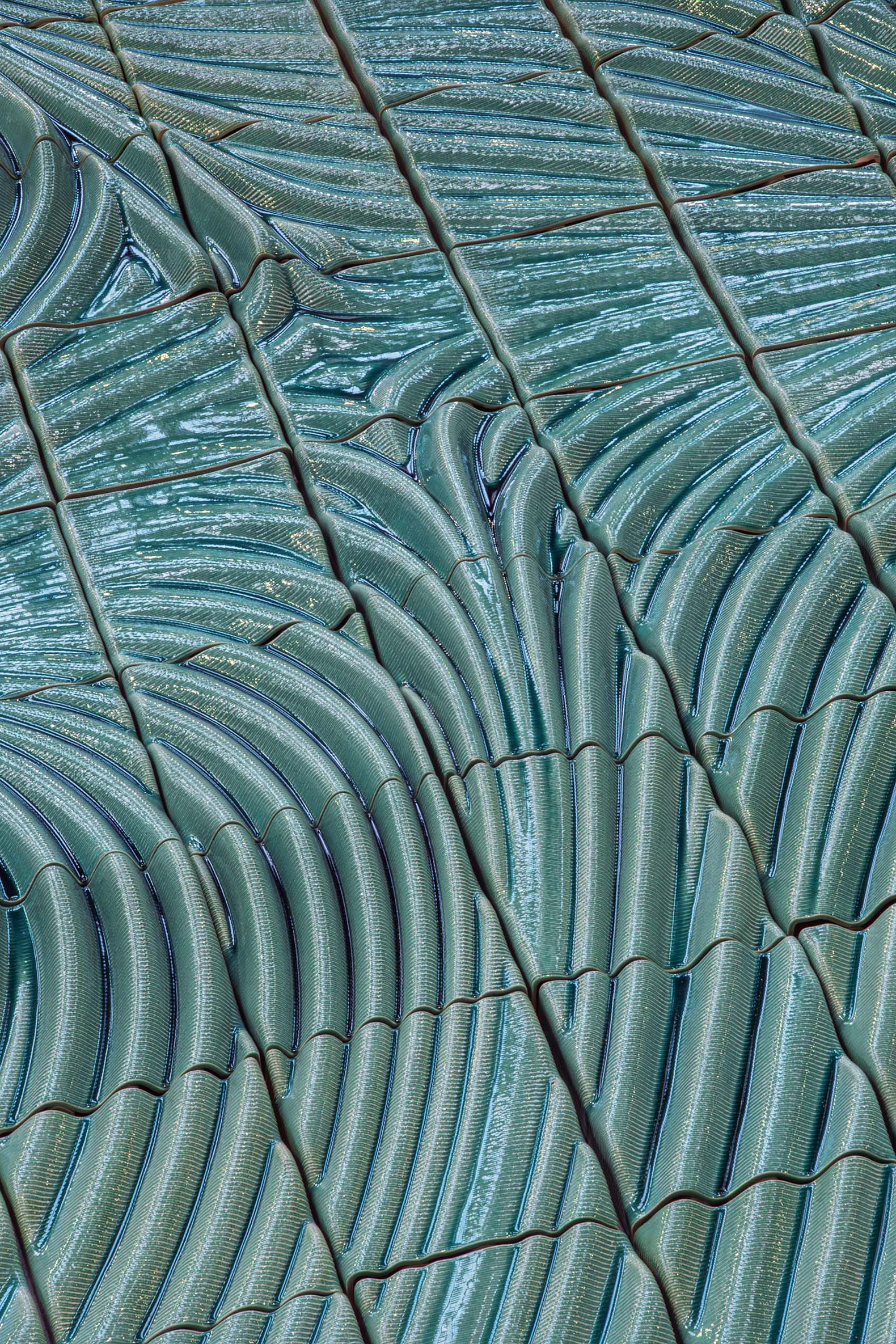
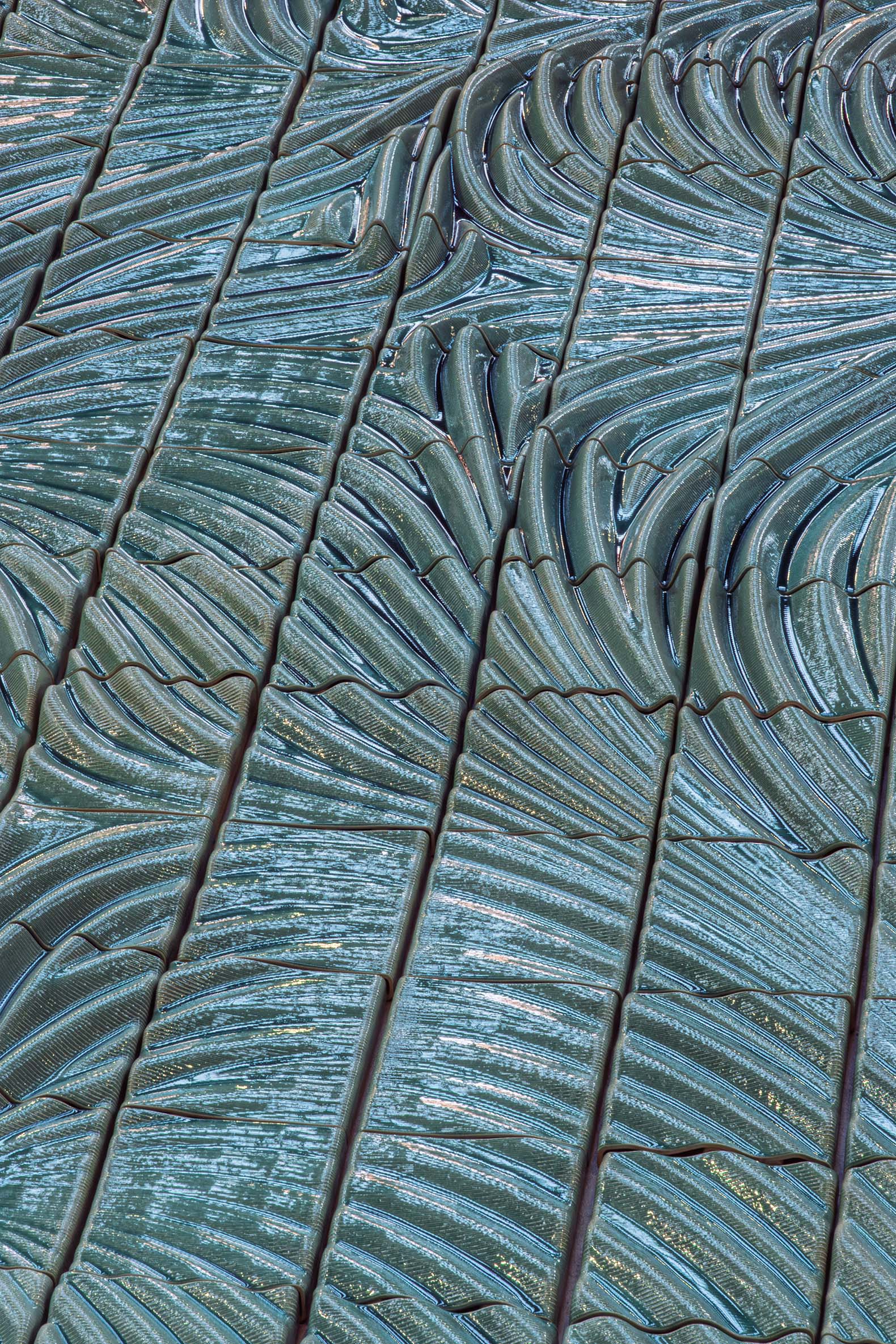
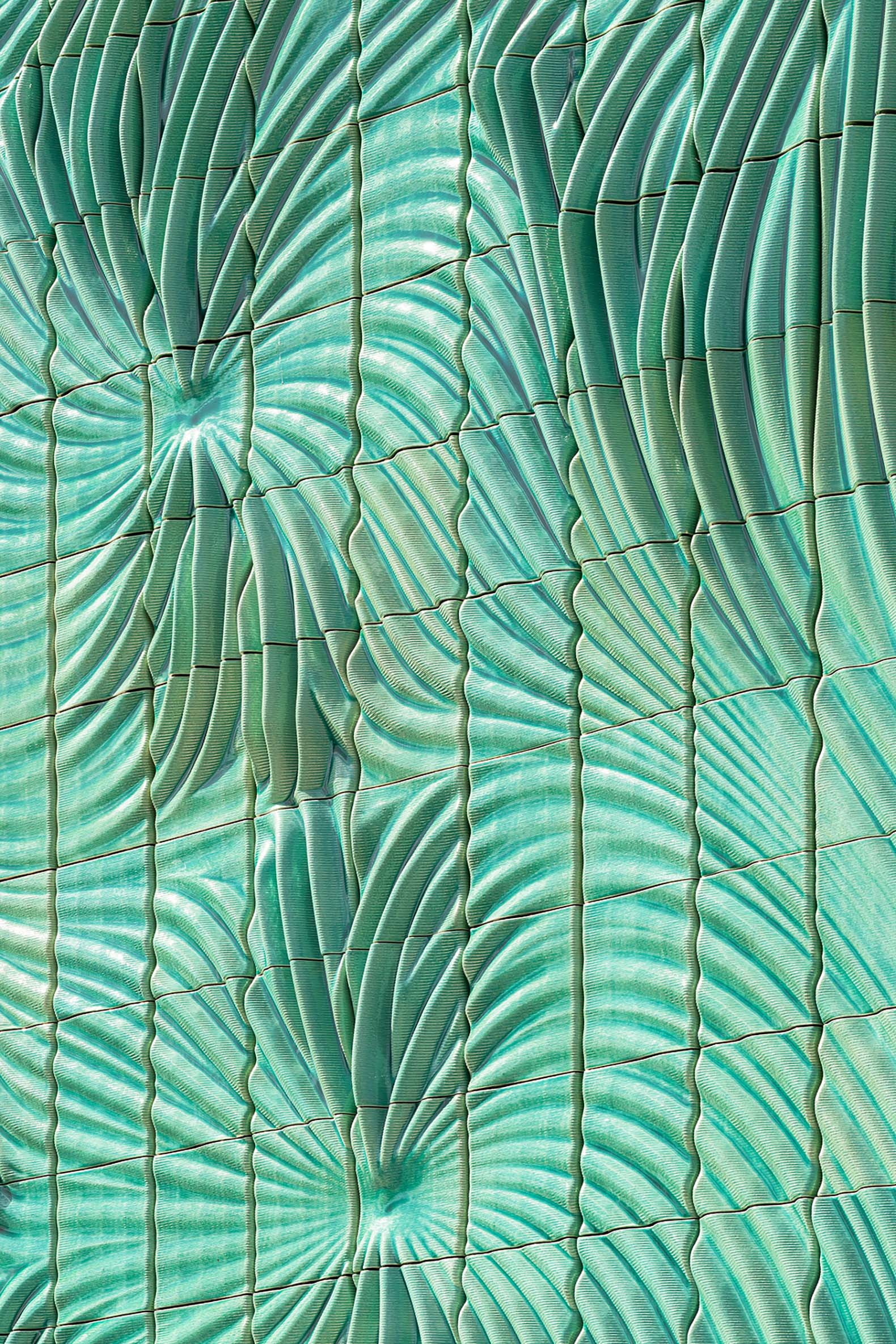
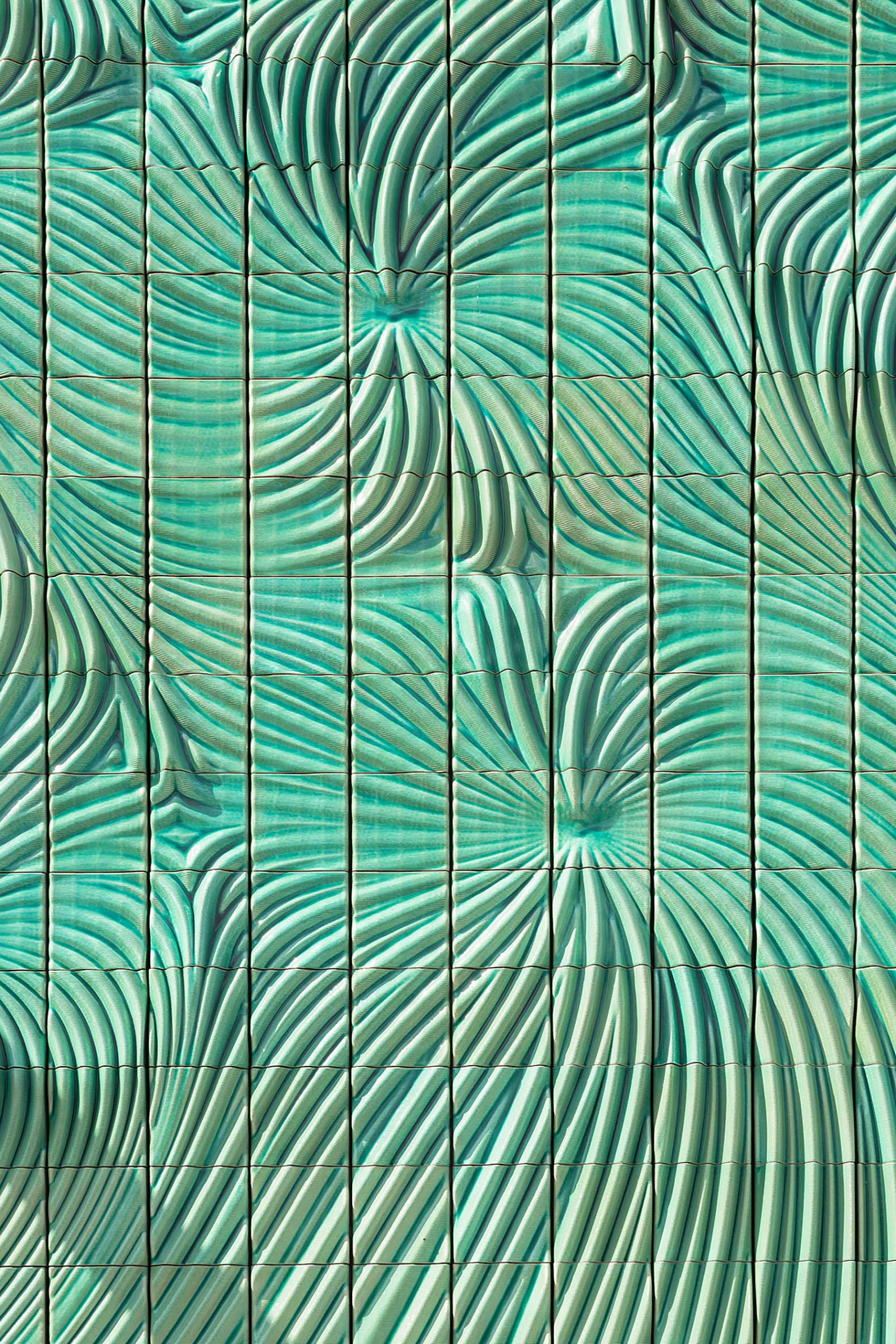
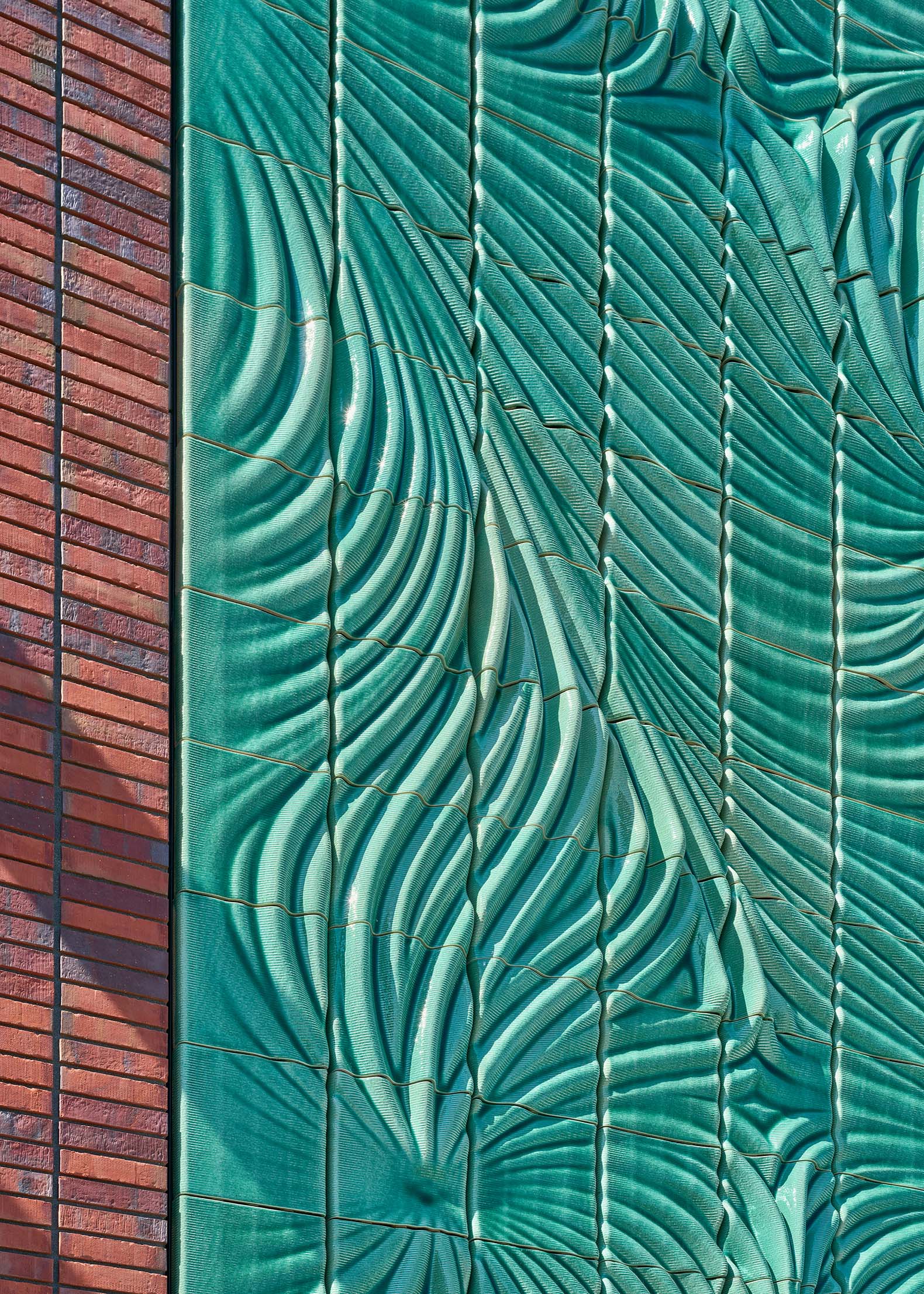
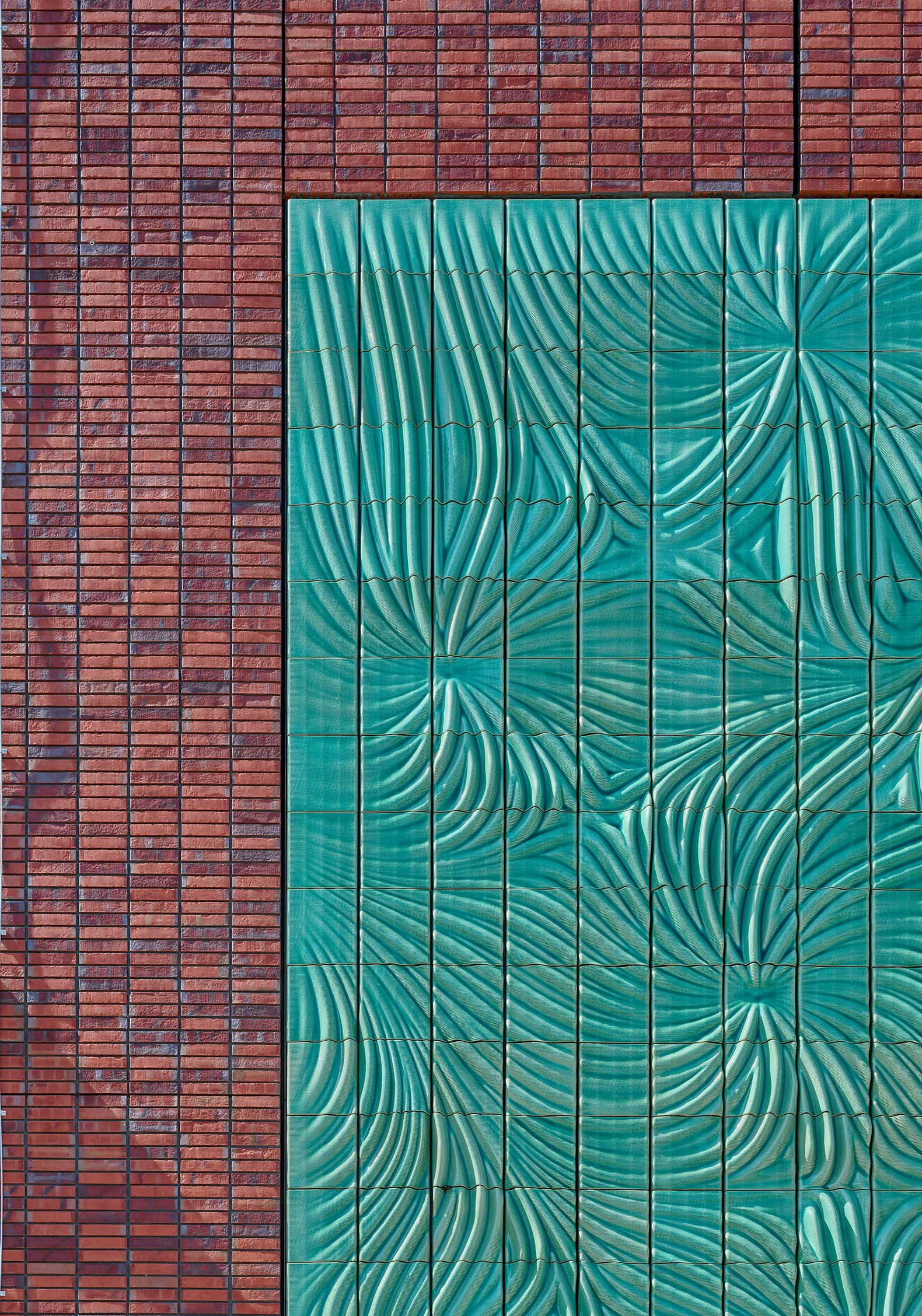
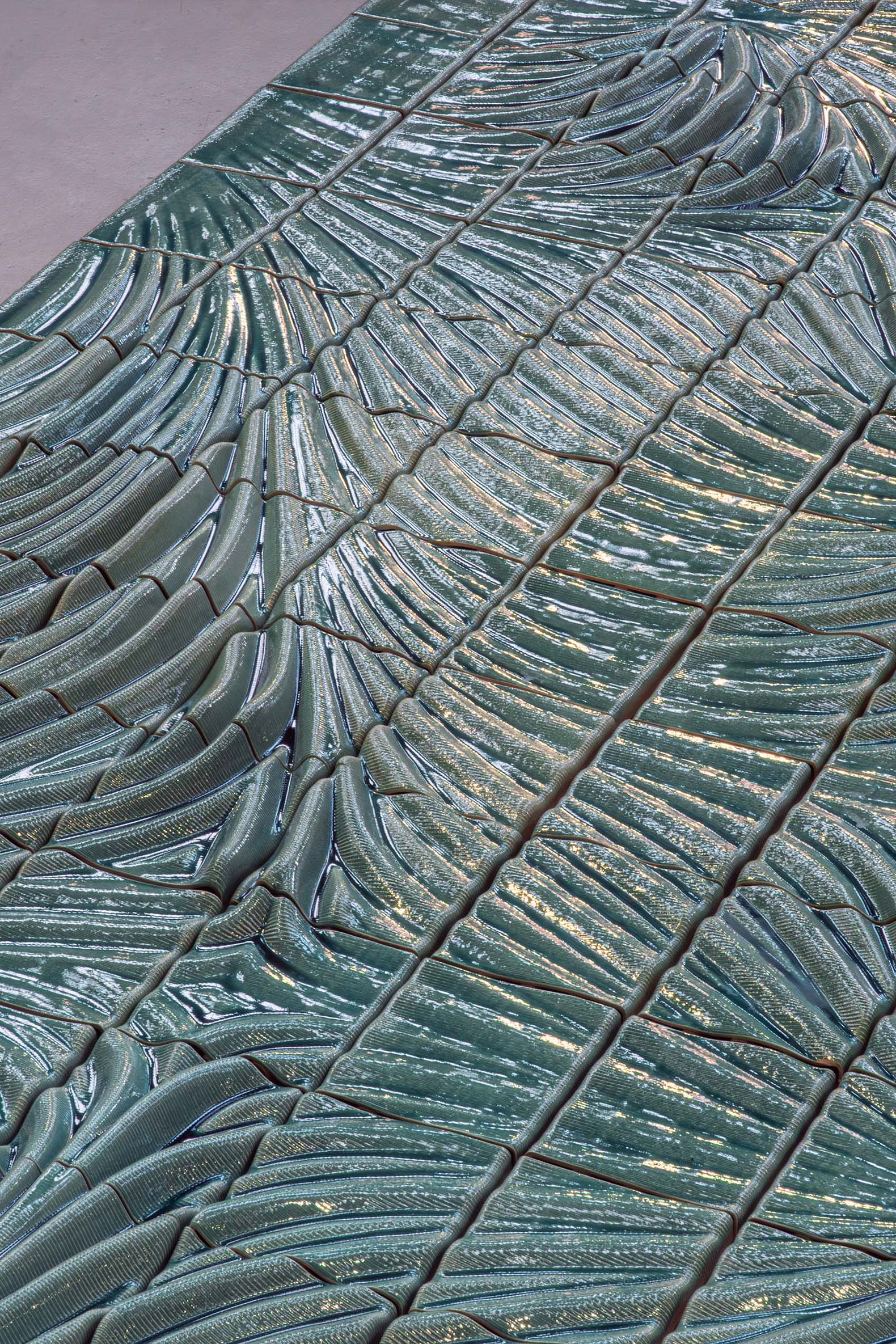
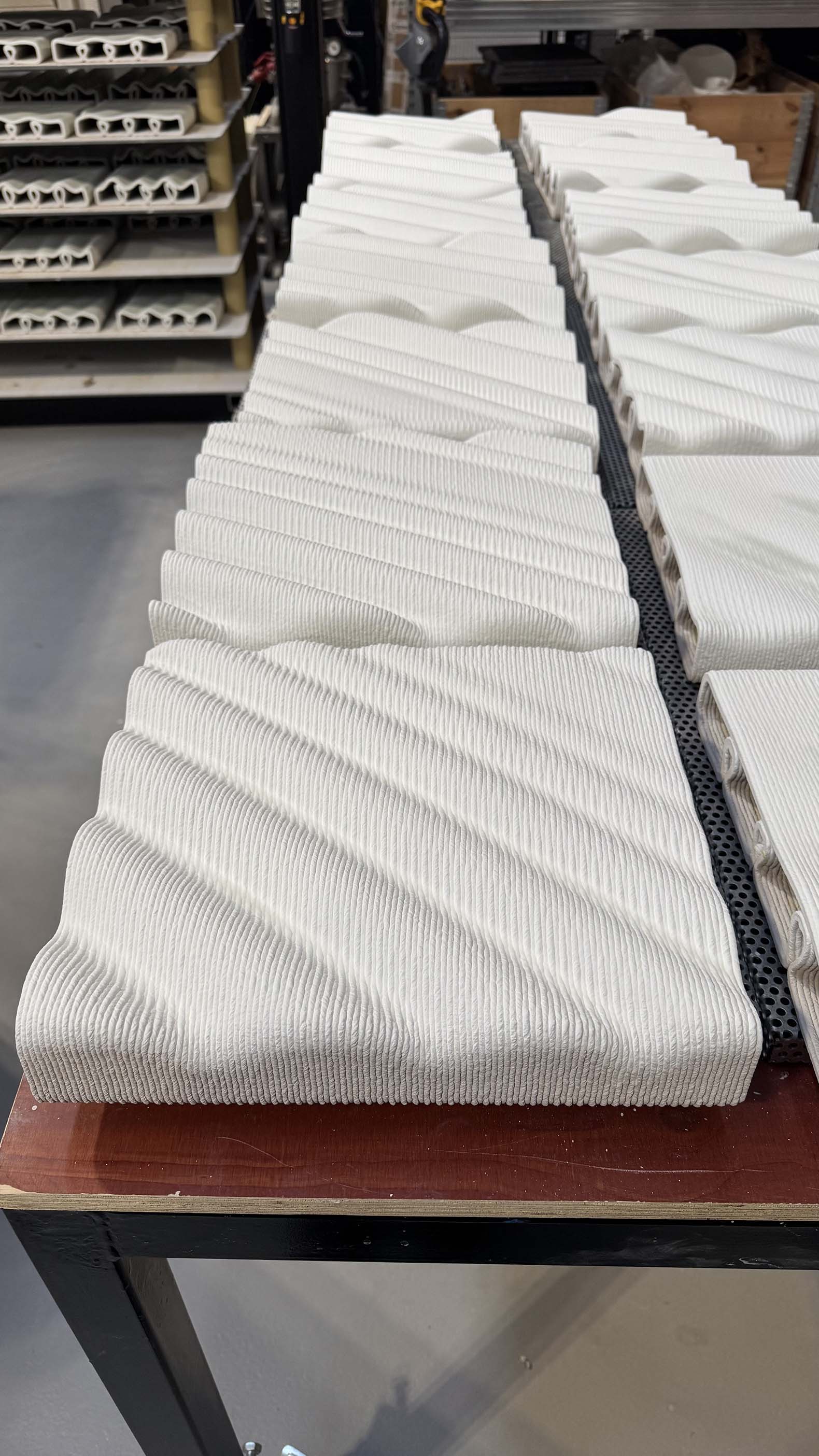
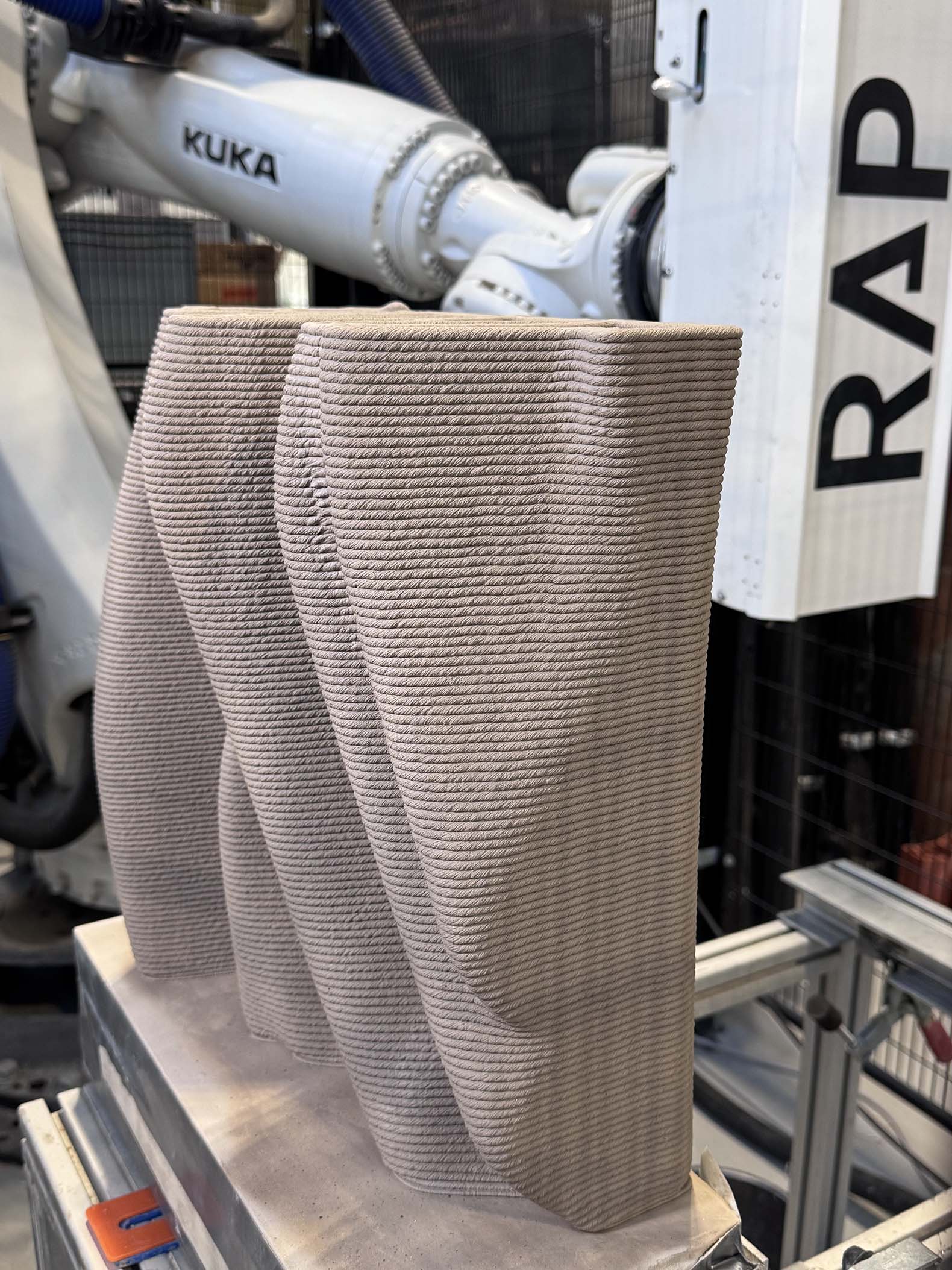
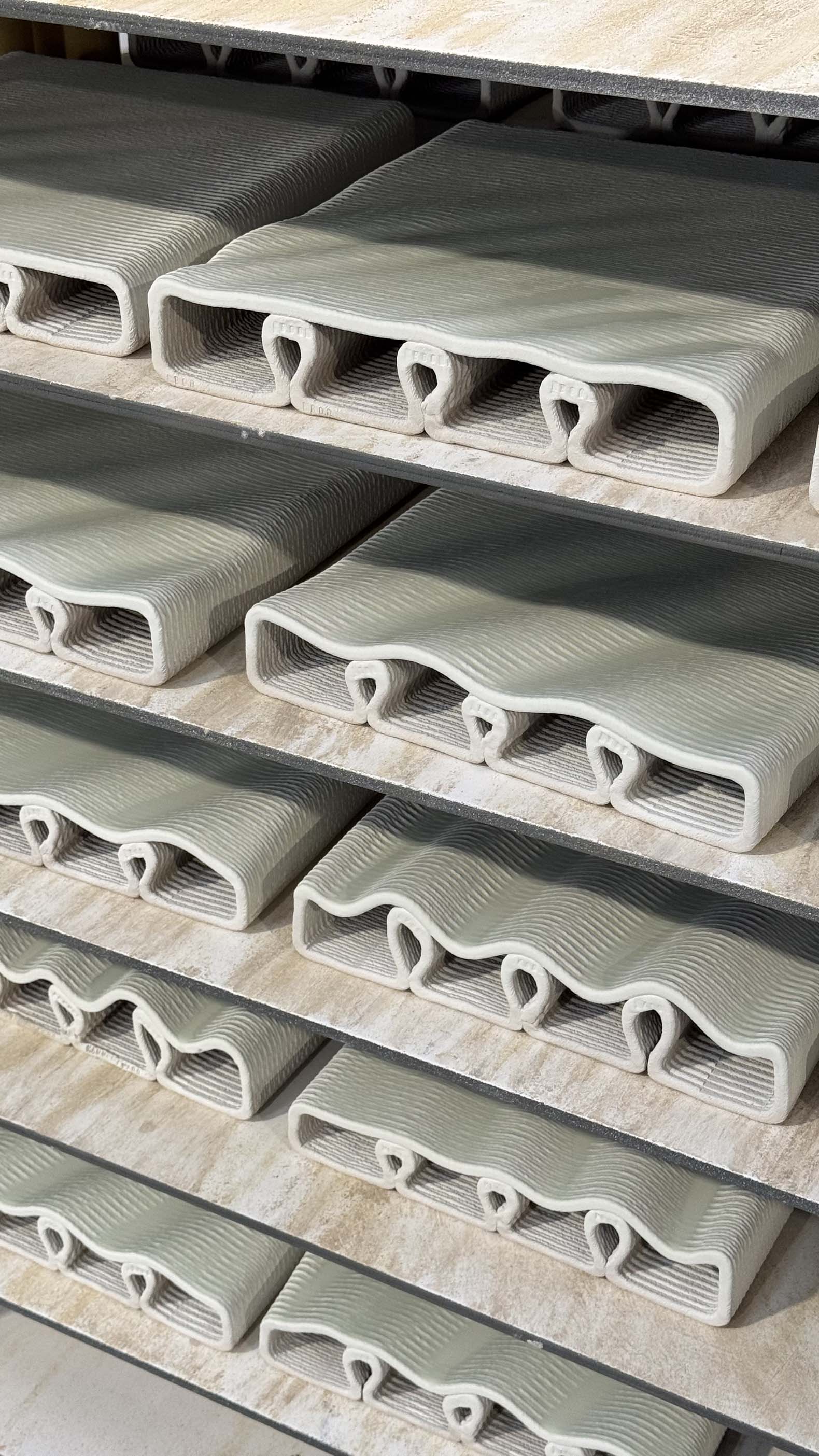
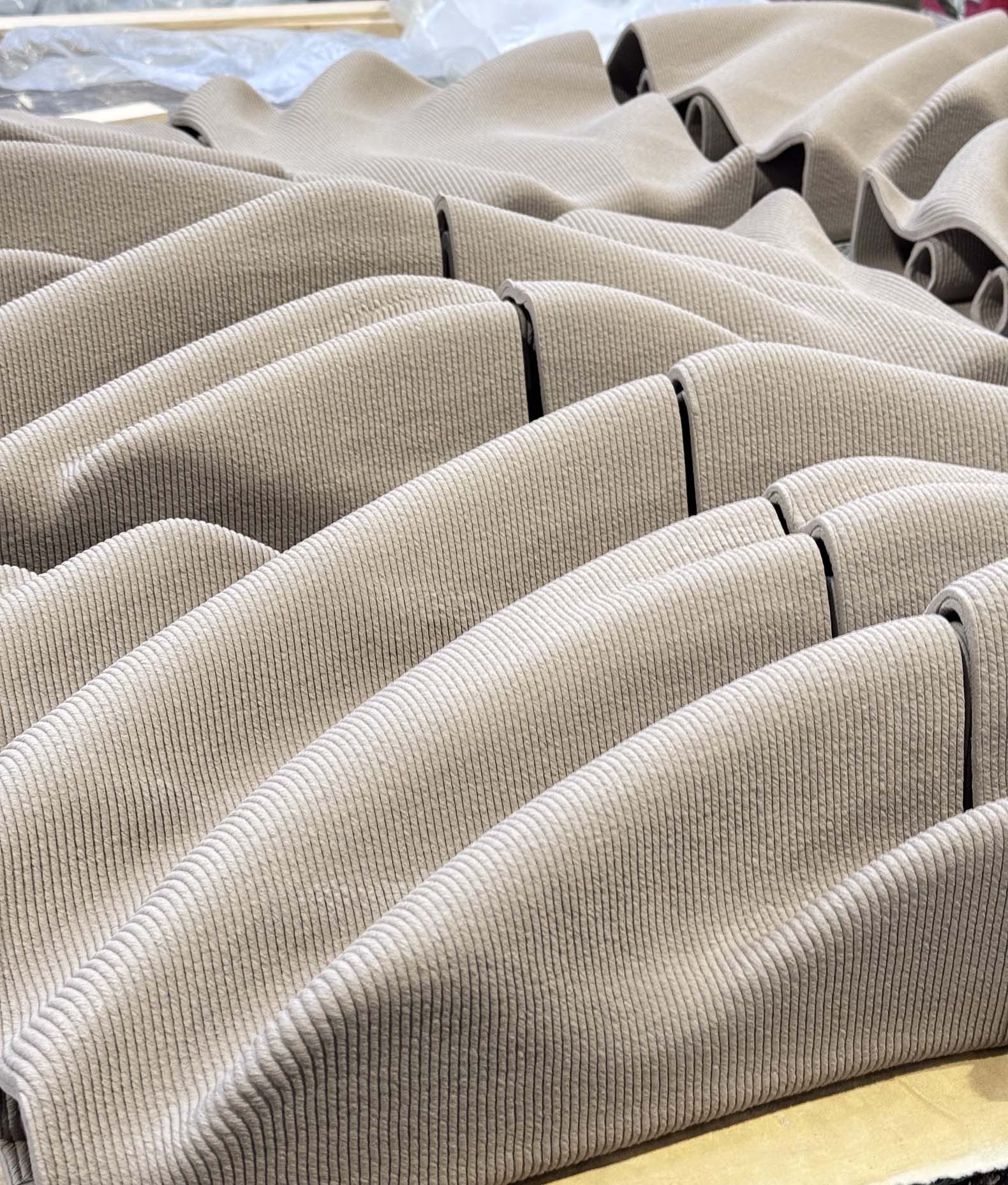
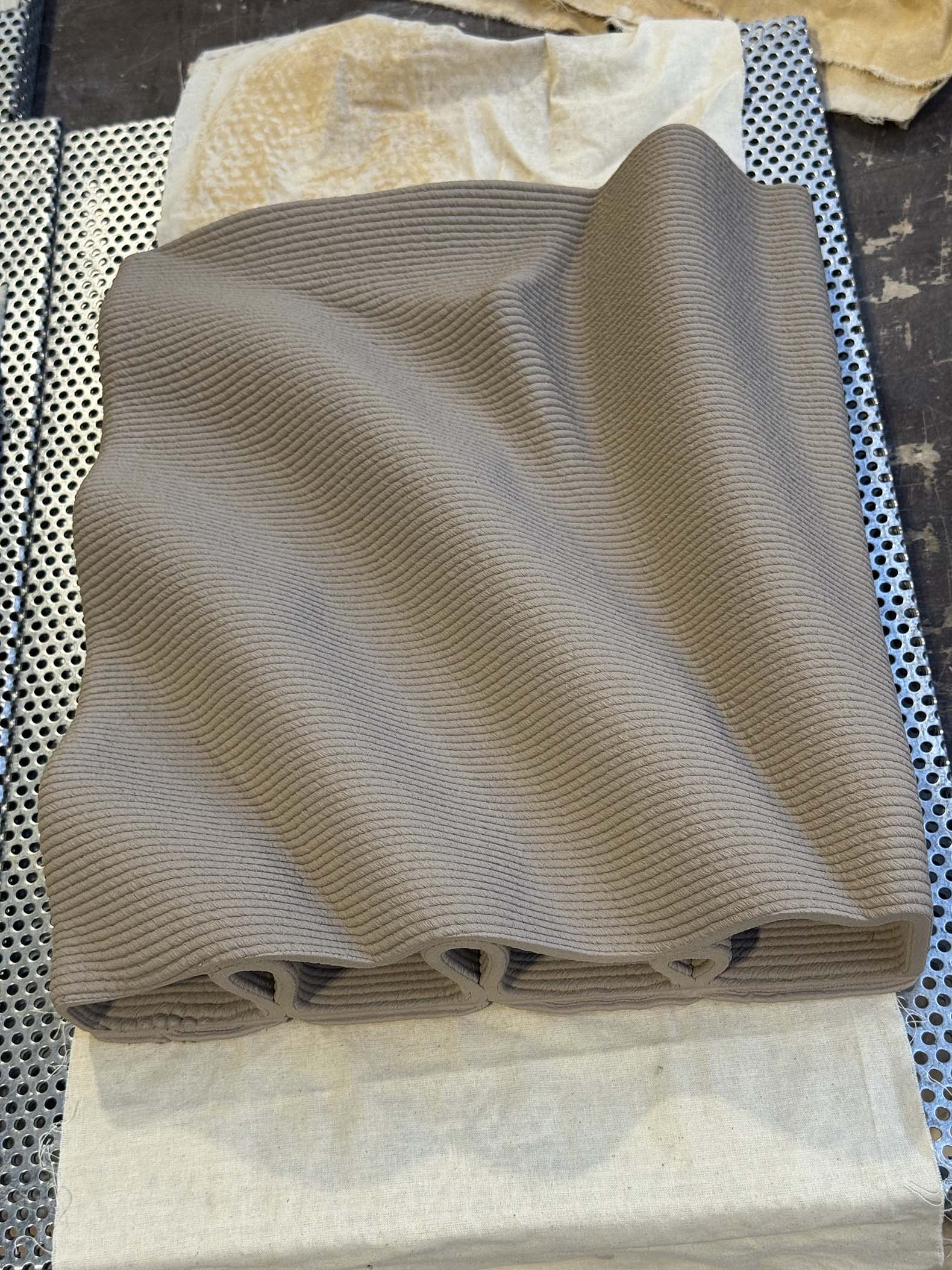
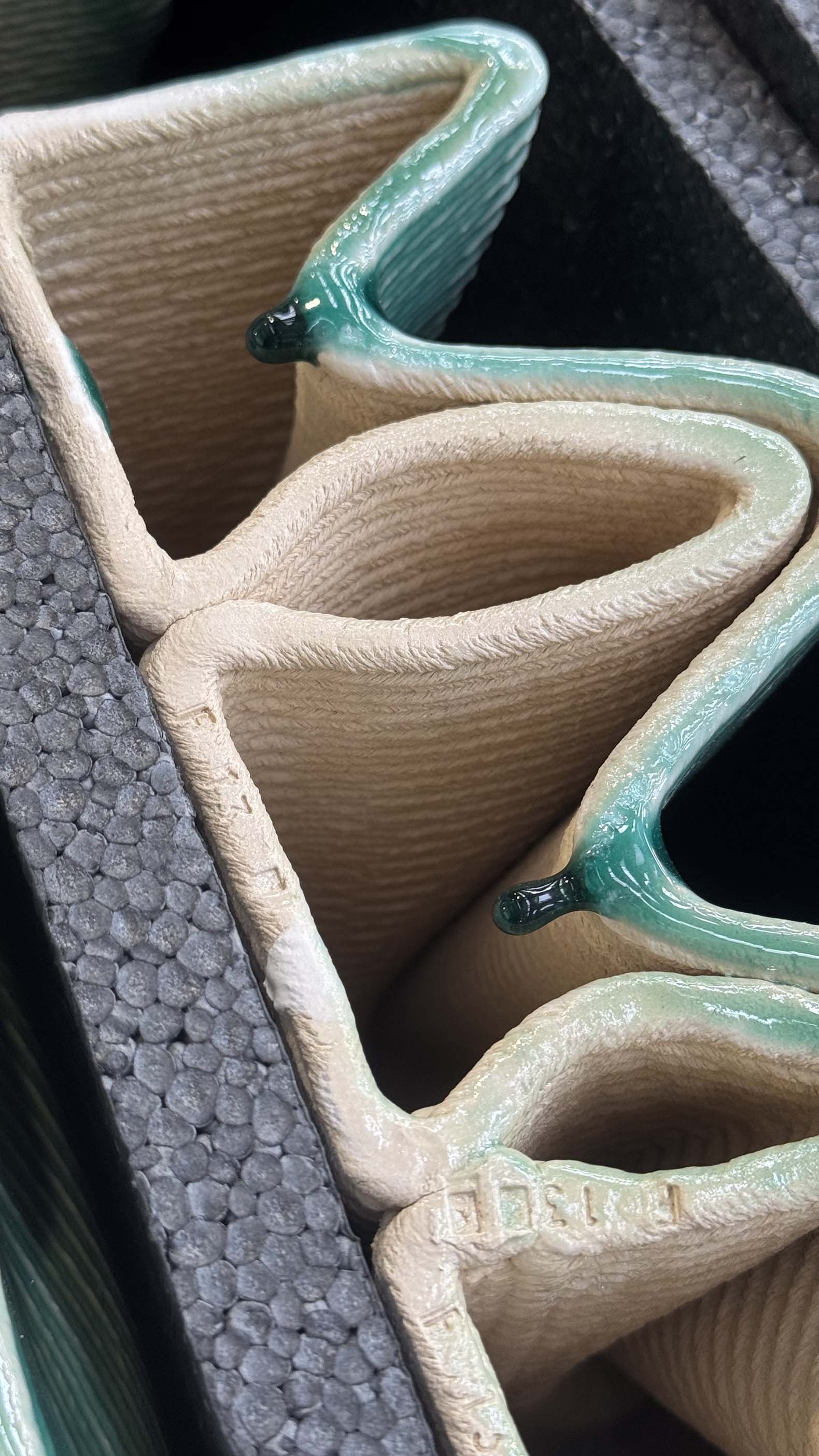
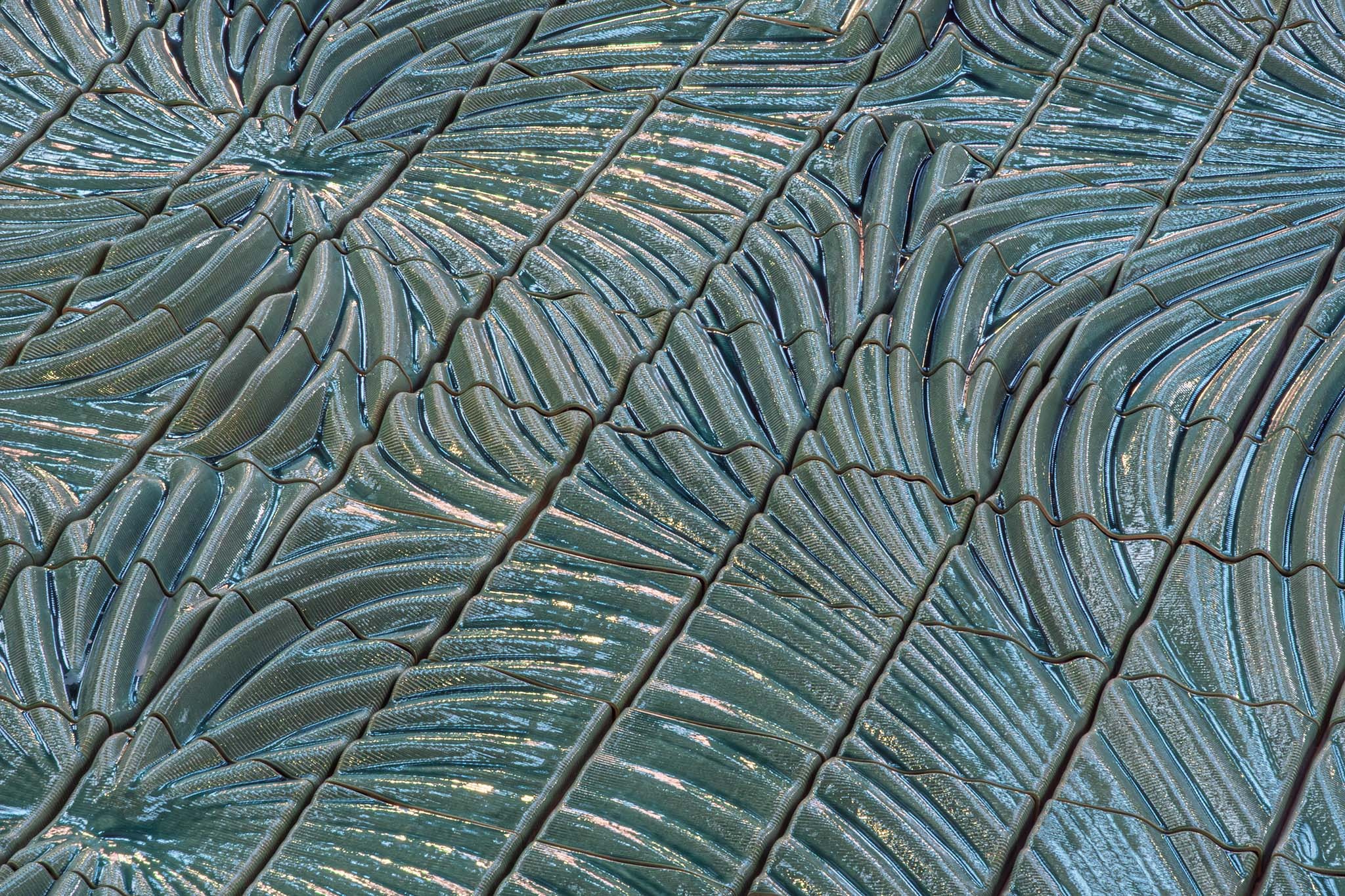
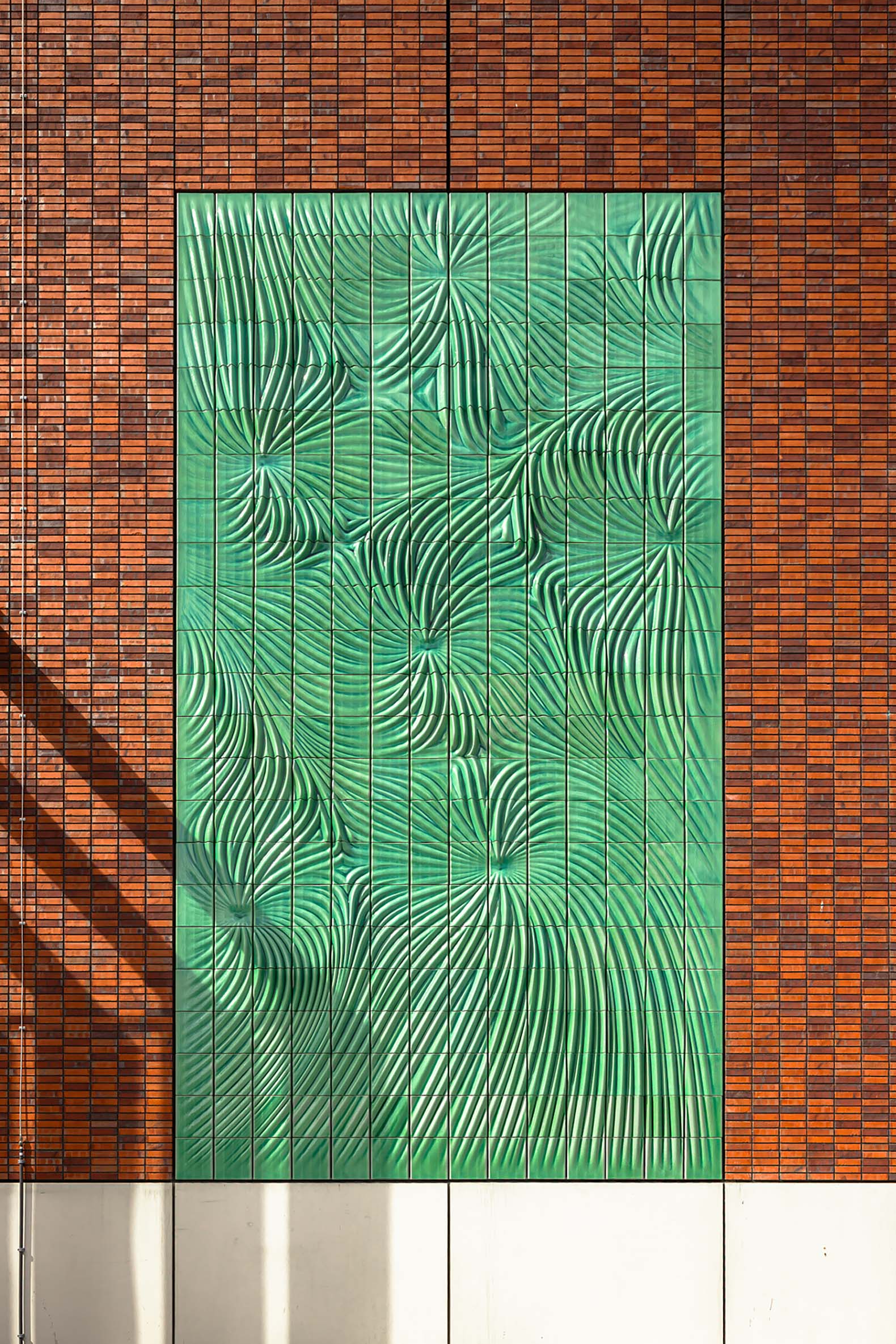
The façade incorporates brick, metal elements, and an 8 × 5-meter ceramic installation, composed of 322 unique pieces created through robotic 3D clay printing. Developed by Studio RAP using computational design tools, these pieces feature variations in form, texture, and depth, and are finished with a translucent turquoise glaze that accentuates the relief and its interplay with light.
Switchstation Beverwijk by Powerhouse Company + Studio RAP. Photograph by Sebastian van Damme.

Switchstation Beverwijk by Powerhouse Company + Studio RAP. Photograph by Sebastian van Damme.

Project description by Powerhouse Company and Studio RAP

Beverwijk, 2026 – The area around the Bazaar in Beverwijk is entering a new chapter. Long defined by technical infrastructure and large-scale commerce, it is set to develop into a lively new neighborhood. To meet the area's rapidly growing electricity demand, TenneT commissioned Powerhouse Company to design a new 150 kV switchstation beside the Bazaar. Responding to this changing context, Powerhouse Company approached the building as industrial heritage of the future: essential energy infrastructure with a strong architectural presence. Integrated into its brick facade is Powerwall by Studio RAP, one of the world’s largest robotically 3D-printed ceramic artworks.

Switchstation Beverwijk by Powerhouse Company + Studio RAP. Photograph by Sebastian van Damme.

Power infrastructure with a public side
The wider redevelopment of the Bazaar area will introduce housing, workspaces, public space, and a renewed connection to the waterfront. As the switchstation will form a central part of this future neighborhood, each design element was carefully considered to soften its technical character, break down its scale, and create a more engaging and approachable presence for people passing by.

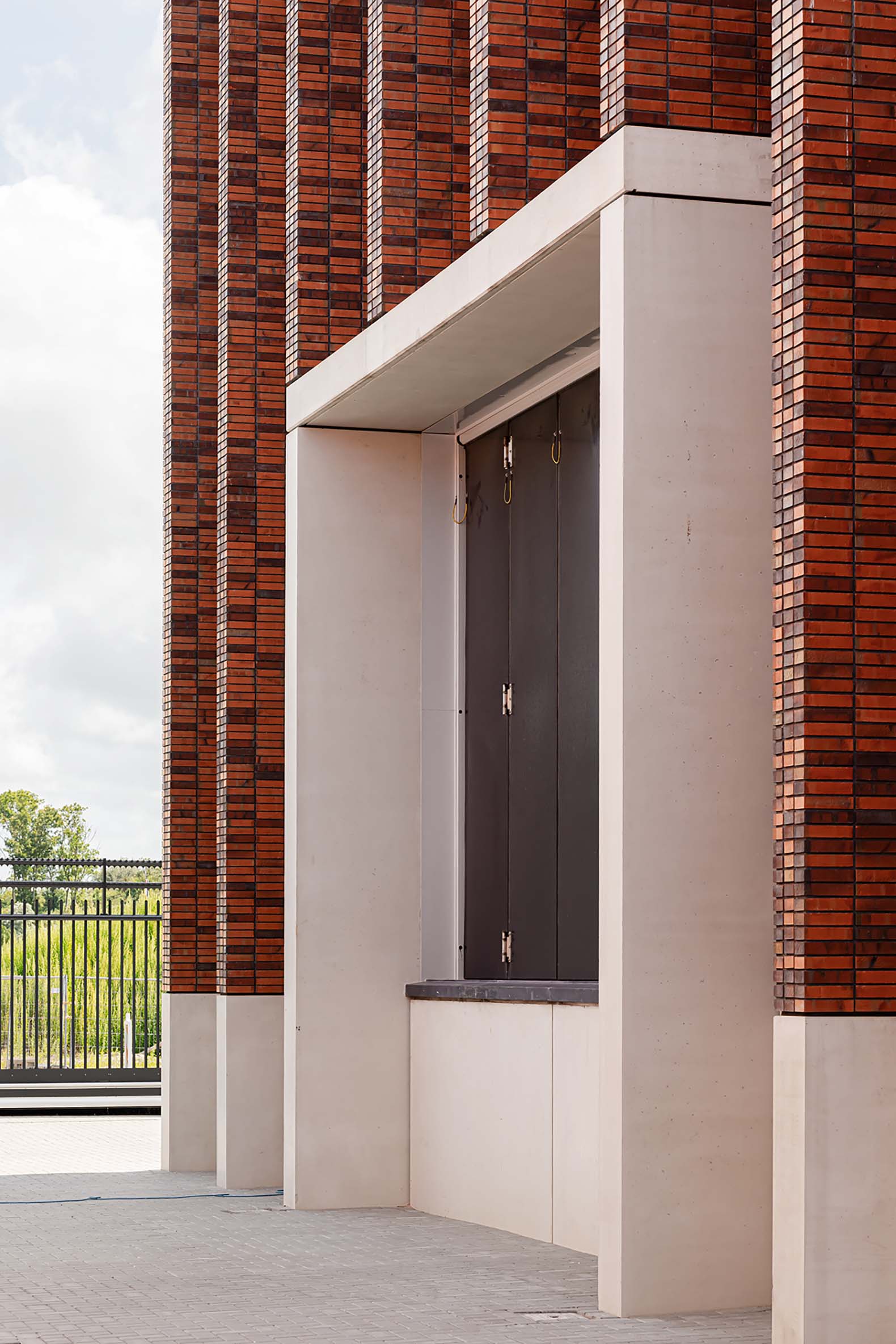
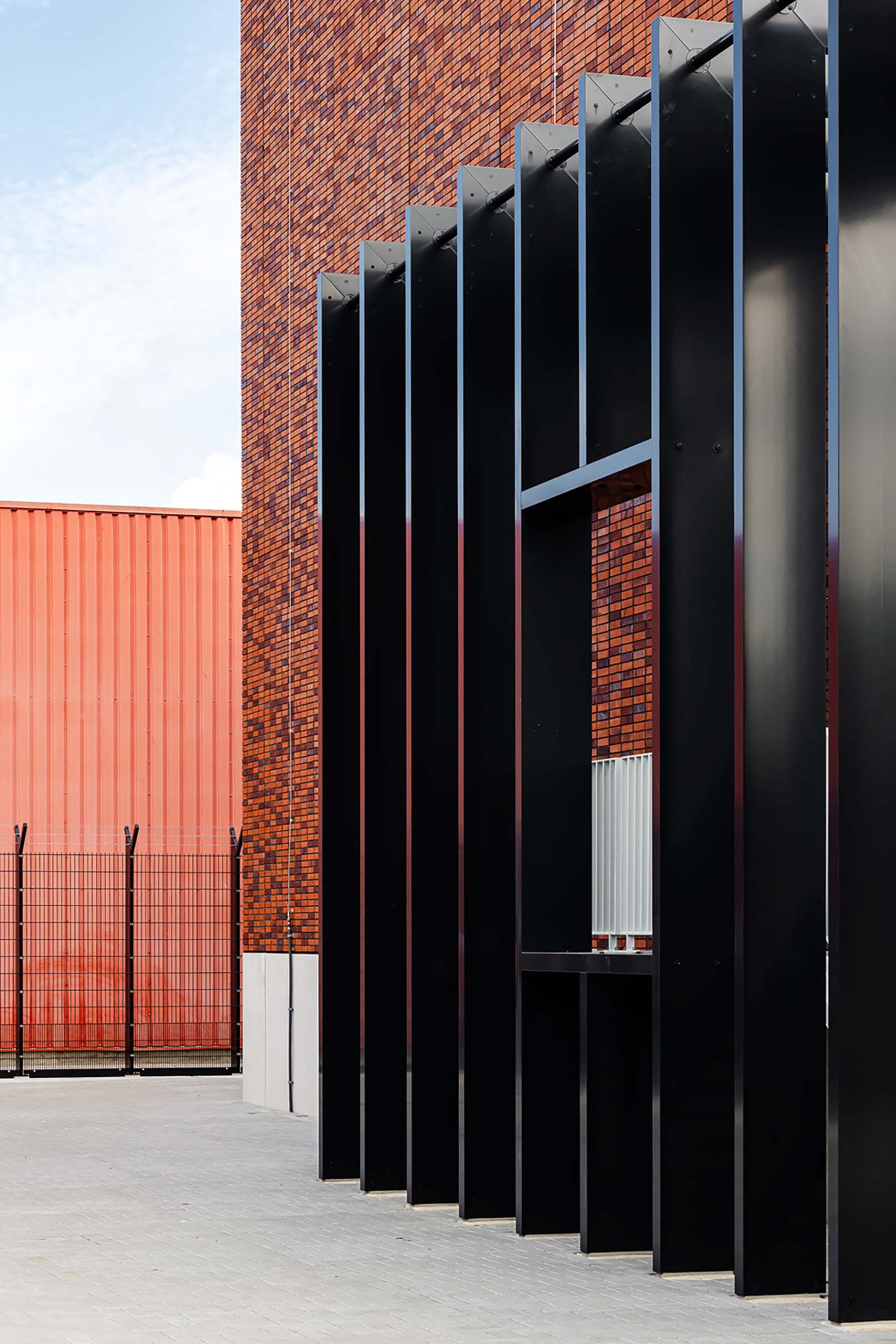
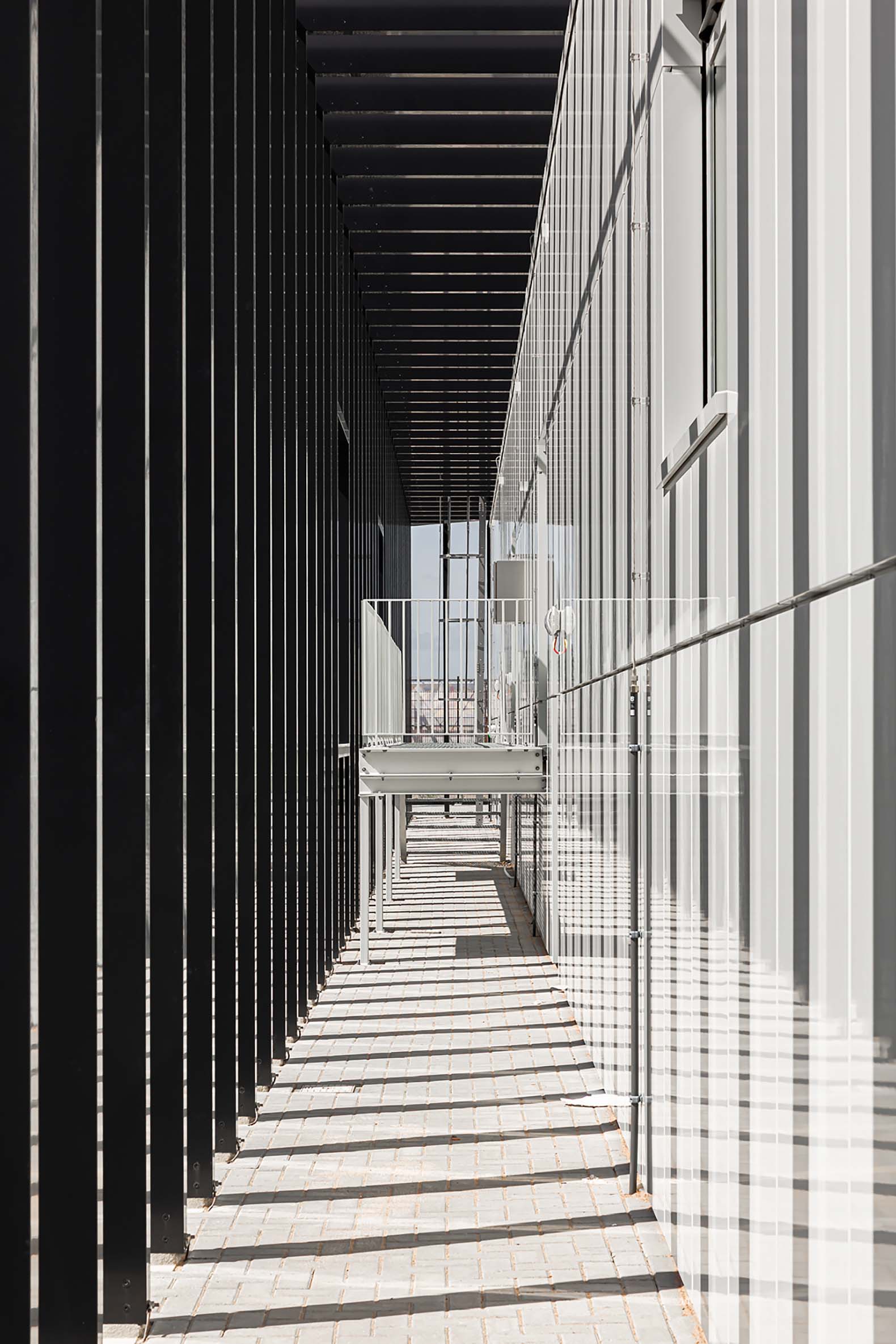
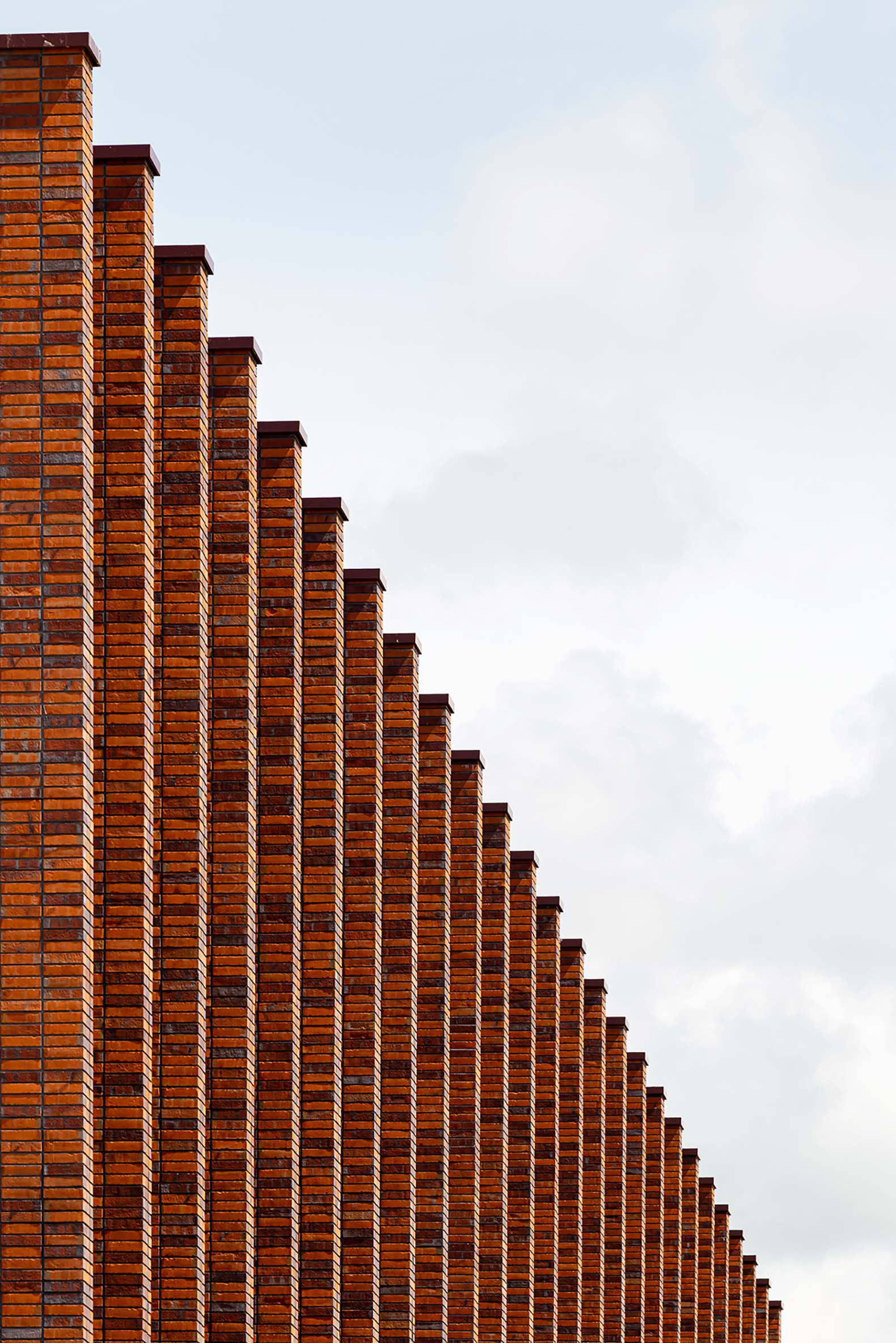
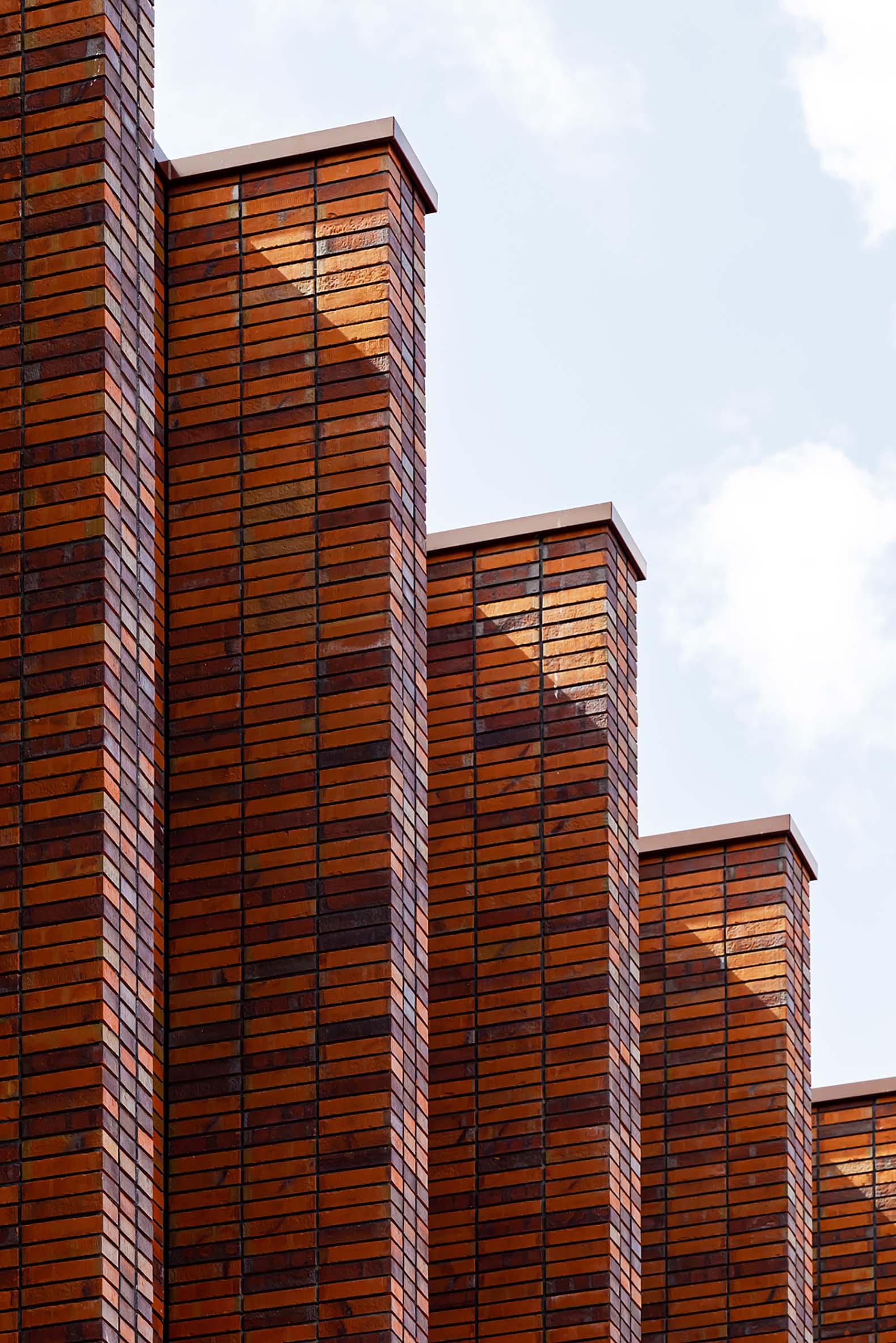
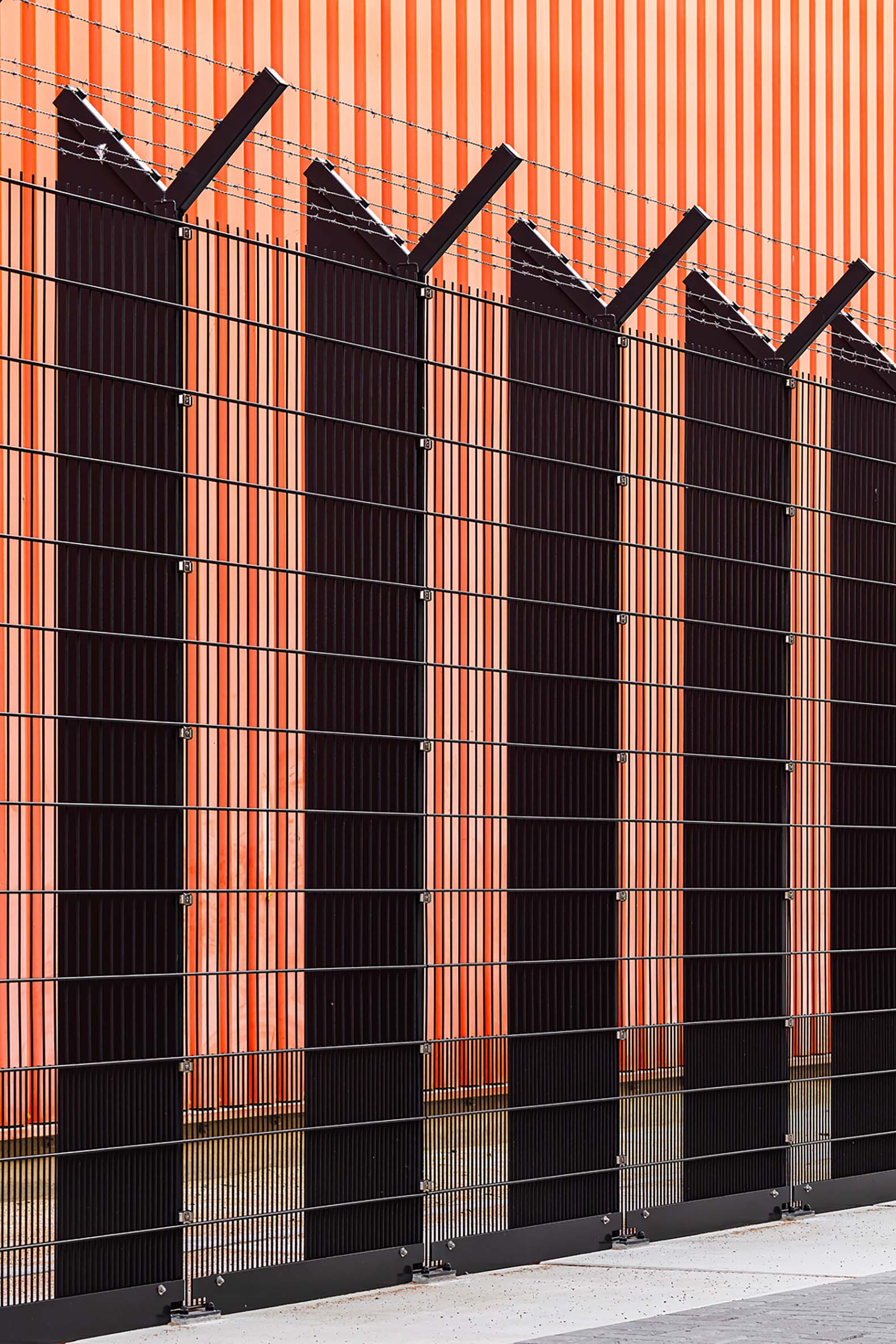
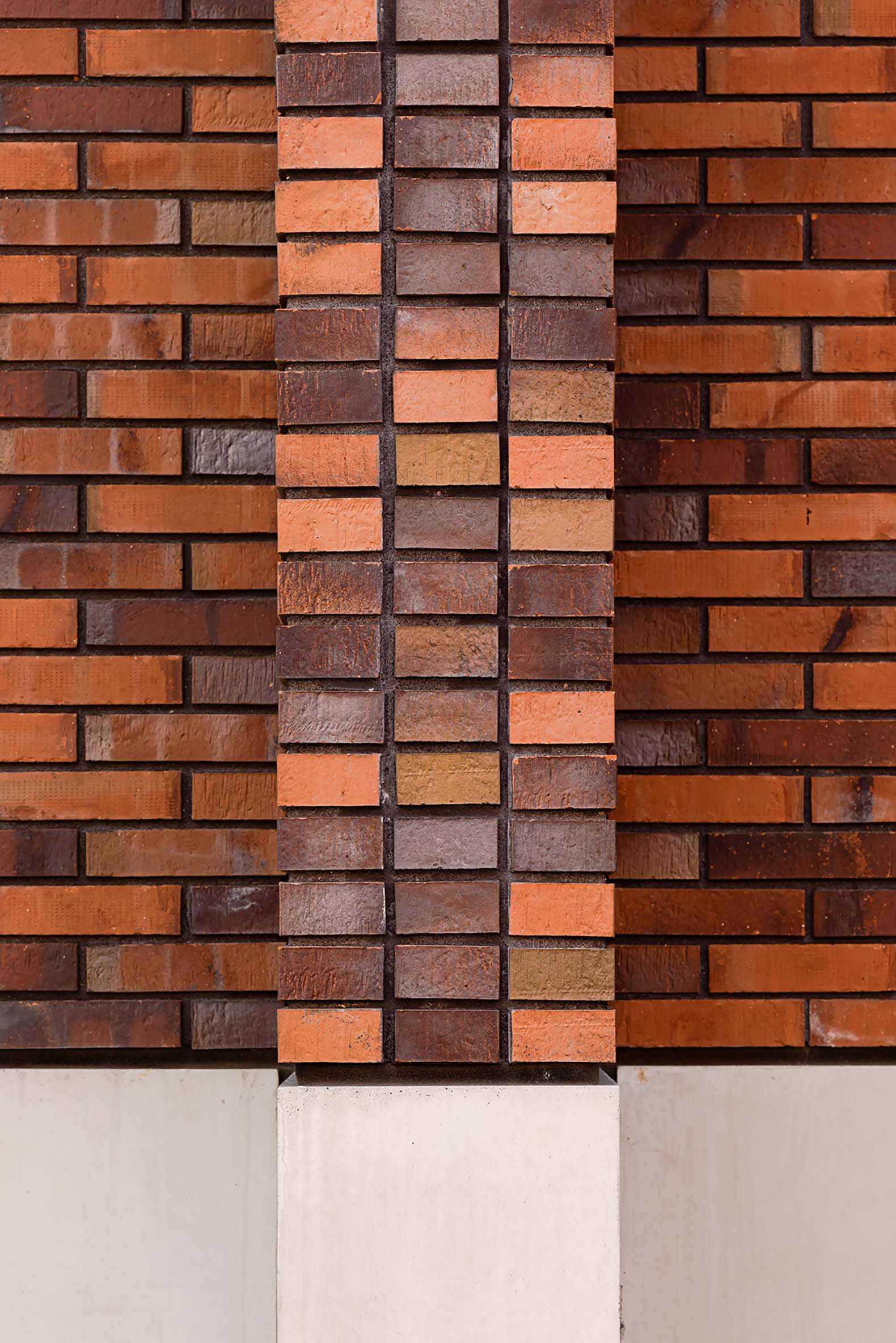
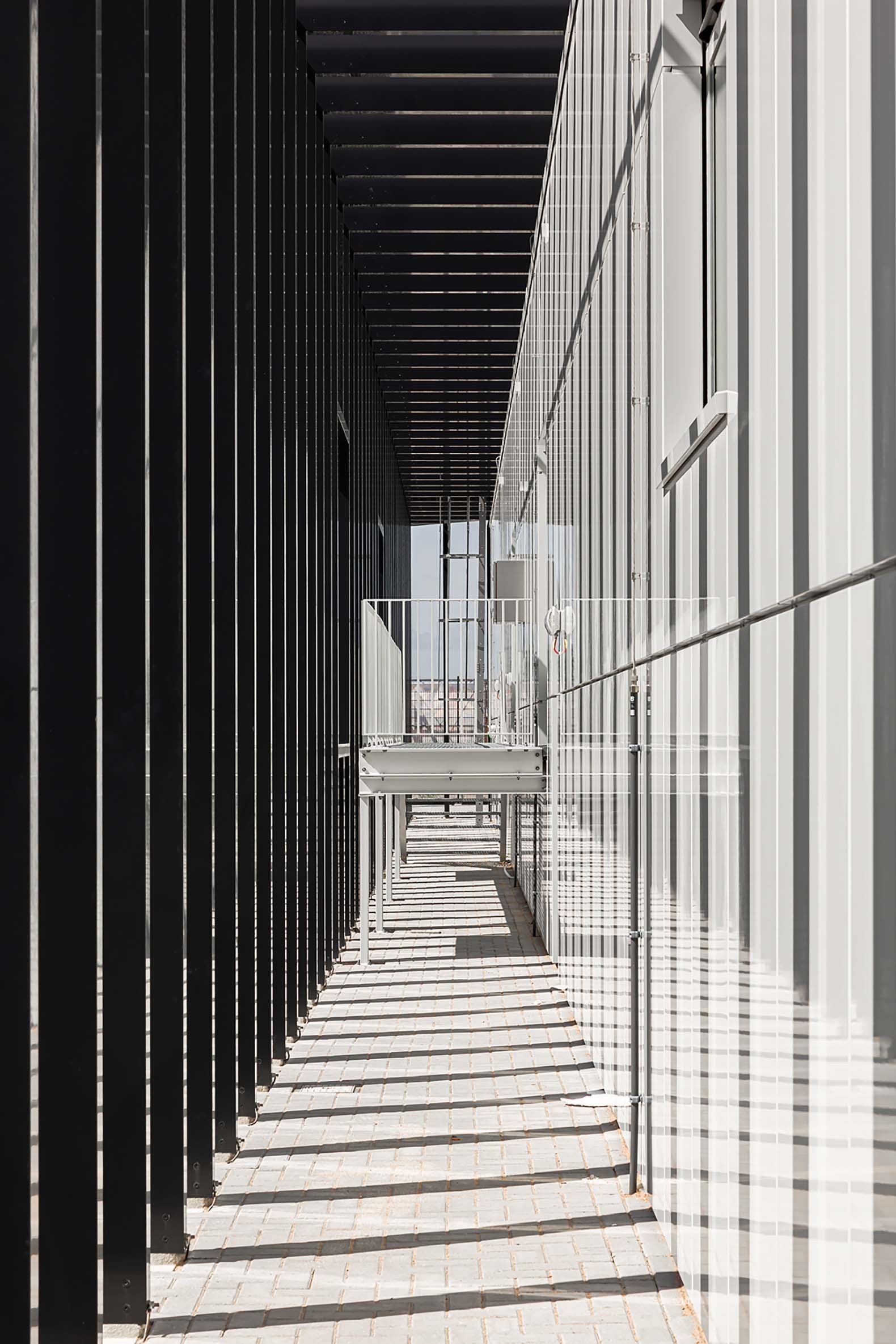
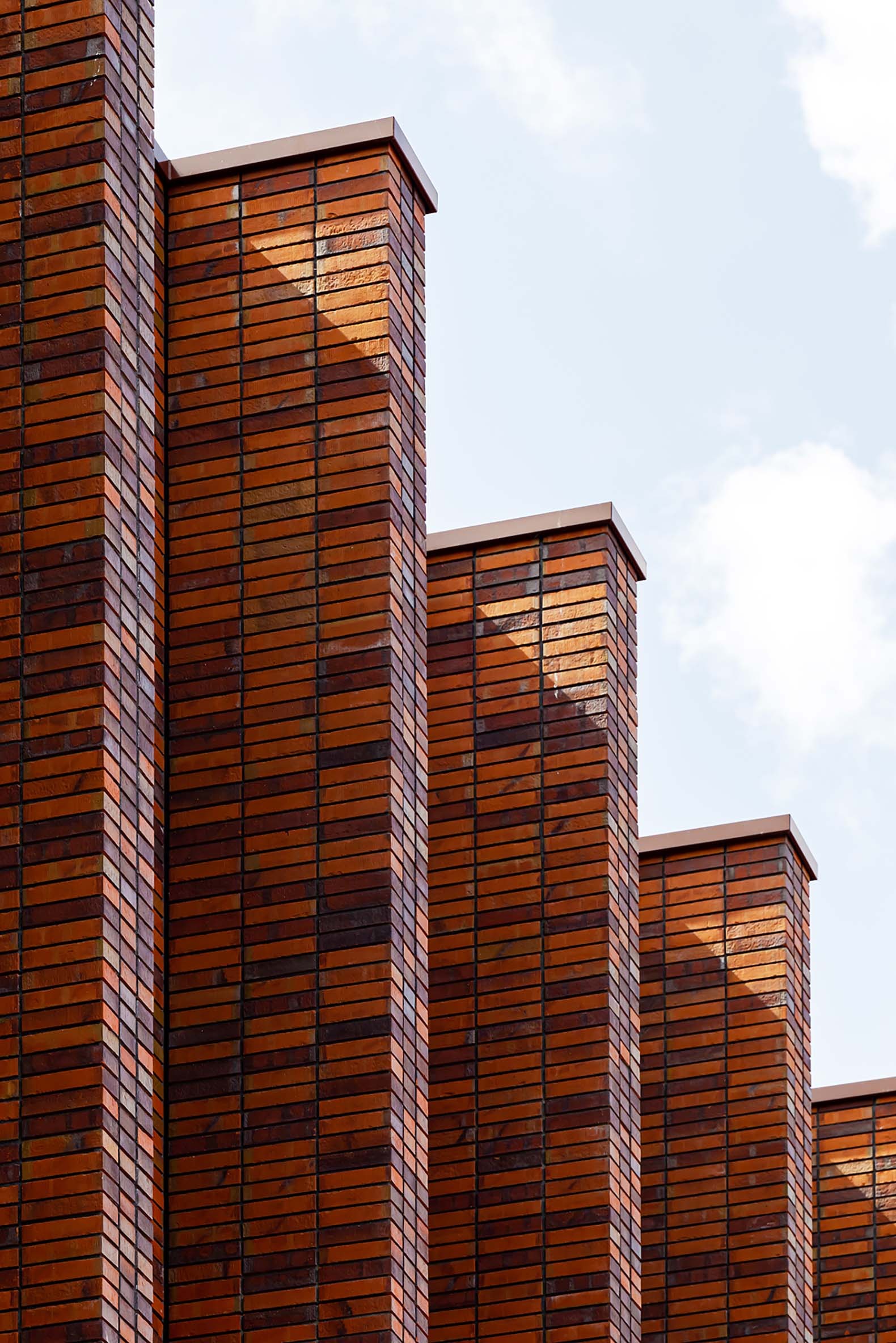
The building is organized into two complementary volumes: a taller brick volume containing the primary electrical installation and a lower metal volume housing the secondary functions. Deep brick piers give the facade rhythm and depth, while sculptural metal lamellas wrap the lower volume, visually connecting both parts into one coherent composition. Their gently undulating form casts playful patterns of shadow across the facade. Together with Studio RAP’s ceramic artwork, these elements turn the switchstation into a architectural focal point that invites curiosity.
Switchstation Beverwijk by Powerhouse Company + Studio RAP. Photograph by Sebastian van Damme.

From electromagnetic fields to ceramic relief
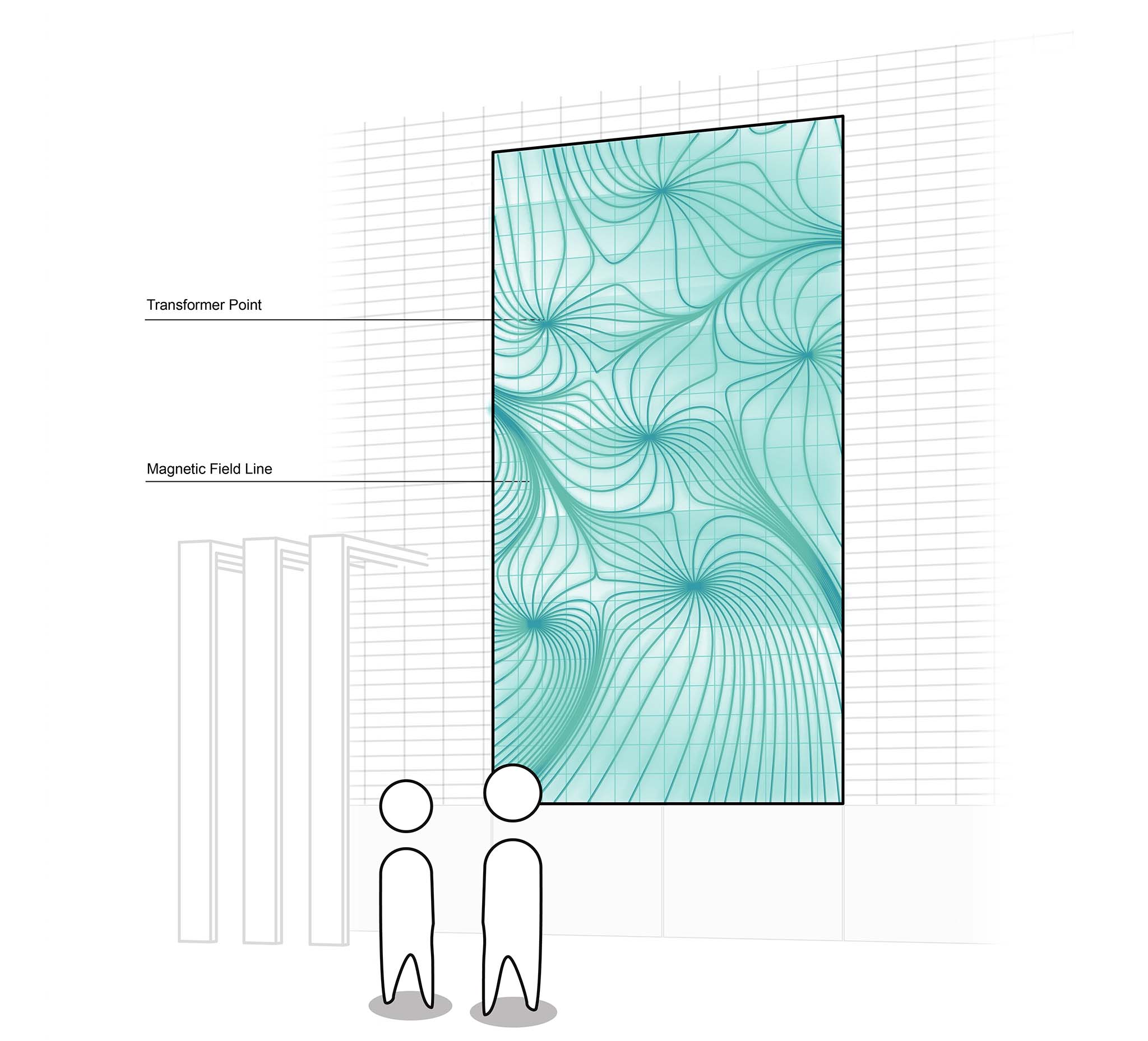
Set into the brick facade, Studio RAP’s Powerwall offers both a figurative and artistic expression of the switchstation’s purpose. Inspired by the invisible electromagnetic forces at work inside the building, the artwork translates their movement into a flowing relief that lends the facade a captivating presence. Powerwall’s scale and vivid appearance catch the eye of passersby from afar, while its intricate details reward a closer look.

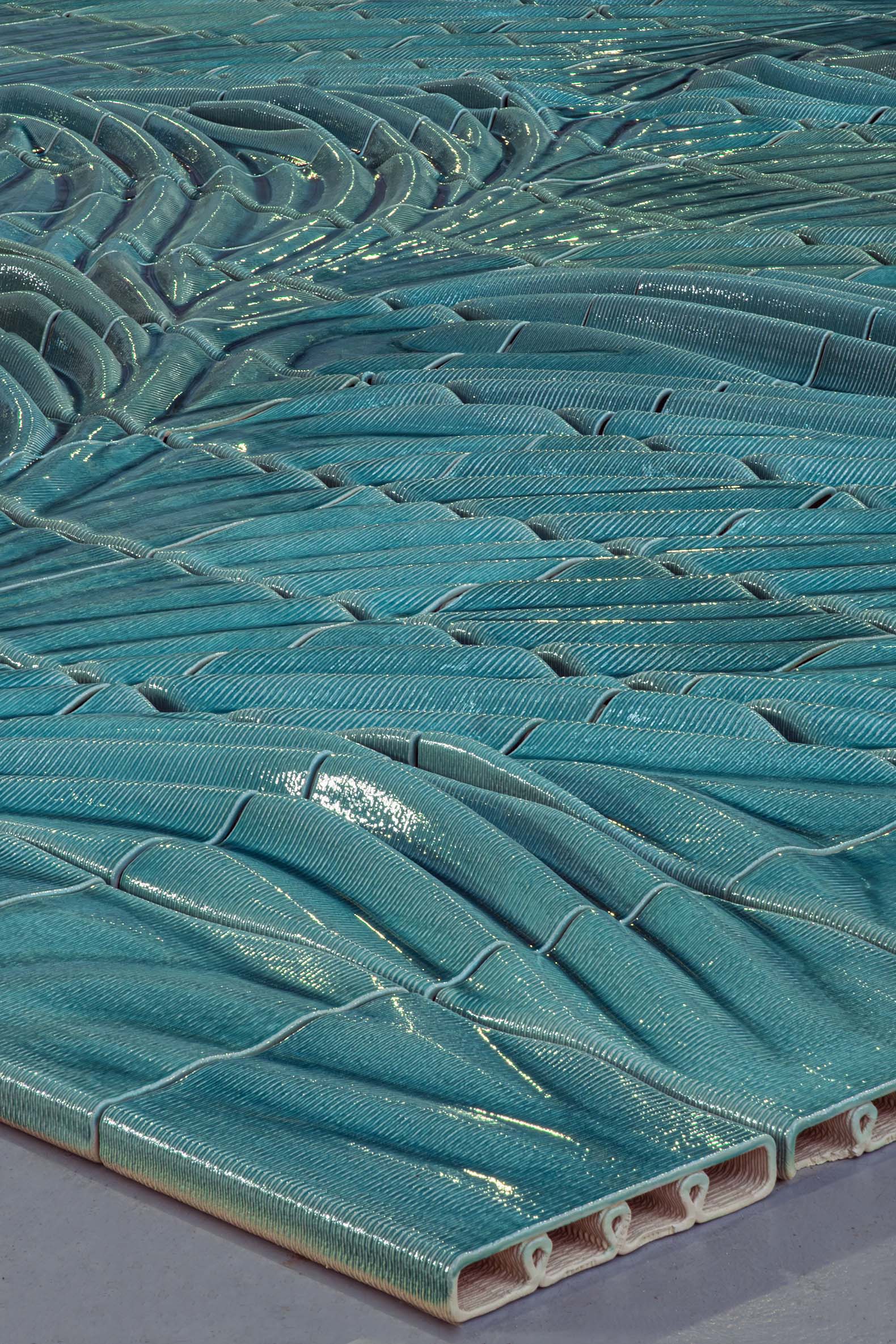
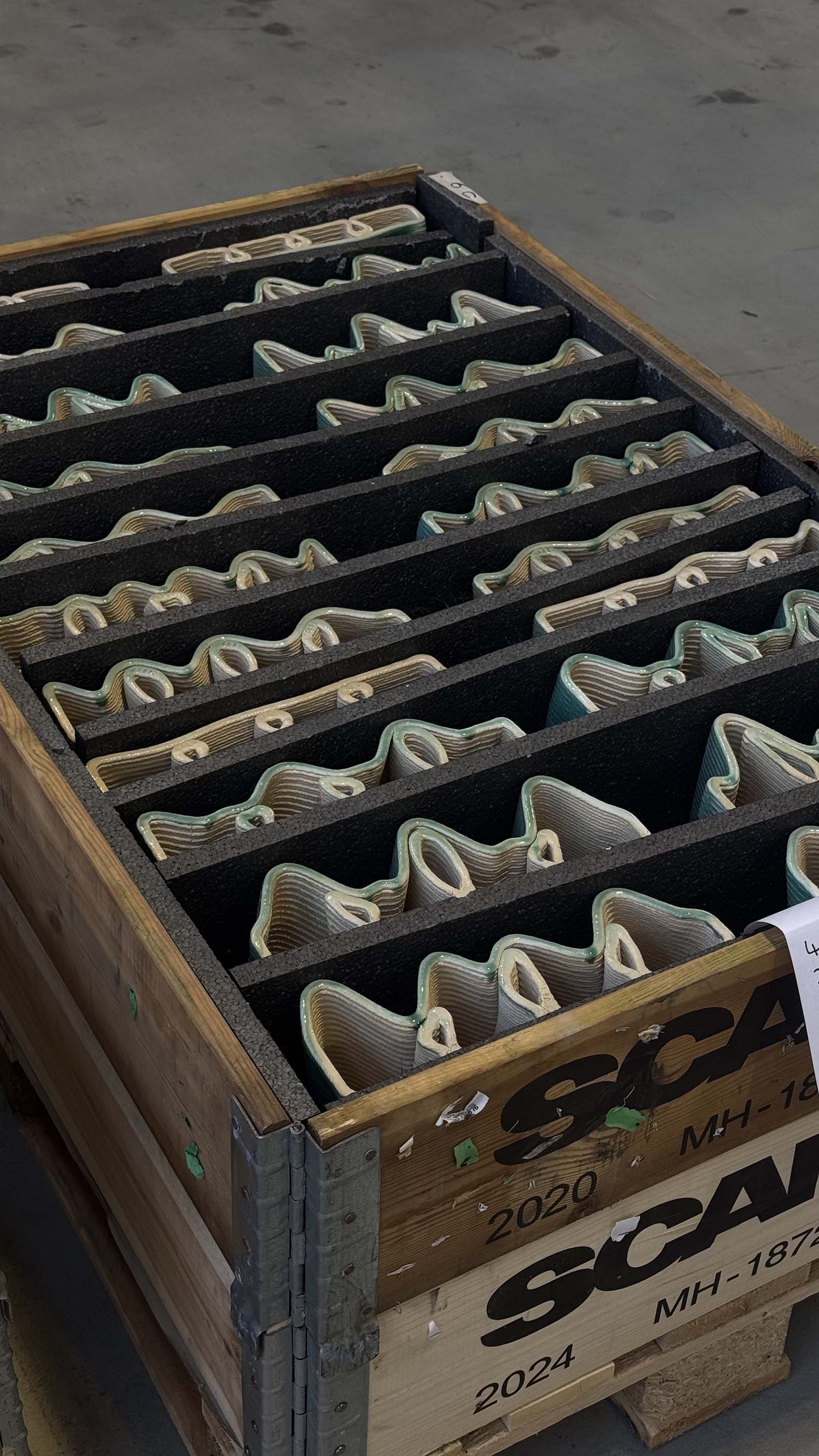
Using computational design, Studio RAP created 322 unique 3D-printed tiles. Together, they form an 8-by-5-meter ceramic relief, making Powerwall one of the world’s largest robotically 3D-printed ceramic artworks. Each tile was produced in Studio RAP’s workshop using in-house robotic clay printing, resulting in subtle variations in form, texture, and depth. After firing, the tiles were finished with a translucent turquoise glaze that settles into the grooves and recessed areas, further enhancing the vibrancy of the relief as light shifts across its surface.
Switchstation Beverwijk by Powerhouse Company + Studio RAP. Photograph by Studio RAP.

Infrastructure built to belong
As the energy transition moves forward, transformer stations and switchstations are becoming an integral part of the urban environment. They are not public buildings, but they do have a public presence. When these buildings are part of people’s daily lives, their design calls for a more considered architectural approach. With Switchstation Beverwijk, Powerhouse Company and Studio RAP show that essential infrastructure can remain secure and highly functional, while being a thoughtful addition to its surroundings. The result is a recognizable presence in Beverwijk - designed not only for today’s infrastructure, but also for tomorrow’s neighborhood.
More information

Label
Architects
Text

Powerhouse Company. Lead architects.- Nanne de Ru, Paul Stavert, Stijn Kemper, Stefan Prins, Sander Apperlo, and Johanne Borthne.
Studio RAP. Lead architects.- Lucas ter Hall, Wessel van Beerendonk, Montei di Matteo, Eelco Hoekstra, Pablo López de Uralde Montes, Michiel Derikx, Matteo Deval.

+ + copy Created with Sketch.
- + copy Created with Sketch.
Label
Collaborators
Text

3D ceramic printing.- Studio RAP.

+ + copy Created with Sketch.
- + copy Created with Sketch.
Label
Client
Text

TenneT Netherlands.

+ + copy Created with Sketch.
- + copy Created with Sketch.
Label
Builder
Text

JP van Eesteren, Mobilis TBI.

+ + copy Created with Sketch.
- + copy Created with Sketch.
Label
Dates
Text

June 30, 2026.

+ + copy Created with Sketch.
- + copy Created with Sketch.
Label
Location
Text

Beverwijk, the Netherlands.

+ + copy Created with Sketch.
- + copy Created with Sketch.
Label
Photography
+ + copy Created with Sketch.
- + copy Created with Sketch.
Powerhouse Company is an architecture studio based in Rotterdam, the Netherlands, founded by Nanne de Ru, in 2005, now led together by Paul Stavert, Stijn Kemper, Stefan Prins, Sander Apperlo (Munich), and Johanne Borthne (Oslo).

A multidisciplinary office of around 100 professionals, with international studios in Beijing, Oslo, and Munich. They have won a number of prizes, including the Dutch Design Award, the Maaskant Prize, and the AM/NAI Award.
Read more
Studio RAP. In the constantly evolving realm of architecture, Studio RAP, a team of architects based in Rotterdam, is reshaping the traditional role of an architect. They passionately blend architecture with entrepreneurship, manufacturing, and craftsmanship, reintroducing bespoke details to architectural designs. Their team consists of architects, designers, roboticists, programmers and researchers. Together they explore innovative technology and try to improve the way they design, produce, manage and build architecture. Team.- Lucas ter Hall, Wessel van Beerendonk, Montei di Matteo, Eelco Hoekstra, Pablo López de Uralde Montes, Michiel Derikx, Matteo Deval.
They surround theirselves with robots in an industrial atmosphere where they can discover and realise challenging architecture. In close collaboration with their client they design from vision to detail. With diagrams, visuals and prototypes they make the design process clear and insightful. With experience in design, fabrication and contracting they deliver unique buildings within time and budget. In their workshop in the Innovation Dock in Rotterdam they develop innovative building processes together with extraordinary designs.

Together with their robots they challenge the traditional way of building and rethink the architectural profession. This results not only in expressive buildings but also in a thorough hands-on approach to solve problems in the building industry. Their clients vary from municipalities and multinationals to private individuals. They’re characterised by a shared passion for innovation and design.
Read more
Published on: November 18, 2026
Cite:
metalocus, CAMILA DOYLET
"Invisible forces. Switchstation Beverwijk by Powerhouse Company + Studio RAP" METALOCUS. Accessed
<https://www.metalocus.es/en/news/invisible-forces-switchstation-beverwijk-powerhouse-company-studio-rap> ISSN 1139-6415
Loading content ...
Loading content ...
Loading content ...
Loading content ...
Loading content ...
Loading content ...
Loading content ...
Loading content ...
Loading content ...
Loading content ...
Loading content ...
Loading content ...
Loading content ...
Loading content ...
Loading content ...
Loading content ...
Loading content ...
Loading content ...
Loading content ...
Loading content ...
Loading content ...
Loading content ...
Loading content ...
Loading content ...
Loading content ...
Loading content ...
Loading content ...
Loading content ...
Loading content ...
Loading content ...
Loading content ...
Loading content ...
Loading content ...
Loading content ...
Loading content ...
Loading content ...
Loading content ...
Loading content ...
Loading content ...
Loading content ...
Loading content ...
Loading content ...
Loading content ...
Loading content ...
Loading content ...
Loading content ...
Loading content ...
Loading content ...
Loading content ...
Loading content ...
Loading content ...
Loading content ...
Loading content ...
Loading content ...