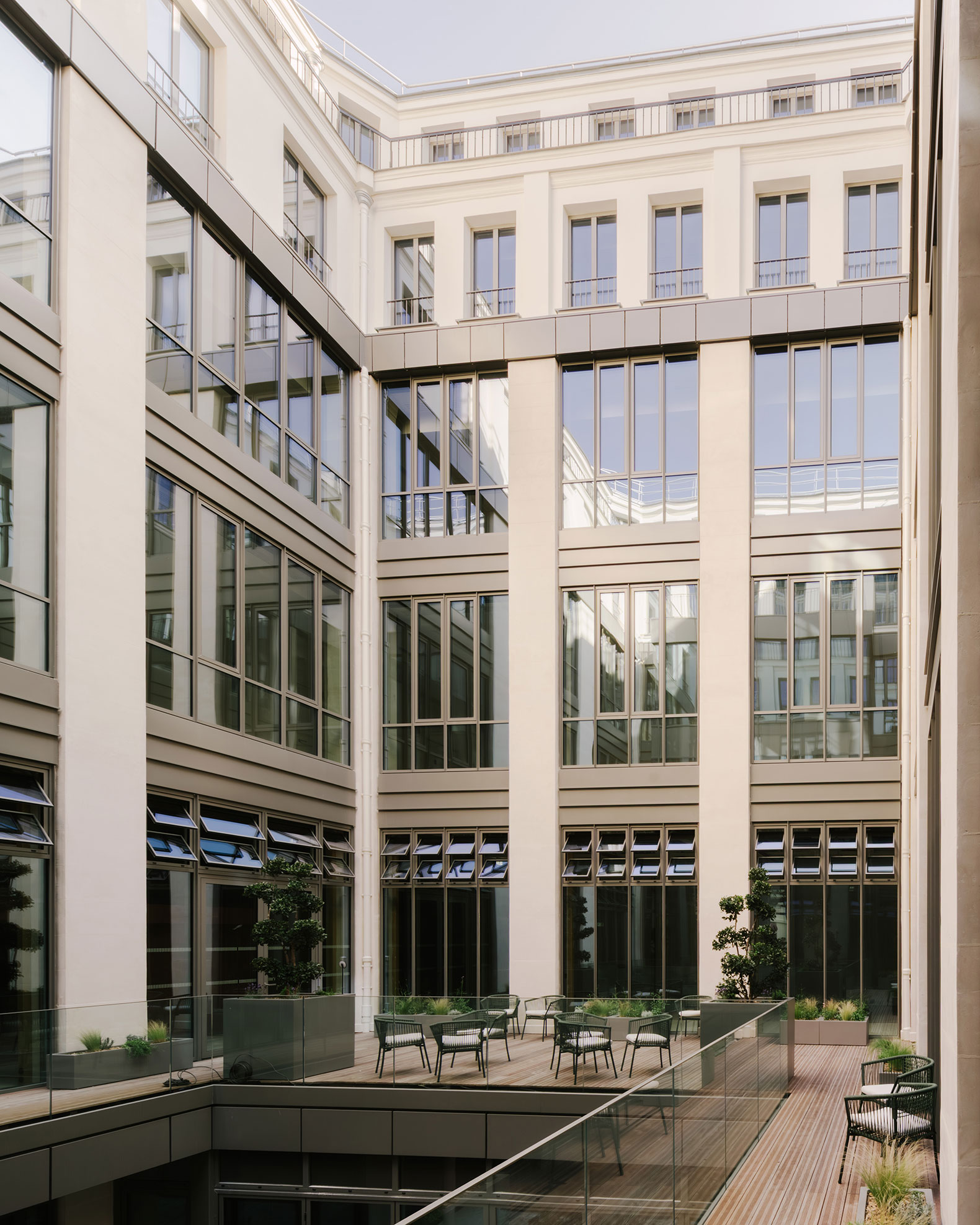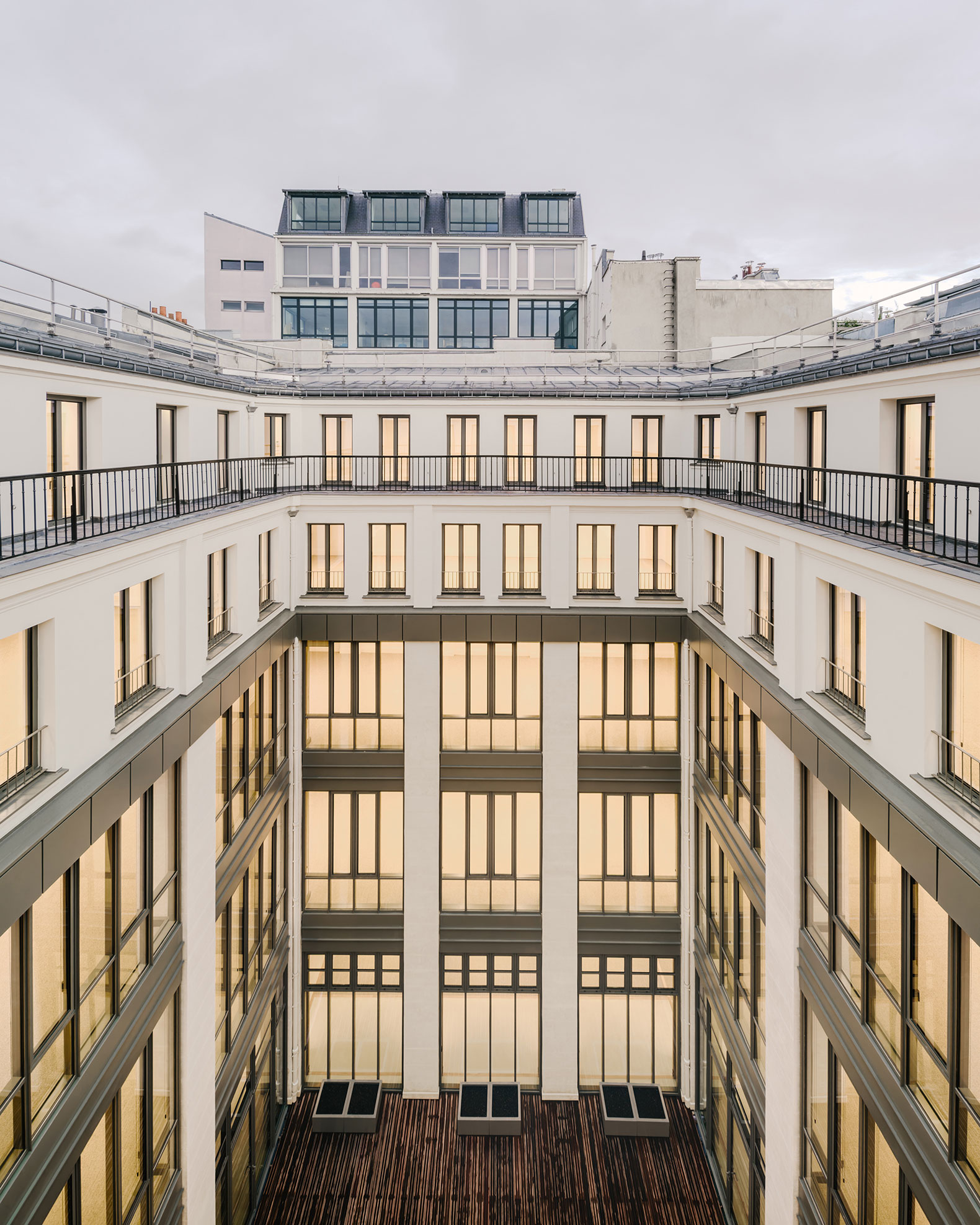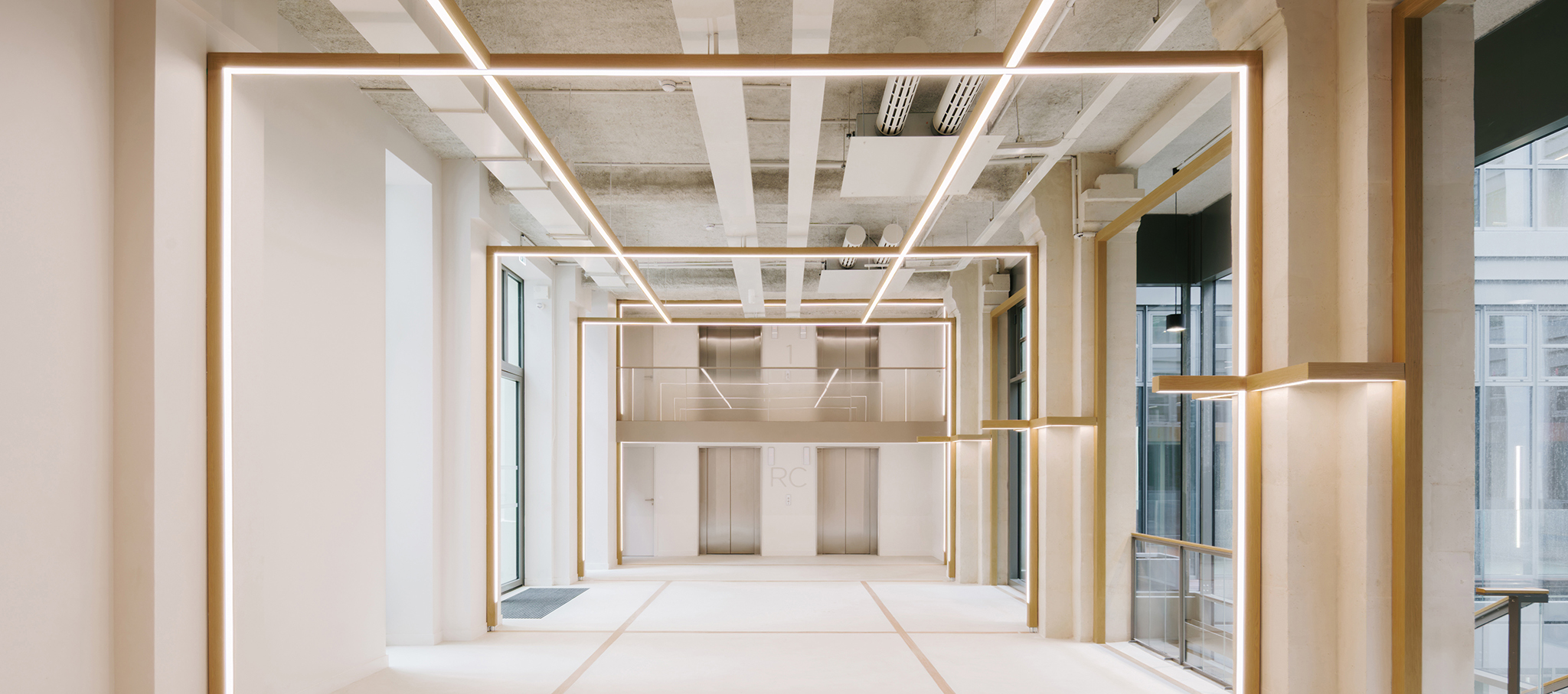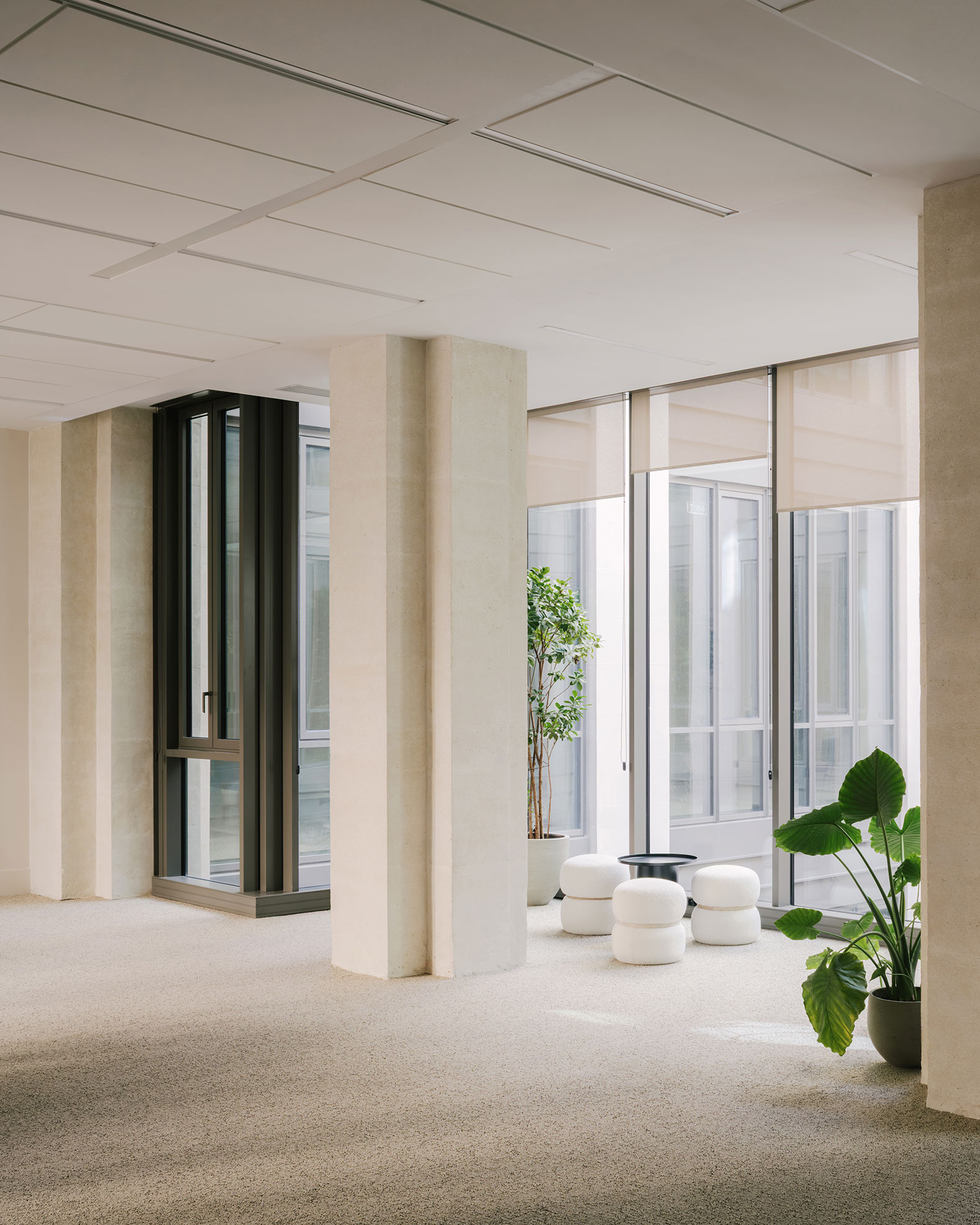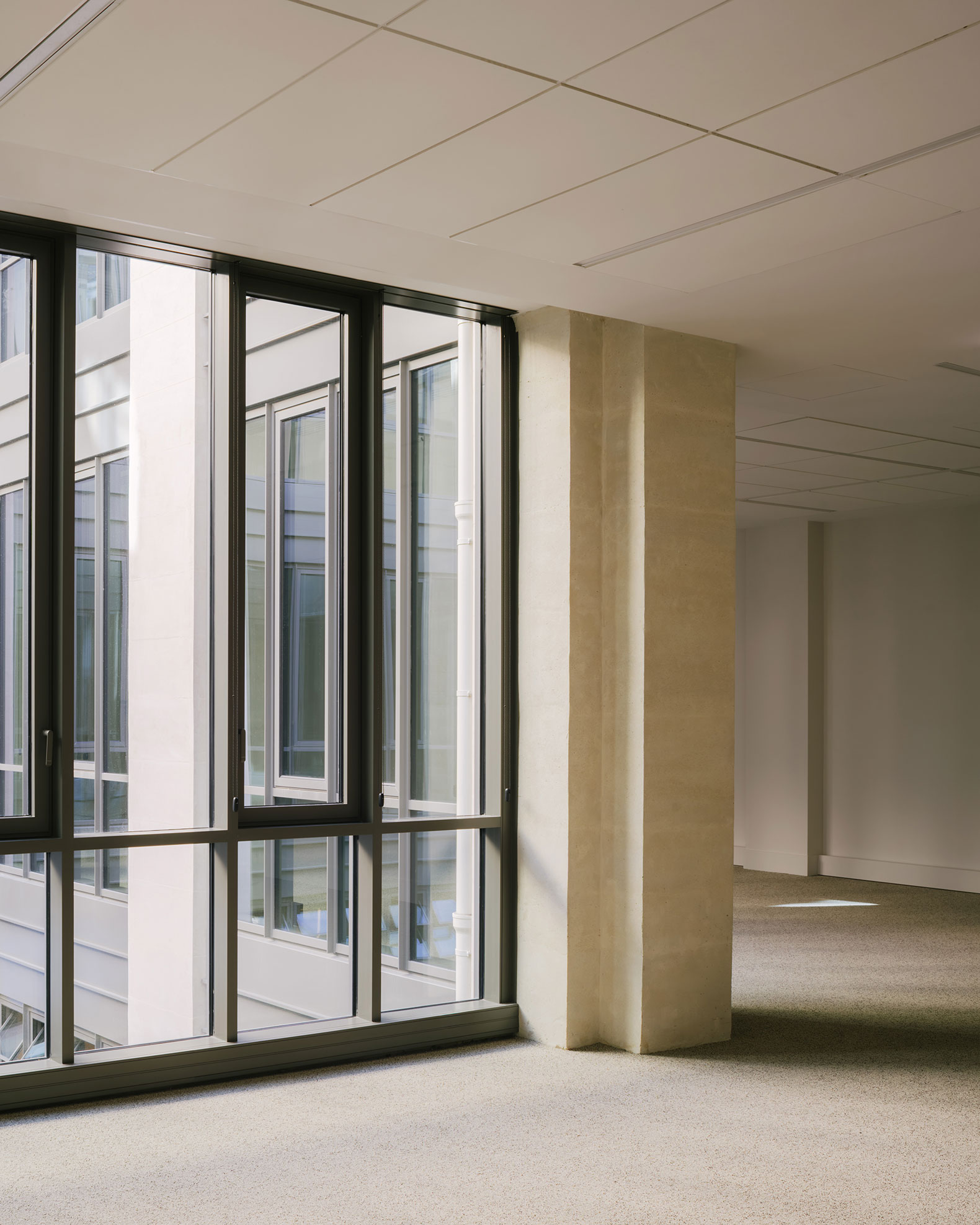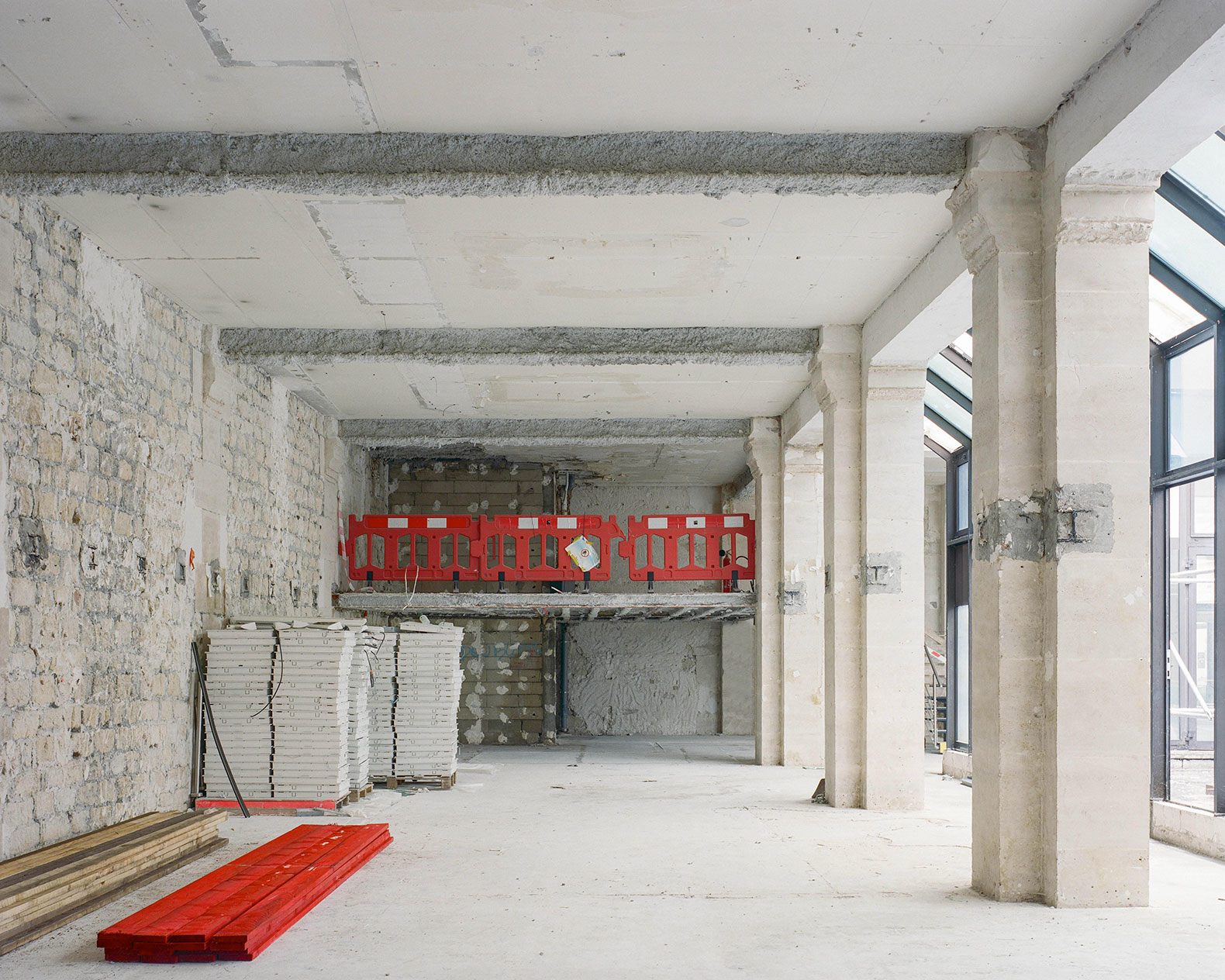
The renovation proposal, designed by COVE Architectes in collaboration with CALQ Architectes, aims to recover the industrial heritage of a former textile workshop in the French capital, which was converted into offices in the 1980s. The original building, constructed in the mid-19th century, had suffered a careless alteration that stripped it of its original character.

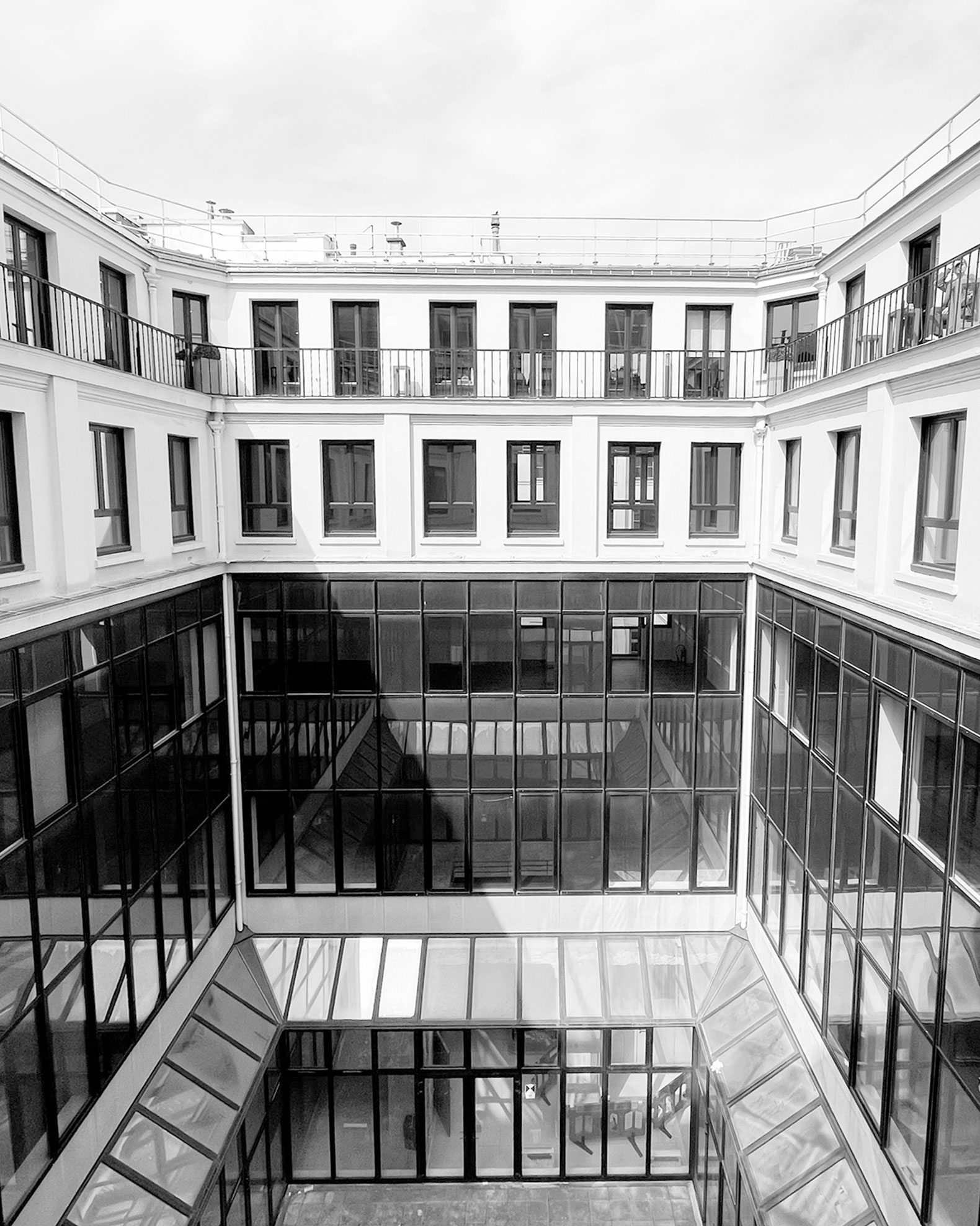
The transformation carried out in the 1980s completely obscured the industrial heritage, replacing the workshop windows and concealing the stone pillars behind large curtain walls of smoked glass. In response, the recent intervention prioritizes restoring the lost history of the place.

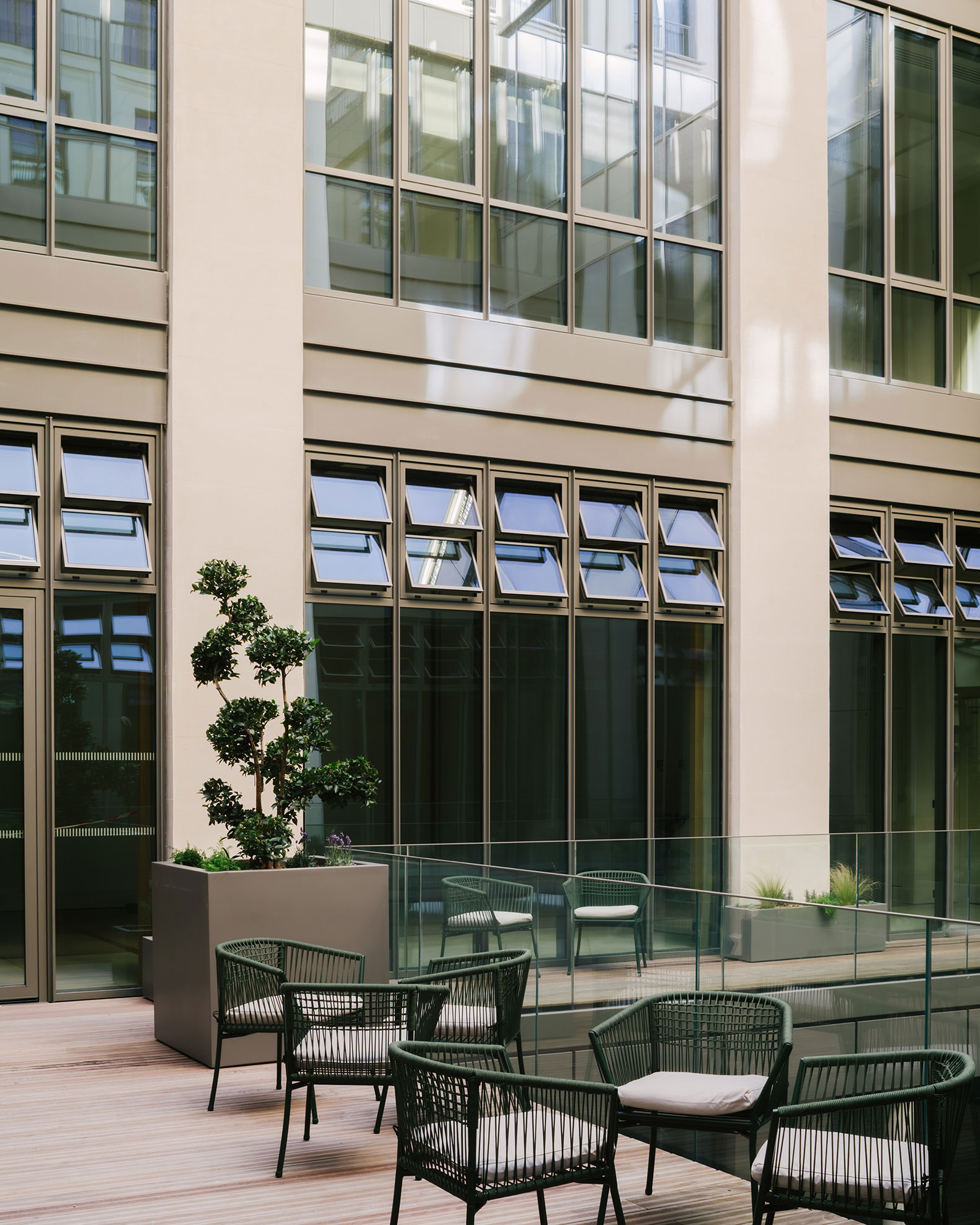
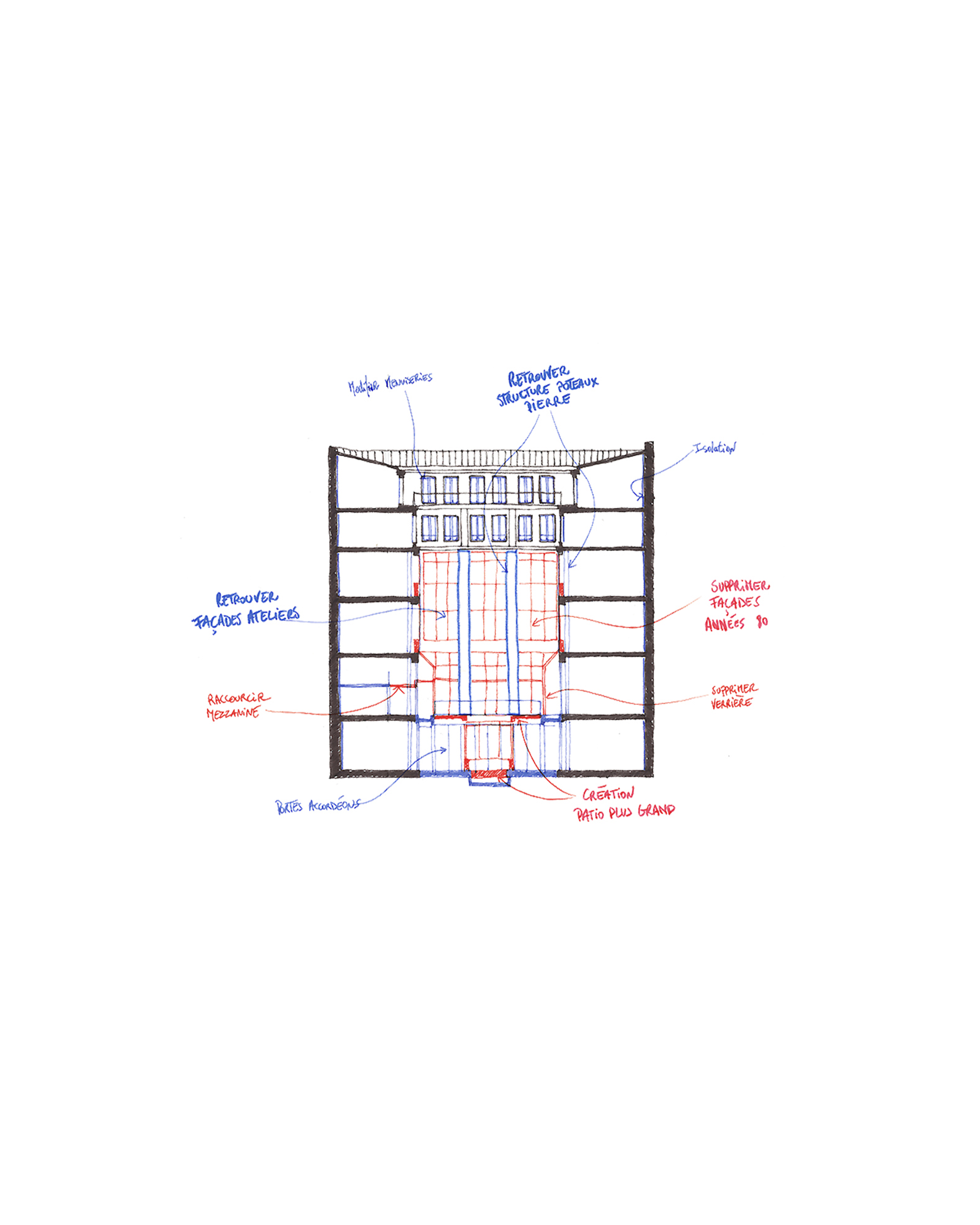
The meticulous renovation by COVE Architectes and CALQ Architectes is structured around two main operations: the renovation of the façades and the restoration of the massive stone pillars. To meet contemporary standards of energy efficiency and comfort, new openings were incorporated that subtly evoke the rhythm and character of the original workshops, while the painstaking work of master stonemasons enabled the complete revitalisation of the original structure.

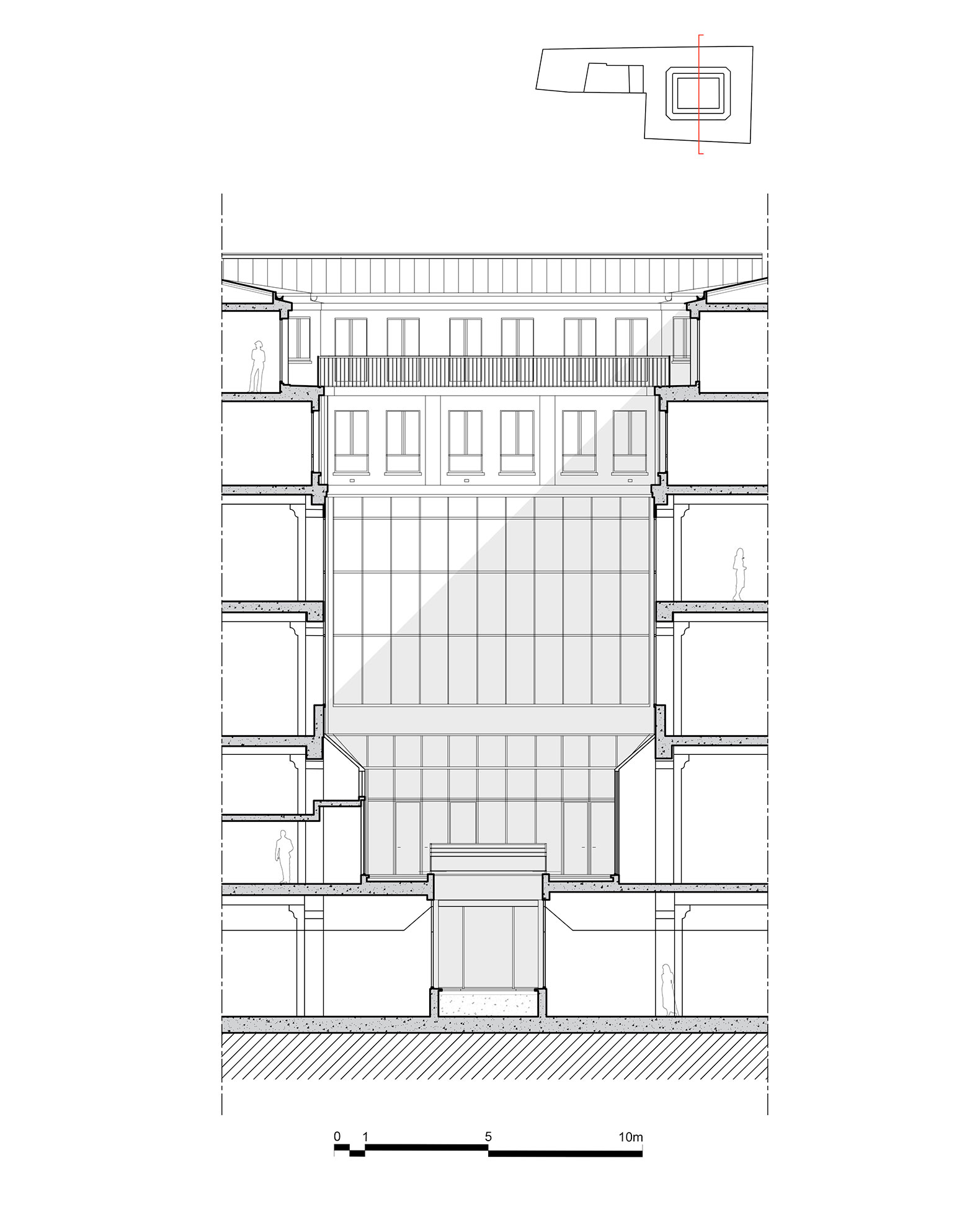
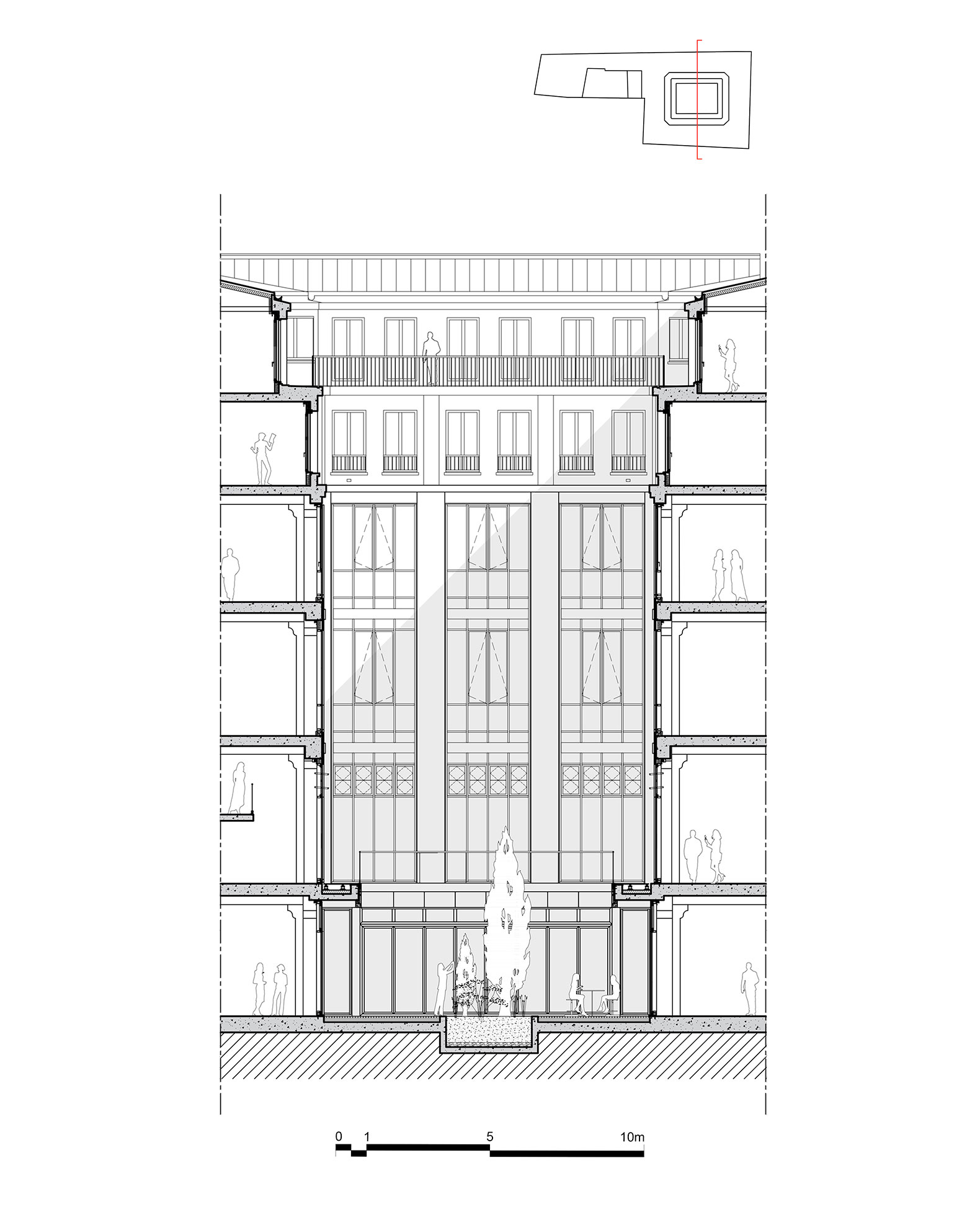
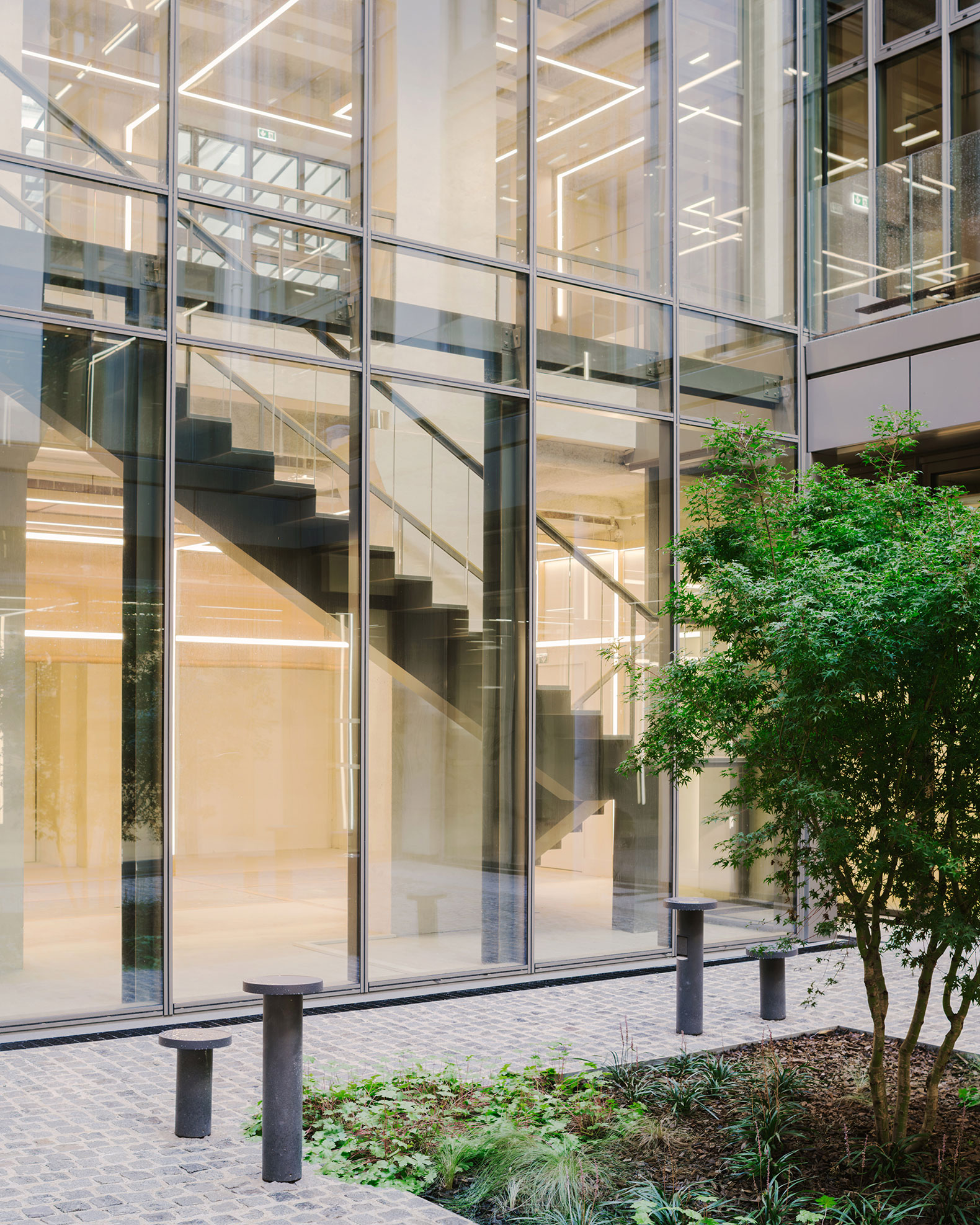
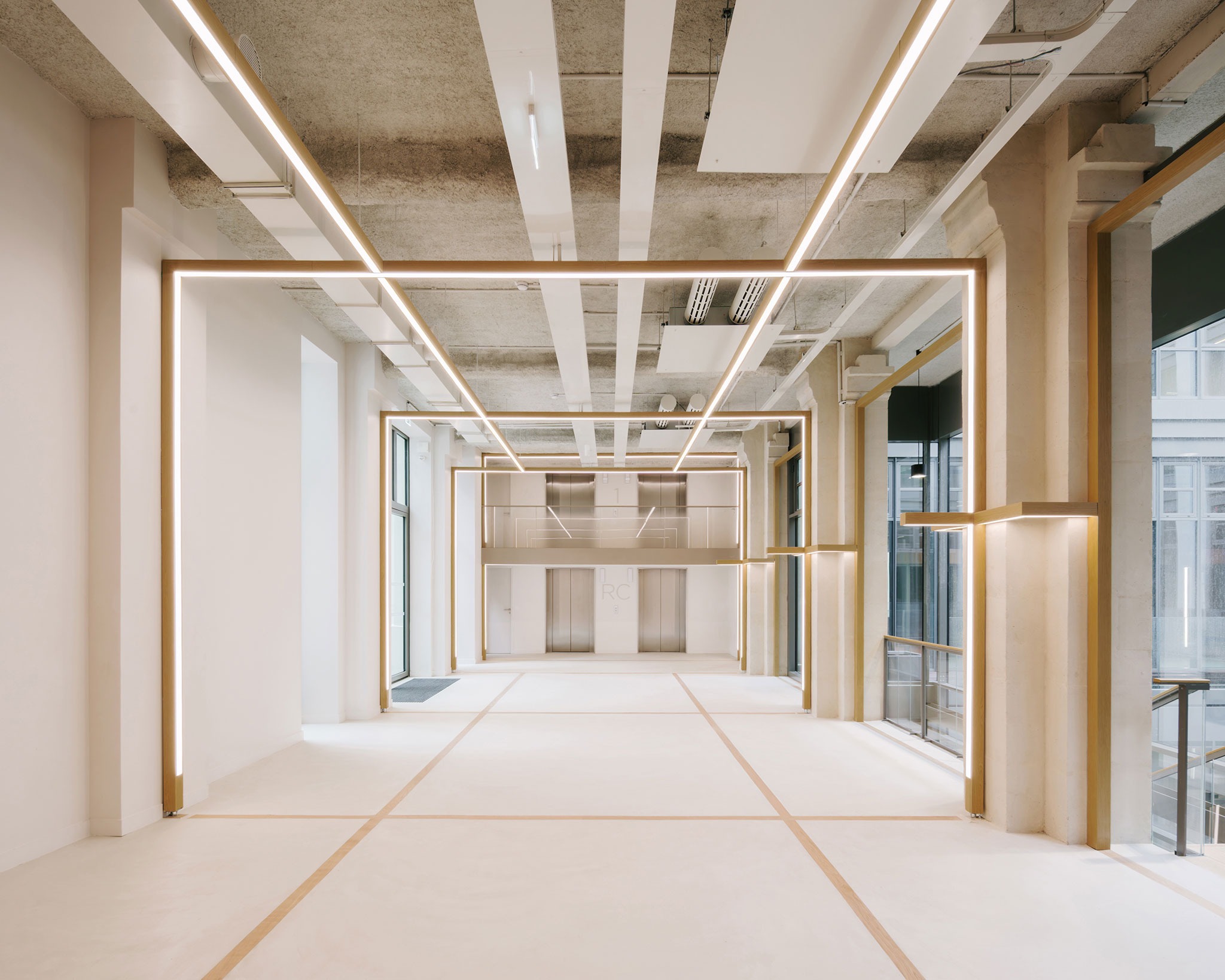
The project is completed with the expansion of the interior courtyard and the transformation of 2,850 m² of offices and common areas into a harmonious work environment. Inspired by the original legacy, the project restores the building's prominence, both in its façades and interior.
«Sentier» por COVE Architectes + CALQ Architectes. Fotografía por Maxime Verret.

"Sentier" by COVE Architectes + CALQ Architectes. Photograph by Maxime Verret.

Project description by COVE Architectes + CALQ Architectes

Revitalizing an office building through facade transformation in Paris

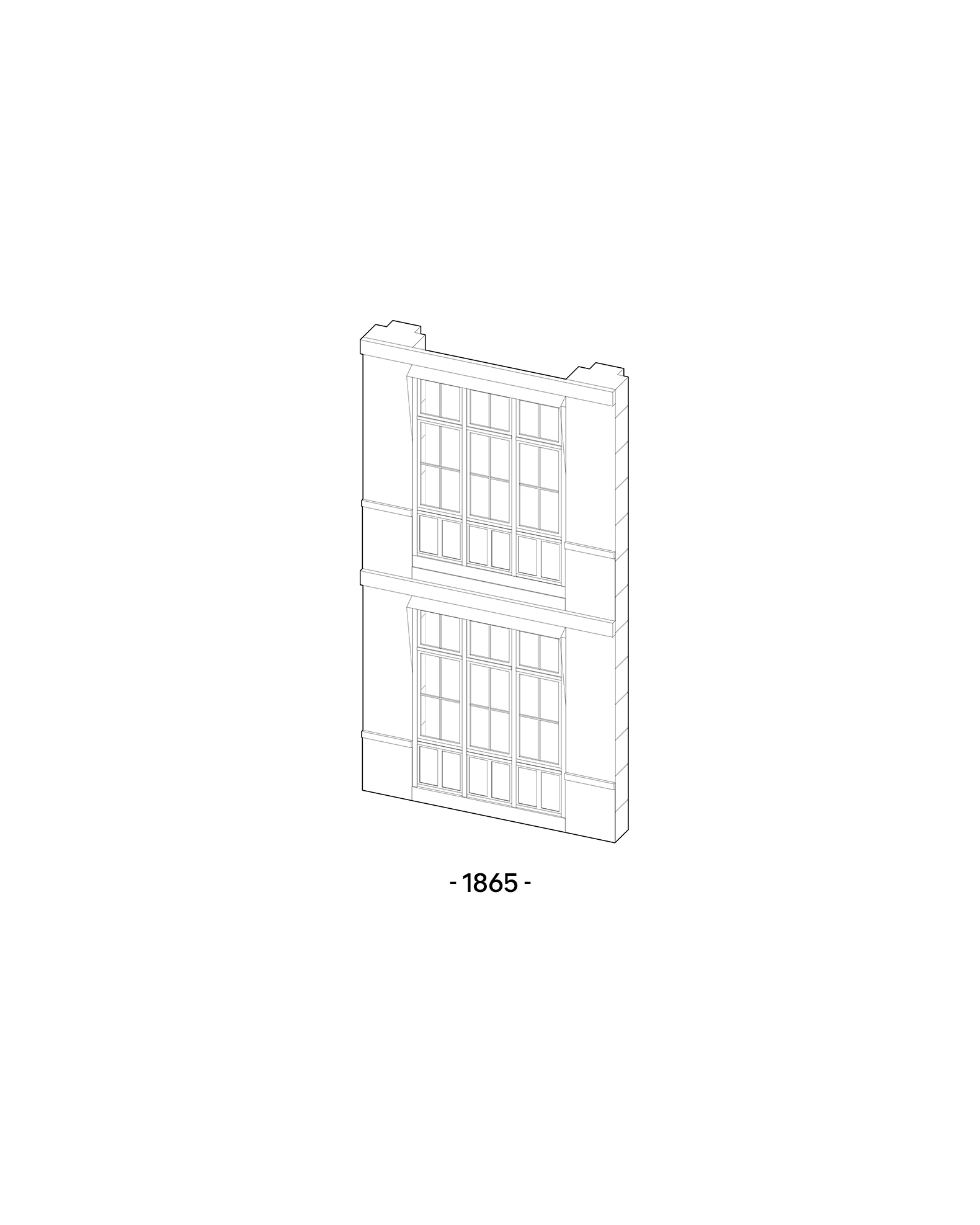
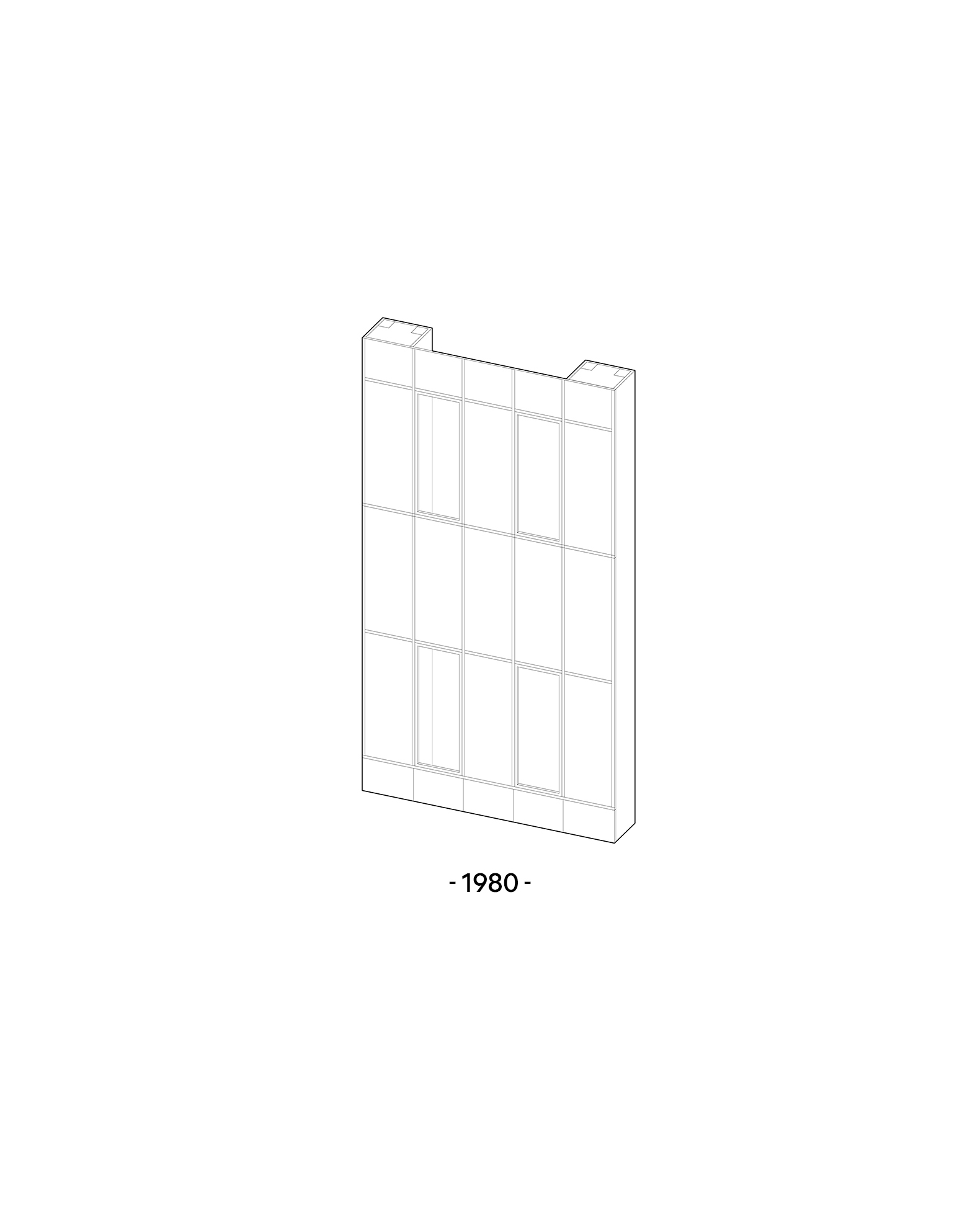
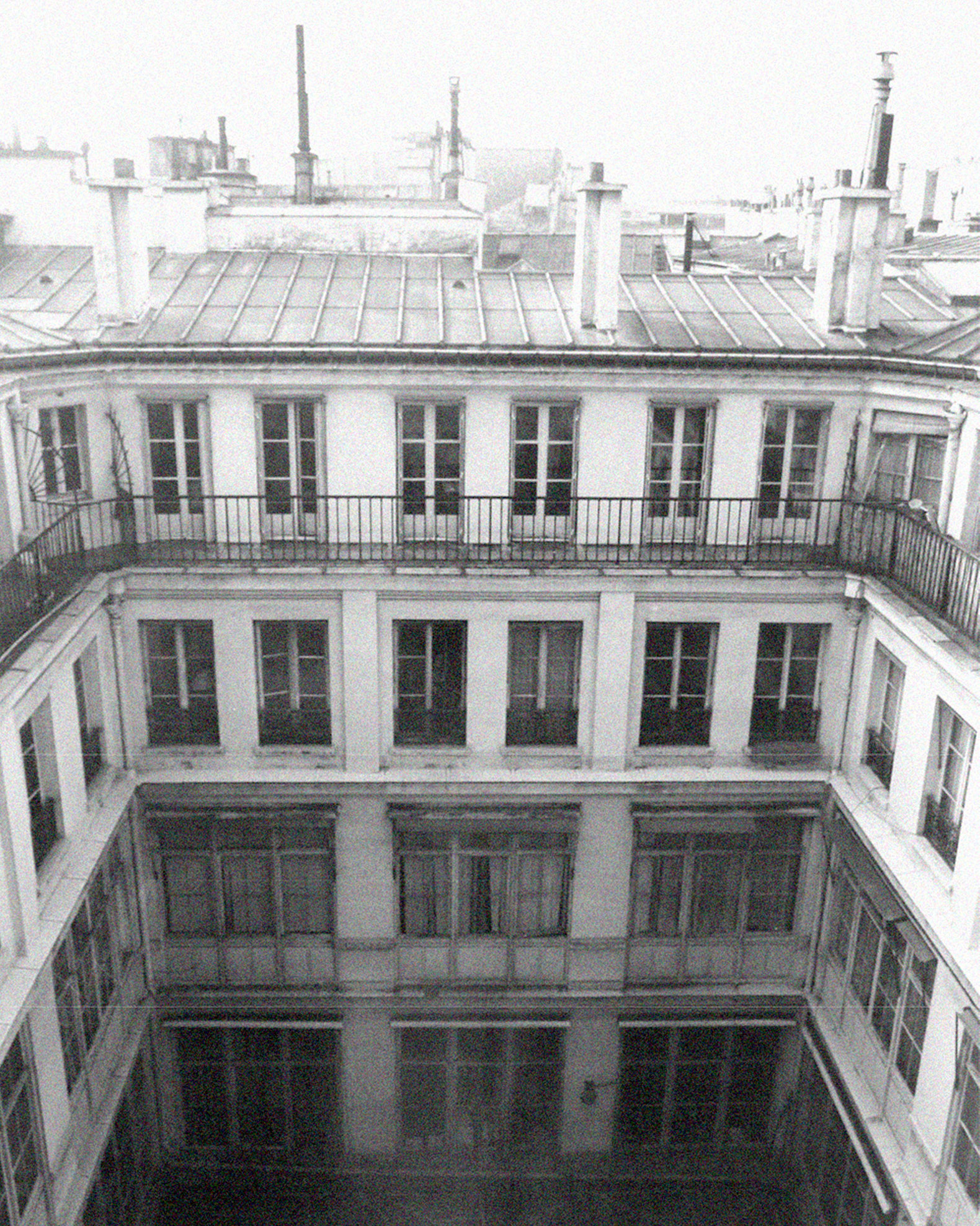
1865 - 1980
Built in the mid-19th century, this building originally housed textile workshops. In the 1980s, it underwent its first transformation into offices, an intervention that partly obscured its industrial heritage. Large smoked-glass curtain walls replaced the original workshop windows and concealed the stone pillars that had long articulated its façades. Reimagining this earlier transformation—perceived as a loss of the site’s memory—became the starting point for our project, aiming to restructure and revive the entire building.

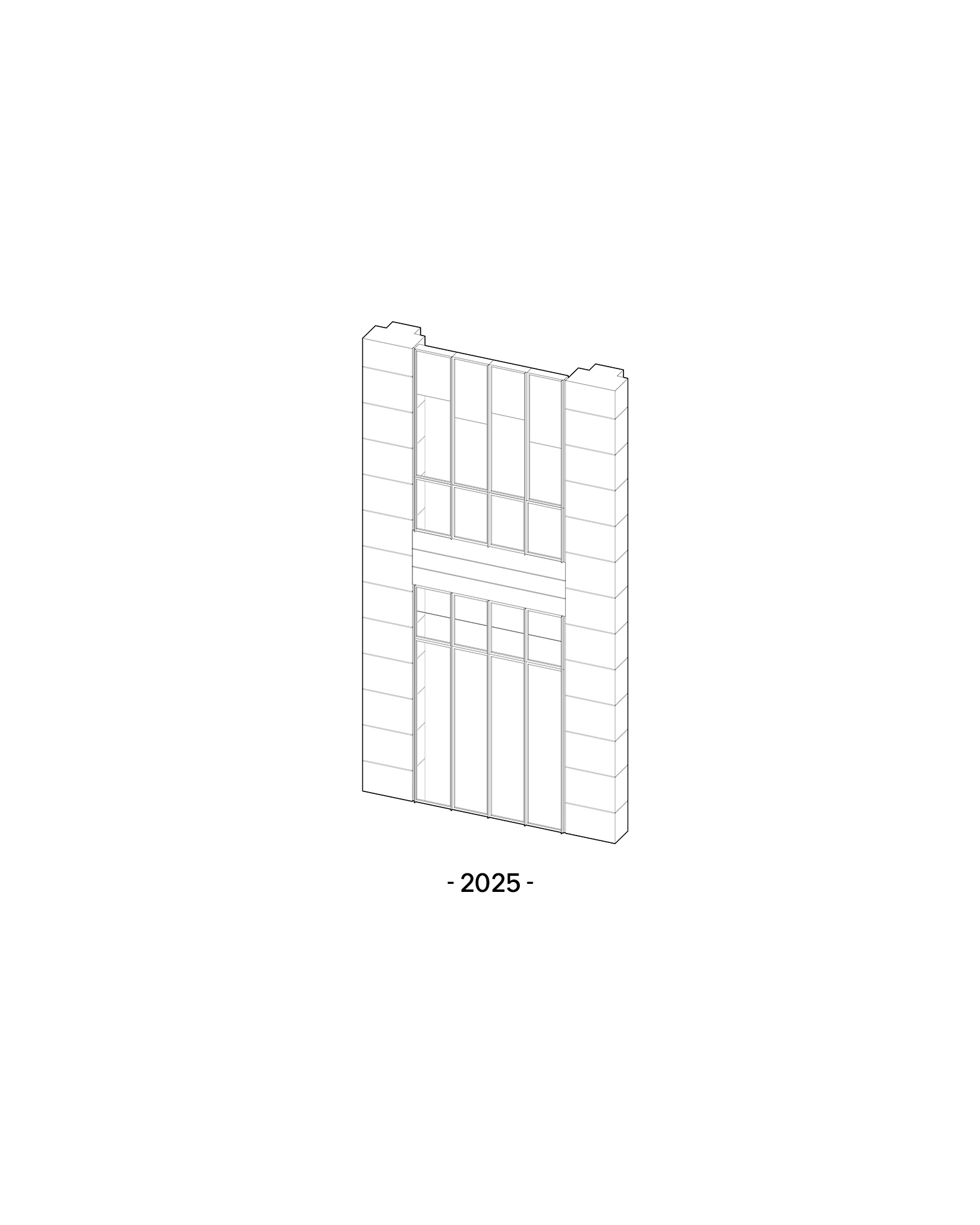
2025
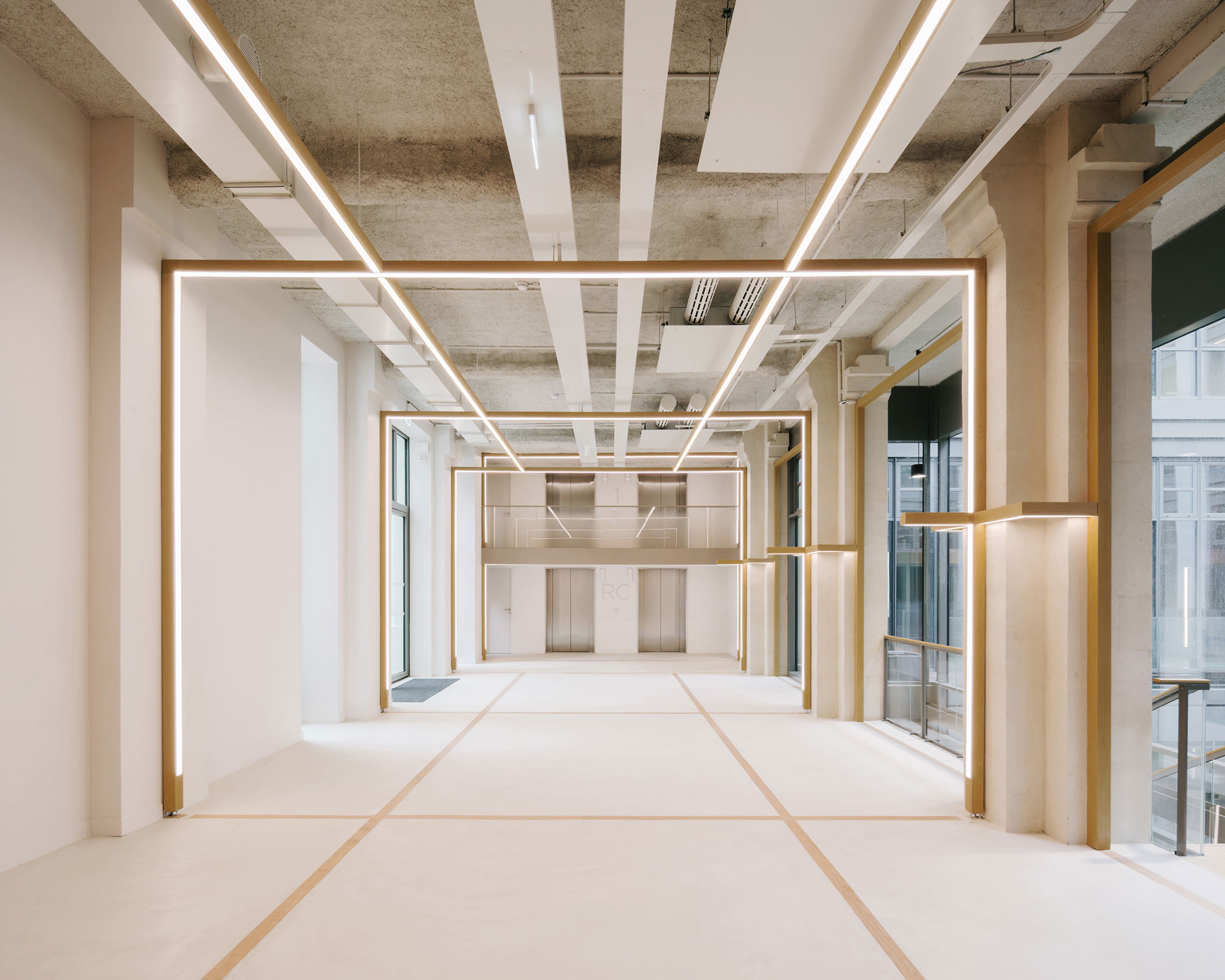
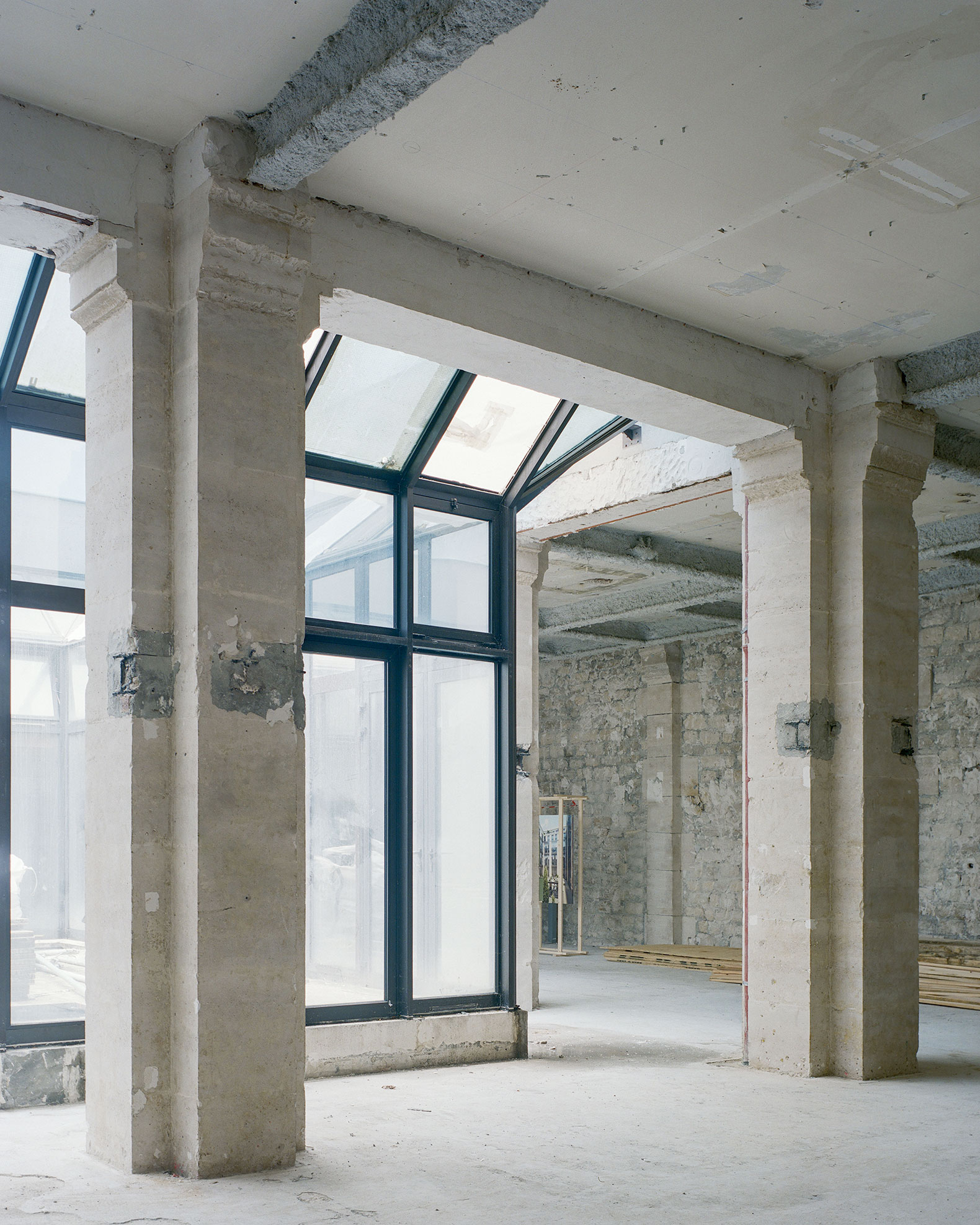
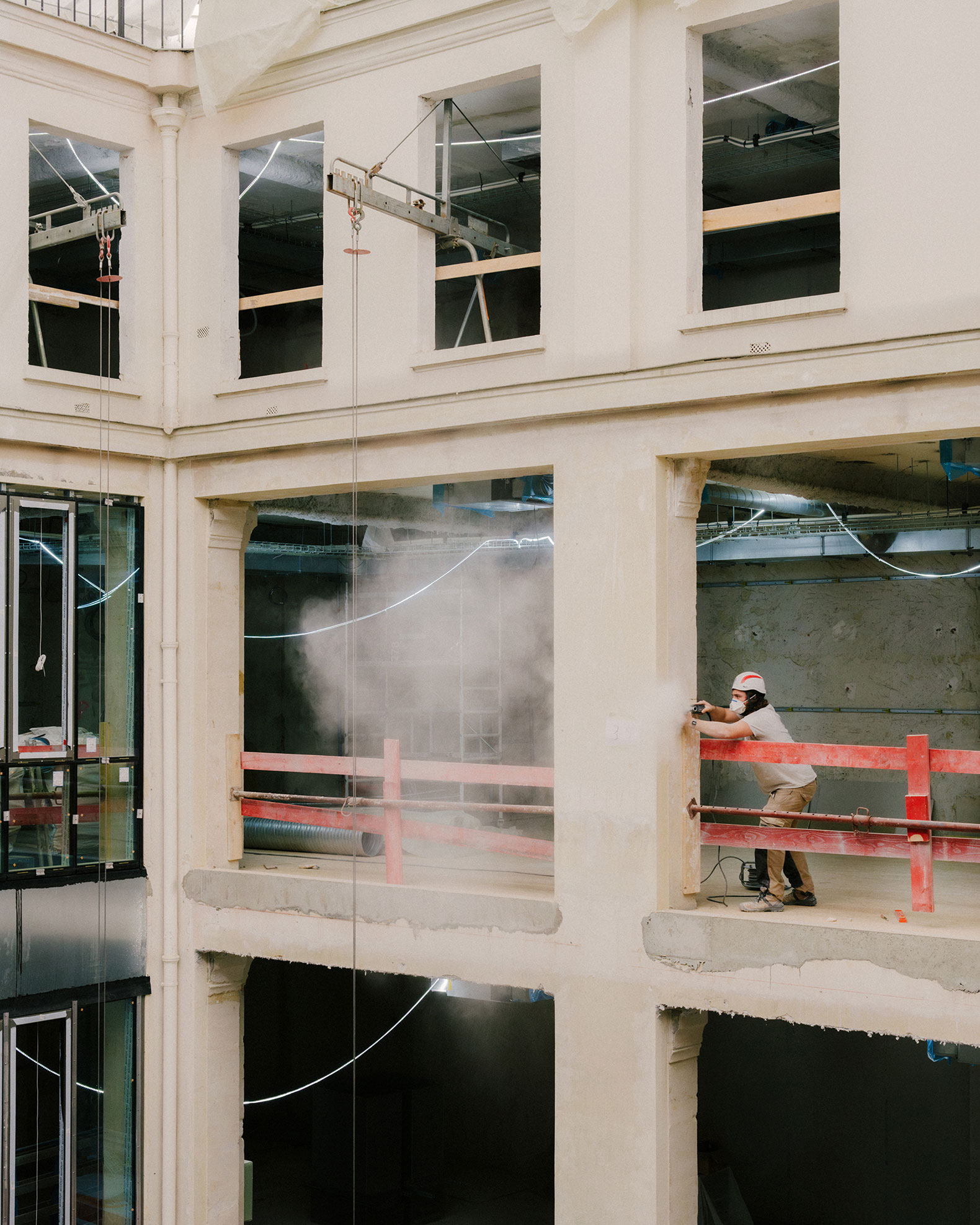
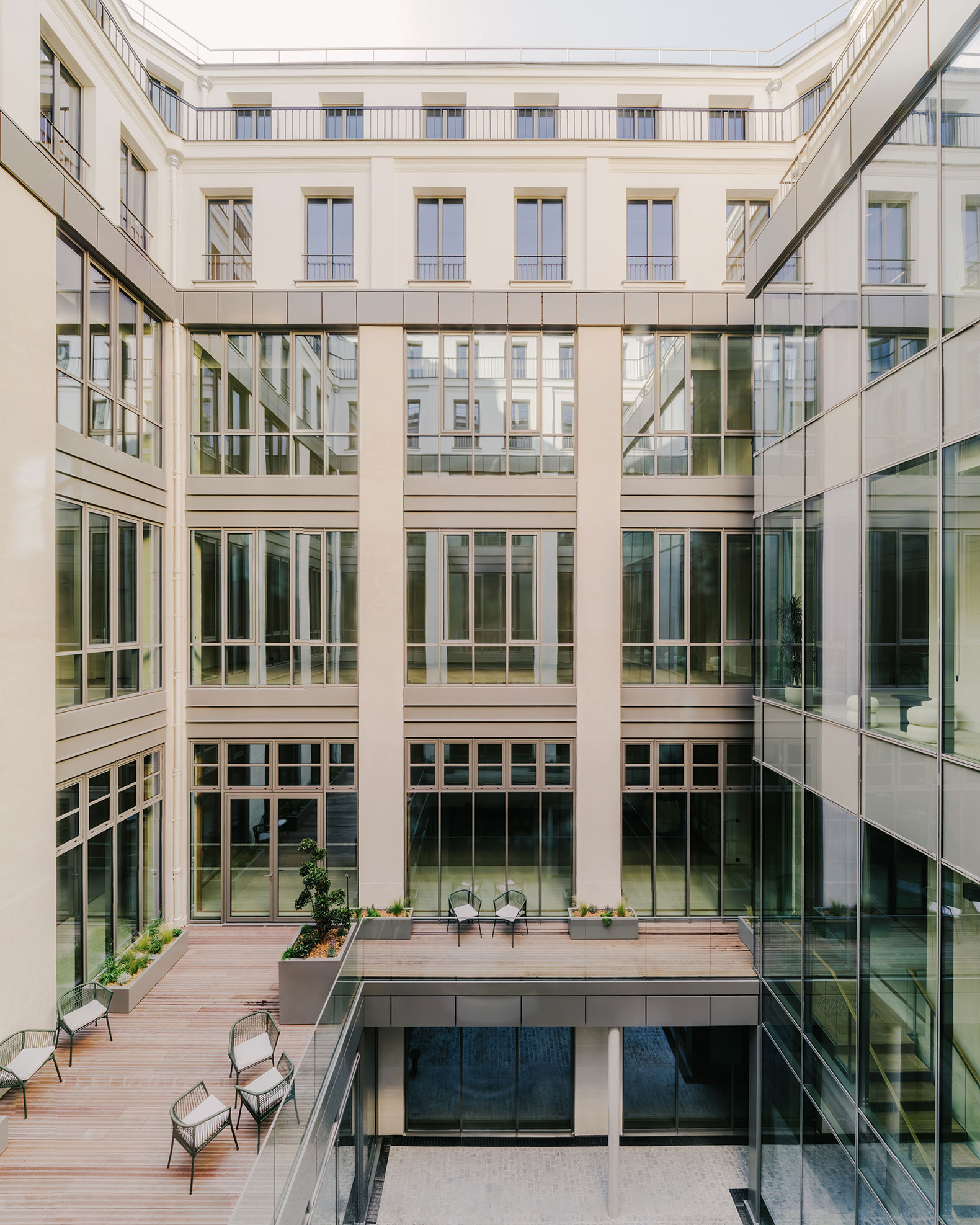
With the façades slated for replacement to meet contemporary standards of energy efficiency and user comfort, the project sought to recall the building’s industrial past. This work revealed and restored the massive stone pillars, once hidden behind the 1980s façade, while the geometry of the new window frames and the selection of specific openings subtly echoed the rhythm and character of the original workshops. The project also reimagined the inner courtyard, enlarging the patio at basement level (SS1), and transformed 2,850 m2 of office and communal spaces into a harmonious work environment.

"Sentier" by COVE Architectes + CALQ Architectes. Photograph by Maxime Verret.

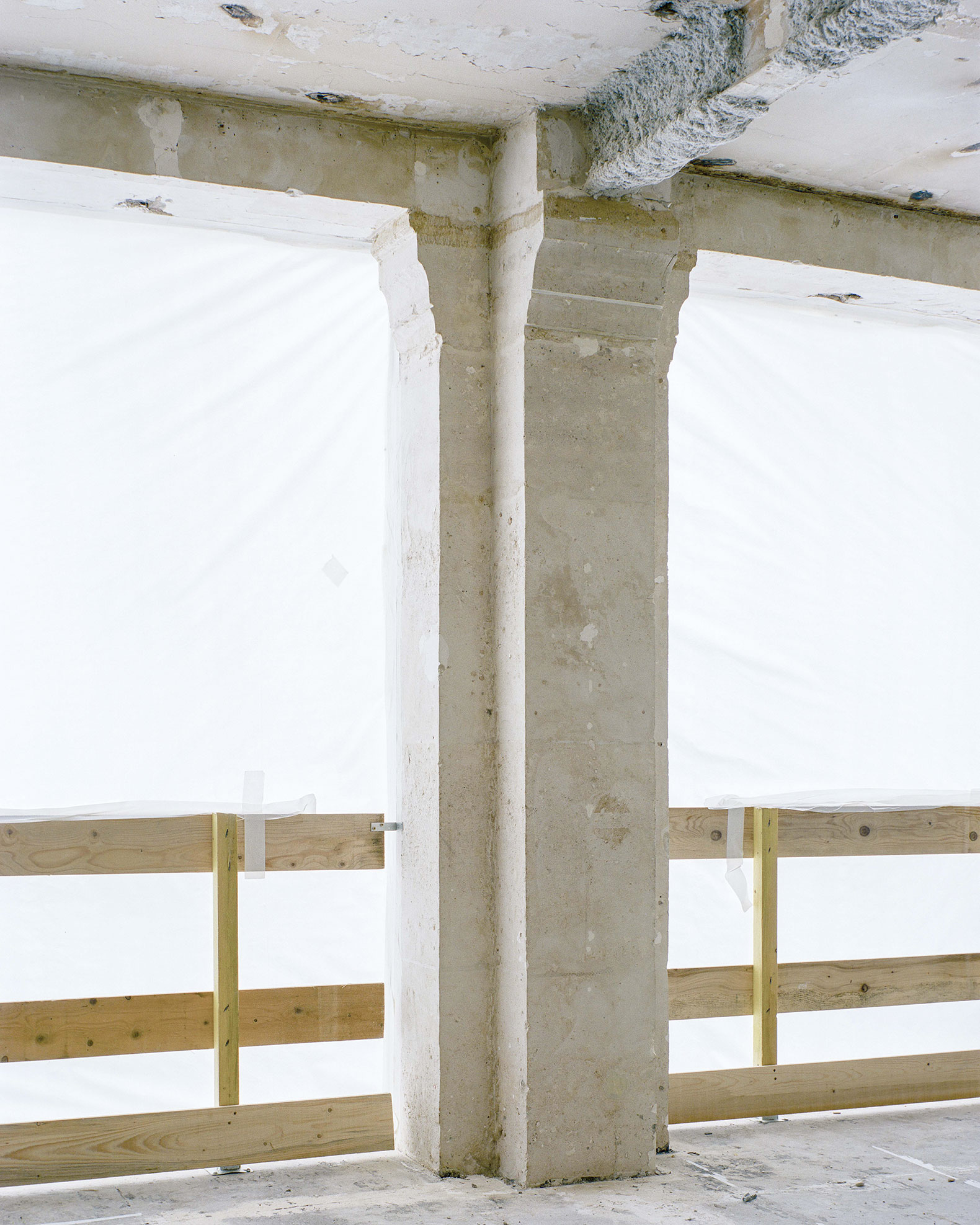
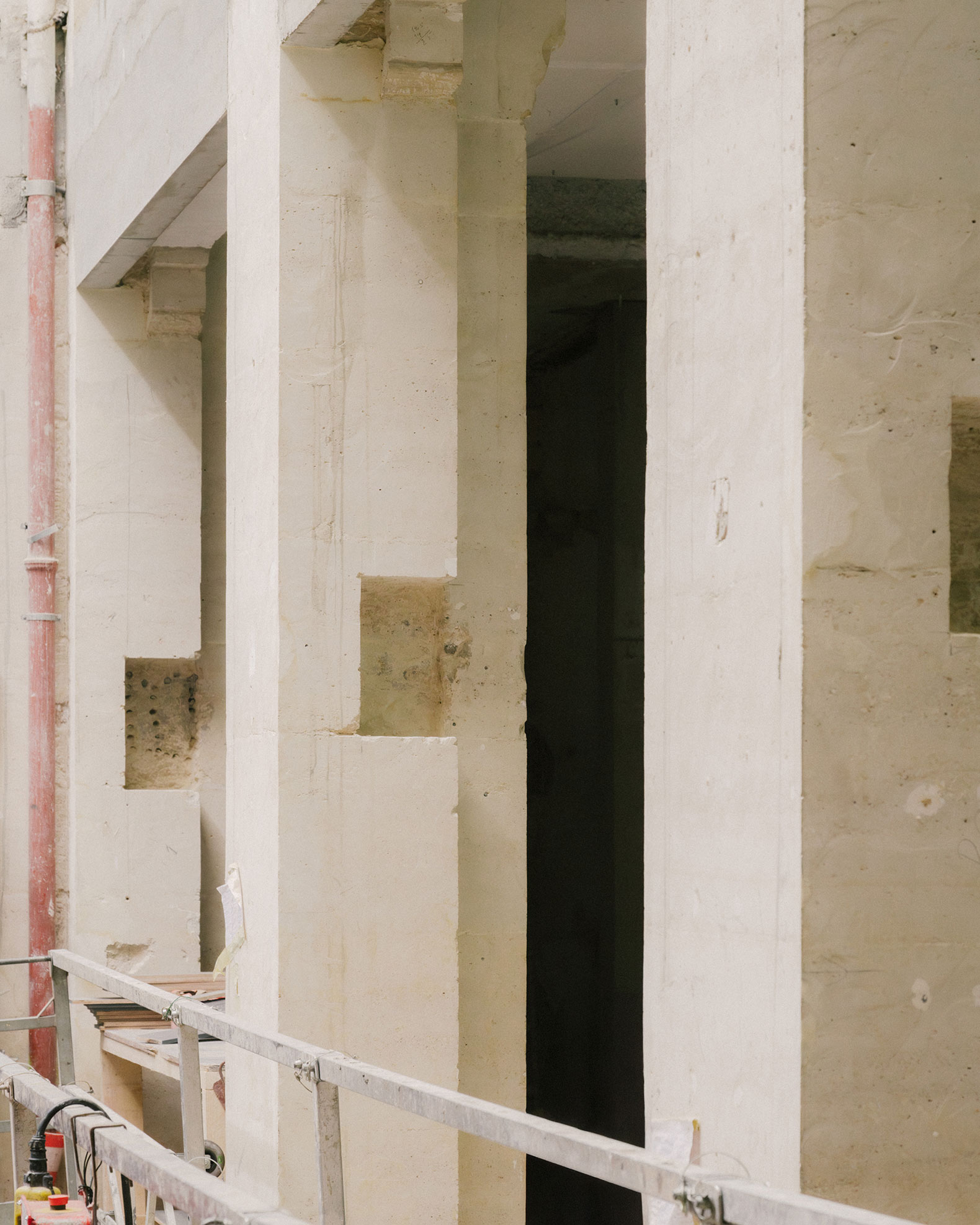
Reveal the original structure
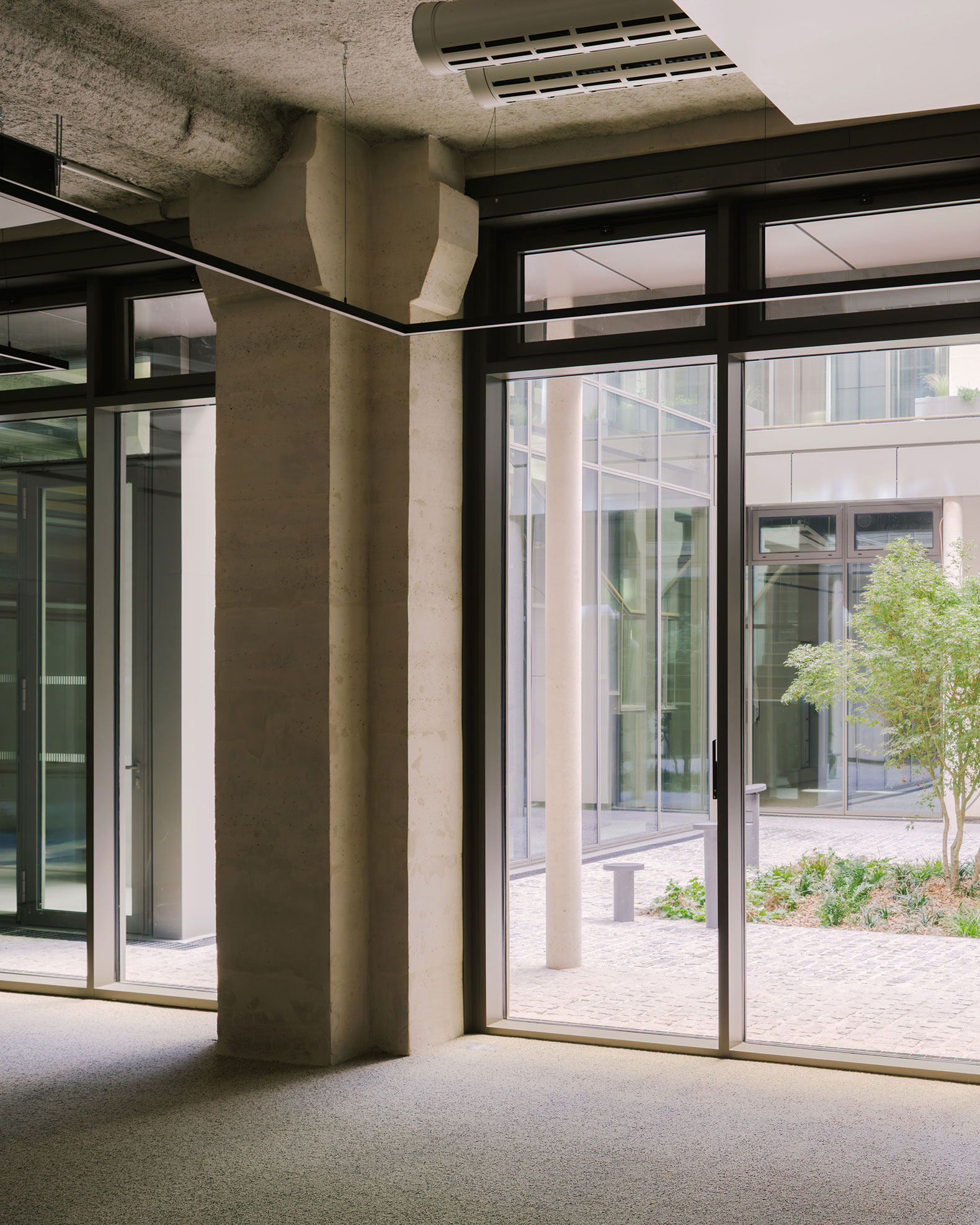
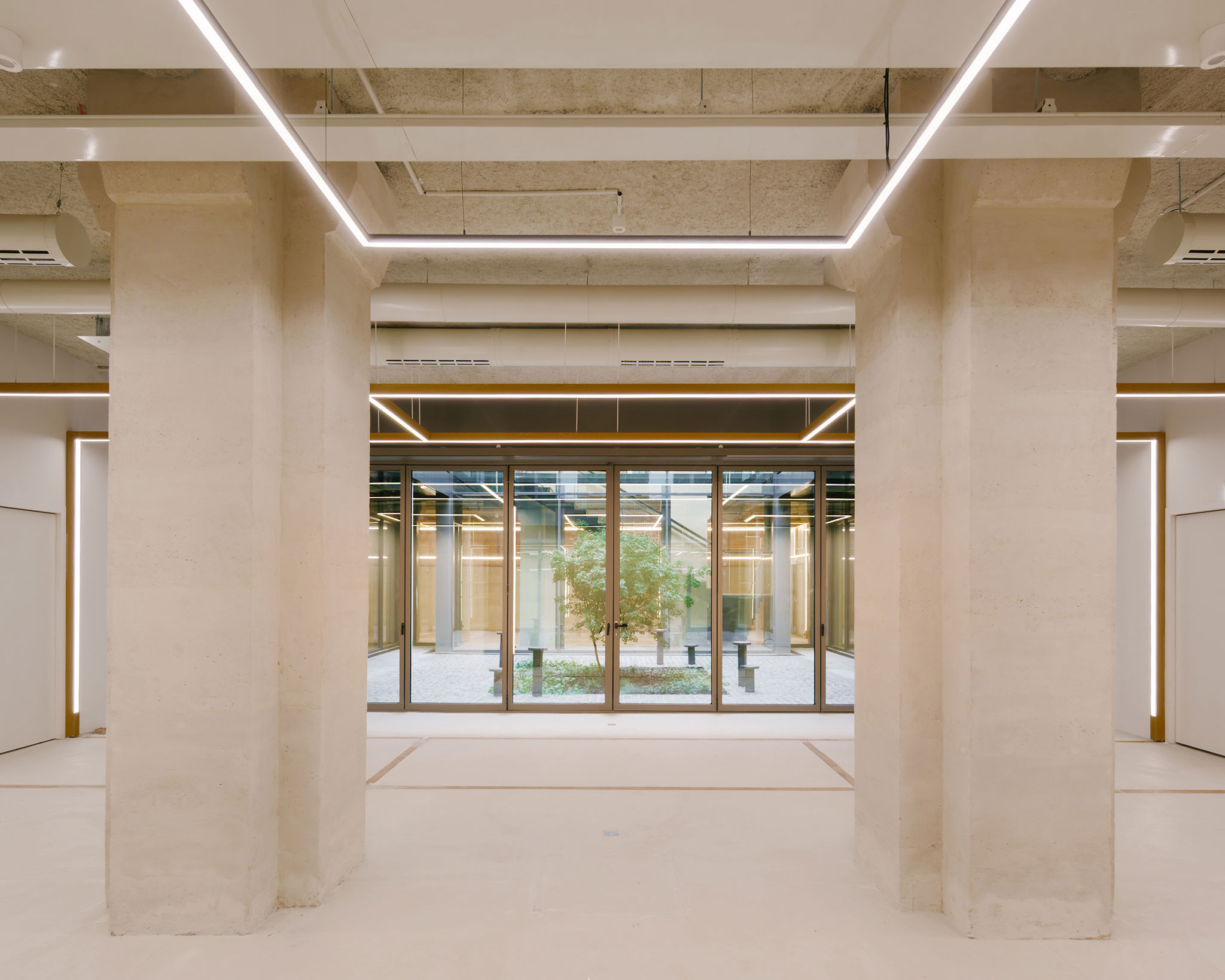
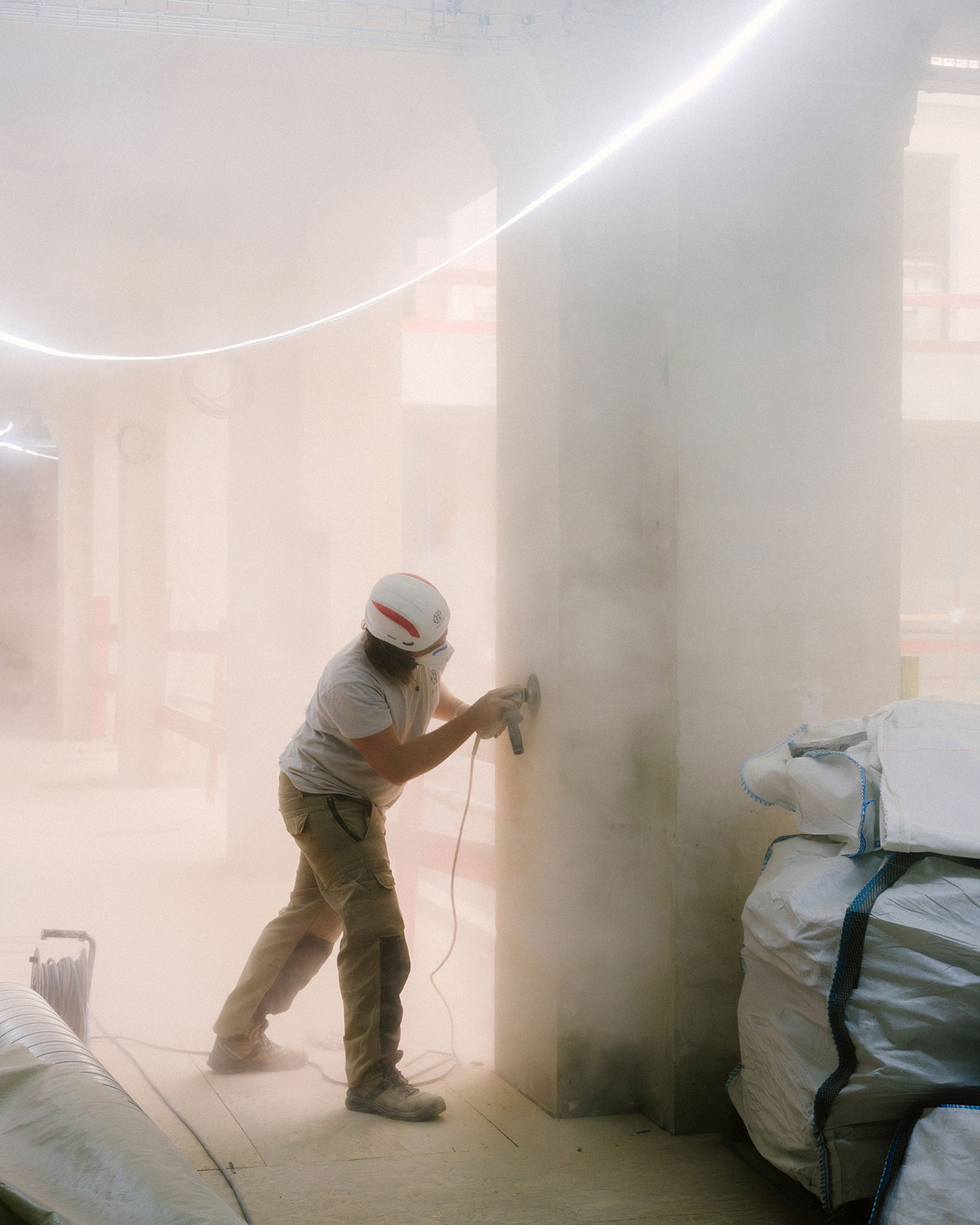
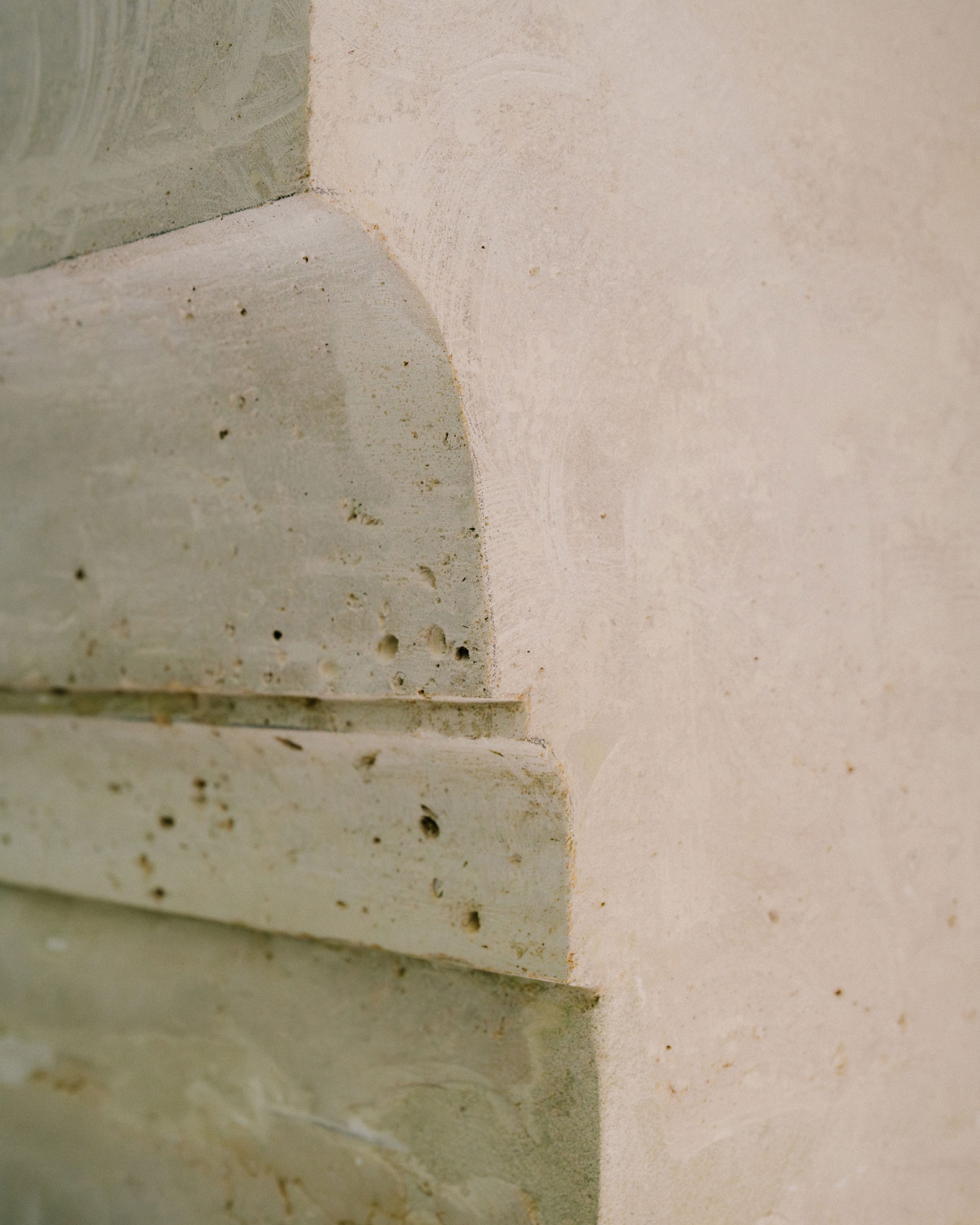
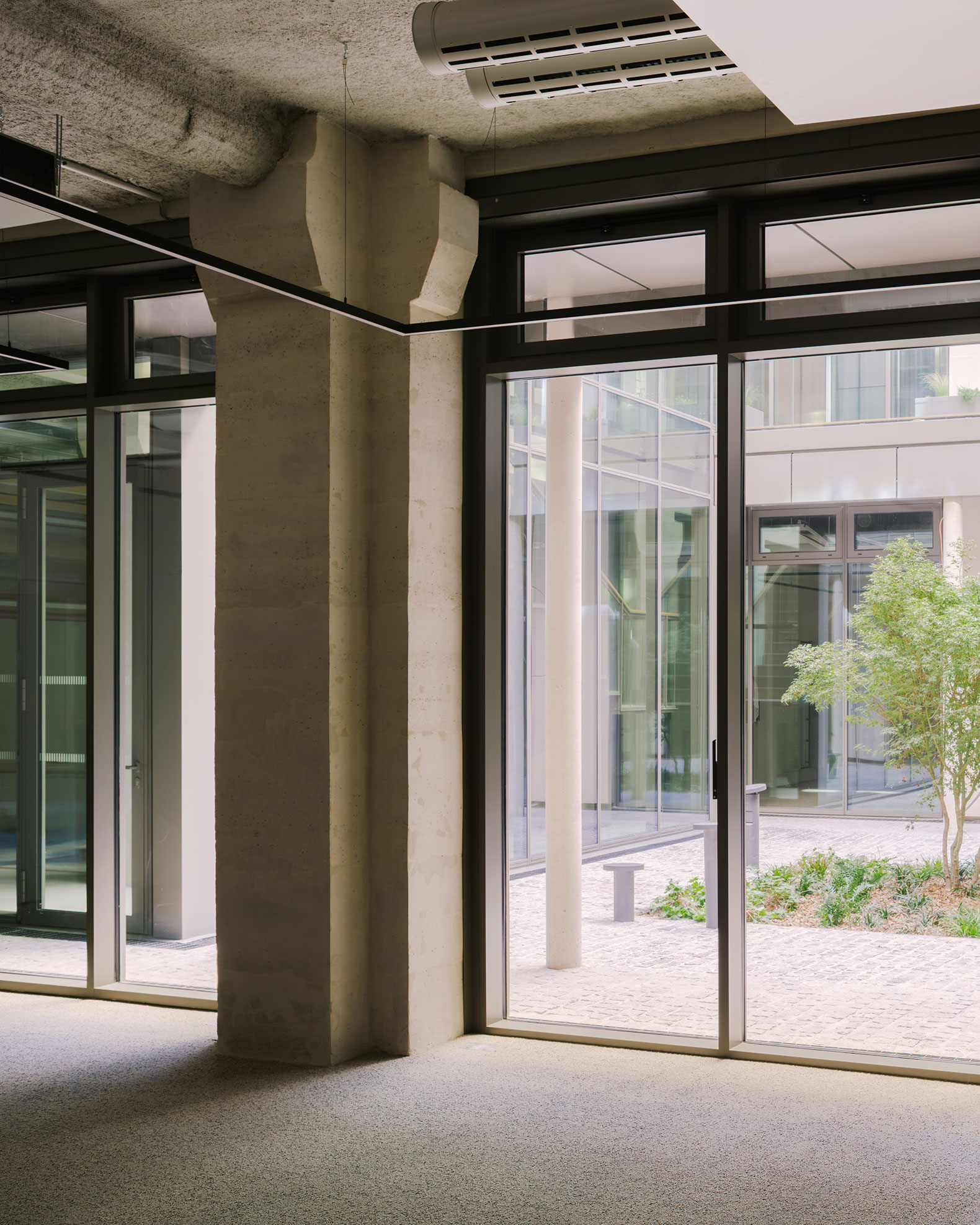
The smoked-glass curtain walls added in the 1980s hid the stone pillars that once gave the façades of these former workshops their character. Inside, these pillars had also been coated with plaster and render.

Guided by the material presence of the original structure, our intervention sought to restore the stone pillars to their rightful prominence, allowing them to express the character of the building both on the façades and within the interior.
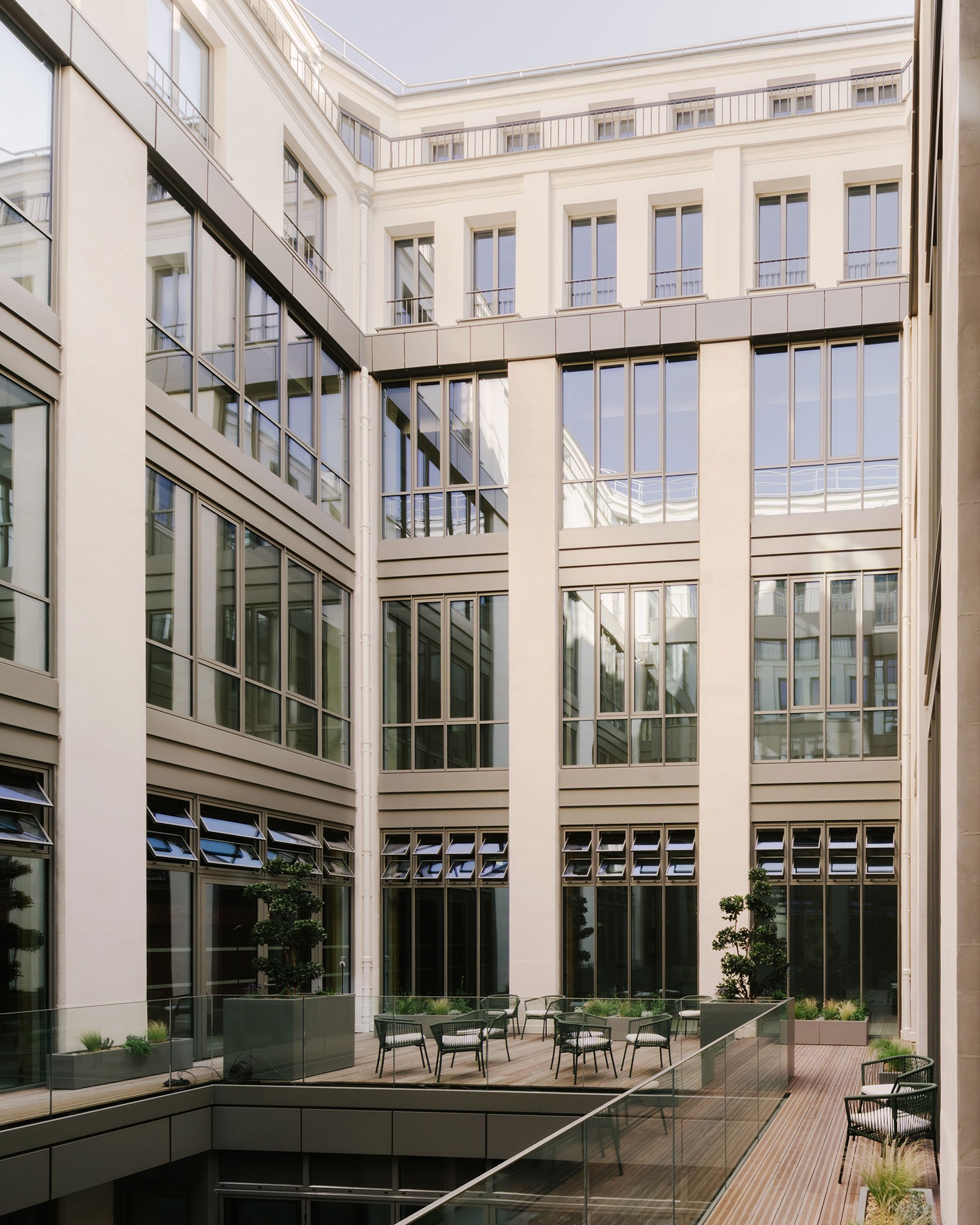
"Sentier" by COVE Architectes + CALQ Architectes. Photograph by Maxime Verret.

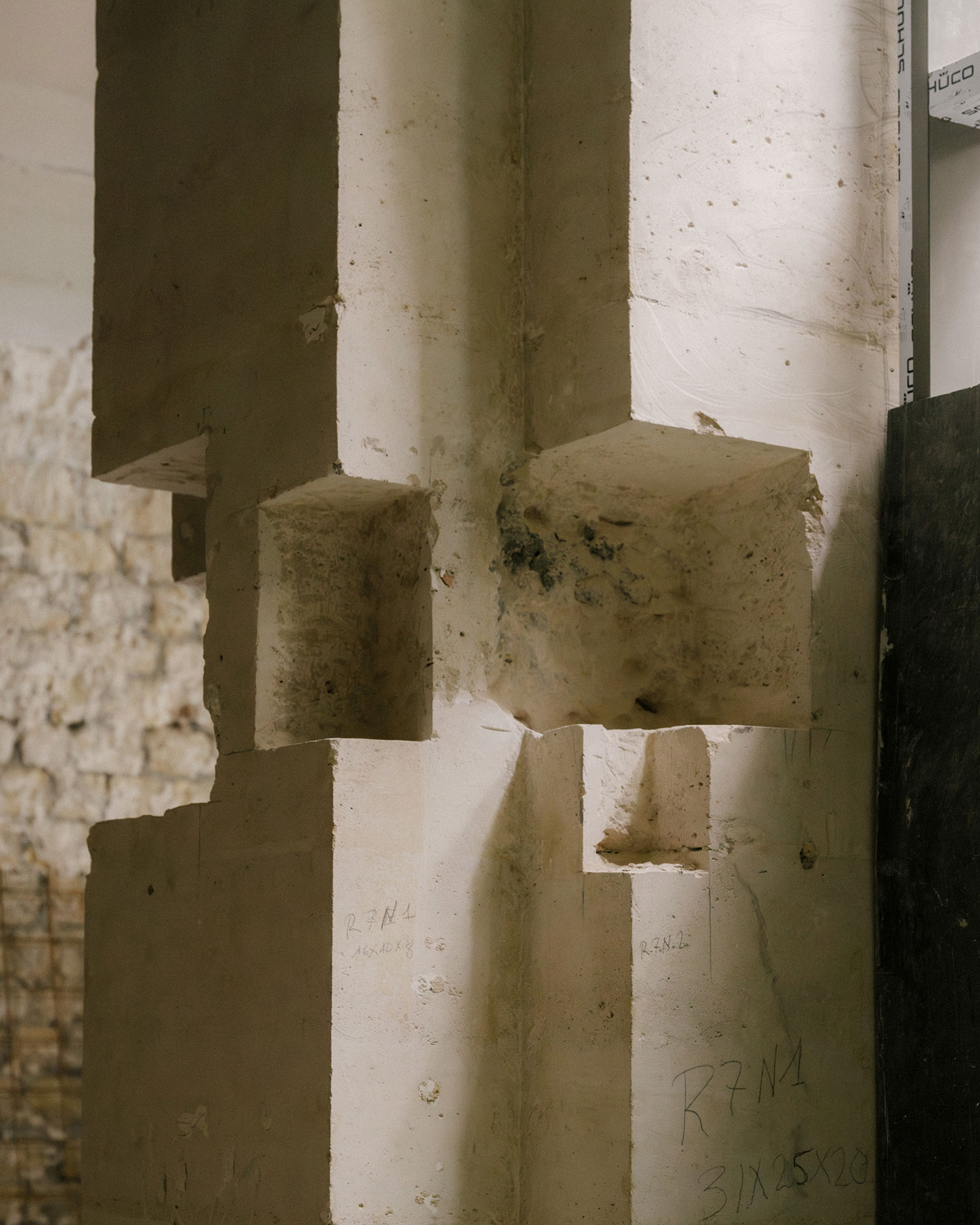
Restore the stone pillars
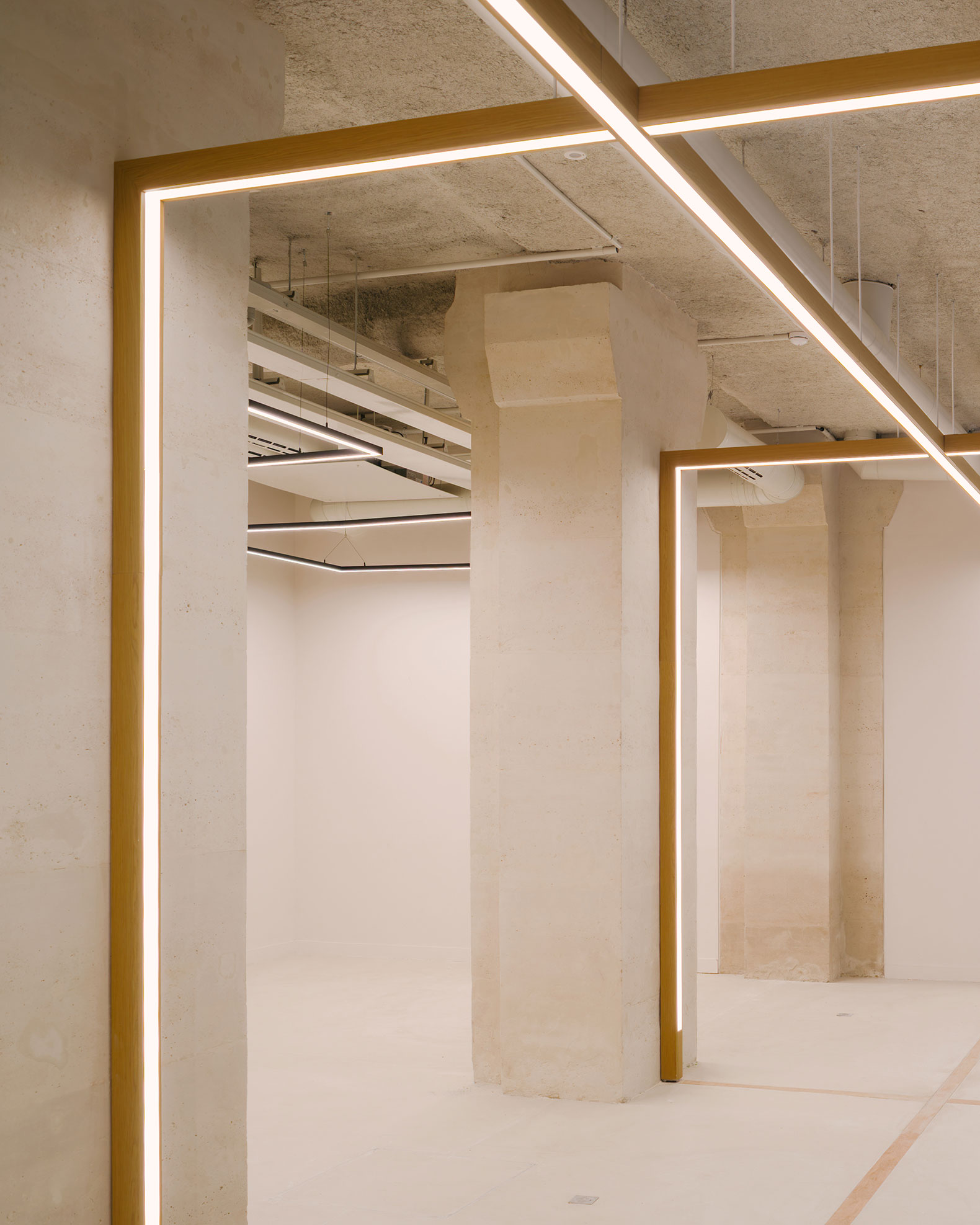
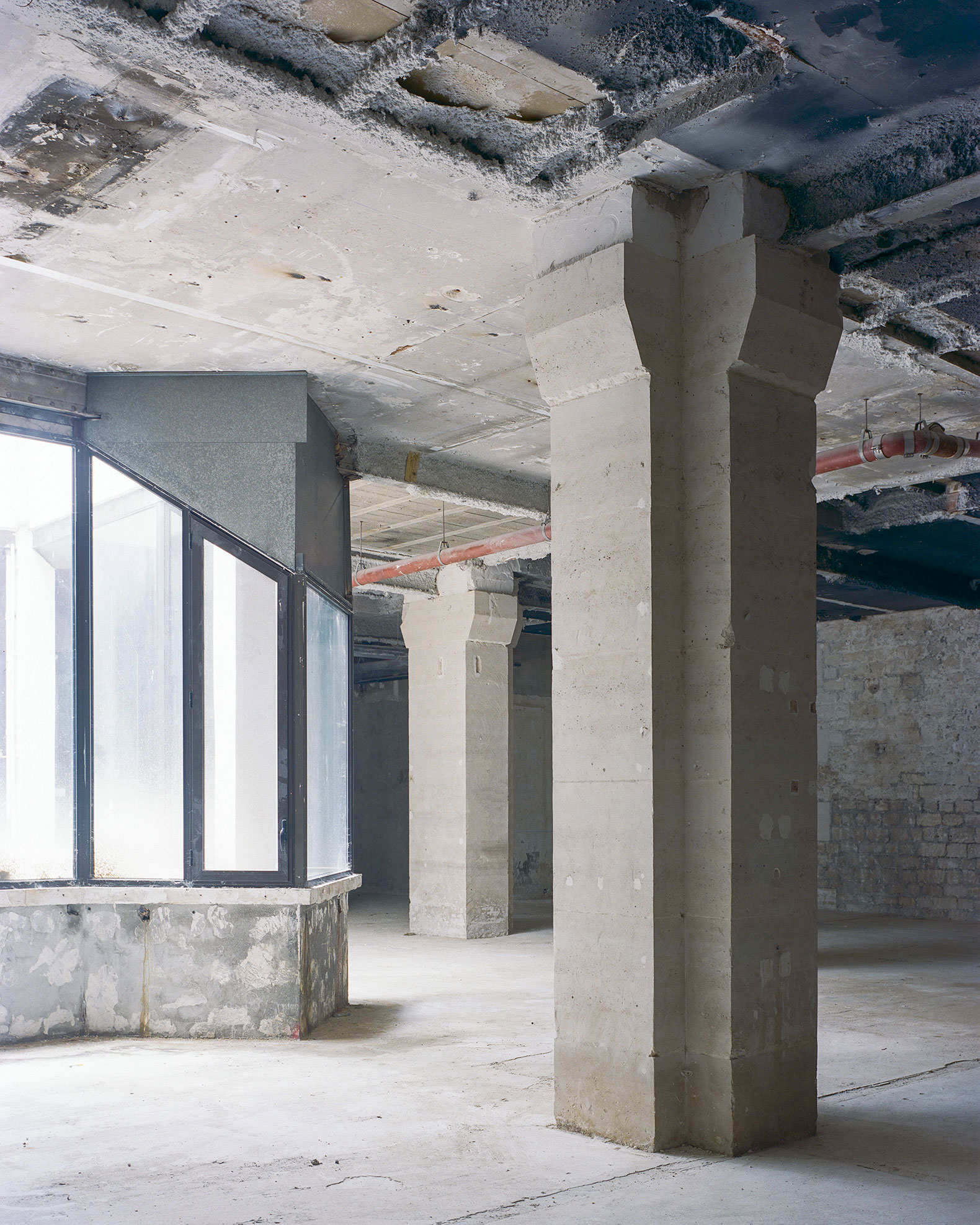
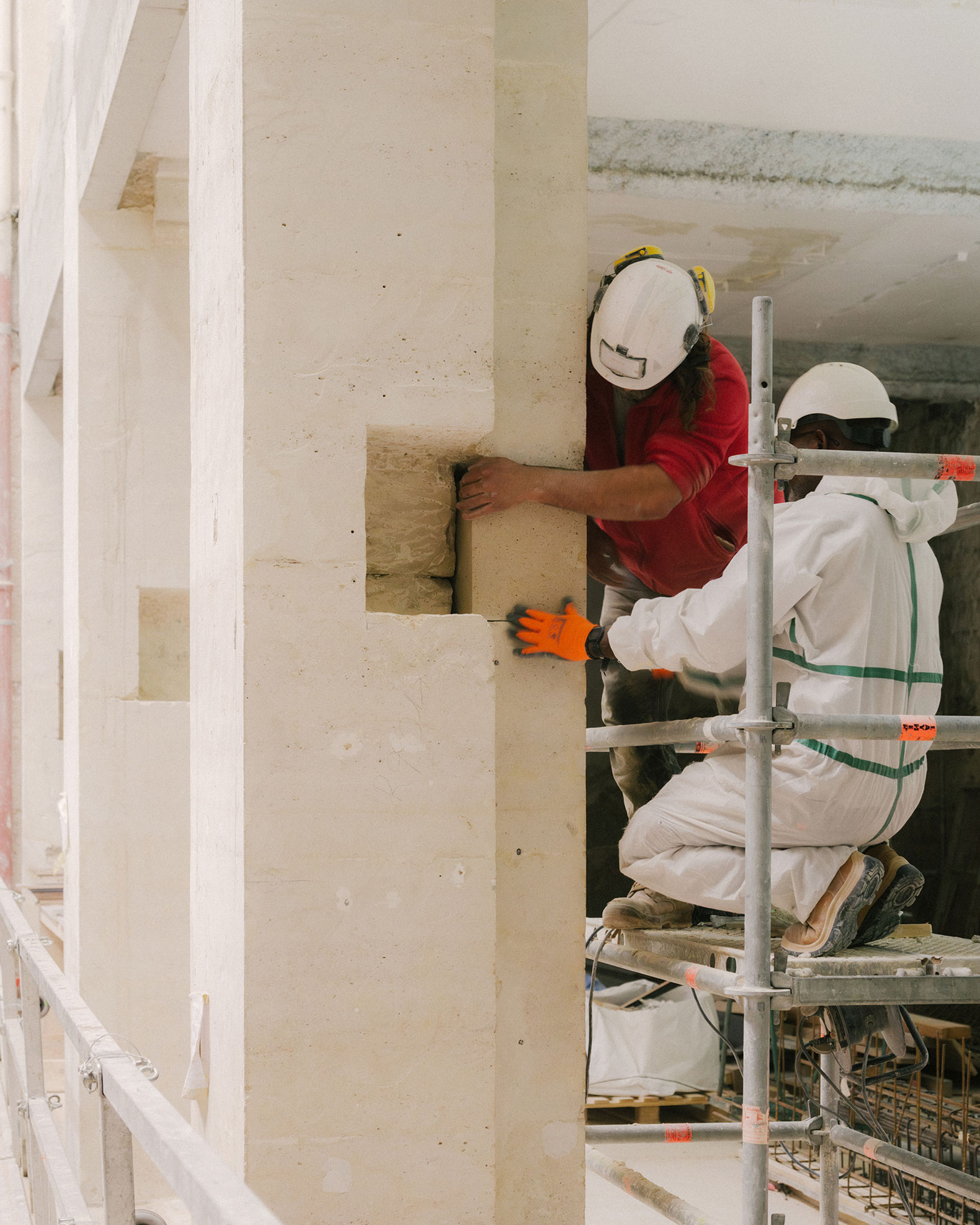
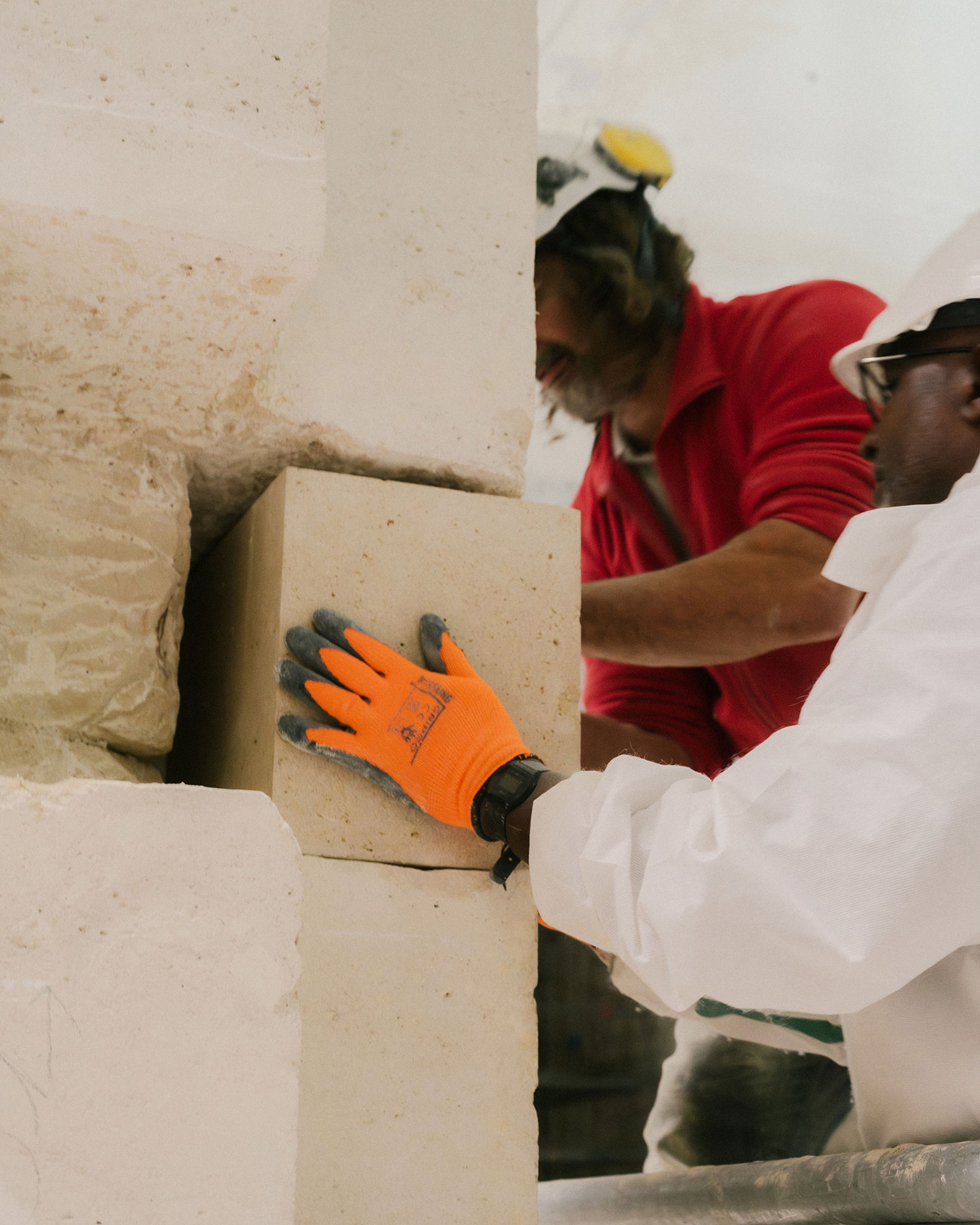
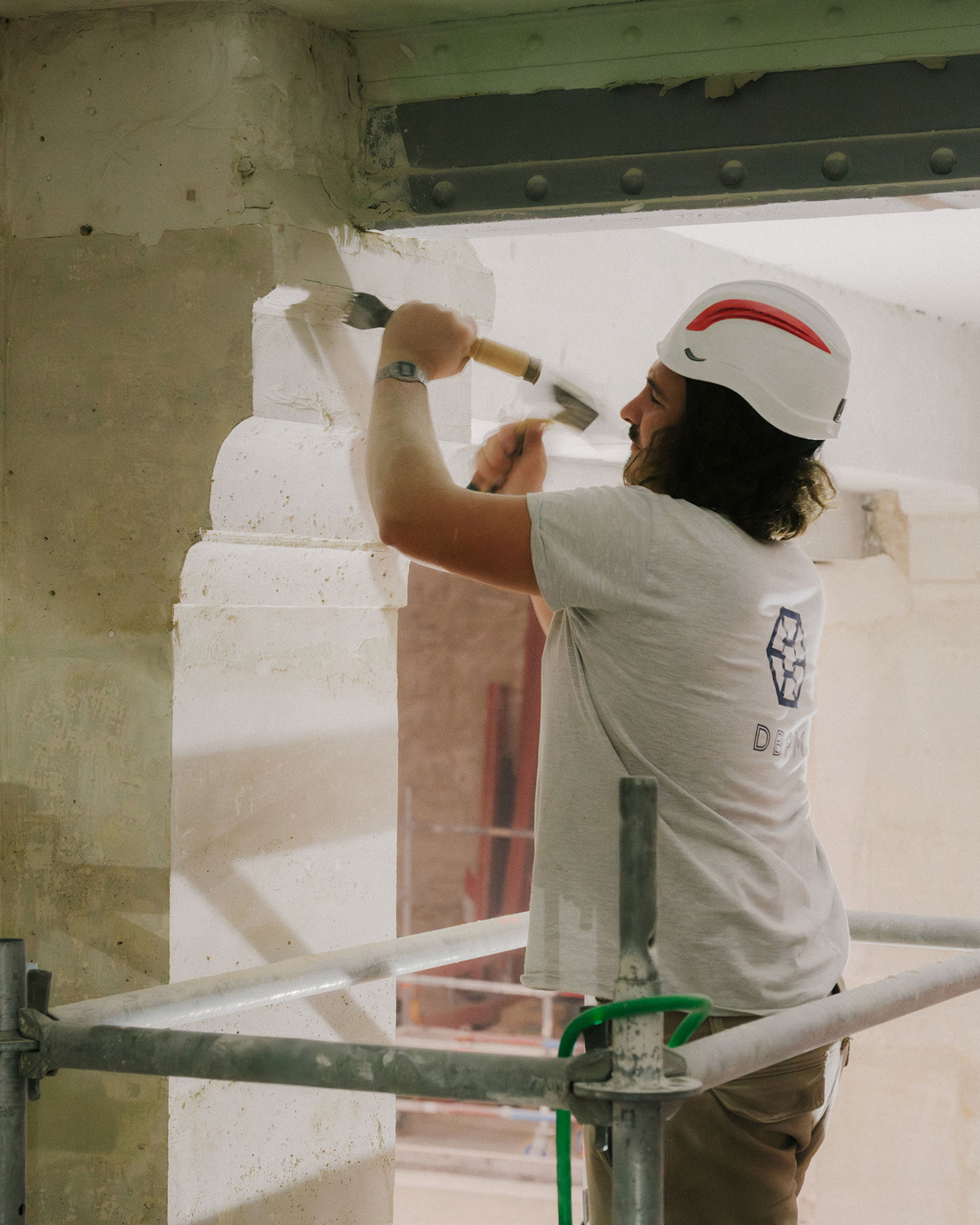
Damaged by the 1980s works and embedded with metal beams and cement mortar, these stone pillars revealed their fragility to us, as well as the care required to ensure their preservation.

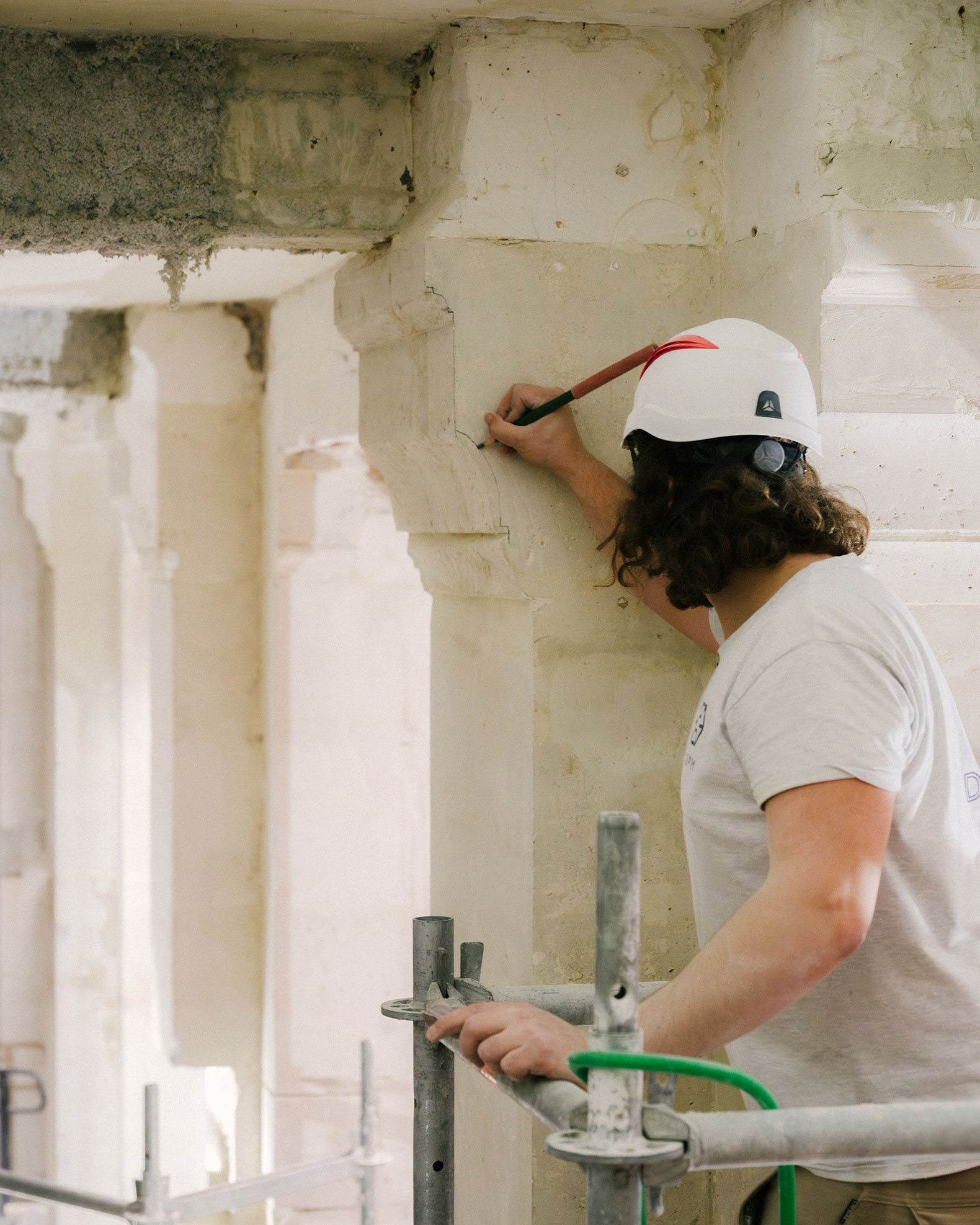
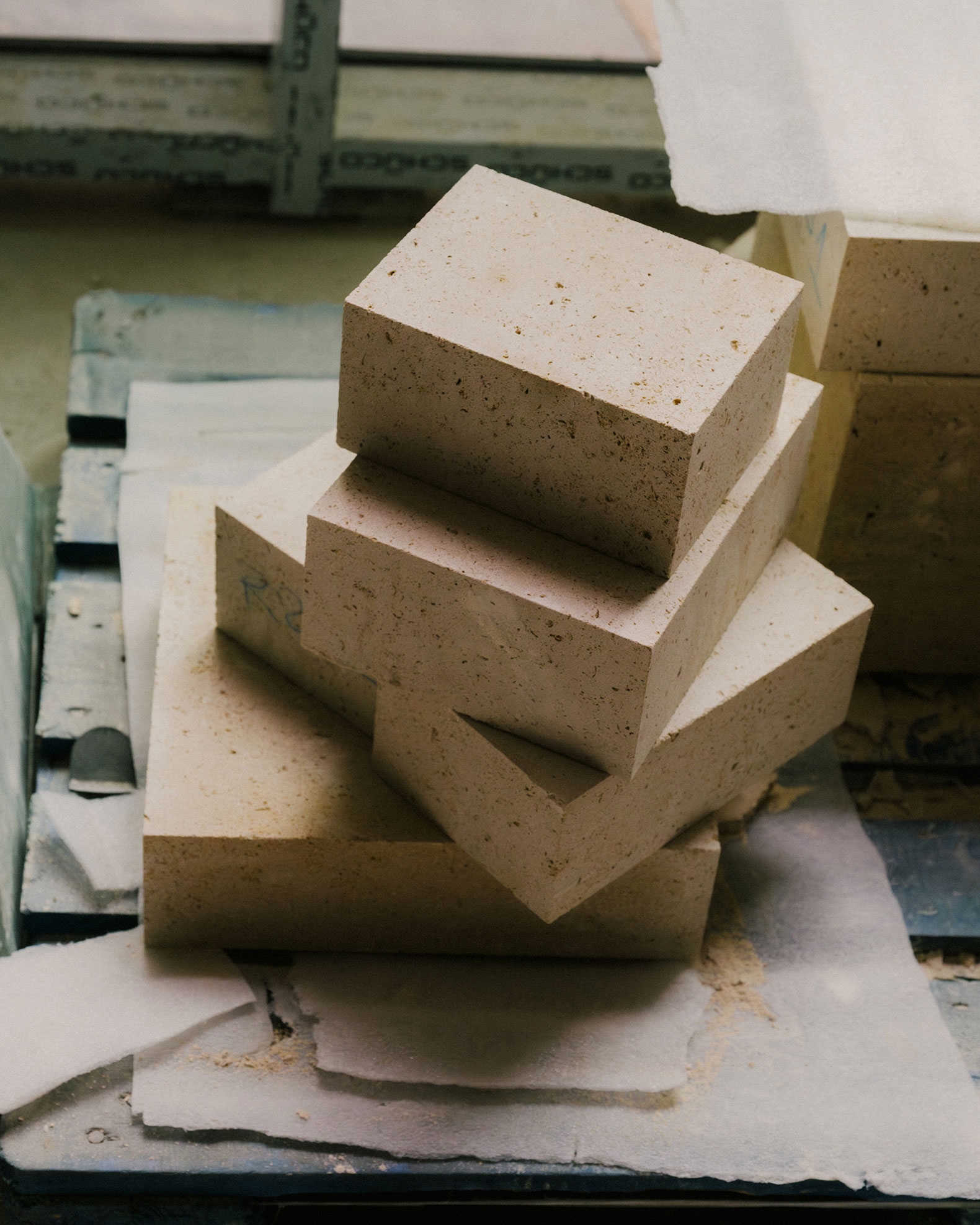
Master stonemasons deployed their craft to restore this primary structure. Through cutting, carving, grafting, and fine chiseling, the material was carefully tended, allowing these pillars to be fully revitalized.
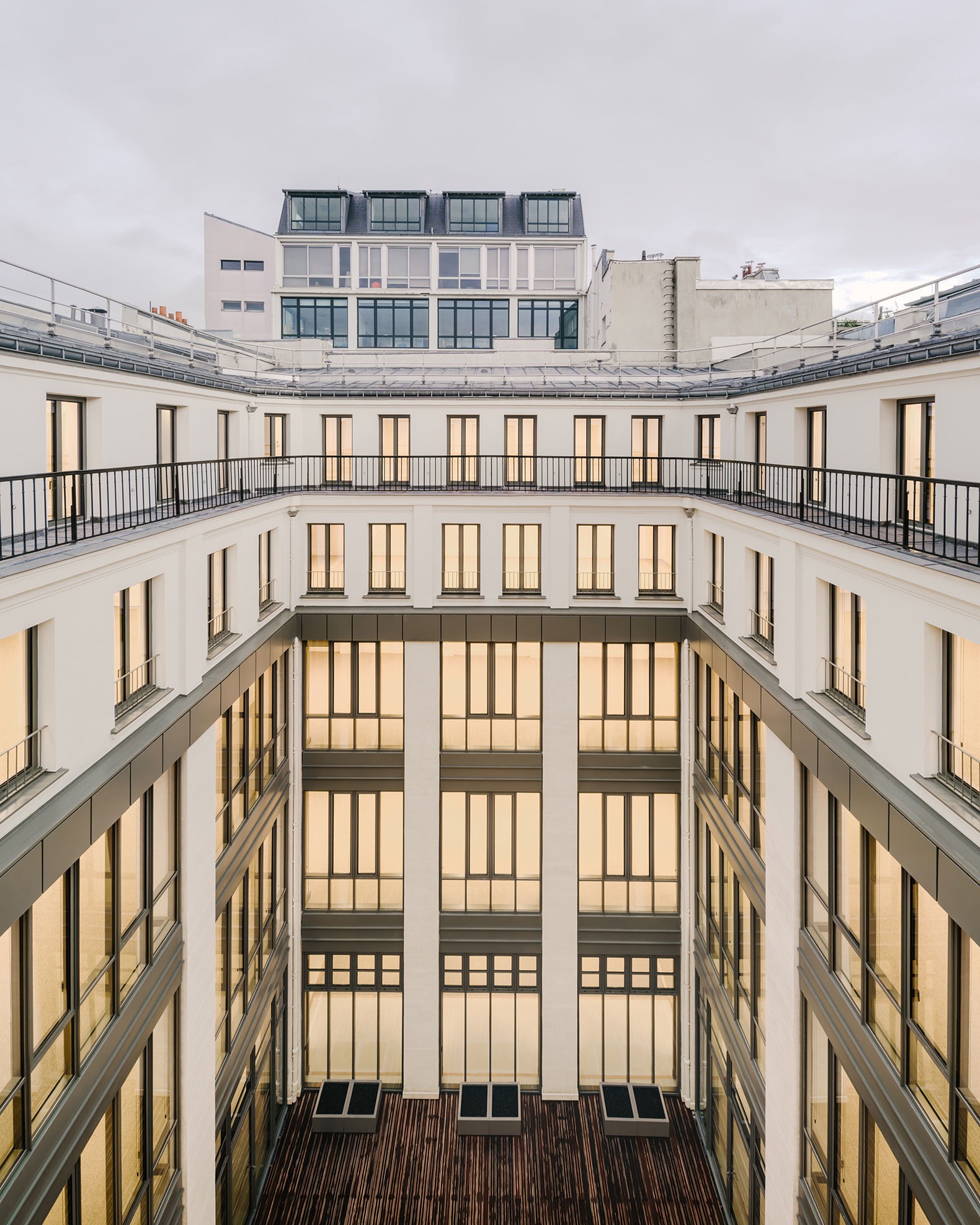
"Sentier" by COVE Architectes + CALQ Architectes. Photograph by Maxime Verret.

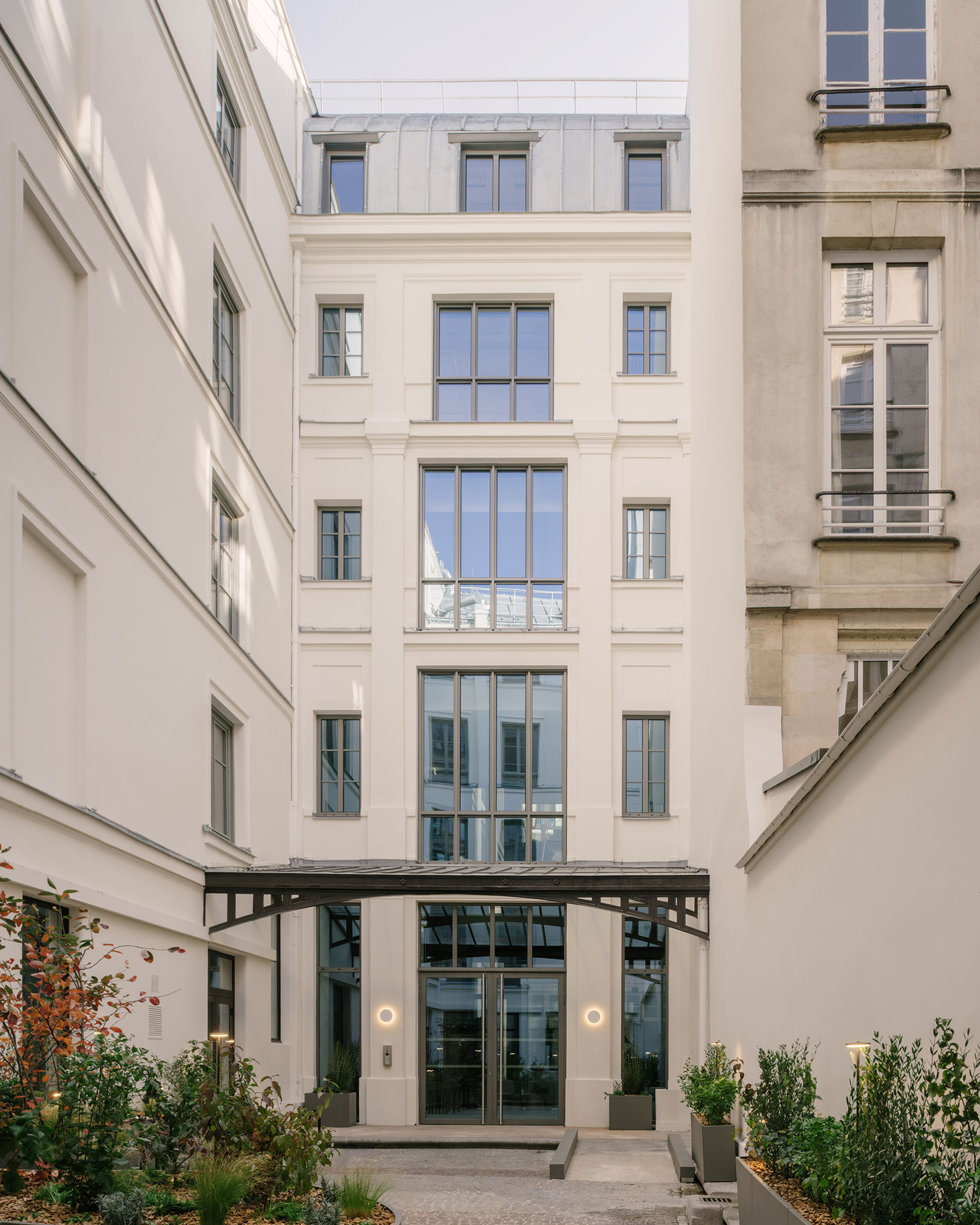
Crafting a façade echoing the building’s industrial heritage
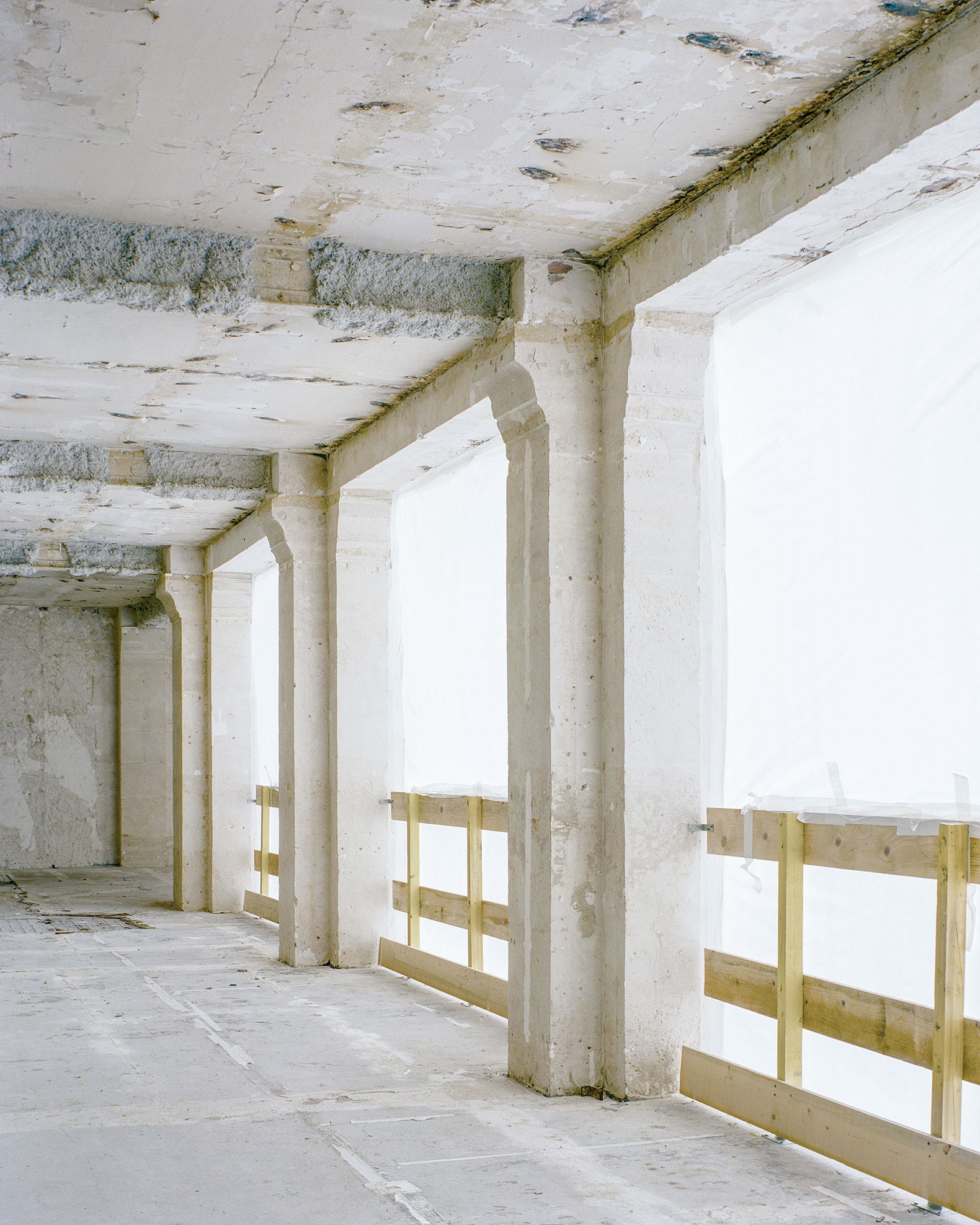
The original façade of these former textile workshops bore the hallmarks of a 19th-century industrial building, with tallverticalwindowssetwithinarobust stone framework.

The 1980s transformation into office spaces entirely obscured this industrial legacy, replacing the workshop windows and cloaking the stone pillars behind large smoked-glass curtain walls.

Once the stone pillars were revealed, new window frames were carefully designed to evoke the industrial past of the site, while upgrading both comfort and energy performance.
More information

Label
Architects
+ + copy Created with Sketch.
- + copy Created with Sketch.
Label
Project team
Text

RF Studio (design partner).

+ + copy Created with Sketch.
- + copy Created with Sketch.
Label
Client
Text

AG Real Estate.

+ + copy Created with Sketch.
- + copy Created with Sketch.
Label
Area
Text

2,850 sqm.

+ + copy Created with Sketch.
- + copy Created with Sketch.
Label
Dates
Text

2025.

+ + copy Created with Sketch.
- + copy Created with Sketch.
Label
Location
Text

Paris, France.
+ + copy Created with Sketch.
- + copy Created with Sketch.
Label
Photography
Text

Séverin Malaud (Former state, Maxime Verret (Working site and completed project).

+ + copy Created with Sketch.
- + copy Created with Sketch.

COVE is an architecture studio Paris-based founded by Axel Cornu and Gabriel Verret in 2018. Committed to the transformation of existing buildings, they extend their practice from the Paris metropolitan area to the rural areas of Auvergne.

They promote an architectural approach that prioritizes the site, its history, and its inhabitants. This perspective allows them to design renovations that are relevant to the present, valuing the heritage of buildings and using it to obtain the necessary materials for transformation, while respecting their character. The central role given to artisans in the execution of these projects allows these non-standardized materials to be used in controlled and sustainable interventions.
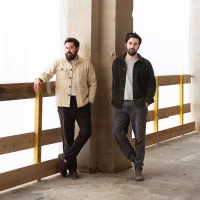
Axel Cornu graduated from ENSA Paris-La-Villette in 2015 after spending a year studying passive building design at NTNU in Trondheim, Norway. While studying, he worked at the firm DGM & associés before founding his own studio, Axel Cornu Architecte, in 2017. He collaborated with Gabriel Verret on several projects before co-founding COVE Architectes.

Gabriel Verret studied architecture at the Tokyo Institute of Technology and ENSA Paris-La-Villette, where he graduated with honors in research in 2015. He then worked at several architecture firms (including Atelier Bow-Wow, LAN, and Philippe Rizzotti Architecte) before embarking on independent projects with Axel Cornu in 2017.

Awards and Publications

2025
Winners of the 40 Under 40 Award.
Winners of the Pavillon de l’Arsenal FAIRE 2025 competition.
Participation in the XXIII Chilean Architecture and Urbanism Biennial.
A Vivre Magazine No. 142 – Article “The Memory of Place” – Rehabilitation of an old farmhouse into a home.
NDA Magazine No. 142 60 – Agility, Flexibility, Reversibility – Article by Lionel Blaisse – Interior design for the Kering Group at the former Laënnec Hospital in Paris.
Chroniques d’architecture – Article “In Chamboirat, from farmhouse to home.”
Detail – Article “Renovation of an old farmhouse in Auvergne.”

2024
Selected for the SANA incubator at ENSA (National School of Architecture) in Clermont-Ferrand.
This is Paper – Chamboirat by COVE Architects.
Dwell – This is what it took to transform a 200-year-old French farmhouse into a family home.

2023
Building Low-Carbon, Living Architecture – Le Moniteur Publishing.
Michelangelo Extension in Paris.
Com d’Archi – Podcast “The Confrontation of Scales”.
Agency – COVE Architects.

Read more

CALQ is an architecture practice based in Paris, founded by Jean-Philippe Le Bœuf and Emmanuel Quin in 1990, with 135 employees.

The practice designs and oversees all types of projects, from new construction to renovations, across various sectors: offices, hotels, residential buildings, retail spaces, and public facilities. Their projects adapt to contemporary lifestyles and work environments, incorporating technical innovations designed to facilitate and enhance usability.

User well-being, the adaptability and reversibility of spaces, energy efficiency, and low-carbon design are fundamental aspects of every project undertaken by CALQ.

Read more
Published on: March 2, 2026
Cite:
metalocus, SARA GENT, AGUSTINA BERTA
"Recovering memory. "Sentier" by COVE Architectes + CALQ Architectes" METALOCUS. Accessed
<https://www.metalocus.es/en/news/recovering-memory-sentier-cove-architectes-calq-architectes> ISSN 1139-6415
Loading content ...
Loading content ...
Loading content ...
Loading content ...
Loading content ...
Loading content ...
Loading content ...
Loading content ...
Loading content ...
Loading content ...
Loading content ...
Loading content ...
Loading content ...
Loading content ...
Loading content ...
Loading content ...
Loading content ...
Loading content ...
Loading content ...
Loading content ...
Loading content ...
Loading content ...
Loading content ...
Loading content ...
Loading content ...
Loading content ...
Loading content ...
Loading content ...
Loading content ...
Loading content ...
Loading content ...
Loading content ...
Loading content ...
Loading content ...
Loading content ...
Loading content ...
Loading content ...
Loading content ...
Loading content ...
Loading content ...
Loading content ...
Loading content ...
Loading content ...
Loading content ...
Loading content ...
Loading content ...
Loading content ...
Loading content ...
Loading content ...
Loading content ...
Loading content ...
Loading content ...
Loading content ...
Loading content ...