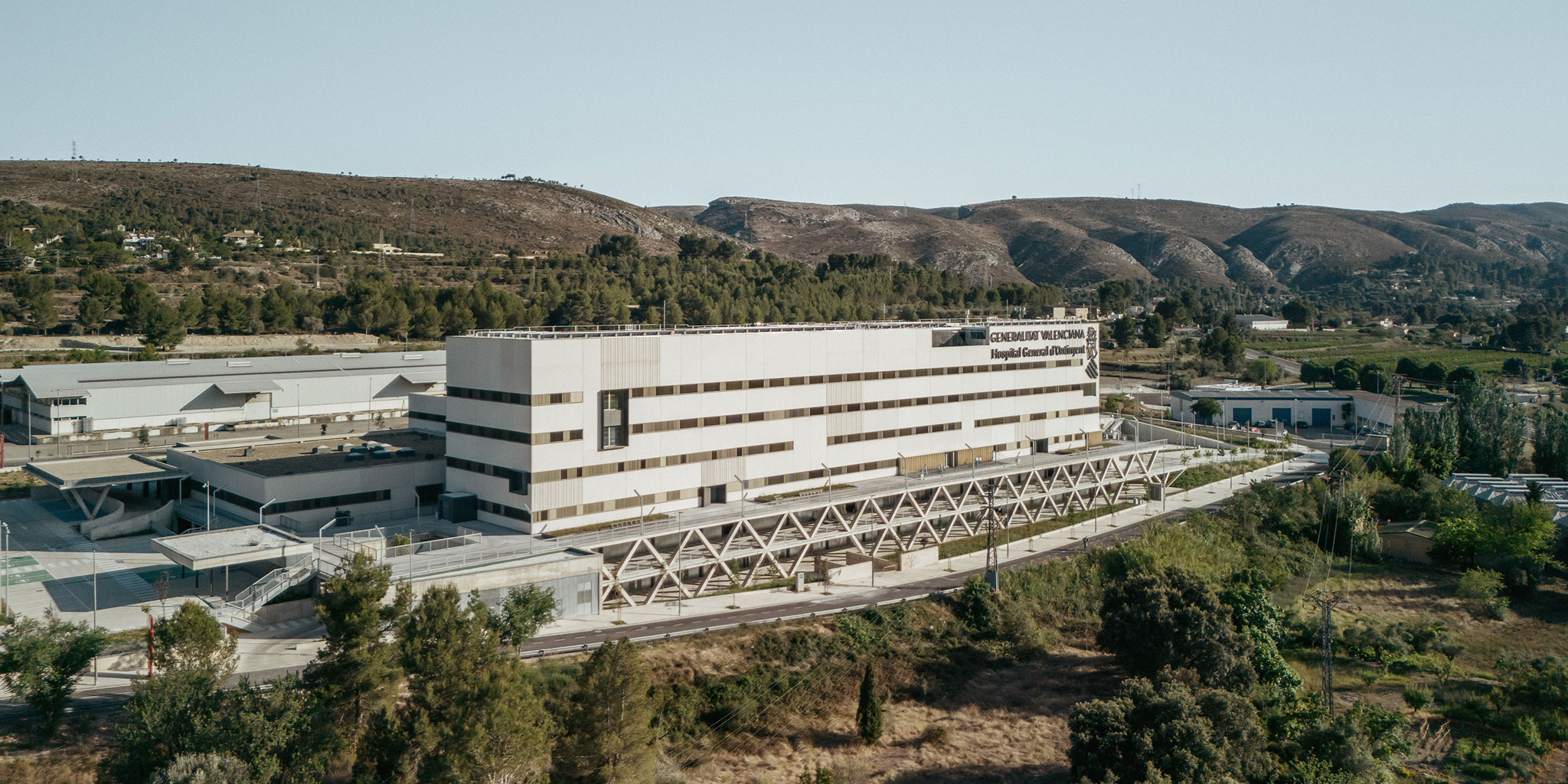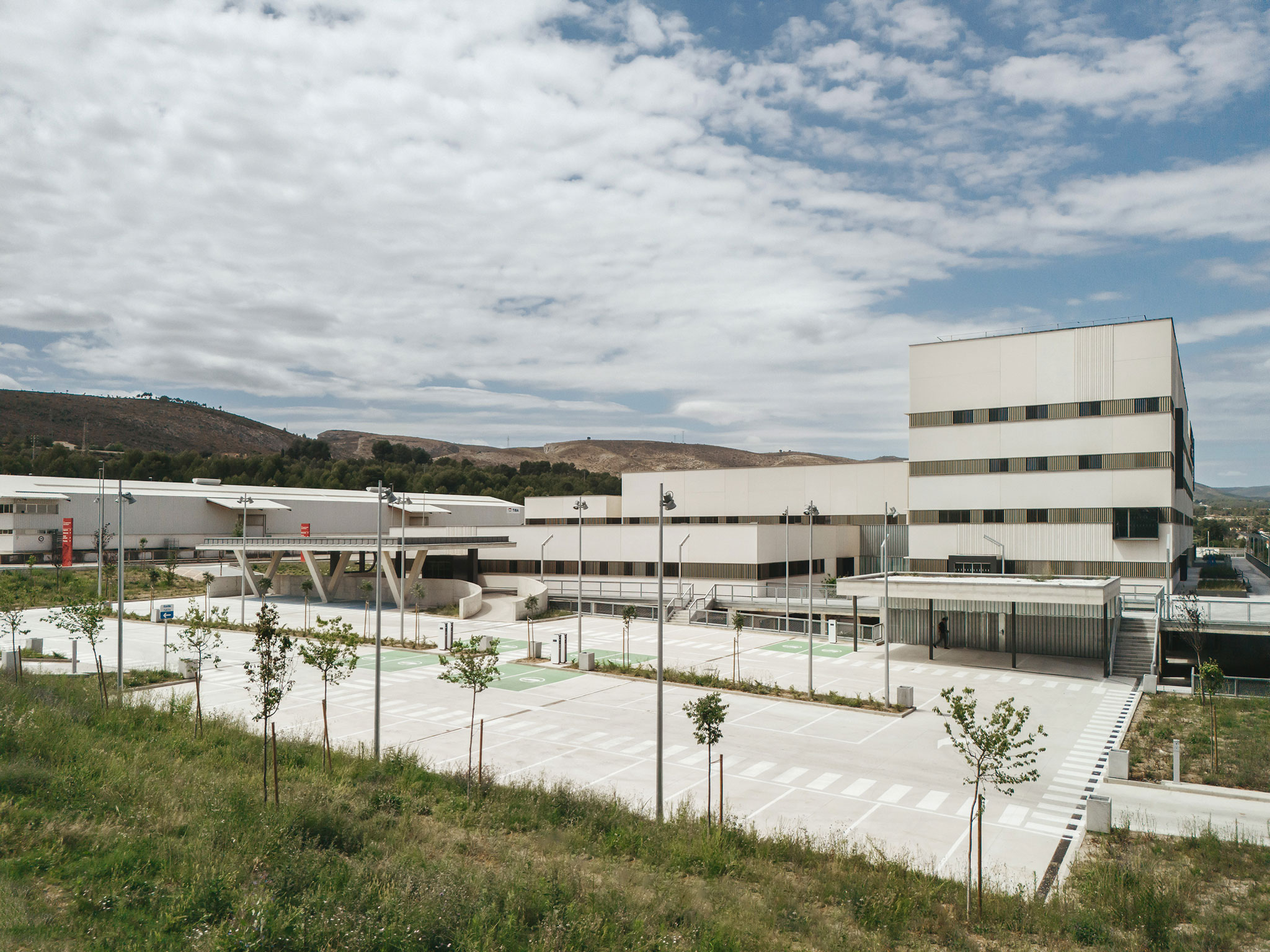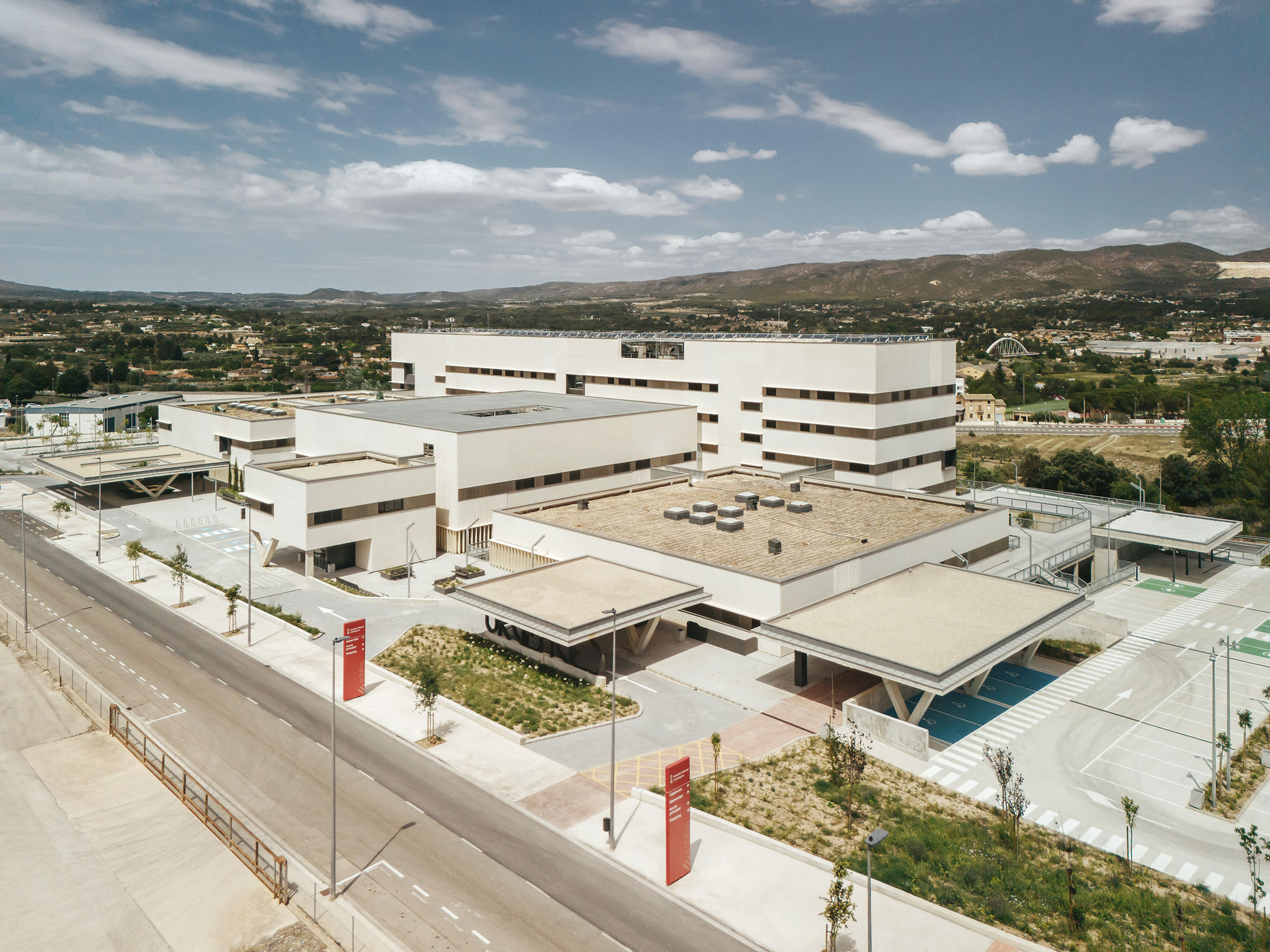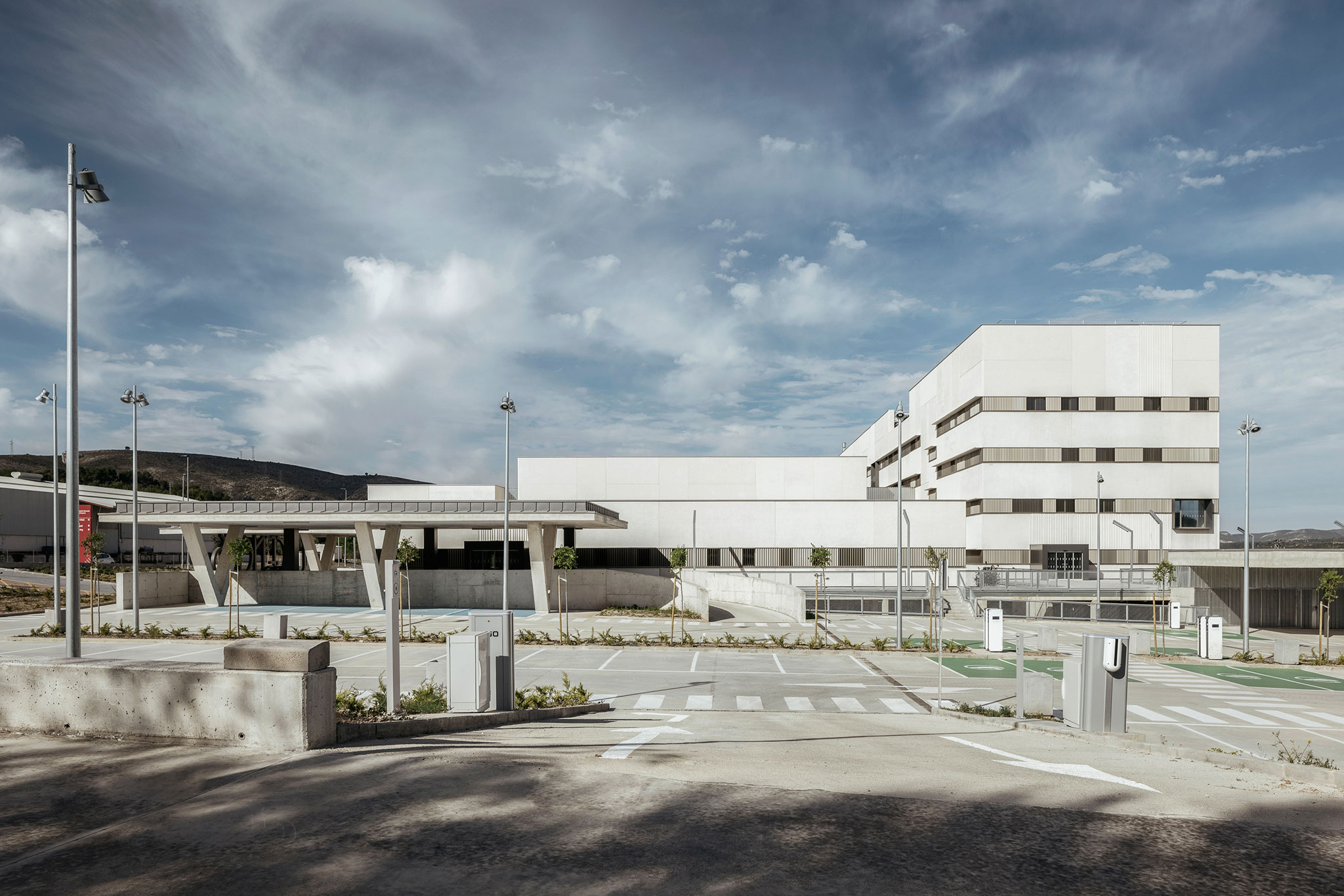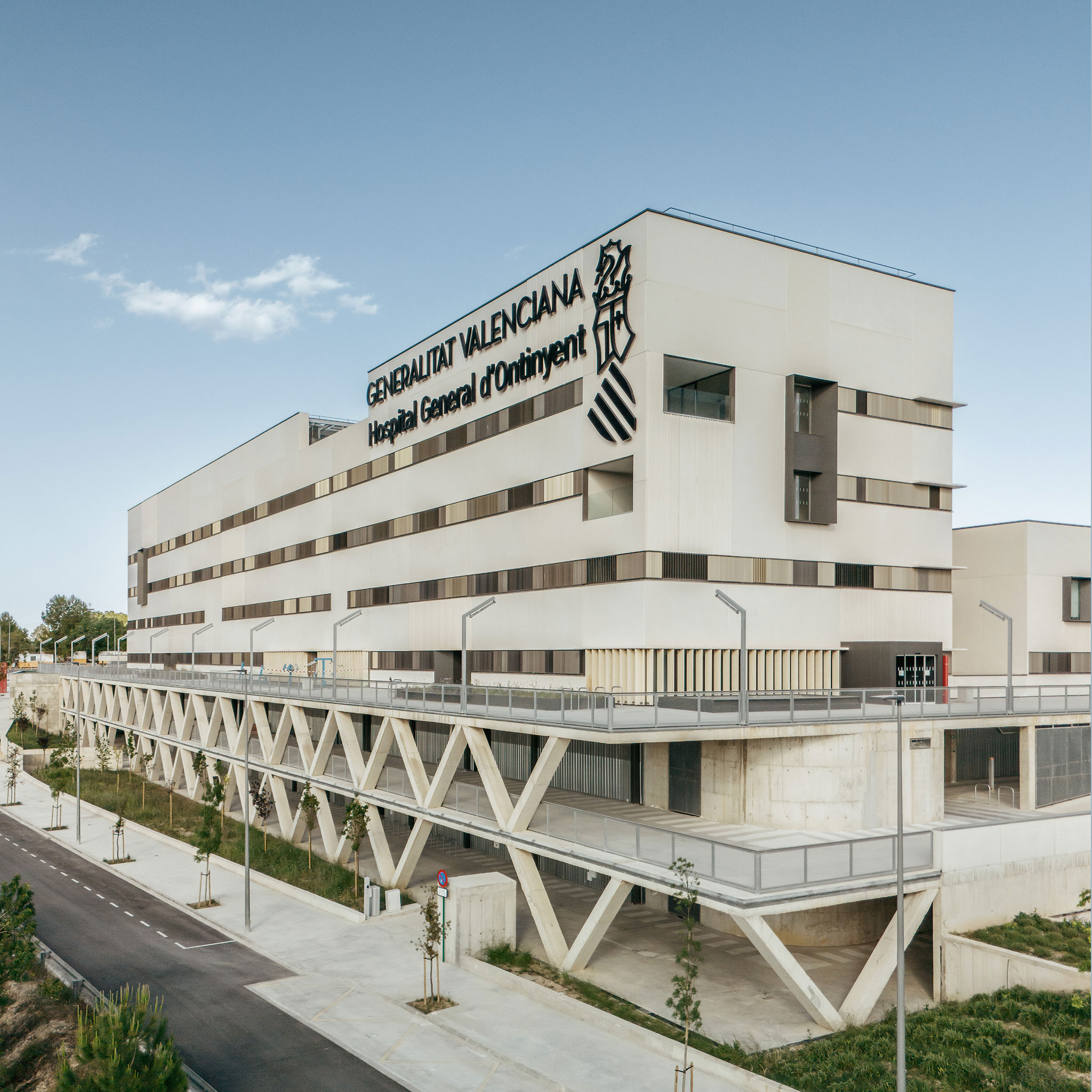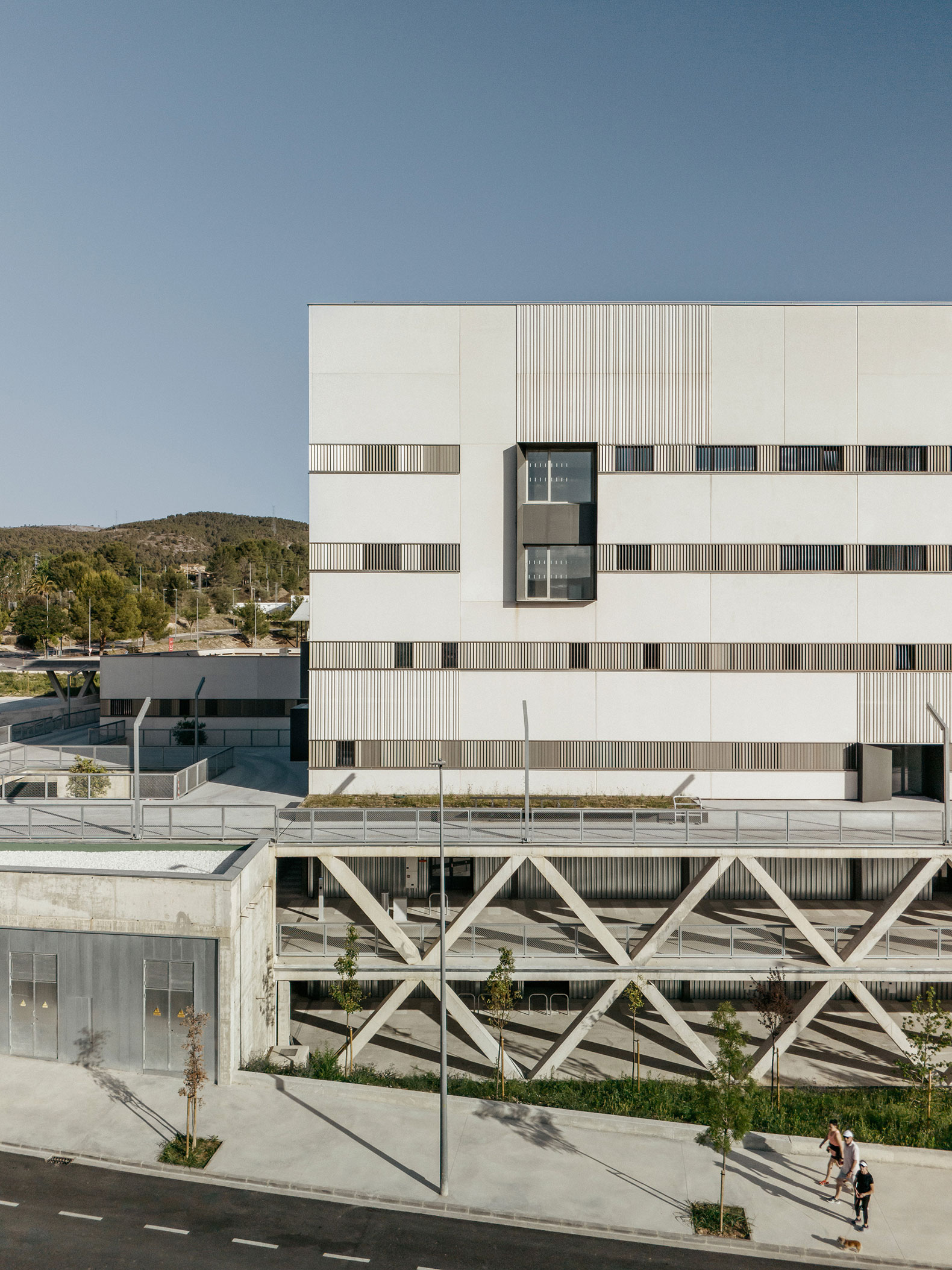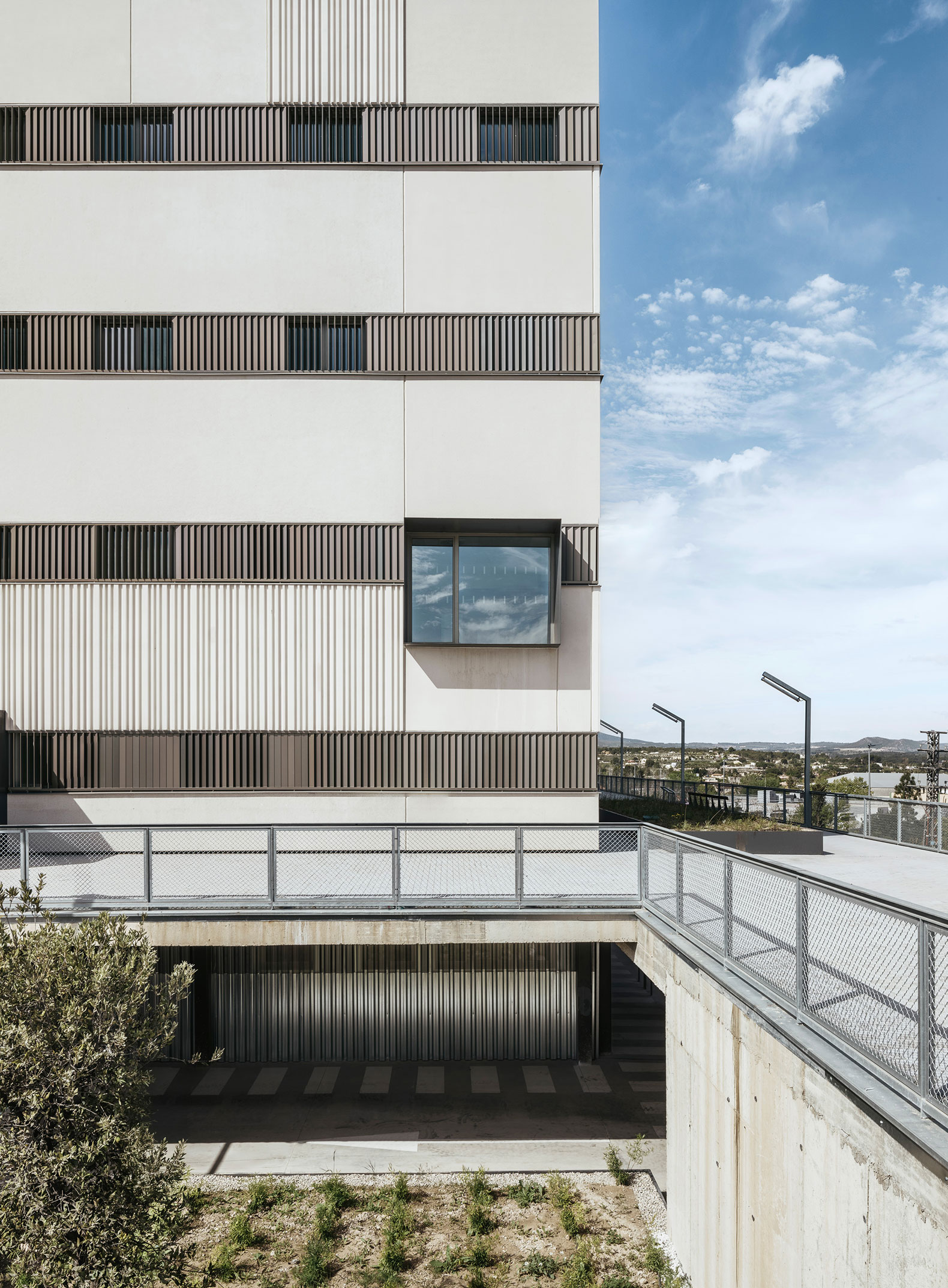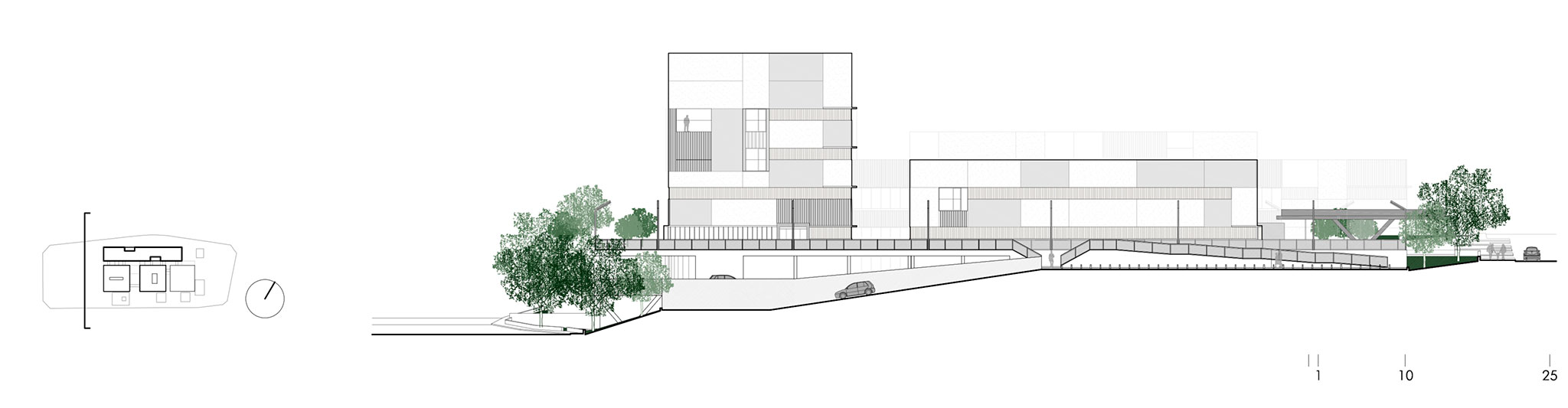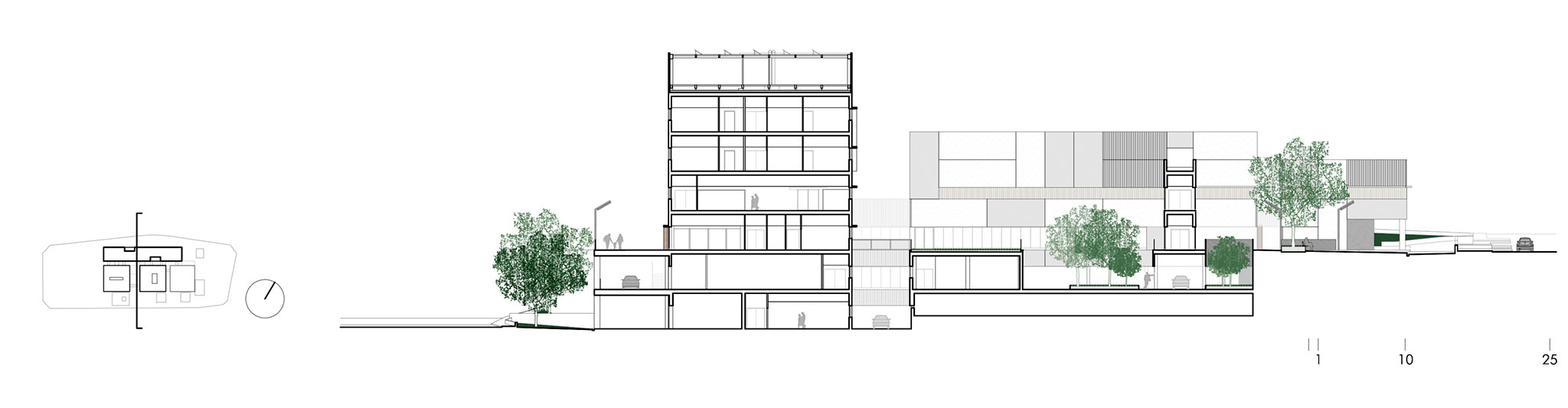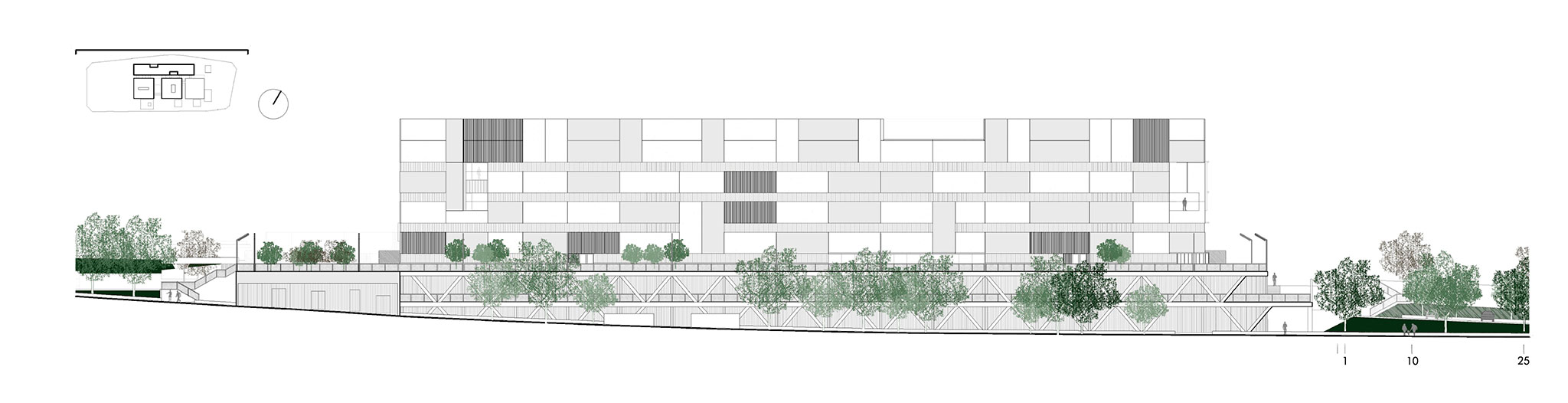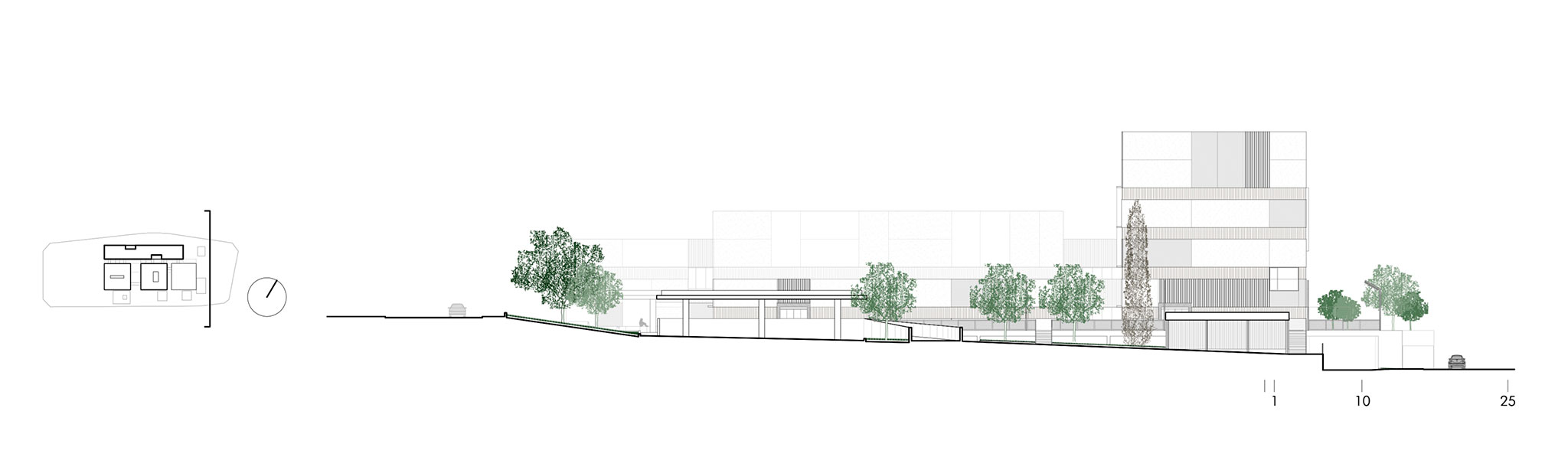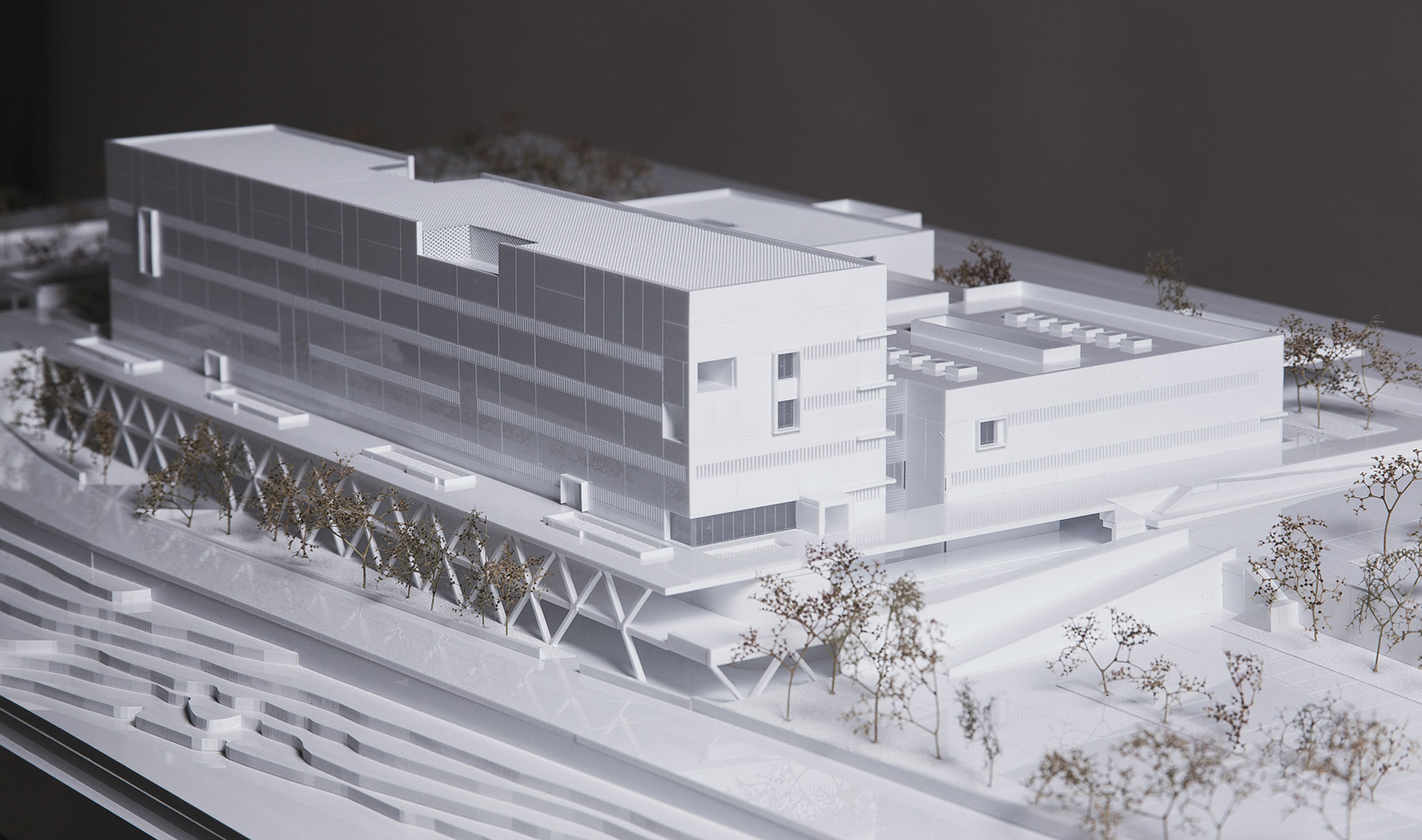
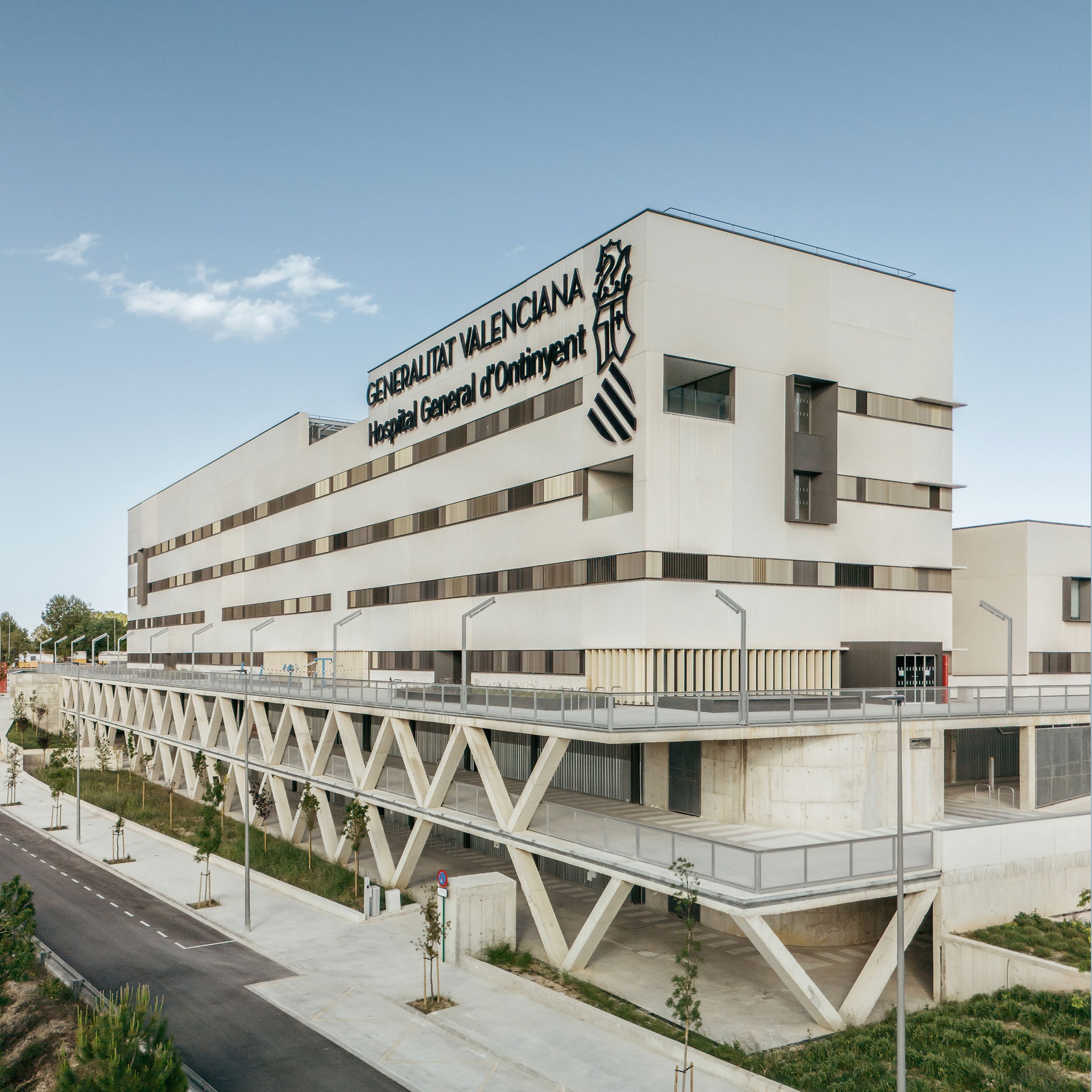
Contell-Martínez and Manuel Vega propose landscaped slopes around the perimeter of the plot where the new Ontinyent Hospital is located to address the slope. They place open-air parking at the east and west ends and take advantage of the negative slope of the north façade to create two levels for service areas and vehicular traffic.
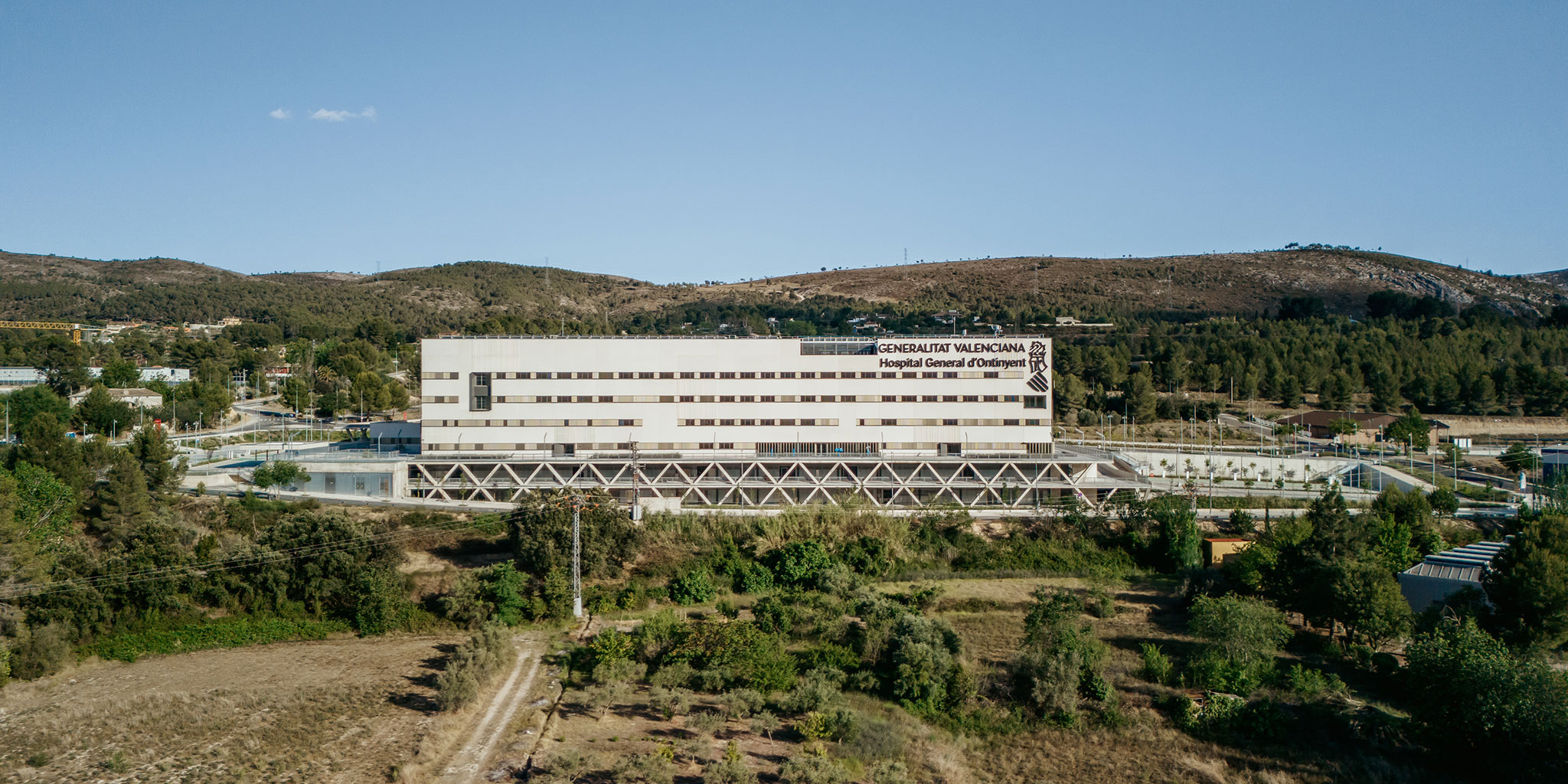
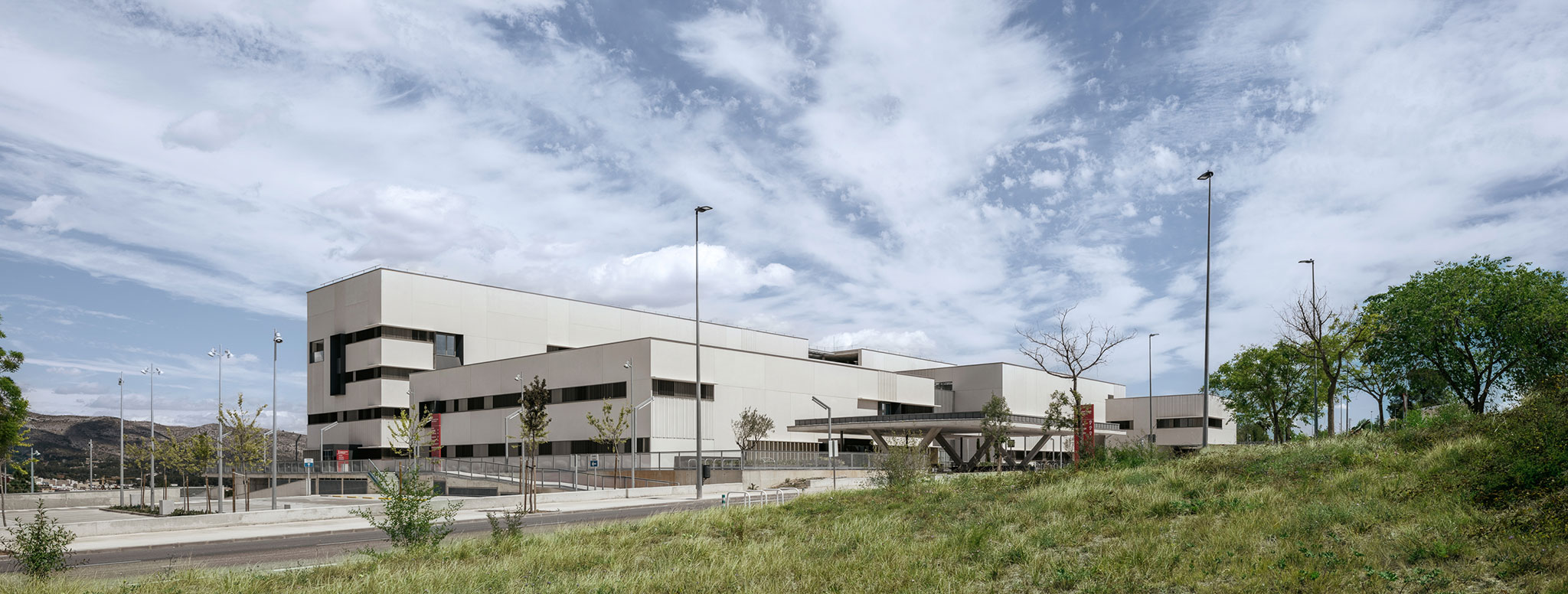
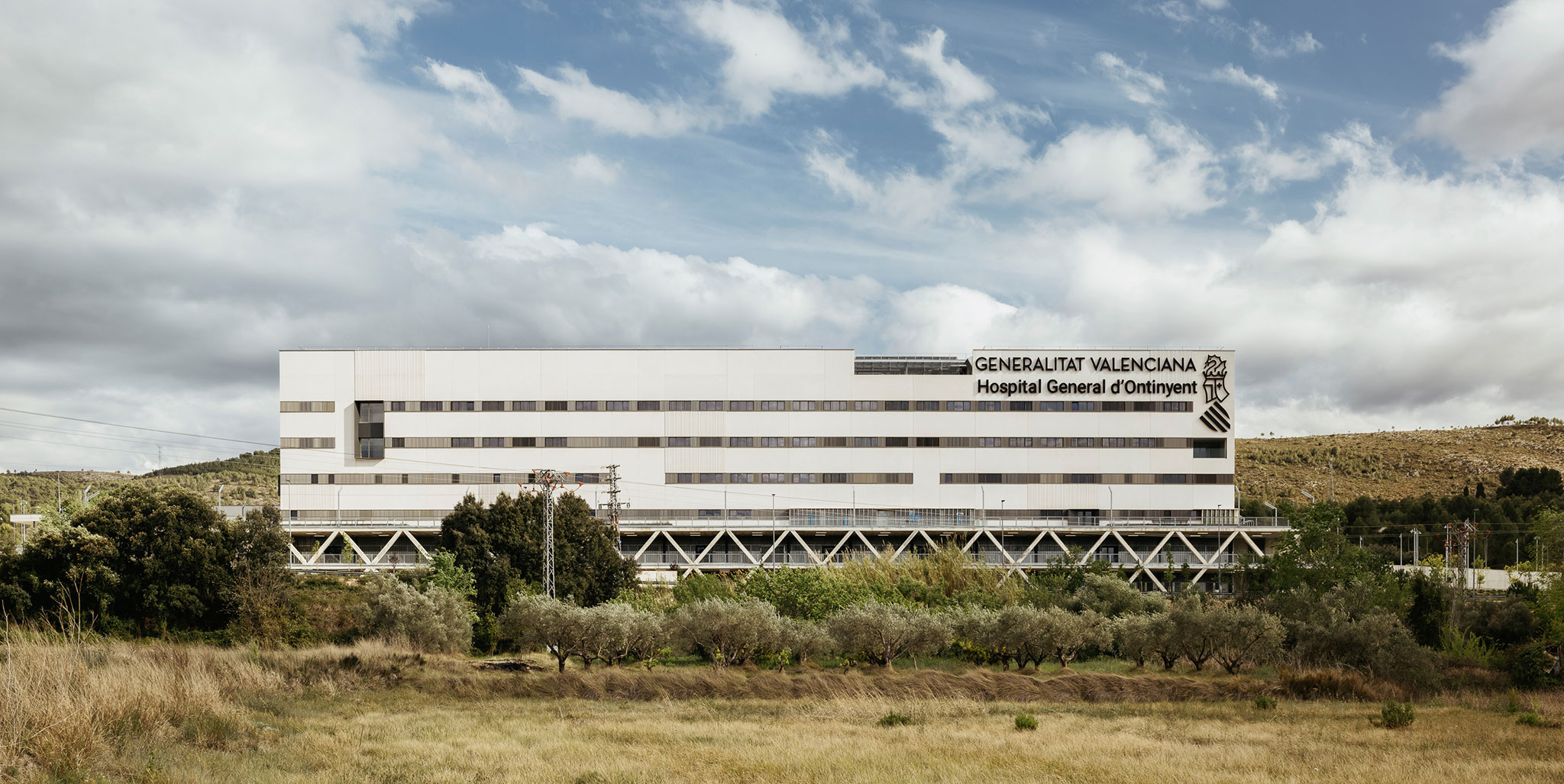
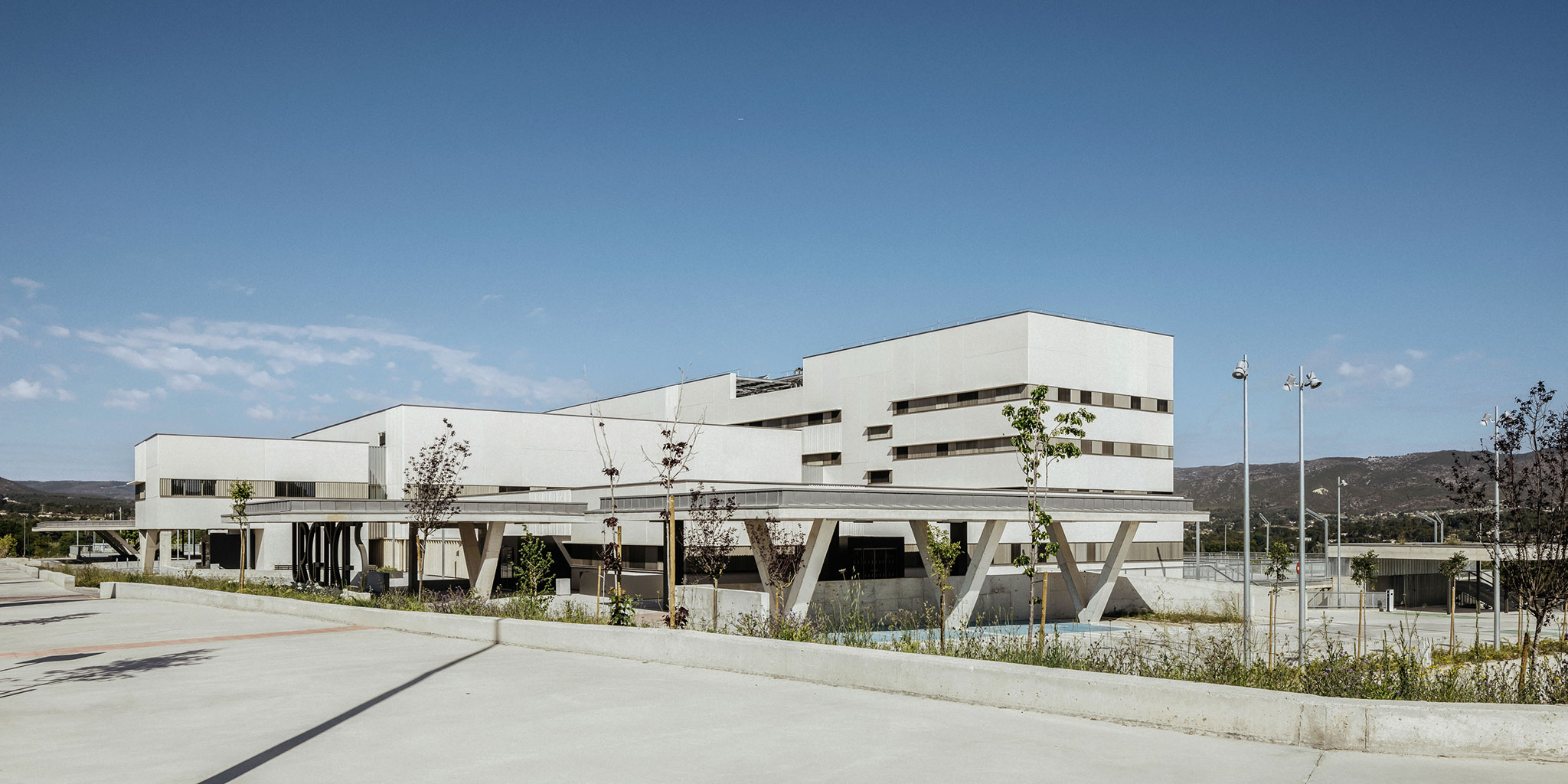
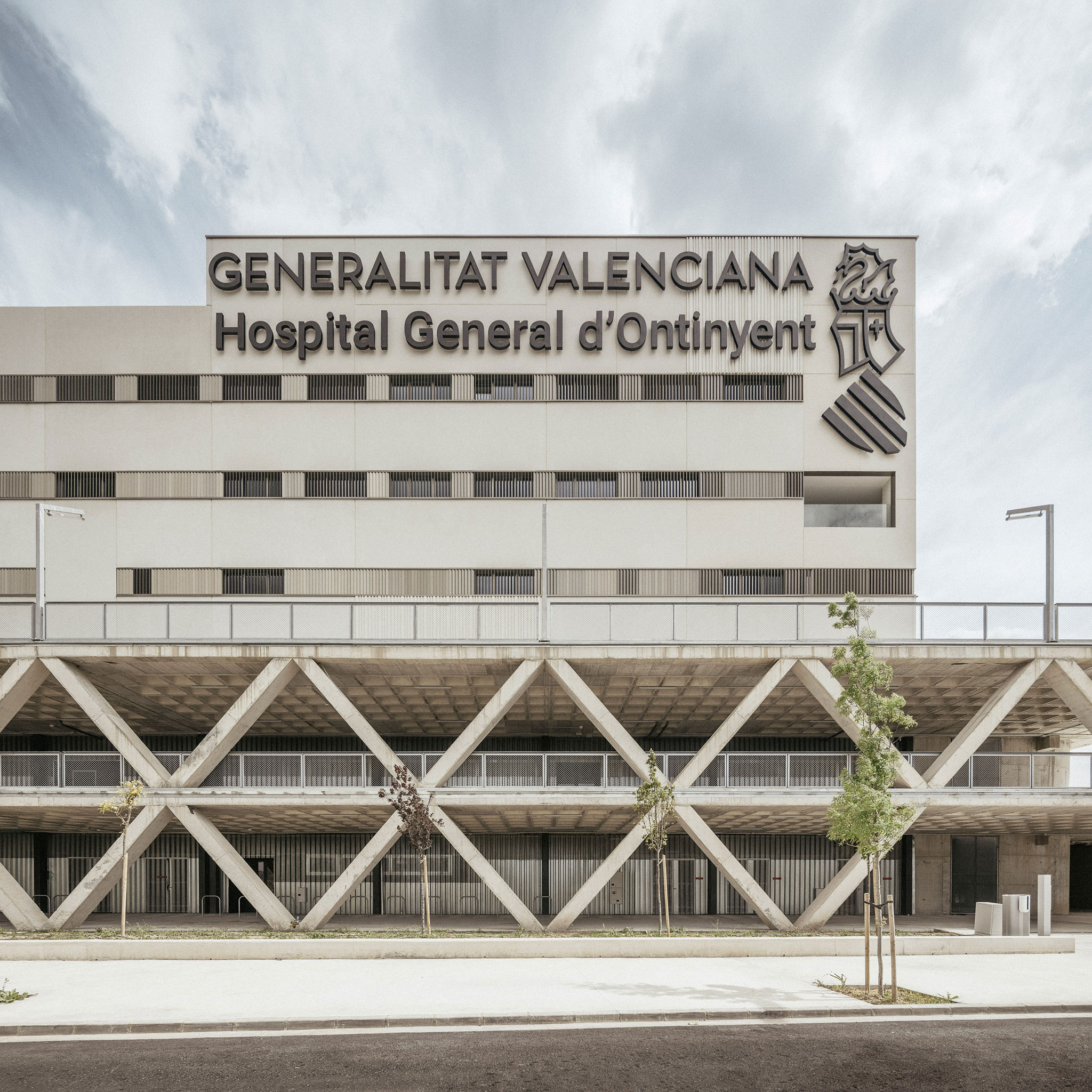
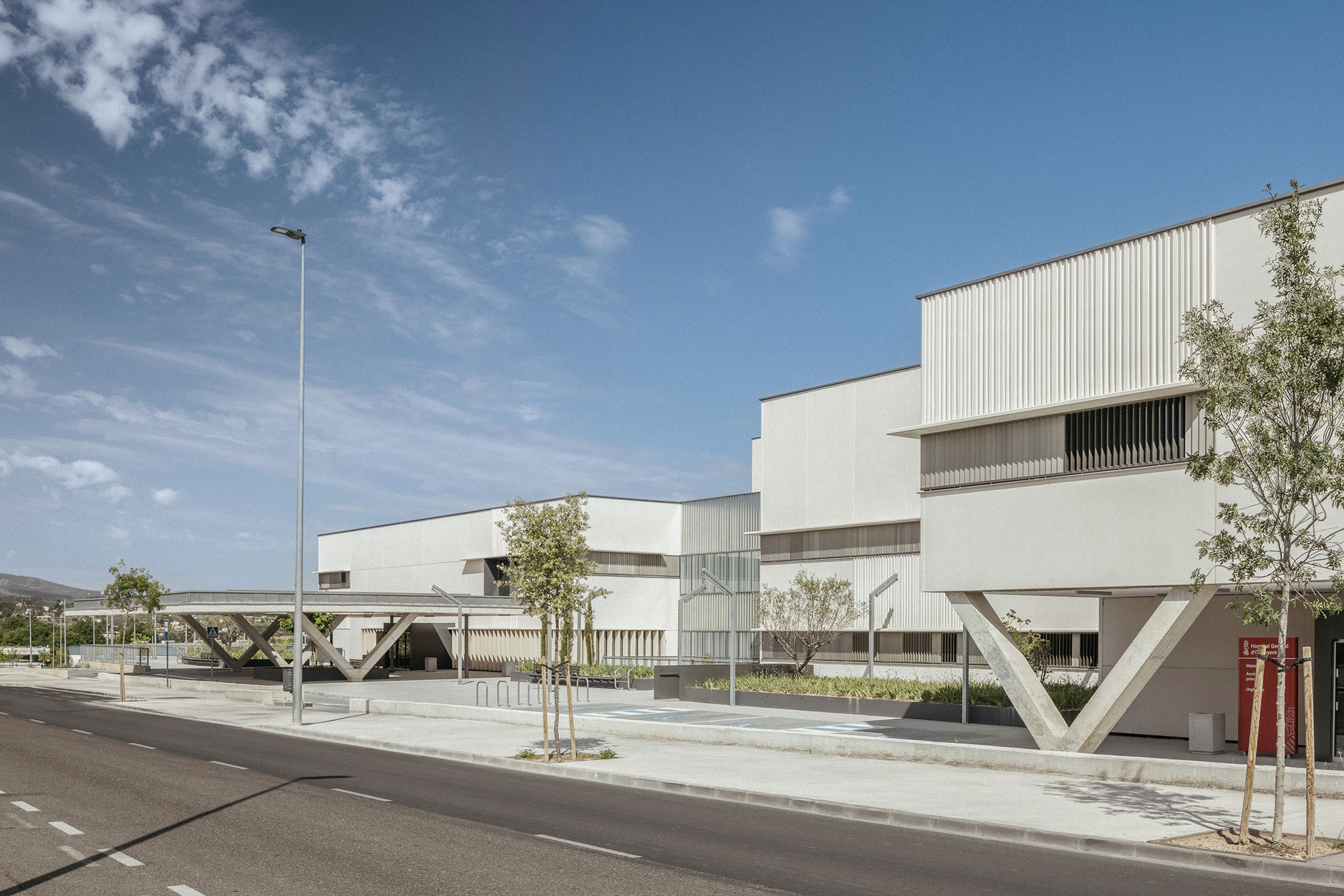
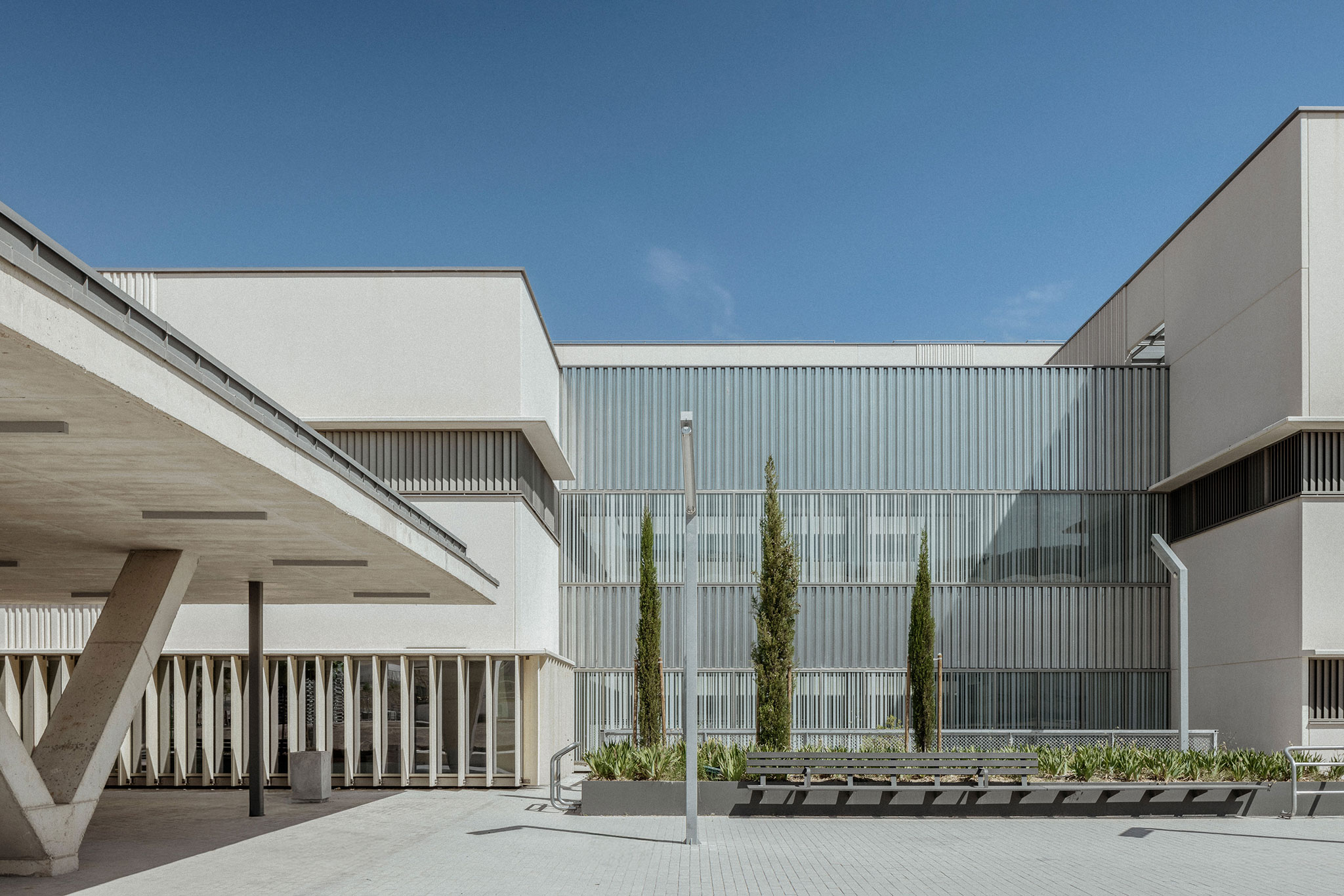
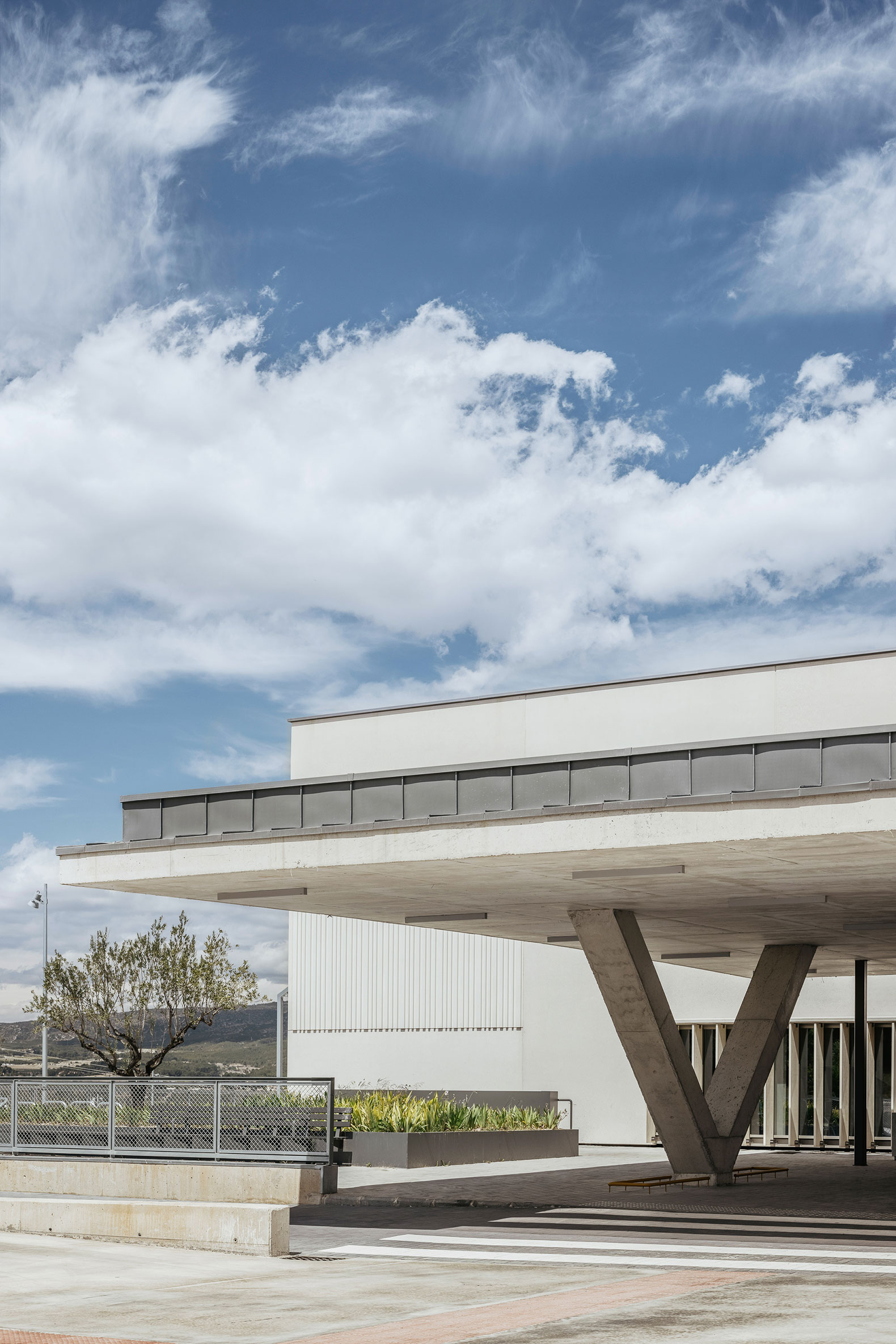
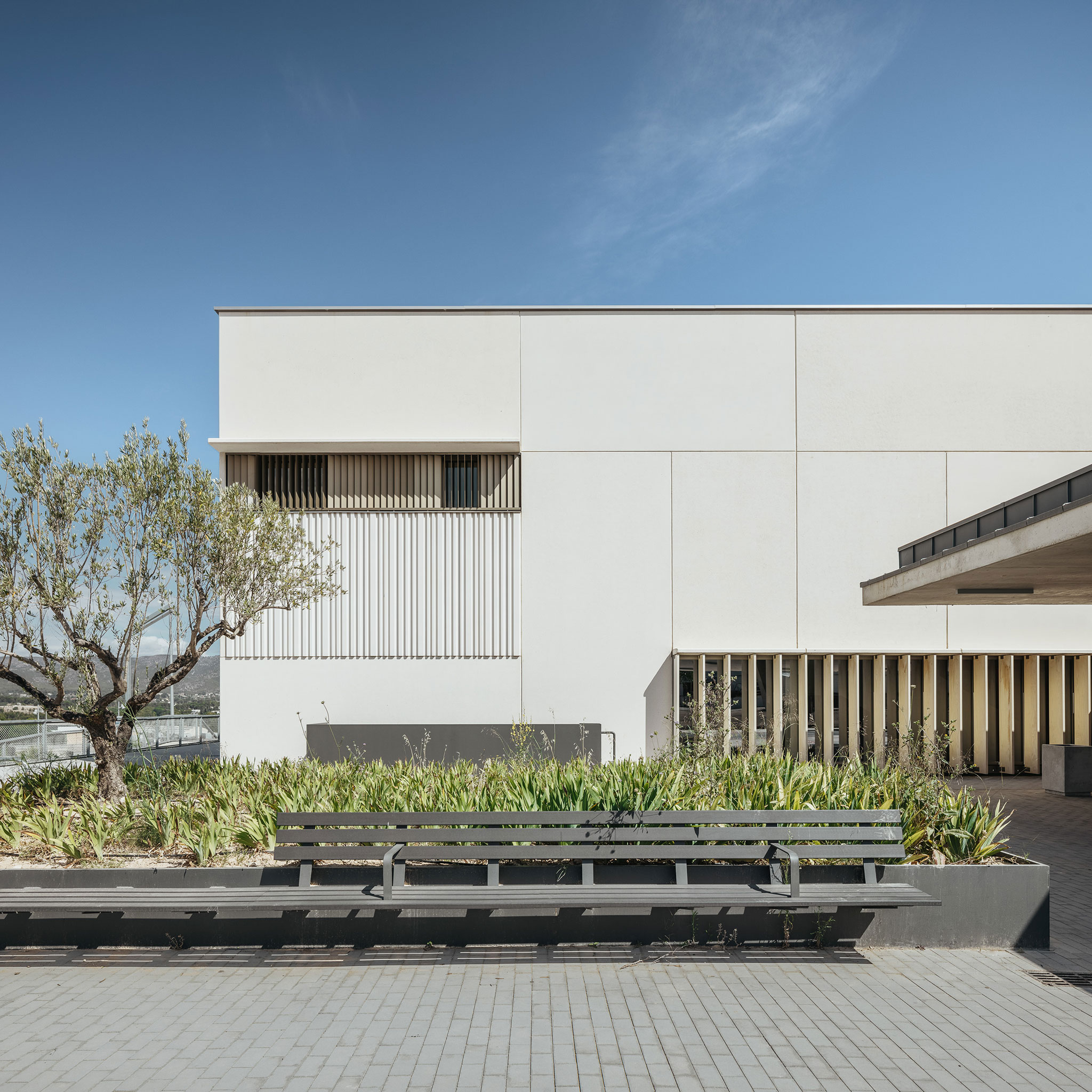
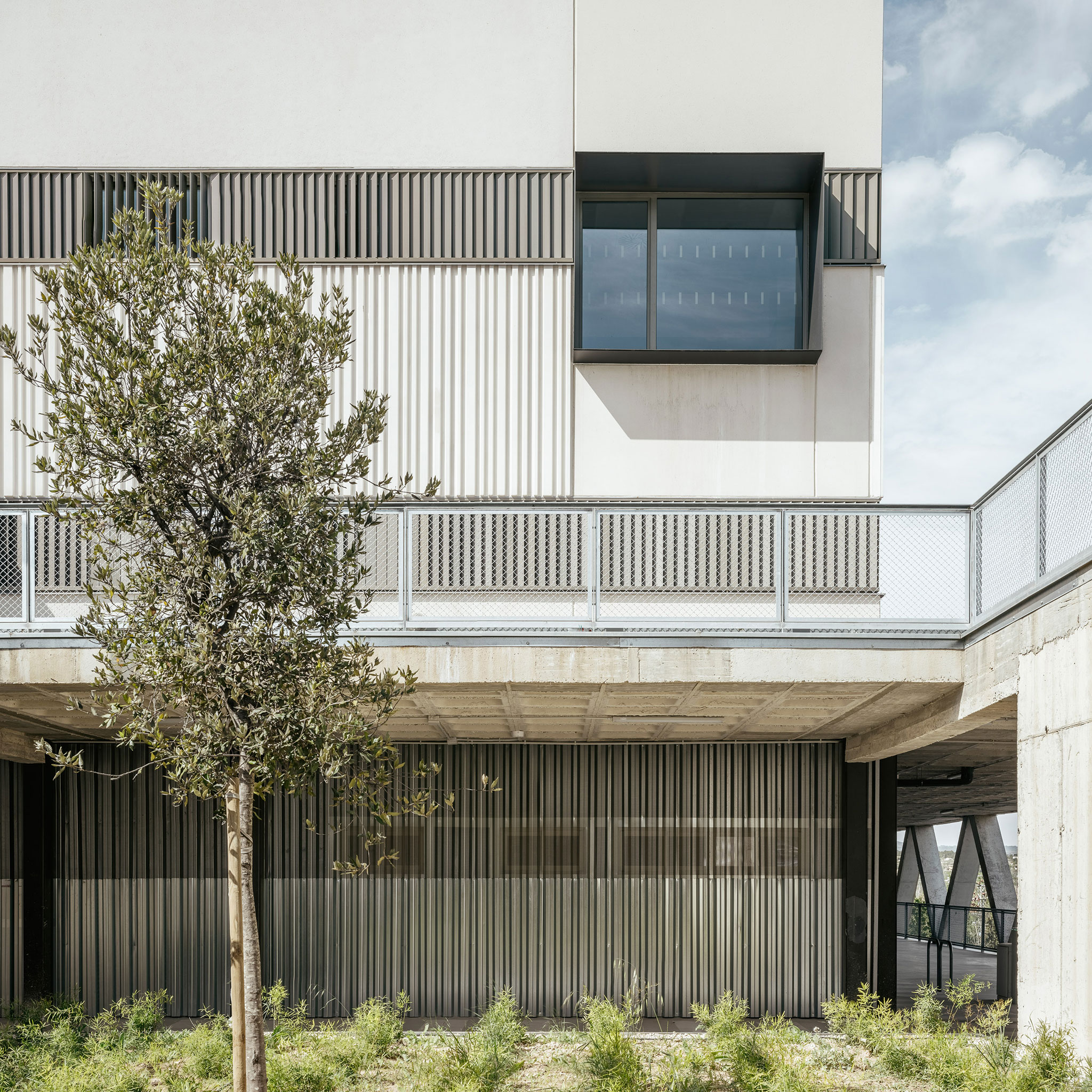
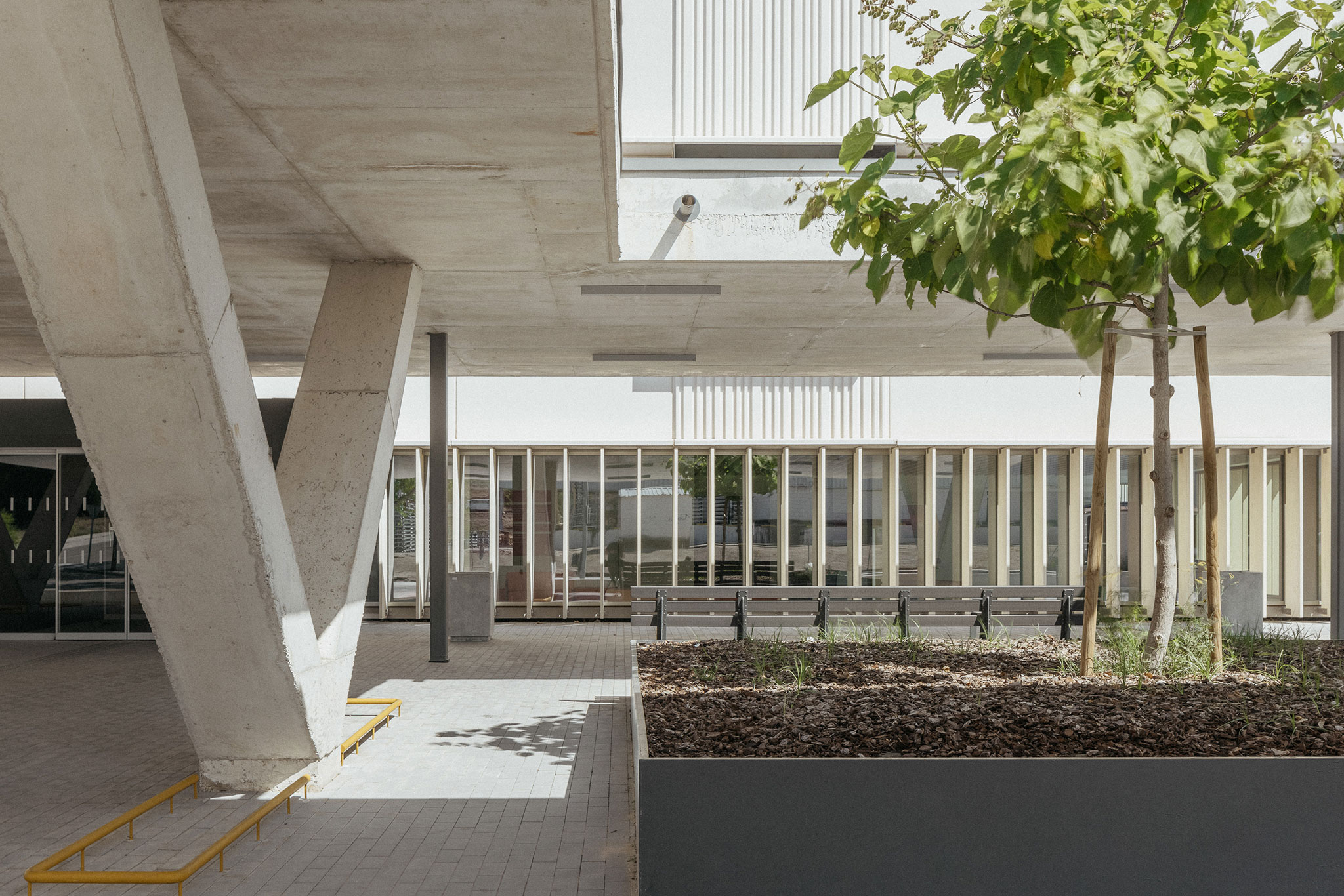
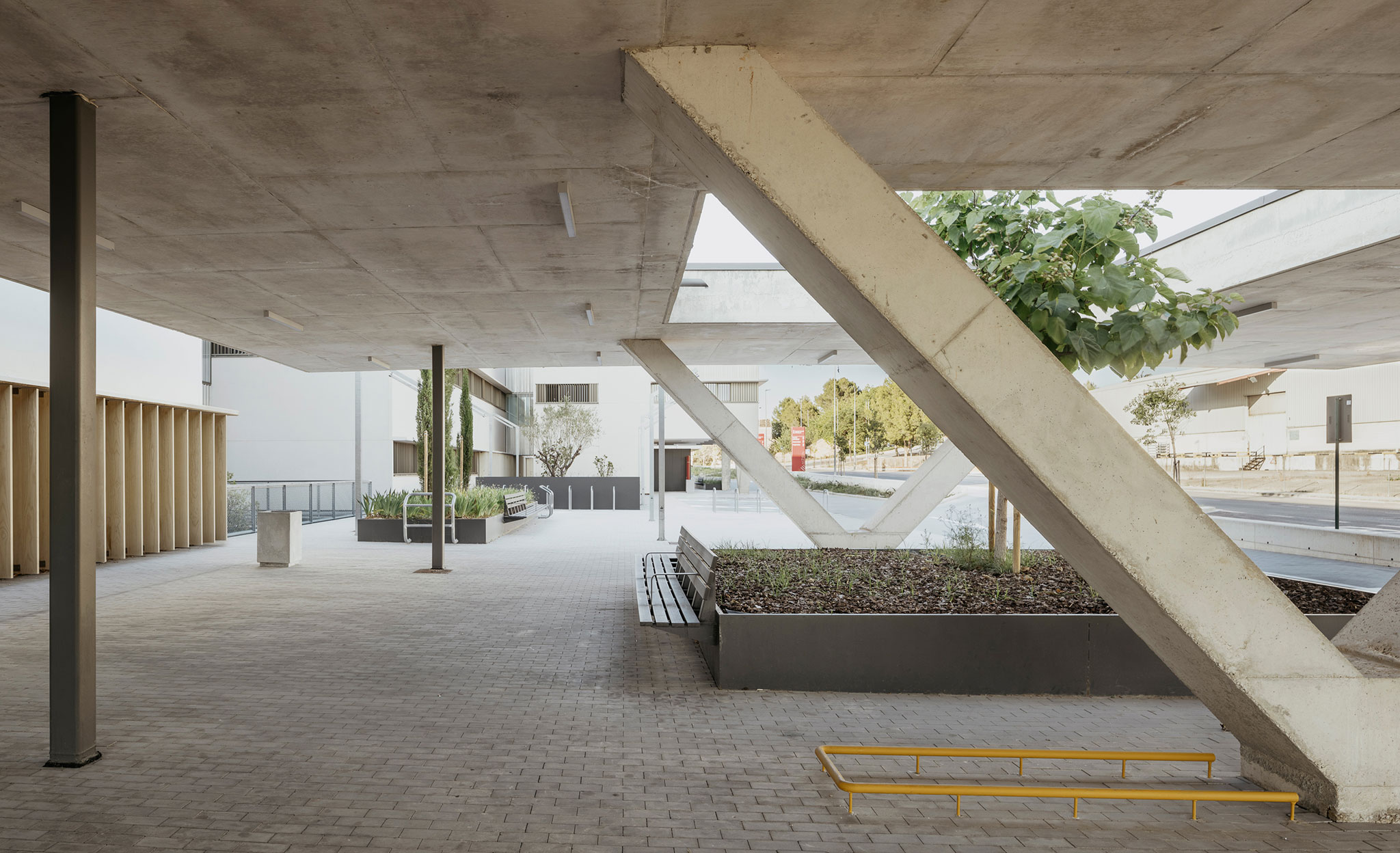
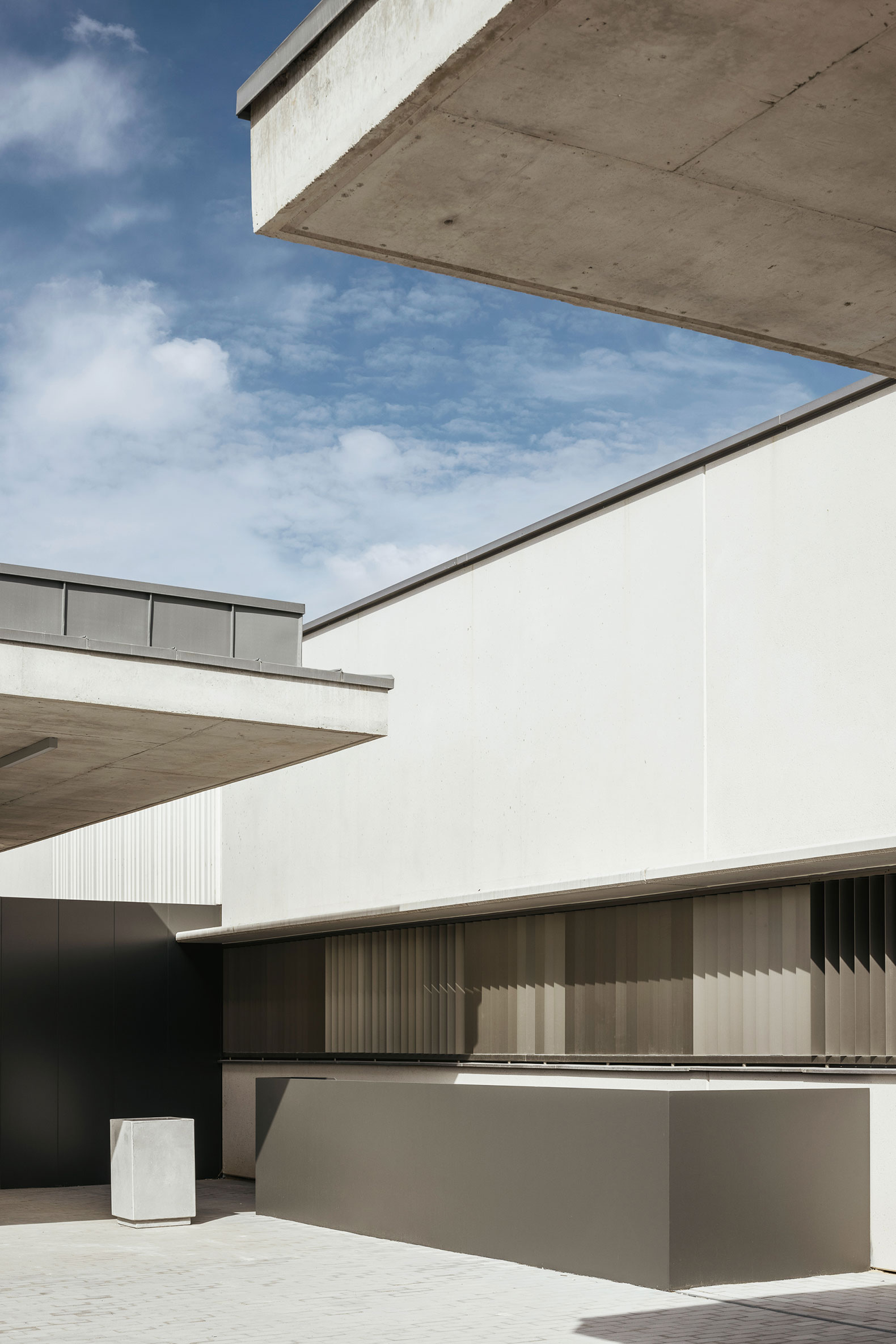
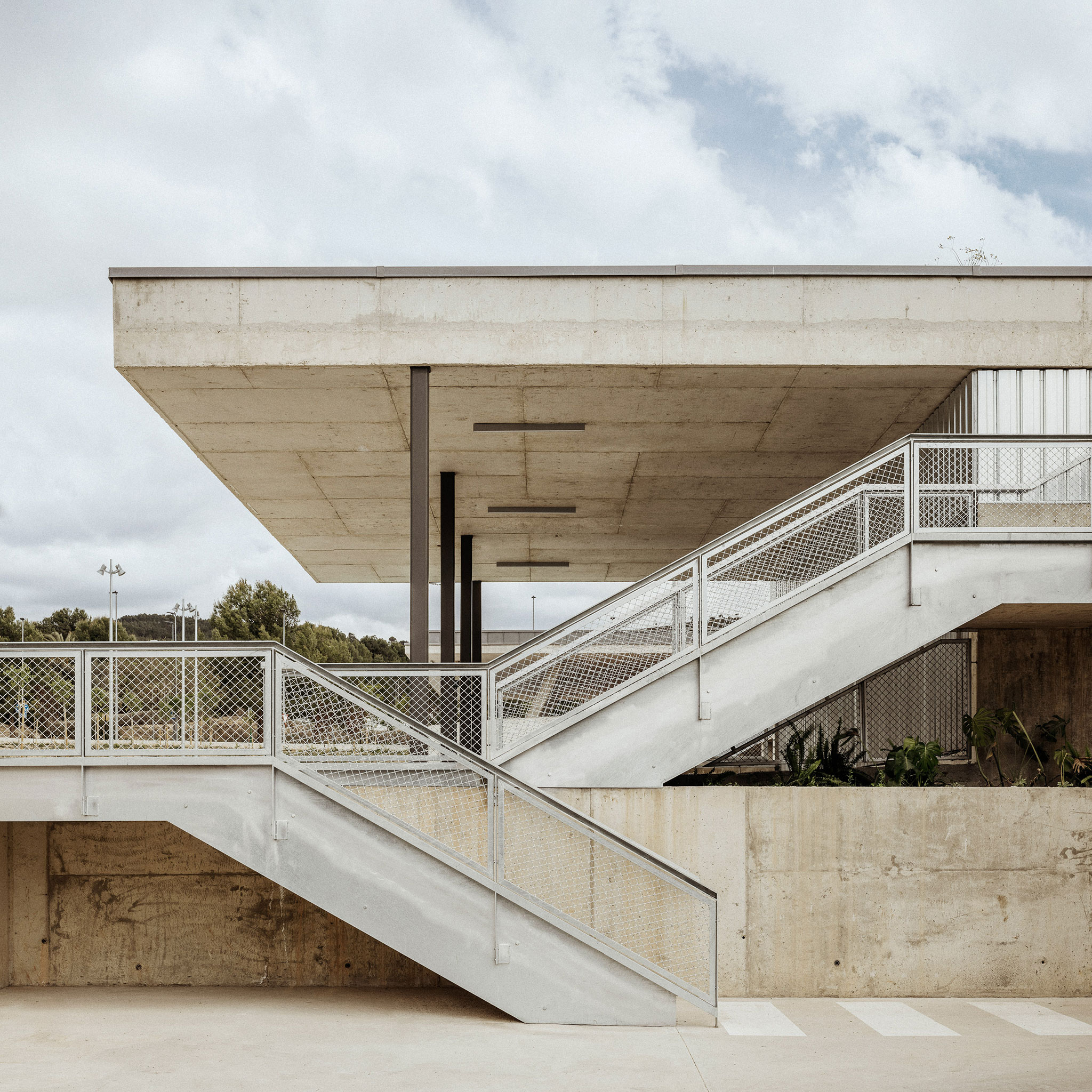
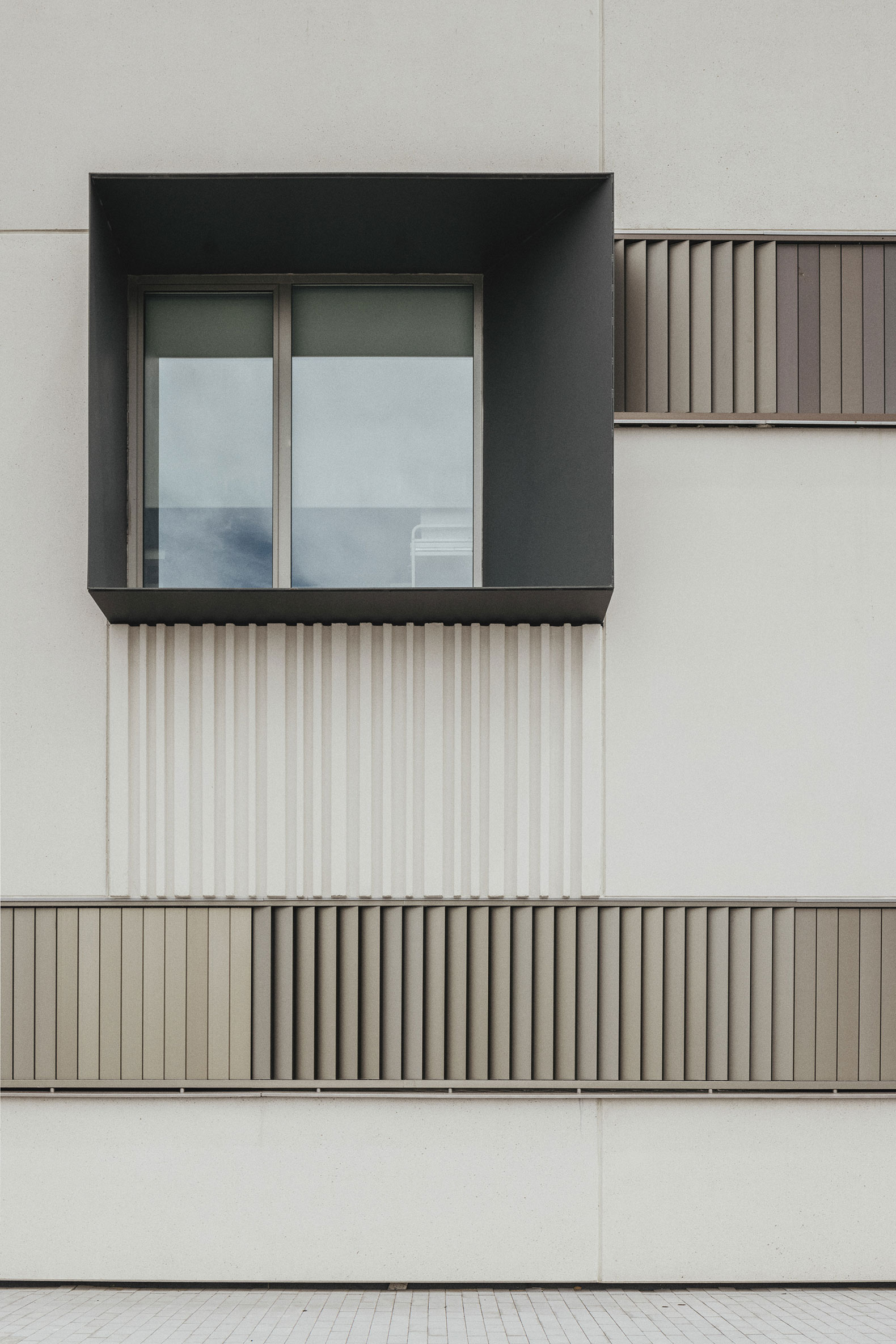
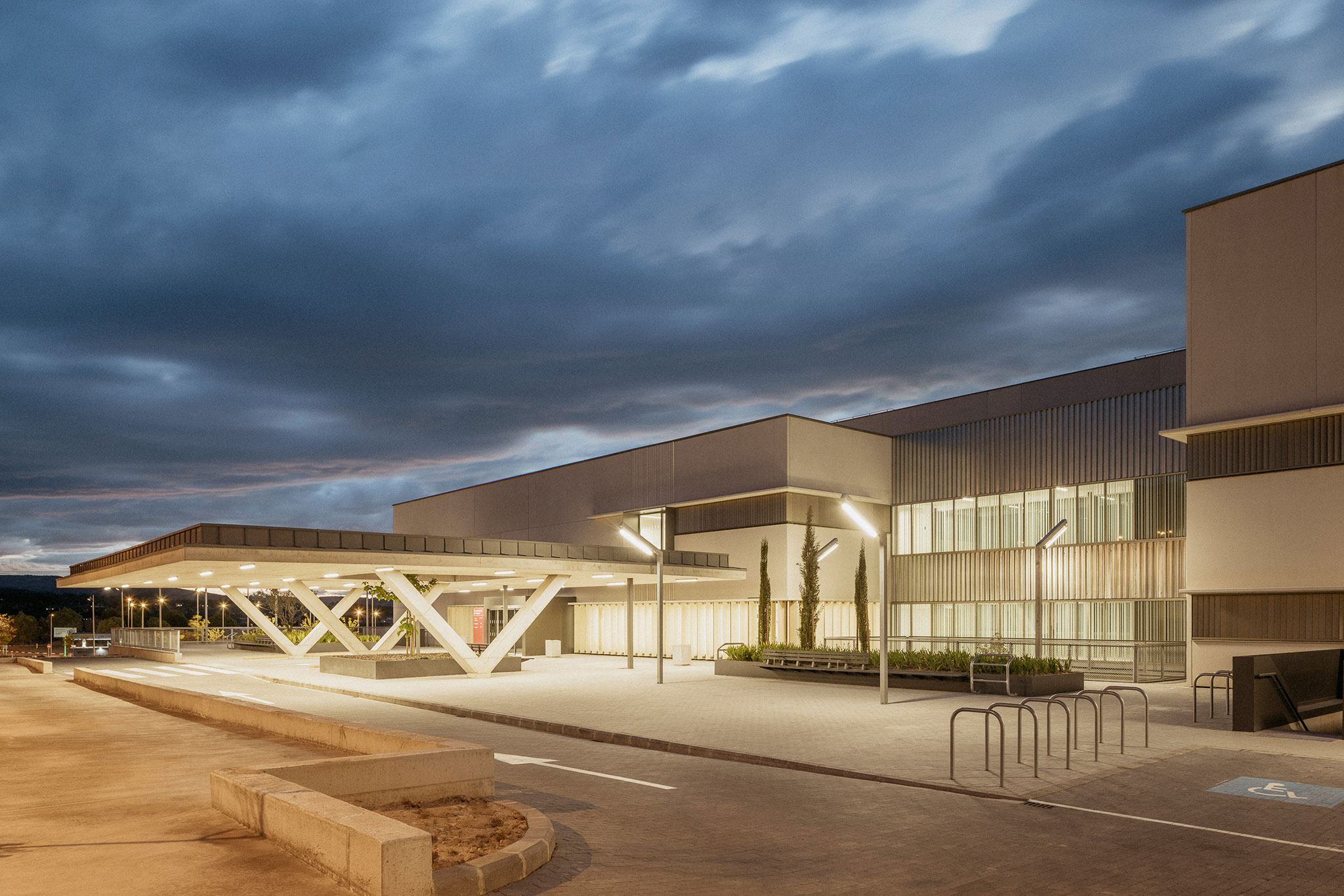
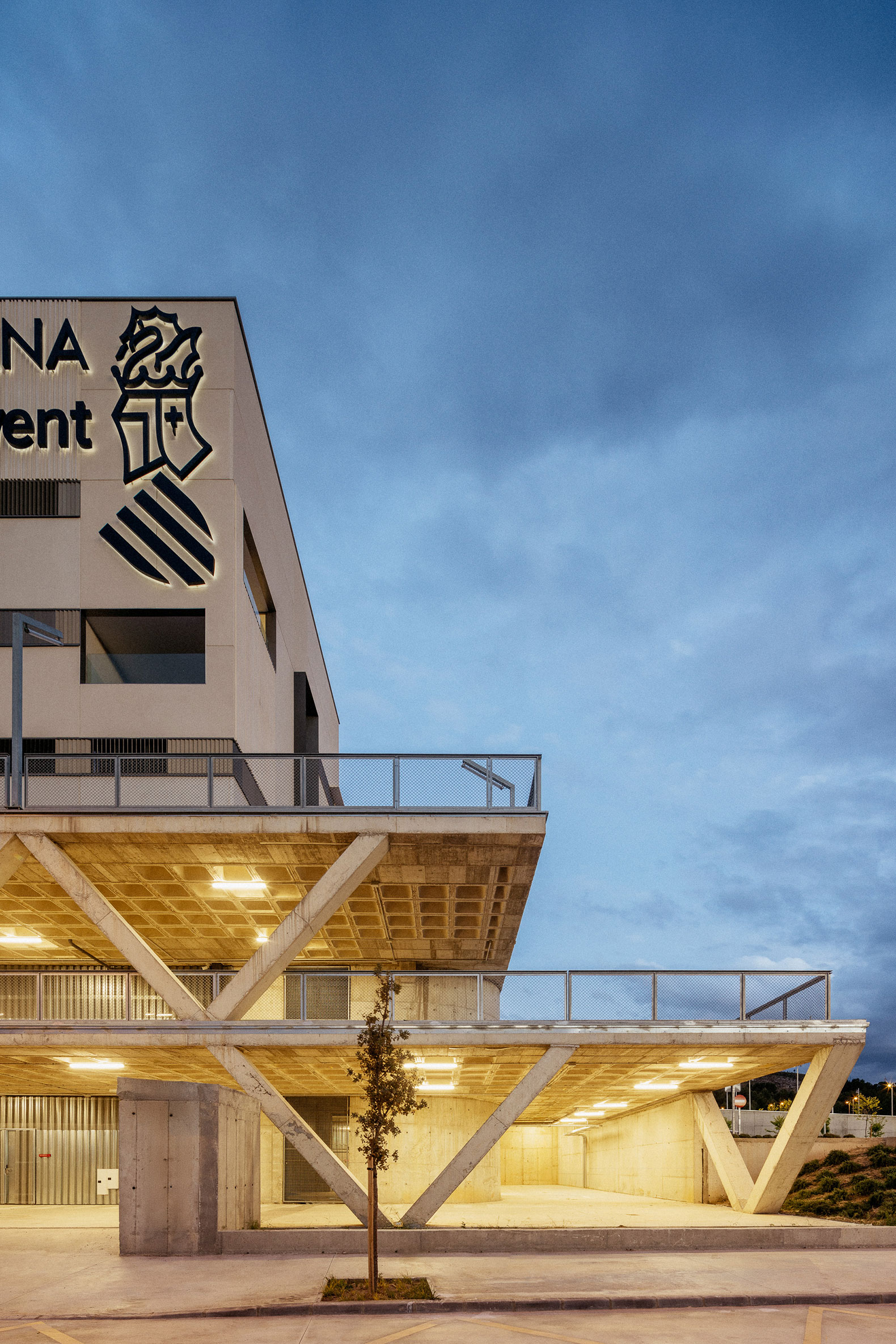
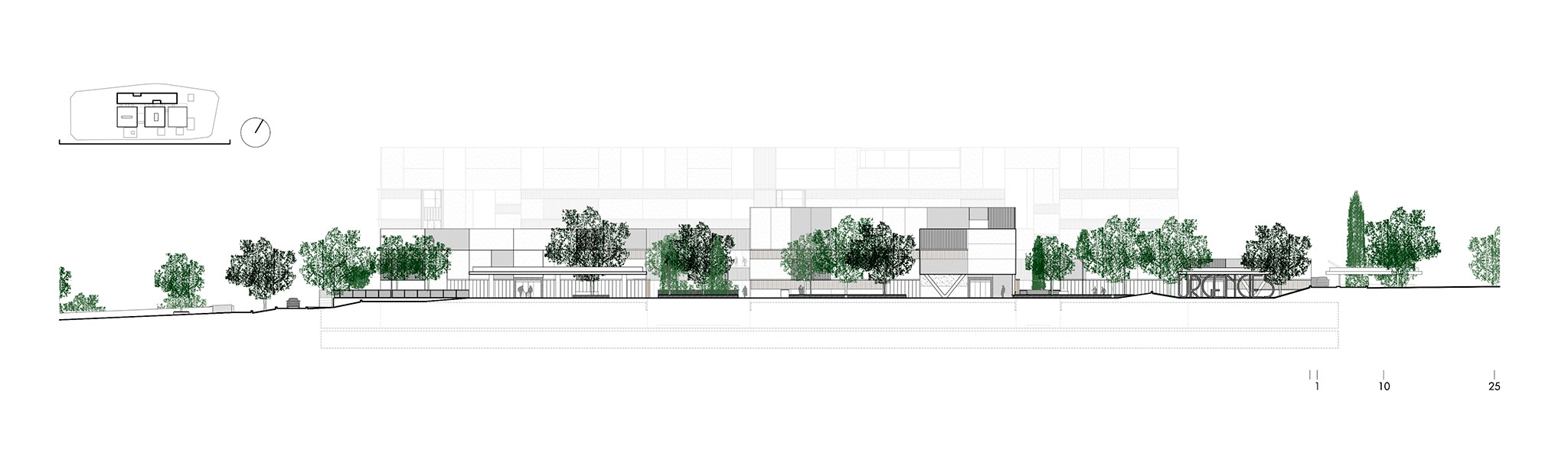
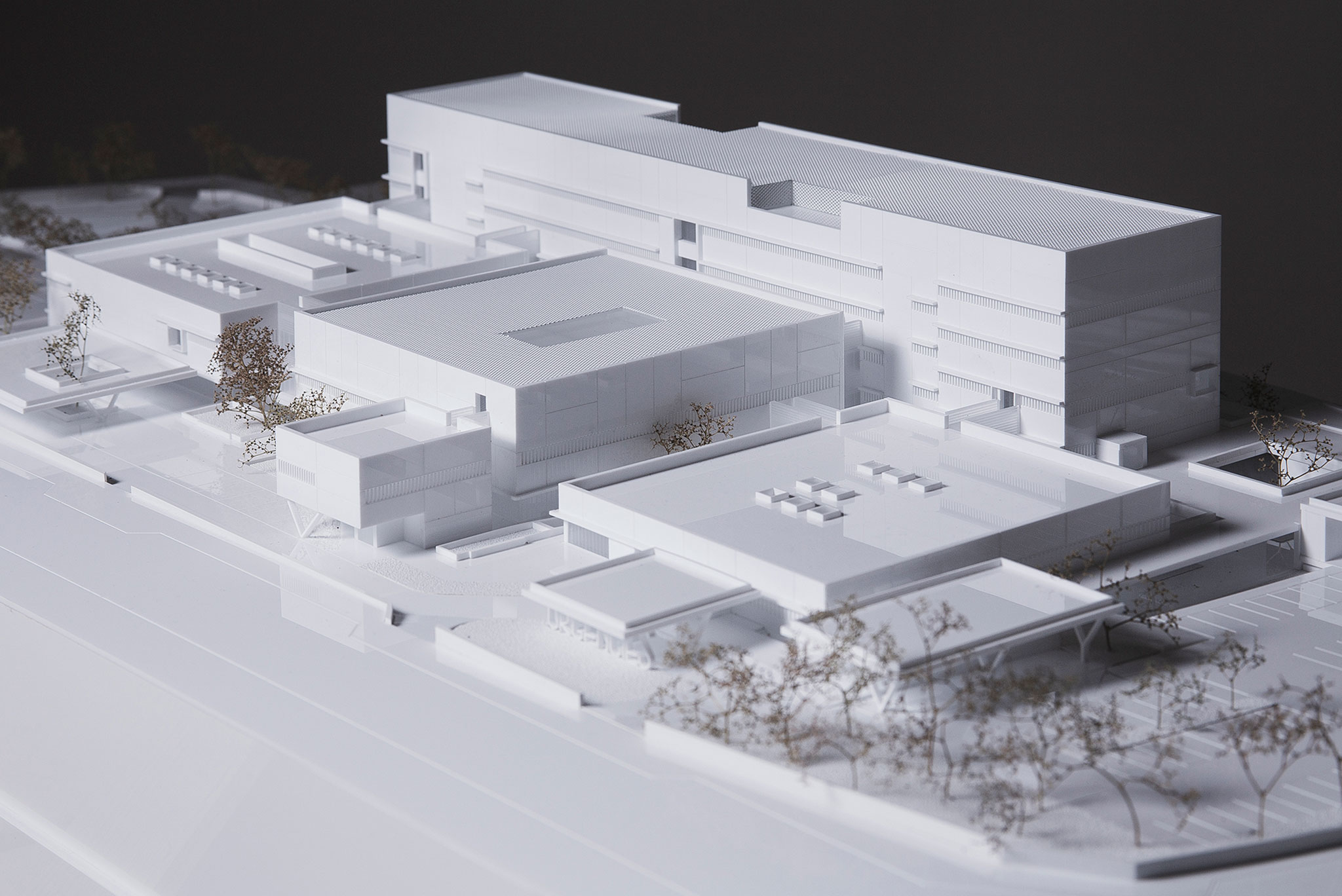
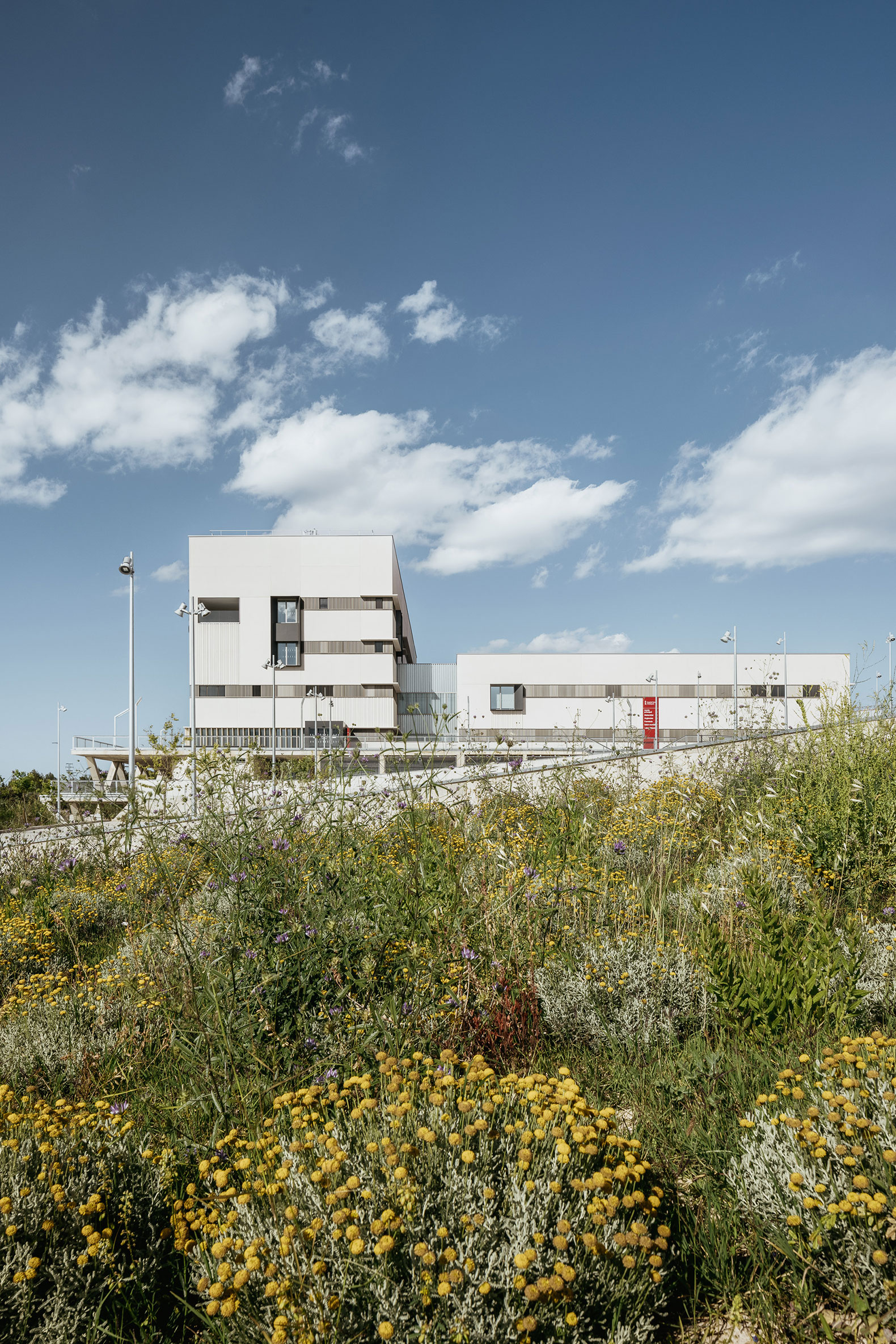
From the city, the north façade of the building, the inpatient wing, is recognizable as a six-story urban structure. This contrasts with the human scale of the south façade, where the pedestrian entrance is located and the complex is fragmented into one- and two-story volumes, creating small seating areas. The different volumes are interconnected by lightweight walkways suspended at various levels.
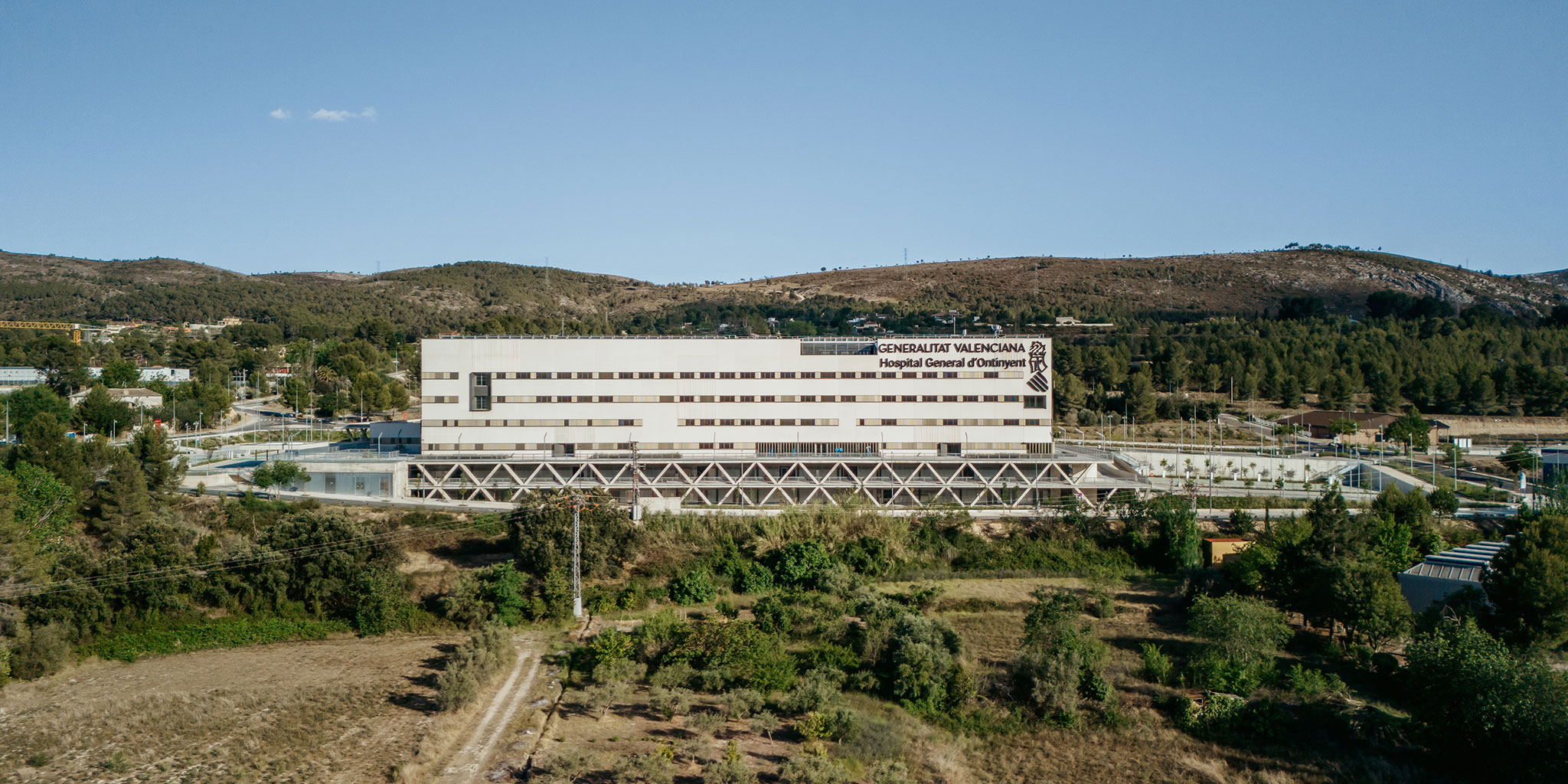
Ontinyent Hospital by Contell-Martínez and Manuel Vega. Photograph by Alejandro Gómez Vives.
Project description by Contell-Martínez and Manuel Vega
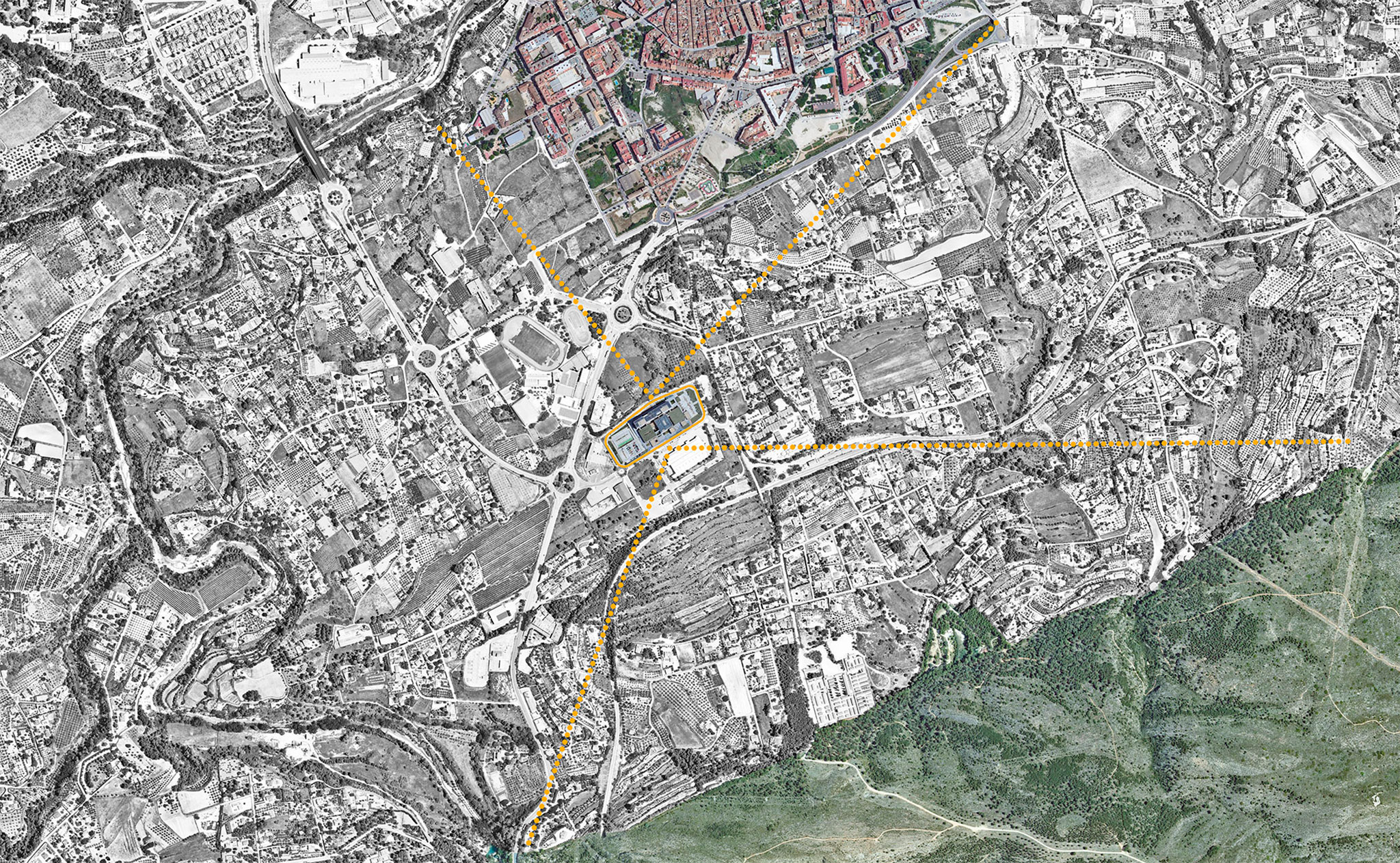
The new Hospital of Ontinyent is located to the south of the municipality, in the "Casa Balones" industrial estate, within a heterogeneous area of buildings, farmland, and scattered public facilities.
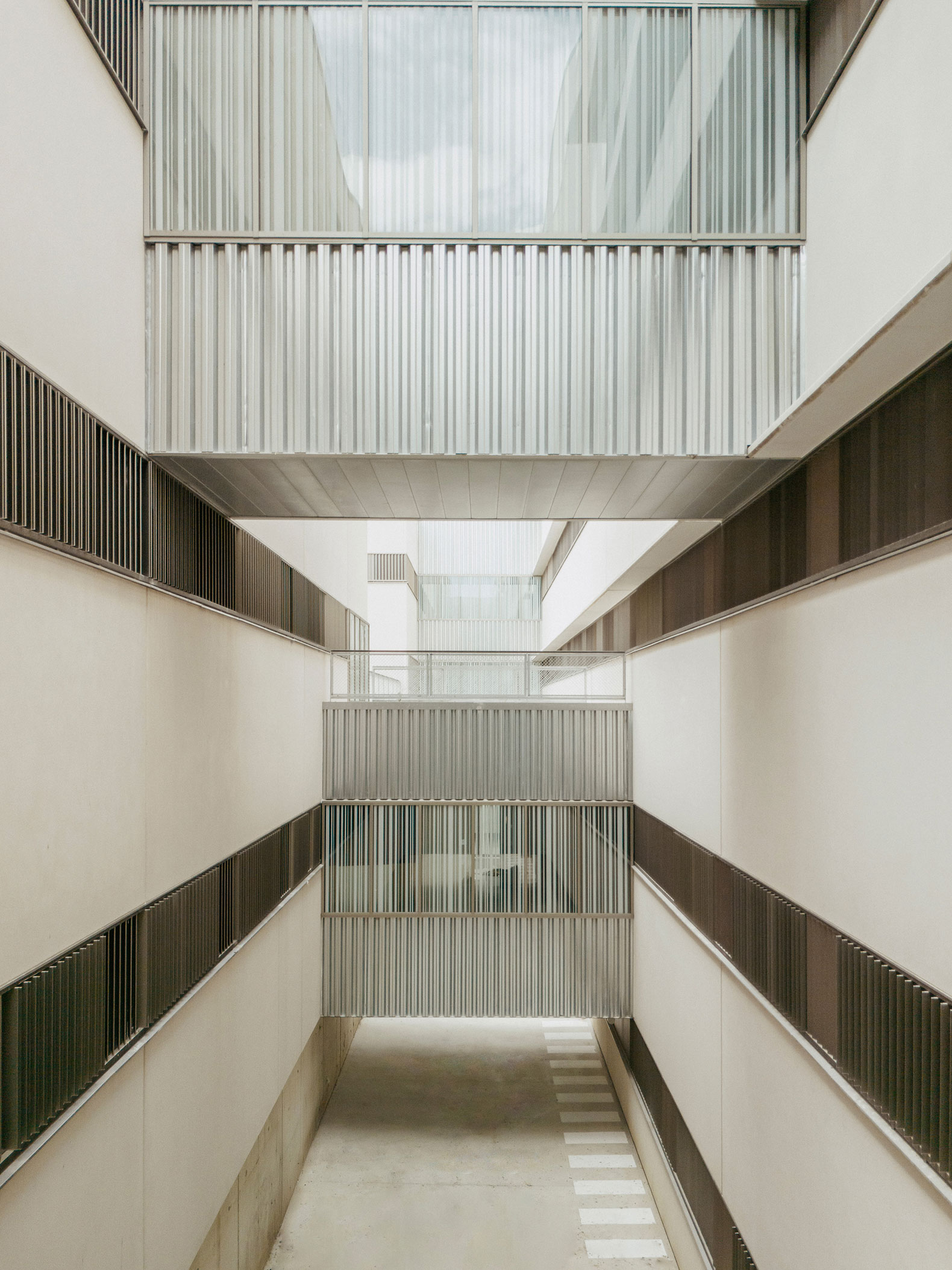
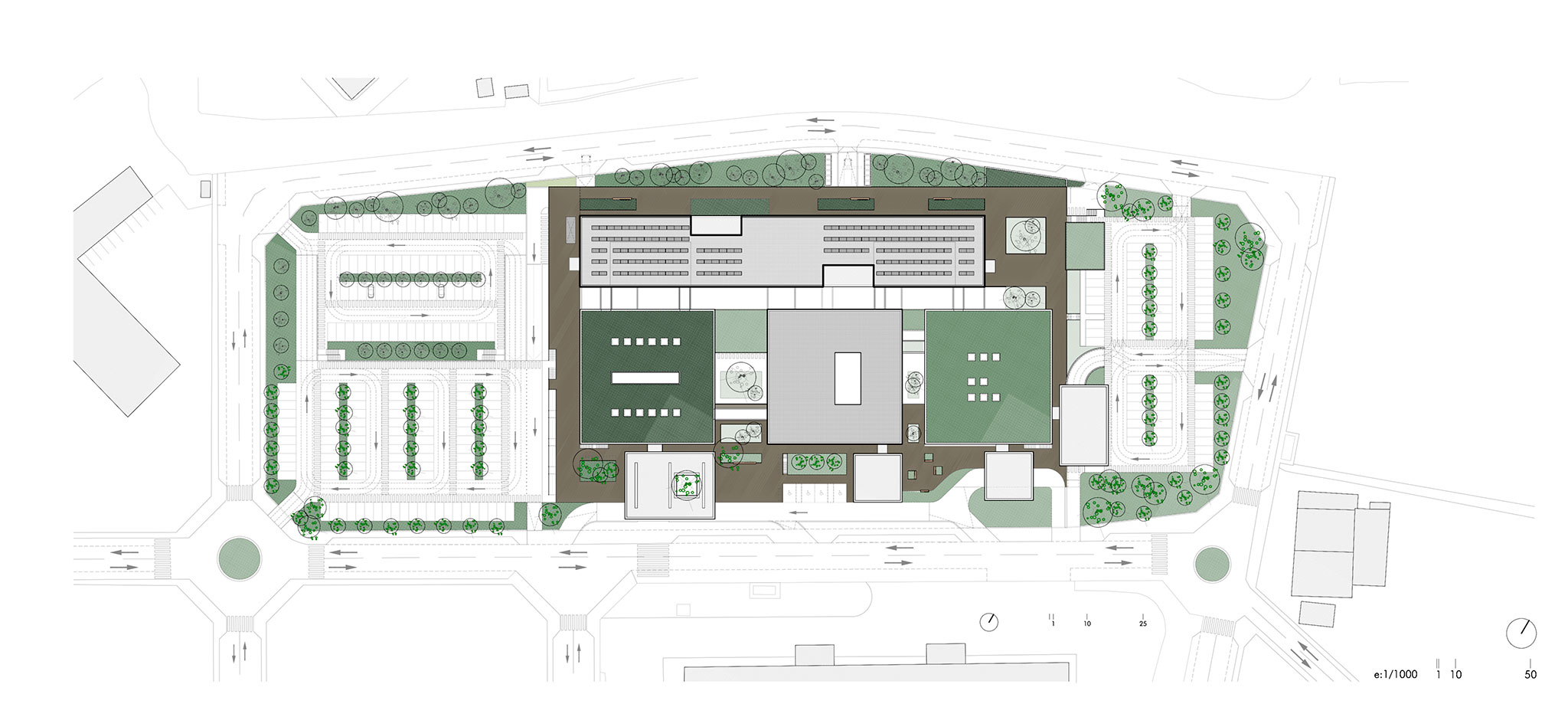
The plot is roughly rectangular, measuring approximately 275 by 115 meters, with a slope equivalent to two storeys in both directions. The approach to the site distributes different volumes at the center of the plot, on a horizontal platform conceived as a large public plaza. This plaza is perforated by courtyards that bring natural light to the lower floors and support lush vegetation.
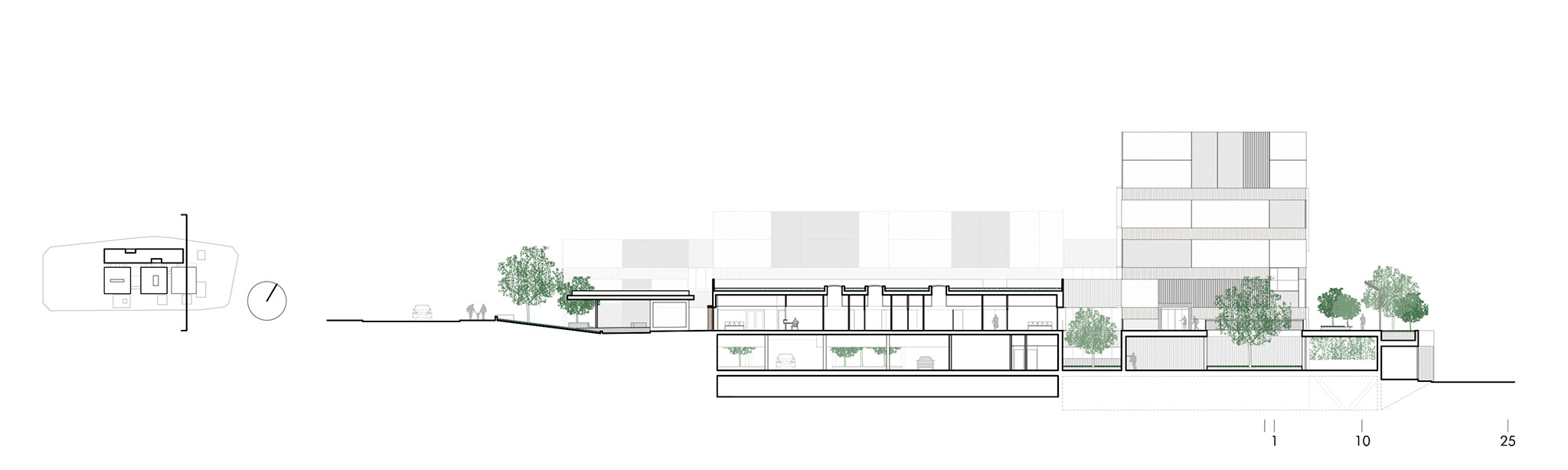
To resolve accessibility across the complex, the pronounced existing slope is addressed perimetrally with landscaped embankments, and longitudinally with two open-air parking areas located at the eastern and western ends. Transversely, the negative slope along the north façade is used to create two more restricted levels housing service areas and their vehicular circulation routes.
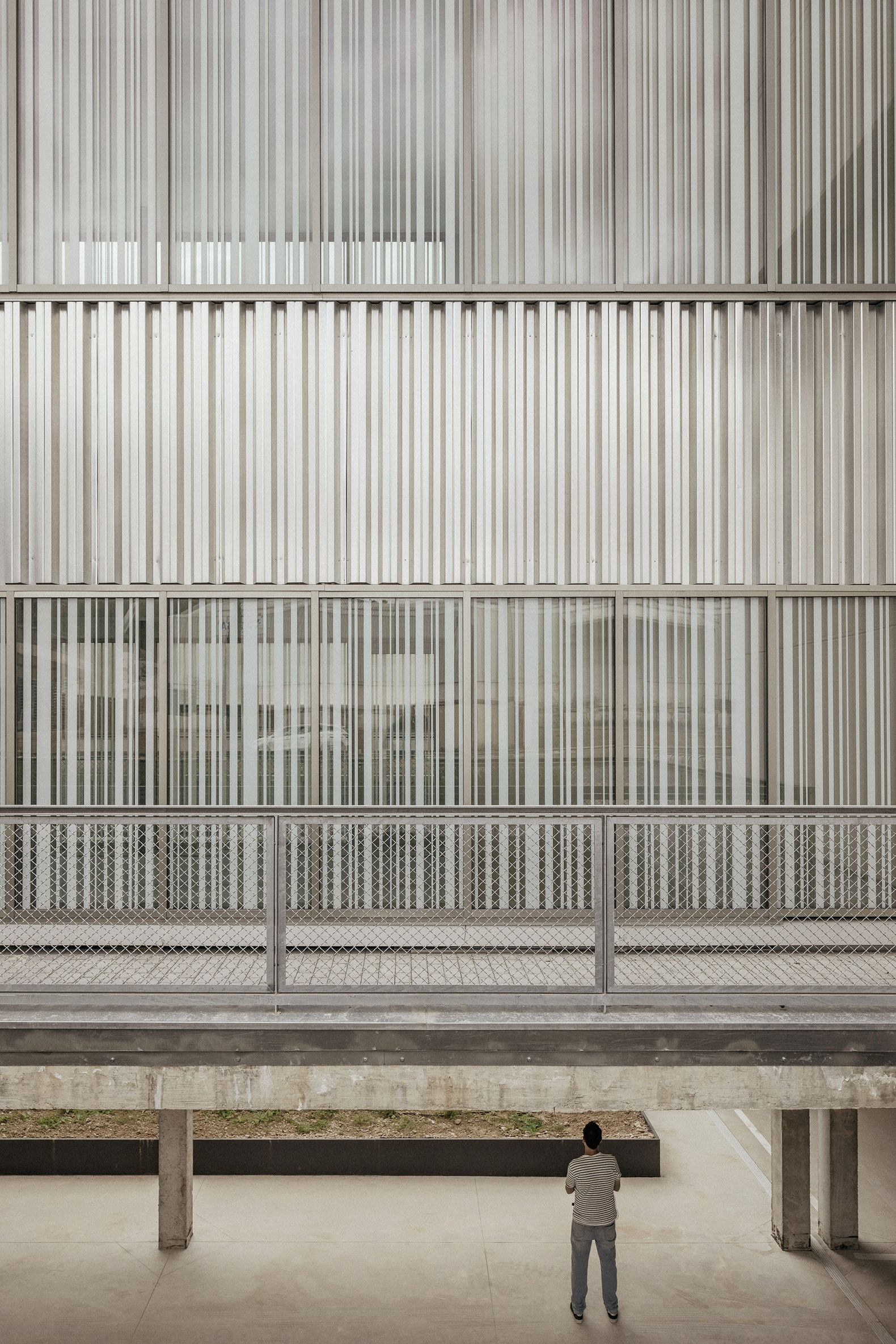
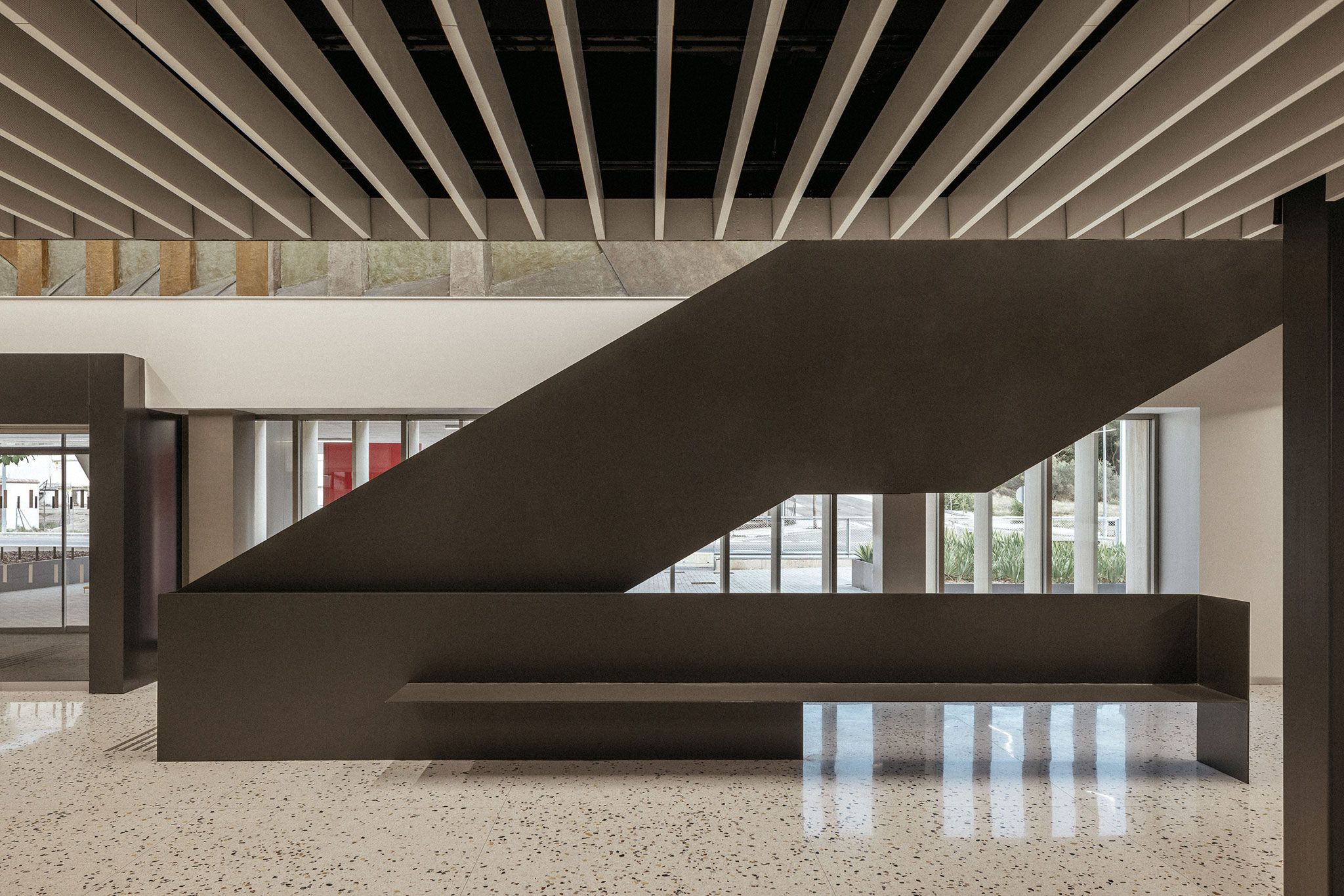
Thus, the hospital presents itself differently depending on its context and its relationship with users: to the north, visible from the city, it displays the scale of a major urban facility, with the six-storey inpatient block façade clearly recognizable in the distance. In contrast, to the south, where the pedestrian entrances are located, the complex fragments into one and two-storey volumes that form small gathering areas, adopting a much more human and welcoming scale. Beyond its environmental value, this fragmentation simplifies the functional relationships between areas, which are significantly complex in a hospital building. These areas are interconnected by walkways at different levels, creating a landscape of lightweight elements suspended between the main volumes.
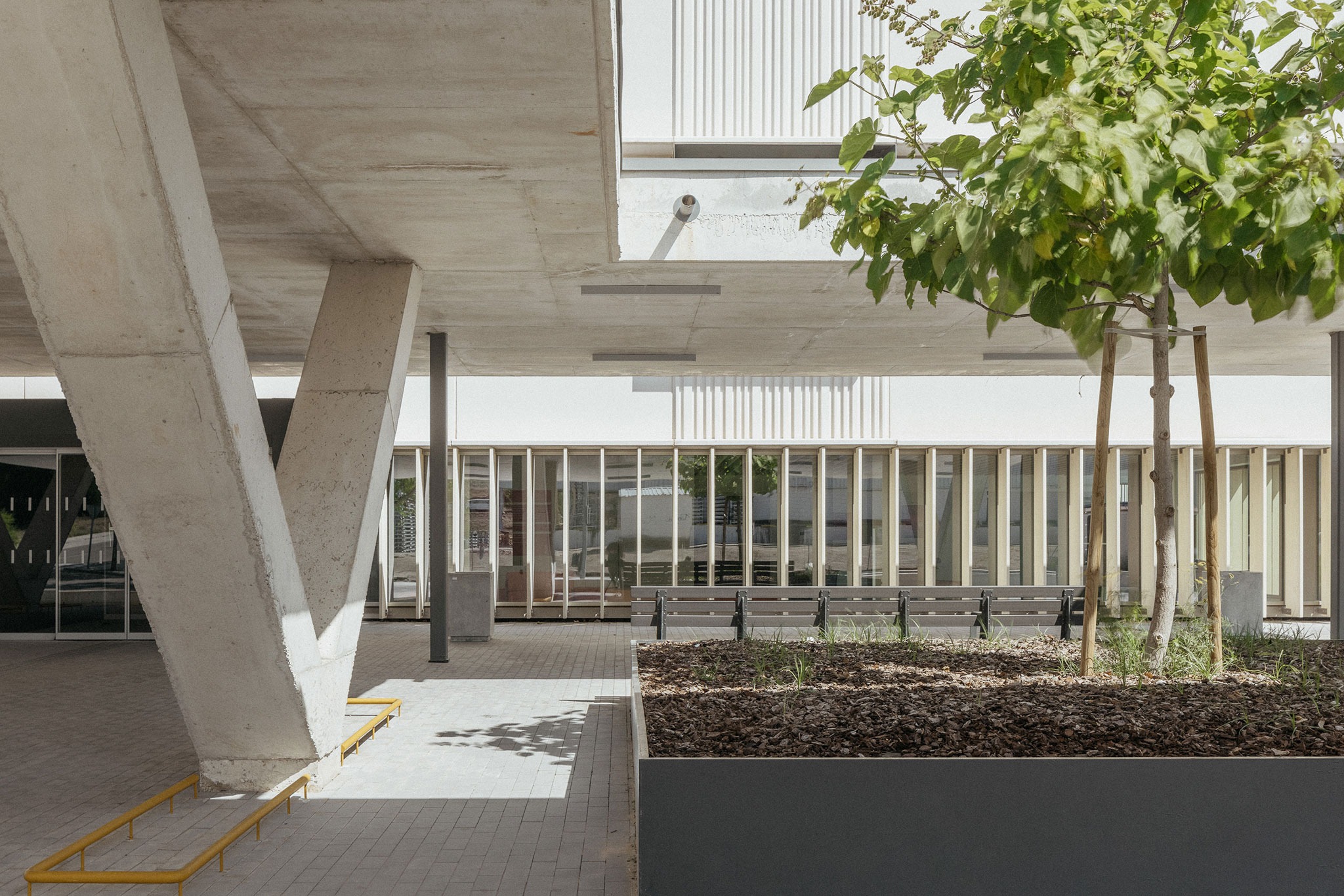
Functionally, several volumes are arranged on the platform that serves as a large public plaza, connected to one another by walkways according to their functional areas. Beneath this platform are two additional levels housing the complex’s service spaces, including staff parking and loading and unloading areas. By taking advantage of the plot’s slope, these two levels are able to have a north-facing façade.
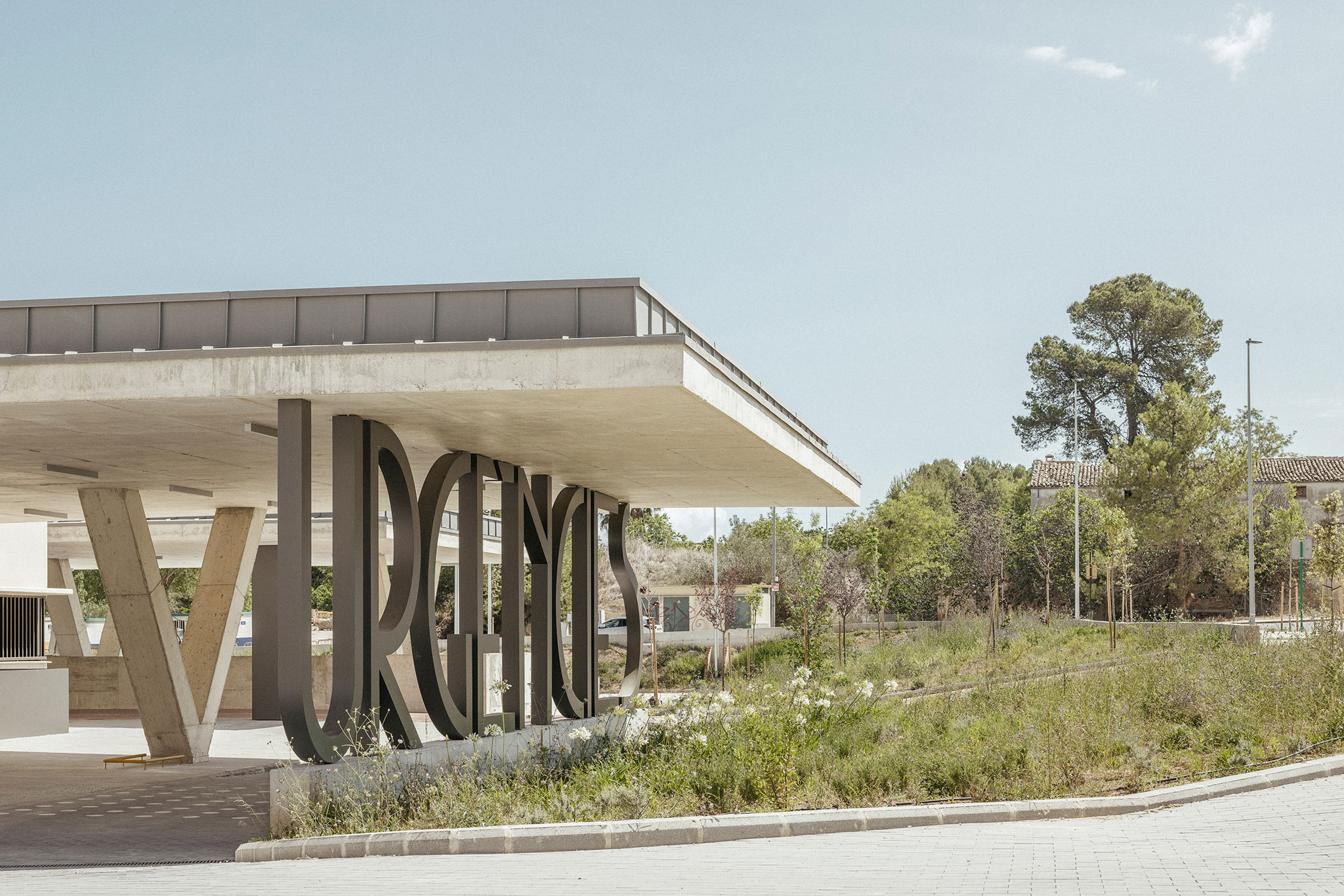
User flows are naturally organized from the various access points, clearly distinguishing pedestrian routes from private vehicular access, staff circulation, and emergency services.
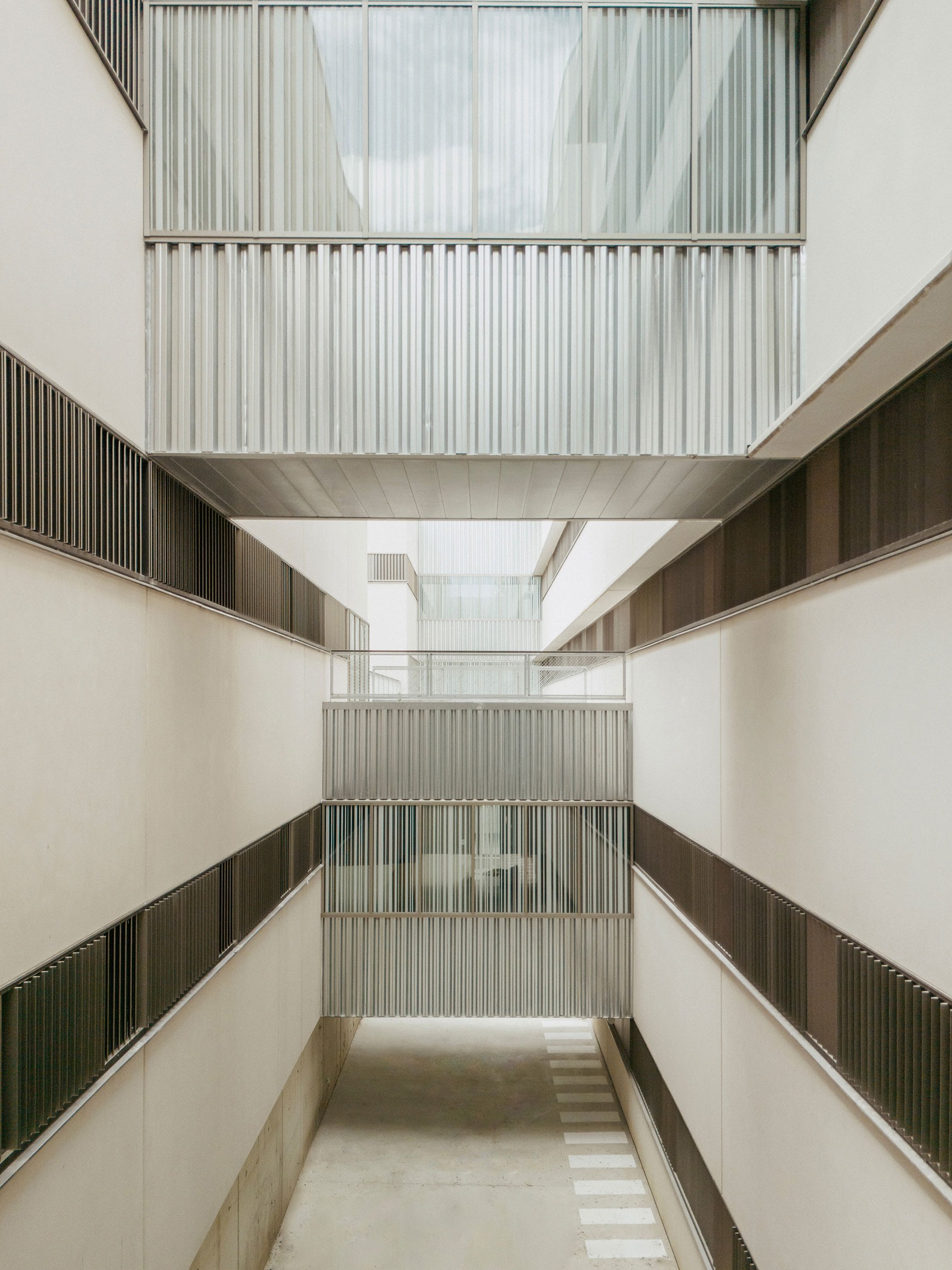
The construction is straightforward and without rhetoric, yet it acknowledges the building’s different conditions and responds accordingly, whether presenting itself at the scale of a major public facility or fostering a close, haptic atmosphere in direct contact with people. This shift in scale entails a shift in perception: from a bold element in the landscape to a fragmented, natural, and human landscape in itself.