Spanish studio BAAS arquitectura directed by the architect Jordi Badia has completed an office building named after its location "Pallars 180". Pallars Street is located in the Barcelona neighborhood of Poblenou, partially reconstructing the morphology and chamfer of the Eixample blocks.

The 22@ technological district of Poblenou, characteristic for its great technological development in recent years, has housed a new architecture of "satellites" that does not dialogue with the existing environment and breaks the urban continuity established during the more than one hundred and fifty years of the expansion by Ildefons Cerda. These new-build architectures do not help to build a quality urban space and turn the street into an inhospitable, solitary place alien to the citizen.

The project is one of the 50 finalists of the XVI BEAU Awards (Spanish Biennial of Architecture and Urbanism).
BAAS arquitectura opted for an office building with a façade composition that gives it a more human scale, with a contemporary language in which materials, colors, and textures dialogue, facilitating a connection with its historical industrial context. The main volume is staggered to reduce the visual impact of its eight levels, generating large terraces that facilitate a dialogue with the chimney of the old factory that recalls the industrial memory of the city.

The empty chamfer, an urban gesture that little by little is disappearing in the blocks of the Eixample in Poblenou, welcomes access to the building, through a porch, a courtesy transition space, which crosses the center of the block and makes it easier to reach the entrance hall. The central volume accommodates part of the building area and allows dilution of the main volume.


Pallars 180 by BAAS arquitectura. Photograph by Gregori Civera.

The building pays attention to its permeability both vertically and horizontally. Vertically all the windows and doors of the façade open, facilitating the user's relationship with the outside and the natural ventilation of the spaces. The two floors of underground parking, both for bicycles and motorcycles as well as for cars, are ventilated through a patio.

The façade is characterized by the use of ceramic material – manual ecological brick – arranged with lime mortar joints, providing closeness and moving away from the usual assembly of light façades.

Pallars 180 by BAAS arquitectura. Photograph by Gregori Civera.
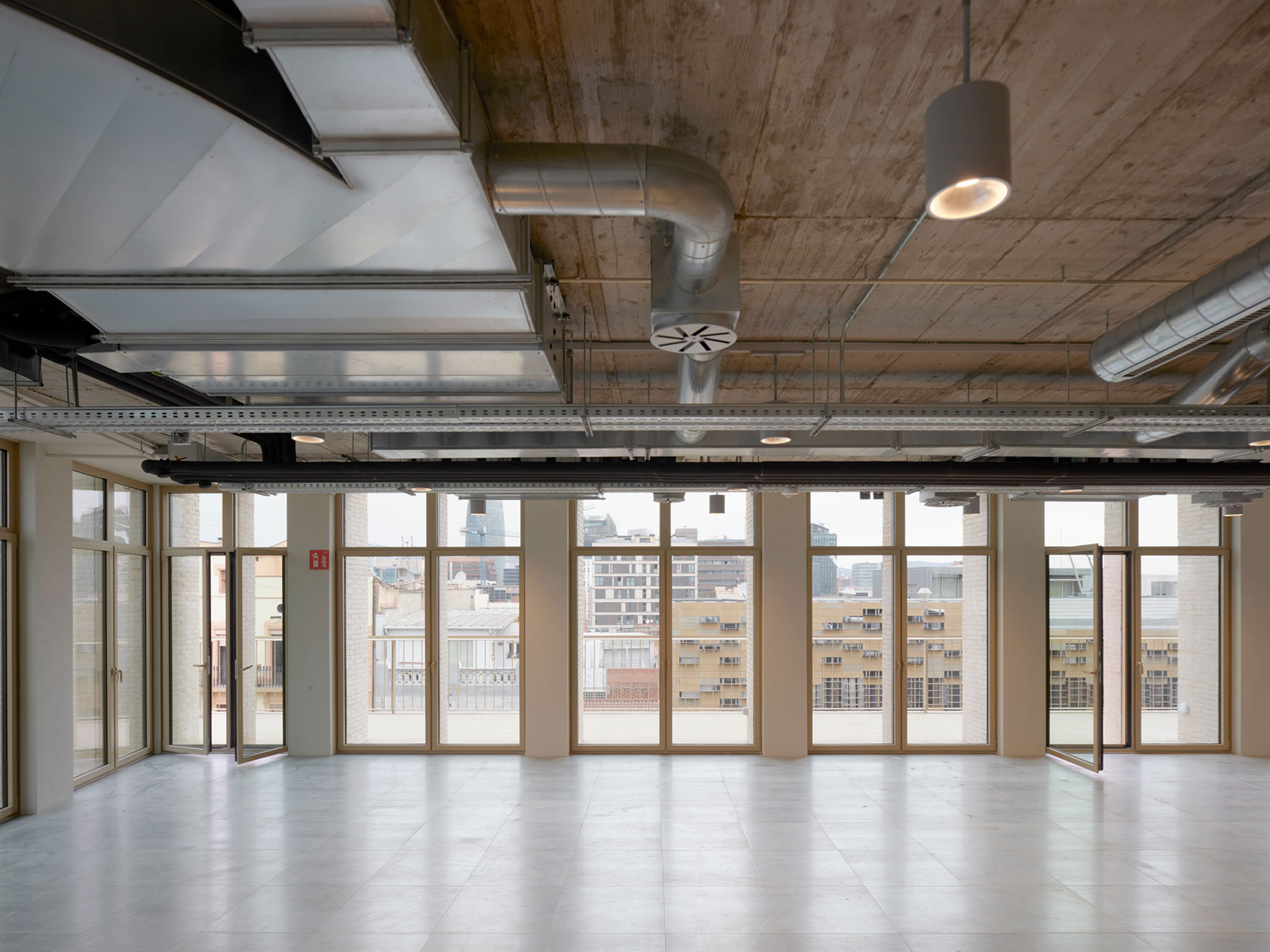

Pallars 180 by BAAS arquitectura. Photograph by Gregori Civera.


Project description by BAAS arquitectura

The Poblenou neighborhood of Barcelona has been invaded in recent years by a new architecture of unique buildings that do not dialogue with their industrial and traditional environment. This set of scattered buildings does not help to build a quality urban space and the street often becomes an inhospitable place that does not invite you to walk.

The intention of the project is to set clearly for the continuity of the block and to do it with a language and color that fit in the context in a natural way, without giving up a certain autonomy and character.

In the section, the volume is removed in terraces to recognize the neighboring heights and establish links with the immediate environment and at the same time lighten the volume from the street.
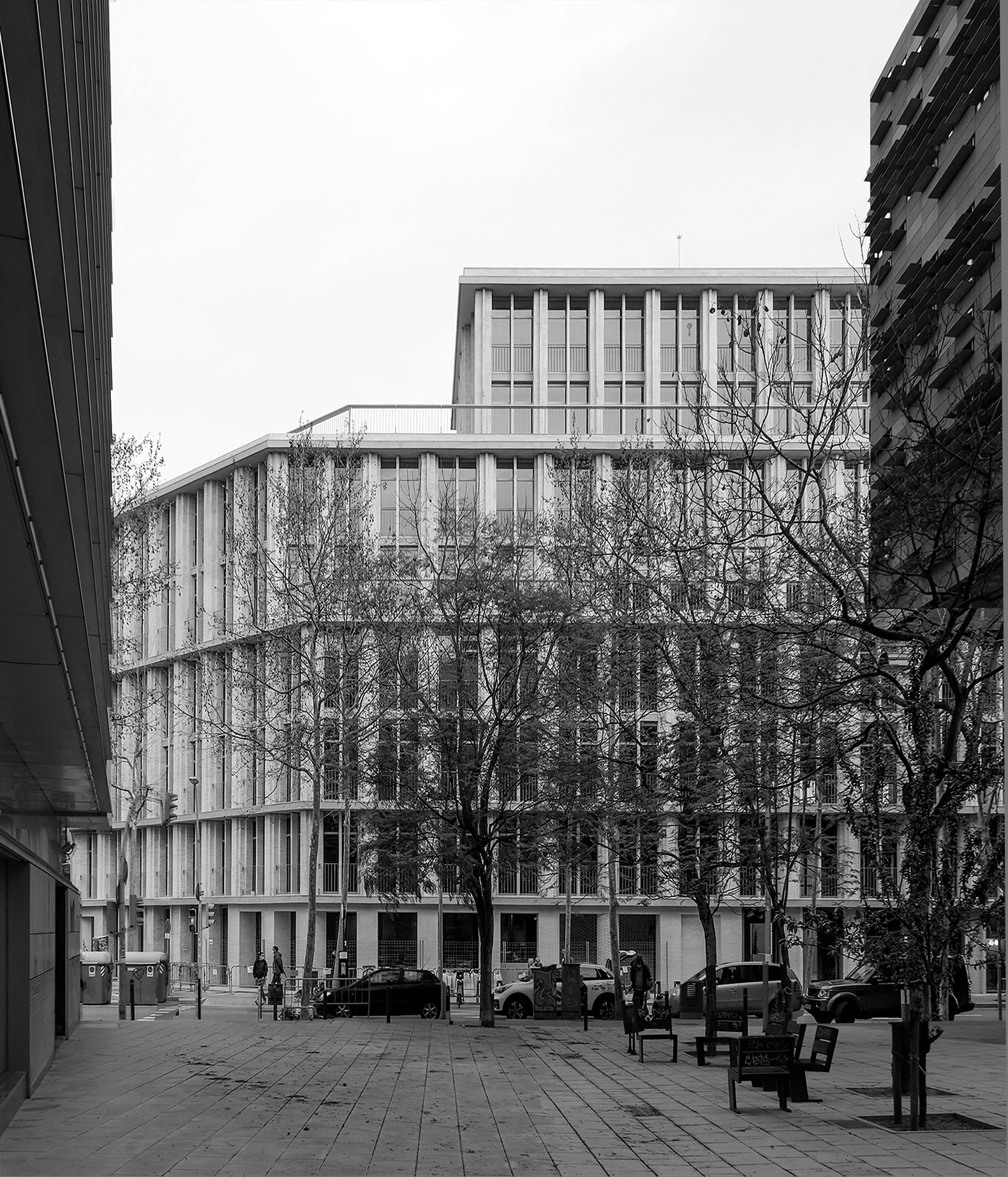

Pallars 180 by BAAS arquitectura. Photograph by Gregori Civera.

More information

Label
Architects
Text
BAAS arquitectura. Architects.- Jordi Badia, Àlex Clarà.
+ + copy Created with Sketch.
- + copy Created with Sketch.
Label
Developer
Text
Conren Tramway.
+ + copy Created with Sketch.
- + copy Created with Sketch.
Label
Area
Text
15.200 sqm.
+ + copy Created with Sketch.
- + copy Created with Sketch.
Label
Dates
Text
2022.
+ + copy Created with Sketch.
- + copy Created with Sketch.
Label
Location
Text
Calle de Pallars, 180, Barcelona, Spain.
+ + copy Created with Sketch.
- + copy Created with Sketch.
Label
Photography
+ + copy Created with Sketch.
- + copy Created with Sketch.

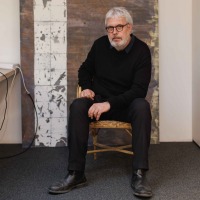
BAAS Arquitectura is an architecture practice founded in 1994 in Barcelona by architect Jordi Badia (Barcelona, 1961). He graduated from the Barcelona School of Architecture (ETSAB) in 1989. Between 1989 and 1993, he worked alongside architect Tonet Sunyer before establishing his own practice.

Since its foundation, BAAS Arquitectura has worked on projects of different scales and programmes, including residential buildings, offices, educational facilities, healthcare buildings, cultural spaces and interventions in architectural heritage. Its work is characterised by a careful consideration of the urban context, the use of materials and the relationship between architecture and public space. The restoration and adaptation of existing buildings to new uses also play an important role in the studio's practice.

Among its best-known works are the Can Framis Museum in Barcelona, which received the 2009 City of Barcelona Award and the FAD Opinion Award; the conversion of the former Oliva Artés factory into a branch of the Barcelona History Museum (MUHBA); the renovation of the Alta Diagonal office building; and the FAD headquarters in Barcelona.

Internationally, one of its most notable projects is the Faculty of Radio and Television at the University of Silesia in Katowice, Poland (2017), designed in collaboration with GRUPA 5 Architekci and Małeccy Biuro Projektowe. The building received the Brick Award 2020 and was shortlisted for the 2019 European Union Prize for Contemporary Architecture – Mies van der Rohe Award. More recent projects include the Llull 122 building and the Vall d'Hebron Research Centre (VHIR), the latter developed in collaboration with ESPINET/UBACH.

Alongside his architectural practice, Jordi Badia teaches in the Department of Architectural Design at ETSAB, where he has been a professor since 2001. He has also collaborated with universities in Hong Kong, Ljubljana, Toulouse and Zurich. He has written for the newspaper ARA and served as editor of the architecture blog HIC Arquitectura.

In 2012, together with Félix Arranz, he curated VOGADORS, the exhibition representing Catalonia and the Balearic Islands at the 13th Venice Architecture Biennale. His career brings together architectural practice, teaching and the dissemination of architecture, with a particular interest in the relationship between buildings, the city and its inhabitants.

Read more
Published on: July 31, 2023
Cite:
Metalocus, ELENA DE LA FUENTE
"Search for a quality space. Pallars 180 by BAAS arquitectura" METALOCUS. Accessed
<https://www.metalocus.es/en/news/search-a-quality-space-pallars-180-baas-arquitectura> ISSN 1139-6415
Loading content ...
Loading content ...
Loading content ...
Loading content ...
Loading content ...
Loading content ...
Loading content ...
Loading content ...
Loading content ...
Loading content ...
Loading content ...
Loading content ...
Loading content ...
Loading content ...
Loading content ...
Loading content ...
Loading content ...
Loading content ...
Loading content ...
Loading content ...
Loading content ...
Loading content ...
Loading content ...
Loading content ...
Loading content ...
Loading content ...
Loading content ...
Loading content ...
Loading content ...
Loading content ...
Loading content ...
Loading content ...
Loading content ...
Loading content ...
Loading content ...
Loading content ...
Loading content ...
Loading content ...
Loading content ...
Loading content ...
Loading content ...
Loading content ...
Loading content ...
Loading content ...
Loading content ...
Loading content ...
Loading content ...
Loading content ...
Loading content ...
Loading content ...
Loading content ...
Loading content ...
Loading content ...
Loading content ...