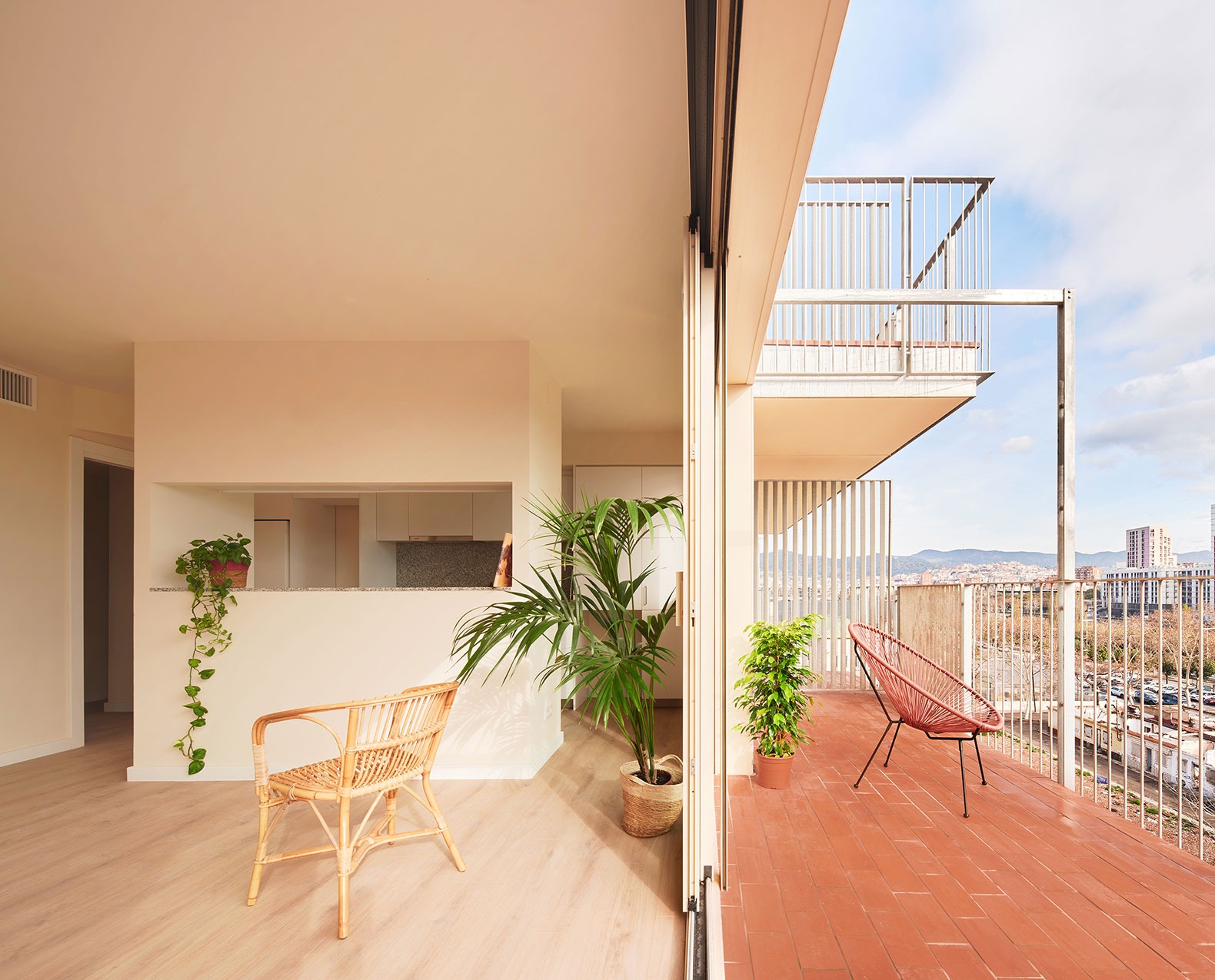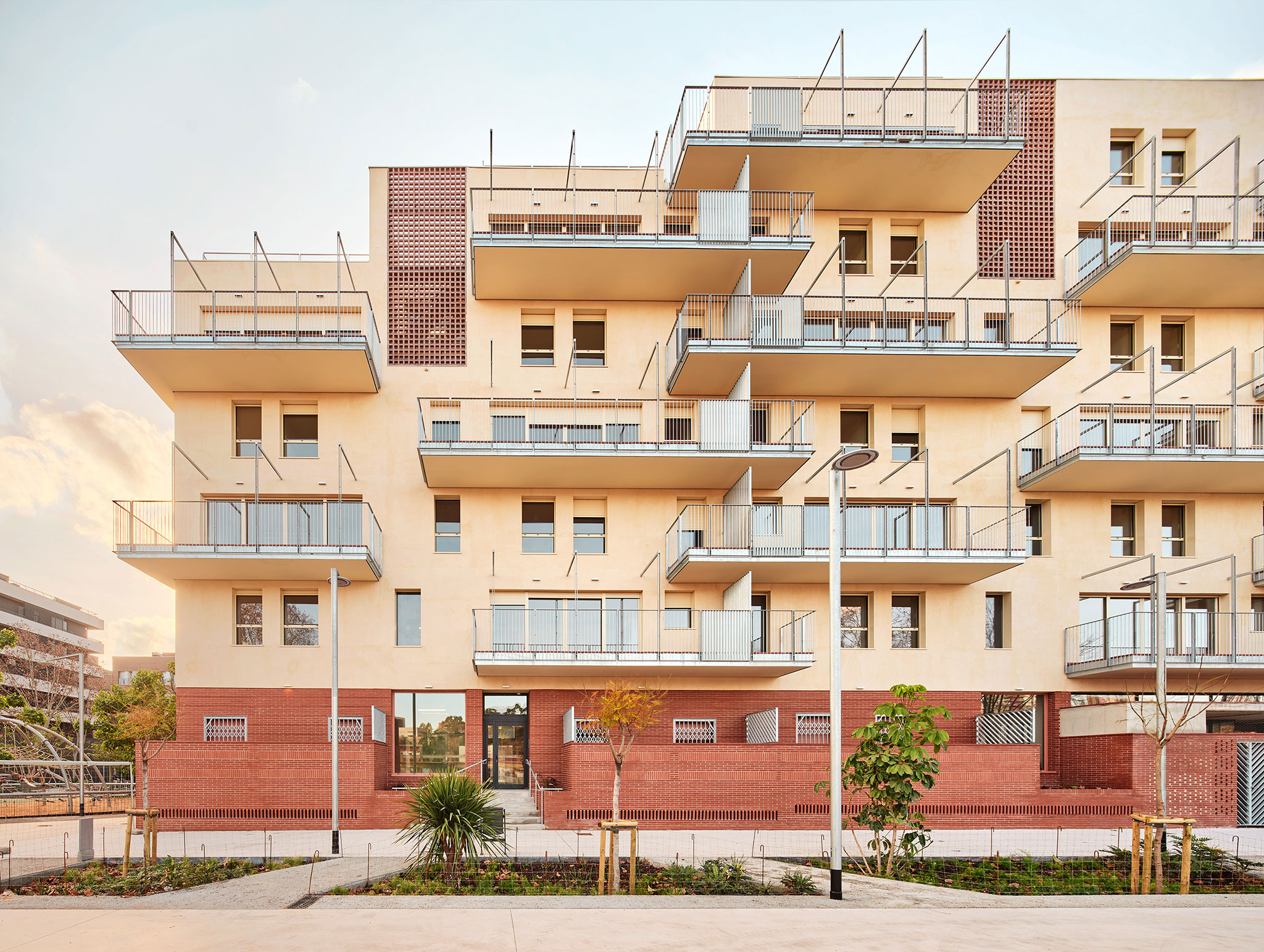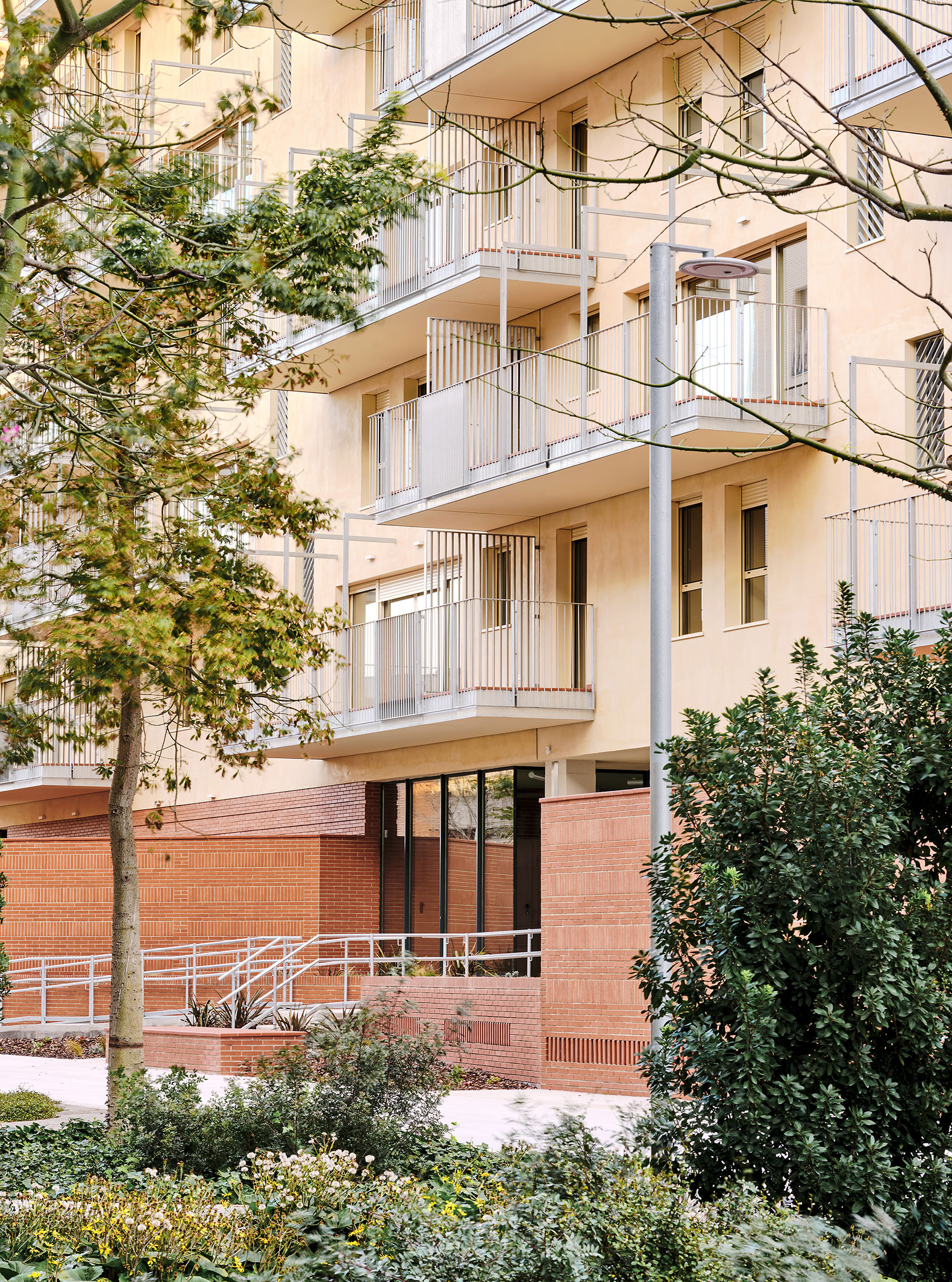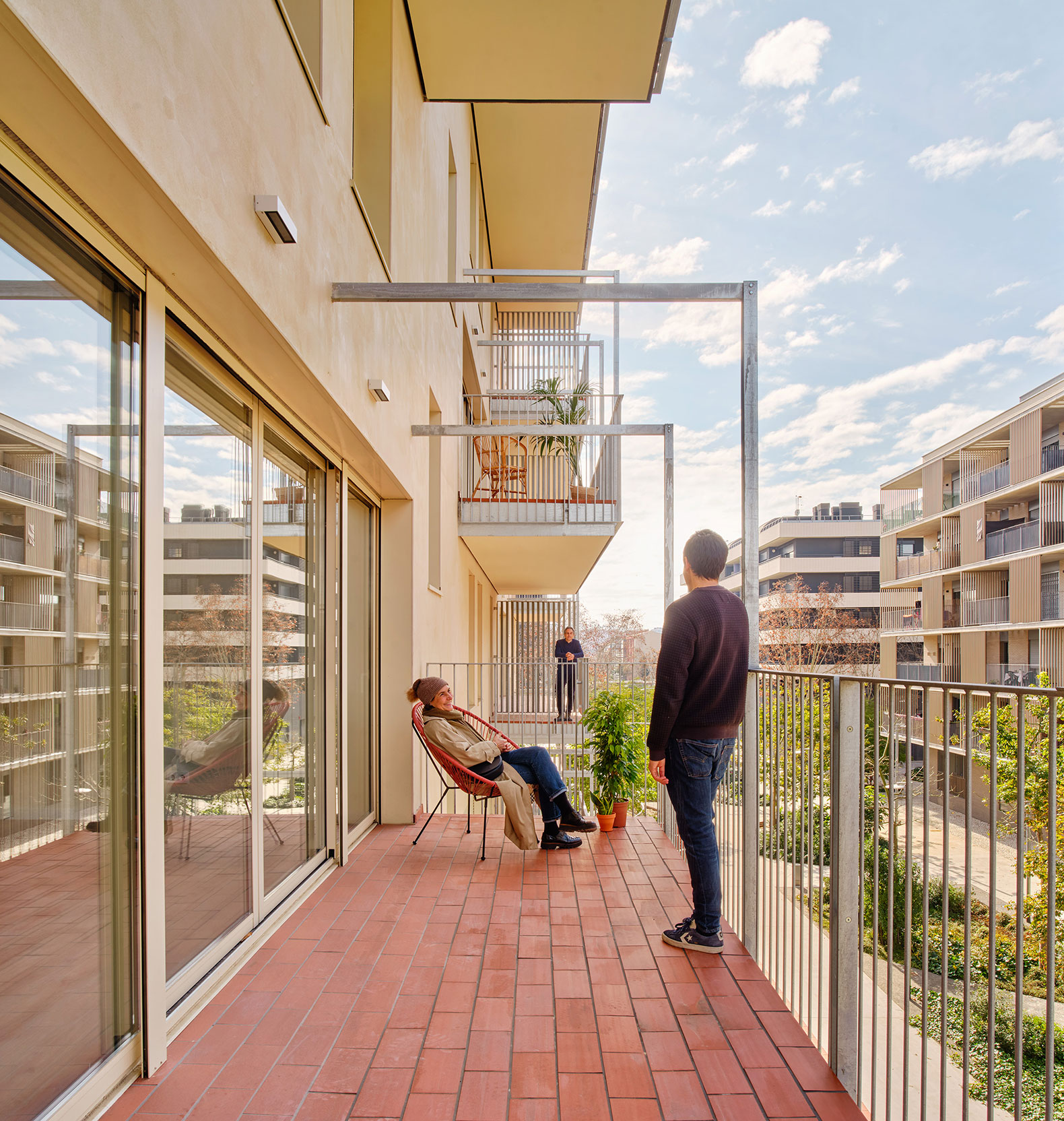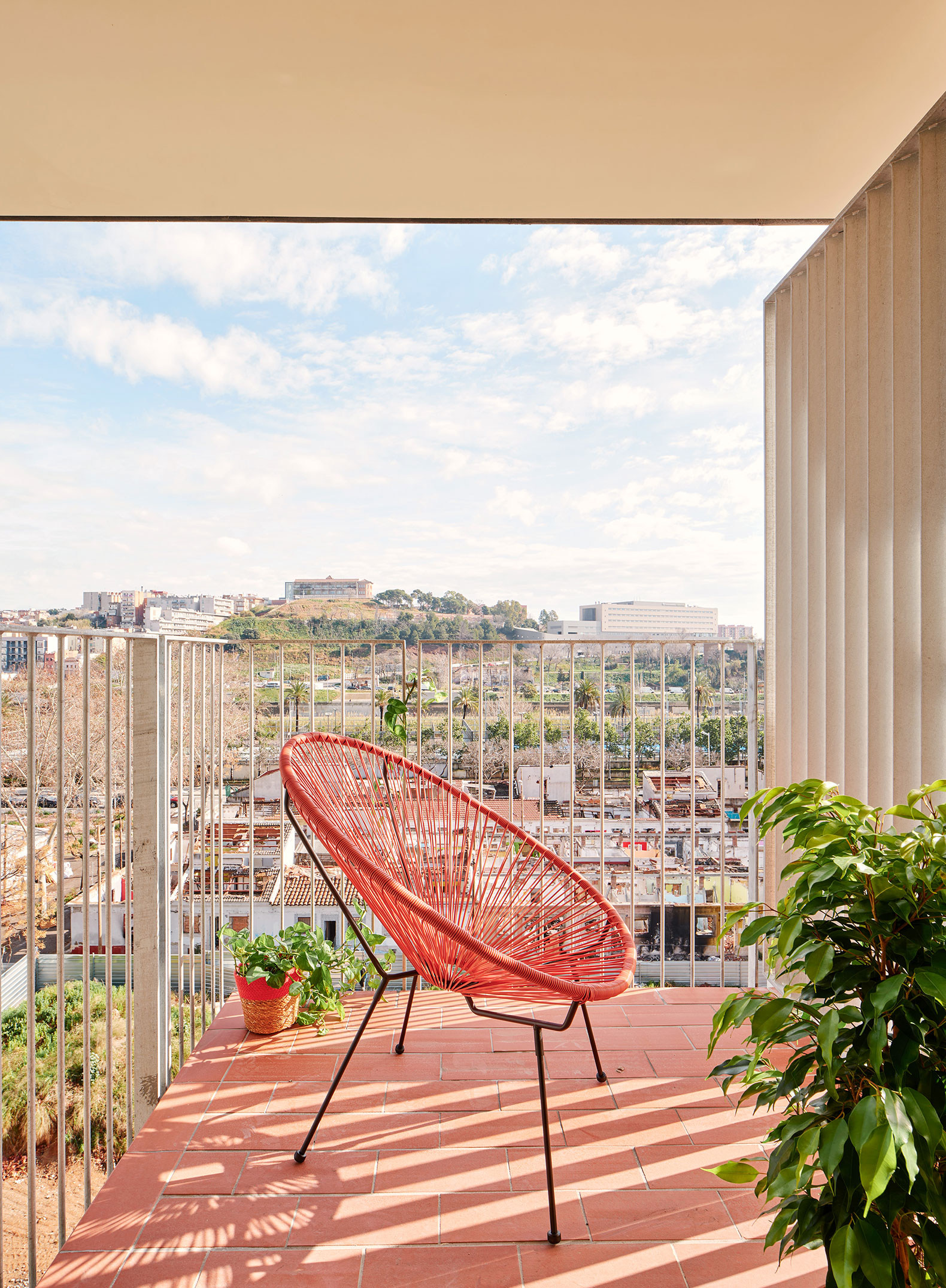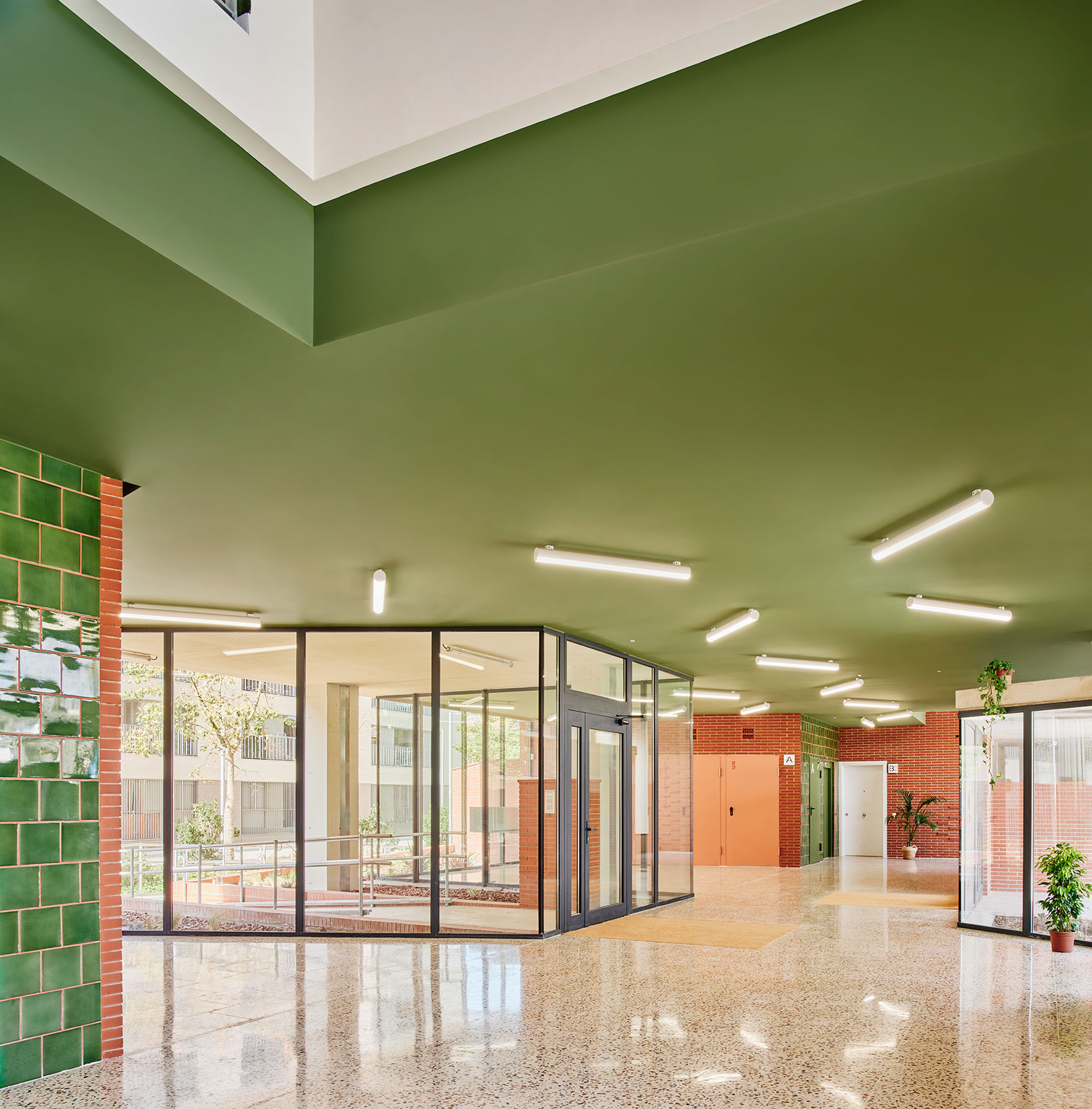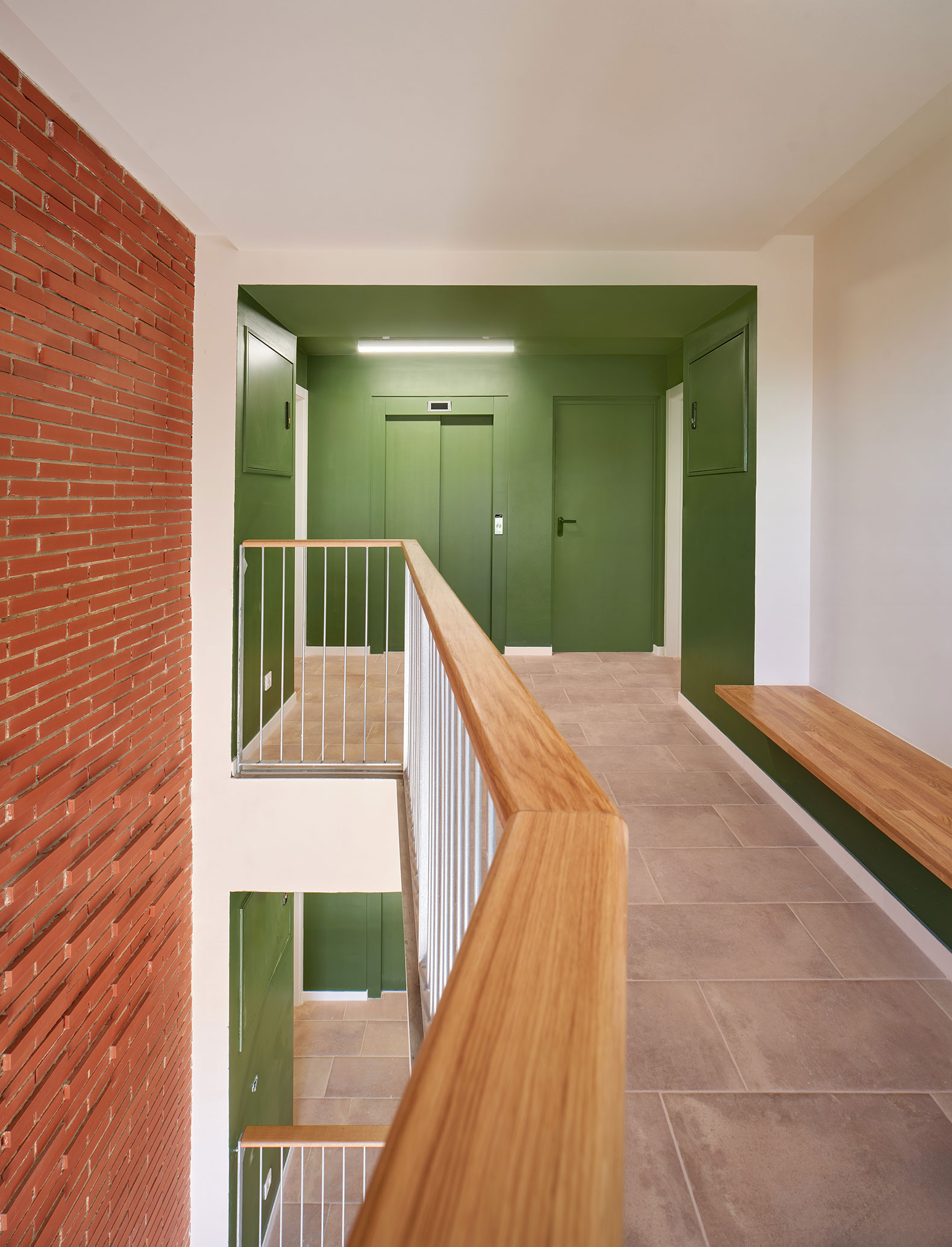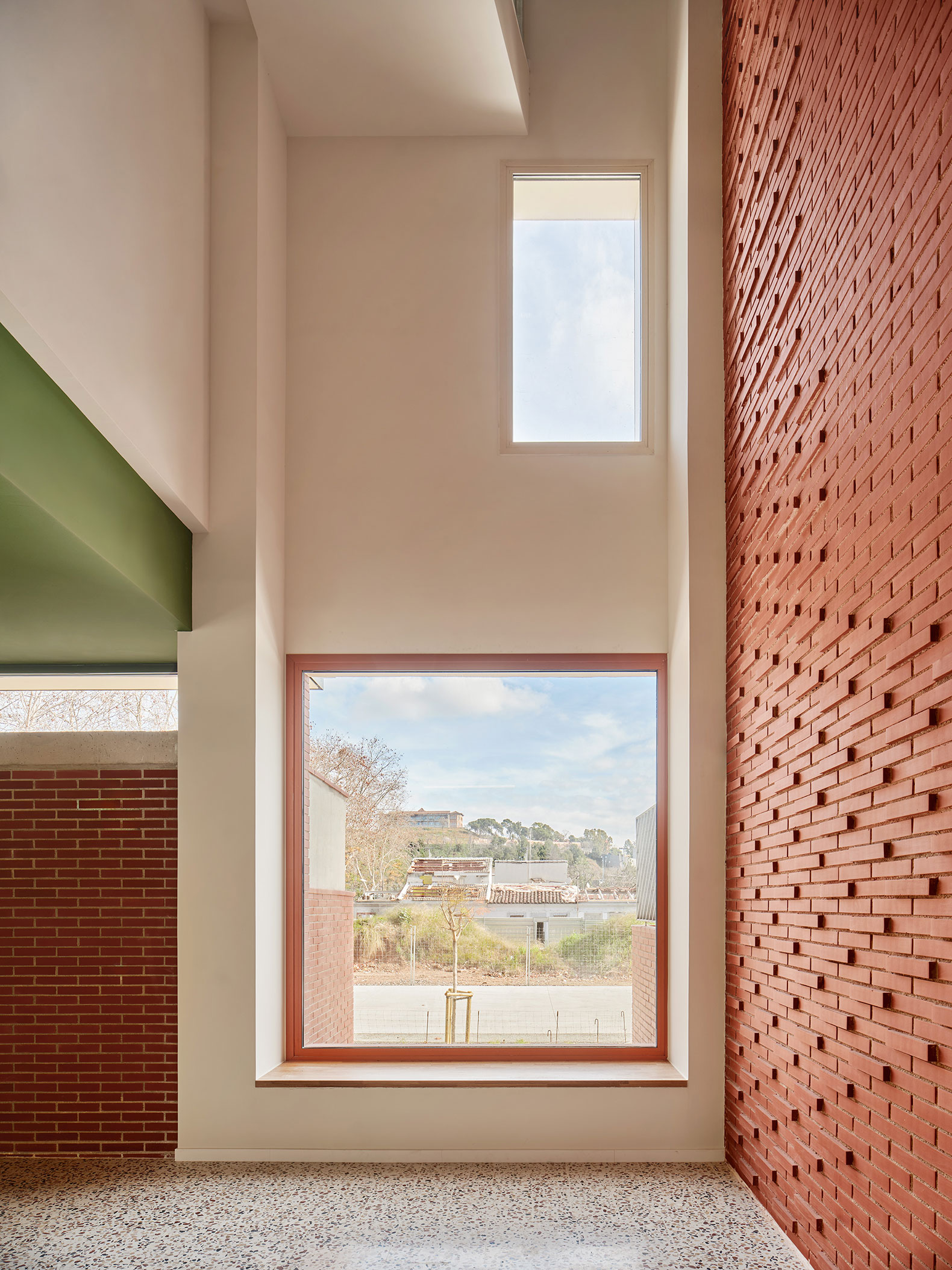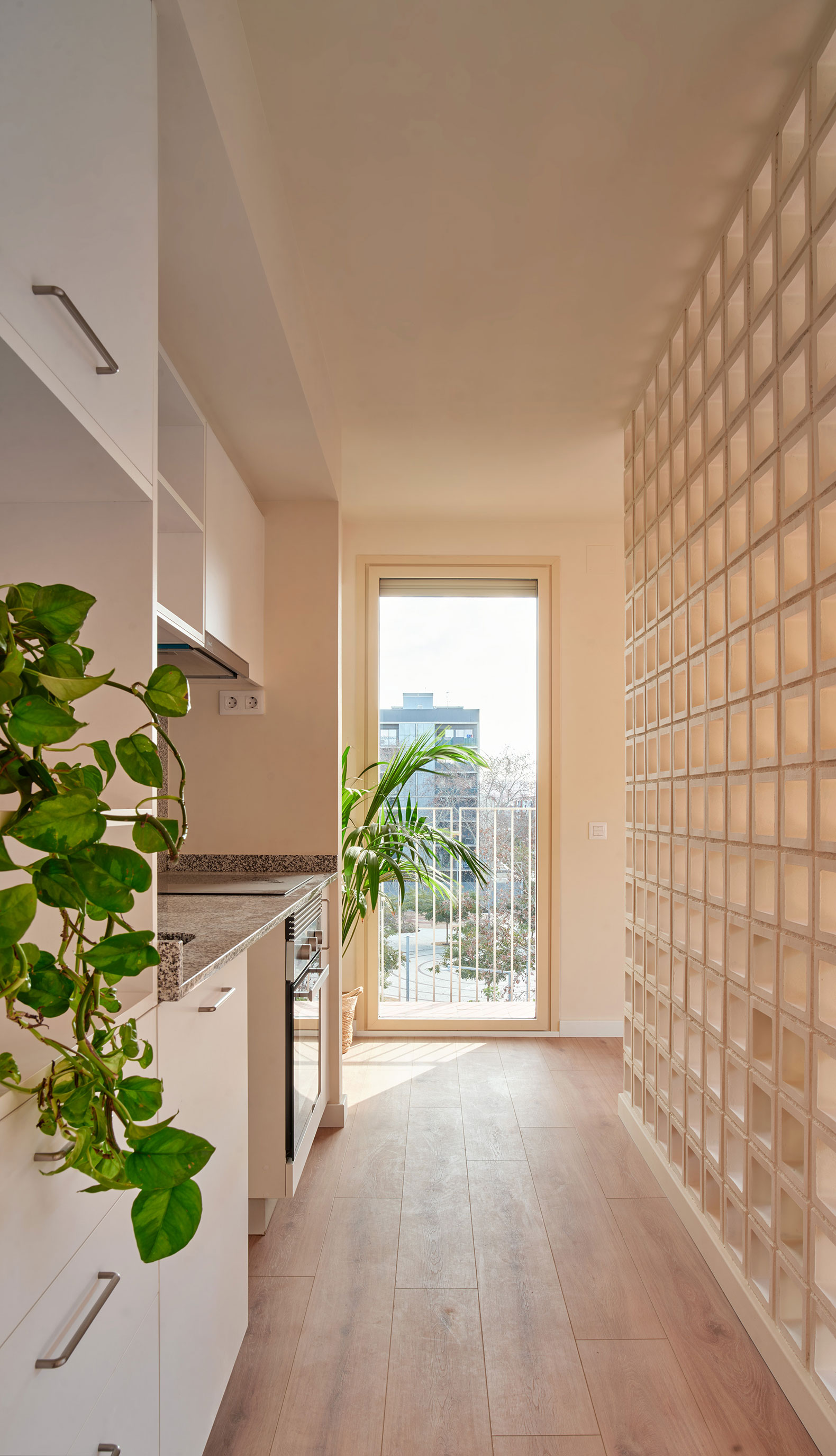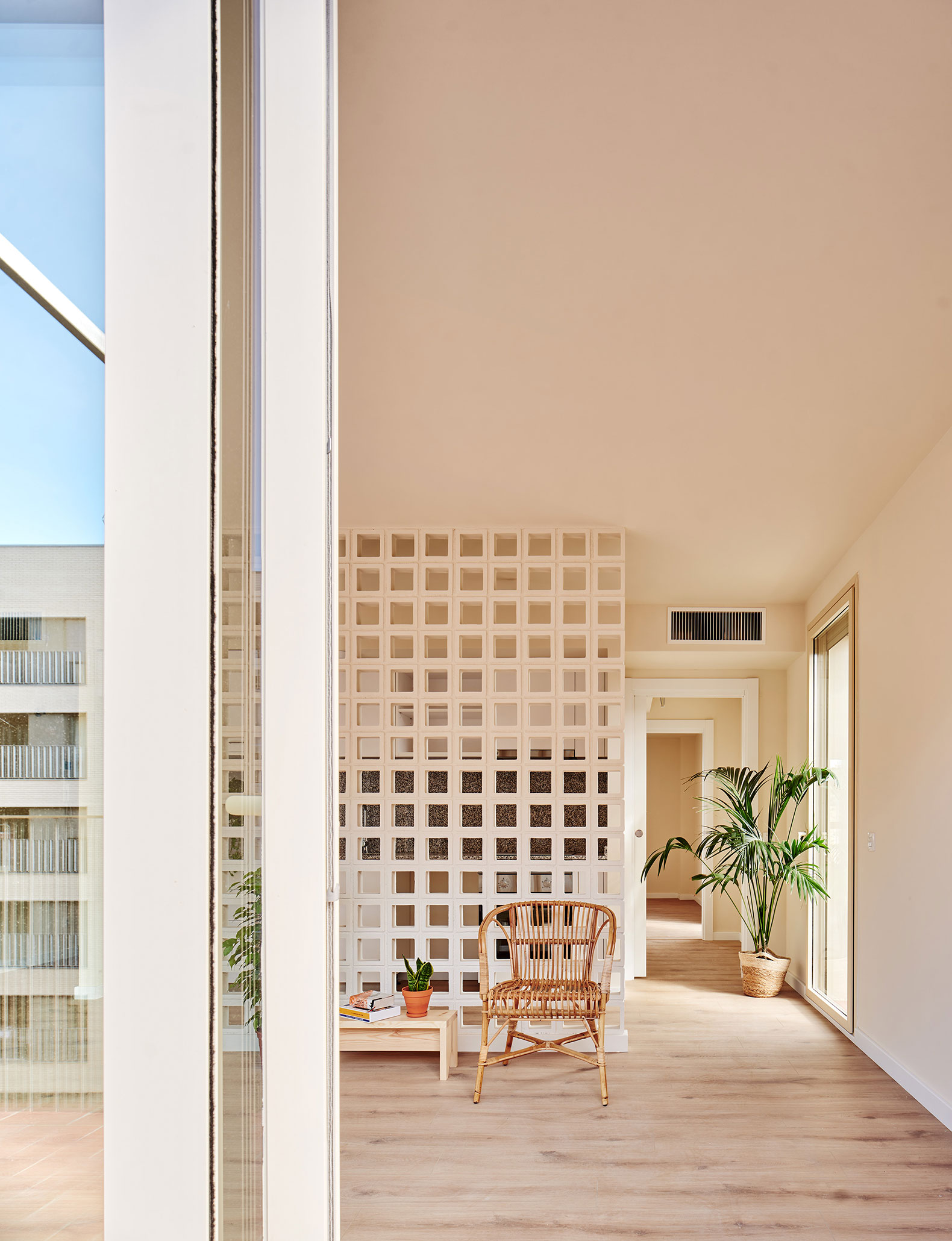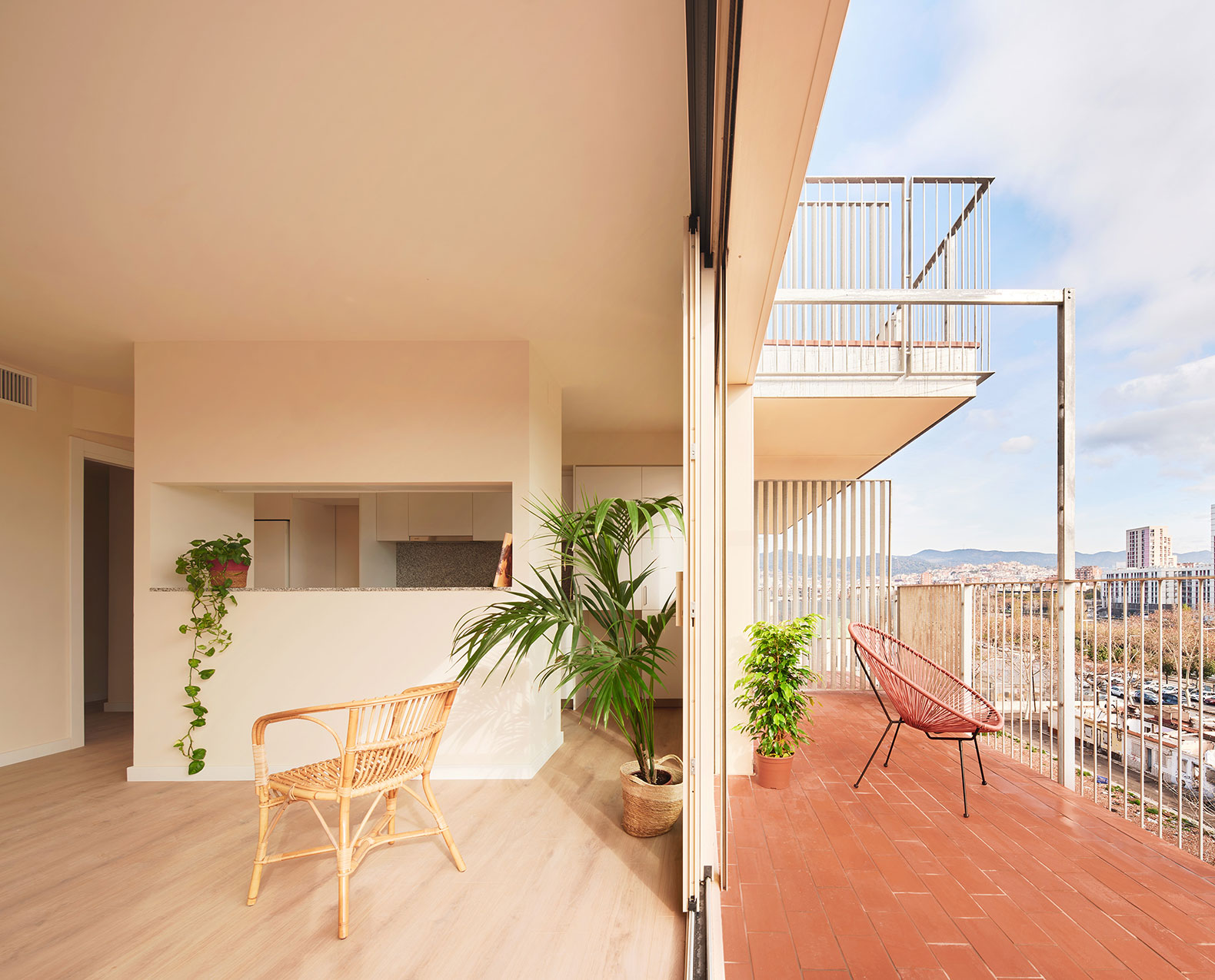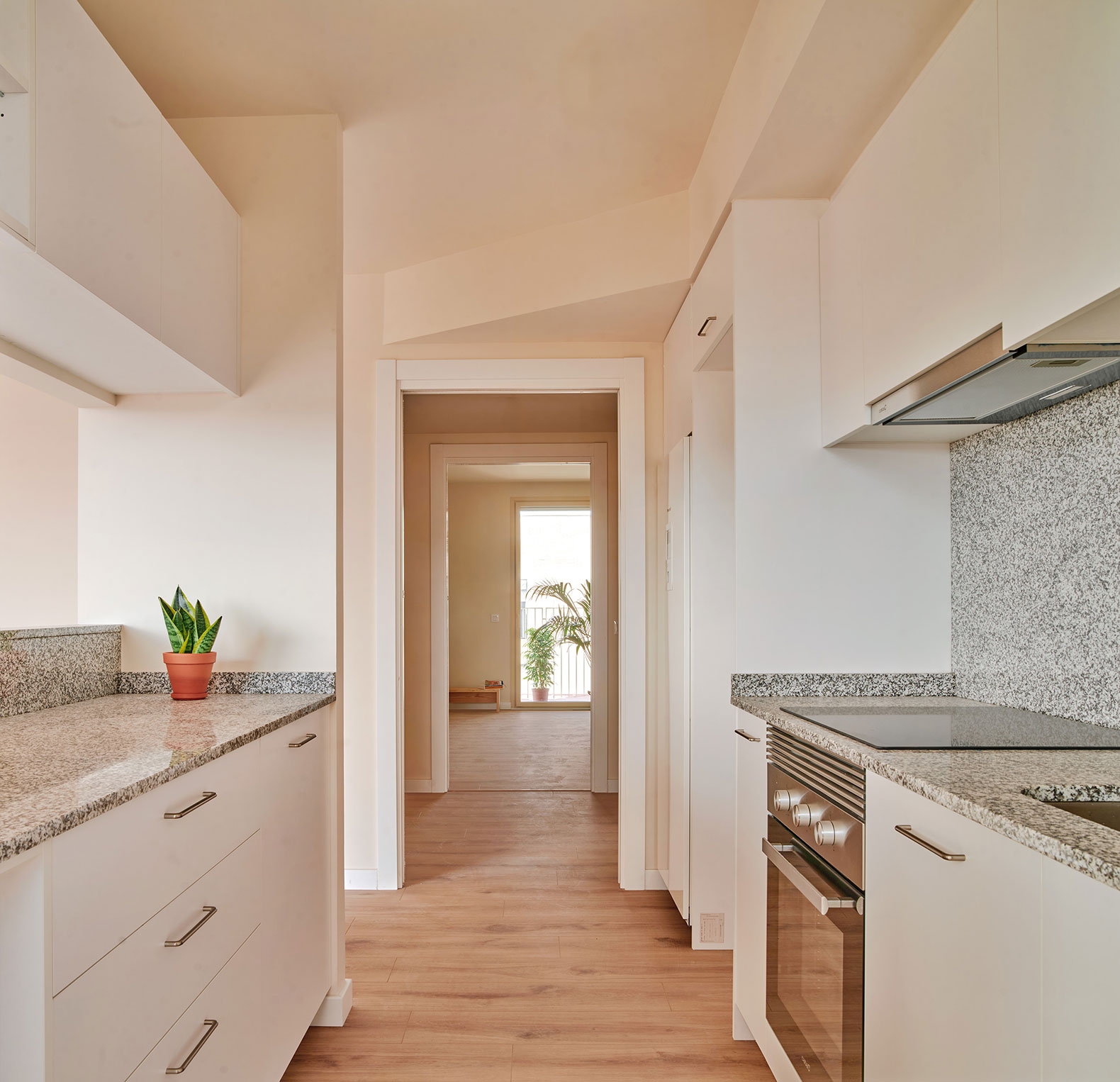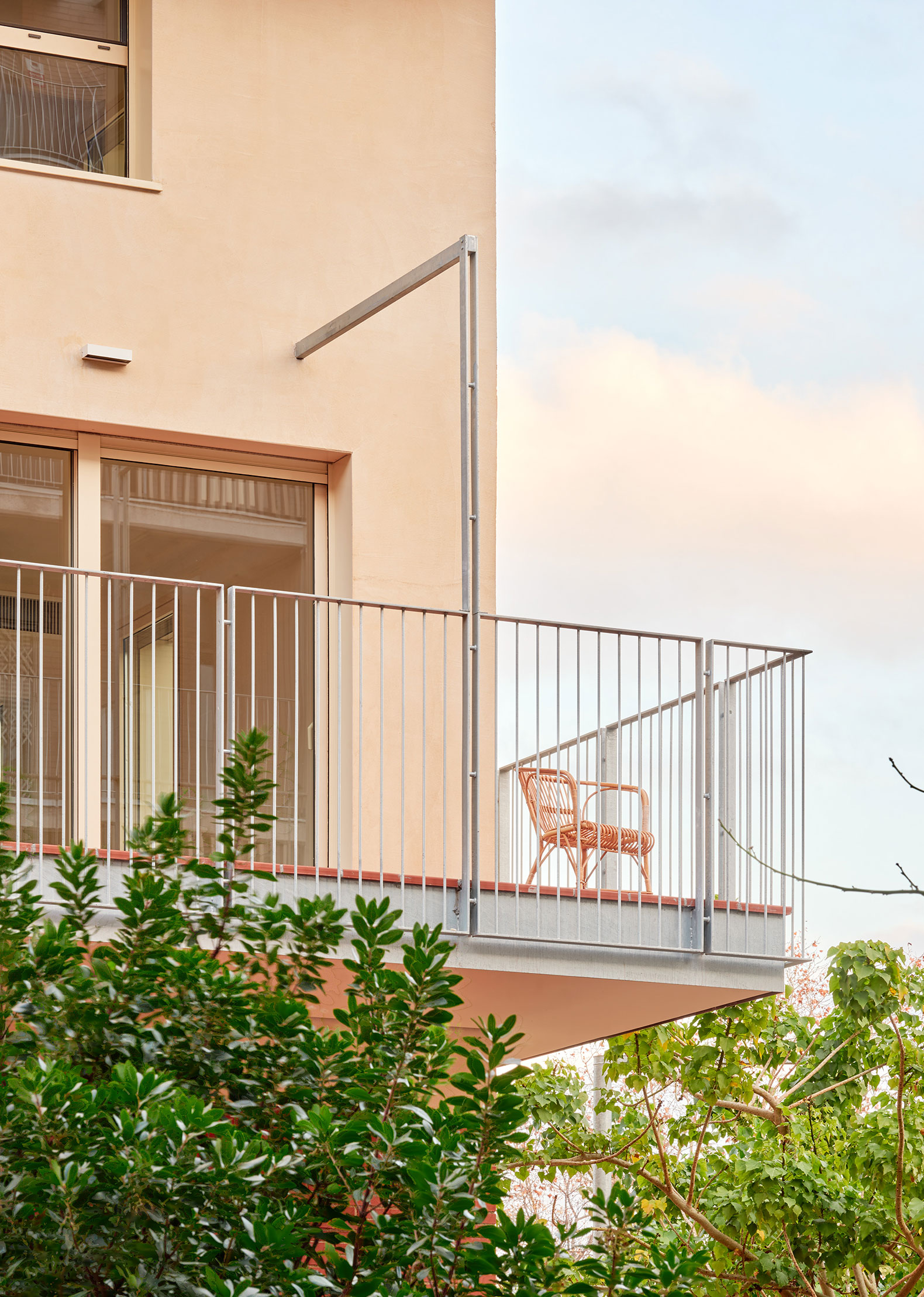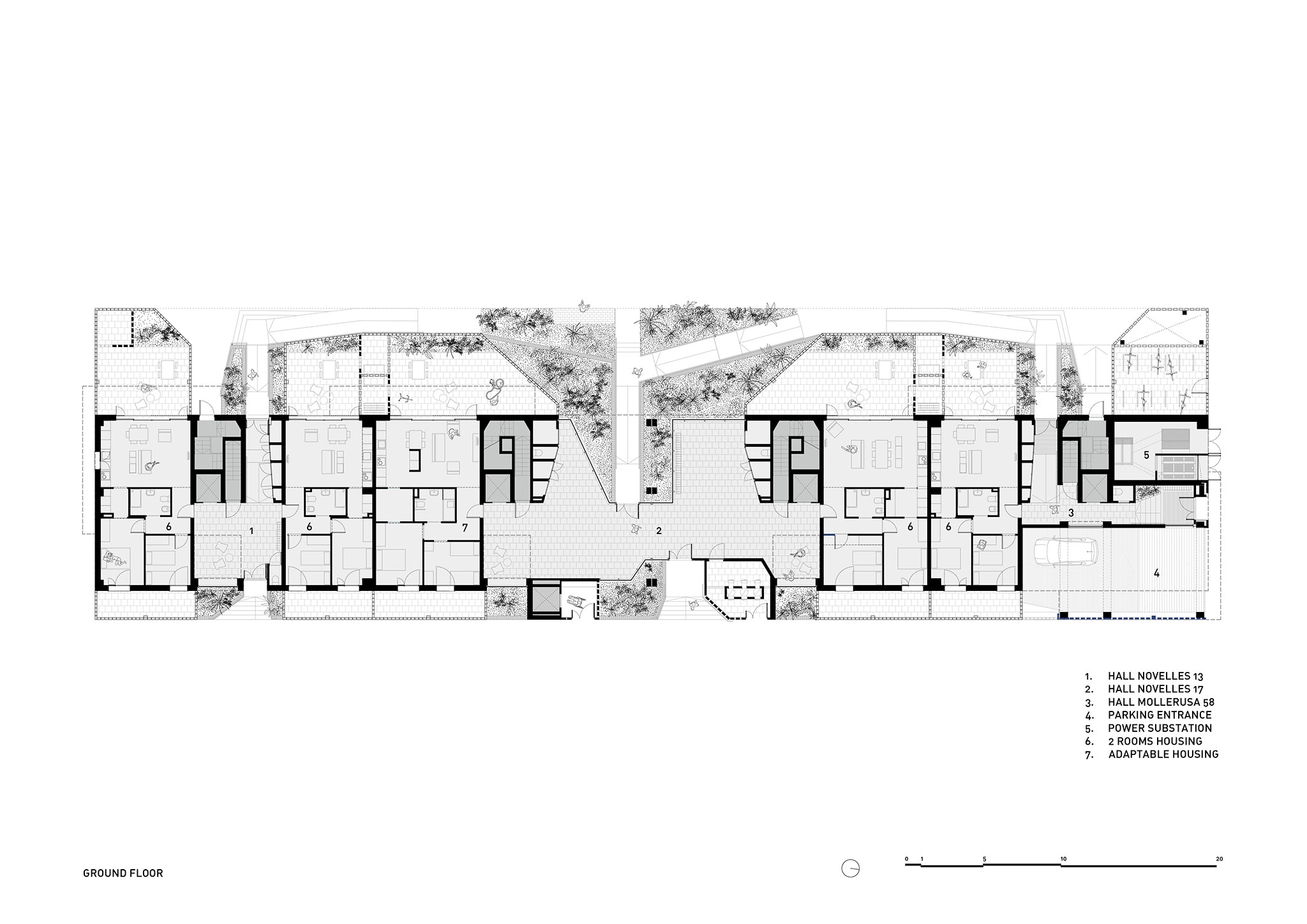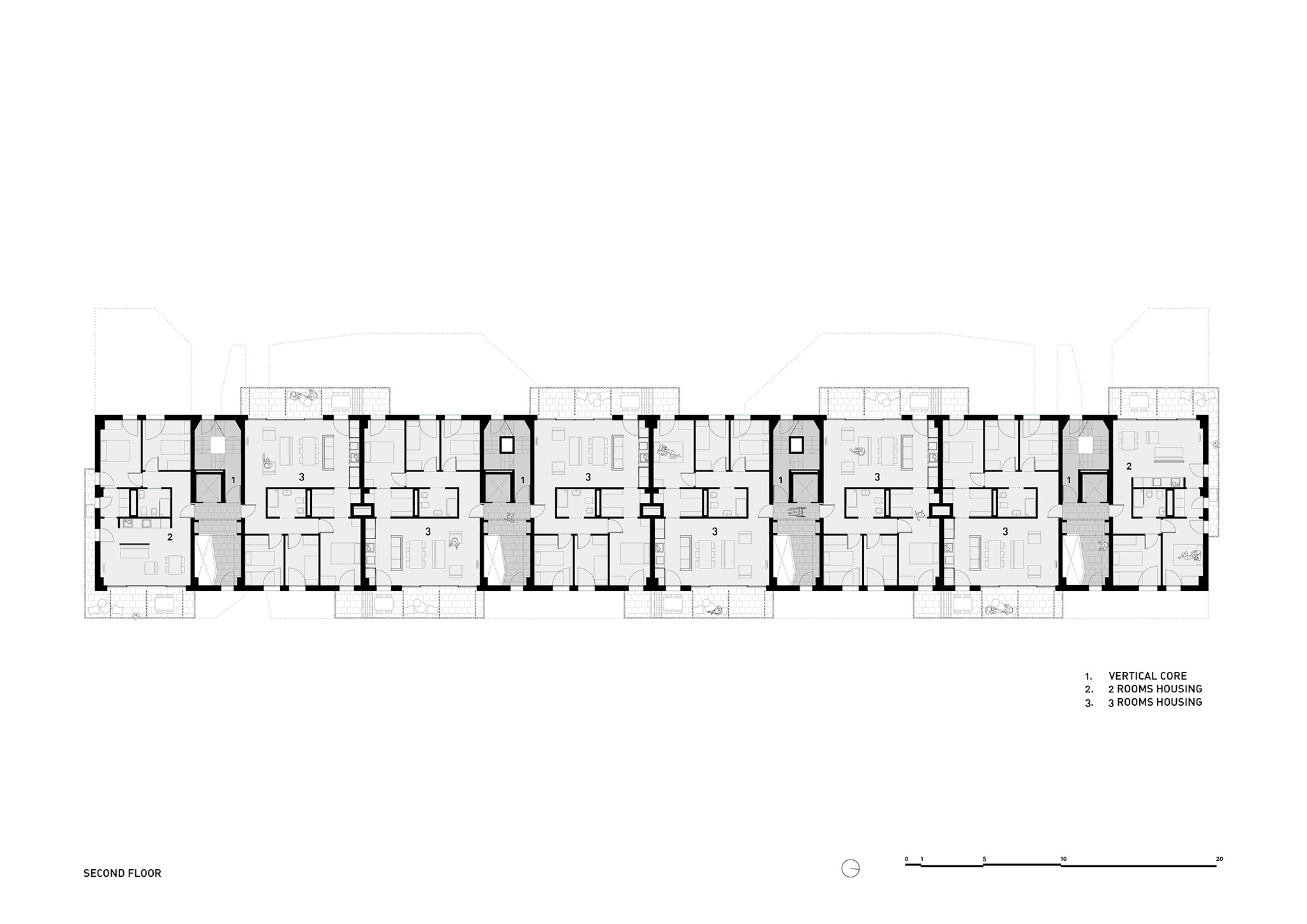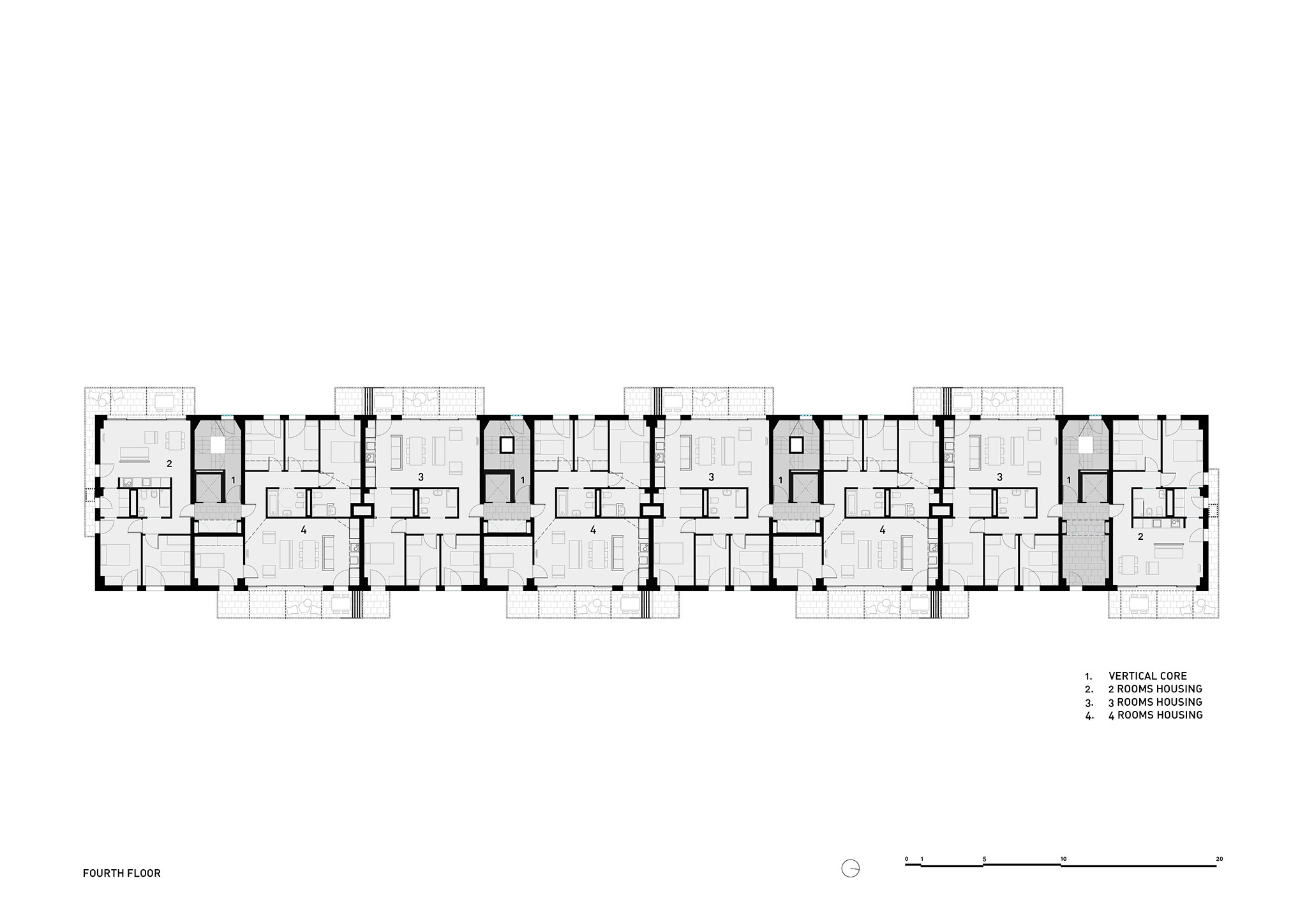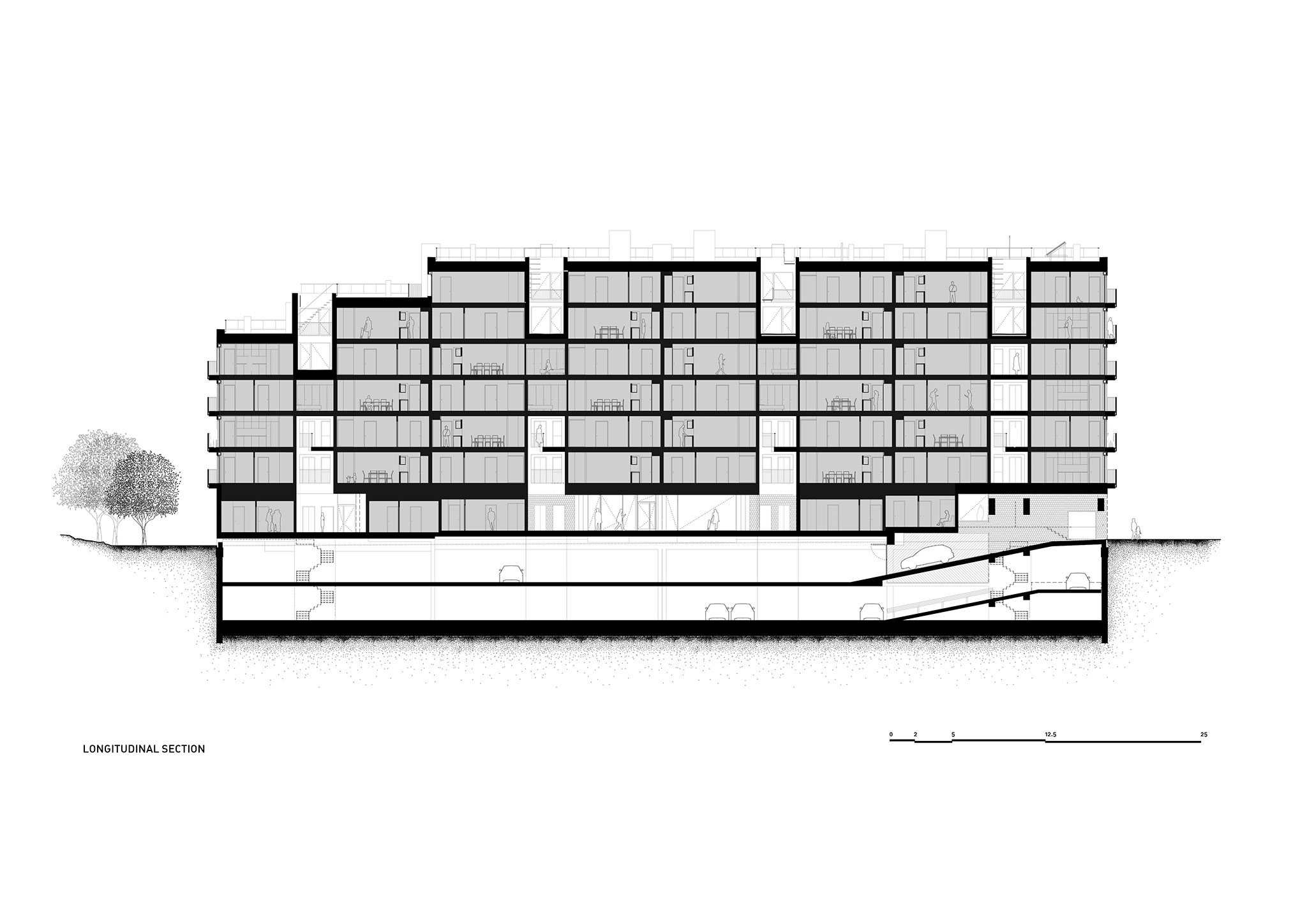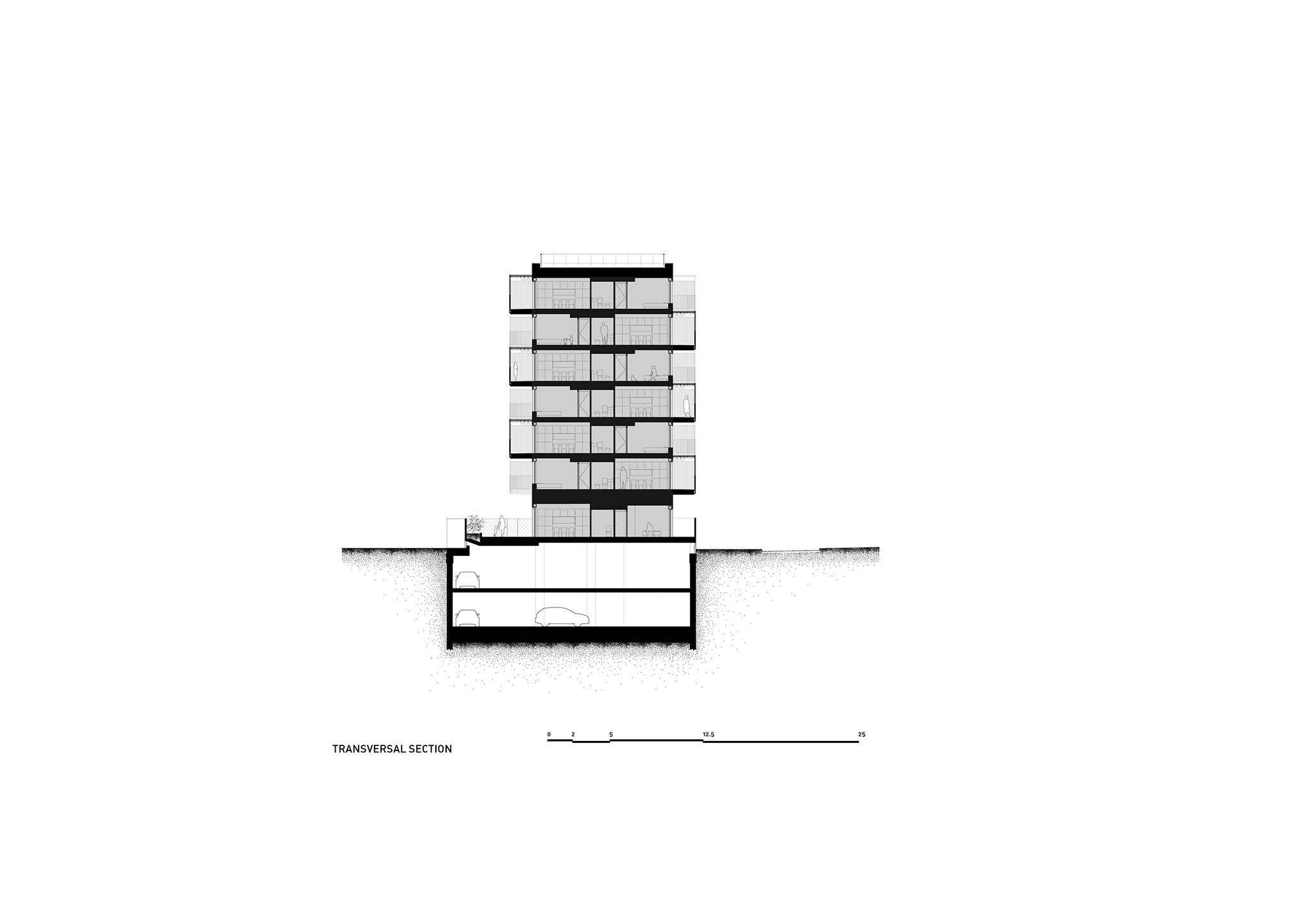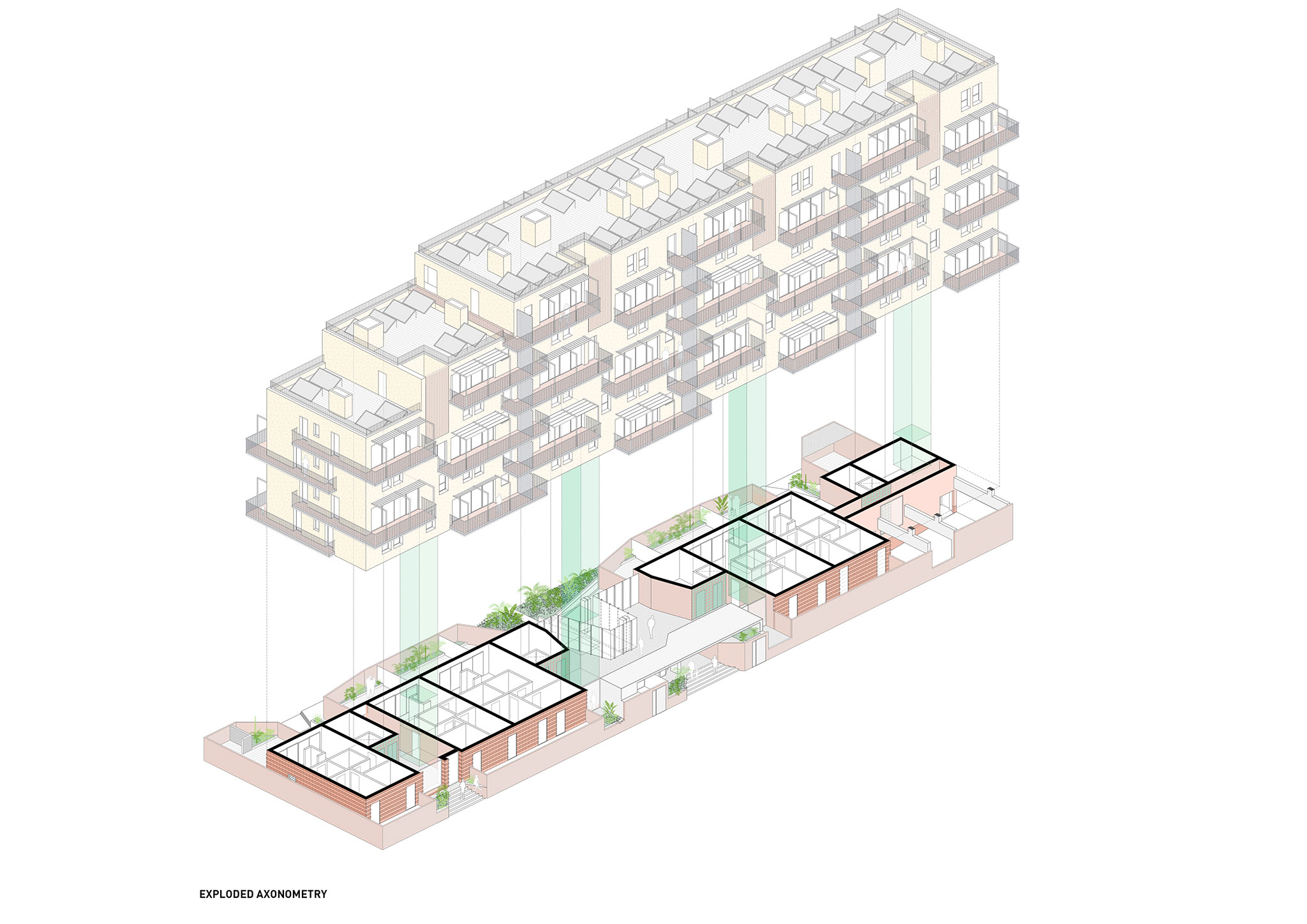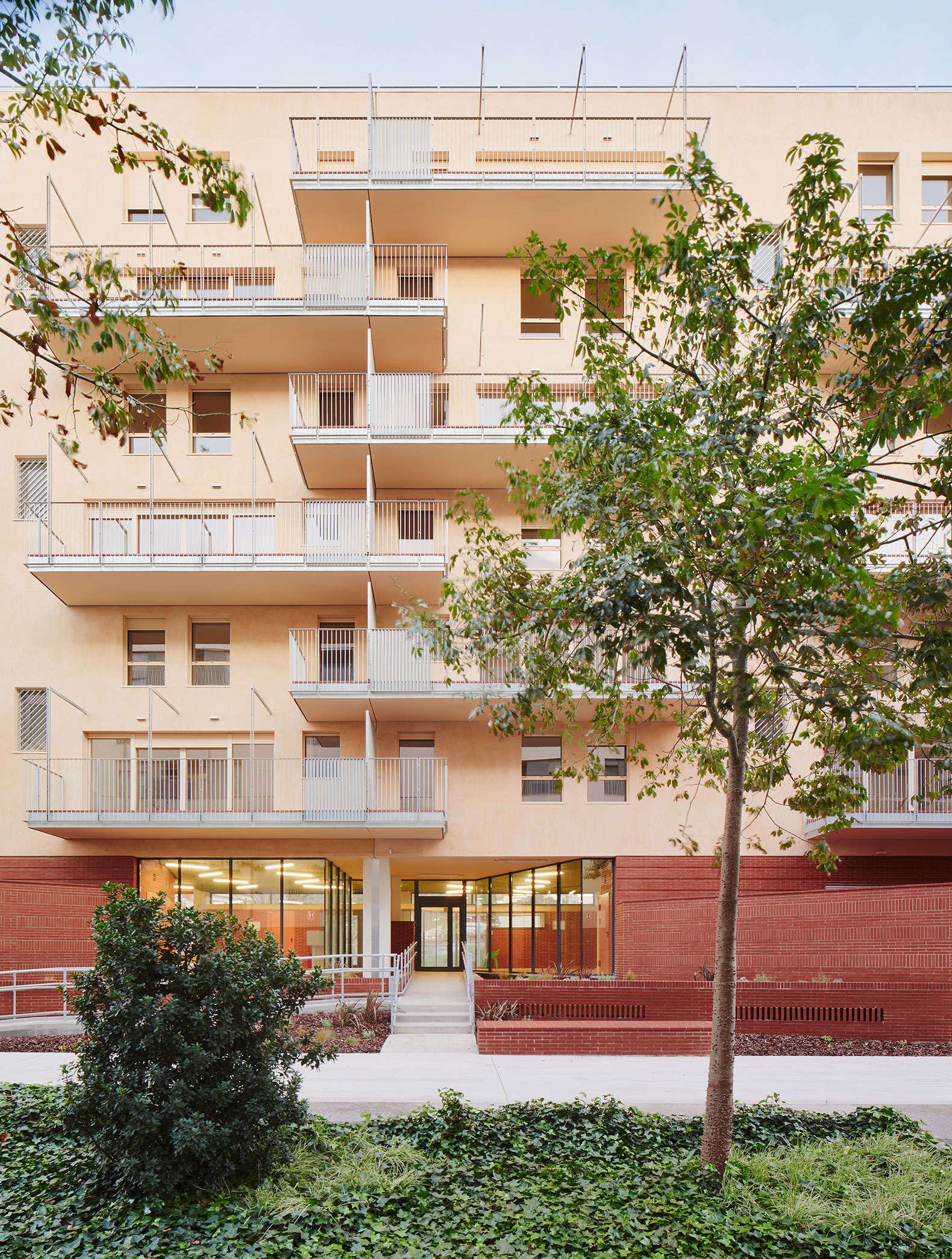
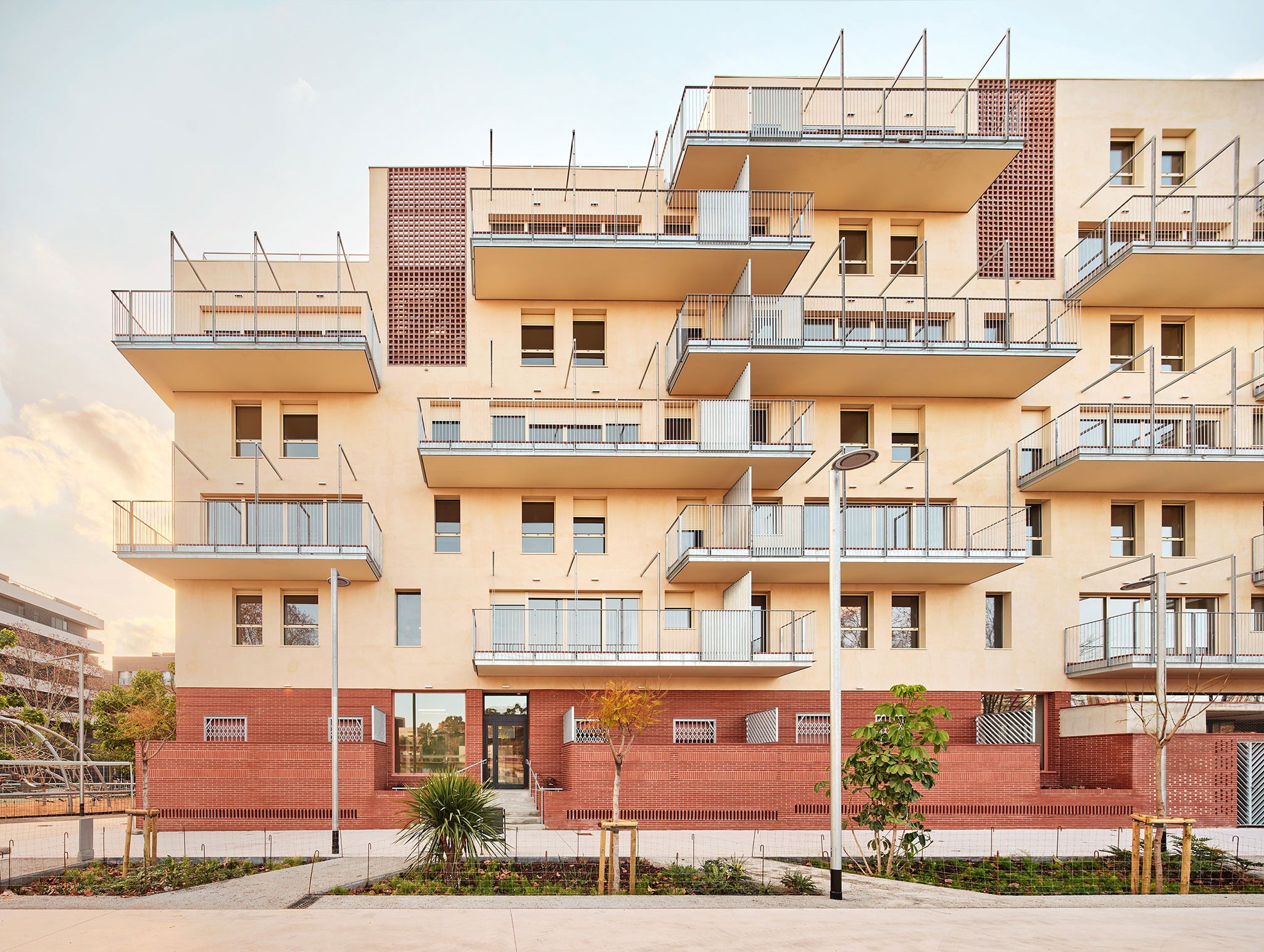
The design, by MADhel, MARMOLBRAVO, and Miel Arquitectos, consists of 50 social housing units spread over seven floors. The common spaces consist of a circulation system of ramps and stairs with open planters that invite you to stay, connected by through portals with street-to-street views. The building's interior features triple-height spaces with vibrant colors for an authentic user experience, and the apartments feature openings and open terraces that extend the interior space to the exterior, creating the sensation of a larger, unbounded space.
The building's materiality connects with its surroundings and preserves its atmosphere, utilizing red brick walls, mortar facades, ceramic lattices, glazed tiles from La Bisbal, and terrazzo floors for both interior and exterior.
DE PEUS A TERRA by MADhel, MARMOLBRAVO and Miel Arquitectos. Photograph by Jose Hevia.
Project description by MADhel, MARMOLBRAVO and Miel Arquitectos
DE PEUS A TERRA (i el cap pels núvols) is a building with 50 social housing units in the Bon Pastor neighborhood of Barcelona, where common sense and passion (seny i la rauxa) blend, unashamedly exalting the collective and carefully protecting the domestic sphere.
Our building is part of the transformation of the "las casas baratas de Bon Pastor", a housing estate that was created to provide shelter for all the workers who came to Barcelona to work at the 1929 International Exposition. This complex of 784 single-story apartments with an interior courtyard has been replaced since 2002 by a development of multi-family high-rise buildings... ours has ground floor + 6 floors!
Our initial concern was to restore the neighborhood's sociability, which had so far developed at street level. The first hurdle to overcome was the impact on pedestrians of this new urban scale of the open-plan building, for which we developed several strategies:
- Stepping down two floors toward the park that borders the south, creating a more pleasant view facing the children's playground.
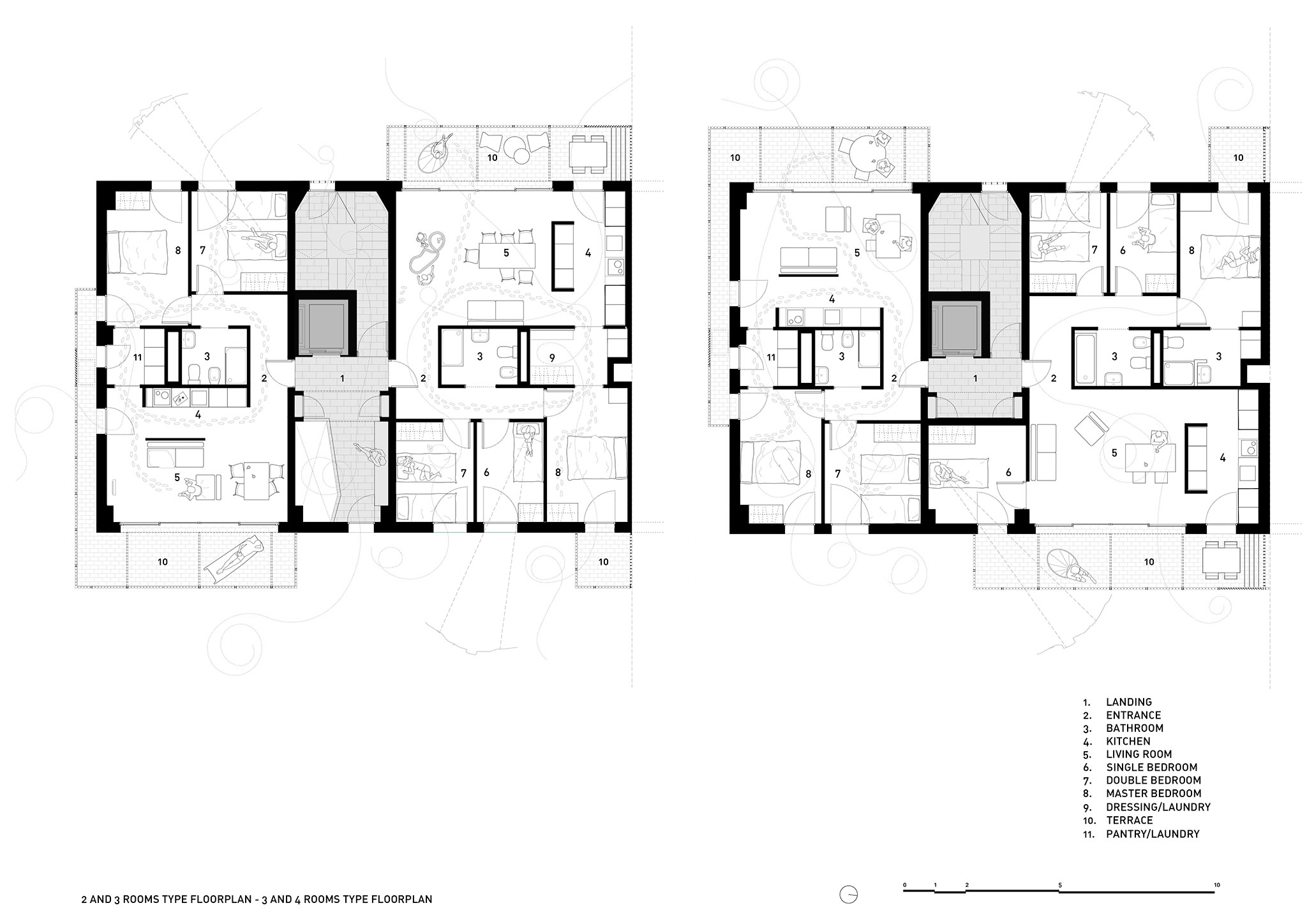
- Taking advantage of the fact that the main facades (east and west) have very similar sun exposure, we reversed the layout of the adjacent apartments, placing one's living room on the east side and the others on the west side. This reduced the number of stacked balconies... at first glance, the building appears shorter and more dynamic.
- The massiveness and spaciousness of the brick ground floor, in contrast to the slenderness and lightness of the building above it, lightens the perception of the entire complex.
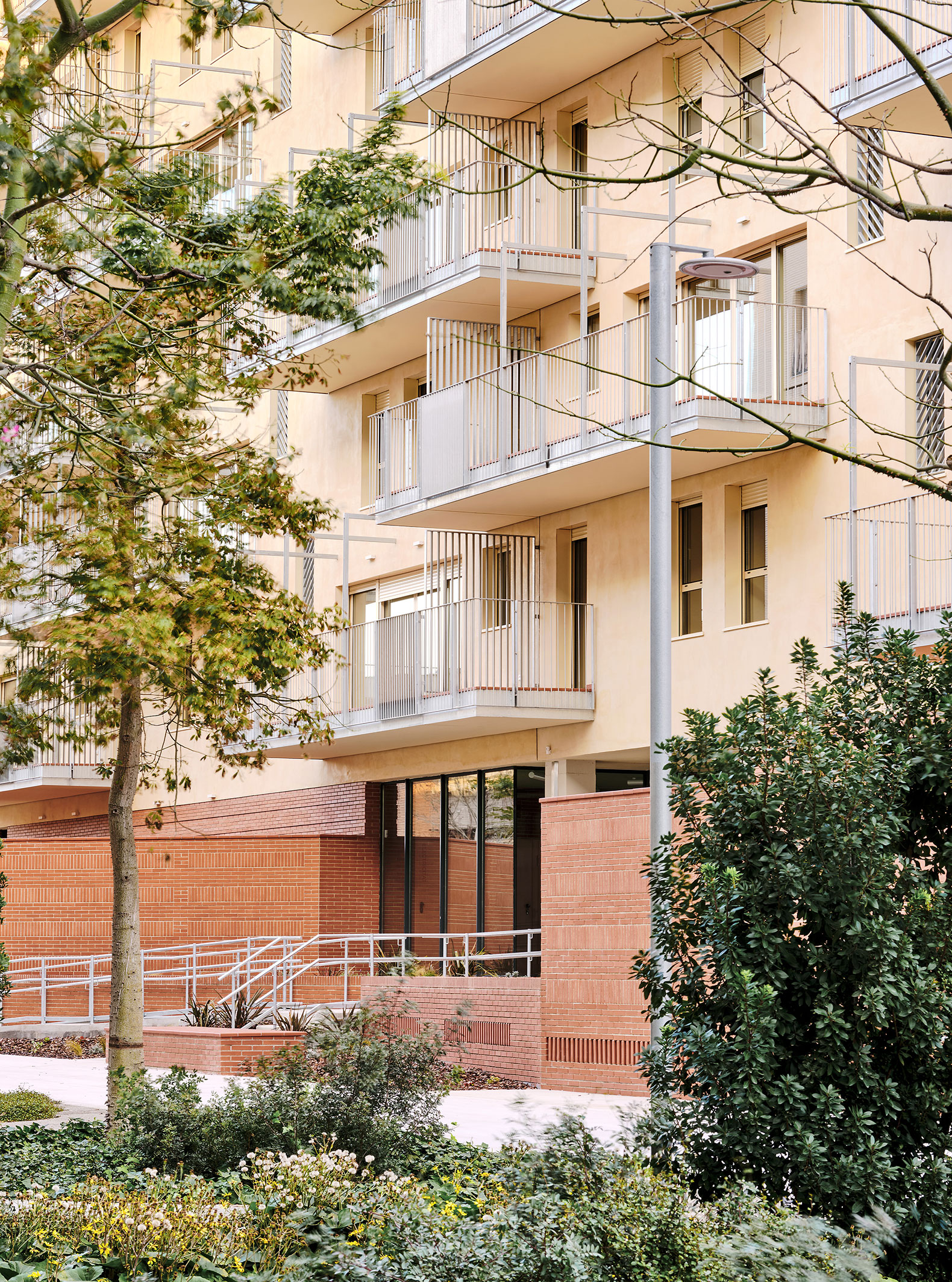
- The ground floor blends into the surroundings through ramps and stairs with the same finish as the development, inviting you to sit and walk through them, and through open planters that seek to blend with the masterful vegetation of the surrounding neighborhood.
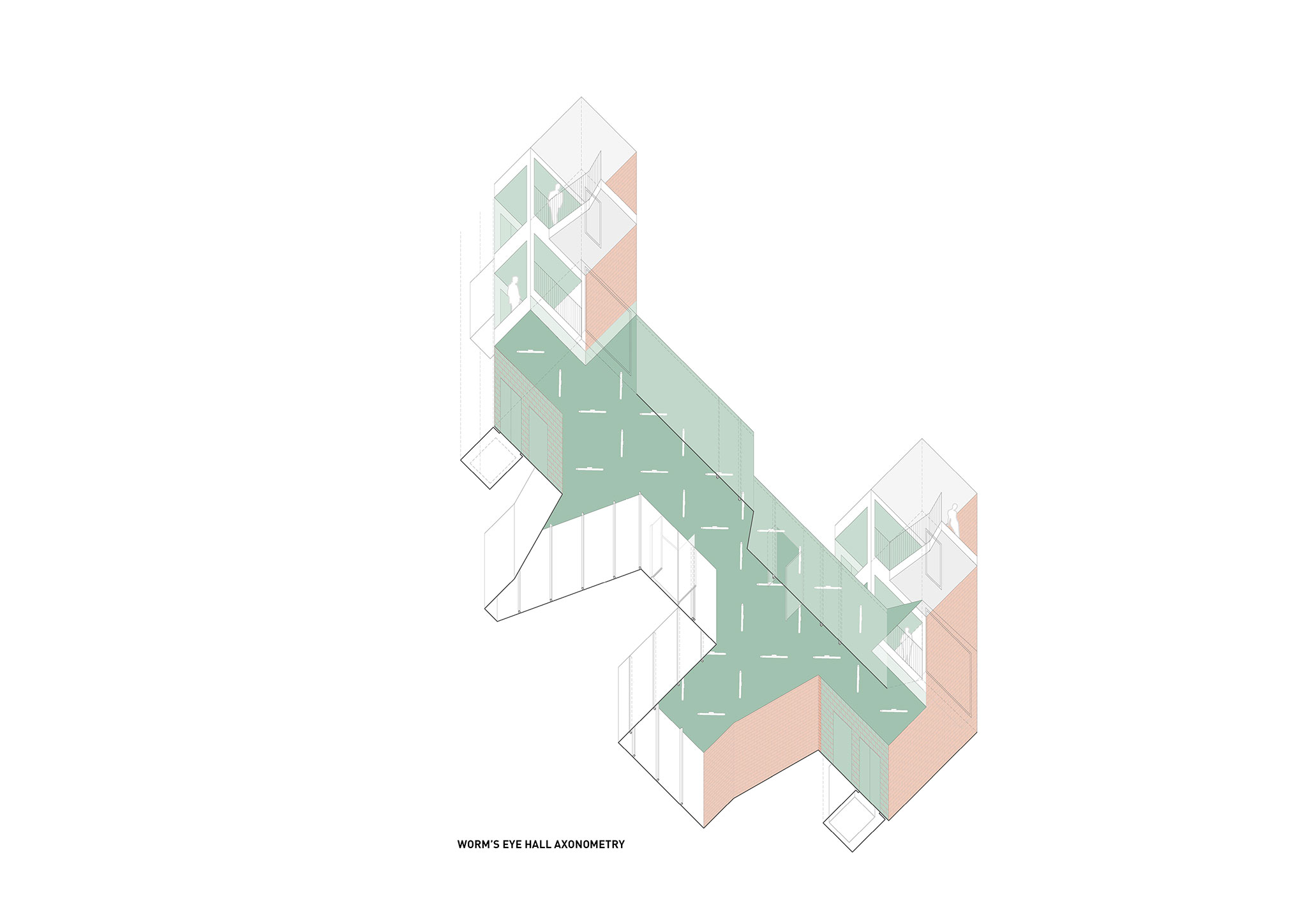
Next, we magnified the communal spaces by deploying ramps and stairs throughout to reach front to back portals that allow us to see from street to street, bringing light and security to the interior... and transparency to the exterior!
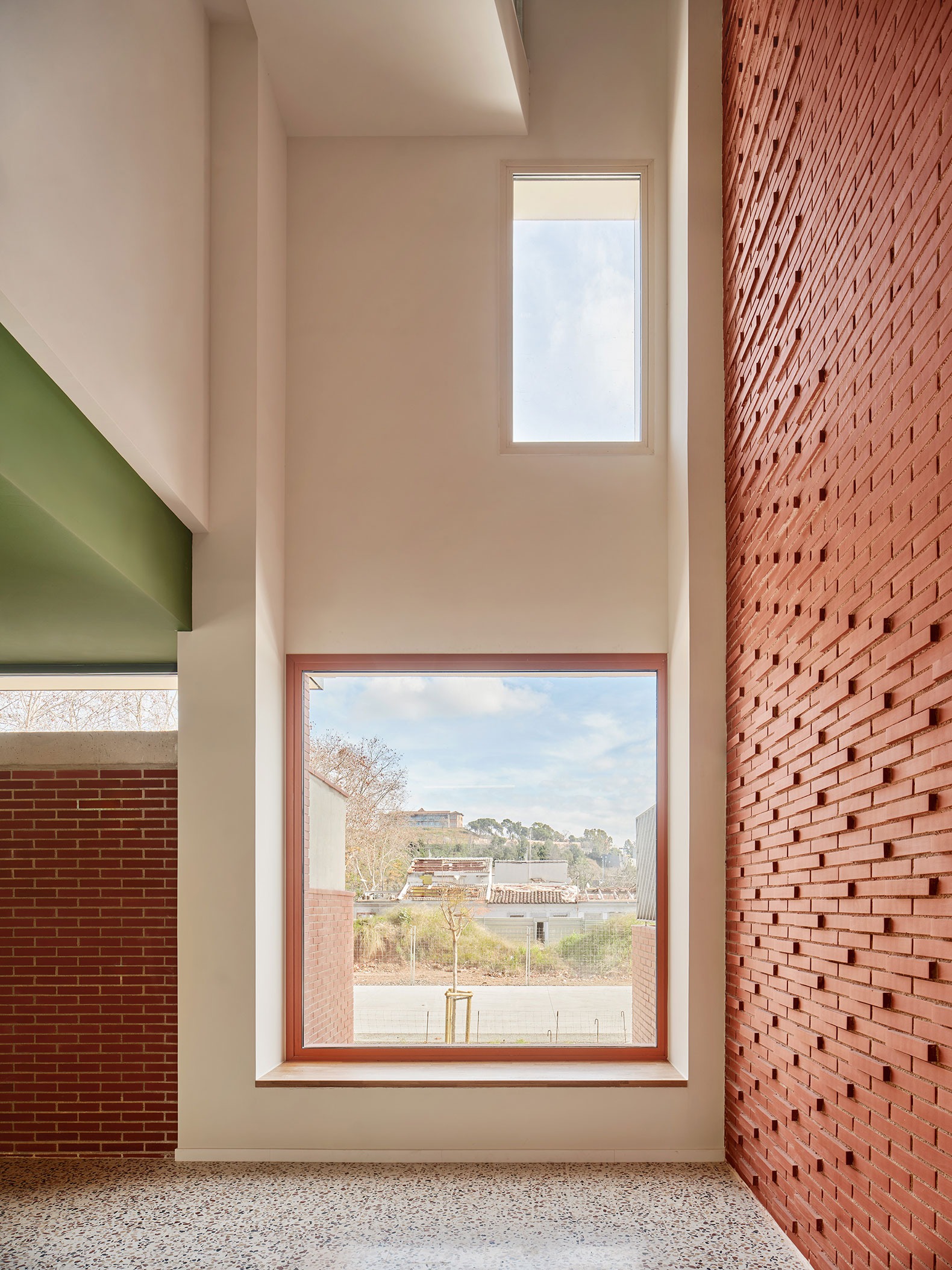
Once inside, the entrances explode vertically with triple spaces that accompany their inhabitants to the landing of their home. All of this is enhanced by vibrant colors to encourage dialogue and understanding... what else but green roofs and wooden benches on each floor!
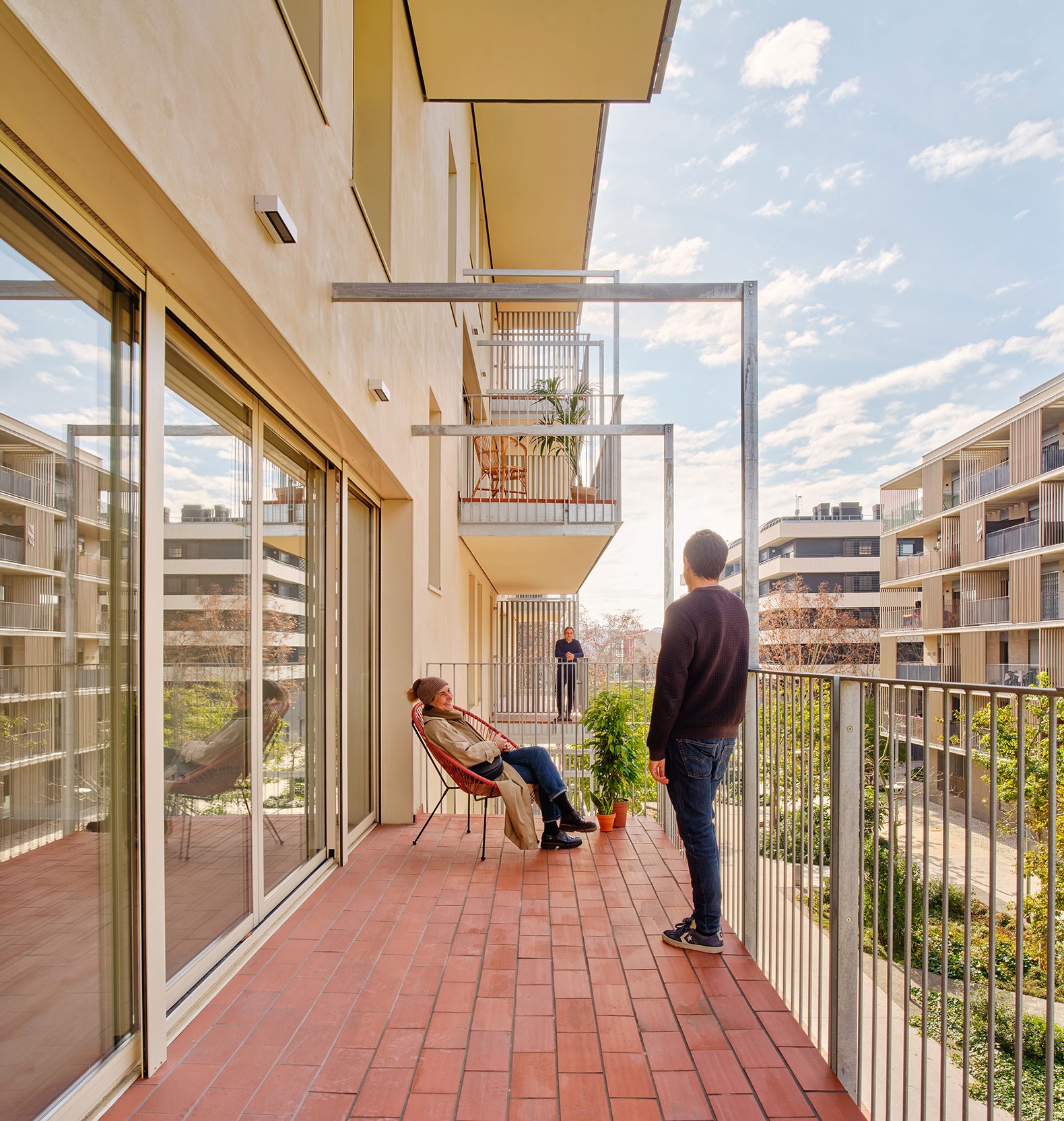
Inside, the reversible and pass-through homes feature openings and balconies on both facades, enhancing natural light and cross-ventilation. These balconies extend the living rooms to the outside through openings over 5 meters wide, blurring the boundary between "the house and the patio," providing each home with a space for dreaming.
The bathroom is freestanding in the middle of the floor thanks to a versatile space at one end that can be a dressing room, a pantry, a storage room, a second bathroom, or a passageway—a space that encourages flexible use of the home, encouraging change, the exchange of roles, and even interests.
The staggered position of the terraces allows us to create situations of transversal coexistence between different floors and different staircases, a street at height.
DE PEUS A TERRA is dressed with the same materials that created this neighborhood to preserve its unique atmosphere: Red brick walls enriched with various rigging (some almost climbing), Mortar facades that highlight the beauty of the imperfection of the hand that applied it, Ceramic lattices and Vitrified tiles from La Bisbal, Terrazzo floors for interior and exterior, etc... All of them exalted to the maximum performance that our context of climate emergency and global warming demands in a building with very low energy consumption.