

“This exhibition is an opportunity to discover and learn about Islamic culture. More than 200 ancient objects are on display, some of which have never been seen by the larger public. In addition, there are artworks by contemporary artists from Saudi Arabia and other countries in the Middle East and Northern Africa to countries like the UK and South Africa, giving a new dimension to the timeless rituals of Islam.”
Iyad Alsaka, OMA Partner.
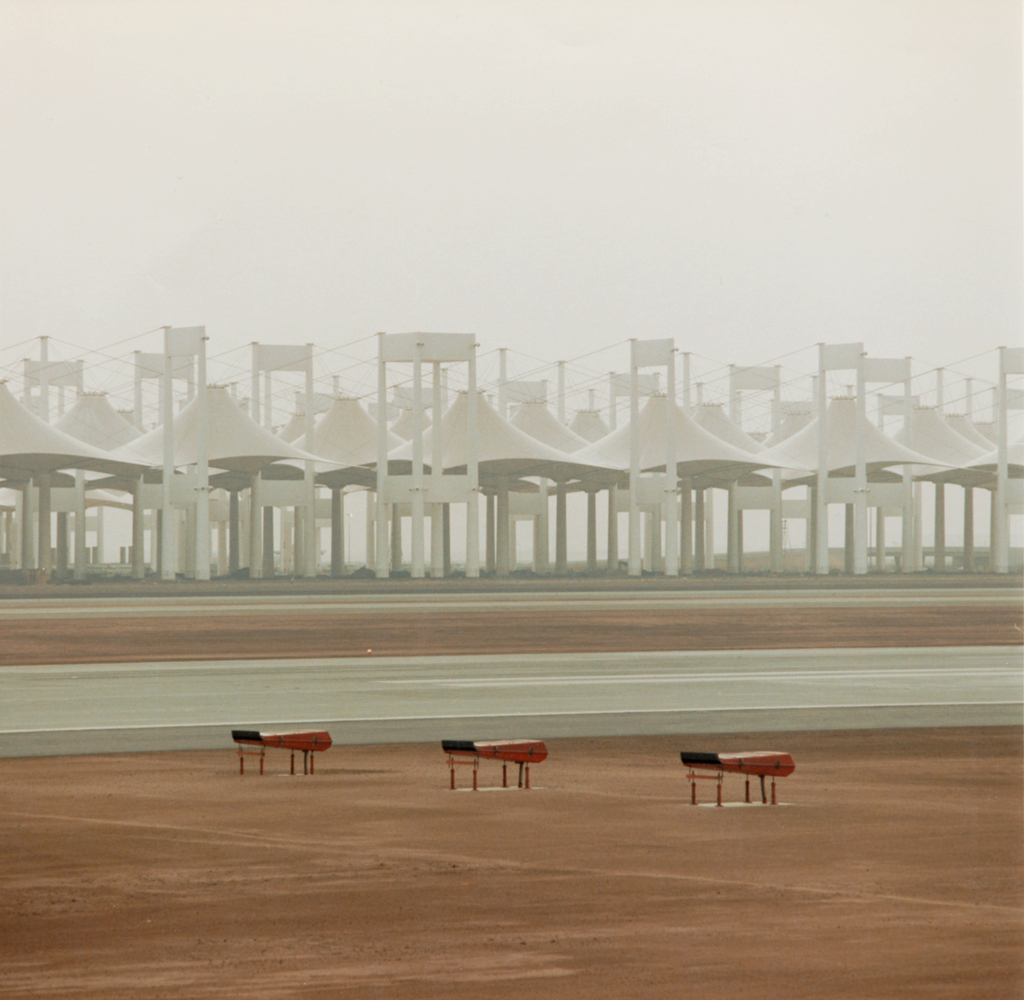
Western Hajj Terminal, King Abdulaziz Airport by SOM. Image courtesy SOM. Image by Jay Langlois / Owens-Corning.
The OMA-designed scenography divides the exhibition space into two complementary parts:
(1) A choreographed trajectory through a sequence of newly built galleries allows visitors a progressive sense of orientation as they move from one room to another. Inspired by the concept of the qiblah – the direction Muslims face when they pray – the exhibits manifest gradually in a journey from darkness to light, starting in a dimly lit room filled with 17th-century astrolabes – used to calculate the qiblah – and concluding in the bright space hosting an installation which incorporates the First Saudi Door of the Ka`bah in Makkah, installed during the reign of King Abdul Aziz.
(2) Under the terminal’s canopy, a desert-like landscape alludes to the journey of Hijrah – Prophet Mohamed’s journey from Makkah to Madinah. Slopes and slanted walls of various heights, arranged in relation to the geometry of the existing structure, have been built to display the artworks, creating a sense of exploration throughout the visit. Two freestanding pavilions act as reference points in the open landscape, exhibiting artefacts from Makkah and Madinah. In contrast to the rough atmosphere outside, the exhibits in the two pavilions are embedded in a bright, diaphanous screen wrapping the perimeter of the walls.
(2) Under the terminal’s canopy, a desert-like landscape alludes to the journey of Hijrah – Prophet Mohamed’s journey from Makkah to Madinah. Slopes and slanted walls of various heights, arranged in relation to the geometry of the existing structure, have been built to display the artworks, creating a sense of exploration throughout the visit. Two freestanding pavilions act as reference points in the open landscape, exhibiting artefacts from Makkah and Madinah. In contrast to the rough atmosphere outside, the exhibits in the two pavilions are embedded in a bright, diaphanous screen wrapping the perimeter of the walls.
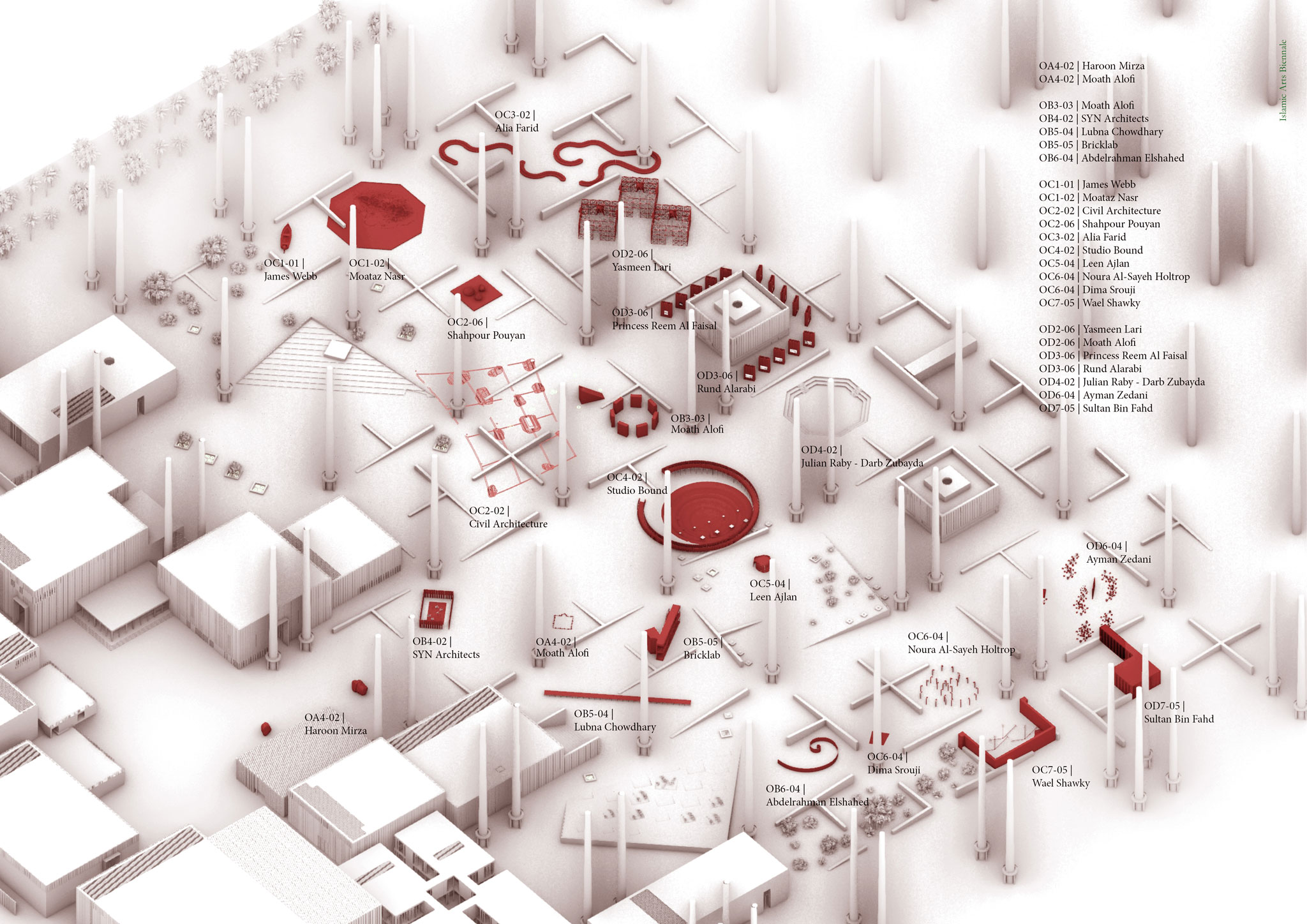
Rendering. Islamic Arts Biennale in Jeddah by OMA. Image courtesy of OMA.
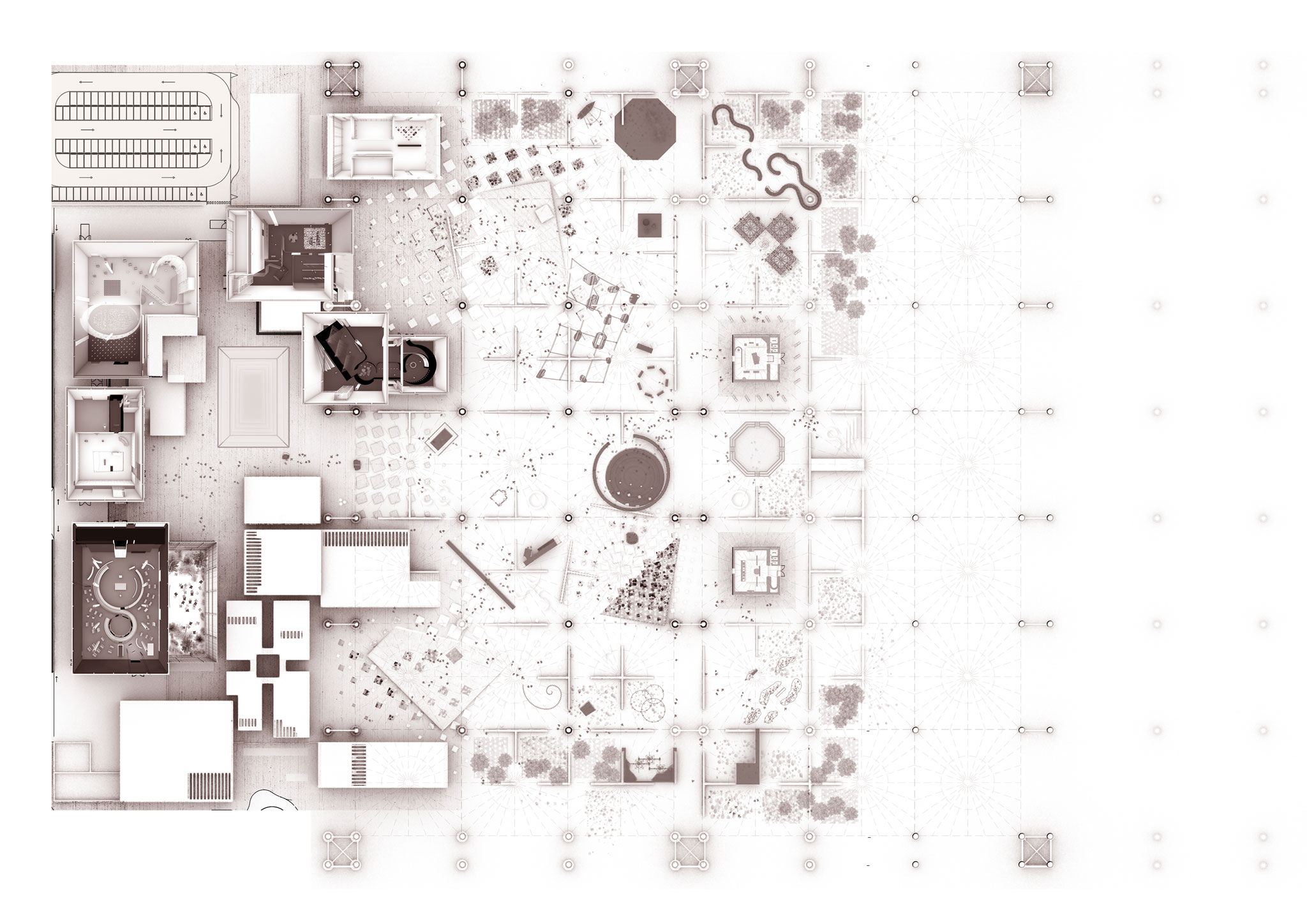
Rendering. Islamic Arts Biennale in Jeddah by OMA. Image courtesy of OMA.
Independent from the theme of the Biennale, a separate gallery named AlMadar, or The Orbit, features items from twelve local and international institutions including Kuwait’s Al Sabah Collection of Islamic art, together with an exhibition that pays homage to the Hajj Terminal – both celebrating their 40th anniversary.
“Our scenography design aims to create a space that works with the cable-stayed, fabric-roof of the Hajj Terminal – a seminal piece of modern architecture known to Muslims around the world – literally reinventing it as an umbrella for Islamic Arts.”
Kaveh Dabiri, OMA Associate.
The project is OMA’s first built work in Saudi Arabia and marks a new chapter in the office’s long-standing involvement in the country. OMA’s portfolio in the Middle East includes projects such as Qatar National Library, the headquarters of the Qatar Foundation and Concrete at Alserkal Avenue in Dubai. OMA’s think tank AMO has published extensively on the rapid urbanization of the region in two special issues of Volume magazine, Al Manakh (2007) and Al Manakh: Gulf Continued (2010).


