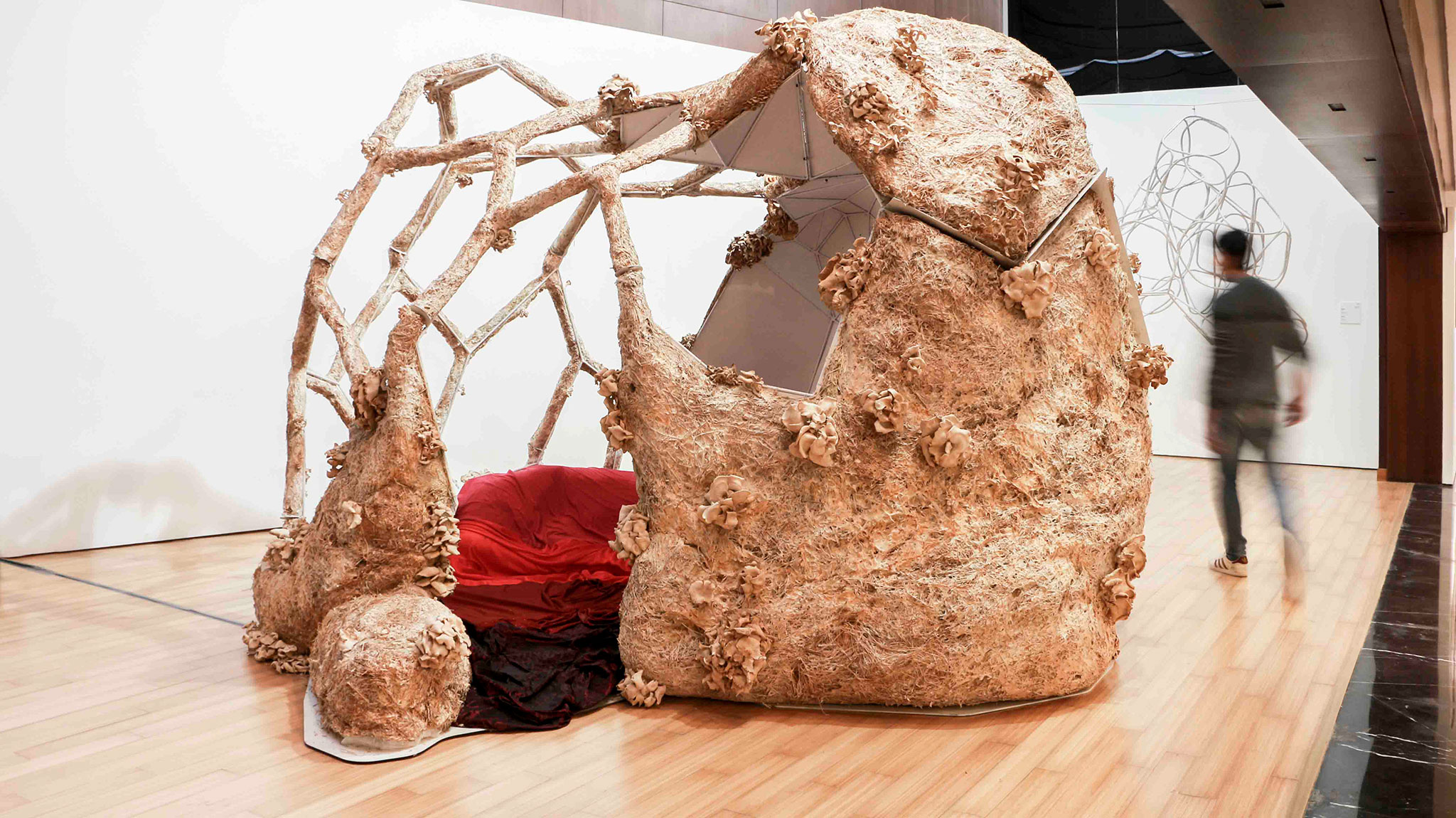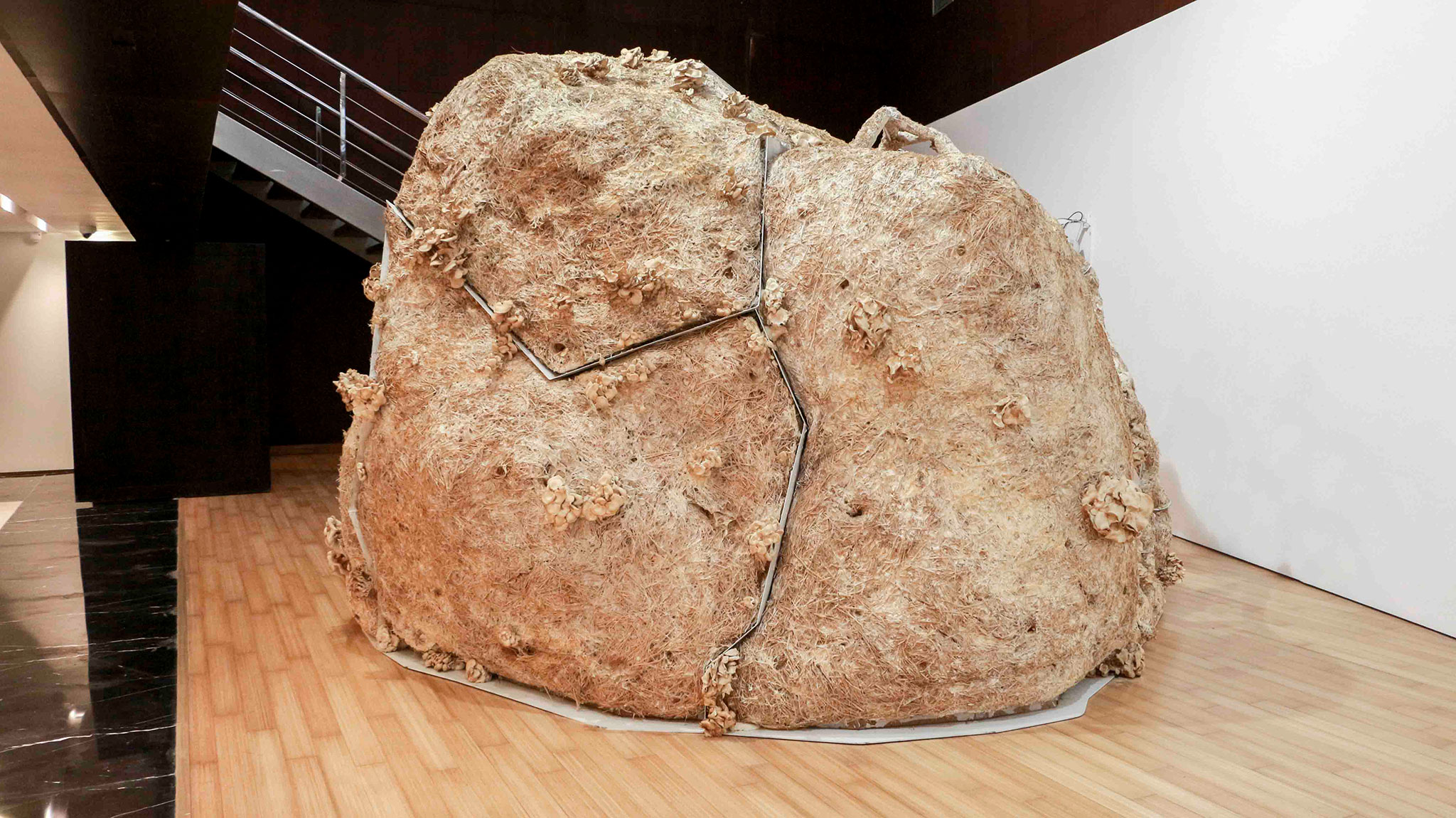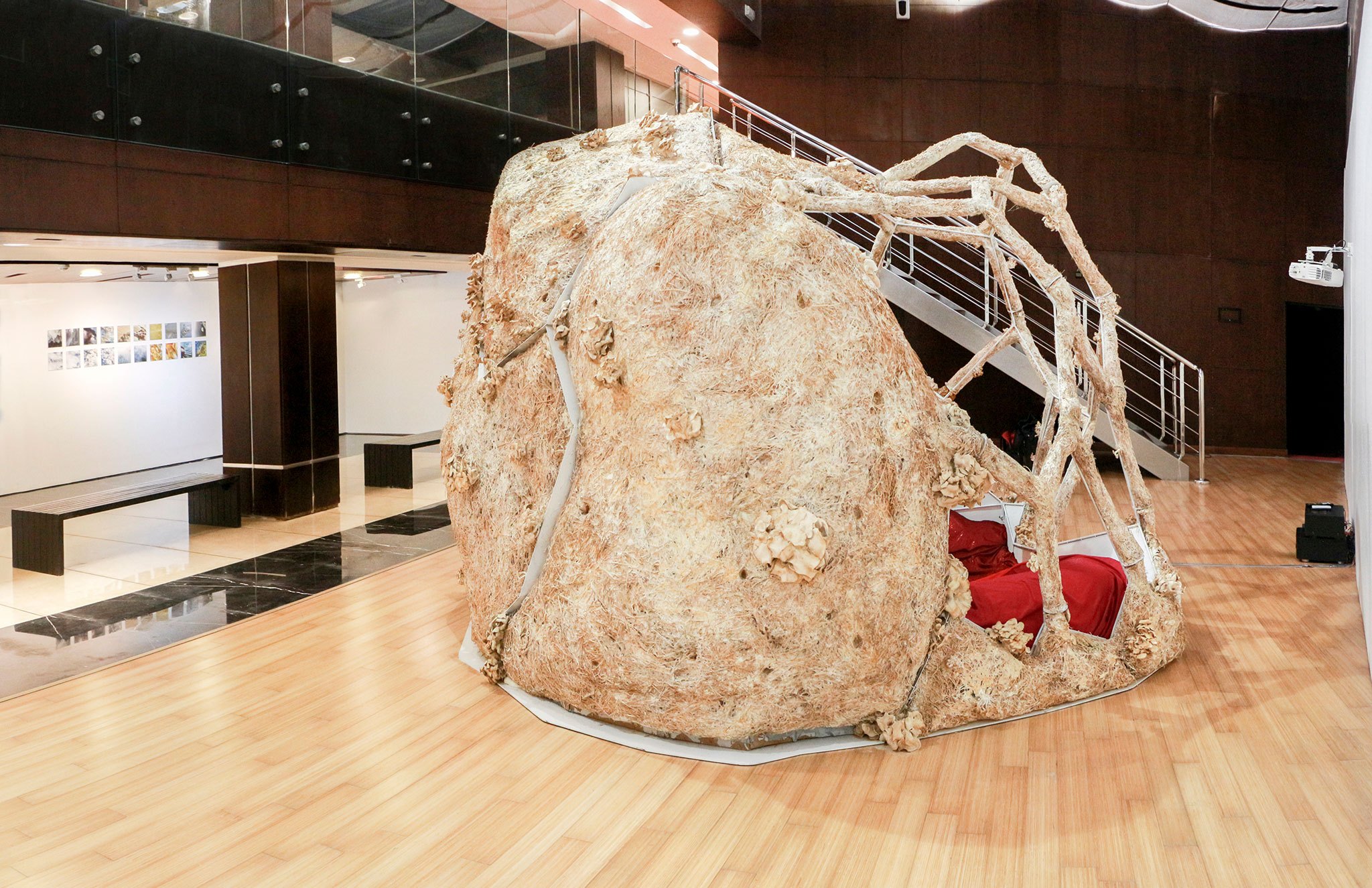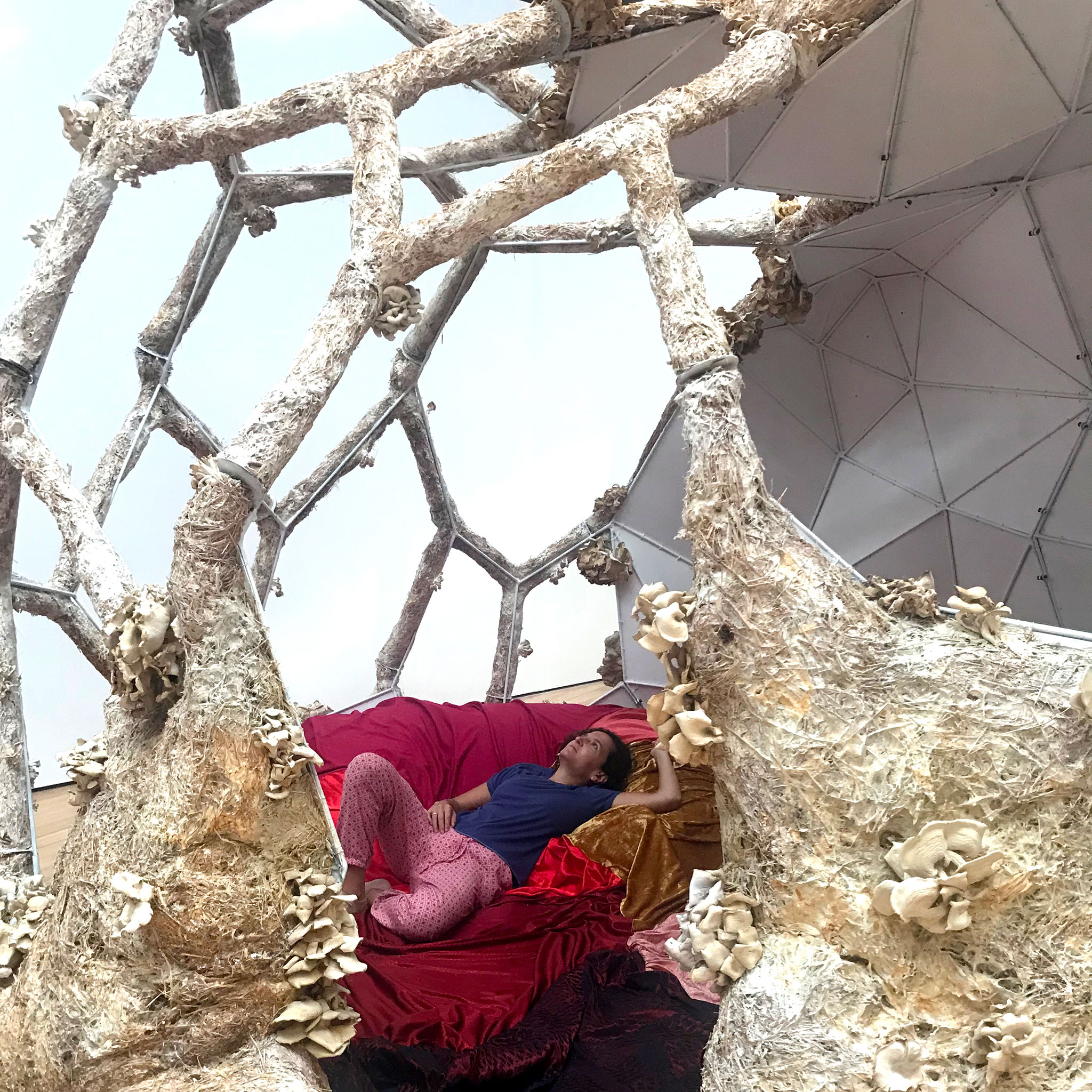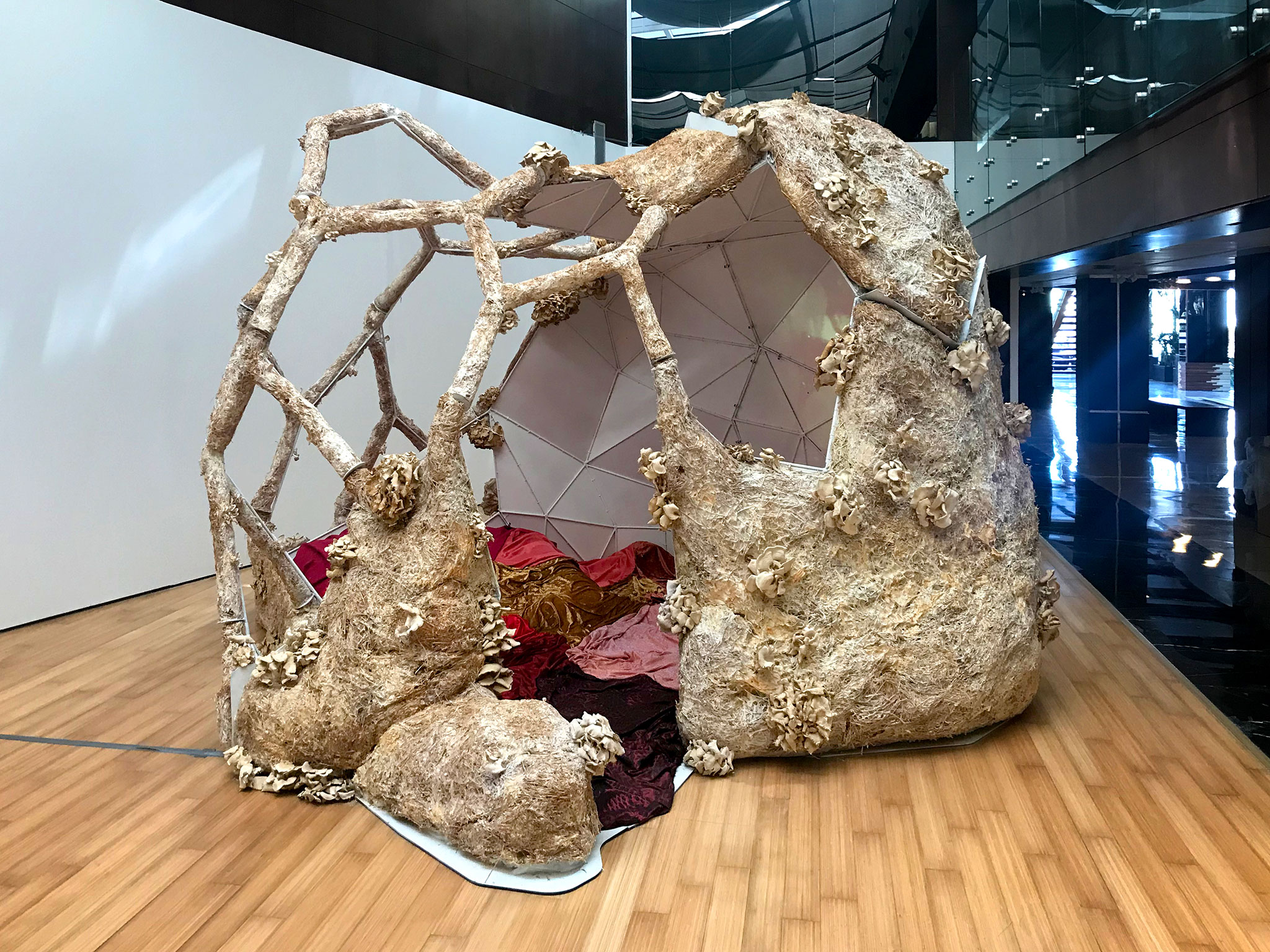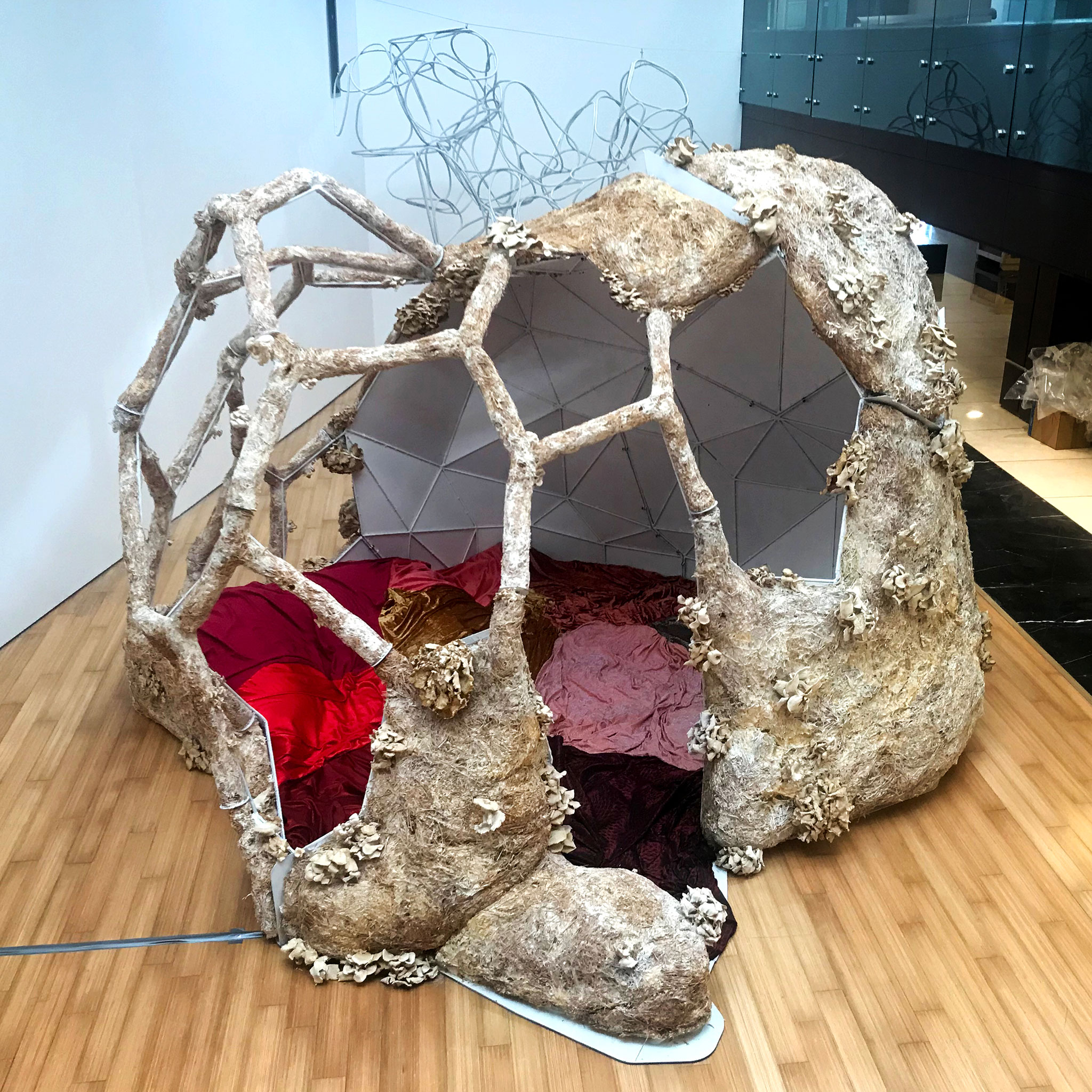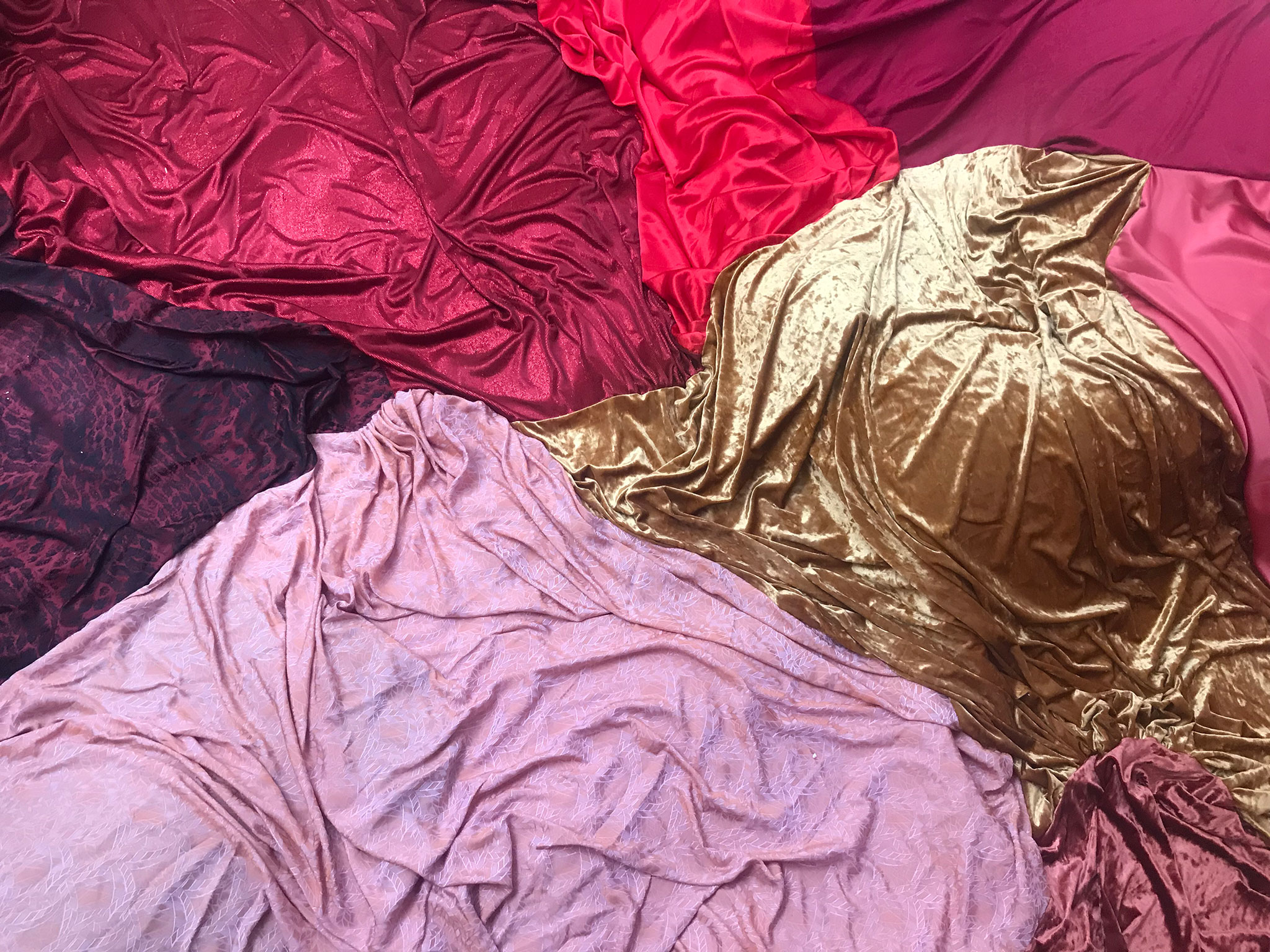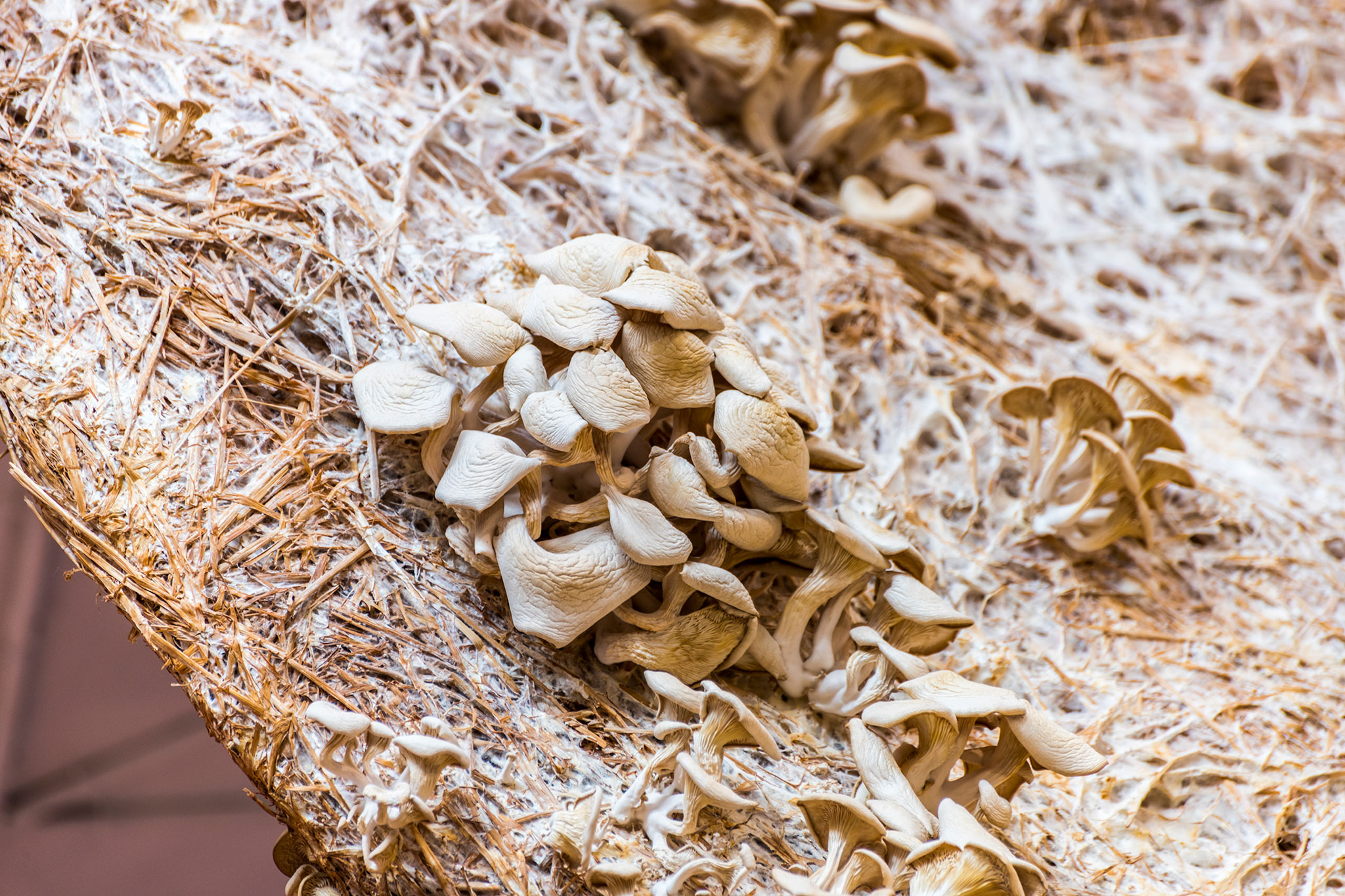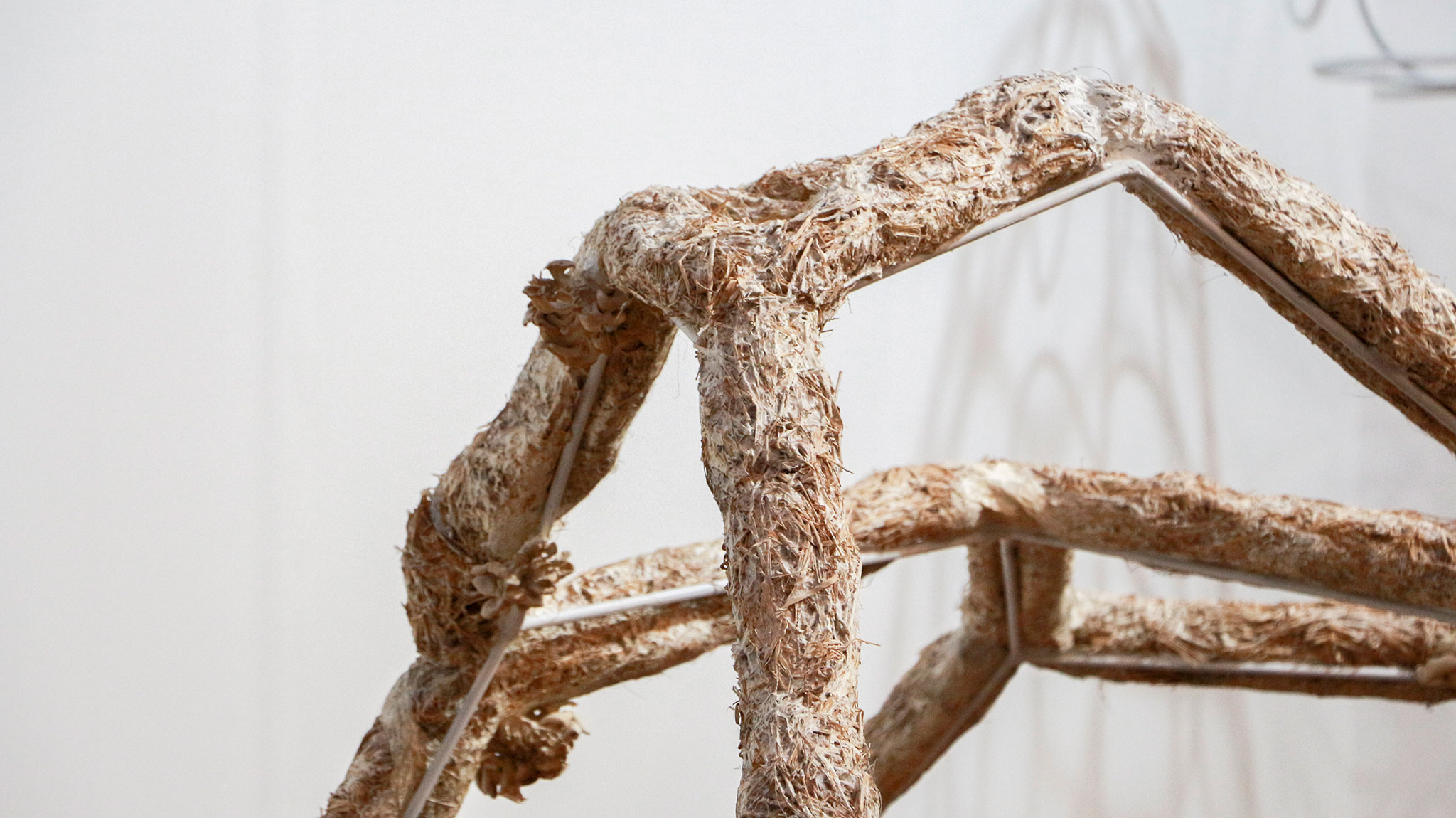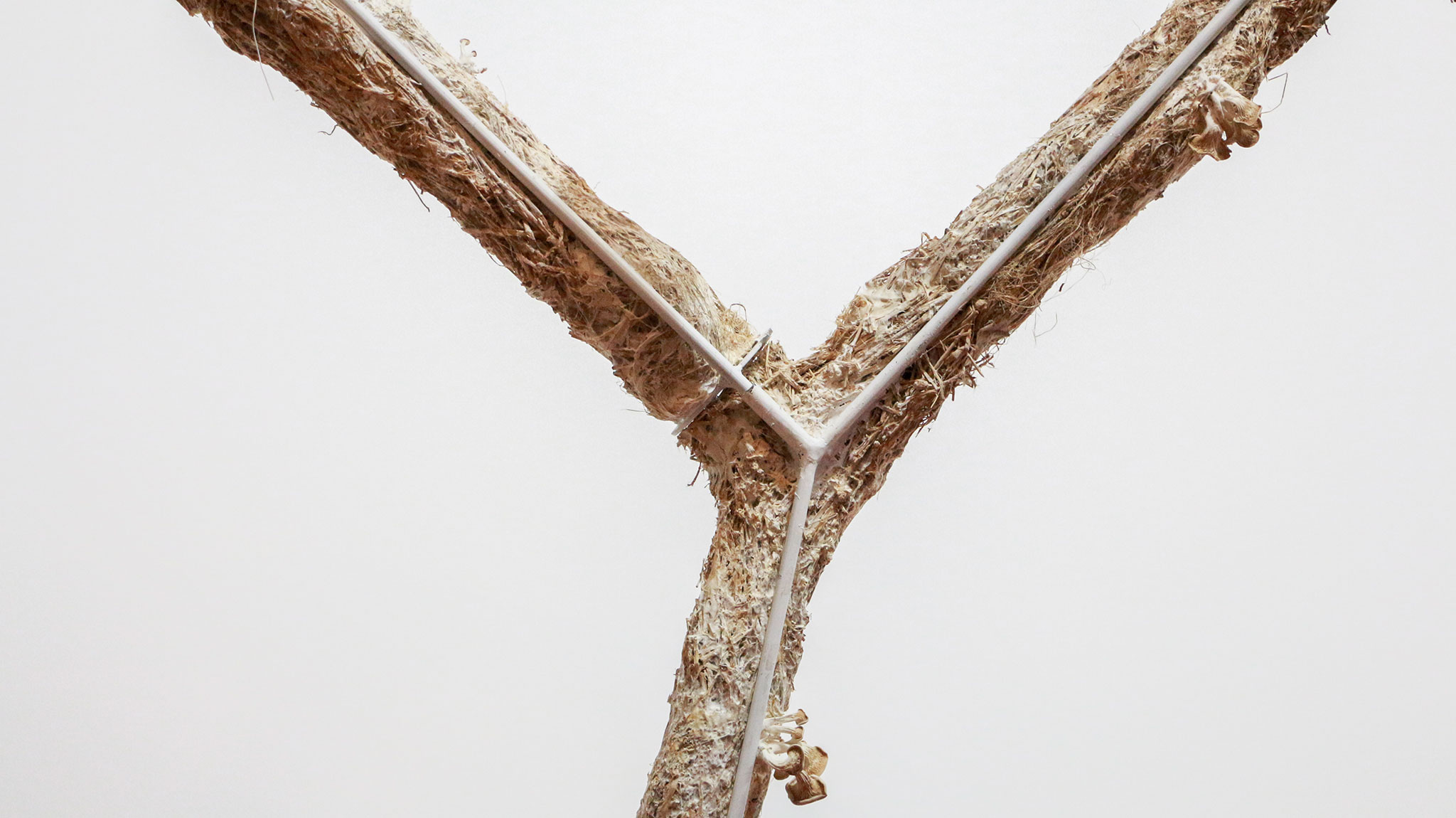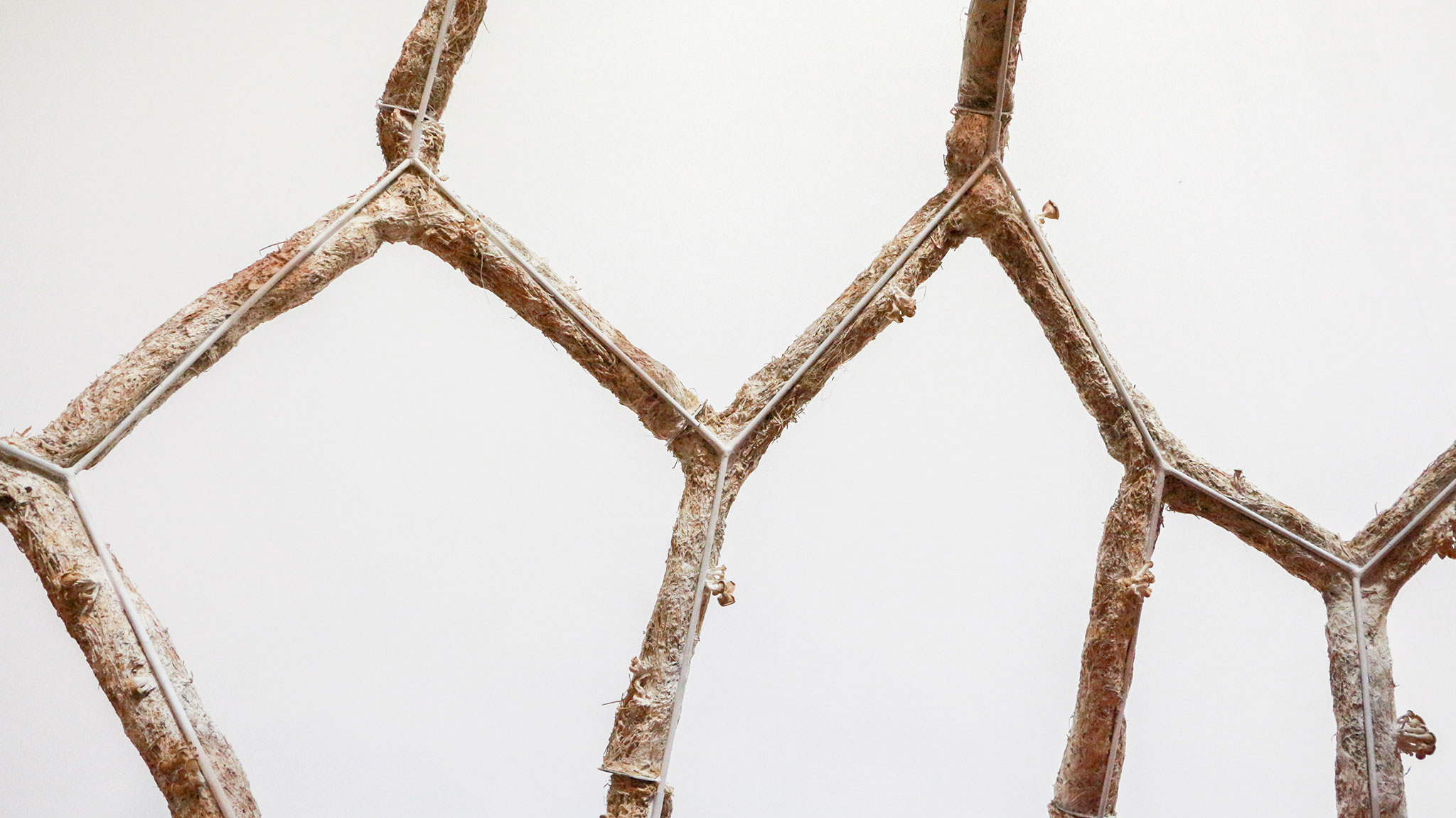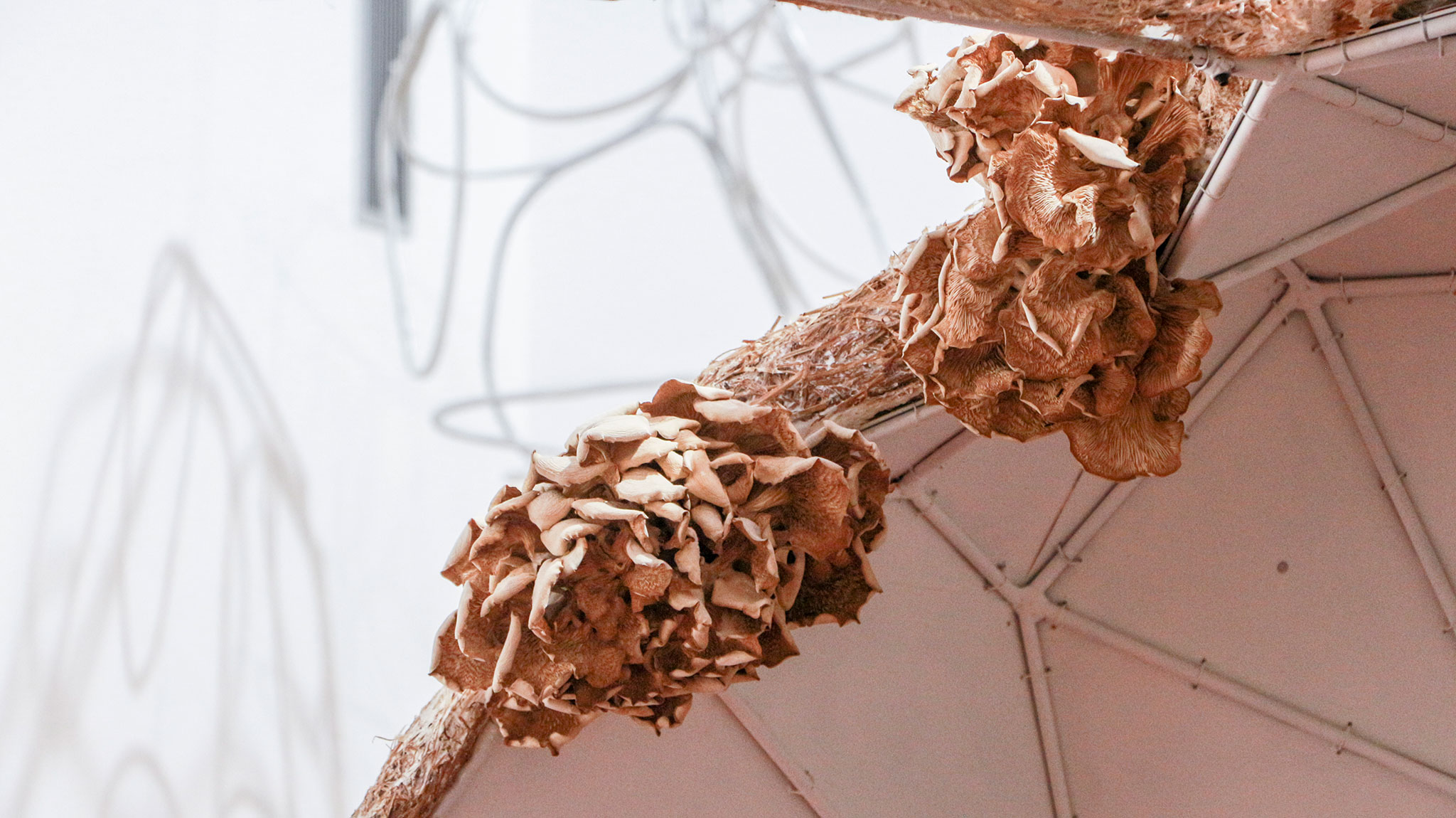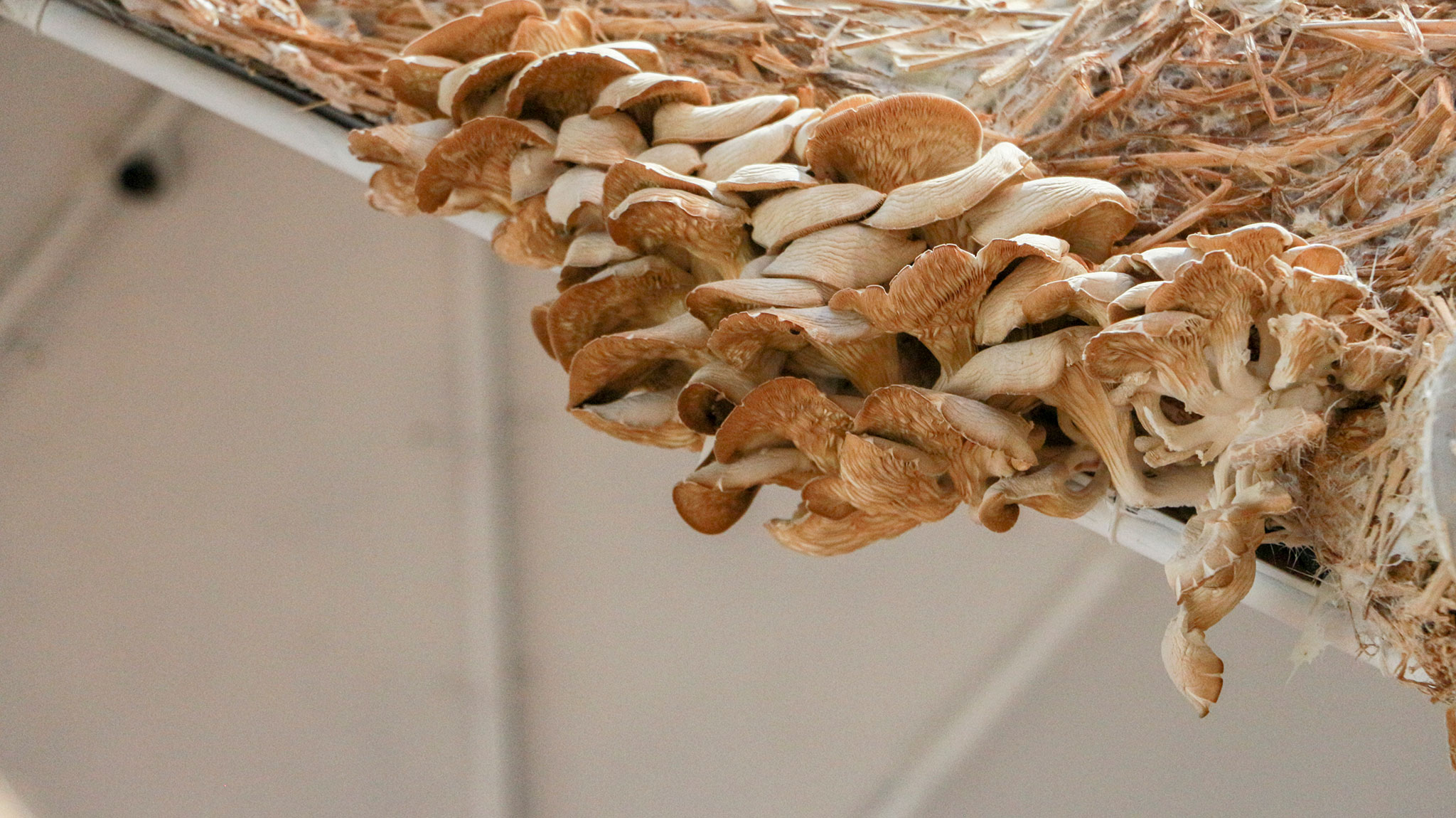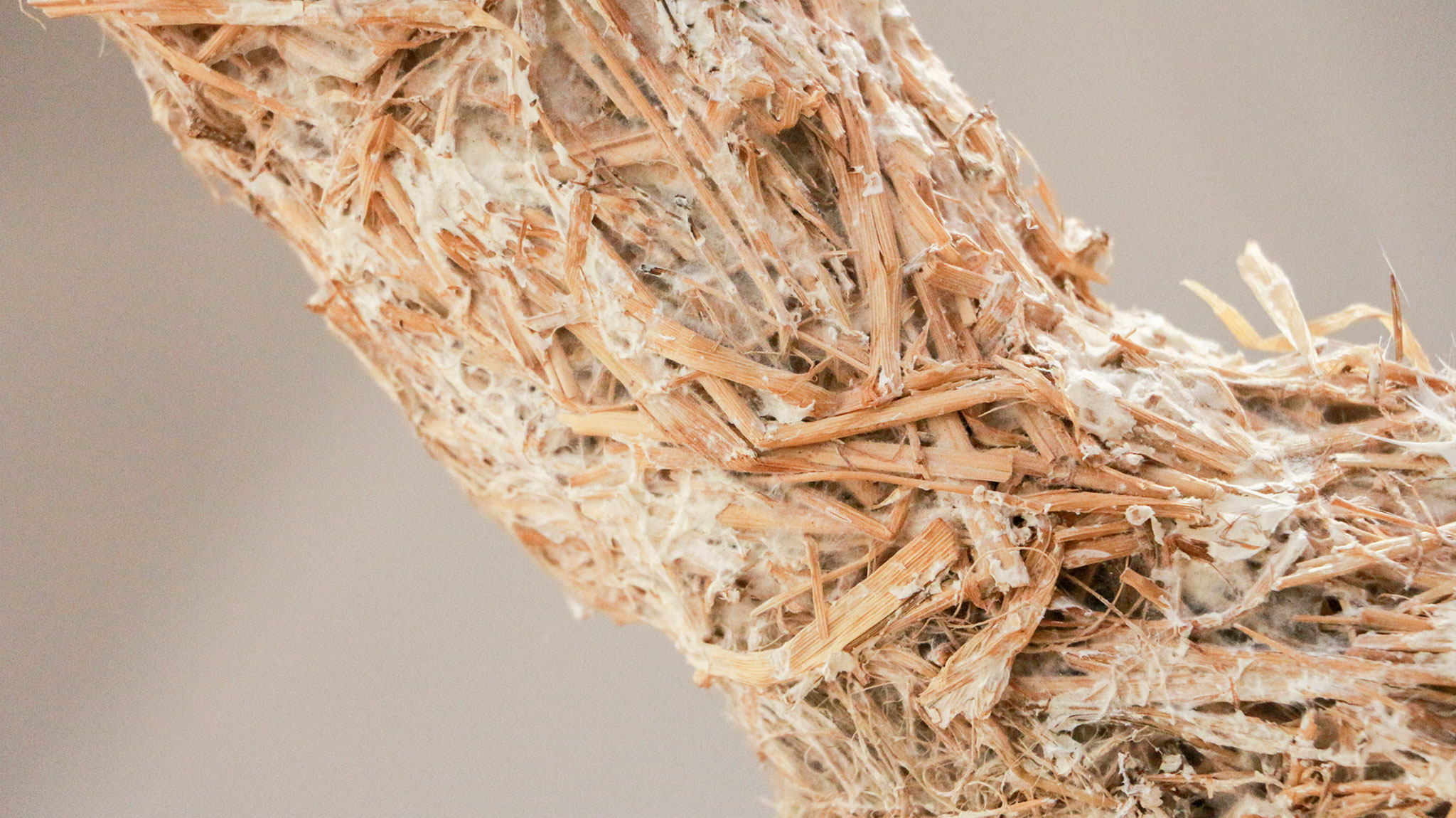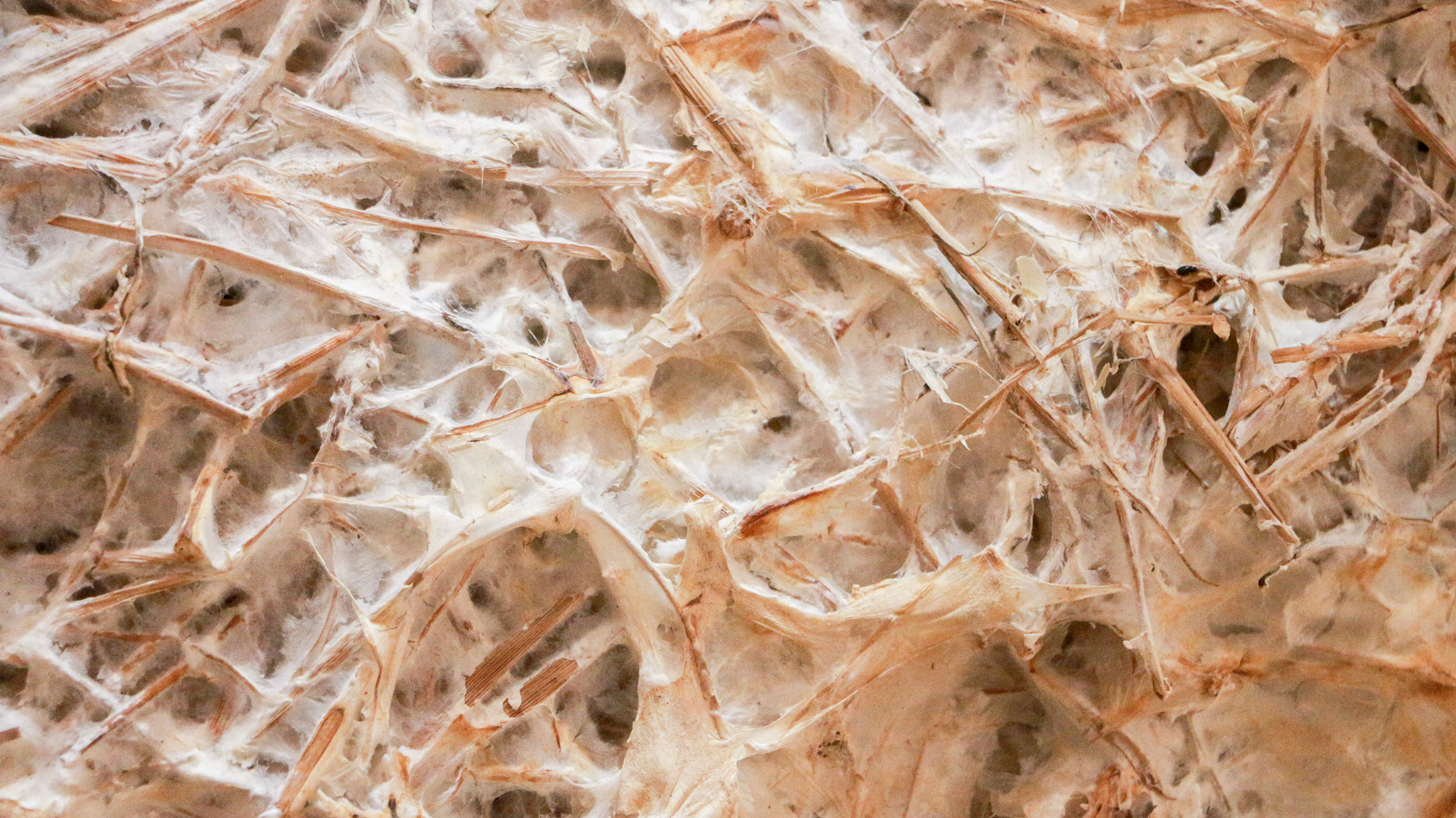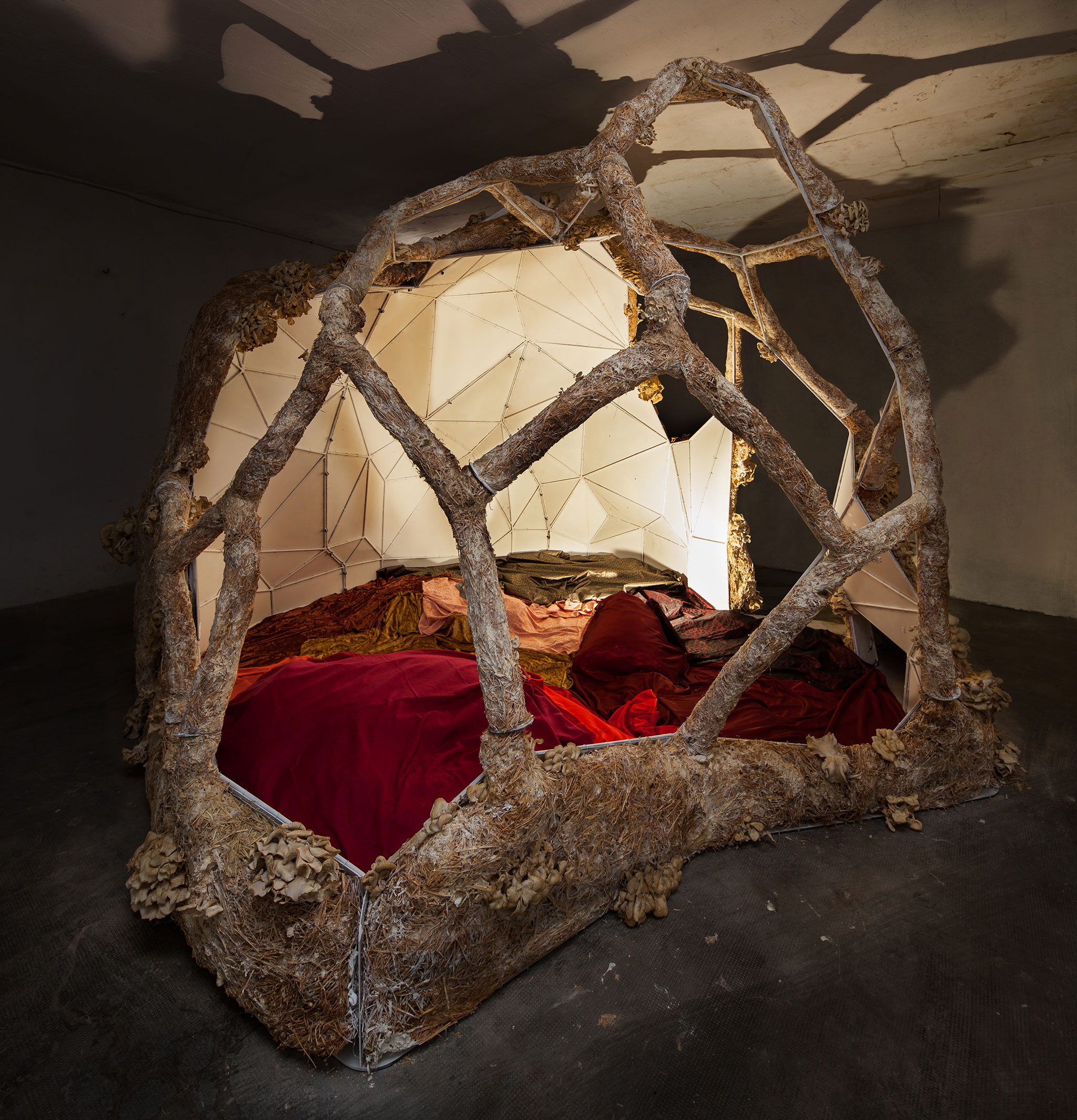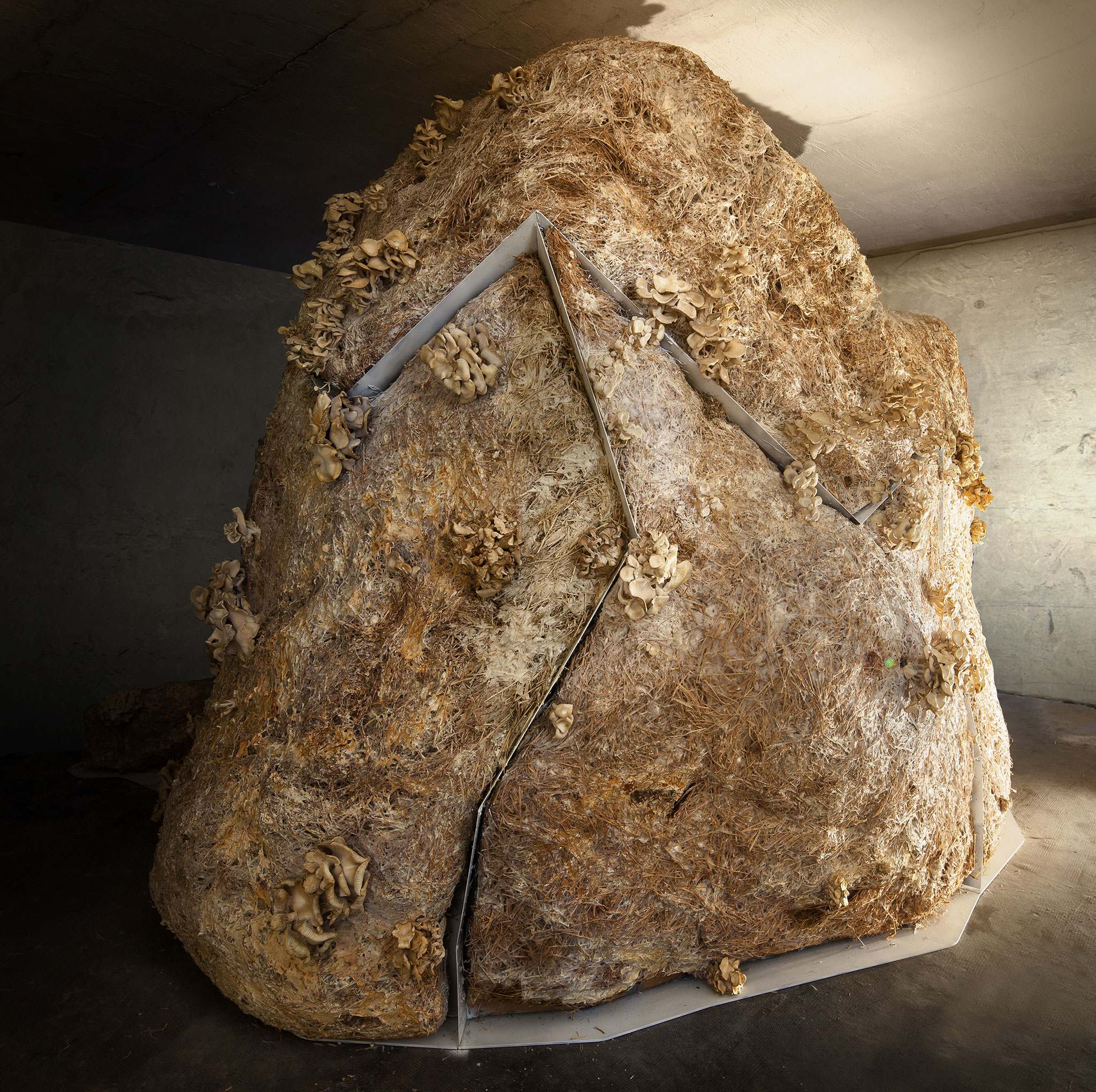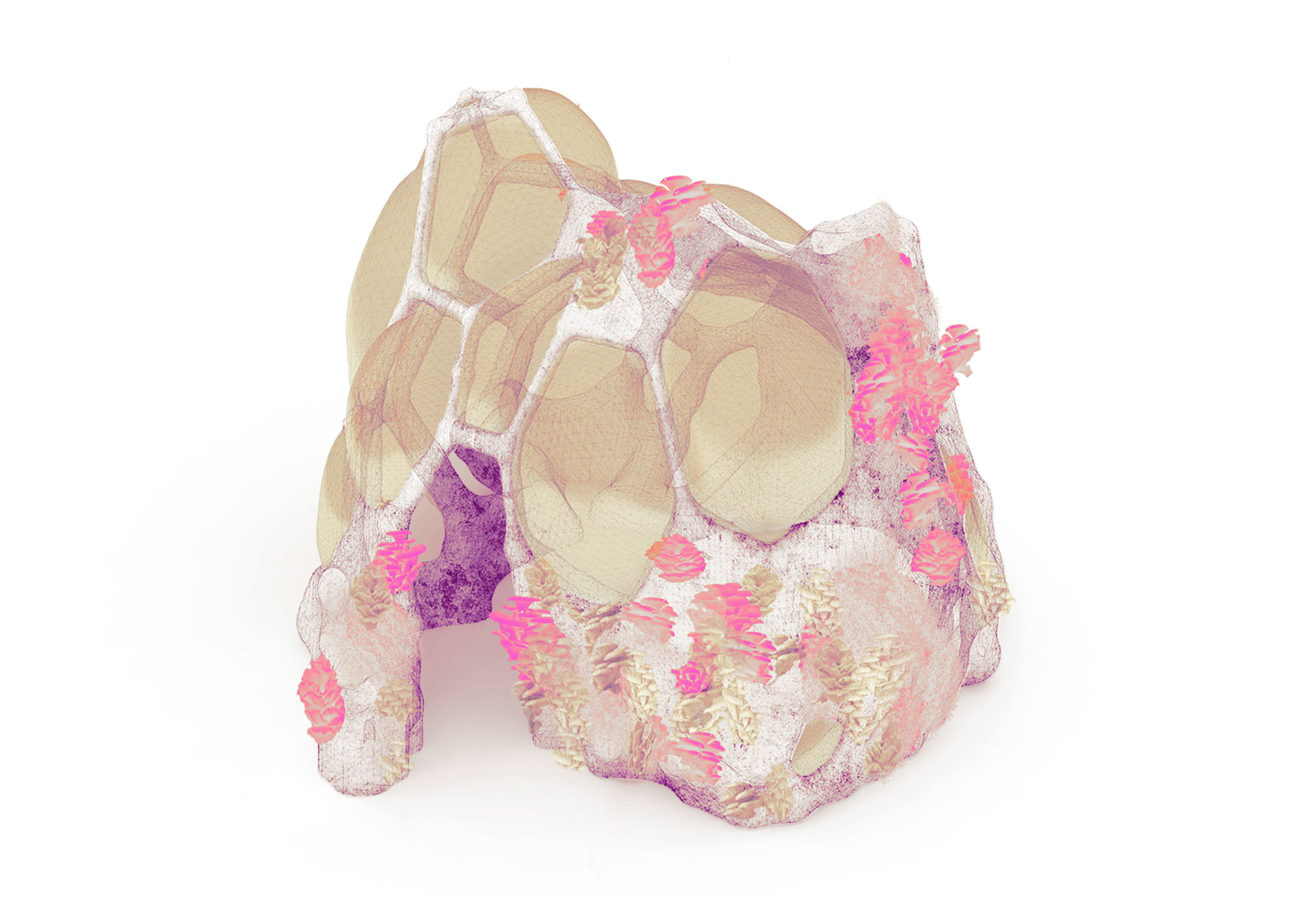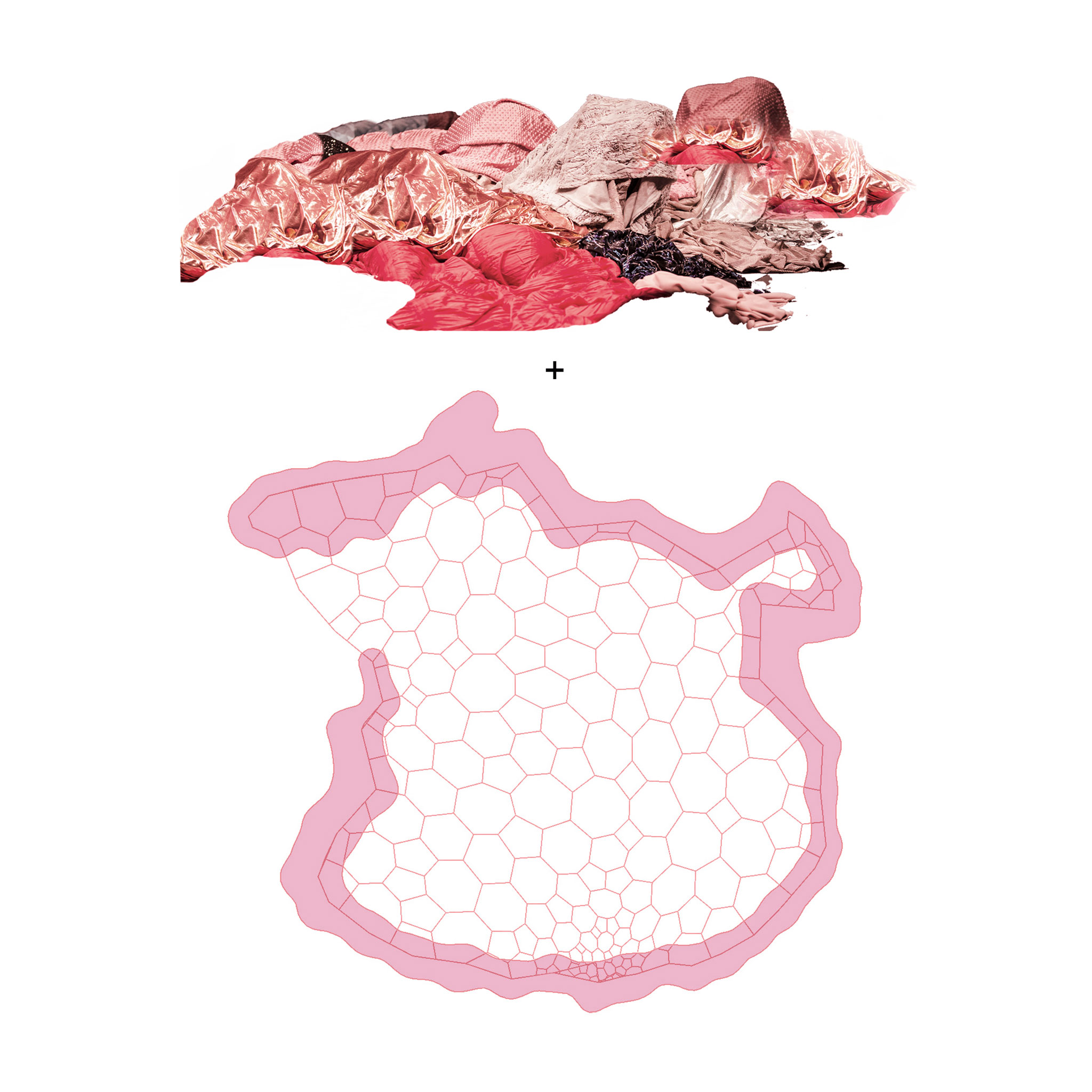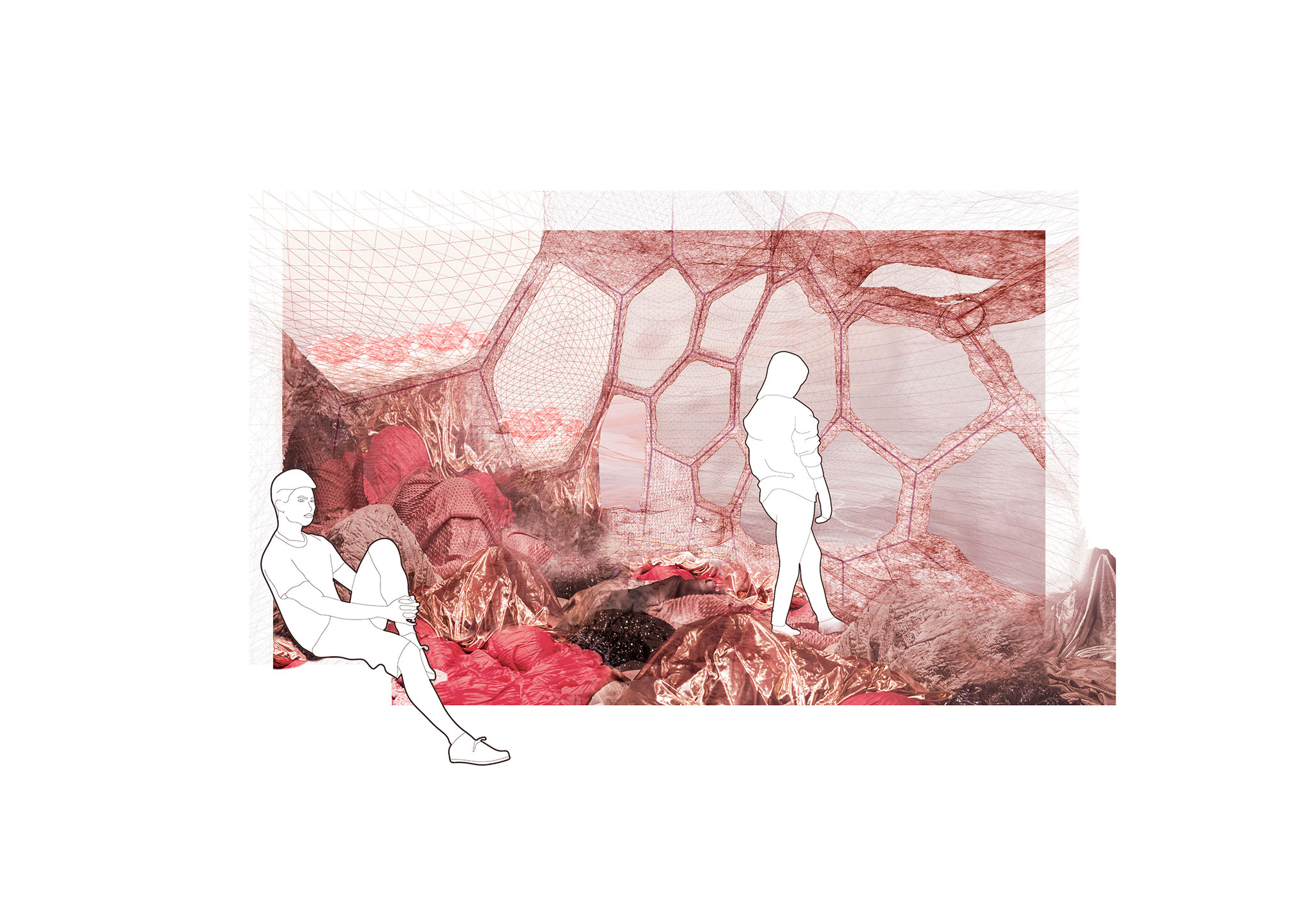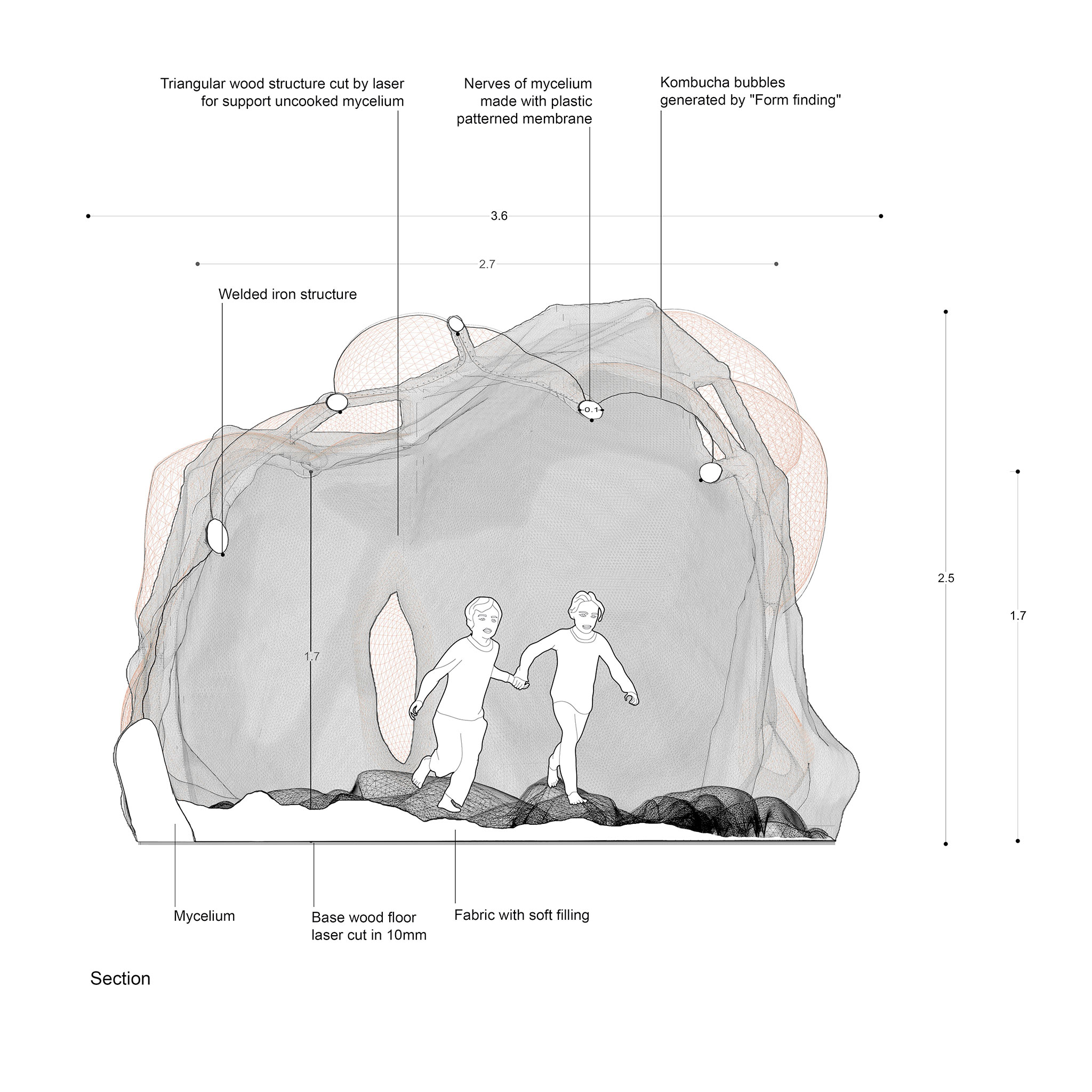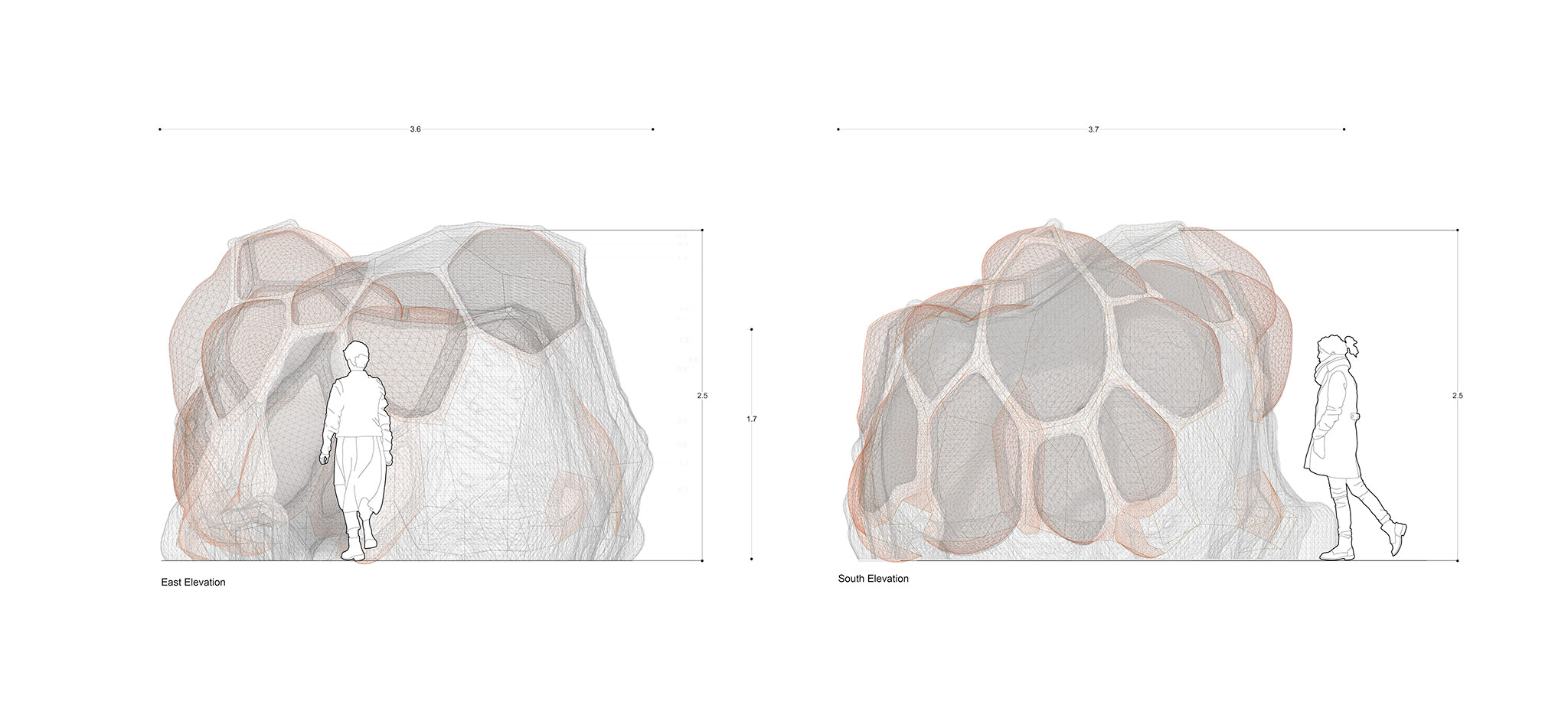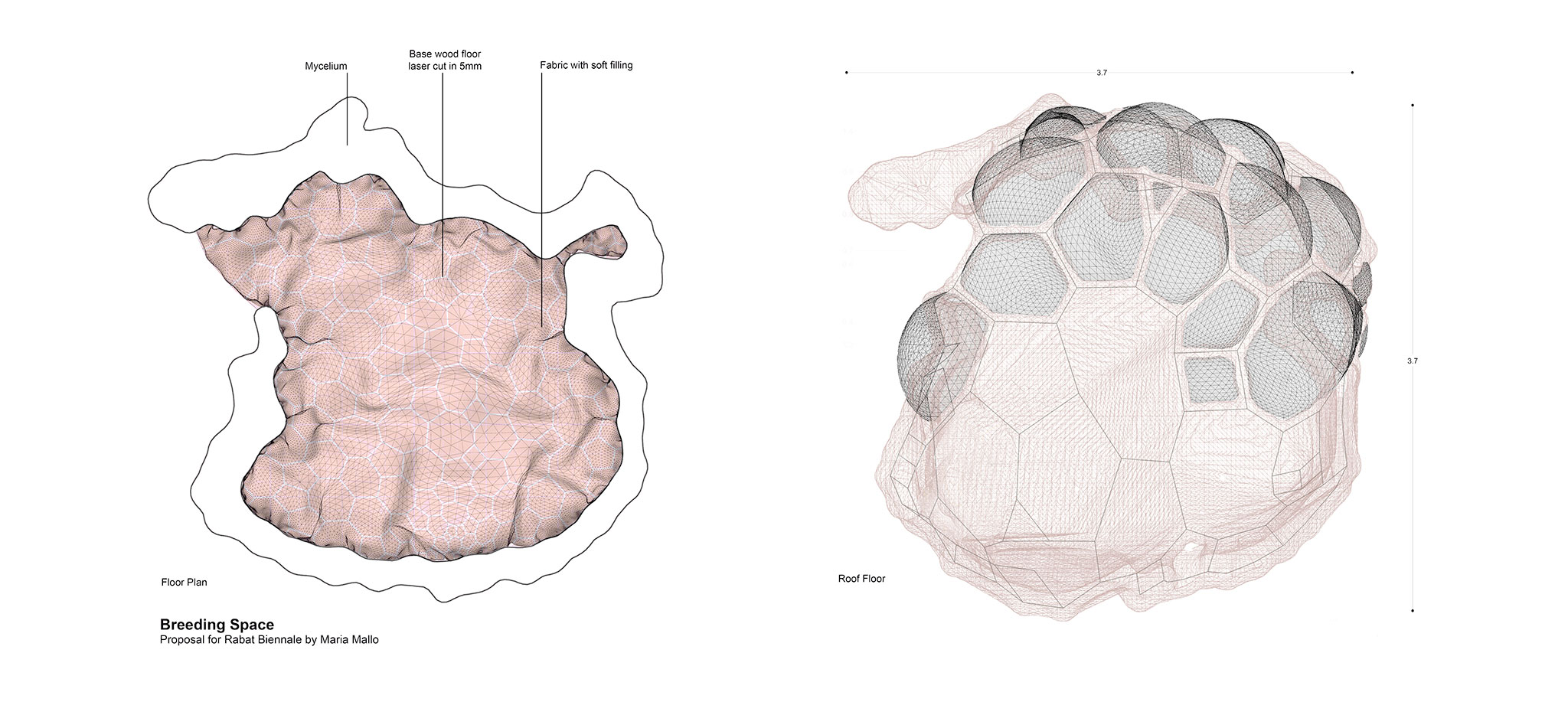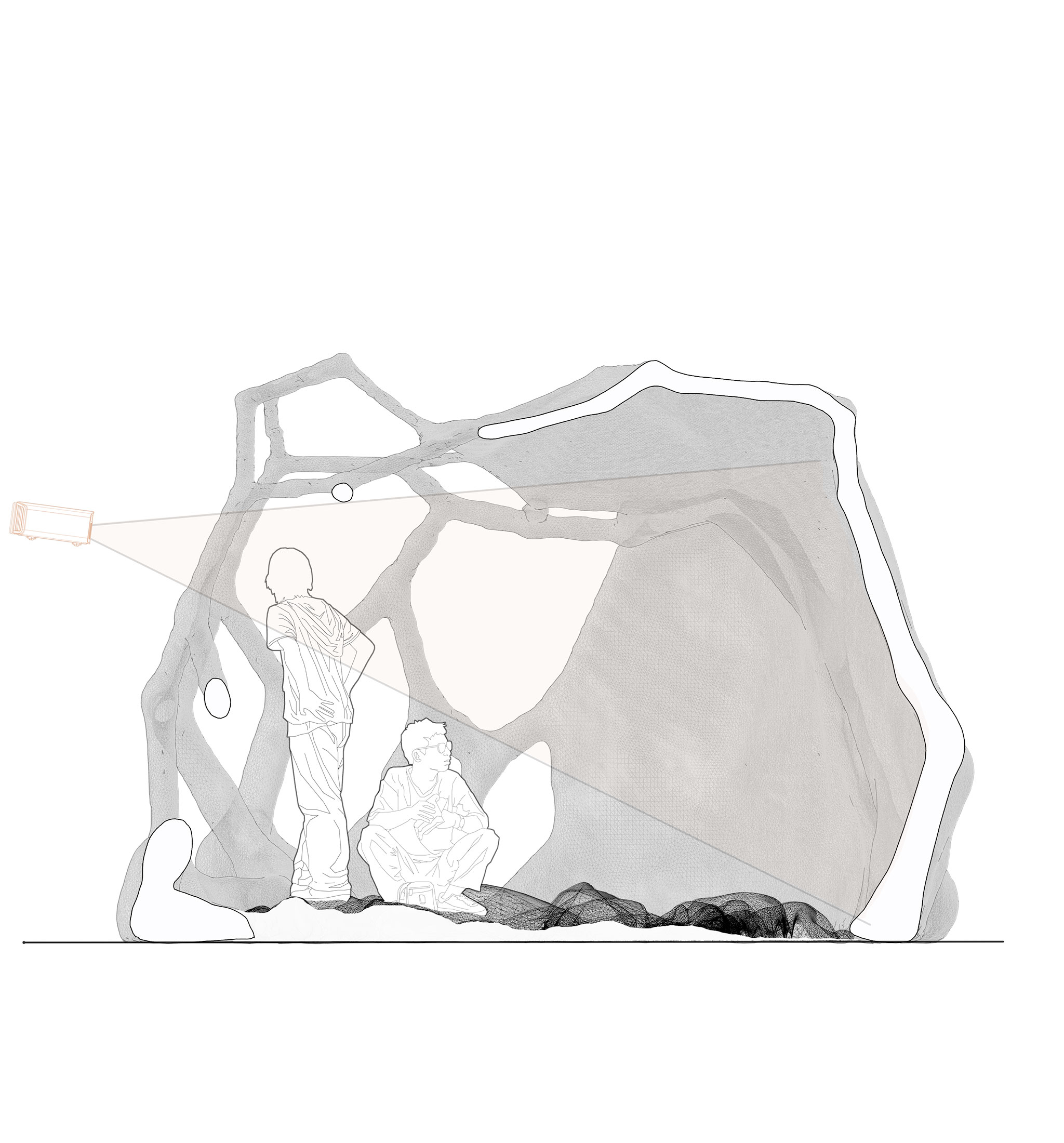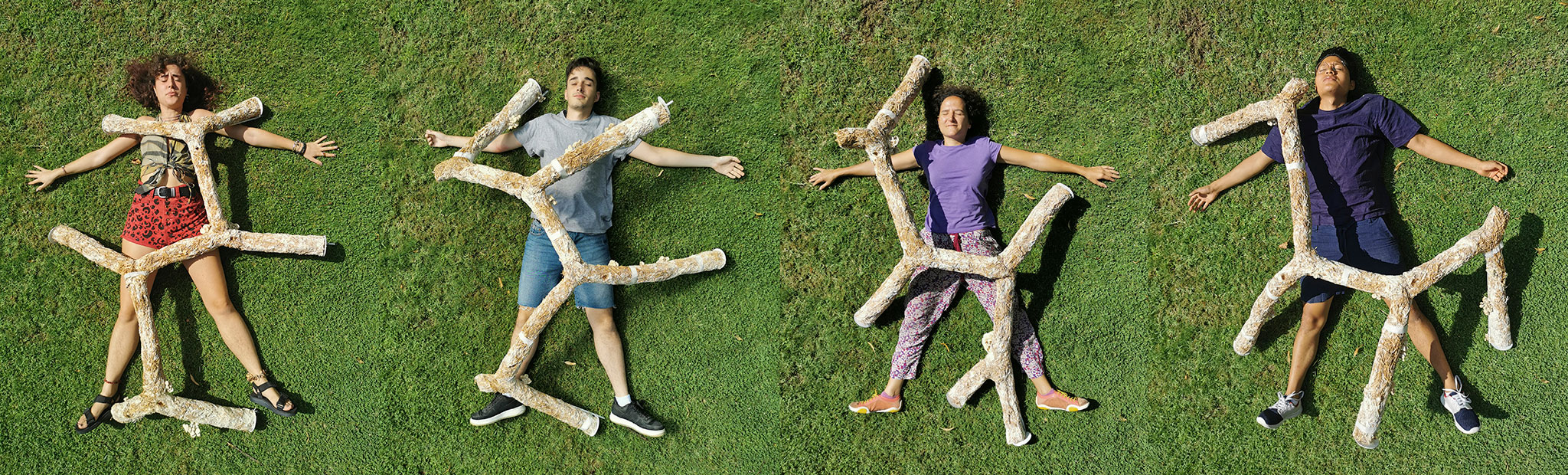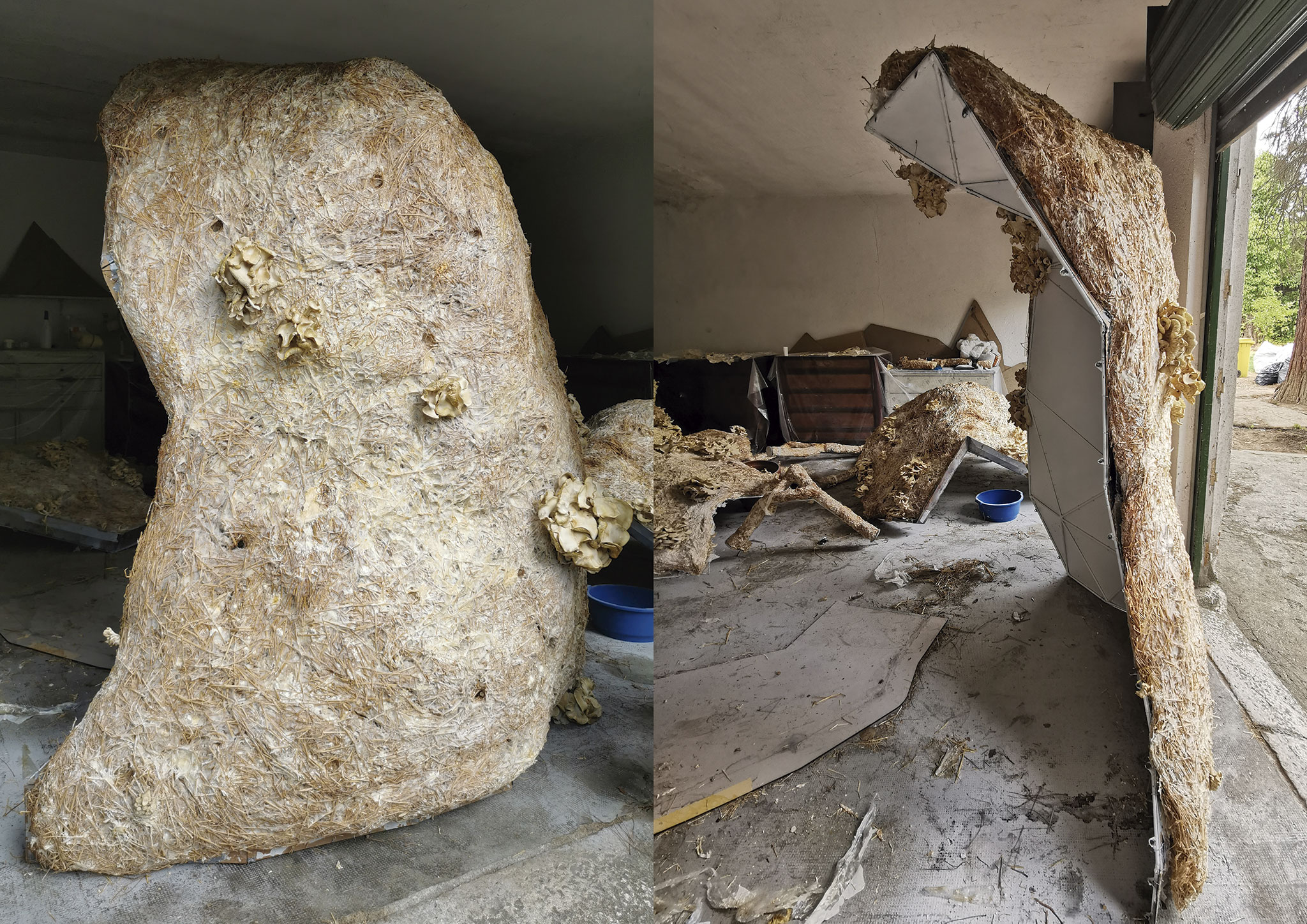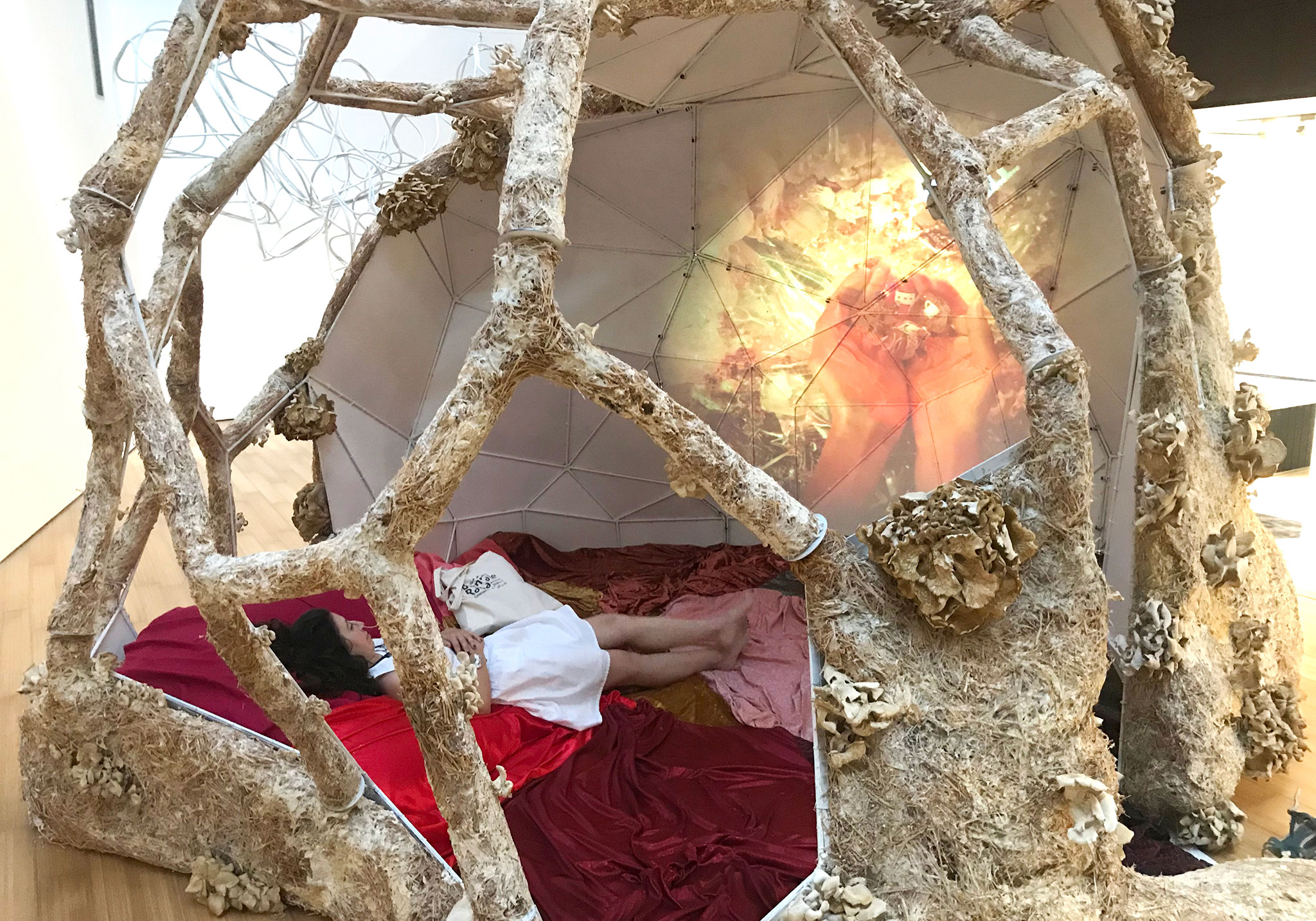
María Mallo built Breeding Space with a diameter of 3.7 m and a height of 2.5 m, composed of walls and ribs of mycelium of Pleurotus Ostreatus (oyster mushroom) and a floor of traditional Moroccan quilted and soft fabrics.
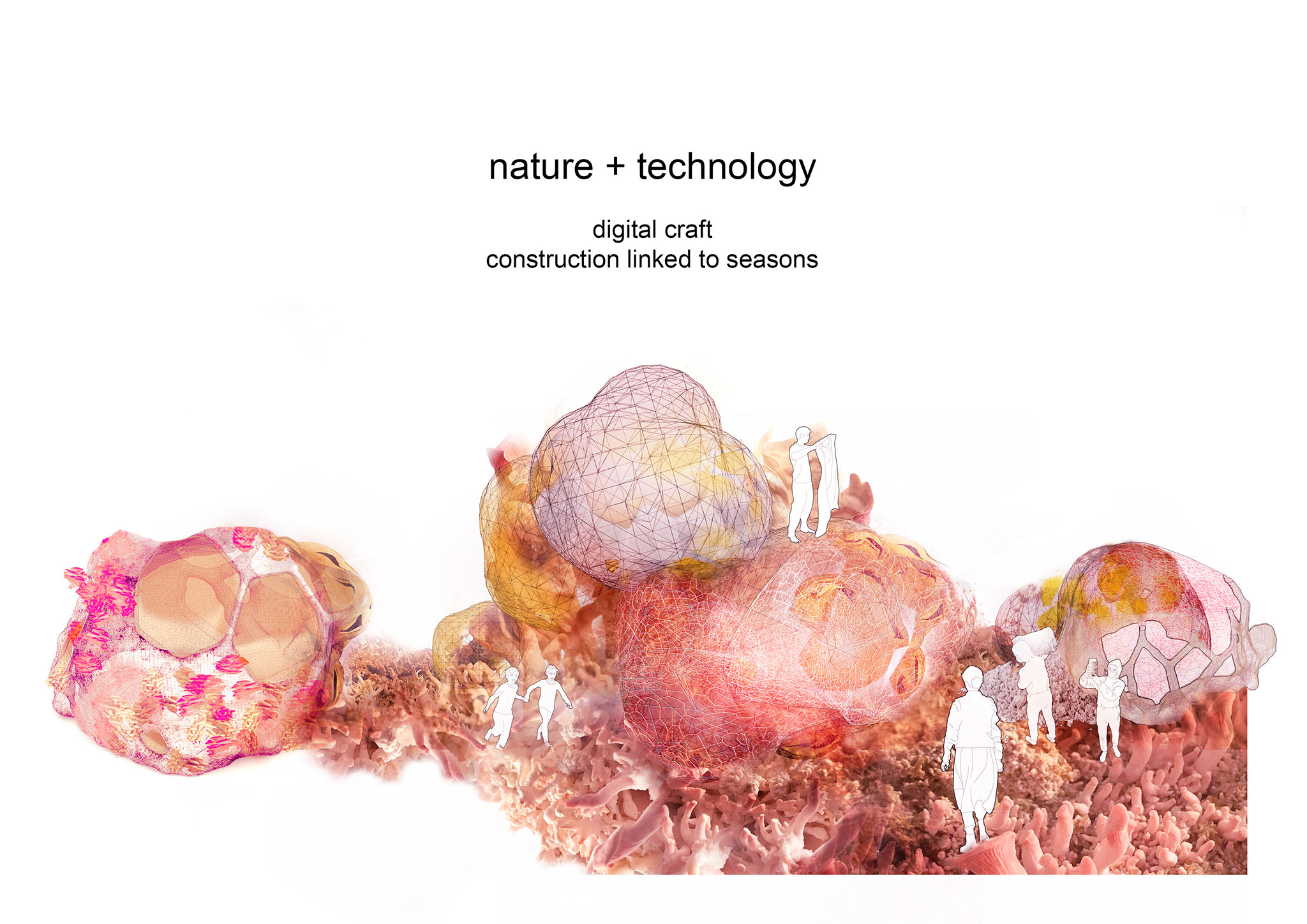
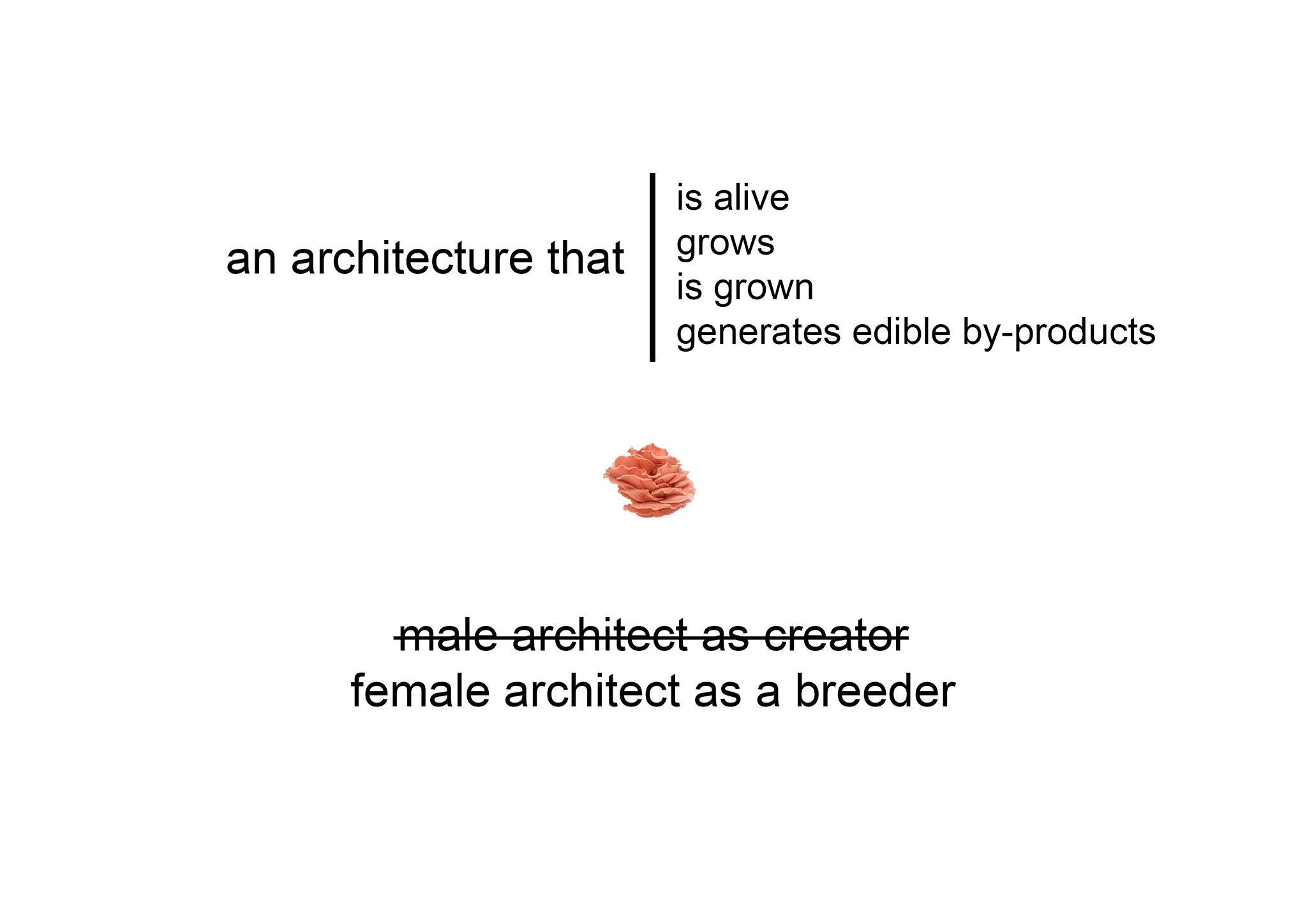
“By rethinking the origin of the world, I find myself in a past where technology does not distance itself from nature, but learns from it and complements it. With Breeding Space, I propose an architecture that is linked to the seasons, that is alive, that grows, that is cultivated and that even generates edible by-products.
Our task, therefore, is not to design, but to choose or limit the variables and facilitate the environmental conditions for it to develop."
Our task, therefore, is not to design, but to choose or limit the variables and facilitate the environmental conditions for it to develop."
María Mallo
Additionally, a model of the project was made, which since July 2020 is part of the experimental architecture collection of the Frac Center-Val de Loire, Orleans, France. The model was made in 3d printing with thermochromic PLA, hand-molded kombucha bubbles, LEDs, Moroccan fabric and laser-cut wooden base.
Project description by María Mallo
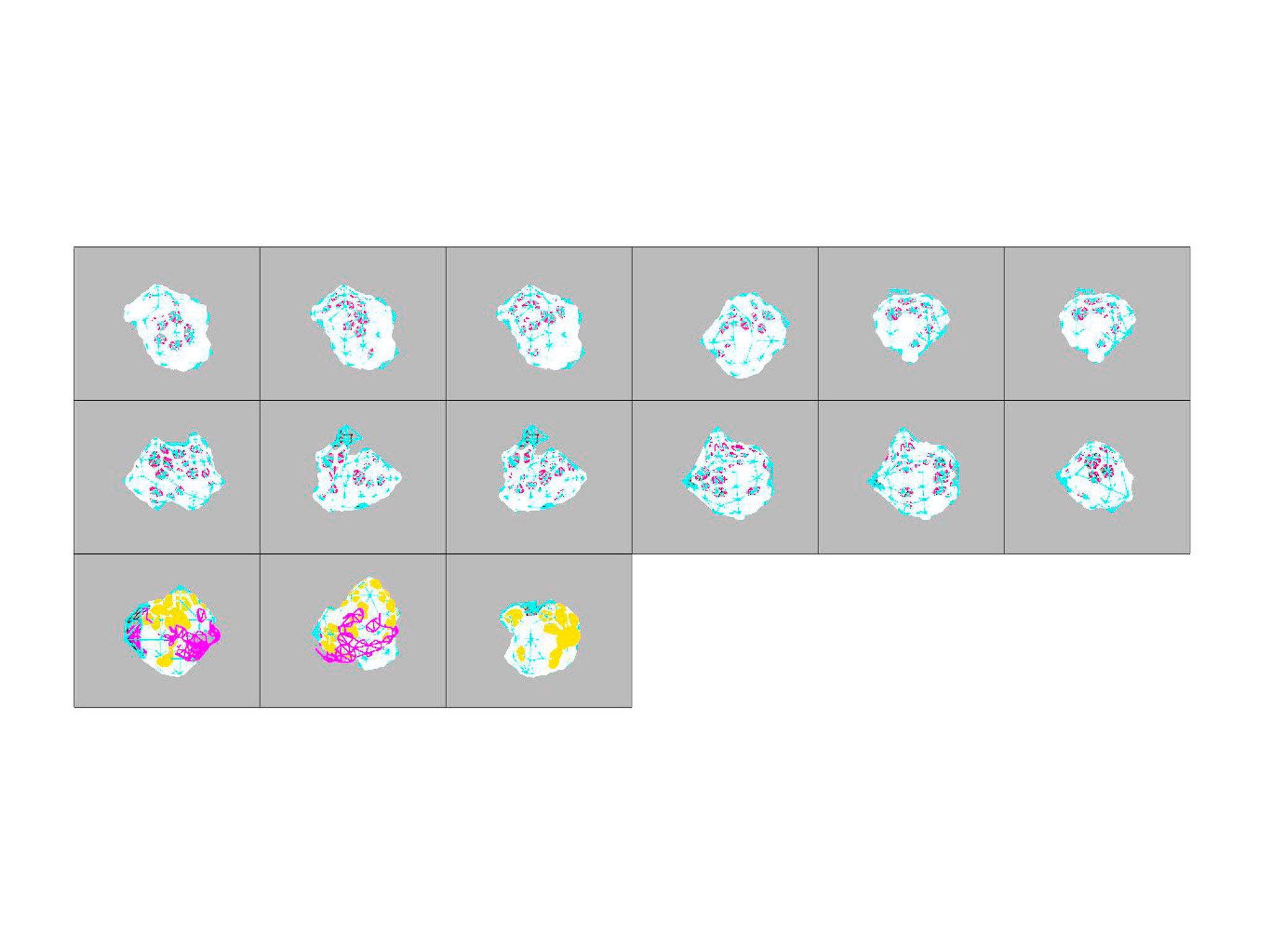
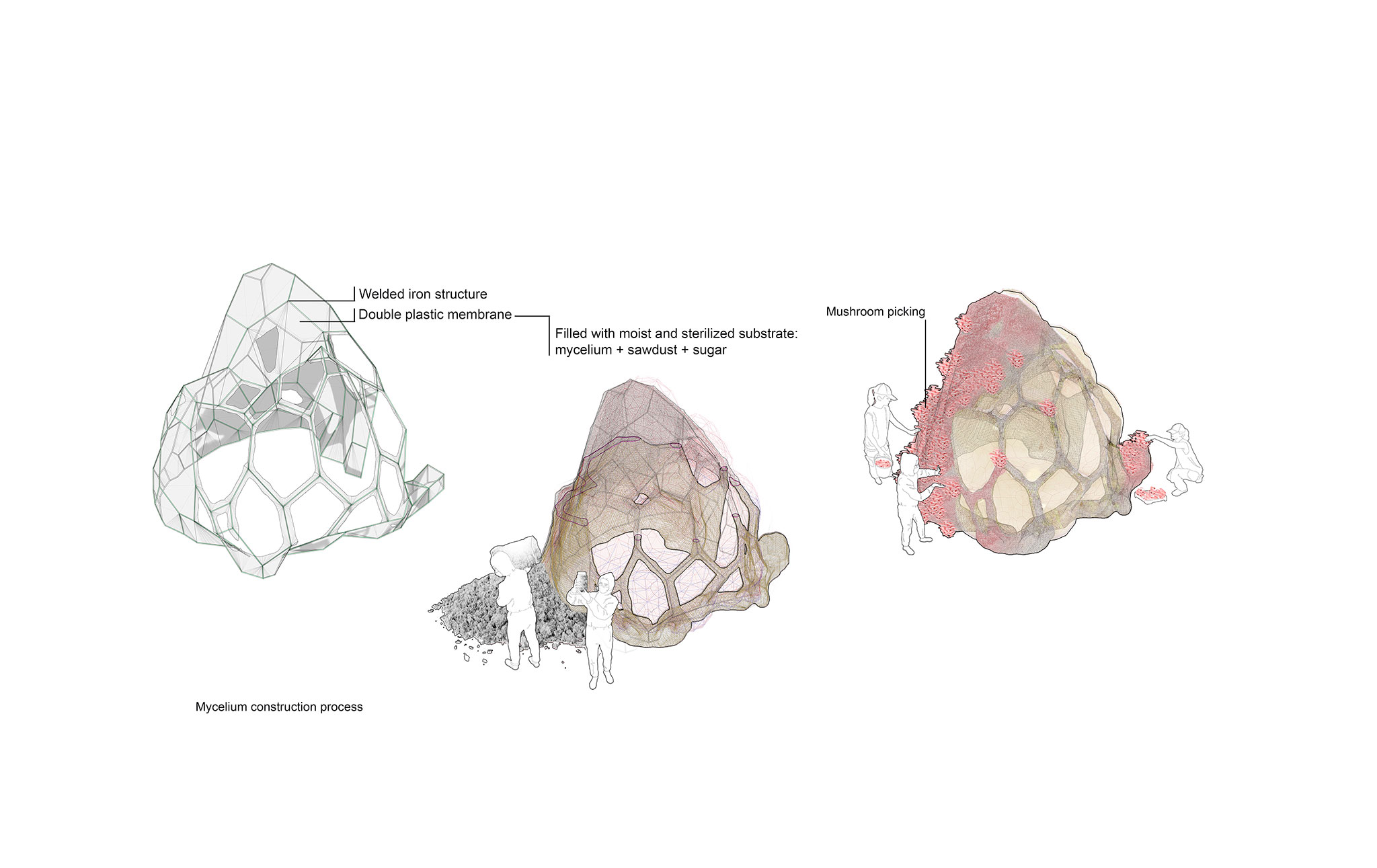
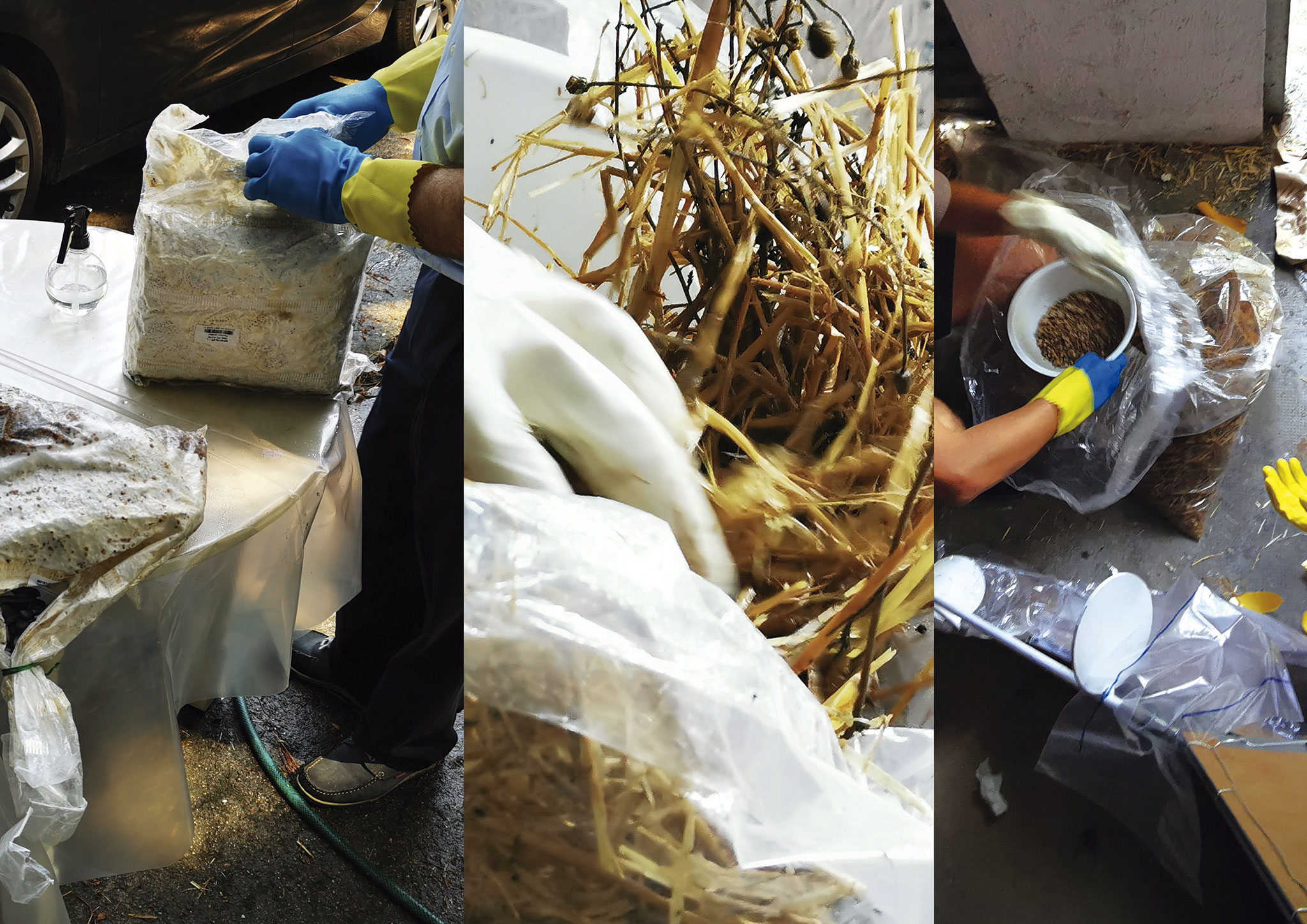
Breeding Space, is an architecture that is alive, that grows, that is cultivated and that even generates edible by-products. This space is mainly breed from generative algorithms and oyster mushroom´s mycelium grown in straw.
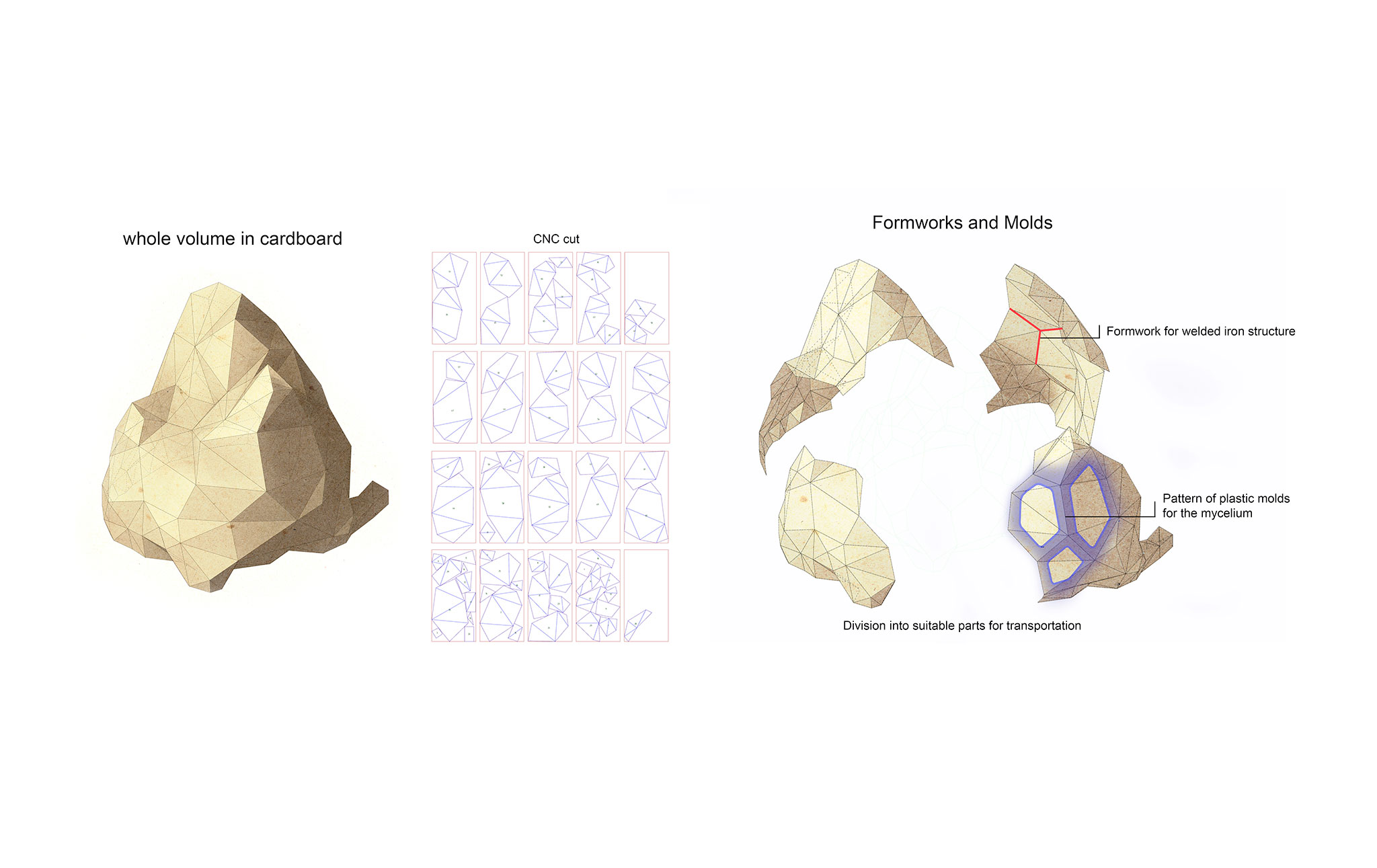
This architecture was built between a digital fabrication company, an artisan workshop and a garage converted into a laboratory. The installation, which measures 3.7m in diameter and 2.5m high, reveals the auxiliary elements necessary for its construction from the inside: endoskeleton of welded iron bars and permanent formwork of wooden boards. The interior experience is completed with a moroccan fabrics floor with different padding and the audiovisual piece Amplifying, by Espírituescalera, that narrates other possible worlds.
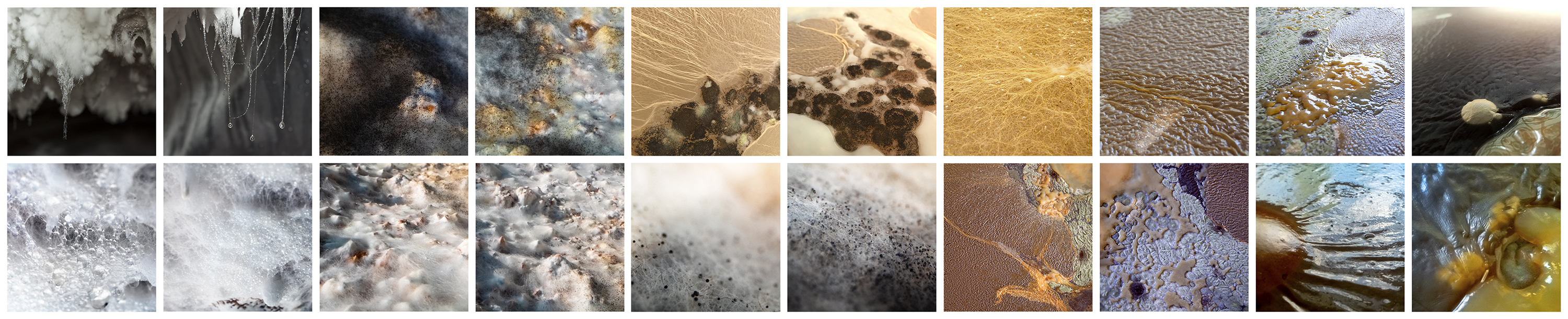
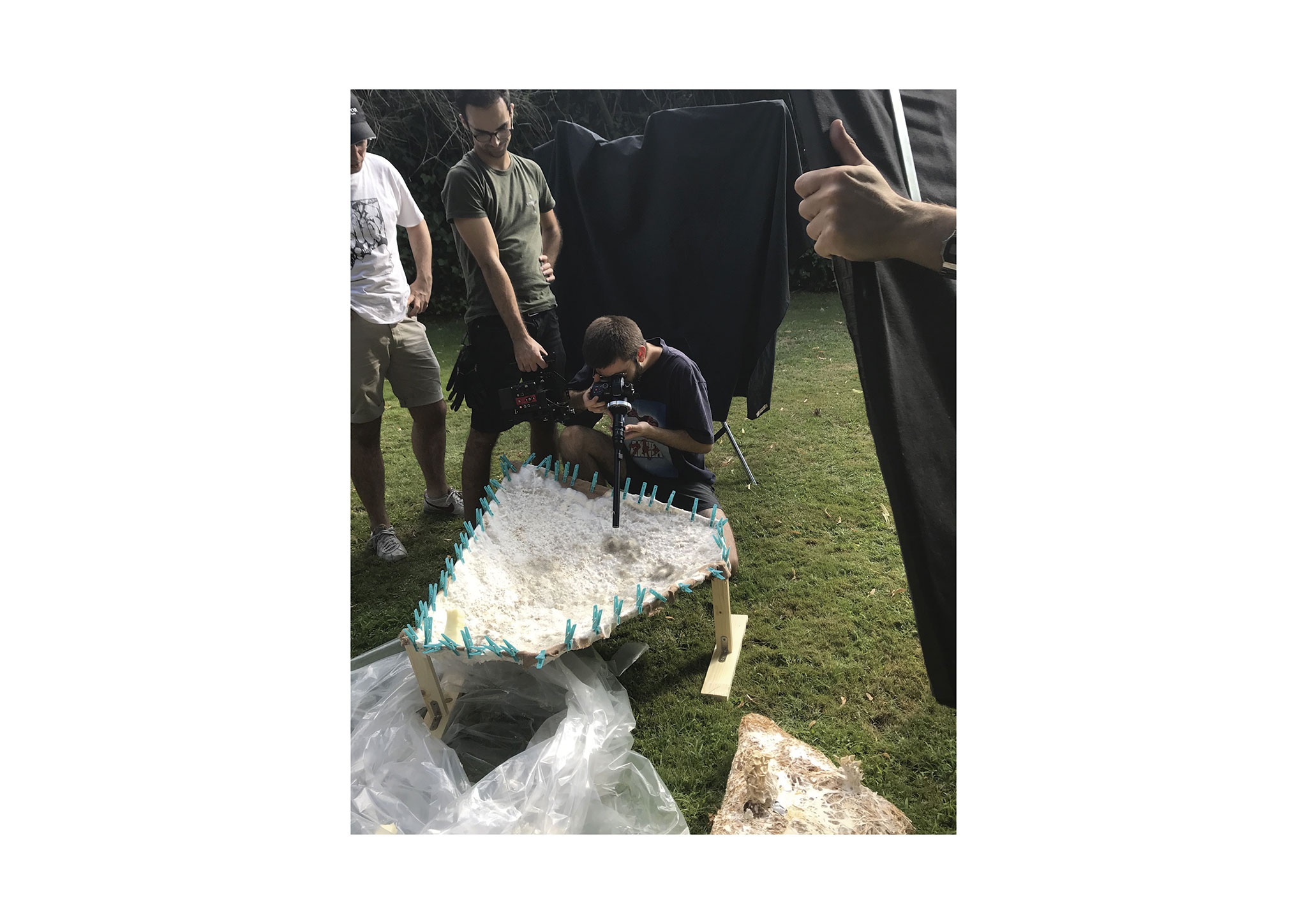
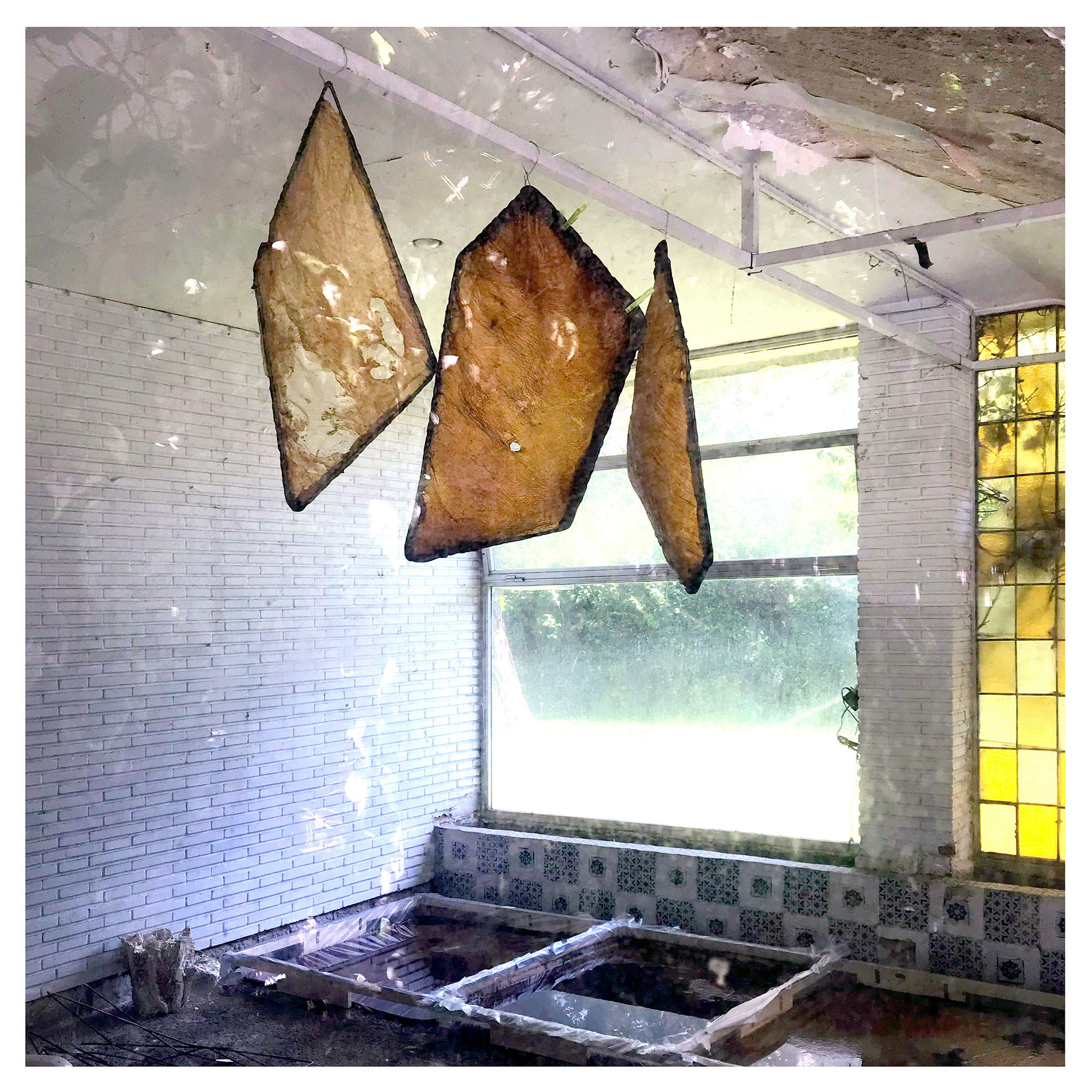
The project included 16 kombucha bubbles that closed the gaps with the translucent bio material (bacterial cellulose), but we only managed to make 3. Environmental spore contaminations, which were part of the problem, offered however surprising landscapes that were recorded in a serie of 20 photographs. These Breeding Territories can be microscopic or extraterrestrial, although in reality they are pools of kombucha and mycelium in jute, contaminated by different types of molds.
The production, which took place during the summer of 2019, was narrated day by day through the instagram stories in @maria.mallo profile, providing an alternative option to the usual architectural narratives, explaining both the successes and the failures of the experimental research processes. Breeding Space and Breeding Territories were exhibited at the Rabat Biennale between September and December 2019.
In January 2020, Breeding Space was donated to the Mohamed VI Museum in Rabat and is currently waiting in its gardens for its biodegradation. Additionally, a model of the project is produced, which since July 2020 is part of the experimental architecture collection of the Frac Center-Val de Loire, Orleans, France. The model is made in 3d printing with thermochromic PLA, manually molded kombucha bubbles, LEDs, Moroccan fabric and laser cut wooden base.