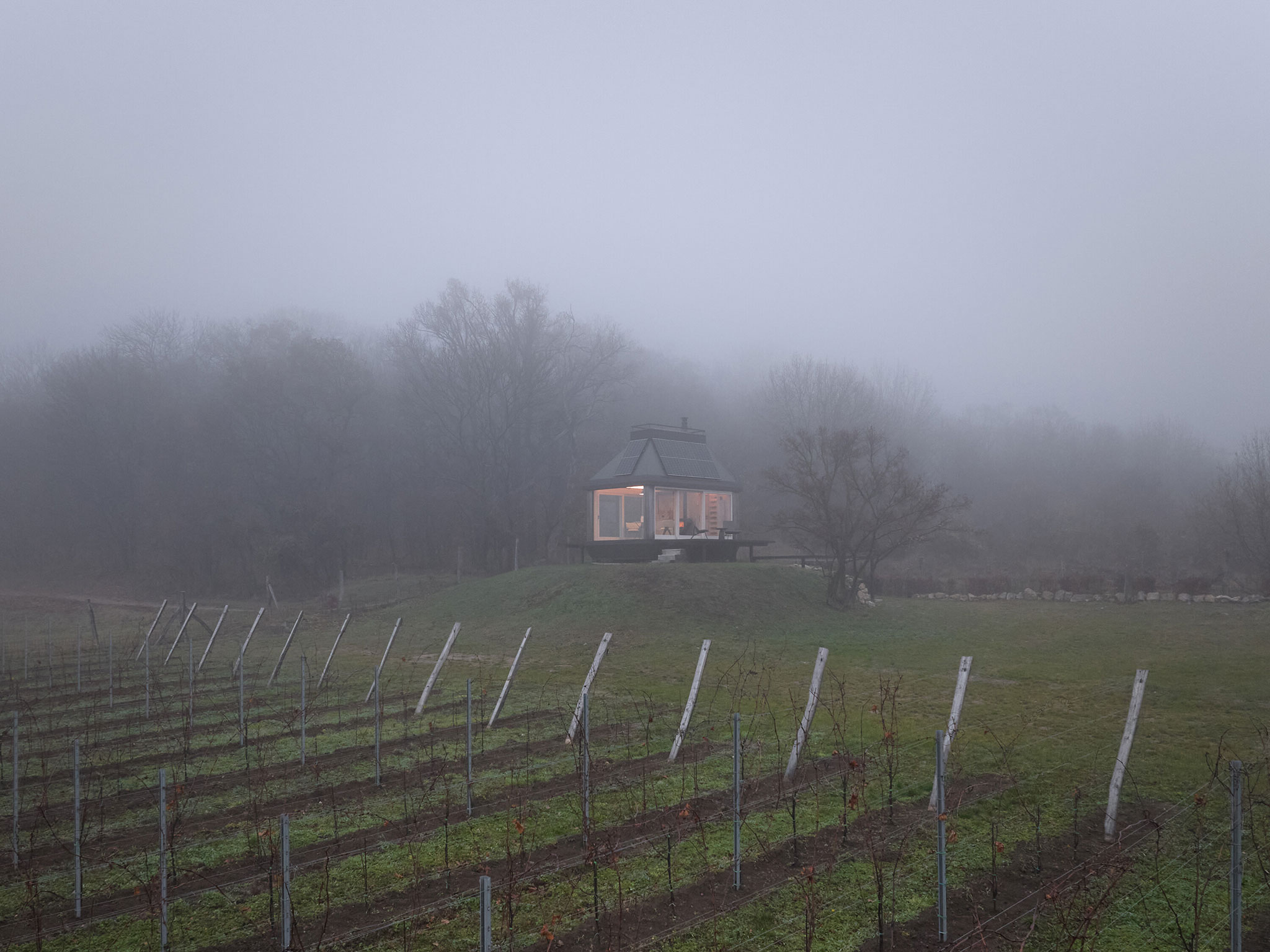
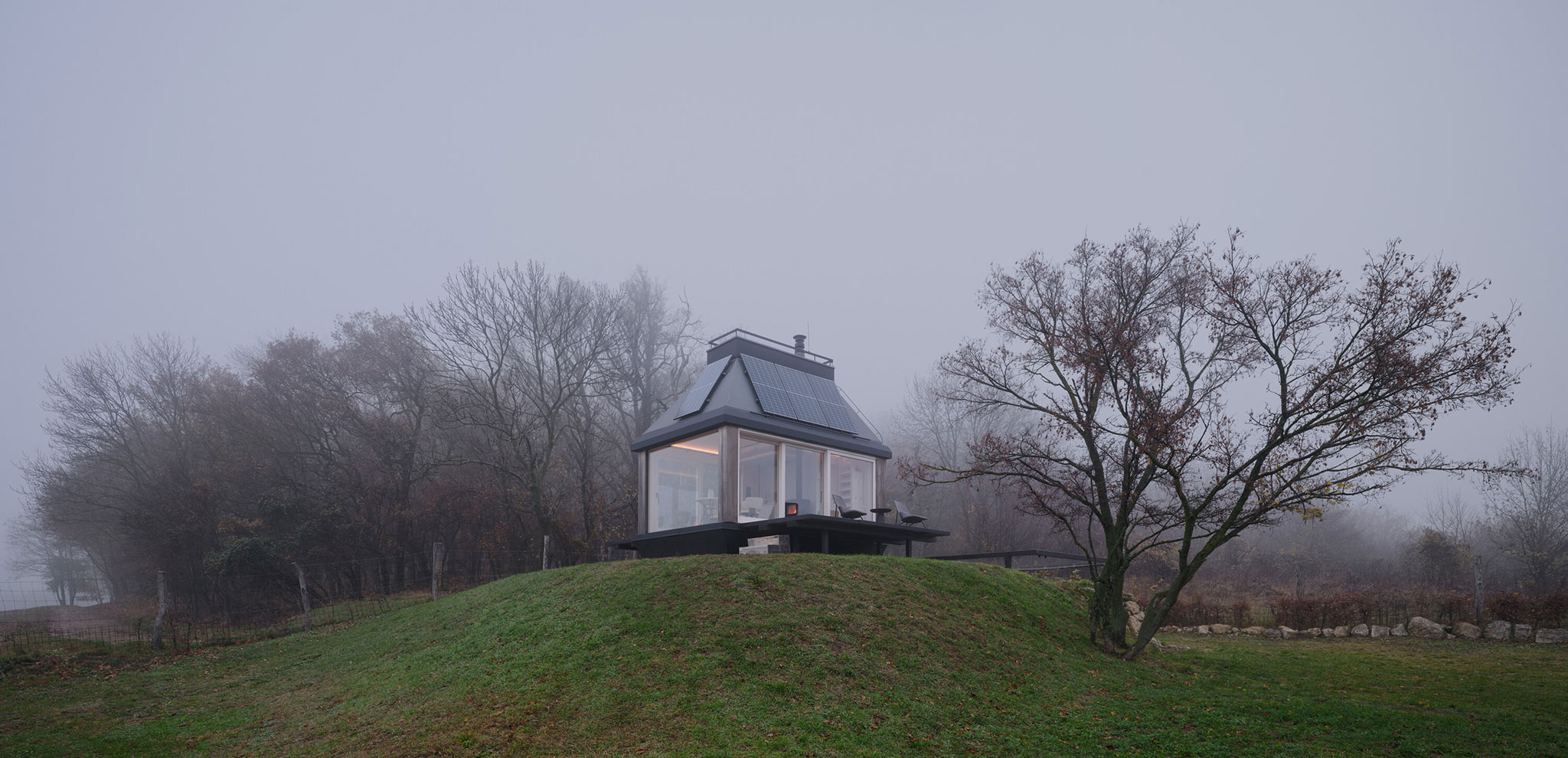
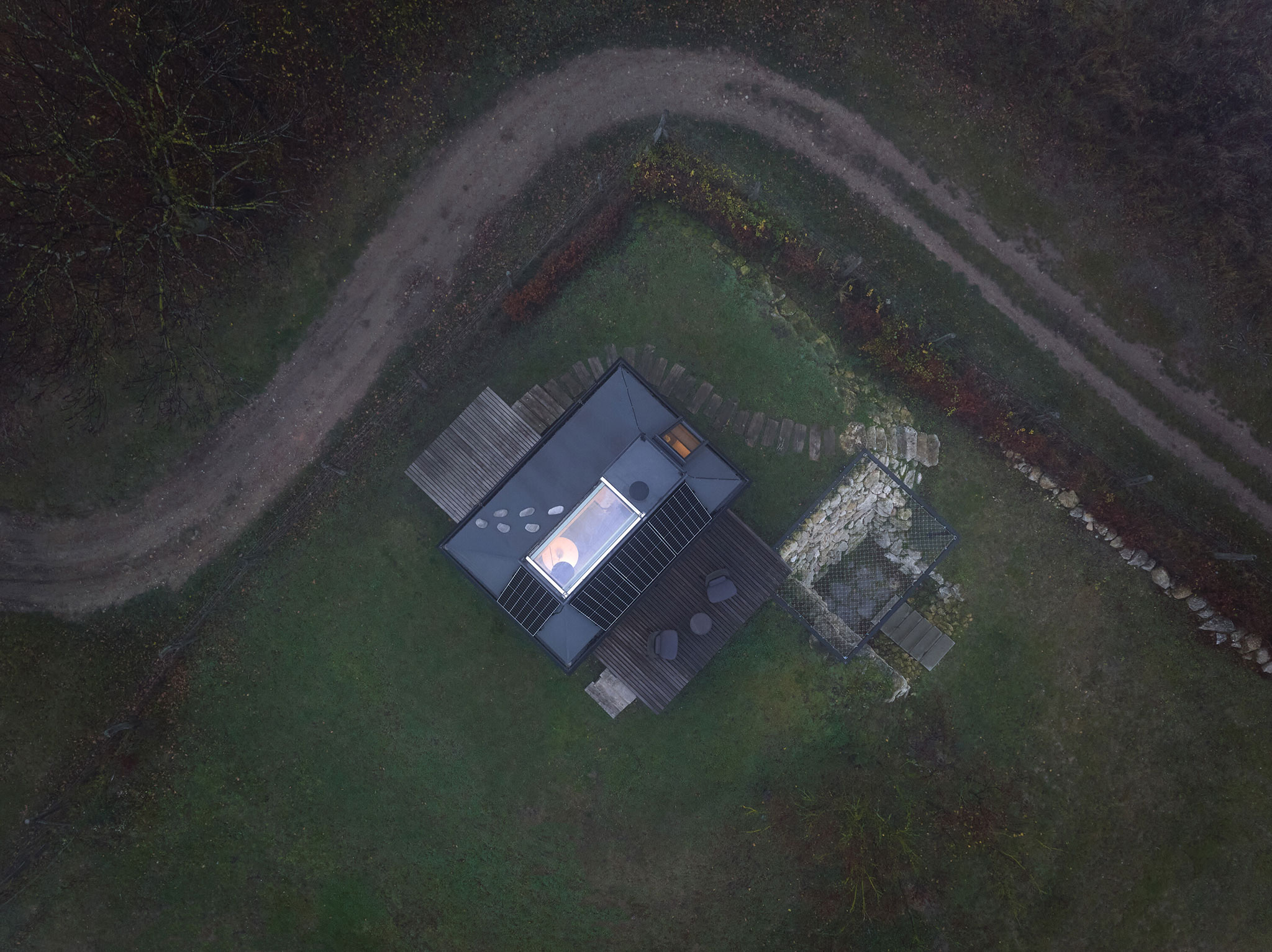
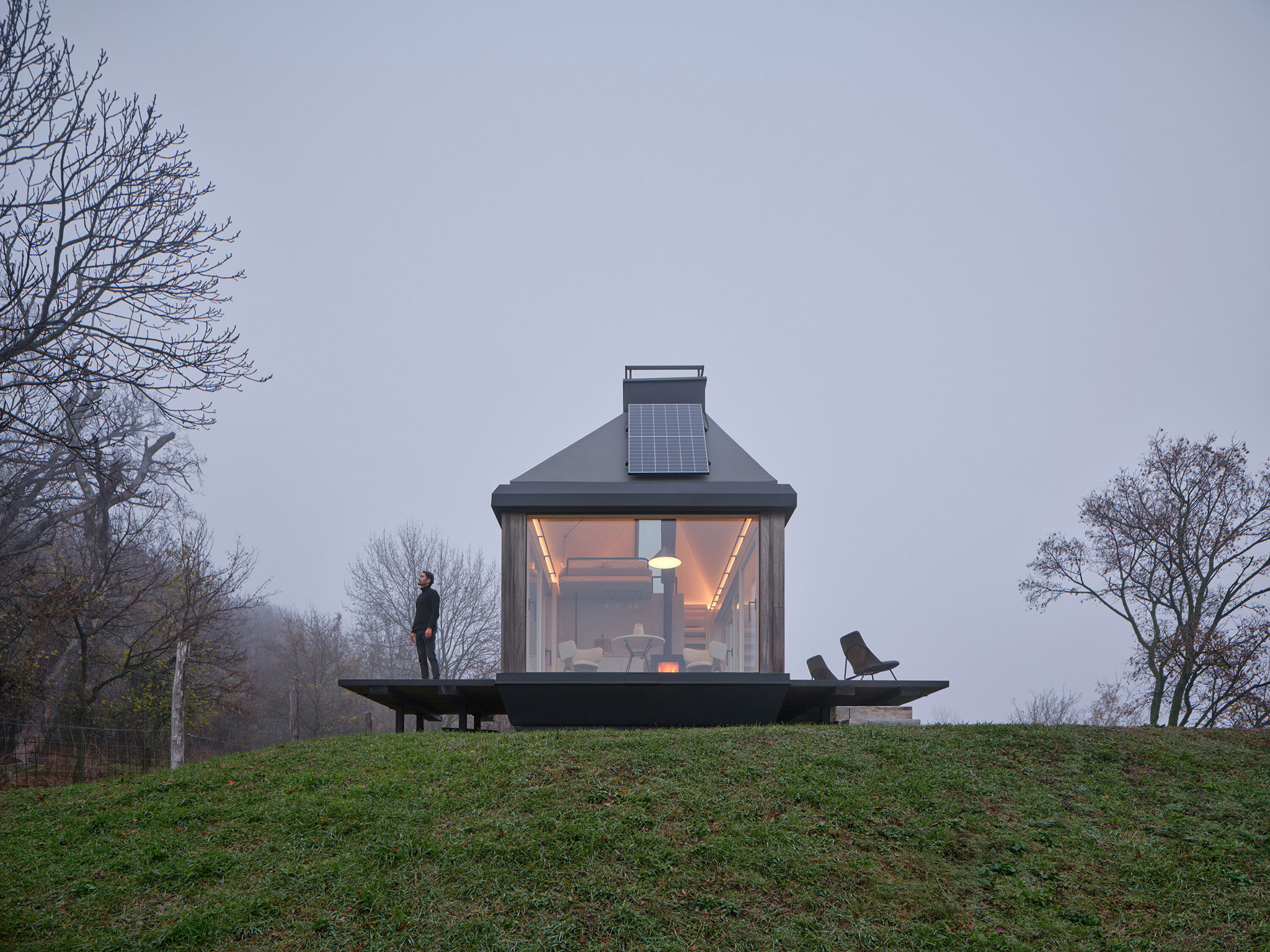
The minimalist dwelling designed by Ark-Shelter and Archekta features two retractable terraces that, when lowered, reveal sliding glass walls. The layout includes a main living room and kitchen, followed by a bathroom with a shower. As an intentional element of the design, the space transforms at dusk, with a pendant lamp hanging from the mezzanine. Pulling its cable raises the lamp to reveal a bedroom area hidden during the day. Vertical access to the mezzanine is provided by a retractable staircase, leading to the upper level, characterized by a discreet space with a skylight.
The cabin's energy solution combines photovoltaic panels with battery storage and a gas backup system. Electricity is prioritized for lighting and small appliances, while high-consumption processes, such as heating and cooling, can be flexibly adapted to available resources. On the other hand, the service water is stored in a hidden tank within the technical floor, next to a separate wastewater tank.
Cabin Devín by Ark-Shelter and Archekta. Photograph by BoysPlayNice.
Project description by Ark-Shelter and Archekta
The challenge was to design a fully functional weekend dwelling within a mere 20-square-meter footprint, achieving uncompromising comfort alongside complete energy autonomy in local climatic conditions. The cabin is situated at the edge of the Zlatý Roh vineyards, approximately 3 km above the ECK restaurant. Perched above Devín Castle, the site offers an expansive view across the vines toward the sunset over the Austrian Alps. The location carries a strong atmosphere, and our architectural intent was to create a sanctuary that provides security in every season while maintaining an immediate and uninterrupted connection with the surrounding landscape.
The structure responds to the view through radical openness: two sides of the house feature fold-down terraces that, once lowered, reveal sliding glass walls. Integrated shading screens the full-height glazing of the front façade. Most of daily life unfolds in the threshold between these openings. When expanded, the interior flows seamlessly onto the terraces, optically and functionally multiplying the usable floor area. The interior does not stand apart from the exterior; instead, both operate in fluid continuity.
Behind the main living area lies a compact kitchenette, followed by a bathroom with a shower. A bespoke concrete sink is positioned directly within a window frame, directing the gaze toward the forest—an intentional gesture designed to slow the morning ritual and reconnect everyday routines with nature. As evening falls, the space transforms. A pendant lamp hangs from the loft, its cable extending downward; when pulled, the lamp rises to reveal a sleeping area concealed during the day. The absence of a fixed staircase keeps the loft visually discreet, while a retractable ladder integrated into the cabinetry appears only when required. This upper level offers a contrasting atmosphere: instead of glass walls, a solid roof envelope encloses the user in an intimate volume, with only a skylight overhead for stargazing.
The cabin is detached from the world not only emotionally but also technologically, operating as a fully off-grid dwelling throughout all four seasons. In our latitude, this required a system capable of sustaining winter operation without compromising comfort. The energy concept combines photovoltaic panels with battery storage and a gas-powered backup system. Hybrid appliances automatically switch from electricity to gas when battery capacity drops below a defined threshold, prioritizing electricity for lighting and small devices while allowing energy-intensive processes such as heating and cooling to adapt flexibly to available resources.

Service water is stored in a concealed reservoir within the raised floor, alongside a separate wastewater tank. Protection against overheating is ensured through intelligent shading and controlled ventilation. In summer, the system draws cooler air from beneath the northern side of the floor and exhausts warm air through a heat recovery unit located beneath the skylight. In winter, the process operates bi-directionally, regulated by CO₂ and humidity sensors to maintain optimal indoor conditions.
Ultimately, the cabin represents a compressed architecture of experience—minimal in volume yet maximal in spatial intensity and technological independence.