

Gates wants to emphasize its purpose especially as a space for sacred music that carries many reflections of their shared investment in community revitalization projects in Chicago’s South Side. The pavilion is rendered in the same stark-looking black tar color as the suite of 14 new paintings Gates executed for the exhibition.
Gates conceives of his Black Chapel as “a site for contemplation and convening, set within the grounds of Serpentine in Kensington Gardens. The structure’s central oculus emanates a single source of light to create a sanctuary for reflection, refuge and conviviality."
Drawn to the meditative environment of the Rothko Chapel – which holds fourteen paintings by American artist Mark Rothko in Houston, Texas – Gates has produced a series of new tar paintings specially for Black Chapel. Creating a space that reflects the artist’s hand and sensibilities, seven paintings hang from the interior. In these works, Gates honours his father’s craft as a roofer by using roofing strategies including torch down, a method which requires an open flame to heat material and affix it to a surface.
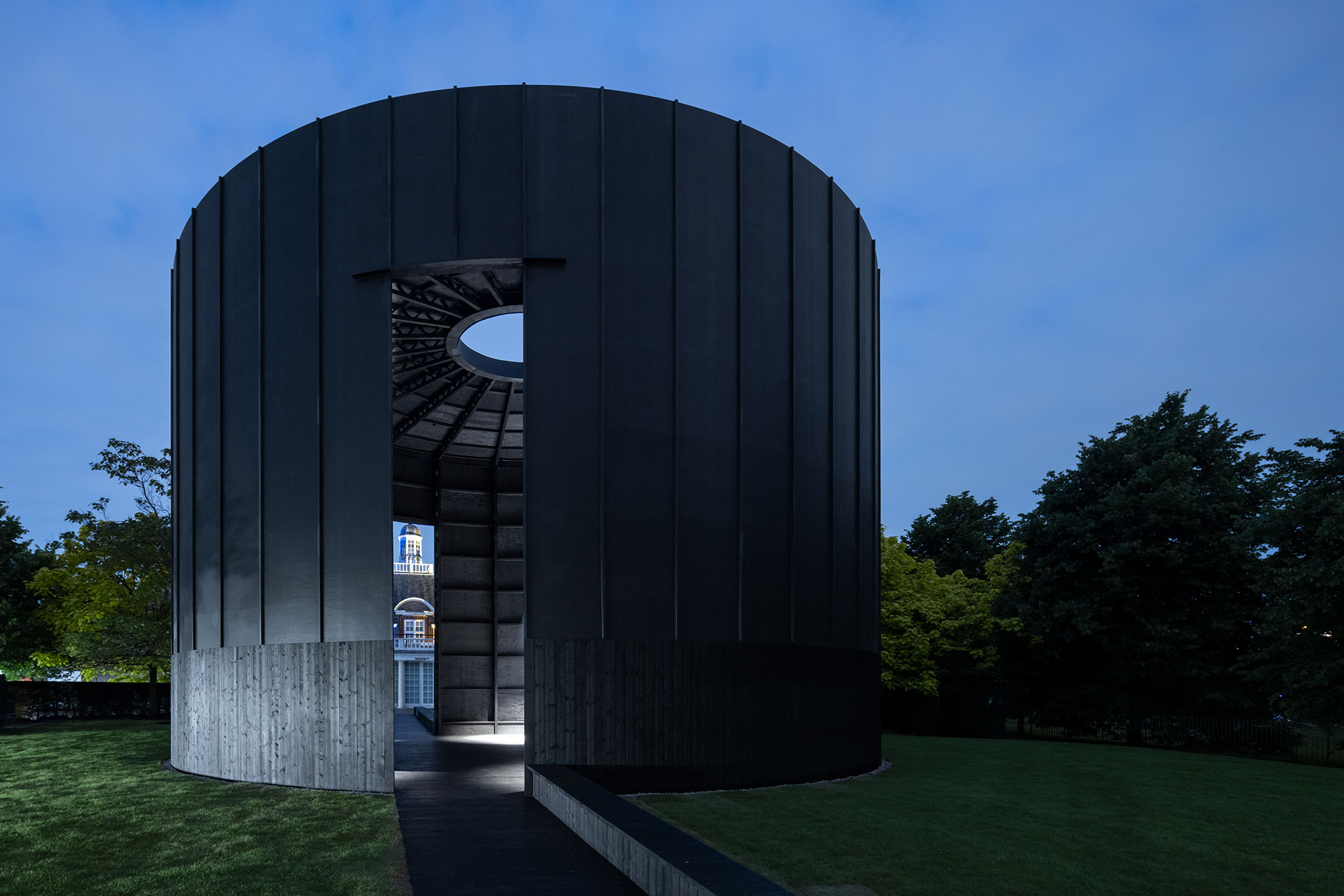
Black Chapel by Theaster Gates. Photograph by Iwan Baan. Courtesy of Serpentine
As part of Serpentine’s dynamic summer programme, the Pavilion becomes a platform for live performances and public convenings. An operating bronze bell – salvaged from St. Laurence, a landmark Catholic Church that once stood in Chicago’s South Side – is placed directly next to the entrance. Pointing to the erasure of spaces of convening and spiritual communion in urban communities, the historic bell will be used to call, signal and announce performances and activations at the Pavilion throughout the summer.
To mark the opening of the Pavilion, today, 8 June 2022, Theaster Gates and David Adjaye OBE will be in conversation with Hans Ulrich Obrist, Artistic Director, Serpentine, which will explore their work in art, architecture, urbanism and space-making.


