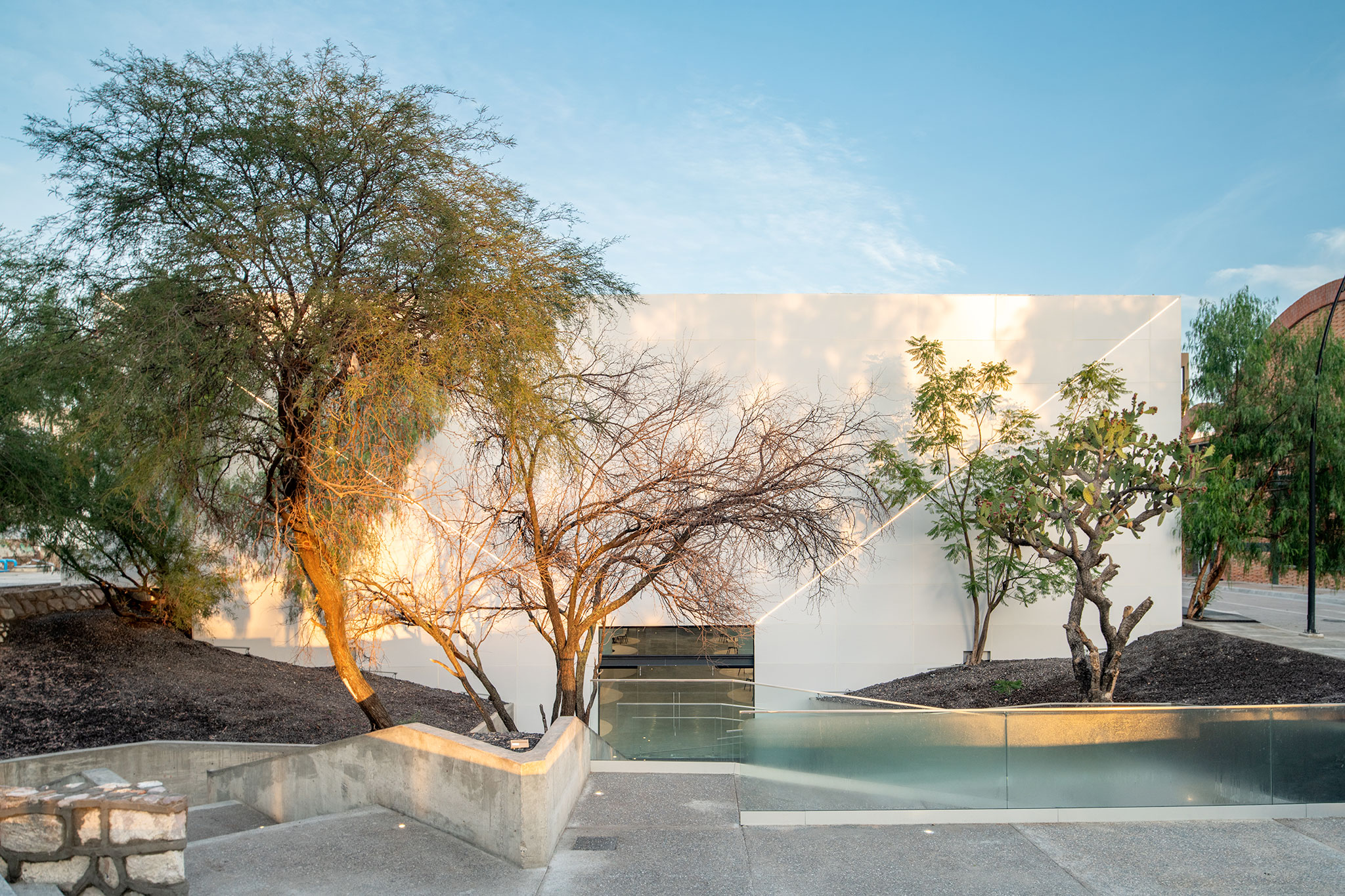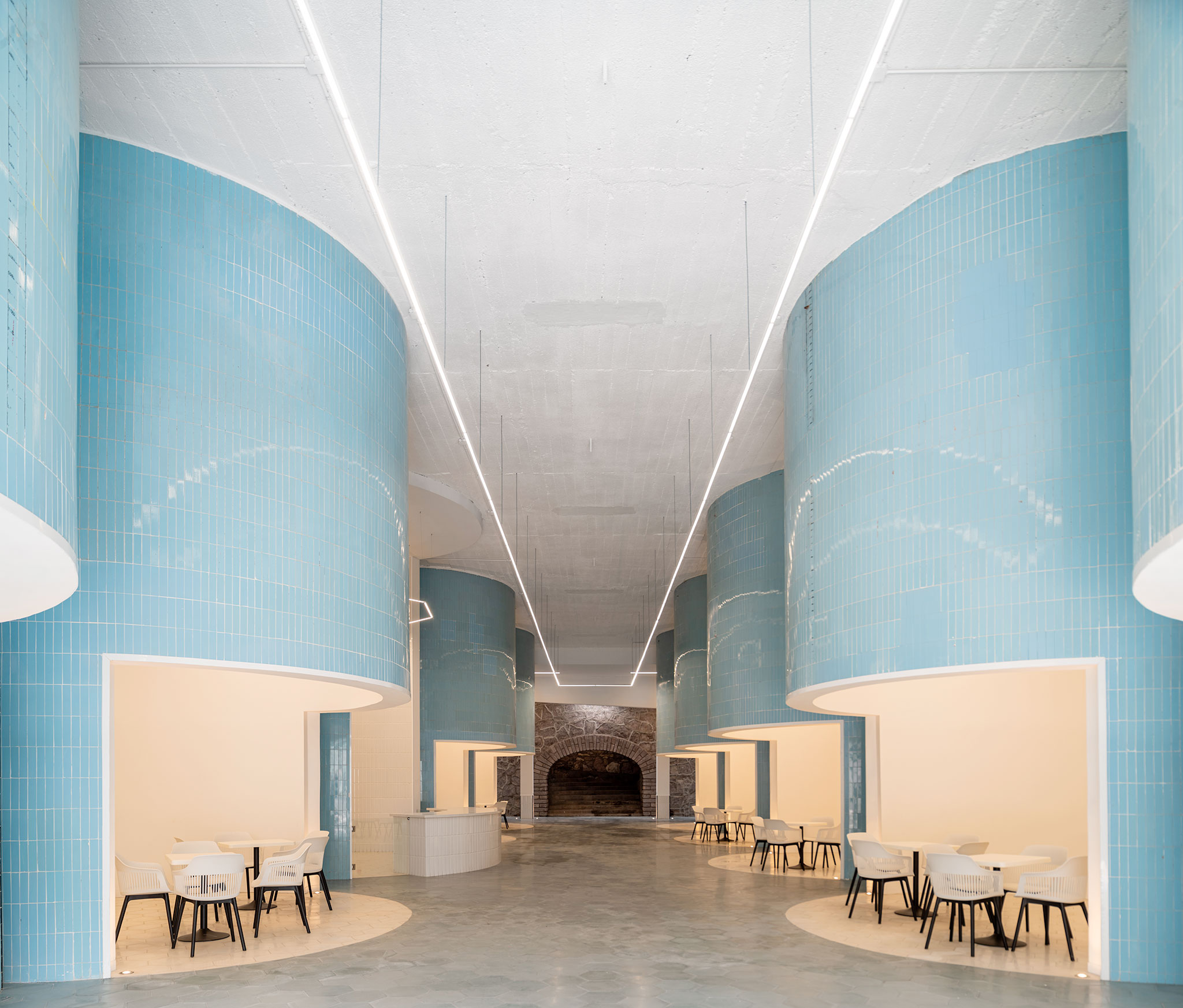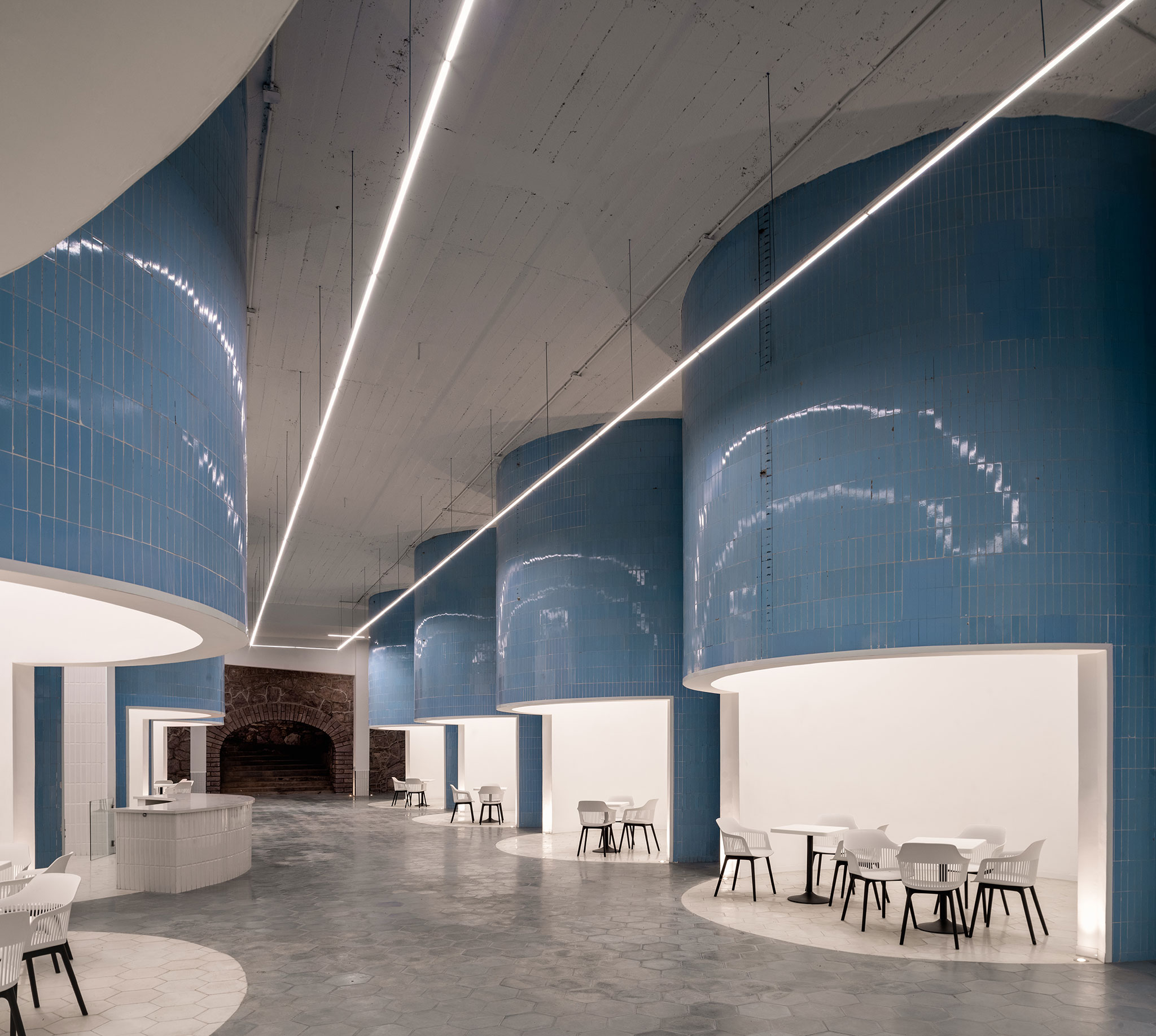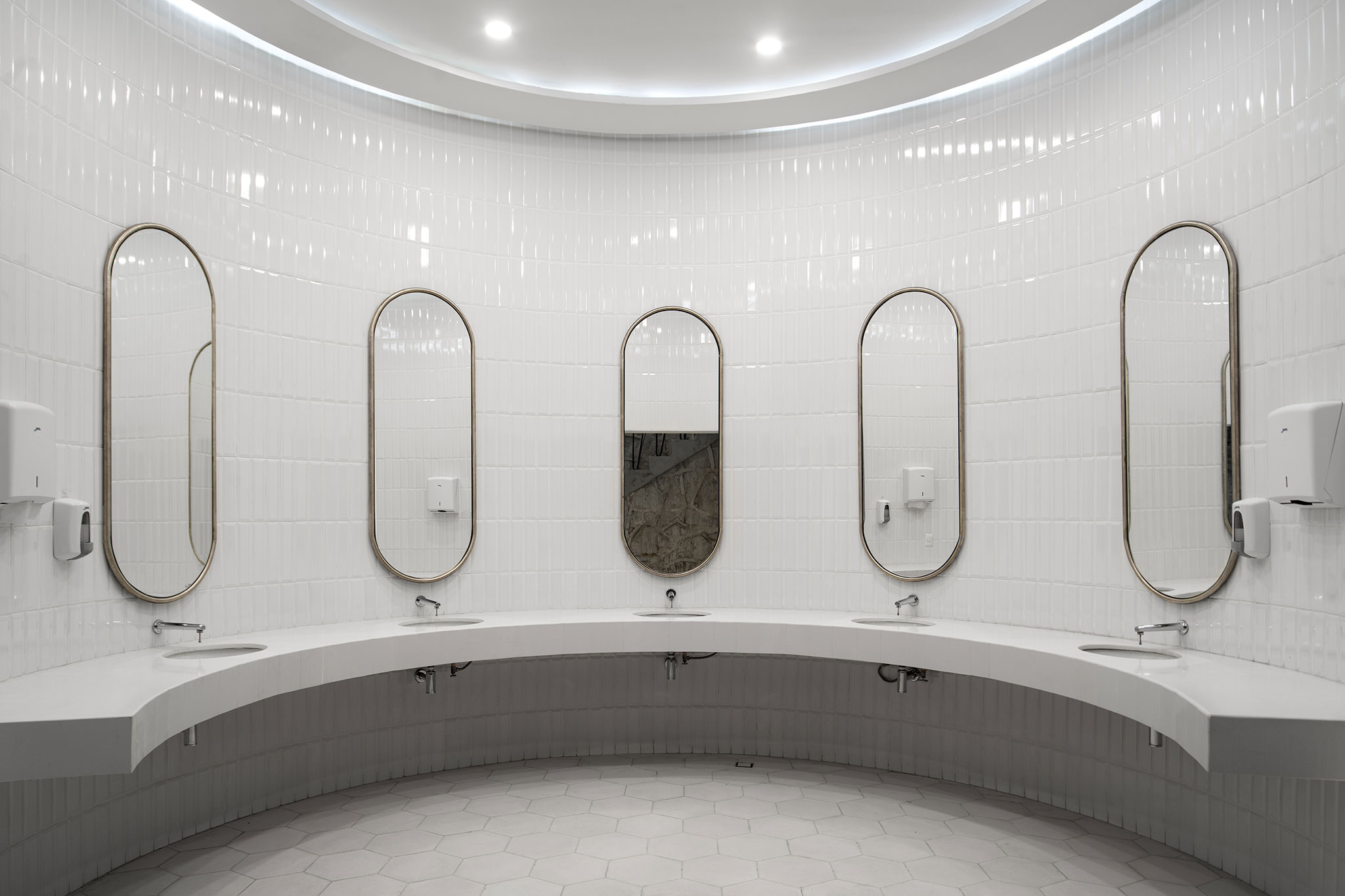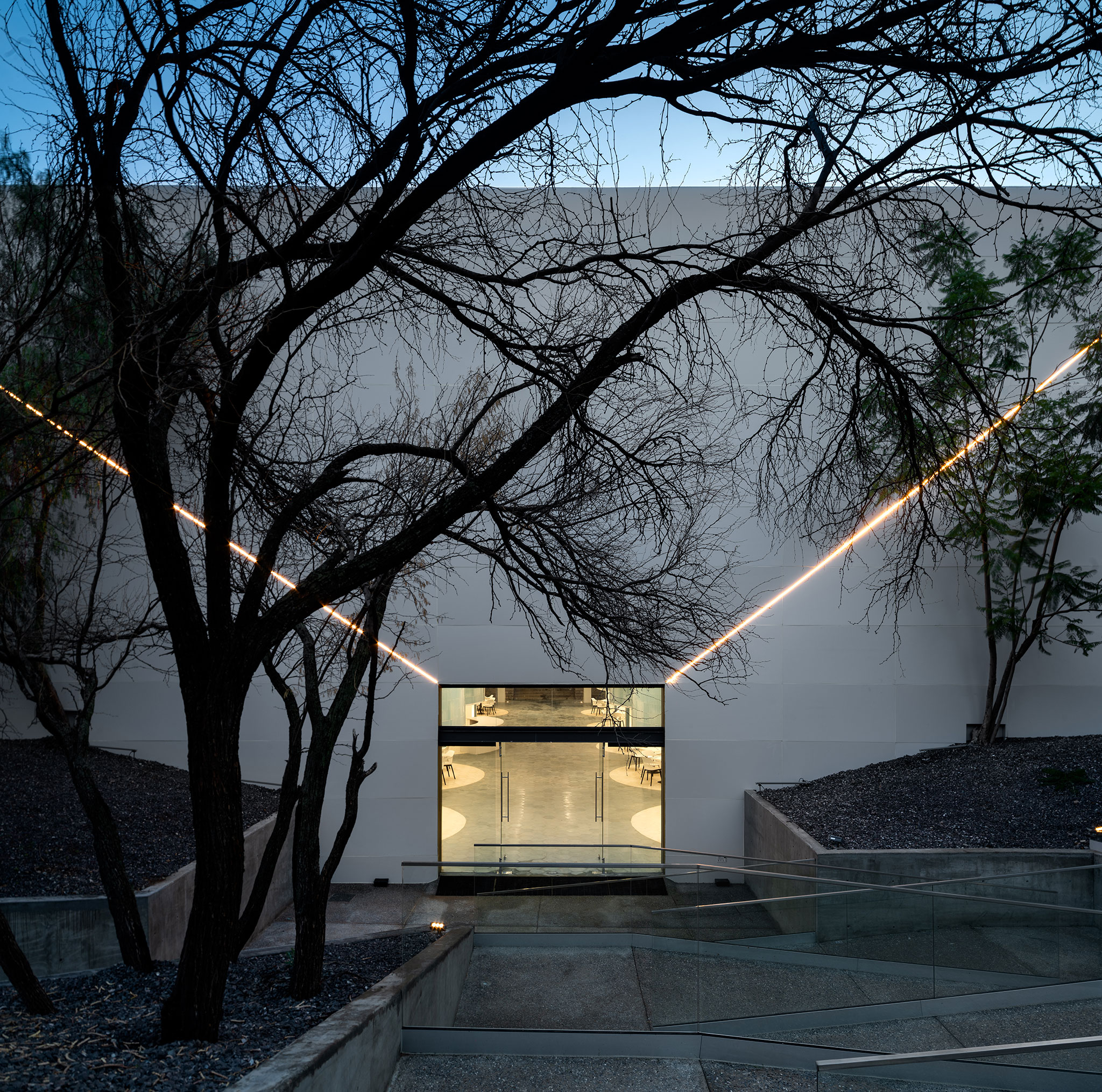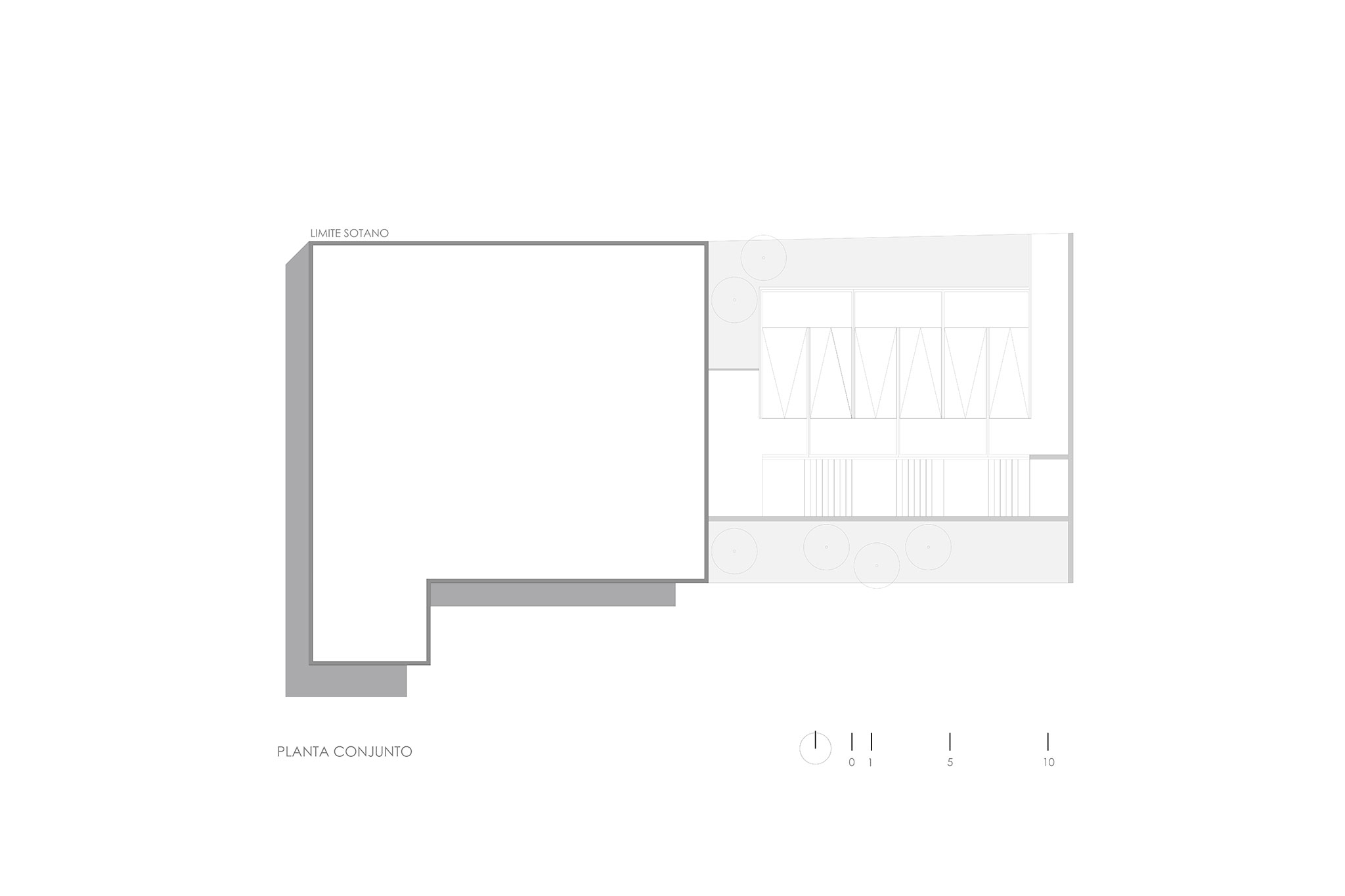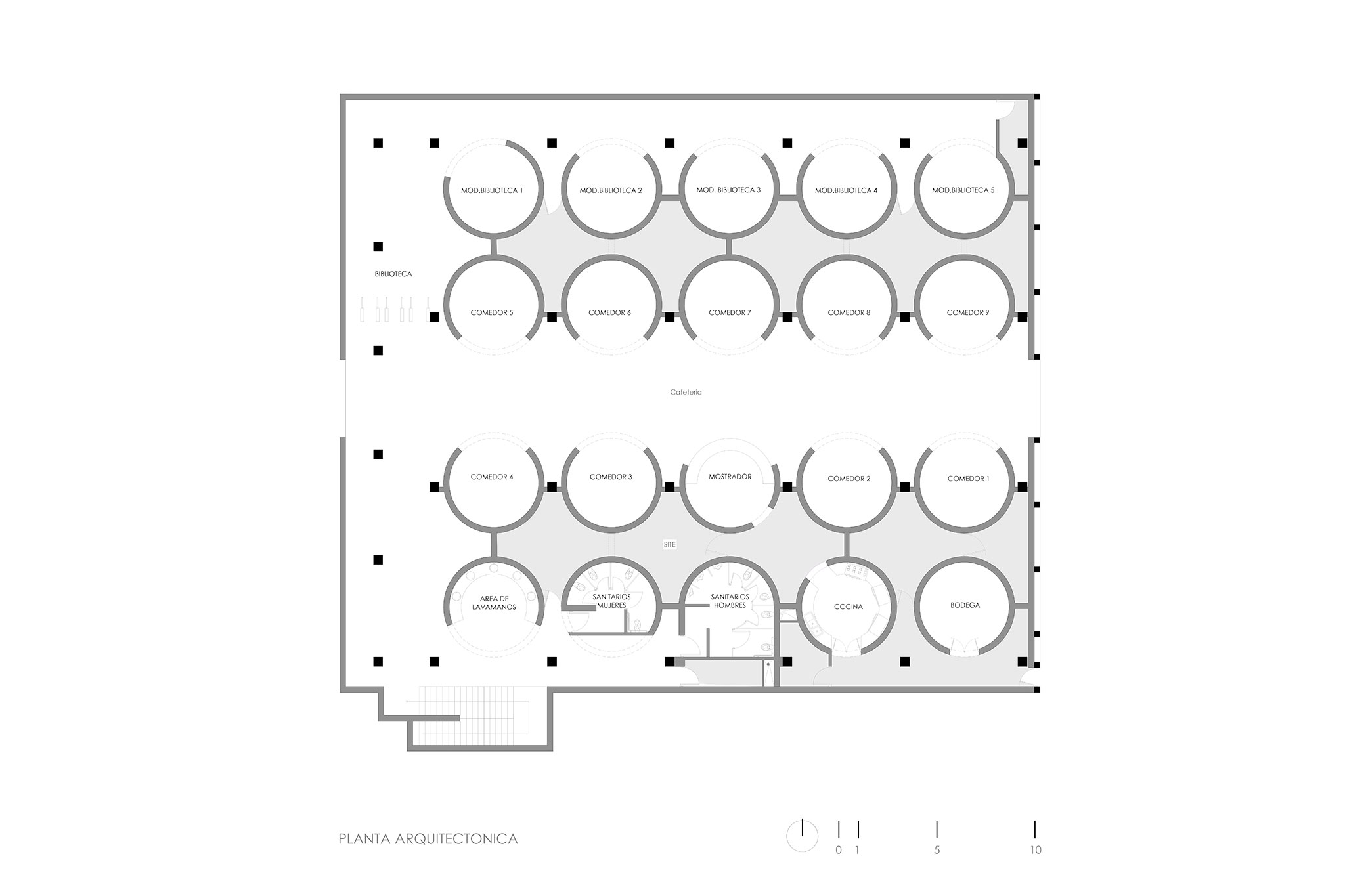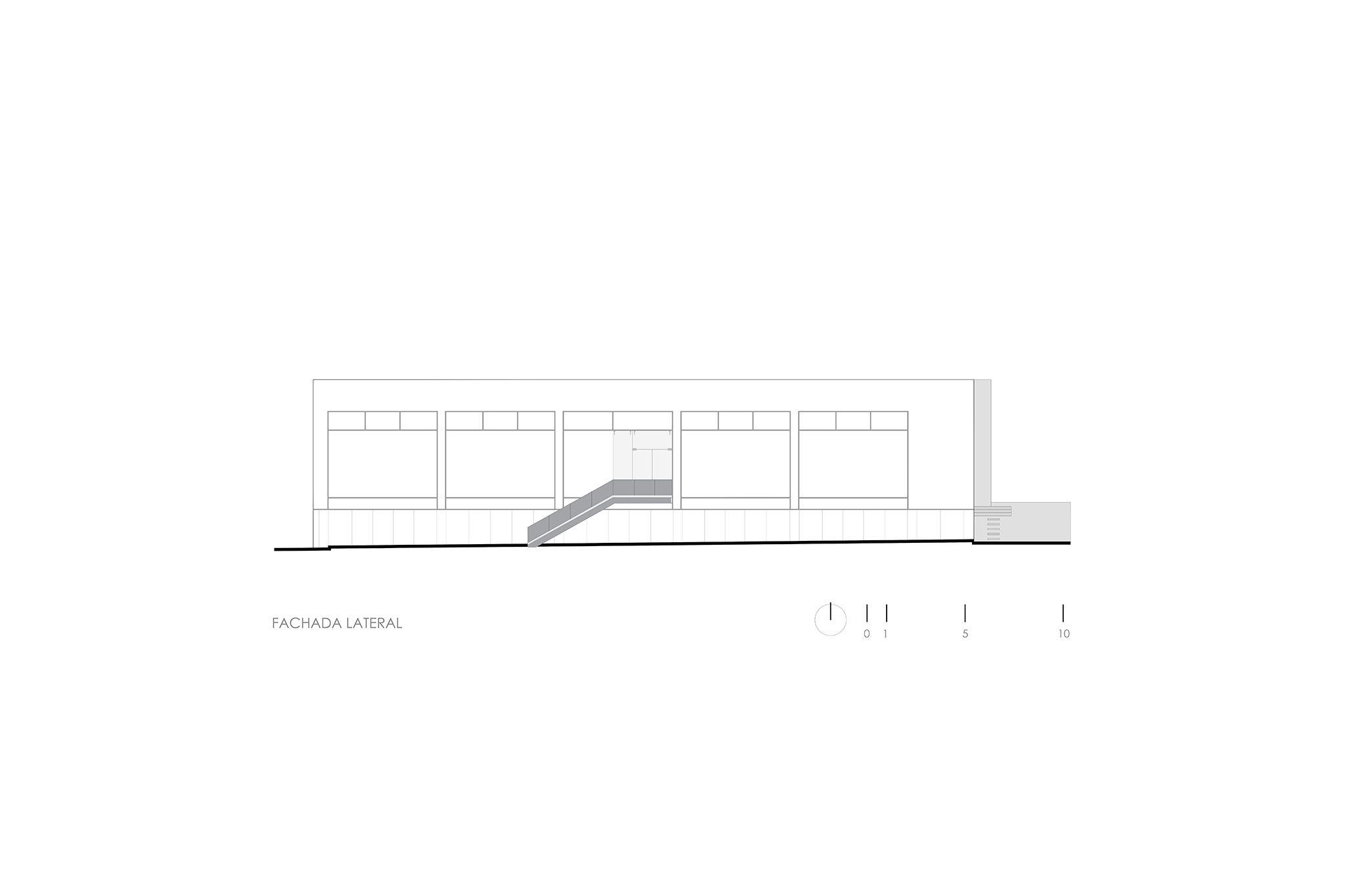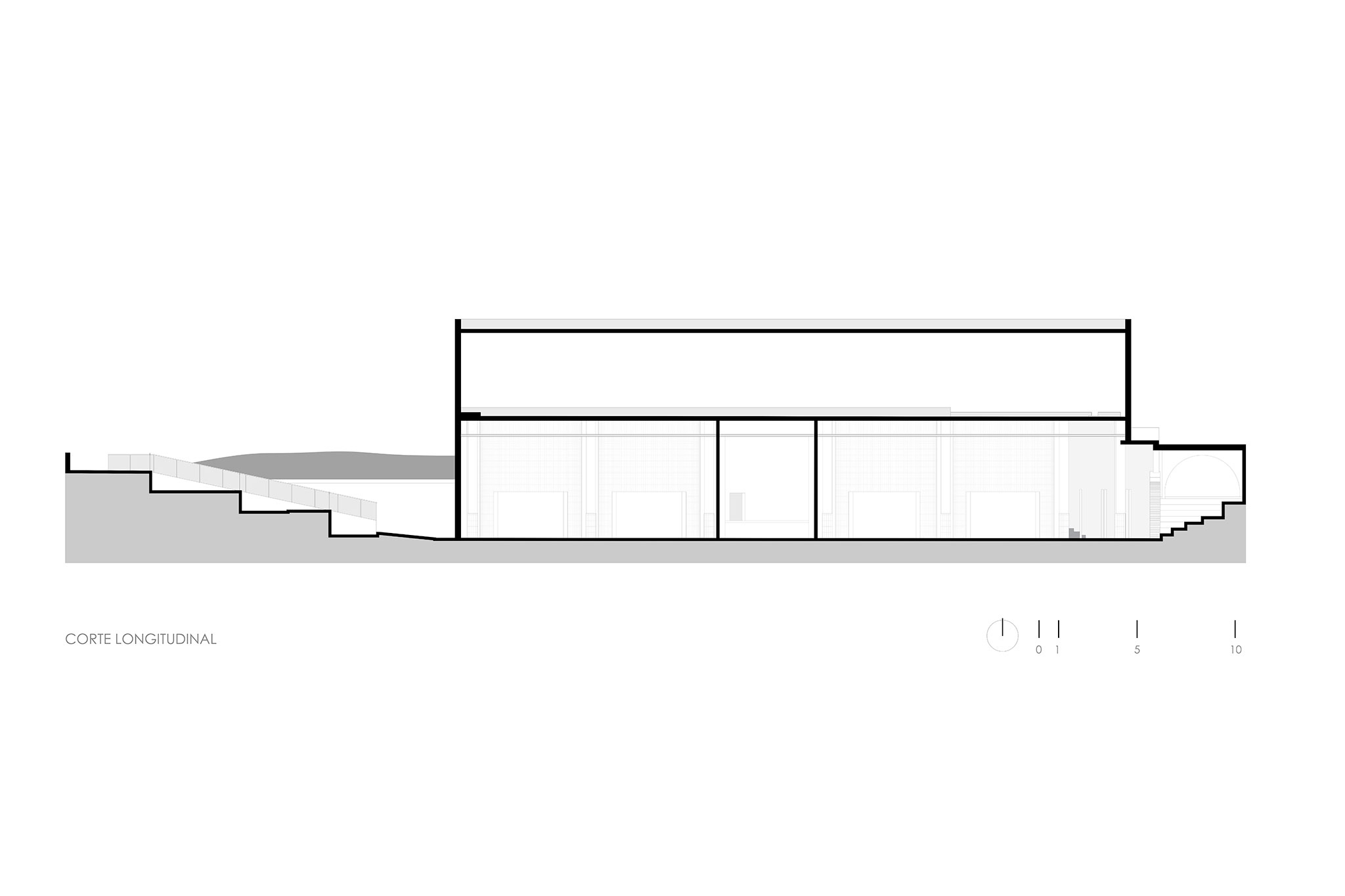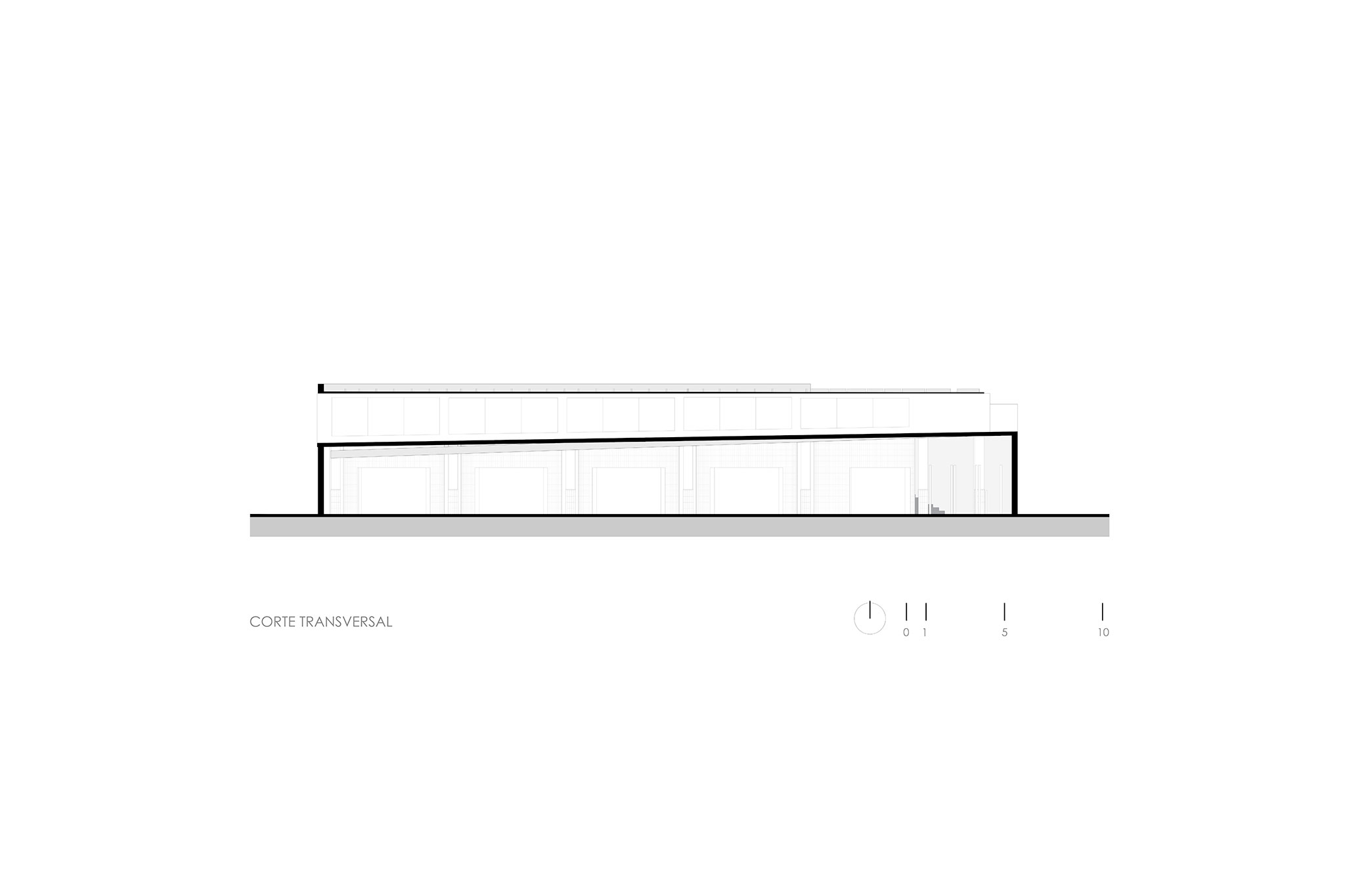
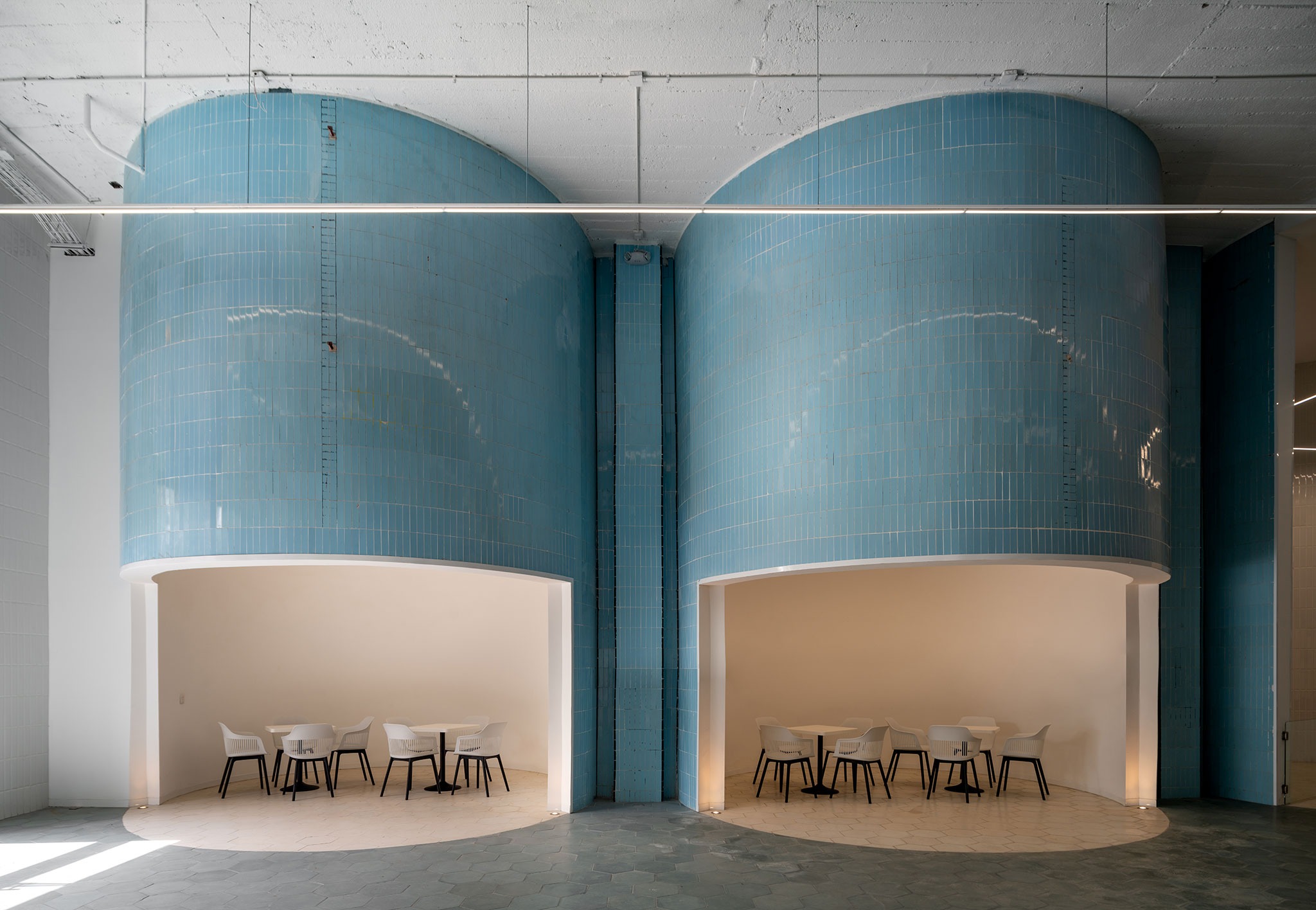
Like a procession into the underground, the "Sunken Cafeteria," designed by Jonathan Corral Arquitectos, is structured around a central axis that creates a sequence of spaces that are gradually revealed. The library and restrooms are located along the lateral axes, while the spaces between the cylinders house technical and support functions.
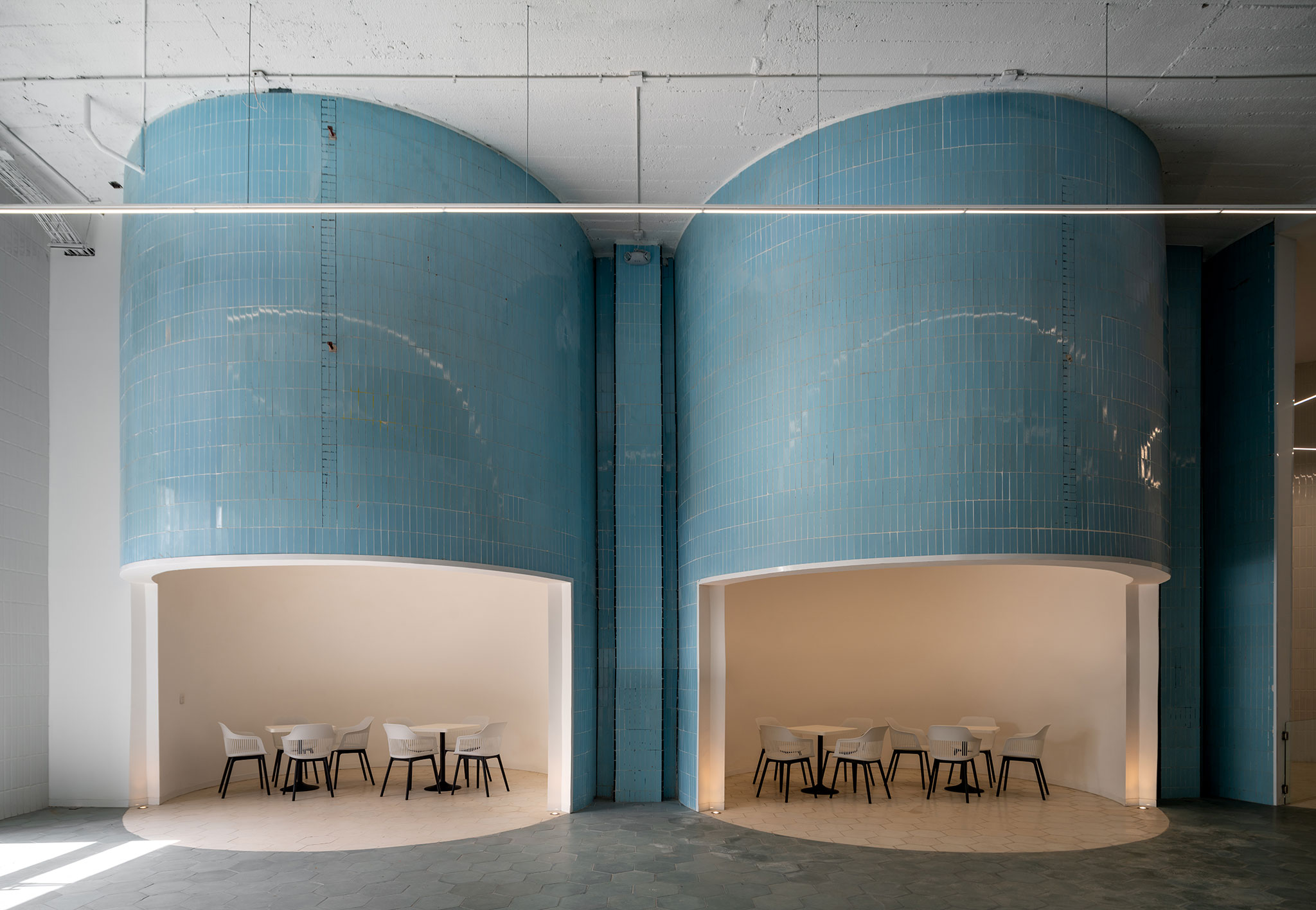
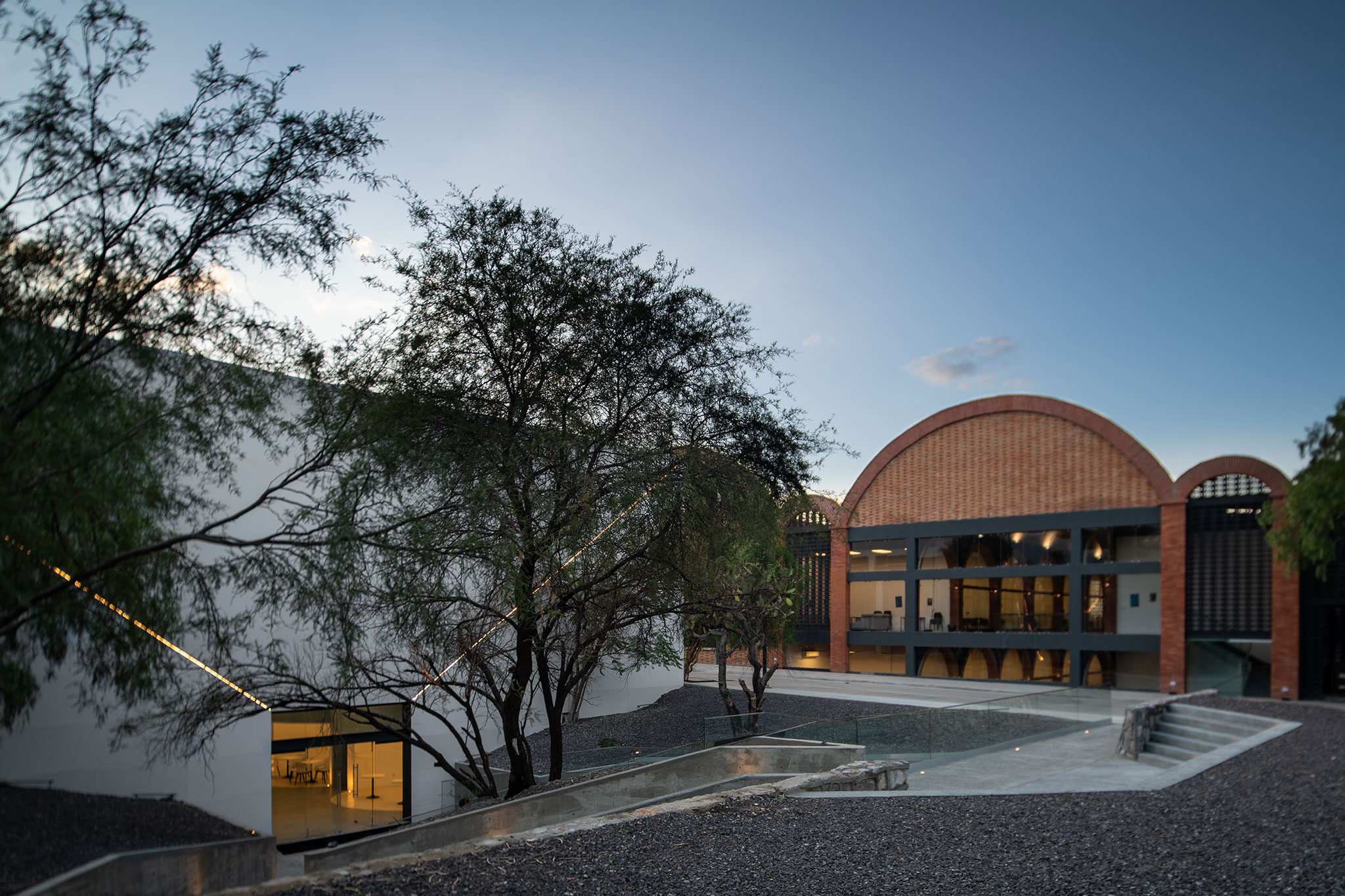
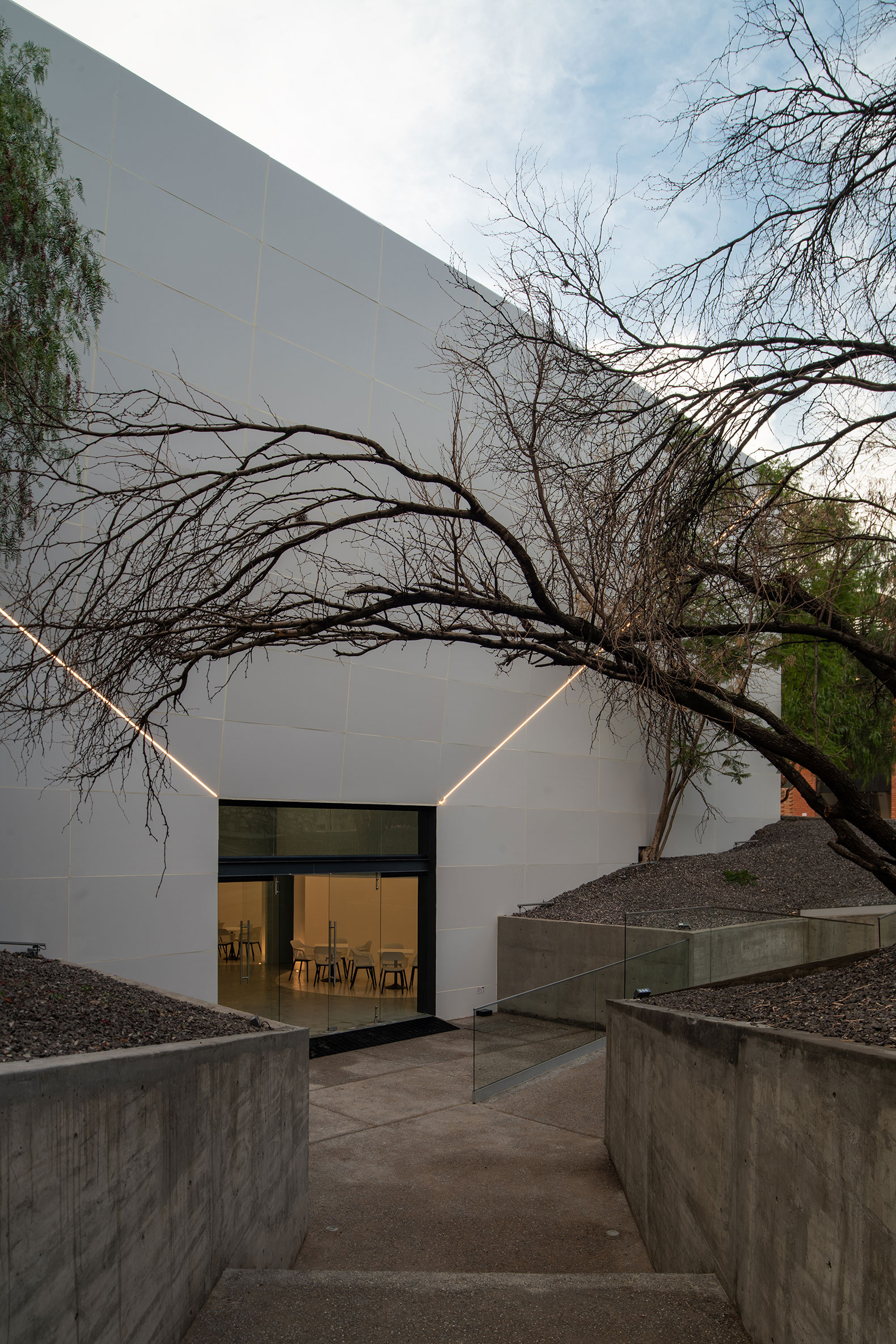
Overall, the design does not seek to impose itself on the original cylindrical structure: strategic perforations allow for new access points, expansive views, and ensure natural ventilation, transforming the former industrial infrastructure into a meeting place that honors its winemaking past but integrates the new uses into the memory of the site.
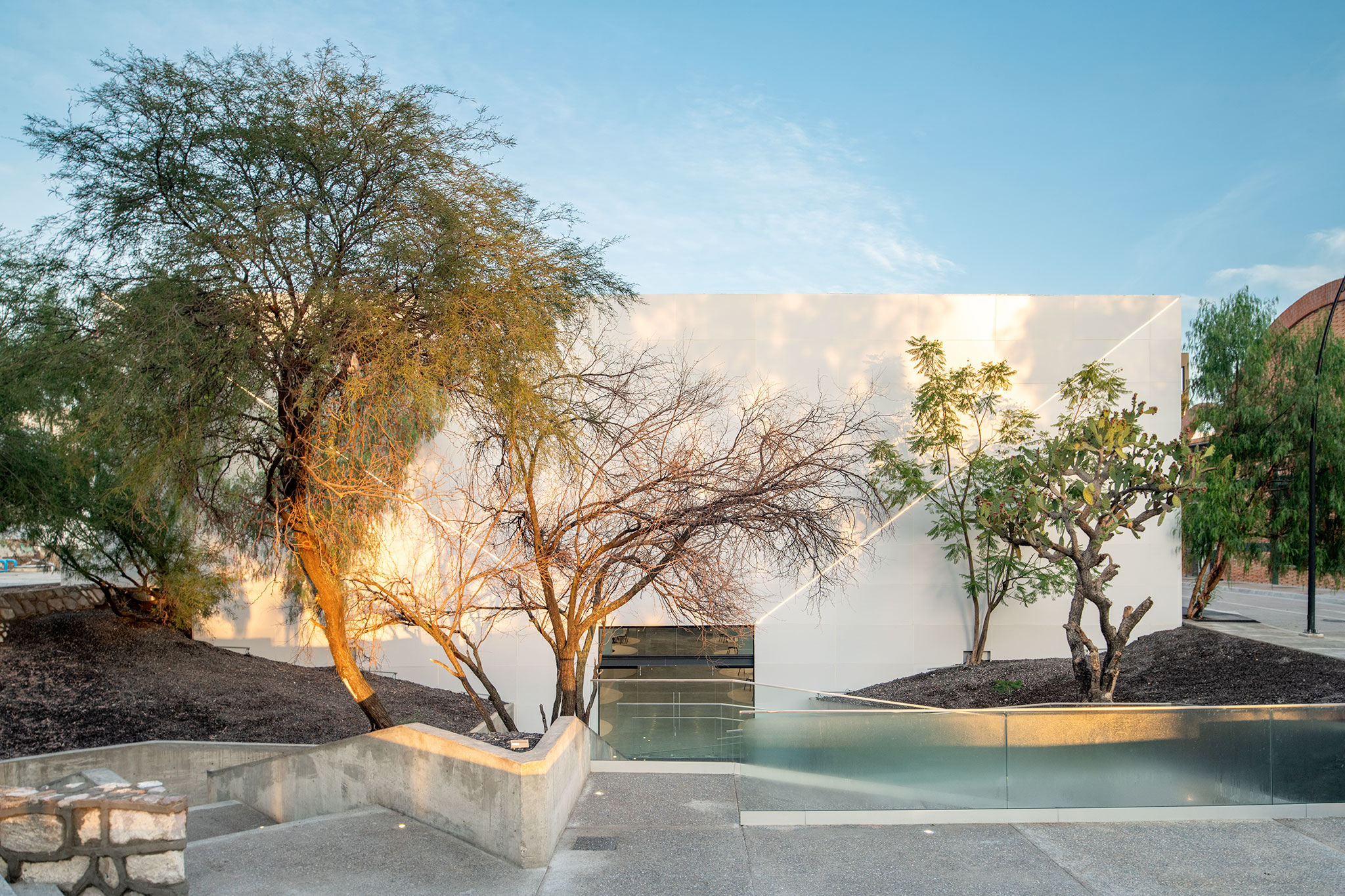
"Sunken Cafeteria" by Jonathan Corral Arquitectos. Photograph by Paco Álvarez and Eli Román.
Project description by Jonathan Corral Arquitectos
The intervention in the underground space of the former winery proposes a reflection on architectural reuse from an intimate scale and a sensory perspective. Rather than understanding the basement as a residual space, the project recognizes in the concrete cylinders a latent spatial potential, capable of accommodating new uses without losing their structural identity.
The proposal is built upon a minimal yet decisive operation, inhabiting what already exists. The large cylinders, originally conceived as technical infrastructure, are transformed into spaces of occupation through precise perforations that allow access, visual connections, and natural ventilation. This action does not seek to domesticate the structure, but to reveal its scale, thickness, and monolithic condition as architectural qualities.
The project is organized around a central axis that concentrates the service area and articulates circulation, establishing a clear reading of the underground space. From this core, the different programs are distributed in a radial and sequential manner, generating an experience of progressive discovery. The library and restrooms are located along the lateral axes, while the interstitial spaces between cylinders accommodate the kitchen, technical areas and installations, reinforcing a logic of maximum spatial efficiency.
The preservation of the original materiality is a central decision in the project. Existing mosaics are restored whenever possible, and when their condition requires replacement, they are reinterpreted through custom-cut ceramic pieces painted to match the original tones of the cylinders. This approach avoids literal reconstruction and instead proposes a material continuity based on tone, texture, and memory, rather than exact replication.
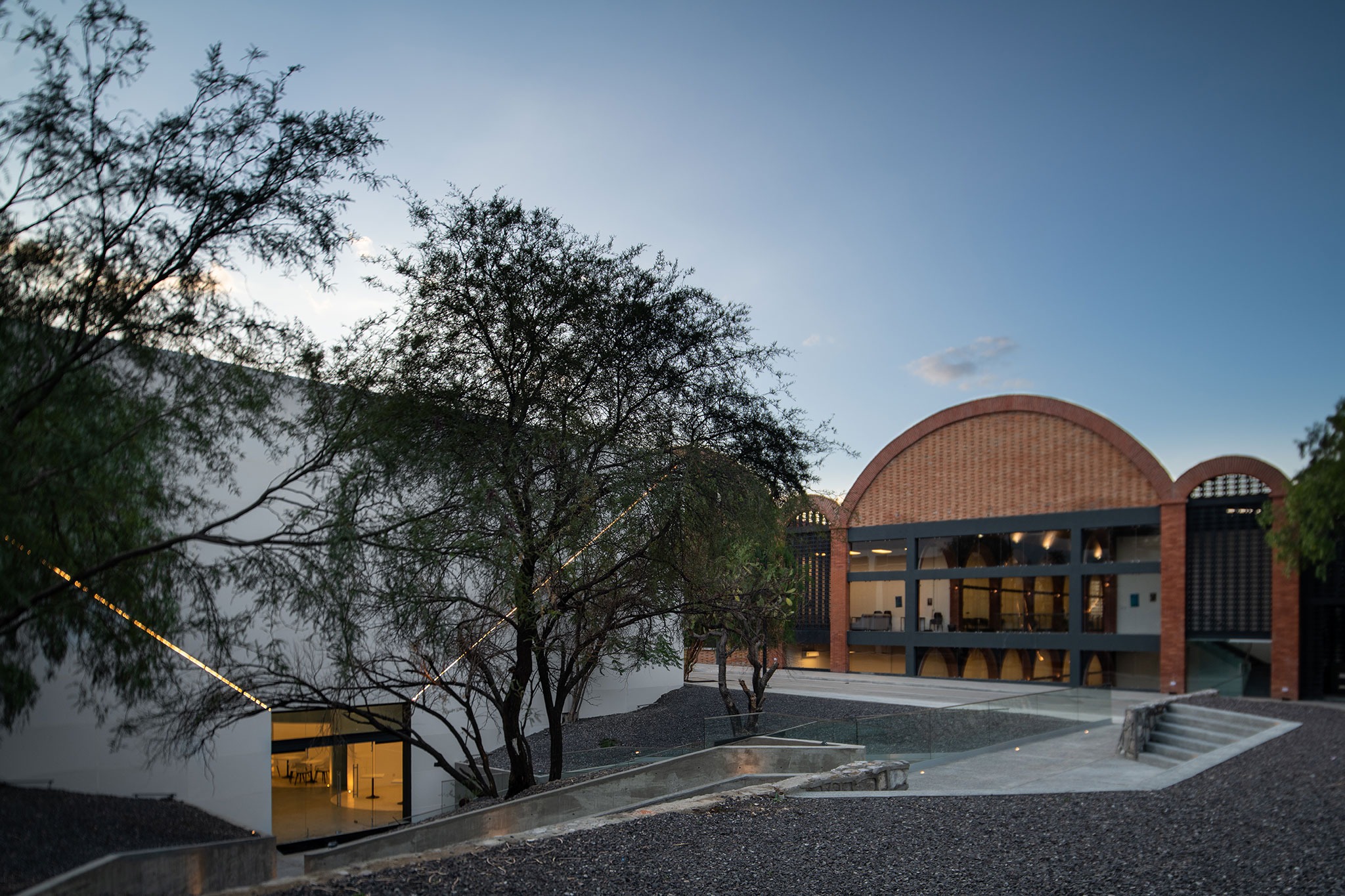
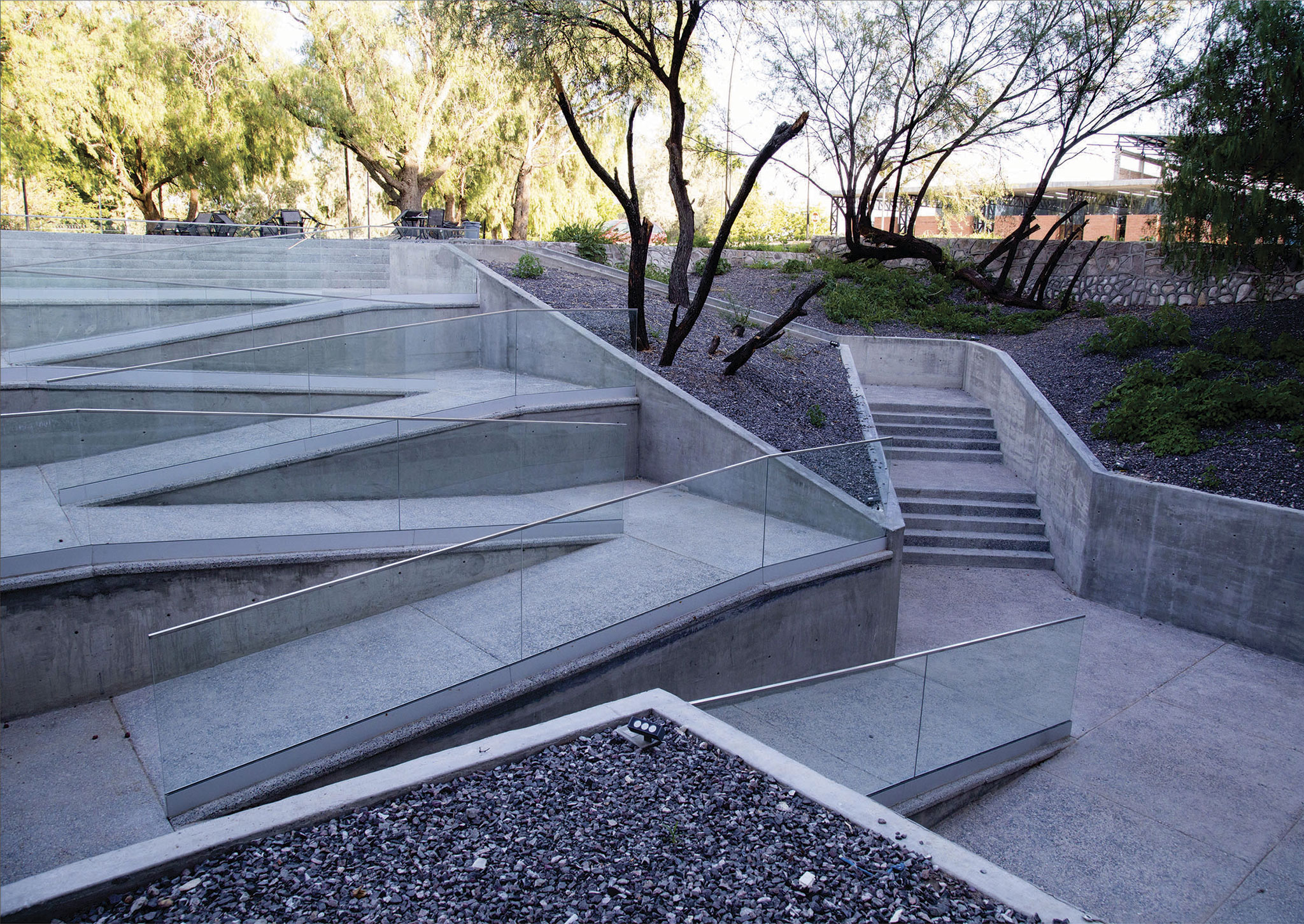
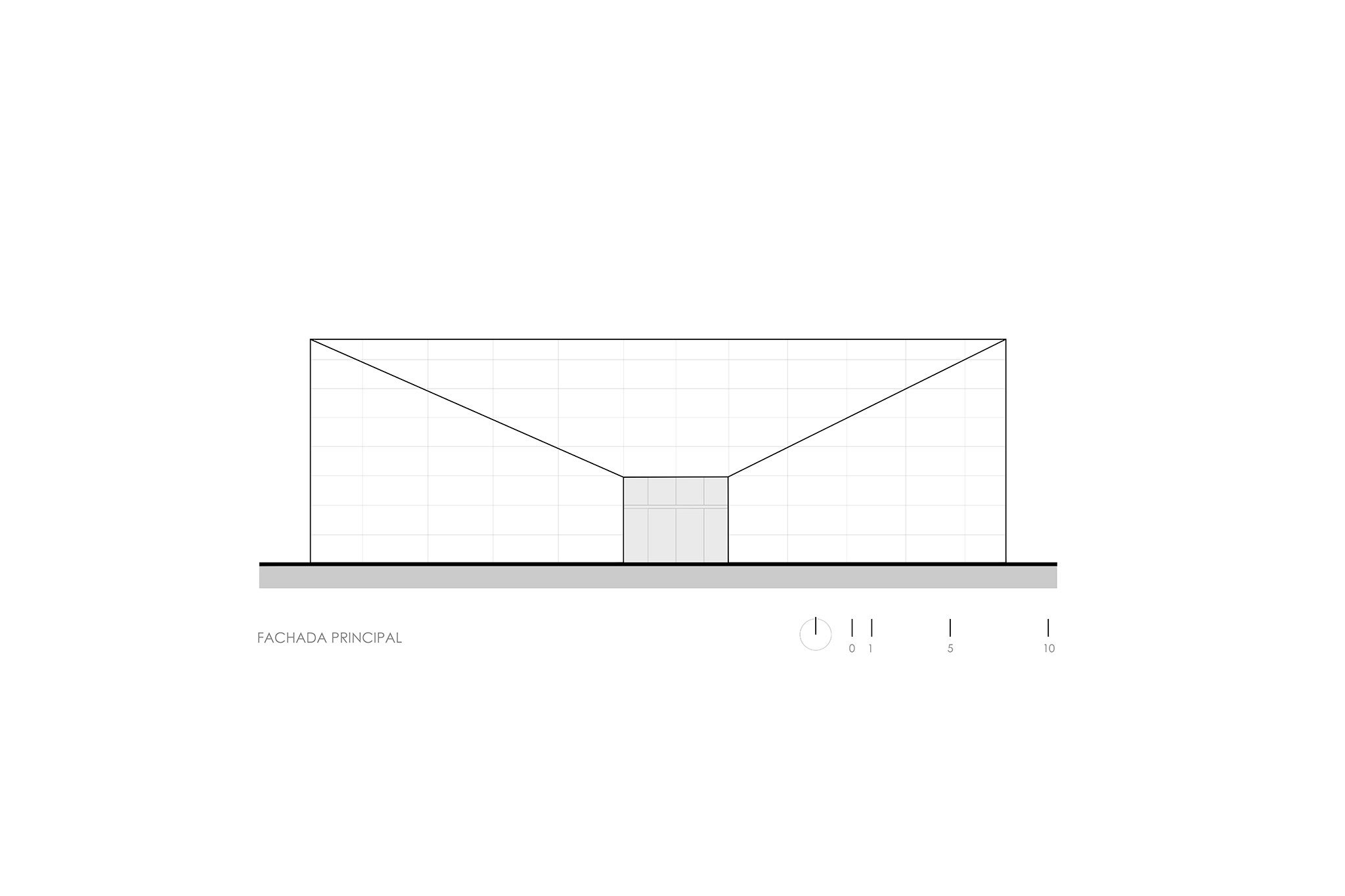
The transformation of an old Ford into an exterior plaza completes the spatial experience by establishing a gradual transition between the outside and the underground interior. Ramps and stairways not only resolve access, but also construct a descending sequence that prepares the user for changes in scale, light, and atmosphere.
The project positions itself as an architecture of precision, where each intervention is measured and conscious of its impact. The abandoned winery is not converted into a neutral container, but into an active space where industrial memory is reinterpreted through a contemporary logic, demonstrating that architecture can generate new uses without imposing new forms.