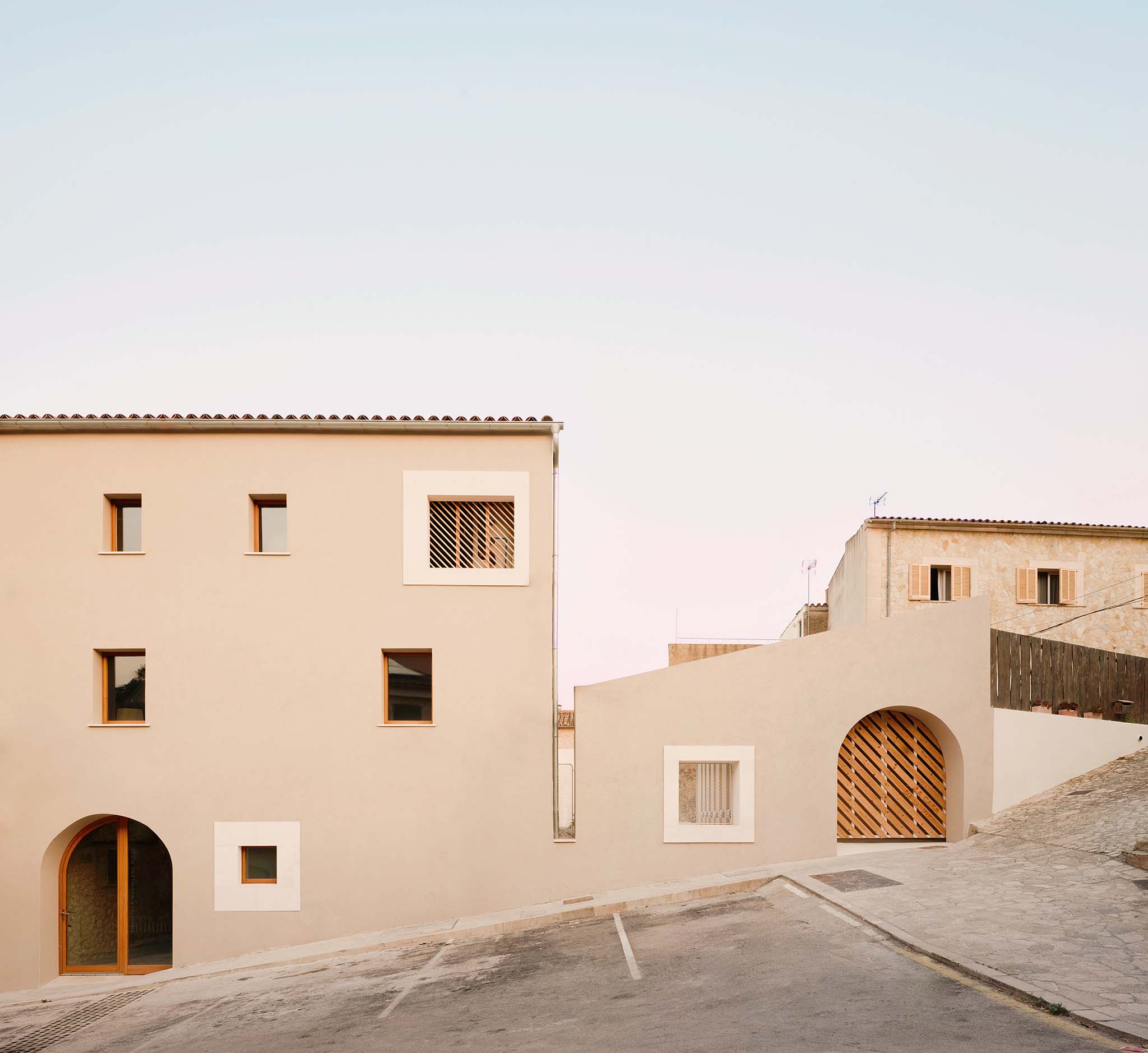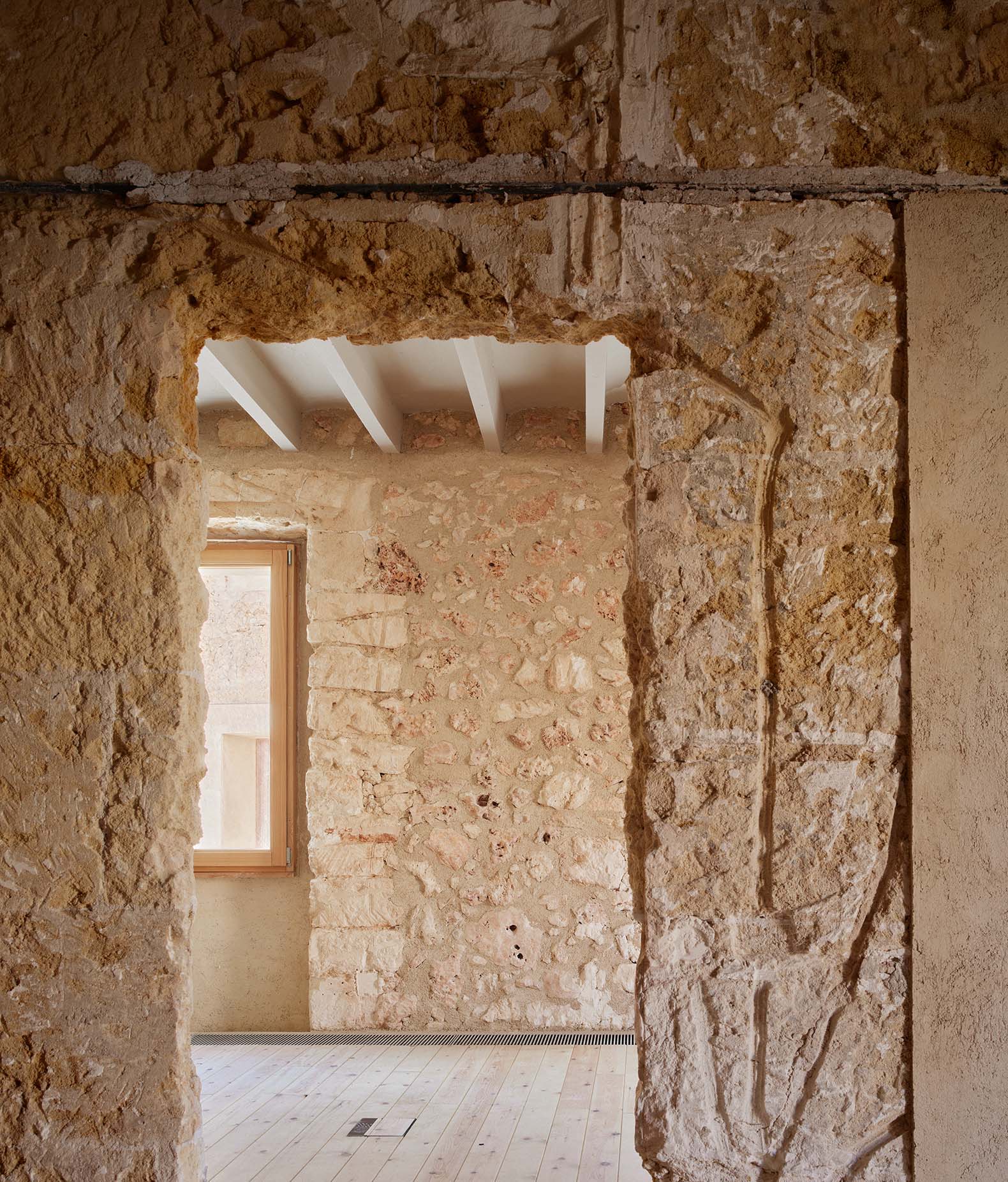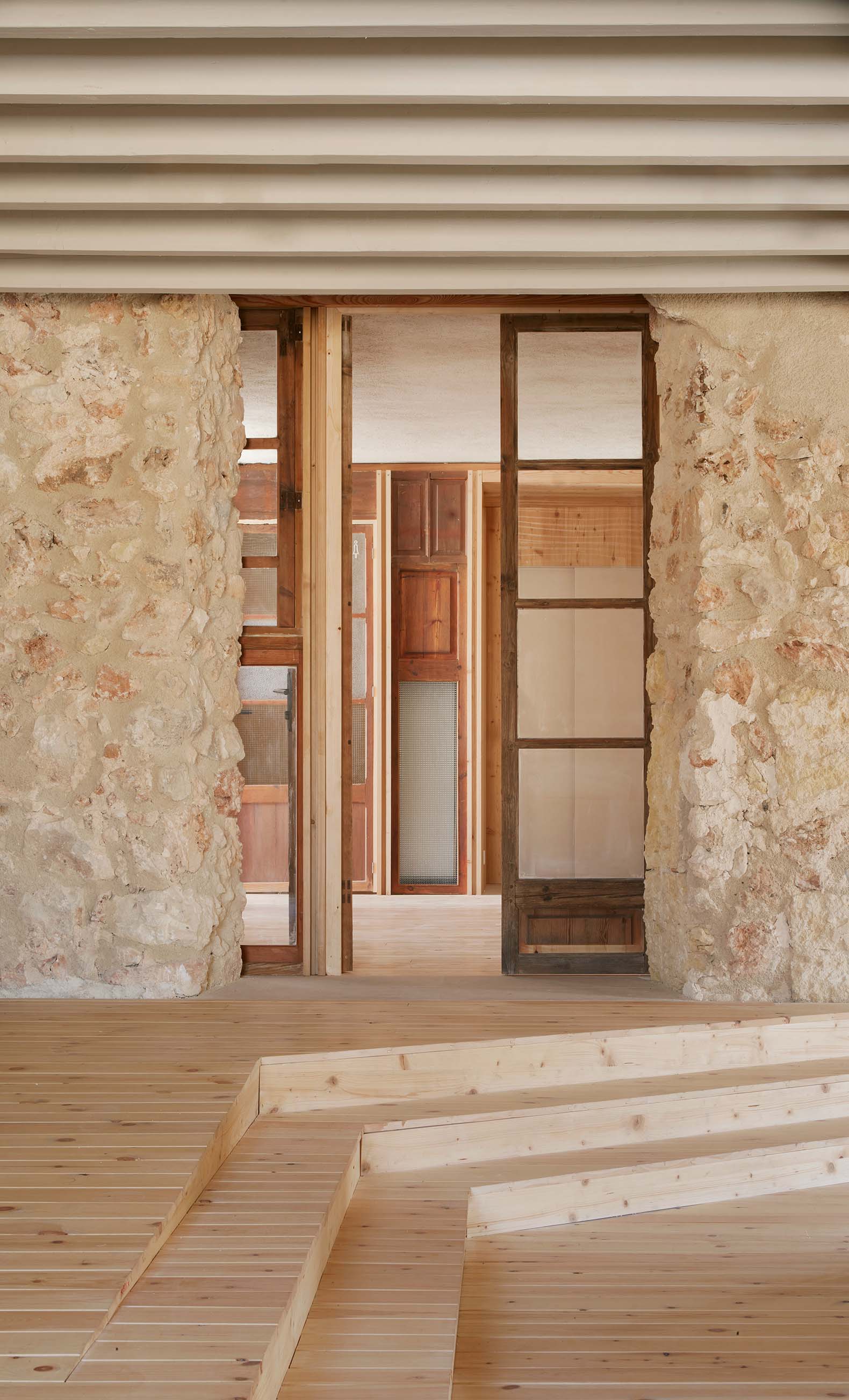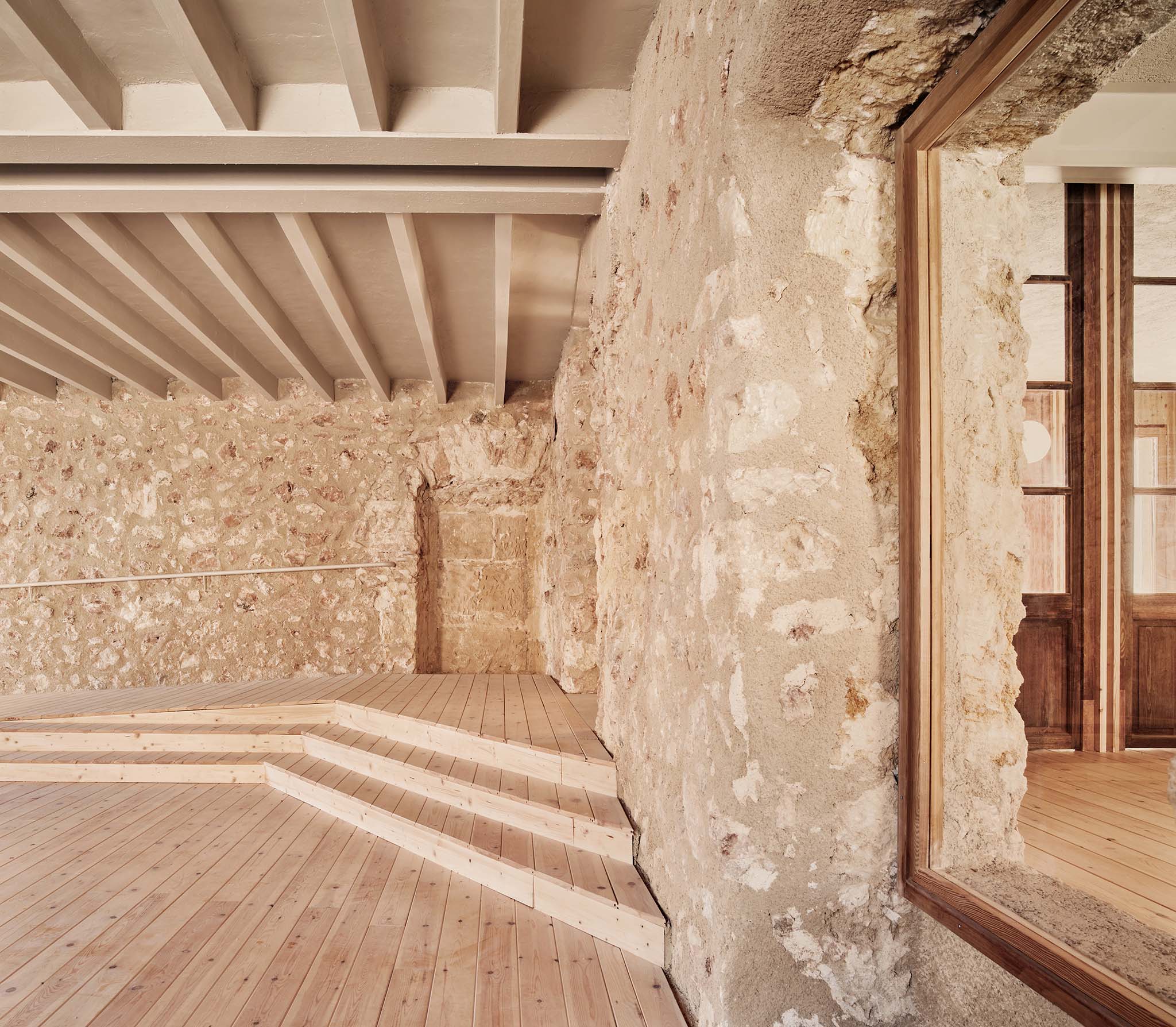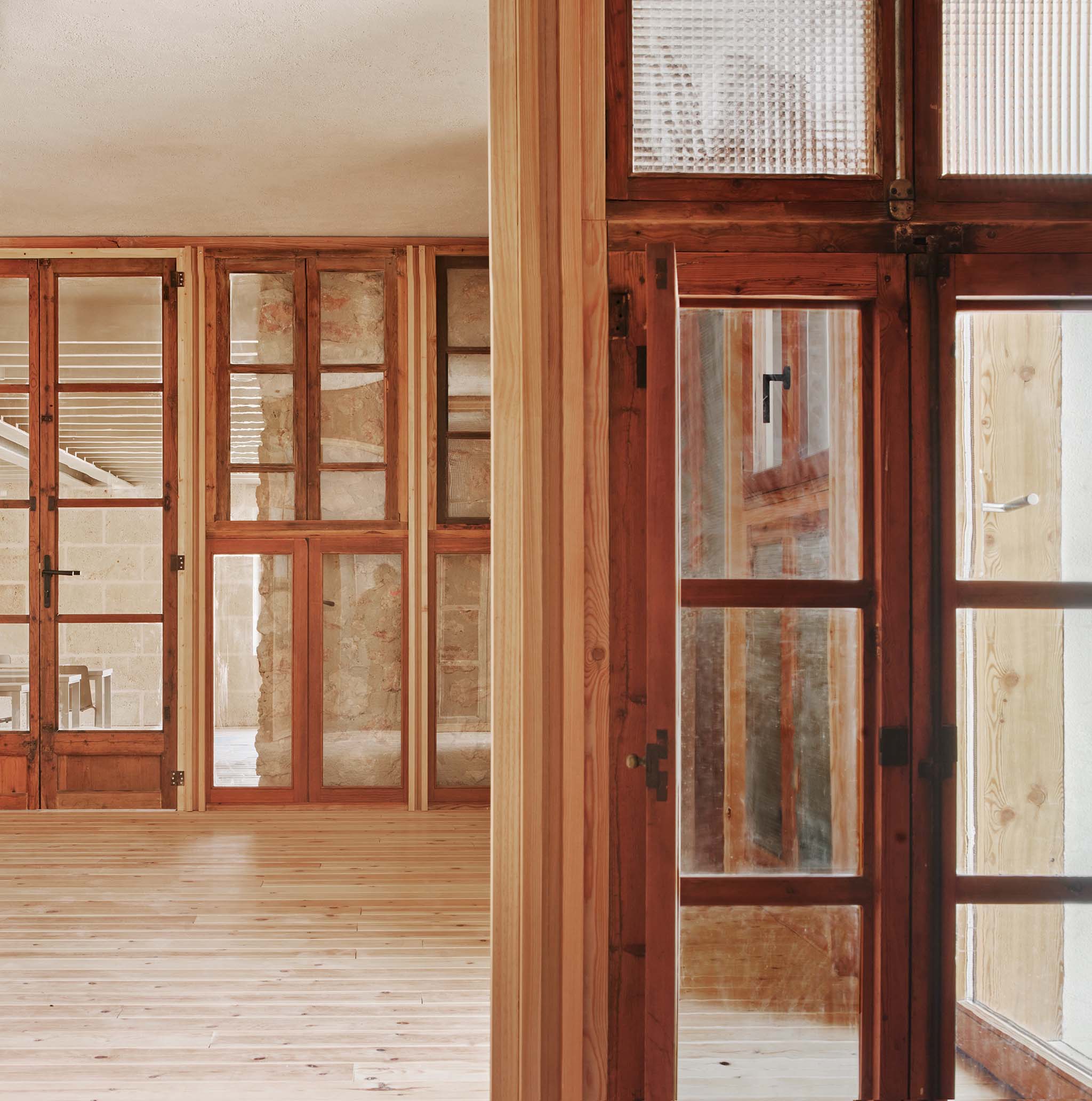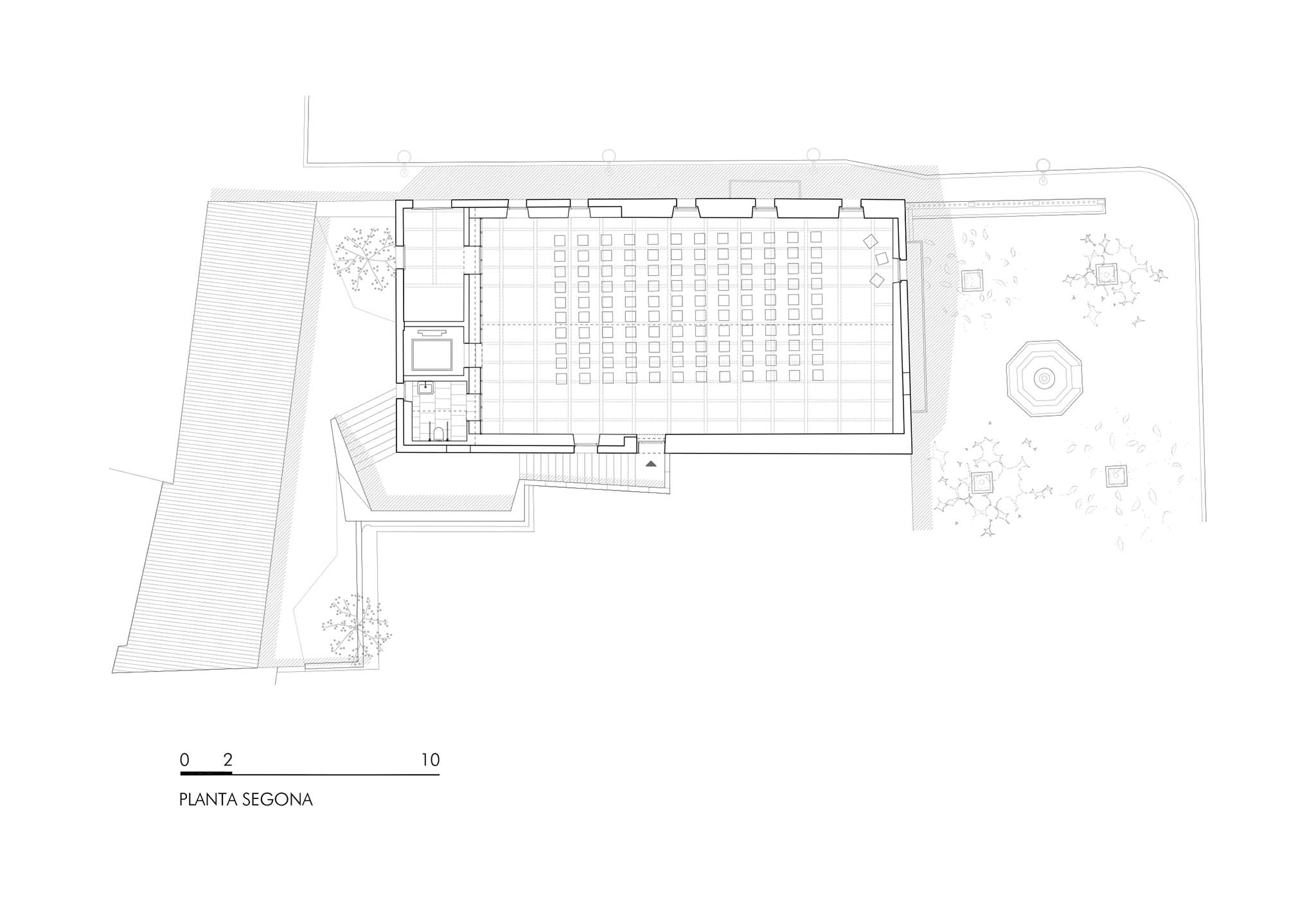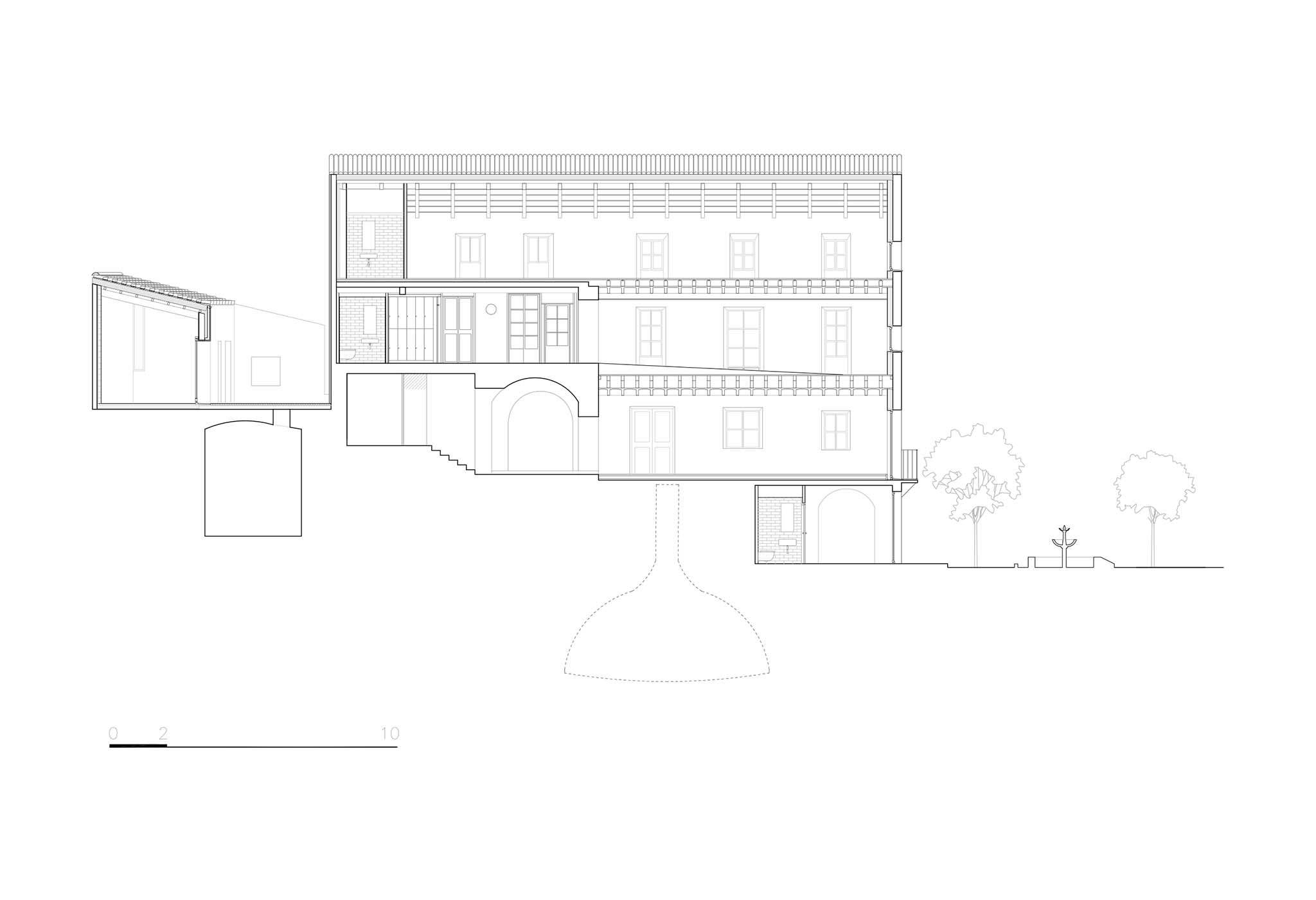
The renovation proposed by Peris+Toral Arquitectes and Aulets Arquitectes spatially reorganizes the building around the courtyard. The circulation system is moved to the exterior via a new staircase and an elevator integrated into a service area. Meanwhile, the upper floors feature spacious, open, and multipurpose areas adapted to the new communal uses.
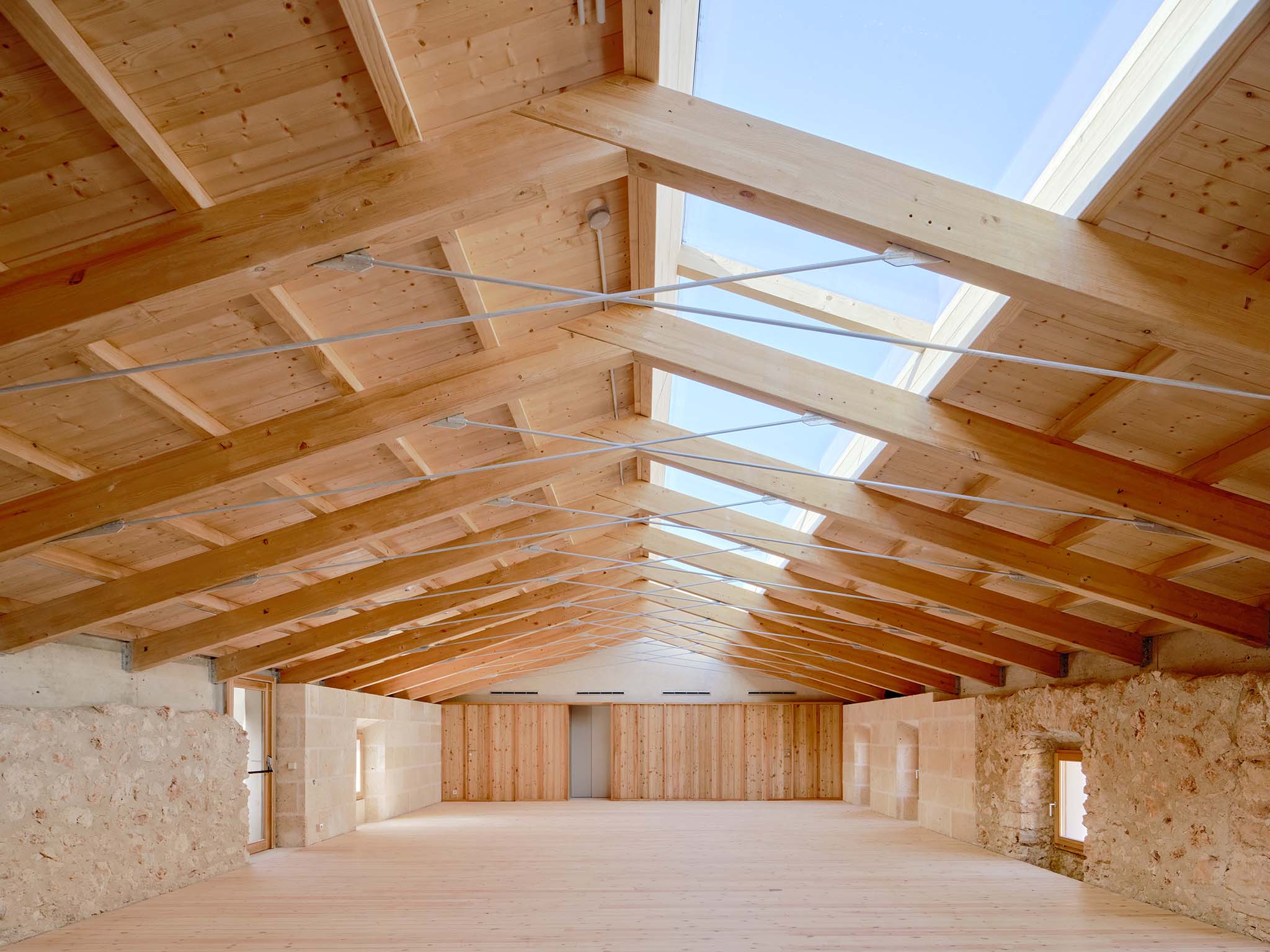
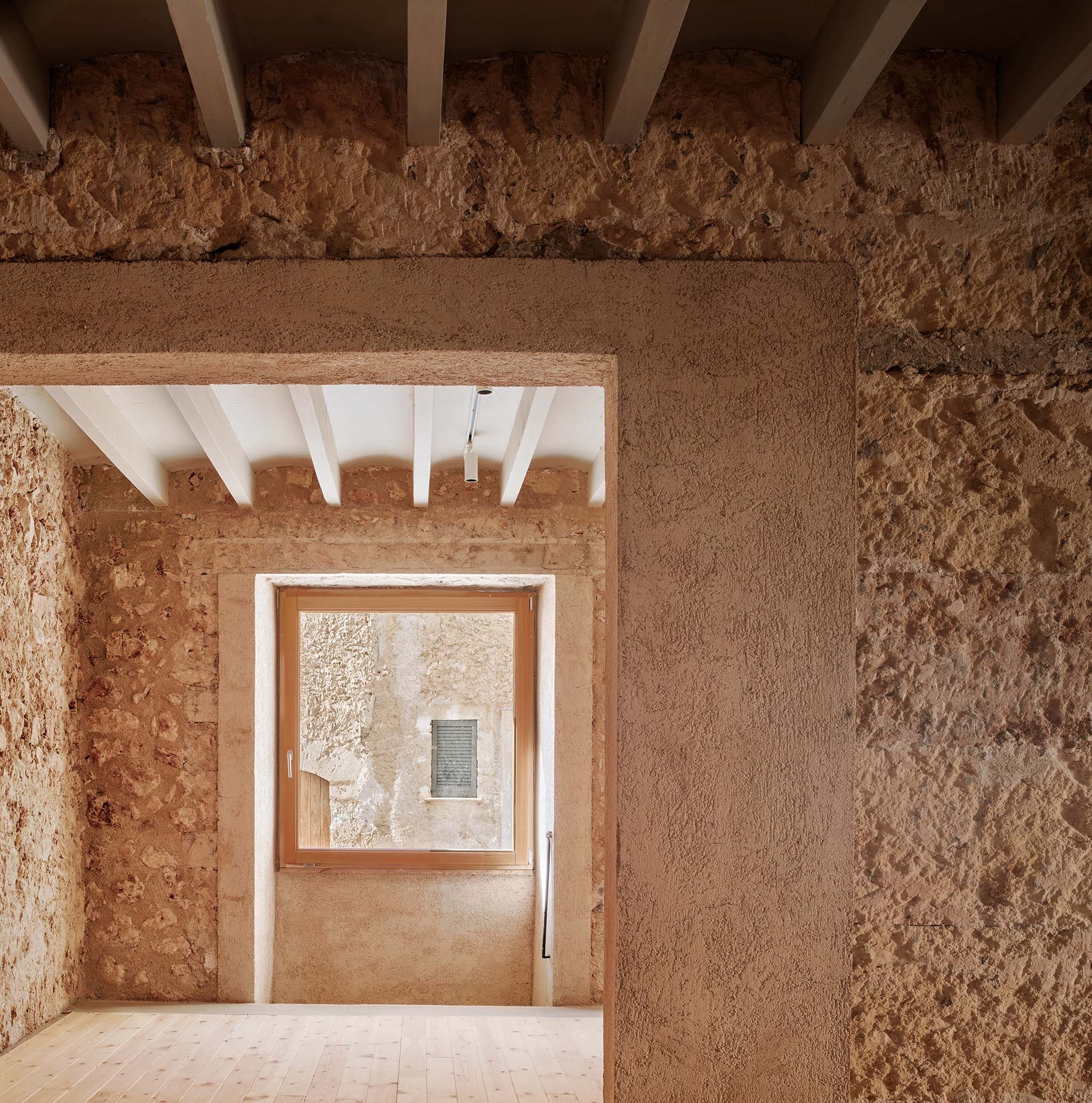
In terms of construction, the project employs a thermal mortar of lime and cork on the exterior to preserve the exposed stonework on the interior. The differences in floor levels are used as a technical plenum to house installations and structural reinforcements, also facilitating the incorporation of accessible ramps. As for the roof, a new structure of wooden trusses with tension cables relieves the walls of horizontal loads and allows for the creation of a large multipurpose room.
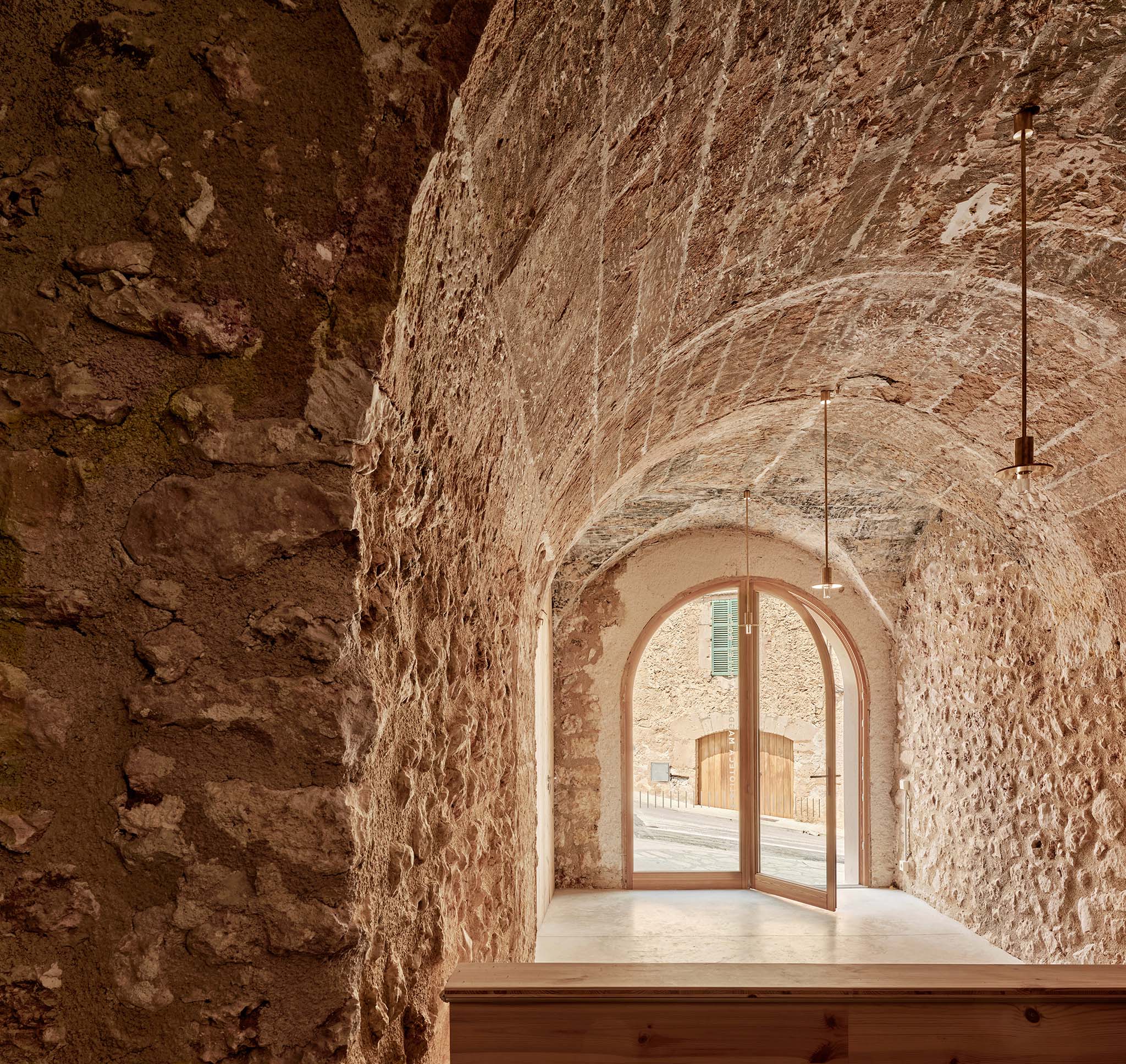
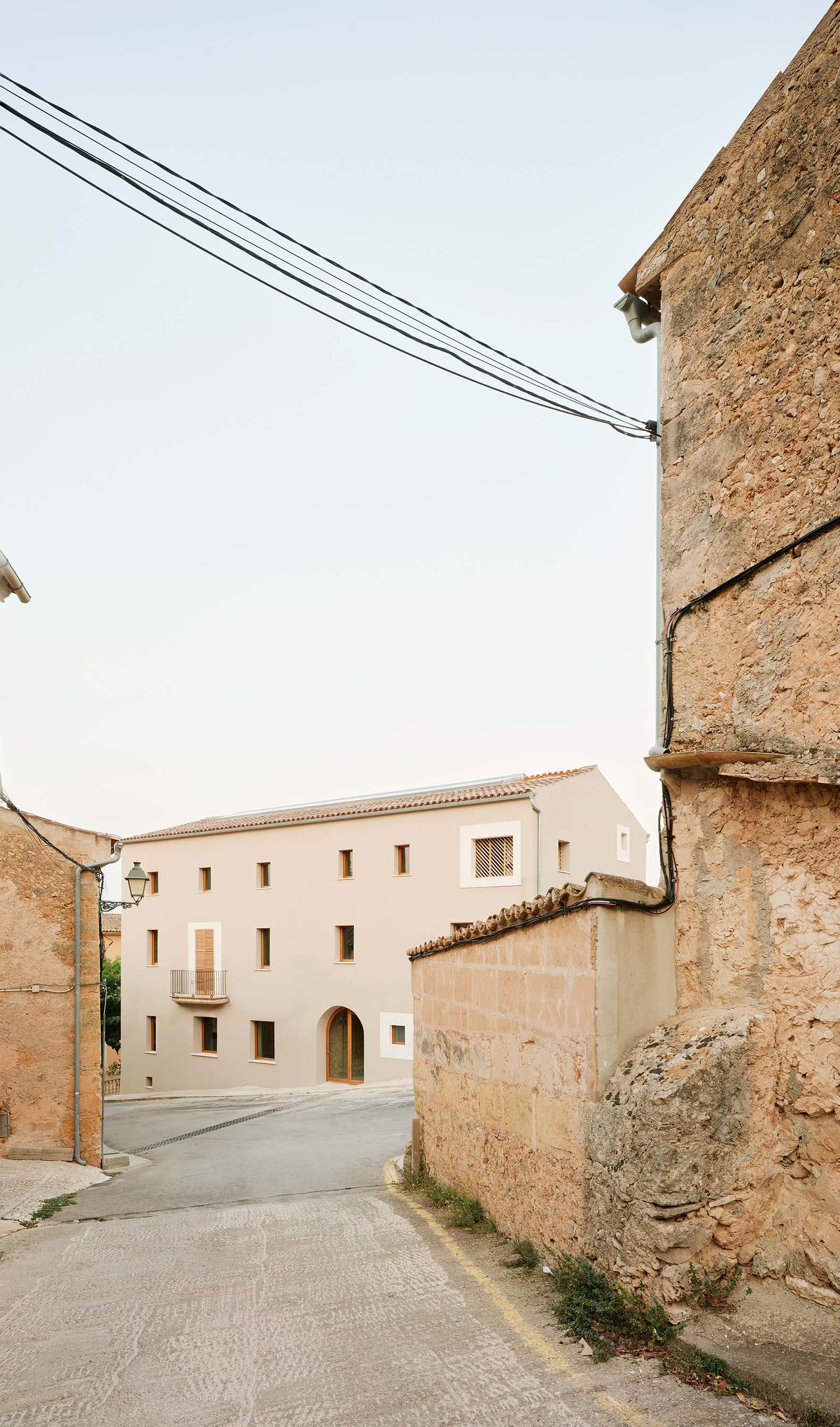
Vila Santa Eugenia House by Peris Toral + Aulets. Photograph by José Hevia.
Project description by Peris+Toral Arquitectes and Aulets Arquitectes
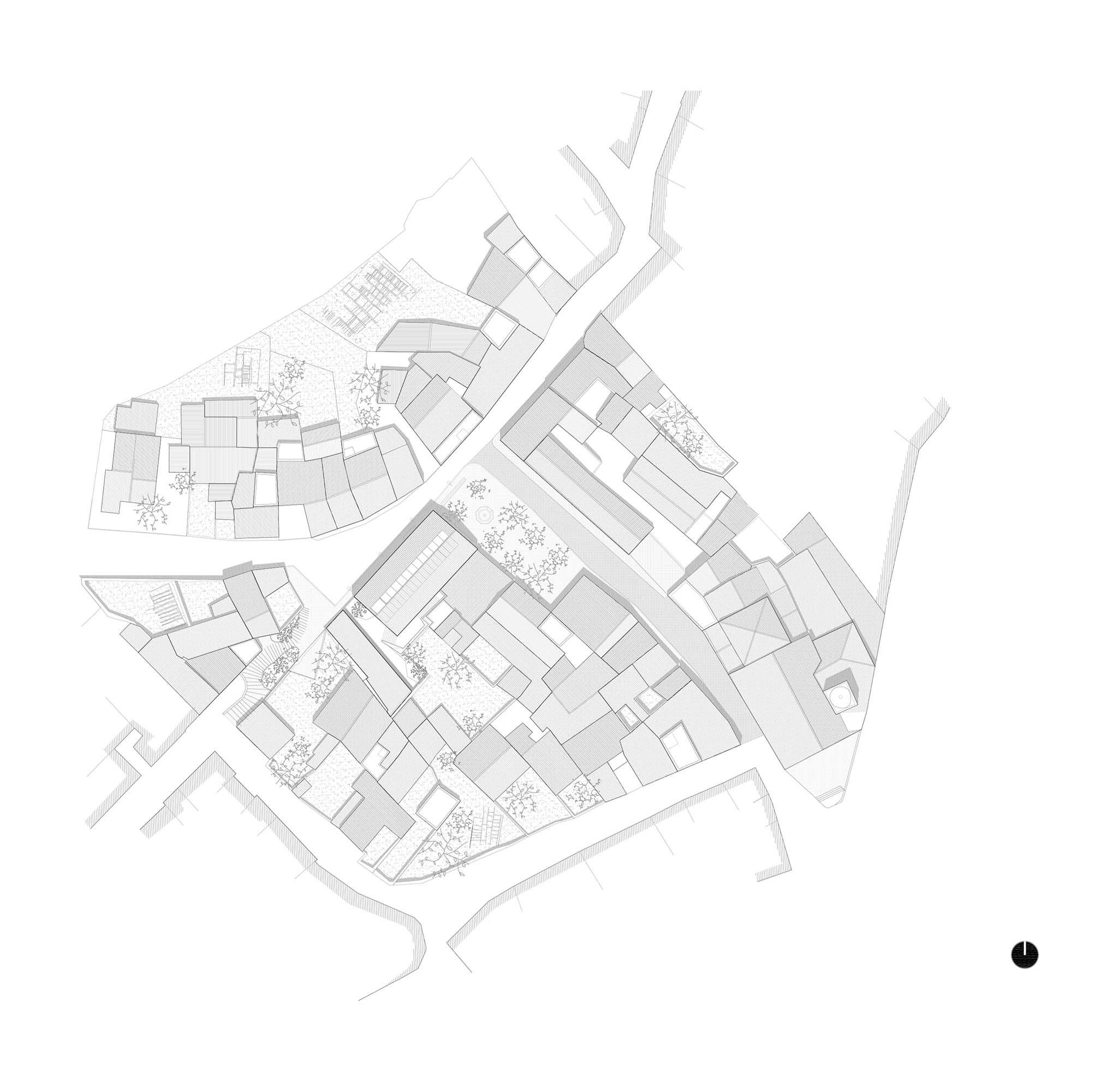
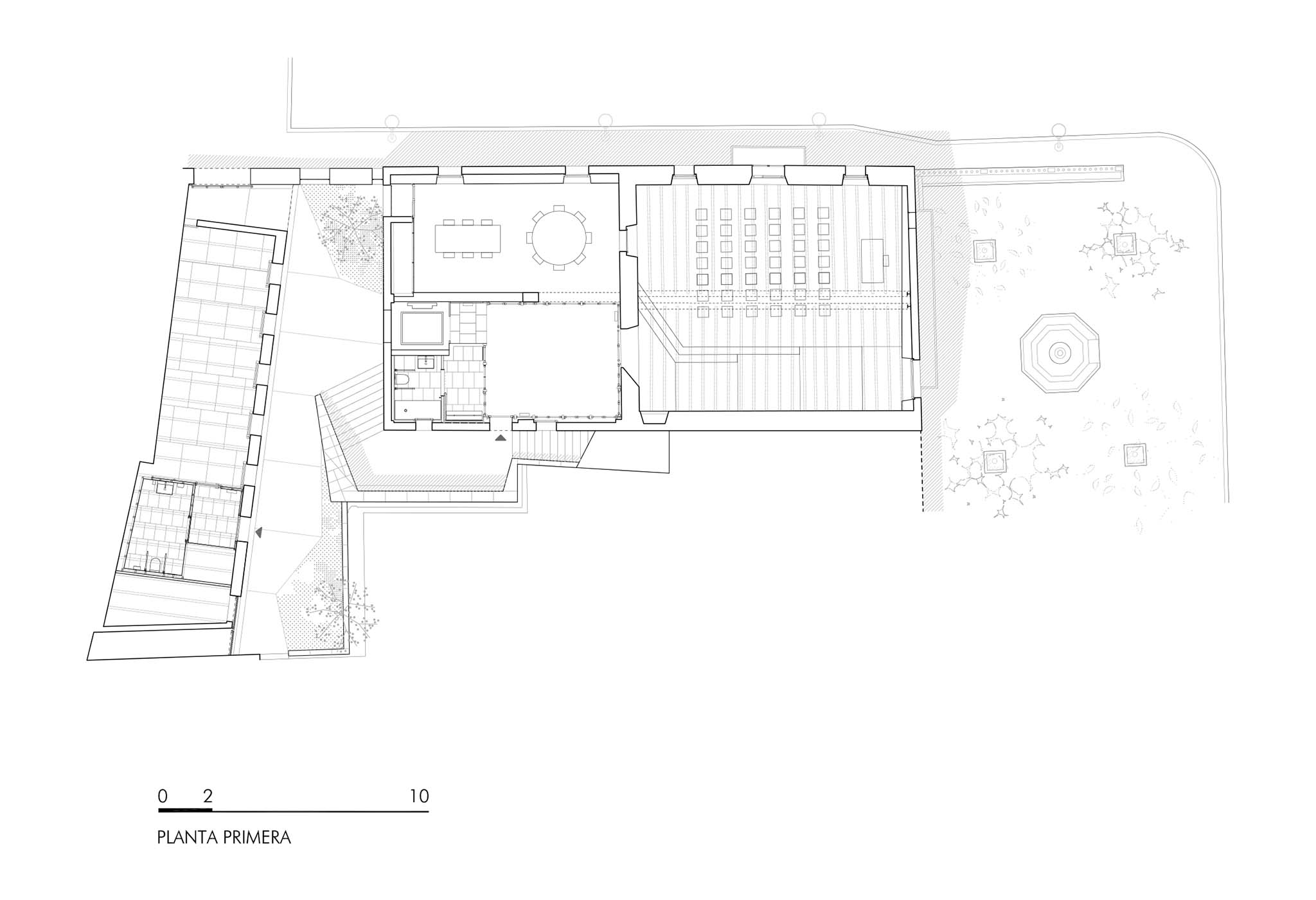
The Vila House project rehabilitates the former Town Hall of Santa Eugenia (Mallorca), comprised of two buildings separated by a courtyard. The main four-story volume consisted of two square structures, built in different periods and using different construction methods, joined along one side. A secondary, elongated, single-story structure—a former carriage house—was attached to the rear party wall of the property.
The main challenge was to resolve the inherited structural compartmentalization and the staggered floor slabs to ensure universal accessibility and create spacious, flexible areas in accordance with the new civic program.
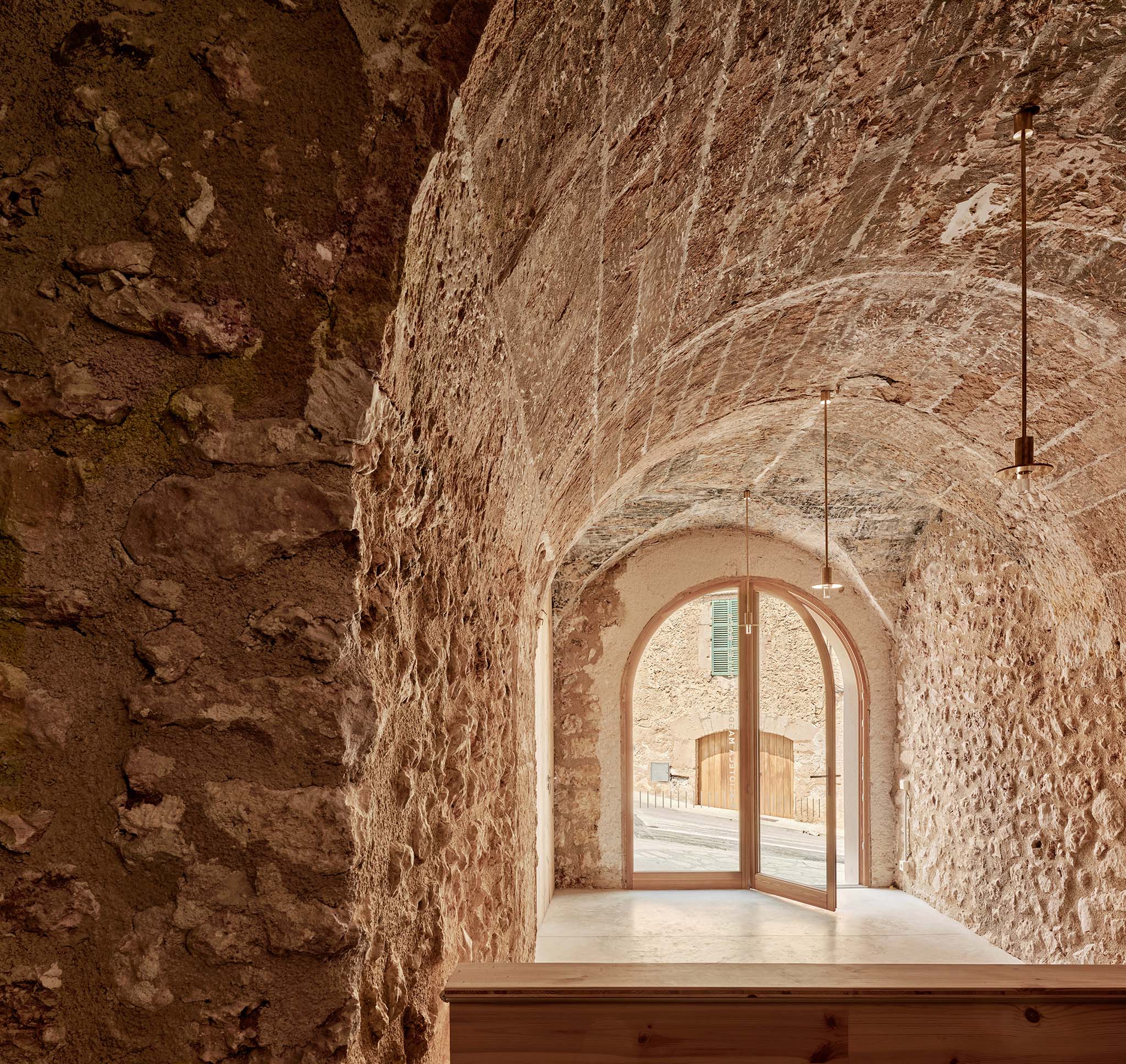
The impossibility of creating a single vertical circulation core, due to the topography and the existing vaults and cisterns, led to the complete exteriorization of the circulation system. The project thus takes advantage of the different levels to create separate entrances: the municipal police station from the plaza, and the library next to the main courtyard from Camí d’es Puig. The courtyard thus becomes the new entrance and distribution point, incorporating two new elements: an elevator integrated into the service area as a kind of "thick facade," and an exterior staircase that incorporates an existing layout and is extended to connect the various rooms of the civic center.
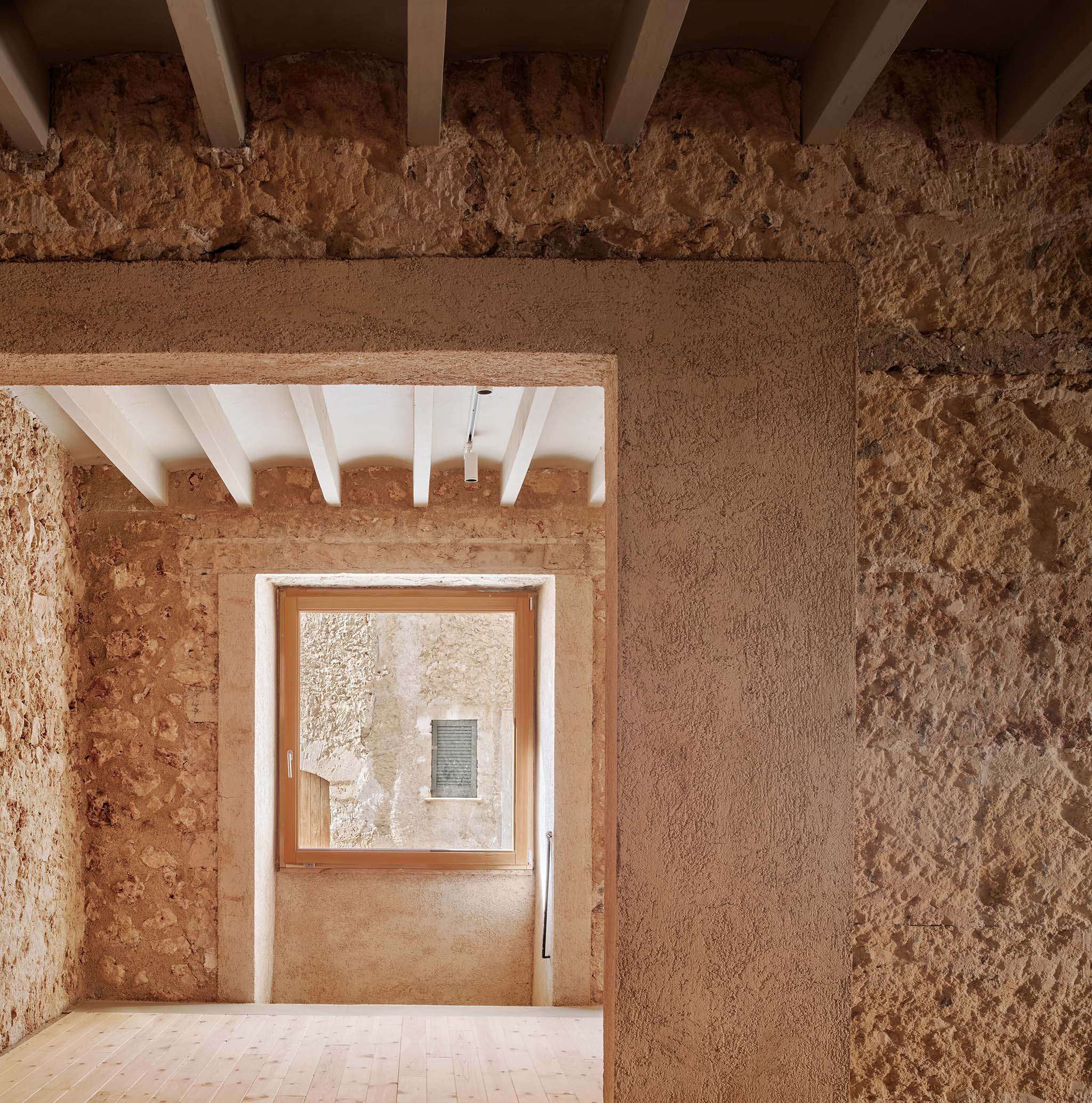
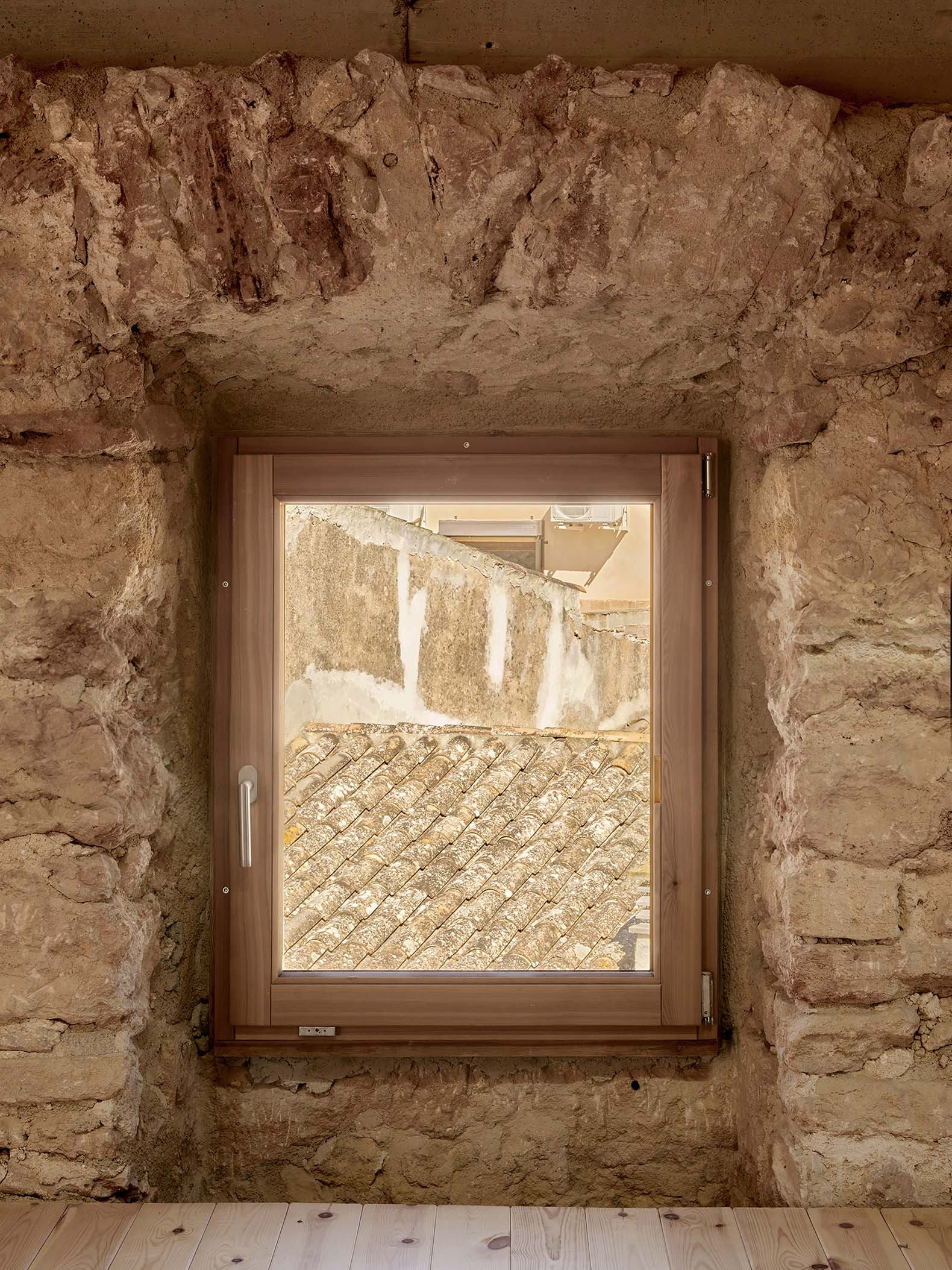
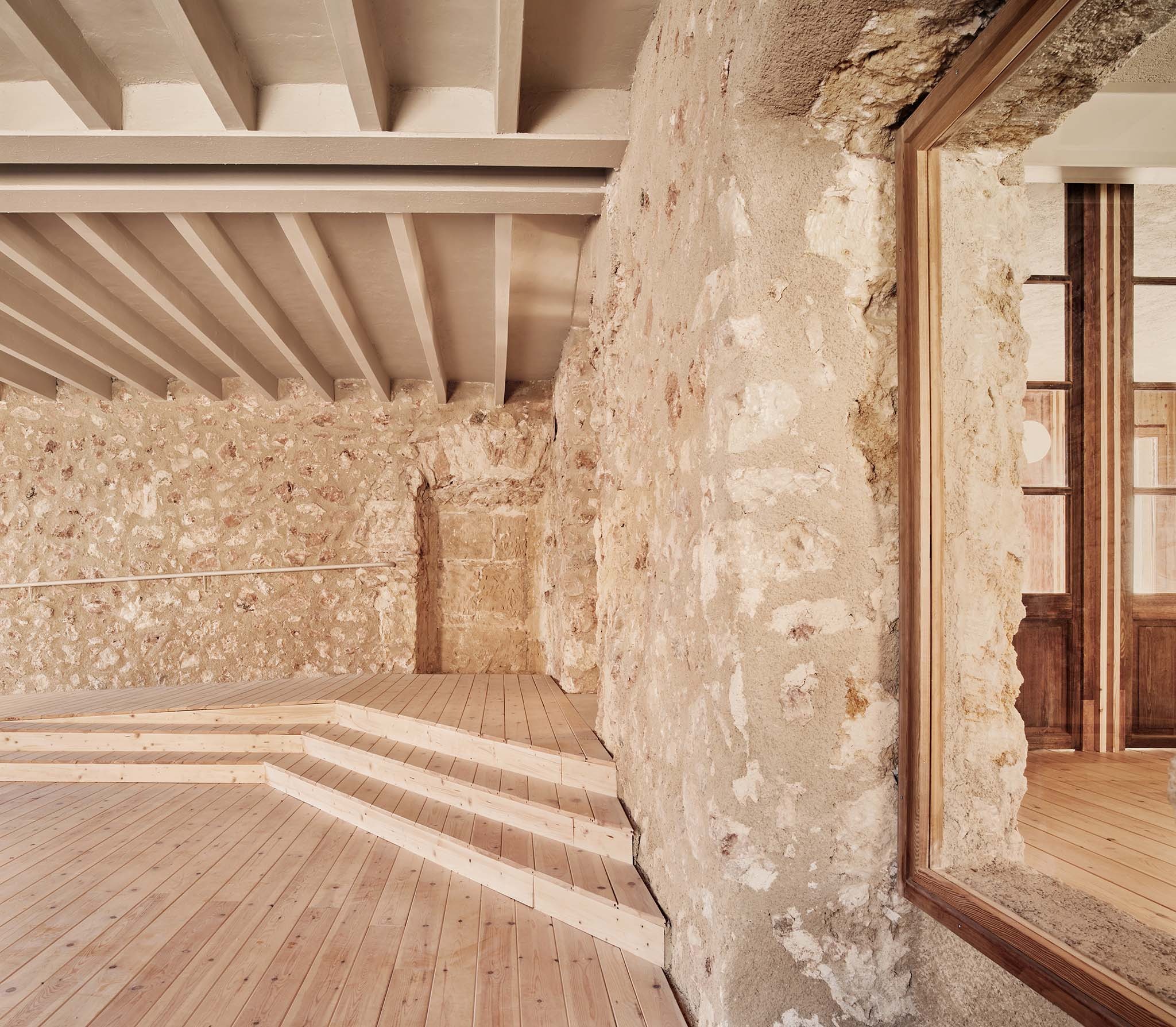
From a construction standpoint, a thermal mortar of lime and cork on the exterior allowed the stone masonry to remain exposed on the interior, simply consolidated with lime mortar, highlighting the building's original construction history and utilizing its thermal mass as a form of inertial heritage.
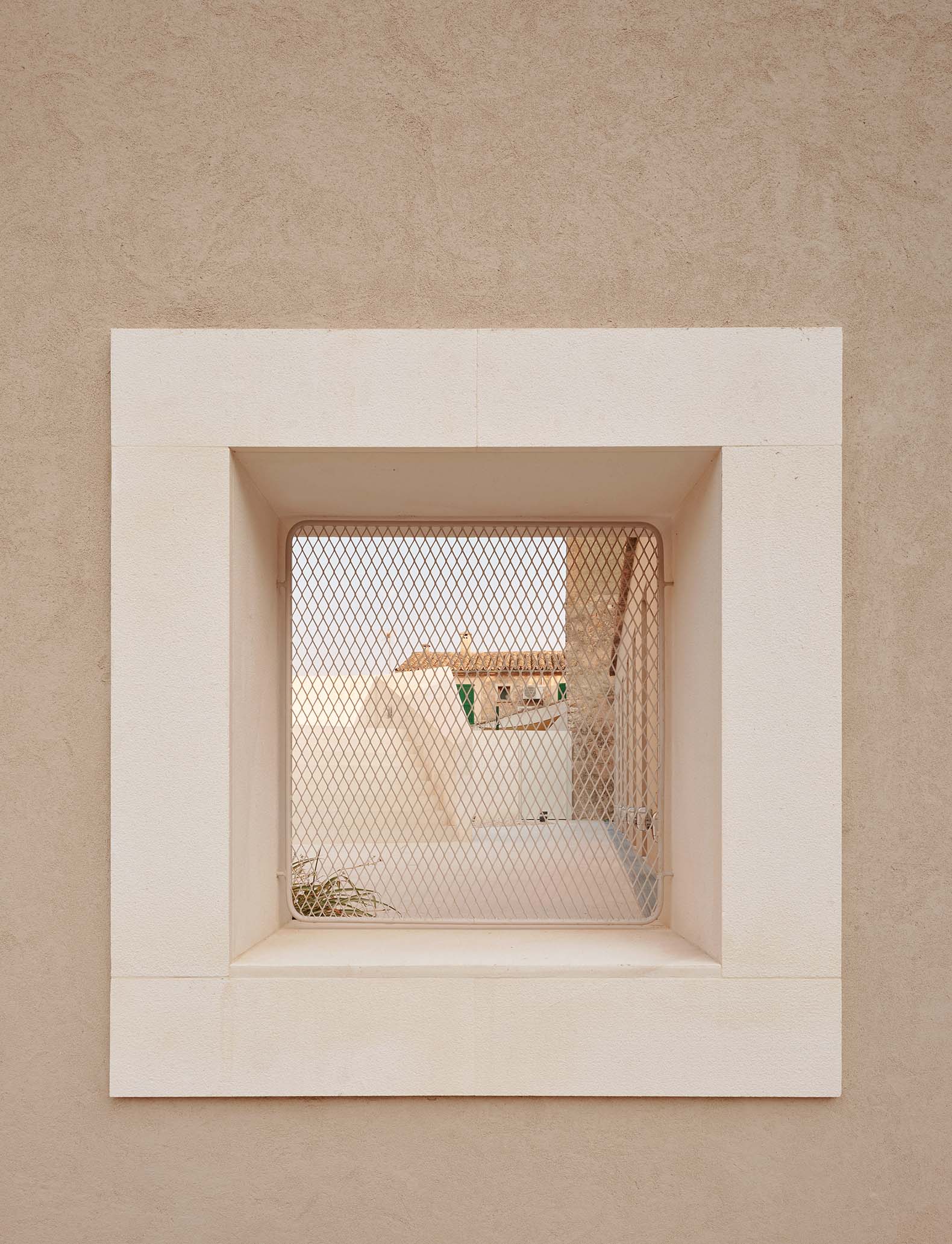
The openings on the facade were preserved, some being enlarged to adapt them to the new scale of the spaces, and the original balconies and metal elements were restored. Two new arches were also introduced to the facade: one that reflects the vaulted entrance to the library, and another that frames the entrance to the courtyard. Resonating with the arches of the surrounding architecture, both elements blend seamlessly, as if they had always been there.
The project transforms constraints into opportunities. The difference in level between the floor slabs is used as a technical plenum to house the building services and the reinforcements for the wooden beams. This strategy allows for leveling the floors or reducing the difference in elevation to facilitate the insertion of gentle connecting ramps.
On the top floor, the roof was raised on a perimeter beam to support a system of wooden trusses with tensioners that relieve the walls of horizontal thrust, creating a large multipurpose space. Furthermore, the roof renovation facilitated the work on the floor below, allowing the removal of the intermediate load-bearing wall and its replacement with large metal profiles that support the original beams, creating a completely open-plan room.
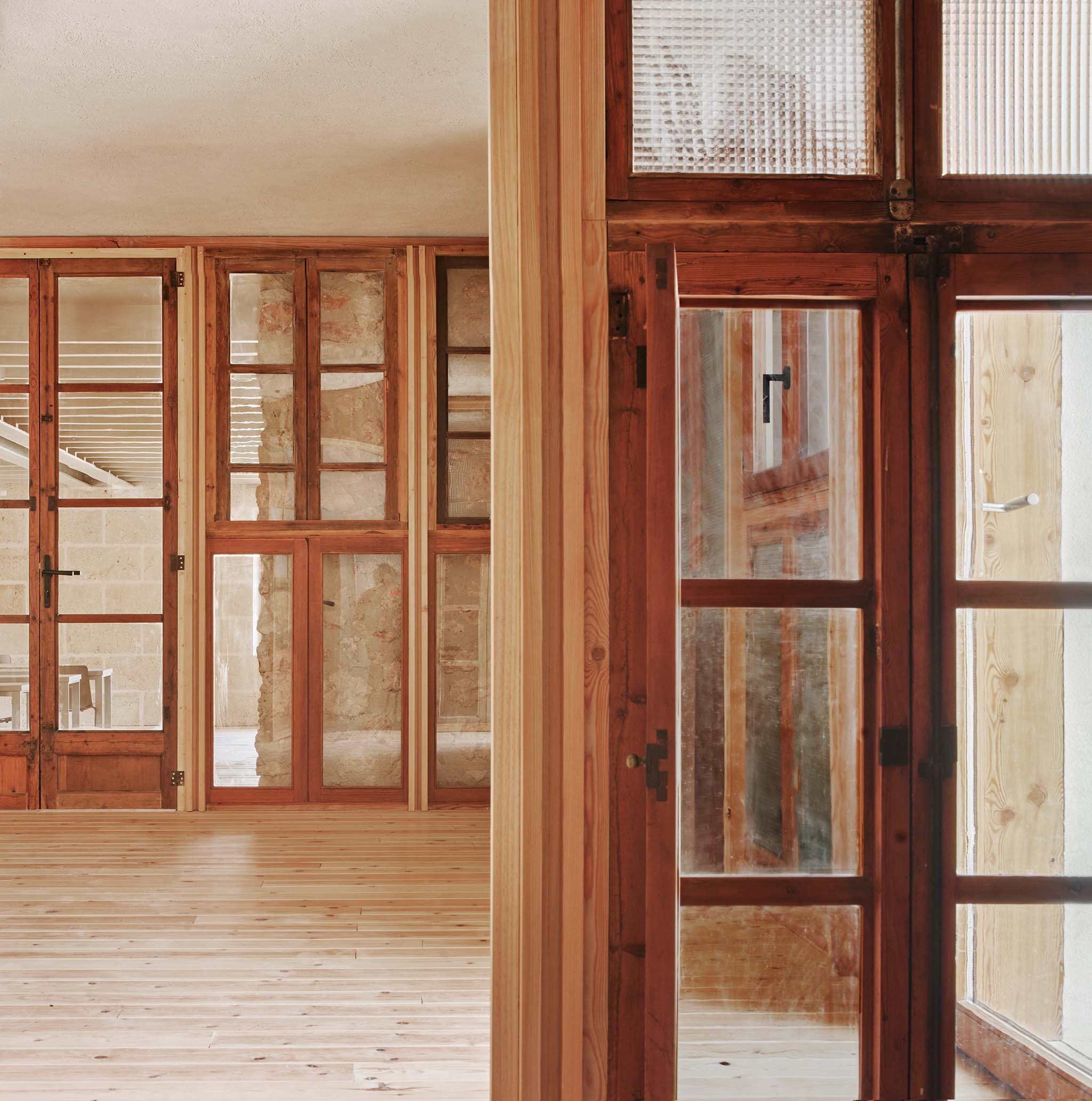
The original woodwork, discarded for reuse due to its poor technical performance, was salvaged and assembled into a large framework to form the main lobby. The material memory of the building is thus concentrated in a space that becomes a symbolic threshold: an invitation for the inhabitants of the town to remember their old Town Hall.