


For the Hacienda Xcanatún Spa, TAMA (Taller Mexicano de Arquitectura) proposes different autonomous volumes connected by exterior pathways and intermediate courtyards that generate a spatial sequence of transition, pause, and contemplation: atmospheres where the architecture acts as a mediator between body, climate, and landscape.
A metal structure articulates the set of stone and chukum volumes, a cantilevered flat slab, and a solid cylindrical volume that creates a formal break. The use of local materials establishes a dialogue with the existing structures, dissolving into its context in a restrained manner.
Transition, pause, contemplation. Spa Hacienda Xcanatún by TAMA.
Project description by TAMA
As part of the comprehensive master plan for Hacienda Xcanatún by Angsana Heritage Collection, the project envisions a spa conceived as a natural extension of both the hotel complex and the ongoing residential development. Rather than an isolated building, it is understood as a component that complements and amplifies the overall experience of the place.
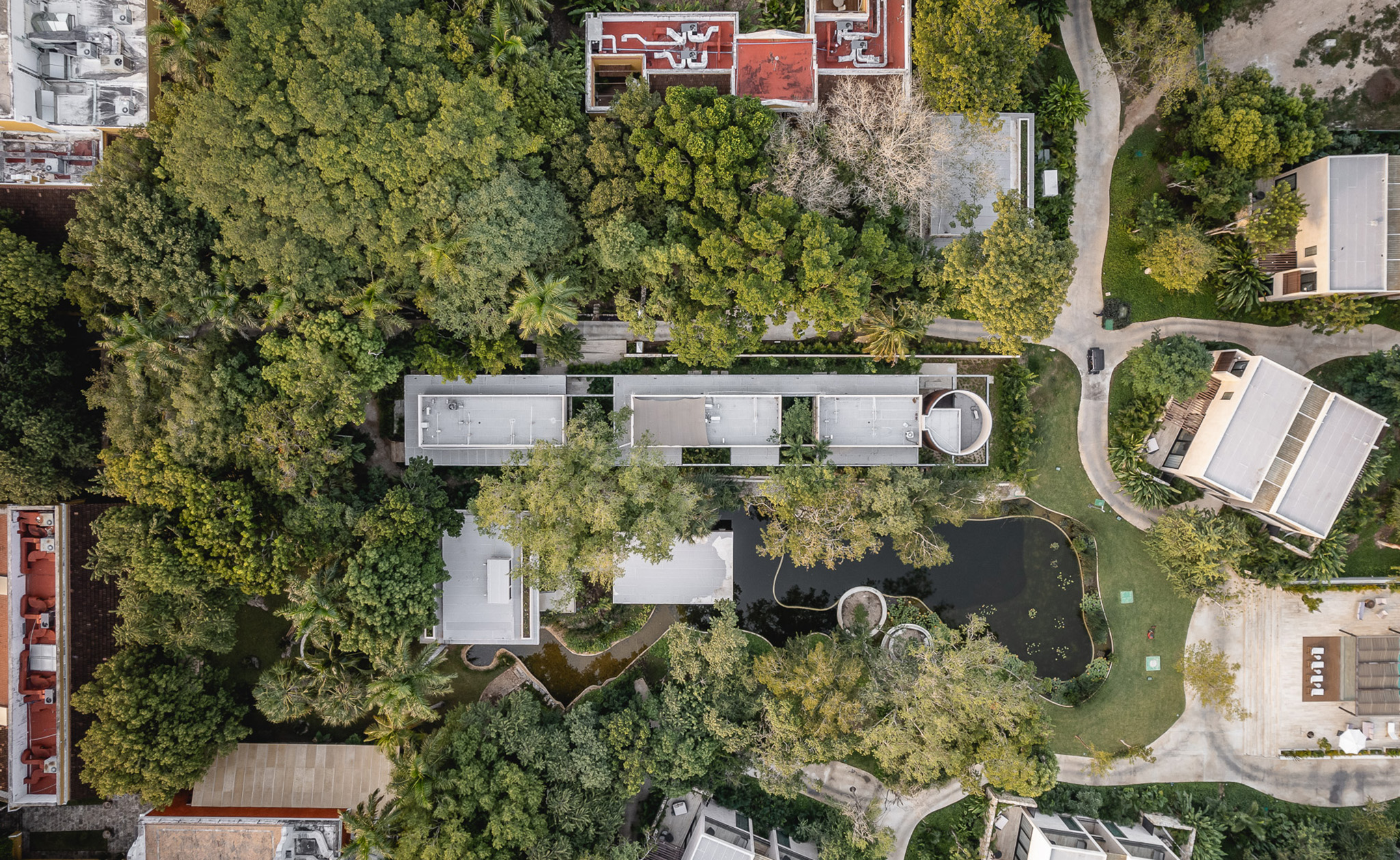
Set at the heart of the hacienda, adjacent to the main pond, the project is grounded in a clear premise: to integrate respectfully with both the built and natural environment. The architectural response takes the form of a linear, horizontally articulated pavilion, whose restrained scale fosters an intimate relationship with the user while ensuring privacy from the rest of the complex.
The scheme is organized through a series of articulated volumes that house the spa’s different functions. These are conceived as autonomous elements, connected by exterior pathways and intermediate courtyards, generating a spatial sequence that privileges transition, pause, and contemplation.
Four elements structure the logic of the project: a steel framework that articulates the ensemble; volumes built in stone and chukum that contain the program; a flat cantilevered slab that reinforces horizontality while providing protection from climatic conditions; and a solid cylindrical volume that introduces a formal contrast, activating the spatial experience through a sense of curiosity.

The sequence of movement becomes a central component of the design. Each space, whether interior or exterior, is carefully oriented to frame views toward gardens, water features, and existing elements of the hacienda. Privacy is achieved through a combination of stone walls and endemic vegetation, which filter sightlines while maintaining a connection to the landscape.
Materiality reinforces this intent of integration. The use of regional materials such as stone, local woods, and chukum finishes establishes a dialogue with the existing structures, while ensuring durability and low maintenance. The result is a restrained architecture that dissolves into its context, privileging sensory experience over formal expression.

Rather than an object, the project is conceived as a sequence of atmospheres where architecture acts as a mediator between the body, climate, and landscape, shaping a sanctuary of calm within the hacienda’s ecosystem.


