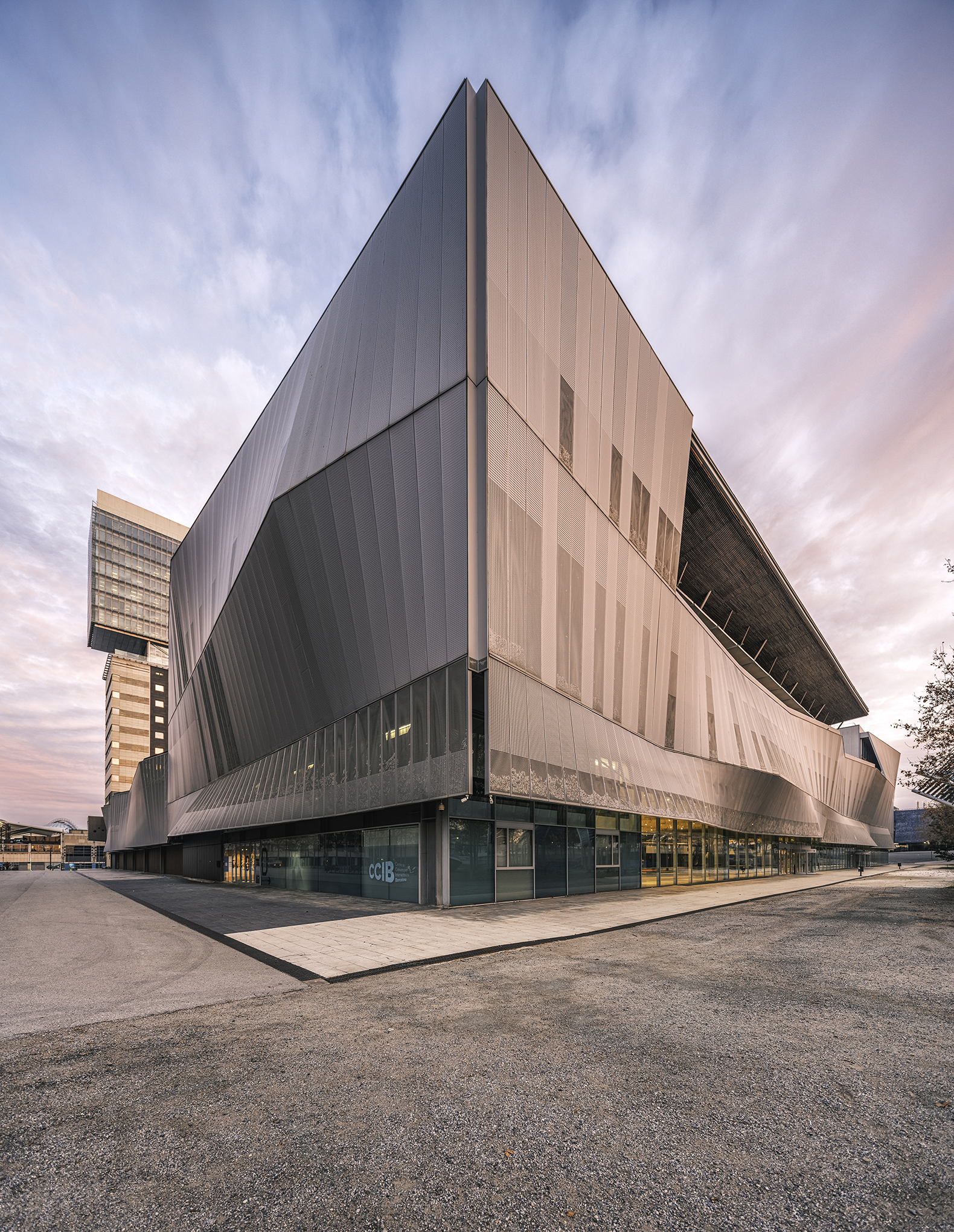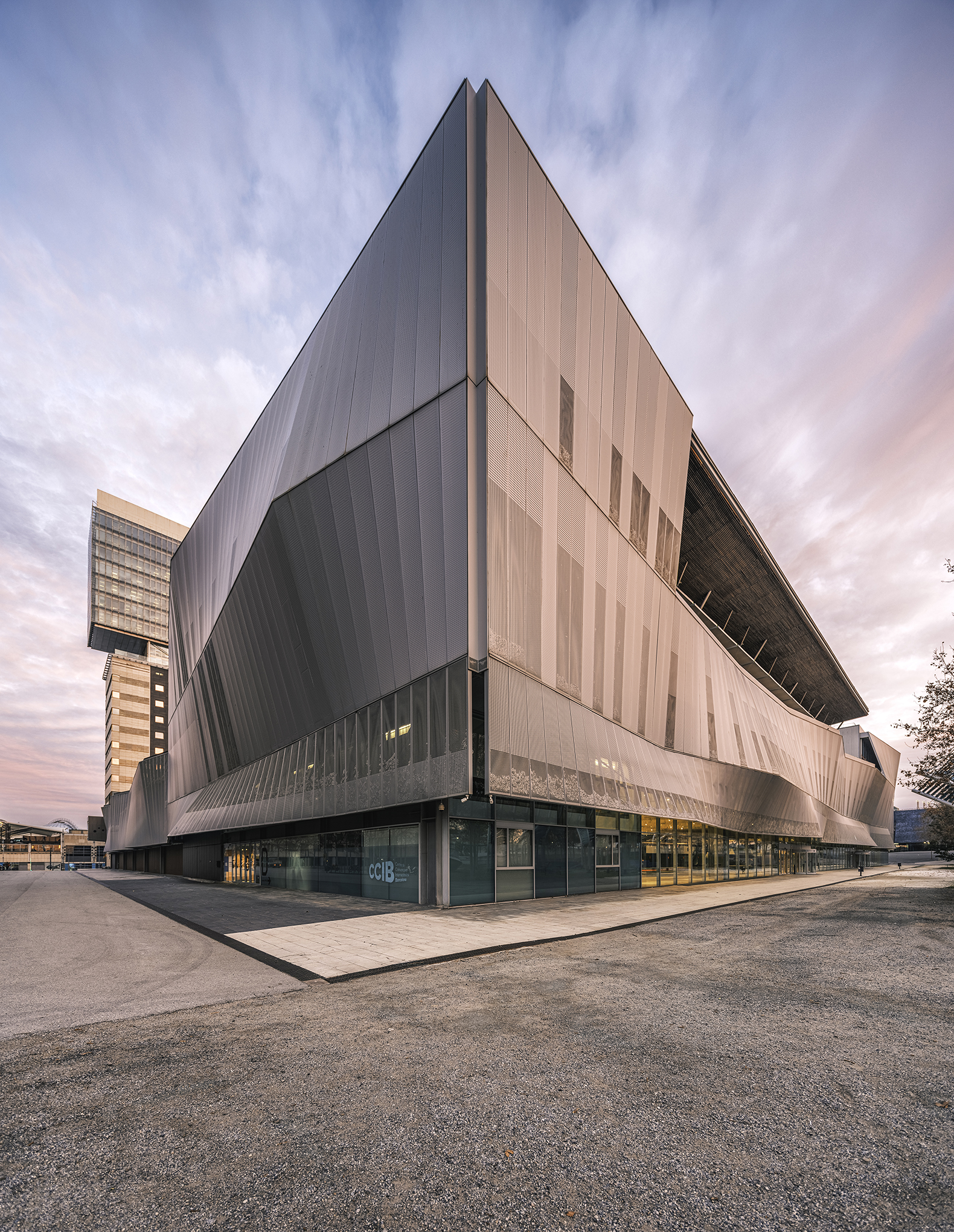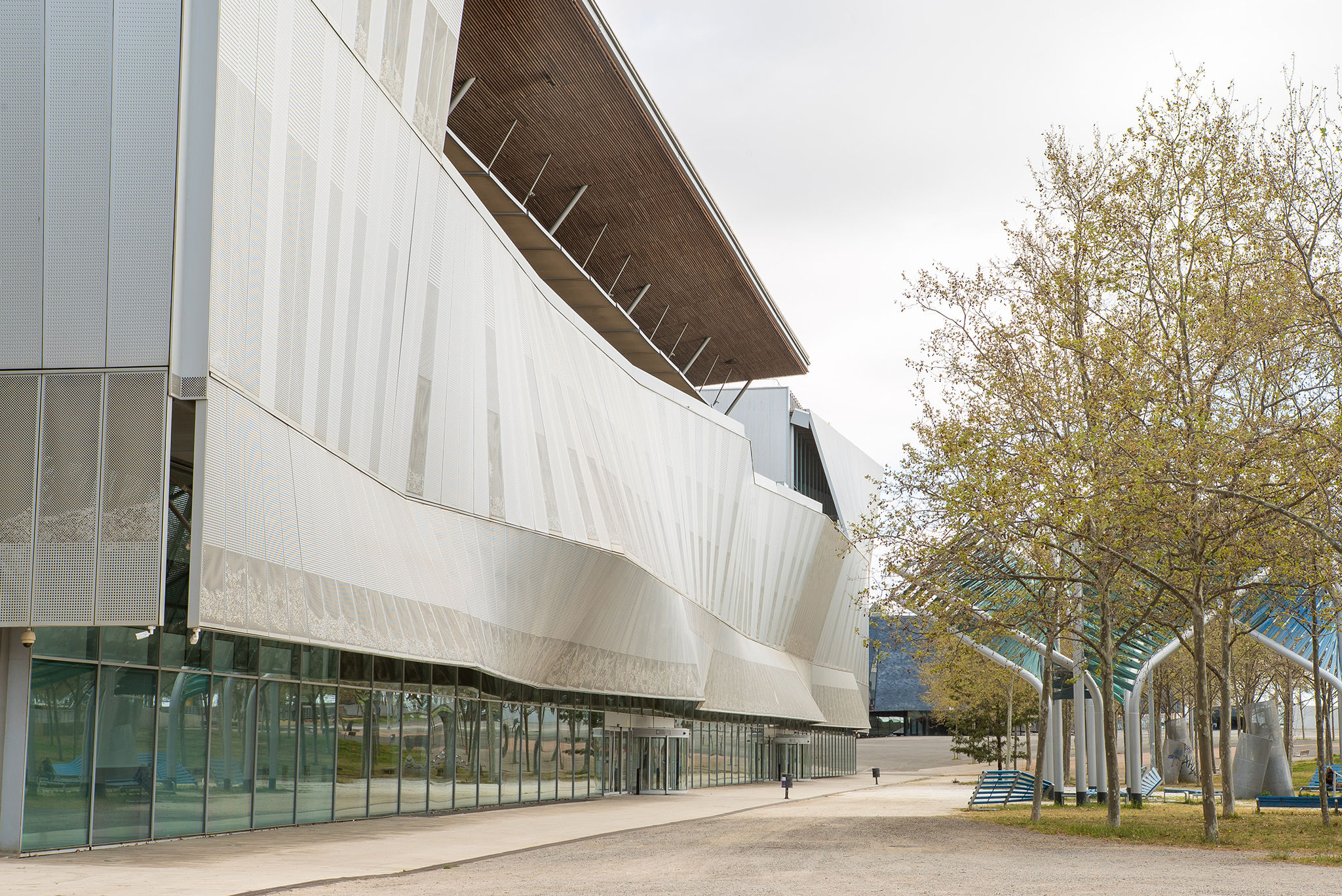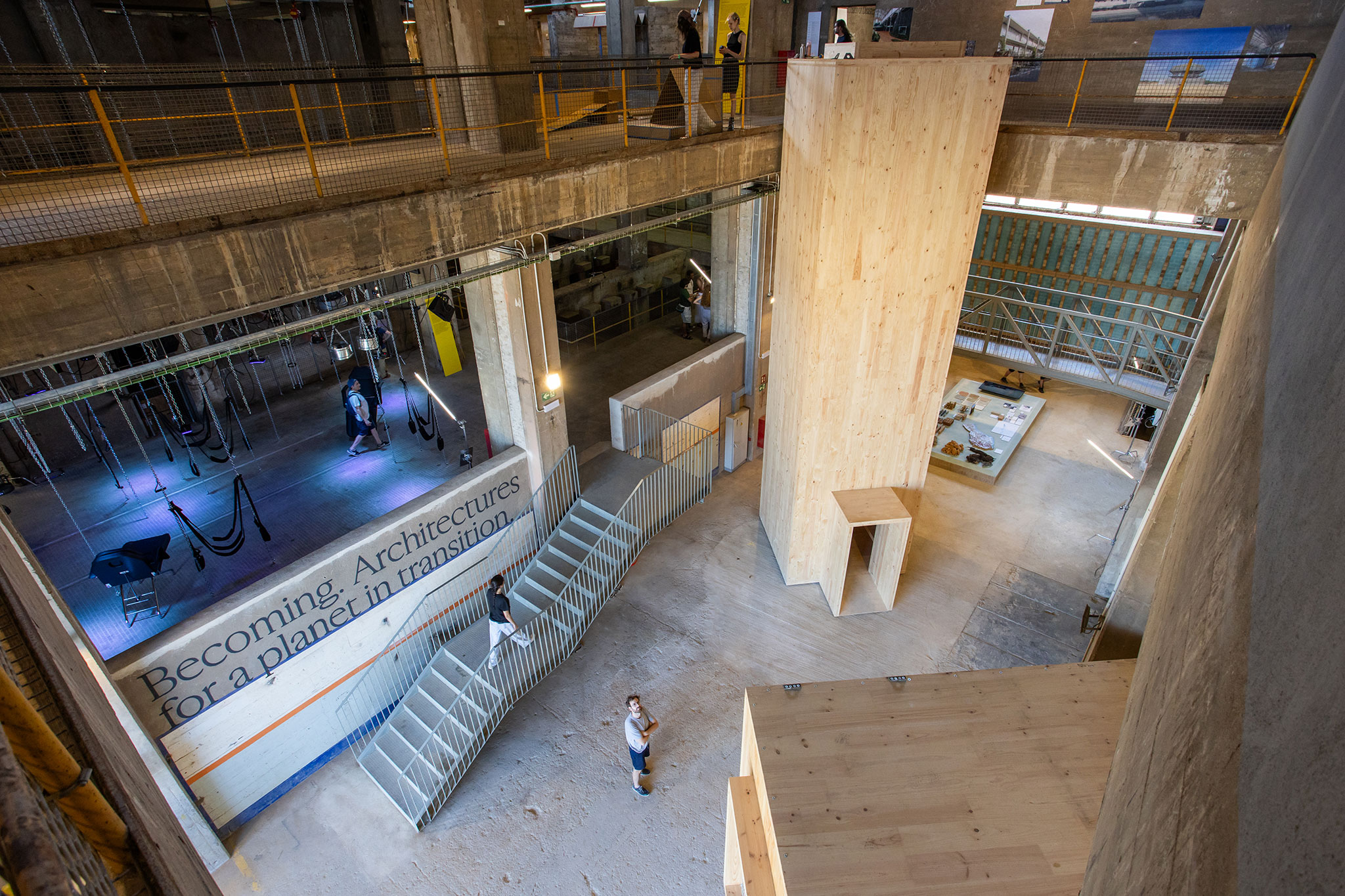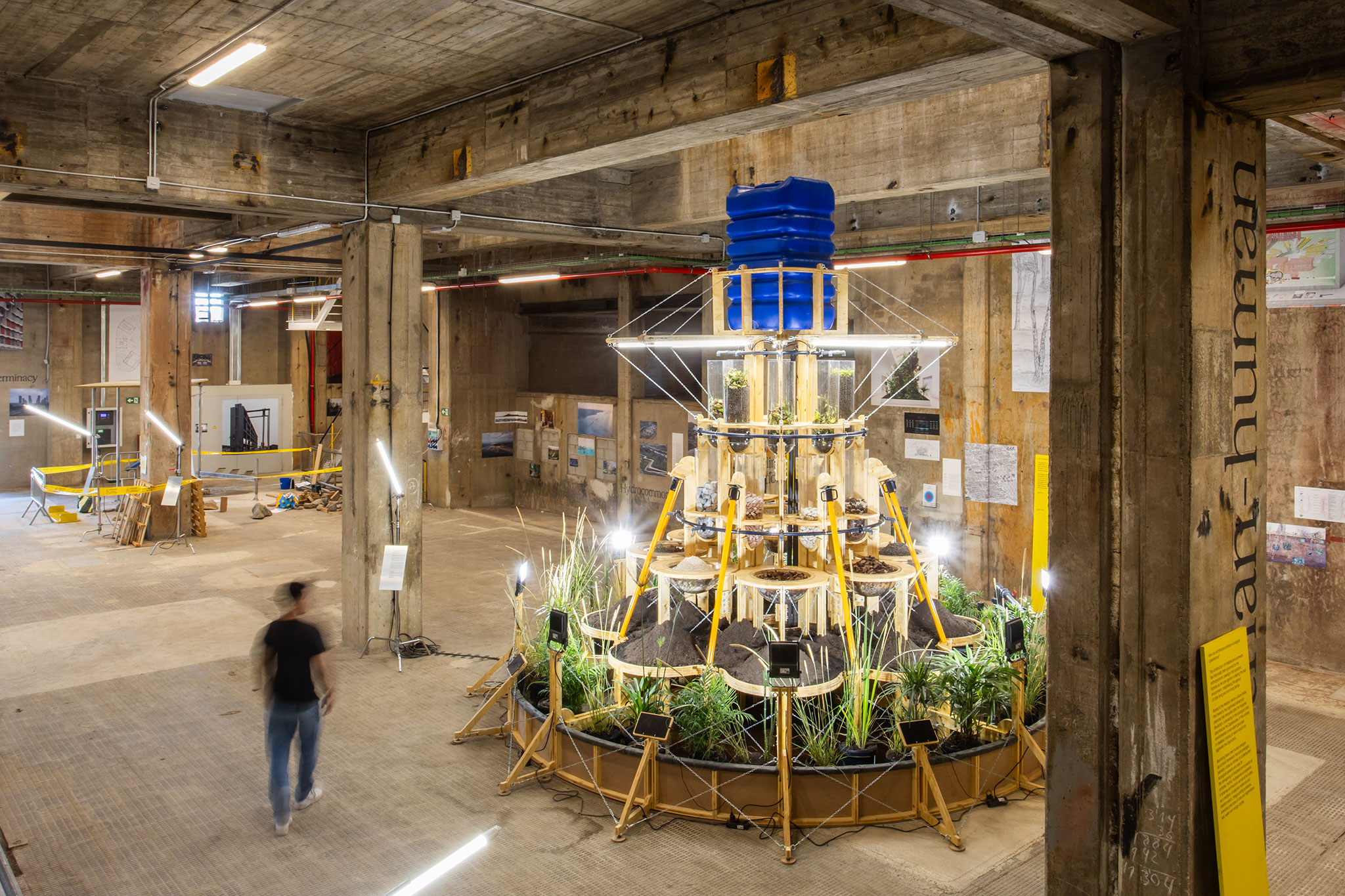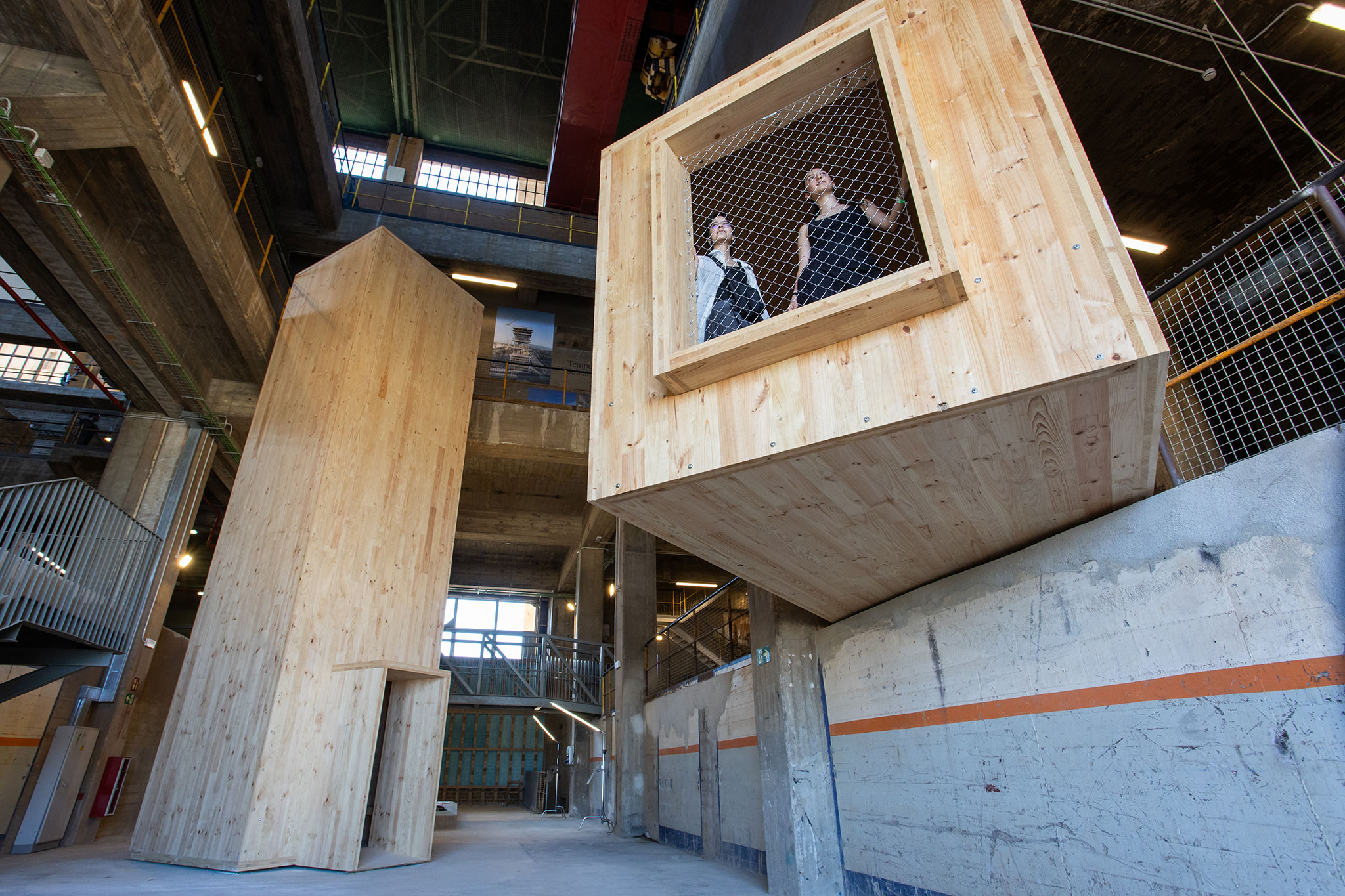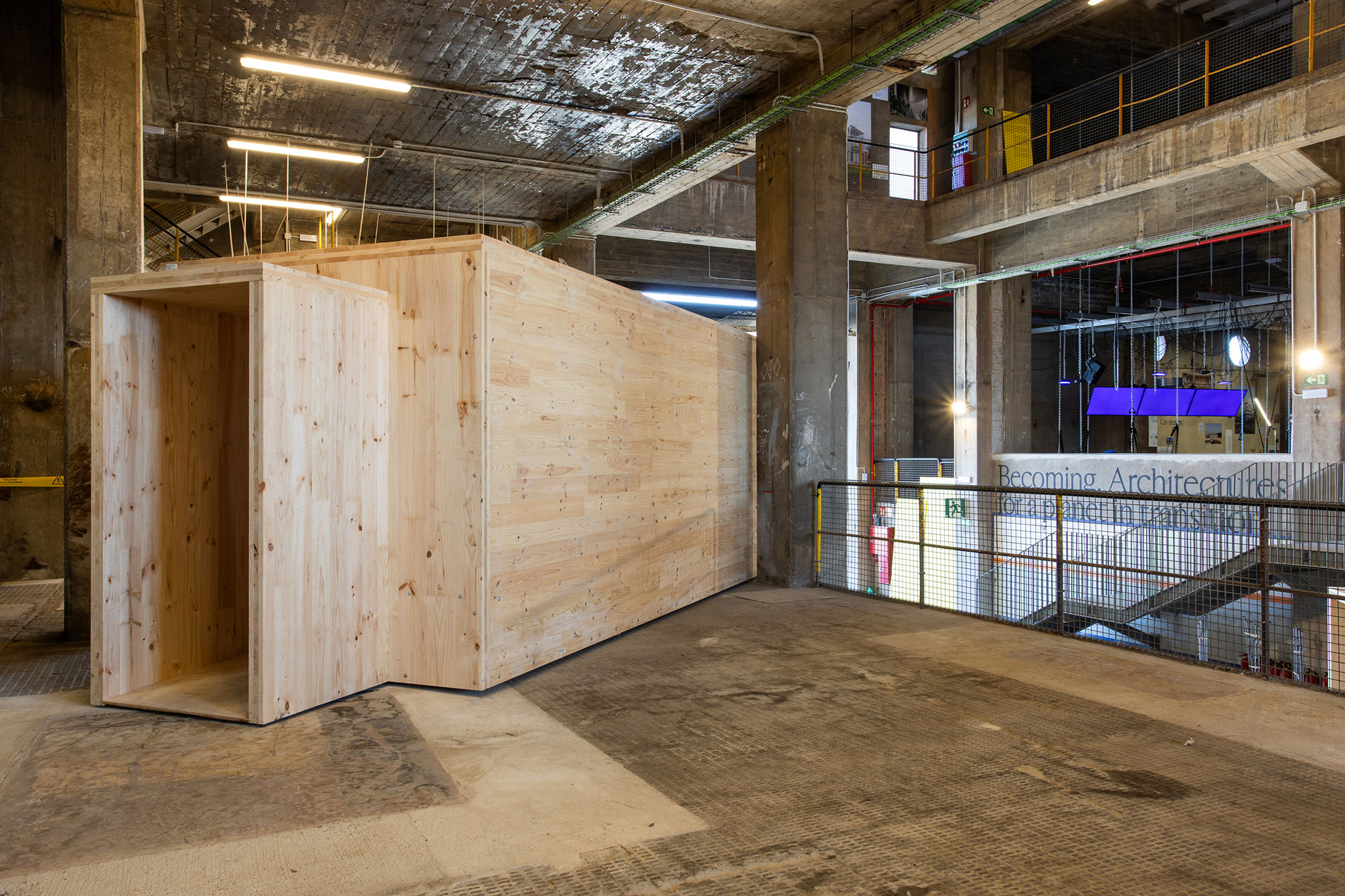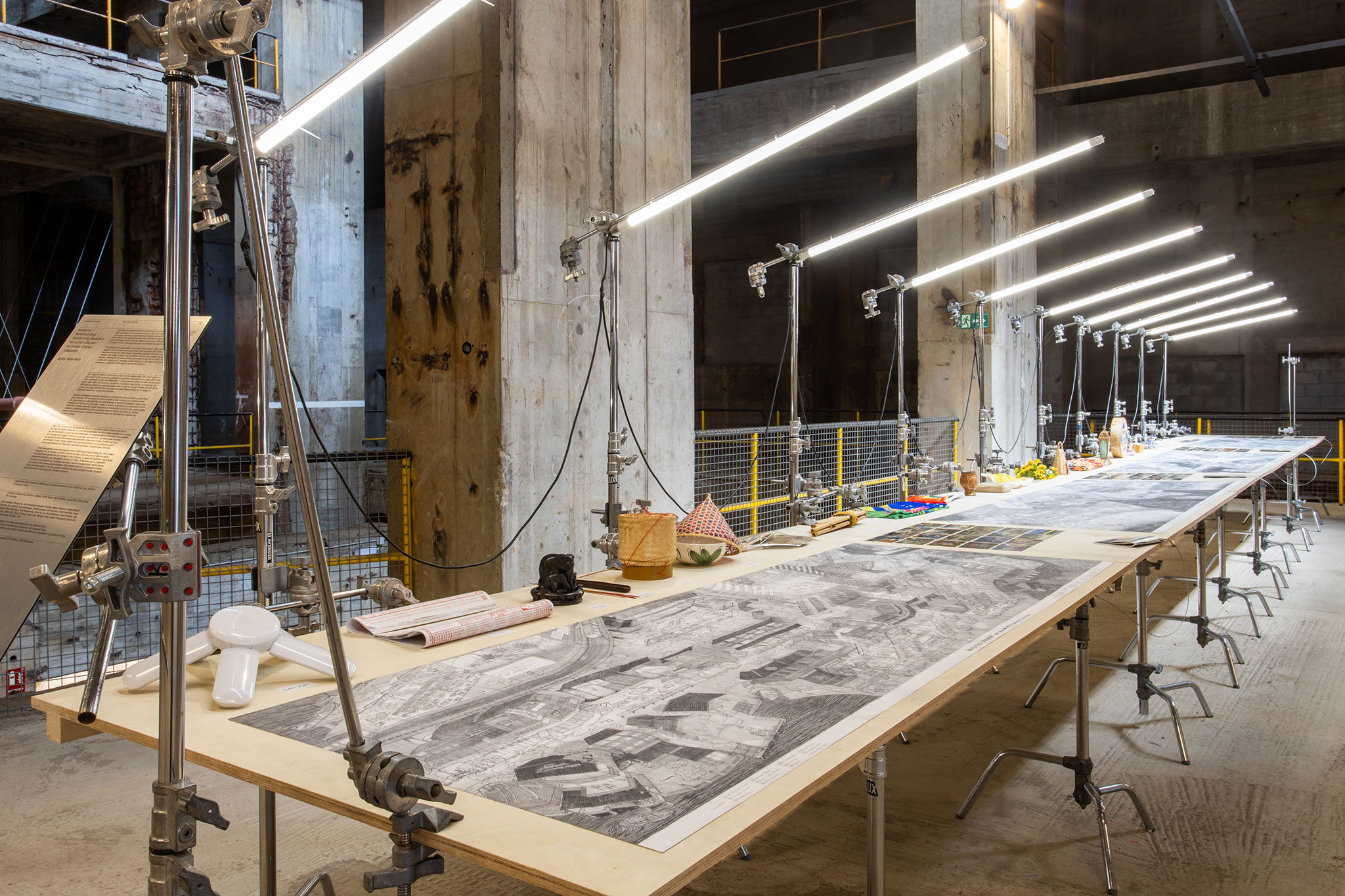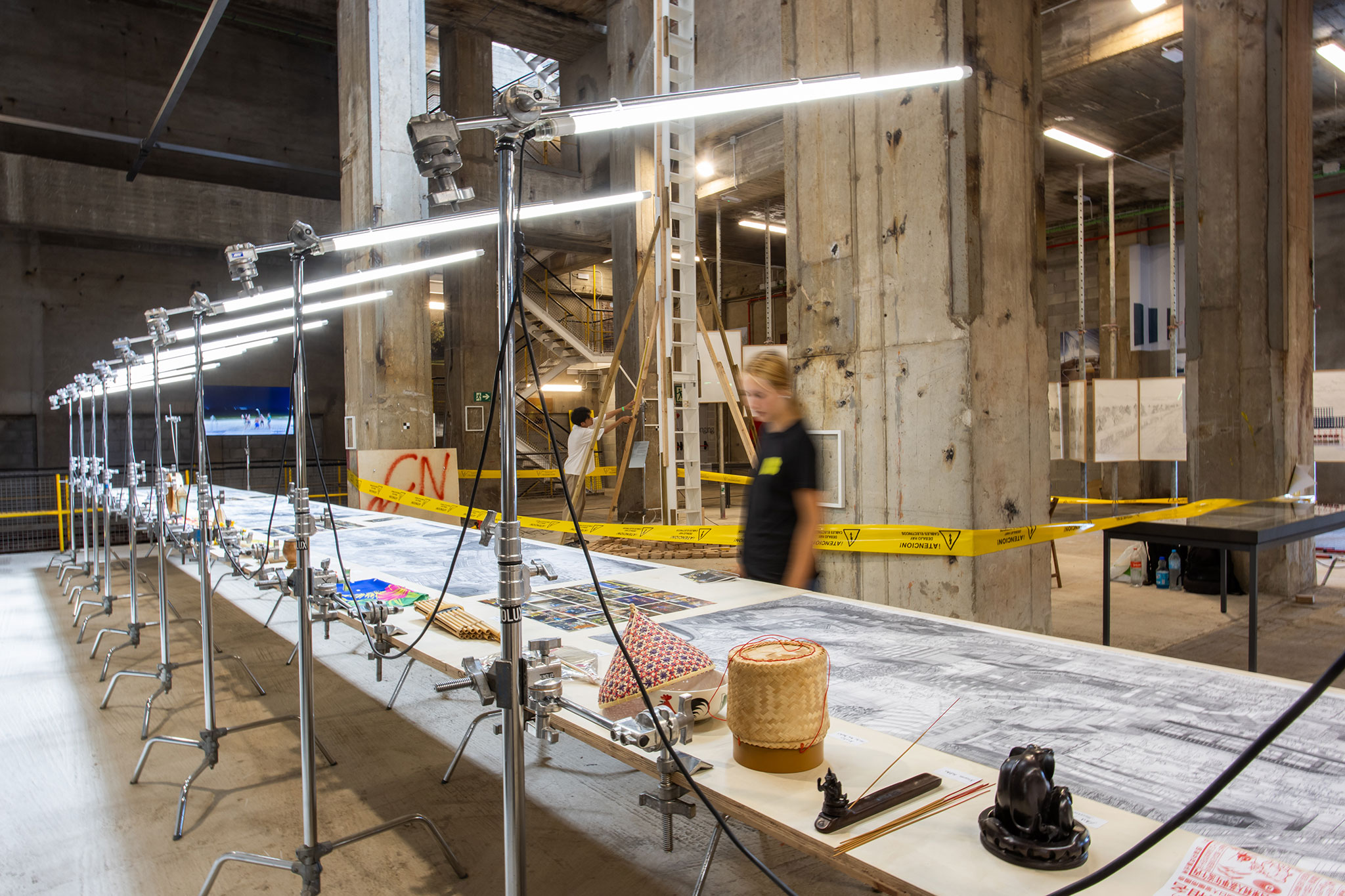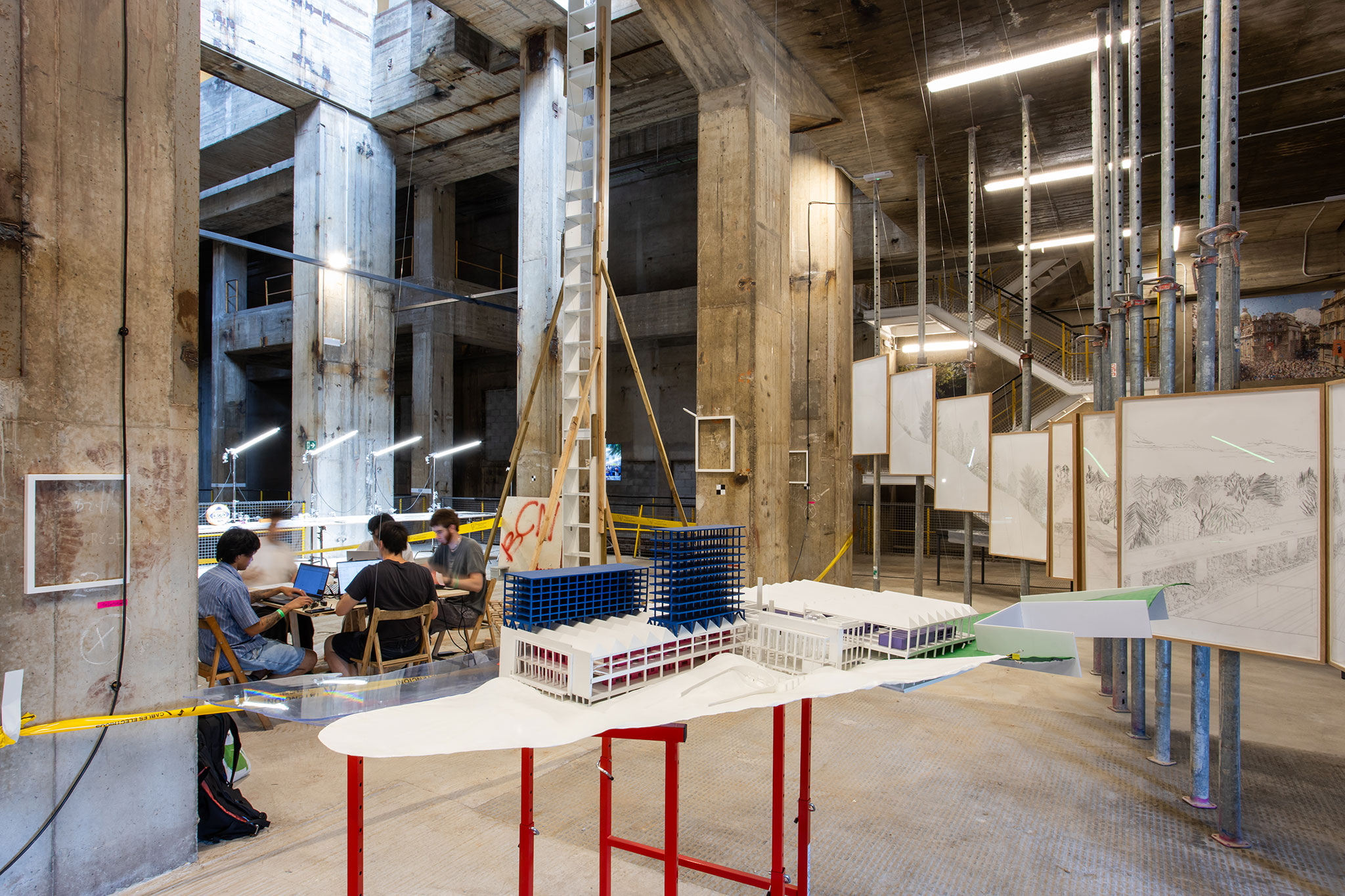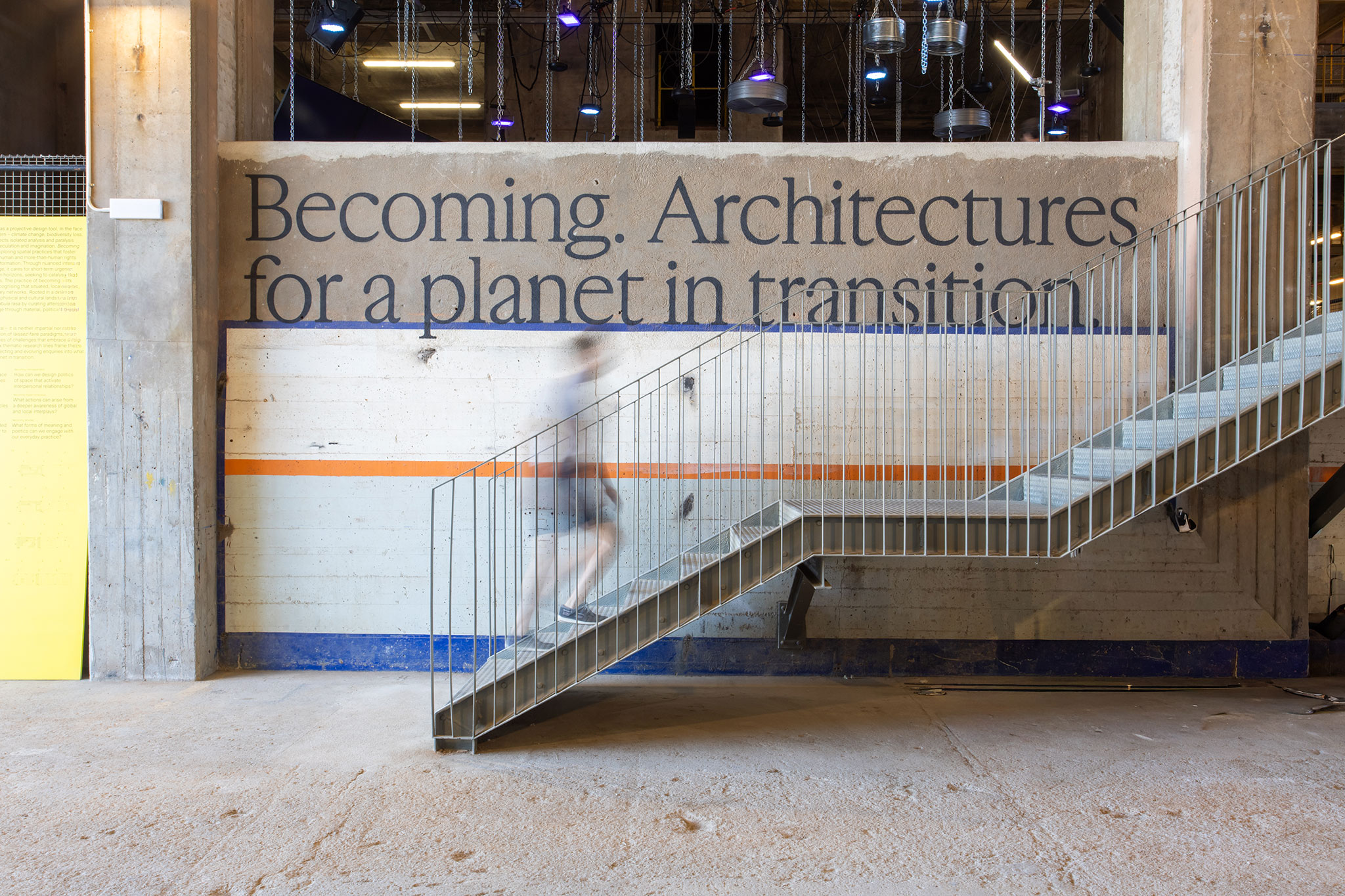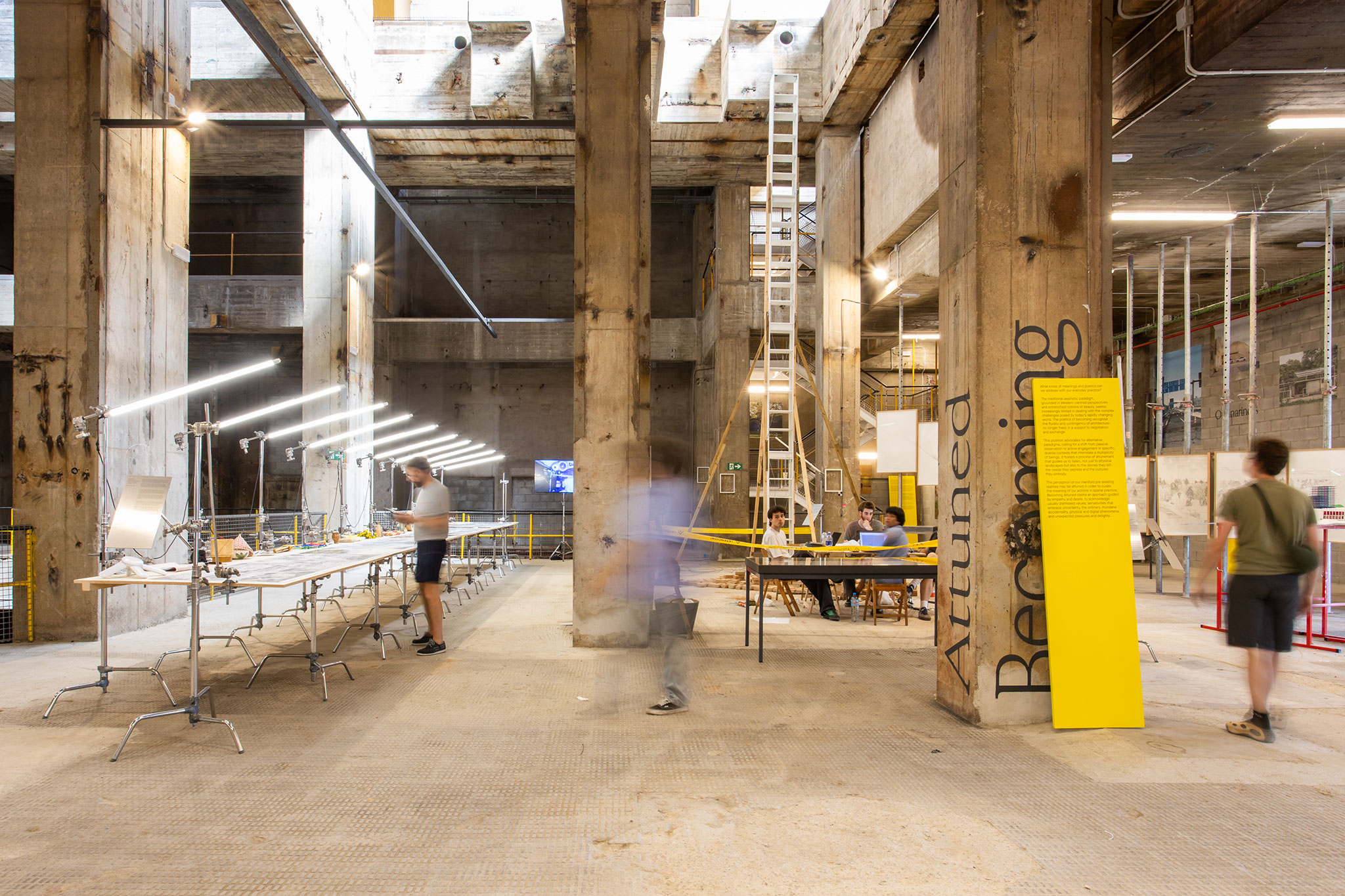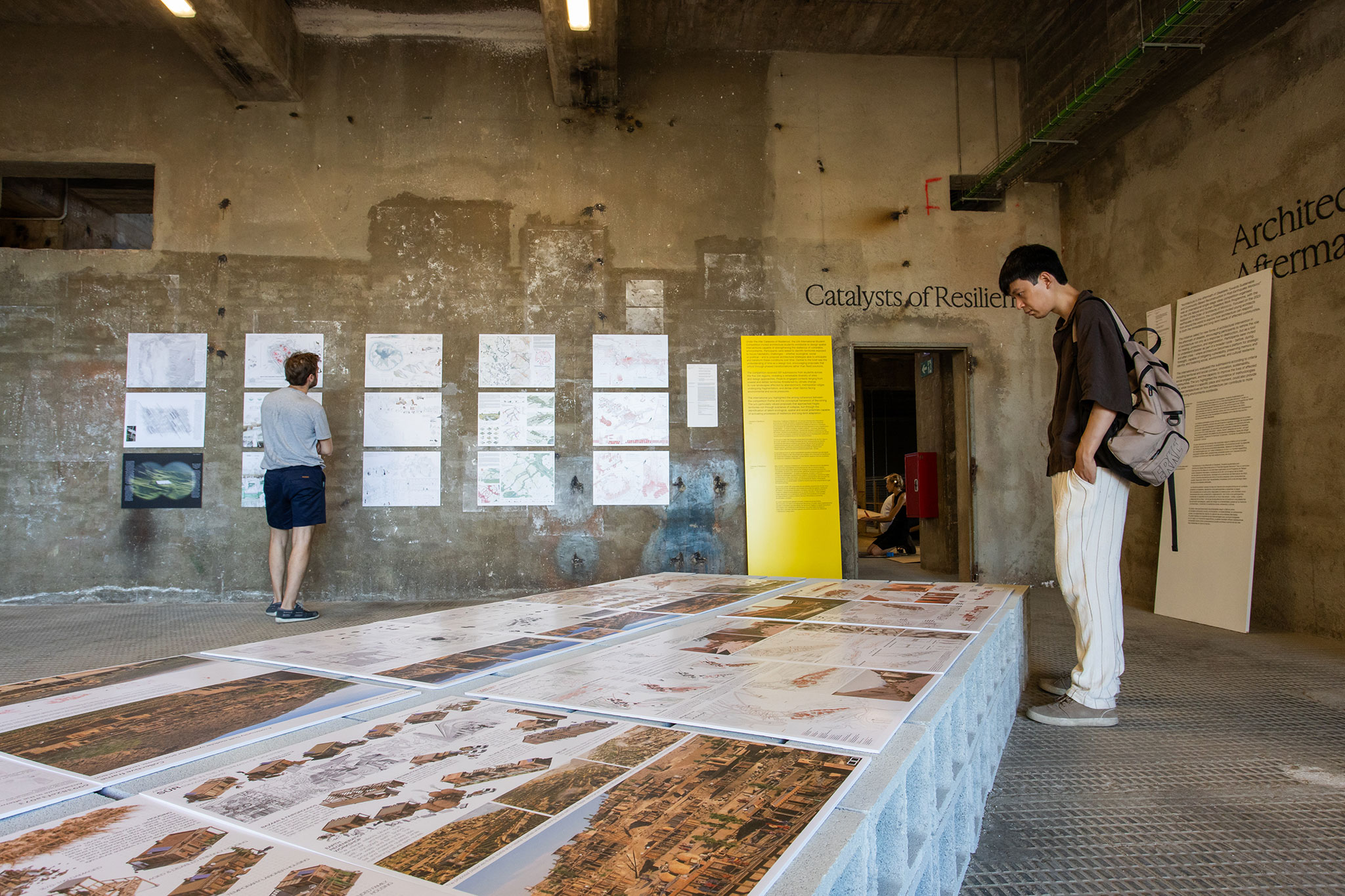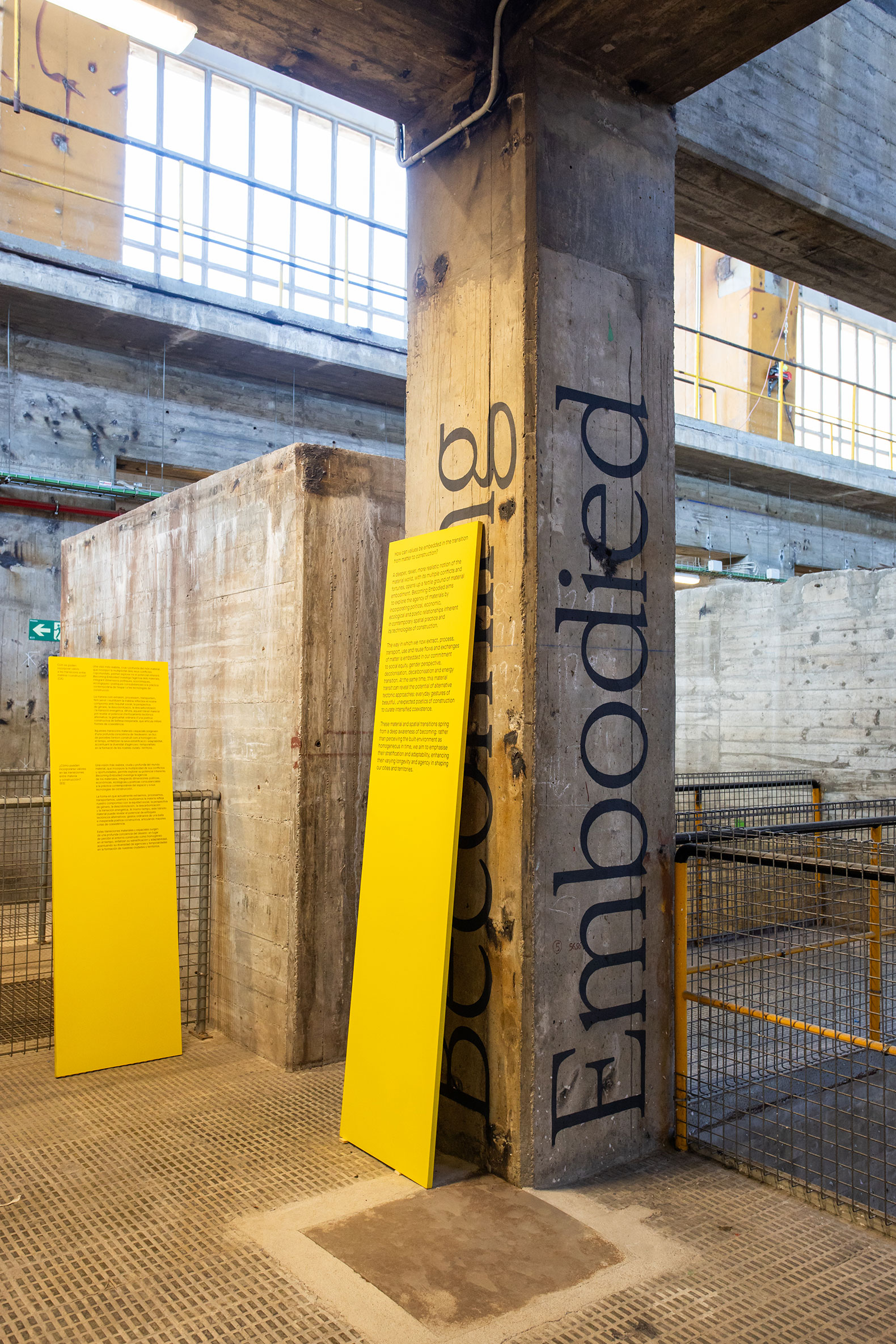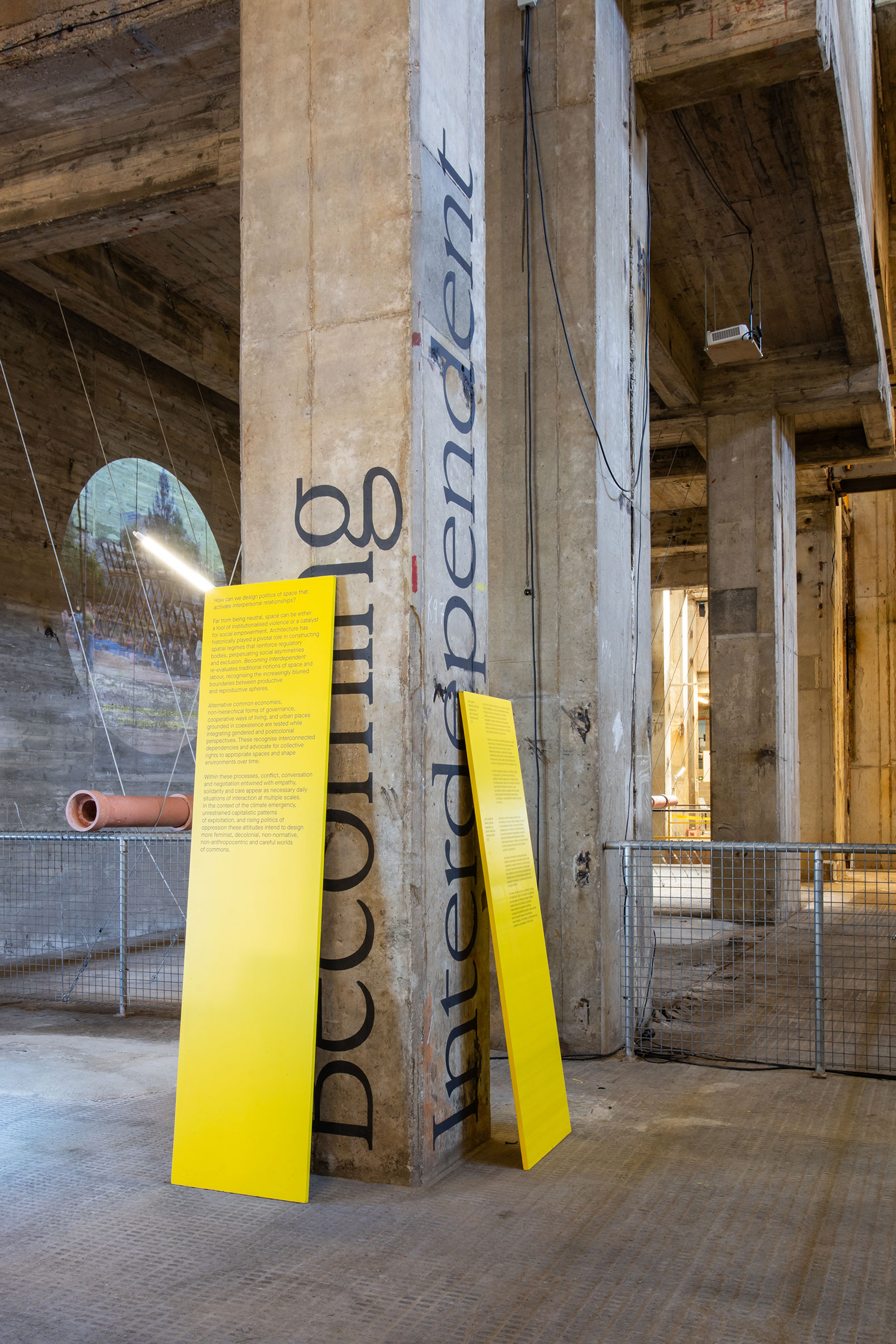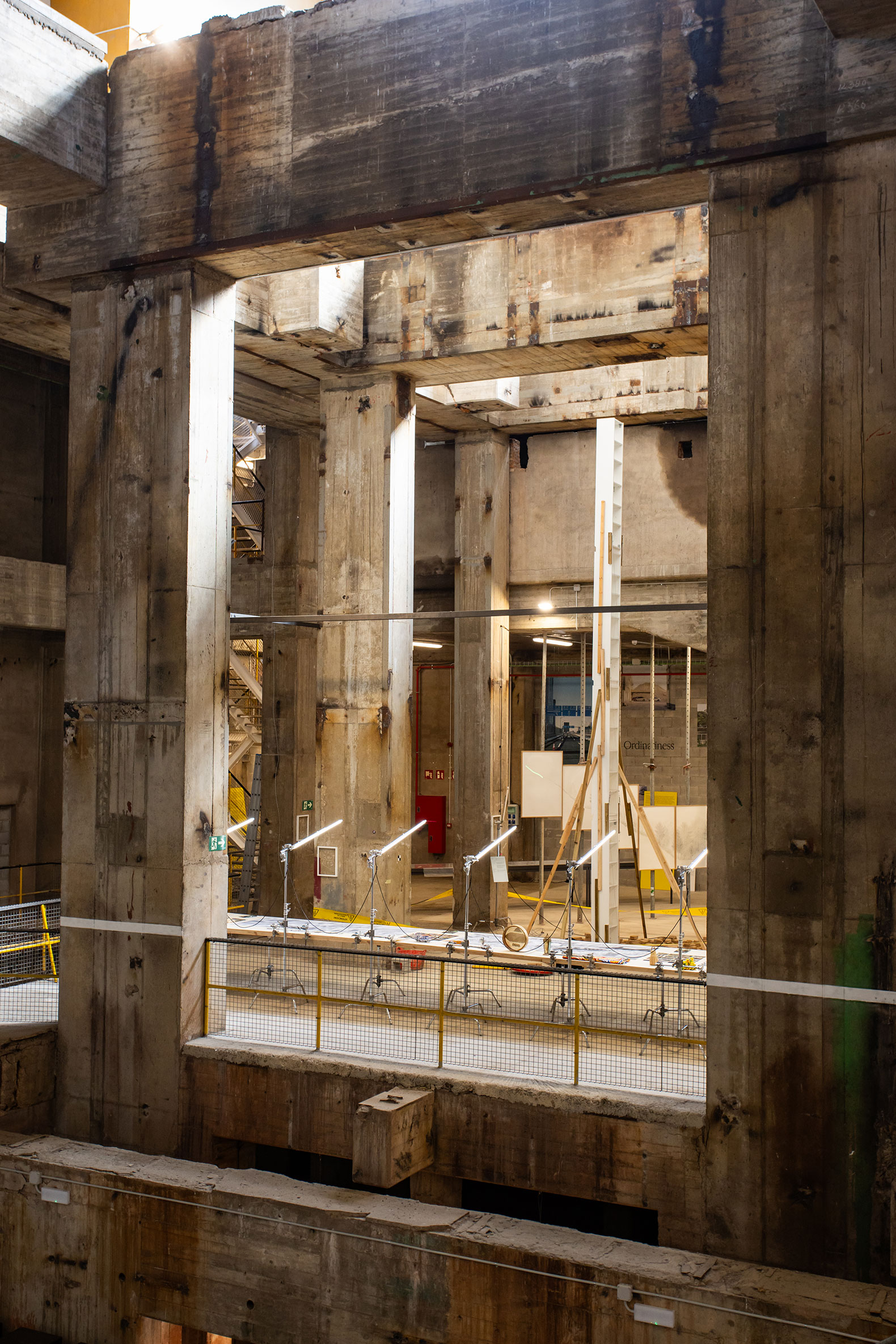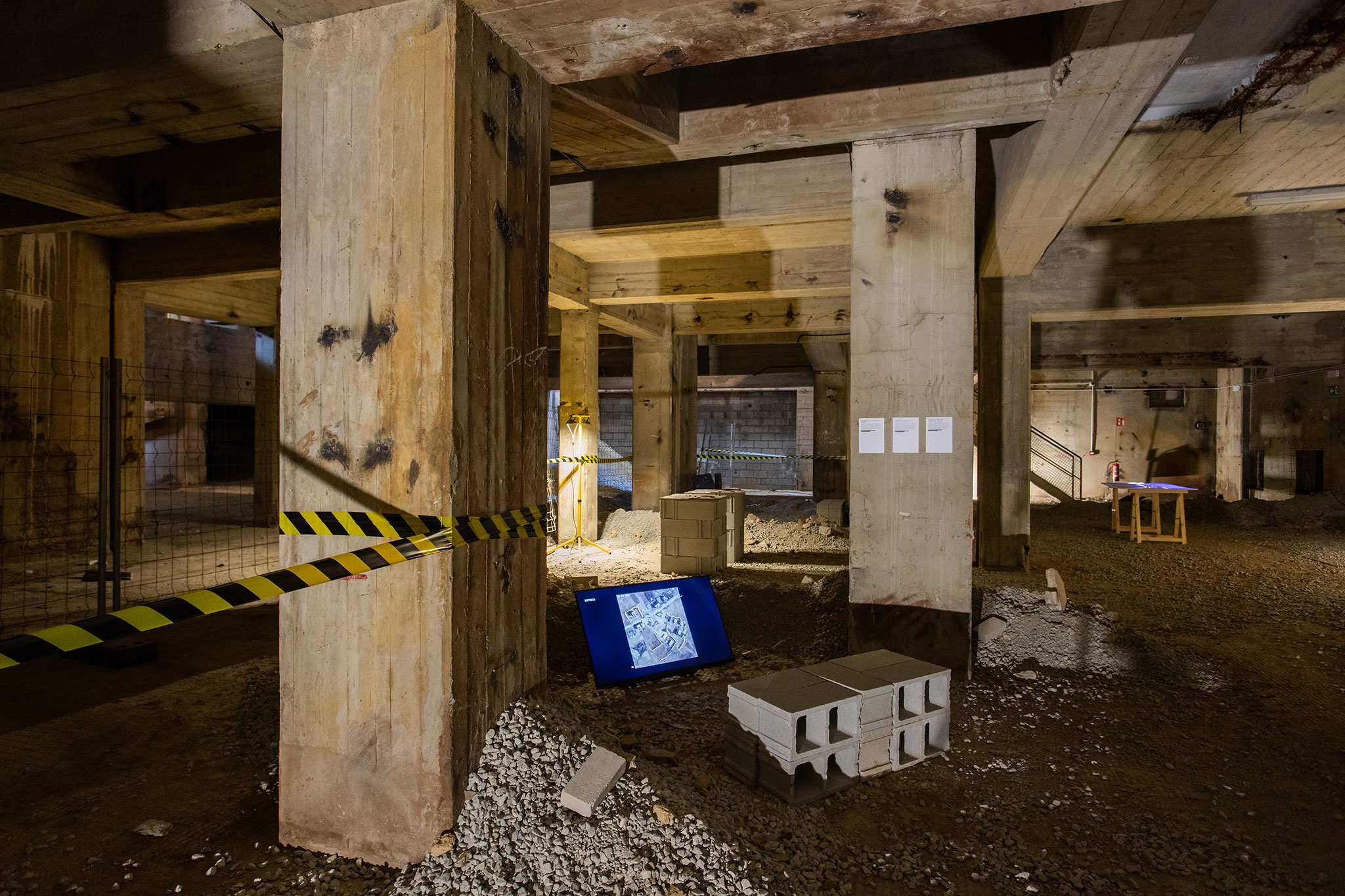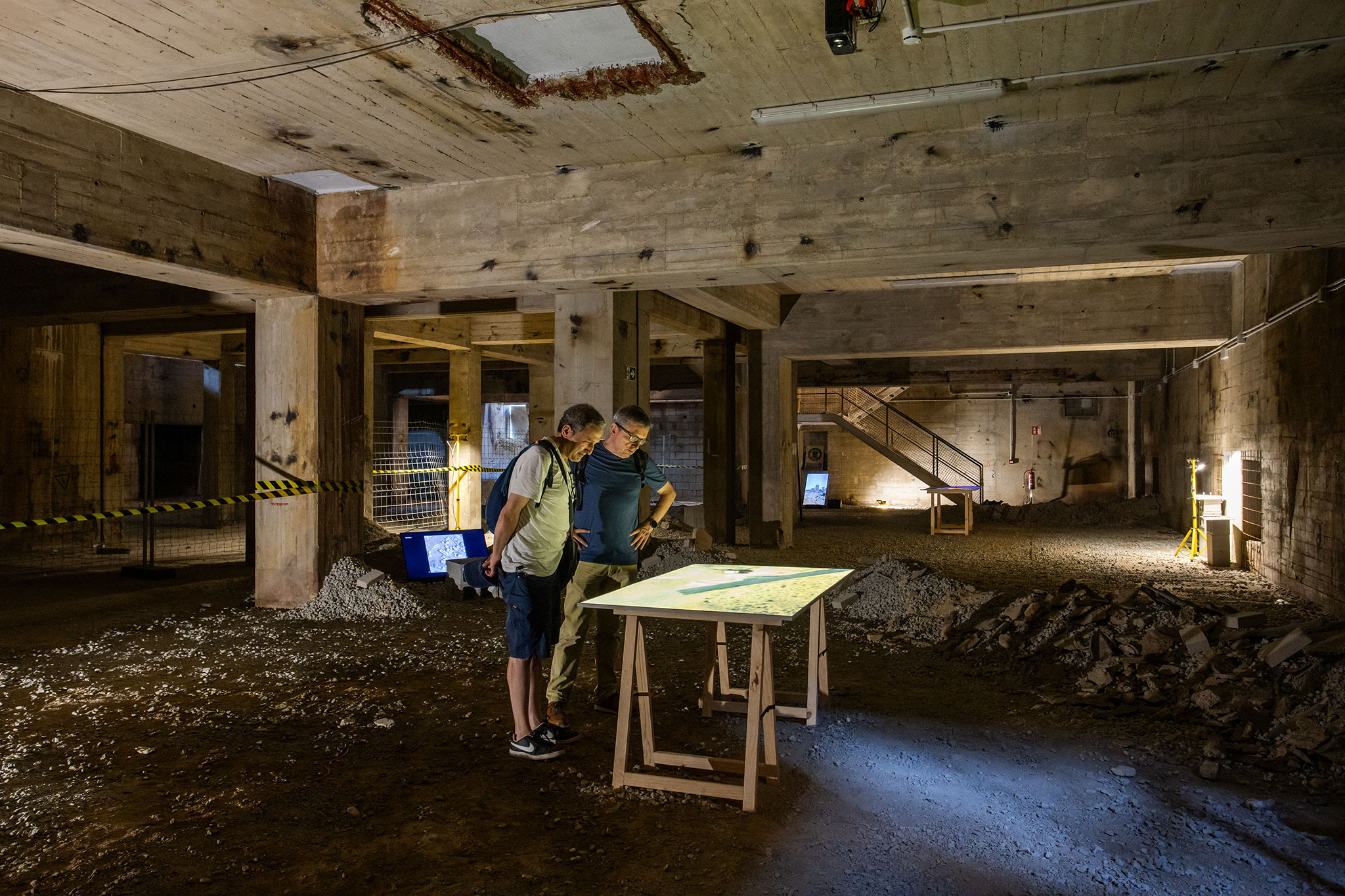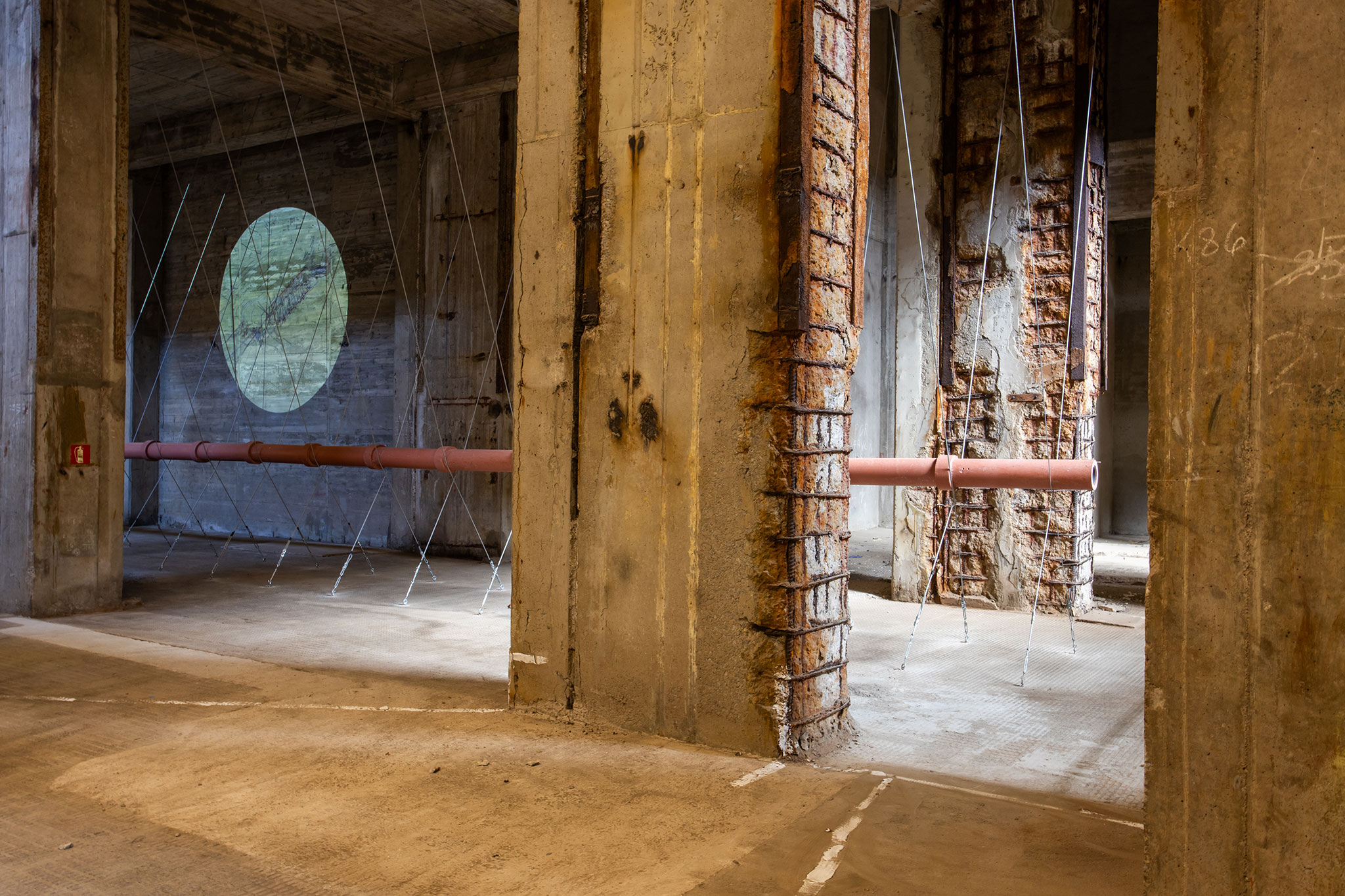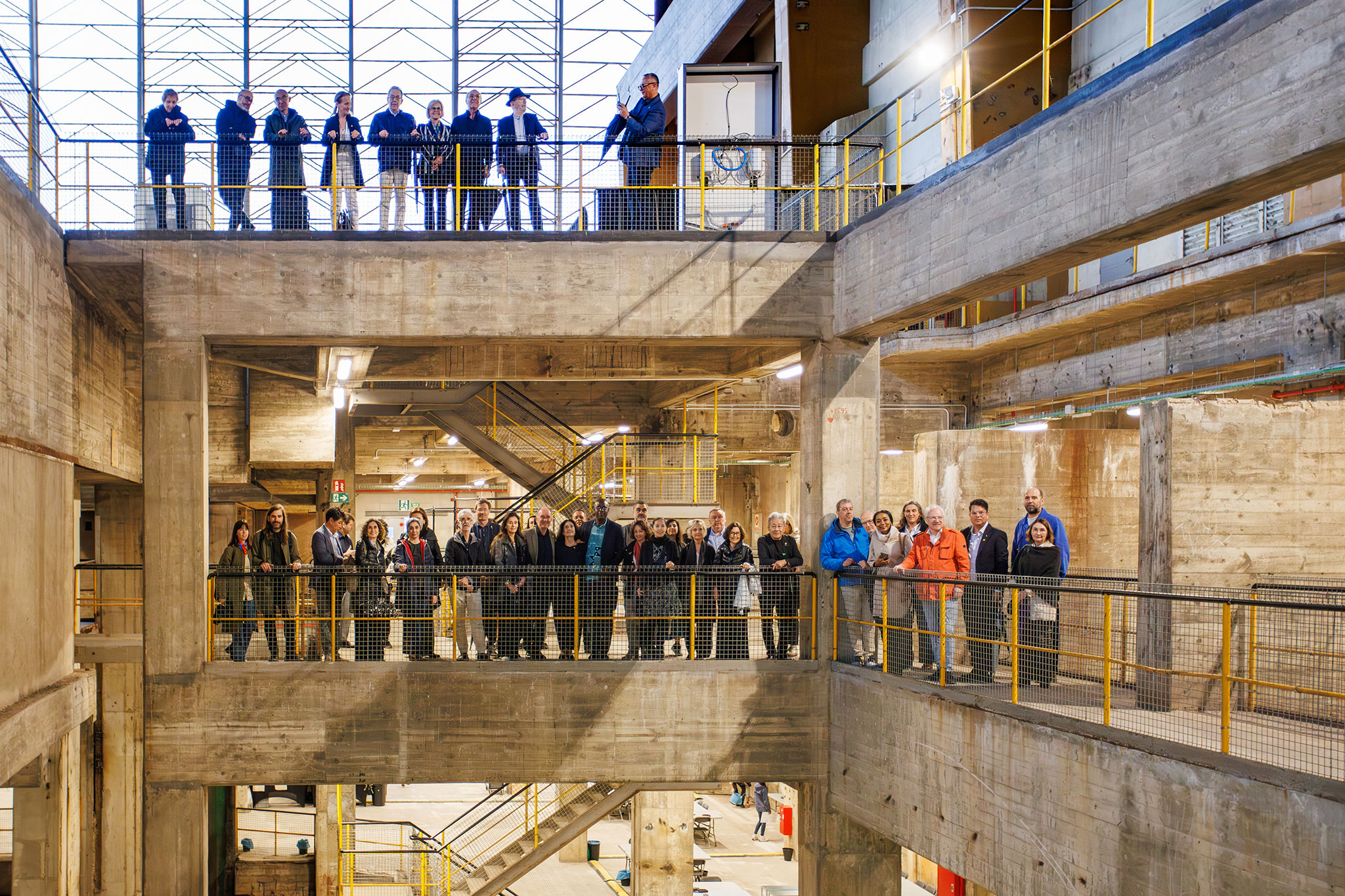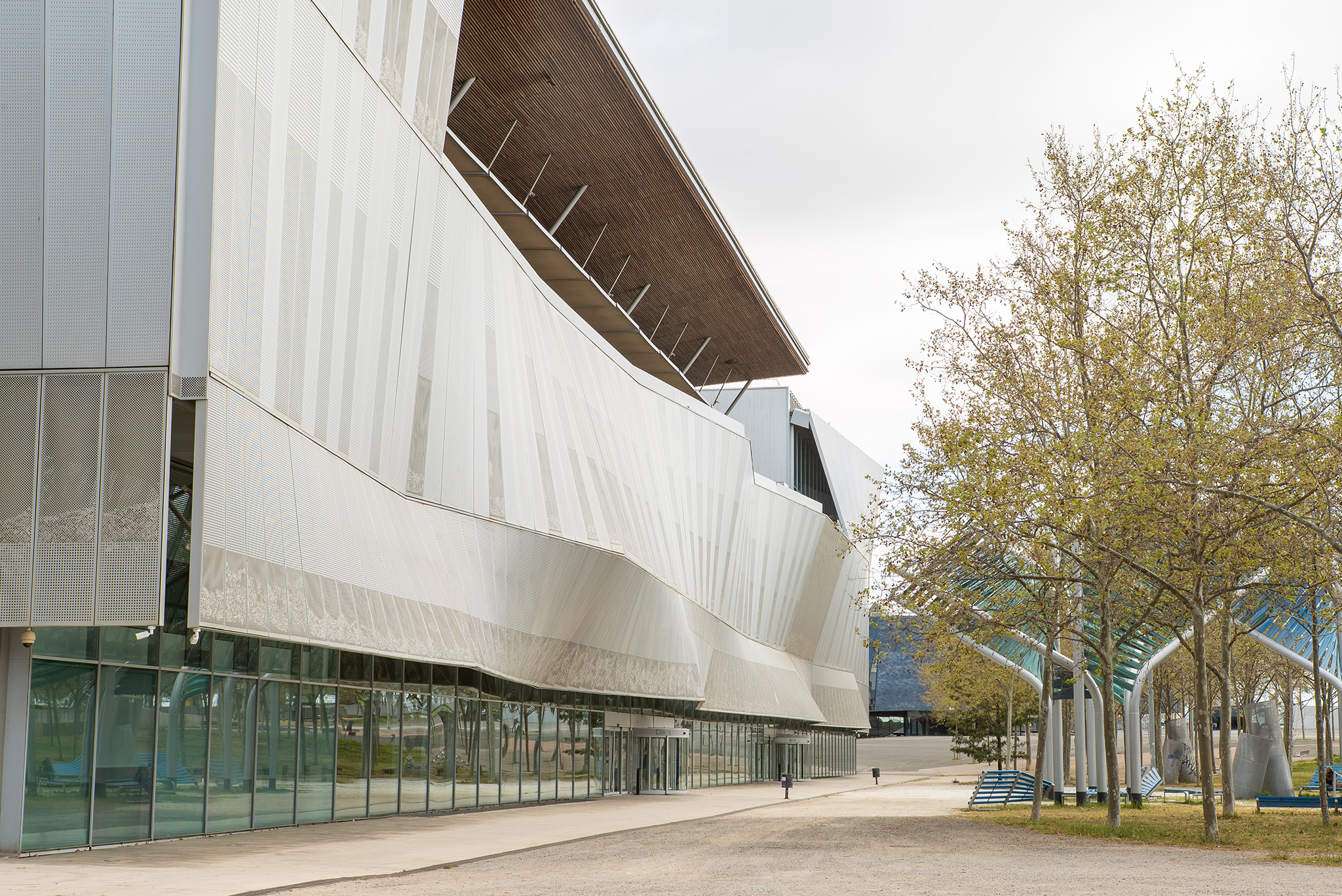
Barcelona International Convention Centre. "Becoming. Architectures for a Planet in Transition." UIA World Congress of Architects 2026 Barcelona. Photograph courtesy of UIA.
Daily Highlights
The UIA 2026 Barcelona World Congress of Architects will unfold over five days with an extensive program of conferences, debates, open forums, workshops, awards and public activities. This selection of daily highlights covers some of the unmissable moments of the event, which will be marked each day by two plenary sessions, at the start (09:00) and at the end (16:45) of the day, concluding with the Open Forum, on the esplanade of Tres Chimeneas.
Sunday 28 June: Opening Ceremony at Les Tres Chimeneas and opening of the Central Exhibition
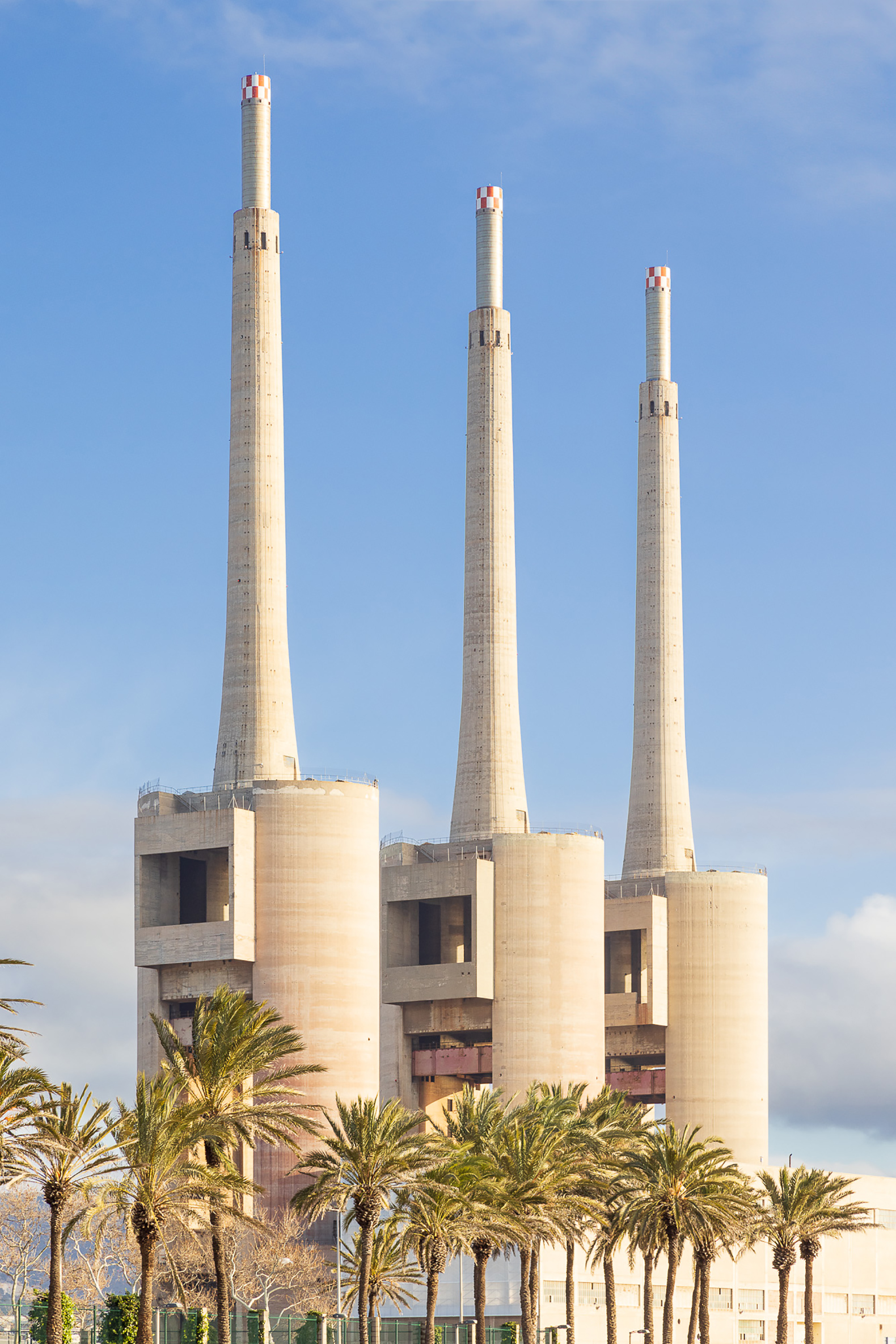
The Congress will kick off on Sunday, 28 June, in the afternoon with the Opening Ceremony at Les Tres Chimeneas, one of the main venues of the event. The festive event will surprise participants with an immersive show created specifically for the esplanade of the venue by Cabosanroque y Estudio Cube. The evening will culminate with a DJ set by Discontinu Records.
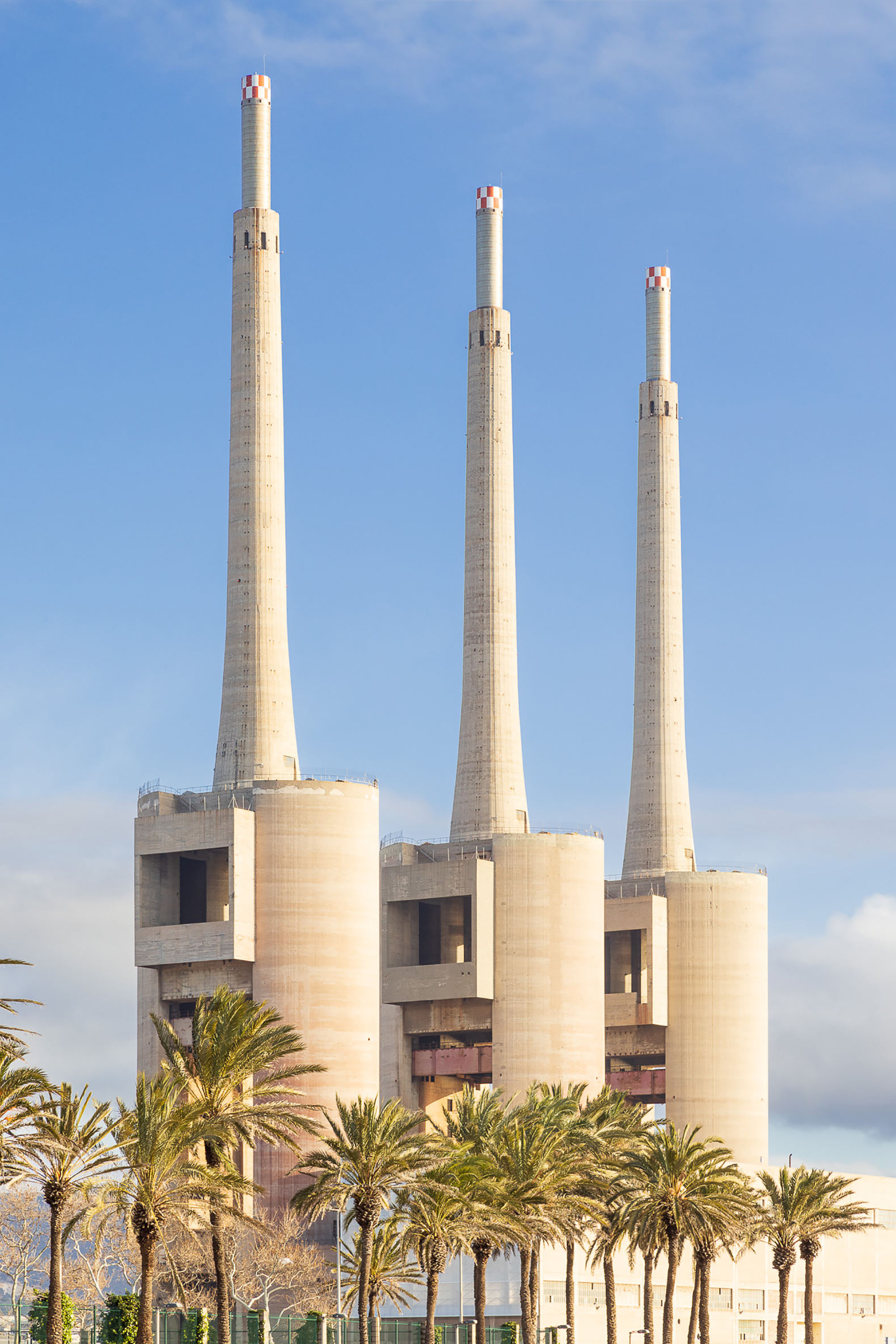
Three Chimneys. "Becoming. Architectures for a Planet in Transition." UIA World Congress of Architects 2026 Barcelona. Photograph by Arnau Rovira.
The inauguration will also mark the opening of the Central Exhibition of the Congress, also located at Les Tres Chimeneas, which, in addition to presenting to congress participants the unpublished results of the 12 Research by design in the form of installations, videos, objects and drawings, will also show the results of the international Emerging Workshop, a workshop developed during the week before the Congress with 180 students from around the world across 12 research workshops, as well as the winners of the international student competitions.
Monday 29 June: ecology, circularity and young talent
The first day of presentations will open the debate with morning sessions dedicated to the strand Becoming More-than-human, focused on ecology in architecture and the need to understand nature beyond its condition as an extractive resource. In the afternoon, the strand Becoming Circular will focus on the rehabilitation of the built heritage, recycling, energy efficiency, proximity and architectural strategies aimed at reducing the carbon footprint. The day will conclude with the award ceremony for the student and young architects' competition UNESCO-UIA and the competition “Light of Tomorrow” by VELUX, which will take place at Les Tres Chimeneas.
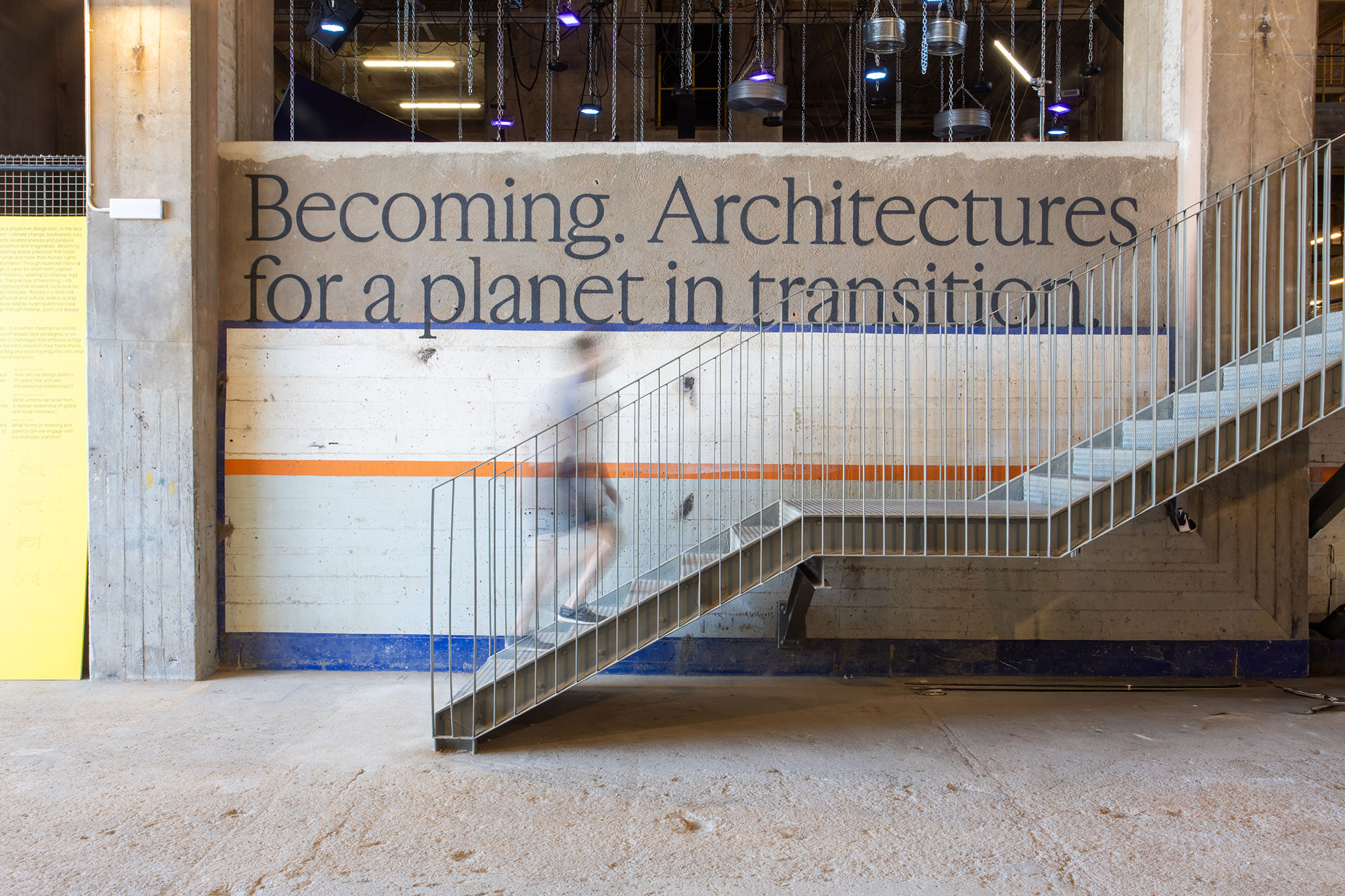
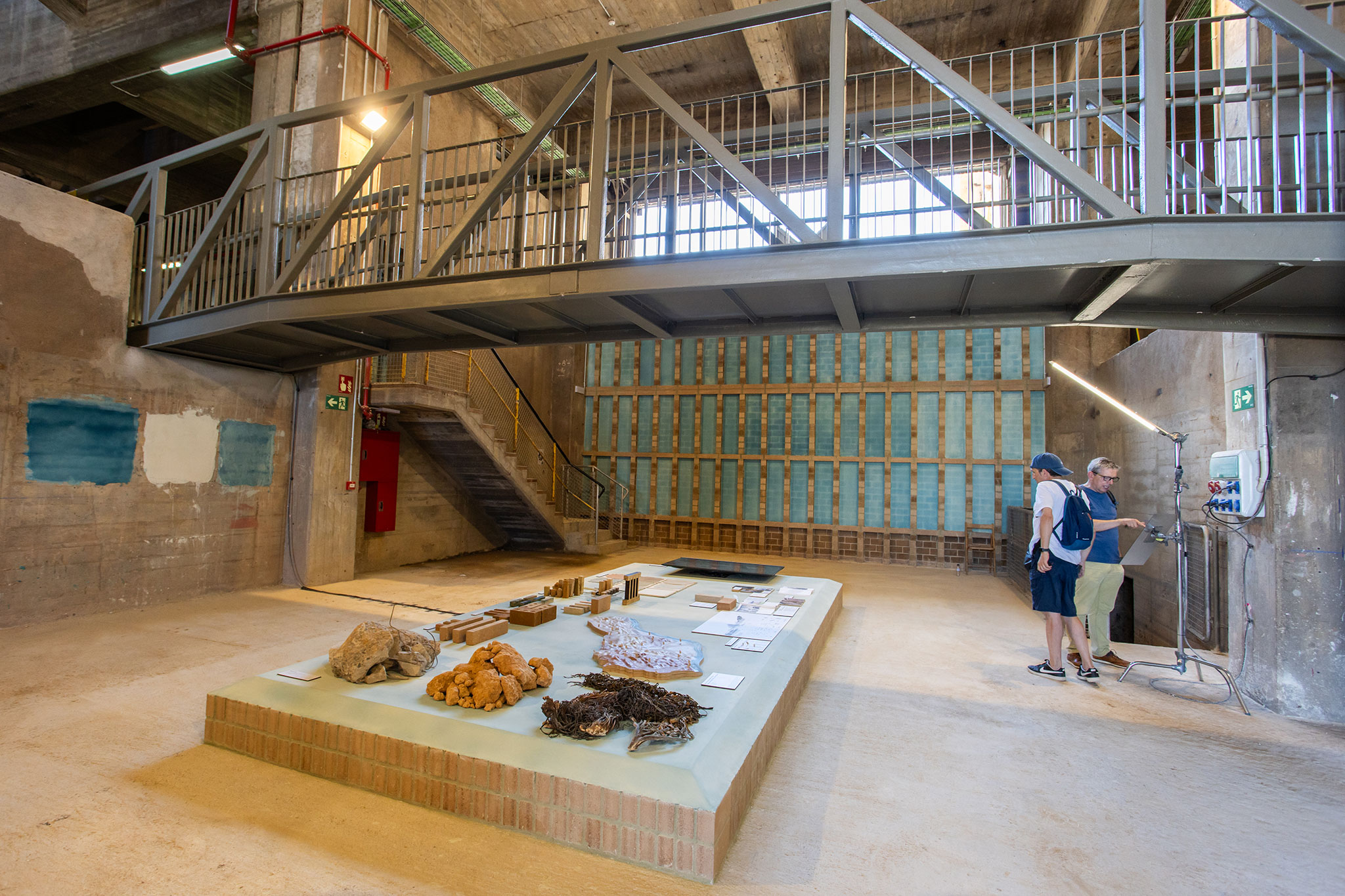
Exhibition. "Becoming. Architectures for a Planet in Transition." UIA World Congress of Architects 2026 Barcelona. Photograph by Anna Mas.
Among the most notable presentations of the day:
– Junya Ishigami, who in his individual talk will address an architecture capable of dissolving the boundaries between the built environment and its surroundings, showing how space, matter, atmosphere and time interact continuously.
– Kate Orff and Dirk Sijmons, who in the conversation “Ecologies in process: between land and water” will explore water as a common good, with special attention to coastal landscapes, flood adaptation strategies, territorial transformations and long-term climate uncertainty.
– Lacaton & Vassal, a studio awarded the Pritzker Prize and the EUmies Awards, which will share a session with the Catalan studio H Arquitectes on "Economies of means: architecture between efficiency and generosity". The conversation will address circularity as a dialogue between space, climate and construction over time, and will reflect on how to extend the useful life of buildings by making the most of what already exists.
– The future of housing. A panel comprising Charlotte Malterre-Barthes, HouseEurope! / Olaf Grawert, Iñaqui Carnicero and Ann Pettifor will address “The politics of reuse: housing, public policy and urban strategy”. The session will examine how regulation, valuation and finance determine whether cities are transformed or replaced, and how public policies can shift the dominant model of demolition towards reuse at different scales.
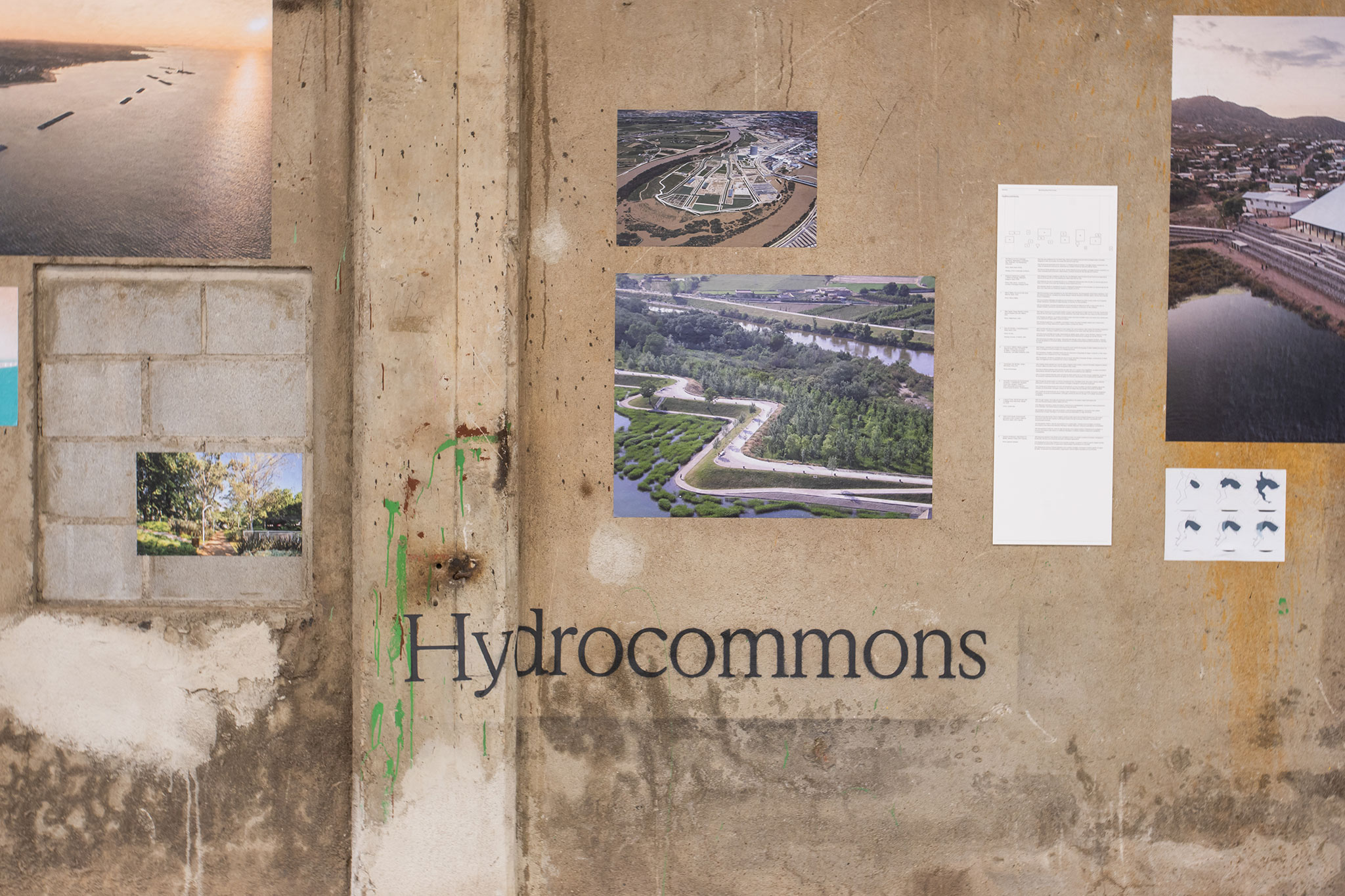
Exhibition. "Becoming. Architectures for a Planet in Transition." UIA World Congress of Architects 2026 Barcelona. Photograph by Anna Mas.
In parallel, the DHub will host different activities and debates in the institutional pavilions, among which the opening of the Open Room of the CSCAE stands out, which displays the best Spanish architecture of the last three decades, and will host activities such as the debates of the International Committee of Architecture Critics (CICA) and those of AFS International (Architecture Without Borders). In addition, this venue will host the Accessible EU European Event. CSCAE 2030 Observatory, with the participation of Teresa Táboas and Sergio García- Gasco.
Tuesday 30 June: housing, new materials and UIA Awards at the Sagrada Família
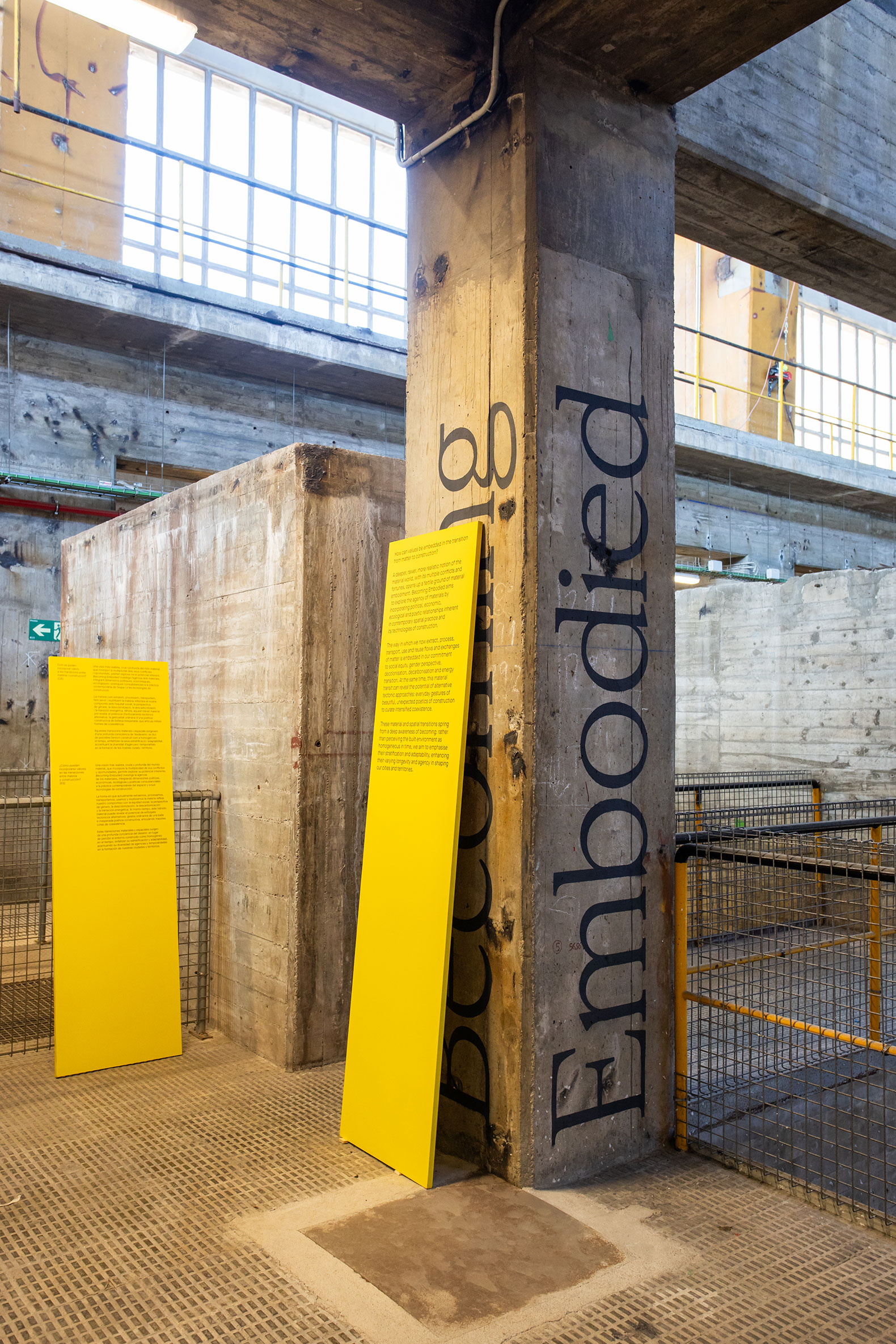
The morning of Tuesday, 30 June, will be dedicated to Becoming Embodied, the program strand focused on materials research, construction processes and manufacturing technologies. In the afternoon, Becoming Interdependent will address issues such as spatial policies that promote the right to housing, gender perspective, care and the transformation of public space.
At night, while Les Tres Chimeneas will host the second Open Forum, in parallel, the Sagrada Familia will be the setting for the official ceremony of the UIA Gold Medal and the UIA triennial prizes.
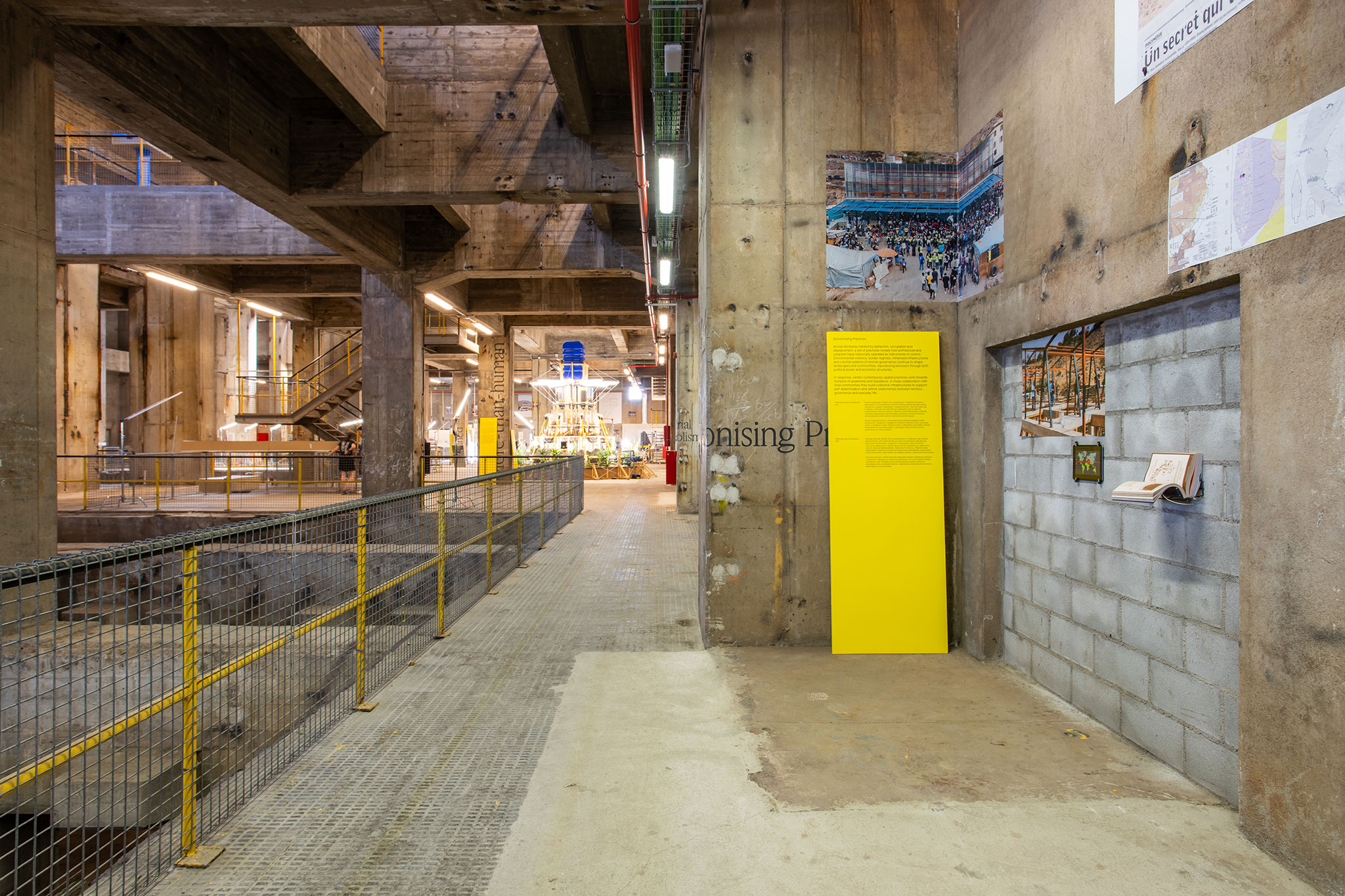
Exhibition. "Becoming. Architectures for a Planet in Transition." UIA World Congress of Architects 2026 Barcelona. Photograph by Anna Mas.
Among the highlighted sessions:
– Materials, climate and community. The architect Marina Tabassum, awarded the Aga Khan Award, will be in conversation with Palinda Kannangara in the session “Rooted in the local: materials, climate and communities for resilience”. The presentation will frame architecture as a situated practice, where the choice of materials arises from the cultural, climatic and economic conditions of each place.
– New collective models. Lacol y Clauss Kahl Merz Atelier will debate the collective futures of housing, while the economist Mariana Mazzucato, in her individual talk “An approach to the economics of the common good (implications for housing and the built environment)”, will offer her analysis of the economic dimension of this field.
– Urban design and everyday life. The renowned urban designer Jan Gehl will analyse how urban design can foster encounter, mutual support and trust in increasingly fragmented cities.
Exhibition. "Becoming. Architectures for a Planet in Transition." UIA World Congress of Architects 2026 Barcelona. Photograph by Anna Mas.
En el DHub, the highlight is the meeting of the c40 Cities “The Architect’s Blues: Navigating the Climate and Housing Crisis in Times of Economic Uncertainty” with the participation of Barcelona's chief architect, Maria Buhigas. Not to be missed are the sessions “The challenge of architects' fees in Europe”, promoted by the CSCAE, with Teresa Táboas, Vice-President for Region 1 of the UIA; Avelino Oliveira, President of the Ordem dos Arquitetos de Portugal, and María José Peñalver, Secretary General of the CSCAE, among others, and as a complement to it, the performance in conversation format “Arquitectes en crisi: arquitectura ferida”, promoted by Beth Galí, Jordi Romeu, Eduard Rodríguez and Eduard Fernández, with the support of the COAC.
Wednesday 1 July: geopolitics, data, artificial intelligence and architectural poetics
The morning of Wednesday 1 July will be dedicated to Becoming Hyper-Conscious, a strand that examines how dynamics at a planetary scale —including geopolitical relations, legislative frameworks, digitalization, data and artificial intelligence— directly influence local realities and everyday life. In the afternoon, Becoming Attuned will investigate the poetic dimension of architecture, attentive to material, cultural and affective contexts. As the closing of the curated program, this conceptual framework condenses the confluence of the different themes of the Congress and allows one to perceive the subtleties present in objects, spaces and ways of inhabiting.
Exhibition. "Becoming. Architectures for a Planet in Transition." UIA World Congress of Architects 2026 Barcelona. Photograph by Anna Mas.
On the agenda for this day:
– From algorithms to artificial intelligence. The architecture historian Mario Carpo will trace a line from algorithmic thinking to artificial intelligence, situating computation within the history and theory of architecture.
– Geopolitics and architecture. Forensic Architecture and the Center for Spatial Technologies will investigate the geopolitics of space and the potential of architecture as a tool to investigate and document territorial violence.
– The beauty of the ephemeral and fragile. The conversations led by Enrique Walker and Philip Ursprung will explore the work of Smiljan Radić and Alexander Brodsky, with special attention to fragility, the provisional, recovered everyday materials and ephemeral structures.
A highlight at DHub is the conference “Build it Together: A Global Perspective –achieving gender equity in the architecture profession”, organized by RIBA, with the participation of Marta Vall-llossera, Teresa Táboas and Regina Gonthier, among other experts.
Thursday 2 July: closing and handover to Beijing.
The Congress will formally conclude on Thursday, 2 July, with the closing session and the institutional handover to Beijing, the next host city of the UIA World Congress of Architects in 2029.
After the reading of the Congress 2026 Manifesto, the Chinese capital will officially take over from Barcelona as the next host of the global architecture gathering. As a parallel event to the congress in the city centre, the exhibition “Regenerations: China and Spain in the mirror” can be visited, which includes a selection of relevant projects from both countries.
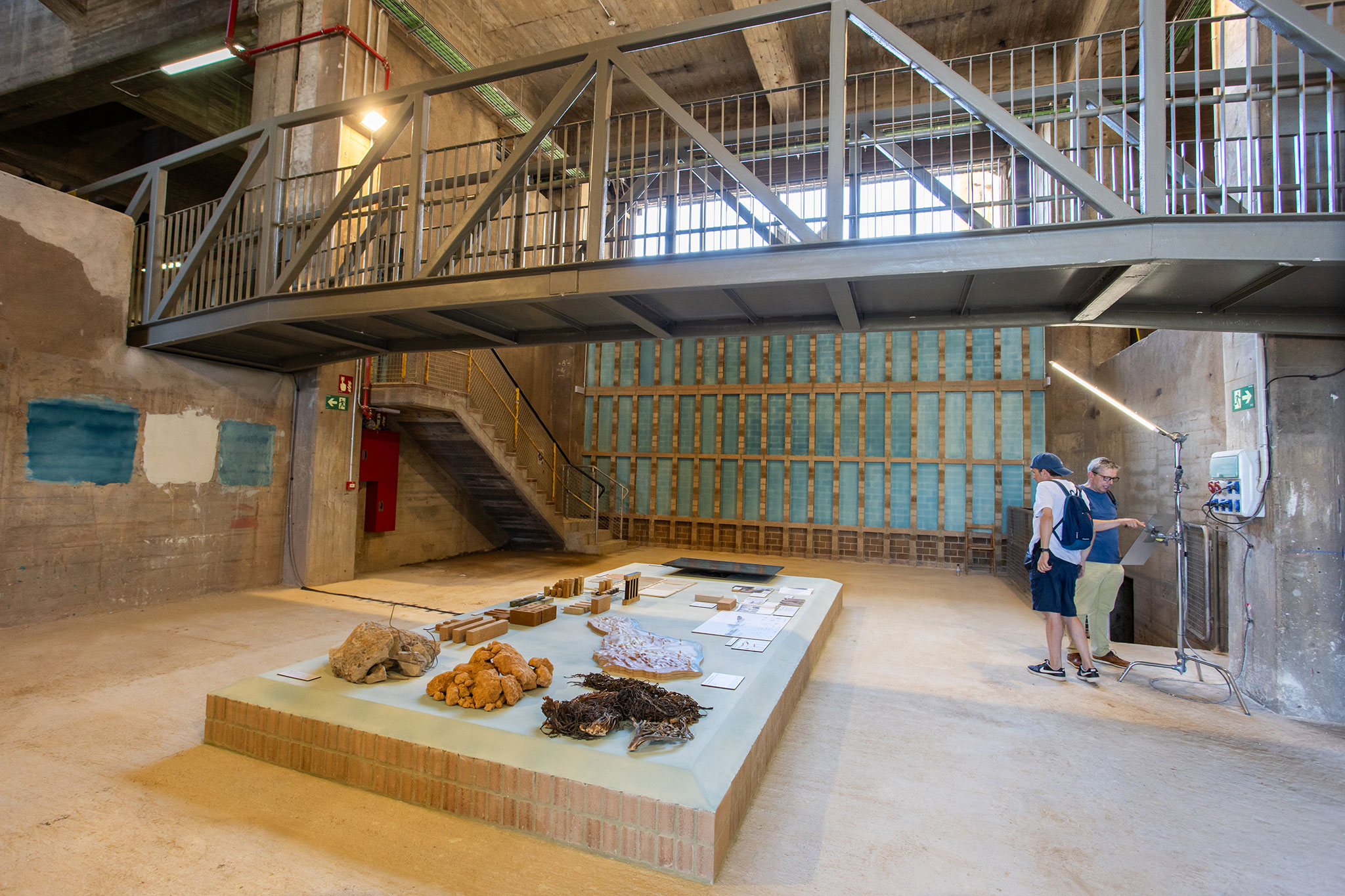
Exhibition. "Becoming. Architectures for a Planet in Transition." UIA World Congress of Architects 2026 Barcelona. Photograph by Anna Mas.
Central Exhibition: a 4,000 square meters laboratory at Les Tres Chimeneas, open free to the public from 3 to 19 July
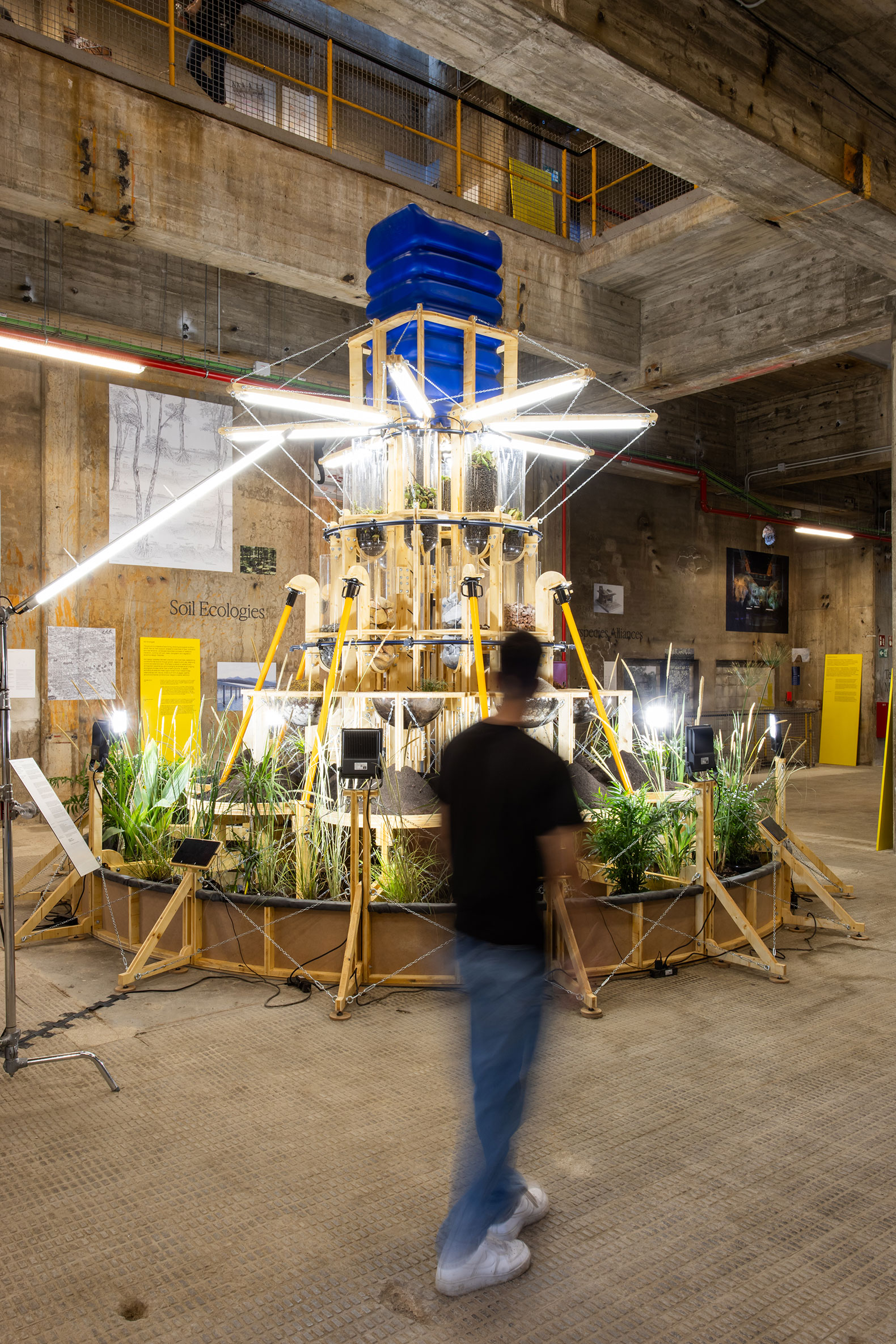
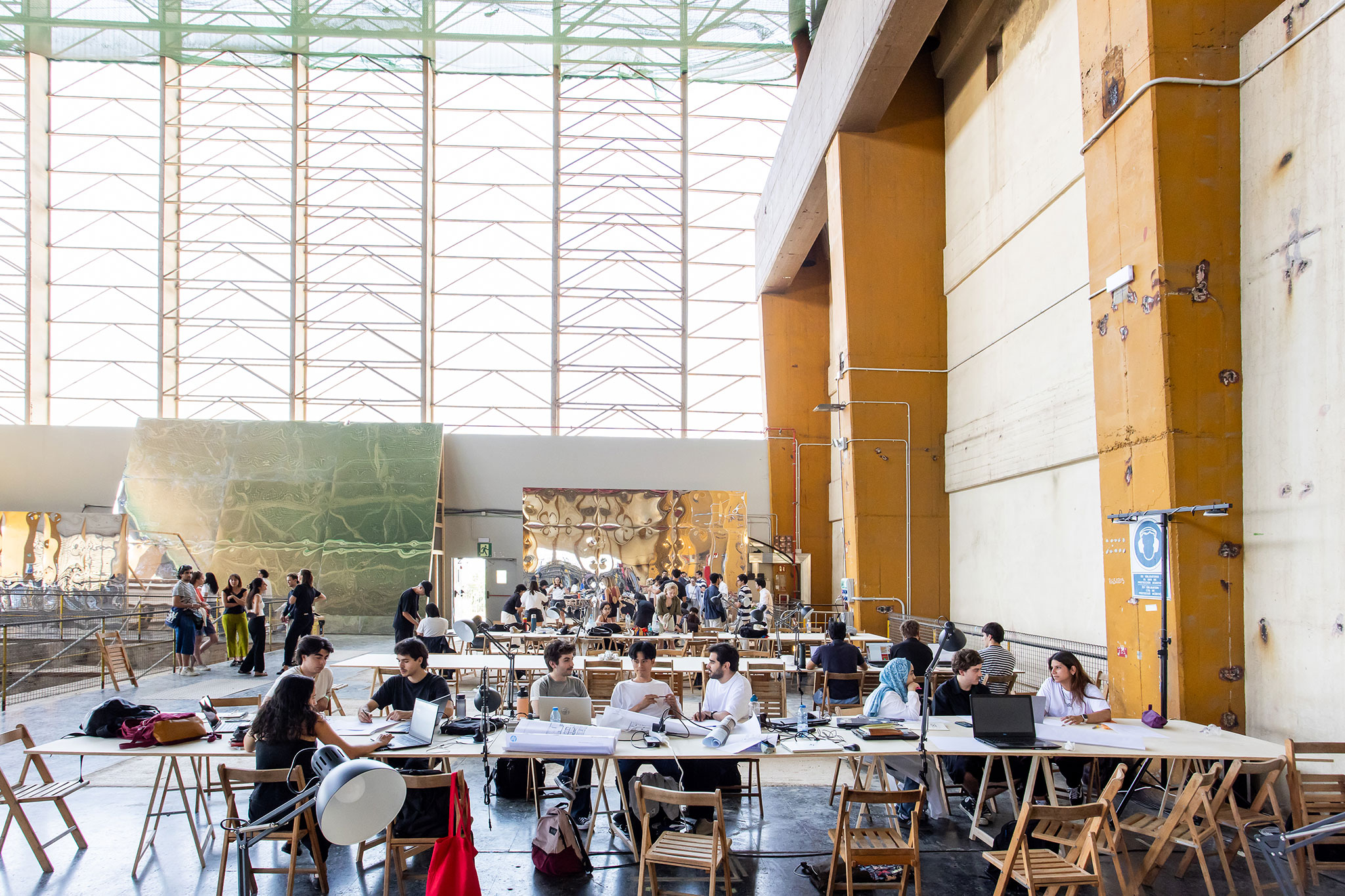
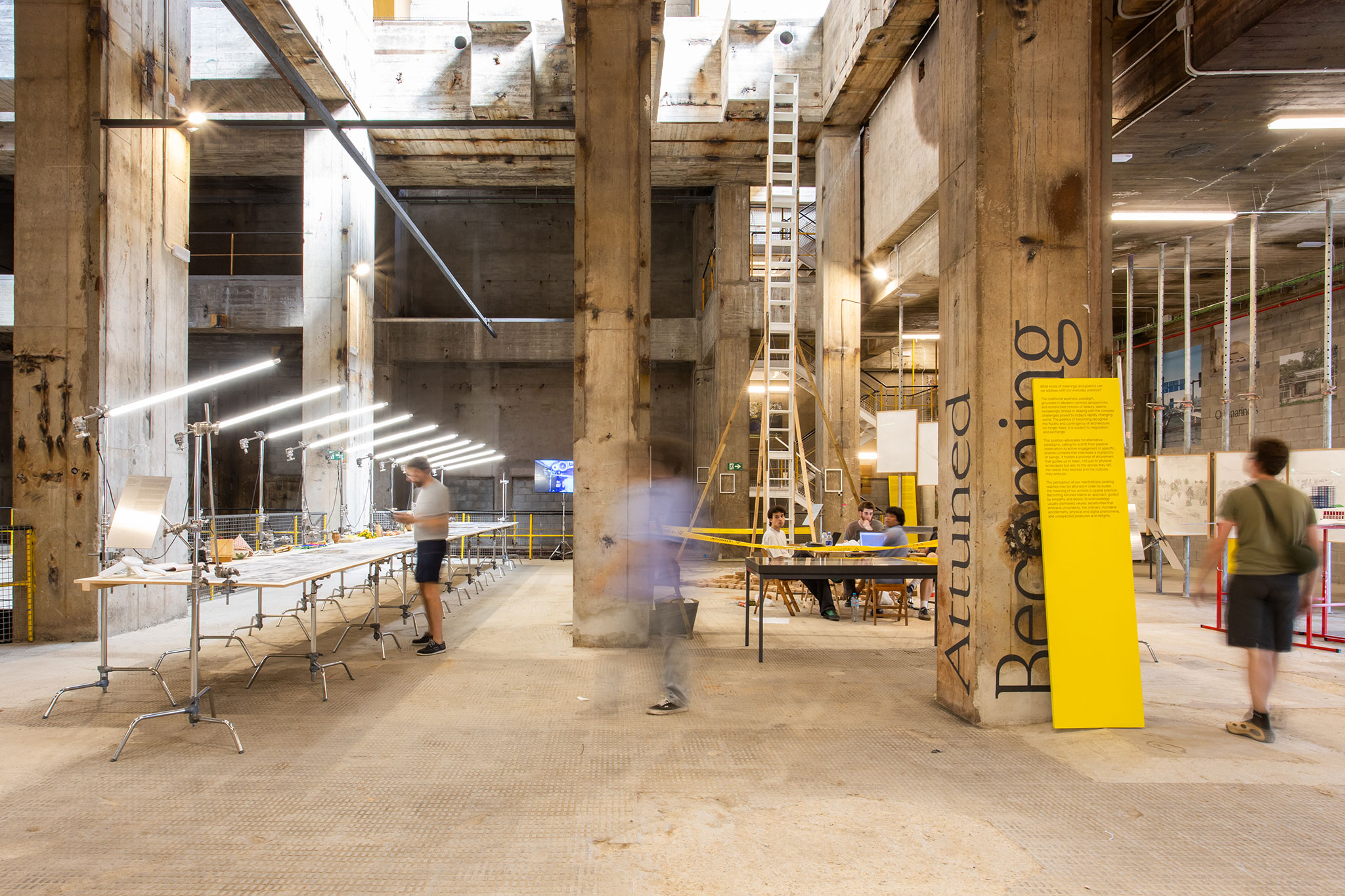
La Central Exhibition of the 2026 UIA World Congress of Architects in Barcelona, Becoming. Architectures for a planet in transition will transform the turbine hall of the former thermal power station of Sant Adrià de Besòs —the iconic Tres Chimeneas— into a 4,000 square meters laboratory dedicated to experimentation, research and architectural exchange.
The exhibition will bring together the 12 results of new research for the congress in the Research by Design program through models, prototypes, audiovisual works and full-scale installations that explore the capacity of architecture to intervene in processes of planetary transformation.
Water appears both as a risk and as a shared resource. The team formed by Dirk Sijmons and KK+N+S explores coastal defence beyond resistance, proposing maritime protection landscapes that work with tides, sediments and ecosystems, so that land can gradually rise alongside the water. Eva Franch and TAKK focus on the Ebro Delta, where sediment becomes an ecological and political agent. Colectivo C733 addresses water scarcity in Mexico City through local infrastructure for wastewater reuse, irrigation and collective care.
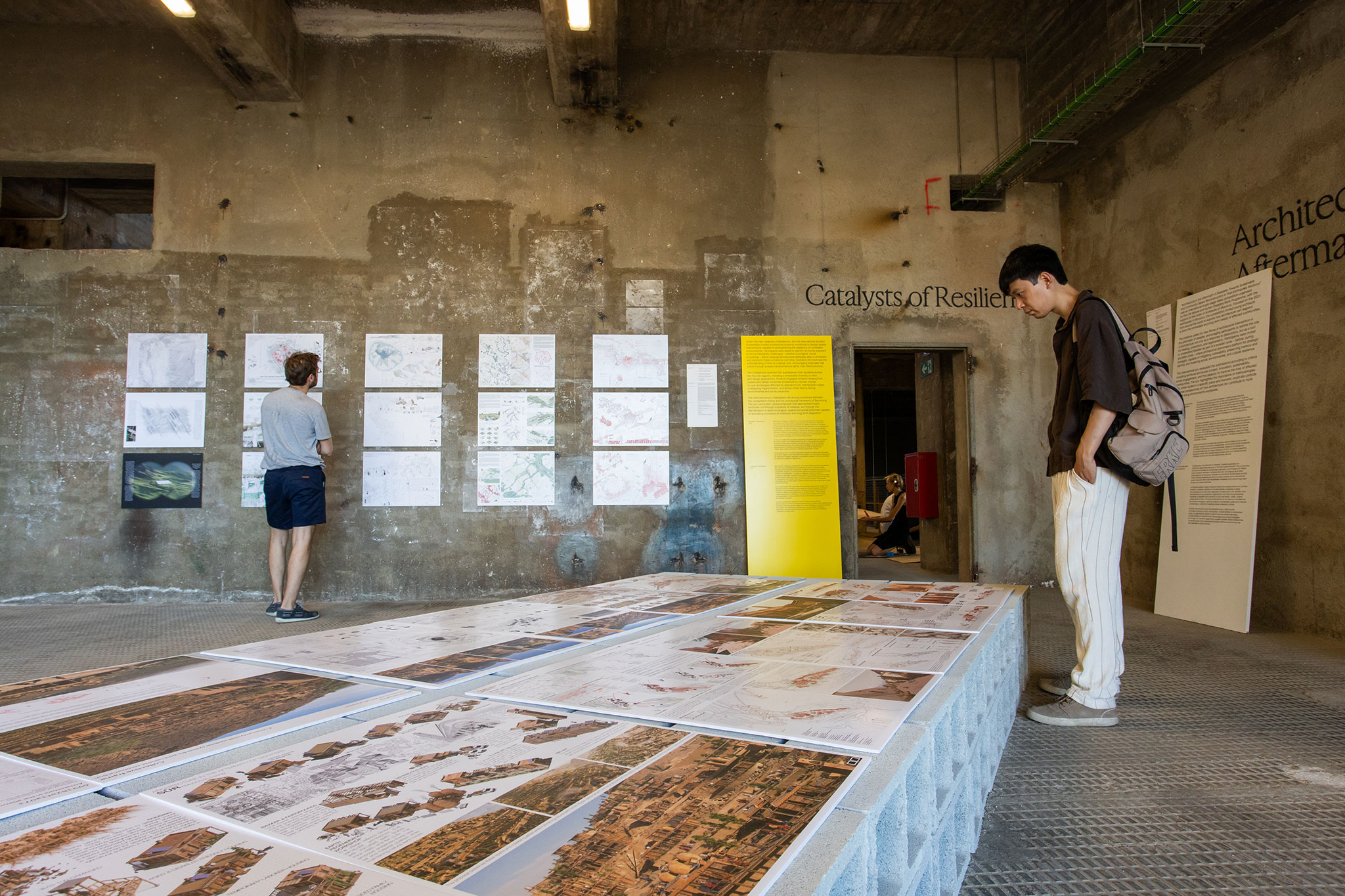
Exhibition. "Becoming. Architectures for a Planet in Transition." UIA World Congress of Architects 2026 Barcelona. Photograph by Anna Mas.
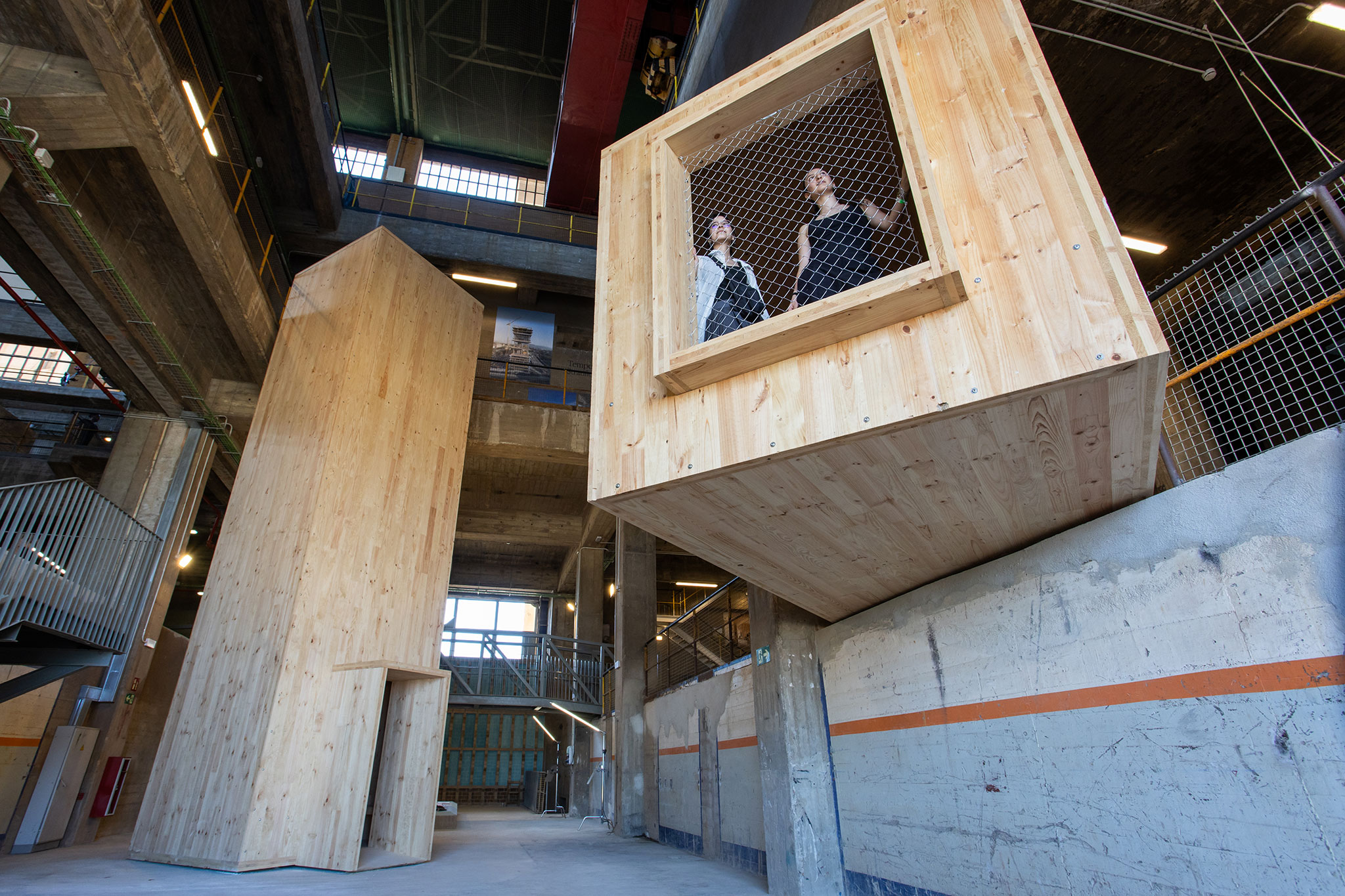
Other works, winners of the BIT Habitat mineral challenge, rethink the material and immaterial conditions of construction: BAUKUNST and the Structural Xploration Lab propose a circular system that reuses the city’s mineral waste as structural material, while BC architects & studies & materials develop masonry blocks and cladding from construction waste, excavated soils, and algae extracts linked to the bioregion of Barcelona. H Arquitectes and BRUTHER shift attention towards less tangible, yet equally architectural, forces: air, temperature, ventilation and light. Through installations in which proportions, lighting devices and atmospheric effects are experienced directly, they make visible the invisible conditions that shape space.
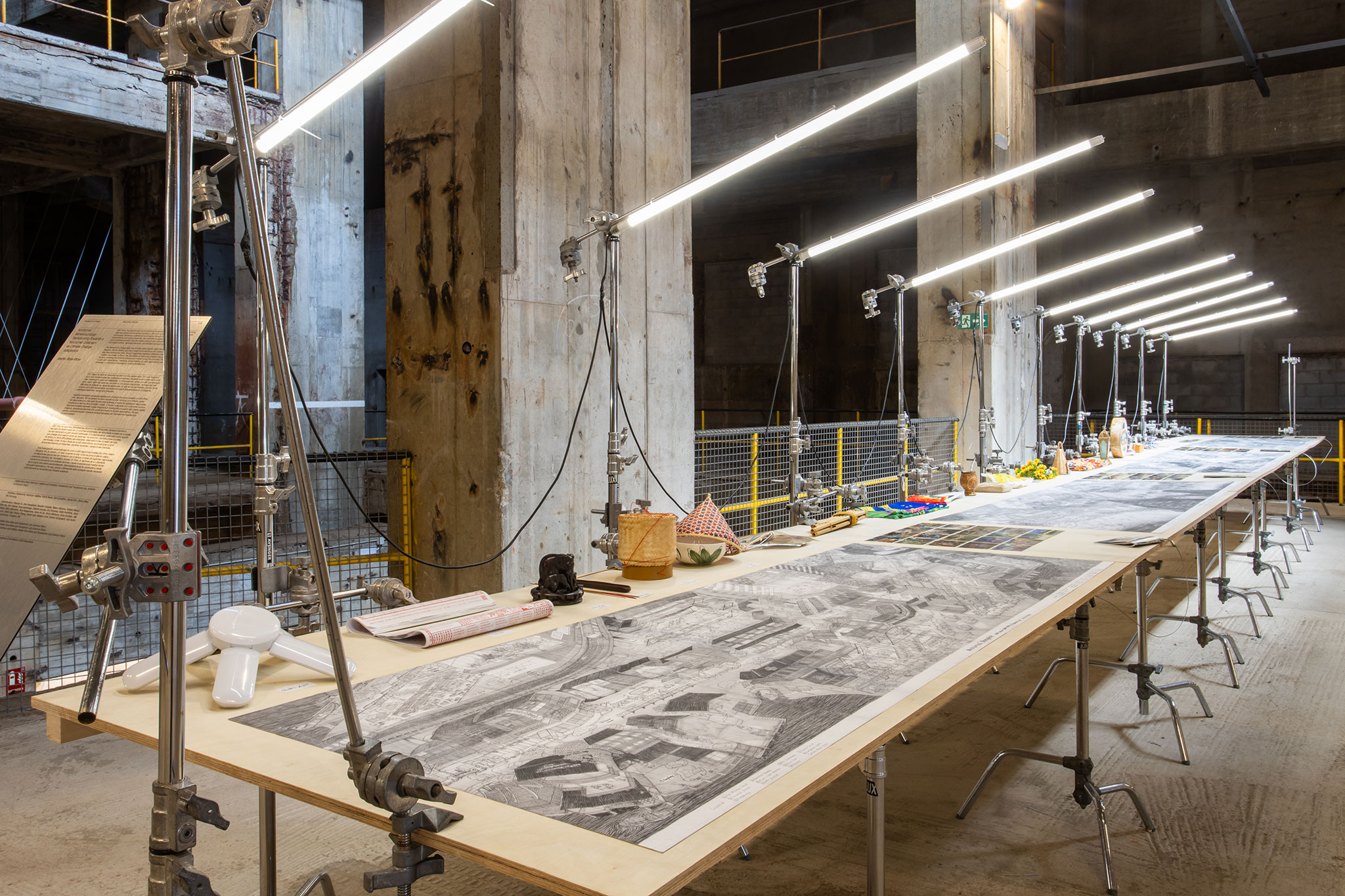
Architecture also appears as a practice of adaptation to changing bodies, rhythms and buildings. Atelier Bow-Wow examines urban nightlife and asks how cities might adapt to rising temperatures by rethinking mobility, infrastructure and everyday rituals after dark. Jan de Vylder and Inge Vinck approach the Palais des Expositions as a project permanently open to reinterpretation, using drawings and speculative futures to question how buildings evolve. Public Pleasures, by Care., MAIO and Pol Esteve Castelló, reimagines techno and electronic music clubs as infrastructures of care, where handrails, lighting, thresholds and spatial devices can support ageing and non-normative bodies.
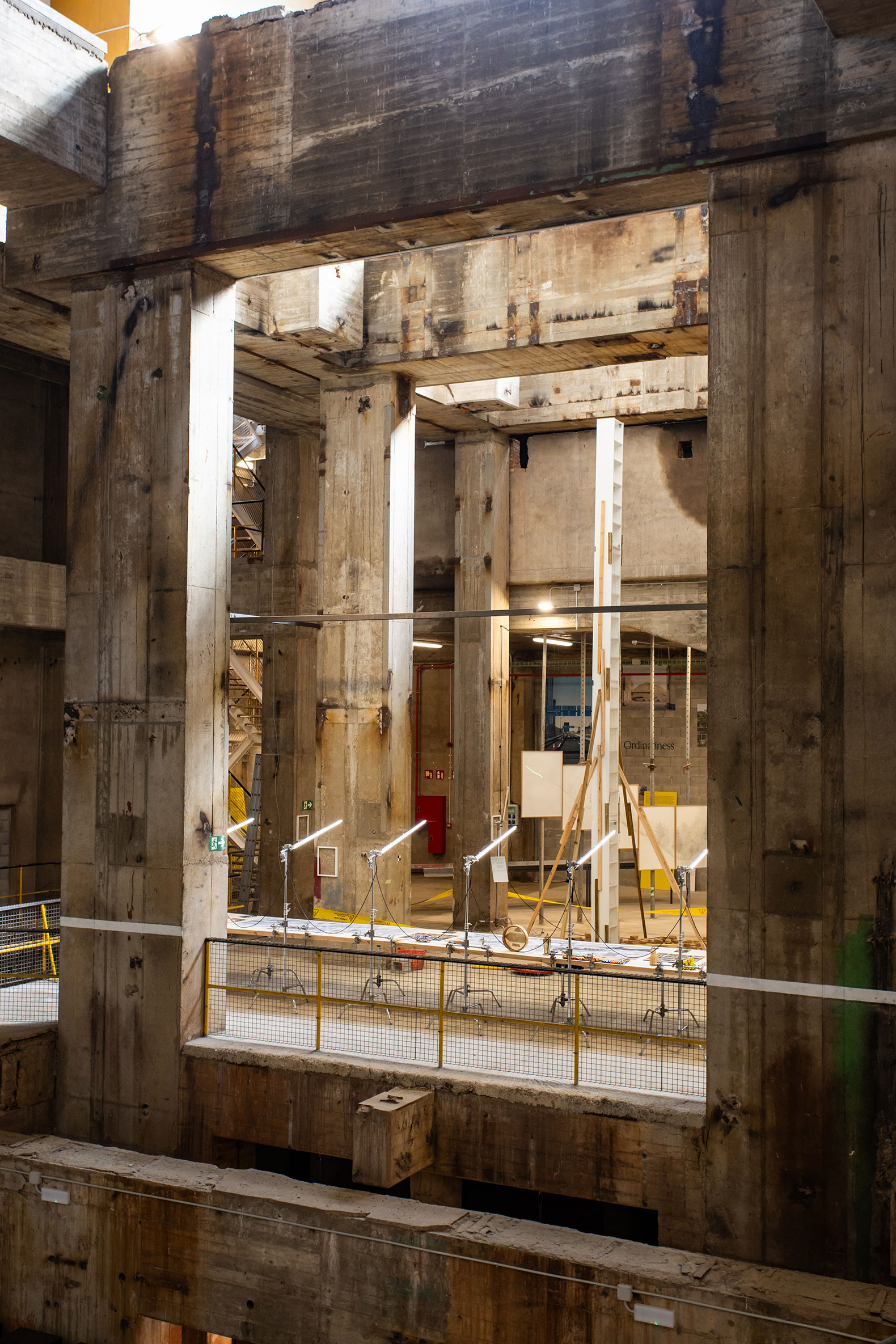
Exhibition. "Becoming. Architectures for a Planet in Transition." UIA World Congress of Architects 2026 Barcelona. Photograph by Anna Mas.
Housing, legislation and evidence enter the exhibition as architectural issues in their own right. Brandlhuber+, b+ and HouseEurope! present legislation and public policy as tools to defend the right to housing, while Forensic Architecture demonstrates how spatial investigation can produce evidence, reveal violence and mobilise public accountability. These works suggest that architecture also acts through regulations, documents, images, forums and forms of collective action.
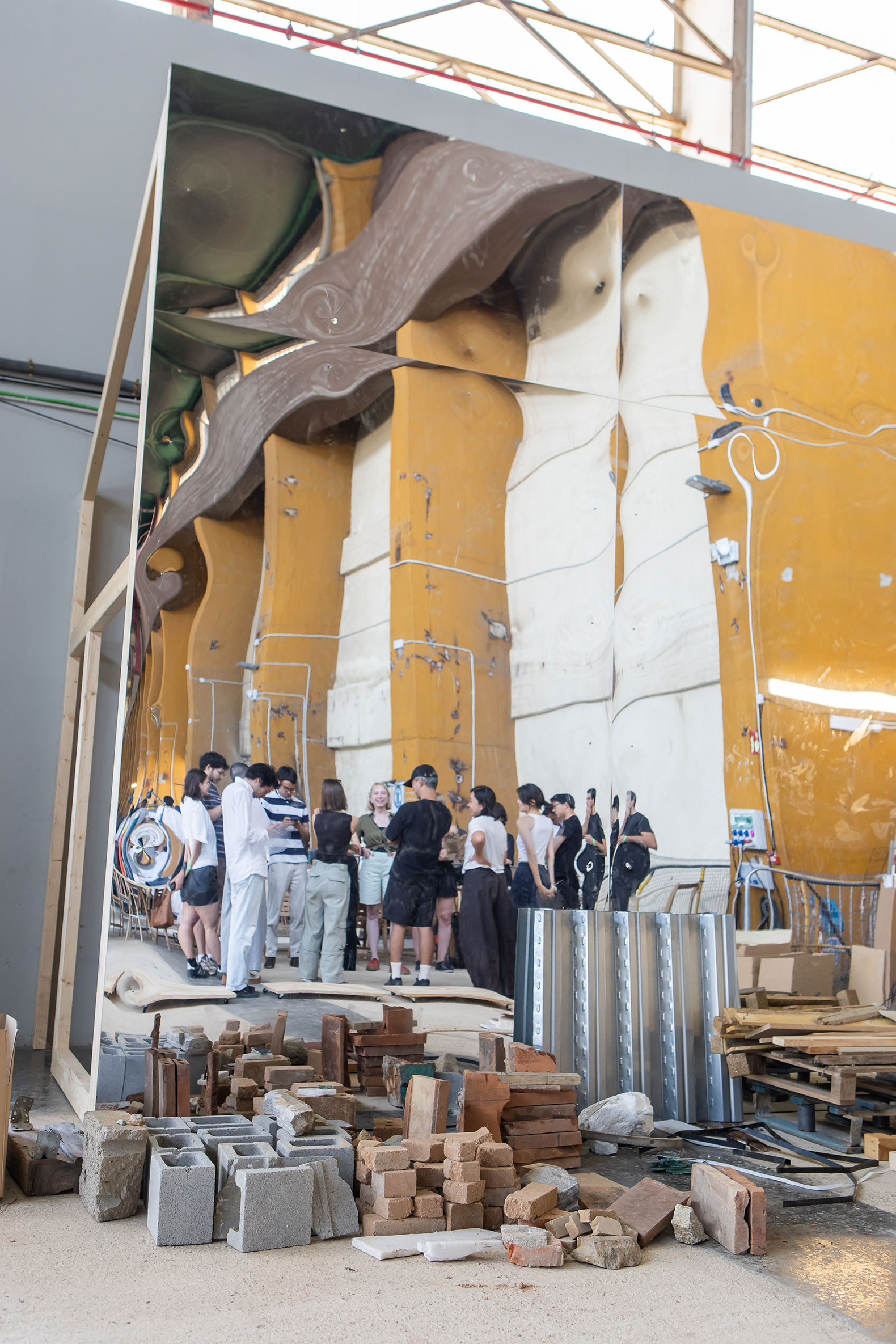
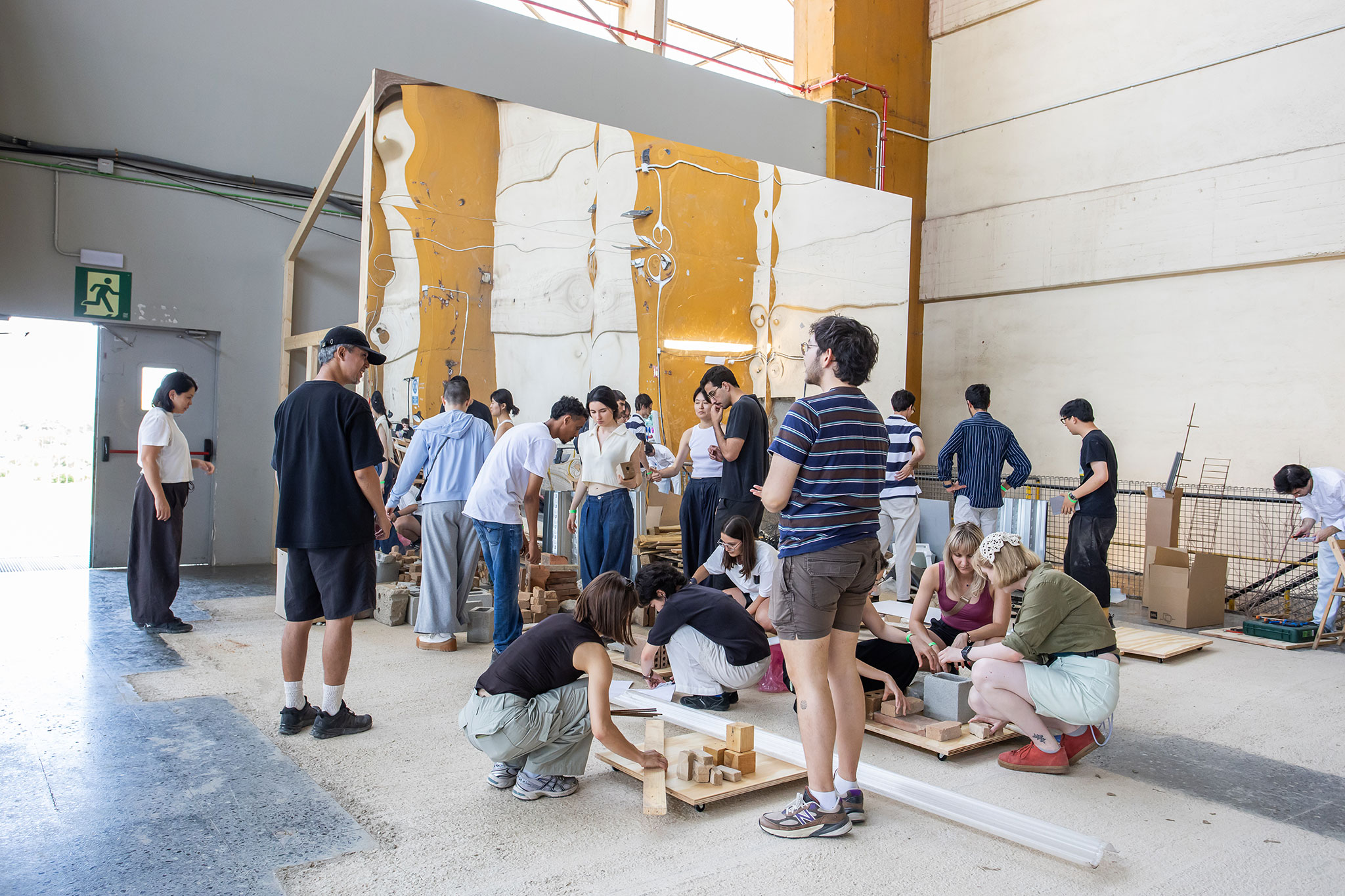
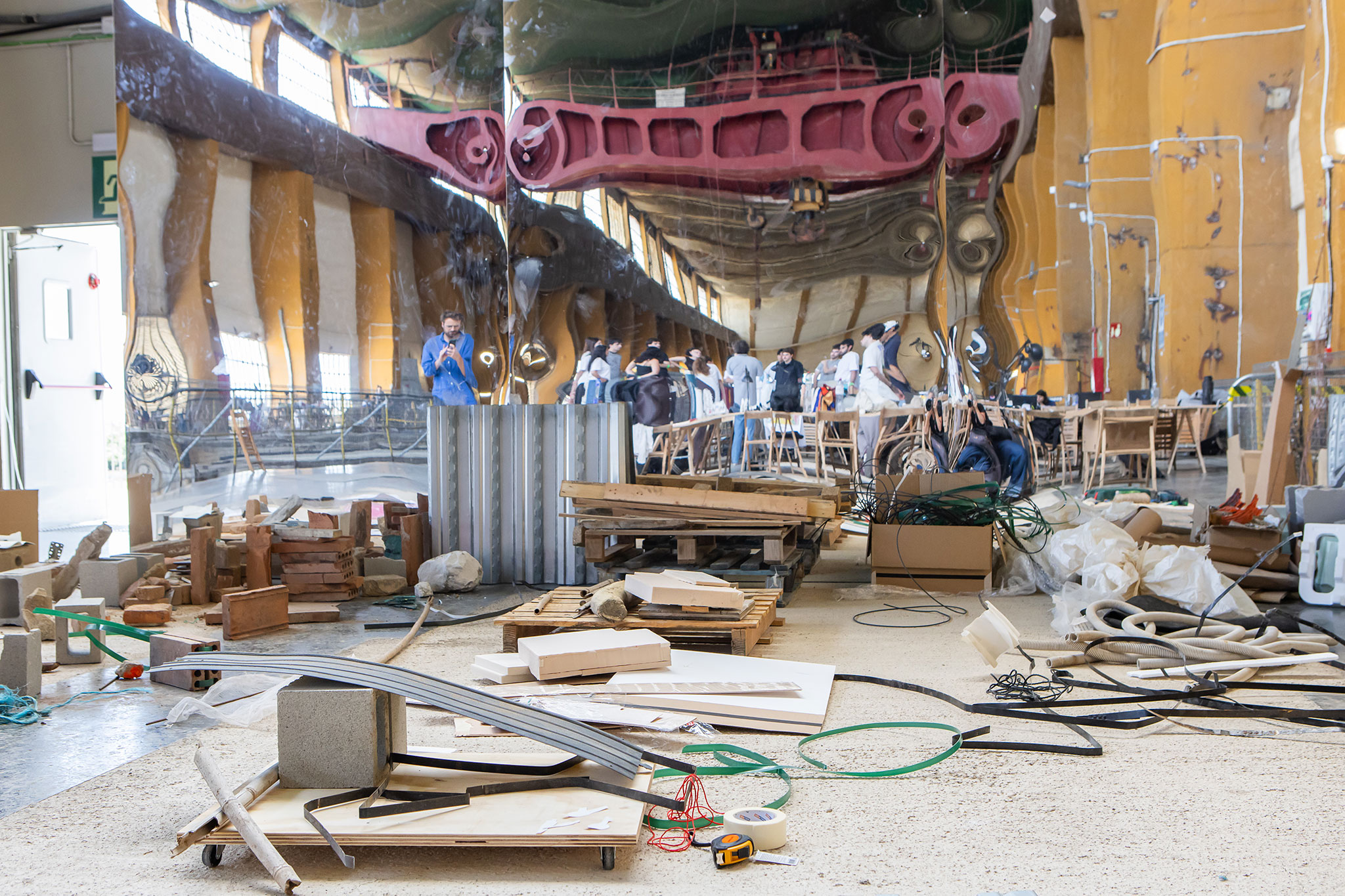
The exhibition also presents the results of the International Emerging Workshop, held from 19 to 27 June, with young architects and students from around the world who have turned the Congress venue and the city of Barcelona into a real-time laboratory. The leaders of each workshop are Simulaa, DESIGN EARTH, HOLES, Nicolas Dorval-Bory Architectes, TEN, Nuno Melo Sousa, Assemble and Common Treasures, Plan Común, Ibiye Camp, Common Accounts, Bangkok Tokyo Architecture and BeAr.
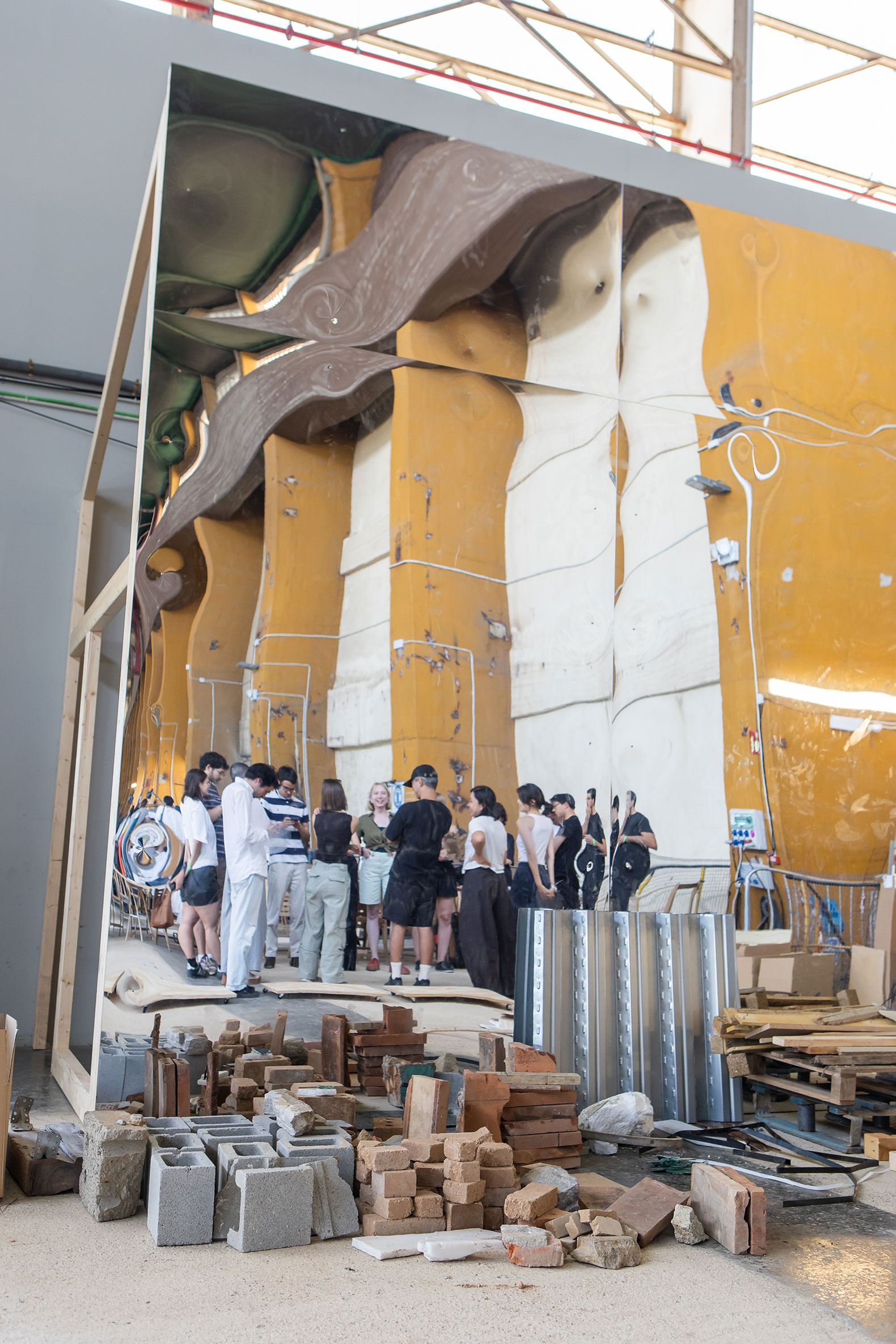
International workshop for emerging talents. “Becoming. Architectures for a Planet in Transition.” UIA World Congress of Architects 2026 Barcelona. Photo by Anna Mas.
In dialogue with these works, the exhibition brings together more than 200 contributions from Congress speakers: built and theoretical projects that form a broad panorama of contemporary architectural practice across the six thematic strands of the Congress. Together, these materials create a dense field of relationships between research and construction, speculation and public policy, local action and planetary transformation. Also presented is a selection of projects from the UNESCO–UIA International Student Competition Catalysts of Resilience and the Young Architects competition Architecture in the Aftermath of Disasters.
The exhibition will be open to accredited congress participants from 28 June to 2 July, and to the general public, with free admission, from 3 to 19 July, during opening hours of 12:00 to 21:00. Activated daily through public events and gatherings, the Central Exhibition transcends the conventional exhibition format to become a shared space of debate, exchange and encounter.